
























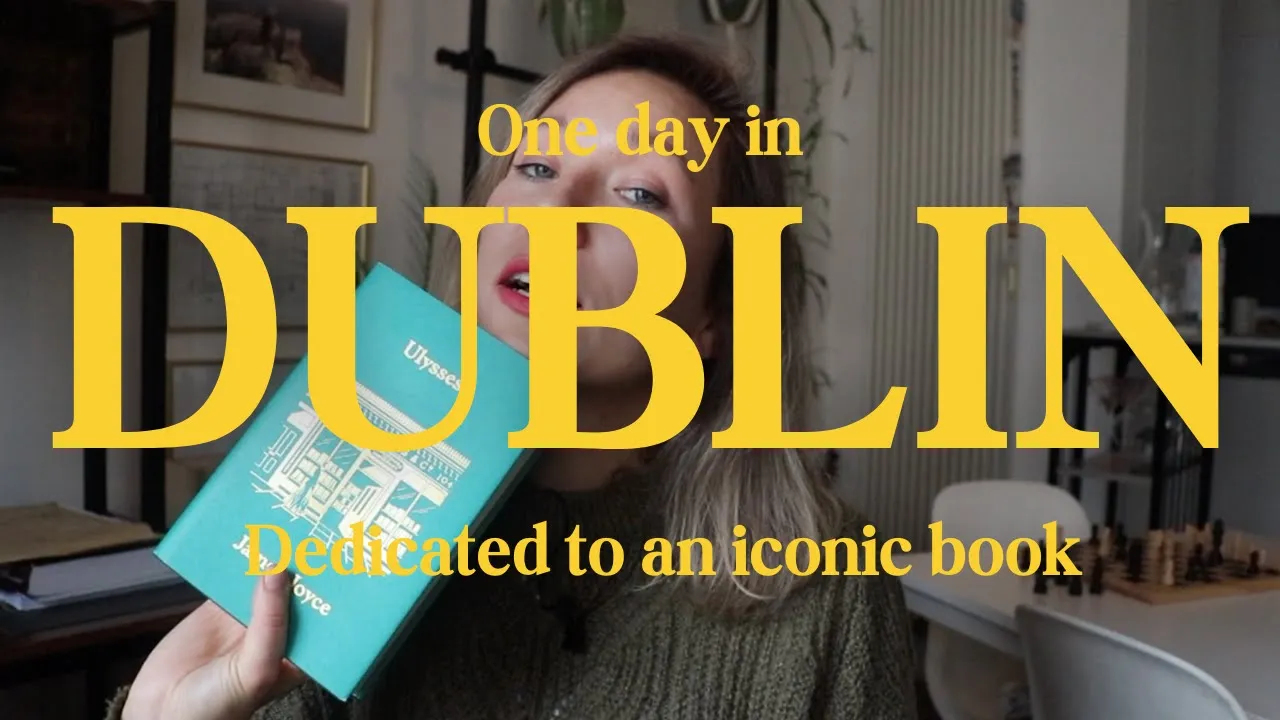
James Joyce's Ulysses (1922) is considered the greatest work of modern English literature, representing a revolutionary approach to novel writing through its experimental use of interior monologue, diverse stylistic innovations across 18 chapters, and its exploration of ordinary life in Dublin as epic narrative; the novel follows two characters—Stephen Dedalus (a young intellectual) and Leopold Bloom (a Jewish advertising salesman)—whose parallel journeys converge to explore profound themes of love, identity, and human connection, ultimately demonstrating how Joyce transformed everyday experience into artistic epiphany through meticulous attention to detail and linguistic creativity.
James Joyce's Ulysses: Documentary Analysis of the Modernist Novel
Added:Familiarity with Homer's 'Odyssey', as Joyce's novel structurally and character-wise parallels this classical Greek epic.
Understanding the core tenets of Literary Modernism, particularly its rejection of traditional Victorian narrative structures in favor of experimentation.
A basic grasp of the 'stream-of-consciousness' technique and how it attempts to replicate human thought processes in prose.
Historical context of early 20th-century Dublin, including the social, political, and religious tensions of Ireland under British rule.
Analysis of Joyce's 'Finnegans Wake' to examine the absolute limit of his linguistic and narrative experimentation.
A study of the 1933 landmark obscenity trial (United States v. One Book Called Ulysses) and its historical impact on literary censorship and free expression.
Comparative analysis of other Modernist masterpieces, such as Virginia Woolf's 'Mrs. Dalloway' or T.S. Eliot's 'The Waste Land'.
Exploring the cultural legacy of 'Bloomsday' and how the novel has shaped modern Irish tourism, cultural identity, and literary appreciation.
243.9K views1.7Klikes57:42Original Release: 2013-06-21
Who will go drive with Fergus now and pierce the deep woods woven shade and down the level shore. Young man, lift up your russet brow and lift your tender eyelids made and brood on hopes and fears no more.
And no more turn aside and brood upon love's bitter mystery.
For Fergus rules the brazen cars and rules the shadows of the wood and the white breast of the dim sea and all disheveled wondering stars. hearts.
Pray for me, Steven.
Please pray for me on your knees.
No, I can't. Mother, you know I won't.
Sacred Heart of Jesus. Oh, have mercy on him. Save him from hell.
Oh, too [Applause] far.
God, isn't the sea a great sweet mother? The snot green sea. The scrotum tightening sea. She's our great sweet mother.
Steven, come and have a look.
[Music] You don't want anything for breakfast?
[Music] Holy, a letter from me from Millie and a card to you and a letter for you. Do you want the blind up [Applause] that do? She got the things.
Oh, hurry up with that tea. I'm parched.
Huh? The kettle's boiling.
Holdy. What? Scold the teapot.
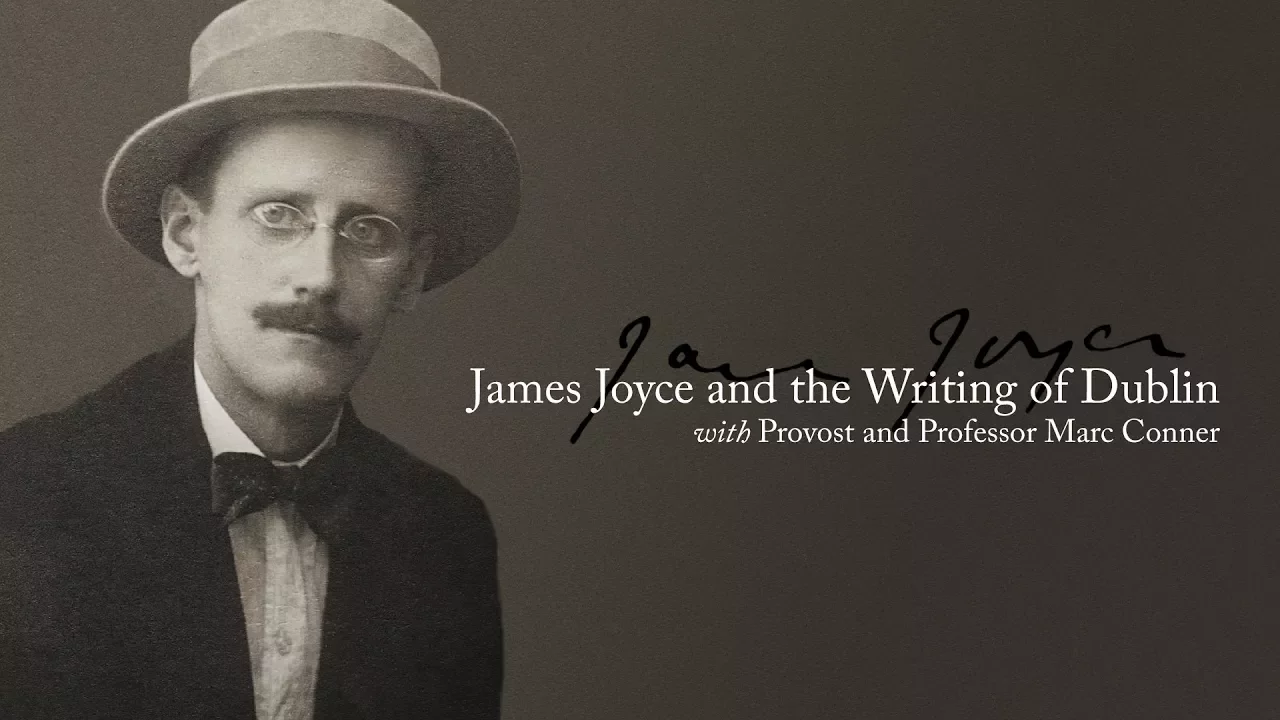
James Joyce's Ulyses is generally thought of today as the greatest work of modern English literature. It's a novel of immense complexity, but at heart it's the story of the meeting of two men in Dublin on the 16th of June 194. the young intellectual Steven Dedalus and Leopold Bloom a humble Jewish advertising salesman from Dubliners and his autobiographical novel a portrait of the artist as a young man to his final work Finnegan's Wake Joyce experimented with form and language but it was in Ulyses that Joyce's creative experimentalism found its most perfect form he wanted to take a modern man and present him in epic terms to use every chapter to make some observation in a new way about life and to use literature to sum up civilization. He wanted to capture the inner as well as the outer lives of the men and women he'd observed. Joyce achieved this in minute, sometimes shocking detail and with extraordinary psychological insight by setting down the apparently illogical associative thought patterns of the book's main characters.
Thanks, New Tam. Mr. Cochland picnic young students blazes boilands seaside girls. Huh? The tea is drawn. Silly Milliey's birthday gift.
Only five. She was then 15 yesterday. Remember the summer morning she was born? Running to knock up Mrs. Thornton in Denzel Street. A lot of babies she must have helped into the world. She knew from the first poor little Rudy wouldn't live. He'd be 11 now if he'd lived. See him grow up. Hear his voice in the house walking beside Molly in a neaton suit. My son, me in his eyes. Strange feeling it would be from me. Ah, just a chance.
Everything on it must have been that morning in Raymond Terrace. She was at the window watching the two dogs at it by the wall of the cease to do evil and the sergeant grinning up. She had that cream gown on with the rip she'd never stitched.
Give us a touch, Paldy. God, I'm dying for it. How life begins.
What a time you were.
Uh, who's the letter from? Oh, boy. He says he's bringing the program. Bold hand maring.
What are you singing now? Cheer with JC Doyle and Love's old sweet song.
Do you want the window open a little?
What time is the funeral? Uh, 11, I think. I didn't see the paper.
That book. Oh, sh put a mark in it. There's a word I wanted to ask you about. Um, met him. Met him what? Yeah.
Here. What does that mean? Met him psychosis. Yes. Who's he when he's at home? Met him psychosis. No, that's Greek. That's from the Greek. That means the transmigration of souls. Oh, rocks.
Would you tell us in plain words? Do you want another? Yeah. Get us another of Paul Deox. A nice name he has.
Reincarnation. That's the word.
You know, some people say we go on living in another body after death and that we live before. They call it reincarnation. Some say they remember their past lives. The metamsychosis is what the ancient Greeks called it. I smell a burn. Did you leave something on the fire?
The kidneys.
[Music] cup of tea.
Now I was happier then. Or was I? Or am I now? I 28. I was she 23. When we left Lombard Street West, something changed. Could never like it again after Rudy.
Can't bring back time like holding water in your hand. Would you go back to then? Just beginning then. Would you? Those races are on today. There. Patrick Dnham funeral at 11:00. What is home without plum trees potted meat?
Incomplete. What a stupid ad. Under the abiterary notices they stuck it all up a plum tree. Dignum's potted meat.
Cannibals would with lemon and rice.
White missionary too salty like pickled pork. Expect the chief consumes the parts of honor. His wives in a row to watch the effect. There was a right royal old [ __ ] who ate or something the somethings of the Reverend Mr. McTigger. His 500 wives had the time of their lives. Oh, better be careful not to get these trousers dirty for the funeral.
Their lives. I have it. It grew bigger and bigger and bigger. I hear your wife's engaged for a big tour at the end of this month. Who's getting it up? Who's getting it up? Who's getting it up?
He's getting up.
Sweet song.
Come.
Well, it's like a company idea, you see.
Part shares and part profits.
Sweet song.
I now I remember. Who was it telling me?
Isn't Blaze's boiling mixed up in it?
Letter torn strip of envelope. He's coming in the afternoon. Her songs. What is home without plum trees? Pottied meat. Pottied meat.
Partied meat in conflict with it an abode of bless poor dign.
I'm now writing a book based on the wanderings of Ulyses. That is to say, the Odyssey serves me as a sort of a ground plan. Except my time is recent time, and my hero's wanderings last no more than 18 hours. You're a well- read Cornish man, Mr. Budgeon. Do you know of any complete all round character presented by any writer?
How about Christ?
He was a bachelor. Never lived with a woman. Surely living with a woman is one of the most difficult things a man has to do.
Well, uh, how about, um, Faustst or Hamlet? Faustst. Sure, he wasn't a man at all. Where's his home? Where's his family? Now, Hamlet was a man, all right, but he was only a son. Now, Ulyses was son to Leertes, father to Telly, Marcus, husband to Penelope, and lover of Calypso, and king of Ethiot.
Now, there's a complete man. What do you mean a complete man? Everyone's got limitations.
Luly says he's got all the defects of an ordinary man, but he's not a god. But he's kind and he's decent. My hero Bloom is the same. If he does something low or mean, he knows it. And he says, "I've been a proper pig." Ulyses is a book about a man who goes out from his home, engages in remote adventures, and returns to reestablish domestic order. It is at the same time a book in which language embarks on a similar journey. It's as if the English language sets out from the familiar forms we meet in the opening chapters and then begins to explore more and more experimental ways of expressing the subject matter of the book. Every chapter is written in a different style and some make for relatively difficult reading but the general effect is one of exhilaration and the most marvelous linguistic imagination. Ulyses is enormous fun to read. It's above all a delightful book. There's parody and dramatic form, musical comedy and high flown pros. But above all, Joyce established the technique of interior monologue, an important device for many 20th century writers. Uh Joyce also was attempting to do something very very modern indeed in technique. This was not altogether original but he felt the techniques that had been used in the novel say of Dickens the rest of and even HG Wells Arnold Bennett uh were not sufficiently subtle to show what's really going on in the human mind. We say things in normal life but we also think things and Joyce had to develop a technique for showing what's going on in the mind on the preverbal level before people actually speak.
The most difficult interior monologue which we shall meet is that of Steven, the young poet, 22 years of age. His mother's just died. He's just come back from Paris. He doesn't know where he is, but he's essentially a poet and an intellectual and a rather bumptious young man.
ineluctable modality of the visible. At least that, if no more, thought through my eyes, signatures of all things I am here to read. Sea spawn and sear, the nearing tide, that rusty boot, snot green, blue, silver, rust, colored signs, limits of the diaphragm.
But he adds in bodies. Then he was aware of them bodies before of them colored.
How? By knocking his sconce against them. Sure. Go easy. Bold he was and a millionaire.
Maestro Dolor Quesano limit of the diaphan. If you can put five fingers through it, it's a gate, if not a door. Shut your eyes and see. You are walking through it, however. I am a stride at a time. A very short space of time through very short times of space. Open your eyes. No. Jesus. I'm getting on nicely in the dark. My ash sword hangs at my side. Tap with it.
They do. Am I walking to eternity along Sandy Montran? Crush crack. Won't you come to Sandy Mount?
Mattel in the mayor. Rhythm begins. You see? I hear a catalctic tetrometer of I am marching. No, a gallop. Delin the mayor. Open your eyes now. I will. Oh, one moment has all vanished since. If I open and I'm forever in the black diaphra see see now there all the time without you and ever shall be world without end. Steven's interior world is more difficult to comprehend than Bloom's. It leaps from classical illusion to folk song as he debates with himself the relationship of the everchanging visible and audible world to an unchanging reality that is perhaps hidden behind it. Steven is both a figure of fun and a man on a serious quest. The maestro deolorando is Dante's description of Aristotle in whose metaphorical footsteps Steven is following. Steven puns on Dante's words. Aristotle asserted that we recognize objects as bodies before being aware of their colors. Later, when Steven closes his eyes, he becomes aware of sound and rhythm. But Steven sees himself as a writer rather than a philosopher and starts to write a poem. Like Joyce, he's obsessed with his art and technique, the arrangement of words on the page. Who watches me here?
Whoever anywhere will read these written words. Signs on a white field. Touch me. Soft eyes. Soft soft hand. I am lonely here. Touch me soon.
Now what is the word known to all men?
I am quiet here alone. Sad too.
Touch. Touch me. The character of the brilliant young intellectual Steven Dedas was originally created in Joyce's earlier novel, A Portrait of the Artist as a Young Man, and is partly a satirical self-portrait of Joyce's own youth. James Joyce was born into a middle-class Dublin family in 1882, but his father, whom young Jim adored, soon squandered the family inheritance. His mother was a staunch Catholic who tried to instill her faith into her son. Joyce was educated by the Jesuits, who considered him a brilliant scholar, and he briefly considered entering the priesthood. But Joyce rejected the church after a considerable struggle, a struggle he attributes to Steven in a portrait of the artist. That novel ends with Steven fleeing to Europe with the words, "Welcome, oh life. I go to encounter for the millionth time the reality of experience and to forge in the smithy of my soul the uncreated conscience of my race." In 197, Joyce himself left Dublin to spend the rest of his life on the continent.
Joyce uh had various reasons for going into exile, if you may call it that. Of course, in the first way, a very benile reason. You cannot write in Dublin.
There's too much talk. Anybody who's tried to write a book in Dublin knows that the book can be spent in a couple of pub conversations. You don't want to write the book after that. You've done the job of being a barred and given out the words. But there's nothing in Ulyses which is really intelligible unless you understand this Jesuit educated background, this life in a small city, this resentment at church, at family, at uh nationalism at the British Empire and all these various factors which perhaps drove Joyce out of the British Isles to live in in the continent of Europe to become a European. Uh Joyce did recognize that uh out there in Europe as he put it the modernistic movement was stirring.
Joyce went first to triest in Italy to teach English but during the first world war he moved to neutral Zurich where he continued to work on Ulyses. In Zurich he became friends with the artist Frank Budgeon who later described Joyce at work on the novel.
Ireland's a marvelous country. The Emerald Dial is the Metropolitan Government after centuries strangling it are finally laid waste. The government has sowed hunger, syphilis, superstition, and alcoholism there. And what sprung up? Puritans, Jesuits, and bigots. That's a gloomy view to take of your fellow countrymen. Well, now strictly speaking, Dubliners are my fellow countrymen. But I don't dare talk about dear, dirty Dublin the way they do. Dubliners are the most hopeless, useless, and inconsistent, racist charlatans I've ever come across. They spend their time gabbing and doing the rounds of bars, taverns, and nail houses, never getting fed up with the double doses of whiskey and home rule.
Everybody has time to stop and talk to a friend about a third party, Pat or Barney or Tim. Have you seen Barney recently? Is he still off to drink? Oh, Eden he is. Sure. I was with him last night and he drank nothing but Clarret.
Despite or perhaps because of his exile, Joyce remained obsessed by his native city and Ulisses became the most precise evocation of a city to be found in literature. Using every means available, maps, reference books, timings of walks demanded from friends, Joyce based the fictitious events of Ulisses on a background which is geographically exact. I want to paint a picture so vivid that if one day it disappeared from the face of the earth, it could be reconstructed for my book.
[Music] I wonder what my fellow countrymen will think of my work.
I think they won't like it. Irish men are men of violent belief in your book is the book of a skeptic.
It is the work of a skeptic, but I don't want it to appear the work of a cynic.
Ireland is after all the brains of the United Kingdom. The Irish race, condemned to speak a language not their own, have stamped on it the mark of their own genius and compete for glory with the rest of the civilized world.
Oh, and this then is called English literature. Will you sit still, Joyce?
You never told me what you thought of me last chapter, would you?
Cubist, I'd say.
First you state one view of it, then you draw it from another angle. You keep interrupting the colloquial flow with barriers of pastiche or legendary pros or even a piece of god journalism. I like the way the citizen figure, the cyclops, I presume, is introduced like a 19th century version of an Irish folk tale.
A broadsh shouldered, deep-chested, what is it?
Wide-mouthed, large-nosed, long-headed, deepvoiced, bare kneed, brawyhanded, hairylegged, ruddy-faced, senuey, armed hero.
Stand and deliver. That's all right, citizen. France here. Pass, friend. I give over your bloody cotton, Joe. I have a twist on me I wouldn't sell for half a crown. Give it a name, citizen.
Wine of the country. What's yours? Get on me. Tell us a bit. Three points, Terry, please. Well, how's the old heart? Eh, now back on the car. [ __ ] daddy. Huh? Are we going to win? Are we going to win? Eh, hello Bloom. What do you have? I I I won't. Thank you. No, no offense, man. I I can't. A Come on, Bloom. No, you must excuse me. I I can't. Well, all right. I'll just take a cigar. Give us one of your prime stinkers, Terry. Look at this. The Irish independent of you, please. Founded by Parnell to be the working man's friend.
Listen to the birth on debts in the Irish all for Ireland independent. And I thank you the marriages Gordon boundfield crescent extor day at St. Jude Church Kensington by the right reverend the dean of Worester. How was that eh? Huh? Yes.
Cotborn the mount house chief. I know that fell from bitter experience. Dimsy wife of David Dimsy late the admiral Miller Tottenham. How is that for the national press? Me brown son. How is that for Martin Morphy the ban jobber?
Oh well thanks be to God they had the start of us. Drink that now citizen. I will honorable person. Health Joe and all the form.
Ah! Ow! Don't be talking. I was Blue Mildy for the one at that point and declare to God, I could hear it hit the pit of me stomach with a click. What about the invincibles? Mhm.
So, of course, the citizen was only waiting for the wink of the word and he starts gassing out of him about the invincibles in a minute 67 of course with his knock me down cigar putting on swank with his large face. It's it's a phenomenon.
Phenomenon. The fat he married is a nice old phenomenon. Got a back on her like a ball. Ali, the memory of the dead. I no I you don't grasp my point. What I mean is shin shin fan of wine. The friends we love are by our side and the foes we hate before us. Afraid he'll bite you. Oh but he might take me leg for a lampost. What's on you Gary? What's on you?
And he told Terry to bring him some water for the dog and Joe asked him would he have another. I will just so there's no ill feeling. I hope he's not as green as his cabbage looking.
Arsening around from one pub to another, leaving it up to your own honor. And says Joe, could you make a hole in another point? Could a swim duck, says I. Same again, Terry. Are you sure you won't have anything in the way of liquid refreshment? Uh, thank you. No, no. As a matter of fact, I just wanted to meet Martin Cunningham, no about the insurance. Poor Dignams. You You see he dign. Then he starts all confused, muking it up about the mortgageer under the act like the Lord Chancellor giving it out off the bench for the benefit of the wife until he nearer had the head of me addled about the mortgage or under the act. I declare to me auntie Macasser, if you picked up a straw off the bloody floor and if you said to Bloom, "Look at Bloom. Do you see that straw? That's a straw." I declare to me aunt, he'd talk about it for an hour so he would and talk steady. Everybody tries to help out. But well, that's the point for the wife's admirers. Whose admirers?
But but no, the wife's advisers, I mean.
Then did Shiver's Terran straight away bring forth crystal cups of the foamy and even ale, which the noble twin brothers Bung Ivy and Bung Ardolon grew ever in their divine ale. For they garner the succulent berries of the hop, and they mix there with sour juices and bring the must to the sacred fire. Those cunning brothers, lords of the vat thousand a year, Joe, right? And butter for fish.
That blaze is boiling knows which side his bread is buttered. I hear he's running a concert tour now.
up in the north. He is he who? Yeah.
Yes. Yes, that's quite true. That's kind of summer tour. You see, that's just a holiday. Mrs. B is the bright particular star now, isn't she? My wife. Yes. She's singing. Yes.
And I Well, I I think I think it'll be a success, too. And he's an excellent man to organize. Excellent.
Ho ho be g Sayoy to me selfoy that explains the milk in the coconut and the absence of hair in the animal's chest.
Blaze is doing a tootoodle on the flute concert tour. That's the book that'll organizer take my tip. Twix me and you cater sexuality and betrayal. These twin themes lie at the heart of virtually everything Joyce wrote. Bloom is betrayed by his wife, and that betrayal is one of the main excuses used by his bigoted fellow citizens for repudiating him. He's an archetypal outsider, isolated from his community by race, because he's a Jew, by religion, and by temperament. Bloom's sense of isolation in an urban environment is still felt to be deeply expressive of the condition of modern man. Joyce saw also the Jew was the real protagonist of modern history. Uh Joyce knew nothing of the the Holocaust of course, but he did recognize that Jew was the key figure, not the Christian, not the pagan in in modern life and of course also in modern literature. The hell were the bloody brutal Sassinox and our PWA but of a good for nothing god lights sideways on the bloody ticklo sons of [ __ ] gets no music, no art or literature worthy of the name. Any civilization they have they stole from us. Tongue tied sons of bastards. Goats have persecution. All the history of the world is full of it. Perpetuating national hatred among nations. But do you know what a nation is? Yes. What is it? A nation?
Well, a nation is the same people living in the same place. Big girl, if that's so, then I must be a nation cuz I'm living in the same place for the last 5 years. We're also living in different places. That covers my case. And what is your nation? If I may ask, Ireland. I was born here. Ireland.
Yeah. After you at the push, Joe, show us over the drink. Uh, that's mine.
As the devil said, the dead policeman.
And I belong to a race, too, that is hated, persecuted. Also now at this very moment, this very instant, robbed, plundered, insulted, persecuted. Are you talking about a new Jerusalem? I'm talking about injustice, right? Stand up to it then with force like men.
That's no use. Force, hatred, history, all that.
It's not life for men and women. Insult and hatred. And everybody knows it's the very opposite of that that is really life. What?
love. I mean the opposite of hatred. I must go.
That's the new apostate to the Gentiles.
Universal love. Is that what we're taught? Love your neighbor.
That chop beamy neighbor is his motto.
Love my yah. That's the new messiah for Ireland. We're still waiting for their redeemer. Three cheers for Israel.
Mendlesson was a Jew and Carl Marx and Spinoza and Christ was a Jew and his father was a Jew. Your God by God Iraman for using the whole him God I'll crucify him. I will take it easy.
And there came a voice out of heaven calling Elijah Elijah. And he answered with a main cry, Abba Adonai. And they beheld him, even him, Ben Bloom Elijah, amid clouds of angels, ascend to the glory of the brightness, at an angle of 45° over Dunahoo's in Little Green Street, like a shot off a shuffle.
[Music] And I don't think it right that even I should complain if the untoward phenomenon of love should cause disturbance, even in so egotistically regulated a life as mine. As a matter of fact, I know very little about women.
One of the English teachers said she was not worthy of me. And I'm sure that this would be many people's verdict. But I certainly have submitted myself more to her than I have to anybody. And I do not think I would have begun this letter but that she encouraged me.
When Joyce left Dublin, he didn't go alone. He eloped with a young chambermaid called Norah Barnacle, causing his father to remark, "Norah Barnacle, she'll stick to him." It was to be an immensely important and lasting relationship for Joyce. They had two children, but flouting convention, they didn't marry until 1931. When Joyce wrote Ulyses, the date he chose for the action of the book was a day they first walked out together, the 16th of June, 194. Nor was uneducated, almost illiterate, direct, very Irish, very honest, and uh it seems to us um sexually much more liberated than we normally think an Irish woman should be, especially that period. And Molly at the end of that book is Nora. I think without without this earthy unintellectual Galway girl he married he could not have got to the depth of the feminine so although Norah herself said Jim knows nothing about women but Yung said as far as the knowledge of women is concerned you must have been inspired by the devil today I've had one whole day's uninterrupted work and how much have you written two sentences.
You have been seeking the mo used. No, I have the words already. What I'm seeking is the perfect order of the words in the sentence. There is an order in every way appropriate. I think I have it. Now that's too bad. And is he talking to you again about that old book of his, Mr. Budgeon? I don't know how you stand it.
Jim, you ought not to do it. You bore Mr. Budgeon stiff. If I bore Budgeon, he must tell me. What do you think, Mr. Budgeon? Of a book with a big, fat, horrible married woman as its heroine. Molly Bloom.
Well, there's nothing wrong with being fat and married. Anyway, it makes a change from these sulfike sweethearts we usually read about. I'll tell you this, Mr. Budgeon. D book is shine.
The book comes to a climax in a brothel scene. It's a parallel to the passage in the Odyssey in which the enchantress Cersei turns men into swine. Joyce explores some of the deepest areas of the unconscious and expresses many human drives that don't usually get expressed in words. The chapter restates and develops almost all the verbal motifs and technical devices of the book. We're given an extraordinary mixture of quotation, parody, slang, foreign languages, on the metapier, and musical effects. Yet again, Joyce uses a different and unexpected mode. It's written in the form of a huge drama with speeches attributed not just to the main characters but also to inanimate objects such as a shoe or a fan and fantastic creatures. It's a real drama of the mind. During a day spent at a funeral and wandering around Dublin, Molly's afternoon asignation with blazes boiling has never been far from Bloom's mind. Steven has spent most of the day and his money getting drunk. Towards midnight, he's deserted by his companions and Bloom follows him to the red light district with some vague notion of protecting him. You're not his father, are you? Not I. Have you swagger?
Well, I rarely smoke, dear. It's just a cigar now and then. It's a childish habit.
The mouth can be better engaged than with a cylinder of rank weed.
Go on and make a stump speech out of it.
Mankind is incourageable. So Walter Rally brought from the new world that potato and that weed. The one a killer of pestilence by absorption. The other a poisoner of the ear, eye, heart, memory, will understanding. All suicide lies. All our habits. Why look at our public life? He's a man like Ireland once.
Turn again. Learn again. Lord mayor of Lord. Turn again. I stand for the reform of municipal morals and the plain ten commandments. New worlds for old. Union of all, Jew, Muslim, and Gentile. Three acres and a cow for all the children of nature. All parks to be open to the public day and night. Tuberculosis, lunacy, war, and mendic must now cease. No more patriotism of bar sponges and dropsicle imposters. Free money, free rent, free love, and a free lay church in a free lay state.
[Applause] [Music] Talk away till you're black in the face. No more. I have lived. Fair. Farewell. I suppose you got up the wrong side of the bed or came too quick with your best girl. Man and woman love. What is it? A cork in a bottle.
I'm sick of it. Give a bleeding horror.
chance.
Oh, I am very disagreeable. You are a necessary eagle.
Stop that, Tommy Tittle Mouse, and begin worse.
[Music] Tulence, come. Come and I'll peel off.
Peel off. Good morning, Lamblight.
[Music] Char behind.
No. Did you stop the lemon?
With your eyes shut. Steve, thou art to the partest way. Partially drunk, by the way.
Minor cord comes now.
My word, I'm all of a mock sweat.
Married, I see. If you bungle handy Andy, I'll kick your football for you.
Empress foot.
Feel my entire weight.
Where's that godamn cursed ashtray?
No monsters. Cruel one. Oh, off we pop.
G up. A [ __ ] horse to bambbery cross.
Wait, curse it. Here is bones about to burst.
There. Take that. Not man, woman. Now for your punishment, frock.
You'll shed your male garments and dawn the shot silk luxuriously rustling over head and shoulders. And quickly, too.
silk. The mistress said, "Oh, crinkly scrapey. Must I tip touch it with my nails?" You'll be laced with cruel force into vicelike corsets, but the frilly flimsiness of lace around your bare knees will remind you. Echo Street.
There's a man of brawn in possession there. Well, for you. If you had that weapon with knobs and bumps and warts all over it, he shot his bolt. I can tell you spitting.
You've broken the spell.
Who's paying here? Madam, if you allow me, we are both in the same sweepstick.
How many girls do you want? It's 10 shillings here.
100,000 apologies.
Allow me. That's twice 10.
[Music] We're square. You're such a sly boot. So cocky. I could kiss you. Him. Cheap as a draw. Well, these are yours. How was that? Dance. Dance. Who's got to here?
There.
[Music] Heat.
Heat. Heat. Heat.
[Music] [Applause] [Music] Oh, who are you?
No. They say I killed your mother. Cancer did it, not I. Destiny.
You sang that song to me. Love's bitter mystery. Tell me the word, mother. If you know now, the word known to all men. Repent, Steven.
Ghoul. Hyena.
Beware God's hands.
Sight. Sacred heart of Jesus.
I sp him. No tongue.
[Music] Hey ho, Mr. Detus. Steven will go drive with fur, style, poetry, and pierce. Well educated. Pity to breathe face reminds me of his poor mother.
Shade in the shady wood. The white breast. The deep white breast Ferguson. I think I caught see a girl.
Some girl in the rough sands of the sea where the tide es and flows.
[Music] Rudy. Bloom and Steven, a sonless father and a fatherless son, make their first real contact at the end of the brothel scene. Ideas that have plagued them in various forms throughout the day are brought to a head. Bloom has a vision of the son who died soon after birth 10 years before since when he and his wife Molly have been unable to have a proper sexual relationship. The drunken Steven finally confronts what's haunted him.
His agonized feelings over the death of his mother, his guilt in rejecting her faith, and he seeks an answer to his confusion, to the question, what is the word known to all men? The word of course is love. Ulyses is about love.
It's not the sloppy love of Barbara Carton. The profound love of men for men, men for the city, men for civilization, men and woman, biological, intellectual, but most of all, this incredible love which is possible between a Jew and a young Irishman, the substitute father, if you like, the substitute son, but more than that, the necessity of the the int the intellect represented by by Joyce himself, by Steven and common sense, the body represented by Bloom. He's coming together to form a symbiosis.
Bloom takes Steven home to recover and for a brief period they're united as Adysius and his son Telmarcus were in Ithaca. Joyce wrote this episode as a series of detached questions and answers.
How did Bloom prepare a collation for the Gentile? He poured into two teacups two level teaspoonfuls for and all of Epsus soluble cocoa. What superogatory marks of special hospitality did the host show his guest? Relinquishing his symposioarchical right to the mustache cup of imitation crown derby presented to him by his only daughter Millisent Millie, he substituted a cup identical with that of his guest. Did either openly allude to their racial difference?
Neither. What reduced to their simplest reciprocal form were Bloom's thoughts about Steven's thoughts about Bloom and about Steven's thoughts about Bloom's thoughts about Steven?
He thought that he thought that he was a Jew, whereas he knew that he knew that he was not. What two temperaments do they individually represent? The scientific, the artistic. What is a home without plum trees potted meat?
Incomplete. What proposal did Bloom de Ambul, father of Millie s ambul make to Steven knocked ambul? to pass in repose the hours intervening between Thursday proper and Friday normal in an extemporized cubicle in the apartment immediately adjacent to the sleeping apartment of his host and hostess. Was the proposal of asylum accepted?
Promptly, inexplicably, with amicability, gratefully it was declined.
And I think you have to end up by saying that Ulys is is really despite the the Jewish hero and the renegade secondary hero Stephen it is it is a Catholic testament in a curious way. It u does present the importance of the city, the importance of the male community and more than anything the uh desperately importance of transmuting ordinary experience into what he call epiphies. You know, views of the truth, the shining truth coming out of ordinary things. That's what art is to Joyce. But not to many, not to many other writers. After the First World War, Joyce moved to Paris with Norah and her two children. He had by now acquired a rich patron, the English magazine publisher Harriet Shawwaver, who enabled him to complete Ulyses free of money worries, which until then had constantly plagued him. A limited English edition of Ulyses was published in Paris in 1922.
These thousand copies together with extracts which had already appeared in magazines made Joyce a literary celebrity. But he was to spend the next 14 years fighting the census for its publication in Britain and America. He remained in Paris surrounded by his family to whom he was devoted until the beginning of the Second World War writing his last great work Finnegan's Wake. By this time, he'd become the grand old man of European literature, visited and fated by both established and aspiring writers until his death in Zurich in 1941. When asked what Ulyses was about, Joyce replied, "If I gave it all up immediately, I'd lose my immortality. I've put in so many enigmas and puzzles that it will keep the professors busy for centuries arguing over what I meant, and that's the only way of assuring one's immortality."
You could say that Ulyses is a book about how to tell a story. As such, it's been enormously influential in the latter part of this century when writers have become ever more aware of their craft. Most of 20th century literature in English since 1922 is unthinkable without James Joyce. With those of us who know Joyce, when we sit down to write a novel, as I do, I feel um I feel desperate. I feel I cannot match Ulisses. I must do what I can.
What did Bloom feel? The cold of interstellar space, thousands of degrees below freezing point, the incipient dawn. Did he remain? With deep inspiration he turned and entered the bed, lightly the less to disturb, reverently, the bed of conception and of birth, of consummation of marriage and breach of marriage, of sleep and of death. What did his limbs, when gradually extended, encounter? New clean bed linen, additional odors, the presence of a human form, female, hers, the imprint of a human form, male, not his. Some crumbs, some flakes of potted meat recooked, which he removed. What were his reflections concerning Blazes Bolan, the late occupant of the bed?
Reflections on his vigor, a bounder.
Commercial ability, a best, impressionability, a boaster.
Then he kissed the plump mellow yellow smellow melons of her rump on each plump melanous hemisphere in their mellow yellow furrow with obscure prolonged provocative melon smelanous osculation.
What followed the silent action? Solent invocation, less somulent recognition, incipient excitation, cathetical interrogation. Which event or person emerged as the salient point of his narration? Steven Dedalus, professor and author. Weary he rests. He has traveled where after the anxieties of the day, Bloom relinquishes his obsession with adultery and reaches a state of contentment. Equinimity is the word Joyce chooses. Bloom decides that adultery is less serious than almost any other misdemeanor one might think of.
This is all the marriage he's ever going to have, and it's enough. Ulyses is a comedy. It ends, so to speak, happily with a celebration of life, life in the here and now. Ulyses is neither utopian nor didactic. It doesn't ask us to change the world, merely to understand it and accept it. The acceptance is most fully expressed in the final chapter, written as an unbroken, unpunctuated monologue expressing the thoughts in Molly's mind. She ruminates on her day, on her past experiences with Bloom and her lover Bolan, and also on the future.
There now seems to be hope that the experiences of the day will help both of them to accept the lives they have to lead. Yes, because he never did a thing like that before as asked to get his breakfast in bed with a couple of ex since the City Arms Hotel. He came somewhere, I'm sure, by his appetite.
Anyway, love it. He'd be off his feet thinking of her. Yes, because he couldn't possibly do without it that long, so he must do it somewhere. And the last time he came on my bottom. When was it? The night boil and gave my hand a great squeeze. Wonder is he thinking of me now or dreaming? Am I in it?
Because he must have come three or four times with that tremendous big red brute of a thing he has. Like iron or some kind of thick crowbar? No. I never in all my life felt anyone had won the size of that to make you feel full up. Nice invention they made for women. For him to get all the pleasure. But if someone gave them a touch of it themselves, they'd know. What I went through with Millie? Yes. I think he made them firmer, sucking them like that so long, he made me thirsty. Titties, he calls them. I had to laugh. Yes. And that word met something with hoses in it. And he came out with some jawbreakers about the incarnation. He never can explain a thing simply the way a body can understand. This one, not so much. I had to get him to suck them weaning Millie.
They were so hard. And then he wanted to milk me into the tea. Well, he's beyond everything. I declare somebody ought to make a book out of the works of Master Py train somewhere whistling strength those engines have in them big giants like the end of love's old sweet song. I let that out full when I get in front of the foot lights again. Oh, this damned old bed too jingling like the dickens. I suppose they could hear us away over the other side of the park till I suggested to put the quilt on the floor with a pillow under my bottom. Wonder is it nicer in the day? I think it is. Oh, where's the chamber gone? Easy. I have a holy terror if it's breaking under me after that old commode. Oh, I wonder was I too heavy sitting on his knee. Oh lord, how noisy. Bet he never saw a better pair of thighs than that. Look how white they are. How soft. Like a peach. Easy. Oh god, I wouldn't mind being a man and get up a lovely woman.
Easy, easy. Oh, how the waters come down at L'ore. I don't care what anybody says. I think it'd be much better for the world to be governed by the women in it. You wouldn't see women going and killing one another and slaughtering.
They wouldn't be in the world at all, only for us. Oh, I better not make an all night sitting on this affair. They ought to make chambers a natural size the way a woman could sit on it properly. He kneels down to do it. Well, that's a nice time of the night for him to be coming home at to anybody. He says he's an author. I'm going to be a university professor. I saw him driving down to Kingsbridge station with his father and mother. I was in mourning.
Yes, that's 11 years ago now. He'd be 11. Oh, would you move over your big carcass out of that for the love of Mike? Well, it's a poor case that those that have a fine son like that and they're not satisfied. And I none. Was he not able to make one? It wasn't my fault. We came together and I was watching the two dogs up in her behind in the middle of the naked street. That disheartened me altogether. I suppose I wouldn't have buried him with that little woolly jacket I knitted, crying as I was. But give it to some poor child. But I knew well I'd never have another. Our first death it was too. We were never the same since. I'll just give him one more chance. I'll get up early in the morning and then I'll throw him up his eggs and tea in the mustache cup she gave him to make his mouth bigger. I'll go to Lamb's there beside Finlers and get them to send some flowers around to put about the place.
I'll go about rather gay, not too much singing. I'll put on my best shift and drawers. Let him have a good eyeful out of that to make his Mickey stand for him. I suppose they're just getting up in China now. Poing out the little pigtails for the day tomorrow.
The sun shines for you, he said. The day we were lying among the roadendrrons and ho head in the gray tweed suit and his straw hat. The day I got him to propose to me. He said I was a flower at the mountain. Yes. So we are flowers all a woman's body. Yes. That was one true thing he said in his life. And the sun shines for you today. Yes. That was why I liked him cuz I saw he understood or felt what a woman is. And I gave him all the pleasure I could, leading him on till he asked me to say yes. And I wouldn't answer first when he looked out over the sea in the sky. I was thinking of so many things he didn't know of.
Gibralar when I was a girl, where I was a flower of the mountain. Yes. And I thought, well, as well him as another.
And then I asked him with my eyes to ask again. Yes.
Up Next

50:06
Faulkner's The Sound and the Fury: Benjy's Narrative & Innocence
@YaleCourses
58.1K views•2012-04-05

40:06
Street Haunting: Virginia Woolf’s London Essay Analysis
@ExtraLiteraryAffairs
146 views•2025-01-24

6:08
Point of View in Fiction: First Person vs. Third Person
@magicalthriftyteacher
153.8K views•2014-03-31

15:25
1984: Orwell's Dystopian World and the Mechanisms of Totalitarianism
@AlternateHistoryHub
7M views•2017-03-04
Related Study Plans & Knowledge Roadmaps
Structured learning paths in Literature
literature
Graphic Memoirs: Visual Art, Trauma & History
01Foundations of Sequential Art and Visual Language
02Autographics and Processing Historical Trauma
03Visualizing Personal Trauma, Grief, and Graphic Medicine
+ 2 more learning modules
14h5 modules
Explore Roadmap
literature
Campus Novels: Evolution, Themes & Critique
01Introduction to the Campus Novel Genre
02Mid-Century Satire and the Post-War Academy
03Dark Academia and the Critique of Privilege
+ 2 more learning modules
14h5 modules
Explore Roadmap
literature
Theater of the Absurd: Philosophy & Plays
01Postwar Existentialism & Historical Roots
02Dismantling Narrative: Esslin & Absurdist Conventions
03Samuel Beckett and Tragicomic Existentialism
+ 2 more learning modules
12h5 modules
Explore Roadmap
literature
Revenge Tragedy: Justice, Madness & State
01Foundations of Early Modern English Theatre
02Anatomy of Revenge: Structural Conventions
03Psychological Complexity: Madness and Melancholy
+ 2 more learning modules
15h5 modules
Explore Roadmap