





![[이선배TV] 사회복지사1급인강 1-1-29강 생태체계적관점](https://i.ytimg.com/vi/YFUBS2_eAek/hqdefault.jpg)


![[이선배TV] 사회복지사1급 인강 1-1-30강 생태체계적관점 2](https://i.ytimg.com/vi/RIFNd5X5zKY/hqdefault.jpg)





![[EP 03] Na linha de frente da corrida do fim do mundo | Podcast Tempo Quente: Esquenta pra COP30](https://i.ytimg.com/vi/VdxQvzvtn-0/maxresdefault.jpg)





Disasters are fundamentally social events shaped by the interaction between natural hazards and human social structures, where vulnerability arises from accumulated root causes (inequality, limited resources), dynamic pressures (lack of preparedness, rapid urbanization), and unsafe conditions (physical infrastructure, economic factors), as demonstrated through mixed-methods research on the BP oil spill's impact on Gulf Coast youth health and the subsequent development of youth-focused disaster recovery curricula.
Risk, Vulnerability, and Resilience in Disaster Sociology
Added:Introduction to Sociology: Understanding basic social stratification, social inequality, and how demographics like socioeconomic status, race, and age impact life outcomes.
The distinction between a 'natural hazard' (the physical event) and a 'disaster' (the socially constructed impact on a human population).
Fundamental research methodologies: Familiarity with basic qualitative and quantitative social science research methods, including surveys, interviews, and ethics in human subject research.
Basic ecological systems theory: Understanding how individuals, particularly youth, are nested within broader family, community, and institutional systems.
Community-based disaster risk reduction (DRR): Designing and implementing practical local strategies and policies that incorporate vulnerability assessment data.
Ethical protocols for researching vulnerable populations: Advanced study of the unique methodological and ethical challenges of conducting research with children and youth in crisis zones.
Climate change adaptation (CCA) and climate justice: Exploring the intersection of disaster sociology with long-term climate planning and global inequality.
Post-disaster psychosocial intervention models: Analyzing specific trauma-informed programs and mental health resources tailored to support youth resilience after extreme events.
49.2K views483likes35:35Original Release: 2016-02-18
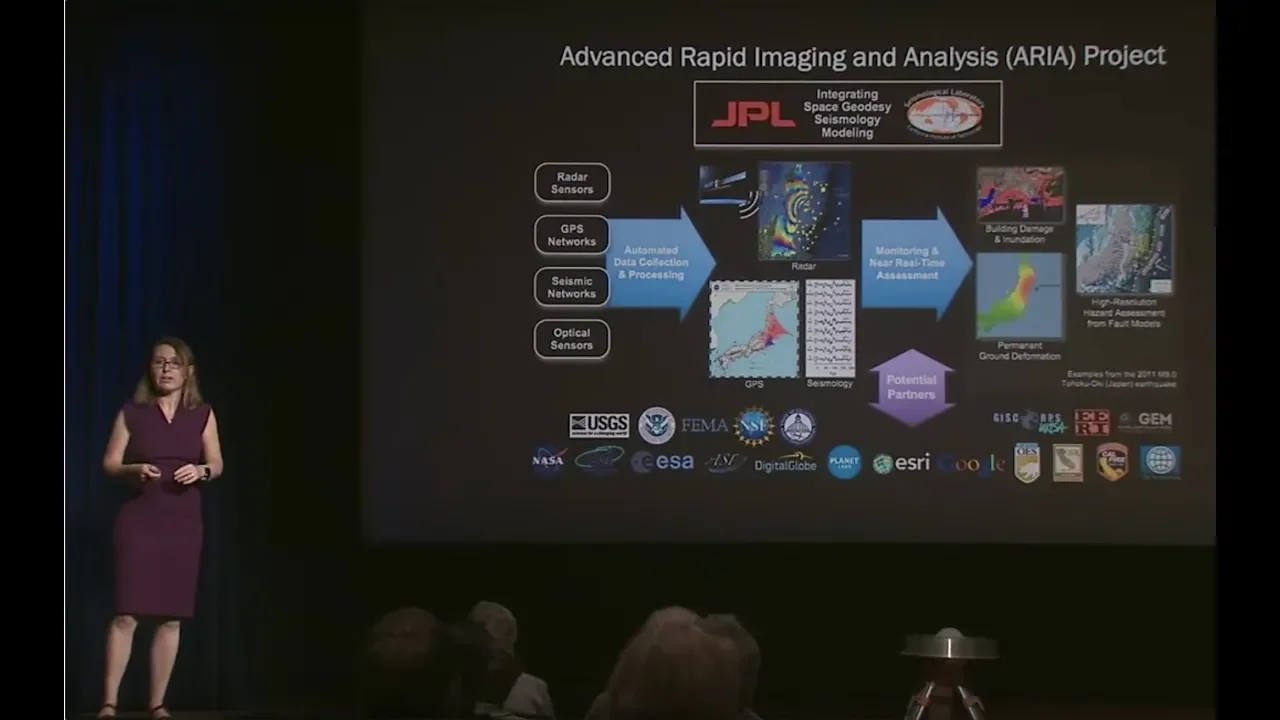
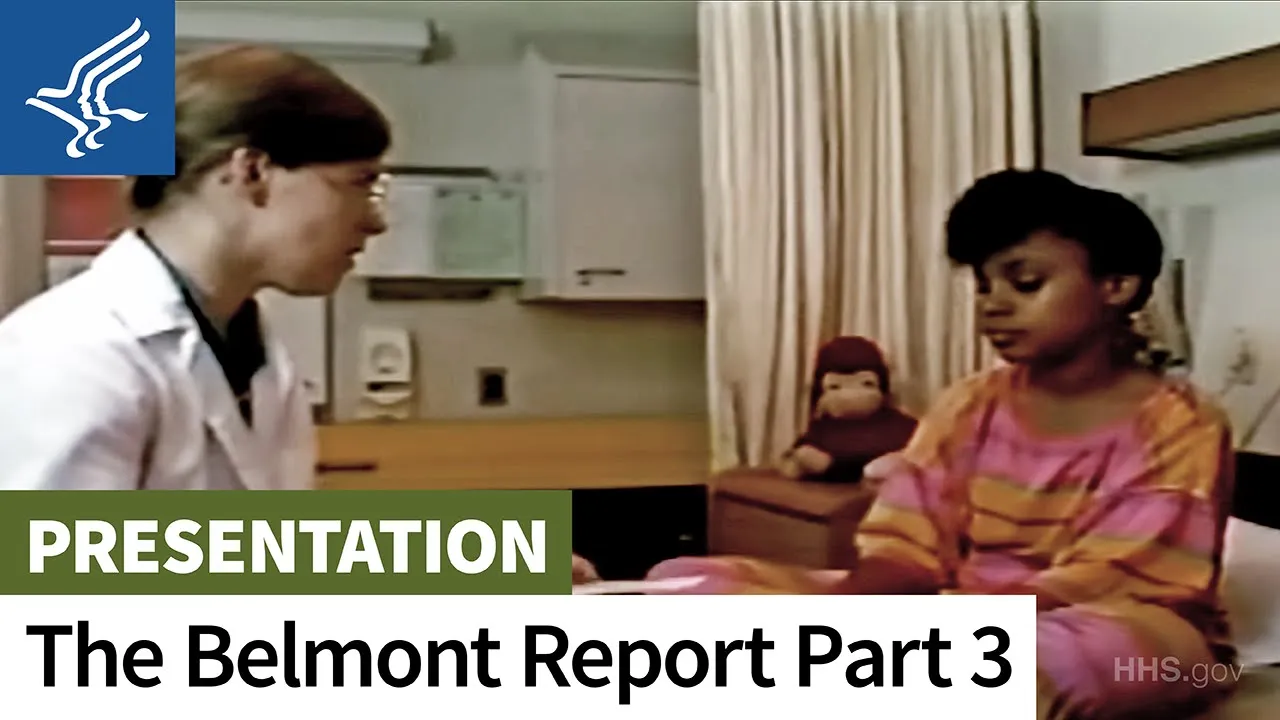
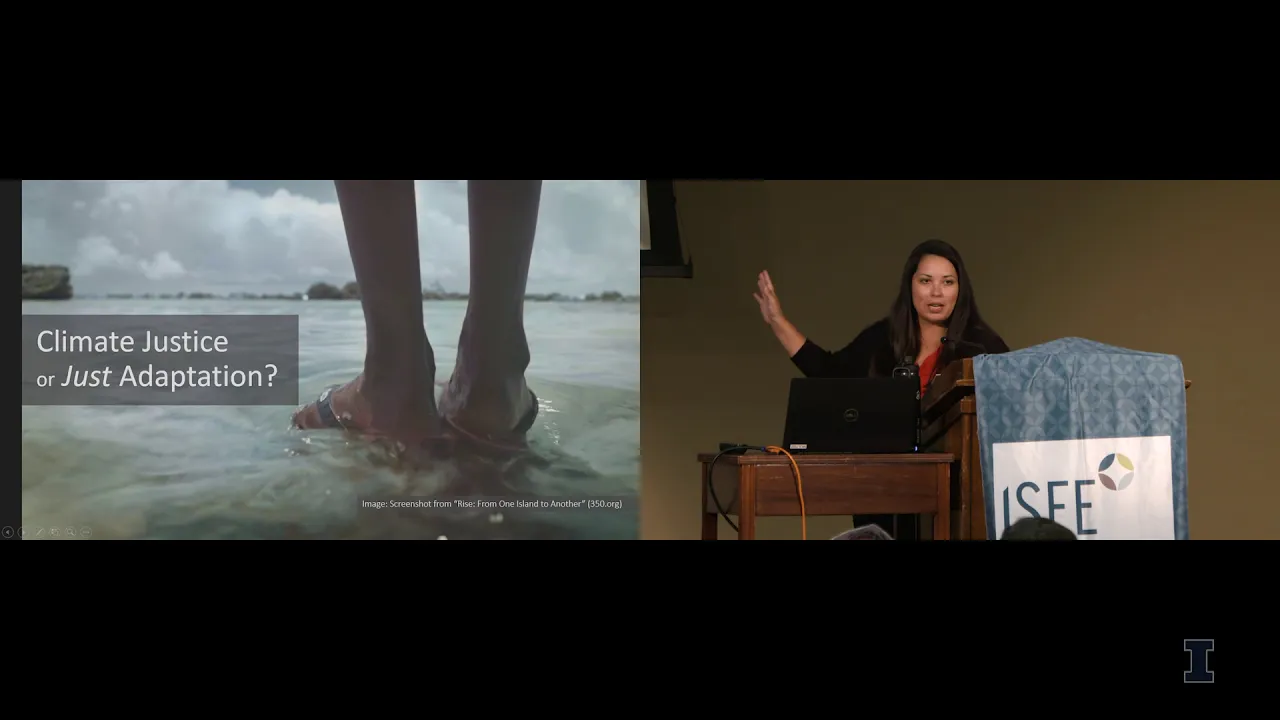
♪ Music ♪ In this lecture, Dr. Lori Peek discusses sociological theories of disaster and vulnerability.
She highlights the variables that characterize vulnerability to the impacts of disasters and notes that much research on vulnerable populations does not focus on the social structures and power relations that amplify risk.
She then discusses the pressure and release model to characterize the temporal impacts of disasters.
She uses the example of a project on the Gulf Coast that looks at the impacts of oil spills on youth health and she explains the range of methodological approaches used to measure these impacts.
Finally, she discusses how she and collaborators have built on vulnerability research to create curricula for high school students to engage in disaster recovery.
Good morning again everyone.
It's really nice to see you all again today and just as a reminder my name is Lori Peek and I am a sociologist at Colorado State University and I also co-direct our Center for Disaster and Risk Analysis there.
And I'm going to be talking to you today about risk, vulnerability, and resilience in disaster context.
And my work over the past 15 years has brought me to a variety of different locations that have been struck low by disaster, that are in the midst of attempting to prepare for or to mitigate from these events as well as to recover in the long-term.
And like many sociologists who study disasters, many people sort of see this as a dramatic and exciting undertaking and it is exciting and interesting to study extreme events, but I, like many social scientists who study disasters, do not necessarily do it because of their extreme nature, but instead as a sociologist I have long been drawn to the study of disasters because of, in many ways, their very routine nature and what it is that they reveal about our day to day social structures and about our society.
And so, Wisner and his colleagues say this in another form, they say "the crucial point about understanding why disasters happen is that it is not only natural events that cause them.
They are also the product of social, political, and economic environments... There is a danger in treating disasters as something peculiar, as events that deserve their own special focus."
And so if you walk into any sociologist's or social scientist's office who studies disasters, you will likely find a variety of titles on their bookshelves, so it might be a book by the name of <i>Disasters By Design</i> or perhaps a book by the name of <i>There is No such Thing as a Natural</i> <i>Disaster</i>, and so many social scientists who study so-called "Natural Disasters' do indeed take this perspective that disasters are fundamentally social events, they are not equal opportunity events and in fact, many social scientists argue that in the absence of a collision of a so-called natural event with a human population, there is no disaster, instead there is simply a natural hazard, and so by its very definition, disasters are social events because they require that interaction of the social or human environment with the so-called natural hazard.
And so to begin today to give you a framework for the kind of work that we do, I'm going to share some work from Wisner and his colleagues book <i>At Risk</i>, which I think offers one of the most widely used theoretical frameworks for people working in this particular space.
And so they begin their work by offering this model of what they refer to as The Social Causation of Disasters, so despite those sort of dramatic titles of the books like <i>There is No Such Thing as a Natural Disaster</i>, it's not that sociologists and social scientists who study these events don't take account of the natural environment, we do very much understand that again it's an intersection, and so their model begins with this idea of the natural environment, and then they take into account that the natural environment is, of course, there's spatial variation, there's ecological variation, and then that results in an unequal distribution of the opportunity for hazards.
And so, for example, the United States is one of the only places in the world that actually has tornadoes and so we're a particular hazards context for that particular natural hazard.
Then, in addition to this, this model takes into account that any natural environment then has this particular opportunities, locations, and resources for human activities, and so think about everything that we just learned from Tom about his particular research in two particular contexts, and think about how you would perhaps feed it into a model like this.
Then, in addition to sort of the resource and amenities side, we also know that there are particular hazards that exist within natural environments, and so this is sort of the natural environment moving down, and then there's also this social environment that's moving up, right, and so there are these social processes that co-occur and determine access for opportunities to exposure to hazards, and so these social processes often times things we try to take into account are demographic drivers, and so what is the class, race, age, etc. composition of a particular community or society.
Then, also looking at social systems and power relations, and how that feeds into class, gender, ethnic, and so forth inequality and stratification and then at the broadest lever, level there are political and economic systems that are then influencing all of this.
And so when we think about disasters, we try to think about all of these forces interacting.
And one note, in the U.S. context for a variety of reasons in hazards and disaster work and in emergency management in particular, there has been sort of this over focus, I would argue, on this particular box, and sort of the creation of so called vulnerable populations or vulnerable groups, and so there's a lot of discussion about the very young and the very old racial and ethnic minorities, women and persons with disabilities and so forth as being particularly vulnerable group to, groups to disasters, but one of the things that I think putting our work in a broader theoretical framework obviously does is helps us to understand why are these particular groups at extreme risk, but unfortunately a lot of the conversation about vulnerability doesn't put it in a broader framework.
Now another contribution of Wisner and his colleagues is they then move forward from this sort of broader idea of a social causation of disasters to actually offer what they call the PAR or Pressure and Release Model to understand vulnerability to disasters, and so they begin with what they refer to as root causes and so whenever you're trying to do what might be a social autopsy of disaster, and so after an event occurs if you were trying to trace back and to understand why was that event so deadly?
Why did 6,000 people die in the 1906 Galveston hurricane?
Why did 1700 people die in the 2005 hurricane Katrina?
So if we were going to do a social autopsy, we would begin with these sort of root causes of vulnerability in this pressure and release model.
And so root causes include things like when people and entire populations have limited access to resources, power, wealth, and so forth.
Also, I get, this is where ideologies come into play because political systems, economic systems, obviously determine levels of inequality access to power and so forth.
After the root causes in this particular model, then Wisner and colleagues write about so called dynamic pressures, and so the dynamic pressures begin to interact with these root causes, and so dynamic pressures include things like when a particular community lacks access to technical resources to particular skills and knowledges that would be beneficial in terms of preparing for mitigating disasters.
Also, in addition to these more micro level dynamic pressures, they also take into account macro forces, and so when there are things like rapid urbanization, rapid landscape change, and other things that are happening in a particular context, we can see the beginning of this increasing building of pressure.
And so then they again build on this into the unsafe conditions, and so this is where in their model they begin to bring in the physical or the built, and/or the built environment, and so particular locations are obviously more dangerous than other places, particular buildings and infrastructure elevate the risk or escalate the risk for particular populations also bringing in the economic factors, social relations, and then public actions and institutions.
And so, taken together number one root causes, number two the dynamic pressures, and number three the unsafe conditions, as across each of these sectors of the model as these things continue to build and accumulate, Wisner and colleagues refer to this as the Progression of Vulnerability.
Alice and I, Alice Fothergill, and I have also written in our work we talk about the accumulation of vulnerability and how these factors tend to have an inertial force in a lot of different contexts, but they use the Progression of Vulnerability in their model.
Then in addition to all of these sort of social economic pressures that are occurring on the vulnerability side, then the way in this particular model that they bring in the natural environment is through then adding on the hazards, so what are the particular hazards, risks that exist in a particular environment?
And then we again think about when and where and how does a disaster occur?
And so a disaster occurs at this intersection of the natural environment with these vulnerability factors, and so the worst disasters, if we could, given the very different contexts that we all work in in this room, if we could all conjure in our minds and try to think about what are the worst events that we know about in the places where we work?
Wisner and colleagues would argue that most likely the worst, and here we're talking about the most deadly, the most costly, the most injurious events tend to have sort of the most boxes that you would check off, so there are the most vulnerability factors accumulating and the hazards also tend to be quite extreme in particular locations, and so this is their model that often times hazards researchers use when they're working in this space.
Now what I'm going to do with my remaining time is the request of us, as our scholars today was to try to follow up on Andrew's very good talk yesterday about the various methods that we use and so we tried to think through as a group of scholars getting to visit with all of you, what are the different projects that we have worked on that might illustrate some of those different approaches to doing research?
And so the one that I'd like to share with you today, I hope I'm going to be able to walk you through a project that involves many of the methods that Andrew shared with you yesterday all the way through to an actual intervention that I have been working on in several communities where we've been conducting sociological research.
And so much of my work over the last decade has been in the Gulf Coast and in particular in Louisiana, Mississippi, and Alabama, and so what I'm going to share with you today is talking about how with that work that is often times brought me in very close contact with often times the youngest survivors of disaster in that context, how we have moved from literally the use of surveys and secondary data quite detached in many ways from these communities to interventions that have brought us to the ground level to work closely with the people most affected by these disasters.
And so the starting place even though much of this work has grounding in hurricane Katrina, the project I'm going to talk to you about today we actually started in the aftermath of the BP oil spill.
And so just as a reminder we're going to come upon the six year anniversary of this event very soon.
It occurred on April 20, 2010 when the Deep Water Horizon oil rig exploded and when that happened, 11 men on the boat died, 17 more were badly injured, and oil spewed for 87 days as a result of this explosion.
And in the end, 180 million gallons of oil were released by the time the well was capped and does anybody know this is the largest, by far and away, the largest oil spill in our national history, what's the second largest oil spill?
Exxon Valdez, which occurred in "89 in Alaska.
This oil spill was 16 times larger than the Exxon Valdez oil spill, this was a tremendous event and again, largest in our national history.
Interestingly the third largest oil spill in our nation's history was actually caused by hurricane Katrina, which led to multiple oil spills along the Gulf Coast and the upsetting of rigs.
So what I'm going to share with you today is also a team effort, and so this is what we refer to as the Gulf Coast Population Impact Project and this has involved everything from medical doctors to socio-medical scientists, geographers, persons with backgrounds in business, and sociologists, and so a pretty diverse team although I will say, I'll talk to you tomorrow, not as diverse as many of the interdisciplinary teams that I work on that also involve engineers and geophysicists and others, but this is a diverse and a large team effort.
And so first during phase one of this project, this like many post disaster efforts began soon after the oil spill occurred, and so during phase one of this project, that's Dr. Irwin Redlener, who is the director of the National Center for Disaster Preparedness at Columbia University.
He and the group of us from the National Center for Disaster Preparedness conducted a series of town hall meetings and parent focus groups in many of the communities that were being affected by the oil spill.
And then followed up that, those parent focus groups where lots of different concerns were being expressed with a telephone survey of about 1200 parents who were living within 10 miles of the Gulf Coast and just to give you sort of some highlights of what came out of that survey work, so over 40 percent of the people who were living within 10 miles of the coast said they had experienced some direct exposure to the spill and we measured exposure as either smelling the oil, having physical contact with the oil were the two ways that we measured exposure; about 30 percent of the parents reported that their children had experienced either physical symptoms or mental health distress as a perceived consequence of the oil spill; and about 20 percent of the households said they'd experienced a decrease in income as a result of the spill and 8 percent had already lost their jobs.
And so during phase two which began nearly 2 years after the oil spill, where we wanted to go in and do much more systematic work to follow up on these suggestive findings from the early quick response work.
We wanted to first try to identify where were the most adversely impacted coastal communities in the affected region which stretched, as a reminder, all the way from Florida over to the western border of Louisiana, where this oil ended up touching the beaches.
Secondly, we wanted to understand in particular given our own research agendas and interests, how the oil spill had impacted the health, mental and physical, as well as the lives and livelihoods of the children living in this area.
And then third, we wanted to understand the resources and services that would be most helpful to the young people living in this region, and so there was very, very much from the beginning and really an action component embedded in this larger project.
And so our approach we began with analysis of secondary data, and then we moved into doing a household survey, and then we followed that with community engagement that involved key informant interviews as well as focus groups.
And so in terms of the secondary data remember our first goal was try, to try to understand where were the communities that were most adversely impacted by the spill?
And so in order to do that we thought we need to first understand where did the oil actually go?
And so we spent a lot of time trying to get our hands on it, eventually did the NOAA oil spill data, which actually kept track of where was the oil in the water, but also where did it come ashore?
And then we also used BP individual and business compensation claims data as a proxy for the economic and social impacts caused by this particular disaster.
And then what we did is we generated a series of maps using this data, and so this is just one of the maps that we ended up generating, but this shows where the individual compensation claims were that individual households submitted to BP, and for those of you that don't know there was a ruling after the BP oil spill that households that were suffering any form of mental distress were excluded.
You could not ask for any kind of compensation for mental distress, you could only file a compensation claim if you had lost a job or if you actually had a physical injury as a consequence of this spill.
This was very much connected to the ruling after the Exxon Valdez oil spill where they also did not allow those with mental health claims to submit claims because of the fuzzy nature of mental health distress.
And so through looking at the different claims data - the business, the individual, and the oil data - we then went through and we tried to figure out where were the so called hotspots in terms of potential adverse impact, and so this again shows where were the areas that seem to have something going on in terms of the relationship between the spill and the economic impacts.
Then, once we had looked at all this secondary data, what we ended up doing is saying okay we can't go, like many social scientists, we cannot go to that entire strip of land that ranges from Florida to western Louisiana, and so we used that secondary data to then help inform our sampling approach for the survey that we were set to conduct.
And so just to give you a broader sense of our sampling methodology, so we wanted to recruit a representative sample of households with children between the ages of 3 and 18 across that four state region, among those potentially highly-impacted communities, and so here we operationalized community much like Tom did in his first study just shared as at the zip code level, and we also used a multi-stage sampling design, where we selected communities census blocks and then we looked at within those blocks for households with children.
And we used that oil impact index, which brought together the NOAA data as well as the individual and business compensation claims data, and then we put all this together, and then we were able to identify what we thought were the fifteen highest impact zip codes, which we then decided we were going to go to with our household survey.
And so our survey instrument we looked at a variety of issues with the survey, and so we wanted to understand exposure to the oil spill as well as potential health effects were some of the key things that we were looking at, in addition to gathering demographic data and so forth.
And so just to give you sort of a general sense of what happened with our survey, and so in the end we knocked on over 6800 doors and found out about 2000 of those were ineligible, about 4600 people were contacted as a result of this and we were able to actually conduct the survey with 1437 individuals, and so that is our final sample size, which represents a final response rate of about 31 percent.
Okay, and this is just, we looked at our data from a lot of different angles and so a lot of our analyses we're trying to understand things like how did exposure vary by state?
And you can see that across the states when we were looking at physical exposure, which again included direct contact with the oil, the tar bar, balls from the oil, or playing on the beach and touching the oil and so forth, that Alabama, for example, had a much higher percent of persons who said their children were physically exposed and environmentally exposed as well as economic exposure, and so we looked across the states at things related to exposure, then we also looked at various health effects that we ask about related to physical health effects such as respiratory problems, problems with the skin, whether health had worsened and so forth, and we tried to understand differences across these different communities that we are working in, in the four states.
And then, what we did is from all the survey data, we looked at those fifteen communities and then we decided that we were going to go into the communities that somehow stood out as different from the, statistically speaking, they seem to express either higher levels of physical and economic exposure and/or higher levels of adverse health impacts, and so this is how we then selected five communities for a community engagement portion of this study.
And so this just sort of shows sort of again our levels of this mixed methods research, and so we move from the secondary data and then this is the place where we went for the surveys, and then these are the places where we ended up going for the community engagement.
And so in the end we went to Lower Lafourche and Grand Isle, New Orleans East, Gulfport in Mississippi, and South Mobile County in Alabama.
And for the community engagement portion of this, again we ended up conducting focus groups as well as key informant interviews.
And this is the number of people that we had in the qualitative portion of our study, and so we spoke to 70 children and youth in focus group settings, we also interviewed parents and grandparents, we interviewed teachers and nurses, physical and mental health providers, health administrators, and then community leaders and advocates, and why I present these different respondents in these sort of concentric rings is because we tried to select people who could try to tell us about why are the children in this community, why do they seem to be expressing differential health impacts?
And so when we started the community engagement, David Abramson, who is now a professor at NYU, we ran these focus group interviews and we started every single focus group interview in the five different communities by saying we're here so we hope that you can teach us about the quote unquote story behind the numbers.
And what we did for each of those five communities where we went, we know that it's hard to like tell a story of a big, large scale quantitative study, and so we worked with the wonderful team at Columbia University and for each of those five communities where we ended up doing the community engagement, we asked them to create a poster that looked just like this.
And so, this is the one for Gulfport, Mississippi and what we did is we started the focus groups and we said, you know, Gulfport, this is what we did and we came in and we asked about exposure to the oil spill, and you can see that you look just like the entire four state region, that about 18 percent of people in Gulfport said their children were exposed to the oil spill, but then when we started looking at other things, it seems like Gulfport that something's going on in your community that more people were losing their homes and jobs.
Also something's going on in Gulfport that you were twice as likely as parents to express that the children in your community were experiencing mental health problems, and so we actually showed this poster to our focus group respondents that were sitting at a table that looked just like this, and then we would just say so what do you think of this?
And from there an hour and a half of discussion would commence that we were recording and so forth, so we can learn in more depth about what was going on in these communities, and so some of the themes that came out of those interviews included things like so this sort of vulnerability perspective that we began this with is that one of the big things that Wisner and his colleagues say is that natural disasters cannot be removed from the broader social, economic, and political context in which they occur, and that was something that in these communities at extreme risk spoke to us so much about how the oil spill and the effects that we were picking up on our survey, they wanted to share with us all of the other hazards and political and economic shocks that were influencing their lives.
Also, there was a lot of discussion in these focus group discussions about how disasters, either a hurricane Katrina or an oil spill, were these acute stressors, but then there were many other chronic stressors that were occurring in these communities and people were quite articulate about that.
And so this included things like the repeated disasters and so one thing our research showed is that children between the ages of 14 and 18 living in that Gulf Coast region where we've been doing so much work, children between the ages of 14 and 18 have experienced on average 3.4 major disasters already in their young lives.
And so stop and take that in for a second, and think about what that would mean if you were a 16 year old who had already survived Katrina, Gustav, Isaac, and now the BP oil spill, what does that do in your young life?
And so the parents and teachers and so forth were able to talk much about those acute stressors, but then they also talked a lot about that broader political and economic environment.
Also, we learned a lot about what those stressors then result in, in terms of the social, educational, health, and behavioral issues among children and youth in these communities.
And so this includes mental and physical health issues, we learned a lot about children and delinquency, drug and alcohol use, fighting and the corrosive community that seemed to emerge in these communities, where compensation claims would go to certain families and not other families, and what that did to the social fabric of these communities, risky sexual behavior.
At one of the high schools that we visited in Alabama that's about a 2,000 student high school, 1 in 11 girls are, were pregnant in that high school at the time of our field work.
And one of the key informants in that community said to us "the only thing to do around here is go fishing, get high, or get pregnant.
You can't go fishing anymore, so you figure out what they're doing.'
Okay, and so we ended all of our focus group interviews in these communities with both the youth so we could ask them what they needed and wanted in their communities as well as with the adults to ask them, what do children and youth actually need in this community?
What might actually help them to respond to these chronic as well as acute stressors that are affecting their day to day lives?
And so some of the things that we heard over and over and over again were that first and foremost children and youth need basic needs.
In another community where we were working in Mississippi, about 60 percent and several of the children in several of the schools that we were working in were in food insecure households, and so they were talking about, you know, a lot of these children they don't have their basic needs met.
Then there were these disaster specific needs that we're layering on top of and exacerbating the basic needs, and then finally we heard a lot especially from the youth themselves about their need to help and their need to be engaged and how excluded they often times felt in these post disaster contexts from not just the decision making that was ultimately affecting their lives and their families lives, but also from the on the ground wanting to actually be a part of the recovery and how few opportunities and spaces there are for children to actually be engaged.
And so this is an example of one of the things we heard from the teens in the focus groups, so one of the youths said "I tried to get involved in oil spill cleanup and we called and we called and you had to be 18 or so to help clean up.'
Then the second teen said "We were only 15' at the time.
"With all that, we really think there should be some kind of outlet for youth to get involved after disasters.
Just some kind of outlet.
The first teen said "We offered several times, filing the paperwork, they were like, basically, you might get a paper cut and sue us.
And so we just wanted to make a difference, but we couldn't.'
A fourth youth in that focus group said "You feel so helpless, especially as a young person.
It's your community and you have this pride for your community and you see it hurt and you want to fix it, but -.'
And then the third teen said "We weren't old enough to work, so we had to just sit home and do what we could.
If you were able to funnel some of that energy, it would help us a lot more to get your mind off of it, you can emotionally feel like you're helping and it brings a lot of good of it...' And so what do children and youth need?
We went through all of this focus group data, all of this individual interview data that we collected in these five different communities and we actually realized that what we heard over and over again fit nicely with a acronym.
And so what we, what we heard over and over that children and youth really, really do need new skills, they need opportunities for skill building, and they very much recognize that as we moved into this 21st century economy, that what their grandfathers did, grandmothers did, and mothers and fathers have done is likely not going to be available to them, so fishing, shrimping, oystering, and so forth.
The children and youth are quite aware of the changes in their natural environments and they're, they are very aware that there is a high probability they will not be doing what they did generationally and they want to learn new things, new skills, they want to have more hope, they want to have more opportunities for recovery and also engagement, and this led us, the team at Columbia University, NYU, and Colorado State to develop Shoreline.
And so, I'm going to just quickly go through and tell you a little bit about this program that we have been working on for the last, this is now the third year of Shoreline.
And so what it is, the tagline of Shoreline also came from the young people themselves, and so the tagline of Shoreline is that it's all about youth helping youth recover from disaster.
And Shoreline is centered around this notion of project based learning and so what we heard again and again that youth want to be involved in not just identifying the problems, but actually fixing them, and project based learning is in sort of this state of the art in education right now with young people is that we know young people learn the most, they remember the most, and they're able to affect the most change when they are the ones who identify the problems and the solutions.
Where are we located?
And so we established our initial Shoreline chapters in those five communities where we did the community engagement and found those adverse impacts of the oil spill.
We, since the initial founding of Shoreline, we are now in two high schools in New York City that were, have a lot of youth who were affected by Sandy and we're getting ready to start two chapters in Colorado that were affected by floods and fire.
And how this has worked, David Abramson and I went down and we met with the principals at these high schools and we always do that because one of the things we learned from our mentors is you must have tie in from or buy in from the top down, in order to do anything, and then we identified teacher sponsors in each one of the schools where we work, and then we ended up recruiting students.
We have an application process that we use in these different schools where students actually apply to be in Shoreline, writing about their past disaster experiences as well as about their interest in affecting change.
And so just in closing, something I wanted to say is that this has been really an incredible undertaking, and so when we talk about moving from secondary data and surveys all of the way to social change and working in communities, that this has been such an important reminder of like really and carefully thinking through how is it that we take the data that we collect as social scientists and then use it in ways that we hope will affect the people who we've been studying, and that came directly from a lot of the people who we interviewed who requested these kinds of interventions, who really pushed us as social scientists to go further with our work.
♪ Music ♪
Up Next
10:36
Ulrich Beck's Risk Society Explained | Sociology Concepts
@steventhreadgold7537
45.2K views•2019-09-12

108:25
Mutual Aid Explained: Definition, Examples, and How to Participate
@BCRWvideos
24.2K views•2020-07-24
54:57
Contemporary Sociological Theory: Micro, Macro, Integrative
@NaSESYNC
45.7K views•2016-02-17
9:41
What is Sociology? The Sociological Perspective Explained
@crashcourse
4.6M views•2017-03-13
Related Study Plans & Knowledge Roadmaps
Structured learning paths in Sociology
sociology
Disaster Sociology: Risk, Power & Recovery
01Foundations of Disaster Sociology
02Structural Vulnerability & Social Inequality
03Ulrich Beck and the 'Risk Society'
+ 2 more learning modules
15h5 modules
Explore Roadmap
sociology
Celebrity Culture: From Hollywood to TikTok
01Foundations of Celebrity Sociology
02The Rise of Micro-Celebrity & Digital Platforms
03Parasocial Relationships & Algorithmic Intimacy
+ 2 more learning modules
12h5 modules
Explore Roadmap
sociology
Hostile Architecture: Space, Power & Control
01Introduction to the Sociology of Space
02Social Control and Surveillance in the City
03Hostile Architecture and Defensive Design
+ 2 more learning modules
12h5 modules
Explore Roadmap
sociology
Loneliness Epidemic: Third Places & Isolation
01Foundations of Social Capital and Community Cohesion
02The Death of Third Places and Urban Space Erosion
03The Privatization of Leisure and Atomization
+ 2 more learning modules
12h5 modules
Explore Roadmap