
![Introduction to Critical Realism: Part Six - The Philosophy of metaReality [Part Two]](https://i.ytimg.com/vi/Di492Nujiz0/sddefault.jpg)



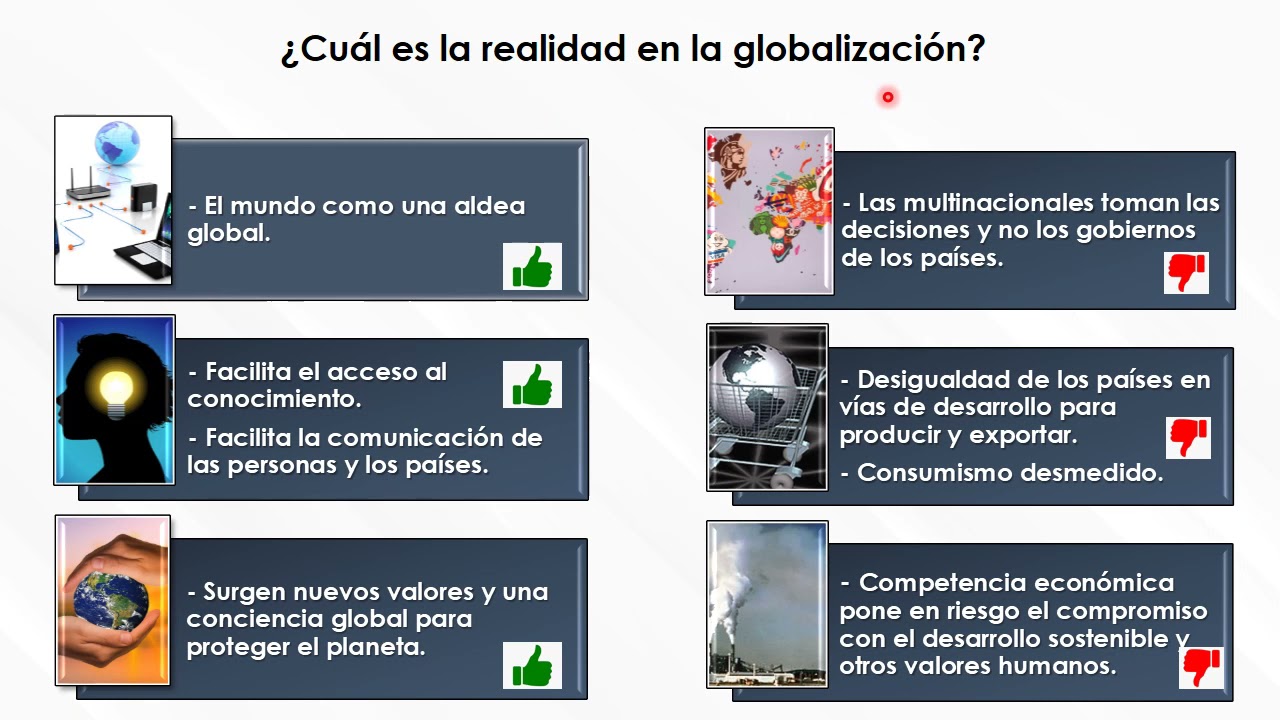

















Ulrich Beck's concept of the Risk Society describes how modern societies have shifted from addressing immediate survival concerns to anticipating and managing future risks, particularly environmental ones; unlike earlier industrialization where risks were localized and could be escaped by wealth (like moving to suburbs), contemporary risks like climate change, radiation, and pollution are evenly distributed across populations and transcend national boundaries, necessitating new forms of global cooperation and cosmopolitan solidarity to address shared challenges.
Ulrich Beck's Risk Society Explained | Sociology Concepts
Added:Understanding of Classical Modernity: A foundational grasp of how traditional industrialization, rationalization, and capitalist development shaped early modern societies.
Basic Concepts of Globalization: Knowledge of how economic, cultural, and political processes transcend national borders, facilitating global interconnectedness.
Foundations of Environmental Sociology: Awareness of the relationship between human societies and the natural environment, particularly how industrial growth impacts ecosystems.
Introduction to Sociological Theory: Familiarity with core sociological concepts such as social structure, institutional change, and individualization.
Anthony Giddens on High Modernity: Examining Giddens' parallel concepts of 'manufactured uncertainty,' 'runaway world,' and 'reflexive self-identity' in late modernity.
Global Risk Governance and Policy: Analyzing how international institutions (e.g., IPCC, WHO) attempt to manage transboundary risks like climate change and pandemics.
Critiques of the Risk Society: Exploring scholarly arguments that challenge Beck, specifically focusing on how class, race, and global inequality still heavily dictate risk distribution.
Biopolitics and Surveillance Capitalism: Investigating how modern states and corporations monitor, calculate, and manage populations under the guise of risk mitigation.
45.2K views900likes10:36Original Release: 2019-09-12
[Music] ulrich beck is one of the most recognizable authors in environmental sociology beck a german professor of sociology is known for a range of works on the environment modernity and globalization with specific attention to the issues of global risk how does humanity approach the problems that we anticipate happening or may fail to anticipate in the future Beck was a publicly active sociologist and was well regarded in Europe and internationally he often engaged in public debates on contentious topics it's the term risk society in the theory of reflexive modernity with which he's most associated the concept of a world risk society has had a significant impact on a sociology of the environment while geologists have described an Anthropocene era in which humans are the most significant influence on the planet and which can now be seen in a layer of fine plastics forming on the bottom of the ocean Beck gives us a series of concepts and some epic quotes with which to analyze this era sociologically in 1986 Beck's German version of the book risk society was published Beck's publication coincided with the Chernobyl disaster a major nuclear power station meltdown occurred in the Ukraine in the former Soviet Union this led to significant levels of radiation across the Soviet Union and Europe the Chernobyl disaster provided a clear example to support Beck's thesis and by 1992 when it was published in English the concept of a risk society was well established in sociology a risk Society is one which spends much of its time looking to concerns about the future in a risk society we move into a state of worry about future catastrophe formerly disasters may have been dismissed as being the outcomes of forces beyond the control of humanity for example a plague might be explained as the will of God's something that can't be controlled by people and increasing the awareness of potential problems means that people living in the conditions of modernity spend more of their time thinking about what will happen in the future further because new risks are produced by humans there is a loss of faith in the very institutions of modernity such as questioning trust in science modernity and progress become part of the problem not the solution the social machine that is industrialization continues progressing with inertia based in a set of values about the accumulation of wealth the imperative to increase productivity continues to produce more environmental risks the advances of first modernity lead to a boomerang effect in a world risk society as Beck explains we are suffering the latent side effects of the victories of modernity the solutions that we created in the first phase of modernity such as chemical agriculture electrical energy and rapid transportation lead us to the risks that we face in the second phase of modernity we move from the first modernity in which taking risks advances humanity to a second or reflexive modernity in which humanity becomes more cautious and reflexive about the modern project itself new concepts such as the precautionary principle and sustainability emerge reflexive modernity does not mean that we are necessarily self-aware and attuned to the effects of our actions upon the world but the modernity has turned upon itself the very things that humans had created during the industrial phase of modernity such as in the case of Chernobyl nuclear power as a means to provide a good were coming back to bite us during this second reflective modernity and it's not only nuclear radiation but pesticide residues ozone depletion carbon emissions toxic plastics and biological pathogens that come back at us and there may be risks that are yet to fully emerge or a still part of science fiction in a risk society we think about the zombie apocalypses and Frankenstein monsters yet to be released by genetically modified organisms and artificial intelligence in a risk society pointing the finger at those who cause the problems may also be difficult many of us are likely to be implicated in the very production of the problem for example carbon emissions are produced by a wide range of practices the companies that produce the hazardous good might have gone out of business or be the government itself there may be a significant gap in time between the production of the risk and its impact by which time those who produce the harm of long gone and we might need advanced instrumentation to even detect that which is causing us harm to detect radiation we need a Geiger counter as Beck describes the impacts do not assault the sensors as did the impacts of first modernity if you have a steelworks in your hometown you can detect the risks with your own nostrils but in a risk society the effects are more difficult to detect and predict importantly back highlighted that these new risks were far more evenly distributed across the population poverty is hierarchic but smog is democratic in the first phases of industrialization living next to the factory would mean greater risks the rich simply moved to the suburbs and commuted in this second phase of modernity risks are more evenly distributed across the population climate change is something that the elite might be able to avoid temporarily but from which they cannot make themselves immune to the boomerang effects of risk this is not to say that the effects of environmental problems are not distributed along class lines but even if one builds an eco dome to escape temporarily there is no escape if the whole planet goes under there's not much point having more of the cake if the cake itself poisoned these new risks such as radiation pesticides or climate change and not as affected by the boundaries with which were familiar we enter a phase in which we're less concerned with who has the most stuff and who owns the means of production to a new phase in which we're more concerned about defining and knowing risk and not being harmed in a risk Society we move from analyzing the distribution of goods to analyzing the distribution of Bad's new actors emerge such as insurers and reinsurers and risk Assessors mass human movements shift from colonizing New Territories to fleeing from harms in world risk society risks are no longer merely the side effects of industrial society they become the predominant product of society and sociological analysis will look to the distribution of the impacts as the key driver of social forces Beck proposes that there is something good that can come from Bad's in first modernity humanity aligned itself along national lines the nation-state was an imagined community that served strategic purposes for the era in a risk Society Beck argues that the attachment to the nation-state declines in favor of allegiance to new imagined communities that Traverse borders new allegiances emerge new imagined communities develop to address risks together he argues that a cosmopolitan moment must occur this second phase of modernity must coincide with a new enlightenment Beck in contrast to some other sociologists envisages that the shared challenge of cooperatively addressing issues such as climate change will bring people together not tear us apart for this Beck is attributed with being somewhat optimistic in this new globalized and cosmopolitan world Beckett argues that all humans are able to consider themselves equals past attachment to categories such as family nation or class come into question in reflexive modernity key aspects of industrial society such as the gender division of labour or class divisions the very differences that we established for the functioning of industrial society decrease in importance Beck suggests that sub politics will emerge as part of the cosmopolitan moment to use the adage politics makes strange bedfellows we will be forced by the encounter with new risks to form new allegiances with those with whom we've been opposed on other matters people you will be forced by your circumstances to know your enemy Beck calls upon social science as a discipline to its self undergo a cosmopolitan turn he highlights that there is a methodological nationalism within sociology because it also emerged during the 19th and 20th centuries Beck's call is for a new paradigm in the social sciences Beck passed away early in 2015 as post truth brexit and American nationalism under President Trump were emerging Beck's legacy has provided some important suggestions for sociology into the future [Music]
Up Next
42:37
Ulrich Beck on Living in a World Risk Society | St. Gallen Symposium
@StGallenSymposiumLive
57.5K views•2012-05-05

108:25
Mutual Aid Explained: Definition, Examples, and How to Participate
@BCRWvideos
24.2K views•2020-07-24
19:23
How to Analyze Conversations Scientifically | Elizabeth Stokoe | TEDx
@TEDx
1M views•2014-12-04
9:41
What is Sociology? The Sociological Perspective Explained
@crashcourse
4.6M views•2017-03-13
Related Study Plans & Knowledge Roadmaps
Structured learning paths in Sociology
sociology
Disaster Sociology: Risk, Power & Recovery
01Foundations of Disaster Sociology
02Structural Vulnerability & Social Inequality
03Ulrich Beck and the 'Risk Society'
+ 2 more learning modules
15h5 modules
Explore Roadmap
sociology
Celebrity Culture: From Hollywood to TikTok
01Foundations of Celebrity Sociology
02The Rise of Micro-Celebrity & Digital Platforms
03Parasocial Relationships & Algorithmic Intimacy
+ 2 more learning modules
12h5 modules
Explore Roadmap
sociology
Hostile Architecture: Space, Power & Control
01Introduction to the Sociology of Space
02Social Control and Surveillance in the City
03Hostile Architecture and Defensive Design
+ 2 more learning modules
12h5 modules
Explore Roadmap
sociology
Loneliness Epidemic: Third Places & Isolation
01Foundations of Social Capital and Community Cohesion
02The Death of Third Places and Urban Space Erosion
03The Privatization of Leisure and Atomization
+ 2 more learning modules
12h5 modules
Explore Roadmap