





![Unidad 2: Ulrich Beck. La [Modernización] Reflexiva. Curso: Sociología Simétrica y de la Información](https://i.ytimg.com/vi_webp/u8TT-b2T-aI/maxresdefault.webp)















World risk society refers to a stage of modernity where societies are increasingly defined by manufactured uncertainties and global risks that transcend national boundaries, requiring a paradigm shift from methodological nationalism to cosmopolitan sociology that recognizes interconnectedness and the need for transnational cooperation to address challenges like climate change and financial crises.
Ulrich Beck on Living in a World Risk Society | St. Gallen Symposium
Added:The core concept of Ulrich Beck's 'Risk Society' (Risikogesellschaft), particularly the transition from the distribution of wealth in industrial society to the distribution of risks in late modernity.
The sociological distinction between natural hazards (external risks) and 'manufactured risks' (risks produced by human technological, scientific, and economic progress).
Classical sociological theories of modernization (such as those by Max Weber, Karl Marx, and Émile Durkheim) to understand how Beck's concept of 'reflexive modernization' departs from them.
The fundamental principles of Critical Theory (associated with the Frankfurt School) to contextualize Beck's call for a new critical theory adapted to the global age.
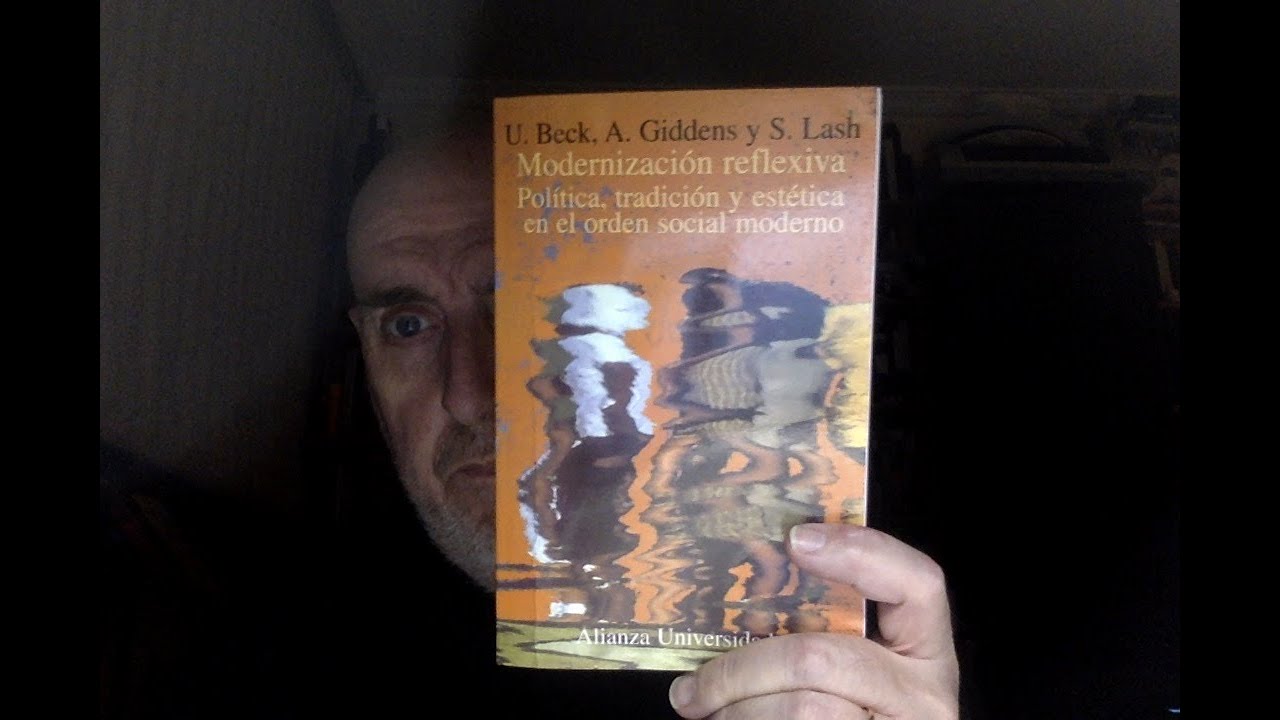
Reflexive Modernization: Deepening the study of how modern institutions self-confront the unintended consequences of their own actions, in dialogue with theorists like Anthony Giddens and Scott Lash.
Cosmopolitanism and the Cosmopolitan Outlook: Analyzing how transboundary global risks compel the emergence of transnational political cooperation and a cosmopolitan common sense.
Case Studies in Global Risk: Applying Beck's framework to contemporary crises such as climate change, global financial instability, and algorithmic/AI existential risks.
Critiques of the Risk Society: Examining scholarly criticisms, particularly post-colonial and class-based arguments that challenge Beck's claim that global risks affect all social classes equally ('smog is democratic').
57.5K views492likes42:37Original Release: 2012-05-05
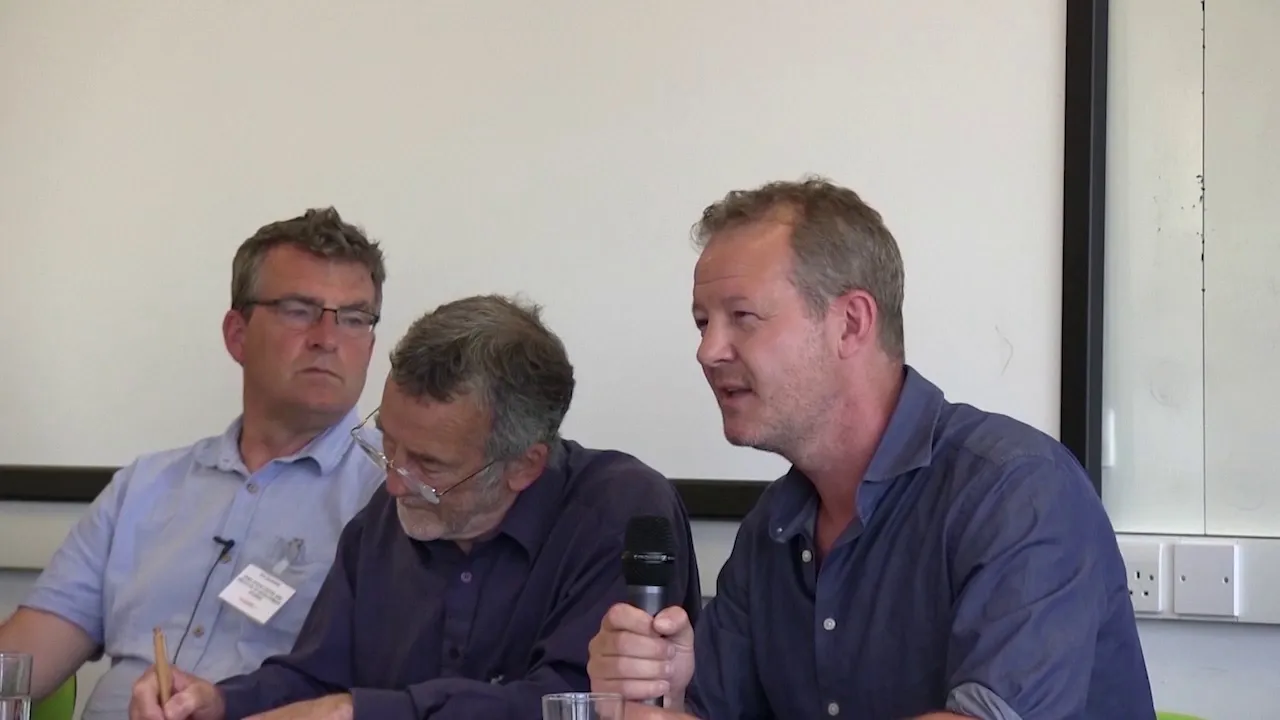
well thank you very much for staying here in this darkroom not attending the nice Sun outside in my lecture I want to ask the question what does living in and coping with word with society mean the best way to start is with one example a couple of years ago the US Congress established an expert Commission to develop a language or symbolism capable of warning against the threats posed by American nuclear waste that's ten thousand years from now the problem to be solved was how must concept and symbols be designed in order to convey a message to future generations millennia from now the Commission included physicist anthropologist linguist NOAA scientists psychologists biologists classical scholars artists theologians etc the first question it has to address was will the United States even exist ten thousand years from now of course the u.s. Commission had no trouble answering that question USA forever however the central problem of how to create a model of design to start a conversation with the future 10,000 years from now prove to be insoluble the expert looked for models in the oldest symbols of humanity they studied the construction of Stonehenge and the pyramids they examined the historical reception of who Mia and the Bible but these reached back at most a couple of thousand years not ten four the anthropologist recommended the symbol of the skull and crossbones a historian reminded the Commission however that the skull and the crossbones symbolized Rhys erection for the Artemis and the psychologist conducted an experiment with three-year-olds if the symbol was affixed to a bottle they answered sleaze coated poison but it was placed on the wall they enthusiastically Gerald pirates other scholars proposed paving the ground around the waste side with quranic metal and stone plaque which characterized as passing all kind of warnings but the linguists were innumerous that they would only be understood for 2,000 years at most the very scientific sophistication of the commission showed how the crisis of modernity followed from its triumphs we are not actually I would say in a crisis of modernity we are suffering from the consequences of the victory of modernity the unwanted and unseen consequences of the victory of modernity and here even we have one of the indicators even language even language fails when faced with the task of warning future generations against the dangers we have introduced into the world by using high modern technologies in this lecture I want to investigate the irony of risk which is ambivalence being at risk is the way of being and ruling in the world of modernity being at global risk is a human condition at the beginning of the 21st century of word rest society but against the grain of the current widespread feeling of doom I would like to ask what is the wrath of history which ought which is also inherent in word with society the mergers with its realization or more tightly formulated is there an enlightenment function a cosmopolitan moment of word rest society so what are the opportunities of climate change and the financial crisis and what form do they take there is an Australia built into foundations of European social science thought which has never never disappeared perhaps paradoxically this Knost area can be overcome with a theory of world with society my aim is the non nostalgic new critical theory to look at the past and the futures of modernity in my argument I want to keep the two contradictory views within modernity self-destructiveness and ability to begin a new imbalance with one another I would like to demonstrate this Ian's three steps drawing on empirical research in my Munich Research Center on reflexive modernization first old the dangers new risk what is new about word with society second cosmopolitan moment what does this mean third consequences is the need for a paradigm shift in the social sciences old dangerous new risk what is new about word with society modern society has become a risk society in the sense that it is increasingly occupied with debating preventing and managing risk that itself has produced that may well be many will object but it demonstrates why the hysteria and politics of fear produced by the mass media on the contrary would not someone looking at Western society from the outside have to acknowledge it the risks which get us worked up a luxury risks more than any else after all our world is a lot safer than that say of the war-torn regions in Africa Afghanistan or the Middle East a modern society is not distinguished precisely by the fact that to a large extent they have succeeded in bringing under control contingencies and uncertainties with respect to accidents violence and thickness in crisis as - as such observations may be they miss the most obvious point about risk that is the key distinction between risk and catastrophe risk does not mean catastrophe risk means the anticipation of catastrophe we have to distinguish between the future future and the present future the future future is in principle unknown we are always talking about the future but the future future is in principle unknown we are actually when we talk about the future we anticipate the future but all kinds of means which we have those might be mathematical models or might be some kinds of designed and visualizations symbolic forms staging mediation and so on so it is actually the anticipated future the present future which makes us acting and thinking and this is an important difference it is specially important difference at a time and I will come to this by the way where we anticipate it where we anticipate new kinds of catastrophes beyond our means of control the old palek paradigmatic threat to security has not become absolute since the end of the Cold War there are still states that compete for territory and resources and threaten each other military militarily but the dangers which are more clearly perceived than at the end of the east-west conflict are quite different a form of right different order they often lack clarity identifiable agents a whole still intent or military potential the danger is not direct intentional and definite states which face risks and dangers rather than enemies have it completely involved in a completely different logic they have actually no need to see the world in terms of enemy images but do need to see the world in terms of transnational cooperation in order to cope with the risks which they cannot control nationally this is what theory of word with society maintains modern societies are shaped by new kinds of risks and manufactured uncertainties their foundations are shaking by global anticipation of global catastrophes such perceptions of global risk are characterized by three features first delocalization its causes and consequences are not limited to one geographical location or space then principle only present and actually there is nobody from the system who is responsible for them there's an organized irresponsibility in relation to those consequences second encounter politeness its consequences line principle incapable at bottom it's a matter of HIPAA hypothetical risks which not least are based on science induced not knowing and normative dissent so actually I think you are talking we are discussing this in the session before already but this is actually part of of the definition of word with society we are not only confronted by by risk or risk taking but we are confronted by the attempts to control risk and thereby produce even new and unknown anticipated catastrophes for which actually our knowledge is incomplete or maybe in principle incomplete as well and the third feature is non compensability non-competitive bility the security of dream of first modernity based on the mastery of unsafe consequences and dangers of decision accidents could occur as long as and because they were considered compensable once a global financial system has collapsed once climate change has changed irrevocably revocable once terrorist group possess weapons of mass destruction then it is too late given this new quality of flex to humanity the logic of compensation breaks down and is replaced by the principle of precaution by prevention those are events which are not allowed to happen we imagine them in order that they could not happen and therefore actually the mechanism of learning which we sulfur actually institutionalize in which taking and trying to find out about how we can manage and cope with those with don't work anymore the discovery of in culpability of risk is closely connected to the discovery of the importance of not knowing to risk calculation and it is part of another kind of irony that surprisingly this discovery of not knowing occurred in a scholarly discipline which today no longer wants to have anything to do with it the economics it was Frank Knight then John Maynard Keynes who early insisted on the distinction between predictable and non predictable or capable and non callable forms of contingency in a famous article Keynes wrote 1900 37 by uncertain knowledge I quote by uncertain knowledge let me explain I do not mean merely to distinguish what is known from what is merely probable the sense in which I'm using the term is that in which the price of copper and the rate of interest 20 years hence all the observance of a new invention are uncertain about these matters there's no scientific basis which to form any capable probability whatsoever we simply do not know however Keynes admonition to open up the field of economics decision-making to the unknown to the non know noble of future systemic catastrophes hidden the normalised practices of risk-taking was neglected in the sequent development of mainstream economics including mainstream casian economics the crucial point however is not only the discovery of importance of not knowing but that's similar that it simultaneously the knowledge control and security claim of state and society where indeed had to be renewed deepened and expanded on the other why the expansion of not knowing on the other wise or the other on the on the other side on the other hand the important principle of control and security of state businesses and society the irony lines and the institutionalized security claim to have to control something even if one does not know whether it really exists but why should a science or discipline concern itself but what with what it does not even know there is certainly a conclusive sociological answer to this because in the face of the production of manufactured uncertainties society is more than ever realize and insists on security and control second what is meant by a cosmopolitan moment word with society is the latent revolutionary society in which the state of normalcy and the state of emergency overlap from this one can explain the historical power of global risk which is neglected by economics and social odd sociology of risk in dealing with catastrophic risks the present of a future state of emergency is being negotiated the anticipation the anticipated state of emergency is no longer national but transnational at the end maybe even cause for political the believe that the risk facing humanity can be averted by political action taken on behalf of endangered humanity becomes an unprecedented resource for consensus legitimation nationally internationally all kind of conflicts in this sense the fundamental principles of modernity including free-market principle the nation-state order itself becomes subject to change two controversies the existence of alternatives and different pictures of possible futures so what is cosmopolitan about the cosmopolitan moment global risks tear down national boundaries and jumbled together the native with a form the distant other is becoming the inclusive other not from mobility but for the perception of catastrophe everyday life is becoming cosmopolitan human beings must find a meaning of life in the exchange with others and no longer in the encounter with like we all are trapped in a shared global space of threat without exit this may inspire highly conflicting responses to which we nationalization xenophobia also be long I actually cannot think of any power inducing and forcing such a global learning process in such a short period of time be careful again not catastrophe does this but the anticipation of catastrophe does it global risk is highly ambivalent paradoxically also a moment of hope of unbelievable opportunities a cosmopolitan moment also some assist on seeing an overreaction to risk mostly this is the case global risk conflicts global risk conflicts to indeed have an Enlightenment function they destabilize the existing order but can also be seen as a vital step toward the construction of new institutions global risk has the power to confuse the mechanism of organized irresponsibility and even to open them up for political action egoism autonomy Otto Poe is a self-isolation in probability of translation these are key terms for describe modern society in sociology and in public discussions and political debates as well the communitive logic of global risk must be understood on precisely the opposite principle word which is the unwanted unintended obligatory medium of communication in a world of recon sizeable difference differences in which everyone is turning on their own axis hence the public perception of risk forces people to communicate who otherwise do not want to have anything to do with one another it imposes obligations and costs on those who resist them even with the law on their side in other words large-scale risk cut through the self-sufficiency of cultures languages religions and systems as much as though the national and international agenda of politics they overturn their priorities and create context for action between tempts parties quarreling nations that know nothing about each other and reject and oppose one another the strategies of action which global risk open up overthrow the order of power which has formed in the neoliberal capital state coalition global risk and power states and civil society movements because there with real new resources of legitimation and options for action for these groups and actors they disempower global capital on the other end because the consequences of economic decisions contribute to the creating of global risks and destabilize markets and even the global market system altogether conversely there is an opportunity to bring about what I would like to call a cosmopolitan form of statehood a state which defines a nation-state which defines it's not only on national terms but on the need to cooperate with others other states other nations in order to solve their own national problems this is not wishful thinking on the contrary is an expression of a cosmopolitan VI politic in an age of global risk a politics of golden handcuffs the creation of a dense network of transnational independency is exactly what is needed in order to regain national sovereignty not least in relation to highly mobile world economy the maxims of nation based realpolitik that national interest must necessarily pursuit by national means must be replaced by the maxims of cosmopolitan way our politic inward with society nationalism is becoming the enemy of the nation third and last consequences the paradigm shift in the social sciences it is evident that the taken-for-granted nation-state frame of reference which I call methodological nationalism prevents the Social Sciences from understanding and analyzing the dynamics and ambivalences opportunities and ironies of word with society methodological nationalism is actually the fundamental feature of the social sciences in their thinking in their organizations in their research method because they have been invented and developed in the 19th century they are pretty much using the nation-state as a unit of research and everything good and bad is actually related to the nation-state it's democracy it's a state itself it's class conflict its family all of them are related to the nation-state and we are living in an interdependent even risk producing world in which this point of view and this methodology is actually blinds us to reality and is a very deep and I think important criticism which has to picked up in order to just open up to the reality we experience in national context sociology and political science are not the only disciplines under pressure economics is - there's a situation vacant the theorist is thought to succeed mr. Keynes in transnational terms the need is now for a clever reflexive regulation philosophy on global scale including new actors like transnational cooperations word bank attack Greenpeace etc but the greatest needs of all is a new theory of mixed economy framed for the global marketplace of today there's a new defiant Asian system was framed for the National post-war economics we aren't we under we under the spell of a sociology and social sciences whose fundamental whose foundations were conceived and developed in the past one hundred and hundred fifty years the first century of social sciences over on the way into the second which has now begun the space of sociological imagination and research has to be opened up and determined in you what we need is a cosmopolitan turn in the social sciences a cosmopolitan sociology clearly distinguished itself from a nationalist one because it doesn't start out from something abstract usually derived from a European historical experience in context like society world system individual etc instead key concepts like transformation like contingency ambivalence interconnectedness or cosmopolitan take center stage along with the methodological questions posed by them cosmopolitan social sciences therefore opens up indispensible new perspectives on seemingly isolated familiar local and national context with this new cosmopolitan vision it follows the methodological path which other disciplines such as contemporary art apology geography ethnology have already taken with enthusiasm at the end coming back to the issue I raised at the beginning of my lecture what is good about something that is bad the nationalistic egotism has to open up in a cosmopolitan direction for its own sake thus there is a cosmopolitan nationalism or a national cosmopolitanism in the making and of course other alternative modalities are possible thank you very much professor thank you so much for that absolutely a fascinating presentation I wonder if I could take the liberty of the first question or two if I heard you correctly I thought there was a slight tension between the descriptive part of your analysis and the predictive part the beginning and the end basically if I heard you correctly in the beginning you saw an ambivalent universe one with an unprecedented level or type of risk but very much in equipoise between negative and positive risk or risk and opportunity toward the end I thought you were moving quite clearly and passionately even toward one side of that balance the idea that global governance would more likely than not win out over the current patterns national nation-state or traditional capital but I'm wondering is have I notice might be you only have 20 minutes to talk so no no no I might that might be a correct impression of of the short lecture I give but I think it's as I said at the beginning we are in a very ambivalent situation on the one hand whisk and I'm talking well I have to say not since 25 years about with society as a stage of modernity in which the institutions we have developed to cope with uncertainty which is created by modernity and not able to produce this uncertainty to produce a certainty because they are so successful they have consequences which go beyond the nation-state which go beyond our imagination of all kinds of things but there's a strong relationship if you if you look at this between global risk or world with society and cosmopolitanism in the twofold sense one sense is that actually it is more effect that in order to cope with global risk we have to include even the excluded other we have to cooperate with people and nations and cultures which we don't know they're actually part of our inner problem at home in private relationship as well as in politics and businesses and so on but this is a factual thing and people really can protest against this they don't like this they even I would even say the way of we nationalization we experience take you up as an example is a reaction to the situation of experience interconnectedness of being forced to some extent to cooperate with people which you maybe not even like we have to maybe not even know like the Germans and the Greeks and some suddenly have those problems of inequality this is a factual thing and this factual thing has very ambivalent consequences I would say there's a to take to take to take German terms there's a Hegel scenario least definite like I said try to say it in which actually the states and I press this position very much the states and and and even the people to some extent realize that they need to cooperate cooperate or or fail if they need to cooperate in order to prevent failing and this is to some extent even experiencing clean experiences in Europe right now but at the same time and maybe even more powerful there is a cosmic scenario which tries to use the emergency which is actually part of the risk experiences to introduce all kind of nationalist politics and xenophobia maybe this is a little bit too dark white picture because those two tendencies I said I am a mixed but I wanted to change everybody is talking only about the negative side I just wanted to show that which is capable of opening up new spaces of attraction what about the Durkheim scenario the dark I'm saying is just on on on ongoing differentiation and integration and a does I don't think it fits to this situation because actually by as I said by just doing more majority being more modern making more functional differentiation having better technology having all kind of communication we are producing a situation in which the institution's we have so far invented don't fit to the situation anymore well let me push you just on that a little bit how different our way from our forebears in this relationship to risk we feel we were unique today must be different from the past but I mean if you were living in in a village in Germany in in the 16th century you could have been overrun by an invading army if you'd been living in a village in France in the 14th century you could have been wiped out by a plague in 219 when I when did this start when did the cosmopolitan moment begin there's a famous Philip Larkin poem that says intercourse started in 1963 when did the cosmopolitan moment start well let me first answer your first question which actually is one of the main misunderstandings I would say in relation to which quiz is actually related to decision-making it's not a natural catastrophe at least not as we see it it's it's a matter it's related to modernity it's where individuals and companies and sciences and politics take decisions and their I have to take the consequences of their decision and now we are living in a situation at rest I try to point out that we are anticipating catastrophes which we never experienced in the past we anticipating a breakdown in the economic system we are anticipating a climate change which totally changes our living conditions we are anticipating all this and this is actually changing our institution basically I am not sure what the future is going to be I am Not sure the future future is something which we do not know but this kind of anticipation of catastrophe induces political action and mobilizes people beyond borders and on all kind of differences and this is a cosmopolitan moment the cosmopolitan moment is maybe related to to climate change discussions to 9/11 you know even in 9/11 if you remember even the French and newspaper the mount titled we are all Americans you know even the French paper so I think those are moments where we suddenly realize we are confronted with with potential catastrophes which unite us to some extent or need new kind of actions questions in the audience out there sir could you get them thank you hi I'm Jeremy from Australia I'm interested in whether the cosmopolitan moment could be applied not just to nation-states but also potentially to companies whether having risk isolated in one company is perhaps unrealistic and it might spill out over across entire industries which decides it's possible to make that extrapolation of the framework yeah that's an interesting question I'm not specialised in those issues but I think global companies we actually do understand an advantage situation as looking at their own internal business as a former point of view that they need the globe to understand what is going on internally that they have to react to I don't know 80 different cultures and nations and have to somehow produce this kind of of Cosmopolitan moment actually a part of this process and if you again I have to excuse I'm maybe pass innate in in trying to find a positive point of view as well I think they experience that relating and learning to relate to two different cultures and different mixtures is not an obstacle but ism is a very productive force and it is a necessity on the one side and it is a very productive force for all kind of problems you are confronted with there is another question sir hello my name is Martin Sylar from Austria professor Peck is a sociologist maybe you could comment on a phenomenon which I think can be perceived in our society at one hand you know professional life we try to assess risks we try to prevent risks we try to mitigate risks we try to predict risks and so on on the other hand I think in our private lives many people are actually looking for risks look at for instance people like me who are engaging in extreme sports people riding motorcycles people investing in the stock market is this a phenomenon which is maybe related to the fact that we need a certain sense of having risks maybe because life would be too boring without it what is the view of a sociologist in that well I'm not quite sure if I really got the point of your question first of all I think indeed with is the adventure risk is something which is thrilling risk is about the future which can be changed which is dependent on on on our own action or knowledge or or courage I think this is actually what modernity is in principle about taking those kind of risks but as I try to to argue and of course there this is still an attitude in sports in in many ways of well getting the thrill a lot of out of this kind of experiences but in in relation to this source a logical point of view first of all I would say at least well there are many sociologists that I'm talking about by sociology but I would say this it's not only my sociology we are not so much interested in constructing models how industries or manage and can cope with risk I think this is quite often admire those people who are able to do this because my at least I would be I would I would think that if you are a scientist you have to know about the uncertainties of of those models as you don't I cannot you just have to tell everybody those are just mixtures of uncertainties and I don't know how whatever mathematics I put in there it is still manufactured uncertainties but the sociological point of view is mainly to show that in relation to the institutionalized forms of controlling risk I give you the example of of private insurance as one of the main issues in relation to those institutionalized resources or probability calculus we are living in a world where those principles don't function anymore if you if you want a definition of word with society it is a society which acts in in the main issue in the main issues of of modernity be on private insurance take atomic plants as an example they are state insured but they're not very good state entry or either so actually it is beyond all the means of of control which we have so far institutionalized and I think this is a more structural picture which sociologists paint trying to understand the dynamics of legitimation and transformation which is actually induced by those processes in which we have institutionalized forms of calculation of uncertainty which for most of the people evidently don't fit to the problems we are producing I think we have time for one more question or anyone over on this side everyone okay right behind you thank you to the last question just wondering if if there's a way that you could frame the world risk society in terms of ways that we could use it in our lives or in our businesses once we leave this room I didn't understand it do you have any practical advice for the implications of world risk Society for as I said this is actually not the case I'm I'm talking about I would like to give in a practical advice I would say why don't you know one of the basic experiences actually which we see in history in relation to itself produce uncertainty by while modernity is the insurance principle and the insurance principle is actually a huge success huge invention in modernity and I wondering why nobody really talks about introducing attunes into banking system finance system private insurance just not state insurance as we have it now where suddenly the state has to get in but introduce the prints do the same thing as needed for a motorcar if you want to drive a motor car without private insurance you're going to be a criminal if you drive a a banking system and a financial system without private insurance you're going to be a criminal if you change this would be I think one interesting change which really could on the one hand being very small on the other on the other hand have huge implications we could have a long discussion of credit default swaps thank you so much professor beck very illuminating thanks for joining us in San Galan thank you
Up Next

3:33
Risk Society Explained: Ulrich Beck's Theory in Sociology
@Shortcutstv
41.1K views•2016-08-24

108:25
Mutual Aid Explained: Definition, Examples, and How to Participate
@BCRWvideos
24.2K views•2020-07-24
19:23
How to Analyze Conversations Scientifically | Elizabeth Stokoe | TEDx
@TEDx
1M views•2014-12-04
9:41
What is Sociology? The Sociological Perspective Explained
@crashcourse
4.6M views•2017-03-13
Related Study Plans & Knowledge Roadmaps
Structured learning paths in Sociology
sociology
Disaster Sociology: Risk, Power & Recovery
01Foundations of Disaster Sociology
02Structural Vulnerability & Social Inequality
03Ulrich Beck and the 'Risk Society'
+ 2 more learning modules
15h5 modules
Explore Roadmap
sociology
Celebrity Culture: From Hollywood to TikTok
01Foundations of Celebrity Sociology
02The Rise of Micro-Celebrity & Digital Platforms
03Parasocial Relationships & Algorithmic Intimacy
+ 2 more learning modules
12h5 modules
Explore Roadmap
sociology
Hostile Architecture: Space, Power & Control
01Introduction to the Sociology of Space
02Social Control and Surveillance in the City
03Hostile Architecture and Defensive Design
+ 2 more learning modules
12h5 modules
Explore Roadmap
sociology
Loneliness Epidemic: Third Places & Isolation
01Foundations of Social Capital and Community Cohesion
02The Death of Third Places and Urban Space Erosion
03The Privatization of Leisure and Atomization
+ 2 more learning modules
12h5 modules
Explore Roadmap