
















![Prison Industrial Complex (PIC) Abolition 101 Workshop - [captioned]](https://i.ytimg.com/vi/HVh1Ff3eGfY/hqdefault.jpg)


Mutual aid is a form of political participation where people take responsibility for caring for one another and changing political conditions by building new social relations that are more survivable, rather than relying on charity, philanthropy, or state social services; unlike charity which is top-down and hierarchical, mutual aid is horizontal and reciprocal, treating no one as disposable and focusing on the structures and systems that cause harm rather than individualizing problems.
Mutual Aid Explained: Definition, Examples, and How to Participate
Added:Understanding the traditional model of charity and philanthropy, including its top-down structure and reliance on wealthy donors.
Basic knowledge of grassroots community organizing and how social movements mobilize resources.
Familiarity with the concept of state safety nets and systemic failures in public welfare, particularly highlighted during public health crises.
The conceptual distinction between solidarity (cooperation among equals) and saviorism (hierarchical assistance).
In-depth study of Peter Kropotkin's evolutionary and political theories on mutual aid as a factor of evolution.
Practical strategies for establishing and sustaining local mutual aid projects, such as community fridges, tool libraries, and disaster relief pods.
The intersection of mutual aid with disability justice and collective care frameworks.
Exploring the political concept of 'dual power'—building alternative institutions to meet community needs independently of state or capitalist systems.
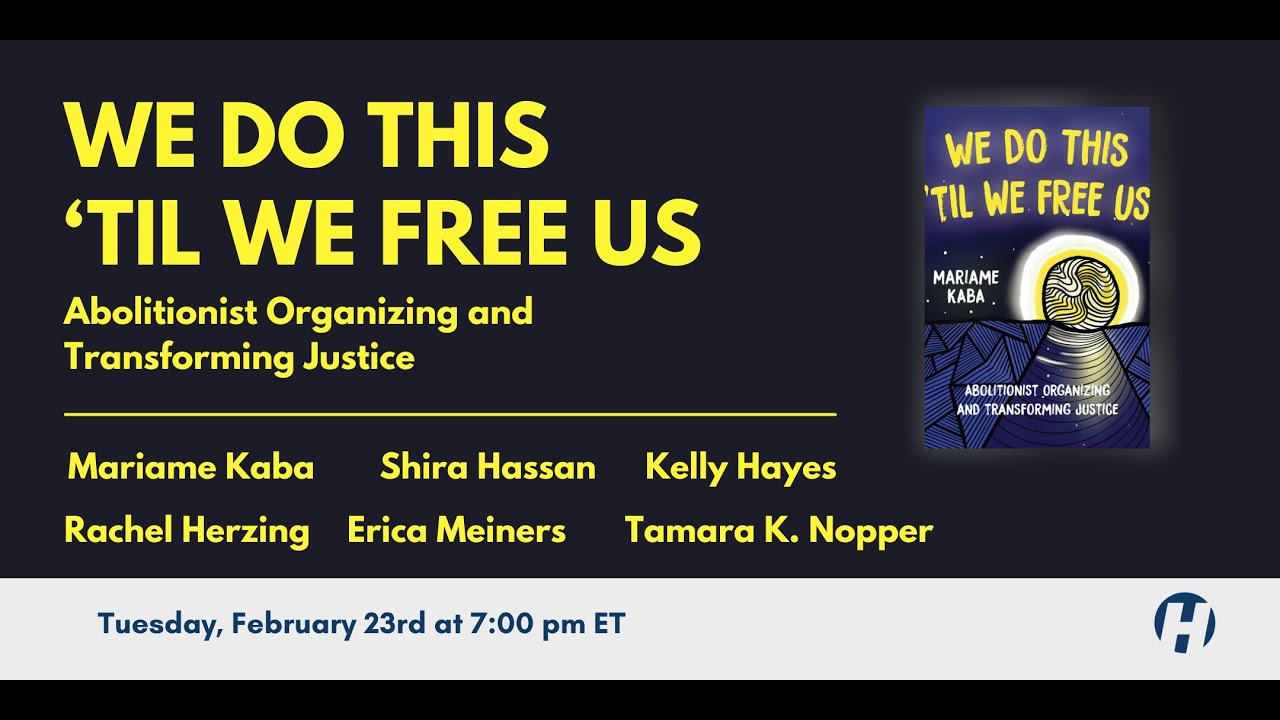
Mariame Kaba's broader work on transformative justice and prison industrial complex (PIC) abolition.
24.2K views553likes1:48:25Original Release: 2020-07-24
ALISON: All right y'all welcome, welcome, welcome, everyone back at it again our third session for our two day mini institute. Thank you all for joining us wherever you’re coming to us from, we appreciate you. And yeah, so this is our final session for the Janine Soleil Abolitionist Institute, our two day mini, we just completed seven sessions with a cohort of 50 young people, 16 to 24 year-olds and so this is our-our mini session that we're opening to everyone, ad we're excited for you to be here. This institute is dedicated to the life and memory of Janine Soleil, for this year. And just want to start by ,you know, thanking some of our supporters, the folks who are holding it down with us want to give a shout out to the Barnard Center for Research on Women for supporting us and the institute with our live stream which is happening on Youtube and also even hope who are holding it down over there.
We also want to show love to Flux Factory one of our partners for supporting us, and also EFA project space, Dylan and Christy. Thank you for also supporting on this zoom, and also our amazing ASL interpreters, both Crystal and Billy. And then Caitlin who is doing our closed captions, which if you're on zoom you should be able to click at the bottom of your screen to turn those on, and on Youtube you should have those flowing on the screen for you. And then Ebene Freen who is holding down tech support, making sure that the zoom is moving as it needs to be for session. We appreciate all of you. And just want to start by - before we get into things, sharing our institute padlet. So if you type in this link in your search bar, you will open up a lot of different resources from our mini sessions, but also from the sessions that we went through during the institute. There are a lot of materials on all things related to PIC Abolition, healing justice, organizing, and more, we have our graphic notes, our session slides so feel free to check that out with your people and community, with friends. And we also want to show love today to Tracy who is doing our graphic notes for this sesession - Jada is doing them – yeah, Jada, shout out to Jada who's doing our graphic notes for this session, that will be also available in the padlet after.
So just holding us to our values in this space, being mindful that we're holding interdependence, humility, and courage, also authentic connection and liberation possibilities, responsibility and accountability, sustainability and also transformation and growth, healing, and trust, and compassion in this space, in our time together. And then our commitments in this space to really deeply listen as we're moving through things together, being generative and generous with our questions that we're posing and how we're responding to those questions being posed, and remembering also that what's said in this space um you know stays here. Learning will leave, and that we won't all agree on everything in the conversations that come up in this space, so being mindful of getting curious and digging into that and leaving um judgment.
And then also a few notes in terms of us being in a virtual space, just being mindful of the chat, we also - if you have questions if you're on zoom, you can type your questions in the Q&A box so they don't get lost in the chat, if you're joining us from Youtube from our live stream you can type your questions directly in the comments, and we will have folks transferring those questions into our Q&A box in the zoom so that we get those answered for you.
And also just be mindful of where you're at, you know, take care of your needs tend to yourself, you gotta take a break, go do your thing. Eat, hydrate, nourish yourself, all that good stuff.
So with that I'm actually gonna pass it over to Mariam who is gonna be facilitating our mutual aid session, and let Dylan transition to those slides. So thank you again everyone. MARIAM: Thank you so much Alison, and for those of you who want to use the closed caption and zoom you can click on closed captions in order to be able to do that. I want to thank everybody for joining us today, and as Alison suggested this is the last workshop, we started together a week ago, Monday with 50 young people, going through sessions on everything from direct action, to healing justice, to creative resistance, to so much other stuff. We also knew that we couldn't accommodate all the young people in the initial institute, so we wanted to offer these two days, yesterday on restorative justice that Delfina organized and facilitated- and that's on Youtube for folks to be able to watch at BCRW’s site. And earlier today we had Santera walk us through kind of care not cops focused on pod mapping, and how we actually are able to get together and be able to plan for our own safety with our teams of folks without relying on law enforcement if we don't want that, and today I'm ending kicking us off as - you know to end with an introduction to mutual aid, I’m sure that many people have been kind of hearing about mutual aid, especially during this Covid pandemic, where we really, really started with shutdowns and anything like that around I think mid-March mostly for the country. And since then, so many mutual aid networks, mutual aid projects have emerged literally thousands and thousands and thousands of them across the U.S. But even more, tens of thousands across the world, and this is an exciting opportunity and an exciting moment because mutual aid is so critically important and has such an impact on the ability for all of us to be able to care for ourselves and care for each other. So I'll be talking about that, today I’ll be talking about what mutual aid is, I’ll be talking about some examples of mutual aid from history and now, and then we'll talk a little bit about thinking through how to start mutual aid projects in your area, if you are interested, So that's what I'm planning to do, we're supposed to go until five, yhat'll really depend on questions and where you all are we can end earlier if there are not that many questions, So we'll just go with it and see where we end up, so if we can get to the first slide Dylan thank you. Ilove to ask folks to put into the chat if you can make sure that you're responding to all panelists and all attendees in the way that you respond, what's your definition of mutual aid? If you could just drop in the chat what you think it is, and we're going to come back to this a bit later, but I would love to see where you all are and what you think. I think showing up for each other, giving back to your community, an adaptable exchange of care and resources, communal care, reciprocity. Keep them - keep them coming, thank you so much. Next slide. We're gonna - we're gonna build a definition together, I’m wondering if folks know who this is - who is this man who is this man, Responses people have Frederick Douglass, some people have Dubois, some people - yes thank you, absolutely it is Frederick Douglass.
And Frederick Douglass is - probably after Harriet Tubman the most kind of famous Black abolitionist from the 19th century that people can actually recognize and cite, although there are many, many others, and we'll talk about that. So after he escaped from slavery in Baltimore and the Eastern Shore in early September 1838. Frederick Bailey was broke, he was homeless, and he was scared. As he sought cover and refuge in New York City's Chamber Street dock, the man who would later become known as Frederick Douglass - he worried about slave catchers, and he worried about how he would find shelter and food after he had self-emancipated - which is what we really like to use for a term for when we usually use the term fugitive slave, or fugitive enslaved person. I like to talk about Black people self-emancipating and that's what Frederick Douglas did. Next slide.
Does anybody know who this gentleman is? If you do put it in the chat, yes there's one answer and I think you cheated.
Yes this is David Ruggles, and David Ruggles is somebody who is very much for most part unknown to most people in the U.S, and yeah but he's very, very critical and important. I’m going to talk a little bit about him.
When Douglas was kind of in the Chamber Street dock area in New York City trying to figure out a way to, you know, survive, he was invited - he met a man named David Ruggles. And the story goes - it's many different stories - but the story goes that Douglas met a Black man who was a sailor on the dock, and when he asked who might help him the sailor said David Ruggles and sent him over to David Ruggle's home, which was at the time uh 36 um Lisbenard Street in Lower Manhattan, and if you go back to 36 Lisbenard Street today, the building that's there is a coffee shop, but you'll see a plaque that commemorates uh David Ruggles’. His home that was there did - this was also a bookstore, David Ruggles is the first black man to own a bookstore in the U.S. And, next slide.
In Douglas' autobiography, or in the narrative of the life of Frederick Douglas that he wrote he explains “I had been in New York but a few days when Mr. Ruggles stopped me out and very kindly took me to his boarding house at the corner of Church in Lisbenard Streets.
Mr. Ruggles was then very deeply engaged in the memorable Darg case, as well as attending to a number of other fugitive slaves, devising ways and means for their successful escape, and though - and though watched and hemmed in - in on almost every side, he seemed to be more than a match for his enemies.” So during Frederick Douglas's first 10 days out of enslavement, it was Ruggle's home that he stayed in as he really launched his life as a free man.
It was there at ruggles home on 36 Lisbenard that Douglas married his fiancée at the time Anna Murray who became his first wife in a ceremony at Ruggles; home that was officiated by another person who had been in a self-emancipated enslaved person, Reverend Pennington. Ruggles gave Frederick Douglas and Anna money, I think they say five dollars and the letter of recommendation and sent them off to ew Bedford, Massachusetts for the next leg on their journey to freedom.
And for those of you who don't know who Ruggles was, he was a free Black man, he was born in 1810 in Connecticut, he was the secretary and the general organizer - ext slide - of the New York Committee of Vigilance, and the New York Committee of Vigilance was an abolitionist organization that battled slave catchers, and kidnappers, and slave traders, and it offered sanctuary and support to hundreds of self-liberated and self-emancipated people.
If you've never heard of Vigilance Committees that's okay, because I'm sure you've probably heard of the Underground Railroad. David Ruggles was a visible quote-unquote “conductor” on the Underground Railroad just like Harriet Tubman was, and he helped at least 600 enslaved people to freedom, including Frederick Douglas. So Ruggles’ home was a central stop on the underground railroad in on the East Coast. Slide number, next slide.
Oh there's this thing that's missing, let's go back to the slide before. So David Ruggles described the work of assisting fugitives, and preventing kidnappings, and resisting the illegal slave trade as something he called “practical abolition.” Practical abolition embraced civil disobedience and self-defense for Black people who were battling slave catchers and kidnappers of free Blacks.
Ruggles was interested in immediate results and safety for everyday Black people and never ruled out force or violence. Ruggles would openly confront kidnapper, slave catchers, and the vigilance committee offered their victims the of the slave captures legal assistance.
Ruggles himself represented people who were who were kidnapped and were being forced to go back south, whether they were free or formally enslaved or people who had been self-emancipated he would sometimes represent people in court, he wasn't a lawyer but he would stand up for people and provide legal defense. Ruggles himself experienced at least one such attempted kidnapping, so he was really familiar with what's going on. So - founded in 1835 the New York Committee of Vigilance was set up to, one, combat kidnapping clubs and later to help fugitive slaves. The New York Vigilance Committee quickly became the template for dozens of similar societies and earned a lot of renown amongst self-emancipated enslaved people.
It's a really important example of in some ways - and I want to talk a little bit more about that later - of a mutual aid organization. Vigilance Committees looked for self-emancipated fugitive people and recruited them into the larger abolitionist movement. William Cooper Nell describes Vigilance Committees as a, quote, “sort of school for activist learning.” o more than a dozen people in the New York in New York City we're devoting considerable time to the Underground Railroads through Vigilance Committees - we'll come back to that in a minute.
In Philadelphia the Vigilance Committee had seven to eight committed activists, but what the Vigilance Committees actually had was they had enough support among regular Black people that folks knew what to do and they could send fugitives or emancipated people - self-emancipated people to the right people when they arrived in cities and towns across the country. So these committees were able to work with small groups of people right who made the committees run, but they spread awareness of themselves beyond the numbers of people who were directly involved as activists. Free Black people were the main activists in the Vigilance Committees that were to come after New York. So New York is the first place that had this Vigilance Committee, and that was 1835 co-founded by Ruggles and others, and then in the 1840s there were many other Vigilance Committees that sprung up in Philly, I Albany, New York, in Boston, in Syracuse and Rochester and Cleveland and Detroit, right? It’s no surprise that they happened in mostly northern states because they were on the road towards Canada, where many and you know formerly enslaved people were escaping to. But also they were on the road to helping people to be able to get integrated in the new places where they would be living.
The leadership of these groups organized at the local level but in frequent communication with counterparts elsewhere was generally interracial, and the committees were to a considerable degree again in most places sustained entirely by Black people. Lower income, urban Black people provided most of the daily activism of Vigilance Committees, more affluent white people provided resources. Slide - next slide. Black women were the main fundraisers for the Vigilance Committees, and this is really important because when you think about who drives a lot of kind of, you know, activism and change in the Black community, Black women have always been central to that and yet our histories don't tell the same story.
Underground Railroad bake sales, as improbable as they may sound were common fundraisers in northern towns and cities, they had bazaars with the slogan “buy for the sake of the slave” and they offered donated luxury goods and handmade knickknacks before the winter holidays. Historian Eric Foner writes “indeed, abolitionists helped to establish the practice of a Christmas, quote, “shopping season” when people exchanged presents bought at commercial venues.” So for thousands of women in particular, such events also turned what were kind of ordinary, quote, “feminine chores” like baking shopping and sewing into acts of moral commitment and political defiance. Because their labor and their, you know, their - what they can actually do was used to fuel the movement.
So I'm wondering the next slide if there are elements of mutual aid that you notice in the work of Vigilance Committees? Are there elements of mutual aid that you notice in the work of these Vigilance Committees, if so what are they? Please drop them in the chat your thoughts based on what you already kind of thought about in terms of a definition of mutual aid are Viilance Committees?
Where do you see different aspects of mutual aid reflected in the Vigilance Committees? Awesome.
Awesome. Great responses so far: Defense, using their resources to help others, functional solidarity and direct action.
Absolutely, absolutely. People talk about direct action in 1836. Ruggles and some of his associates found out that somebody had been illegally trafficked to the to New York when New York had already, quote “banned slavery in 1827,” they - people were still trying to illegally smuggle enslaved people, and they found out that there was an enslaved person who was on a ship called the Brillante. And Ruggles and a couple of men walked over got on the ship brought their guns and de-arrested that person and saved them from being shipped out to continue to be abused and exploited. So talk about direct action, they were taking direct action in multiple kinds of ways.
So in the Padlet you'll see some information about Ruggles, and you should definitely look more into it. I want to just point out, for me, here's what's important about the Uderground Railroad: It consistently exposed the realities of slavery to the broader public through testimonies that fugitives wrote, and spoke clearly and passionately about the horrible violence of the institution. It demonstrably refuted the claim that Black people could not act or organize on our own, Black organized and Black funded Vigilance Committees were a testament to our abilities.
The people who pioneered direct action tactics and organizing in this country were who they were Black abolitionists supported by who? Some sympathetic white people if you're interested you should read about the rescue of a man named Charles Naley who that was organized by Harriet Tubman in Troy, New York in 1860.
It offered organization and a vehicle for sympathetic white people to play an active role in resistance slavery. To this day, the Underground Railroad and the broader abolitionist movement is the best example of a successful interracial movement in the United States. I think we need to study that and understand that if we're organizers today what can we learn about the Underground Railroad which was basically the direct action arm of the U.S abolitionist movement of the 19th century, what can we learn from them today? The Underground Railroad provided stories of guided and independent escapes from the south, which were used to build a narrative about the horrors of slavery. It facilitated the rescues of arrested fugitives in the North. What better example of successful direct actions can we find in history? I don't think we can find much it included complex communication systems under arguably the most repressive regime we've had in the United States offered sympathetic people concrete ways to actively participate, to take risks, to funnel resources in the service of a greater goal of abolition. So we have much to learn about particularly the Underground Railroad, particularly the-the Vigilance Committees in service of a broader abolitionist struggle that successfully ended chattel slavery. Obviously the 13th amendment having, you know, that you can be that you know uh basically re-enslaved if you've committed a crime is something that continues to exist and have purchased in our lives in this current moment, but to up to uproot and upend such a repressive system is a source that we ought to be looking to and to be thinking about in this moment that we're in today. So let's talk about what is mutual aid, we're going to go to the next slide and we're going to play a video that was created by Dean Spade and that exists online at the Big Door Brigade that will also be in the Padlet.
Shit's totally fucked. What can we do? A lot of us are overwhelmed, pissed, and scared.
I don't want to wait till the next election. I don't want to just write my congress person and hope that they'll do the right thing.
I don't want to just post things to the vacuum of social media/ I don't want to just make statements about things, I want to change how things are.
There are a zillion things we can do, and people are coming up with new ones all the time.
This video is going to focus on mutual aid projects, what they are, and why we should be developing them, right now.
Mutual aid projects are a form of political participation in which people take responsibility for caring for one another, and changing political conditions, not just through symbolic acts or putting pressure on their representatives in government, but by actually building new social relations that are more survivable. During recent flooding and storms we saw mutual aid in action, as people helped each other survive. Mutual aid isn't just for those big weather disasters, it is also for the daily routine, life-threatening disasters of capitalism and white supremacy.
People who are pissed about police and prisons are doing mutual aid work like creating prison letter, writing projects where people get connected to pen pals in prison to build relationships, help prepare for release, help prisoners have advocates on the outside, and help build a movement against policing in prisons that is informed and led by the people who know the very most about how the system actually works. Some people are creating jail support programs where people get together to make a schedule and agree to be outside their local jail on that schedule, and greet anyone getting out, and help them get what they need maybe a ride close a phone to call contacts, information about services, or benefits.
Some people are organizing community bail funds, revolving funds that can pay people's bail so that they are not locked up while they try to prepare for their defense.Money bail systems are one of the ways that poor people and people of color are given the worst chances in the criminal system.
Court support projects are where people coordinate to accompany someone facing charges to their court dates, ideally by packing the court with supporters each time, so that no one has to go alone and sometimes to influence lawyers, judges, and jury by showing their support for the criminalized person.
Some people are coordinating ride systems to help families visit prisoners who are being held in facilities far from home. In Oakland, the Pakland Power Projects are about strengthening people's skills to respond to community emergencies in ways that minimize police contact.
When you call 9-1-1 for a health emergency, the cops come too and that often leads to violence.
The Oakland Power Projects is about training the community to respond to health emergencies including mental health crises, chronic health problems, and acute health emergencies so that people don't have to call 9-1-1 people. People who are scared about the emboldenment of ICE and border patrol and increasing deportations are doing things like forming rapid response networks, where people warn each other about immigration raids and help each other hide, and helping immigrants do safety planning in case they get detained so that someone is ready to take care of their kids and elders. Some rapid response projects are even working on training people to show up and physically stop ICE from taking someone away. Imagine if we built that kind of power, to stop arrests through rapid mobilization of a lot of people to outnumber cops.
No More Deaths, an organization in Arizona, works to save the lives of people crossing the border by putting food water and supplies in the harsh desert areas where people who are crossing often die from the conditions. There are so many mutual aid project possibilities because there are so many intense ways people aren't having their needs met in the brutal systems we live under.
Like food projects like Food Not Bombs, projects where people organize temporary housing for people coming out of prison or foster care by opening their homes to each other. Child care collectives where people watch each other's kids so they can go to political meetings, court, or jobs.
Projects where people accompany vulnerable people like trans people or people with disabilities to medical appointments, or public benefits offices and hearings. Projects where people make sure neighbors being pushed out by gentrification have good access to information about their housing rights, and accompany each other to housing court, help people read documents and defend themselves from eviction. Projects where people protest landlords who are refusing to make repairs or give back security deposits by directly protesting at those landlords houses and businesses.
The messages of this work are the government is fucked, we can't rely on it. You are not alone.
The system is the problem, not the person being targeted by it.
And we're going to take matters into our own hands and help each other survive right now, rather than expecting help from the same systems that have a clear history of causing harm.
Mutual aid projects don't just help with the current disasters, they help us prepare for the ongoing disasters that are emerging because of climate chaos and crumbling infrastructure.
When we build cooperative projects, practice making decisions together, share things meet more people in our communities, and learn about each other's skills and needs,and learn how current systems work and how they are not working we're better prepared for the next storm the next blackout and the next budget Cuts. Something really important about all this is that mutual aid is not charity, charity is where rich people and institutions give tiny crumbs to poor people to make themselves look better.
Usually there are a lot of strings attached to what they give, like giving only to mothers or only to children, only to sober people, or only to people of faith. Charity rides on the idea that rich people or social workers should decide who is it deserving poor and who is the undeserving poor, and that rich people can put conditions on the housing, or food, or cash they give poor people.
Charity blames poor people for poverty, mutual aid blames the system for making people poor and says everyone deserves everything they need.
Charity affirms the existing distribution of wealth and life chances, mutual aid challenges it.
Charity is top down, mutual aid is horizontal.
Charity is about control hierarchy and isolation, mutual aid is about solidarity liberation and participation.
People are scared and angry right now, and trying to find ways to fight back and support each other, building mutual aid projects is a way to plug people in, build shared understandings of current conditions, offer meaningful support to vulnerable people, and prepare for the coming disasters.
Mutual aid work is not easy, it means forming lasting commitments to doing hard work, collaborating with people even when we have conflict, and facing the heart-wrenching realities of the systems we live under.
It is also deeply satisfying work that transforms us from being exasperated passive observers of the shitstorm we're living in, to inspired builders of the new world we desperately crave and need.
Stop believing in authority and start believing in each other We're all we've got, we're all we need.
So I love this video for many reasons, you can find the link to it in the chat.
You know, go back to the video before then, yes, yeah, that's perfect, yep, there, yeah. Thank you. So yes, I love this video so much that Dean made with other co-strugglers, including Hope who's on also helping us out with this from BCRW for lots of reasons, because I think in a short period of time it gives you a sense of what mutual aid is and what it is not. I'm wondering how many of you have been involved in mutual aid work so far in your life, if you can just drop in the chat if you have just check in with yes, if you haven't check in with no. I'm seeing so many yeses. Recently joined a group, yup, yes, yes. Keep it coming, awesome keep dropping, and if you haven't that's okay that's okay. Yes, you can also say no.
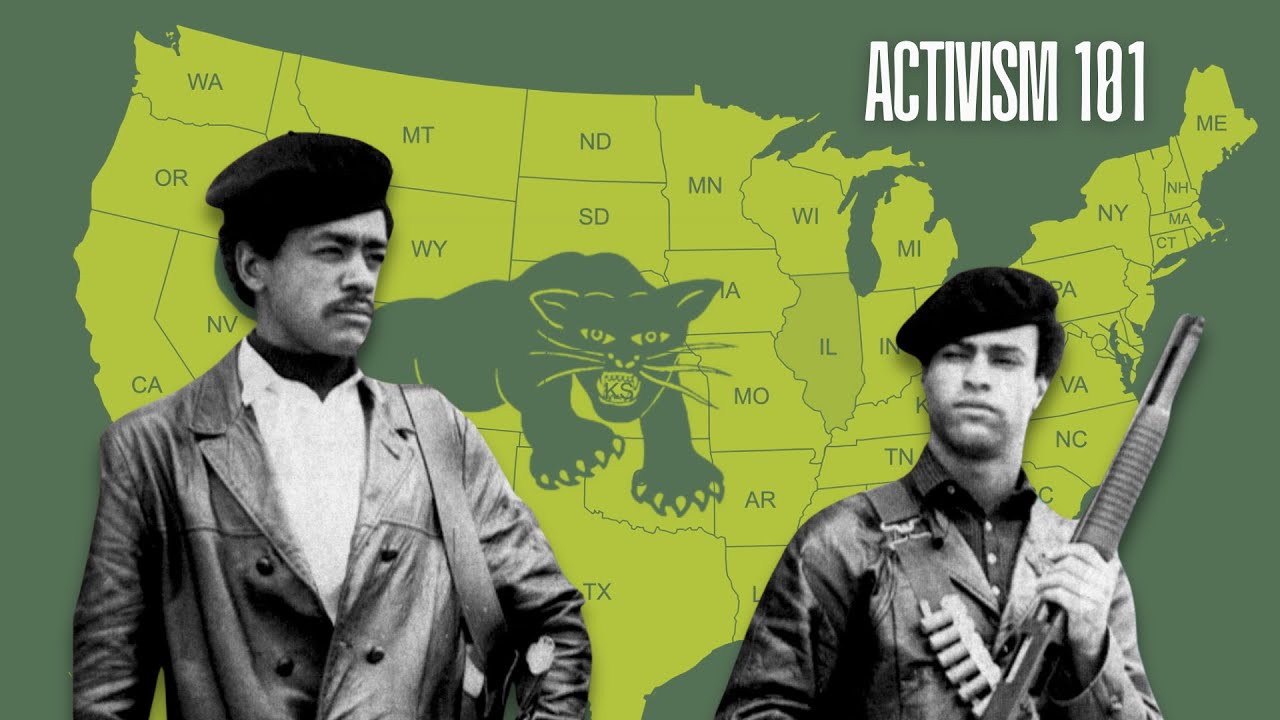
Perfect, thank you for sharing. Actually the reality is you probably already practiced some form of mutual aid just by having people in your life who you can count on for support, and who can count on you in return. And oftentimes for people in communities who are in marginalized or criminalized communities, organized mutual aid can be a way that we survive in a way that we thrive. You saw in the video, an example of an image of the Black Panther Party for Self-Defense's free breakfast program, it used to serve 20,000 meals a week to Black children in 1969. And it's a perfect example of a mutual aid project, and we'll talk more about why that kind of project would be a mutual aid project and not charity.
In the current moment that we're in now, you all probably have heard of community bail funds, you've heard of bystander intervention programs, and cop watches, you've heard of all different other kinds of food distribution projects those are all recent examples of where the strategies of mutual aid find themselves and where you can kind of see people taking that together.
And people are also saying you've seen Covid-19 mutual aid projects. Yes, as I mentioned at the start absolutely those are proliferating all over, right? Because what we realized pretty quickly on, I think all of, you know, this because you're living here - for the most part I'm sure living in the U.S and maybe if you're not you're still seeing this in your government - is that people really haven't been able to rely on the federal government, you know. The federal government hasn't provided health care workers with the right PPE so they can be protected, the federal government has offered the communities some, you know, basic $1200 checks, and that's it. And some people didn't even get that, the federal government has not provided enough vaccine enough kits for people to be tested. The federal government hasn't come through with a plan for how people should reopen, you know, reopen safely in terms of schools, or in terms of how people should reopen businesses safely, instead of paying people so they could stay home. There's a grumbling that people got an extra six hundred dollars in unemployment insurance, and that that is a reason for why they refuse to return for work without interrogating how six hundred dollars giving - getting that if that deters you from working then what the hell were you getting in terms of your salary in the first place, maybe wages are too low, right?
Mutual aid demands that we focus actually on the structures and the systems that cause the harm, rather than individualizing everything and looking at individual people and blaming individual people for what are actually structural flaws in the system and structural violences in the system.
Yeah, so it's very, very important to be really mindful of that when we're talking about how all of this, you know, plays itself out, So even if you think you may not have been involved in a mutual aid project, chances are you have in some way. And I want to challenge you to stop that. And again at this moment of a global pandemic it's really evident that the structures over a society leading to inequality and systemic oppression are harming so many of us. We're all in the same boat to some degree, except for those 1 percenters who can fly out and live on an island somewhere and bring in their own food, and their own, you know, their own security people, and all the things that they're doing.
So we know, as folks who aren't in the one percent that we have to create actual new structures of collective care that can actually help us through this crisis and through this period and prepare us for the next crisis that will come, because we know the next crisis is around the corner, especially for those of you who were doing work around climate change. You know that we are doing we are facing disastrous potential outcomes around that and there are they're already happening in other parts of the world and sometimes here. We've seen that with Hurricane Harvey and Maria and all the ways that kind of we are dealing with the effects of climate change.
Soo one of the other parts of mutual aid that's incredibly imp-is that it allows us to build new social relationships that recognize that we actually have a stake in each other, that we absolutely are interrelated and interconnecte. Next slide.
So you dropped in earlier when I asked you what your definitions of mutual aid were, so many of you offered such great examples. I’m going to read some of them and then I'm going to read this short definition people had using your resources to meet the needs of community members, people had showing up for each other showing up emotionally mentally, spiritually, physically, fiscally, giving back to your community. An adaptable exchange of care and resources, again, showing up for each other. We keep us safe, support systems within your community, people helping people, redistribution, communal help, communal care, reciprocity and network support among community. Care for ourselves in our community, communities providing care for their members, offering unconditional help for one another, community sustains suppor, mutual aid is the lived practice of love for each other in action. I love that. Result-reciprocal care, supporting taking care of others with resources at your disposal. Asking what others need, symbiotic relationship, using our skills, resources as individuals to support the needs of an entire community-the entire community. Folks had communal allocation of critical resources.
So much community building, love in practice, just - self-determination. So critical, so critical. Using what you have, skills, material goods, resources, coin whatever you're at, to support and uplift each other. So you all have it down, you know, this is here just a short mutual aid is cooperation for the sake of the common good, it's getting people to come together to meet each other's needs, recognizing that as humans our survival is dependent on one another, next slide. And in the video that Dean and collaboratives - and collaborators made, they offer this definition that was in the video, that I think is in addition to what we all have suggested, and a key condition that I want to highlight. Mutual aid is when people get together to meet each other's basic survival needs with a shared understanding that the systems we live under are not going to meet our needs, and we can do it together right now.
Mutual aid projects are a form of political participation in which people take responsibility for caring for one another and changing political conditions, not just through symbolic acts or putting pressure on their representatives in government by-by actually building new social relations that are more survivable. I want to take a moment with this definition because I think that sometimes when you're offered, you know, when something occurs in-on our world often the first thing that people will say - maybe I'll ask you the question.
Whenever some calamity happens or something happens in our world, what are the suggestions that are given to all of us as people who live in a particular community, or in a particular society, a particular country? What are people what do people offer us to-to do? I love this yeah, let's let's see what the responses are yes hello people have.
Sign a petition go buy stuff, vote, vote, vote, work harder, thoughts and prayers, contact your representatives, write your representatives, seek state support, vote, vote, go vote call your reps, vote, vote. I roll somebody adds that in there. Thank you Chelsea petitions thoughts and prayers, call your representatives, post about it, vote and pray, vote. W Volunteer but like once, go find other work, you know, share this post, vote, petition, donate, sign, petitions, vote, retweet, gofundme, retweet for awareness, vote, donate money, vote, donate, re-post. Yes these are the things, wear our pin, oh lord yes, quote, “have difficult conversations.” Protest, black screen, buy a t-shirt, read a book, retweet chain post, give to the ACLU, so much stuff, spread awareness, ACLU somebody writes yes write a letter talk to your family quote-unquote all of those are things that people say support black business, yes. And you know those are fine, those are - those can be useful somebody points, not voting means you want trump, yes. We're seeing that a lot we always see that. So much is going on there in terms of what people offer, and in and of themselves, right? Those each of those tactics can be fine.
And for people – I always really want to stress that we all have so much that's going on in our life, we also have different levels of capacity of ability, of skill of opportunities, and some people – all, you know, they can do in the moment is to donate, and I think that's totally fine folks should donate people need money to do work, You all, I just talked about the how do you call it I just talked about the mutual aid that was going on in the Vigilance Committees, they had to run fundraisers all the time, and they were bake sales to be able to raise money for the work that they were doing, those are important things. People will say sign a petition, and petitions can be very useful - if passive - but they can be useful for putting pressure on particular targets, right? In and of themselves those tactics are fine, the difference is what are we actually - how are we actually trying to build power to actually demand what we really want, and to shift conditions enough so that we get that, right? And mutual aid can be a very empowering way for us to directly support each other in the now, and to give us space of being able to do more political education with each other, more relationship building with each other, you know, be able to actually be in a place where we can build an analysis of the situation with each other and we stop thinking that personal troubles, yeah, are what causes all things right. But we can move from a sense of personal troubles turning into public issues through organizing. It can be a base for the beginnings of those things, right?
And I think that it's an issue around kind of, you know, what is the level of engagement that we're gonna have in transforming our conditions and building the new social relations? That we're gonna need to be able to be in a place that's more survivable. Mutual aid is also a form of political participation, right? You all mentioned voting, that is often put up there as like the only way you can actually make a, quote, “difference” in the community you live in, in the world you live in, in this country you live in, that voting is the way to do that, when in fact it isn't the way to do anything, it's a way to engage. But mutual aid is equally valid as a political way of participating within your community, to actually be able to make change and transform. So I think that it's a matter of really thinking about how you can engage in a way that actually implicates you, in a- in a system that is actually more in your control. So much of voting is out of our control, you go, you-you know check a box, you whatever, but there are barriers they put in place. They may or may not count our ballots, they you know-it's not it's-it's a real passive thing, it's not-it's not, you know, it's not an active ongoing way that we're actually transforming our communities. So very important to keep in mind and to make sure that we do that.
Somebody mentions donations and monetary support are too often directed to corporate NGos like the Red Cross which dilute the impact of your money as well always, Better to have your community have the cash and resources, I’m a big proponent in putting money back into our communities, finding the formations and organizations that are close to the ground where we are and resourcing those. I do want to make a comment though here, because I think this is another point that we're in right now, where a lot of people are screaming about accountability for organizations and whatever that were tiny a month ago got a lot of money, and then people are on their case already about what stealing money, how you steal money in a week, like it doesn't make sense.
We have to decide what formations we want in our community that are groups, and then we have to resource those formations they're not there somebody has to pay for shit to happen, okay?
We do live in a place where people need money in order to be able to do the work, they do. We're living in a capitalist society, yes, and people need funds. We people need to be able to pay marginalized people for their labor and their work that they're putting, and people need to be able to pay for the groceries. They're giving away people, like, this is really, really important for us to be keeping in mind, and if you're not going to resource organizations. And I don't know how things are going to get done because people need money, and yes people often feel very some kind of way when I say that but like how are we gonna do the work. I mean, many of us aren't independently wealthy, so it's not like we can just afford to be, you know, doing work for no remuneration ourselves, or if we are able to do that we still need to be able to support other people who cannot do that. So I do think that mutual aid is a great way where our resources can be put directly to use, and we can see what a difference it's actually making on the ground for people who need it right away. So, next slide.
We are going to take a break, but before we do I do want to say two things that I think it's really, really important to kind of bring to the bring to the fore.
We are in a moment and a time right now where everything is high pressure, where people are suffering. I mean you have seen I'm sure the images of cars lined up for days at a time, where those people are trying to get food for their families at food banks.
I'm sure some of you have seen the lines of folks who've been lined up to be able to get their unemployment checks, people are at risk of eviction. In the moment that we're in right now, in a very serious way. There are campaigns being held that are eviction defense campaigns where people literally just go to people's homes and protect them from being thrown out by their landlords. There are so many, you know, we're just dealing with so much crisis and I want to say a word about what that's doing to our - to how we interact with each other, because there's so much crisis around – I think people's anxieties are on a hundred. I think people are much less willing to be gentle with ourselves, but also especially with each other and crisis can sometimes exacerbate negative conflict, and you are seeing that play out in mutual aid groups, mutual aid groups where conflicts have broken out based on existing problems that already existed.
We live in an unequal, oppressive society oppression and the forces of oppression show up in our mutual aid groups. We are not living in a romanticized community, so we're in this place where, you know, I think that this is really important for us to be mindful of the fact that we gotta – we-we have to figure out good ways of resolving our conflicts, good non-oppressive ways of resolving our conflict. And I really want people to stay with that, I want people to kind of sit with that in a real sense of the of the word, because I'm seeing so many conflicts occurring in mutual aid group, spaces and people don't have good skills and tools for resolving those conflicts, which is ending up destroying those potential formations and leaving people upset with each other, angry and not able to work together.
So this is just a PSA moment for - if you're going to be engaged and work with other people, please, please, please, please spend your time working on conflict resolution, figuring out how you're gonna take, you know, account of grievances and also please getting over yourself for a bit, as well.
Honestly, some of the BS going on - I just can't even believe it, I just cannot believe it. Meanwhile y'all, we are dealing with massive - we are dealing with fascism on the march, people immigrated, we got problems. Please let's get it together, please let's get it together, we gotta do that. And I'm-I'm begging folks to get it together with this stuff and stop being ridiculous. Okay, anyway, that's a little thing there. And I have a - there's a question that somebody had, please put it in the chat who had their hand up, and we can get to it after the break. So please come back at 3:55. If you want you can stay on and just, you know, you're already muted, or do whatever you need to do. Drink some water, take a bathroom break, do a dance break. Allison is going to play us some music, and yeah we'll come back at 3 55 Eastern Time, where I lived for many years, I know many of the people who are part of have founded this mutual aid project and program that's been around for a few years now. And so I want to share this video about them and their work with everybody, and then we'll come back and talk.
So thank you for watching that, I’m wondering if folks can drop in the chat how you're feeling after being exposed in this way to the work that you medics is doing?
Yeah, yes, inspired, amazed, in tears, life-changing, humbled, empowered to learn, sobering and beautiful. Raw, very emotional, inspired, humbling, another reality check, haunting, sombered, shouldn't be necessary, humans are amazing. We'll definitely reach out about getting trained, empowering, always taken aback at what we can do in our communities - we've been programmed to think we can't meet our needs. It's amazing, beautiful, humbled, encouraged, growing faith in humanity, how we can keep us safe. Yes, yes, reminds me of the street medic collectives that are doing care work.
Absolutel, that's all there's such a long history of street medic work, there's a great article which I will put into the - into the Padlet about the history of street medics, very interesting to read how that how they came to be - but yes, absolutely. Thank you for sharing all your responses to that, you know, Martine and Amica and all the folks journey all those folks are just incredibly amazing, and they know that this isn't gun violence prevention, but it is about attending to the exact needs of your community in the moment.
But also about you feeling empowered that you can do something, and that you're not powerless, right, in the face of violence and harm that occurs within your communities. Very, very important. The important thing about You Medics as well is that while they're doing this work all of them are also involved in pushing for systemic and trust and structural changes it's not, you know, it's not the only work that they're all engaged in as organizers and activists. And so this also suggests something about the importance of mutual aid being actually about political participation to transform conditions and develop new social relationships. So let's go to the next slide.
Let's talk about what mutual aid is, right? You can see as you've been talking, and as we've been talking together about definitions and terms and, right? It's getting people together in your community to provide material support for each other, it's building relationships with your neighbors based on trust and common interests. It's making decisions by consensus rather than relying on authority and hierarchy. Let's go to the next slide, please.
It's sharing things rather than hoarding things it's treating no one as disposable.
It's providing all kinds of support ranging from food prep, to child care, to translation, to emotional support to recognizing the value in all of them.
Next slide. It's a political education opportunity where we build relationships and analysis to understand why we're actually in the conditions that we're in. This is critically important.
It's the preparation for the next disaster, natural or economic. Next time around we'll have relationships already with each other and know who is vulnerable and know who needs support, therefore making life more survivable for all of us. And it's a great jumping off point for other kinds of organizing and movement work as well. Next slide. What mutual aid is not: It isn't quid pro quo transactions, it's not - it's not like a forced exchange, it's not only for disasters or crises. As you can see, it's for all different kinds of ways that make the world more survivable and where we cooperate with each other whether, it's in our families, in our communities, in a larger frame, in our nation, in society, in the world.
It isn't charity - this is so important, it's not a way that we're saving people, we're not saviors, even if we save a life of a person. You saw in the Ujima Medics example that they saved this gentleman's life, but then they went and trained the whole entire family in how they did that.
I mean that's-that's a beautiful gorgeous example of they're not it's not, you know, they literally Journey literally saved a person's life, but then went back and worked with 20 members of that person's family right. It's a reason for a social safety net not to - it's not a reason for a social safety net not to exist. Now this is something that is contentious, okay. A lot of folks in anarchist circles are, you know, who practice mutual aid in various kinds of ways all the time are moving for a world without a state, yeah.
So they're-they're anti-stat, and the question then becomes right how do you who provides the social safety net? And the response to that is we do, right? We do as a collectivity, we-we create new collectivities amongst ourselves to handle that to deal with resource redistribution, etc. But there are many people communists or state, you know, believe in a state, for example, who believe that the state does have a rule, and the state does have to be held to account, there's got to be a way to push the state to actually provide what it should for it's the community.
What the state's role is, right, in people who still subscribe to, not necessarily a nation-state notion, but a notion of a state itself, that the state's role is to redistribute resources and to, quote, “protect citizens,”or protect people within its you know general purview that it's responsible for it in some way. And so people will often say, well we have to we have to actually keep doing the work we're doing on the mutual aid side amongst ourselves, but we also have to make a claim to the state to do what it is supposed to be doing. So there are some differences in how people view that, and that is a that has to do with political analysis and differences in what people believe the end goal ought to be, and how we ought to get there. We're not going to get into that today because that's a conversation you should have amongst your friends, or in a classroom with other people yeah. But-but it's a - it's a long history of a push and pull around these ideas about the broader role of a state should we have one what does the state owe to its people, etc, etc.Okay so I want to take a moment here to -what we're gonna do in the next few minutes before I start answering, well, you know, what let me let me answer some questions before we go to the next - to the next part, hich is so you want to start a mutual aid project? How do you start?
But I want to first answer some of the questions that people have. A question is how do we create sustainable ongoing mutual aid efforts while everyone is burning out trying to survive the system and being crushed by capitalism? Well, you know, just a little question there and it's a great one, and it's a real one because that's what we're facing in this moment.
I'll just say this, I don't know about the-the importance of sustainability, I think that word, I'm – I hate it - I don't like that word, because I think it comes from the kind of efficiency capitalist model that people have about sustainability. I believe that organizations are dynamic, right? They should be. And that many organizations actually should die and be reborn in new ways. I don't think we have to hold on to organizations. It's different though to think about kind of organization, like, conflict being the downfall of an organization, versus organization sunsetting when they know that it's time for them to move on, or they know that there are irreconcilable differences that have occurred. I'm not a proponent of people, you know, going all ham hog and trying to shut down every organization on the planet, no, no. But I do think that it doesn't we don't have to sustain everything, sometimes a formation comes into being and exists for just six months, but it does massively important, important things, yeah.
So I think that's really important. So I - so a thing that I'm gonna put into the chat is a really wonderful piece that Dean Spade wrote actually on his blog, that speaks to the question of burnout and some ways for us to address that burnout. The ways for us to address that burnout in ourselves and within our organizations, and I want to put a plug in for the fact that Dean has a new book coming out very soon that is called Mutual Aid.
And in that book there will be lots of templates lots of suggestions for how you make decisions within mutual aid organizations, it's being put out by Verso Books, if you find that linked to Dean's new book it's in pre-order right now, but it'll be very helpful to many folks who are doing work in in um in mutual aid work in general. And I also put a link to Dean's blog post about burnout, what it is some ways to address it in ourselves and in our communities as a response to your question. All right, et us move on to another question that somebody asked here. It's a question about - you mentioned that mutual aid is reciprocal in contrast to charity, what does this mean practically when certain individuals don't have the energy or resources to give back.
I mean, you know, I think that we're not pressuring people to, quote, “give back,” but we have to see ourselves as in a reciprocal relationship that doesn't mean that somebody's going to give back money or time in the same way, but it's a notion of a kind of positionality of the work and where you actually put yourself in relationship to that, whether you see yourself as in a consistent relationship with people. Sometimes folks are in very oppressive situations and they can't “give back,” quote unquote, in the way that we could imagine, but there are other ways, you know, maybe they're not ready right now but maybe you know six years down the line they're going to be doing something that's going to be part of the, you know, the relationship we've built with each other the new sociality that we've built with each other and that matters too. So I think the charity orientation is really about how you see yourself, and how you treat other people, as much as whether those people are able at that moment to actually directly give back.
So I think that's really important to keep in mind. There's a question about, you know, what about people who - let's see here people who are in a position where they cannot or was it here, yeah, how would you go about participating in mutual aid for those who may not necessarily be able to participate physically. Pandemic disability, lack of personal transportation, household members, etc. I think this is a really important point for us to consider, and I might also say uh to everybody that the folks who taught us about mutual aid the most are the people who've been the most marginalized. The people who have the least to give in multiple kinds of ways, we have learned so much about mutual aid from people who are disabled. Disabled people have taught us so much about how to be in community with each other, how to create care networks. If you read Leah Lakshmi, Samaraseen had work that's all about the work that people who are disabled do. So I think we have to kind of expand our minds about what people can and cannot give, and how-how that looks in the world. And I'm going to drop in the chat a resource that my friend Ageras Dixon created, and Ageras actually created this - a project that looked at 26 ways to be in the struggle beyond the streets, they just updated it in June. And it's a wonderful tool of forcing us to actually rethink the ways that we can give and be supportive, and be part of this work. So we have a lot to learn from disability justice and being creative about how exactly somebody's saying creativity is such an important value to hold for coming up with responses to issues absolutely may not look the way we want or the way we think we want or what we think we need but it absolutely is the case that um anybody can give at any it has a way to be able to be supportive and so I would just i would just put that out there and I would just challenge all of us to think differently about what we mean by all of that stuff. I'm gonna give a very short example of, you know, many years ago, this is many, many years ago. Nw as a child - and I wanted to go on a school trip and part of it was to raise money to be able to go on this school trip, and what I ended up - my mother – I had said I'm going to go and ask all our neighbors and friends to help me go on this trip, and my mom's like okay, that's fine, and she said but you cannot ask your great aunt for any support at all because she's you know she's got a lot of things going on she's struggling and she doesn't have any money, so don't ask her. And I went around - I asked everybody, and then a couple of weeks later I saw my great aunt and she said I hear that you are trying to go on this trip, and I'm wondering why you didn't ask me to help you to donate, you know, to support you. And I said, well mom told me not, you know, I was like - I don't know how old I was, I was like mom told me not to ask you because you, probably don't have any money to help me, right? Like I just said it like that she taught me a valuable lesson because she just looked at me and she said, you know I want you to always ask me if you need help, because I really, really want to support you, and so if I can't I'll say I can't, but I really, really, want you to ask me.
And it was a lesson to me at a very young age that we should not make assumptions about who can and cannot give, ever. That we don't know what people's circumstances are, and more importantly, that to be asked and invited to support something makes people feel a part of your life. That you - they have something to contribute to you. And she wrote me up she pulled out some money, and she donated to my ability to go on that trip, I have never forgotten it, and I’ve never forgotten her, and she's been gone a long time she's passed away she was already pretty old when I was like 10 years old. So, you know, and so I think – I think that it tells you something about what you've already decided people can and cannot do, you should always ask and invite people in, and if they say no, you shouldn't also take that personally, that is not something to take personally. You then just keep it moving it means they said no this time and you can come back to them in the future and ask for something else again so again a reminder to all of us about all of this stuff, stop assuming crap and actually ask people questions, and invite everybody to participate. You don't know what people have and don't have, or what people can and cannot give. Again the people with the least are the ones always giving the people who give the most to charity, are people who are poor in terms of a percentage of their income, rich people don't give the most money in terms of the percentage of their income, please remind yourself of that. What are the practical ways we can avoid separating people into categories of worthy and unearly-unworthy in our mutual aid projects? I mean I think the practical ways are to have political education that tells people why it is that you're doing this work in the first place, and keep hammering home to people that, you know, we are here to actually support people on a regular basis, and we are here to support ourselves in the process, sso it's a political education matter in my opinion rather than anything else. And a constant reminder of, like, we're not doing this for charity, we're doing this for all these other reasons and what are those, yeah? You mentioned that mutual aid is reciprocal in contrast to charity, what does this mean practically when certain individuals - okay we already answered that question.
So i'm gonna do that, hi again uh there are so many projects to build and issues to address, what's the best way to determine what to prioritize where-where to start - where to start in wanting to actively engage or even start a network. Okay I'll answer that in the next the next go around. When doing mutual aid work, how do you pressure the state npic into offering material support while resisting co-optation reforms to make liberation a more distant horizon? I mean, I think that this is just something you work out amongst yourselves, it's an organizing challenge, right? So it's a matter of you're going to be organizing around getting the resources that you want, in order to address the things that you need. I don't - I think - I mean I've been doing mutual aid work for ages since I was a teenager myself, andI see it as part of the larger organizing work that I'm doing on a daily basis to try to change the conditions that we live in in order to be able to make the world more survivable for more people. And so I think that - I think that it's reall, really important for us to be constantly thinking about that but not just ourselves but with other people, it's a collective kind of push around that, and I want to say something also about co-optation this gets used quite a bit, and I think sometimes it's really overused, you know, the system does adapt it does try to come in and do things that will be, you know, potentially to take in our messages and everything else and the response to that for us is to keep working. I mean, I don't know what else to tell people. Often I’m just like, yes, okay, so it's not actually true people say things like the state has co-opted restorative justice, no it hasn't - no it hasn't, it's taken up its own form of what the hell it's doing.
We - if we believe in restorative justice - can keep doing what we're trying to do and expand and know more people involve more people, grow our movements, right? Because there's always going to be, quote, backlash we live in the perpetual era of backlash like there's been backlash all along the way, there's co-optation all the time it's important to be aware of that but it's important not to be completely and utterly controlled by that.
We're so fearful and worried that we can't actually move in the ways that we need to be moving how to facilitate mutual aid in a wealthy suburb? I – oh, I don't know the answer to that question. I mean, I would think that, you know, they have the most resources, so I don't know, Idon't know the answer to that question, I think you know um often those spaces are charity focused rather than mutual aid focused and maybe it's a question of finding out who in that wealthy suburb area is you know most marginalized and building with those folks in a reciprocal way, showing up, doing what is being asked of you to do,not trying to take over, ot trying to be all about power mongering, you know just show up, be present, ask how you can help, and see if people have things for you to do.
And I also think, you know, so often when we're doing work, people often don't um they think you know - people have a lot of ideas like you know my mother used to always say you know your eyes are bigger than your stomach, like, you, you know sometimes you look at things and you're just like, oh and then you try to shove everything into your but you're actually full very quickly.
And I'm thinking about that when it comes to organizing work, you know.
The vast majority of organizing work is deeply, deeply boring, deeply, deeply tedious filled with meetings after meetings after meetings, the labor that is unseen. Somebody - my friend Andy Smith says, it's also somebody has to be willing to do the photocopies during the revolution, and too many people show up like “nah, I'm here for the present, public thing,” right? And yet that's not the work, and I'm going to say that people who organize with me will will attest to this, if I'm doing something I'm the first one there, and usually even at my age I'm the last one to leave this space, because I’m usually cleaning up too.
So if you're gonna work on these kinds of things, you should be - you should not be asking people to do things you won't do yourself, that's number one. But you gotta be present, you gotta actually get your hands dirty. I don't do - I don't ask any single person and you can ask a hundred million people who work with me, you will not hear them say that Miriam does not do what she asks other people to do, I always do. So there's no kind of, you know, people may look out from the outside in because they don't know the situation, and they'll be like “oh, you know, here's the deal, like, you know, this, quote, “star people’” You don't know anything if that's how you look at people most people that I hear, I see people publicly trashing are people I know for a fact are the first ones at every place and are the ones making the photocopies. I know for a fact that that's the case, and people call those people celebrity activists, can you believe that crap?
Can you believe that? I said that's the other day I think I was talking to my friend paige about that years ago. You know, you may appear on a newspaper somewhere giving a talk, but usually those same people are back, and you know the vast majority of them are doing that meeting or-or giving people the stuff, or picking up the garbage at the end of the meeting. Yeah, that's what we got to do we have to do that. Okay, how do we protect mutual aid initiatives from state repression? There's so many great res-great responses, I mean great organizations that do this kind of work around anti-repression work, and I’ll see if I can find, I can find a resource for that, Iknow there are lots more questions but I'm going to move to the last part of our time together. And then I will try to leave some more time to answer more questions about that. Okay so, yes, so I did a short kind of mutual aid 101 several months ago. Alexandria Ocasio-Cartes had asked me to partner to do this call about mutual aid when people were first starting to activate about it, and so this was a graphic design designed by Becca, I think it was Becca Borad who made this. And I just appreciated the, you know, the part about how to build a mutual aid network very simply kind of steps like I provided for folks to go through: Build a pod, you know, so the first kind of where you start is just like who could help me, you know, and then collect connecting with those folks, can you help me? You know, can you sign up in this way to join on this. We used pod, but I'm saying, like, I-I think that the Bay Area Transformative Justice Pod is a good tool to use in building your mutual aid network to begin, and I'll put a link to some of that later in the pod in the Padlet as well. You want to connect with those folks, and sometimes you want to just reach out to one other person, right? Because I think part of the difficulty in starting anything is to find one more person who you can talk to on a regular basis, and not to do it just by yourself and alone. Okay, one - just one other person doubles all your efforts. So it doesn't have to feel so overwhelming, you don't have to start with 10 people, you just need one - identify their support zone meaning where are you actually going to be doing this work of mutual aid, is it your building?
Is it the floor you're on at your college? Is it amongst your co-workers? Is it in your religious, you know, community? Where-where is this going to be situated? Where is the space?
You should start small, and you should stay small, I think having a mutual aid network with 5 to 20 people in it is more than enough, it is more than enough. You want to establish your communication channels, you try -many, you know, people are on Facebook - people are doing Facebook groups, people are doing signal groups, people are doing all sorts of ways of - people - I don't you know i have to say that I'm not really that good in technology in general I'm on one technology platform basically Twitter. But I think that – I think that you can find all the different ways that people interact people are making slack channels, I don't know anything about slack but they do-do that, I hear- and then you want to get your conversation started with the people that you've recruited what are the needs what are your goals. How what's your mission? What's your vision? How are you going to work on all the things that you want to work on together, and I want to say something about this part, if you already have a very strong view of what it is that you think you should do. And what you want to be doing, please make sure that you tell people that don't pretend that you're, quote, “open to feedback,” when really you're not.
Don't lie to people - don't lie to people if you feel strongly about something you should fight for that vision, right? Because what I - what I think that ends up doing is it builds in some conflict at the very beginning, which is that you say “No I'm really, really open to other people's ideas,” but inside you're really not. And so you start off on the foot of where you've basically already begun with a lie, and when people do give their feedback you're like no I’m not really interested, I'm not listening to it. And people realize that they know you didn't really want input when you said that you wanted input. So don't say you want input if you don't want input, okay. The next thing that you want to do is then figure out how you're going to actually do the work, you know, are you cleaning, you know, you offering a cleaning supply place, are you offering child care collective, are you doing grocery and meal pick up? Are you - what are the actual goals of - what it is that you're trying to do, yeah? So this is a very simplified kind of way, there's a deep - there's a more detailed document that a-a person a woman named Carol Daniels made based on the call that kind of gives more steps and there were more steps in that call than the ones I’m offering here. But I do think that one of the - there's a block for many people around starting something, because there's often that sense - and I saw that one of those things in a question that, you know, there's just so much to choose from, right? How do I even begin, what do I do? And I really think you have to figure out what it is that you care about, right? What is it that you actually care about? Because that has to sustain you in the long run, that really does. It has to sustain you in the long run, when times are going to be hard - because they're going to be hard -when conflicts arise, because conflicts will arise.
How exactly are you going to actually manage that you're going to manage that? You’re gonna manage that because you're gonna actually be saying to yourself hmm I care about this.
I’m willing to put up with a lot of stuff because I care very deeply about how this is gonna turn out, how this is working right. So very, very important, very critical for everybody to be able to know what is it that I care about, narrow down find another person, talk to that person, do you care about this too? Maybe we can work together what are your ideas where do we want to do this, who do we need to bring to the table? How are we going to actually communicate with each other in this Covid era? What are we going to do about accessing the resources that we need in order to get started? Who else should we talk to? How can we find out what people in our neighborhood and communities actually want and need? Perhaps we should create some sort of online survey and put that onto our Facebook group and ask people to respond, right? Like, there's so many ways to actually just move from an idea but you have to be committed to knowing exactly what it is that you're trying to want to do. You can't just be like I want anything, no or I don't really know if you don't really know then you're not ready you might be ready to start being part of somebody else's network, that's also okay and good. Yeah? So I want people to be thinking about that as you're jumping into this kind of work, I also am going to share in the chat a wonderful tool that my friend Laura McTai created with - for her students she teaches in Florida at a university down there, and she did this great project with them around creating a mutual aid map using - what if some of you were on the pod mapping session earlier with Santera, using that concept of a pod map and asking people to answer a series of questions for themselves, to create a map of them and their people, and kind of growing from there, right? What are some lists of things that you need, now map your own people, now move on to like creating some issues about what you know what care is it that you can that you can do every day for the people in your life, the people in your home, the right. So this might be a good tool for you to use, as a way to actually develop and Find out what you care about, find out who your people are be able to kind of take those steps and go through it one by one by one. I know for some people it's very helpful and useful for you to have steps that you can go through, because sometimes it's hard on our own to just sit where we are and come up with the things that we think we need to do. So this is a very good tool for that, and we'll also include that in the Padlet that exists where you can be able to find more of the information we've offered, and put out there. So next slide please, the resources on my blog there are many resources that I've put together around mutual aid, including webinars that people have done about mutual aid, Mutual Aid Relief which is a great organization has so many tools, I've included that there. Laura's uh map is on that site too, so if you get the Bitly Mutual Aid July, you'll be able to access all those resources there i put stuff from Dean's blog, Big Door Brigade is on there as well. So there's a lot of stuff for you to be able to access and-and focus on. So I want to close, next slide wit.
A reading of this poem, I'm a big person - I love poetry, I mean I'm a huge fan of poems.
And I really love this poem, because I think it encapsulates so much of what we've talked about today. It's called Turning To One Another by Margaret Wheatley, there is no power greater than a community discovering what it cares about, ask what's possible not what's wrong.
Keep asking, notice what you care about, assume that many others share your dreams. Be brave enough to start a conversation that matters. Talk to people you know. Talk to people you don't know.
Talk to people you never talk to, be intrigued by the differences you hear. Expect to be surprised, treasure curiosity more than certainty. Invite people, invite everybody who cares to work on what's possible, acknowledge that everyone is an expert about something. Kow that creative solutions come from new connections. Remember, you don't fear people whose story you know, real listening always brings people closer together, trust that meaningful conversations can change the work, rely on human goodness, stay together. So, I really invite everybody to Yeah, yes Carla that's right that's where all the-the resources are for the Bitly, thank you.
So, yes so that you know I want to kind of end here, and I will answer some of the questions that were in the Q&A i know people have to go, it's like Frida. I wanted to be done by exactly two hours, so hopefully we're within that, and i want to just make sure that Ianswer some of the remaining questions. And so those of you who want to stay on and, you know, hear those questions, feel free, those of you who need to go, and you know meet the rest of your day and start your weekends, I don't know if we actually have weekends anymore but every day it feels like weirdly, you know, in this in this kind of Covid land day it's like every day feels so weirdlyh specific or not specifi, either one. So I'm just gonna answer some of the questions you have that are here, what advice do you have for college students trying to get involved in starting mutual aid groups in the towns they go to school in, even if they may only be there for the duration of their education? My advice is the exact same when you're at a college and at a space that becomes your community for good or bad for better or for worse. So, figure out how you can be supportive and helpful in your own community, and it's so incredibly important to find a place for yourself to have the same values of not being charity but of being interdependent, and of being solidarity, and of working with other people as opposed to working for them, or on behalf of them, right? So working with others even if they're not in your space, can you speak to the relationship or difference between mutual aid and community service?
Yeah, it's all the things that we talked about, right? The power relationships, the hierarchy, not being there making decisions in a consensus model, you're not providing services, you're not saving other people. So that's the difference, how can we make sure not to act as charities when it comes to making our work includes political education i.e if so if someone isn't where you are politically, how do you make sure you're not using your positioning to offer aid to coerce people into abolition, anarchism, or whatever? Well, I mean I think as I tell people all the time not everybody has to be an abolitionist, a PAC abolitionist.
And in fact, the vast majority of people I work with are not, because the vast majority of people in this country and in the world are not. So, I don't think it's hard, we're - actually if you're a PhD abolitionist you're in the minority, so, you know, coursing people seems like a really ridiculous way of continuing to have no building of power and keeping yourself marginalized. You have to meet people where they are, and what that means, though – and I think this is important, because I think a lot of people mistake meeting people where they are with not challenging folks on very oppressive ideas. So it doesn't matter to me, like, I'm not, I'm not gonna put up with uh people who are questioning the existence - my own existence, and also the existence of people I know, and love, and care about. So if you're oppressive and skewing oppressive forces, I'm not gonna come at you the first day I meet you, most likely.
But if we're gonna remain in relationship, I'm absolutely to address it, I'm absolutely going to address it. Because otherwise we're not going to be able to work in integrity with each other and I very much disagree with, you know, some of the-the ways - there's a great chart in restorative justice that shows like there's a part where people are-are kind of neglectful, this happens a lot in social justice spaces, where people are like, you know, so-and-so has dealt with a lot in their life and they're really marginalized and-and we're just gonna, like. No.
Okay? You do no help to people if you do not actually challenge them on oppressive things, because how the hell are we going to get free? If you're just sitting around co-signing very oppressive behaviors? Now, please understand that that is not - O'm not talking then about like monitoring and policing every single word out of people's mouths, there's a difference between the two things, okay? It isn't that if somebody says the wrong word uses the wrong pronoun for somebody, I don't - I also disagree with that if you're like if somebody makes a mistake and speaking in some way, you call that person in, you don't humiliate them in public before everybody and now if they keep, if seven years down the line they're still doing the same thing that's a different story. But you're just gonna - you're going to like how would you want to be treated?
You know, one of the best things I ever heard an abolitionist say - a long-time abolitionist say Ryan Conrad was one of the ways that he became an abolitionist was to be like, okay what if i lost my shit one day and did something horrific, how would I want to be treated?
Would I want to be caged humiliated harmed and hurt? Or would I want something else?
And when you think about yourself, you take some empathy and you remove yourself from being an outside observer, and you really are just grounded in your-in yourself and your experiences, you're gonna think about how you want to be treated when you - when you make inevitably when you make mistakes and you harm people,because each and every one of us makes mistakes. Daily, we're fallible and all of us harm people it's just by a matter of degree. So if you start acting that way, and you start really embodying that, you have a very different way of interacting with people, and it's why I have zero - it doesn't bother me at all when people say things like, you know there's a lot of people who have a lot of things to say about me,and I'm never - I'm never upset about that unless it's people who know me, and I'm in relationship with and they point out to me that I’ve done something to harm them, and to hurt them or whatever, then I pay attention to that very seriously and I take accountability myself because you can't hold other people accountable you have to take accountability, and I try to make repair and shift and change.
But a bunch of people who don't know crap about me trying to say things is zero - it has zero impact.
I want people to think about that when we're talking about, quote, holding people accountable.
I hear this all the time particularly on the internet, I just find it hilarious because you're not going to hold anybody accountable, people have to take accountability. You have to choose to be accountable, you can coerce people all you like, it usually doesn't work. So that's how that goes, how can we - how do we explain the necessity of mutual aid when people are convinced they can take care of themselves? Privileged people and people with more resources, I mean, you know, you can't again - you can't convince somebody who doesn't want to take actions that are about being interactive and interdependent with other people to be interdependent with other people, the best you can do - you can't convince people of most things the best way to act in the world is for you to act - for you to act, right? It's for you to be self-accountable, it's for you to model the behavior you want to be seeing in the world, people are attracted to people who they see are living in integrity in some way and they want to do better because they want to be in integrity too, because they want to be in relationship with you. This is why I'm going to say again one of the things that is never going to happen, we are not going to transform some of these toxic cultures that we're in until we take accountability ourselves for our own behavior, and until we-we insist that people or in relationship with us also take accountability that those folks. You have to have constant conversations with your people and your comrades, and your first response when you hear that somebody did something is not to immediately defend that person. Why? Because you don't know.
Now if you have had time to have conversations with people and you've gone through back and forth and you realize what the situation is you have more information, yeah, by all means defend your friends, nut the automatic defense of our people even if they're your own family members is ridiculous. You shouldn't be automatically defending anybody, except yourself if you know what you did and did not do.
Okay, what are your thoughts on the way anarchist ideology practice can inform our organizing and mutual aid? What in your opinion is uniquely vulnerable as an anarchist or communist perspective rather than a different non anarchist leftism? What are its drawbacks.
Oh gosh, I can't answer that question. I'm not - I don't - I can't get into a whole conversation about anarchy, etc., I’m not an anarchist, and I have a lot of respect for anarchists, I have a lot of anarchist friends, I'm probably more of a commune socialist - but yeah, I don't have much to say about that. Advice for starting mutual aid with someone currently incarcerated.
I think you should definitely reach out to the folks who are putting out the new journal In The Belly, if you find them on social media, if you're on Twitter they do really, really wonderful work around mutual aid with folks who are currently incarcerate.
They can definitely support you in coming up with some answers, there there's also the iww=Iwalk committees that do really a lot of really great jailhouse lawyers project. A lot of those groups do terrific work with incarcerated people and do mutual aid with them on the inside.
If you don't know any mutually activists in your community what are the ways that you can find you don't need to have mutual aid activists in your community, you can become a mutual aid activist in your community, and you can bring in your friends and become activists in your own community, you don't have to actually have like pre-existing activists in your spaces. So I hope that answers that - this may sound silly but do you have any advice on how to navigate the social dynamics of organizations that already exist, on being a newcomer and joining communities. It's not a silly question, I think it's a good one, I think that we should be doing some work around.
Let me see here, somebody else had asked for resources for navigating conflicts in general.
There's a good website which I’m going to pull up that is the Conflict Transformation fund has a resource list and I suggest that people take a look at that resource list for yourselves, and you can find some of the resources that they have over there that help you figure out, you know, organizational conflicts, organizational conflicts are hard, they're gonna happen we're in community with each other. Yeah how do you navigate an organizing space where there's no willingness for accountability run by white anarchists and managers who don't openly share knowledge then-then if that if there's no willingness there, then you don't need to be there, you could move on this goes back to my point about. Like, I don't under-I honestly don't understand what people are doing most of the time right now, I feel I'm definitely-I'm definitely ready for retirement, I've been ready for retirement, and I-I don't – I just like some spaces are not yours, you know, like we don't have to make every space ours, if some space is like a place where you really don't feel - if you don't feel con-if you don't feel like welcome someplace, you don't have to stay there, right? You don't have to stay, you can move on and you don't and you not having to stay also doesn't mean you need to burn that other place down.
Right, you don't - you just - you can just move on, you can choose to move on and sometimes we can also choose to move on without acrimony, and that I think comes from wisdom of the years to be honest with you, like, we don't - and also I also want to say something about what I-I feel is-is really toxic in so many ways, which is like - in a moment where, like, you know you're having an identity is not the basis of politics it isn't - it's in your identity informs your politics but it isn't in and of yours in and of itself your politics. And I think we have to get to a point where we can actually figure out how to be ourselves, our full selves, but that not every space is going to embrace our full selves and guess what that's okay, y'all that's okay. You don't - in what part of your life do you get everything you need from one place, we come to organizations now very often and we, many of us come from, you know, if you come from a family where you didn't feel supported, or you didn't feel loved or you come from a community where you don't have that many friends, and you make that organization your everything, that organization can't be your everything y'all, and it isn't your family no matter how much language we use about these spaces being family they are not, they are not. Stop doing that, it's too much pressure, they- most spaces that we create are containers where we can do collective work together, and then find what we need in other places, but they cannot be your everything, o place can.
Some of you are partnered with people, those people can't be your everything.
I mean, you know, some of you are married to people those people shouldn't be your everything, that's what's gonna lead to your divorce and your breakup,this is now Miriam – Dr. Phil, Miriam who - I hate-I hate Dr. Phil but, you know, what I'm saying - I swear to god, like, I just - I see stuff and I’m constantly like why are y'all like this?
Why are you all like this stop seeking everything from one space, it can't happen and it frankly should not. Because my god how boring would that be?
Find what you need where you are take what you can leave the rest behind, and if the place is just abusive that's totally different, nut if the place just makes you uncomfortable come on y'all please discomfort is not abuse, sometimes discomfort isn't even harmful, it's just discomfort.
Anyway, on that point there are a few other questions, but I want to shut down now there's a way that people are, you know, there's one person asked this last question - they're putting it out again, how do you move away from the charity nonprofit model? I don't know the answer to that, can it be achieved without losing access to significant resources that can be used to do good? How can we balance our knowledge of the fundamental injustice of charity as an industry with our desire to help as many people as possible? I don't know the answer to that, I think that - I think that you have to be in a position where you are trying to live up to the values that you set for your project for yourself and tries to actually in that you know how do you manifest that. And if something is counter to your values, you probably should move away from it if something is just rubbing against your values there may be a way for you to be working towards making that work, every single thing we do has contradictions embedded in it but every single system that exists has the possibility of it being destroyed by its own contradictions those are a fact, yeah those are a fact. So you're going to be struggling all the time and if you’re life is really worry - if you're worried for most of your life about what other people are going to say and think about you. So I'm going to end with that, you are going to be a miserable human being because people don't know what the hell they're talking about for the most part, because they don't know you, okay? So you're gonna be accused of any number of things, of being a sellout, of being this of being that, and if you're not a sellout and you've tried your best and you have your values and you're trying to meet that, then you know what, those people don't know you, so who the hell cares? God. Live your life, it's hard enough - we got a lot of problems going on in the world, stop caring so much about what jackasses who have nothing to say about you, who know nothing about you what-what the hell do they care about, you-you think, I care, I don't give a damn, I don't give a damn and a lot of people have a lot of things to say about me and I don't care if they don't know me, and we're not in relationship and we are in community and they are not comrades of mine. Their opinions matter to me very little, almost not at all except sometimes when I hear something and I'm like, there's a grain of truth in that let me let me pursue that, right? So I hope you all really kind of stay, you know, stay in the shoes of your reality and your truth, make sure you try to live with some integrity, hold fast to some values be flexible when you need to be, meet people where they are and don't try to be all about changing everybody telling people that you're going to hold them accountable, that's ridiculous. Keep it moving, be accountable to yourself and make sure that other people in your lives are doing the same thing.
All right everybody, thank you for joining us really appreciate you and yeah if you're on Twitter see you on the Twitters, and yeah thank you for joining us everybody and thanks to our amazing interpreters Billy and Crystal. Thank you, thank you to Caitlin for captioning, thank you to Allison, thank you to Ebene for tech, Hope for live streaming with Eve, Dylan, Christie from EFA, our partners.
Really, really appreciate everyone and have a wonderful weekend.
Bye
Up Next

70:04
New Orleans After Katrina: Immigrant Labor & Street Vendors
@TheMajorityReport
36.2K views•2025-09-08

3:33
Risk Society Explained: Ulrich Beck's Theory in Sociology
@Shortcutstv
41.1K views•2016-08-24
19:23
How to Analyze Conversations Scientifically | Elizabeth Stokoe | TEDx
@TEDx
1M views•2014-12-04
9:41
What is Sociology? The Sociological Perspective Explained
@crashcourse
4.6M views•2017-03-13
Related Study Plans & Knowledge Roadmaps
Structured learning paths in Sociology
sociology
Disaster Sociology: Risk, Power & Recovery
01Foundations of Disaster Sociology
02Structural Vulnerability & Social Inequality
03Ulrich Beck and the 'Risk Society'
+ 2 more learning modules
15h5 modules
Explore Roadmap
sociology
Celebrity Culture: From Hollywood to TikTok
01Foundations of Celebrity Sociology
02The Rise of Micro-Celebrity & Digital Platforms
03Parasocial Relationships & Algorithmic Intimacy
+ 2 more learning modules
12h5 modules
Explore Roadmap
sociology
Hostile Architecture: Space, Power & Control
01Introduction to the Sociology of Space
02Social Control and Surveillance in the City
03Hostile Architecture and Defensive Design
+ 2 more learning modules
12h5 modules
Explore Roadmap
sociology
Loneliness Epidemic: Third Places & Isolation
01Foundations of Social Capital and Community Cohesion
02The Death of Third Places and Urban Space Erosion
03The Privatization of Leisure and Atomization
+ 2 more learning modules
12h5 modules
Explore Roadmap