













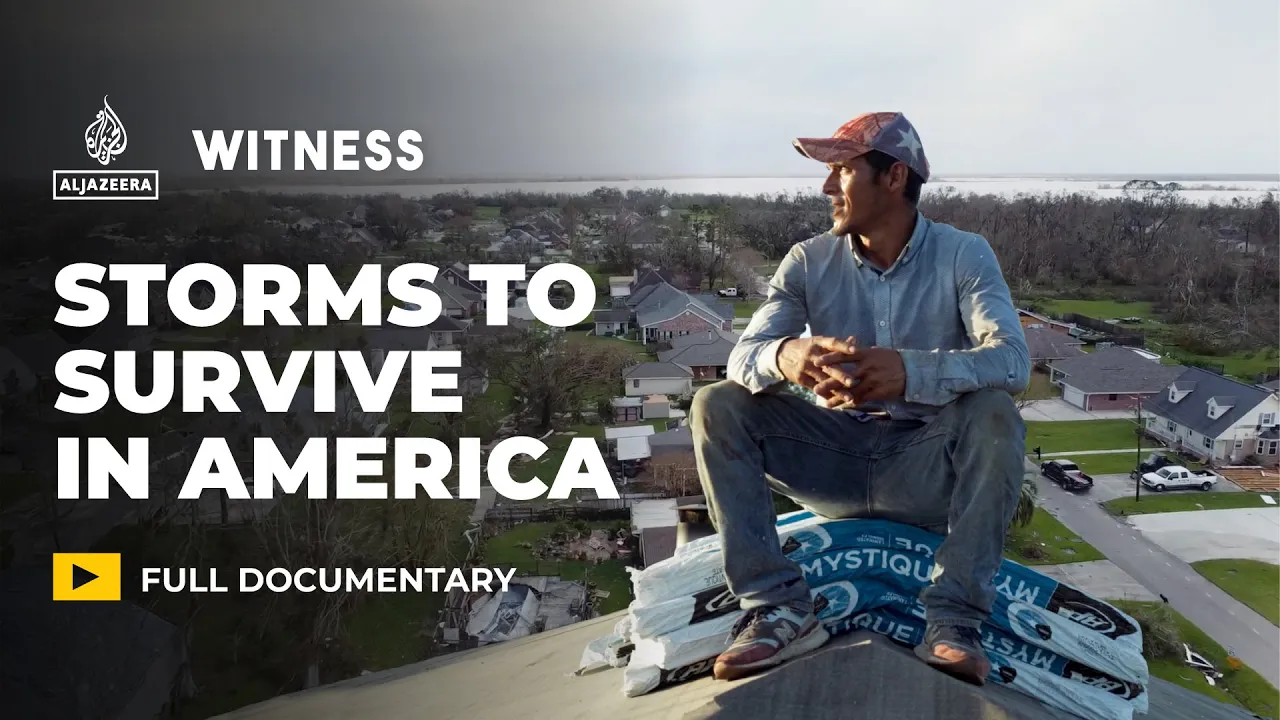







In post-Katrina New Orleans, immigrant laborers constituted approximately 50% of the rebuilding workforce, with 25% being undocumented workers, highlighting how immigrant communities fill essential labor gaps during crises while simultaneously facing systemic economic exploitation and cultural resistance; this dynamic reveals broader patterns of economic inequality where wealthy individuals benefit from speculative investments while working-class populations, including both immigrants and native-born workers, face wage stagnation, job insecurity, and inadequate social safety nets.
New Orleans After Katrina: Immigrant Labor & Street Vendors
Added:The socio-economic and demographic impact of Hurricane Katrina (2005) on the Gulf Coast region.
Fundamentals of the informal economy, particularly the role of street vending and micro-entrepreneurship in urban spaces.
The concept of 'disaster capitalism' and how private reconstruction efforts often rely on marginalized, migrant, or undocumented labor.
Basic labor rights frameworks and the systemic vulnerabilities faced by immigrant workers in the United States.
In-depth analysis of urban gentrification, zoning laws, and municipal displacement in post-disaster New Orleans.
Comparative studies of labor exploitation and immigrant mobilization in other post-disaster recovery zones, such as after Hurricanes Sandy, Harvey, or Maria.
Policy design and advocacy strategies for decriminalizing and integrating informal food economies into formal municipal structures.
The use of qualitative research methods, such as oral history and ethnography, to document marginalized worker movements and community resilience.
36.2K views2.3Klikes1:10:04Original Release: 2025-09-08
Hi folks. Today's episode brought to you by your childhood. Well, not really, but you remember when you were a kid and you had those uh sugary cereals and you thought, "Oh, uh, I'm going to live forever." Except for you didn't realize how much junk you were putting into your body. Well, Magic Spoon makes high protein, zero sugar cereals and treats, and they are completely reminiscent of your childhood cereals.
Every serving of Magic Spoon high protein cereal has 13 grams of protein, zero gram of sugar, and four gram of net carbs. And they come in those flavors uh that you used to love when you were a kid but wouldn't eat now when you're adult because you don't want all that sugar.
Fruity cocoa frosted.
I'm partial to the cinnamon.
Also, they've got these great uh new like um uh bars that um are great for you feel good about giving them to your kids because they don't have all that sugar. They're crispy. They're crunchy.
They're airy. They're easy ways to get 12 gram of protein on the go. They come in flavors like marshmallow, chocolate peanut butter, and dark chocolate. I'm hungry now.
>> Yeah, >> both are great on the go. Uh pre or postworkout or as a midnight snack. Like I say, also uh putting your kids lunch.
Get $5 off your next order at magixpoon.com/majorityreport or look for magixpoon on Amazon or in your nearest grocery store. It's all over the place now.
magixpoon.com/majorityreport gets you $5 off. Check it out. Now time for the show.
>> Theority report with Sam. The destiny of America is always safer in the hands of the people than in the conference rooms of any elite.
>> Sam, >> they are unanimous in their hate for me and I welcome their hatred.
>> We must guard against the acquisition of unwarranted influence whether sought or unsought by the military industrial complex.
>> The Majority Report with Sam Ceda.
>> Ever get the feeling you've been cheated?
It is Monday, September 8th, 20125.
My name is Sam Cedar. This is the fivetime award-winning Majority Report.
We are broadcasting live steps from the industrially ravaged Gowanas Canal in the heartland of America, downtown Brooklyn, USA.
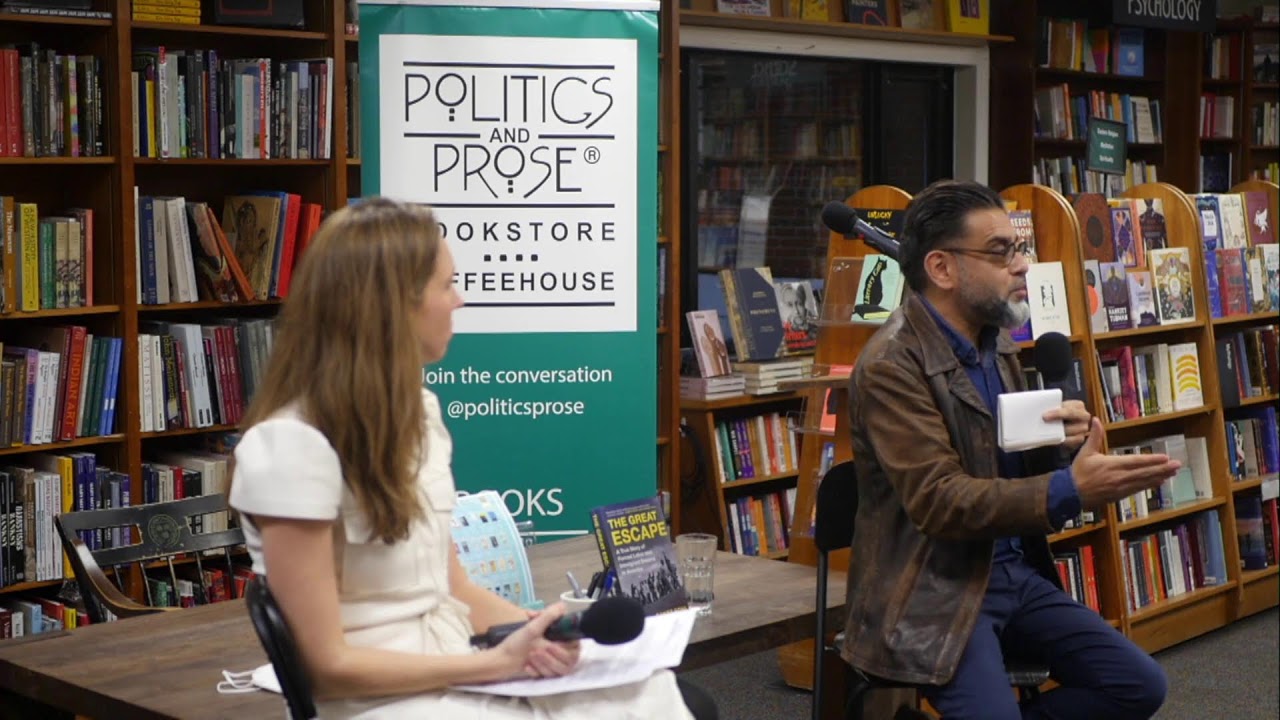
On the program today, Sarah Fouts, associate professor in the department of American studies at the University of Maryland, Baltimore County, and the author of Rebuilding New Orleans: Immigrant Laborers, Street Food Vendors in the Post Katrina Era.
Also on the program today, with 22 days until a government shutdown, Schumer and Jeff desperate to help Republicans help themselves.
Meanwhile, Supreme Court just breaking allows Trump to fire an FTC commissioner against all precedent. Really explicit precedent. Now, to be fair, it just blocks a ruling that blocks that firing.
But of course, we know how that goes with the Supreme Court. And speaking of the FTC, remember during the Biden administration, the FTC found that non-compete clauses should be banned. Well, now the FTC drops the defense of that non-compete ban because populism.
Roana says they have the congressional votes to introduce the Epstein files legislation.
Chicago braces for a federal military invasion.
Florida Surgeon General brags he's done no research before removing school required vaccine mandates.
>> Felt it in his gut.
>> Yep. In a rare ruling, the Israeli Supreme Court finds Israel guilty of having a systemic policy of starving what they call detainees.
Some people call them hostages.
>> This on a day when Israel has killed near 50 civilians in Gaza.
And as the economy craters, Scott Besson gets into a near physical altercation with Trump's housing finance chief/hatchetman.
All this and more on today's Majority Report.
Welcome ladies and gentlemen.
>> Thanks so much for joining us. It is uh >> fun day Monday.
>> Wow.
>> Yes. Very fun.
>> You might want to uh get a little more anamanopia with that.
>> What's up?
>> Fun fun day. Oh, you're mad about the Giants.
>> Yeah. Yeah. Yeah. No, I do have a little >> People are already Yeah. Okay.
>> I rushed back from the trip I was on.
got up really early in the morning so we could make the drive just so I could get back home in time for 1 p.m. kickoff.
And uh yeah, that was not great. That was awful. Atrocious. But congrats to Brian's Packers who look like a real >> 20 and0 >> potential Super Bowl team.
>> Here we go. Exactly.
>> I'm on the bandwagon.
>> Us basketball fans are like whatever.
>> Wake me up when uh basketball starts.
>> Socks. I'll wait for the socks Yankees series till I talk about sports again.
Um meanwhile by that point um I don't think how that Well, whatever.
I know um anamanopia should be like a word that sounds like it as opposed to the way that you expressed it, but who cares? Um I don't care.
>> Whoopsie.
>> Yeah. Yeah.
>> Doesn't matter.
>> Your jokes suck.
>> It doesn't matter in this in this environment. Yeah, exactly. in this uh listen I've watched a lot of people uh do far better with with much worse. So uh >> like Rob Schneider.
>> Exactly.
>> Um we will get into maybe that little tussle that uh Scott Bant had. Um I imagine things are getting a very a little hairy for the secretary of treasurer because one can't help but think that a he thought he was going to be a Fed chair.
It's quite clear he's not going to be Fed chair.
He thought that he could probably convince Trump not to do the tariff thing and crash the economy for his buddies. It looks like that's not happening.
Either way, it's going to be a crap show because the tariffs are already taking their toll on um inflation. The economy is stalled out. There's reason to believe that parts of the country are already in a recession.
Um, even if the tariff thing was to be reversed ultimately by the courts and you can't rely on the Supreme Court, the amount of money the US government would have to then pay back to people and by people, we're not talking about the people who paid the tariffs.
probably going to go to Howard Lutnik's sons who bought up a huge portion of all the potential tariff refunds.
Basant gets into a fight with Trump's FHA hatchet man who has been digging through the mortgage documents of Trump's enemies found discrepancies in mortgage documents by one member of the Fed.
mortgage documents she uh initiated and signed well before she was part of the Fed as a way to get her to quit the Fed that Basant is no longer going to be a part of. And he gets into a big fight uh with him. Uh I guess they got into each other's face. They were trying to take it outside to have a fight, but they didn't want to get hit by bags of stuff falling out of the window, the White House, apparently.
And um but at the heart of this is the economy is what appears to be doing like cratering.
>> Yeah.
>> And Basant is in the news saying things are going to turn around in a year. Like the >> That was Letic. But yes.
>> No, no, no.
>> He's him too now.
>> No. Lenick said that yesterday and >> the talking point. This is just there.
This is what they're starting to talk about now because >> pie in the sky when you die.
>> But the interesting thing is is like the the it's just now that we're starting to see like any uh reference to this in the economy. And now Basant to be to his uh uh favor says actually we're going to see the the economy should accelerate by the fourth quarter.
And presumably that's this year, fourth quarter, >> which is basically when every expert I've heard on this topic has said is going to be when the economy completely collapses. when inventory that has been accumulated uh in anticipation of the tariffs runs out, when holiday season comes around and the tariffs on China where people will be buying toys for children are going to be uh in effect even if the Trump is unable to prove the legality of his tariff regime by what that's the October deadline that doesn't have its effects like material miraculously go dissipate overnight ahead of Christmas and Hanukkah and all of that. It's going to be bad.
>> It's going to be bad. And someone's asking, I still don't understand how Lnik Suns place that bet in financial markets or just in finance in general. You can buy essentially the rights to something that is owed somebody. So, this happens in bankruptcies all the time. Majority Report goes bankrupt. I still owe uh Brian money and uh it's quite clear I'm not going to pay Brian or at least Brian's not sure if he will.
So I owe Brian $100. Uh you obviously that's that's a half year's uh salary.
And and uh Brian's like I don't know if I'm going to get this money and if I do I don't know when. And uh Matt comes along, he's savvy, and he says, "Uh, Brian, I'll tell you what. I'll give you 50 bucks or I'll give you $25 right now." And you walk away and you just give me the um right to collect that loan. I'm going to bet that that loan may come in. Maybe I'll only give 50 cents on the dollar, but I'll give you $25 today. Brian goes, "You know what?
I'm going to take that $25 now because I don't think I'm going to get anything out of Sam and Matt waits to see if he gets anything out of me. In this instance, uh Brian is somebody who had to pay the tariffs and if the tariffs are found illegal gets a refund. Matt's coming in and going like, "You may not get that refund." And this was like three or four months ago, but Matt in this instance is literally Howard Lutnik's sons at a subsidiary of Caner Fitzgerald. They're buying up uh that $100 potential refund for $25 and they may end up seeing all hundred bucks. But even today, because of the court rulings, that refund that you bought, that right to refund you bought for $25 back in April may be worth $50 today because it looks like there's a better shot of of those refunds happening. Nevertheless, that is distinct or at least the the tariffs have been uh raising uh prices.
But what's also happening is the economy is slowing because the tariffs are also harming the economy.
And here is the CEO of McDonald's basically outlining I think a dynamic that's existed in this country for decades. But it is uh particularly pronounced uh now in terms of like the direction of economic fortunes for people across the income uh uh distribution.
>> And part of what we also saw was that particularly with middle and lower income consumers, they're feeling under a lot of pressure right now. I think there's a lot of, you know, commentary about what's the state of the economy, how's it doing, and and what we see is it's really kind of a two-tier economy.
If you're upper income, earning over $100,000, things are good. The stock markets are near all-time highs, you're feeling uh, you know, quite confident about things.
You're seeing international travel, all those barometers uh of upper uh income consumers are doing quite well. What we see with middle and lower income consumers is actually a different story.
It's that consumers under a lot of pressure. In our industry, traffic for lower income consumers is down double digits. Uh and it's because people are either uh choosing to skip a meal. So we're seeing breakfast people are actually skipping breakfast or they're choosing to just eat at home. And so for our business um which has a significant uh group of consumers which are in that middle and lower income, we needed to step in with something like what we're doing here.
>> Now I don't know what he's doing. maybe lowering prices or I'm not sure exactly what he's talking about, but that dynamic is something that has been brewing since all the COVID support ended 2023 or so.
And I think a large reason why uh the Biden uh administration and then the the the the Harris campaign could not recognize what was happening in the economy is because we have really like in many respects two different economies. one that is driven by wealthy people and is large enough where we mistake it as including the other like vast majority of people who actually like live in our society.
>> The divide is really between people who are making their money gambling on the stock market and who have assets and people who don't have property or assets and need to survive on wages. And that's always been the case, but there has been an effort to kind of segment the working class and calling them middle class versus lower income or whatever. It's just everybody that needs a wage to survive and doesn't own property or doesn't own these assets are going to be impacted by this disproportionately. And it's why one, you know, 10 out of the last 11 recessions started under Republican administrations. Just throwing that out there. and income and wealth inequality keeps getting worse and worse and worse. This is just so naked what they're doing right now where they know that they have the funds to gamble and increase their wealth and everybody else will have to deal with the increased prices and Donald Trump is trying to bring all these corporations to him to negotiate to get deals for himself and his buddies. If you're already in the top 0001% what is a recession going to do for you except create assets on the cheap for you to buy up and increase your wealth? Yep.
Um, and of course that's called populism >> apparently >> for some.
>> And by the way, before we get to this ad, just quickly, this AI bubble, the data that we're seeing about how that's going to burst, like the technology sector is basically the only health care, for-profit healthcare and technology is like the only thing that's growing in the United States right now.
I guess real estate, too, because there's a lot of building happening in places like Texas and stuff. Um but AI is the uh is like the center of this techn technological like um expan expanse and we're seeing that already these large firms the adoption rates for AI into their workflow is decreasing and has been over the past few months and without the gains in the health care sector the financial times had this that the nonform payroll reports that came out on Friday would have uh non what what' you non-farm.
>> Is that what I said? Or I did form. Damn it. Uh I'm just reading my bad handwriting. Non-farm payroll reports uh would have been a loss. So this is not it's like consumer spending's down, jobs are down, and this one speculative bubble is about to burst because our AI like AI does not have the value uh that is being portrayed by the markets. It's totally disconnected from reality.
>> Uh we'll have more to say on this. uh obviously in the coming days and probably weeks, maybe months, >> years, >> possibly years.
In the meantime, however, um I took a little uh trip this weekend to Pennsylvania, delivered a puppy.
>> And uh this time of year in particular, very difficult to figure out >> what do I need to wear? I'm going to wear a t-shirt, but the temperature is going to change throughout the day. What am I gonna wear that's gonna keep me warm and cool?
You know what it is?
>> It's my Cozy Earth uh hoodie. It's my favorite piece of clothing that I own.
Cozy Earth products bring ultimate comfort that shows up day in day out.
Cozy Earth nailed comfort with their bamboo joggers and their everywhere pant. Next level. Now the bamboo joggers are made of the same stuff as my favorite hoodie. I love my bamboo joggers because it's actually the first pair of joggers I've ever had because I thought like I'm not the type of person I don't wear sweats outside.
>> It's not like I'm too um I'm not stylish necessarily, but I'm formal >> and uh but the joggers and I just feel like I can't put my keys Yeah, I'm ri I'm very uh particular and I can't put my keys in in in a you know like a pair of sweats. But with these joggers, they're like stable enough that you feel like you're wearing pants, but they're incredibly incredibly comfortable and they look really good. Made with visos from bamboo. Uh they will be your softest allseason staple along with the hoodie.
Um but I love those joggers. Uh, I think I look good in them and uh I can use them to play both softball or actually like go to the market. I'm trying to think of like what I do socially, but you know, if you did something social you could wear >> the cashier sometimes.
>> Yeah, exactly.
>> It's not selfch checkckout.
>> How's it How's guys How's it doing, guys? And uh I feel comfortable cuz I'm my joggers.
>> You sound comfortable.
>> The uh and the everywhere pant is also the epitome of refined comforted and adaptability. It is the new go-to uh pant. Effortlessly blends breathability and flexibility, allowing you to embrace movement on the go. Um, these are also great. They look great. They stretch.
Um, super comfortable.
I get a lot of uh compliments on my hoodie, too, instantly. And my I know because my kids try and take it. Um, thanks to Cozy Earth for sponsoring this episode. Go to cozyearth.com.
Use my code majority report for up to 40% off the best pants, joggers, shirts, everything. And if you get a post-purchase survey, tell them you heard about Cozy Earth right here. Built for real life made to keep up with yours. Cozy Earth. Literally in the middle of that read, I was like, I got to get another uh sweatshirt. I get another hoodie. 40% off.
>> I know, right?
>> That's when my ears prick up a little bit. Hey, uh also, uh it um we're doing a uh a little bit of a partnership with a magazine or a website, uh a periodical I love. And we've had uh Nathan Robinson on this program many times. If you like deep thoughtful progressive analysis and uh I hope you do uh because otherwise I don't know why you would be listening to this show.
>> I candy.
>> Exactly.
>> Just curious how many times Sam can say uh in a sentence.
>> Uh you're going to love the print and digital or digital for that matter of Current Affairs magazine. Current Affairs combines intelligent commentary, biting political satire, and really gorgeous artwork uh to produce one of the country's most elegant and informative magazines. And it's all adfree.
Current Affairs is a fantastic compliment to the Majority Reports work.
They deliver hard-hitting, totally independent, and entertaining coverage of the most important political, social, and economic issues of our time.
I've been Has it been five years? maybe more uh been reading uh current affairs.
You should check it out, too. And now you can use code majority report for 30% off a year on any subscription of your choice. Go to currentaffairs.org/subscribe.
Enter the code majorityreport at checkout. This offer expires on Halloween.
>> It was 10 years actually.
>> It's been 10 years.
>> I know. She makes me feel very old. Oh geez, I'm losing my sense of time. Meanwhile, going to take a quick break. We come back, Sarah Fouts, associate professor in the department of American studies at the University of Maryland, Baltimore County, author of Rebuilding New Orleans, immigrant laborers and street food vendors in the post Katrina era.
Katrina was 20 years ago. Oh jeez.
All right. Uh we'll be right back.
[Music] Heat. Heat.
[Music] back.
We are back Sam Cedar, Emma Vigland on the majority report. Want to welcome to the program Sarah Fouts, associate professor in the department of American studies at the University of Maryland Baltimore County and author of Rebuilding New Orleans, immigrant laborers and street food vendors in the post Katrina era. Uh Sarah, welcome to the program. We were just saying at the break, uh, it's been 20 years since Katrina, which, uh, was terrifying for me to to actually realize it's been that long. Um, and, um, it's obviously a a good time to to look back and see what the implications were. There was a huge concern. Some of it realized that the city was going to be be gentrified in many respects. A lot of a lot of folks were sent to Houston were literally put into the metro uh whatever the the metro dome I think it was and many of those people uh never came back. Um and uh your uh book is is um both timely in the sense it gives us an opportunity to reflect on on this but also obviously in the context of what's happening with immigration in this country. Um, I don't know if I would describe this necessarily as an ethnography, but it is a um it's using the stories of of individuals to tell sort of the some of the dynamics that take place. Let's let's start with uh Dennis um who was one of the uh day laborers who came in um u many of whom were from Central America. Let's I mean let's use Dennis as the way you do in the book to to get tell us this broader story.
>> Great. Yeah, thanks Sam and thanks to Emma for having me on the show and yeah, Dennis is a great starting point. I use him as a thread throughout the book to kind of tell this story about um immigration but also kind of labor organizing in the post Katrina era. And I do yeah it is wild to think it's been 20 years but Dennis serves as you know he was a day labor then he got injured on the work site. he was fighting for his rights um to uh for OSHA protections. While he was doing that, he became an organizer with the worker center. And so Dennis really kind of was emblematic of this process of organizing and kind of coming from Honduras to um first to Tennessee and then to Louisiana for post Katrina rebuilding and really kind of worked with day laborers to do know your rights to understand kind of their kind of and wage theft claims and things like that. um but to also build power with um the black workers in the city as well. So I think he kind of using his story to tell this bigger picture um of organizing in that area is really important. Um and Dennis is back in Honduras and he has a coffee farm. So he's like has also gone back um but has siblings that are still in in the area.
So >> do we have a sense of how many um how many folks like Dennis from Central America? I mean, originally from Central America who were in the country either uh undocumented or um or within the process of potentially being documented.
Um, this was at a time when the Bush administration was was attempting to do comprehensive immigration reform and really uh prevented in many respects by their own party by the sort of conservative element that I think had grown within the Republican party that uh uh Bush and Carl Rove I think underestimated how much of that part of their party had taken over. Um, so I'm curious like if we know the numbers and particularly relative to how many people were there rebuilding or cleaning up, I guess in that process, >> right? The immigrant workers made up about 50% of the the workers that came in to rebuild. Others were volunteers or or local workers or people other people brought in. Um, of of that 50% about 25% were undocumented. Uh I think this is when you see early um I ICE is kind of a nent organization was uh set up in March 2003. So I think that's really important to think about. So by Katrina and it was just two a little over two years old. So really thinking about how much it's changed over time and kind of beefed up budgetwise and things like that which maybe we could talk about in a little bit. But and and then also thinking about the Bush administration like what they're you know how they saw kind of this rebuilding um suspending different labor laws like Davis Bacon which is guarantees a prevailing wage.
You've seen different um OSHA suspensions to really uh expedite workers to come in but also expedite ex exploitation and kind of lay the groundwork for a lot of these injustices that took place at that time period. Um so I do think you know it was a time very different than now where you did see kind of on both sides u possible immigration reform at a large scale. Um but then that you know has fallen apart and we don't really see that pathway at all.
So um you have this massive um uh portion of the people who come in to clean up uh after Katrina and to uh ostensibly rebuild um uh are uh are immigrants uh Central American immigrants. Um, and then you talk about like like anything like you can't have uh a an influx of any type of like, you know, whatever it is. a lot of New Yorkers move to uh Florida and then all of a sudden you start to see more you know New York Giants posters everywhere or uh you know you go to the to the sports bar and they're playing the Giants game as much as they are the Dolphins game in certain areas. Um we start to see like these uh the these immigrants we start to see culture build around them. Um and uh you use uh a guy named Matteo uh who as an example of sort of like the the economy that's built around those those people who are brought in to sort of help the uh economy.
>> Yeah. So yeah, Matteo is a great example. I mean, he began as a construction worker, but then saw the need for more street food vendors to sell food to the workers because things like Red Cross and and other food services weren't really reaching those communities, and they're working 12-hour days. So, they need, you know, kind of this is an issue of food security. So, Mateo and his family turned to having food trucks to sell to people or selling like itinerantly on the streets with like uh tamalei vendors and things like that. So you really see this this kind of and I won't say it's a new form of of of selling food but this like informal economies that emerge because they've already existed in the city like historically and even in black communities. So I think that you know kind of understanding the role and the importance of those sort of grassroots food economies in getting people fed in this time when um other kind of there were systemic failures in different ways of of actually getting people fed and having um sustainable systems of of um getting food to places instead of making people come to to to a park or things like that. The the flip side of of that is that when you start to see the street vendors selling the food, there becomes suddenly the workers become more visible with in terms of a a cultural uh um a cultural force. And I'm trying to find um where I I I have this in my notes, but at one point uh uh Negan the uh the mayor of New Orleans is like like explicit I think he explicitly said like you know like I I you know I don't want tacos replacing um you know hush puppies. I can't remember what it was that he said.
>> The gumbo. Yeah, >> the gumbo. And um and it there's almost like all there in that statement there. It's both a sort of a cultural thing. It's also from an economic standpoint. It's also about a a fear of a change in the city. The irony of course is that there wasn't the same sort of concern that um a significant portion of the black population left New Orleans. Uh they were evacuated, did not have the money to come back, and were going to be replaced by uh wealthier white people. Uh but there's a concern that there's going to be sort of like a uh a population of of Central Americans, >> right? So the fear Yeah. And I'll give Megan Megan some credit. He said, "I don't want the city to be overrun by workers by Mexican workers, but it was uh a council member Oliver Thomas that said, "Why did the tac how did the tacos help the gumbo?" So it was Yeah. But it was, you know, but you're still getting that kind of food reference um from from uh who's running for mayor's office right now in New Orleans. Um but yeah, you see kind of yeah, food is just very much visible to this day. If you're in New Orleans, you see much more Honduran restaurants or taco trucks and and even people sitting outside the grocery stores um selling tamalei. So this the way that you could see the visibility of of of those populations are represented by the foods, right? So thinking about the impact of um using food as that lens, how it's going to infiltrate the New Orleans culture and impact it in this ways and New Orleans culture is so dynamic like that's what makes it beautiful like from the Vietnamese communities, right? you see how they they are kind of this acclaimed immigrant community in the city. Um but seeing them as like kind of fear-mongering around immigrants but not this like gingifying class that's bringing in kind of uh you know kind of raising levels of housing. Um at the same time of displacement of black communities because of lack of housing because of uh destruction of public housing and things like that. these like policies that have pushed the people who make the gumbos uh out and then you're bringing in these kind of kind of ginger fire class that comes in but while vilifying the workingclass immigrant communities. Yeah, I think that's kind of the point of the book is to think about how food can which is New Orleans is a food city, but how you can think about these different issues um through that lens and how it's actually coming out of politicians mouths, right, in these different ways. is is is is food in this instance um is it is it a sort of a a a leading indicator, a lagging indicator like where where it it plays off in so many different ways particularly with a with a um a city like New Orleans but but but broadly speaking the food is you can enter into there and have obviously multiple different conversations. Um, but where like how quickly w was the food the impetus or was it the excuse or was it I mean surely someone must have been like aware of this dynamic and on both sides of like the desire to have I mean you know these people who come back in they're rebuilding the city. Um you could you could respond to that in two different ways I guess.
Yeah. Well, in 2007 in Jefferson Parish, which is the the county around New Orleans, um they banned taco trucks.
Like there was an outright ban on those types of trucks. So, you can really see and that's where the majority of the Mexican and Central American population lives to this day is in those the suburbs. Um so, you really see this very much racialized ban of taco trucks. So through food they're using it, you know, they're kind of acting out these words of these politicians um to ban and they're using the food as as that way to do that. So when I I moved to New Orleans in 2010 and that's when I started, you know, reading about that those policies, reading about the different comments and really thinking about using food as as as that way to surface these other issues from bureaucracy that kind of also was used to racial profile um folks through allowing these gourmet trucks um these food trucks to come in. that outlawing like taco trailers, which is what most of the immigrants use. So they there's on the books to this day a ban against trailers, but you can have, you know, gourmet food trucks. They've really liberalized those those policies. So, you know, I think that, you know, as I kept following food in these different ways and also working with the New Orleans Workers Center for Racial Justice, um kind of seeing on the ground how these everyday experiences, um through the restaurants, through and even the restaurant industry, who's working in the kitchens, right, the after Katrina there was, you know, much an increase in amount of restaurants even though there's a decrease in population in the city and who's working in the backs of those restaurants, right? it's oftentimes immigrant workers and also poor and working-class black workers. So really thinking about these spaces as ways to think about labor and labor organizing in the city I think was helped me to to surface a lot of these kind of issues of power and things like that. Uh let's talk about it in terms of that context of of wages because um that dynamic of more restaurants opening with less people, it implies that what you have is uh a higher concentration of wealth. Um because you know they can go out to eat five nights a week, six nights a week or seven nights a week. Um, so you don't need as many people if they have if you if the the ones you do have are uh wealthy. Meanwhile, you have a workforce that is um perfectly situated to be exploited uh because so many of these folks are undocumented or um uh you know within that community.
Talk about that dynamic.
I think you have a a wealthier class, but also you're catering to a tourism economy, right? So, they're building these restaurants are not for the local folks. They're built for kind of this growth of tourism. And that's how the city was rebuilt, right? You have developers calling it a green banana.
You have u developer, white developers calling it a the city a um the vision is like a um AfroCaribbean Paris, right?
But how do you have, you know, the these kind of top down outsiders kind of imagining these spaces um and creating, you know, these restaurants and these neighborhoods that aren't for the local people, right? Um and I think, you know, the restaurants definitely um embody that and it shows like how much of the city was rebuilt in this way, right?
Again, it was called a blank slate, right? And here to pave way for these this tourist economy for the, you know, the any all the the Super Bowl that just happened there. um the uh of course Marty Gro carnival celebrations, all the festivals that take place, all the concerts, right? They're they're paving way for that instead of kind of making, you know, keeping those jobs um for local folks, but also making it accessible and equitable for people to be able to come back to there to be enough housing, there to be enough jobs that have good wages for people to come back to. Um, and I think that's why what's kept people uh what's kept the population so low and and also more kind of upper class of who can afford those housing prices and things like that.
>> Interesting. And what I mean do we have a sense of like what percentage of the population um prehurricane Katrina was able to return?
Well, I can't give you the the numbers before Katrina were about four almost 500,000 and now they're around 350 37 375,000. So, you do you still have this decline. Um, and even though you know who is coming back, right? It is still majority black city, but much less of the city is is black than it was before.
you have a higher you have a from 4% pre- Katrina of of Latinx uh people is now around nine or 10%. Um and so you see kind of like who the new demographic that's this big shift is pretty drastic, right? And that is that's not because people just didn't want to return. It's because they couldn't. It's not because they didn't have they they they had access to wealth, but they didn't have access didn't enough wealth to be able to to rebuild their homes because there was disproportionately benefited white wealthier neighborhoods than it did in like the ninth ward neighborhoods. Um and then you have, you know, these I think housing is central to these processes and then also kind of union busting and and the jobs and and and kind of low wages have been kept down um in these service sector economies. I think that's been a part of it too in that 21st century context.
>> Uh talk about El Congresso. Um this grew out of this dynamic I guess.
>> Yeah. So the El Congresso, they were one of three parts of the New Orleans Worker Center for Racial Justice. So they emerged in like 2006 2007 to fight for rights for workers. And the congresso was for um immigrant workers who came in mostly day laborers. So it was the congress of day laborers. And so it was like these five different day labor corners that established after Katrina um in different places across the city in front of Home Depot um and things like that where workers would congregate. And then Dennis and I went around with him for about a year to organize at the different work sites and then leaders of those different gay labor corners would come together with their families. And that grew um from two thou in in a 10-year period grew from about 80 people to around 250 people at regular meetings every Wednesday night with a membership base of around a thousand people. So you have this massive group of of immigrant workers organ well organized with great organizers and great leaders within the community. And then you had black workers organized within the same organ worker center model understand with dignity. And these are black uh poor and workingclass um folks who were displaced because of housing, this public housing being destroyed, but we're trying to fight for those jobs um through uh section three ordinances to be able to maintain some of those jobs. And these are two groups that are usually pitted against each other, right? So you and you have them really great organizing brought together to fight for kind of rights across the board for immigrant rights but also for um wages u right to remain right to not be locked out of different jobs because of a felony conviction and things like that. So yeah and people showing up for each other's campaigns that were at the local level but also state and federal levels too fighting in front of the ICE office against deportations under Obama administration. So, I think that's what I I really wanted to show showcase in the book is is how these groups came together, the these coalitions um within the organization, but also across class, race, language barriers, um things like that. And I think that's really powerful and and kind of can speak to the contemporary moment.
>> How is what's been the durability of of of that coalition?
>> Uh the worker center still exists, but it's in a kind of different form. I think there you know the the Elongresso does not exist anymore but there are other uh groups that have have emerged out of it like migrante that have really you know and a lot of the work that's happening today and even kind of similar to then where these kind of reactionary how do we prevent how do we maintain these rights um to stay um and so they they don't exist in the same um uh capacity as they did 10 years ago but there the worker center still exists and then all these a lot of different um branches exist. Um and I think you know there's a lot more uh different coalitions in the city. A lot more kind of the unions are coming back in different ways. There's like step up um up up Louisiana. You have like UTNO the teachers organization. So you have different groups coming together and you have other or grassroots organizations that are really bringing a climate change into the conversation in ways that the worker center didn't. So I think it's you know kind of evolved in different ways. there are smaller organizations that that are are around that are that are strong, but I feel like at that time period, the worker center was really doing something that was unique and powerful um uh under great leadership and and really building coalition strength across different organizations. I I'm I am uh curious as to how much of that period between 2006 and 2016 where it feels like ICE was used as um sort of like a way to calibrate how much of the immigrant population the city wanted there. like we need to have just enough so that they can uh do the work that we need to have done but not so much that they become a political force. Um is is my sense of that uh correct? And how much of that was a model for the way that ICE operates today?
>> I think okay two part I think that the Congress was a political force. I would argue they were sitting at the table with the chief Harrison to to do the consent decree. They were at the table.
Undocumented immigrants were at the table doing a lot of that kind of uh debates to to to rebuild policy. They fought against the local sheriff's office, Sheriff Gusman um to there were um ICE holds that were under 287G and got his office to stop um collaborating with ICE under those policies. which were voluntary um and then got him to end these these holds that were happening that were kind of constitutional crises where he was holding people longer than the 48 hour period. So I think in some ways that their impact in shaping policy they ended a big and this is Obama time period ended the carry raids which was the criminal alien removal initiative which was this major deportation um kind of similar to what's happening now these raids that were happen workplace raids church raids um and they were able to to kind of intercept the email that kind of divulged that that was happening but I think the difference is the accountability right is you know back then you have uh like the racial profiling. We could call that out. Now we're getting, you know, the Fourth Amendment. Um, is >> the administration's in front of the Supreme Court basically saying, "Let us please racially profile." And it there's reason to believe they're going to >> They just did with LA. Yeah. I just checked my >> 30 minutes ago.
>> Oh, 30 minutes ago.
>> Minutes or an hour ago. Yeah. I just uh I mean for people to be clear on this um a uh federal judge had basically said ICE cannot operate by looking at the color of someone's skin seeing that they may have a Spanish accent or that they're working like as a gardener and decide we're just going to roll up on that person because they that's some type of evidence that they may be an undocumented immigrant. Um and the uh Trump administration explicitly went to the Supreme Court and said, "Yeah, we want to be able to basically racially profile and I guess uh 30 minutes ago the Supreme Court >> unbelievable."
>> And I would imagine >> no decision written, right? Uh just a shadow doc would be my guess.
>> Uh although I don't know, maybe there is actually a decision.
>> Soor I know that wrote a descent. Yeah, >> there's dissents. Well, I guess uh Kavanaaugh's concurring opinion. So, they may actually have written as to why uh it is um legal to racially profile essentially when you're looking for uh immigrants. Um >> well, that's uh that's that things are moving quickly. So, um, where are we today in terms of like New Orleans and what from the perspective of I mean I I I would imagine if if this was to happen to New Orleans again, it would be a very different story about the capacity to rebuild because um I would imagine that uh uh those uh people who came from all over the country to help rebuild uh New Orleans would be like, "I'm not going anywhere near there. The whole thing is just some type of like honeypot for uh ICE at this point." But where from from New Orleans perspective, like where is it relative to the the the fears that people had about this city becoming just either a Disney World or a place for uh wealthy people? And then I guess where is it in terms of like how replicable these dynamics can be because of of of everything that's happened really over the course of like the past eight months, >> right? And I mean a lot of the critiques of Katrina are about FEMA, but now you know but it's about the not about like the ne necessity for FEMA but the the like the the lack of corruption within that context, right? And so during Katrinos almost a billion dollars were just kind of lost went wasted and but now you just have like this this dissolution of FEMA as a in in the most dire of times um ac you know when we're getting floods and hurricanes affecting Appalachia. Um, you know, I think, you know, that's what's really frightening.
And I think what we have in terms of ICE is, you know, a friend called ICE now, like as Sheriff Araio of Arizona on steroids, right? So, it's like this like exactly what we're just hearing from this decision from the Supreme Court. And you also have technology being used in ways that it was only 10 years ago was being kind of developed like Palentar all Peter Teal's stuff all the surveillance used to to face surveillance and things like that. I think that's what's also really scary is the ways in which those um types of technologies are able to really kind of make it even harder for any not just immigrant communities any any communities especially um communities of color um that are kind of subjected to these types of surveillance in these different ways. So I think that's like and then this this I think the budget of ice is three times what it was and is growing in and these job like I think that's what's also frightening um in terms you know I think with you know hurricanes are getting worse and I think we're not really you know there is I think a push on the city level I have friends who work in in kind of disaster related fields at the city of New Orleans who are really kind of being thoughtful of these processes but a lot of you know the money, the funding, the things like that that that will be so necessary in those times aren't there.
And you know, even under Bush um during Katrina, you had Michael Brown who was the FEMA director. He had no experience in disaster management, right? And think about the people that Trump's putting in place now or people with no experience or his cronies who he's just trying to empower um or do a favor because whatever reason. Um, so I think those are the things that are are, you know, we've always had a lack, you know, people in place that aren't um trained for those positions, but at this point, not only is it we're moving funding um for budget cuts or for tax cuts for billionaires, but we are also moving funding that is public sector in ways that help people, not in ways that just are public sector in terms of ICE or policing in ways that that threaten people. So, I think that's that's what's frightening and that's not a positive >> happy messaging at all, but Two other things that that occurred to me like my understanding is are there even any public schools left now in New Orleans? I mean it's all uh charter, right? And they're all private charter.
>> Exactly. Yeah. But they have I will say there's great like and that was a big issue with Katrina. Those were great jobs, right, for for for people from New Orleans and then they completely got displaced. The union was busted or or kind of dismantled. But I there has been a strong movement with UTNO um and there's a long history of strong teacher organizing in that city and I think those teacher organizing groups are are really kind of coming together to get within the charter school systems. Um but yeah, the public schools are there's completely gone. I it I mean and one of the things I I now I I I recall too is that um early in uh the wake of the hurricane uh I don't know if they were called Blackwater at the time or Jay but mercenaries were sent down there to basically take over uh control of the city. I mean, all of the worst elements of this, God forbid there's a some type of replication in terms of a natural disaster, all of the worst elements of it seem like um have arrayed themselves in this administration almost to be deployed less as like um almost by design in this instance. like you know I I think like the the the sending in Jay or whatever it was at that time Blackwater was because they had no idea what to do. I mean they had no idea what to do leading up to it.
They had no idea what to do afterwards.
Um they were fortunate to be able to get 45% of its workforce 50% of its workforce from from immigrants. That would not happen today. I mean, what like it it it it's sort of hard to imagine what would happen in there other than some billionaire saying like, "Okay, this new city is going to be um you know, Muskville and um otherwise nothing's going to happen, right?"
Right? Like I mean like it's I if >> if New Orleans was to suffer a Katrina today, same type of thing. I know that's impossible, but I'm saying something similar. It seems to me like there is no everything stops at one point. Like it's just going to be a mess. Nobody's coming in to clean up the moldy uh uh ruins.
Nobody's going to do this. And it puts a billionaire in the position of being able to say like, "I'm going to do this." I mean, we almost saw this with wildfires out in Cal in LA. Um, but there's a a robust enough sort of state infrastructure, but in one of these red states where none of that infrastructure uh exists, it seems to me that it is completely vulnerable to like almost being fully privatized.
>> Yeah. And I think those are, you know, the the failures of 2005 of and that recovery period, right, that we we're like, these are failures. You can name these, you know, kind of the ways in which this privatization really kind of impacted negatively these communities in the city as a whole. And now those politics are kind of like a Tuesday, right? It's what it's how it's kind of what we're the the the way we operate.
Uh not we, but like this the the systems that we're moving toward. So yeah, I think you're completely right and I think they'll say it's the failure of the city, right? They'll blame the local people instead of understanding kind of this divestment these ways in which like the the the public housing the the the things that people who make those that city and those places so rich and so um important and I think that you know they'll move the shift the blame like they do with public education, right?
They'll say, "Well, you the schools are failing, but actually this divestment that's been happening for 40 years is the the problem, right? It's not the the schools. It's like this lack of investment." Yeah. And I think and then what you do have you have like great local leadership that is there, but I what you have is like what happened in Katrina is these no contract bids that come in like in for Katrina like Hallebertton and these mercenaries that are coming in and doing these top down wasting money, right? It's going to loaded contracts. is going it's they're they're it's a lot of wage stuff and they're not doing their job because they don't know and you have these local organizations that are set to do it but they're being displaced or pushed out in different ways when when you when there is I think the the answer for me is like the city organizing um which no you know is always the case you know it best but then you're also impacted in Louisiana right now with the Landry administration right that is creating this um kind of detention center uh mecca for for immigrant deta, you know, whatever Trump says Landry does and they're making Angola this immigrant lockdown, Angola prison. Um, so, you know, I I think it's really kind of scary, but I do think that there are ways in which the city and the pe its people know what's best, but they're not being listened to or they're being erased in these different ways that are that's that's that's quite frightening. C >> can you talk briefly about that Angola story? I feel like it's not getting too much attention, but this is a notorious prison in Louisiana that the very Trumpy governor is uh kind of, you know, working with with Trump to turn into an immigrant detention facility. Uh it's infamous for its exploitative labor practices, abusive treatment of prisoners, that kind of thing.
>> Yeah, it's on a former plantation in kind of west, probably about three hours outside of of New Orleans. um think Angola penitentiary and they're building kind of this cont and there's already multiple uh detention centers in Louisiana but using Angola as this kind of like also a space to hold I think 400 um immigrants is how much it's the capacity it is but just kind of the symbol the symbol of using that prison that's so um has such a troubled history in so many ways that you explained Emma um and I you know it's just Landry cowering too and they were going to name it after Landry. I'm not sure where that is right now, but you know, these are ways in which they're really trying to double down um in in these ways of being, you know, using Louisiana as this um anti-immigrant space. But New Orleans is this kind of stronghold in these different ways that I think is really important to um to the immigrant communities that are there.
I feel like it maybe it was 25 years ago there was a documentary about uh Angola which is uh worth seeing just to give you a notion of like what the history of that uh prison is. I mean it was uh >> I mean do they still do that kind of display of uh like the rodeo where people come and like bet on them?
>> Yeah, it's still Yeah, that still exists which is Yeah. And there yeah it's a yeah it's a very um problematic to say the least um prison um yeah it still exists and there's you know not much >> well uh Sarah Fouts um it's I mean uh New Orleans is just a um there's so many stories within the recovery of New Orleans and frankly the disaster uh uh that took place uh in in New Orleans relative to um what happens when you have an agency that has been completely dismantled. Um uh that is uh insightful for where we are today and and perhaps maybe sadly in some respects predictive of of of what we can't say for sure. But uh certainly of of something that could happen well not just during this administration. I think they're their failures are going to resonate uh for a long time. But uh Sarah Fouts, the book is rebuilding New Orleans, immigrant laborers and street food vendors in the post Katrina era. We'll put a link to that at majority.fm. Uh Saraps, thanks so much for your time today. Really appreciate it.
>> Thanks for having me, Sam. Thanks, Emma.
>> Thanks, Sarah.
>> All right, folks. We're going to take a quick break and uh head into the um fun half.
>> Yeah. I mean, I just was reminded that Angola story. Sorry, I hadn't I had forgotten about that. But yeah, basically they pay the prisoners, the inmates there such low wages that I guess once a year or something like that they have a rodeo where they can win hundreds of dollars, which is like a lot in terms of prison rations and uh people from all around the state come and gamble on them. And it's like a gladiator type situation that happens as a tradition that started in like the 60s at this particular prison in Louisiana.
Louisiana's I mean I love New Orleans.
Crazy state like historically speaking.
Yeah. in terms of like the types of mach political machines that have been down there like they're funded by the like a state lottery for at least I don't know if that's still going on but for a huge part of the history like really bizarre governance down there >> and oil money just soaking the whole uh state and creating like areas of the state that are entirely uninhabitable basically or when they are you do live there you're you're likely to get cancer.
>> You don't want cancer alley to be in your state.
>> Yeah.
Hey folks, your support makes this show possible. You can become a member at jointhe majorityreport.com.
>> It's just like uh we'll have fun in the fun half. We're determined.
>> Uh join the majorityreport.com.
>> I think it's good.
>> You can help uh this show survive and thrive. Uh, and then you get the fun half and you can IM us also enjoy just coffee.cop fair trade coffee um out of uh not in Green Bay but in Madison, Wisconsin.
Um co-op there. Great politics, great coffee. Use the coupon code majority, get 10% off. Matt Leftreckoning.
>> Yeah, we had a good Sunday show.
patreon.comleftreckoning.
uh Sunday show for patrons talking about uh an insane story out of Wired about a Silicon Valley surrogacy uh story which is sort of I mean insane and then also talking about this blowing up a Venezuelan boat um that just they drug dealers terrorists both of them at the same time shoot a missile um bad sort of trajectory we're on in this country in terms of uh how we're acting out as a nation so check that out patreon.comreion I'm just reading getting into I mean I'll just read the first paragraph for this breakdown of this um the LA Times Supreme Court uh ruled on Monday for the Trump administration and agreed US immigration agents may stop and detain anyone they suspect is in the US illegally based on little more than working at a car wash, speaking Spanish, or having brown skin.
You know, sometimes you worry that you are a little bit um uh hyperbolic when you uh you know, haven't seen a ruling and uh make an assessment and then it's it that's what it is. It is fullon racial profiling.
Um, and my understanding is it's it's an it's an emergency appeal. And I don't know if that means that it is a lifting of the judge's order in a on a temporary basis.
>> Seems like it's like an injunction that they're repealing. It's it's an it's it's a it's a repeal of a of a an injunction or a temporary order which means that the case continues. But this the Supreme Court has done this multiple times now.
The implication is that if you don't allow ICE to racially profile, they will be um irrevably reckably uh harmed.
And I mean that's why you you lift an appeal or you uh issue an appeal, I should say, you lift an injunction or an order or you repeal one.
It will um the existence or the absence of one will cause irreable horn.
>> irrevocable.
>> Thank you. Irrevocable uh harm. I'm having a stroke. Um and uh uh now what's going to happen is as you go about your day in California, if you're brown, that was on you, man. I mean, they were already doing this, but now there's no recourse for clear racial profiling, right?
>> That's right. Um I mean, they were doing this. That's why the case was brought.
>> Yeah.
>> Uh but now it's going to be policy, >> stated policy.
>> Where does this uh does I we have to still read like what the Supreme Court decision says, but does this open the door for explicit usage of racial profiling in contexts that are not immigration related? I mean like say >> this is what this is what Kavanaaugh says and federal law says immigration officers may quote briefly detain an individual for questioning if they have a quote reasonable suspicion based on specific articulable facts that the person being questioned is an alien illegally in the United States. It's like Tom Holman said explicitly that on a hit article.
>> Well, yeah, but but but >> there there used to be articulable facts that were not relevant as to creating a reasonable suspicion. In this instance, it's going to be like, well, he was brown.
Well, he was speaking Spanish. Well, he was doing a job that supposedly Americans won't do. Um it >> and this is the emergency docket. This is the shadow docket. So uh it very little um I mean this is this is the um >> this is the implications of the Supreme Court.
>> I mean it's like a Dread Scott era a bit, right? I mean like the what this is the kind of decision that will be a stain on our history and we're living through it.
>> Yep.
>> Um >> Texas left. Is this just for California?
Well, it's specifically the case is California, but I don't see why if it was brought up if Los Angeles, sorry.
Why if it was brought up, you know, presumably ICE is going to use this exact same thing in Chicago, in whatever, you know, name the locality.
precedents been set >> and uh the you know Chicago ACLU will uh will will attempt to enjoin them from using this at in a court and the court that federal court could say oh we're we're not going to abide by uh that ruling because it was specifically to to LA but it it's unlikely and in the event they did that the Supreme Court would probably say like you're purposely ignoring uh our rulings. Supreme Court just did do that. Actually, I can't remember what the case is now off the top of my head. One of the judges clapped back and said, you know, um it's not our intention to do that, but when you make all these rulings that are clearly against president and creating new law and you have no explanation for it, uh we're a little bit um incapable of following what you're you you consider to be president. But um more on that at a different time, folks.
Left reckoning. Did you already say it?
>> I'm losing it. See you in the fun half.
Up Next

108:25
Mutual Aid Explained: Definition, Examples, and How to Participate
@BCRWvideos
24.2K views•2020-07-24

3:33
Risk Society Explained: Ulrich Beck's Theory in Sociology
@Shortcutstv
41.1K views•2016-08-24
19:23
How to Analyze Conversations Scientifically | Elizabeth Stokoe | TEDx
@TEDx
1M views•2014-12-04

9:41
What is Sociology? The Sociological Perspective Explained
@crashcourse
4.6M views•2017-03-13
Related Study Plans & Knowledge Roadmaps
Structured learning paths in Sociology
sociology
Disaster Sociology: Risk, Power & Recovery
01Foundations of Disaster Sociology
02Structural Vulnerability & Social Inequality
03Ulrich Beck and the 'Risk Society'
+ 2 more learning modules
15h5 modules
Explore Roadmap
sociology
Celebrity Culture: From Hollywood to TikTok
01Foundations of Celebrity Sociology
02The Rise of Micro-Celebrity & Digital Platforms
03Parasocial Relationships & Algorithmic Intimacy
+ 2 more learning modules
12h5 modules
Explore Roadmap
sociology
Hostile Architecture: Space, Power & Control
01Introduction to the Sociology of Space
02Social Control and Surveillance in the City
03Hostile Architecture and Defensive Design
+ 2 more learning modules
12h5 modules
Explore Roadmap
sociology
Loneliness Epidemic: Third Places & Isolation
01Foundations of Social Capital and Community Cohesion
02The Death of Third Places and Urban Space Erosion
03The Privatization of Leisure and Atomization
+ 2 more learning modules
12h5 modules
Explore Roadmap