


















Wave-particle duality is the concept that all matter exhibits both wave-like and particle-like properties, first demonstrated for light through experiments like Young's double-slit experiment (showing interference/waves) and Einstein's photoelectric effect (showing particle/photon behavior). Louis de Broglie extended this principle to matter by proposing that particles like electrons have associated wavelengths given by λ = h/p, where h is Planck's constant and p is momentum. This hypothesis was experimentally confirmed by Davisson-Germer's electron diffraction experiments, showing that electrons produce interference patterns when passing through crystal lattices, demonstrating that particles can exhibit wave-like behavior. The wave function in quantum mechanics describes the probability amplitude of finding a particle at a particular location, with the probability being the square of the wave function's modulus.
Wave Particle Duality & de Broglie Waves | Quantum Physics Guide
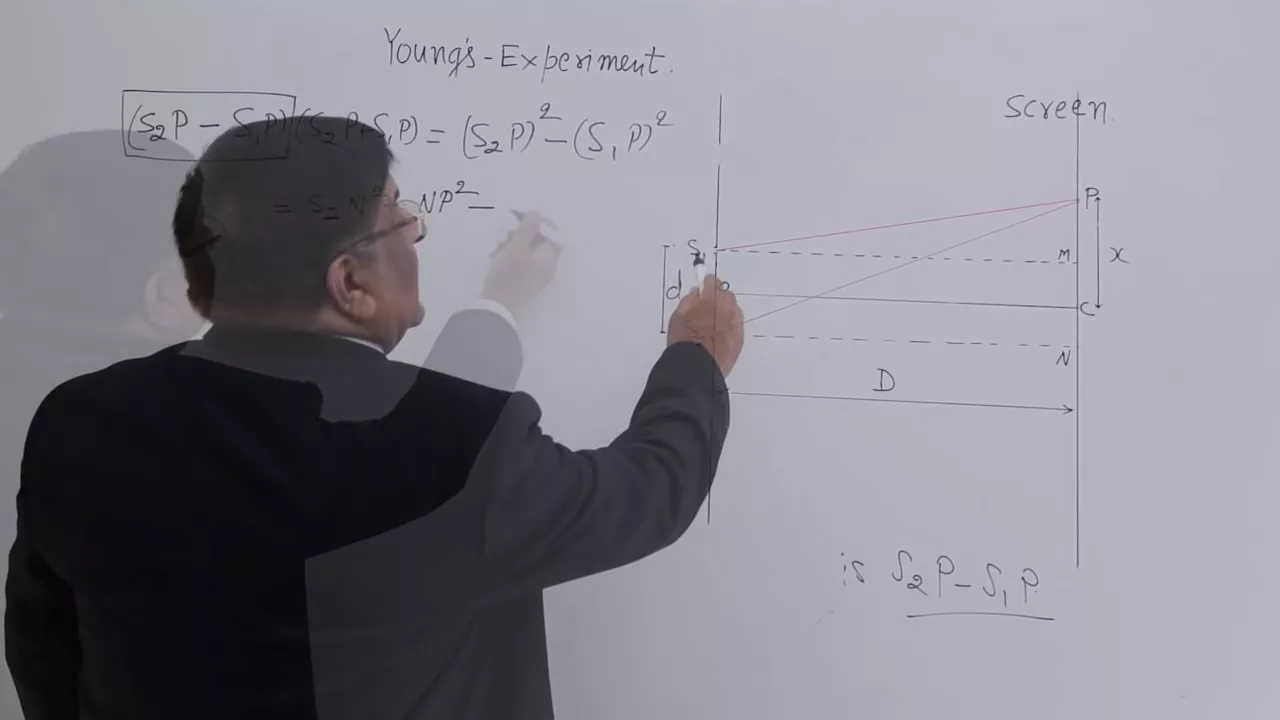
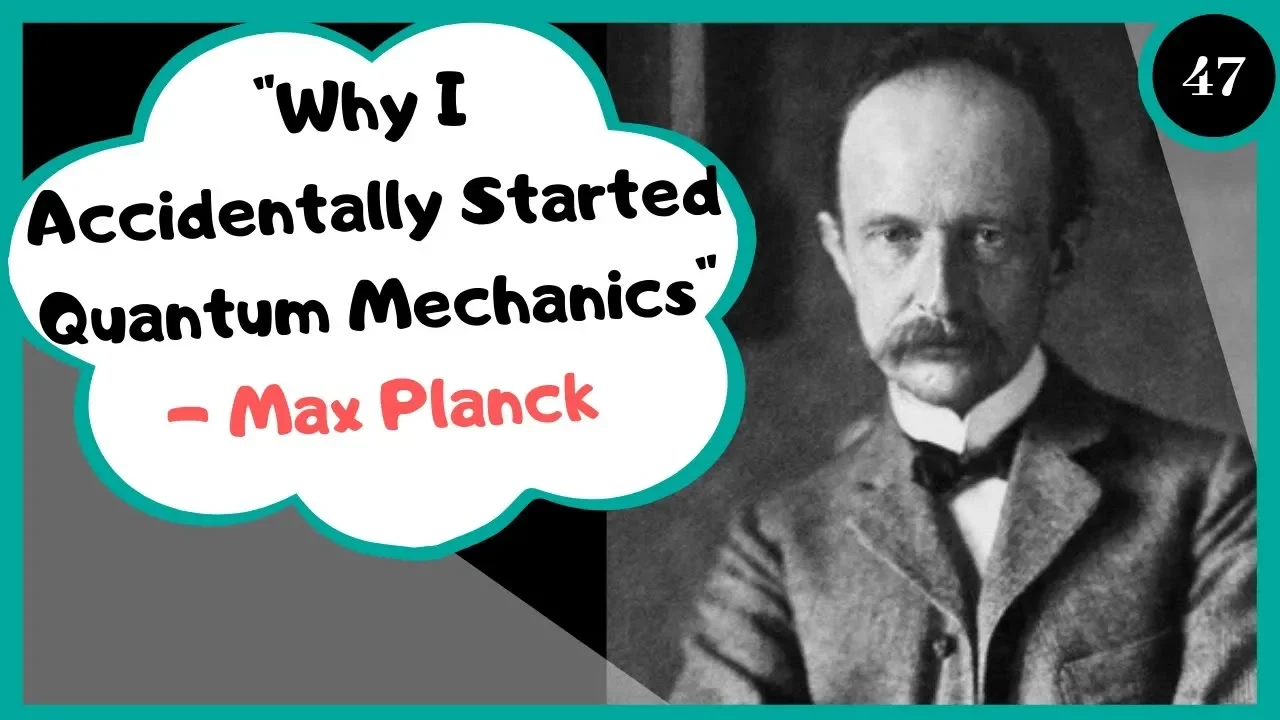
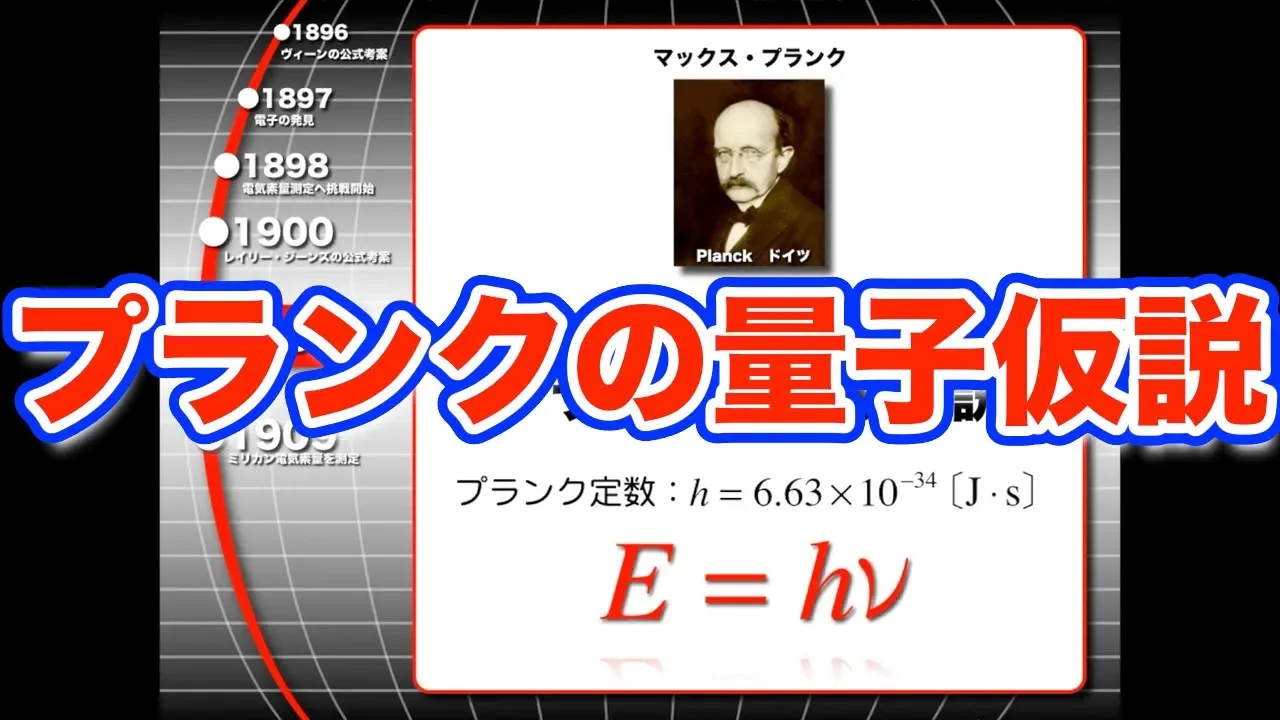
Added:the story of wave particle duality begins with the story of light light is the most ubiquitous of physical phenomena and yet for the majority of human history it has evaded explanation light makes the universe visible to human beings revealing the rich tapestry of colours and textures that helps us to distinguish objects and navigate through the world light has been worshipped by countless cultures it lies at the heart of myths and poems and stories of our creation and it has been studied by philosophers and scientists through countless generations but what exactly is light is it a wave or is it a particle or is it something else entirely to answer this question would require thousands of years of experimentation and theoretical inquiry and would involve a selection of the most famous scientists of all time weaving together ideas across generations overthrowing long-held ideas and beliefs and forever changing the way that we view the universe so what is light to even pose this question represented a huge leap forward in our attempt to understand the universe to believe that light is some thing that can be investigated but if light is a thing then what kind of thing is it some of the earliest documented theories of light came from india and ancient greece many of these theories sought to describe light as a ray a straight line moving from one point to another pythagoras best known for his theorem of the right angle triangle proposed that vision resulted from light rays emerging from a person's eye and striking an object epicurus argued the opposite objects produce light rays which then travel to the eye other greek philosophers most notably euclid and ptolemy used ray diagrams quite successfully to show how light bounces off smooth surfaces or bends as it passes from one transparent medium to another centuries later lucretius who like democritus before him believed that mata consisted of indivisible atoms thought that light was made of particles traveling in straight lines from the sun this provided a simple explanation for the formation of shadows these were just regions in which the light particles couldn't reach with the sharp edges of the shadows simply representing the boundary between where the particles could and couldn't land during the 10th century the particle theory was developed in egypt by the famous middle eastern mathematician ibn al-haytham who published a book of optics in 1027 which was the first comprehensive treatment of the properties of light including the physiological treatment of the eye and the bending and focusing properties of lenses and mirrors but perhaps the most significant development of the particle theory of light was that of isaac newton in the 18th century newton showed how reflection refraction and dispersion could all be explained by the particle theory according to newton light comprised a continuous stream of particles that were given out in all directions by luminous objects according to newton the reflection of light was similar to the reflection of a ball thrown at a hard surface the ball bounces back at the same angle that it was thrown at if we consider the initial velocity of the light particle at some angle i then we can resolve the velocity into its horizontal and vertical components as the ball hits the surface its vertical component of velocity is reversed but the horizontal component remains unchanged so we see that v sine i equals v sine r and therefore sine i equals sine r and so we see that i equals r the angle of incidence equals the angle of reflection and the light particle is reflected at the same angle at which it hit the surface which we recognize as the famous empirical law of reflection in order to explain refraction which is the bending of light as it passes from one transparent material into another newton assumed that there was a force of attraction between matter and light according to newton when light particles were in the middle of a transparent medium such as air glass or water then the forces acting on the particles acted on all sides equally and therefore there was no resultant force however if a beam of light is aimed at a glass block then at the boundary between the air and the glass the forces are unbalanced and there will be a greater force of attraction on the particle towards the glass this means that the horizontal component of velocity increases whereas the vertical component remains unchanged the increase in the horizontal component explains why the light ray changes direction towards the normal on entering the medium it can also explain the increase in the angle of the light when leaving the medium however newton's particle theory was not without its problems firstly newton's theory required the speed of light to be faster inside a medium than in the air and this would later be shown to contradict experiment secondly if luminous objects are continuously emitting particles of light then newton's theory predicted that the object should be constantly losing mass and finally newton's theory struggled to explain what happens when light passes through a narrow slit and spreads out a phenomenon known as diffraction around the same time that newton was developing his particle theory of light christian huygens a dutch astronomer proposed that light was a longitudinal wave similar to sound in much the same way that sound waves require a medium through which to travel huygens proposed that longitudinal light waves also require medium to travel through huygens proposed that space was filled with a transparent massless substance called ether according to huygens theory waves travelled through different materials by the propagation of wave fronts according to huygens each point on the original wavefront acts as a new point source and wavelets spread out from them these wavelets then combine to form a new wavefront using the idea of wavefronts not only was huygens able to explain the reflection and refraction properties of light he was also able to explain the diffraction or spreading out of light despite the success of huygens theory the particle theory of light reigned supreme for over 150 years largely due to the powerful influence of newton after all newton's laws of motion and his theory of gravitation had been so successful at explaining and predicting the future emotions of objects that many scientists just assumed that newton must be correct when it comes to the properties of light however when thomas young conducted a series of groundbreaking experiments at the beginning of the 19th century scientists couldn't help but take notice of the explanatory power of the wave theory of light in 1801 young presented a famous paper to the royal society entitled on the theory of light and colours which described the interference properties of light the first experiment was quite simple and young wrote i made a small hole in a window shutter and covered it with a piece of thick paper which i perforated with a fine needle i brought into the sunbeam a slip of card about 1 30 of an inch in breadth and observed its shadow young described his observations of dark shadows caused by the destructive interference of light by writing we may infer that homogeneous light at certain equal distances in the direction of its motion is possessed of opposite qualities capable of neutralizing or destroying each other and of extinguishing the light where they happen to be united young was referring to what we now call the principle of superposition which is a fundamental property of waves the modern analog of young's experiment involves shining a light through a narrow slit so that it spreads out or diffracts the diffracted light is then used to illuminate two small parallel slits further diffraction at each of these slits causes two sets of overlapping waves which interfere with each other according to the principle of superposition producing an interference pattern which can be projected onto a wall or screen the interference pattern consists of a distinctive series of light and dark fringes the dark regions represent areas where the light intensity is close to zero how can this pattern be explained young assumed that light was a wave which propagated through space in much the same way that a water wave moves across the surface of water the distance between adjacent crests is referred to as the wavelength of the wave and the height of the wave above the equilibrium position is referred to as the wave amplitude according to young the amplitude of a light wave determines the brightness of the light the larger the amplitude the brighter the light young was able to use this wave picture to explain the light and dark fringes when the light falls upon the two narrow slits it diffracts at each slit and spreads out the two sets of diffracting waves overlap one another in space if two waves meter to point in space then the net displacement of these two waves will be equal to the sum of the individual displacements at that point in other words if a peak of a wave from the first slit encounters a peak of a wave from the second slit then these two waves will add together reinforcing one another to produce a large amplitude peak corresponding to a bright fringe we see from the diagram that this will occur along each of the following lines if on the other hand a peak encounters a trough then these two waves could cancel resulting in a net displacement of zero which would correspond to no light or a dark fringe as young had observed we see from the diagram that dark cancellation of the two sets of waves will occur along the following lines so we see that the pattern of light and dark fringes can be explained using the wave theory of light and the principle of superposition to understand the double slit interference pattern a bit more quantitatively we need to consider the paths of the two sets of waves travelling from the slits to the screen each slit is a different distance from a given point on the screen thus different numbers of wavelengths fit into each path if the difference in path length between the two parts to a point on the screen is equal to a whole number of wavelengths then the waves will arrive at the screen in phase or crest to crest producing a bright fringe if however the path's different length by half a wavelength then the waves will arrive at the screen out of phase or peak to trough causing destructive interference which will result in a dark fringe these observations of superposition and wave interference supported the earlier work of huygens and could not be explained by newton's particle theory of light signaling a major blow to the particle picture of light and a major success for the wave theory but the story didn't end here towards the end of the 18th century physicists had begun to realize that there was a deep connection between electrical and magnetic phenomena the first documented account of this link occurred in 1820 during a lecture by the physicist hans urstead for one of the demonstrations in the lecture urstead had a wire connected to a battery during the lecture he noticed that a compass needle near the wire spontaneously moved away from magnetic north when the battery was connected or disconnected from the wire although erster did not realize it at the time this demonstration showed that there was a deep connection between the changing electric current caused by the connection and disconnection of the circuit and the creation of a magnetic field surrounding the wire however the nature of the relationship between the two was not clear in 1864 james clark maxwell published a paper in which he gave a mathematical description of the relationship between electric and magnetic fields not only did his equations account for all observed electric and magnetic phenomena his equations also predicted that waves of oscillating electric and magnetic fields should exist with a speed that could be calculated using the measured constants of the theory using the measured values of these constants from experiments maxwell obtained a value of 300 million meters per second comparing this value with the recently measured values for the speed of light maxwell wrote the agreement of the results seems to show that light and magnetism are affections of the same substance and that light is an electromagnetic disturbance propagated through the field according to electromagnetic laws maxwell quickly realized that if the speed of light was constant then there must exist a whole spectrum of wavelengths and frequencies of these newly discovered electromagnetic waves and by the end of the 19th century both radio waves and x-rays had been discovered at the turn of the 20th century it appeared that physics was divided in two firstly you had the physics of matter based on the concept of atoms which was supposed to obey newton's classical laws of mechanics and secondly you add light and radiation more generally which in large part due to the work of young and maxwell was based on the concept of wave propagation in a hypothetical medium known as the ether however these two realms of physics could not remain alien to each other forever if physicists wish to understand the radiation properties of luminous material objects comprised of atoms then a fusion was required capable of explaining the energy exchanges between matter and radiation and that is where the next set of difficulties arose in attempting to explain the radiation properties of hot objects john rayleigh and james jeans had combined the newly discovered electromagnetic theory with the well-established statistical laws of thermodynamics however to their alarm they found that their theory predicted that hot objects should be emitting an infinite amount of energy at high frequency so serious was the problem that it was dubbed the ultraviolet catastrophe the solution to the problem was provided by max planck who in an act of desperation realized that instead of assuming in common with the classical wave theory that energy is transferred continuously he assumed that it was transferred discretely in chunks or quanta with the energy of each quantum being proportional to the frequency f of radiation in this way planck was able to tame the infinities of the ultraviolet catastrophe and account for the radiation properties of hot objects however the success of plank's ideas entailed serious consequences if energy is quantized then surely light which carries energy should be quantized too perhaps newton was right all along and light is comprised of particles after all in 1905 the existence of a granular structure of light and of other radiations was confirmed by einstein's explanation of the photoelectric effect so what is the photoelectric effect if a beam of light above a certain threshold frequency falls onto a metallic surface electrons are emitted from the surface of the metal with the kinetic energy that increases as the frequency of the light is increased if however the frequency of the light incident upon the metal surface has a frequency less than the threshold frequency then no electrons will be emitted no matter how bright or intense the light this observation could not be explained by the wave theory which predicted that at low frequencies electrons should still be emitted the photoelectric effect was explained by einstein in 1905 by simply assuming that light is composed of tiny particles called photons each with energy hf where f is the frequency of the light and h is planck's constant as the frequency of the light source increases so too does the energy of each individual photon when a photon encounters an electron in the metal the electron absorbs the energy of the photon and if this energy is greater than the binding energy holding the electron to the surface phi the electron is liberated and leaves the surface with any excess energy providing the kinetic energy of the electron this simple yet powerful explanation of einstein's would not only win him the nobel prize but provide the most compelling evidence yet for the particle nature of light however it would still take a further 17 years until arthur compton's explanation of x-ray scattering using the photon model of light finally convinced the physics community that the particle model needed to be taken very seriously yet despite the success of the photon model it was still necessary to adopt the wave theory to account for the interference and diffraction phenomena of light and no way whatsoever of reconciling the wave theory with the existence of light particles could be visualized physicists at the time were only half joking when they complained about having to teach wave theory of light on mondays wednesdays and fridays and the particle theory on tuesdays thursdays and saturdays what was needed was a new unified vision of atomic physics one capable of connecting the particle and wave pictures this new vision would be provided by prince louis victor pierre raymond de bruy a member of one of france's leading aristocratic families the youngest of four louis was born in dieppe on the 15th of august 1892 in 1913 after abandoning his study of history in favor of physics in large part due to his older brother's enthusiasm about his own research into x-ray phenomena he was awarded his degree one year of military service beckoned however the outbreak of the first world war meant that he was only discharged from service in 1919 having spent the majority of his time working in the field of wireless communications as a radio engineer underneath the eiffel tower now age 27 de bruy was more determined than ever to continue his study of physics initially working in his brother's laboratory he published a few papers on the absorption of x-rays whilst thinking about the nature of electromagnetic radiation both he and his brother accepted that both the wave and particle theories of light were in some sense correct since neither on its own could explain both diffraction and interference and also the photoelectric effect when de bruy started to seriously ponder the dual properties of light two things struck him firstly the light quantum theory cannot be regarded as satisfactory since it defines the energy of a light particle by the relationship e equals hf which contains a frequency f now a purely capacitor theory does not contain any element permitting to the definition of a frequency this reason alone renders it necessary in the case of light to introduce simultaneously the particle concept and the concept of periodicity secondly niels bohr had shown that the determination of the energy levels of electrons inside the hydrogen atom involves whole numbers with the energy levels being determined by the principal quantum number n with n being an integer according to boar's model only certain discrete energy levels are permitted inside the atom as far as de broglie could tell the only other phenomena in which whole numbers played such a central role were those of wave interference in stationary wave patterns if a string which is fixed at both ends is plucked then only certain discrete wavelengths are permitted if the length of the string is l then we see that the first mode of vibration n equals 1 has a wavelength equal to 2l the second mode has wavelength l the third mode has wavelength 2l over 3 and so on in general only an integer number of half wavelengths are able to fit between the two fixed ends and the wavelength of the nth mode of vibration is given by two l over n where n is an integer it was the discrete nature of the possible vibrational modes that reminded the broy of the energy levels inside ball's atom this led to broad to the idea that electrons themselves could not be represented as simple particles either but that a periodicity had also to be assigned to them just like with the photons of light thus de bruy arrived at the following overall concept which guided his studies for both mata and radiation light in particular it is necessary to introduce the particle concept and the wave concept at the same time in other words the existence of particles accompanied by waves has to be assumed in all cases de bruy had dared to ask the question if light waves can behave like particles can particles such as electrons behave like waves the boy's answer to his own question was an unequivocal yes de bruy's start point was einstein's 1905 paper on the photoelectric effect according to einstein the energy of a photon which is one of the defining properties of a particle is given by the equation e equals hf and if we combine this with the relationship linking the speed of light with the wavelength and frequency of light then we can write e equals hc over lambda but einstein also proposed that these little particles of light carry momentum as particles should now it might seem counterintuitive to assign momentum to a massless particle of light since according to classical physics we define the momentum of a particle as p equals mv so we should expect a massless particle to have zero momentum however according to einstein's special theory of relativity the total energy of a particle is given by the expression e squared equals p squared c squared plus m naught c squared all squared where m naught is the rest mass or the mass of the particle and we see from this relativistic expression that if m is equal to zero we find that p equals e over c and therefore if we combine this with the equation e equals hc over lambda we finally arrive at the expression p equals h over lambda and so we see that einstein's photon model links particle and wave properties via two equations equals hf and p equals h over lambda here the particle concepts energy and momentum are connected via planck's constant to the wave concepts frequency and wavelength now what de bruy did was simply assume that these two relationships hold for all matter particles including electrons de bruy proposed that for a matter particle with momentum p you can associate a plane wave of wavelength lambda equals h over p this equation predicts the de bruy wavelength of a matter wave associated with the motion of a material particle with momentum p although there was no experimental evidence at the time to support de bruy's hypothesis he was encouraged by the fact that he was able to provide an explanation for ball's model of the atom using the matterwave hypothesis recall that in 1913 in order to stabilize the atom and prevent electrons from spiraling into the nucleus niels bohr had boldly conjectured that electrons could only exist in certain discrete energy states or orbits surrounding the nucleus original calculation was based on the quantization of angular momentum if you're not familiar with this calculation i have made a video explaining the basics bohr assumed that the angular momentum of the orbiting electron which is classically given by the expression l equals m times v times r where v is the velocity r is the radius and m is the mass can only take certain values equal to an integer multiple of planck's constant divided by two pi he then showed that this angular momentum condition leads to the quantization of the electrons energy and only discrete values are allowed specifically those equal to minus 13.6 electron volts divided by n squared where n is an integer and recall that it was this integer restriction that reminded de bruy of the stationary wave patterns created by the interference of progressive waves on strings bruy proposed this whole number condition restricted the possible electron orbits in the boar atom to those with the circumference that permitted the formation of electron standing waves these electron standing waves were not bound at either end like those on a musical instrument but were formed because a whole number of wavelengths could be fitted into the circumference of the orbit to see this consider the angular momentum quantization condition recall that mv is simply the linear momentum p of the electron therefore we can write p r equals n h over 2 pi we can then use the expression for the de bruy wavelength p equals h over lambda to write h r over lambda equals n h over 2 pi if we rearrange this expression then we see that 2 pi r equals n lambda where n is an integer so what is this telling us this expression is saying that the allowed orbits in the ball atom are precisely those orbits that have a circumference equal to an integer number of de bruy wavelengths and that these stationary orbits can be thought of as corresponding to stationary wave patterns of the associated debris wave we can visualize the electron stationary wave patterns in two dimensions as follows note that if the distance around the nucleus is not equal to an integer number of wavelengths then there can be no stationary wave and therefore no stationary orbit furthermore when viewed as a stationary wave around the nucleus instead of a particle in orbit an electron would experience no acceleration and therefore no continual loss of radiation sending it crashing into the nucleus as had been predicted by classical electromagnetic theory what niels bohr had introduced simply to save his atom from collapse found its justification in de bruy's wave particle duality de bruy wrote up his ideas in expanded form and presented them as his phd thesis in the spring of 1924. one of de bruy's four phd examiners was eminent physicist paul langevin although langevin initially thought that de bruy's ideas looked fanciful he didn't dismiss them but rather sent a copy of the thesis to einstein who famously replied he has lifted a corner of the great veil although de broglie's ideas were theoretically enticing and had garnered the support of einstein what was now needed was some form of experimental verification of the mata wave hypothesis one of the most exciting features of de bruy's work was the realization that if electrons exhibited wave-like properties then it should be possible for electrons to undergo diffraction and interference just like waves do for this to occur the electrons would have to pass through an incredibly small gap and the associated debris wavelength of the electrons would need to be comparable to the size of the gap through which they passed where could you find such a small gap fortunately nature had already provided the answer in the form of crystal lattices a crystal lattice consists of a regularly spaced array of ions with a suitably small gap separating each plane in 1914 william bragg and his son lawrence bragg demonstrated that it was possible to scatter x-rays using a crystalline solid they found sharp peaks in intensity at certain x-ray scattering angles which they interpreted as diffraction maxima they were able to use the x-ray diffraction patterns to reconstruct the crystal structures of the solids that they were investigating now if this is true for x-rays then perhaps a similar phenomena can be observed for electrons if they do as de bruy had suggested have wave-like properties the atoms of this solid act as a three-dimensional array of diffracting centers for the electron matter waves meaning that much like with x-ray diffraction electrons should be scattered in certain characteristic directions this idea was confirmed in a series of experiments conducted by clinton davison and lester germa in the united states between 1923 and 1927.
the experiments involved accelerating electrons through a particular voltage and then scattering them off a regular crystalline solid similar to the scattering experiment conducted by bragg with x-rays the detector is set at a particular angle theta and readings of the intensity of the scattered beam are taken at various values of the accelerating potential the accelerating potential can be used to change the speed and therefore the debris wavelength of the electrons inside the beam to see this recall that potential difference or voltage is defined as the energy transferred per unit charge therefore the energy transferred to a single electron passing through a potential difference v is given by e equals e v where little e is the charge of the electron 1.6 times 10 to the minus 19 coulombs this energy is transferred into the kinetic energy of the electron and so we can write ev equals half mv squared and so we see that the speed of the electron in the beam is given by the square root of 2ev over m and therefore the de bruy wavelength which is written as lambda equals h over p which is equal to h over mv can be written as h divided by the square root of 2 m e v so we see explicitly how the variation of the accelerating potential difference alters the speed and therefore de bruy wavelength of the electrons davidson and germa realized that if the debris wavelength was comparable to the interatomic spacing within the crystal lattice then maximum diffraction should occur after a series of careful experiments davidson and germa found that maximum diffraction occurs at an angle of 50 degrees if you plot a graph showing how the detector current varies with the kinetic energy of the electron then you will see a clearly defined diffraction maxima at an electron energy of 54 electron volts if an appreciably smaller or larger angle than 50 degrees is used the diffraction maximum disappears this can be seen by plotting a graph of detector current as a function of detector angle for the fixed value of electron kinetic energy of 54 electron volts the existence of this peak in the electron scattering pattern demonstrates qualitatively the validity of de bruy's postulate because it can only be explained as a constructive interference of waves scattered by the periodic arrangement of the atoms into planes of the crystal the phenomenon is precisely analogous to the well-known brag reflections which occur in the scattering of x-rays from the atomic planes of a crystal it cannot be understood on the basis of classical particle motion but only on the basis of wave motion classical particles cannot exhibit interference but waves can the interference involved here is not between waves associated with one electron and waves associated with another instead it is an interference between different parts of the wave associated with the single electron that have been scattered from various regions of the crystal this can be demonstrated by using an electron beam of such low intensity that the electrons go through the apparatus one at a time and by showing that the pattern of the scattered electrons remains the same the strong diffracted beam at theta equals 50 degrees and 54 electron volts arises from the wavelike scattering from the family of atomic planes which can be seen in the diagram the techniques of x-ray diffraction had already been used to show that these atomic planes had a separation of roughly 9.1 times 10 to the minus 11 meters furthermore as we have already seen davidson and germa's experiment had shown that the scattering angle corresponding to maximum diffraction was at 50 degrees and therefore the angle phi known as the brag angle was 65 degrees if we next focus in on just two of the atomic planes and two rays of the incident and scattered beams then we see that when an integral number of wavelengths n lambda fits into the distance two l then the contributions along the two rays to the scattered wave front will be in phase and a diffraction maximum will be attained at an angle phi now since l over d equals cos 90 minus phi and since this is equal to sine of phi we then have that 2l equals 2d sine phi and therefore if we use the relationship n lambda equals 2l and combine this with the relationship 2l equals 2d sine phi we finally arrive at the brag relation n lambda equals 2d sine phi now the first order diffraction maximum corresponding to n equals 1 is usually the most intense and for the particular case that we've been considering the brag angle phi is equal to 65 degrees and so lambda is given by 2d sine 65.
we also know that d equals 9.1 times 10 to the minus 11 meters and therefore we find from the brag equation that lambda equals 1.65 times 10 to the minus 10 meters we can then compare this wavelength with the de bruy wavelength of an electron with 54 electron volts of energy recall that the de bruy wavelength can be calculated using the following equation and if we put in the numbers we find remarkable agreement with the brag value this impressive agreement between theory and experiment provides quantitative confirmation of the de bruy relation between lambda p and h in 1927 george thompson son of j.j thompson independently confirmed the de bruy relation using high energy electrons it's of interest that jj thompson who in 1897 discovered the electron which he characterized as a particle and for which he was awarded the nobel prize in 1906 was the father of george thompson who in 1927 experimentally discovered electron diffraction and was awarded the nobel prize with davidson in 1937.
max jammer writes of this one may feel inclined to say that thompson the father was awarded the nobel prize for having shown that the electron is a particle and thompson the sun for having shown that the electron is a wave but this would be oversimplifying the situation although the experiments of davison germa and thompson had demonstrated the wave-like behavior of the electron there was still a great deal of uncertainty surrounding the physical interpretation of the results what does it mean to say that the electron behaves like a wave does this mean that the electron is a wave and when we assign a de bruy wavelength to a material particle what does this wavelength represent does it represent the length of a real wave or is it something more abstract to answer this question we will return to one of the most famous experiments in physics the double slit experiment we will begin by considering a classical physics setup in which we imagine firing a stream of indestructible tennis balls at an indestructible sheet of metal which contains two parallel slits on the other side of the parallel slits is a detector consisting of a bucket that can be moved along an axis imagine that in a certain amount of time on average a thousand tennis balls are fired towards the two slits next consider moving the detector along the x-axis and for each location counting how many balls are collected in the bucket during the set amount of time in other words count how many of the 1000 balls fired end up in the bucket at each x location you can see that counting the number of balls at each location will tell you the probability of finding a ball at a particular location in a certain period of time we could repeat this experiment very many times and plot the probability distribution it is clear that we would expect the probability distribution to peak around the two slits and indeed this is what we find next let us consider a similar experiment only this time we will send water waves towards the two slits rather than tennis balls water waves are different from balls in that they spread out over space and are subject to the principle of superposition which we encountered earlier as the waves pass through the two slits diffraction will occur at each slit causing two sets of overlapping waves recall that the principle of superposition states that the net displacement of the water at any point in space will be equal to the sum of the individual displacements of each wave passing through that point at a particular moment in time and therefore there will be locations in which the water waves reinforce one another producing a large net displacement and there'll be locations where the water waves cancel each other producing a net displacement of zero on the other side of the slits we will have a detector that records the intensity of the wave now the intensity of a wave is proportional to the energy carried by the wave and the energy carried by the wave is proportional to the square of the amplitude of the wave so for example our intensity detector might consist of a bob that floats in the water and by recording the maximum displacement or amplitude of the bob we would be able to calculate the intensity of the wave if we then plot a graph with intensity on the y-axis and position on the x-axis then we would find the following result the shape of the graph reflects the fact that there are certain regions where the waves reinforce one another and certain regions where the waves cancel and just to emphasize the intensity at any location is proportional to the square of the wave amplitude at that point next let us consider performing the same experiment only this time we will fire electrons at the parallel slits a few things are important to emphasize when our detector detects an electron it only ever detects a whole electron or no electron it never detects a fraction of an electron in other words our electrons are indestructible fundamental units secondly it is never the case that when electrons are fired at the slits one by one two detections can occur simultaneously the detection always occurs at a single spatial location we see that this situation is very similar to our original tennis ball experiment only we've replaced tennis balls with electrons and buckets with electron detectors just like with the tennis ball example we can calculate the probability that an electron will end up at a certain x location in a given amount of time what results do we expect surely it's the same as for the tennis balls right we should expect two peaks corresponding to the two slits well this is not what we get when we perform the experiment when we actually perform this experiment with electrons we find the following remarkable result we see clearly that there are alternating regions where the electrons can and can't be detected similar to the light and dark fringes observed by thomas young all those years ago if we plot the corresponding probability curve then we find that the probability distribution corresponding to electron location is the same as the intensity distribution of a wave and this is the deep link that we've been looking for between so-called wave and particle pictures of reality the wave we associate with an electron tells us something about the probability of finding the electron at a particular location in space at a particular moment in time now since we know that the intensity of a wave is proportional to the square of the wave amplitude we see that the probability of finding an electron at a particular location must be equal to the square of a wave amplitude according to quantum mechanics the probability of finding a particle a particular location at a particular time is equal to the modulus squared of a function known as the wave function or probability amplitude and it is the wavelength associated with this wave function that de bruy discovered and that we have been investigating in this video so what is the wave function and can we describe it the detailed answer to this question would signal the dawn of a new era in physics one that would become known as quantum mechanics in my next video i will follow the story of erwin schrodinger and his role in the development of wave mechanics and discuss one of the most famous equations in all physics the schrodinger equation for now i will leave you with the wise words of schrodinger himself the task is not to see what has never been seen before but to think what has never been thought before about what you see every day
Up Next
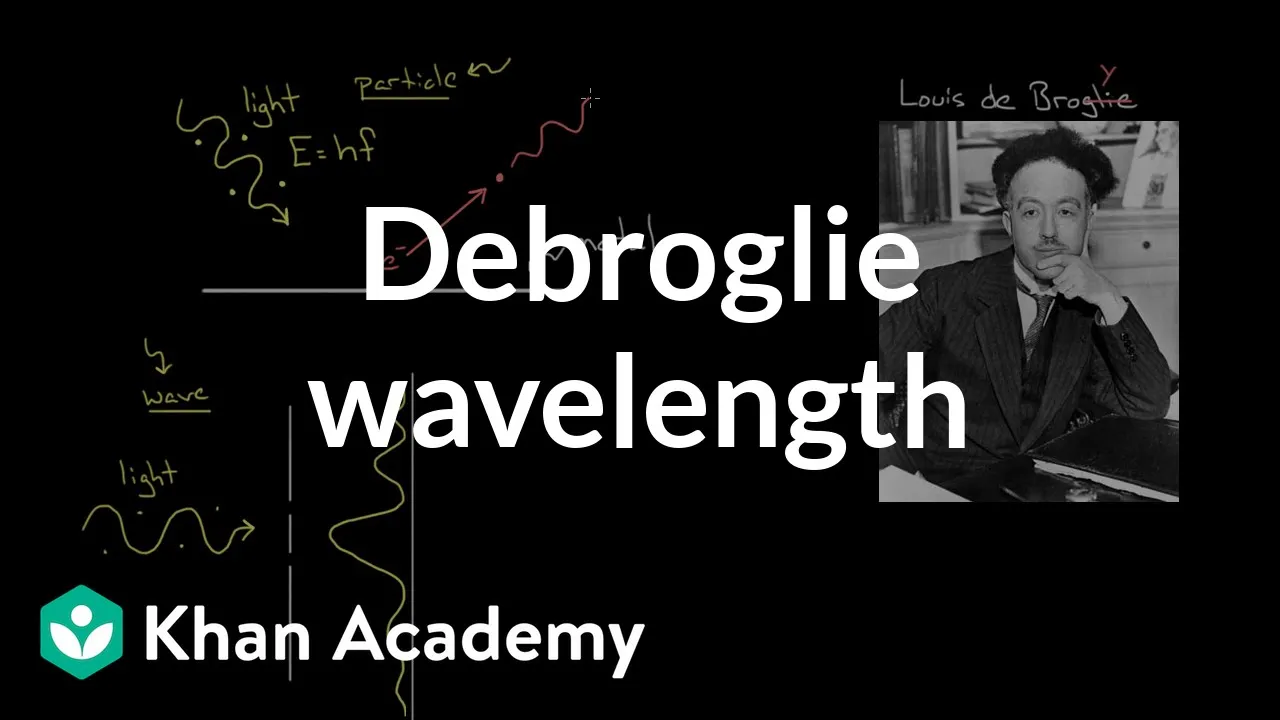
De Broglie Wavelength Explained | Physics | Khan Academy
@khanacademyphysics7609
508.9K views•2017-03-01

21cm Hyperfine Transition in Neutral Hydrogen: Radio Astronomy Basics
@AaronRobertParsons
12.4K views•2011-10-13

Neutron Star Physics: Limits of Neutron Accumulation and Stellar Collapse
@PhysicsExplainedVideos
1.4M views•2025-07-05

Entropy and the Second Law of Thermodynamics Explained
@veritasium
27.5M views•2023-07-01
Related Study Plans & Knowledge Roadmaps
Structured learning paths in Physics