












![[Serie] Les énigmes de l'âge de la pierre - E01 Et l'homme devint agriculteur](https://i.ytimg.com/vi/tWMYB9hbQzk/maxresdefault.jpg)



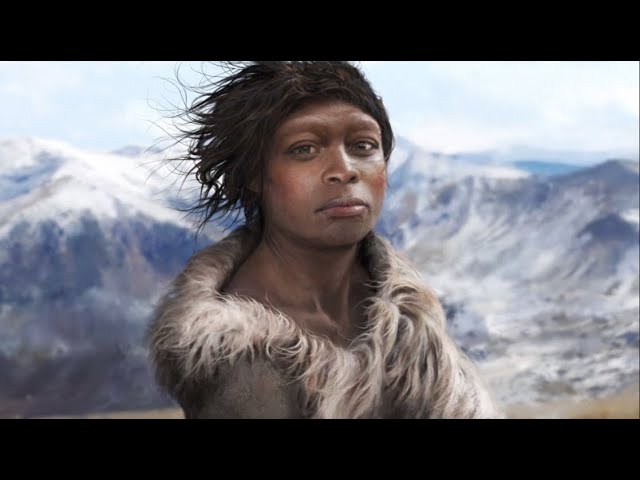






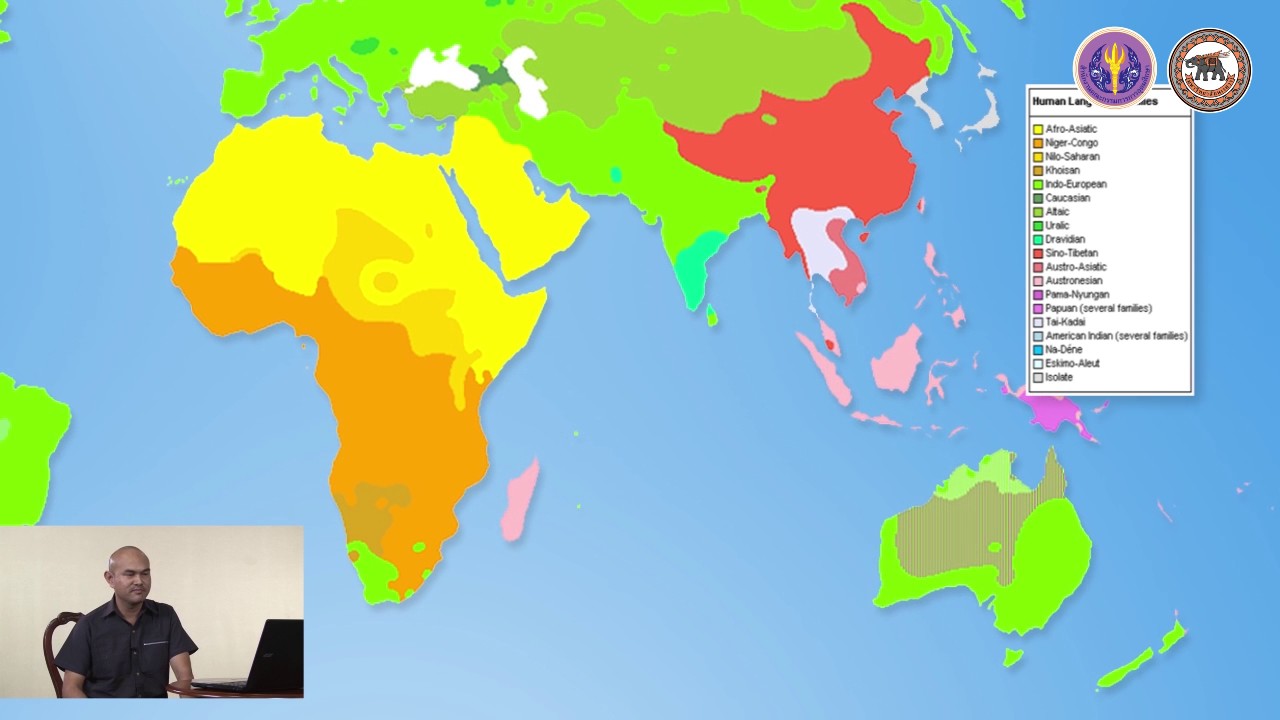




Human migration has occurred in distinct waves throughout history, beginning with the Out of Africa migration (70,000-50,000 years ago) where anatomically modern humans spread from East Africa to Eurasia, Australia, and eventually the Americas, followed by the Neolithic expansion (10,000 years ago) that spread farming populations across continents, the Indo-European spread (4,000 years ago) that carried languages across Eurasia, the Bantu expansion (2,000 years ago) that reshaped sub-Saharan Africa, the Austronesian expansion (3,000 years ago) that connected Pacific and Indian Ocean islands, and finally the modern global migration period (1500s-present) that linked continents through trade, colonization, and industrialization, fundamentally shaping human genetic diversity, cultural exchange, and global population distribution.
Human Migration Patterns: From Africa to Global Dispersion
Added:out of Africa. The out of Africa migration refers to the movement of anatomically modern humans from Africa into the rest of the world. Beginning roughly 70,000 to 50,000 years ago, genetic, fossil, and archaeological evidence overwhelmingly supports Africa as the birthplace of modern humans. With all non-affrican populations descending from a small subset of African ancestors, these early humans likely left East Africa due to a combination of climate change, population pressure, and improved tools and cognitive abilities.
They followed coastal and inland roots through the Middle East, gradually spreading into Asia, Europe, and eventually Oceanania. Along the way, they encountered and occasionally interbred with other human species such as Neanderthalss and Dennisovvens, leaving small but measurable genetic traces. This migration is foundational because it explains global human genetic similarity and diversity patterns today.
In essence, out of Africa marks the beginning of humanity as a global species, setting the stage for every later migration, culture, and civilization. Eurasian expansion. The Eurasian expansion describes the spread of modern humans across Europe and Asia after leaving Africa roughly 50,000 to 30,000 years ago. As humans moved into Eurasia, they encountered a wide range of environments from the cold climates of ice age Europe to the varied landscapes of Central and East Asia.
This expansion required significant adaptability, including improved clothing, shelter, hunting strategies, and social organization. During this period, humans developed complex tools, symbolic art, and early forms of culture and language. They also interacted with existing human populations such as Neanderthalss and denosovvens leading to limited genetic mixing that still influences modern populations. Over time, humans became the dominant homminin species across Eurasia, replacing or absorbing earlier groups.
The Eurasian expansion was crucial because it established the major population foundations of Europe and Asia and accelerated cultural and technological innovation shaping the regional diversity seen in human societies today. Australasian settlement. The Australasian settlement refers to the early human migration into Australia and New Guinea, beginning roughly 50,000 to 40,000 years ago. This movement is remarkable because it required intentional sea crossings, making it one of the earliest examples of long-distance seafaring by humans.
Early migrants traveled from Southeast Asia through a chain of islands using simple boats and navigational knowledge to reach the Saho land mass, which connected Australia and New Guinea during lower sea levels. Once settled, human populations adapted to diverse and often harsh environments, including deserts, tropical forests, and coastal regions. They developed unique cultural traditions and deep spiritual connections to the land that persist among indigenous Australian and Papuan societies today. The Australasian settlement is significant because it demonstrates early human innovation, planning, and adaptability, showing that humans were capable of complex migration and environmental mastery much earlier than once believed. Migration to Americas. The migration to Americas describes the movement of humans from Northeast Asia into North and South America, beginning roughly 20,000 to 13,000 years ago. During the last ice age, lower sea levels exposed the bearing landbridge, allowing people to move from Siberia into Alaska. Some groups likely paused in this region for thousands of years before spreading southward along coastal routes or through ice-free corridors. Once in the Americas, human populations expanded rapidly, adapting to a wide range of environments from Arctic tundra to tropical rainforests. Over time, they developed diverse cultures, technologies, and food systems, including early hunting traditions and later agricultural civilizations. This migration is crucial because it explains the origins of all indigenous peoples of the Americas and highlights the speed and flexibility of human expansion into entirely new continents. Neolithic expansion. The Neolithic expansion refers to the spread of farming populations from early agricultural centers into surrounding regions beginning around 10,000 years ago.
Agriculture first developed independently in places such as the Fertile Crescent, the Yellow and Yangy River valleys, and parts of Africa and the Americas. As farming proved more reliable than hunting and gathering, agricultural communities grew rapidly and migrated into new territories. These movements carried domesticated plants and animals, new technologies, and settled village life into Europe, South Asia, East Asia, and Africa. In many regions, incoming farmers mixed with or replaced local huntergatherer populations, leading to major genetic, cultural, and social changes. The Neolithic expansion is significant because it transformed human societies, enabling population growth, permanent settlements, social hierarchies, and eventually the rise of cities and civilizations. It marks one of the most profound shifts in human history, changing how humans lived, worked, and related to the land. Indo-Uropean spread. The Indo-Uropean spread describes the expansion of step populations from the Eurasian grasslands into Europe, Iran, and South Asia, beginning around 4,000 years ago. These groups are associated with innovations such as horse domestication, wheeled vehicles, and later chariots, which gave them greater mobility and military advantage. As they migrated, they spread Indo-European languages. many of which evolved into the major language families spoken across much of Europe and parts of South Asia today. The movement involved both large-scale population shifts and cultural influence, often blending with local societies rather than completely replacing them.
Archaeological and genetic evidence shows that this spread significantly reshaped population structures across Eurasia. The Indo-European spread is important because it helps explain shared linguistic roots, mythologies, and cultural patterns across distant regions, linking societies from Ireland to India through a common ancestral heritage, Bantto expansion. The Bantto expansion refers to the large-scale movement of Bantto speaking peoples across subsaharan Africa beginning around 2,000 years ago. Originating in West Central Africa, these populations gradually migrated eastward and southward, spreading into regions previously inhabited by hunter gatherer and pastoralist groups. The expansion was driven by the adoption of agriculture and ironwork, which allowed Bantto communities to support larger populations and clear new land. As they moved, they introduced farming techniques, metal tools, and bantto languages, many of which are still spoken across Africa today. Interaction with local populations led to cultural exchange, adaptation, and sometimes displacement. The Bondu expansion is one of the most important demographic events in African history because it reshaped the continent's linguistic, cultural, and genetic landscape, creating the foundation for many modern African societies. Aronesian expansion. The Aronesian expansion describes the spread of seafaring peoples from Taiwan across vast areas of the Pacific and Indian oceans beginning around 3,000 years ago.
Using advanced canoe technology and sophisticated navigation skills, Aronesian speakers migrated through the Philippines and Indonesia, eventually reaching remote islands such as Hawaii, Easter Island, and New Zealand. Others traveled westward across the Indian Ocean, settling Madagascar off the coast of Africa. These migrations carried shared languages, agricultural practices, and maritime traditions across thousands of miles of open ocean.
Island communities adapted to diverse environments from coral adults to volcanic islands, developing rich cultural traditions. The Aranesian expansion is significant because it represents the largest and most impressive maritime migration in human history, demonstrating early human mastery of ocean travel and long-distance cultural connection.
Global migration. The global migration period refers to the large-scale movement of people across the world from roughly the 1500s to the present. This era began with European overseas expansion and the linking of continents through trade, colonization, and exploration. It includes both voluntary migrations such as settlers and laborers seeking opportunity and forced migrations, most notably the transatlantic slave trade. Later phases were shaped by industrialization which drove mass movement from rural areas to cities and from Europe and Asia to the Americas and Oceanania. In the modern era, global migration has been influenced by war, political instability, economic inequality, and environmental change. This period is significant because it created the modern global population distribution, intensified cultural exchange, and connected societies worldwide in unprecedented ways, making human movement a defining feature of the contemporary
Up Next
Introduction to Anthropology: Subfields & Human Evolution
@ProfessorDaveExplains
178.2K views•2024-01-02

Astrobiology Through an Anthropological Lens: Field Insights
@georgiatechastrobiology
128 views•2021-04-14

Proxemics Explained: The Study of Personal Space
@Vox
536K views•2016-07-05

Psychology of Internet Trolling and Pranks Explained
@AzzyLand
10.7M views•2017-12-20
Related Study Plans & Knowledge Roadmaps
Structured learning paths in Anthropology