


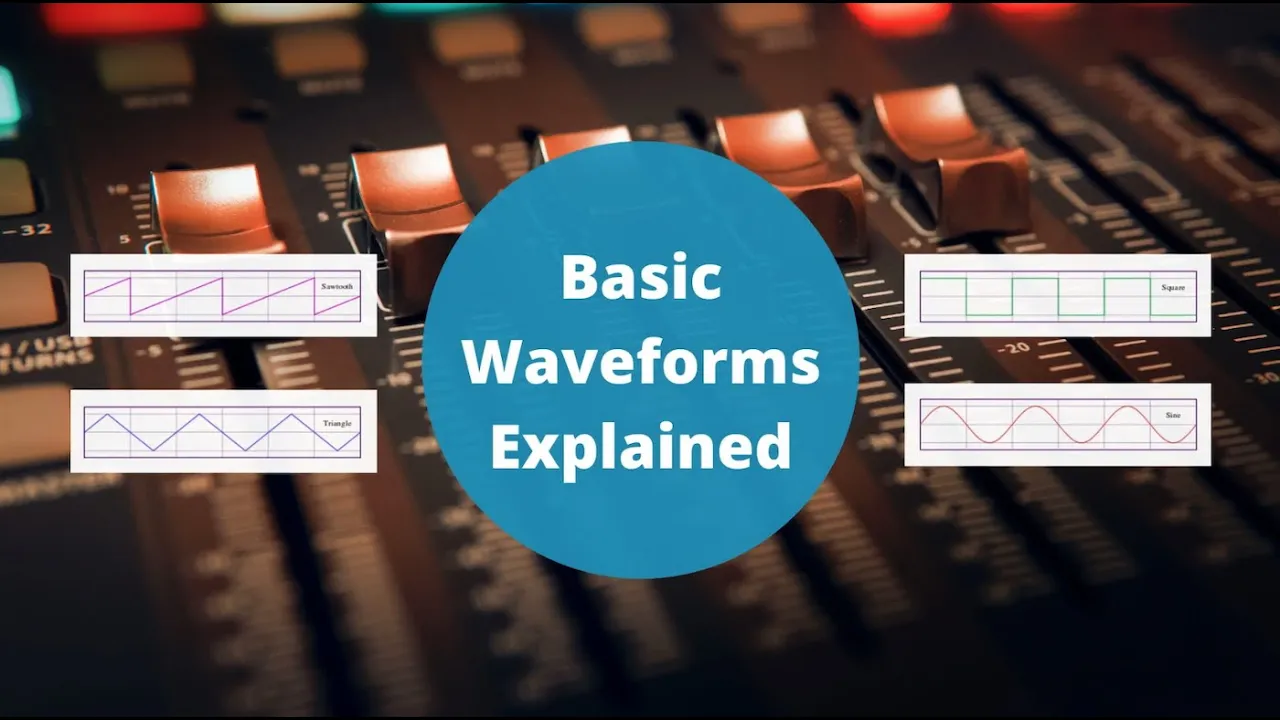
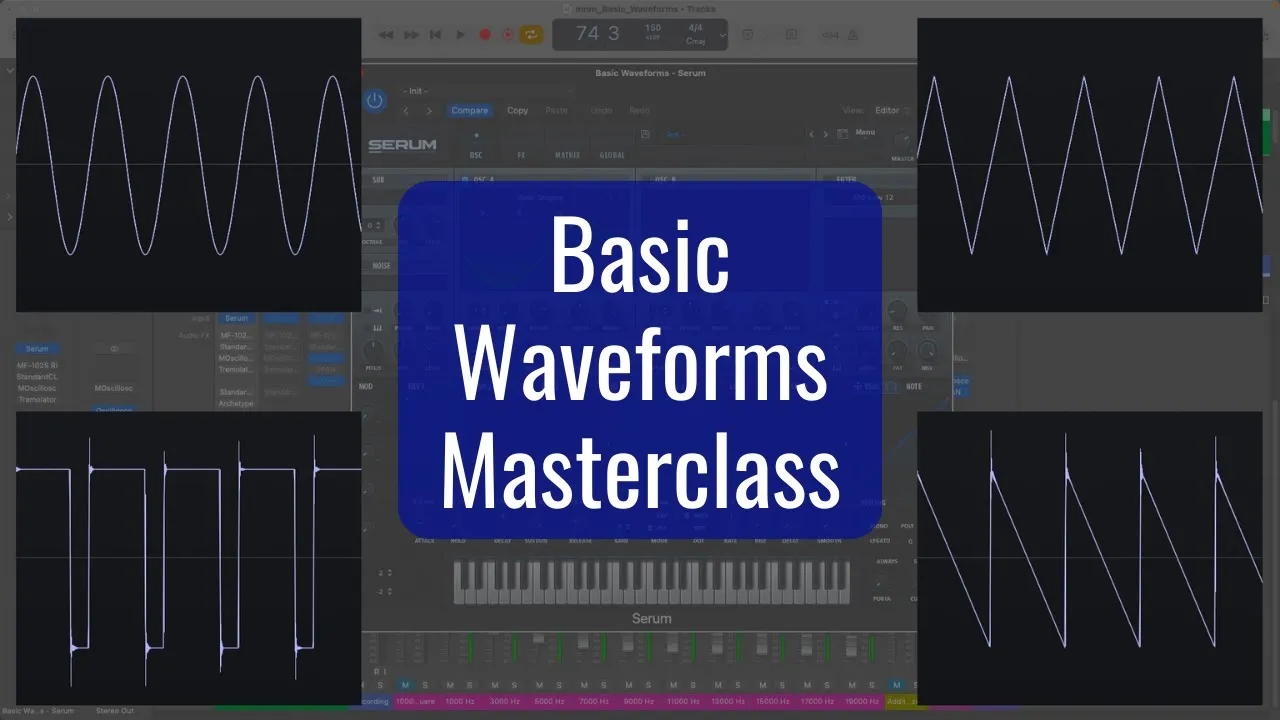




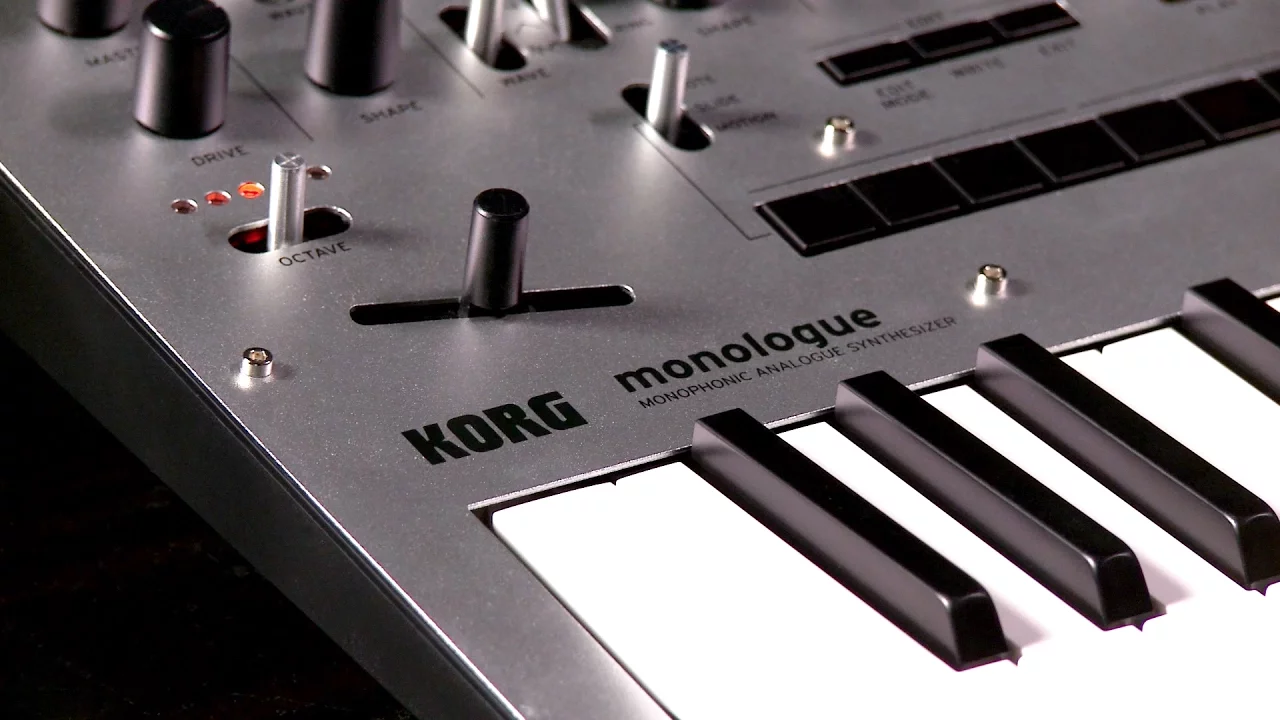
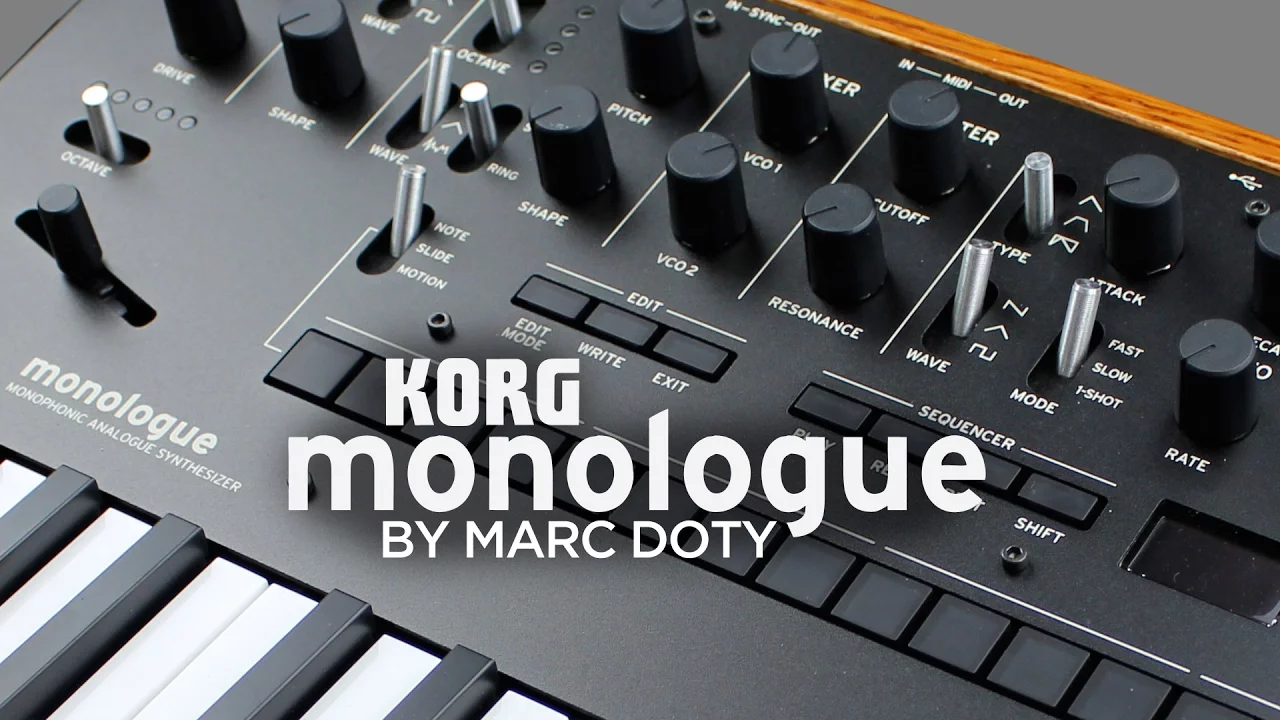


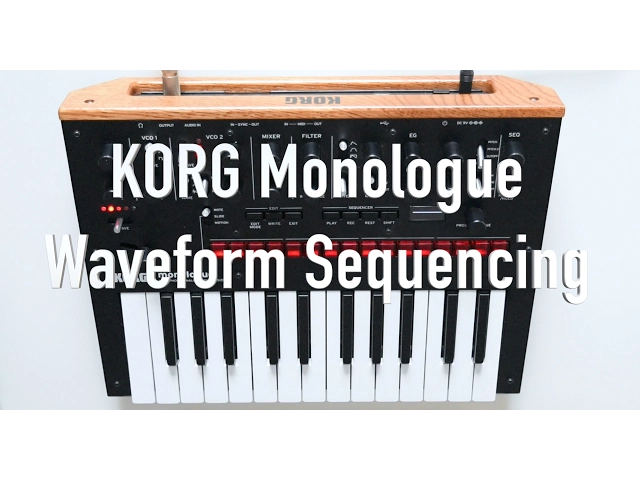



The Korg Monologue's Oscillator 1 features three basic waveforms (sawtooth, triangle, and square) with unique octave positioning: the sawtooth is an octave above the triangle and square waves, making the triangle the bassiest waveform. The synthesizer allows infinite waveform shaping, where modifying the sawtooth shape drops an octave and adds a fifth, while the triangle wave maintains its octave but introduces harmonic content, and the square wave undergoes pulse width modulation that changes its duty cycle from 50% to 100%, creating nasal, buzzy sounds.
Korg Monologue Analog Synth Oscillator Guide: Waveforms & Shapes
Added:Fundamentals of subtractive synthesis, specifically the basic signal path of an analog synthesizer (VCO, VCF, VCA).
Basic properties of sound waves, including frequency, amplitude, and how periodic waveforms (sawtooth, triangle, square) differ in harmonic content.
Understanding of fundamental synthesizer terminology, such as Pitch, Octave, and Voltage-Controlled Oscillator (VCO).
The basic concept of modulation, specifically how a control source (like an LFO or Envelope) can manipulate a target parameter.
Exploring VCO2 on the Korg Monologue and understanding oscillator interaction techniques like Sync, Ring Modulation, and Pitch Modulation.
Applying shaped waveforms to the filter section (VCF) and using the Envelope Generator (EG) to dynamically sculpt the harmonic profile over time.
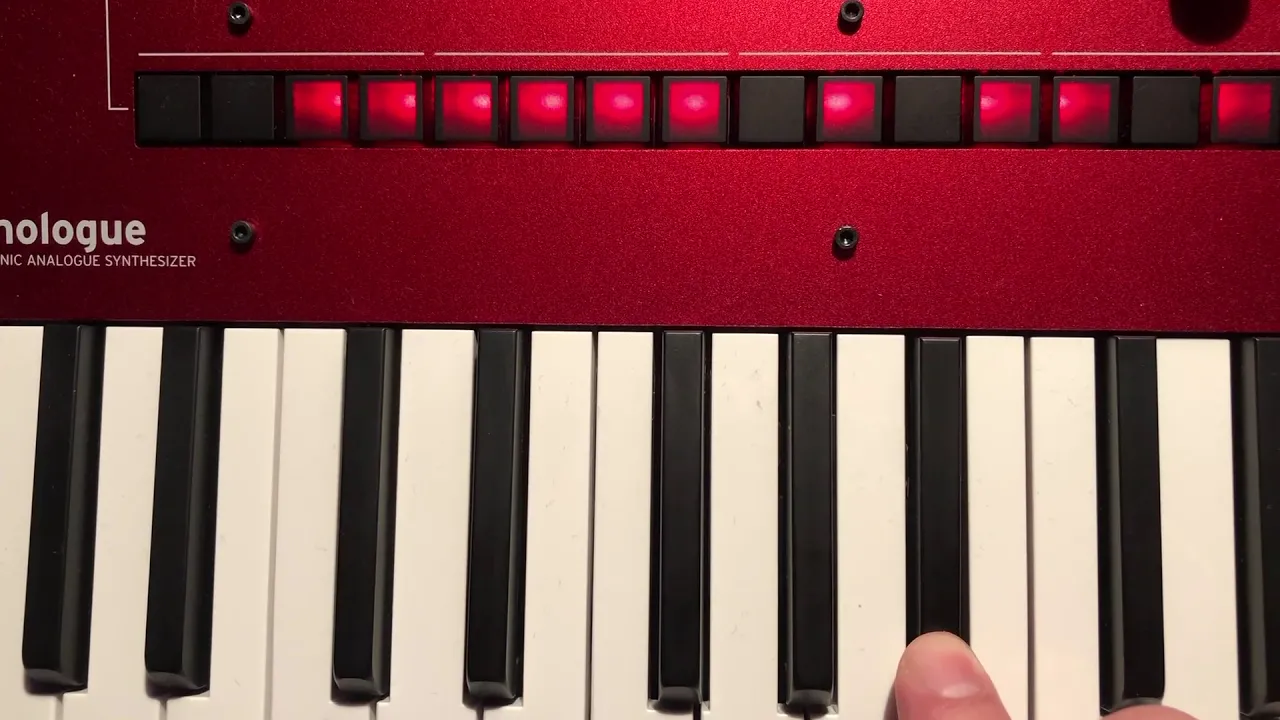
Utilizing the Monologue's 16-step sequencer and 'Motion Sequence' feature to automate wave shaping and PWM parameters in real-time.
Advanced patch creation, applying these waveform shaping techniques to program classic analog sounds like deep basslines, lead patches, and sound effects.
Investigating the Korg Monologue's unique microtuning capabilities to play outside of standard Western equal temperament.
167.7K views2.4Klikes11:47Original Release: 2017-01-18
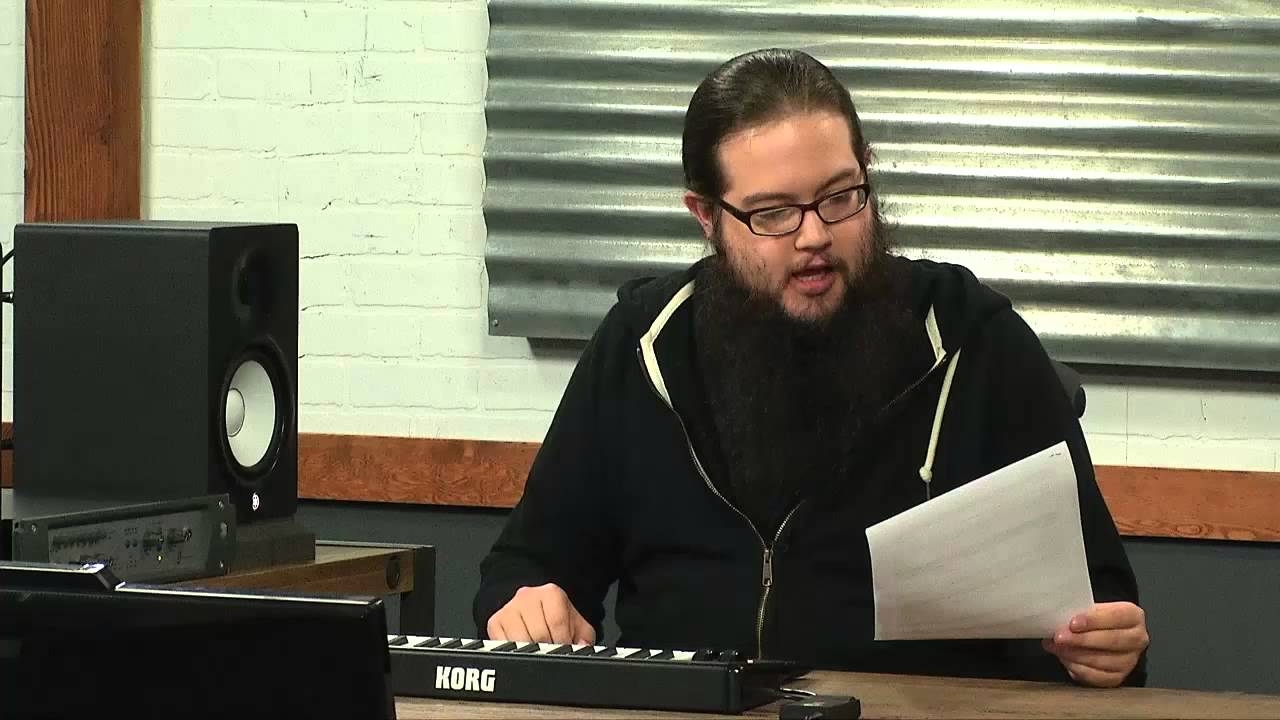
[Music] [Music] this is the corg monologue it is the well I I hesitate to say it's the monophonic version of the mini log it's actually a different synthesizer with some different features and functionalities that are super cool it is the monophonic companion of the mini log and despite its Compact and small size it's seemingly limited features and it's the fact that it's almost weightless it is a powerhouse it's a shocking powerhouse it's um a lot of fun it sounds great and it has features that are unique to it in the world really that are surprising so for a $300 synthesizer and I'm probably going to be saying this over and over over again it's really something let's dive into it with the oscillators okay first vco1 typically in synthesizers we see vco1 being the the oscillator with all of the functionality and then vco2 may be if they're if they're going to have different functionality vco2 or three has less functionality but in this case vco1 is the oscillator with the least functionality here's oscillator 1 it has three wave forms and then the ability to manipulate the shapes of those wave forms we control the octave with the global octave switch which I'll show let's have a listen to this saw too you know I'm not lying to you or they're not lying to you because you can see the waveform right here in this awesome window I I think the window is fantastic because I would like to see us get to the point where we understand Sound by looking at the waveform and I know it seems hard because the waveforms are extremely complex but the more conversent we are with wave shape the more we have an understanding of the actual nature of sound I think that's fantastic anyway so yeah there's our Sawtooth it's a very nice analog Sawtooth let's listen to the range okay so this is our lowest note that we can hit with oscillator one without you know pitch bending which is kind of surprising um oscillator one 's range is somewhat limited uh but that's fine we'll talk about why that's okay [Music] later so that is our highest uh frequency in oscillator 1 in the Sawtooth wave shape which is since I can hear that with my ears being as they are uh that's not the highest frequency it's not very high so like I said there is a limited frequency range in oscillator 1 but due to the intent and architecture of the monologue it's not an issue Okay let's listen to our triangle wave [Music] this is a very warm triangle and it has that nice little fuzzy sound on top like triangle should it's very nice I don't know why I'm telling you how great this triangle is but I tend to do that in videos don't I anyway now you'll notice something about this as compared to the [Music] Sawtooth okay people at home what's the difference the triangle is actually an octave lower than the saw too in the in the you know the straight waveform setting before we start messing with shape so that's interesting that the Sawtooth there are different octave settings on the wave shapes so square and triangle have the same octave saw is an octave above that's interesting so that means when we take the triangle down it's going to go deeper than the saw too it yeah so we're down into the clicks [Music] here and why do we want the triangle to go deeper maybe than the Sawtooth because the triangle is where we get our base so it makes sense if we're going to have a limitation like this it's a good idea to have the triangle to be the bassiest the by bassiest I mean lowest frequency it's already the basest anyway so [Music] so the weird thing then is that this is as high as the triangle can go which is not very high but again we want triangle for base and there's a practicality that exists in the way that the monologue is set up corg is uh aiming it towards the functions that you will use in certain ways so so that's our triangle and here's our [Music] Square nice traditional Square it's in the same octave range as the triangle so we have down clicky very deep [Music] squares and again it does not go very high frequency wise and you could use the pitch pen if you wanted to but anyway okay so those are the wave shapes in oscillator one now let's listen to the shaping functionality of those wave [Music] shapes okay this is the extreme other side obviously throughout that entire range you have an infinite amount of wave shapes to choose okay there's probably a mathematician or an engineer yelling at me right now but infinite for the sake of [Music] argument and what's really fun I like about this Sawtooth is uh as you can tell first of all there are two things happening uh the wave shape is changing but as you remember from the mini log so this is probably similar oscillator if not the same oscillator as you uh change the shape of the Sawtooth it drops an octave and it gains a fifth it's it's really actually quite [Music] [Applause] cool but I like putting it right at that point where the wave shape is a little bit sketchy and you get this little Buzzy Sizzle in there so it sounds like there's modulation happening uh like some sort of distorting modulation but there isn't that's just where that wave shape makes that noise which I really enjoy and it makes a really nasty bass sound anyway that's a lot of fun but uh so as with the mini log the shape really changes the tamber and the octave setting of the Sawtooth it makes a cool WM wave shape I had a friend in high school whose initials those were there there's some really interesting synthesis information anyway I'm [Applause] sorry so again we're not just talking about a saw triangle or a square we're talking about those wave shapes plus the ways that the monologue converts the waves into other waves allowing you an infinite amount of tamber there I said it again let's listen to what the triangle can [Music] do again uh the triangle does not change its octave but you do again hear the presence of the fifth in there like a a b sort of comes out of the E if I'm playing [Applause] e it makes kind of a really cool organ sound [Applause] it does take away some of its low end but that's cool you have a triangle wave shape that uh isn't as Bassy as before and that is functionally [Music] useful wow and then when you hear the bass come back in that's [Music] amazing and the square of course is the one that is most common to have its shape modified in this case we call it pulse withth modulation there's our Square [Applause] wave and what we're seeing is it moving from a 50% duty duty cycle which means it's half up and half down to 100% where it's all up and as it goes towards 100% um we can hear it getting more nasal like pul withth modulation always does and then we actually have the ability to make it go away we get to 100% 100% um but it's fun to put it right where we get just the last possible uh little bit of the down portion of the square wave because it's a very nasal Buzzy sort of cute sound also it makes a Cool Wave [Music] shape so that's basically puls with modulation but you know you can do it [Applause] so that is oscillator one [Music] [Music] a [Music]
Up Next

23:55
JavaScript is the New Punk Rock: Web Audio API Music Creation
@jsconf_
22.2K views•2012-10-25

12:54
Triumph of Orthodoxy Icon: Byzantine Art & History Explained
@BenCallan
2.1K views•2024-08-06

9:49
FastAPI vs Flask vs Django: Choosing the Right Python Web Framework
@TechWithTim
302.5K views•2024-05-26

1:42
Game of Thrones Opening Credits: A Cinematic Analysis
@gameofthrones
46.3M views•2011-04-18
Related Study Plans & Knowledge Roadmaps
Structured learning paths in General & Interdisciplinary Studies
general-studies
Elevator Engineering: History, Physics & Cities
01From Hoists to Safety Brakes: The Dawn of Vertical Lift
02Hydraulic vs. Traction: The Engineering Physics of Elevators
03Modern Speed, Safety, and Algorithms
+ 2 more learning modules
12h5 modules
Explore Roadmap
general-studies
Rubber: Material Science, History & Geopolitics
01Origins of Natural Rubber & Mesoamerican History
02The Chemistry of Natural Rubber & Vulcanization
03The Geopolitics of the Rubber Boom & Colonization
+ 2 more learning modules
12h5 modules
Explore Roadmap
general-studies
Containerization: Evolution, Logistics & Trade
01Ancient Trade & Bulk Cargo: Amphorae to Barrels
02The Industrial Revolution & Cardboard Packaging
03The Containerization Revolution: Malcom McLean
+ 2 more learning modules
12h5 modules
Explore Roadmap
general-studies
Textile Tech: Evolution, Labor & Global Impact
01Pre-Industrial Textiles: Handloom & Cottage Industry
02Mechanization: The Spinning Jenny to the Power Loom
03The Factory System & Global Labor Transformation
+ 2 more learning modules
10h5 modules
Explore Roadmap