![[노경1] 노동경제학_제4장 노동시장의 균형_(1) 단일 경쟁 노동시장에서의 균형(159p)](https://i.ytimg.com/vi/FPj_90wIQQw/maxresdefault.jpg)


![[맨큐미시105] 제22장 미시경제학의 새로운 영역(1) - 비대칭정보](https://i.ytimg.com/vi/U7iHuu0bZoY/maxresdefault.jpg)



![[Mankiw principles of economics 22] 22. 소비자 선택 이론](https://i.ytimg.com/vi_webp/MlPtTW2Y0E8/maxresdefault.webp)



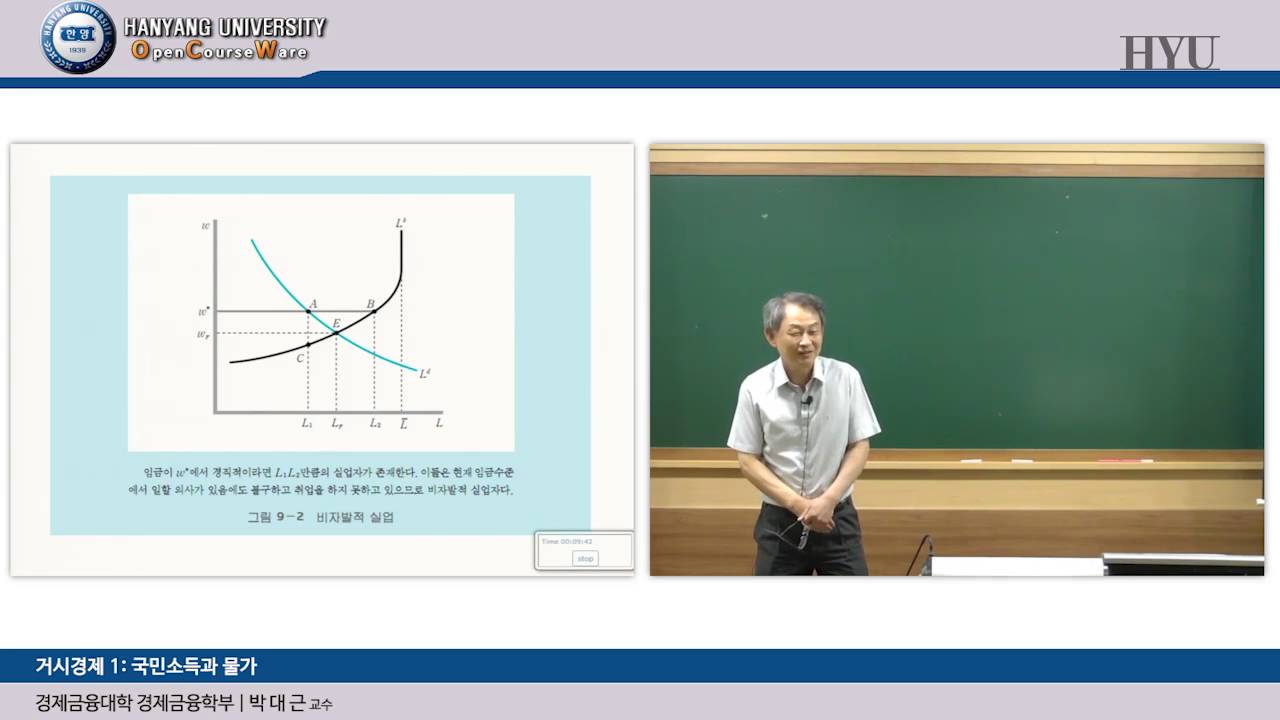




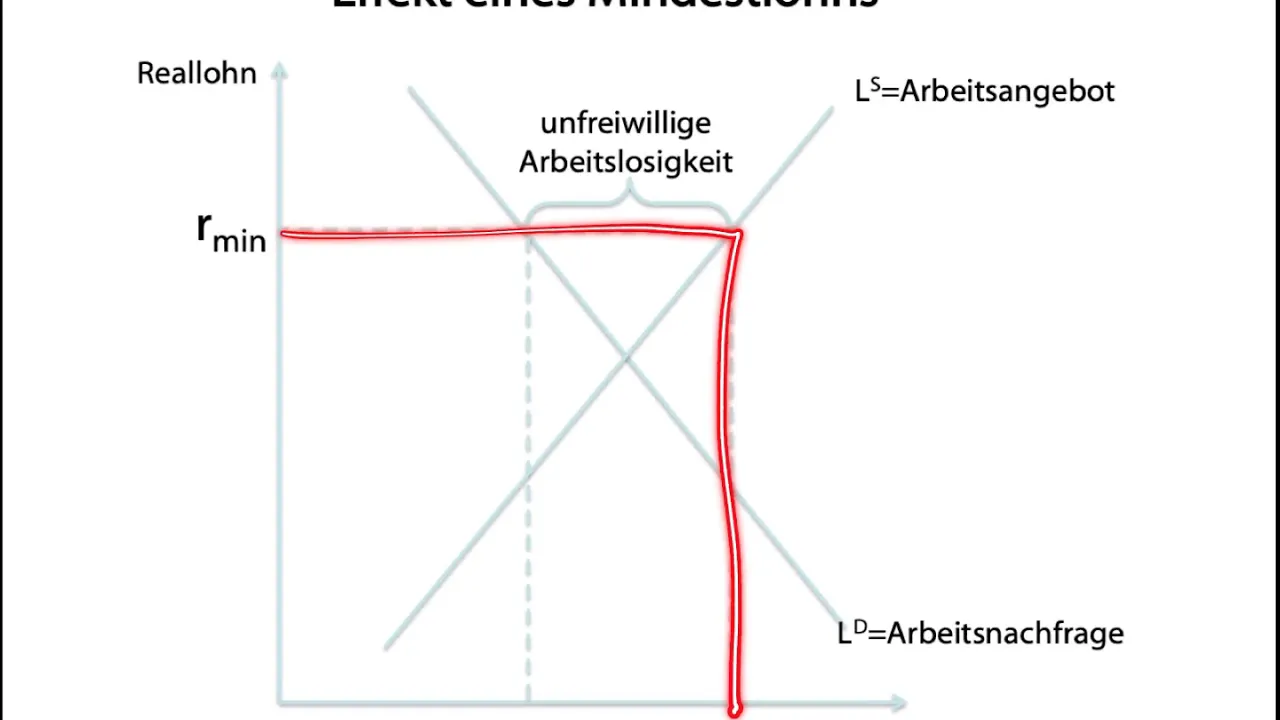





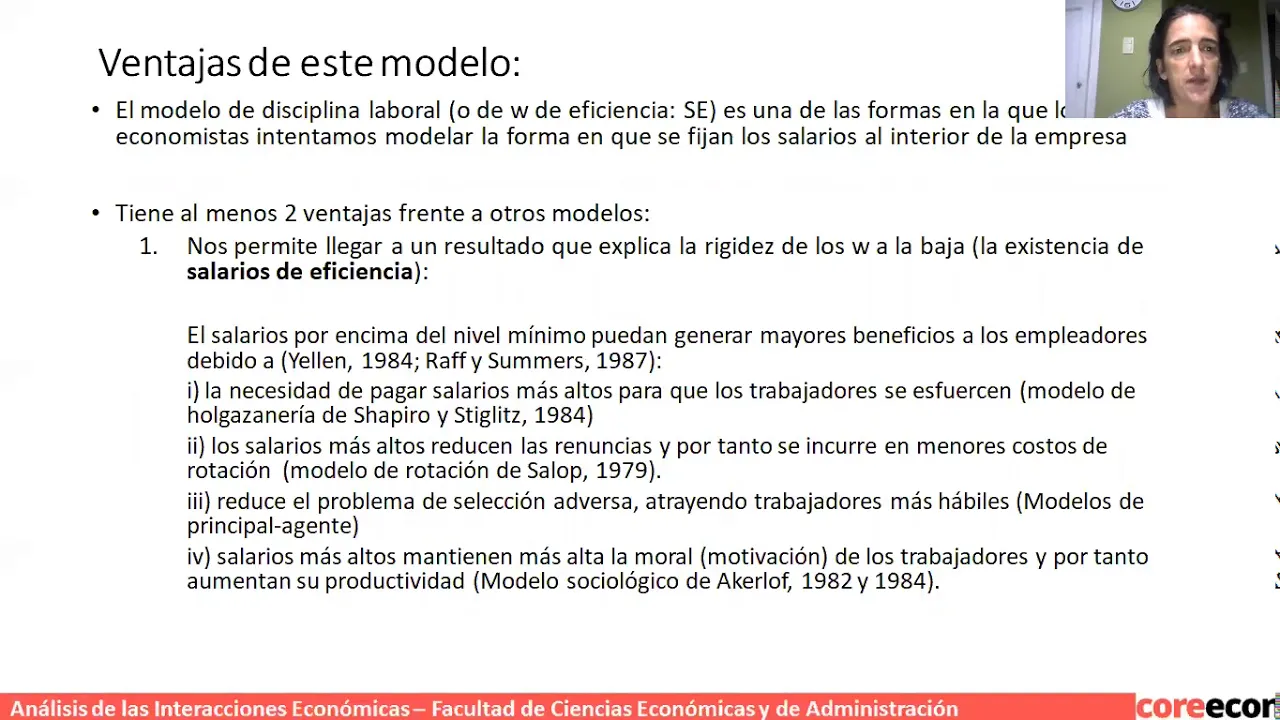

Efficiency wage theory explains why employers may pay wages above the market-clearing level to prevent worker shirking (reduced effort) by creating an incentive for workers to remain productive and avoid unemployment; this occurs because when workers know they can easily find other jobs at the same wage, they have less motivation to work hard, so firms offer higher wages (efficiency wages) to induce productivity, which results in unemployment as the demand for labor decreases at these higher wage rates.
Efficiency Wage Theory: Employment, Wage Discrimination, and No-Shirking Model
Added:Basic labor market equilibrium, including how labor supply and demand interact to determine the market-clearing wage.
The concept of asymmetric information, specifically the principal-agent problem and moral hazard in employment relationships.
Standard definitions and types of unemployment, particularly structural and frictional unemployment.
Basic consumer theory concepts, including the trade-off between labor (effort) and leisure, and utility maximization.
The Shapiro-Stiglitz model of efficiency wages, exploring the mathematical formulation of the no-shirking condition.
Other theories of wage rigidity and unemployment, such as the Insider-Outsider theory and implicit contract theory.
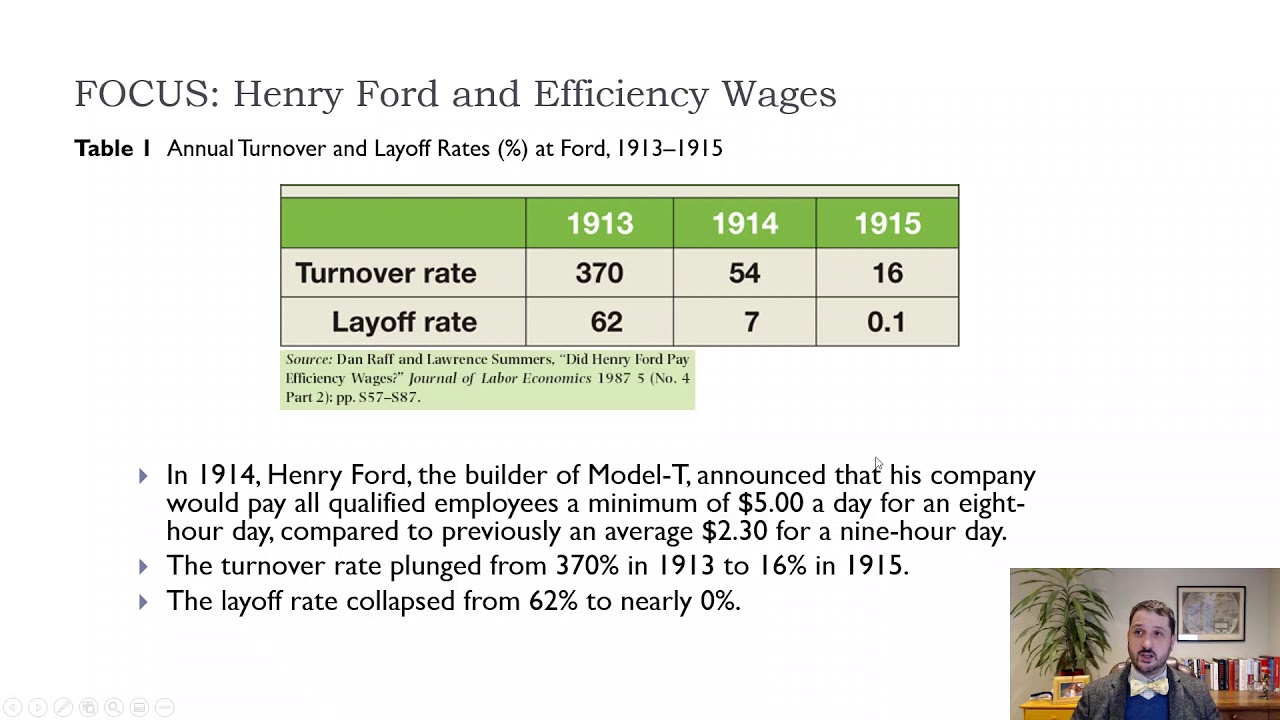
Empirical case studies of efficiency wages in practice, such as Henry Ford's $5-a-day wage initiative.
The macroeconomic policy implications of efficiency wages on minimum wage legislation and optimal unemployment insurance.
6.2K views70likes13:08Original Release: 2020-05-26
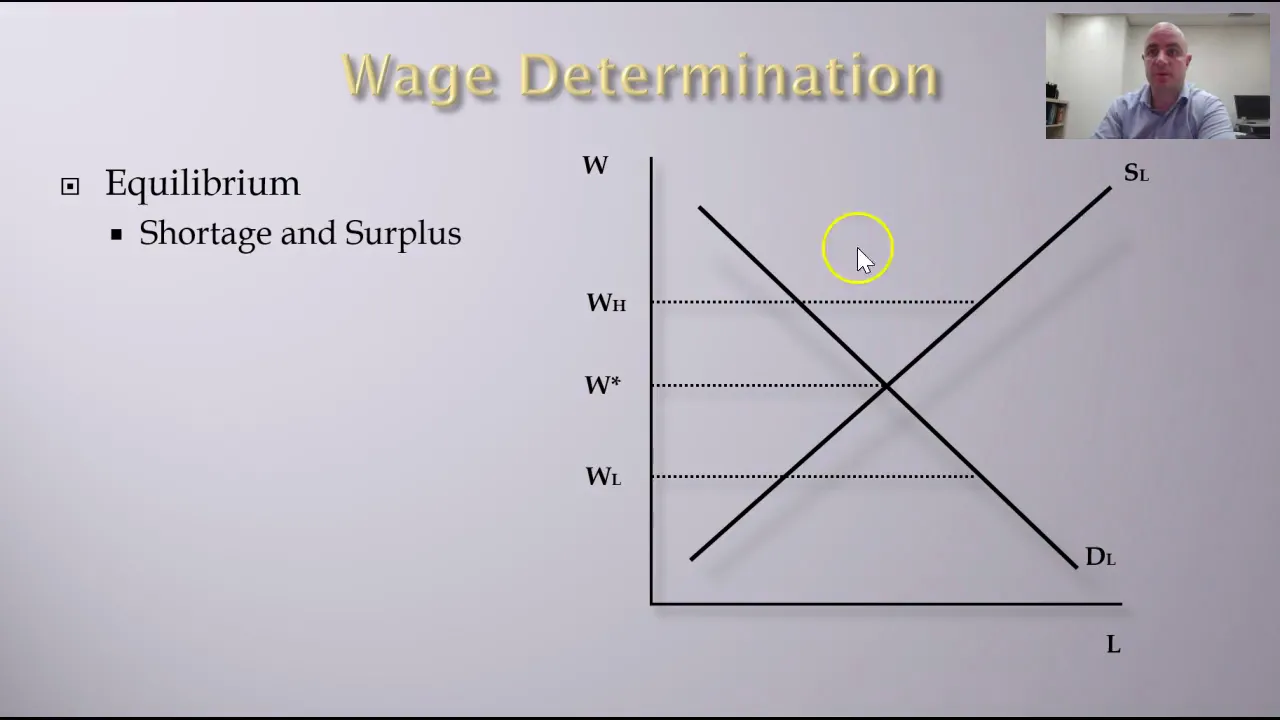
hello good morning students i am dr gopal krishna ganker associate professor and actually department of economics government preschool college engineering uh today we are going to discuss about a business video theory i call i i feel like posted number of you know you know study materials on the google class you might have gone through that and not only that we discuss number of you know theories as well as concepts earlier regarding these particular matters that is what asymmetric information market with asymmetric information there we discussed about uh lemonade cherry problem that is used cars and old cars problems and followed by principal agent problem morela jars um and fooling guarantees and followed by of the very important that the market signaling by michael spence so in the same lineup this is another theory regarding efficiency theory dear students uh as uh everybody uh those who are educated sometimes uneducated everybody would like to work and would like to earn something so here it is the efficiency which theory why and when and where the efficiency matters because efficiency ultimately sometimes decides our productivity so here the productivity theory efficiency theory is going to explain how the employer is going to think about about your marginal productivity and your productivity when the labor market is competitive you of course this is true in everywhere theoretically if it is competitive all who wish to work will find jobs for wages equal to their marginal products if your marginal product is high then your job standard will be high because in market signaling you know theory that you have studied about how the employer is thinks about so efficiency theory explains explanation explained for the presence of unemployment and wage discrimination which recognized that labor property may be affected by the wage rate labor profile depends upon workers abilities farms investment in capital and wage rate one explanation better trade workers can afford to buy more and better boost and are therefore healthier and can work more productively so this is the things that a producer is going to think about here is the searching model so principle that workers still have an institution if a firm pays them a market clearing wage because fire workers can be hired somewhere else for the same wage remember that there are good workers that there will be opportunities somewhere else so monitoring is costly so firms have imperfect information about workers productivity this is another end because the employer you may not having any perfect information about the workers productivity so shifting model assumes perfectly competitive market in which all workers are equally productive and earn same wage then workers can either put effort in in or shift because information about this is limited to the employers workers may not get fired for shaking so i will take the diagram how these things happens you know okay so this is a diagram if a pumps pays a worker the market clearing weight w star they have an institution if they get fired they get hired immediately somewhere else for the same wage okay as an institute not to shift firms must offer a higher wage this is the very important thing workers who are fired for seeking now will face a decrease in wages another form where they will be paid w star workers they will start wages okay workers are now induced to be productive efficiency which with that reform will pay to employ to an employee as an institute not to check so uh shirks will be fired that is why the end of the wages is also less to keep them work in the same company than the wage should be higher all pumps pays the problem of shirking this is the common problem everywhere in the company today so therefore all pumps will offer wages higher than the market clearing wage w star this is the market clearing where here it is w star so they should give more weight than w star because they want they want uh to keep them in the battery not to shift they will operate we app says uh w e app sensor weight there is still no incentive to shift even though employees could be put in principle to go to another employer for the same efficient wage okay however if all pumps upper weights are greater than w star here it is the list of you can see wage rate the demand for labor is less than the market clearing quantity and there is unemployment now workers work shift will be unemployed instead of instantly being hired by another firm if the wage rate is given high the market of course in the other systems will give you a w star wages so workers may not ready to go because there is a chance of unemployment and they will get only w0 if you show efficiency in the company where they are staying now they may get some w0 so the w e or amount of wages dl upper demand here labor dl is the demand curve in case of no share king [Music] wage w zero and there is fully employment l star that issue that full employment is l star i already said if there is w0 uh then employment every minute then l star is going to be the you know unemployment stage and the full employment stage when shifting individual pumps pay more wages and that is going to be uh w e for every level open under the labor market pumps must pay a wage higher than double star to induce workers to be productive fully employment stage is there to make them effective more productive the wage will be w e this is the no sharking constraint there is one word called one curve called as no circuit constraint curve so no switching constraint curve curve shows minimum wage for each development employment and this curve is going to indicate minimum wage at each level of employment that workers must earn in order to not to shift okay the greater the level of unemployment the smaller the difference between v and w if there is an employment that is high then automatically the employer will move from l e to l star that is why uh if there is workers must earn r2 sorry the greater the level of unemployment the similar the difference between w and w star in here w and w w e and w star sorry w e and w star with high levels of unemployment people who strike risk longer period one employment and therefore accept lower wages if there is an employment mean there will be another end so they have to agree with that equilibrium wage intersection of n s n s here means non shifting constraint uh curve and dl dl means that is demand labor curve with l work l e workers l e workers earning w e for w e wages pumps don't need to pay more than this way to get the number of workers they need and will not pay less because lower with inducer so where the efficiency wage rate is determined the efficiency determined in between w star and w e because if the wage is reduced from w e there is a chance of shifting meant shifting from one factor to another factory at the same time if it is uh you know w star in between more than w star also then they may not shift but the employer has to pay more and there should be a productive attitude i mean they have to produce more marginal product should be more so this is what the conditions where exactly the equilibrium uh takes place that means l e of quantity of labor is supplied and employed for we of wages otherwise there will be uh you know shifting that is possible so efficiency wage rate is equal to the marginal productivity so this is the most important thing so today's market if you are efficient definitely there will be demand and the wages will be very high and the the owner will come to know in the the due course of time uh because people that he may not have any perfect ideas about you so from that angle if you see efficiency ways they should be maintained dear students please uh if you want to take down s notes you may have this all things i would like to take one or two minutes and you pause it and you you drop down it and so that will be helpful to you because i have already posted some theories that you said you may not understand properly so this diagram and this particular explanations probably help you to write in the exam and don't be panic about it because there may be five more questions on this in the annual exam so till that you prepare it and this step this much materials may be enough for to write the exams and if you have even doubts after this then you may contact me so reference as such you have our approach and some internet sources and even uh advanced and economically of ml yesterday [Music] i hope that i completed ali theories in this asymmetric informations and there may be uh one or two 10 mask questions and you know to find questions and there will be four five one more questions too because more large artists and full cooling guarantee guarantees and all these are for two or three months question two or one mass questions so be prepared for that and uh three theories of course problems um principal agent problems and market signaling and lemons uh the cherry and lemons these are the other theories which will be asked in the annual exam so be careful about it i hope that i covered everything under this particular chapter and we will be discussing some matters in the welfare criterion because there one or two videos already are posted there and another two three videos that i will be you know not preparing and you will post and i hope that you will understand it um and try for the exams with this you know i would like to conclude this uh particular uh efficiency theory i hope that you understood it and if you have any doubts definitely you can ask in the google class also and otherwise you may contact me uh over the uh you know the phones so that i will answer for that things with this i just stopped my picture thank you for hearing me thank you
Up Next

43:59
Unintended Consequences: Good Intentions Gone Wrong
@Freakonomics
14.2K views•2024-04-18

5:07
Impact of Yuan in Indo-Russian Trade Amid Sanctions
@WION
261.9K views•2022-07-01
10:33
Behavioral Economics Explained: Rationality, Nudges, and Risk
@crashcourse
1.1M views•2016-03-12

113:18
The Age of Easy Money: Fed & Inflation | Full Documentary
@frontline
21.2M views•2023-03-15
Related Study Plans & Knowledge Roadmaps
Structured learning paths in Economics
economics
Sovereign Debt: Defaults, IMF & Restructuring
01Introduction to Sovereign Debt & Government Bonds
02Debt Sustainability & Credit Ratings
03Anatomy and History of Debt Crises
+ 2 more learning modules
12h5 modules
Explore Roadmap
economics
Market Design: Matching Theory & Gale-Shapley
01Introduction to Market Design and Price-Free Markets
02Two-Sided Matching & The Gale-Shapley Algorithm
03School Choice Systems and Mechanism Design
+ 2 more learning modules
10h5 modules
Explore Roadmap
economics
Impossible Trinity: Forex, Capital & Policy
01Introduction to Monetary Policy and Central Banking
02Exchange Rates and International Capital Flows
03The Mundell-Fleming Model
+ 2 more learning modules
8h5 modules
Explore Roadmap
economics
Healthcare Economics: Market Failures & Systems
01Introduction to Healthcare Markets and Market Failure
02Asymmetric Information and Adverse Selection
03Moral Hazard and Insurance Design
+ 2 more learning modules
12h5 modules
Explore Roadmap