










![[TALK 3] Is it “happy”? Does it form a complex? – Stephen McLaughlin and Chris Batters](https://i.ytimg.com/vi/QgNtyd_I2qU/maxresdefault.jpg)




![[TALK 14] Analytical Ultracentrifugation - Stephen McLaughlin - Biophysical Techniques Course 2022](https://i.ytimg.com/vi/hCSeMGZ76EE/maxresdefault.jpg)





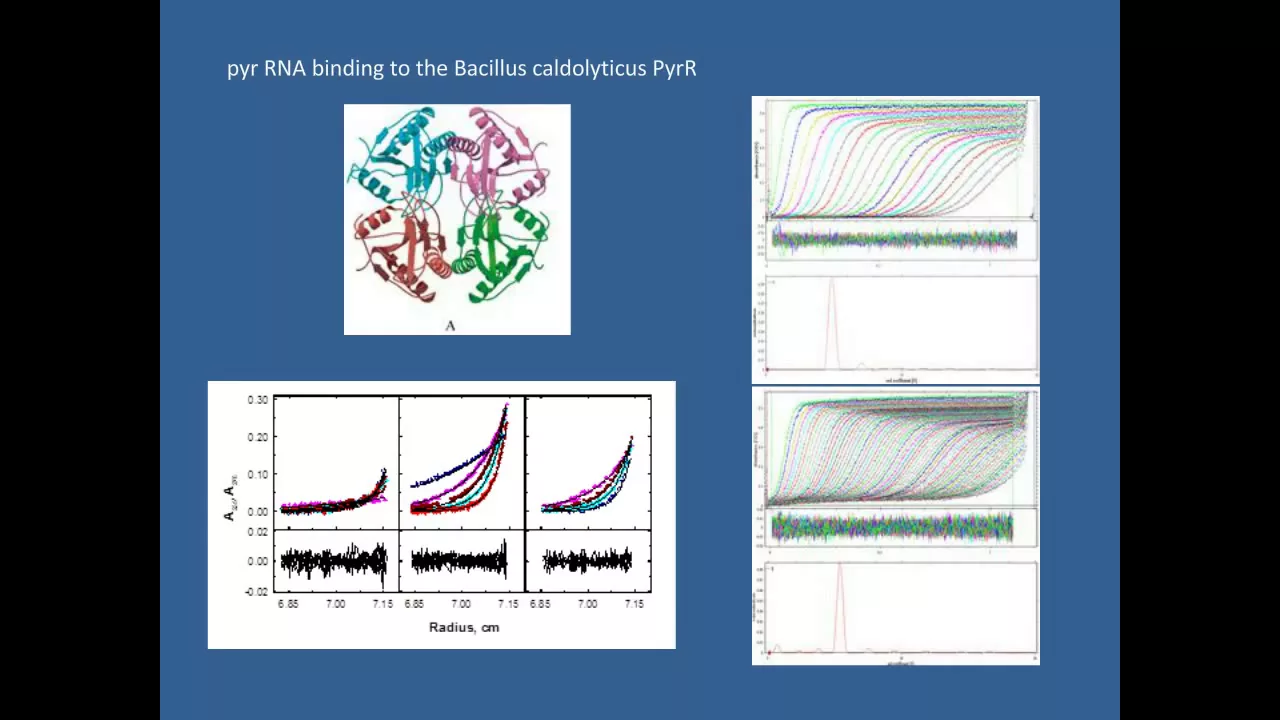
Ultracentrifugation is a specialized centrifugation technique that spins samples at extremely high speeds (up to 150,000 rpm, generating 500,000g centrifugal force) to separate biological particles based on their sedimentation rate, which depends on particle mass, density, frictional coefficient, and centrifugal force; it is classified into preparatory centrifugation for component isolation/purification and analytical centrifugation for molecular characterization, with applications ranging from separating sub-cellular organelles (mitochondria, lysosomes, peroxisomes) to determining sedimentation coefficients and molecular weights of biomolecules.
Ultracentrifugation: Principles, Types & Applications
Added:Basic principles of standard centrifugation, including centrifugal force, relative centrifugal field (RCF), and revolutions per minute (RPM).
Fundamental physics of sedimentation, including the balancing forces of buoyancy, frictional drag, and gravity, as well as the concept of the Svedberg unit (S).
General understanding of cellular biology and biochemistry, specifically the relative sizes, densities, and functions of organelles, proteins, and nucleic acids.
Concepts of solution chemistry, particularly viscosity, density, and the preparation of concentration gradients (such as sucrose or cesium chloride solutions).
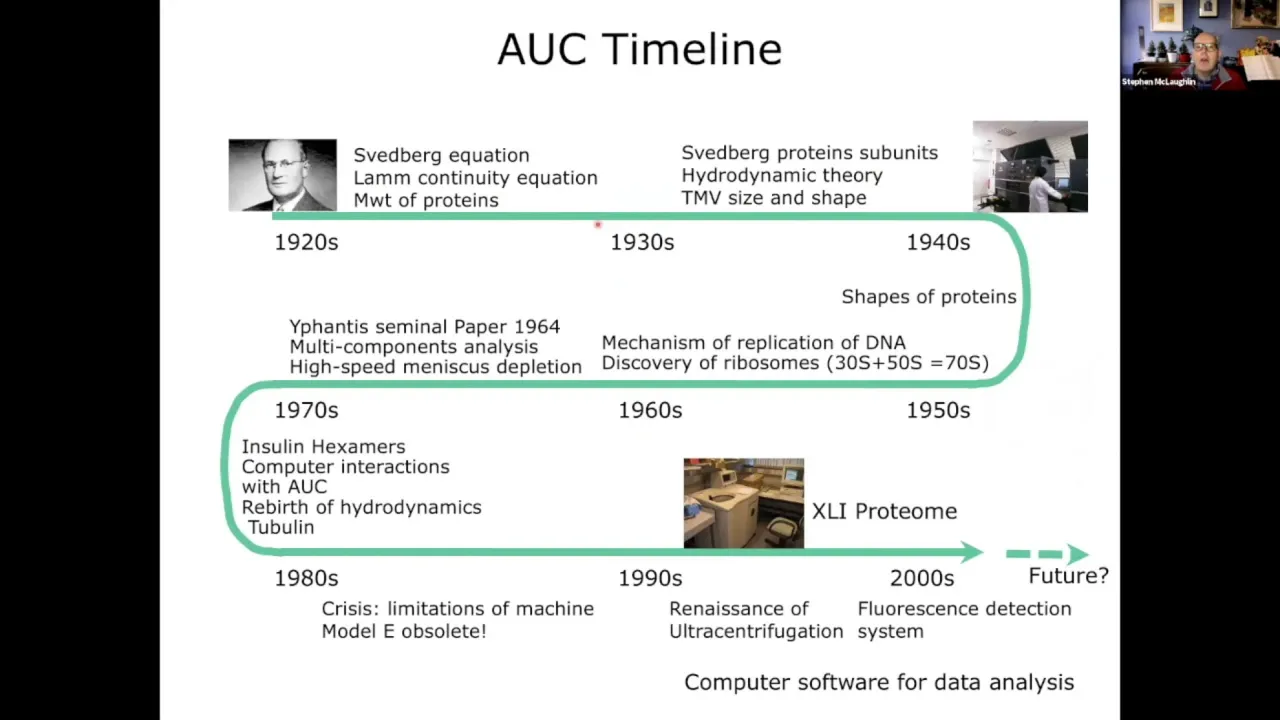
Analytical Ultracentrifugation (AUC) and its use in determining macromolecular molecular weight, shape, and binding interactions under non-destructive conditions.
Mathematical modeling of sedimentation velocity and sedimentation equilibrium, including the application of the Lamm equation and data analysis software like SEDFIT.
Downstream applications in structural biology, specifically how ultracentrifugation is utilized to prepare high-purity samples for Cryo-Electron Microscopy (Cryo-EM) and X-ray crystallography.
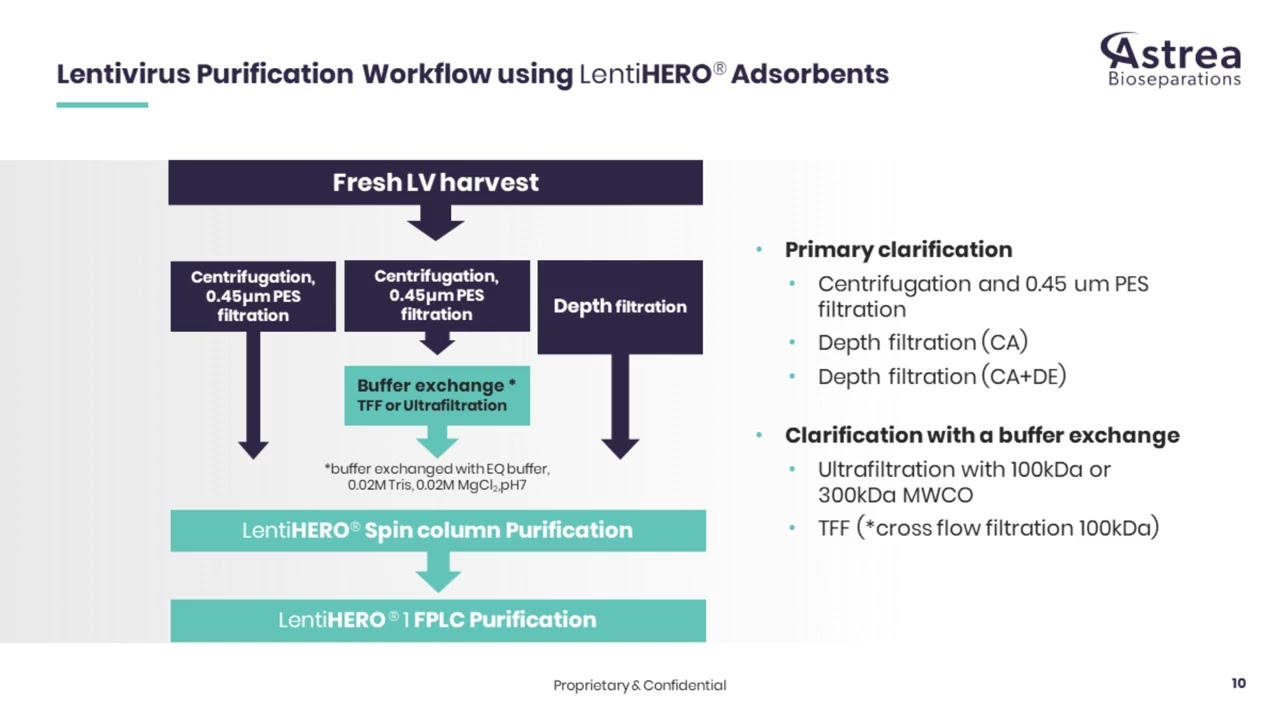
Industrial bioprocessing protocols, such as the large-scale purification of viral vectors (e.g., lentivirus or AAV) for gene therapy and vaccine manufacturing.
42.1K views607likes13:07Original Release: 2020-08-04
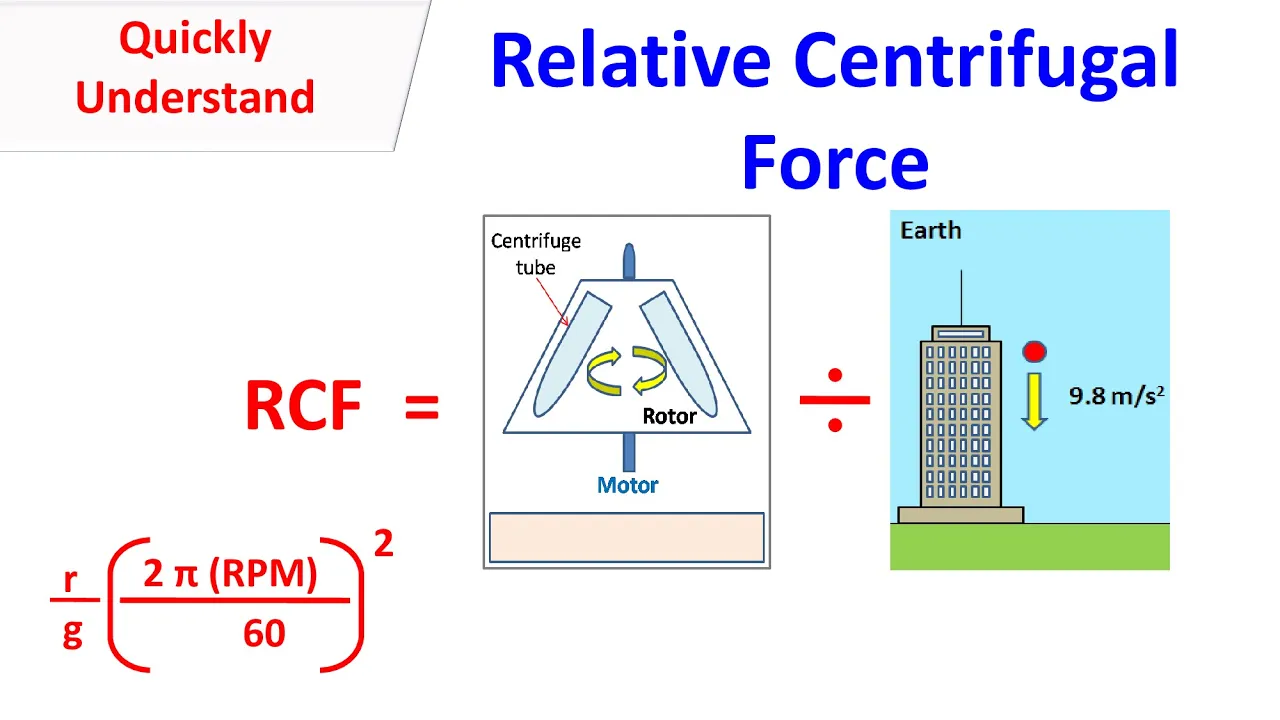
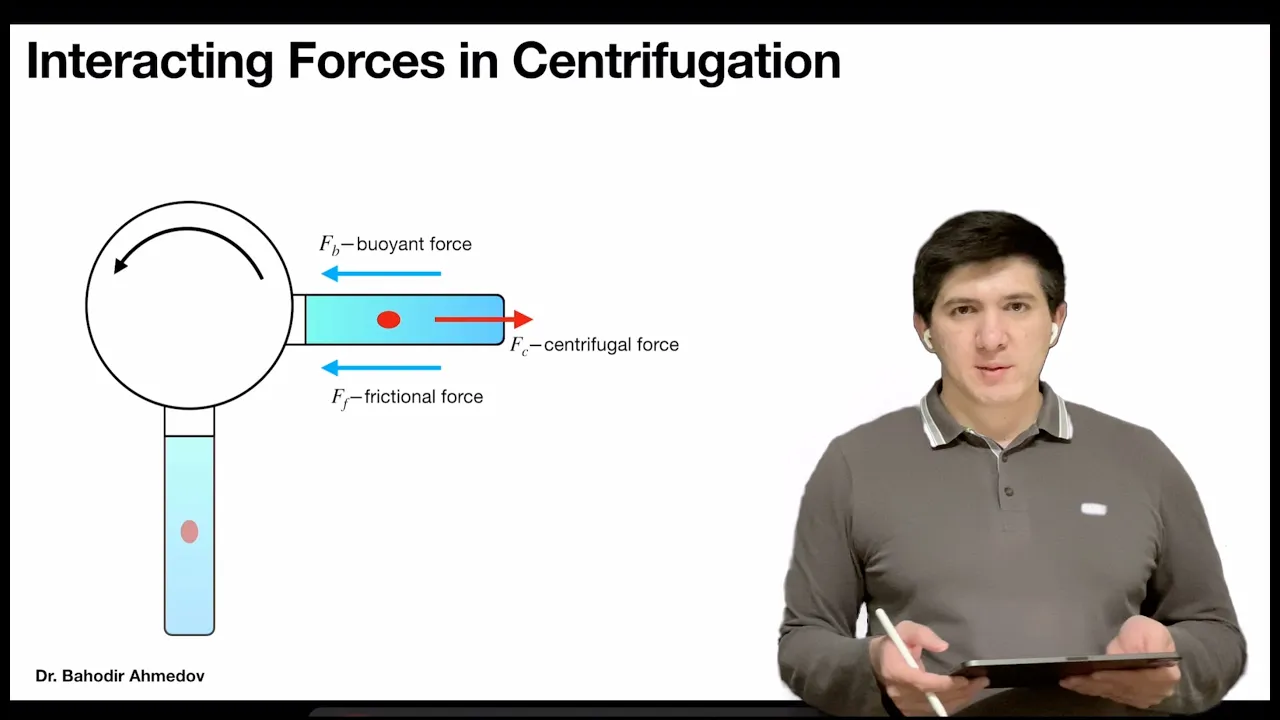
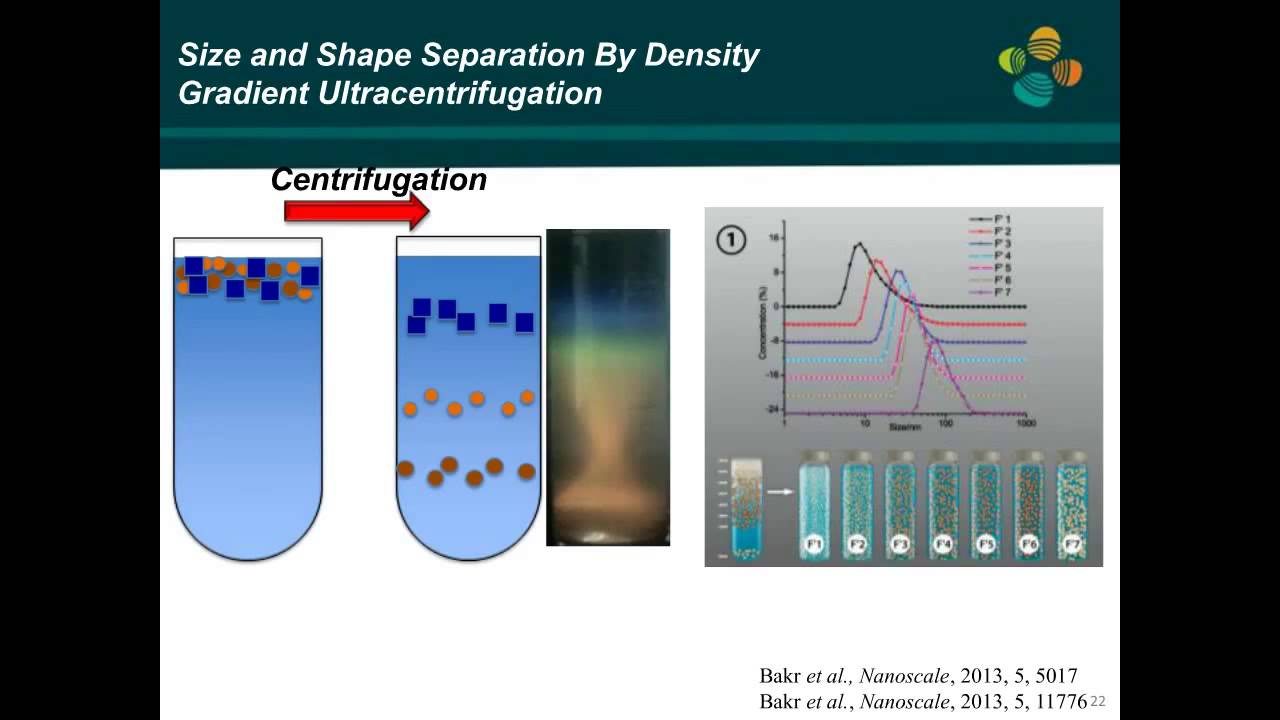
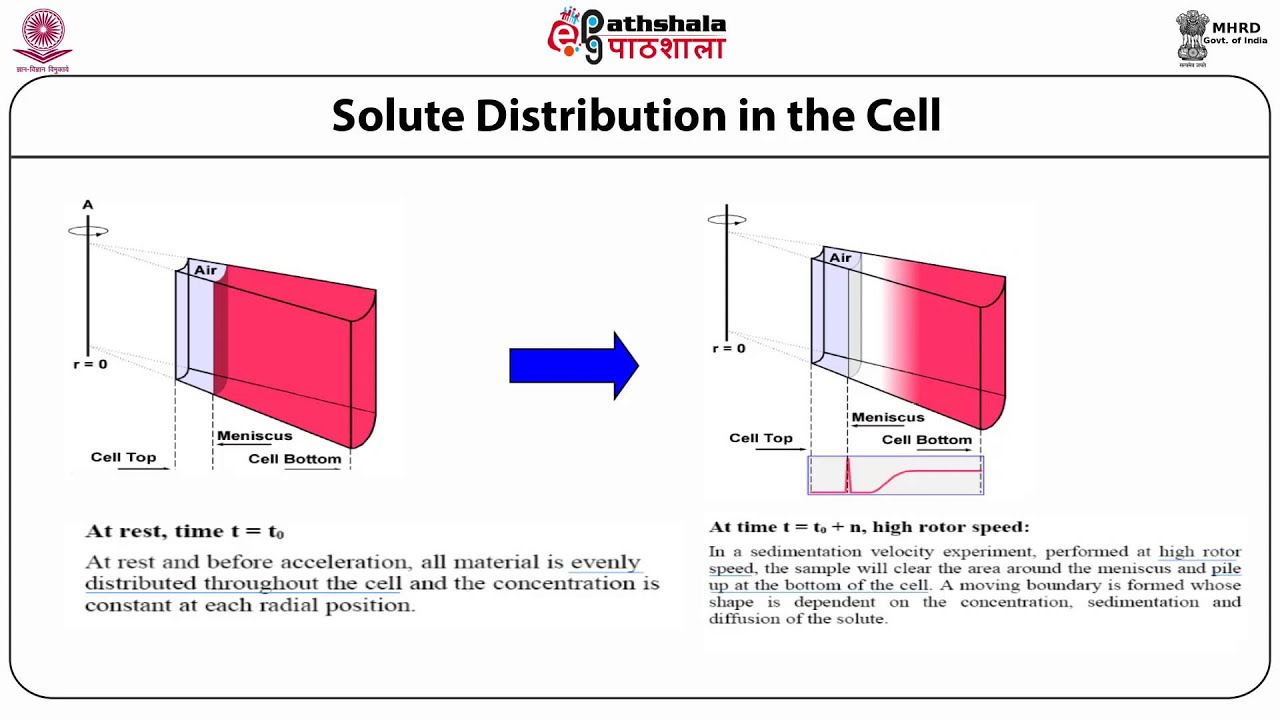
hello and welcome to integrated medical biochemistry with dr bijaya today's topic is ultra centrifugation and its applications so what is an ultra centrifuge ultra centrifuge is actually an equipment that carries out ultra centrifugation and ultra centrifugation is a specialized technique that is used to spin samples at an exceptionally high speed so the current ultra centrifuges can spin to as much as 1 lakh 50 000 rotations per minute which is equivalent to 10 lakh g now the ultra centrifuges they operate at a speed of 75 000 rpm or more providing the centrifugal force of 5 lakh g the rotor chamber is sealed and evacuated by pump to attain vacuum there is a refrigeration send system temperature ranges from zero to minus for zero to four degrees celsius the rotor chamber is always enclosed in a heavy armor plate the centrifugation for isolation and purification of components is known as preparatory centrifuge while that which is carried out with desire for characterization is known as analytical centrifuge so ultra centrifugation is of two types that is the preparatory centrifuge and the analytical centrifuge preparatory centrifuge helps us to purify the components whereas analytical centrifuge helps us to carry out characterization so in centrifugation there is a sedimentation process where the rotor spins in the centrifuge now each particle in the sample effectively experiences a force which is known as the centrifugal force sedimenting at a rate proportional to the force is achieved because of this force the factors affecting the sedimentation rate are the size of the mass the size and the mass of the particle the buoyancy it is exposed to in the medium and the frictional force reflected by the viscosity of the sample in the solution so this all leads to now uh in this slide we will see what is exactly sedimentation so you can see that this is a tube filled with a suspension uh and this tube is placed inside the centrifuge machine rotor this is the rotor this is the axis of rotation when this machine rotates the particles inside will face the gravitational field and due to this field in this process there will be a separation occurring and this separation will lead to formation of different layers uh the upper layer will which is liquid it will be called the supernatant and the solid particles will depos sediment downwards which is known as the precipitate this will lead to complete separation now if there are various components then in that case different layers will be formed in the tube so this is how so there are different types of centrifuges let us look at the different types of centrifuges and based on what have they been different now there are dif classification is based on different types uh or different factors so the first classification is based on the type of speed or sorry on the type on the speed so there are different types of centrifuges classification based on speed centrifuges can be class based on speed and temperature when it is classified on the basis of speed the speed of centrifuge is measured in revolutions per minute or it is also known as rpm the centrifuges are generally divided into three categories based on their maximum attainable speed so it can be either a low speed centrifuge where the maximum speed is around 5000 rpm a high speed centrifuge where it is the maximum speed is 20 000 rpm and the ultra centrifuge where the speed is around 1 lakh rpm or 10 raised to the power 5.
now the second classification is the type of centrifuge based on temperature so a centrifuge can either be refrigerated or non-refrigerated so the refrigerated centrifuges have an inbuilt unit surrounding the rotor with a temperature sensor and thermostat and we can select a particular temperature or temperature range that is required during the centrifugation generally high very high speed or ultra centrifuges are refrigerated centrifuges the non-refrigerated centrifuges are normally used at whatever temperature the room has so this is typically described in research reports as room temperature or ambient temperature so now the third type of classification is the types of centrifuge based on rotors so the rotors can be swinging bucket rotor fixed angle rotor or vertical tube rotors so these are the different types of rotors now the first one is the fixed angle rotor where there is an angle of 14 to 40 degrees of the bucket from the axis of rotation so that is why it is known as fixed angle because the angle is fixed second one is the swing out rotor where the bucket swings out these are the buckets it will swing out while the axis is rotating and on the other hand this is the vertical rotator rotor where the x the angle of rota the angle of the bucket is exactly parallel to the axis of so now let us see the difference between ultrasonic analytical and preparative centrifuge the analytical centrifuge uses a very small sample size of less than 1 ml in preparative centrifuge on the other hand large sample volume can be used it is built on analytical centrifuges built on optical system to analyze the progress of molecules during centrifugation whereas this is not the case in a preparative centrifuge use is relatively pure sample less pure sample can be used used to precisely determine the sedimentation coefficient and molecular weight of the molecules can be used to estimate sedimentation coefficient and molecular weight and it is also used to separate organelles and molecules the example of analytical centrifuge is the beckman model e and the preferably centrifuges are commonly used so now the preparatives and ultra centrifuge is further classified into differential ultra centrifugation and density gradient ultra centrifugation the differential ultra centrifugation is generally a commonly used procedure in microbiology and cytology whereas density gradient ultra centrifugation is further classified into zonal or isopicnic ultra centrifugation now the red zonal and isopicnic ultra centrifugation vary so let us see in red zonal centrifugation there is gradient the gradient is shallow maximum gradient density less than least sedimenting species gradient is continuous here on the other hand in iso picnic the gradient is steep maximum gradient density is greater than one of the dense sentimenting species the gradient is continuous or descent discontinuous depending upon what we need the centrifugation there is incomplete sedimentation speed is low and short time complete sedimentation until equilibrium is achieved and the swedish centrifugation speed is high and it takes a long time rate zonal centrifugation helps us to separate the rna dna hybrid ribosomal subunits etc whereas the isopicnic ultra centrifugation helps us to find out dna plasma lipoproteins lysosomes mitochondria peroxisomes and various other cell organelles so this is the difference in application of red zonal and isopicnic ultra centrifuge now this is a process of centrifugation that has been explained through the flow chart where taking a tissue then homogenizing it or grinding it and then taking that homogenate mixture and putting it inside the ultra centrifuge and then subjecting it to different centrifugal forces for different periods of time and isolating different fractions of the cell in order to carry out various studies related to these cell organelles and their metaboli now the applications of ultra centrifugation in clinical laboratory is to remove cellular elements from blood this is a normal centrifuge you don't need ultra centrifuge to pro provide plasma or serum then to chemically precipitate protein from analytical specimens this also can be achieved by a normal speed centrifuge we can separate protein bound free ligand in immunochemical assays separation of subcellular organelles exact solutes of biological fluid aqueous to organic solvents and separate lipid components for this we need high speed centrifuges and ultracentric futures so these are the different types of centrifuges and this has been summarized in one page and their differences so the lows will begin from characteristics so high low speed high speed ultra centrifuge now here the rpm range is between one to six thousand in high speed it is thousand to twenty five thousand in ultra centrifuge it is uh twenty thousand to eighty thousand now in maximum rcf achieved is in low speed is 6000 in high speed is 50 000 whereas in ultra centrifuge it is 6 lakhs so you can imagine the amount of heat it will generate so it is always advisable that the high speed and the ultra centrifuges are refrigerated refrigeration now is the next point in low speed there is no refrigeration required or it may be required in some cases but in high and ultra centrifuge they are always refrigerated now let us see the applications uh pelleting of cells is possible by all the three pelleting of nuclei is possible by all the three pelleting of organelles is possible only at high and ultra centrifuge pelleting of ribosomes is possible only by ultra centrifuge whereas pelleting of macromolecules is also possible only by ultra centrifuge so subscribe to my channel like and share click the bell icon
Up Next

5:13
How Whales Sing: The Science Behind Their Songs
@TEDEd
1.5M views•2016-11-10
50:12
Bacterial Communication: Quorum Sensing and Biofilm Formation Explained
@JHUAAP
12.6K views•2011-06-28

5:35
Enteric Nervous System Explained: The Gut's Brain | Neurobiology Lecture
@alumniu6029
438 views•2018-09-12

7:08
Bacteriophages: Earth's Deadliest Killers and Future Antibiotics
@kurzgesagt
34.6M views•2018-05-13
Related Study Plans & Knowledge Roadmaps
Structured learning paths in Biology
biology
RNAi: Biogenesis, RISC & Gene Silencing
01Molecular Biology Foundations: DNA to Protein
02Introduction to RNA Interference (RNAi)
03Molecular Biogenesis of miRNA and siRNA
+ 2 more learning modules
10h5 modules
Explore Roadmap
biology
Mycorrhizae: Signaling, Biophysics & Ecology
01Foundations of Mycorrhizal Symbiosis
02Molecular Signaling and Root Colonization
03Biophysics and Bioenergetics of Nutrient Exchange
+ 1 more learning modules
11h4 modules
Explore Roadmap
biology
Circadian Clocks: TTFL, SCN & Periphery
01Foundations of Molecular Biology & Gene Expression
02Introduction to Chronobiology and Actograms
03The Core TTFL: Molecular Architecture of the Clock
+ 3 more learning modules
14h6 modules
Explore Roadmap
biology
Population Genetics: Math, Drift & Selection
01Genetic & Probability Foundations
02The Hardy-Weinberg Principle and Baseline Models
03Mathematical Modeling of Natural Selection
+ 3 more learning modules
18h6 modules
Explore Roadmap