



























Whales produce complex songs using a unique vocal mechanism involving a U-shaped tissue fold between their lungs and laryngeal sacs, where muscular contractions cause air to vibrate this tissue; these hierarchical songs serve potential purposes including attracting mates and establishing territory, and represent one of the fastest examples of cultural transmission in the animal kingdom, though increasing ocean noise from human activities threatens this sophisticated communication system.
How Whales Sing: The Science Behind Their Songs
Added:The taxonomic distinction between baleen whales (Mysticeti) and toothed whales (Odontoceti), including their key anatomical and behavioral differences.
Basic physics of sound, specifically how frequency, wavelength, and amplitude behave, and how sound waves propagate through water compared to air.
Fundamental principles of evolutionary biology and animal behavior, particularly why animals develop complex communication systems for survival and reproduction.
Basic mammalian respiratory anatomy, focusing on how air movement produces sound in terrestrial mammals to contrast with underwater vocalization.
The ecological impact of anthropogenic noise pollution, such as shipping and military sonar, on whale communication and navigation.
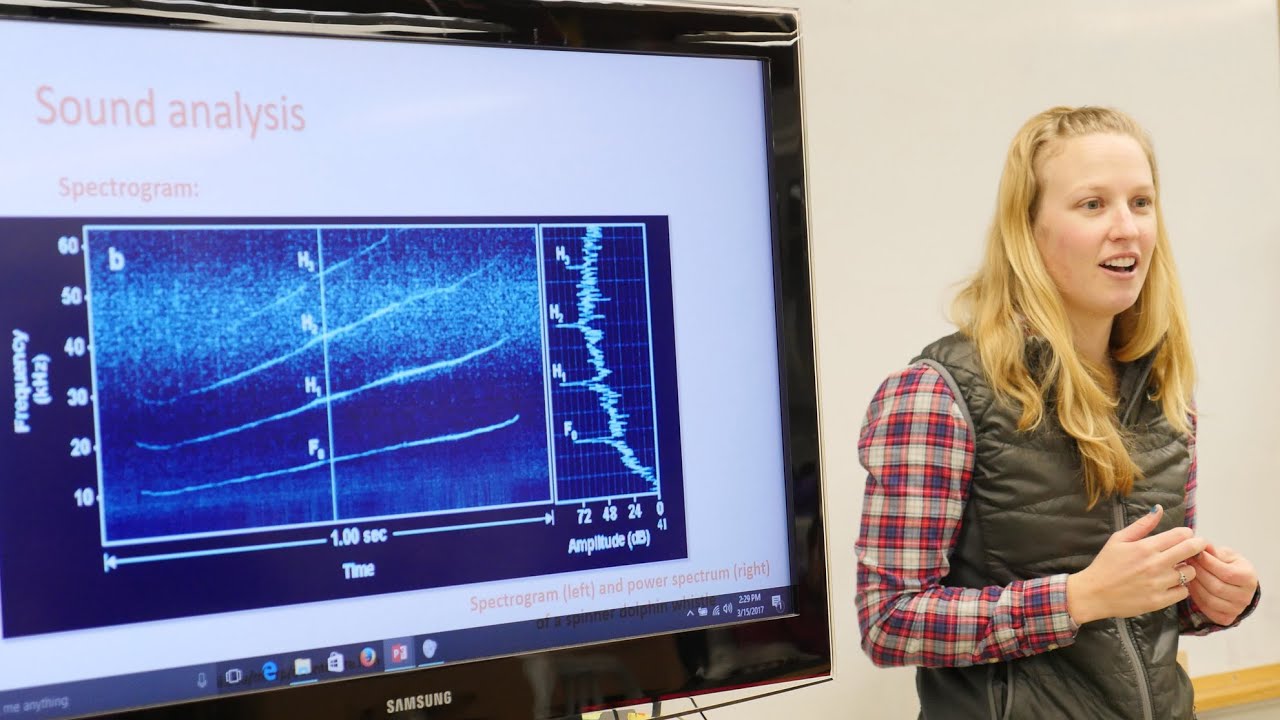
Advanced bioacoustic research methods, including the use of hydrophone networks and spectrogram analysis to study marine mammal acoustics.
The study of whale culture and dialects, exploring how complex songs evolve, change over time, and are socially transmitted across populations.
Marine conservation policies and the implementation of Ocean Noise reduction strategies to protect marine acoustic habitats.
1.5M views29.4Klikes5:13Original Release: 2016-11-10
Communicating underwater is challenging.
Light and odors don't travel well, so it's hard for animals to see or smell.
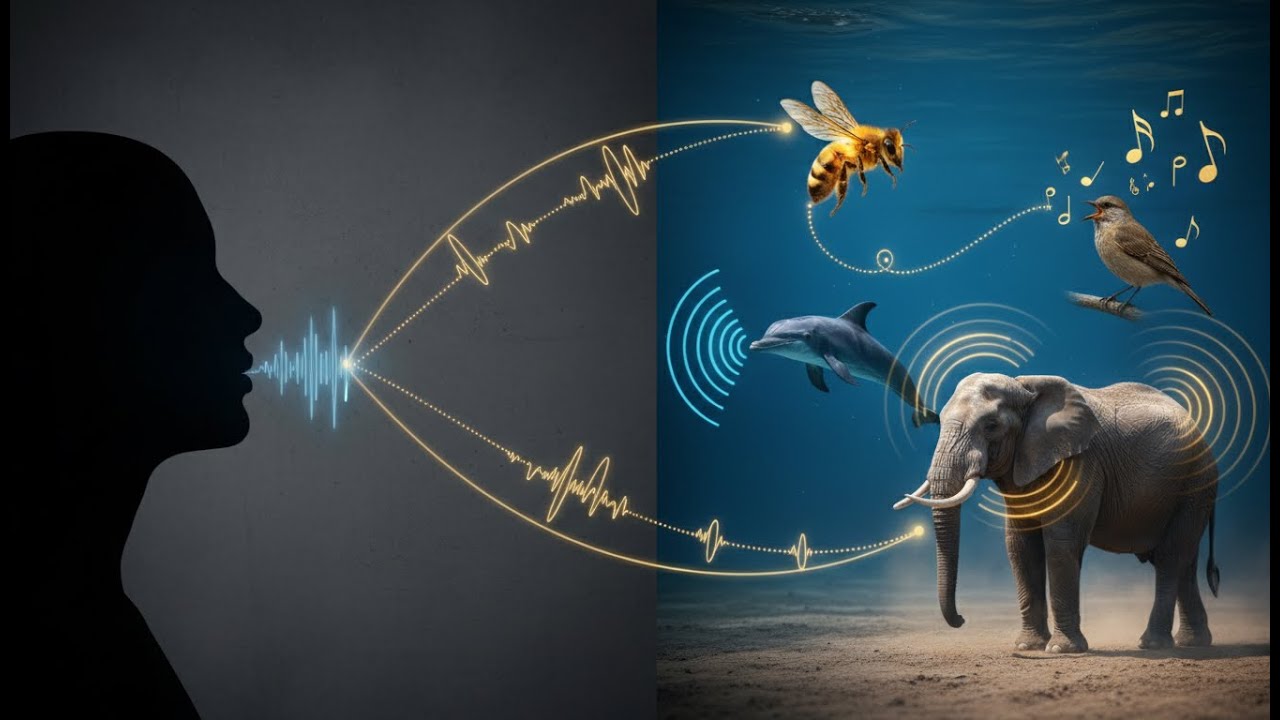
But sound moves about four times faster in water than in air, so in this dark environment, marine mammals often rely on vocalization to communicate.
That's why a chorus of sounds fills the ocean.
Clicks, pulses, whistles, groans, boings, cries, and trills, to name a few.
But the most famous parts of this underwater symphony are the evocative melodies, or songs, composed by the world's largest mammals, whales.
Whale songs are one of the most sophisticated communication systems in the animal kingdom.
Only a few species are known to sing.
Blue, fin, bowhead minke whales, and of course humpback whales.
These are all baleen whales which use hairy baleen plates instead of teeth to trap their prey.
Meanwhile, toothed whales do use echolocation, and they and other species of baleen whales make social sounds, such as cries and whistles, to communicate.
But those vocalizations lack the complexity of songs.
So how do they do it?
Land mammals like us generate sound by moving air over our vocal cords when we exhale, causing them to vibrate.
Baleen whales have a U-shaped fold of tissue between their lungs and their large inflatable organs called laryngeal sacs.
We don't know this for sure because it's essentially impossible to observe the internal organs of a living, singing whale, but we think that when a whale sings, muscular contractions in the throat and chest move air from the lungs across the U-fold and into the laryngeal sacs, causing the U-fold to vibrate.
The resulting sound resonates in the sacs like a choir singing in a cathedral making songs loud enough to propagate up to thousands of kilometers away.
Whales don't have to exhale to sing.
Instead, the air is recycled back into the lungs, creating sound once more.
One reason whale songs are so fascinating is their pattern.
Units, like moans, cries, and chirps are arranged in phrases.
Repeated phrases are assembled into themes.
Multiple themes repeated in a predictable pattern create a song.
This hierarchical structure is a kind of grammar.
Whale songs are extremely variable in duration, and whales can repeat them over and over.
In one recorded session, a humpback whale sang for 22 hours.
And why do they do it?
We don't yet know the exact purpose, but we can speculate.
Given that the singers are males and they mostly sing during the mating season, songs might be used to attract females.
Or perhaps they're territorial, used to deter other males.
Whales return to the same feeding and breeding grounds annually, and each discrete population has a different song.
Songs evolve over time as units or phrases are added, changed, or dropped.
And when males from different populations are feeding within earshot, phrases are often exchanged, maybe because new songs make them more attractive to breeding females.
This is one of the fastest examples of cultural transmission, where learned behaviors are passed between unrelated individuals of the same species.
We can eavesdrop on these songs using underwater microphones called hydrophones.
These help us track species when sightings or genetic samples are rare.
For example, scientists have been able to differentiate the elusive blue whale's populations worldwide based on their songs.
But the oceans are getting noisier as a result of human activity.
Boating, military sonar, underwater construction, and seismic surveys for oil are occurring more often which may interfere with whale's communication.
Some whales will avoid key feeding or breeding grounds if human noise is too loud.
And humpback whales have been observed to reduce their singing in response to noise 200 kilometers away.
Limiting human activity along migratory routes and in other critical habitats, and reducing noise pollution throughout the ocean would help ensure whales continued survival.
If the whales can keep singing and we can keep listening, maybe one day we'll truly understand what they're saying.
Up Next

89:27
Recording and Analyzing Marine Mammal Sounds in Puget Sound
@rigordon0
139 views•2023-03-20

22:43
Ketone Ester Treats Angelman Syndrome Seizures in Mouse Model
@epigenixfoundation5302
1.3K views•2016-07-15
4:23
The Origins of Genes: Mutation and Duplication Explained
@TEDEd
1M views•2014-09-22
7:08
Bacteriophages: Earth's Deadliest Killers and Future Antibiotics
@kurzgesagt
34.6M views•2018-05-13
Related Study Plans & Knowledge Roadmaps
Structured learning paths in Biology
biology
Analyzing Animal Venoms: Genetics & Pharma
01Molecular Biology & Physiology Foundations
02Venom Evolution & Toxin Gene Recruitment
03Neurotoxins & Ion Channel Pharmacology
+ 2 more learning modules
18h5 modules
Explore Roadmap
biology
RNAi: Biogenesis, RISC & Gene Silencing
01Molecular Biology Foundations: DNA to Protein
02Introduction to RNA Interference (RNAi)
03Molecular Biogenesis of miRNA and siRNA
+ 2 more learning modules
10h5 modules
Explore Roadmap
biology
Mycorrhizae: Signaling, Biophysics & Ecology
01Foundations of Mycorrhizal Symbiosis
02Molecular Signaling and Root Colonization
03Biophysics and Bioenergetics of Nutrient Exchange
+ 1 more learning modules
11h4 modules
Explore Roadmap
biology
Circadian Clocks: TTFL, SCN & Periphery
01Foundations of Molecular Biology & Gene Expression
02Introduction to Chronobiology and Actograms
03The Core TTFL: Molecular Architecture of the Clock
+ 3 more learning modules
14h6 modules
Explore Roadmap