








![[Season:3 Episode:4] John Powell & Simone Pickering - A Noisy Ocean](https://i.ytimg.com/vi_webp/eWr-Rdz_Jyg/maxresdefault.webp)


![Convegno “La Liguria e il Mare” - Le nuove sfide del rumore antropico sottomarino [etc]](https://i.ytimg.com/vi/25cAf4T2L-U/maxresdefault.jpg)
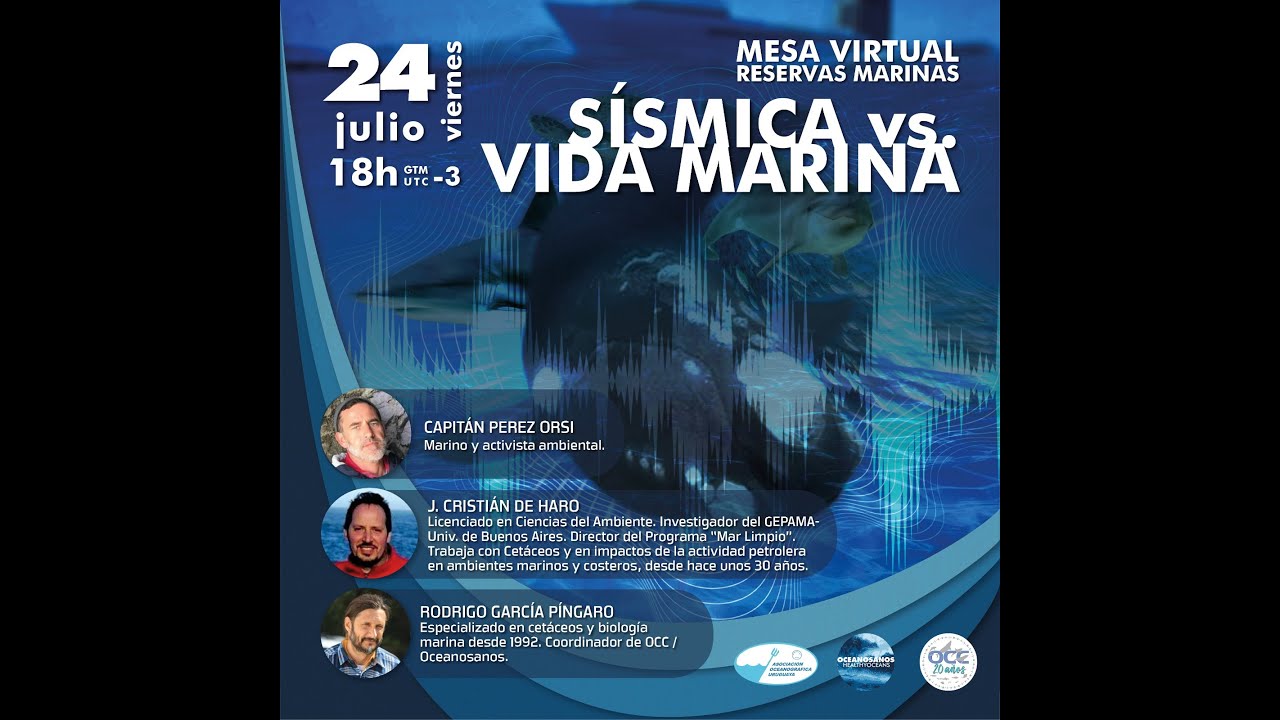

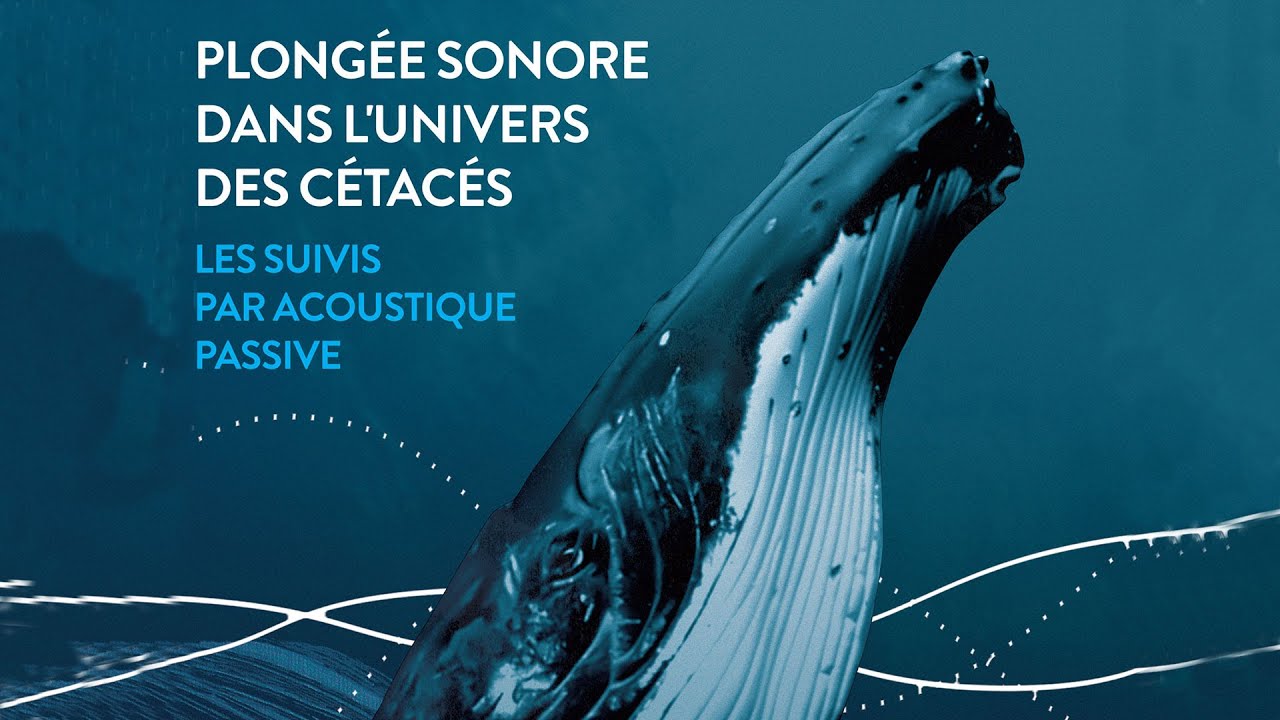



Human-made ocean noise from shipping, seismic surveys, and industrial activities has dramatically increased over recent decades, disrupting marine life's ability to communicate, navigate, and survive; unlike climate change, noise pollution can be addressed through relatively simple solutions like slower ships and quieter technologies, offering immediate benefits to marine ecosystems.
Marine Noise Pollution Effects on Ocean Life
Added:The physics of sound propagation in aquatic environments, including how density and temperature affect sound speed and travel distance compared to air.
The biological importance of echolocation and acoustic communication for marine species' survival, reproduction, and navigation.
Anatomy and physiology of marine sensory systems, specifically how cetaceans and fish detect acoustic cues.
Key anthropogenic activities that generate underwater noise, such as commercial shipping, seismic testing for oil and gas, and military sonar.
Advanced engineering designs and mitigation technologies, such as bubble curtains, quiet vessel propulsion systems, and alternative seismic airguns.
International maritime policies, environmental laws, and frameworks (e.g., IMO guidelines, Marine Mammal Protection Act) governing ocean noise pollution.
The science of marine bioacoustics, including the use of hydrophone networks and spectrogram analysis to monitor underwater soundscapes.
The cumulative ecological impact of noise pollution combined with other stressors like ocean warming, acidification, and overfishing.
70.1K views1.7Klikes13:03Original Release: 2020-04-16
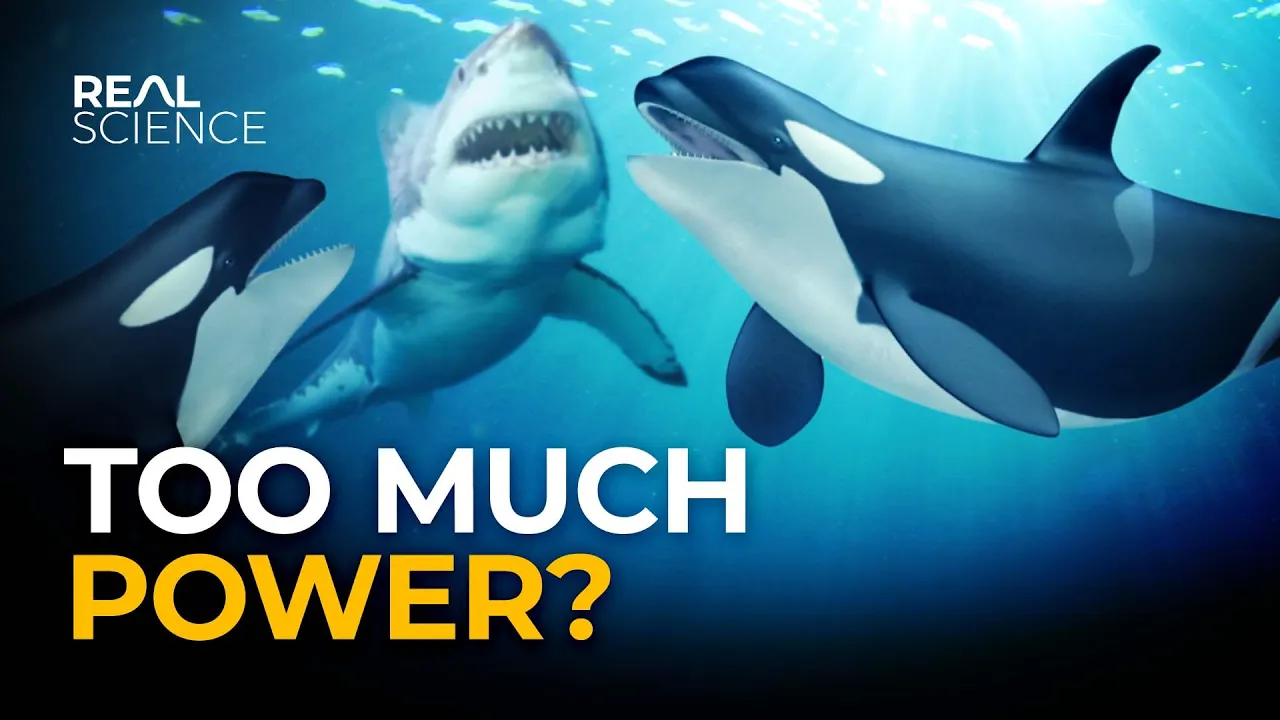
This is the sound of orcas off the coast of Vancouver.
(Whale chirps and squeaks) They make these fantastic sounds not just to communicate, but also sometimes to echolocate, to find their way around and to find food.
But that can be tricky sometimes, because, well, here is the sound of a ship passing by, recorded underwater.
(Screeching oscillating sound) You know, when we think about marine pollution, I think we usually think about plastics.
Maybe toxic chemicals, or even ocean acidification from climate change.
As a science journalist who often writes about environmental issues, those are the things that have passed my desk over the past 10 years or so.
But as I recently realized when I was writing a feature for the science journal "Nature," noise is another important kind of pollution.
One that often gets ignored.
You know, maybe you've heard of the dark-skies movement, which aimed to raise awareness of the issue of light pollution and create pockets of unilluminated night, so that people and animals could enjoy more natural cycles of light and dark, night and day.
Well, in much the same way, there are people now raising awareness of the issue of noise pollution and trying to create pockets of quiet in the ocean, so that marine life can enjoy a more natural soundscape.
This is important.
Noise isn't just an irritation.
It can cause chronic stress, or even physical injury.
It can affect marine life's ability to find food and mates and to listen out for predators and more.
Think of all the sounds we inject into the ocean.
Perhaps one of the most dramatic is the seismic surveys used to look for oil and gas.
Air guns produce loud blasts, sometimes every 10 to 15 seconds, for months on end.
And they use the reflections of these sounds to map the ground beneath.
It can sound like this.
(Explosion sounds) Then, there's the sound of the actual drilling for oil and gas, the construction of things like offshore wind farms, sonar and of course, the nearly constant drone from more than 50,000 ships in the global merchant fleet.
Now the natural ocean itself isn't exactly quiet.
If you put your head under the water, you can hear cracking ice, wind, rain, singing whales, grunting fish, even snapping shrimp.
Altogether, that can create a soundscape of maybe 50 to 100 decibels, depending on where and when you are.
But mankind's addition to that has been dramatic.
It's estimated that shipping has added three decibels of noise to the ocean every 10 years in recent decades.
That might not sound like a lot, but decibels are on a logarithmic scale, like the Richter scale for earthquakes.
So a small number can actually represent a large change.
Three decibels means a doubling of noise intensity in the ocean.
A doubling.
And that's only an estimate, because no one is actually keeping track of how noisy the ocean is all around the world.
There is a body called the International Quiet Ocean Experiment, and one of their missions is to try and plug the hole in that data.
So for example, last year, they managed to convince the Global Ocean Observation System to start including noise as one of their essential variables for monitoring, alongside things like temperature and salinity.
We do know some things.
We know that sonar can be as loud, or nearly as loud, as an underwater volcano.
A supertanker can be as loud as the call of a blue whale.
The noises we add to the ocean come in all different frequencies and can travel great distances.
Seismic surveys off the East Coast of the United States can be heard in the middle of the Atlantic.
In the 1960s, they did an experiment where they set off a loud noise off the coast of Perth, Australia, and they detected it as far away as Bermuda, 20,000 kilometers away.
So what does all this sound like to marine life, what do they hear?
It's kind of difficult to describe.
Sound travels further, faster in water than it does in air, and it also packs a different punch.
So sound of the same pressure will have a different intensity whether you measure it in the air or underwater.
Then there's the fact that whales don't have ears exactly like human ears.
Creatures like zooplankton don't even have what you would consider to be ears.
So what does this mean, what is the impact on all this marine life?
Perhaps the easiest thing for scientists to assess is the effect of acute noise, really loud sudden blasts that might cause physical injury or hearing loss.
Beaked whales, for example, can go into panicked dives when exposed to loud noises, which may even give them a condition similar to the bends.
In the 1960s, after the introduction of more powerful sonar technologies, the number of incidents of mass whale strandings of beaked whales went up dramatically.
And it's not just marine mammals, fish, if they stray too close to the source of a loud sound, their fish bladders may actually explode.
The airgun blasts from seismic surveys can mow down a swath of zooplankton, the tiny creatures near the base of the food chain, or can deform scallop larvae while they're developing.
Well, what about chronic noise, the more pervasive issue of raising background noise from things like shipping?
That can mask or drown out the natural soundscape.
Some whales have responded to this by literally changing their tune, a little bit like people shouting to be heard in a noisy nightclub.
And some fish will spend more time patrolling their borders and less time caring for their young, as if they're on high alert.
Chronic noise can affect people too, of course.
Studies have shown that people living near busy airports or really busy highways may have elevated levels of cardiovascular disease.
And students living under busy flight paths may do worse on some educational tests.
And even while I was researching this subject, they were actually blasting out about three meters of solid granite from the lot across from my home office to make room for a new house, and the constant jittering of the rock hammer was driving me completely insane.
And whenever the workers stopped for a moment, I could feel my shoulders relax.
This effect has been seen in whales, too.
After the terrorist attacks of 9/11, international shipping largely ground to a halt for a little while in the waters off the East Coast of the United States.
And in that lull, researchers noticed that endangered right whales in that region had fewer chemical markers of stress in their feces samples.
As one researcher I spoke to likes to say, "We were stressed, but the whales weren't."
Now you have to remember, we have evolved to be a visual species.
We really rely on our eyes.
But marine life relies on sound the way that we rely on sight.
For them, a noisy ocean may be as befuddling and even dangerous as a dense fog is for us.
And maybe sometimes that just means being a little more stressed, maybe sometimes it means spending a little less time with the kids.
Maybe some species can adapt.
But some researchers worry that for endangered species already on the brink, noise may be enough to push them over the edge.
So take, for example, the southern resident killer whales that live in the waters off my hometown of Vancouver.
There are only 75, maybe 76, animals left in this population.
And they're facing a lot of challenges.
There are chemical pollutants in these waters, and they are running low on the salmon that they really rely on for food.
And then there's noise.
When researchers studied these and similar killer whales, they found that they spend between 18 and 25 percent less time feeding in the presence of loud boat noise.
And that's a lot for a species that's already struggling to find enough food to thrive.
The good news, as I heard from all the researchers I spoke to, is that you can do something relatively easily about ocean noise.
Unlike the wicked problems of climate change and ocean acidification, you can just dial down the knob on ocean noise and see almost immediate impacts.
So for example, in 2017, the Vancouver Fraser Port Authority started asking ships to simply slow down when going through the Haro Strait, where the southern resident killer whales are feeding in late summer.
Slower ships are quieter ships.
And because it's Canada, you can just ask, it can be voluntary.
(Laughter) (Applause) In that 2017 trial, most of the ships complied, adding about half an hour to their travel time, and reducing noise by about 1.2 decibels or 24 percent of noise intensity.
This year, they decided to extend the length of time and the area over which they're asking ships to slow down.
So hopefully that has a positive impact for these whales.
In 2017, the Vancouver Fraser Port Authority also introduced discounts in docking fees for ships that are physically designed to be quieter.
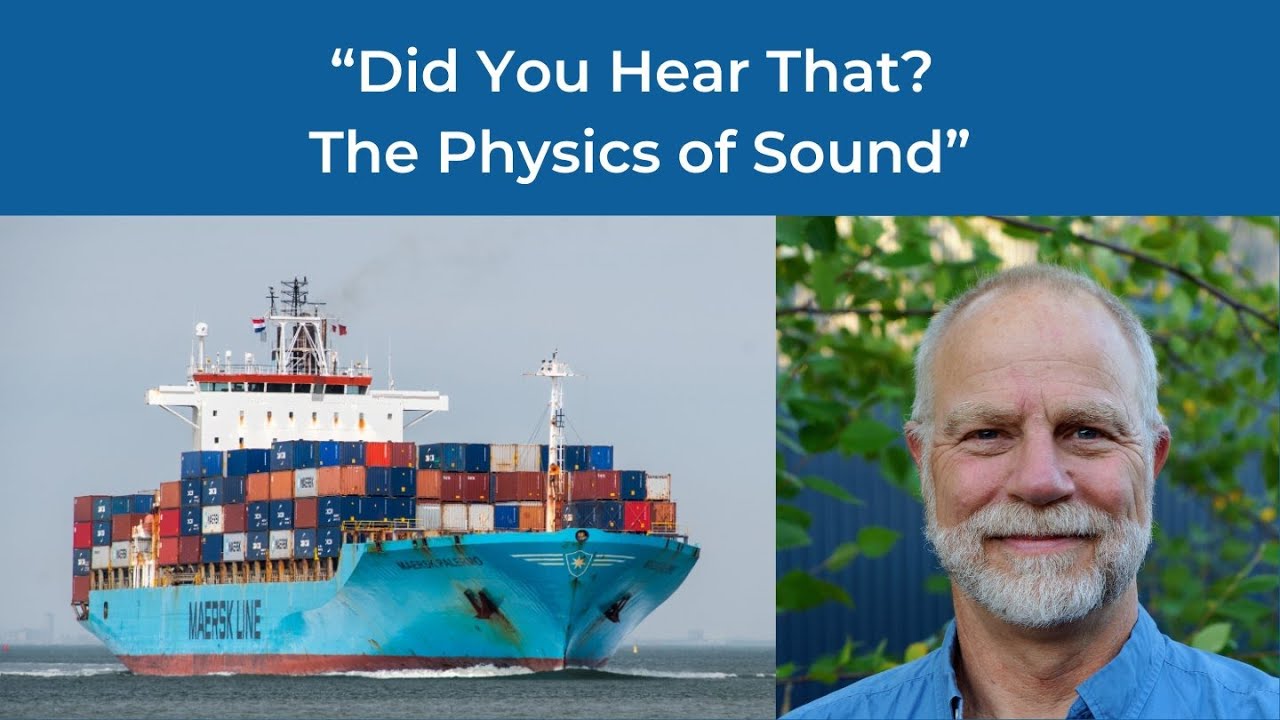
You know, weirdly, a lot of the noise from a ship like this comes from the popping of tiny bubbles off the back of its propeller.
And you can simply design a ship to do less of that and to be quieter.
The International Maritime Organization has published a huge list of ways that boats can be made quieter.
And they also have a target of reducing carbon dioxide emissions from global shipping by 50 percent by 2050.
And the great news is that these two things go hand in hand.
On the whole, a more efficient ship is a quieter ship.
People have also invented quieter ways of hammering in the giant posts needed for giant wind turbines, like this one, and gentler ways of doing seismic surveys.
And there are some incentives for using quieter technologies.
The European Union, for example, has a healthy marine system directive for 2020.
And one of the ways that they define a healthy marine system is by how much noise is going in those waters.
But on the whole, most waters remain completely unregulated when it comes to ocean noise.
But again, most of the scientists I spoke to said that there's real momentum right now in policy circles to pay attention to this issue and maybe do something about this issue.
We already know enough to say that quieter seas are healthier seas.
But now scientists are really scrambling to come up with the details.
Just how quiet do we need to be?
And where are the best places to make quiet or preserve quiet?
And how best can we hush our noise?
And you know, I'm not trying to tell you that noise is the biggest environmental problem on the planet or even in the ocean.
But the point is that humankind has a lot of impacts on our environmental system.
And these impacts don't act in isolation.
They act together, and they multiply.
So even for the ones that are not so obvious, we really need to pay attention to them.
I'll tell you about one last experiment, just because it's so beautiful.
So Rob Williams, one of the researchers who works on southern resident killer whales, also does some work in Bali.
And there, they celebrate a Hindu tradition called nyepi, or a day of silence.
And this day, apparently, is very strictly observed.
No planes take off from the airport, no boats go out fishing, the tourists are gently led off the beach back into their hotel rooms.
And Rob Williams put some hydrophones in the water there to see what the impact was, and it was dramatic.
Sound levels dropped by six to nine decibels, about the same as in the waters after 9/11.
For an "acoustic prospector" like Williams, which is what he calls himself, this silence is golden.
Now he and other researchers can go back to this place and see what the fish choose to do with all this additional acoustic real estate.
(Soft bubbling) I like to think of them having their own holiday, feasting and finding mates.
Celebrating their own spot of calm in an otherwise noisy world.
Thank you.
(Applause)
Up Next

15:54
Life in Biosphere 2: Sustainable Ecosystems & Human Survival
@TED
334.9K views•2009-06-16

53:25
Dr. Joe Gaydos Explores the Salish Sea Ecosystem
@liheritagetrust
152 views•2022-06-08
21:35
Ocean Acidification in Washington: Dr. Shallin Busch
@TEDx
25.7K views•2013-05-02
10:28
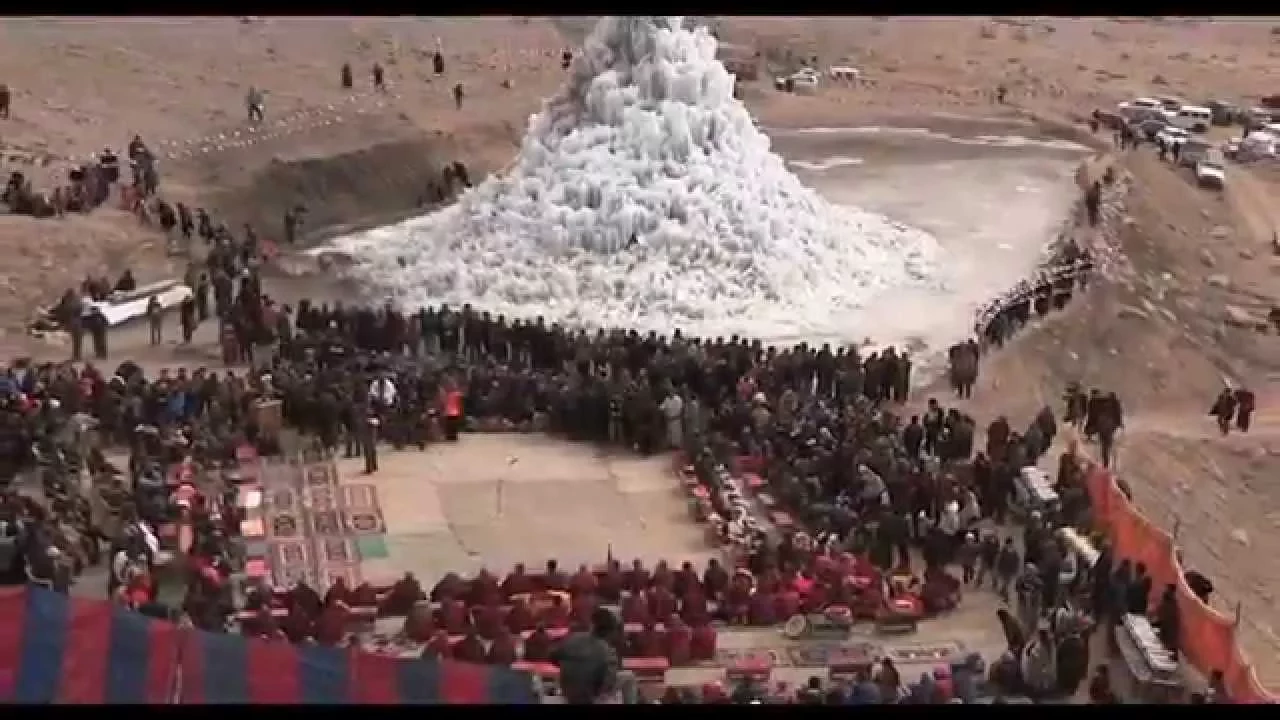
Ice Stupa Artificial Glaciers: Solving Ladakh's Water Crisis
@SonamWangchuk66
3.2M views•2015-05-03
Related Study Plans & Knowledge Roadmaps
Structured learning paths in Environmental Science
environmental-science
Ocean Noise: Cetacean Impacts & Mitigation
01Fundamentals of Underwater Acoustics
02Marine Mammal Bioacoustics
03Anthropogenic Noise: Shipping & Seismic Surveying
+ 2 more learning modules
16h5 modules
Explore Roadmap
environmental-science
Road Ecology: Corridors, Overpasses & Fencing
01Foundations of Habitat Fragmentation and Carnivore Ecology
02The Road Barrier: Ecological Impacts of Transport Infrastructure
03Principles of Ecological Corridors and Connectivity Mapping
+ 3 more learning modules
14h6 modules
Explore Roadmap
environmental-science
Ocean Acidification: Kelp Buffering & Shellfish
01Fundamentals of Ocean Chemistry & pH
02Chemical Pathways of Coastal Acidification
03Bivalve Physiology & Calcification Under Stress
+ 2 more learning modules
18h5 modules
Explore Roadmap
environmental-science
Ice Stupas: Glacial Retreat & Water Security
01Foundations of Glaciology & Mountain Hydrology
02Climate Change and Glacial Retreat Dynamics
03The Science of Ice Stupas & Artificial Glaciers
+ 2 more learning modules
14h5 modules
Explore Roadmap