



















![[Doku] Wie die Alpen das Wetter beeinflussen - Unterwegs mit Sven Plöger](https://i.ytimg.com/vi_webp/QXriEhQ7reI/maxresdefault.webp)


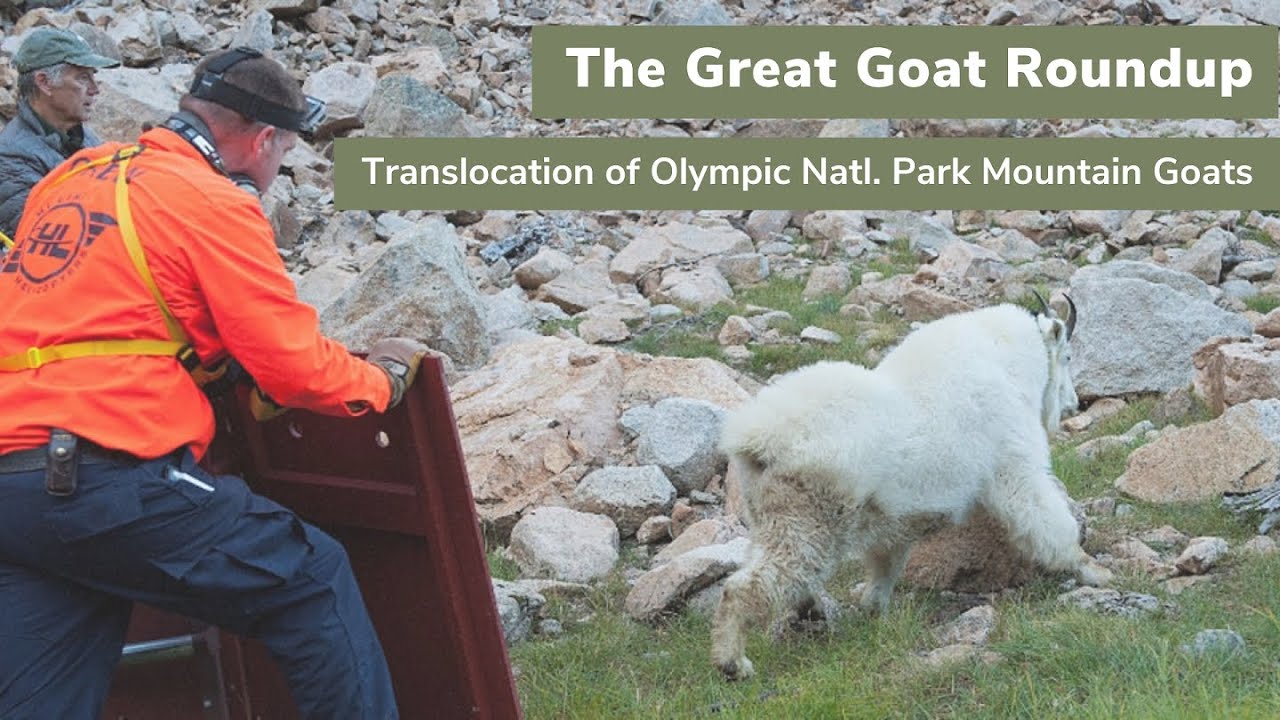
Mountain goat populations in the Washington Cascades have declined by 70-90% due to historical overhunting and habitat fragmentation, resulting in low genetic diversity (average heterozygosity of 0.37 compared to 0.55 in Canadian populations), which reduces juvenile survival rates from 85% to approximately 75%, creating a downward spiral where reduced genetic diversity leads to decreased population size and further genetic decline; however, translocation of genetically distinct Olympic goats (descendants of the original 12 founders) offers potential restoration by increasing genetic diversity and breaking this negative cycle.
Mountain Goat Conservation & Restoration in Washington Cascades | Ecology Talk
Added:Basic principles of conservation genetics, including concepts like genetic drift, inbreeding depression, and the significance of gene flow within isolated populations.
Fundamentals of population ecology, specifically population bottlenecks, habitat fragmentation, and carrying capacity.
An understanding of alpine and subalpine ecosystems, particularly the specific habitat requirements and adaptive traits of montane fauna like mountain goats.
General wildlife management concepts, such as the difference between conservation, preservation, and ecological restoration.
Advanced study of translocation biology, focusing on the protocols, success metrics, and behavioral adaptations of relocated wildlife.
Landscape genetics, analyzing how geographic features and human infrastructure (e.g., highways in the Cascades) impede or facilitate gene flow.
Evaluating the multi-agency policy frameworks and tribal co-management strategies involved in Pacific Northwest wildlife conservation.
Assessing the projected impacts of climate change on alpine meadows and how shifting treelines threaten specialized montane species.
143 views0likes53:40Original Release: 2016-04-29
this is a project that I've been involved in for the better part of 14 or 15 years and the began in a really unusual way for me I was sitting in my office one day minding my own business and the phone rang and I picked up the phone and it was one of our former graduate students who at the time happened to be working as a GIS analyst for the Sox Waddell Indian tribe and he said gee the tribe that he works with socks Waddell is an upriver tribe very you know if a lot of historical connections to the mountain they view themselves as mountain people rather than sort of saltwater salmon fishing people and they had a long cultural connection to the mountains and in particular to mountain goat so we're very culturally important to them and at the time I knew nothing about mountain goats and he told me that mountain goat populations were way down in Washington State and his tribe was very interested in in why that was the case and what might be what could be done about it and wondered if I might be interested in working with them on this project and my first thoughts were knowing nothing about mountain goats but what I did know about mountain goats is that they're found in you know the mountains and I what I also knew about the the mountains in the Alpine zone in Washington State is that something like ninety-five percent of the Alpine zone is protected in one way or another and the habitat up there is intact and so my first thoughts were how could mountain goats possibly be in trouble you know all their habitat is protected what's the problem here and so what I'll be talking about over the next 45 minutes or so is what we've done over the last 14 years to try to address that question and when I began this project 15 years ago I thought will this be a great little project for one graduate student but it just it's kind of in this energizer bunny project it just kind of keeps going and we keep finding new wrinkles that we want to explore and so we've collaborated with a lot of different groups again the socks waddell Indian tribe is responsible for getting this project started we've also worked closely with a Washington Department of Fish and Wildlife the u.s.
Forest Service the National Park Service US Geological Survey the Nature Conservancy we've worked up in British Columbia with the Ministry of the Environment collaborated with some other people at the University of Alberta that have done a lot of work on mountain goats and also cooperated with the Washington Department transportation as I said I've had a lot of graduate students work with me on this project and virtually everything that i'll be presenting today has been the work that's been completed by my graduate students and here you can see the cast of characters that I've had working on this over the years first grad student I had working on the project was adam wells finished in in 2006 and he's gone went on to get a PhD at at Idaho State University and also worked on mountain goats for his PhD andrew shirk then finished in 2009-10 abuse 2010 Leslie parks 2013 and my current graduate student Melissa Oscarson continues to work on this project over the years I've been fortunate to be able to provide funding to take on about 50 undergraduate interns to work with us over the summer and all of them at the end of the summer the one universal comment I get from them is that they had no idea how physically demanding it is to do field research because virtually all of this work involves working in the backcountry miles and miles from the nearest road carrying you know 40 50 pound packs and hiking eight or ten miles a day while climbing several thousand vertical feet oftentimes off trail so it's very physically demanding work but it's been real gratifying to have all these students involved in the project mountain goats are an icon they've been used as a symbol of sort of the outdoors and sort of the rugged Alpine habitat and the the the sort of rugged physique that's needed to navigate in that terrain they've been used as an icon for everything from the Great Northern Railroad to mountain goat beer which unfortunately I've never tasted but it sounds quite quite attractive mountain goats are found throughout the Pacific Northwest and here you can see this map showing their range and as you can see most of their range is not in the United States most of their ranges in British Columbia Alberta and Southeast Alaska the population down here in Washington state is very much at this an extreme of the range this map really isn't the best and that it doesn't do a particularly good job of distinguished being between the native population the native range and these introduced populations and although it's a little hard to see in that map the population in the Olympics is a non native population it was introduced into the Olympics in in the 1920s right and in the 1920s a group of hunters had this idea that it would be really cool to have a huntable population of mountain goats in the Olympics so in 1925 they grabbed about a half a dozen goats from from British Columbia and then in 1927 or maybe 1929 the records on all that good they grabbed another half dozen or so goats from Southeast Alaska release them near crescent lake in the Olympics and over that over the next 60 years that population of 12 goats expanded through the Olympics an increase to a population of well over a thousand animals by the mid-1980s oh and the other interesting thing was when they released all these goats you know the again the goal here was to create a huntable population not very many years after that release Olympic National Park was formed and boom that was the end of the option to have a hunting in the Olympics so by the mid-1980s Olympic National Park was beginning to recognize impacts from mountain goats up in the Alpine environment they were beginning to see that the goats were simply over grazing the habitat this explosive population growth over the 60 year 50 or 60 years was probably facilitated by a number of different things one is it was really good habitat number two the native predator populations in the area didn't have a history didn't have the opportunity to nity historically to have a large ungulate prey animal available up in the Alpine zone so the Predators really weren't up there very much and this initial population that they that they started with came from two very different and very healthy populations and their vitamins initially a bit of hybrid vigor going on there that helped to facilitate that explosive growth but again in the 1980s the Park Service recognized that the population was a little bit too high maybe a lot too high plus it was non-native and there was this great debate as to what to do about it and as you might imagine the debate at the one extreme there was a group of people that was arguing that hey this is a non-native species in the Olympics we need to make it go away we need to eliminate the species from the Olympics at the other extreme there was a group of people that said but they're really cute and they're white let's leave him alone and so predictably the Park Service took the middle ground and decided to reduce the population they ended up capturing about 400 animals and distributed them to game agencies throughout the western United States including introducing about the records aren't really very good somewhere in the neighborhood of maybe a hundred and fifty give or take were released at different sites in the Olympics a few features of mountain goats mountain goats live for maybe 10 to 14 years sexually mature at age three both sexes have horns and that's particularly important i'll come back to that one in a minute if you look carefully there you'll see there is a difference in the shape of the horns with the nannies the horns at least initially go more or less straight up and then just sort of curve at the tip and they're a little bit thinner a little bit more delicate a little bit more closely spay or a little bit spacing is a little different in the front in contrast abilities the males you'll notice the curve of the horn is a more continuous curve all the way from base to the tip so if you get a good look at a mountain goat from close range you can distinguish the sax based on the configuration of the horns and the distinguishing feature of mountain goats is that they're really really good at rock climbing and mountain goats are really good at hanging out on cliffs and and being very comfortable on these precipitous cliff sites because they have to be those cliff sites are what we refer to as escape terrain escape from important predators including Cougars and up in Alaska grizzly bears and this was a photograph that was taken by my student Andrew shark with a not terribly long telephoto lens and both the goat and my graduate student survived so some history of mountain goats again most of the mountain goats are in in Canada and southeast Alaska there's somewhere in the neighborhood of maybe a hundred to 120,000 goats on the planet most of those are in Canada and southeast Alaska historically we had about 10,000 goats here in Washington State but again back to that initial conversation I had from the with the socks wattle tribe mountain goat populations are way down down by somewhere in the neighborhood of seventy to ninety percent compared to historical levels well why is that well the short answer for why mountain goat populations are way down is simply because of overhunting way back in the in the 1940s and 1950s when the Washington Department of Fish and Wildlife first began managing mountain goat hunting they acknowledged that they didn't really know very much about mountain goats but they knew a lot about managing other ungulate populations all around the world and based on lots of experience managing other ungulate populations in particular dear both white-tailed deer and mule deer it was known that deer populations can withstand hunting pressure and and harvest levels by hunters of in the neighborhood of four percent per year or even greater without having any impact at all on the on the population and and so based on that the game agency said well let's manage mountain goats the same way we manage dear let's assume that they can handle that same harvest level and that wasn't an unreasonable starting assumption but in hindsight there were two serious mistakes that they made one of which they should have understood from the start and the other which was kind of forgivable the forgivable one is that they didn't realize that survivorship and reproductive rates for mountain goats are way lower than for deer so that was forgivable the thing that they really should have known better on is that with deer only the male's have horns and so you can tell the hunters to only shoot the ones with the horns but as you've seen mountain goats both sexes have horns and you know it is possible to distinguish males from females but it's very very difficult for the average individual unless you're very close range and know quite a lot about the species so it turns out you know you can kill an awful lot of males without impacting the population but when you start killing females as well that's going to have a bigger impact and not surprisingly the harvest in Washington State obviously after those animals were shot they could tell what the sex was and about fifty percent of the harvest by hunters was with females so that one they should have known better on so here you can see this graph on the Left that shows the number of permits and the harvest level from the 1940s up until the turn of the century and you can see for most of that time we were harvesting in the neighborhood of three or four hundred mountain goats per year which with an initial population of 10,000 that's in the neighborhood of three or four percent three percent or so which based on their experience with deer they thought would have been sustainable but as you can see by the 1980s the harvest levels began to drop and they begin to recognize that hey they'd overhunted the populations were way down the other mistake they made which again was understandable is they weren't really adequately monitoring the populations because it's hard to do so it's expensive you have to do helicopter surveys which are quite expensive figure on the right all these little triangles here show all the places where we're hunters recorded having killed a mountain goat over the entire period of record and so based on that you can see the mountain goats were extensively distributed throughout the Cascades these colored polygons represent the places where mountain goats currently are found in the Cascades so you can see that the the space distribution has has been reduced quite dramatically we now just have these pockets of mountain goat populations whereas historically it appears that mountain goats were well distributed throughout the Cascades so you know again back to my initial thinking about mountain goats what's the big deal here all the habitats intact and certainly if you look at a satellite image of the cascades from space you know it looks like things look pretty good there's the Alpine zone you see a lot of snow fields up there things look pretty good yes we have these big urban areas down at low elevations but at least a first look would lead you to believe that the habitat is pretty intact here's the the major urban centers at low elevations you add in the major roads going across the Cascades yeah there's a few but it doesn't really look like all that big a deal you add in the secondary roads well yeah but it still doesn't look like all that big a deal but then you add in all the small forest service roads oh my gosh there's a lot of roads out there and maybe that alpine habitat itself is more or less intact but this figure suggests that maybe that habitat has been fragmented to a significant degree and so maybe that fragmentation is part of the issue and there's the polygons where goats are still found so we've done a bunch of work over the years initially adam wells and tantabus focused on habitat modeling we also are caught my colleague cliff rice is a research scientist with the Washington partner of Fish and Wildlife did a lot of work to develop improve census methods and then the focus of our work over the last few years has been on to understand the genetics amount and goat populations and that's what I'm really going to focus on today and most of what i'll be presenting you all of what i'll be presenting you is work done by my two graduate students andrew shirk and leslie parks and then i'll talk a little bit about the work that melissa is doing right now and restoration plans we have for the years to come this is one of the goats we put a radio tagged on years ago and we ended we radio tagged about 60 mountain goat throughout the Cascades students got involved in some of that work some of that work was done with ground-based captures and other work was done with helicopter based darting of goats some of the work that cliff rice did was was involved in developing what's called a site ability bias model the idea is that when you fly over and helicopter and you see a certain number of goats you okay I saw six coats but how many did I miss and so we developed methods to try to correct for that but again the focus what I really want to focus on here is this discussion of genetics so this is a slide that my grad student Andrew shirt put together that I think sort of nicely summarizes how genetics might feedback and genetic diversity might feedback to influence the viability of populations so population geneticists distinguish between the population size that is the census population size the number of animals running around on the landscape all you need to do is count the number of legs and divide by four right that's the population size but what's really more relevant for understanding population viability is what's known as the effective population size and you know it turns out that a stunningly small percentage of the population is actually involved in reproduction obviously the the young animals the the animals that are that are sexually immature well they're not reproducing and that's a lot of the population and then with with the adult females you know the adult females they don't have offspring every year they might on average have offspring a little more often than every other year a little more often than every other year and then the males you know it turns out that a stunningly small percentage of the population of the adult males are actually reproducing for one population up in Alberta that's been intensively studied out of a population of about maybe 200 animals census population of about 200 animals there were about two or three adult males that were responsive for siring all of the office ninety-five percent of the offspring most of the adult males aren't successful at reproducing so the effective population size for many ungulates might be in the neighborhood of ten to twenty percent of the census population which is kind of interesting well okay so the you know genetic diversity one influences genetic diversity well Angie put together this really nice slide that I think nicely illustrates it what is it that can increase genetic diversity well ultimately all of the sort of new genetic variability in the population is a result of mutations but mutations are stunningly rare very very low mutation rate but ultimately that's where all new genetic variability comes from that on the other hand some things that can result in the reduction in genetic diversity are these things called in breeding and genetic drift and so the genetic diversity of the population represents sort of a balance between mutations on the one side that can increase genetic diversity and these other two factors that can result in the loss of genetic diversity and as the effective population size gets smaller it sort of changes the balance and as affected population size goes down then in breeding and genetic drift become a more powerful force and will drive down genetic diversity at a much faster rate than mutation can increase genetic diversity well what about these two factors increase in breeding and genetic drift well inbreeding is less than desirable because it reduces heterozygosity you're with small populations you're more likely to have closely related individuals interbreed and that reduces heterozygosity it also when you reduce heterozygosity when you get an individual that's carrying two copies of a particular allele you're more likely to unmask deleterious recessive alleles and this is going to reduce viability reduced survivorship and fecundity genetic drift is simply the loss of genetic diversity by chance you know if you have a small population you have this this possibility that an individual carrying a unique allele might be lost just by chance you know so think about a small population of humans and there's only one individual in the population that has I don't know blue eyes and they get hit by a truck crossing the road well boom you've just lost that particular trait from the population and that's more likely to happen with really small populations and this it serves to reduce the evolutionary potential for the population so as you lose genetic diversity you're going to reduce population size because of those reductions in survivorship and fecundity and that in turn is going to reduce the effective population size and you know you get into sort of a downward spiral now by migration is a factor that can also bring sort of fresh blood if you will into the population migration can serve can serve to reverse or slow down the deleterious effects or the loss of genetic diversity that results from in breeding and genetic drift so if you have a small population you're going to have increased inbreeding increase genetic drift and if you isolate that population if you reduce the rate of migration that's also going to accelerate this sort of downward spiral okay so why does that matter why does genetic diversity matter specifically with mountain goats well one of our collaborators up in British Columbia that population I mentioned in Alberta where they have a population of 200 animals that they've been following for about 15 years they've marked every individual in the population they know the the lineage of every individual in the population they knew who the mom and dad is for every goat out there they've gotten blood samples from any animal they genotyped every animal this is some data done collected by a guy named Julian mangey as French Canadian and so for all these different individuals he had the the heterozygosity genetic think of it as genetic diversity for all of these individuals in the population and he recorded he tracked their survival rate for these different individuals and what you can't help but see here is that ok here's heterozygosity and with low heterozygosity the juvenile survivorship is very very low with higher heterozygosity the survivorship is dramatically higher and if you fit a line to that curve and take a look at the average heterozygosity for populations in the middle of the mountain goat distribution up in Canada average heterozygosity is around point five five and that corresponds to an average juvenile survival rate of about eighty five percent in contrast and I'm skipping ahead a little bit here what we found here in Washington State in the Cascades is that the average heterozygosity is more like point three seven and that suggests an average juvenile survival rate of considerably lower closer to seventy-five percent so just looking at 11 figure suggests that we could have a problem this could be part of the problems that are facing mountain goats in Washington State oh and i forgot to say that you know hunting levels have declined dramatically we used to have about 300 issue about 600 permits and have about 300 animals killed currently today it's down to the point where they only issue about a dozen licenses a year in Washington State and it's been that way since early 1990s so we've been to the point where harvest levels have been way low for 25 years yet the populations haven't rebounded why not I think this is part of the reason okay so what did we do well the the work that I'll be describing is in this area which is referred to as landscape genetics we're interested in what's the genetic structure of the mountain goat population in Washington in southern British Columbia do we have a single well mixed population do we have a lot of migration going on or are there enough barriers to gene flow out there that we have discrete populations that are genetically distinct from one another and how does genetic diversity vary across the landscape and how do these natural and anthropogenic landscape features influence dispersal success and gene flow so that's those are the questions that we set out to address with this work Andrew was first student I had to to explore this area of landscape genetics he went out and well based on all those animals that we had radio tagged we already had about 60 blood samples from mountain goats scattered across the Cascades Andrew went out and collected a lot of additional samples using various techniques including biopsy guards which the biopsy dart is we use the same gun that we use to shoot tranquilizer darts to capture animals for radio tagging but the biopsy dart you can see there's a picture right there it's on the tip instead of having a needle it's got sort of a little punch kind of like a paper punch almost and it's the inside diameter is a couple of three millimeters and so you have to sneak up on the goats you have the effective range is about 30 yards and then you wait until they're looking the other way and you shoot them in the butt with a biopsy dark and the biopsy dart bounces out it takes a little plug of tissue and you might think well doesn't that really hurt them well it probably stings but Andrews experience has been that you know you have a six or eight goats there and you shoot one in the butt and they sort of jump a little bit and they look around like that maybe they got stung by a bee and then they go back to eating and then you can shoot the next one and the next you know so he might be able to get a half a dozen you know just like that without them running away it's pretty amazing and we also got samples from a variety of other sources and Andrew and we also got a few samples from the Olympics and the reason we wanted to get samples from the Olympics was that we knew that the origin of the Olympic goats was from southeast Alaska and northern BC so we predicted that those animals would be genetically very different than the native cascade goats and recall that way back in the 1980s we had about 150 of those Olympic goats that were released in the Cascade so one of the things we were curious about is whether or not we could see any genetic evidence of those Olympic goats or reviving and Inter breeding with native cascade goats so we got a few samples from the Olympics and then and then Leslie parks came along and followed up on Andrews work and expanded the sampling up into British Columbia because based on Andrews work we wanted to better understand the genetic relationship between goats and the Cascades and those larger populations up in British Columbia so Leslie collected another 127 samples most of those samples were based on collecting scat so I had students that spent the whole summer backpacking through the Cascades scooping poop because poop is a good source of genetic material and one of my great regrets of my career is that I never got to be a fly on the wall when those students went home and proudly told their parent that they'd just gotten this paid internship to spend the summer going out and collecting mountain goat poop and there's parents are thinking this is what i paid for four years of college fourth button so i never got to be there it's great regret okay so what do you do with that well for this genetic work we're focusing on what's known as micro satellite DNA micro satellite DNA is DNA that's not currently coding for protein and so it's not because not currently doing anything it's not currently coding for protein it's sort of you know say think of it as you know those three pairs of shoes that are buried in the back of your closet you haven't worn for three years that's kind of what microsatellite DNA is it's not currently doing anything so it's not under selection and so if you have animals that are genetically different with respect to their microsatellite DNA it implies there hasn't been much gene flow between those populations over the preceding few generations so you genotype all these animals and then we look to see how how genetically distinct they are do we have one well mixed population are all of these animals genetically pretty much the same or do we seem to have discrete groups and to analyze that we use a program called structure and this is the output and the way you interpret this each of the horizontal is there represents one individual and you know for example over here this you know these blue lines right up there you see a blue line that goes most of the way across that means there's a very high probability that that individual is a member of the blue group and then okay we've got some green animals and you know for the most part you can see most animals are you know mostly one color but you see some up there that seem to be you know a mix there's some about half way up through the there that's like fifty percent purple and maybe forty percent yellow and I don't know ten percent red so you know the proportion of that line that's a given color tells you the probability that that individual is a member of one group or another and so sorting that out it looks like here's the Olympic National Park goats in blue down at the bottom and you can see in the South Cascades there's a few individuals that seem to have a high proportion of blue we interpret that as those are individuals that are descendants of those Olympic National Park goats that were released in the Cascades and the 80s and they've interbred with native cascade goats and similarly way up there at the top in in the light blue you see there's a lot those are individuals from the coast range of British Columbia the red those are from the Selkirk's and the purcells in British Columbia and then the North Cascade seems to be sort of a hodgepodge and so2 sort of clean up the analysis a little bit we said okay let's take the Olympic National Park goats and put those aside take those out and let's remove the what we call admixed individuals those those individuals that seem to be descendants of the Olympic goats that we found in the Cascades and rerun the analysis and then here the results are a little cleaner here we seem to have a more or less discreet population in the South Cascades another population in the North Cascades and the Okanagan another group that's in the Selkirk's and / cells and then another group that's in the Coast Range that seems so we seem to have those 1234 pretty distinct populations which is interesting and leads to the obvious question of what is strut what is it that's structuring those populations let's take a look at where those individuals are on the landscape let's take each of those individuals and throw them out and put them out on the plot them on the map to see where they fall out and here's the results the Blues you can see mostly in the North Cascades the yellows mostly in the South Cascades we seem to have a few yellows in the North Cascades but not very many there's the Selkirk's and purcells over there there's the the coast range of British Columbia up there there's a few individuals that seem to be in the wrong place but for the most part we seem to have individuals grouping in a pretty coherent fashion across the landscape and one of the things that fell out we you know we didn't go into this focusing on the effects of roads for example but one of the things you can't help but notice is this dark line right here that's the i-90 corridor how about that it seems to be that there's a distinct distinct break in the genetic structure of mountain goat populations that corresponds pretty strongly to the i-90 corridor the i-90 corridor doesn't seem to be an absolute barrier because we have a few yellows up here in the north cascades but it seems to be a pretty substantial impediment same thing right here this dark line is what's known as the coca hella connector which is a major freeway in British Columbia and right here this is the Okanagan Valley now another thing we can do another analysis we can do with the genetic data is to create if you will sort of a sort of a topographic map or the probability of encountering an animal that's a member of that North Cascades Okanagan genotype and you can see the probability of encountering that North Cascades genotype in the North Cascades is very high not surprisingly but then these lines here these contour lines show you how the probability of encountering that genotype changes as you move across the landscape and you can see in particular there's a very steep gradient that's closely associated with the north with the with i-90 so right at the i-90 corridor the probability of encountering a North Cascades genotype changes dramatically there's a very steep gradient there and then up there in the upper right you can see there's another reasonably steep gradient not as steep but still a pretty steep gradient as you go across the Okanagan Valley and another gradient as you move to the north west towards the coast range of British Columbia so something's going on there's something in the landscape there that restricts the movement of goats restricts the dispersal success of mountain goats and the other thing that's interesting you know historically we used to use one of the reasons we got into radio tagging goats was we thought that the radio tags was give us some information about dispersal but in height so the radio tags gave us a lot of information about day-to-day activities and habitat selection on a on a daily basis and a seasonal basis but didn't give us very much information all about dispersal specifically because dispersal is a rare event and more often than not dispersal events and badly in the sense that it's it's risky to disperse when an animal disperses they're going into habitats that they're not familiar with they're going into places they don't know where they're going exactly they're more vulnerable to predation and so more often than not a dispersing animal dies in the process but the interesting thing about genetics is that the genetic structure of the population only archives only records dispersal events that are successful with success defined as a dispersal event that in which the animal number one survives and number two it successfully reproduces if it doesn't successfully reproduce it doesn't count it doesn't it's not recorded in the genetics of the population so how can we figure out what's creating those steep gradients in in genetic in the genetic structure of the population well here's the approach we take and then is becoming an increasingly common approach we didn't invent this but this is a technique that a lot of people are using right now the basic approach is you take all your genotypes and we had nearly 300 genotypes and so we create what's called a genetic distance matrix that is based on the genotypes we can calculate the genetic distance between every pair of individuals in our sample so if animals are if the j if animals are closely related to one another not necessarily that they're siblings or anything like that but they're members of the same population their genetic distance is going to be small if they're from very different populations the genetic distance between them is much greater and so the idea is that if you have two individuals that are this far apart and they're genetically very closely related to one another again not that they're simply but they're genetically similar then that implies that the intervening landscape is very permissive to movement it's easy to disperse between those two locations on the other hand if you have a different pair of individuals that are genetically very different from one another then it implies that there's something about the Lance intervening landscape that creates resistance to movement makes it hard for animals to successfully disperse so how do we tease that apart well we come up with a series of hypotheses about things that we think things in the landscape that we think might impose resistance to movement might make it difficult so you come up with one hypothesis that says well I think it's all about elevation I think that animals want to want to stay at this elevation and if they move to higher elevations or lower elevations it becomes harder to move so that's one hypothesis or you can say well now no I think it's all about land cover I think mountain goats want to move through alpine plant communities and if they encounter forested plant communities the resistance is much greater or any one of a number of other things you can say I think it's all about roads we think that that freeways create a lot of resistance to movement but maybe the north cascades highway a two-lane highway is a little bit less resistant so you came up all these different hypotheses and then what you do is you calculate what's known as the least cost path distance so there are these computer algorithms that on that resistant surface you say okay I have point number one and point number two what's the pathway between point one and two that accumulates the least resistance along that path and it's almost never a straight line it's generally some sort of a winding pathway so for each of your hypotheses you have a landscape resistance matrix that gives you the least cost path resistance between every pair of points so you have all these different hypotheses and then you use what's called a man tells test to look at the match between your genetic distance data and your hypotheses about landscape resistance so that's the basic approach and skipping a whole lot of the computational details here's here's the answer what Leslie did for her work is she said okay well based on that sort of that contour map that I showed you it looked like there was something going on between the North Cascades and the coast range of British Columbia so she said okay let's take all the animals in the North Cascades all the animals in the Coast Range and do the analysis that I just described just with that subset of the samples and she tested that genetic distance matrix against a whole bunch of different hypotheses and skipping a lot of details turns out it's mostly about roads not entirely but mostly it's about roads coca hella connector being the major the major road there but there are a number of other roads between those two populations as well there's the trans-canada highway the number one there's also the sea to sky highway which is really hard to say can since we have the ski to see parade thing coming up and I always get it mixed up the sea to sky highway that goes up to Whistler so the number of roads there between the North Cascades and the Selkirk's and purcells there were two factors that came into play one being land cover because the the Okanagan Valley has is a sort of a broad valley with a lot agriculture in it so there's a lot of open country that's heavily developed for agriculture and and other residential areas and other things like that so that becomes a big factor the other factor is distance to escape terrain again the terrain between the North Cascades and the Selkirk's includes a lot of low elevation areas and areas with sort of gently undulating terrain and mountain goats as we've said at the outset mountain goats want to stay really close to those cliff sites that provide the escape terrain from predators and it turns out that in that area escape terrain is limp is a limiting factor and again in the in the set between the North Cascades and the South Cascades it's mostly about roads and mostly about the i-90 corridor but other other roads as well and what about genetic diversity how does that vary across the region well focusing on that upper left panel there that's heterozygosity and recall that relationship that I showed you earlier and you can see that heterozygosity varies quite a bit up there in the in the in this area up around Manning Park in these areas just across the border in canada you can see that heterozygosity is quite low down around point 25 or so up here in the in the coast range it's very very high up closer 2.6 and in these various areas in in the north cat in the North Cascades and the South Cascades the genetic diversity the hetero zygosity is quite low so that implies quite a bit of regional variation in juvenile survival success across this region so what are we doing next well there's active discussion going on right now in olympic national park it's been quite a few years since they did that translocation effort in the 1980s again the populations are up a bit they're not up that up as high as they were in the mid 1980s but they're up around four hundred or so and once again the Olympic National Park is revisiting this issue of whether they want to have this non-native species in olympic national park so they're going through an environmental impact assessment to consider that issue and they are almost certainly going to recommend capturing and removing at least a couple of hundred goats what they do with the rest is an open question they may actually try to eliminate goats from from Olympic National Park although that would be challenging but at this point it looks highly probable that in the summer of 2017 Olympic National Park will capture in the neighborhood of a couple of hundred goats and make them available to the Washington Department of Fish and Wildlife to translocate to the Cascades to try to augment the populations in the Cascades again the populations there are considerably lower than they were back in the 40s and 50s and despite excuse me now 25 years of little or no hunting pressure the populations haven't rebounded I'm convinced that that lack of Riga rebound is at least partially the result of the low levels of genetic diversity that we see in the Cascades the olympic goats are heavily inbred because you know founder effect from that founding population of only 12 individuals but they carry genetic traits they carry alleles that don't occur in the Cascades so adding those Olympic goats to the Cascades will increase local genetic diversity and could help to kind of jump start those populations and get them into a positive growth trajectory and hopefully lead to restoration of mountain goat populations in the Cascades and my current graduate student Melissa oscarson that's her thesis project she's doing a bunch of modeling work to evaluate different translocation scenarios you know what if we put 20 goats here in 20 goats there versus concentrating 40 goats here and what if we you know what if we add you know a group with this sex ratio versus a different sex ratio what if you know how what difference does it make and what if we cluster the releases in any given area versus scatter them out over larger areas how would those different translocation scenarios what's the likelihood that those different scenarios would have a positive outcome it also would be interesting to consider grabbing some goats from the coast range of British Columbia and although the Canadians would be more than willing to have us do that the costs and logistics associated with doing that probably would make it prohibitive but it's something we're considering at any rate and the work that I've presented here again virtually all the work that I've shown you here has been work done by my graduate students mostly I've focused on work done by Leslie parks but my other grad students have done a lot of work as well and all the work has been made possible by generous support from a whole bunch of different groups over the years so that's all I have to say you happy to take any questions you might have yes well they un you recall gen Watkins from from conservation Northwest came and talked about the i-90 wildlife crossing effort there the effort to build bridges there and the answer is you know maybe hopefully you know one of the motivations for building those bridges I mean they weren't built for mountain goats but mountain goats was was certainly one of the species that was that was being there was in mind when they built those bridges so so we'll see is the answer we hope yeah yes it's just you know it's just the nature of ungulate populations you get a few dominant males that are able to basically take over and shove all the other males out of the way the general sort of structure for mountain goats is that you have if you see a group of mountain goats it is I guarantee it's going to be a group of adult females and their offspring from the last few years so they'll be adult females breeding females that are age three and up and then animals of both sexes that are two years of age and younger and at when they get to be about two years of age than the males the two year old males kind of go off they leave the nanny group and they're solitary if you see a solitary goat it's almost certainly a adult male but then during the the rutting season the dominant males will sort of you know join up with that nanny group and they'll do all the breeding and they'll keep other males away oh we had we had both you know we had both adult males or both sexes yeah yes yeah and you know one argument you get you know an argument or shouldn't say an argument but I did have a hunter ask me the question that wall gee you know it seems like genetic diversity is an issue and all the breeding is being done by a handful of males wouldn't be helpful for us to go out there and kill the dominant males so that you'd have more variety in in which males were participating in reproduction and the answer to that is well yeah I suppose but if you're eliminating the dominant male the dominant male is the dominant male for a reason because it's it's the strongest one you know it's the one with the with the best combination of genetic traits that enables it to be successful so do you really want to take out the most successful males yeah yes and in fact today now not just in Washington but other both in Canada and other areas in lower 48 weather is there is a little bit of mountain goat hunting in some other states Montana for example and in all those cases now if you get a permit to hunt goats you know a condition of that permit is okay here's a PowerPoint presentation with a whole bunch of pictures of males and females and you go through all those slides and then have take a little test to see if you can distinguish and and that's been helpful but even under those circumstances it's still really hard I mean if I'm out there yeah yes it would have been but you know even with even you know a really diligent hunter you know with the best of intentions having gone through that training you know are they going to be able to perfectly distinguish you know but but it helps you know it's definitely very very helpful and you know I've looked a lot of goats when I'm out there in the field you know at a thousand meters away with a high-powered telescope sometimes I can tell and sometimes I can't you know you have to be really close you know and hunters are often taking shots from considerable distances other questions yes yeah that was a really unfortunate case that happened about three or four years ago the in the Olympics there's there you know goats get in some areas on the Olympics near heavily used trails the goats get really used to seeing hikers and there was one area where there was a group of goats on a heavily used trail that were really they're heavily habituated to people not scared of them at all and the Park Service would actually put up signs that hey there's some ordinary goats up here be careful and there was a group of I think it was one gentleman and a couple I think there were three p three or four people and they stopped and had lunch and there was this one goat that was being kind of ornery and the guy said well you know you guys go down there and I'm going to try and shoe this goat away and the goat head-butted him and and hit him in the leg and how to stab him in the leg with his horn and you know goats from a distance they look really cute but when you get up close that's horns are really sharp and so punctured his leg and severed his femoral artery and the guy bled to death before anybody could get to him and help and he died and it was one of the end this family has subsequently sued the Park Service for ten million dollars and you know they said we should have done something about it well prior to that event there had never ever in the history of the planet ever been a case documented case of a goat actually attacking a person so if the day before that had happened if the Park Service has said you know we're going to go up there and shoot that goat everybody would have screamed bloody murder and said well why there's never any documented case of a goat ever attacked why would you do that so you know it was just it was a tragic really unfortunate event it was just incredibly bad luck the guy didn't do anything wrong he just happened to be in the wrong place the wrong time and those goats were really habituated to people you know and I've been I've been some places where you know you can get up to within you know 50 or 80 yards or maybe even 30 yards of goats and other places where you know from three four hundred yards away the goats see a comment and they take off so it's just well yeah and the enchantments is a place that people always talk about the goats their goats are particularly in the spring of the year they're sort of desperate they're craving salt and goats in the enchantment are sort of infamous for if you're hiking up there they will follow you around and wait for you to pee so they can lick up your pee and it's never happened to me but I've been told that that when you're out there peeing the goats are uncomfortably close when you're in a rather exposed situation other questions okay well unfortunately this summer I will not be taking on any interns to work with me on on this project but next summer I probably will so stay tuned thanks
Up Next

27:01
Genetic Evidence of Animal Dispersal in Spatial Genomic Data | Landscape Genetics
@MethodsEcolEvol
973 views•2015-06-01

50:12
Bacterial Communication: Quorum Sensing and Biofilm Formation Explained
@JHUAAP
12.6K views•2011-06-28

5:35
Enteric Nervous System Explained: The Gut's Brain | Neurobiology Lecture
@alumniu6029
438 views•2018-09-12

7:08
Bacteriophages: Earth's Deadliest Killers and Future Antibiotics
@kurzgesagt
34.6M views•2018-05-13
Related Study Plans & Knowledge Roadmaps
Structured learning paths in Biology
biology
RNAi: Biogenesis, RISC & Gene Silencing
01Molecular Biology Foundations: DNA to Protein
02Introduction to RNA Interference (RNAi)
03Molecular Biogenesis of miRNA and siRNA
+ 2 more learning modules
10h5 modules
Explore Roadmap
biology
Mycorrhizae: Signaling, Biophysics & Ecology
01Foundations of Mycorrhizal Symbiosis
02Molecular Signaling and Root Colonization
03Biophysics and Bioenergetics of Nutrient Exchange
+ 1 more learning modules
11h4 modules
Explore Roadmap
biology
Circadian Clocks: TTFL, SCN & Periphery
01Foundations of Molecular Biology & Gene Expression
02Introduction to Chronobiology and Actograms
03The Core TTFL: Molecular Architecture of the Clock
+ 3 more learning modules
14h6 modules
Explore Roadmap
biology
Population Genetics: Math, Drift & Selection
01Genetic & Probability Foundations
02The Hardy-Weinberg Principle and Baseline Models
03Mathematical Modeling of Natural Selection
+ 3 more learning modules
18h6 modules
Explore Roadmap