
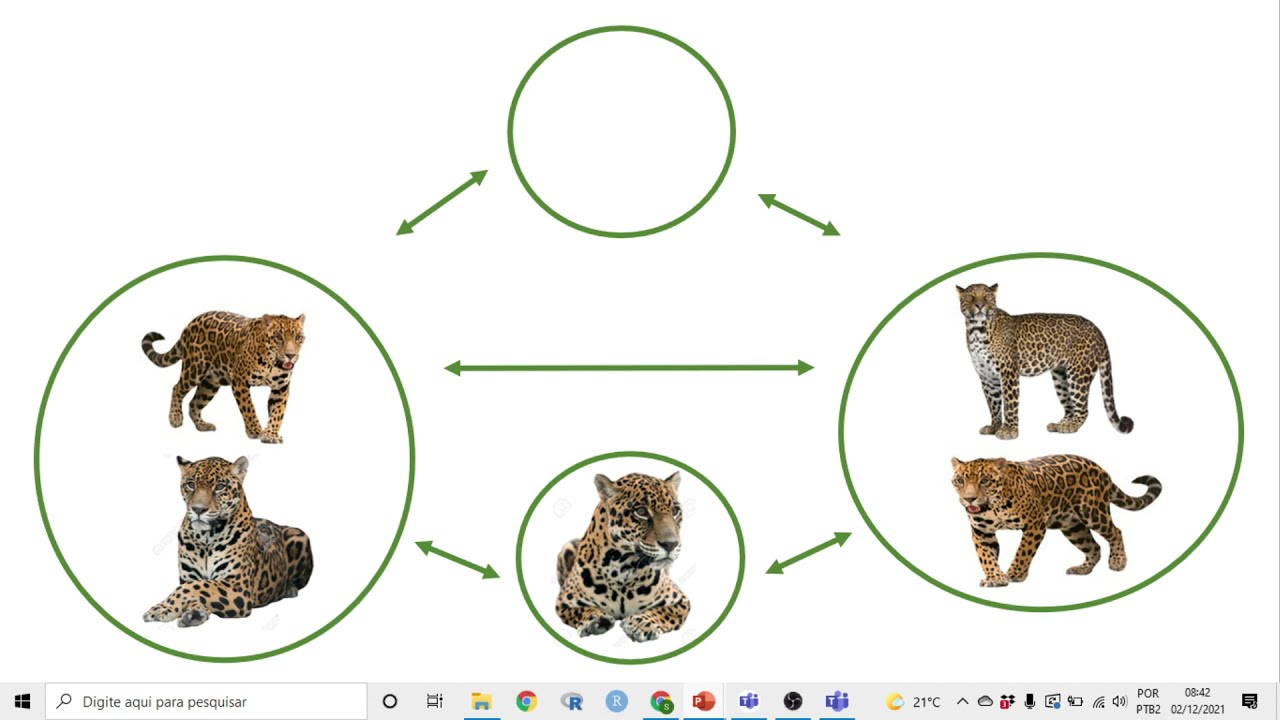
![[BIO] Fluxo Gênico](https://i.ytimg.com/vi_webp/HI8p5MtcdvI/maxresdefault.webp)












Landscape genetics and genomics enable scientists to detect how landscape features influence animal dispersal and gene flow by analyzing patterns of genetic relatedness among individuals across a landscape; subtle landscape barriers like roads, rivers, mountains, and agricultural areas can leave detectable signatures in neutral spatial genetic autocorrelation, allowing researchers to infer landscape connectivity and resistance patterns that might otherwise be invisible, though the effectiveness of genomic data depends on organism mobility and dispersal ability.
Genetic Evidence of Animal Dispersal in Spatial Genomic Data | Landscape Genetics
Added:Fundamentals of population genetics, including concepts like gene flow, genetic drift, and genetic differentiation (such as F-statistics).
Basic understanding of genomic markers, specifically Single Nucleotide Polymorphisms (SNPs) and high-throughput sequencing data.
Core ecological concepts of animal dispersal, migration, and the distinction between active dispersal and passive drift.
An introduction to landscape ecology, specifically how geographic barriers and environmental features influence organism movement.
Advanced spatial modeling techniques, such as Circuit Theory (e.g., Circuitscape) and Least-Cost Path analysis to quantify landscape resistance.
Practical applications in conservation biology, including the design of functional wildlife corridors and managing fragmented populations.
Implementation of specialized bioinformatic workflows and R packages (e.g., 'adegenet', 'gdistance', 'LandGenCourse') for spatial genomic analysis.
Studying the evolutionary impacts of human-induced habitat fragmentation on metapopulation dynamics and localized adaptation.
973 views18likes27:01Original Release: 2015-06-01
you I am going to try and make it a little bit of a story and with that sort of theme here I've entitled the talk reading the landscape and I am going to do just that I'm gonna try and tell you some stories hopefully they'll be backed up with a little bit of inference but for the most part hopefully something that's fairly digestible so I've put on barbed wire here and I think barbed wire is a really nice metaphor for this thing that I'm calling reading the landscape so what I see here is evidence of a dispersal fort it here is a little bit of wool caught on a stray barb and the concept of what I'm going to try and extend to you today is very similar to this can we or how can we use genetic information to read something about the landscape here we're learning perhaps that a fence represents resistance to a poor sheep but we can use genetic information in similar ways to tell us stories about landscapes so the topics I want to start with why and how to read the landscape I'll go through the background related to landscape genetics with an landscape genomics which are these sort of fairly new fields give you some Illustrated fireside stories about how landscape genetics has been used to read the landscape and then ask at the end can or will genomics help in this quest so this to me is an archetypal landscape I've spent a lot of time studying caribou so for this animal it looks like it's flat right there are some trees and there's some rocks and there's some sunshine and there's some clouds the animal the caribou is sort of like the granddaddy of all movers can cross that landscape without any trouble but there's a road on it and well you can ask the wildlife biologist and they'll say I saw that caribou crossing the road the other day but maybe this is how that road actually looks to that caribou or how its experienced by that caribou in terms of its gene flow and it's that kind of signal we're gonna try and read from genetic information now I don't want to give the impression that that road is a barrier because there's a ladder in it so we there is dispersal perhaps across these features but it's harder so what that ladder to me and this cartoon signifies is resistance is a reduction in dispersals across a feature and it's that reduction in dispersal and in gene flow that creates the signal that we try to read next let's pause for a minute and ask why do we care and this is always the ultimate question for me when I'm listening to a talk why should I care about this so really there are two main reasons why we can use these kinds of landscape reading procedures one of them is to understand how we can inhibit the movement of organisms for example pathogens and their hosts if we can understand how the host or the vector experiences that landscape if we know what causes that slows its movement what features might affect it we can then do something perhaps to spread zoonotic diseases invasive species like the zebra mussel if we understand how features are the drainages affect the movement of proper girls we can then also perhaps do something in terms of invasion rabies spread by this raccoon or chronic wasting disease disease of ungulates spread by white-tailed deer again we can ask questions about how a landscape affects the movement of the host in vector so inhibiting movement one of the goals of this kind of work also promoting movement and this is where the conservation kinds of questions come in you know you've got mountain goats or Wolverines how can we make sure they can find each other to mate activity question that can be answered using genetic information the boreal caribou endangered in Canada what how is the landscape affecting it and how can we make sure they can find each other and they're not impacted by a reduction in connectivity in the landscape or bumblebees under climate change can they move north as the temperature warms or this lemur here which has been well studied in Madagascar similar questions have been asked about promoting movement so this is the the archetypal image I have spent a lot of time looking after young kids recently so I like really simple images here to tell simple stories can you imagine a sort of two allele system here you've got the green allele and the red allele and there's no Road in that picture and then the red green allele is obviously fairly rare in this population and then we build the road and this signal might emerge potentially if that road represents reduced gene flow and it's reading you know much more complex terms but reading this kind of pattern on the landscape and relating it in inferential terms to features we see that is the story of landscape genetics so two levels at which we do this kind of reading there's the population level reading which is really the most traditional type you can examine relationships among populations in terms of their genetic similarity and in terms of also their dis distance on the landscape that's could be isolation by distance analyses or you can look and see how the resistance between those populations in other words the presence of that highway does that correlate with the genetic signal so that kind of population level reading and probably quite familiar to most population geneticists or who have dabbled in that kind of thing where I think landscape genetics is really going and needs to go further is to throw out about 50 years of population genetics theory and to think not about populations but to look at spatial autocorrelation in genetic similarity among individuals so what that means is really we see across space are there any aggregations in the similarity of individuals so that's really an individual level reading and that's really what I'm going to focus on here so just briefly to talk about there's two sides of the equation we have the landscape pattern we have to capture that and we've got the genetic pattern we have to capture that so we need both of those pieces I want to talk briefly about the landscape pattern very briefly just to give you an idea of how this is done you usually start with this thing called a resistant surface which describes how much we hypothesize the landscape is going to affect animals and then we do things like least-cost paths to relate for the distance between P and Q so the least-cost path might be a bit tortuous here and I might imply it's harder for genes to flow from P to Q another way is we throw out the whole concept of of linear movement trajectories and understand that the landscape is a series of connected regions we call this approach grains of connectivity that kind of corresponds to this idea that I showed in this cartoon so understanding landscapes a series as connected regions and that work has come out in a series of three papers over the last few years so what I want to talk now is not about capturing landscape pattern but capturing about capturing spatial genetic pattern and this is a paper that we published with Pedro Paris NATO and others in methods in ecology and evolution just last July and the real goal of this is to take a bunch of animal sampled on a landscape this is a simulated landscape those crosses indicate where they are and pull out patterns in their genetic relatedness so I don't know if you can see it very well in this room but these gray gray areas are non habitats in this model the areas that might slow the movement of our animals and these patterns following the simulation emerge where you see clusters of genetic relatedness or Genet signal which we then can relate back to the environment that created it more on that in a minute so how do we this mem gene tool that we developed to do this capturing and describing spatial genetic pattern I uses this thing called Moran's eigen vector maps which really pulls out a series of orthogonal descriptors of potential patterns in spatial autocorrelation so you imagine you have end points then you have n minus 1 possible ways that those points could covary together and you generate these these these hypotheses if you will and then you mind those hypotheses out of the genetic distance matrix so you've got the genetic distances could be any kind of measure relatedness or proportion of shared alleles and you mind those patterns out of that genetic distance matrix which was supported through a forward selection procedure and then you do a final model and from the predicted values of this regression you can pull out what we call the managing variables which are patterns of significant genetic structure so looking at the relationships among individuals and their genetic relationships these are significant spatial patterns in genetic structure so that's really key you've got this massive you know thing called genetic variation but we're homing in on just the spatial piece just the spate the part of that genetic variation that Co varies with space and we can get an r-squared out of that that allows us almost to estimate the degree of pan mix here you have in a population if you have zero r-squared out of this regression you effectively have the animals having no spatial genetic structure but as that r-squared increases you have less pan mixing so I'm going to talk more about this now in a series of vignettes that use real data and that's the thing that used other people's data that kind of nasty you know ecologist it doesn't act or uses other people's genetic data but doesn't actually create it himself and I'm gonna show you all of that here so first before we get to that I just want to back this up with a little very quick individual based simulations falling on following on Sam's individual based simulations here so here's an individual based simulator that I developed specifically for landscape genetics that allows us to simulate potential things in space or in the landscape that might influence movement and gene flow so we have this sort of little radio like structure and the model basically the movement of individuals and their mating is influenced by the shape of that structure so when you run mem gene on this data after you let the animals breed and move around for 30 or 40 or 50 generations you get this kind of pattern emerging so clearly we've got the barrier here and we have three clusters of related individuals emerging and the r-squared associated with that is 13% so that's 13% of the total amount of genetic variation we generated is correlated with space or is explicable significantly by space similar in a different landscape here where we've got a fragmented pattern this might represent habitat fragmentation or mountain valleys for example where these white areas are are the lowland areas in the gray or the higher less hospitable areas so we let animals move and mate in this landscape for 30 generations and we pull out a pattern corresponding with the white areas so resistance of the landscape is influencing their movement they're mating their gene flow and even after all of that we can still identify 3 percent of the total amount of genetic variation and use it to tell a story very small amount so this procedure allows us to take very cryptic spatial patterns within populations and tell stories about it again we have a river here and we see a nice gradient that follows the river bank so now let's talk about some real populations here is me pilfering somebody else's data from Dryad these are some polar bears and I'm not sure how many micro satellites are used here but they're polar bears sampled all across a very large area of Nunavut and what they've used structure which I mean probably have heard of if you do population genetics it's they found K equals 2 which means two populations in this area and well we found the same thing using mem gene at least it works so you know but we also can pull out some other patterns too about what might be happening in terms of gene flow using mg another system here also in northern Canada the Peary caribou it's an endangered species lives up here almost at the our very top of Canada an Ellis mera Ireland island and these are very mountainous very mountainous area the white areas indicate high higher elevations so again we can pick out groups of pure caribou that are associated with lower elevations so topography it's the first of this is really the first type of landscape we're reading here topography is having an impact on the movement and gene flow of these animals and it's a very small amount four percent of the total variation fish now cumberland sound also in northwest in Nunavut here the arctic char kind of go back up and forth from the ocean here to natal ponds and I returned to the ocean to breed and what we're seeing here is a gradient that runs the length of the bay so this implies that the location of the mouth of the river the river is with proximate mouths flowing into the ocean are having closer genetic signal okay bumblebees one of my favorites and an area that I'm moving further into these days this is somebody else's data again and this is of a very small region near Sacramento California this is the yellow footed or black nose doors one of those bumblebees I don't know and so the so lots and can't really see it but there's lots of agricultural activity going on here and this isn't quite a small area for Jin landscape genetics but we're seeing quite a differentiation between these animals at the center of the map and the ones at the bottom bottom here corner and what it could be due to the fact of that this this agricultural landscape is inhospitable for Queens as they move and relocate their nest and they're not seeing a lot of gene flow happening across this area it could be associated with these nasty pesticides were yelling about neonicotinoids and the impacts those are having we haven't really tested that hypothesis but shilling JA here has tested these so I'm just giving you pictures but rest assured behind these pictures is some inference and here's caribou nice animal that I've worked on extensively this is also in the Northwest Territories and here we have the Mackenzie River which is a major drainage so here's the impact now of the major river valleys on gene flow this is if you run structure K equals one this is one continuous population but yet with mem gene we can pull out the nice division that is miraculously associated with the Mackenzie River so clearly there's gene flow happening across this river but there's small enough resistance presented by that River that we can pull it out four percent of the total genetic structure is correlated with it and finally this is the habitat fragmentation story also woodland caribou also in central Canada Saskatchewan not too far from us here and these are woodland caribou that are very very sensitive to habitat fragmentation and other impacts these gray lines on the map indicate where the roads and highways are and this to give you a sense of scale is about 300 kilometers across so we're getting animals here and here separated by a highway with clearly differentiable differentiable genetic structure and we've tested this story in many ways so and just to give you a sense that we are testing it we can pull out the proportion of the genetic structure that is associated with various different hypotheses so to check where I am here in time wise so I just want to close off now my story I've told you this this story about how we can read the landscape and I really haven't gone into too much detail into the genetic part of the equation except to say that it's been there but the largely these studies have used my croissant alight so it's sometimes 10 12 maybe 15 microsatellite low site but the question of will genomics help is an interesting one I mean is it going to be a panacea that will allow us to read that landscape at a finer scale to pick out more interesting more subtle more cryptic signals so to do that I did in preparation for this a series of simulations using the agent-based simulator or the individual base simulator I had talked about earlier and did some of the things that Sam recommended I do and some of the things he recommend I not do but I I ran the combinations of a number of different parameters to see what if if having additional information in the form of information provided by genomics could actually help to the story so I tested a series of vigillo T and landscape pattern treatments so vigillo T implies how much does the animal move across the landscape so we have high agility where these black lines show dispersal trajectories so the animal is just smoking across that barrier feature we ran under and the low fidelity treatment they're not moving very much on the landscape in fact they're not relieved in interacting with the barrier feature so this is again simulations of agility and crossing it with three types of genetic or genomic Streetman so starting with ten micro satellites with ten alleles per locus roughly an average you might find in molecular ecology for these kinds of papers so status quo but what happens if we use the miracle of genomics which by the way I don't really claim to understand very much and please do correct me what happens if we load on some of this additional information that Mason told us about in the form of snips and to kind of resolve us resolve these landscape patterns better so I assumed in two treatments whether we have we had a hundred snips or five hundred snips assuming no linkage disequilibrium so I don't know if this is realistic or not but I don't think it really matters here it's more of a thought experiment effectively these snips are completely independent in my scenario whether they would be independent in reality is a debate so run run these simulations and the question that emerges can we read the landscape can we read a known landscape pattern so we simulate the data with a known resistant structure that's slowing the dispersal and movement of animals and can we yank it back out of the genetic data so this green line here shows us using 10 micro satellites so under a low fidelity treatment well after about 15 generations we're having about a hundred percent success rate at reading our knowns signal using 10 micro satellites and using a hundred or 500 snips and proves the story a tiny bit so having 500 vilely like largely independent snips under low agility cases is a waste of money however under hive agility cases you know here we have 10 micro satellite Lois I and again these simulated animals are just smoking across that barrier so 10 micro satellite Lois I don't do very well we're getting a better 20 send success rate across all generations that means about two out of ten times we're reading the landscape signal correctly if we had a hundred snips we don't do much better if we had five hundred snips well we improve it quite a bit but we're still getting about a 50% success rate so you know you might tell me well you can have more than five hundred snips but maybe you can maybe you can depending on degrees of Independence here but I'm not seeing massive improvements here with but we are getting improvements when we have high agility cases and that's the message of this slide this is sort of a matrix plot that where the area of the squares show the degree of success of that treatment combination so the larger the area of the rectangle and more successful it was overall so you can see ten 100 or 500 under the law of agility treatment doesn't make much difference what you do in terms of genetics or genomics under the hive agility treatment having more information clearly improves things although overall the width of this column indicates we're getting a much lower success rate overall and you get a similar story when you look at this other more complex landscape that's kind of fragmented but the message that I just can't seem to figure out is why microsatellites seem to be doing better in the low case here and I think that's going to need a lot more work to figure that out so just to summarize what are the main messages here when you've got high agility organisms and you want to read the landscape try neutral snips maximize information content but please expect low power with existing methods so this is an ongoing issue in landscape genetics methods really aren't very good but it's still early days so I think there's a lot of room for improvement and methodological improvement is likely a major area to tackle before we start throwing the big guns and low fertility organisms still a bit of an enigma so my concluding slide the message I want you to take home landscape features that resist movement can leave signature patterns in neutral spatial genetic autocorrelation so we can read we've shown this to simulations using real data we can read landscape patterns out of genetic data robust assessments though of how information content the agility and demography of organisms are really important now to suggest the ways forward and I'd like to acknowledge particularly Pedro Paris NATO who developed the mem gene tool with me and then Paul Wilson mission and Marceau who have done a lot of the genetic work with me in the past thank you well I just fun I just like to have fun um I have a great data set for you oh forget on should ask you first have you played within populations to look at fine scale lansky features looking within populations yeah just that sort of that micro scale right so that's basically what we're doing the first slide I showed you with the polar bears that was among populations but everything else I show you ostensibly is within a K equals one structure population so that's the key point here of this tool is to get into that fine scale and toss out the whole 50 years of population genetics theory and try and read these sort of temporary ephemeral patterns in autocorrelation and try and tell ecological stories about it all right so let's thanks Paul again you you
Up Next
24:38
Cell and Tissue Types in Human Histology | Kenhub
@Kenhub
242.9K views•2019-09-30

50:12
Bacterial Communication: Quorum Sensing and Biofilm Formation Explained
@JHUAAP
12.6K views•2011-06-28

5:35
Enteric Nervous System Explained: The Gut's Brain | Neurobiology Lecture
@alumniu6029
438 views•2018-09-12

7:08
Bacteriophages: Earth's Deadliest Killers and Future Antibiotics
@kurzgesagt
34.6M views•2018-05-13
Related Study Plans & Knowledge Roadmaps
Structured learning paths in Biology
biology
RNAi: Biogenesis, RISC & Gene Silencing
01Molecular Biology Foundations: DNA to Protein
02Introduction to RNA Interference (RNAi)
03Molecular Biogenesis of miRNA and siRNA
+ 2 more learning modules
10h5 modules
Explore Roadmap
biology
Mycorrhizae: Signaling, Biophysics & Ecology
01Foundations of Mycorrhizal Symbiosis
02Molecular Signaling and Root Colonization
03Biophysics and Bioenergetics of Nutrient Exchange
+ 1 more learning modules
11h4 modules
Explore Roadmap
biology
Circadian Clocks: TTFL, SCN & Periphery
01Foundations of Molecular Biology & Gene Expression
02Introduction to Chronobiology and Actograms
03The Core TTFL: Molecular Architecture of the Clock
+ 3 more learning modules
14h6 modules
Explore Roadmap
biology
Population Genetics: Math, Drift & Selection
01Genetic & Probability Foundations
02The Hardy-Weinberg Principle and Baseline Models
03Mathematical Modeling of Natural Selection
+ 3 more learning modules
18h6 modules
Explore Roadmap