

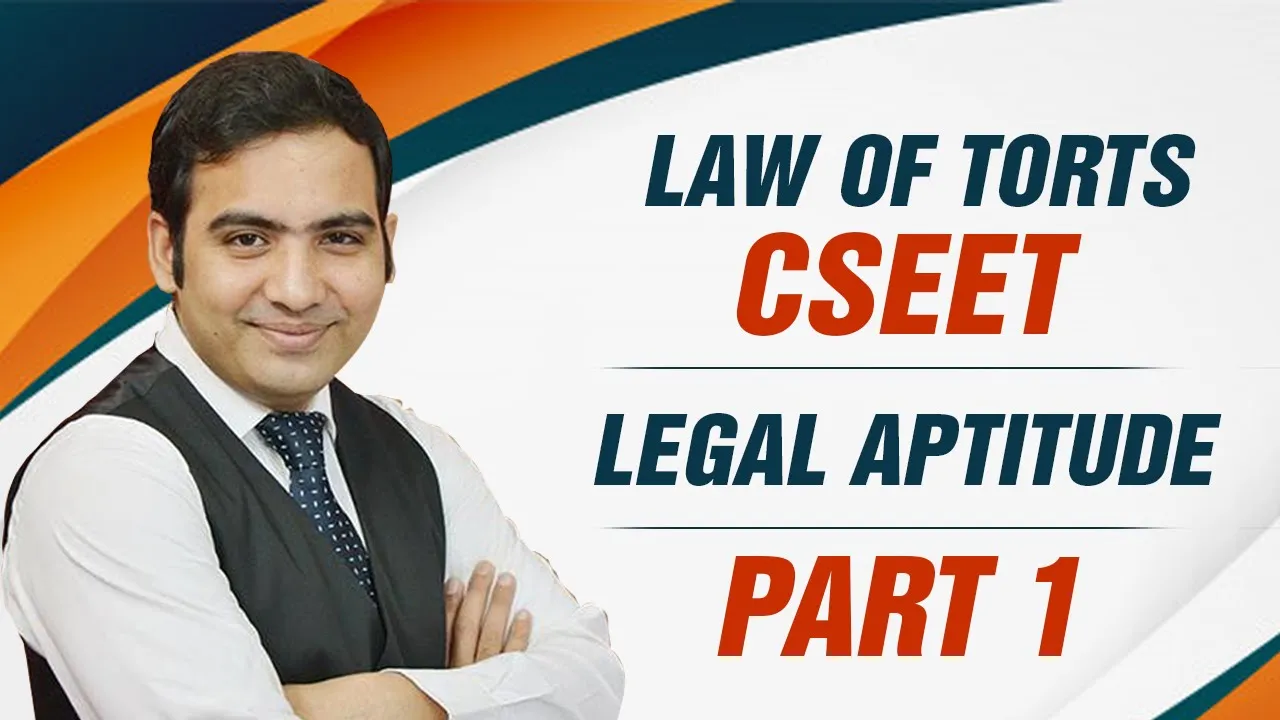







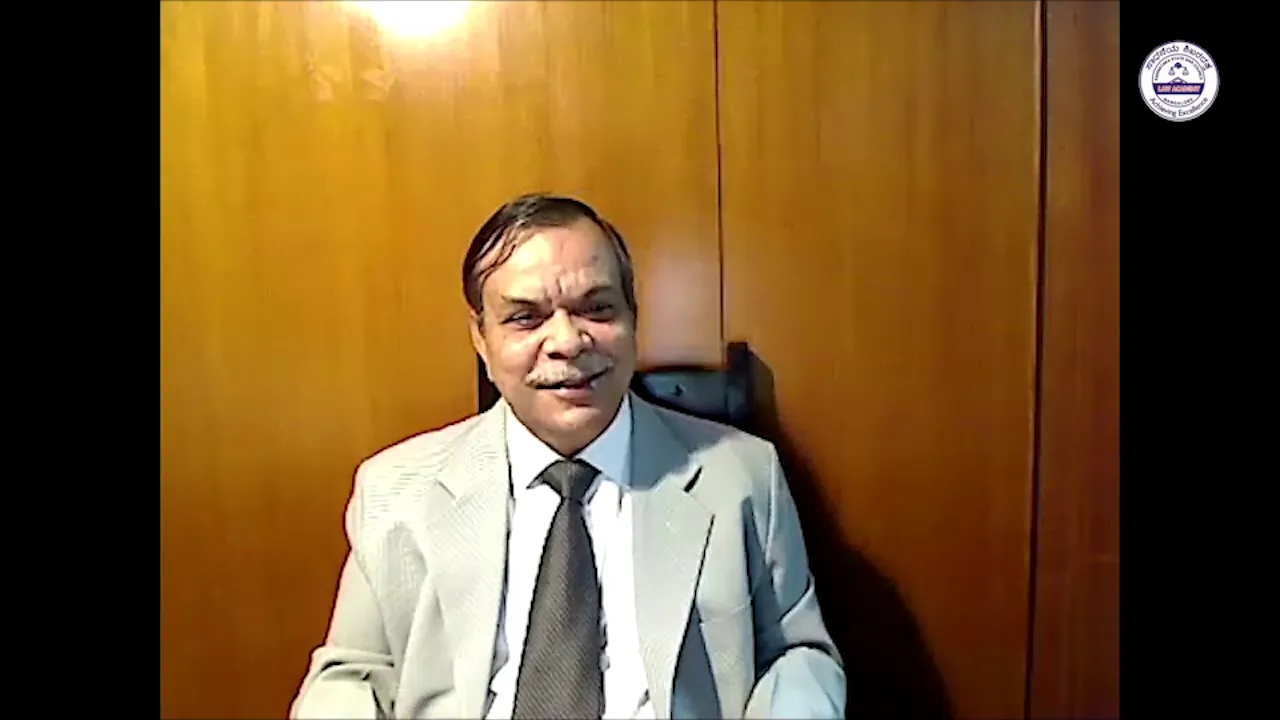









Defamation is an intentional false communication, whether written or spoken, that harms a person's reputation and decreases respect for them. Libel is the permanent written form of defamation (such as in newspapers, books, or cartoons), while slander is the transient oral form addressed to the ear. Defamation is a civil wrong (tort) rather than a criminal offense. Two key defenses exist: justification (when the statement is true in substance and fact) and privilege (when a person stands in a particular relationship to the facts that justifies their communication). Absolute privilege provides complete immunity even if malice is present, while qualified privilege applies to specific privileged occasions.
Defamation, Libel & Slander Explained | Law of Tort
Added:Introduction to Tort Law: Understanding the definition of a civil wrong, liability, and the fundamental distinction between torts and criminal offenses.
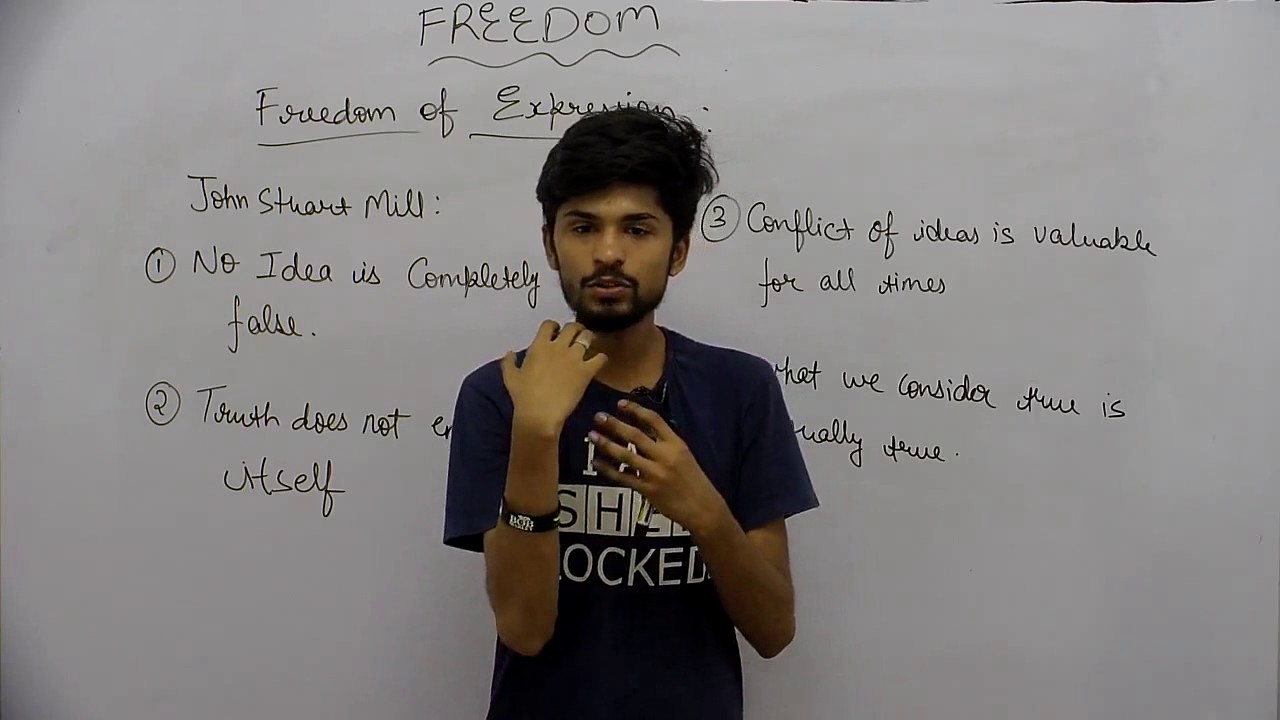
The Principle of Freedom of Expression: Familiarity with constitutional or human rights protections of free speech and how the law balances individual rights with reputation.
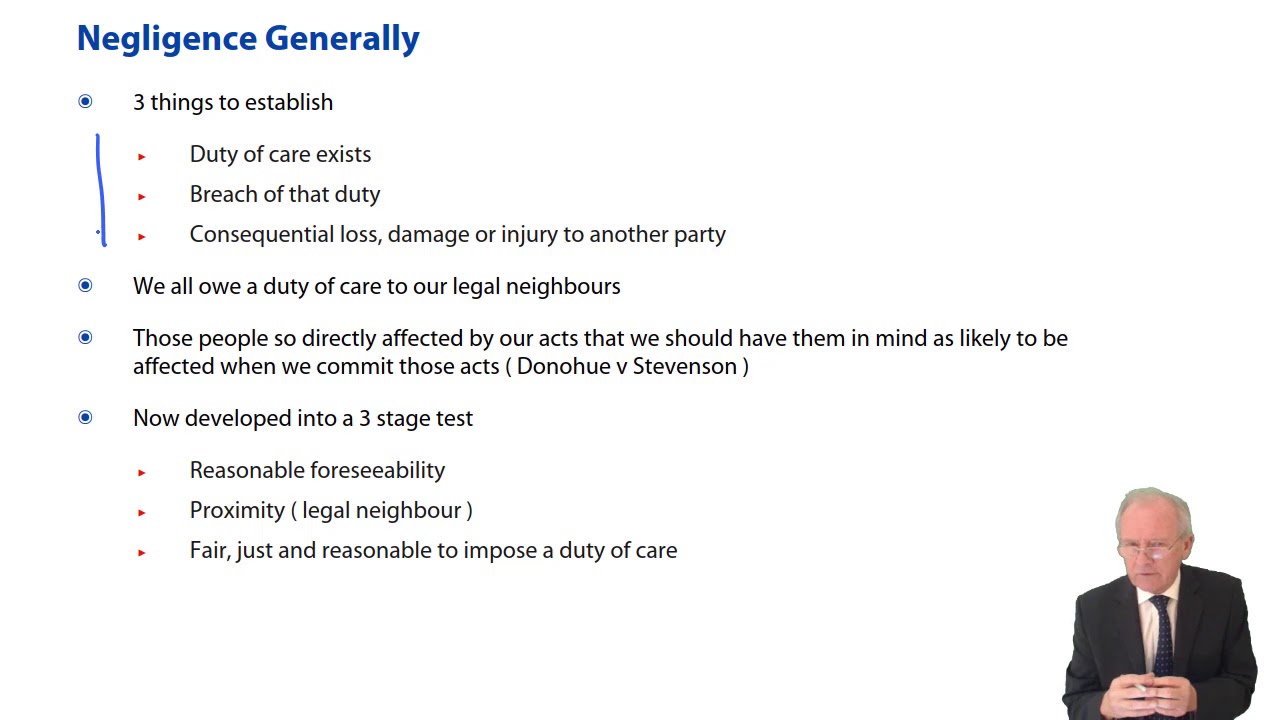
Basic Elements of a Civil Claim: Understanding how a plaintiff establishes a cause of action, including the concepts of duty, breach, harm, and causation.
The Standard of Proof in Civil Litigation: Knowing the difference between the 'balance of probabilities' (or preponderance of evidence) and the criminal standard of 'beyond a reasonable doubt'.
Defamation in the Digital Era: Exploring how internet platforms, social media, and ISPs are treated under cyber defamation laws and intermediary liability.
The Public Figure Doctrine and Actual Malice: Studying how the standard of proof shifts in defamation cases involving public officials or public figures.
Remedies for Defamation: Analyzing civil remedies such as compensatory damages, punitive damages, retraction mandates, and injunctions.
Anti-SLAPP Legislation: Examining legal frameworks designed to prevent Strategic Lawsuits Against Public Participation that attempt to censor or intimidate critics.
626 views16likes17:33Original Release: 2023-02-25
any intention false communication either written or spoken that harms a person's reputations decreases the respect is called defamation so that the difference is learner so um so level is a publication of a fall and defamatory statements the reputation foreign foreign foreign foreign Monsoon versus two south children of boy one QB six uh the exhibitions the exhibitions of a works if easy Works efficiency of a person is [Music] who has been tried for murder and acquitted she says foreign [Music] [Music] [Music] and without lawful excuse all right when it lowers the plaintiff in the strip of others is foreign foreign and the following is a cylinder is actionable Parsi characters number one acquisition of criminal offense or the criminal offenses [Music] must be that the plaintiff was suffering from the disease at the time words were spoken and not in the sometime not in the sometime in the first Earth is um foreign [Music] the turquoise is the ancestry in woman or God or the ancestors are actionable party in England reactionable party foreign [Music] and then cylinder is deformation is an oral transient form she does a transient from coconut form among normally addressed to the ER that is all the permanent form whether exhibited to the eye as in the case of institutes cartoon and the like or only and the like or only to the ears foreign foreign and a criminal offense civil wrong among criminal offense money crime that's all I will do to it one surrender is a civil wrong surrender Civil wrong actionable Parts surrender is of malice the Melissa with this level races is suggestion of malesis as a publisher the actual Publishers of the libel may be an innocent person they published courses more severeign there are three differences available to a defendant in a action for uh defendant number one justification it is a complete defense to an action for libel or Surrender death the words complaint of are true in substances and in fact foreign [Music] the the number of the previous the privileges when a person stands inside the relations to the facts of the cases that he is Justified in saying or writing what would be surrender surrivals in the cases of anyone else when a person stands inside the relations in the cases of anyone else he said to have a privilege and the occasion one who is the Privileges is exercise is known as a privileges Villages occasion the Privileges equation are two kinds privileged occasions absolute privilege amount as a qualified privilege actresses statement a statement is absolute privilege however when no action lies for it even though it is expressed malice foreign [Applause]
Up Next
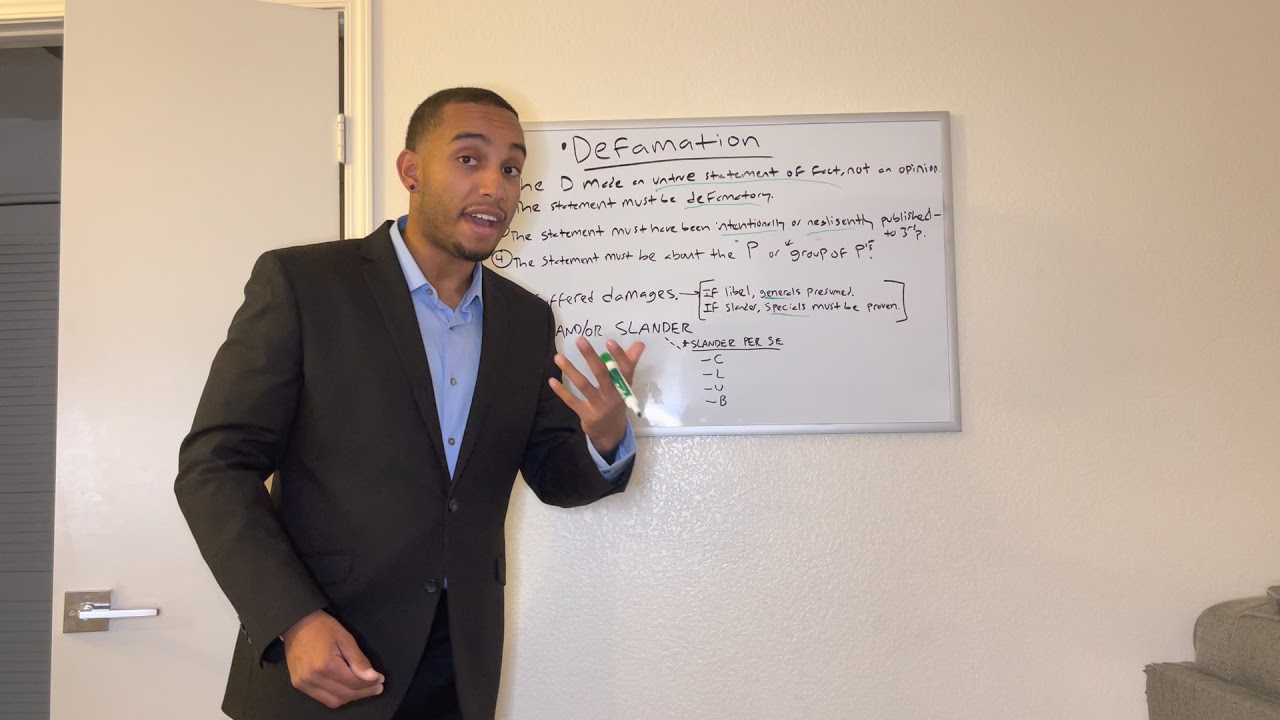
11:31
Defamation Torts Explained: 5 Essential Elements for Law Students
@Attorney-Samuel
6.1K views•2021-02-24

4:27
US Secondary Sanctions Impact on EU Businesses and Blocking Legislation
@Bureauvandijk
1.6K views•2019-03-20
5:27
Forensic Phonetics: Speaker Identification in Legal Cases
@nptel-nociitm9240
539 views•2025-03-19

24:42
Police Interrogation Tactics: False Confessions & Legal Reform
@LastWeekTonight
7M views•2022-04-18
Related Study Plans & Knowledge Roadmaps
Structured learning paths in Law
law
Self-Defense Law: Imminence & Castle Doctrine
01Foundations of Self-Defense Law
02Imminent Threat & Reasonable Belief
03The Principle of Proportionality
+ 3 more learning modules
12h6 modules
Explore Roadmap
law
Defamation Law: First Amendment & Actual Malice
01Introduction to civil torts and the First Amendment
02Elements of Defamation: Libel and Slander
03Public Figures vs. Private Individuals
+ 2 more learning modules
8h5 modules
Explore Roadmap
law
Hearsay Rule: Trial Evidence & Exceptions
01Introduction to Trial Evidence & Courtroom Basics
02Demystifying Hearsay: The Core Definition
03Non-Hearsay: Exclusions Under FRE 801(d)
+ 3 more learning modules
14h6 modules
Explore Roadmap
law
Medical Malpractice: Law, Liability & Care
01Foundations of Tort Law and Civil Liability
02The Four Elements of Medical Malpractice
03Defining and Proving the Standard of Care
+ 2 more learning modules
12h5 modules
Explore Roadmap