
























Defamation requires five elements: (1) an untrue statement of fact, not an opinion; (2) the statement must be defamatory and harm the plaintiff's reputation; (3) the statement must be published to a third person, either intentionally or negligently; (4) the statement must be understood as being about the plaintiff or a group they belong to; and (5) the plaintiff must suffer damages to their reputation. Written defamation (libel) presumes general damages, while spoken defamation (slander) typically requires proving actual damages, except for 'slander per se' categories (crime, disease, unchastity, business misconduct) which presume damages. Public figures must prove 'actual malice' (knowledge of falsity or reckless disregard for truth) rather than mere negligence.
Defamation Torts Explained: 5 Essential Elements for Law Students
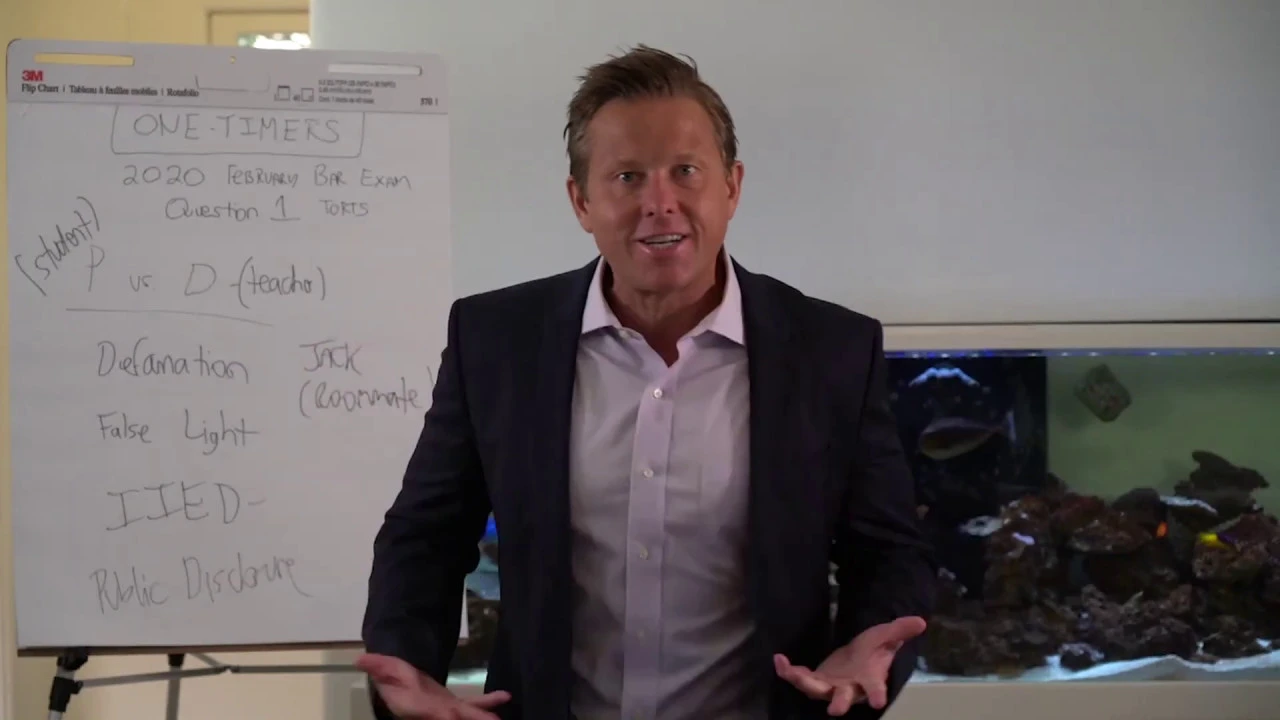
Added:hi everybody i'm back and i'm on whiteboard and markers this time not in my school anymore because of code so this the practices video uh the handwriting might be a little illegible because uh something happened to my right hand and arm so let's work with me here when it comes down to the handwriting okay we're gonna dive into defamation this is a great thing for everyone to know about and also for law students to know about when it comes down to their torch class and people prepping for the bar exam it has five elements we need to focus on and um let's get into it so l number one focuses on the defendant making unsure statement of fact not an opinion was critical an untrue statement of fact not an opinion an example of this is that let's just say that i know a nun named michelle and i go around town telling everyone in town that hey i know michelle slept with five men that is an example of an unsure statement of fact not an opinion if i told everyone that oh michelle is the greatest person in the world i think that she will win the nobel peace prize whatever that is an opinion okay i know a pretty good friend named israel anderson another fair name kevin harris if i say are the great guys that's an opinion a statement that technically is an opinion if i say that there are killers and they kill two men in the open field that is an untrue statement fact so try to distinguish whatever is an opinion and a fact okay so let's get it to element number two they say must be defamatory the key word here is it must be defamatory therefore it must basically lower not only your self-esteem but it also must cause harm to your reputation in the way so like i said if i say kevin is a great man that's not going to harm him if i say kevin is ugly that's not going to harm his reputation that's again that's an opinion but my untrue stigma fact must hurt his reputation it must cause him to have low self-esteem okay if i say he killed two people that's clearly going to cause harm to his reputation and that's also going to lower his own self-esteem so it must be untrue and it must be defamatory okay so over three is um pretty complicated but we can dive into it so to save must be intentional or negligent and it must be published to a third person okay an example this is that let's just say that i'm relaxing in my office and i have a pencil and paper and i write on it that emily and lindsey and susie and cindy have killed james harris i wrote that in my office and then someone walks by peeks into my office and that person reads it that is publication to a third person but that's an example of me doing it negligent publication to a third person because i did not do it intentionally it was pretty much accidental because that person peeked in to my office and happened to see it that's the publication to a third person in a negligent way what's intentional is what we usually know about in society is that basically i'm talking crap behind people's back okay that is an attentional publication to a third person okay example of an essential publication of a person is that let's just say i'm talking to my brother and i tell him that our other brother victory committed a crime malpractice purposely against a patient that is exactly making an intentional publication to a third person my brother against our other brother victory okay remember there's a distinction here and either or will work so it didn't mean to publish it to a third person too bad it will still count it doesn't have to be intentional so let's get into the fourth element the same must be about the plaintiff or group of plaintiffs so let's just say that um i made an untrue statement about kevin like i said earlier that will constitute they must be understood to be about kevin so because i said kevin harris killed two people it's closing about kevin so clear that's about kevin right but if i also say that hey that law firm down the street all those lawyers are crooks and they steal from their uh from their clients that is an example of me um intentionally making an untrue statement fact about a group of people so it must be understood that it's about a group of people as well okay it could be either or a single person or a group but it must be specific enough to basically be a group of people an example of that is a law firm okay an example that is some big business okay let's say i was talking about jeff bezos and his colleagues back at amazon and i said jeff bezos is a thief he doesn't send the products of the people when they pay for it that is an example of me making an intentional untrue statement fact that's defamatory about amazon okay that's a good example here so let's get to the last element here which is very very very critical in your legal analysis when you're thinking about defamation is that the plaintiff must suffer damages to his or her reputation okay damages must be proven here okay but there are some exceptions so it really depends on what the defamatory statement was was it liable or was it slander because if it's libel let's say cnn uh publishes their articles online and it's defamatory it's found to be defamatory and it's found to be about a third person let's say donald trump general damages are presumed if those who not know about general damages general damages means pain and suffering okay special damages is when someone loses their wages okay this is an example of what those these are two kind of uh damages are okay and if it's slander slander is spoken language so if i'm talking to someone else and i make an untrue statement of fact that's defamatory about a third person that is slander so when you verbally say something about somebody voice recordings count as liable written statements like you would see the newspaper is liable okay i kind of tried my best to uh different over here okay so as i said libel is a written saving the fact okay so when you're writing notes to somebody you're a newsletter publisher and you talk a bunch of crap about a third person and there's understanding about that person so slander can be tricky because you have slander per se okay in slander your damage does not have to be proven if it's slander per se and i wrote a mnemonic here you see this club c l u and b club you going to the club dance with your friends no club in this case is crime lonesome disease example eight unchaste basically purely about women about a woman basically about a woman being a basically let's say that someone um who's married to a man is having an affair but it is true right then it's on chest it lasts we have b for business like i said earlier if i'm talking crap i make an untrue statement of fact that that is inflammatory and it's understood to be about that uh group of people let's say that law firm donald trump earlier then that's going to be a business in a slander per se therefore their damages have been proven okay and lastly i want to get into this last part it's pretty brief is that let's just say that i'm talking about a famous person a public figure and what a public figure means under the law is that someone is very well known in society and that person voluntarily put themselves into the public atmosphere to be recognized okay and what needs to be proven in a situation like that with defamation let's say zac efron wants to sue me zac efron hannah montana they want they want to sue me okay my cyrus wants to sue me they have to prove that actual malice actual malice means that not only did i make a reckless regard to the truth i also knew that what i said was false or what i wrote down is false about them and i publish it to a third person okay that's what public figure has to prove they have that very very high standard because of them being so famous rather than being a private citizen okay and there are defenses that can be shown here for defamation which can be consent or truth or absolute privileges or spouse but that'll be discussed in a different video okay so again let's walk through these five elements one more time so again the defendant must have made an untrue statement in fact not depending about the plaintiff okay must be must be a fact it can't be an opinion and this thing must be family for it must be defamatory and it must have been intentionally or negatively published to a third person fourthly the same must be about the plaintiff or group of people there were plaintiffs okay like i said the law firm across the street i'm talking about kevin harris that's a particular person the group i'm talking about over here it's the law from across street because they have multiple people multiple lawyers working for that firm that's why it's considered a group and that's why this is considered business because think about it if you're going to a law firm you're hiring lawyers for their services therefore they are technically a business so they could use slander per se to not prove damages under their claim lastly the plaintiff or cooper plaintiffs must suffer damages okay as i said per se if it's shown if it's proven they don't have to prove their damages however if it's simply slander spoken untrue statements they have to prove their damages but if it's liable like i said cnn posting something on instagram facebook whatever a publication about donald trump whomever doesn't matter general damages are presumed pain is suffering against their reputation is presumed in that case okay so this is defamation and i hope i explained it well and you have any questions comment below thank you so much like i said i'm going to make a video about the fences to this claim so be on the lookout
Up Next

Civil Liberties Explained: Bill of Rights & Key Amendments
@39926
1.3K views•2021-10-14

US Secondary Sanctions Impact on EU Businesses and Blocking Legislation
@Bureauvandijk
1.6K views•2019-03-20

Forensic Phonetics: Speaker Identification in Legal Cases
@nptel-nociitm9240
539 views•2025-03-19

Police Interrogation Tactics: False Confessions & Legal Reform
@LastWeekTonight
7M views•2022-04-18
Related Study Plans & Knowledge Roadmaps
Structured learning paths in Law