


![The BILL of RIGHTS [AP Gov Review Unit 3 Topic 1 (3.1)]](https://i.ytimg.com/vi/R2h8CrX84Eo/maxresdefault.jpg)






![Schenck v. the United States, EXPLAINED [AP Gov Required Supreme Court Cases]](https://i.ytimg.com/vi/xkGs-Dpaf6w/maxresdefault.jpg)




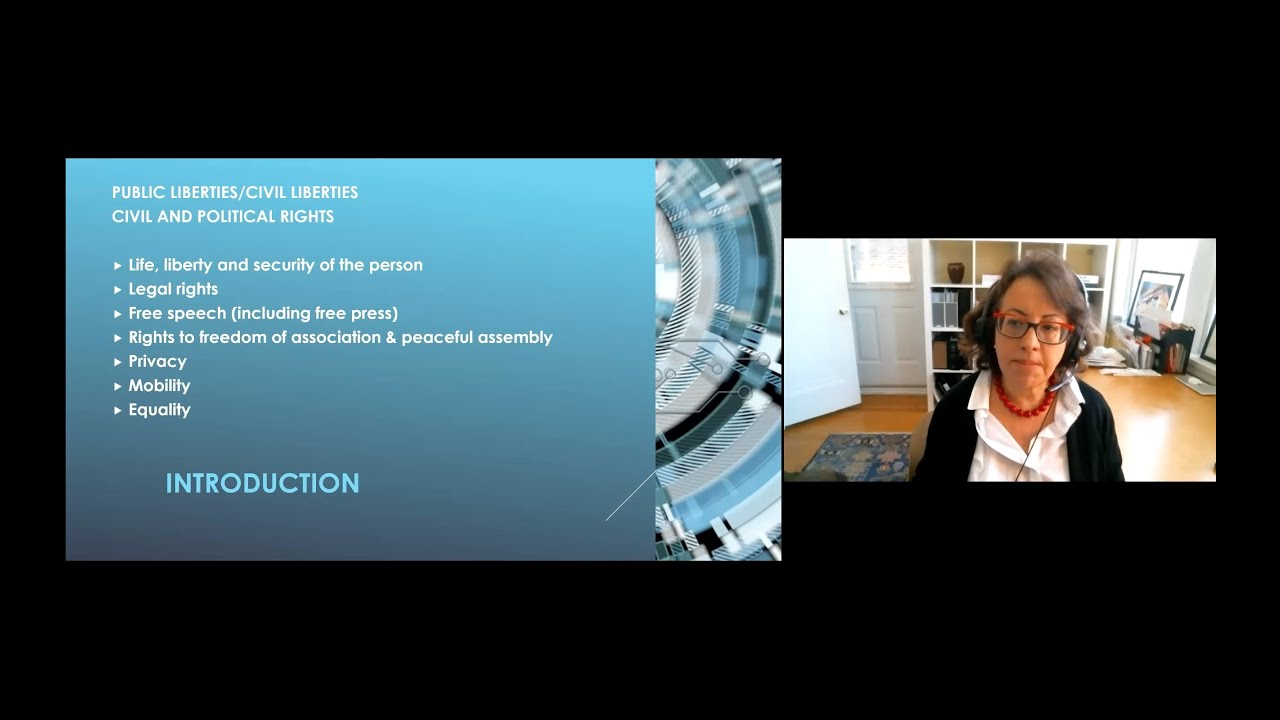

Civil liberties are constitutional protections that restrain government power and protect individual rights, primarily found in the Bill of Rights (first ten amendments). These include freedom of religion (with establishment and free exercise clauses), free speech, free press, assembly, and petition. While broadly agreed upon, civil liberties often generate reasonable disagreement because they involve trade-offs between freedom and order. The Supreme Court has developed tests like the Lemon Test to determine when government actions violate the Establishment Clause, and courts have recognized an implied right to privacy by combining multiple amendments. Due process rights from the Fifth and Sixth Amendments ensure fair legal proceedings, and these protections extend beyond citizens to include non-citizens and prisoners of war.
Civil Liberties Explained: Bill of Rights & Key Amendments
Added:hey everybody we're back at it we have now brought two units to a stirring conclusion hopefully you've been doing okay on the exam so far we are now about halfway through the semester but today is the first day of the rest of your semester and it's easy enough to figure out exactly how we need to improve our performance going forward hopefully you're doing awesome and in the off chance that you got to turn stuff around what you got to do is watch these lectures when i assign them don't wait until before the exam watch it when i assign them it'll be a lot easier to keep up with the class make sure you're taking notes contact me if you have any questions about the stuff i'm presenting here regardless i'm doing the best i can to provide you all the tools that you need to succeed in this class and you need to rise to the occasion by doing everything you can to make sure you're taking your time to understand this material rather than just cramming so please enjoy this conversation i'll let you know it's one of my favorite conversations this semester which is civil liberties don't confuse these with civil rights that's the next chapter i'll contrast the two for you here before long for now uh this is i would say three chapters i've said this before but three chapters are probably more important than all the other chapters uh in this uh in this text chapter one obvious i'm sorry chapter two on the constitution chapter nine on congress very important i would argue the most important chapter of unit three and one of the three most important chapters is chapter four on civil liberties it's important to understand but also uh important to grasp the fact that it causes a lot of reasonable disagreement in our politics so let's go ahead and talk about civil liberties let's start off with the basics okay civil liberties are two things first they restrain the government they restrain the powers of the government second thing is they protect individuals that's what civil liberties are supposed to do they're supposed to protect you and i the individual from the powers of the government the powers of the government now generally speaking we get most of our civil liberties from the bill of rights they almost all come from these first ten amendments um that of course by the way as we talked about in chapter two if it wasn't for these civil liberties we wouldn't have a constitution the constitution was on the verge of failing and not being ratified here in america simply because it lacked a list of individual rights but civil liberties these these um these ten amendments in the bill of rights give us our civil liberties and despite the fact that they are broadly things that we agree on like for instance freedom of speech i'm willing to bet everybody listening to this wants freedom of speech i'm willing to bet we all do despite the fact that we agree broadly on what these civil liberties are we agree that we should have them they're still very controversial because they often pit reasonable desires against each other for instance we talked about this in chapter one we very much desire freedom in our society but the same time we also desire an orderly society a safe society and as we talked about before the more you go towards one end of the equation the more you're leaving the other behind the more for order you are the less freedom you'll have the more freedom you want the less order you're risking so oftentimes we debate like clearly we should have freedom of speech but how free should our speech be well we can end up having pretty intense debates about that despite the fact that you and i both agree that we should have freedom of speech now we'll be getting the freedom of speech eventually now it's worth noting that even though civil liberties are one of the key debates we have with each other in our society oftentimes they're not that controversial in some realms like for instance we all largely agree that there should be a habeas corpus that before the behavior's corpus is latin latin for have a corpse or have a body essentially is what it's saying and this is in the constitution it says i cannot the government cannot have my body in other words the government can't put me in jail or in prison without trying me fairly without putting me on trial and proving that i need to be there habeas corpus even though it looks like it's heavy as abs that's latin for it's lead now on top of that we also largely agree on bill of attender we don't think the government should be in the business of maybe not even throwing you in jail but even punishing you the government shouldn't be in the business of punishing you or fining you without a trial without finding that you have been guilty of something like for instance if the government wants to punish like a serial company by passing a law saying the cereal company i don't know why i'm thinking of cereal i guess because i'm hungry but before they can start punishing people for such and such things they must find that they have been guilty that means we cannot throw you in jail and we cannot punish you in any way in fining you it's unconstitutional for a bill of attainder to happen now on top of that we also largely agree an ex post facto this is latin for after the fact that's what ex post facto means after the fact but this means of course you can't punish somebody for doing something that was legal at the time like for some reason if we legalize well let's actually talk about vaping vaping right now is legal jewels right now are legal and uh if someday like there have been a ton of studies on these things particularly jewels and they find that the jewels are very very bad they're like cigarettes on steroids and so as a result if we ever ban jules but you use a jewel right now while it's legal we can't go we can't arrest you for using it back right now when it's legal but aside from that we have many instances where these civil liberties that we cherish are the subject of really intense debate in our society such as to what extent should we be allowed to burn the flag professor gutterman said that it is legal to burn the flag a lot of people find that activity unacceptable to find out what local residents think we took it to the streets of downtown syracuse so do you think it should be legal or illegal to burn the flood i think it should be illegal and why is that i think that anybody that burns the flag should be in gym do you think it should be illegal it should be illegal yes legal but done in the right way well it's been decided by the supreme court to be legal they have a ceremony a special ceremony during the summer but it's an extremely important taste and it is inflammatory so it's something that it's done it should just should be rarely done if at all and it should be very careful how you do it because it's very inflammatory i'm a veteran and we i don't agree with burning the flag i believe it used to be illegal i might be wrong we did fight for freedom in this country and if we start arresting people for freedom of speech then that's wrong except under certain exceptions like when the flag is worn out tattered and then there's a you have a particular ceremony for burning them all right so you get the idea they are arguing over burning a flag which is a a reasonable thing to argue about clearly we hold the flag in america generally speaking we hold it to be sacred there are there are laws saying that there are certain ways you can't alter the flag like you can't wear the flag as clothing but that seems to run against our first amendment rights of freedom of speech and freedom of expression um should we carve out exceptions in the freedom of speech for that kind of stuff you know reasonable people can disagree and i think all those people that you're listening to are being reasonable just because you disagree with somebody doesn't mean that they're not being reasonable in in the conversation now uh for the record let's walk through some of these civil liberty rights and whenever we talk about civil liberties the stuff that we talk we start with the first amendment rights and actually the very first right mentioned in the very first amendment is freedom of religion and we'll break this down here in just a bit but what freedom of religion generally means it means that our american government is secular it's secular now make sure you understand what secular means secular gets a bad rap people don't fully understand what secular means secular means non-religious the government is supposed to be non-religious that doesn't mean anti-religious right anti-religious means i'm coming for you religion i'm going to take you down but no non-religious simply means we are not going to take a stance on religion we are neutral when it comes to religion that's supposed to be the disposition of the government according to the first amendment now that does lead to the fabled wall between church and state this phrase is not actually in the constitution but it has been the first amendment essentially means there's supposed to be a wall between church and state although in reality it's not really a wall it's it's more of a beaded curtain the government and religion intersect quite a bit they intersect quite a bit like for instance let me give you an example this church let me move my head here i've just set this church on fire okay this church in your neighborhood has been struck by lightning or something and now it's on fire and if you are not religious let's say you're not a christian maybe you're another religion maybe you're a hindi hindu or something and you're standing in your front lawn you see a church burning and you're like man that's really sad you hate to see any building go up you hate to see a church go up in flames that's really sad and then you notice something you notice that a fire department funded by your tax dollars it begins wheeling out a fire truck paid for by your tax dollars staffed by firemen and fire women paid for by your tax dollars they roll down the street to the burning church they hook up a hose to a fire hydrant you pay forward your tax dollars and they use that hose and all these government resources to put out the fire on the land you may be saying to yourself if you're hindu or non-religious or anything and you're standing in the lawn and you're looking at that and you're like wait a minute the government is helping a religious institution by putting out this fire that's a violation of church and state now what do you think is that a violation of church and state now you clearly know the answer is no it's not a violation because we see this stuff happen in our society but let me ask you this question why is it not a violation of church and state now if you're saying to yourself well you know the fire could spread beyond the church grounds and start affecting other homes that aren't religious okay so maybe the fire department should just stand by wait for any fire to cross the property line and hose it off and then wait and just let the religious institution burn i mean do you want to use a government resource to put out a fire at a church guys the answer is of course the fire department will put out the fire at the church because not doing so is anti-religious they'll put out a fire at a church they'll put out a fire at a mosque at a synagogue at you know wherever atheists gather maybe a library wherever it is you pesky atheists have your club meetings so generally speaking it's not that the government has to avoid religion like a plague it just can't treat religion any differently among the religions and of course among everything else in society the government is not anti-religious it's simply non-religious it's simply secular it can't show favoritism but like i said aside from this the government and religion do intersect quite a bit in our society just some examples you don't need to know necessarily like the government giving money to catholic hospitals that happens quite a lot we should know that here in springfield we have a gigantic catholic hospital which is mercy on top of that the government gives money to religious preschools my kid actually goes to one of those kids a creation a wesley methodist here in springfield missouri most religious institutions don't have to pay taxes on their offerings on their donations that they get religious charities are often government subsidized so religion and government do work together on a regular basis it just can't show religion any favoritism and of course it can't show one one religion favoritism among the others which brings us to the actual first amendment itself here it is i don't need you to read it or anything and as always i will never ask you to recite the constitution to me so you don't need to memorize what the constitution actually says but you do need to know what the constitution gives us okay so the very first thing it gives us is freedom of religion and freedom of religion actually has two prongs to it in other words two parts of freedom of religion in the first amendment the first part here's the exact language of the constitution congress shall make no law respecting an establishment of religion what you're reading right now is called the establishment clause that you do need to know that's the first prong of freedom of religion is the establishment clause congress shall make no law respecting an establishment of religion now the establishment clause argues that the government can't endorse or establish an official religion okay there's cra now america demographically is overwhelmingly christian okay i am christian myself but constitutionally we are not a christian country we are a secular country okay with religious people in it there's a big difference there right but the government can't endorse or establish an official religion put more plainly and i like this because it rhymes this is effectively this is very true but this is also very true of the establishment clause the government can't promote or demote one religion from the others one more time the government can't promote or demote one religion from the others okay can't promote or demote one religion from the others like for instance if i am a politician and i propose a christian tax cut if you are a christian in my society you get a tax cut if you are not a christian you have to pay the full taxes that you're owed or something like that what am i doing with that law i am clearly promoting christianity right and as a result that can't be allowed it can't be allowed now on top of that maybe let's demote a religion now right now if you are a christian in my district you have to wear a yellow armband or something to let us know that you're a christian so we can see you coming so we can denote you as a christian citizen now obviously what am i doing with that law i am clearly demoting christianity with that so neither one of those are permissible because you're demoting one religion or in another example i gave you're promoting one religion from the others and you can't do that you need to be treating all these religions the same now those are obvious examples those are obvious those are obvious violations of the establishment clause but this stuff can get complicated in a hurry thanks to you guys who may a lot of you have just gotten out of public school a lot of you have just gotten out of high school here you are some of you are still in high school taking this class but a lot of you are fresh out of high school and here you are taking a class at otc and when you're in high school those a lot of establishment cases can get really complicated when it comes to high schools because high schools are government buildings you know public school is government buildings government's supposed to be uh secular but it houses a lot of religious students and that can get real complicated in a hurry okay like for instance have you ever wondered why it's allowed like when you went when i went to high school i was an fca fellowship of christian athletes okay when you were at uh your high school were you in fca you at least were aware that they existed right why is fca allowed to meet on campus that's a religious organization on campus like it's a high school why are they allowed to meet in on the school grounds that's a religious organization why is the school allowing that and of course the answer is the answer is that the school will allow religious groups to meet it just can't say some religions can meet and other religions can't meet like clearly if i'm a muslim and i want to start fellowship of muslim athletes if there is such a thing i can do that the school's saying you can't use school grounds for fma but you can use it for fca that's a violation of the establishment clause right that's a violation of the establishment clause now what about atheists what if i want to start a fellowship of atheist athletes and the school says no you can't use school grounds for the faa you can use it for fca but not faa have i violated the establishment clause what do you think huh what do you think well the supreme court has weighed in on that and even though atheists will bristle at the idea that atheism is a religion the supreme court says we are going to protect atheism as if it were a religion so yeah if you're saying that you can use school grounds for christian clubs and for muslim clubs but not for atheist clubs you violated the establishment clause okay now those examples i gave you have definitive answers there are other instances where there aren't definitive answers okay let me give you an example if there is of your football team has um senior night which is like their last home game and all the seniors before the game get introduced with their parents and we all get to celebrate them we've known them for several years is the last time we're going to get to see them play here at home it can be emotional and maybe the student body president is at the 50-yard line using a pa system reading into the microphone their names and their parents and we all get the clap for them and celebrate them and it's kind of emotional because this is our senior year is the last time we'll get to see them play what if the student body president interrupts the proceedings and says guys i'm sorry i'm sorry everybody as i'm speaking into a microphone i'm sorry everybody i'm just really emotional right now i just really filled with the spirit can i just can i ask everybody everybody who's here right now bow your head i'm going to say a prayer and i speak into the microphone dear heavenly father we blah blah blah blah have i violated the establishment clause there are reasonable arguments on both sides aren't there one argument i have violated it because i'm using a government event which is a school football game using a government pa system using the microphone to promote my religion to pray to you so clearly i have violated the establishment clause right well i don't know maybe not because at the same time it's not like i planned this or anything like that i'm just a student with my own religion and i'm wanting to share that religion you can blow me off or ignore me i don't know is that establishment or not what do you think okay and we can tinker with that like what if instead of me just doing it in the heat of the moment i was planning to read a prayer the whole time does that eve violate establishment what if i'm not the student body president what if i'm a faculty member what if i'm a teacher what if i'm the principal does that change your equation so you know um that that these establishment cases can get really complicated in a hurry and for the record courts have tried to deal with that by creating a test because it's really hard to know sometimes when things violate the establishment clause so courts have tried to courts have come up with several tests the most influential of these tests even though courts technically don't use it anymore is known as the lemon test and even though like i said they technically don't use it anymore it does inform the tests that they do use so let's talk about the lemon test real quick and once again what we're trying to figure out is have we violated the establishment clause or not have we violated the establishment clause or not so the lemon test actually asks us and it's known as the lemon test because it's named after a supreme court case called lemon v kurtzman you don't need to know that i just want to let you know we're not naming it after the citrus okay anyways the lemon test asks several questions the first question it asks is what's your intent do you have secular intent you have to have secular intent now clearly if i'm advocating for a christian tax cut i am clearly intending to benefit christians therefore i do not have secular intent right and i have violated the establishment clause christians have to wear a yellow armband or christians can meet on campus when you went to when you went to uh high school did you ever do cu at the poll once or twice a year you gather around and you pray around the flagpole and muslims try to do that and you're like you can't do that here not on this school grounds well i'll see at the poll but not you i mean clearly we have the intent to demote islam right if we do that and as a result we don't have secular intent so intent very important what's the intent here sometimes though your intent is okay your intent is okay but you the the effects of what you're doing what we call the primary effect of what you're doing does promote or demote a religion like for instance if there is uh oh let me tell you something because it's actually october right now my family went to a pumpkin patch we got pumpkins we have them out front and then somebody stole them a couple days ago i don't know if they were hungry or whatever maybe kids just trying to make a mess or something but my pumpkins were stolen that's very irritating but let's say that everybody's crap is getting stolen off their front porches across the city of springfield and city council has said that is enough there have been a rash of front porch burglaries you know what we're coming up with a new ordinance here in springfield in this hypothetical the ordinance says if anybody is on your front porch without your permission that police can arrest them now that thing i've just talked about a moment ago that that ordinance i've just created is the is there any you know well is the intent that i have come up with secular of course i'm intending to protect your stuff on your porch but you could say that there's an effect a primary effect that hurts you know mormons and jehovah's witnesses and people that go door to door and and try to evangelize their religions i don't know do you agree that that's the primary effect to promote or demote a religion you know they would certainly argue that you're demoting our religion you didn't intend to but since the primary effect it does that's just as bad as intending to all along so even though my intent is fine i can still run a foul of the establishment clause there's a third question the lemon test asks and that's what we call excessive entanglement are you excessively entangling church and state now the court doesn't really define excessive entanglement so this is kind of just an umbrella term for is church and state getting too close for your comfort now that's a judgment call what might be fine for me might be offensive to you certainly that's the case when we get to speech we'll talk about speech here in a few but these are the three questions that the lemon test asks if you run afoul of any of the three you have violated the establishment clause now like i said courts have largely moved away from the lemon test they embrace other tests such as the neutrality test which has the benefit of being simple we're really just asking one question is the law in question or whatever it is we're arguing about maybe it's not a law maybe it's a presidential action but we're arguing about is whatever it is we're arguing about neutral to religion is the law neutral to religion now the nice thing about that is it's simple but the downside is it's vague and you and i might have completely different notions of what's truly neutral and what's not neutral for instance when you drive through christmas displays on public parks like if you ever go down to ozark missouri and go through like the finley river park they have a gigantic lighting display every chris you should do it it's very pretty if you have kids it's great too kids love it but they have little baby jesus a little lighting display of little baby jesus on a public park but courts have largely found that even though baby jesus is you know is jesus christ literally jesus christ that it serves more of a cultural more of a historical thing than it is a religious thing so it's neutral to religion to have a lighting display of jesus christ as a baby for you know christmas displays on public parks now do you agree with that do you disagree with it i mean is it neutral enough for you we can have disagreements over that anyways like i said the freedom of religion has two prongs to it there are two prongs to the freedom to freedom of religion the first is the establishment clause which we just got done talking about the second this is the actual constitutional language right here the second prong is known as the free exercise clause it is the second prong to freedom of religion the free exercise clause argues that you have a constitutional right to freely exercise your religion and the government can't interfere the government cannot interfere with your free exercise of your religion it can't do that matter of fact in certain circumstances we go above and beyond that the government actually needs to make reasonable accommodations that reasonable accommodations whatever reasonable means but reasonable accommodations to make sure you can practice your religion for instance if you have to be a particularly devout muslim going to a public school if you're particularly devout that means you need to pray a certain number of times throughout the day including what might be during class school districts need to make reasonable accommodations to make sure if you're one of those students that we accommodate you we allow you to excuse yourself for a moment kind of like a bathroom break for some you can excuse yourself for a moment so that you can go in the hallway or somewhere appropriate and say your prayers so the government must not only not interfere with your religion it can actually make reasonable accommodations to make sure that you can practice it freely let me ask you a question though when it comes to free exercise of religion is this right absolute is this right absolute what do you think yes or no go ahead and guess you got a 50 chance the answer is no it's not absolute it's not absolute there's any number of instances where the government can interfere with your free exercise of your religion let me just say that again the government can regulate your free exercise of your religion matter of fact anytime you see the word absolute you should know that that's a red flag and when it comes to government and politics as there's always exceptions to exceptions to exceptions nothing is absolute but anyways is the right of free exercise absolute no because the government can regulate your free exercise of your religion but it needs a compelling reason to do so so the government needs a compelling reason if it's going to crack down on your free exercise of your religion let me give you a couple examples that you don't need to know but you're welcome to jot them down if it helps you for instance if you perform the religious practice that some people do for animal sacrifice the government can we have found it in the supreme court case the government can ban santeria which is animal sacrifice it can ban that because we have a compelling interest in making sure that like little woodland creatures aren't being maimed for no reason or for you know spurious reasons or because we just care about the welfare of animals on top of that use of drugs this is a this is another famous court case from the 60s under what circumstances can you use a drug in a religious ceremony this is uh known that some native american tribes used have used peyote which is a hallucinogen you take it and it gives you a hallucination which is kind of a religious experience for for for some tribes i don't know enough about it my apologies anyway should that be allowed well the supreme court said it's the the government can ban drugs which you use in religious ceremonies if the government wants to it can ban peyote because we have a compelling interest in making sure people stay off drugs right now since that since that ruling like there have been rules carved out since saying that like you can use peyote if it's during a religious ceremony you're a member of the you're a member of the tribe you're a member of the community you know you're on the reservation like i can't just roll on i can't just roll onto a reservation tomorrow and be like let's get religious i can't i'm not allowed to do that you can only use peyote under certain circumstances now on top of that if your religion mandates that you commit terrorism clearly the government can ban terrorism hopefully it does it can ban terrorism even though you think your religion tells you that you need to go out and hurt people that don't follow your religion the government can crack down on that it's not you're not allowed to freely exercise terrorism right or throwing virgins into volcanoes or whatever it is whatever whatever number of like heart religious exercises may involve like harming or killing people obviously all right so that's freedom of religion like i said it's got two prongs the establishment clause free exercise clause know both let's talk about free speech let's talk about free speech we know free speech pretty well i probably don't need to define speech for you because it's what i'm doing right now speaking blah blah blah blah i'm exercising speech now i will let you know that free speech includes more than just what i'm doing right now it includes symbolic gestures um so for instance taking a knee during the national anthem that's i'm not speaking when i do that but it's a symbolic gesture that's constitutionally protected so freedom of speech is what it's called but the courts define it as freedom of expression like wearing the clothes i want to wear you know acting the way i want to act if i want to put my fist up as a show of solidarity with certain communities or if i want to if i want to do an obscene gesture with my body to offend somebody that i'm really mad at that's constitutionally protected you're constitutionally allowed to be a jerk you are allowed to be a jerk constitutionally now on top of that people aren't the only people that have free speech rights businesses have free speech rights organizations have free speech rights even though they don't look like us they don't you know they aren't born and they they don't die they are organizations but they too have free speech rights and interestingly enough money we'll talk about this more in chapter eight but money is a form of free speech the uh the courts have ruled that money is speech when i donate twenty dollars to your cause that's constitutionally protected because i am symbolically saying with my twenty dollars that i like you twenty dollars worth whatever that means to me so there's lots of different shades to free speech perhaps we should know it more broadly as freedom of expression now let me ask you a question here about free speech see that red box looks familiar right let me ask you something is the right to free speech absolute yes or no no of course it's not there are plenty of instances standby there we go there are plenty of instances where speech isn't constitutionally protected let's talk about a few of those instances one of the most obvious ones is the clear and present danger test the clear and present danger test says that any speech that creates a wait for it clear and present danger any speech that creates a clear and present danger is obviously not allowed okay so this is the classic yelling fire in a crowded theater if you're in at the release of the next marvel movie right now again i'm in october of 2021 the eternals is coming out real soon i can't wait to see it hopefully i'll be there on opening night and when i'm there um if in the middle of the movie i think it'd be really fun to yell fire everybody freaks out they start uh trampling each other to get out people get really hurt and they may decide to sue me because i yelled fire i can't stand in the court and be like hey free speech i was just you know fire was in my heart i had to let it out that is not defended because i you know obviously if i yell that just for giggles if there's an actual fire i can yell it but if i'm just yelling it for giggles i'm creating a clear and present danger in addition to the clear and present danger test there's also the imminent lawless action test and as the name suggests i'm advocating for lawless actions i'm inciting a riot or i'm trying to persuade somebody to break the law like you know what you need to do you need to murder such and such and if you actually go out and do it i can be held at least one of the response as one of the responsible parties for the murder i can't go in front of a judge and be like hey this just freedom of speech i was just trying to tell him he should murder him murder somebody i didn't you know that doesn't matter if i am convincing somebody to break the law i'm in trouble on top of that this is interesting but the court the supreme court has said that obscene speech is not constitutionally protected people can ban obscene speech this is really strange though because the courts have long said that obscene speech is not protected but the courts have also refused to tell us what's obscene courts have never ruled that anything is obscene ever and so we just know that obscene speech is not protected theoretically but the courts have never come down and said well that's obscene so to be honest with you while we're aware of what obscenity is we have no actual examples of what would reach the threshold of obscene we just don't know it's never been decided now on top of that hate speech in some context like if i'm standing on a soapbox downtown and i'm like we should take all jewish people and throw them in the river and everybody's like yeah that is constitutionally protected in some places in other places in some states and some communities they crack down on that pretty aggressively i suppose that would be like inciting a riot right let's do more pure hate speech where i'm standing on the soapbox and i'm like all women are evil we should all not like women you know i'm not actually advocating that anybody break a rule i'm just advocating for hate hating women and that's constitutionally protected in some parts of the country some states but other states have like tried to crack down on hate speech and such your freedom of speech is also limited at school you probably know that every time you set foot on a high school campus all your rights just gone you have no rights essentially when you're on a public because we have a compelling interest in making sure that schools are safe right same thing with your job free speech does not protect you to keep your job you can be fired for being mean to a customer you won't be thrown in jail for telling a customer to go jump in a lake uh you won't you'll be fired for that um but uh uh you won't be thrown in jail for it now a sister clause of free speech is free press i say it's a sister clause because really all the same protections you get for free speech the press get okay the press the journalists news publications they get the same free speech protections that you and i get and they're also subject to the same exceptions like they can largely print whatever they want but they can't tell people to like you know go murder these people or they can't you know they can't engage in obscenity whatever that might mean so they're subject to the same protections that you and i get in our speech they're also subject to the same exceptions to that although i will let you know give you just a minute on that i will let you know that there are additional areas where the constitution does not protect the press in ways it does protect you and i you and i get certain protections that the press doesn't and that is in short you and i have the freedom to defame i can defame as a person i can defame anybody i want okay like i can accuse you of being a let's go back to murder shall we i can accuse you of being a murderer i can do that you are a murderer i can defame you as a person as a press outlet though your reach is generally going to be larger than any one person like what's my reach anyways like with social medias my reach like a few hundred people you probably have similar reach if not greater reach on social media as well to say i am not a murderer but if you're a press outlet then you got two things first of all you probably have a larger following than any one person does most people anyways second of all second of all as a news outlet people generally give you the benefit of the doubt that they don't give like average joes like you and me and so cnn can't print a story or report a story saying that you're a murderer unless of course you are a murderer if you're a murderer then they can say that but if they get that wrong if they say you're a murderer and turns out you've never been convicted of murder then you can argue that they've wrongfully hurt your reputation and you can sue them now i can accuse you of being a murderer and be completely wrong but you can't sue me for that i'm allowed to do that i'm allowed to defame you but the media isn't allowed to defame you now they can defame you in a couple different ways like obviously they can defame you by reporting it you know by broadcasting it on radio on tv if i make a false statement that's what slander is that's when i'm broadcasting on a tv broadcasting on a podcast saying it in a movie i'm slandering you through i'm defaming you through slander now i can also print it on my blog on my news site in a newspaper in a magazine that's libel i can defame you via libel so slander is when we're saying it and broadcasting it libel is when we're printing it or when we're writing it now i just want to stress that you and i have the freedom to defame we can deframe individually but news media outlets are not allowed to do that we'll talk about that more in chapter six now you might be wondering if they're reporting a whole bunch of stuff that's clearly wrong about celebrities like how do tabloids get away with it how are tabloids allowed to report stuff that is uh how are tabloids allowed to you know promote ridiculous stories about celebrities that aren't true well you and i if cnn accuses you or me of murder and we have not been convicted of murdering anybody we can just sue them straight up it doesn't matter what cnn intended cnn got a bad fact about us that hurts us in our lives it could be hard for me to get jobs if when every time every time somebody googles my name andrew crocker the murderer shows up from cnn.com right so all we have to prove is that cnn got it wrong but it's different for public figures public figures must prove first of all that what the news media outlet printed was wrong but they also must prove that there was actual malice meaning the media intended to get this stuff wrong to defame and hurt them so that's one of the reasons why you and i have greater leeway to sue outlets than like brad pitt brad pitt can't really sue an outlet for getting a fact wrong unless he can also prove they intended to get it wrong that's hard to prove how do you prove intent intent is what's going on in someone's head like in order to prove intent like if i i the editor will have to write an email saying oh man we should print this it's not true at all and it's really going to screw with brad pitt i have to print the email out and like leave it on a park bench somewhere for brad pitt himself to find okay that's how hard it is to prove actual malice so for the most part public figures have a real rough go of it trying to prove this stuff but private individuals we can sue very easily just in terms of them getting stuff wrong about us that hurts our reputation there are other first amendment rights that i will buzz through because i don't care about them as far as this class is concerned and i won't ask you about them you do have the right to peaceably assemble you also have the right to petition the government even though there's no real petitioning mechanism you can petition the state government and you can actually change state law and state constitution through that here in missouri but federally there's no real option there used to be a website like petitions.whitehouse.gov it's a fascinating website i hope they bring it back but right now it's defunct if you click on that website it'll just take you to whitehouse.gov there's no real petitioning process for the federal government anymore not that there ever was in the first place you could do it on the state level though all right so let's graduate from the first amendment and move on to the second amendment let's talk about the second amendment shall we which is of course the right to bear arms now the second amendment is a tricky amendment to understand if you're just reading it on paper once again i'm not asking you to know the language of the second amendment but here is the entire second amendment right here let me read it to you it says a well-regulated militia being necessary to the security of a free state the right of the people to keep and bear arms shall not be infringed that sentence is mayhem what is it giving us is it giving us individuals the right to bear arms if so why is it talking about a well-regulated militia can i only bear an arm if i'm in a militia a well-regulated militia whatever that is well if that's the case then why is it saying the right of the people to keep involved who gets to bear arms here okay it's hard to tell when you read the second amendment with our 21st century brains but the second amendment makes more sense if you think of it from the terms of the 1700 brains okay so let's think about it from the 1700s now in the 1700s we talked about this in chapter 2 a militia was really just the town's people every town kind of had their own impromptu militia if there was a threat to the town for some reason paul revere of some paul revere type person would ride through saying bad guys are coming and everybody in town every man in town anyways maybe a couple enterprising women would grab their muskets and their pitchforks meet at the town square and say okay who we shooting at who we shooting at that right there is a militia it's not particularly well regulated but that's how it worked in the 1700s and so when you think about it that way the second amendment finally seems to make sense it says a well-regulated militia is necessary to the security of a free state so the right of the people to keep and bear arms shall not be infringed see it makes sense from the 1700s because really the people and militias were one in the same now that's not how it is that's not how it is uh this is it today but of course in the 1700s we didn't want the standing military we talked that a little talked about that a little bit in chapter two so instead we just allowed communities to have their own militias um now that's not how it is in the 21st century in the 21st century the people and our like police departments and our military and our national guard are very much not the same entities but the second amendment has evolved for these modern times the supreme court has found that this now means that individuals can bear arms you don't need to be in a militia that first part of the amendment according to supreme court is just fluff the important part is everything after the comma now guys allow me to again ask you our million dollar question here stand by there we go let me ask you our million dollar question about the second amendment is this right absolute is the second amendment an absolute right the answer is of course not no rights are absolute anytime you see the word absolute you should say no nothing can be absolute in american government and politics heck no matter of fact gun control is perfectly constitutional or as i say here not unconstitutional which is a double negative but gun control is perfectly constitutional there have been several gun reforms gun control reforms we have passed over the years that have been accepted by the court system including banning certain guns like assault weapons there was a federal ban on that for a decade or so at the turn of the century on top of that we can mandate background checks we can do that we can also you know certain felons can't own firearms i don't need you to know these examples but i do need you to know that gun control is constitutional it is constitutional although sometimes gun control may go too far and the supreme court says that certain gun control is too aggressive and infringes on the second amendment too much like for instance washington dc once passed a handgun ban and the supreme court said no that comes too close too close to violating the second amendment unlike these other ones now there are other amendments in the bill of rights but if i could take a step back and we can talk about one of the most important conversations from chapter four and that's the right to privacy because the right to privacy encompasses some of these other amendments that we need to familiarize ourselves with let me ask you a question right now where in the constitution is the words right to privacy which amendment talks about the right to privacy the correct answer those words do not exist in the constitution okay there is no right to privacy word for word in the constitution and yet we assume that we have it courts tell us that the constitution gives us the right to privacy polls show that americans believe they have a right to privacy laws are written assuming the right to privacy exists well it's not in the constitution word for word so where do we get it we get the right to privacy by combining a bunch of other amendments and using their implications to create the right to privacy let's walk through it now we have already talked some about the first amendment and the first amendment gives us several things relevant to this conversation though it gives us freedom of religion now courts have said the freedom of religion implies it implies that i have the freedom to keep my beliefs to myself and i don't have to share them with the government that implication creates what the supreme court says is privacy of belief privacy of belief the first amendment gives us freedom of religion and that implies that i don't have to tell the government what i believe which implies we have privacy of belief now i suppose we could talk about the second amendment here but the supreme court actually jumps the second amendment in this conversation the second amendment is not used to justify or create the right to privacy instead we jump the second amendment and we go to the third amendment and the third amendment says you don't have to house soldiers in your home in a time of peace now that was important in the 1700s that was a big sticking point we had one thing we really really hated about the british military but it's not really a big deal in the 21st century like that's almost never going to happen where the government needs to use your house but anyways you don't have to though you don't have to house soldiers in your home and the supreme court says this implies that my home is my castle i don't have to open up my home to the government i have what the supreme court describes as privacy of home third amendment says i don't have to house soldiers in my home that implies i don't have to open up my home to the government that implies a privacy of home now the fourth amendment actually gives us several things but pertinent to this conversation the fourth amendment also gives us in the fourth amendment you have protection against unreasonable searches and seizures now what counts as unreasonable there's like a million court cases and nobody agrees what's reasonable what's unreasonable but regardless the government the the implication here is that the government can't take your stuff the stuff that you have on your person like in your pockets or in your purse or in your book bag or in your car the government can't just look into that for no reason there needs to be a reason to do so that implies i don't have to subject myself to the government which implies a privacy of person also the privacy of possessions as well but we'll just call it privacy of person so you see what we're doing here bit by bit we're using the these amendments to kind of cobble together a bubble of privacy in our life and it continues with the fifth amendment fifth amendment gives us several things most pertinent to this conversation though i can plead the fifth i don't have to testify against myself in court if that's the case that clearly implies that i don't have to tell the government what i know and that implies according to the supreme court a privacy of knowledge and so that's what we're doing here guys we are cobbling together several aspects of several amendments to create a bubble of privacy around our in our lives the things i know the things i believe okay what i have on my person where i live you cobble these amendments together and you create all altogether an implied right to privacy according to the supreme court now you might be saying to yourself well hold on a second it seems like what you're doing is you're cherry picking the constitution taking little nuggets here or there bundling to bundling them together to create a right that wasn't there in the first place to which i respond that's exactly what i'm doing you are very perceptive my right to do that is actually in the ninth amendment the ninth amendment is not well known but the ninth amendment is really the reason we have the right to privacy make sure you know the ninth amendment here's the actual language of it once again you don't need to know actual language the ninth amendment says the enumeration in the constitution of certain rights shall not be denied i'm sorry let me say that again the enumeration in the constitution of certain rights shall not be construed to deny or disparage others retained by the people and if that doesn't make a ton of sense to you let's put that in regular english okay let's put that in regular english rights that you don't see in the constitution can still exist rights that you don't specifically see can still exist like a mountain in the fog you might not see it but you know don't fly a plane through it because it's absolutely there a right you don't see can still exist and that's where we get the right to privacy really the ninth amendment does open a lot of conversation i mean it does open a little bit of a pandora's box where we as a society argue over and over again do you have a right to this do you have a right to that i mean it's not in the constitution but it doesn't need to specifically be listed in the constitution well now we're just having courts trying to figure this out it's it's very difficult sometimes to figure out where your rights begin and where they end right but regardless this is where we get the right to privacy we get it from that first amendment third fourth fifth right in the the aspects there and we also get it from the ninth amendment which ties it all together and says if these rights are clearly there then even though they're not listed in the constitution they can still exist all right really one last thing i want to cover here in this chapter i said it's a difficult conversation right to privacy it's hard to figure out right to privacy to what exactly like we we argue all the time what things should be private should your internet search browser be private or can the government access it if it needs to under certain circumstances or under any circumstance there have been obviously the reason we have abortion a legal constitutional abortion here in america that's what roe v wade did roe v wade said abortion is a medical decision that a woman makes with her doctor it falls under the realm of privacy and the government can't get involved all right so one last thing i want to talk about in this chapter is what we call due process due process comes from two different amendments the fifth amendment which we'll talk about right now this is what the fifth amendment looks like dramatized you get to use the fifth amendment to protect you from the powers of the government so it can't throw you in jail for any reason whatsoever here's the actual language of the fifth amendment let's just focus on some specifics from it okay because it gives us a lot of stuff one of the things it gives us is due process i cannot be deprived of my life meaning i can't be executed i can't be thrown in jail i can't have my property confiscated without due process without some degree of a trial some sort of a trial now i have a right to a grand jury if i go on trial um if i have gone on trial once for a some sort let me move over here if i have gone on trial once for some sort of uh for some sort of alleged crime i can't be tried for it a second time if they found me innocent before but like later maybe they stumble across new evidence and maybe they have a case against me too bad you have already acquitted me meaning you haven't found me guilty for it once you can't try me a second time on top of that of course you can plead the fifth which means you don't have to testify against yourself we get all of this from the fifth amendment get a couple other things as well as you might be able to read right here now on top of that there's also the sixth amendment now the fifth amendment is very concerned with protecting you from the powers of government the sixth amendment is very concerned in making sure that if you go on trial that there are rules that everybody has to follow that's kind of what the sixth amendment is really concerned about here's the actual language of the sixth amendment you're free to read it if you want but let's go through a list of some of the things the sixth amendment gives us one thing it gives you is a speedy public trial you can't be tried in secret except under extreme circumstances you can't be tried in secret you got to be tried in public every person who is in prison right now you can go and find the the reason why the courts threw them in jail it's public information you're also entitled to a speedy case now speedy i'm putting that in quotes because the constitution does say a speedy trial right here actually actually i can't right in here i can't step over the image no matter how much i'd like to but are courts ever speedy not really not really but you know as speedy as is reasonable considering the circumstances on top of that you also have you also can compel an attorney you can hire your own attorney and if you can't afford an attorney the government can provide one to you on top of that you also have the right to an impartial jury not only do you have a right to a grand jury you have a right to an impartial jury of your peers that sometimes creates consternation and problems on top of that you get to know who your accusers are you get to know what charges and evidence is being used against you and if you need somebody to testify on your behalf you can compel them you can force them to come and show up so the sixth amendment particularly obsessed with making sure that everything kind of goes by a fair set of rules all right the last i so you know these rights can get very complicated especially when it comes to juries that stuff is ends up in front of the supreme court all the time and who should these rights appeal to should they be for american citizens only should they also be for immigrants what about people like pows people we've caught in war prisoners of war maybe in guantanamo is not even on u.s soil so if you're not american and you've been captured by the u.s military and you're not even held on american soil should you have these same fifth and sixth amendment rights that american citizens enjoy and the supreme court scotus supreme court of the united states has ruled that yes they too have access to habeas corpus you cannot have their body have their corpse you cannot have their body and and deprive them of life liberty and you know property without due process as well guys that brings us to a close this is a big big chapter full of complicated stuff i hope you are able to track along okay if you feel like you need better explanations on some things or if you have any questions about anything i've presented please reach out to me i i again i really want to stress to you that you watch these as we present them and you come to me when you have questions and not wait until the day before the exam best of luck in your preparations and i'll see you next time
Up Next

Understanding Section 230: The Law That Shaped the Internet
@vlogbrothers
141.3K views•2023-03-03

US Secondary Sanctions Impact on EU Businesses and Blocking Legislation
@Bureauvandijk
1.6K views•2019-03-20

Forensic Phonetics: Speaker Identification in Legal Cases
@nptel-nociitm9240
539 views•2025-03-19

Police Interrogation Tactics: False Confessions & Legal Reform
@LastWeekTonight
7M views•2022-04-18
Related Study Plans & Knowledge Roadmaps
Structured learning paths in Law