




















Forensic pathologists analyze sharp force injuries by correlating wound characteristics with knife class characteristics: blade length corresponds to wound depth, blade width corresponds to wound length on the body surface, and blade thickness corresponds to wound width. The appearance of wound ends (sharp or blunt) helps differentiate single-edged from double-edged knives, though complex wounds with twisting or rocking motion create variability that complicates weapon identification. Skin elasticity and the compressibility of body tissues (like the abdomen) can distort wound measurements, requiring forensic pathologists to approximate wounds and select simple penetration wounds for accurate weapon analysis.
Forensic Pathology: Knife Wound Analysis in OJ Simpson Trial
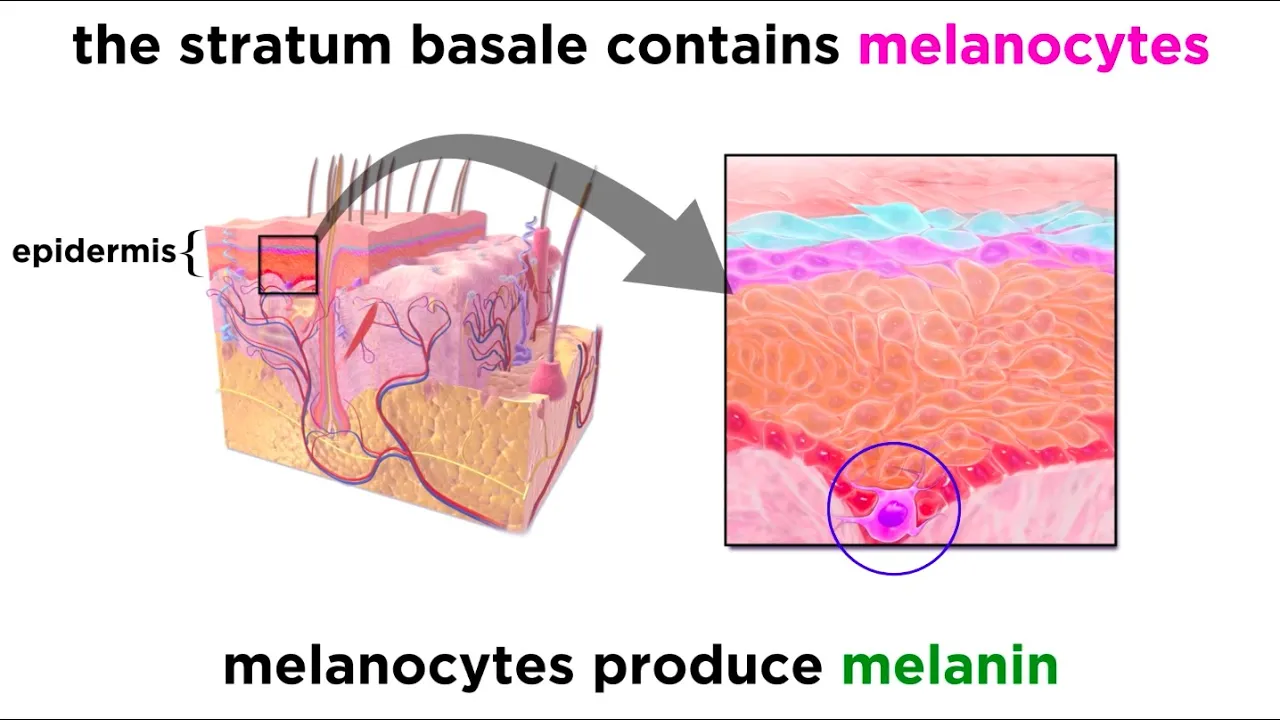
Added:Basic human anatomy and integumentary system structure, including skin layers, underlying tissues, and major blood vessels.
The fundamental distinction in forensic science between class characteristics (group-identifying features) and individual characteristics (unique source-identifying features).
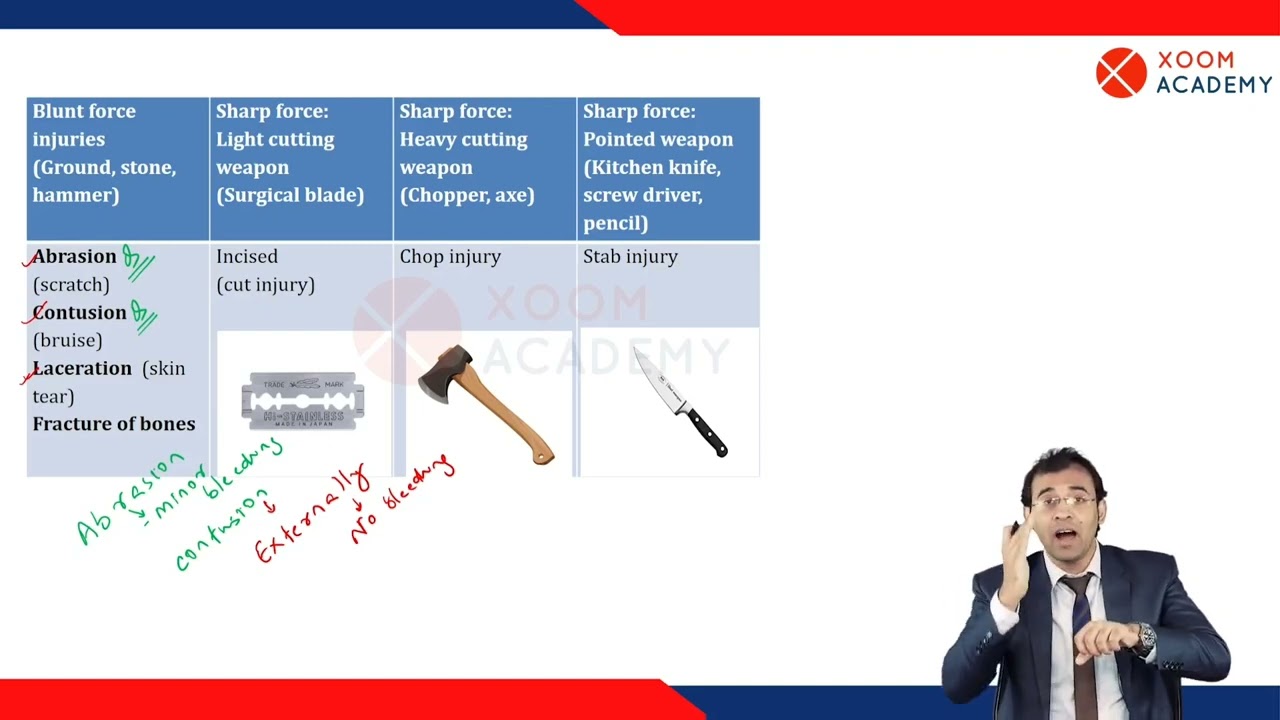
Introductory terminology of physical trauma, specifically the medical difference between sharp force injuries (incisions and stabs) and blunt force injuries (lacerations and contusions).
The general role and methodology of a forensic pathologist during a medicolegal autopsy and death investigation.
Advanced toolmark analysis, focusing on how microscopic imperfections on a specific blade can be compared to marks left on cartilage or bone.
Wound path reconstruction and biomechanics, which analyze the force, angle, and direction of a blow to determine the physical dynamics of an assault.
The pathology of defense wounds, exploring how injuries to the hands and arms help reconstruct a victim's active resistance during a violent encounter.
The critical analysis of expert medical testimony in high-profile criminal trials, including how forensic pathology reports are cross-examined by legal counsel.
11.8K views40likes2:03:54Original Release: 2016-09-16
mean the arms I mean the hands and the feet and the legs and the arms and in cases involving uh stab wounds or the use of a knife to inflict injuries is defensive wounds something or are defensive wounds the kind of thing that as a forensic pathologist you are looking for yes and on a form like 23 Is this where you would expect them to be diagrammed at least with respect to the hands yes Mr ferlo the next one and what is this type of diagram of 22 to be used for this diagram is used to document injuries in the head and neck area okay and would that include stab wounds it would includes any type of injury one may see on a person the next one Mr ferlo again doctor is this form 21 to be used in the course of the autopsy yes this is uh a side view of the body we use this diagram because this gives you a better view of the flank area which I demonstrated earlier and the next one Mr ferlo at form 28 what does this show Doctor this shows the skull cavity after the skull cap has been removed as we see it in the autopsy room and the next one a form 27 this is a diagram which shows the uh skeletal system with an outline of the body around it to document any fractures or injuries uh penetrating injuries through the rib cage or bony cage it is a good form to diagrammatically represent what you want to uh demonstrate doctor going back briefly to form 28 you've already identified from form 29 the brain form this issue of no injuries what you identified on June 22nd as this contusion to the cereal cortex of Nicole Brown Simpson's brain tissue would you expect that to be diagrammed on this form and not the brain contusion the brain contusion is diagrammed only in the brain diagram and on this form if there is any kind of sharp force injury to the skull Like a Knife striking the skull uh would you expect that this would be the form where it would be diagram yes I think we're done with those forms and may I just collect those from Dr doctor I want to get into a discussion now of sharp force injuries so we'll have have a little more detailed understanding of that let's start off with first just your definition of sharp force injuries the sharp force injury is one which is caused by a sharp instrument uh there could be stab wounds or iniz wounds and the sharp instrument could vary anywhere from a knife to a broken glass uh or a open scissor which could be each blade of the scissor acting like a knife I just gave you a few examples your honor I have a board which I asked to be marked as exhibit 331 and I'm not certain where is the best place Mr ferlo is our expert on this I with that location right there be appropriate if it's good for the jury the court and defense counsel well I think we need to turn it so it's parallel fine and Mr and the doctor need to be able to see it too I think we need it back some oh he may have to step to the board and also Mr fer has the uh capability and I'd ask that he put this particular uh exhibit 331 which is our page 140 Mr Car Doctor just in general terms what are we looking at on this uh diagram what thises you're going to have to keep your voice up too doctor so maybe can we swing this microphone um I think he's just going to have to shout from there that's not going to work what we're trying to show here is the correlation between the knife and wound Dimensions uh the example here is a single edge knife the the reason is the description of the injuries on the body uh correlate with certain class characteristics of a weapon the length of the blade usually corresponds to the the depth of the stab wound in the body the width of the blade corresponds to the length of the wound on the body surface the thickness of the blade corresponds to the width of the wound on the body surface so I'll show you another diagram which explains this further all right dror this uh title uh for this particular exhibit includes single-edged knife which you define earlier is this in fact a depiction of a single-edged knife yes because you can see that uh this Edge is blunt uh you can see the blunt edge here of the knife that is this Edge will not be sharp in contrast to the other Edge which would be the sharp cutting edge of this knife doctor in your training as a forensic pathologist are you taught about class characteristics of knives yes are you taught about how you look at class characteristics of knives for the purpose of seeking to identify from the wounds to the body the kind of knife that may be responsible for the wounds yes we look at the wounds we look for simple penetrating wounds which will help us to give some estimate as to a class characteristic for knife and class characteristic means the length of the blade the width and the thickness of the blade doct do single-edged knives come in all different uh dimensions of thickness width and length yes they do your honor I have a series of knives yes that's true I'm sorry I didn't hear Mr Shapiro yes with the court pter please e e e e e e e e all right Mr kelberg you may proceed thank you was about Tok exibit uh I have a knife that has the uh inscription Grand Chef sabator not in the uh Sinister sense sa a b a t i e r I'd ask that this and its sheath be marked as exhibit 332 all right 332 I have what appears to be a knife with a black handle and the word forcher f o r s c h n e e r and a number 81-73 3 333 I have what appears to be another uh knife this with a brown wooden handle forer and the number 45-6 as 334 so marked and finally a uh knife that is has a black handle and the words black panther solingen s o l i n g n Germany may this and its sheath minus the price tag I hope you're honor yes be marked as exhibit 335 Mark doctor first of all you've had a chance to look at these knives before is that correct yes and the purpose of these knives is to give the jury an understanding of the differences in class characteristics of knives is that correct yes there is no representation made that any one of these knives is in any way connected to any of the injuries sustained by either Nicole Brown Simpson or Ronald Goldman is that correct yes all right L ladies and gentlemen I'm allowing the use of these knives solely for demonstrative purposes to display to you different types of knives all right just for illustr illustrative purposes thank you your honor now doctor and perhaps you can step to the board again in this area thickness of Blade and looking at the knives let me start with the first knife that was marked in this series can you demonstrate for the jury and perhaps it would be better if you actually went to about the middle of the jury box I'm not sure what okay but I'm not sure that Mr Faro can you put this on okay that's good that'll be easier all right all right you're referring to uh 332 yes is that the one from the sheath yes what you're seeing is the uh the width of the blade here and one the lower end is the sharp end and if you turn the blade you can see the lower end is the sharp end and you turn the blade to the other side you'll see the dull end of the blade you can see it's dull and this is an example of a single edge blade which was seen on the diagram now if Mr ferlo can hold that one and also also hold what is exhibit uh three 333 excuse me so that we can see the width of the blade thickness I'm sorry of the blade of these two blades to see if there's any difference they have to be held uh uh parall to each other not par the parallel in a showing the thickness so that you can see the thick yeah now doctor is this again a single-edge knife yes both of them appear to be single-edge knives in your experience are there single-edged knives which have thicker blades yes they do are there single-edged knives which have longer blades yes they do and in showing if Mr fllo can lay them on their sides is there a difference in the width of these two uh knife blades the one on the top looks thicker than the one on the bottom but I need to measure the to be exact but the one on the upper one this this this ster knife appears to be having a thicker blade thicker blade than the lower blade doctor assuming one took these two knives and um inflicted a stab wound on a human being how if at all would the difference in the width of the knife blade uh appear with respect to the stab wound that you would see on on the surface yeah the general dictum in knife wounds is a smaller knife can cause a larger wound because of the rocking motion which I'll discuss a little bit later but usually a larger knife cannot cause a smaller opening in the skin uh for example if you take the knife which is which the arrow is pointing to right now has a wider blade near the base near the handle contrast that to the lower knife where the knife blade is not as wide it looks as though it's just half as wide I not measured the knives and so if you have a wound which has the depth of this knife there is no evidence of any uh uh rocking motion and it's a straight penetration uh it's you you can see that the other knife at that depth will be having a longer wound on the body surface because it's wider I have another all Mr uh kelberg I just think we ought to have the record reflect that the upper knife in this record is 332 the lower night being 333 all right that's fine thank you your honor all right and I have another board which I would ask to be marked 336 thank you your honor and I need Mr Lynch's assistance here and Mr F I think if you can put this this and focus in on the 165 can you see that yes sir all right thank you can the yes and just a second if you wait doctor I think Mr f is going to be able to bring that up on the Elmo in case some of the jurors cannot see from the distance Mr ferlo uh it's on page 142 ah thank you now doctor what you were just talking about in looking at this diagram on 336 and in particular this upper left hand area of the diagram does this relate to that discussion yeah yes uh if you look at this diagram this is an example of a simple Stab Wound where there is no movement of the knife there has been no movement of the subject and the knife has done a straight penetration and in this particular instance the knife has almost uh entered the person to its fullest extent almost to the handle part of the knife what I was trying to refer in the earlier discussion was that this width of the blade will correspond to the length of the wound on the body surface this wound so if you have a knife which at let's say at 5 in is only half an inch wide at the base it with a straight penetration I'm not talking about complex wounds straight penetration it should leave a half an inch wound on the skin surface and of course I'm not going into the elasticity of the skin at this point I'm just assuming that there's no elasticity it would reflect the the uh width of the blade but if you have a knife which is wide like we saw on the uh three the upper one 332 I think 332 at the same length the knife is quite wide so naturally that knife will not be able to cause this type of a wound because if it had to cause a longer wound on the body surface uh uh uh by looking at the wound you can tell that knife did not cause this type of wound because of the size of the length of doctor in Shand if the knife penetrates to its thickest portion I'm sorry widest portion widest portion and you had those two knives before would the wider knife be expected to leave a longer wound on the surface of the body yes and now in the part of the exhibit that we have up there that simple Stab Wound uh in the silhouetted form of the knife the tip does not appear to be in as far as the tip is of the fully uh formed out knife do you see that yes and so assuming that that silhouetted form represents the same knife but the depth of penetration is different would the length of the wound be different even though the same knife is involved in creating both wounds could you repeat your question I minut yes using the silhouetted form that's there above okay you see the outline yes let me let me approach let me borrow the pointer if I could please I'll call this the silhouetted form okay and you see Dr do you not that the penetration depth is shorter in that silhouetted form than in the form that shows the knife as it actually appears I I follow that now doctor assuming that that silhouetted form is the same Knife Only the depth of penetration is less does that affect the length of the wound on the surface of the body that that knife will leave yes because the most knife taper towards the tip so if the knife has not fully penetrated the body the reflection on the skin surface will only reflect the portion of the blade which entered the body doctor can the same knife therefore leave different stab wounds of different lengths even though it's it's the same knife involved depending on the depth of penetration absolutely doctor is it recognized in forensic pathology that that is the case that a single knife can leave stab wounds on a body which have all different appearances yes and is that something that is indicated usually by a photograph in recognized forensic pathology texts yes I believe Mr Shapiro has an objection to what I next wish to use I don't know if the court wishes to take its recess at this point yeah we'll do that all right ladies and gentlemen we're going to take our normal recess at this time please remember all my admonitions to you don't discuss the case amongst yourselves don't form any opinions about the case don't conduct any deliberations till the matter has been submitted to you do not allow anybody to communicate with you with regard to the case and we'll stand in recess until 3:00 all right doctor you can step down the difference in thickness in single-edged knives uh I want to show you 334 and 333 333 is the black handled knife 334 is the I'm sorry 334 is the brown handled knife a doctor again both of these are single-edged knives is that correct yes if you could take for a moment just as we start this process of comparison I want to start by putting exhibit 333 up on this board that has been marked as 336 can you hold it up there to superimpose it over now doctor if I Mark with this marker right here with a straight line not so straight but well passes close to straight at the point of penetration of the skin at the uh area of where the knife blade has been inserted uh would that represent if you will the length of the wound on the body yes if it's a straight penetration if you take the same knife if you would doctor and try and superimpose it on the earlier silhouetted form in the point point of penetration I'm drawing another line which is closer to the tip of the knife blade is that uh an accurate uh reflection of the length of the wound on the body where the depth of penetration is as depicted in the diagram yes now if you can give me that for just a second and Mr FAO tells me that we can put this on the Elmo we actually take a picture of it because this is not a permanent marker here apparently not appears that Mr ferlo's got as nervous a hand as I do no that's pretty normal oh for him or for me your honor that's normal now Mr Mr ferlo you're printing a picture so we can all right I'd like you also if you could please to put these two knives we used a different set of knives for comparison originally on thickness of Blade if you can do the same thing you did because I think it's a clear distinction no Dr I'm sorry or Mr FAL yes that's what I wanted to if you can turn these I'm not sure if it's Dr as we are looking at these now is the difference in thickness of Blade between these two exhibits 333 and 334 uh visible yes the lower knife seems to be having a thicker blade than the upper knife there on the screen and I'm not sure if Mr ferlo can get our pointer out and that knife is the black handle knife which is going to be exhibit 333 and then the one below that has the thicker uh blade is that correct doctor yes yes now doctor looking at the depiction again in 336 and thank you Mr ferlo and by the way your honor could the picture that was generated of the measurements of the different areas on the same knife 333 be marked as exhibit 337 how about 333a that's even better all right I think Mr par law you don't have to hold them there any longer um now doctor in pointing to the horizontal area going across where that wound is on the body do you see that I mean yes not the length anymore but the horizontal distance from one side to the other no of the wound itself on the body on the surface of the body me this ends the ends of the wound yes and if Mr ferlo can get that back up there we go the horizontal perhaps Mr ferlo with the arrow can show the distance from side to side of that particular wound you see that doctor not not the height that's the length right up and down is the length yes and side to side is the width correct that's kind of what he pointed out earlier okay the width of the width of the blade is this part the length is this part okay I'm not making myself clear doctor I now am focusing on the wound on the body surface not the blade the wound the wound on the body surface here up and down is that the length of the wound that's correct side to side side to side is that the width of the wound on the Sur Mr fer is working on the knife blade forget the arrow and forget the knife blade that is a that is the width of the wound on the on the body surface and that will be the with uh which may or may not correspond to the thickness of the blade that's what I want to talk about that thickness that we were looking at between exhibits 333 and 334 does that have some significance when you look at the width of the wound as it appears on the surface of the body yeah it's not this width has some significant but the width we are concerned with when we evaluate a wound and correlate it with a knife is the ends of the wound we look at the ends of the wound to see whether the ends of the wound are sharp like in this picture here or they are blunted or squared off and that would be a reflection of the blunt end of the knife in the abstract sense doctor does the thickness of the blade as the inset of exhibit 336 indicates does the thickness of the blade correspond in some fashion to the width of the wound on the body yes if you look at this picture here you can see that the thickness of the blade uh corresponds to some extent to the width of the wound here now is there a limitation that you as a forensic pathologist have to deal with in using the width of the wound on the body to estimate the thickness of the blade at that point of penetration yes uh one is the elasticity of the skin uh which is an important factor and also uh if it's a thin single edge blade uh you may it the the blunt edge of the blade may not reflect its blunt Edge on the wound on the body it look like as though it's a double uh uh double edge knife I'll get to that in a little uh while but with the Court's permission could the witness step down in front of the jury and perhaps I can hold the knife so that the jury can see perhaps if I could just first walk down and let them have a chance to see it and then I'll ask Dr L some questions and Mr Lynch could you hand me the other knife that was exhibit 334 Mr calber haven't we already demonstrated the relative thicknesses of the blade on the Elmo I I'm not sure how clear it is you're hon we're now going to talk about the identification of wound patterns based upon the thickness it was already it was already demonstrated on the Elmo the relative if the court satisfied that it's clear then that's fine I don't need to do this doctor given let's take a look at exhibit 333 does the thickness of that blade change as one moves if you could hold it up too does the thickness of that blade change as one moves from the handle of the blade to the tip of the blade yes both the thickness and the width of the blade Narrows as it goes towards the tip so the tip of the blade is not as thick or as wide as it is in the proximal portion of the blade near the handle so this tip of the blade is much thinner and less wider as a result of that in this kind of knife assuming this kind of knife is used to inflict two stab wounds like we talked about before and in one Stab Wound it's like we have it in this diagram where the knife goes all the way to the handle and in the other Stab Wound it goes in only to the level depicted in the silhouette would you expect the width of the wound to differ between those two wounds even though the same knife is involved in both stab wounds you may answer the question uh you would see a difference because in this particular knife near the tip of the knife the knife is as not as thick as it is in the base of the knife so the wound which is caused by the knife having penetrated the body fully you would find that one end of the knife will be slightly blunted whereas if the knife had only penetrated up to the uh this Mark portion of it the knife will look as though it is not blunt on one Edge it look as though sharp on both ends is the width of the wound if the penetration is not as deep is the the width of the wound going to appear narrower yes than the width of the wound if there is penetration all the way yes and this knife yes and assuming that that same knife is used with multiple stab wounds that same kind of knife with the tapering effect can you end up on a single individual with many stab wounds all of which have different whs yes all of which have different lengths of the wounds on the body yes all of which have different depths of penetration yes uh especially if the knife also has had some rocking motion to it and we're going to get to that uh on this form 336 in just a moment doctor uh if we can move to the lower part of the same chart 336 what is intended to be conveyed by this particular box this is to show a factor which must be kept in mind when you evaluate knife wounds if the knife has penetrated a part of the body which is compressible like the abdomen where you can press and the knife can go all the way in and you can also press the skin surface there's no bony structure there then the compressibility Factor will make the knife penetrate much deeper into the body cavity so what you will have in the that situation is after the knife has been withdrawn this is an example the abdomen has been let's assume this is the abdomen and this is a structure in the abdomen the knife has compressed the abdominal wall and the whole knife blade has gone to quite a significant depth in the cavity but when the knife is withdrawn the abdominal compressibility factor is taken away the length of the wound tract in the body remains the same but it does not really reflect the length of the blade because the body compression has created an additional length in the wound track in the body in that situation doctor does the depth of the wound appear longer than the actual length of the blade that has penetrated the body yes does that create difficulties for you as a forensic pathologist with respect to identifying the specific length of a single knife which may have caused a multitude of stab wounds on a single person yes that is why when a forensic pathologist reviews the wounds of the body you would like to pick a wound like is shown on this upper part of this board where there is a simple penetration and you are confident that the wound track would reflect the true length of the blade as much as possible rather than pick a wound where you have this compressibility factor which is added to the length of the weapon doctor I don't think you um provided more definition with respect to this concept of the elasticity of the skin and how that affects your ability to get some idea of the measurements of a knife blade can you elaborate on that please the skin is in a state of tension in the body because of arrangement of elastic fibers in the uh area called the dermis dermis is the just below the skin uh surface and underlying connective tissue and the Orient ation of these elastic fibers are in a particular axis particular axis in different parts of the body uh the perfect example would be the neck area of the body the the these lines of skin tension are called the lines of Langer but the other term is used also is called lines of Cal k r a i SS SL uh because Langer worked on cadavers but Cal worked on living people where he could analyze elasticity better a perfect example would be the area in the neck the lines of skin tension run along the crease of your neck and everybody this that is why and this is important because if you have a wound which is at right angles to the skin tension line the wound would gape but if the incision is made along parallel to the increase the wound won't gape the perfect example is when you go for thyroid surgery the surgeon always makes an incision like this he doesn't make an incision like this because just if you'll stop for a second for the record your honor that Dr lakshmanan is going side to side as the way the incision is made on the neck rather than up and down from the chin down towards the toe area yes I'm sorry Dr continue so that would be an example to formulate and these are these have been well plotted on the body so surgeons know how to make an incision you seen when you go for appendix always a scars like this unless it's an emergency surgery then they open the abdomen in the mid line but uh so the surgeons know where the lines of skin tension are and so what happens is if somebody has a stab wound which is at right angles to these lines of skin tension the wound will gape so you have to approximate the wound before you measure and the same lines of skin tension and the elasticity also will make a wound look smaller than the width of the blade for example the width of the blade is half an inch if the uh the uh wound uh is at right angles or oblique to these skin lines of tension the wound may look even smaller than what it is supposed to be with the withd of the weapon at the point of penetration your honor I'm going to ask Mr ferlo to put uh page 296 from spits and Fisher medical legal investigation of death Third Edition on the Elmo and ask that the the photograph that or the printout that will be presented be marked as our next exhibit 337 doctor what are we looking at in this particular particular photograph in the textbook this is a diagrammatic uh representation of the human body with the distribution of the langers lines uh if you focus to one area of the body like the head and neck which I gave as an example we can see uh can we go can can we zero in Mr ferlo on that area perhaps on the left let's go to the ne area Focus this is the front of the body can you move the arrow down to the neck area can you move the arrow down to the middle of the neck middle of the neck please if and run the arrow from one end of the right end of the neck to the left end of the neck just follow just follow the lines there and that would be a reflection of the lines of Langer in the neck area if a wound is made parall to this line of Langer the wound the wound will not Gap I mean gape but if the wound is made at right angles to the line of Langer the wound will gape and uh for right angles Mr fllo could you make perpendicular to the lines of Lang could you make a line that would be perpendicular to the line you just drew in No actually that's the line you now have drawn the second line if you can hold that one on the what would be the right side of the neck of the um schematic and remove the other diagram the other line excuse me if you can okay we're going to now if you could draw at a 90° angle Mr F to the base of that Mr ferlo may not have done well in trigonometry I think it's geometry it may be both your outter I may not have done so well myself may have just a moment to confirm with Mr F we'll see if our combined knowledge of the subject is sufficient we're going to try again third times the charm fourth times the charm yeah well that's not exactly 90 de but we'll settle for IT doctor does this depict in general terms the differences if you take the line that is running uh along parallel to or superimposed on top of one of these lines of Langer what kind of uh width of the wound on the body would you expect to see uh the the uh wound will not gape and would give you a better reflection of the uh width of the weapon and also the length of the wound would be better reflected for the class characteristic of the weapon but if the wound is at right angles the Short Line which is going up from head to toe which was just removed from the screen then the wound would gape and do these uh phenomena create difficulties to you as a forensic pathologist in being able to give Precision to the dimensions of any knife assuming for the sake of argument that a single knife is responsible for a multitude of stab wounds on a human body this is a factor one has to keep in mind and that is why when you make the measurements the wound has to be approximated and measured uh accurately now I don't know if Mr fero can print that out that's okay let's go to the same page and the bottom portion and ask your honor that this be marked as exhibit 338 when it's printed out 338 and if we could back up Mr fero so we can see both sides of the bottom portion and perhaps raise it thank you Doctor what is depicted in what appear to be these two photographs from the same page of the book the photograph on the right is a gaping Stab Wound and the photograph from the left is the same wound after it has been approximated you can see that on approximation the wound has a longer length when compared to the wound which is gaping and if you had measured it in the gaping state is it the standard practice for forensic Pathologists such as yourself or Dr Golden when seeing gaping stab wounds to do an approximation of the wound as it was when inflicted yes and measure it in the approximated state now doctor in the photograph that's on the left side of what's on the board right now um has something been done to hold the approximated state of the wound there's been an Addis of tape applied in your practice at the coroner's office is it the custom and practice of your forensic pathologist to use such tape to hold the position of the approximated wound uh no we approximate the wounds and take a measurement I think the Addis of tape has been used here so that you could take a good photograph now if Mr ferlo could print this out as I think I said your honor exhibit uh 338 338 and and go one page Beyond and again focus on exactly where you've got it maybe just a little lower and if we you can move it just a little to the left to see the full right side and ask your honor that this print out be marked as exhibit 339 339 doctor what are we seeing on the right side and the actually the left side let's start with of these two photographs so one on the left uh shows the uh uh which is gaping and the wound on the right shows an approximated wound but there's also an extension of an uh incision now the approximated wound there appear to be some fingernails at the top and a finger at the bottom of the photograph of the approximated wound is that what you would expect to see from the forensic pathologist who is approximating the wound for measurement purposes yes and is this the standard procedure that is done by you and the other forensic Pathologists at the coroner's office when dealing with caping stab Wars yes now there there appears to be some measuring device in the bottom of both photographs on the left and right side you see that yes and what is reflected by the approximation of that gaping wound it would give a better reflection of the of the uh length of the wound then when it was in the gaping State and in the approximated state does the wound have a greater length on the body surface than it would otherwise appear to have in the gaping State yes and does it have a narrower width on the body surface than the gaping wound appears to have yes and if that can just be printed out I think we're done with that one doctor you mentioned something about insize wound I think you mentioned the term before uh and I want to invite your attention if Mr ferlo can switch hands and photographs and whatever and bring up from the same exhibit the upper right hand corner doctor what is depicted in the upper rightand box of this exhibit 336 that is the inced uh wound by definition an incise wound is that the length of the wound on the body surface is greater than the depth as you can see from the uh photograph I mean the projected image on the screen the depth of the wound is very shallow uh go to the top of the image you can see the depth reflected there and the length of the wound on the skin surface is very long compared to the depth so this wound which is shown on the projected image would fit the definition of an incised wound and this is in contrast to a stab wound where the depth of the wound on the body in the body will be longer than the length of the wound on the body surface and for that comparison doctor I don't know if Mr F needs to change images but if we go back to the upper left hand block of the this exhibit 336 is that clearly shown by what we are seeing on that board yes and actually uh the one which I showed for the compressibility shows it much better all right Mr Perlo he's got that already see the in this particular uh uh wound you can see that the length on the body surface is uh much shorter compared to the length of the wound I mean the depth of the wound and this would fit the definition of a the Stab Wound so to repeat insis wound the length of the wound or the body surface is longer than the depth in the Stab Wound the depth of the wound is longer than the length of the wound of the body surface doctor if you have an insize wound are you able to use that kind of wound to assess class characteristics of the knife that inflicted that iniz wound no why not because you can have a single edge blade cause an iniz wound and you will not be able to differentiate it from an inze wound from a double-edge knife because only one Edge is being used and it can very well cause a cut can you use an insize wound to assess the length of the blade of any particular knife that may have inflicted that insize wound no why not because you can have a very uh small uh even a pocket knife which can cost a 7in long wound on the body surface and you cannot use the length of the wound on the body surface to G the length of the knife can you use the depth of an insize wound which as you say by definition is going to be shorter than the length of the wound on the body can you use the depth of the wound to identify class characteristics of the knife with respect to length of the blade for example no width of the blade no thickness of the blade no now doctor uh I want to show you exhibit 335 you mentioned differentiating a single single-edged blade from a double-edged blade let me show you that knife are you familiar with in general terms the kind of knife that that is this is a double-edge uh knife it looks like a dagger let me ask Mr parallel if you would please to just put this up on the Elmo and also I'll ask him let me borrow back still have the other doctor by any chance do you have the other knife oh yes I'm sorry 333 let me ask if Mr ferlo can put these side by side 333 you've already said is a single edge blade can you indic doctor what is the difference between a double-edge blade and the single EDG blade in double edge both the edges are sharp and uh that is the main difference between the double edge and the single edge all right and Mr ferlo is turning the exhibit 335 the double edge blade on its side is this one of the sharp edges yes and if he turns it 180 degrees is this the other sharp it yes in comparison with the exhibit 333 as he turned it here is this the blunt end yes and 180 degrees and that is the sharp end yes or Edge I should say yes thank you Mr now doctor if we could move to the bottom box of exhibit 336 and I think Mr f will join us in a moment what does this represent this is what is a complex Stab iniz Wound uh which is being diagrammatically represented uh and what we have is not only the twisting of the weapon during penetration as you can see from the arrows uh going in a clockwise Direction around the blade and we also have uh uh a component of rocking motion to the knife which would uh uh create a greater length on the skin surface than the than what the width of the knife should really reflect so you not only have turning and twisting of the weapon but you also have the uh uh uh uh an size component to IT doctor with the Court's permission could you step down to in front of the jury box and let me hand you exhibit 333 I've known you a long time uh I assume you will not use this in anything but a careful manner can you demonstrate without penetration uh on me what it is that is this turning and rocking motion that you you were talking about it could be two ways this can happen either the victim moves when the knife is being penetrated or the knife could be turning when the penetration is taking place and the this is the dynamic twisting of the weapon when that happens the other one is not only there's the knife penetrating but also there is a cutting component to the penetration when it's being inflicted or when the knife is being penetrated the victim pulls uh uh themselves away from the weapon so that can also cause a complexity and creating the cutting component to the penetrating stab board dror if you use my arm as the area which is going to be penetrated without penetrating as I say and without blocking the view of any jurors I think you're going to have to back up just a bit can you demonstrate what you're talking about by just bringing the tip to the edge of my arm do you want to come over here and watch no see this is called twisting you got to keep your voice up twisting and also creating a cutting component and if the victim Moves In this case my arm at the time that the knife is being penetrated what effect if any does that have on the appearance of the wound on the body after the knife is withdrawn it will be a complex wound which will have characteristics which are different from a simple penetration which is the wound you look for to compare class characteristics how will the wound appear with respect to the accuracy of the actual thickness of the blade the width of the blade and the length of the blade there will be uh lot of variability in the wound you really will not be able to use that wound for this kind of analysis it will not reflect uh uh even reasonable accuracy you'll have to uh let me let me take that back from and you'll retake the St doctor does that aspect this complex Stab insize Wound create difficulties for you as a forensic pathologist uh looking at a body with multiple wounds of that type to identify with any Precision the actual characteristics of the knife that is the length of the blade the width of the blade the thickness of the blade it'll be difficult when you use such a wound to do that kind of analysis so that is why as I mentioned earlier forensic pathologist has to study all the wounds in the body and then pick the wounds which would reflect best a simple penetration which would better give which would give a better evaluation of a class characteristic of a class characteristic of a suspect weapon and even in the circumstance of a simple Stab Wound as indicated in the upper leftand box can you with Precision identify the length of the blade the width of the blade the thickness of the blade with you can you can analyze the those factors but as I mentioned earlier you now have to keep in mind the elasticity factor in mind when you make such when you give an opinion as to a particular weapon causing a particular wound doctor in your practice uh of many years in your experience with many cases of sharp force injuries how common is it for you as a forensic pathologist to be able to identify a specific knife to a specific stab wound in a particular case we have done it a few times when the knife is left on the body penetrated and the knife is still on the body the other is when the knife tip breaks and you recover the weapon where the uh the other part of the broken knife you can match the broken tip to the weapon and we have done it on a uh I mean we have had cases like that and U uh of course the other serological markers will also help if there's blood staining on the knife belonging to a particular victim and the knife is uh found and that may also help but as far as wound characteristics go and coating with a particular weapon these would be two situations where you could be precise that you have a bit of the knife which matches the weapon or you the knife in the body and absent those situations dealing exclusively with wound characteristics of depth of penetration length of wound on the surface and uh width of the wound on the surface in your experience are you able to identify a specific knife's dimensions that may be responsible for any stab wound we can estimate a class characteristic of a group of weapons but it'll be difficult to estimate a particular weapon to all the wounds doctor is there anything further about this chart that you need to identify for a better understanding of sharp force injuries and knife class characteristics no your honor I have another I believe is this 340 exhibit 340 I've lost track 340 may this board then be marked as exhibit 340 entitled wound characteristics and possible sources and Mr ferlo if you could go to the top portion doctor in general terms what is this chart intended to depict this is uh to depict the wound characteristic on the body surface uh correlating it with the width and thickness of the blade now doctor is the appearance of the wound on the body surface the ends and their appearance of significance to you as a forensic pathologist in identifying a class of knife or classes of knives which could have inflicted that particular injury yes in what Manner uh if you look at the image projected on the screen uh the appearance of the wound which you see you have a sharpend I mean you have a sharpen of the lower part and a blunt squared off and on the upper part this is the appearance of the wound on the body surface of a simple penetration of a single edge knife where the upper part would reflect uh the blunt end of the weapon now doctor um the simple Stab Wound was like that first uh block that we looked at in the previous exhibit 336 yes in looking at this particular correlation between sharp and blunt ends is that correct yes and using our exhibit 333 can you point out what it is which part of the knife leaves which aspect of the wound characteristic the squ and hold it up High please the squar off end on the wound the upper part which the arrow is pointing to is reflected by this blunt end of this knife the sharp end of the lower part of that wound on the projected image is reflected by The Cutting Edge of this blade now doctor if the depth of penetration that creates the blunt and sharp ends if the depth of penetration changes using the same knife and the knife has a taper as you indicated before how does that affect what you're going to see with respect to the blunt end and the sharp end you you will not have the same squared off end on the upper part if you go to the lower picture you may have a picture like wound number two here Mr fero is going to move us down I think there so if the Knife Only Had penetrated to a portion the same knife would could May create a wound which is sharp on both in upper and lower ends and there are some red lines that go from the top and bottom of wound number two back to uh that top knife that top knife is to represent a single-edged blade that's correct and that's the kind like you're holding 333 yes and at this depth of penetration this is a um a narrower penetration not as deep is that it's a shallower penetration all right and you're basically at closer to the end of the knife blade is that accurate yes and when you do so then you are going to see something in the way of the wound pattern that is different than the one we just saw even though it's made by the same knife yes are you trained to look for those things yes and do you have experience in identifying those things yes now according to this we also have something or double-edged knife explain that for us if you would please we had this dagger type knife shown earlier which is sharp on both ends when that knife causes a penetrating wound you would have a wound as a seen in diagram number two which is the both the upper and lower ends being sharp do let me hand you exhibit 335 and if you'll hold it up high and you can use the pointer with the board that we have here rather than just looking at the screen show us what you mean this dagger type knife has a sharp end on both sides and this knife when there's a simple penetration will leave a wound just like you see on uh item two here which sharpens both both ends of the wound on the body surface and where the Red Dot dotted lines go from the top and the bottom to the depiction on the exhibit 340 uh is that to show the portion of the knife blade that leaves those two sharp ends yes Dr you may retake the stand is this situation of of the double-edged blade one that is created by a similar that is simple Stab Wound like we saw before in the very first box of the earlier chart 336 yes how do you as a forensic pathologist or can you as a forensic pathologist differentiate if you see such a wound characteristic two sharp ends how can you differentiate if at all between whether it's a single-edged knife blade or a double-edged knife blade it'll be very difficult because you can have a very thin not so thick single edge knife with a tapering end which can simulate the same appearance so when you have a wound like that it you cannot say with certainty whether it was a double-edge knife or a single edge knife and this is in contrast to wound pattern number one where you have a definite blunt Edge where you can say with definite reasonable certainty that it was was only caused by a single-edge knife and not a double-edge knife now I'd like you to talk about the last uh entry item number three and the pattern that is depicted in this schematic pattern number three has a sharp this is again the body surface we showing a wound appearance on a body surface has a sharp end in the lower end but the other end is folked on the upper end it's foled now this could happen in two Fashions one and again if the knife is if the single edge knife is very blunt towards the base of the knife some knives are very thick and the thickness is up to 1/8 of an inch those kind of knives when they do a simple straight penetration they the wound will appear folked on the skin surface because of the width of the I mean due to the thickness of the blade after showing you what I think is our exhibit 334 this appeared to have been the thicker of the two uh portioner single-edged blade knives is that correct yes can you point out using that exhibit what it is you're talking about with respect to the thicker blunt end this knife as we go to the base is quite thick near the base uh and actually if the knife is even thicker than this you can get a forking which you just see in item number three on the poster because what happens is each end of this uh thick blade will act like a cutting Edge and split the skin but you can also get the same appearance from twisting of the weapon twisting of what kind of weapon doctor from a double-edge knife so even though this is a single edge knife with a pointed end and a forked end you can have a double-edge knife which can cause a similar wound if there's some twisting of the weapon once again doctor how can you differentiate it at all as to whether it's a single-edged knife or a double-edged Ed knife if you see a wound pattern such as is shown in diagram 3 you will have difficulty you have to be uh you have to analyze the wound and uh also see how thick the forking is if the forking is between 116th or 1/8 in it would it could very well be from a thick single edge blade uh but you cannot exclude a double-edge knife now doctor in your uh experience and training are these aspects of wound characteristics and class characteristics of knives and trying to correlate one with the other what you would describe as bread and butter forensic pathology yes anything esoteric about them no is there anything further about this exhibit 340 that we need to talk about no I'm not sure that we marked this as exhibit 341 I think it should be all right 341 What's the title of the board wound characteristics and possible sources oh I'm sorry it was Markus 340 I stand correct doctor I want to um change topics for a moment and discuss something called blunt force trauma you mentioned it uh I think on Friday and let's discuss it if we could please in a little more detail uh first of all your generalized definition of what blunt force trauma is blunt force uh trauma is injuries caused by uh blunt force which could be anywhere from as I mentioned earlier a hammer or a 2X two striking a person or a vehicle striking a person in an auto versus pedestrian injury where you have multiple injuries where the force is a blunt type Force Johor I have another chart that we asked to be marked in as exhibit 341 and it is entitled one force trauma 341 and I think Mr you have this I'm sorry go the that's uh doctor we don't have this to put up on the overhead so if you can step to the board the exhibit 341 and tell us what is shown in this exhibit uh 165 can you see that yes sir all right thank you go ahead do we have a general structure of the skin here uh the surface of the skin has some layers of cells which is called the epidermis and then you have below that the dermis in which you have the hair follicles and the sweat glands and this is where your elastic fibers and liners lines I discussed this in this region and then you have the subitus tissue which is the fatty tissue and then you have facia and muscle underneath that this is a general structure of the skin uh a cross-section of it now you have different types of blunt fores which can leave markings on the skin and you can tell the difference uh by looking at the appearance of the wound doctor if you could retake the stand for just a second I want to talk about some of the topics of blood force trauma that are on the board first of all there's the word under number one abrasion is that a form of blunt force trauma yes what is an abrasion an Abra abrasion is the scraping of the skin it generally reflects scraping of the epidermis which is the cells on the top of the surface of the skin uh this area and uh that is an abration and there could be different types of abration injury and under one we have a something called punctate abrasions does that term have significance to use of forensic pathologist yes what is it that is an abrasion which is very small and punctate on the skin surface when you use a definition within a definition iate means uh uh minute small area and B is something called pattern abrasions what are those pattern is when when you have a scraping of the skin which is pattern following the pattern of the object inflicting that injury uh like uh if somebody's wearing a weaved uh dress and they have a blunt force striking them over the dress the dress could leave a pattern on the skin that could be a pattern aberration but the you could have an object hitting a surface without any clothing on the surface but the object may have a pattern to it which could leave a pattern on the skin surface so that would be an abrasion injury with a pattern uh but usually such injuries when you have an object striking the body which leaves a pattern will usually be a abration contusion that is you'll also have bruising of the tissue underneath uh that area of injury before we get further definition of that uh number one do you have training as a forensic pathologist in being able to identify a abrasions yes what is it you look for you look at the skin surface and especially if it's a Grace abrasion which an example would be a bullet swiping the surface of the body without penetrating the body or a scratch opertion like a fingernail uh scratching the uh body surface then what happens is in these type of forces the skin top layer of skin is peeled off the surface so you can tell Direction by looking at which end of the wound has piling of the epithelium for example in this tangential Grace or scratch type abration the skin is being peeled off of course this reflects the epidermis you have a piling of the epithelium on one end and you can see this uh under uh just gross examination you may use a magnifying glass uh you need you may need to use magnifying glass sometimes but you'll be able to see this and this would reflect either the force went in this direction or the body moved in this direction against that rough surface record your honor the force would be moving left to right across exhibit 341 where the tangential uh word appears and if the body was moving the direction would be from the right side of the exhibit to the left side side as the doctor indicated now doctor um what would you as a forensic pathologist expect to see in the way of coloration from an abrasion that is inflicted while a person is alive the abration could be anywhere from Red Brown to darker colors and as you can see that the epidermis is not just a flat surface it's got some undulation and underneath undulations you have what is called the r riges r t r r d g s of the dermis where there is vascular I mean where there are vessels so when you have an abration you can also have some bleeding from the underlying uh ridges which I just alluded to and you could have some bleeding from an abrasion or oozing of uh blood and fluid from the abrasion so so by looking at the abration uh you'll be able to tell uh whether it looks anim modm when the person was alive and or if it happened postmodem when the abration will not be the reddish brown appearance it will have more a pale Brown appearance but if you just have an abration on just involving the epidermis sometimes it's difficult when you don't have any bleeding component to it exhibit 341 also has a term under grze and scratch are you familiar with that term brush burn yes what is that uh brush burn is caused by uh friction of rubbing against a rough surface where a large area of the body is involved like somebody dragging a person uh with the skin coming in contact with the ground surface as they're being dragged that will be one example the other example would somebody who is a pedestrian and is hit by a car and then they are thrown off and then they are thrown dragged along the surface and that would be an example of these would be examples of brush Burns so basically it's caused by the friction of rubbing of the surface against a rough surface and how if at all are you able to distinguish as a forensic pathologist between what is a brush burn abrasion and a graze abrasion well graze abrasion is more localized to an area but a brush burn is usually a terminology used for a larger area of abrasion in the situations I just described you mentioned the word contusions I think you've mentioned it several times in the course of your testimony what is a contusion a contusion is the crushing of the soft tissues where the surface of the skin need not necessarily be broken that will be just a plain contion where the skin surface is not broken but the tissues are crushed and the vessels in the soft tissues bleed and in late terminology this this would be a bruise doctor when you say that the skin surface uh may not be affected would you be able to see anything as a forensic pathologist looking at the skin surface of someone who has sustained such a contusion it'll be intact you'll have a bruising of the soft tissues without the skin surface being affected because if the skin surface has an abration like I just mentioned when I describ patterned abration caused by a force uh then you'll have an abrasion component and a contusion component doctor assuming that a person has a beating heart an adequate blood pressure at the time a contusion is sustained would there be any obvious indication by color on the surface of the person's body that such event has occurred yes you'll have ble in in these soft tissues and then you can tell that this happened when the person had blood pressure the usually a fresh opertion will be a reddish blue or a bluish purple color I'm sorry you said fresh abrasion fresh contusion I'm sorry and what would you expect to see if you have one of these situations where you have both an abrasion and a contusion from the same event is that correct doctor yes what do you expect to see then you would see an abrasion and underlying that area of abrasion you will see the contusion and sometimes the abration may involve the entire area of contusion or depending on what kind of force was involved you may have a smaller area of abration surrounded by a larger area of contusion doctor would you describe uh these aspects of forensic pathology as bread and butter issues yes anything further that you wish to add about contusions nothing further and the third entry says something about lacerations is that another form of blunt force trauma yes what is that all about laceration occurs when the when a blunt force strikes the skin surface and underlying the skin surface there is a bony structure which offers resistance then the perfect example would be your skin surface on your skull or forehead area so if you have a blun force striking that area the skin is sandwiched and you have the resisting bony structure underlying the skin skin so the skin would tear under when such a force is uh applied and an example would be like uh uh somebody's head being hit with a crowbar or somebody uh uh or by 2 by two you will have a tear in the skin and in the lower portion of our exhibit 341 there appears to be some schematic uh representation with the word laceration what is that intended to show that intends to show several things uh one when you have a blunt force which causes the tear as I just described you'll also have the contusion and abration of the edges uh you will also since it's a tear in the skin it won't be a clean cut uh tear you'll have some bridging of tissue in the depth of the laceration and again is that a bread andb butter issue for a forensic pathologist such as yourself yes doctor in examining the body uh of someone like Nicole Brown Simpson or Ronald Goldman do you attempt to correlate blunt force trauma with the environment in which the decedent's body was found yes why do you do that because uh it it it it tries to explain the injuries you have observed and documented and you try and see which environmental fact Factor could be responsible for a particular injury and you testified earlier that you have twice visited 875 South Bundy is that correct yes was one of your purposes in making those visits to look at the environmental surroundings from the standpoint of what could be responsible for any blunt force trauma identified on the bodies of Nicole Brown Simpson and Ronald Goldman that is correct I also uh saw the location of the various structures in relationship to each other doctor in general terms um Can blunt force trauma be caused by somebody's fist to another person's head yes so it doesn't require some object it can be a body part striking another person's body part yes is there anything else doctor in general terms that you want to point out regarding blunt force trauma I think we have covered the highlights honor I have another small board may this be marked as exhibit 342 entitled terminology describing when injuries were received relative to the time of death all right when we pull that up can we move that up just a little can we move move it up just a little Mr Mr ly I'm mechanically so I'm sure I'll break this thing if I try all right Mr ferlo thanks you've already I think use two of these terms doctor but would you take us through these three terms what they mean to you as a forensic pathologist antim morm means occurring before death perimortem means occurring around the time of death and postmodem mean occurring after death and going back just to sharp force injuries are you trained as a forensic pathologist to look at whether a stab wound for example was inflicted before the person died at or around the time the person died or after the person was dead yes what do you look for when you have a stab wound you have injury to the structures of the body and if the person is alive they would have blood pressure so there'll be bleeding in the tissues along the track of the wound and looking just at the wound and the bleeding pattern you will know that the wound was uh inflicted when the person had blood pressure and was alive this is in contrast to a person who is uh dead you won't have uh uh the same amount of hemorrhage into the tissues you won't have any hemorrage in the tissues uh because they don't have any blood pressure and this middle term of per morm occurring at or around the time of death how if at all can you distinguish between an anti-mortem and a perimortem stor the perimortem will have some Hemorrhage but not much Hemorrhage it it would mean that the person uh sustained the wound towards the end of the uh uh uh just before the person died or when the person was almost in shock when the bleeding uh for a particular wound should have been more significant than what you see in the wound tract like what does shock mean shock is uh uh when you completely lose your blood pressure and to put it in simple terms uh the an organ or a part of the body doesn't get any blood supply because the heart is not pumping the blood there's no blood pressure so there's no perfusion of the tissues in the different parts of the body and perfusion means just the blood supply getting to those areas of the body yes so can a person be alive but as a result of shock have very low blood pressure yes and if that is the case what will you find with respect to this hemorrhaging in a stab wound that is inflicted at the time the person's in shock it it will not have the same amount of bleeding which you would expect in a person who had a full blood pressure you'll still see some bleeding that's how you can still classify it as perimortem because if you don't see bleeding and you it could very well be uh a postmortem wound also now how about blunt force trauma how do you differentiate the three uh when you have evidence of an abrasion for example in abrasion as I told you you have the uh uh the effect of the skin surface being peeled and let's say there's no bleeding still any reaction to the body which occurs during life will have what's called a vital reaction to it because there's what's called inflammation reaction in the body it's normal if you scratch yourself on on the skin surface you will see there's a red line coming onto it you are not caus any injury to the skin if you all just practice and just scratch your skin on the surface you'll see a red line and that is the vital reaction which the body does it's an inflammatory reaction is to is due to production of certain hormones which cause that dilation of the vessels and causes this hyperemia or uh engorgement of the vessels is due to release of some hormones like histamine and serotone and SC c o t o n i n so that's one factor you will see which is kind of you can see as a vital reaction what other uh factors if any would you be looking for to distinguish an antim morm from a perimortem a the the appearance the is just the appearance the as I told in the bruise you'll have bleeding in abration you'll be more reddish brown and darker reddish brown but one way to definitely prove your point would be to take a microscopic section uh and look at the uh tissue or you can also do analysis of the tissue uh which is not readily available to study for these presence of these uh hormones and how do you distinguish postmortem postmortem will be pale and you won't have any uh bleeding or any reaction to the tissue if you take a microscopic section how about on contusions is there any difference in what you're looking for to distinguish an antim morm perimortem or postmortem contusion postmortem you won't get uh you you won't have the bleeding into the the tissues as you see with an antim modm contusion H I have another chart because we're going to be moving into doctor the actual protocols in these two cases Ronald Goldman Nicole Brown Simpson you I'd ask that this chart entitled anatomical terms be marked as exhibit I think 343 343 I should have watched Mr fllo I might have been able to do this on my own doctor when you as a forensic pathologist look at wounds on the body do you attempt to describe the location of any such wound when you are dictating an autopsy protocol yes these terms that are used these six terms that are used on our exhibit 343 do they have meaning to you as a forensic pathologist for the purposes of identifying where on the body a particular wound is located yes what do they mean to you Doctor uh anteria means towards the front of the body posterior means towards the back of the body if you'll stop when you say the front of the body are you talking about the front chest area yes okay and the back of the body would be to literally the back side yes are these relative terms that is a wound may be anterior to something or posterior to something yes but still the word anterior means that means that particular structure in the context you're describing was towards the front of the body what about three and four what do they represent uh Superior and inferior here refers to Superior means towards the head region inferior means towards the toe region and of course the diagram you have uh on the poster board is the body in anatomical position ask you is that a recognized term of art the anatomic position yes the anatomic position is the body being erect Arms by the side with the palms and face facing to the front Dr if I stand here and pull myself out in this fashion have I taken the anatomic position yes your arm should be a little bit closer to your body and your feet should be closer that SP and is this a recognized format to use to give relative positions of injuries that are identified on the body of a person on whom an autopsy is being performed yes and that is a position we give all our descriptions we use that keep that position in mind especially when we give trajectories doctor there are two more items listed five and six lateral and medial what do they mean lateral means away from the center of the body medial means towards the center of the body I want to ask you about a couple of terms for actually that are not on this exhibit 343 Mr is this a permanent marker yes doctor I want to write the term radial r a d i a l on a portion of the diagram I want to write the term ner on another portion of the diagram I want to write the term dorsal d o RS L my spelling is accurate on a third part of the diagram and I want to write a term ventral on a fourth part of the diagram doctor do these terms have meaning to you as a forensic pathologist yes let's start with radial what is this another relative term of position yes what does it mean radial comes from the uh the uh origin is if you stand in the anatomical position May I stand you oh how about if I stand in the anatomical position with the Court's permission you step to the board or step to me actually and point out what it is if you if you see Mr kelberg in anatomical position the arm has a bone called the humorus and the the forearm has two bones one is called the radius and one is called the alna the radius is situated on the outer aspect of the forarm and in the anatomical portion it is the outermost bone in this position so radial in could in this particular potion would be lateral to the C lateral to the alna and in late terms could we think of it in terms of radial is on the thumb side of the hand when the hand is in the anatomic position yes and where is nner alar is on the little finger side it's on the other bone on the inner side of the uh uh uh uh uh for up now can you use me before I have to move to identify what dorsal and ventril mean dorsal is another uh term for the back and ventral is another term for the front and in this situation ventil would be the Palm aspect of the hand dorsal would be the back of the hand and in general doctor on exhibit 343 have I written the terms if one uses the hand thumb and Little Finger of the schematic uh of the human anatomy uh written them in the approximate positions that they refer to as you've describe and if you need uh here here's a marker why don't draw a line to where you believe they represent your honor May the record reflect that with that marker Dr Lan has drawn four lines each with an arrow at the end where it uh is in proximity to the appropriate word may have a moment with the councel for your honor I have a series of exhibits to be marked as exhibit 344 I have what appears to be a 13 page autopsy protocol for Nicole Brown Simpson all right 344 will be protocol regarding Nicole Brown Simpson and could that be 344a I'm sorry your honor 344a I have a form 15 for Nicole Brown Simpson as 344b all right so marked a form 16 for Nicole Brown Simpson as C 344 c a diagram form 20 for Nicole Brown Simpson as d a diagram form 22 for Nicole Brown Simpson as e a form 23 diagram for Nicole Brown Simpson as f a 20f form diagram for Nicole Brown Simpson as g a 20g diagram form for Nicole Brown Simpson as h a form 24 for Nicole Brown Simpson as I a 20h form diagram for Nicole Brown Simpson as j a 20g form diagram for Nicole Brown Simpson as K I thought we had 20g as 344 H there are two different 20 G's your honor I believe and I'm not sure it's two 20 G's or maybe two 20 H's yes it is two different form 20 GS they are completely different forms they have the same form number that'll become clear in a moment let me just all right I'll take your word for it let let me uh for clarification K appear appears to be what Dr lakshman and previously identified as the diagram of the skull and internal area of the head and the 20g which was our earlier uh subpart H appears to be a diagram of the neck and top of the head noted then as form 29 for Nicole Brown Simpson would be L and form 28 H this one appearing to be an outline of the skeleton I think we had another 20h which is an outline of the human skull but this is the skeleton of the entire body this as exhibit M and a form 20 D is in dog that uh for Nicole Brown Simpson I asked to be marked as exhibit o subpart o how about n n I'm sorry and then your honor I have what appears to be a two-page document uh entitled addendum report that is has both typing and handwriting on it may this be marked as exhibit 345 all right people's 345 to page addendum in fact 345a and I there may be a reason for that your honor because I seem to have another two-page addendum report that is all typed and ask that that two-page document be exhibit 345b yes and then I have your honor a onepage form 14 uh entitled microscopic description that uh applies to Nicole Brown Simpson and I ask that that be marked as 345c so Mark I have your honor what appear to be two page of toxicology reports for Nicole Brown Simpson one dat to June 2194 one dated August 3194 I'd ask respectively that they be marked as 346a and B so marked I have a two-page form 13 odontology report dated September 9 1994 for Nicole Simpson I ask that that be marked as 347a is that Dr veil's report it is your honor and I have a second form 13 odontology report dated September 14th 1994 for Nicole Brown Simpson that I would ask to be marked as 347b that also involves Dr Vale I have your honor a another form 13 entitled Radiology consult dated November 14th of 1994 may that be 347 C 347 C and finally your honor in this series I have what appears to be a two-page typewritten document entitled forensic laboratory analysis report from Steven J dowel which has a stamp on the second page at the bottom received October 27 1994 May that be marked as exhibit 347 d as in dog so marked all right is that the complete series Mr gber uh your honor I have two more documents to Mark which collectively I would ask to be marked as exhibit 348 one is the form one report that we previously saw a copy of exhibit 298 I believe a for Nicole Brown Simpson and two page two forms form two two separate pages uh both dated uh June 13th of 1994 for Nicole Brown Simpson uh I ask that all three of these Pages be collectively marked as exhibit 348 all right and that does complete the series of exhibits to be marked all right we're going to take a uh 10-minute court report of recess at this time all right ladies and Gentlemen please remember all of my admonitions to you this will be a short break to uh change court reporters and we'll see you back here in about 10 minutes all right doctor you can step down present we just have one more moment to set up the second easel be my guest sure e e e for for e Council all right let's have the jurors please I think you mentioned something earlier this afternoon about one: one photographs did you use that term yes I did what is that refer to that is a an enlargement of the photograph to depict the best reflection of the anatomical region uh a life- siiz uh type photograph uh and the way we do it in our uh office with the assistance of the uh LAPD lab as I told you earlier we have a Corners blue card which is placed in any area which is being photographed in the Corner's office and the card is always Incorporated in the field of Photography so what the process involves is uh taking a real size card and enlarging the negative to correspond to this size I'm not a photographic expert but basically what the end result is you get a life-size image of the region photographed and it's a best reflection of the anatomical region as Dr Golden would have seen it on June uh 14th and as I saw it on June 13th Doctor have you reviewed life-size photographs of nearly all of the coroner photographs that were taken of Nicole Brown Simpson yes are there some photographs that were not blown up to life-size proportion that is correct why is that because you you full length views of the body you'll need a 6ot I mean 5T uh 5 in uh length of paper to accommodate such a photograph but in the photographic process you identified earlier part of the process is to give up close photographs of matters that are deemed of significance in the course of the autopsy and even before the autopsy yes and as to those photographs have they been blown up to life siiz to give as accurate as possible a true reflection of the size and appearance of any such wound or injury or uh finding of significance a two-dimensional view is there a limitation created from reviewing even with life-size photographs is there a limitation to that process in allowing you to with Precision uh measure for example the injuries that were in fact on the body of Nicole Brown Simpson at the time of the autopsies there are several uh limitations one as I mentioned photographs are two-dimensional uh views it's not a three-dimensional uh uh examination and number one number two uh you really cannot approximate wounds if the wounds have been photographed in the gaping State you have them in the gaping State you don't have the uh ability to approximate and measure them the third issue is if the wound is on a curvature of the body on a curvature of the body and the photograph is not taken at right angles to the curvature there's Distortion involved fourthly if the card is not next to the injury you're examining you have that factor to be kept in mind because a measurement you do may not necessarily reflect the exact measurement so there are limitations to the process but it is a best reflection of the injuries uh of in the anatomical area uh possible in this type of uh examination Dr Short of Exum a body are you aware of any better process than the use of Life-Size photographs to evaluate the wounds as they appeared at the time of an autopsy no are there in fact limitations that would make exhumation of the body less of a reliable basis than the use of Life-Size photographs it'll be less reliable because if you assume a body you're going to have changes of decomposition and Distortion of the uh wounds anyway and Doctor um I have an envelope that appears to be quite full with materials is this basically the size of the type of photographs that you've looked at that would be described as one: one photographs yes all right and Mr do you want to estimate that for the record by weight or number of photographs how about the size of the photographs and the approximate number the size of the envelope and the extension of the photograph would appear to make length 20 in make width of photograph 12 Ines doctor are you able to tell us the number of photographs of the body of Nicole Brown Simpson and Ronald Goldman which collectively were taken uh I think there were about 62 photographs of Ron Goldman and I think about 32 I have the exact numbers in the file some of those photographs however depict clothing in each case is that correct I'm I'm the photographic number I referred to is basically the initial photographs there have been numerous photographs Tak of the evidence the tissues the clothing which I'm not taking into the account and those are the photographs that would be contained in your one toone set you reviewed the autopsy photograph the initial photographs which was taken by the Corner's office is that an adequate description for the court now doctor we're going to be looking at some photographs shortly in looking at the photographs that we will be seeing have some of those photographs been cropped that is cut in compliance with an order from Judge EO yes as you looked at the photographs both in the size that they were originally before cropping you did do that is that correct yes and in looking at the one to ones have you looked at the whole photograph yes I have your honor I have um a series of documents that has the heading outline of injuries to Nico Brown Simpson 94513 6 may this be marked as exhibit 3 49 I think it's 350 I'm sorry 350 oh I'm sorry uh I didn't see where Mr Lynch Mark the collective board then 350 and as 351 a similar appearing set of documents uh thicker in number I believe entitled outline of injuries to Ronald Goldman 94051000 five as as 351 so Mark doctor let me show you first exhibit 350 the series of documents on Nicole Brown Simpson are you familiar in general terms with this exhibit yes I am what is this this is an exhibit which uh I I played a important part and it was uh prepared principally to present uh my findings uh after reviewing the one is to one photographs and I did it uh uh uh and also look at the autopsy description in the original protocol also correlate these injury descriptions with diagrams in the original autopsy protocol in addition we also correlated the injuries in the addendum description and following this we also have a comment section and also an opinion from me whether it's a single edge or a double edge uh uh single edge or whether it's a single edge or double edge which you cannot say that comment section is also uh included in this chart uh uh it's uh important that this chart was done to identify any uh because when the original uh addendum was done the measurement of the injuries was not done with one is to one photographs the injuries which were not described earlier and uh that is why the one is to one photographs were useful and basically the chart has these headings and once the chart is uh shown to uh you all you will understand the format as I just presented doctor would it be accurate to say that this document is to reflect your identi ification of every wound or injury that you found in looking at all of the autopsy photographs of Nicole Brown Simpson yes is it intended to identify areas within Dr Golden's original autopsy report where any such wounds were described yes is it intended to identify any of those diagrams those form number forms that we looked at earlier where any such injury or wound was marked on the form by Dr Golden at the time of the autopsy yes is it intended to identify areas of injury that Dr Golden did not address that is did not include any reference to in his original protocol yes or did not diagram in one or more of the forms used by Dr Golden in the course of his autopsy yes now doctor in this case did Dr Golden prepare something called an addendum report yes how did that come about uh he prepared the addendum because he felt that he had not addressed some of the injuries on the photographs which he had seen but he had failed to describe in the original report I also brought to his attention following my examination of the tissues on June 22nd that he had failed to describe a contusion in the brain which was in the whole jar which was not addressed to the original report and uh based on these factors uh Dr Golden uh issued an addendum report uh under my direction doctor did you talk with Dr golden before any final addendum report was completed yes I did at that time did you discuss with him a draft addendum that he may have prepared yes I did let me uh pull out one of these boards for just a moment that has the number 7B on the back from our exhibit of 349 your honor and Mr was this set up in the appropriate location this particular easel yes it is than doctor in looking at that blowup uh that is right next to you are you famili
Up Next

4:55
Negligence vs. Strict Liability in Product Liability Lawsuits
@BurgerLaw
464 views•2021-12-17

4:27
US Secondary Sanctions Impact on EU Businesses and Blocking Legislation
@Bureauvandijk
1.6K views•2019-03-20
5:27
Forensic Phonetics: Speaker Identification in Legal Cases
@nptel-nociitm9240
539 views•2025-03-19

24:42
Police Interrogation Tactics: False Confessions & Legal Reform
@LastWeekTonight
7M views•2022-04-18
Related Study Plans & Knowledge Roadmaps
Structured learning paths in Law
law
Self-Defense Law: Imminence & Castle Doctrine
01Foundations of Self-Defense Law
02Imminent Threat & Reasonable Belief
03The Principle of Proportionality
+ 3 more learning modules
12h6 modules
Explore Roadmap
law
Defamation Law: First Amendment & Actual Malice
01Introduction to civil torts and the First Amendment
02Elements of Defamation: Libel and Slander
03Public Figures vs. Private Individuals
+ 2 more learning modules
8h5 modules
Explore Roadmap
law
Hearsay Rule: Trial Evidence & Exceptions
01Introduction to Trial Evidence & Courtroom Basics
02Demystifying Hearsay: The Core Definition
03Non-Hearsay: Exclusions Under FRE 801(d)
+ 3 more learning modules
14h6 modules
Explore Roadmap
law
Medical Malpractice: Law, Liability & Care
01Foundations of Tort Law and Civil Liability
02The Four Elements of Medical Malpractice
03Defining and Proving the Standard of Care
+ 2 more learning modules
12h5 modules
Explore Roadmap