Food brokers are intermediaries who facilitate product placement by providing personal relationships with buyers, expertise in specific accounts (food service, restaurant, or retail chains), and knowledge of retailer programs and timing for category reviews; however, smaller companies may face challenges in securing broker attention due to the extensive work required for larger accounts and the difficulty brokers face in pioneering new items among their existing product lines.
How to Work with Food Brokers: A Guide for Product Growth
Added:Deep Dive
Fundamentals of the food supply chain, including the distinct roles of manufacturers, distributors, wholesalers, and retailers.
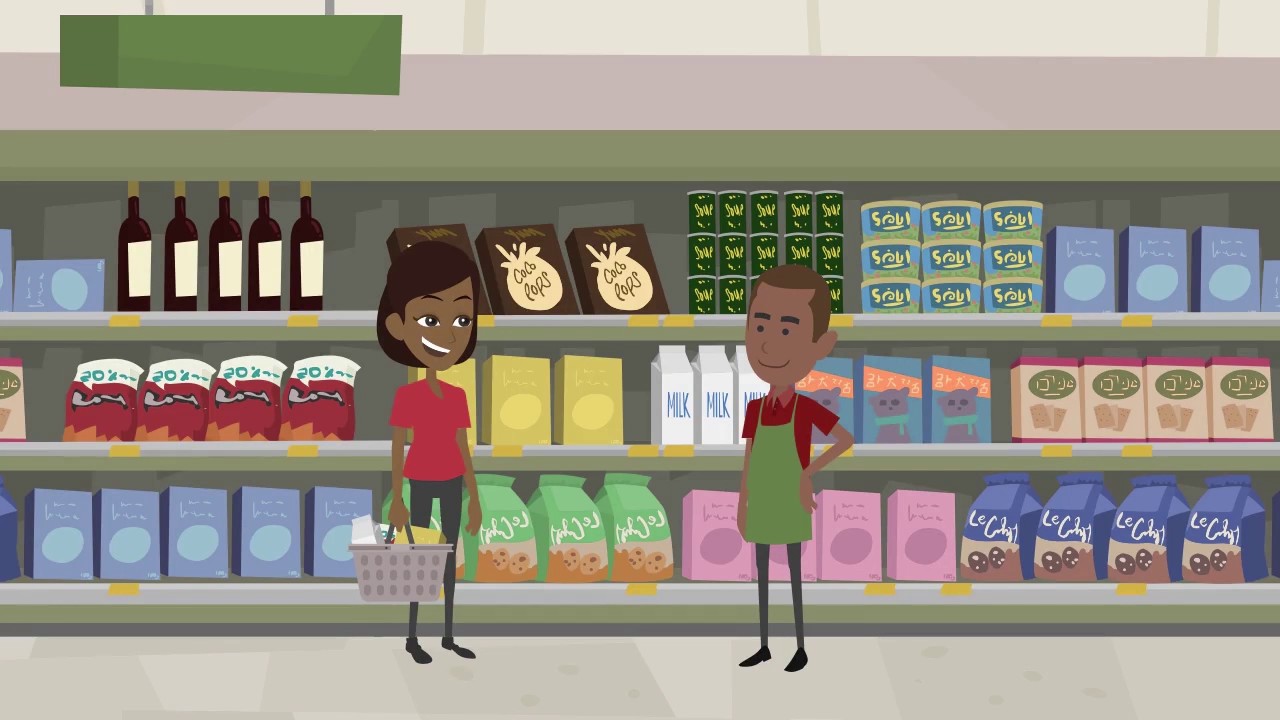
Retailers, Wholesalers and Distributors
369.1K
A supply chain is the system that moves products from manufacturers to customers, consisting of four key players: manufacturers who produce goods, distributors who buy and warehouse products before selling to wholesalers, wholesalers who act as intermediaries buying from manufacturers and selling to retailers, and retailers who sell directly to consumers; businesses can choose their role based on capital and goals, with distributors and wholesalers typically handling fewer manufacturers while retailers offer products from multiple sources to serve local customers.
Click to watch →

कपड़ों का होलसेल व्यापारी कैसे बने ?, Wholesaler Business, Saree Manufacturer, Surat Saree Factory
2.6K
The business supply chain consists of three key participants: (1) Manufacturer produces goods in their own factory by adding value to raw materials, (2) Wholesaler buys in bulk from manufacturers and sells to retailers, (3) Retailer sells individual pieces to consumers. Understanding these roles is essential for anyone entering the business world. Manufacturers control production, wholesalers facilitate bulk distribution, and retailers serve end consumers. Each plays a critical role in getting products from production to final users.
Click to watch →

SSC Class 10 Algebra | Financial Planning | Practice Set 4.2
165.9K
GST (Goods and Services Tax) is a comprehensive tax applied at each stage of the supply chain. The video explains the roles of manufacturers, wholesalers, and retailers in the supply chain. GST is charged on each transaction: manufacturers charge GST when selling to wholesalers, wholesalers charge GST when selling to retailers, and retailers charge GST when selling to customers. At each stage, businesses collect GST from buyers and pay GST to the government. The tax rates vary by product category (e.g., watches attract 12% GST). This system ensures tax is collected progressively throughout the supply chain while preventing tax cascading through the Input Tax Credit mechanism.
Click to watch →

What is a Supply Chain
187
A supply chain is a series of commercial activities to provide goods to customers or services, necessarily involving movement of goods. It consists of multiple tiers: Tier 1 suppliers (direct suppliers to main manufacturer), Tier 2 suppliers (suppliers to Tier 1), and Tier 3 suppliers (suppliers to Tier 2). Manufacturing occurs throughout the chain as raw materials transform into finished products. The main manufacturer produces the final product, while secondary manufacturers help produce it. Distribution channels follow a hierarchical structure: main manufacturer → distributors (state/regional level) → wholesalers (district level) → retailers → end customers.
Click to watch →

Lesson 2 Supply Chain Collaboration
4.8K
Transporters move materials wherever needed. Wholesalers and distributors serve as intermediaries between manufacturers and retailers. Distributors can have direct manufacturer relationships, while wholesalers typically operate between them. Wholesalers are categorized by product type: durable goods (long-lasting items like furniture and equipment), non-durable goods (short-lived items like clothing and cosmetics), and food stocks (produce, baked goods). Retailers sell directly to consumers and serve as the final supply chain link. A key distinction exists between customers (who purchase) and consumers (who actually use products). The food supply chain example shows progression from farm through processing, factory, warehouse, wholesale, retail/restaurant, to end user customer, with quality control and customer support at each stage.
Click to watch →
Deep Dive
Basic financial concepts in retail sales, such as gross margins, cost of goods sold (COGS), trade spend, and slotting fees.
The hidden war over grocery shelf space
3.2M
Slotting fees are payments manufacturers make to grocery retailers for shelf space, typically ranging from $30,000 to $5 million depending on the product category and desired placement; these fees create a hidden negotiation system where manufacturers must pay to gain access to retail shelves, with larger companies controlling most premium display space and category captains determining product placement through planograms, while debates continue about whether these fees represent fair market practice or anti-competitive barriers.
Click to watch →

Getting into Retail Series 2/6 – Insider Secrets to Setting Retail and Wholesale Prices
189
COGS includes: landed cost of food ingredients, unit packaging, portion of master case packaging, and direct labor. Landed cost includes freight, delivery charges, and border taxes. Only inbound freight costs should be included. COGS does NOT include equipment, facility costs, hydro, website design, label design, professional services, office space, vehicle costs, or depreciation. Even if labor is performed by the owner or family, an appropriate wage should be included as a placeholder. Gross margin is a function of selling price (revenue minus COGS divided by revenue). Markup is a function of cost. Using markup instead of margin can result in significantly lower profitability. For example, with $100 revenue and $55 COGS, gross margin is 45%, but a 45% markup on $55 cost yields only $79.75 revenue with only 31% gross margin.
Click to watch →

Demystifying Trade Spend
2.3K
Trade spend refers to the financial investments made by consumer packaged goods (CPG) brands to secure retail shelf space and drive consumer purchases, encompassing various categories such as slotting fees, free fills, promotional discounts, and returns allowances, which collectively can represent 20-35% of total revenue and significantly impact gross margin calculations; effective trade spend management requires brands to distinguish between spend that drives consumer velocity (such as coupons and in-store promotions) and spend that benefits intermediaries (like off-invoice discounts to distributors), while implementing proper tracking systems and negotiation strategies to optimize brand growth while protecting profitability.
Click to watch →

99% Bạn Hư Không Phải Do Roi Mây | Bổ Não #168
34.2K
Slotting fees are payments that manufacturers must pay to retailers to have their products displayed on shelves. According to a 2002 Fox report, slotting fees for new products in regional supermarket clusters can reach $25,000 (over 600 million VND), while in high-demand markets, fees can reach $250,000 (approximately 6 billion VND). Beyond slotting fees, manufacturers may also pay advertising fees, promotional fees, and inventory fees. Some companies must pay periodic fees to maintain shelf space (pay-to-stay). A 2003 study by the U.S. Federal Trade Commission found that many grocery stores earn more profit from accepting manufacturer fees than from actually selling products to consumers. Slotting fees serve as a risk-sharing mechanism between manufacturers and retailers, helping retailers share the risk of stocking new products that may not sell well. However, this creates significant barriers for small businesses, as a small bakery company was once required to pay six-figure fees without any guarantee that products would remain on shelves afterward. This raises ethical questions about whether slotting fees constitute bribery or legitimate marketing competition.
Click to watch →

Gross Revenue vs Net Revenue: The Trade Spend Waterfall Explained
3.4K
Trade spend represents revenue that businesses never collect, occurring above the net revenue line on income statements. In retail, this includes slotting fees, co-op advertising, manufacturer chargebacks, temporary price reductions, scanback promotions, and freefills. These deductions are invisible on standard P&Ls and can reduce net revenue by 15-20% or more. Different retail channels have varying benchmarks: specialty retailers average 20%, food distribution centers 10%, and club stores 5%. Businesses must strategically evaluate each trade spend category using four criteria: keep, test, cut, or audit. Slotting fees must be amortized across the full year. Subscription discounts should be maintained for high lifetime value. Welcome discounts should be tested to avoid becoming a discount brand. Affiliate commissions require ongoing audits. Co-op advertising offers opportunities to negotiate with retailers as businesses grow. TPRs should be minimized by learning from past inventory issues. Service businesses face unique challenges including scope creep (billed hours vs actual hours) and long-term client rate freezes where clients pay outdated prices as costs increase. To implement gross-to-net management: audit all discount data from the last 12 months across all platforms, categorizing by purpose (acquisition, retention, overhead). Set annual targets with acceptable blends (15% overall, 18-28% in specific months). Build a 12-month trade calendar mapping acquisition months, standard months, and recovery months for each channel separately. No ad hoc discounting without budget assignment. Five core principles guide efficient management: measure net revenue, plan your trade calendar, lifetime value justifies acquisition costs, discounts are for acquisition only, and track ROI line by line. Brands that win on margin don't discount less—they discount smarter by targeting the right customers at the right times.
Click to watch →
Deep Dive
The concept of outsourced sales and the general role of independent sales representatives or intermediaries in B2B commerce.

Экспертные продажи в B2B. Часть 1. Илья Балахнин — управляющий партнер Paper Planes
19.4K
Integrators are B2B sellers who sell 'intellectual glue' - they don't necessarily earn much on the actual product but provide value through research, analysis, and recommendations. They help customers determine what products or services are optimal for their specific needs, even when those products come from other organizations. Integrators can 'ride the coattails' of stronger organizations by providing economic analysis and strategic recommendations. Examples include logistics providers who organize complex multi-party transportation without physically moving goods themselves.
Click to watch →

How To Triple Your Sales In 6 Months with Michael Graham
392
Outsourcing sales should be approached carefully. For B2B sales, it's generally better to learn to sell yourself first because no one will be as passionate about your business as you are. The recommended approach is to learn sales skills first, then bring someone in-house once you have the results to pay them. The only exception is outsourcing appointment booking, which should be done with a telemarketing company that follows your specific pitch and criteria.
Click to watch →

Representante Comercial ou Vendedor? Qual é melhor? Palestrante de Vendas André Ortiz, PhD em Vendas
5K
Independent sales representatives have several advantages: (1) Flexible working hours; (2) Autonomy to prospect and develop their own geographic territory; (3) Ability to represent multiple companies or product lines simultaneously, not limited to exclusivity with one company.
Click to watch →

The AI Sales Pipeline Agent (SDR Automation)
3.6K
B2B companies typically employ three main types of sales representatives: (1) Independent sales reps who work on flexible terms (pure commission or salary plus commission) and leverage their personal networks to generate leads and close deals; (2) In-house sales reps who are employees of the company, paid a salary plus bonuses based on closing rates or deals acquired; (3) Hybrid models that combine both independent and in-house sales representatives to drive interest and generate business.
Click to watch →

The 9 Advantages of Using a NEMRA Sales Representative
763
This comprehensive analysis compares independent sales representatives (NEMRA) with factory direct sales forces across nine key dimensions. Independent representatives offer predictable costs through fixed commission percentages, significantly lower expenses ($150K-$200K per territory vs. doubled costs for high-value territories), and reduced administrative overhead. They eliminate training and turnover costs while providing immediate market access through established networks. These representatives are highly experienced, educated in electrical sales, and provide superior forecasting due to deeper market knowledge. Their portfolio approach exposes manufacturers to broader prospects and applications. Most importantly, they achieve deeper market penetration through relationship-focused calls, ultimately increasing manufacturer profitability.
Click to watch →
Deep Dive
An understanding of retail channel strategies, specifically how grocery, convenience, and specialty food stores source new products.

유통관리사3급 1강 ㅣ 유통과 유통활동
36K
Distribution channel strategies are matched to product characteristics. Long channels (manufacturer → wholesaler → retailer → consumer) suit convenience goods like candy: small units, low prices, high frequency, many manufacturers, dispersed production. Short channels suit specialty goods like luxury cars: large units, high prices, low frequency, few manufacturers, concentrated production. Channel strategies include: Intensive distribution (개방적/집약적) maximizes outlet coverage for convenience goods but increases costs. Selective distribution (선택적) uses limited intermediaries for shopping goods, balancing exposure and cost. Exclusive distribution (전속적) grants single intermediary rights for specialty goods, minimizing costs but limiting exposure. The saturation effect occurs when intensive distribution creates too many intermediaries, causing price inconsistencies and consumer complaints.
Click to watch →

اللقاء التاسع -مبادئ التسويق (صيفي)
132
Distribution channel length varies by product type: convenience goods have long channels (manufacturer → wholesaler → retailer → consumer), shopping goods have medium channels, and specialty goods have short channels (manufacturer → retailer → consumer). Retailer importance varies: for convenience goods, retailer name is less important as consumers buy from the nearest location; for shopping goods, retailer name is important as it relates to product quality; for specialty goods, retailer name is extremely important. Outlet availability is highest for convenience goods (found in every neighborhood) and lowest for specialty goods (one or two outlets per city).
Click to watch →

Ch. 17: Retailing and Omnichannel Marketing - MKTG 3200
594
Manufacturers develop retailer strategies through four factors: assessing retailer likelihood to carry products, identifying appropriate retailer types, implementing the four Ps, and using omni-channel approaches. Vertical integration creates unified supply chains with reduced conflict. Manufacturers use focus groups to understand customer expectations and make place decisions. Distribution intensity (intensive, exclusive, selective) depends on product characteristics. Food retailers include supermarkets, super centers, warehouse clubs, and convenience stores. General merchandise retailers span department stores, discount stores, specialty stores, drug stores, category specialists, extreme value retailers, and off-price retailers. Service retailers represent a growing segment driven by aging population trends and demand for convenience services.
Click to watch →

Exporter des produits sucrés vers la Chine : étude des chaînes de valeur commerciales
230
Final consumers access products through new retail models, generalist retailers (supermarkets, warehouse stores, premium supermarkets like Ole' with 50%+ imported products), and specialty stores (20-40% margins). Food service channels include restaurants (11,000+ Michelin-starred), coffee shops (110,000+), and bakeries offering gourmet corners. Strategic recommendations include establishing marketing strategies with adequate budgets for brand visibility, careful partner selection for transparency and regulatory compliance, avoiding price distortions between channels, and understanding regional consumer preferences (southern/eastern China favoring TikTok).
Click to watch →

Living Like A Local In New York - NYC Best food, Beauty Shopping, West Village, Fall In New York
6.6K
This segment explores specialty food retail through visits to Gem Home and other shops. The creator shows products like sea salt and plum vinegar from Japan, matcha salt with green tea powder, and olive oil from a Tuscan family. The shop provides information about where products are preserved and made, emphasizing traceability. The creator also visits Cafe Pan, which sells out of tiramisu ice cream and other flavors. This illustrates how specialty food retailers offer unique products with clear sourcing information, and how popular items can sell out quickly due to high demand.
Click to watch →
Prerequisite Knowledge
- Concept 01Fundamentals of the food supply chain, including the distinct roles of manufacturers, distributors, wholesalers, and retailers.
- Concept 02Basic financial concepts in retail sales, such as gross margins, cost of goods sold (COGS), trade spend, and slotting fees.
- Concept 03The concept of outsourced sales and the general role of independent sales representatives or intermediaries in B2B commerce.
- Concept 04An understanding of retail channel strategies, specifically how grocery, convenience, and specialty food stores source new products.
Subsequent Learning
- Step 01Drafting and negotiating food broker contracts, including commission structures, retainer agreements, and territory exclusivity clauses.
- Step 02Utilizing syndicated market data (such as SPINS, Nielsen, or IRI) to support brokers in category management and sales pitches.
- Step 03Designing and managing trade promotion strategies and co-marketing calendars in partnership with brokers and retailers.
- Step 04Establishing Key Performance Indicators (KPIs) to audit, review, and optimize food broker performance over time.
Broker Benefits
Engagement Tips
Broker Benefits
0:13Playing Section
- 1
Brokers offer buyer relationships and account expertise.
- 2
They provide retail chain knowledge and program timing.
- 3
Larger brokers may prioritize big brands, risking small companies.
The Case for Direct Sales and In-House Brand Representation
While food brokers offer established retailer networks, critics argue that relying on them can hinder early-stage food brands. Brokers often manage dozens of brands simultaneously, meaning newer or niche products rarely receive the dedicated attention, passion, or strategic focus needed to stand out. Furthermore, brokers demand high commissions (typically 3% to 10% of sales) alongside monthly retainer fees, which can severely deplete a startup's margins before achieving true market traction. By bypassing brokers in favor of an in-house sales model or direct-to-retailer (DTR) approach, brands retain direct control over their relationships with category managers, preserve valuable margins, and receive unfiltered feedback from retailers. This direct alignment ensures that the sales force is entirely dedicated to the brand's unique value proposition, preventing the dilution of brand message and misaligned incentives common with third-party intermediaries.
Deep Dive
Drafting and negotiating food broker contracts, including commission structures, retainer agreements, and territory exclusivity clauses.

Alquiler Residencial Preguntas y Respuestas de la A a la Z
186
Retainer agreements should specify the services to be provided and the amount to be charged. Exclusive brokerage agreements provide the strongest protection for agents, establishing the agent's right to compensation even if the client works with another agent. Agents should use this agreement for serious clients.
Click to watch →

As-Is Contract Training Class
331
Agents cannot negotiate commissions without written authorization from their brokers. Any commission adjustment must be agreed upon by both brokers involved in the transaction. Commissions cannot be negotiated in contracts because they are agreements between brokers, not between agents. The MLS contains commission information, but agents should not include commission amounts in contract documents. Agents must have buyers sign exclusive buyer broker agreements to guarantee their commission. Without this agreement, agents may only receive the minimum commission specified in the MLS (2%). The agreement should be signed at the time of the offer to ensure the agent is contractually obligated to receive the agreed-upon commission.
Click to watch →
![ACENTE VE DİSTRİBÜTÖR [Ticaret Hukuku Dersleri] [Uzaktan Öğretim - Korona]](https://i.ytimg.com/vi/mYu27EIEpS8/maxresdefault.jpg)
ACENTE VE DİSTRİBÜTÖR [Ticaret Hukuku Dersleri] [Uzaktan Öğretim - Korona]
6K
Agents receive commission for transactions they facilitate, calculated as a percentage of transaction value. If contracts don't specify rates, local custom or court determination applies. Agents are entitled to commission for transactions within their exclusive territory, even if not personally facilitated. Exclusive territory rights are mandatory and cannot be waived by contract. Agents are generally prohibited from selling competing products within their territory, though principals may allow this through explicit written agreement. Commission payments must be made within three months of transaction completion. When contracts terminate, agents may be entitled to commission for transactions initiated but not completed. Portfolio compensation protects agents who developed customer relationships for principals. When principals terminate relationships without just cause, agents may receive compensation based on average commission earned over five years. This compensation cannot be waived through contract provisions.
Click to watch →

Ticari İşletme Hukuku - Ders 12: Ticari vekil, pazarlamacı
10.6K
Agents with exclusive territory rights cannot have other agents appointed in their area without consent. If the principal appoints others, the exclusive agent receives commission on all transactions in that area. Commission can be paid as fixed amounts, percentages, or combinations. During trial periods, commission rates cannot be reduced. For exclusive territories, agents receive commission on all transactions they facilitate, even if not personally conducted. If commission cannot be determined, agents receive minimum commission value.
Click to watch →

Contracts Class 09.13.2021 | Exclusive Right To Buy Buyer Agency Contract
166
A retainer fee is a fee (e.g., $1,000) payable upon signing the contract, which can be credited or not credited against the final brokerage fee. If credited, the broker must rebate it to the buyer on the closing statement. A service fee is paid by the seller within specified calendar days regardless of whether the buyer purchases a property. The term of the agency agreement is up to the broker's discretion, with common practice being termination at the end of June or December twice a year for operational convenience.
Click to watch →
Deep Dive
Utilizing syndicated market data (such as SPINS, Nielsen, or IRI) to support brokers in category management and sales pitches.

IRI Reporting - Do it Yourself
8.8K
This video tutorial demonstrates how to access and utilize IRI's category management reporting system for generating sales analytics reports, including category breakout reports (filterable by geography, time, and brand), competitive breakout reports, product group breakout reports, SKU brand breakout reports, and SKU category breakout reports, with specialized templates available for household cleaner and baby home care segments to transform raw data into print-friendly, user-friendly formats for business analysis.
Click to watch →

Category Management Series Tip #9: How To Use And Understand All Commodity Volume (ACV
11.1K
All Commodity Volume (ACV) represents the total sales volume across all categories in a store. ACV data comes from two sources: syndicated data (Nielsen/IRI) which captures only sharing retailers, and panel data which covers all market retailers including alternate channels. To analyze ACV effectively, calculate category market share (retailer sales divided by total market sales) and all sales share (sum of all retailer sales divided by sum of all market sales). The index versus ACV compares category share to overall share, revealing whether categories are overdeveloped or underdeveloped. However, interpretation must account for channel composition—categories carried by alternate channels can distort apparent market opportunities, making direct comparisons misleading without understanding which retailers compete in which categories.
Click to watch →

Mastering Data-Driven Sell Stories for High Growth Brands with Death Wish Coffee
259
Syndicated data tools like Satori provide extensive data points that emerging brands can leverage even without high volume. The new item dashboard shows what new products retailers are adding, including trends like increased club pack sizes, organic products, or brands with specific functional properties. CRMA (Competitive Retailer Market Area) analysis shows a brand's competitive set within a specific retailer's category. Effective sales presentations should avoid large tables of data and instead identify the single most relevant data point that tells their story. Brands can find compelling stories through growth percentages, value per store per item, or other metrics that demonstrate potential.
Click to watch →
Where is Secondary Data Found
31K
Secondary data for market research is found in multiple sources including internal sales data (for customer segmentation and lifetime value analysis), syndicated services like Nielsen/IRI and Numerator, retailer databases from companies like Dun & Bradstreet and Walmart, research platforms like Meltwater, and free resources such as the US Census Bureau and public libraries; this data helps businesses understand their best customers, product performance, and market trends without conducting primary research.
Click to watch →

Manna Tree Managing Partner Steve Young, Live from ICR Conference 2025
107
Proof of concept in consumer products is measured through third-party scan data (such as SPINS, Nielsen, IRI) showing rate of sale compared to competitive set. Outperforming competitors in sales velocity demonstrates that real consumers are willing to pay for the product or service, serving as the ultimate test of market viability.
Click to watch →
Deep Dive
Designing and managing trade promotion strategies and co-marketing calendars in partnership with brokers and retailers.

Pertemuan 7 Marketing Communication (Komunikasi Pemasaran) dalam E-Commerce
1.2K
Trade Promotion involves incentives offered to intermediaries (retailers, distributors) to encourage them to stock and promote products. Co-Marketing involves partnerships between companies to jointly promote products or services. These strategies help companies gain shelf space, improve product visibility, and leverage partner audiences. Trade promotion and co-marketing are particularly important for products that require intermediary support to reach end consumers effectively.
Click to watch →

SAP CRM II
435
Trade promotion planning follows a structured process: (1) Strategic planning determining where, what, why, and budget allocation, (2) Client-level planning specifying which retail locations receive which promotions, (3) Execution through account managers or mobile representatives negotiating with retail locations, and (4) Analysis evaluating results against planned outcomes. CRM systems integrate with ERP and supply chain planning to enable real-time coordination. When promotions are rescheduled, information automatically flows to supply chain systems, preventing stockouts or overstocking. Joint marketing funds management enables manufacturers to coordinate marketing with distributors through portals where partners view opportunities, request budgets, and contribute funds.
Click to watch →

Comment Créer et structurer sa stratégie de partenariats - avec Caroline Mignaux
1.8K
Partnerships enable hypergrowth at lower risk compared to traditional advertising. French companies often focus excessively on competitors through benchmarking, neglecting their own ecosystem partners. Partnership strategy follows the same framework as traditional marketing: targeting, objectives, and partner selection. Co-marketing actions include: (1) Traditional co-marketing like contests and giveaways, (2) Media partnerships for visibility exchange, (3) Loyalty programs where brands share exclusive offers with each other's customer bases, (4) Co-branding through joint product collections, (5) Coopetition where competitors collaborate on shared offerings, (6) Affiliation programs, (7) Events, (8) Distribution partnerships, (9) Content partnerships, and (10) Sponsorship. Each type serves different strategic objectives and should be selected based on partnership goals.
Click to watch →

MARKETING MANAGEMENT || MODULE 3 || PART 8 || BBA ONLINE
135
Trade promotion schemes encourage cooperation from middlemen including wholesalers, retailers, and distributors. Key techniques include: (1) Special discounts - additional discounts above regular rates; (2) Free goods - attractive articles given to dealers for purchasing certain quantities; (3) Advertising materials - store signs, shelf displays, and boards provided for display purposes; (4) Trade allowances - buying, promotional, and slotting allowances to encourage stocking and promotion; (5) Sales force incentives - gifts like pens and diaries bearing company names; (6) Dealer contests - competitions among dealers with prizes for top performers; (7) Sales training programs - manufacturer-provided training to increase product knowledge; (8) Trade shows - events for displaying products to current and prospective buyers, particularly valuable for new product introductions; (9) Cooperative advertising - shared advertising costs between parties.
Click to watch →

دور الترويج وأهدافه 4 - تخطيط الحملات التسويقية (1-2) - المرحلة الثانوية
292
Trade promotion supports intermediaries (wholesalers and retailers) who sell company products. This includes advertising to persuade consumers, offering special deals and rebates, providing free samples and coupons for new products, and volume-based incentives where sellers receive higher percentage rewards for larger sales. These strategies motivate intermediaries to stock and promote products, ultimately helping reach end consumers. Strong manufacturer-distributor relationships create sustainable competitive advantages.
Click to watch →
Deep Dive
Establishing Key Performance Indicators (KPIs) to audit, review, and optimize food broker performance over time.

Trent Lee’s Blueprint for Business Brokerage Success
3K
Successful business brokers track multiple key performance indicators including daily leads, NDA signing rates, buyer-seller meetings, follow-ups, offers, and deals in escrow. Tracking these metrics over time helps identify problems and measure progress. Brokers should monitor lead-to-NDA conversion rates and compare them to previous periods.
Click to watch →

Food Hub Key Performance Indicators KPIs - a Greenbelt Fund and NGFN webinar
644
Food hubs can improve operational efficiency and profitability by systematically tracking key performance indicators (KPIs) across sales, cash flow, and profitability metrics. Effective KPI implementation requires identifying specific business problems first, then measuring relevant metrics such as sales achievement versus targets, days sales outstanding (DSO) and days payable outstanding (DPO) for cash flow management, and gross profit margins by product category. Organizations should analyze these metrics weekly, categorize customers by potential tier, and implement solutions like growth-only commission structures, EFT payment conversions, and per-box profitability analysis to ensure sustainable business operations.
Click to watch →

Key Performance Indicators (KPIs) with examples
128.8K
Key Performance Indicators (KPIs) are measurable metrics used to track and monitor business performance over time, serving as leading indicators that alert entrepreneurs to potential issues before they escalate and helping identify which areas of the business need optimization; the effective setup involves selecting 6-12 strategically chosen KPIs across key business areas (such as live SKUs, advertising cost of sales, and inventory performance), choosing an appropriate timeframe (daily, weekly, or monthly) based on business type, designating a Polaris KPI as the primary focus area for optimization, and using these metrics to maintain continuous oversight of business health and direction.
Click to watch →
Ep. 1: Introduction to Key Performance Indicators | Kellerman Consulting
431
Key Performance Indicators (KPIs) are measurable values that track business operations to determine if systems are functioning correctly and achieving sustainable results; they serve as critical decision-making tools that help organizations focus on strategic priorities by distinguishing between routine operational issues and actual problems requiring attention, similar to how critical control points function in food safety programs.
Click to watch →
2025 will be your breakthrough year | The Bedros Keuilian Show E0115
145K
Key Performance Indicators (KPIs) are measurable metrics that help you track progress toward your goals. For example, if your goal is to sell 11 new locations per month, your KPIs would track how many locations you've sold by the midpoint of the month. If you're behind pace, you can take corrective action. Without measurable KPIs, you cannot identify when you're off track or fix what needs improvement.
Click to watch →
Broker Benefits
Engagement Tips
Broker Benefits
0:13- 1
Brokers offer buyer relationships and account expertise.
- 2
They provide retail chain knowledge and program timing.
- 3
Larger brokers may prioritize big brands, risking small companies.
The Case for Direct Sales and In-House Brand Representation
While food brokers offer established retailer networks, critics argue that relying on them can hinder early-stage food brands. Brokers often manage dozens of brands simultaneously, meaning newer or niche products rarely receive the dedicated attention, passion, or strategic focus needed to stand out. Furthermore, brokers demand high commissions (typically 3% to 10% of sales) alongside monthly retainer fees, which can severely deplete a startup's margins before achieving true market traction. By bypassing brokers in favor of an in-house sales model or direct-to-retailer (DTR) approach, brands retain direct control over their relationships with category managers, preserve valuable margins, and receive unfiltered feedback from retailers. This direct alignment ensures that the sales force is entirely dedicated to the brand's unique value proposition, preventing the dilution of brand message and misaligned incentives common with third-party intermediaries.
Fundamentals of the food supply chain, including the distinct roles of manufacturers, distributors, wholesalers, and retailers.
Basic financial concepts in retail sales, such as gross margins, cost of goods sold (COGS), trade spend, and slotting fees.
The concept of outsourced sales and the general role of independent sales representatives or intermediaries in B2B commerce.
An understanding of retail channel strategies, specifically how grocery, convenience, and specialty food stores source new products.
Drafting and negotiating food broker contracts, including commission structures, retainer agreements, and territory exclusivity clauses.
Utilizing syndicated market data (such as SPINS, Nielsen, or IRI) to support brokers in category management and sales pitches.
Designing and managing trade promotion strategies and co-marketing calendars in partnership with brokers and retailers.
Establishing Key Performance Indicators (KPIs) to audit, review, and optimize food broker performance over time.
4.9K views44likes3:16@TimForrestConsultingOriginal Release: 2010-06-13
and for more than 25 years i've been helping companies grow find new markets and building success for the world's top food brands this has been done even in times of a weak economy i hope my thoughts are helpful in your growth and success i'm asked a lot about food brokers i've dealt with many food brokers i've been a food broker and food brokers can do a lot for your company what food brokers do is they offer a personal contact and relationships with the buyers they also have expertise about specific accounts there can be food service brokers restaurant brokers specifically retail brokers for one particular retail chain they understand the retailer the needs the different programs the paperwork they have it all they'll have it all ready to go so that they can present you quickly and efficiently to the buyer and also they know the timing you know there's certain times of year where they'll review certain categories so if your product follows there they can give you the kind of the heads up as far as when you need to do them you know how to oper brokers operate generally they operate in that a lot of the bigger brokers they specifically uh they have account executives that manage specific categories and even even actual uh manufacturers so there are some manufacturers out there with so much so much volume that it requires a person or a team of people to actually support that brand with specific retailers and a lot of times that's part of the problem or issue with smaller companies trying to go to food brokers is that there's so much needed to be done for the larger accounts they can't really get any time without generally not the best way to go for pioneering a new line they want they have to have income to support and pay for expenses and go forward and also you'll get lost there's so many they have so many items that are already generating sales for them to go out and pioneer a new item it's very difficult for them to do that and that's that's what you have to do um one of the things that you do want to do when you do meet with a broker talk to them about your line is you want to share with them your marketing plans what your actions are who your ideal consumer consumer is uh the best stores for them to be in you might want to you know be prepared on your ideal consumer and have them think about if you're not going to go chain wide maybe the best locations for you services that brokers can provide a few of them and i have an extensive list on my site at timforce.com but you can go there and uh i've got extensive questions an overview of food brokers also i did for the university of nebraska there's a presentation there that you can um go through also feel free to send me on my site there's a contact link be sure to send me any questions but thank you for watching today there are many more ideas suggestions and helpful tips and templates at my site timforch.com have a great day and much
Up Next
33:55
Retail Planogram Basics: How Product Placement Drives Sales Velocity
@STARTtoSOLD
86K views•2019-08-28

46:36
Retention Habits of Top DTC Ecommerce Brands Revealed
@SendItPodcast
44K views•2026-03-03

15:23
Decoy Effect: How Pricing Psychology Influences Consumer Spending
@bobinvestsUS
90K views•2026-01-05

17:30
The Planned Obsolescence of Light Bulbs and Tech
@veritasium
25.3M views•2021-03-26
Related Study Plans & Knowledge Roadmaps
Structured learning paths in Business
business
Pop-Up Retail: Strategy, Design & Execution
01Introduction to Pop-Up Retail & Strategic Goal Setting
02Budgeting, Site Selection, and Legal Essentials
03Experiential Retail Design & Visual Merchandising
+ 2 more learning modules
15h5 modules
Explore Roadmap
business
Reg CF: Startup Funding, Marketing & Launch
01Introduction to Equity Crowdfunding & Reg CF
02Platform Selection & Legal Preparation
03Crafting High-Converting Campaign Assets
+ 2 more learning modules
14h5 modules
Explore Roadmap
business
Productized Services: Scaling Solo Freelance
01Foundations of Productized Services
02Packaging and Scope Definition
03Pricing and Subscription Models
+ 2 more learning modules
15h5 modules
Explore Roadmap
business
Gov Procurement: Find, Bid & Win Contracts
01Introduction to Government Procurement & Business Setup
02Small Business Certifications & Set-Asides
03Finding and Analyzing Contract Opportunities
+ 2 more learning modules
14h5 modules
Explore Roadmap