
![6 Steps To Have A Successful Product Launch For Your Amazon PPC Campaign [The PPC Den Podcast]](https://i.ytimg.com/vi/U5lQo1Gi2ZQ/maxresdefault.jpg)

















A planogram is a strategic map of a retail store that determines product placement to maximize sales velocity, and understanding this system allows sellers to influence their product's placement by leveraging merchandising techniques such as vertical positioning (bullseye zones at eye level), horizontal positioning (left-side aisle placement), color contrast, seasonal theming, framing/shapes, and structural packaging innovations, ultimately helping sellers create compelling sales pitches that address both retailer goals (incremental sales and profit margins) and consumer impulse buying behavior.
Retail Planogram Basics: How Product Placement Drives Sales Velocity
Added:Basic understanding of retail terminology, specifically 'sales velocity' (the rate at which a product is sold relative to its inventory).
Fundamentals of consumer behavior and in-store shopping psychology, such as visual attention patterns and browsing habits.
The concept of Category Management, including how retailers group and evaluate product performance by department.
An introductory understanding of retail distribution channels and how physical goods flow from manufacturer to shelf.
Mastery of specialized planogram and space-planning software tools (such as Blue Yonder/JDA, Spaceman, or Quant).
Analysis of advanced retail financial metrics, specifically GMROI (Gross Margin Return on Investment) and Sales per Linear Foot.
Developing persuasive retail pitch decks and negotiating trade spend, slotting allowances, and co-marketing agreements with category buyers.
Implementation of in-store A/B testing methodologies on retail shelves to measure the empirical impact of layout changes on sales lift.
86K views1.2Klikes33:55Original Release: 2019-08-28
Okay, so now let's start. Um, so again, the goal today is to talk about what the retail planagram is and how by understanding it, you can influence your product sales and sales velocity. Um, the way we're going to do that is we're going to first define what the retail plan is, identify what the goals your retailer and buyer have because they have to use this planagram, and if you understand their goals, you can better speak to them and adjust your sales strategy. Number three, we're going to explain basic merchandising techniques, which are the tools that most retailers use to be able to maximize their goals on the planagram. And then we're going to study some success uh case studies.
Justin's Peanut Butter being the branded product. We're also going to look at Archer Farm's target brand um which also does a great job of using the planagram really well. And if you understand and learn from them, you might be able to leverage those things for yourself. And then we are going to number five talk about how you can use these principles to apply to your own sales strategy. And number six, we'll take a Q&A and brainstorming. Um in fact, if you at the very end have your own product and would like private coaching or consulting, you can ask your questions and bring up your specific product, you can even unmute yourself and unvide video un unmute your video and allow you you can actually share what your questions are and we can actually help brainstorm some awesome suggestions for you. So what is a planagram? Basically uh you can see here a picture a little cartoon of what a planagram is. Um a planagram is a map of a store and it shows where product should be placed. You can imagine if you are managing tons of different SKUs and you own a large space just like an architectural designer or um someone who's going to decorate your home might make a plan to make sure that all of the couches can fit against that right wall and you can fit and walk into the room.
That's what a planning gram is. It's someone planning before uh before a certain season or a month what will be placed in a grocery store and they have all all of the um key metrics measured out which includes the whole uh space of the grocery store, the distance between the different shelves, the depth of the shelves, all of these things. And usually they have to plan things out by aisle which obviously within a certain category buyer like for example dried goods there are multiple products within there. And so they have to plan which aisle will be dedicated to which products. There's also shelf placement uh which is how tall the shelves are, how deep they might be. End caps which are there at the very end of the um at the aisles as well as like checkout counters front to store displays. So what is an actual uh oh I think I skipped one. There we go. This is the one I wanted to look at. So if you can see let me make this a full screen. make sure that you can see it. This is an example of a planagram where you can walk into the front of the store. You might find the register on the right hand side and then on the lefth hand side you might find produce. And in this from this standpoint, a whole company with multiple buyers is going to make a plan about how to move the flow of customers through. And obviously there is the attention of your customer is the whole thing you're trying to curate is you want to get as much attention from them and help them to find the products that they're looking for and also encourage them to buy impulse buys.
So um the higher velocity um you want to the more attention that people have on your products the more uh sales velocity that you end up finding.
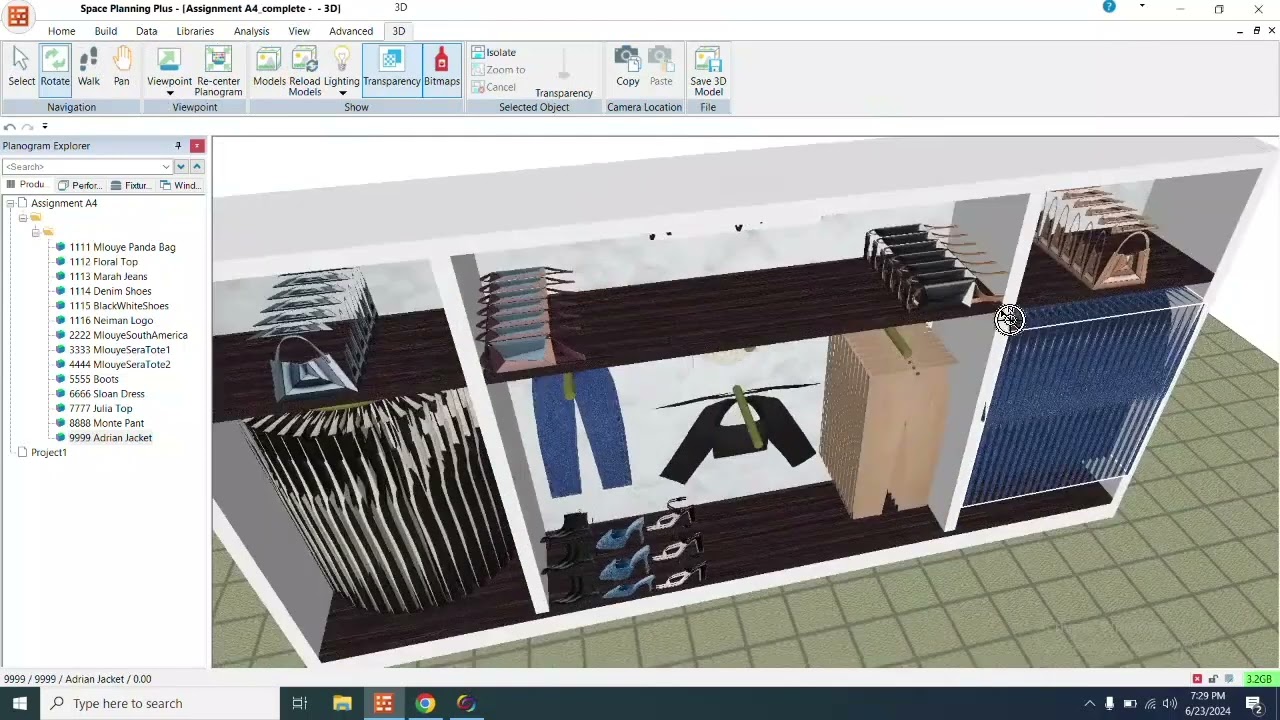
So in reality, they're constantly trying to with a planagram grab attention of the consumer. Now, besides laying out the whole store, you actually have to merchandise plan your merchandising, which involves planning out the shelf of where you're going to be placing products. And you can see our imaginary people right here that based on their height, there's certain spots that are a lot easier for them to view. And those are considered target zones for the highest selling products. And usually the best seller brands are going to be placed there. [snorts] Um, you can see here that this is the software program, an example of a software program that a retailer, a smaller retailer especially would be using where they take the front face of the artwork and they're laying out things based on the dimensions. And you can see on the right hand side an example of a smaller store and how they they don't have that much space and they're struggling to try to fill all the shelf space. they probably don't have as sophisticated of a software program. They might be even doing it manually or [snorts] just visually looking at um products on the shelf, but in a perfect world, you are looking at the actual colors of the products as well as the dimensions of them before even setting up the shelving space. And so, it takes a lot of planning before you have employees come and place products there. So, it's good to know that your retailer is actually looking at your product on a computer screen if they're in a big retail store and they're actually evaluating what your product looks like against other products and make sure that it fits actually on the same shelf space. Um, I don't know why my my the things are out of place, but um yeah, and so the if that's how people plan a plan, the question comes, what is the goal of a planagram? Why are they making certain decisions? And again, they are trying to grab attention from the customer. And so the the term that they use to describe that is incrementality because actually grocery shopping is usually an impulse decision.
You might write on your grocery list salad dressing or lettuce, but it's rare that people are writing specific brands.
You know, maybe Cheetos or things or Pepsi if people have very high name recognition of the brand. But for the most part, people are saying things like soda for the party that I'm going to, hot dog buns, hot dogs, ketchup, but they probably aren't writing the name of the brand. And so that means that the decision that a buyer makes when they walk into or a customer makes when they walk into a retail store is very much dependent on the experience that they're having, how products are placed, what they're placed next to, how easy it is to find. And so the average grocery store buyer wants to try to encourage you to buy more products in their store.
If you came in to buy hot dogs, you may forget that you want relish or if you have relish in your fridge. So the goal is to make it easy for you to find those things and help you remember that, oh my gosh, I should buy both ketchup, mustard, and um relish. If they can help you to remember these additional products when you only came in to buy hot dogs, they're you're more likely to buy something. Or maybe you're um leaving and checking out and you literally only came to buy those hot dogs for the party, but you suddenly realize you're really thirsty. And at checkout, you see a nice cold bottle of water or a refreshing soda. If you can grab that and get that person to make that purchase, you've made extra profit without having to lose that customer. So the goal is to maximize the amount of times the size of the purchase and the quantities quantity of products actually in their shopping cart, which is incrementality, adding incremental products. And so you want to create a plan that's going to help encourage them to make those types of buying decisions.
And again, I quoting here from um why we buy the signs of shopping and twothirds of what we buy in a supermarket we had no intention of buying. And that's what we found based on statistics. So it's really interesting to know that your product needs to be grabbing someone in an impulsive from an impulsive standpoint. Um so let's go back here. So once we know that that if that is the goal, okay, let's let's the other thing I want to point out besides adding incrementality, you should realize that your retail grocery store, you know, from our perspective as a seller when we are talking to a grocery store buyer, we want them to buy our product. We want them to be excited about it. Wow, it's going to do so well. It would change our life if we are an emerging brand if they bought our product and it would help us to get bigger market share if we're already established. But from a grocery stores perspective, they also see it as a high risk to take your product and put it on their shelf. They have to not only add it into their system, they have to buy inventory. They have to manage it at their warehouse. They have to train their staff and figure out where to put it on the shelf. They have to move something else that's already selling on the shelf to be able to put your product there, which means that they could possibly lose the incrementality or the sales velocity that they currently have on the shelf. So from their perspective, the grocery store in general is trying to maximize total sales and the individual buyer is trying to maximize the number of products that they're selling in their aisle in their category because usually a category buyer within a larger grocery chain is assigned to certain categories. So they might manage dry goods, they might manage um fresh foods because that allows them to really understand and manage that area. And so when you're speaking to them, you need to understand that they are their bonus, their ability to exist as a grocery store, their profit margins are dependent upon taking bad products or good products. And so your constant awareness needs to be how can I help them to succeed as a retail buyer? How can I show that my product is better than the ones they're currently selling?
And that way they have an incentive to move and remove items that are low sales velocity products and replace them with yours that hopefully will increase their bottom line. So remember that that is what you always in a sales pitch want to understand and communicate the benefit to the end user. How can I help you to succeed in your goals? If you can communicate a win-win, show your product is succeeding, you're going to get better sales. So, let's understand the techniques that grocery store retail buyers can use to be able to actually optimize their sales. And if you understand these things, then you can a speak to your retail buyer about that and kind of pitch ideas. Um, B, you can study these things when you're walking grocery stores to understand your category before you design your structure or visual packaging. Um, C, you really will understand what the competition is doing and what's succeeding so that you can make changes.
um in a lot of other areas and I'll show you what those other areas are, but there's when you're innovating new products, if you understand what what sells, it will empower you to be able to do a better job of um building your whole business. So again, to come here to the merchandising techniques, the first thing I you need to understand is the shelves have different visibility.
Top shelf, you know, if you're standing here, your line of sight without a lot of movement as you're as you're walking around the store is right here. And so the average person, you know, can see the second and third shelves from the top. And that's a bullseye zone. That's where you'll find the highest selling products. That's where um if you, you know, we all would like to be. And you'll notice that that's what people do. Um the top shelf are usually the smaller brands, regional brands, gourmet brands, because they have lower sales velocity, but people um you'll notice that that's what grocery store buyers choose to place products there. The bottom of the shelf is obviously the heavier products. Um, sometimes they'll put private label brands there. If it's for commodity items, but usually it's because they have a um the he it's just heavier, you know, the heavier products usually go down there. Um, and then there's obviously kids eye levels for especially for in the grocery store.
You'll see that there's a lot of packaging and things placed specifically to target children that are usually bright colors in that category because that's where little kids get to see things. Um, you want to obviously try to become a product that can be in the bullseye zone. But how do you do that?
you need to understand that the bestselling products are there and find ways to compete with the best sellers.
So, we'll go into what um what those things could be. Um the other thing that you would want to know besides vertical planning, there is a horizontal plan because people usually look from left to right and I didn't get any data on whether or not that's true in China where they read right to left, but in America anyway, we read left to right.
And so if the traffic of the store is if you know you're walking in on the lefthand side of the store, they're going to be circling around the right.
And so the sales velocity is always going to be the highest in the um you know on the left hand side where people are first when they're first walking up.
So even when you're thinking through the aisle the store when you're at checkout, the products that are at checkout on the lefth hand side actually have higher sales velocity um and therefore need to have the right margins to support it uh compared to the products on the right.
So you want to start walking through grocery stores and you're going to see all these things. It's very very interesting. Um the other thing to note is that the grocery store uh products um that the dairy and frozen kind of gets 15% in terms of total sales. The deli is about 4% um and inner Isles which is the largest. So this is a confusing statistic because a lot of times the inner isles are not as fastmoving as a lot of the outer ones. Uh the endcaps are the highest end caps and checkout are the highest sales velocity places on a planagram. So if your product is in the center of the store, you may not get noticed as as easily because people don't go through every single aisle in the center of the store.
They go from the outside and then they go uh through checkout. So, if your product is in the center of the store, your question to yourself could be, you know, how do I try to get to the into the best shelves on a um you like the the two to three tier bullseye zone on the shelves? How do I get on the outer perimeter? How can I grab people's attention in those categories when they're first walking in?
Uh so, then we have the um the other merchandising tech techniques that people use are slotting fees. So, um, because it's so expensive for grocery store buyers to actually place products on the shelf, they sometimes will charge a fee specifically to take their energy and time and all that admin work to get your product set up and have you placed on the shelf. And I've seen slotting fees between $800 and $2,500 per skew, which means it's it's literally a charge that they have your product on the shelf. Other types of slotting fees that might influence their placement decision would be something like a free fill. So, if you're a brand new emerging brand, they might ask you to place new products on the shelf [clears throat] and give it to them for free because it's the risk that they take to have to inventory your product.
And so, that's one way that you can influence their decisions and promotional dollars. So, like saying that you're going to pay for marketing, for ad spend, or for little uh discount tags, that can influence their decision to put you on the shelf because you're supporting their sales velocity. Uh other merchandising techniques that influence their placement decision is color. So, obviously, um the contrasting of color and the ability of your product specifically to stand out either between your brand family or with other products that are on the shelf like your competition.
um merchandising techniques that they will use is oftentimes to take to color block to take products that are from different competing brands and actually place them next to each other if they create contrast because people's eyes and attention are really drawn towards color contrast.
And here's a really great example of how color play in a very saturated market like juice and kombucha has been stacked and designed to be able to grab attention. You can see that all the brands family products are all placed together. Um but the play and the contrast of the color is very important.
even choosing which of your products, let's say, you know, your purple um your purple, red, green, and orange.
Them placing your products together, they they aren't going to place two green products next to each other.
That's not as good of an idea as placing some kind of color contrast, which causes your eye to draw attention to it.
So you [snorts] want to have color contrast within your own product and you also want to understand what else is on the market so that you can create color contrast there so that you're unique compared to the other people in your in your category. Other things that merchandising uh techniques that retail buyers use would be um clumping things by theme. So the end capped the end cap which is at the end of the grocery store aisle they will oftent times bulk things together based on whatever the season is. So, I'm sure you're seeing that this season for summer products. You can see that there's sunscreen, there's a towel, there's soda because a person is going to make an impulsive buying decision.
So, they need to un the retail buyer is actually trying to grab their attention by reminding them, hey, if you're going to the pool, you're probably going to want these things. So if you have products and you can strategize products that go well with seasonal um themes, you might help your buyer to create an experience where they can increase incremental sales volume by combining products together. So even if your product is a low velocity product, if you can pair it with one, if you can argue that it should be paired well with a higher sales velocity product, you can help the retail buyer understand where else and influence their placement decisions. So, so a good sales pitch should explain how they can uh use your product during seasonal during different seasons, how they might be able to pair products with complimentary products that are either competitors or ones that aren't even in your category, but that really would belong well together. [snorts] And this one is an example of this is me at Whole Foods. You can see that they did chips and soda. Other merchandising techniques that work is something called framing uh with circles, squares, brackets, where you're using color or shapes to draw attention to a person's product. And you'll you probably saw this back here, how a lot of these products have circles, frames of these colors. Like if you don't really know what these brands are, it's not close enough to your face to be able to see it. But you can tell which brands really stand out because of the way that they're using this color.
And obviously GT right here is dominating. Uh they really have used the frame well. Up here is um I can't remember the name of the orange brand, but the orange in the very center serves as a target for your eye causing you to want to, you know, stare at stare at that product and it grabs your attention. So when you're designing graphically, you want to keep these things in mind. Here are some more examples of these types of merchandising techniques where you use a frame to draw your attention to the product. um simple truth like the first thing that you see here is their is their logo. Uh you can see that the circle technique here in Archer Farms is drawing you towards their brand. Um you really don't notice the other product on the top left because it doesn't have those little circles. The circles draw you in. So keeping this in mind that and this is another example with the nut thins. You can see that they created a frame with color and it draws your attention forces your eye to stare at the words nut thins. It's actually easier to read and to see than uh the Archer Farms Simply Balanced um Target brand down below because the colors are not as bold and the the circles are really dark that match the actual background packaging. So, keep this type of thing in mind as you're designing packaging artwork that using frames will help your product to look really good and will cause retail buyers to want to display your product. Other merchandising techniques that I think are wildly interesting is the serving size and the use that diversifying the structural packaging that you're using to accommodate different serving sizes and product use can have on your product. And we'll go into some awesome case studies in a second, but it's wild that the this is an example of how you could take a product, let's say it's a cheese stick, a cheese, you're a cheese brand. You could be doing cheese sticks, but you could also do many tin tiny serving sizes for moms who maybe and dads who are packing lunches. Um, you could do little tiny clusters like cheese crumbles that you're going to pour out from bags into salads. You might even do it an individual serving size that maybe is a little bit larger for adults who are maybe going on a bike ride and they want to be able to have some kind of a source of protein. And lastly, you might want to do tubs. And if you did smaller tubs that have spreads, uh lower ones for parties and then even bigger ones maybe for everyday spreading on sandwiches. You can see right here just by changing the structure of your packaging, you've redefined all the different places that your product could be placed. and given a buyer an excuse uh removed the excuse to be able to not carry your product because there's so many different ways that your product could be displayed in their in their stores to serve customers and grab new market share.
Other things that you can do would be to figure out and define different point of purchase displays and and exterior secondary tertiary packaging that helps to display your product in multiple places on the shelf or in the store. So you can imagine if you have a point of purchase display, this little box comes prepacked with your product. It means that you can not only be placed on the shelf, but you can also be placed in a different odd random place in other aisles, perhaps placed next to things that make sense seasonally. So if you're if you're doing a soda brand, you might be also placed next to the really fun exciting aisles like the pool the pool seasonal aisle where they have all the pool toys. If you have thought through exciting point purchase displays, you're giving your buyer an excuse to think through your product being placed in multiple spots.
Other things are making a plan and setting aside dollars that you're planning to pay the grocery store to support the sales of your product. So, if you have a merchandising plan and a budget set in place where you're going to help pay for either discounts or for ad spend in their circular, you're showing that you're making great effort to be able to support the success of your product and drive customers to actually make incremental purchases of your product. Um, other things that I've heard buyers say if I've heard them ask things like, "Hey, are you doing any social media push? Are you trying to do anything to get people to come into stores or to know where to be able to buy your product? Especially if you're an emerging brand and having some kind of a plan like, "Hey, we're in a we have a podcast. Hey, we have a celebrity endorsement. Hey, we're going to be handing out product at the beach in Pacific Beach on these days during high traffic seasons because and we will tell them to go to your grocery store."
That's really powerful for most grocery stores because again, they're taking a risk to carry your product and they want to know that you're going to support their sales success.
So, a great example of a company that just changed their changed their world by understanding the planagram is Justice Peanut Butter. And they obviously the peanut butter category is a super saturated category. And you can imagine that it used to just be Jiffy and Skippy and those were huge behemoth peanut butter manufacturers. And then the top shelf, you'd always find some kind of weird uh international European almond butter that was in a glass jar. And it was usually much more expensive. And so the average consumer did not stray from the the traditional peanut butter brands. And when Justin's Peanut Butter came out, they came out in jars and tubs as well. They in plastic. And they only had one skew, two SKs, three SKs. They they weren't able to really dominate. What really changed the game for them is when they started creating individual serving sizes of their peanut butter. And you can imagine peanut butter is actually so hard to take out to pack lunches with. So when they put it into these smaller packs, it allowed them to actually um empower parents, for example, to pack them into lunches. So they started being able to sell their product actually at checkout, for example, because people who were eating that keto diet wanted a quick snack.
the photo on the left with my fingernail. Um, I'm actually at Whole Foods and they had this actually as soon as you walk in the store, they had big buckets of these almond butter packets because they were which is not in the peanut butter shelf. So, they expanded their footprint in a grocery store and their sales velocity across the board because they changed the structural packaging that they had. In addition to being placed at the very front of checkout, they also now are at the deli section when people are doing grab-and-go bagels, they I saw them at Starbucks at the checkout. There were people buying again bagels and they had this at the very front right as a person's checking out. And there's a huge incentive for a person to make that impulse buy just because they changed the structure of their packaging. And that changed the sales velocity for that whole company, their total sales. And like who thought anyone would get innovative in peanut butter? But it's actually become a very innovative category and this is a great success story of how thinking through the planagram has changed their uh input impact in the world in their category and made them a huge well-known brand. U another example of great success is the Archer Farms uh private label snack brand. You can see that [laughter] Target has very deeply innovated various packaging uh types. So there is at the very bottom they have their bulk premium hard rigid plastic trail mixes and nut mixes. At the very top you have grabband go less expensive brands or products that are within the standup pouch flexible film which is a cheaper form of packaging. It's lighter, it's not as heavy and has a lower price point. And then you can see below that in these color bags are mini bags, mini bags of of peanuts and almonds and raisins so that parents can grab them and they're already prepared in out into serving sizes. So this gives a consumer multiple reasons to not only buy one of these things, maybe they want just a bag or um a tub of almonds, but also to grab the little snacks which they can give to their children. And so that structural packaging allows them to get higher sales velocity. And this these two photos on the left are the ones that are in the aisle of the you the snack aisle.
At the very the next the third photo is actually a photo of an end cap near that snack aisle that same snack aisle where they are giving people as they're walking past a reason to turn down that aisle and buy that product. And so they are increasing their sales velocity of this specific product by putting it in multiple places in the store. And the fourth photo you can see here, if you can zoom in really close, you can see that there's smaller individual grab-and-go, you know, single serving tear off bags of their almonds and their snack trail mix because at checkout there's the high velocity impulse buy and people are hungry, low blood sugar from shopping at Target. And by innovating in that way and placing the product in multiple places, this product, this brand really is selling well for them and and really um they're capturing a lot of profit as a result of this strategic plan. Now, think about it. Is the average grocery store buyer thinking about your product and its placement? No. They they don't really have the time to sit and think about you. And that's your job. Your job is to walk into a sales meeting with any buyer and say, "Hey, my product is great. it's going to sell well in your stores. Here are the reasons why you should take a risk on us. Here is a strategy that we know will win and help you to really succeed in selling our product in your stores. So, your homework is to create a great sales presentation with these things in mind as well as to innovate your products so that you're constantly being aware of what works in a grocery store and the strategies used to place product so that you can succeed there.
So, the first thing you can do with your is to create a a pitch deck. um design your cell your single cell unit so that it has both the visuals design elements that will grab attention on the shelf and show that product compared to the national best-selling brand.
Show that it belongs. If you're placed next to the bestselling product that's considered the spot, the most coveted spot where most people want to have their products. This is why a lot of private label brands will place their products next to the bestselling brand leader because they know that people are looking at the brand leader. And if they [clears throat] look to the left or to the right, they're going to see the private label brand and possibly consider buying it. So if you make sense and if you design visually or structurally your product, be able to place be placed next to the best sellers to that looks good but still stands out that's going to maximize your personal ability to sell your product on the shelf. [snorts] and thinking through different structural strategies like how are people using the product just like Justin's can you come up with different ways of putting your product into different packaging that helps you to expand your influence. Um it's also important to build a a brand family. So no, if you have one skew on the shelf, your product will not get noticed because there are ma major brands that have four to five to six different products up there and they're able to create this footprint like that GT's kombucha that we just saw.
If you don't have that ability to grab attention, create real estate and and stand out from the competition, you need to add a brand family, which means adding two or three different SKs that have similar packaging artwork. That's how you can create the greatest brand impact. And giving your con your retail buyer an excuse to carry your product and say like, "Oh, we've got different flavors. This is a part of our story.
There's been a huge demand for cheddar cheese. Now there's lowfat." You're you're really giving your buyer the belief that your product is succeeding.
And you're really investing yourself into a story that will help people to buy your product and understand who you are. [snorts] um creating point of purchase displays, thinking that part through and coming with with that in your sales pitch. Can you explain to people where your product belongs on the store and where else it could possibly be? If you're in only one spot on a store, it's a lot harder to sell than if you're in multiple places.
And oftentimes during the holidays, even if your product really really truly belongs in the center aisle, there's no reason for anyone to put toothpaste out in an endcap. You can come up with like a fun excuse at least once a year for your product to be placed at the very end. What if you had a slumber party pitch and you explained to them suggested that they pair the toothpaste with a nightlight and you know it's it's summer again. So, do you have all the things that you need as your grandkids are coming over during the summer? Giving them stories to tell their their shoppers is really empowering. So you can help give them an excuse to put your product center store just by helping them think through how to sell more. Uh yeah, and so I would even literally look at the planagram of their stores and come up with a pitch that doesn't just say buy my product, but it tells them where they could consider placing it.
And [clears throat] yeah, so I mean in conclusion, the thing is is that a planagram is the map of the store and it shows how it's placed, but it's done strategically to help a retail buyer and help the grocery store make a plan to maximize sales. So your goal is to understand that and create an argument for how to maximize incrementally their sales by adding your product in there.
And so understanding merchandising techniques, understanding how you should be designing your product, and then pitching that in your sales pitch is the best way to maximize your potential sales when you're in a retail meeting.
And hey, what I do on a regular basis when I'm designing new products is I literally walk the stores. I will do printed mock-ups. I will walk into a store, look at the category, see the height of the shelves in my category, see the different packaging sizes. You can literally measure them. I have a measuring tool on my keychain and I go into grocery stores and take photos and measuring chip bags and bottles and the diameter and I take notes on those things when I'm innovating because we want to understand as a design agency at Pearl Resourcing how products what products are succeeding what's already in the market because it's about comp competing on the shelf. I'm not there to sell a product. The packaging and the product on the exterior visual display as well as all those promotional placement pieces are the things that are determining whether or not my wonderful product gets even tasted has nothing to do with how great my product is. That's that's the second thing after all those other pieces that decides whether or not a person continues to buy. So, it's really important in creating a strong sales strategy to think these parts through and and be the master of your own fate with it. Don't just be a victim. A buyer's too busy. Don't let them make the decision by themselves.
Help them. That's your goal is to help them. [snorts] So, I am going to turn off the video portion recording uh so if anyone has any questions, we can go through and talk about that stuff. The one other thing I did want to say before we go into this portion is just to explain that Pearl Resourcing is a packaging and product development company and we help companies just like you to be able to design packaging so that it sells better in the store and we're constantly thinking about how can you innovate your product? How can you come up with new ways of packaging it, displaying it, um designing it so that it will sell better. So, if you want to talk to Pearl Resourcing and get a quote from us about our services, understand how we work or understand what our fees might be, give us a phone call or shoot us an email at [email protected].
And also, we have a ton of YouTube videos on start to sold our starttosold YouTube channel. So, if you want free advice and help as a brand owner just like this, you're welcome to uh subscribe to that. We'd appreciate it. U we'd love getting your feedback and interaction. So, let's go back to this portion and I'm going to turn off the um video recording piece so that way anyone in the room who has questions can type them into the chat button and we can answer them and actually work through some of these um unique your unique and specific um your unique and specific needs. So, let's see here. How do we do that? Okay.
Up Next
14:53
The Poppi-Pepsi Merger: A Pricing Strategy Analysis
@revenuemanagementslabs
4.9K views•2025-03-21
46:36
Retention Habits of Top DTC Ecommerce Brands Revealed
@SendItPodcast
44K views•2026-03-03

15:23
Decoy Effect: How Pricing Psychology Influences Consumer Spending
@bobinvestsUS
90K views•2026-01-05

17:30
The Planned Obsolescence of Light Bulbs and Tech
@veritasium
25.3M views•2021-03-26
Related Study Plans & Knowledge Roadmaps
Structured learning paths in Business
business
Pop-Up Retail: Strategy, Design & Execution
01Introduction to Pop-Up Retail & Strategic Goal Setting
02Budgeting, Site Selection, and Legal Essentials
03Experiential Retail Design & Visual Merchandising
+ 2 more learning modules
15h5 modules
Explore Roadmap
business
Reg CF: Startup Funding, Marketing & Launch
01Introduction to Equity Crowdfunding & Reg CF
02Platform Selection & Legal Preparation
03Crafting High-Converting Campaign Assets
+ 2 more learning modules
14h5 modules
Explore Roadmap
business
Productized Services: Scaling Solo Freelance
01Foundations of Productized Services
02Packaging and Scope Definition
03Pricing and Subscription Models
+ 2 more learning modules
15h5 modules
Explore Roadmap
business
Gov Procurement: Find, Bid & Win Contracts
01Introduction to Government Procurement & Business Setup
02Small Business Certifications & Set-Asides
03Finding and Analyzing Contract Opportunities
+ 2 more learning modules
14h5 modules
Explore Roadmap