
![[공기업경제학 기본강의 27] 제9장_거시경제변수와 국민소득결정이론 (1)](https://i.ytimg.com/vi/hXvjggpXkwU/maxresdefault.jpg)
![[맨큐거시4] 맨큐의경제학_23장 국민소득의 측정_23-3. GDP의 구성항목](https://i.ytimg.com/vi/Mkn0u7KdBK4/maxresdefault.jpg)


![P8 [B] - ECONOMICS FOR FINANCE - MAY 2022 - CA INTER - DEMO - BY CA NAGA SIR](https://i.ytimg.com/vi/Za-DPJw3mp0/maxresdefault.jpg)



![[경알못을 위한 경제 튜토리얼 (1)] 조세, 정부지출, 재정정책, 기획재정부, 국채 [만화로 보는 맨큐의 경제학]](https://i.ytimg.com/vi/IsuGrHj-wnw/sddefault.jpg)




![[김양우] 섬세한 IB Economics 길잡이! DP2 데모 수업](https://i.ytimg.com/vi/ouVQaoyzE9E/maxresdefault.jpg)

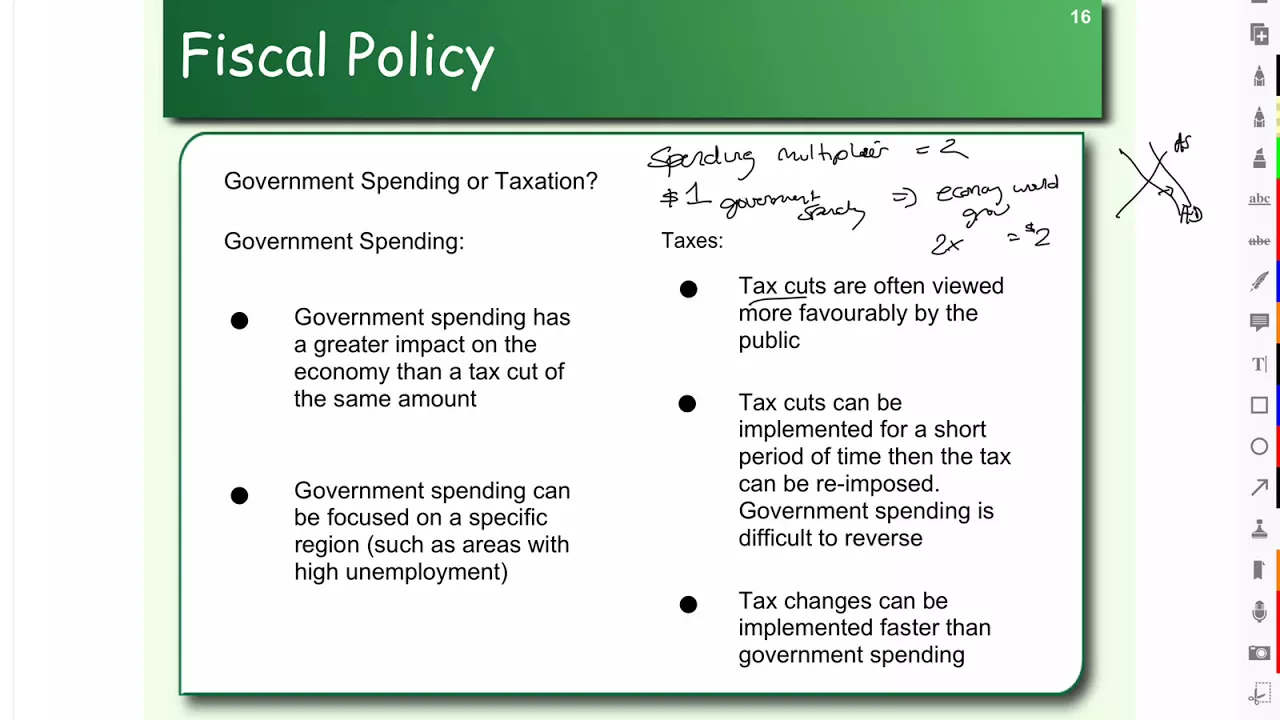




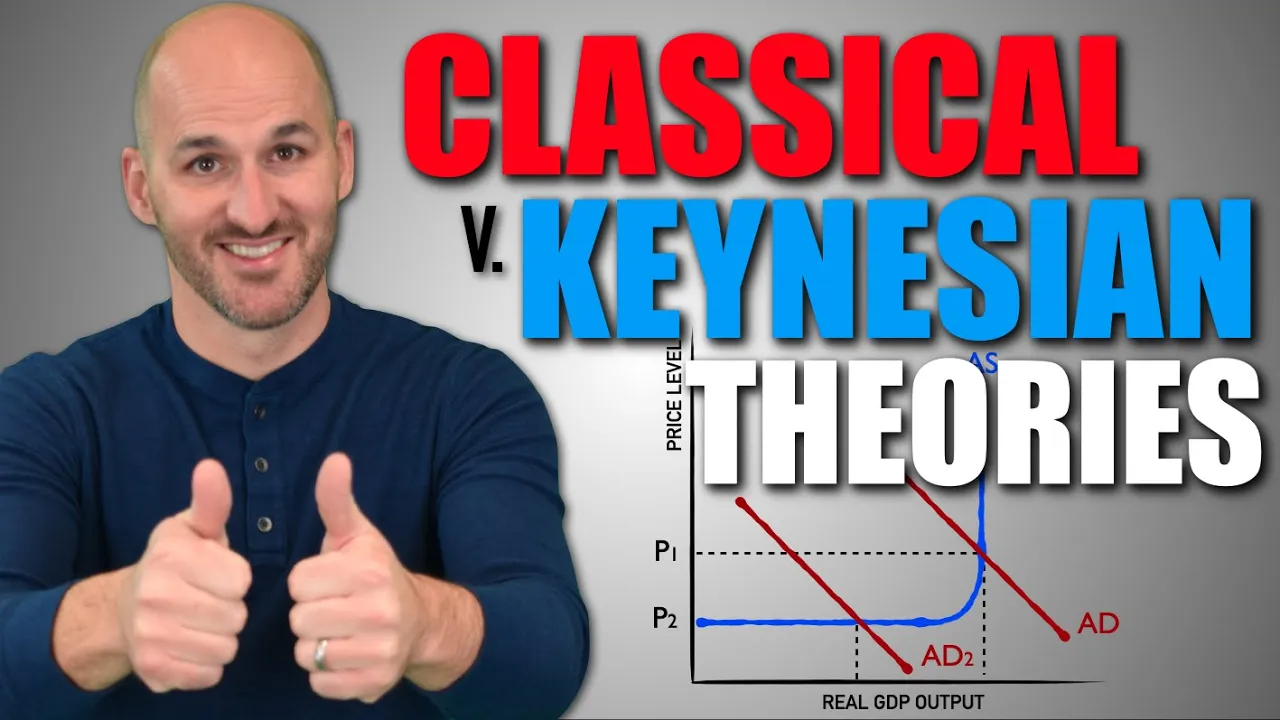
Fiscal policy involves government manipulation of spending and taxation to influence economic conditions, with expansionary fiscal policy (increasing government spending or cutting taxes) used to combat recessionary gaps and contractionary fiscal policy (reducing spending or raising taxes) used to address inflationary gaps; however, the effectiveness of fiscal policy depends on factors like the multiplier effect, which varies based on economic conditions and policy type, and is influenced by ongoing debates between classical economists who believe markets self-correct and Keynesians who advocate active government intervention to stabilize the economy.
Fiscal Policy and Stimulus: Crash Course Economics Explained
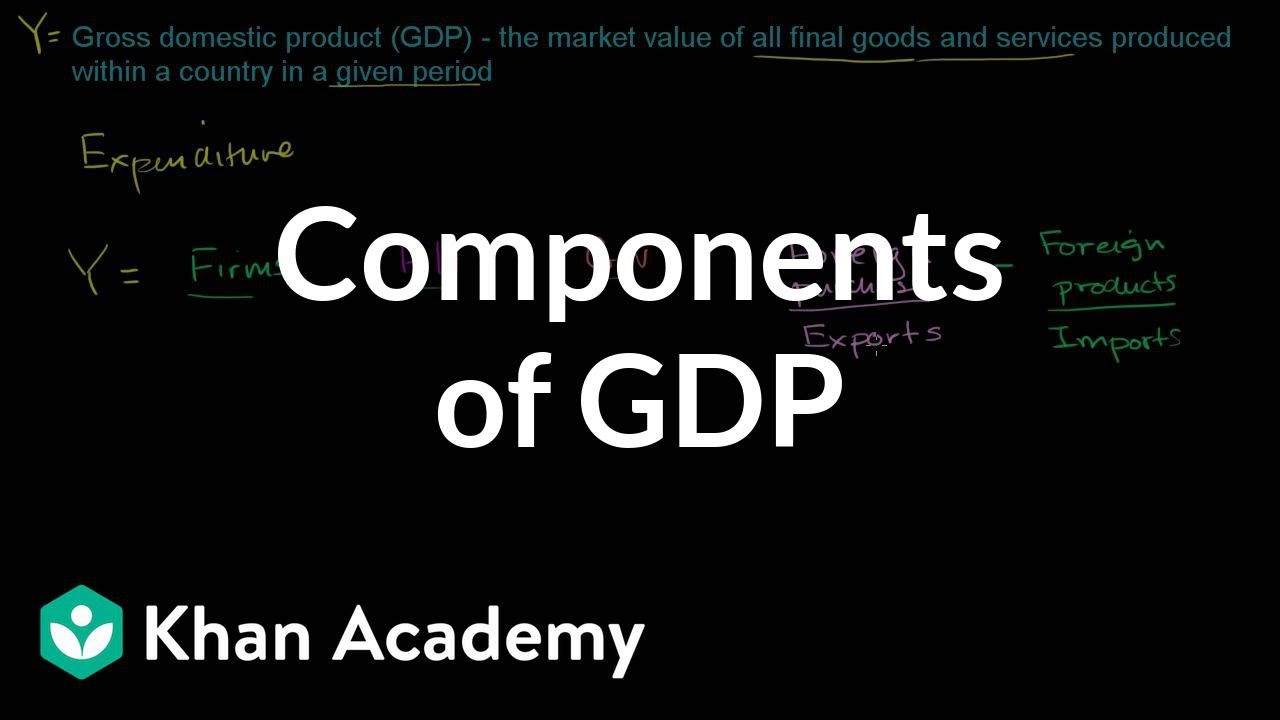
Added:The components of Gross Domestic Product (GDP), specifically the expenditure approach (Y = C + I + G + NX).
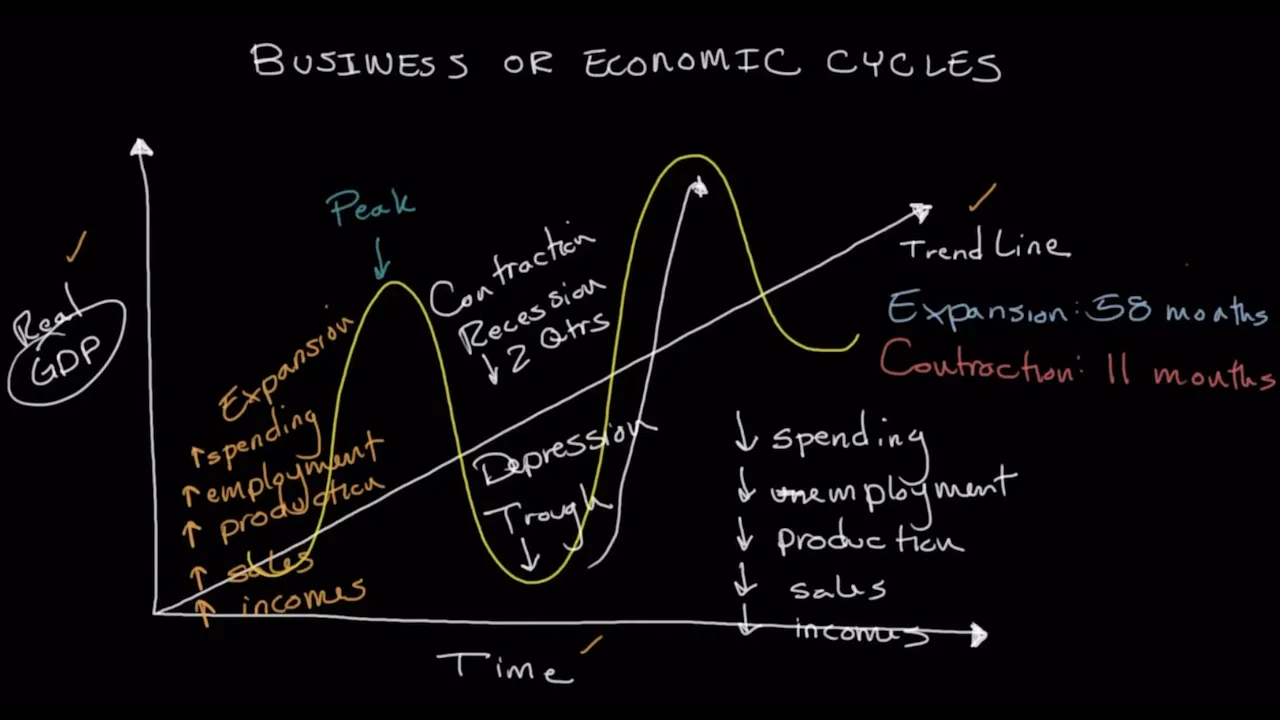
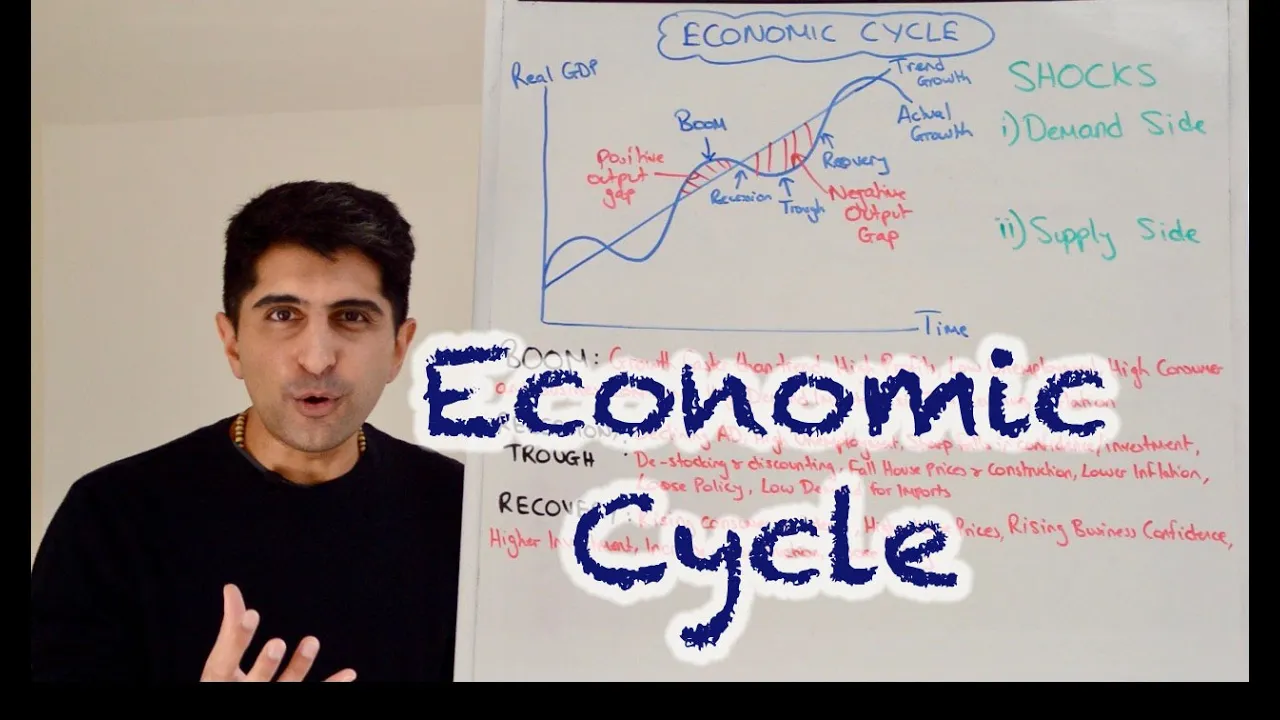
The stages of the Business Cycle (recessions, expansions, peaks, and troughs) and why economic stabilization is necessary.
The basic model of Aggregate Demand (AD) and Aggregate Supply (AS) and how shifts in these curves affect price levels and output.
The fundamental definitions of government revenue (taxation) and government expenditure.
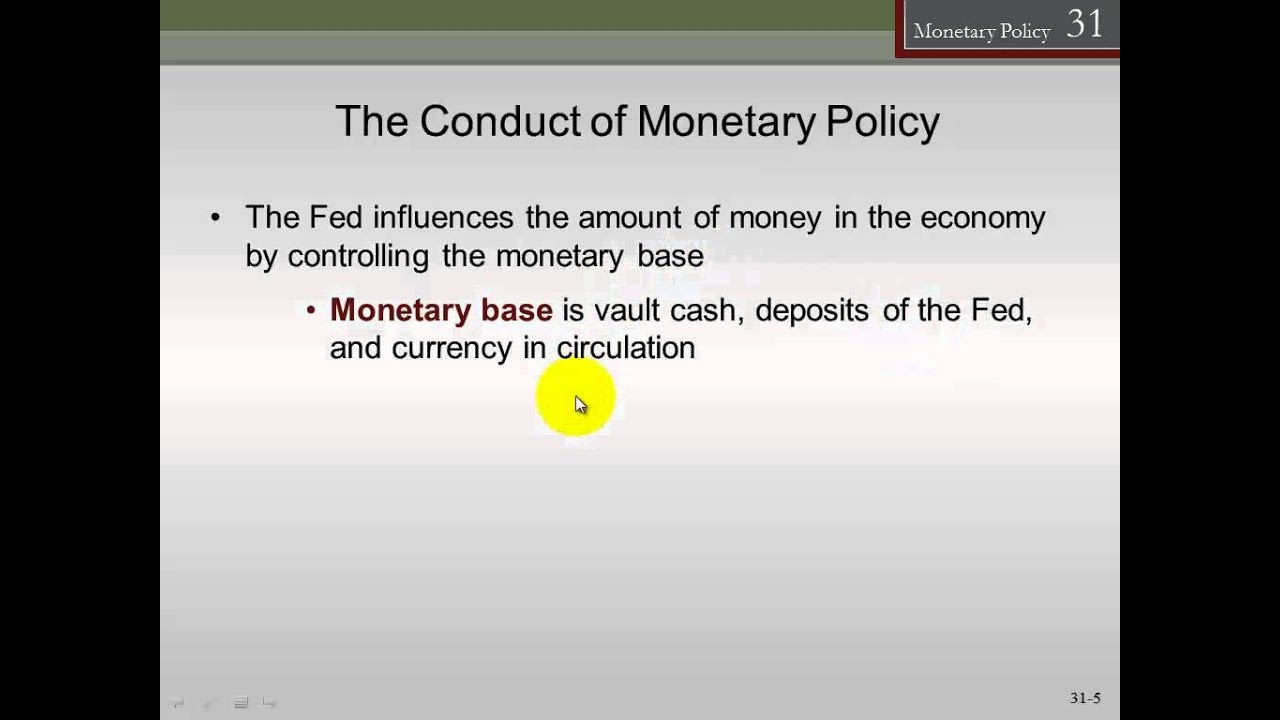
Monetary Policy and the role of central banks (e.g., the Federal Reserve) in controlling interest rates and money supply to manage the economy.
The economic consequences of persistent budget deficits, national debt, and the 'crowding-out' effect on private investment.
The practical limitations of fiscal policy, including policy lags (recognition, implementation, and impact lags) and political constraints.
The theoretical debates between Keynesian economics (advocating for active intervention) and Classical/Supply-Side economics.
2.2M views24.4Klikes11:53Original Release: 2015-09-16
Today, we peer into a world where shadowy government stuges manipulate the levers of fiscal policy from deep in their evil lairs.
They pick economic winners, and losers.
And control the business cycle, creating recessions and controling inflation to serve... their nefarious purposes.
Nah, Fiscal Policy is a completely legitimate tool used by non-shadowy government officials to correct fluctuations in the economy.
[Theme Music] Okay, in previous videos we've discussed the business cycle and how the economy goes up and down and up and down and up and down overtime.
This line represents the economy's potential GDP, the maximum sustainable amount that the economy will produce in the long run.
But the business cycle shows that the economy isn't always at its potential.
When actual output is below potential, economists call it a recessionary gap.
Workers are unemployed and factories are sitting unused Sometimes, actual output can briefly rise above potential.
Economists call this an inflationary gap.
Unemployment is super low and factories are working over time but it's not sustainable.
Eventually producers will bite up the price of scarce resources and higher cost will lead to more inflation rather than more output.
Obviously real life fluctuations aren't as predictable as the business cycle might suggest, but every modern industrialized economy sees times of boom and bust.
You know, you get your empire strikes back and you get you're phantom menace.
So look at the real GDP growth rate in the United States since 1920 see up and down overtime.
In the mid 1980s, things flattened out and we had been called the Great Moderation it seemed like the days of deep recessions and high inflation were over.
Then came the great recession, as a result of the 2008 financial crisis.
Back to the same old up and down, up and down of the business cycle.
Both recessionary and inflationary gaps cause serious problems.
High unemployment when the economy is bad?
That's bad, like really bad, And not just for the economy -- for people.
High employment rate have been linked to higher suicide rates more domestic violence, and social upheaval.
High inflation can be just as bad.
Rising costs wipe out savings, and have been the root of protests and riots throughout the world.
Well, this seems like a fun episode.
Stan, what's with all the doom and gloom?
Isn't there some way to smooth out these fluctuations?
I'm gonna answer my own question: there might be.
Many economists argue that policy makers should intervene in the macroeconomy in order to promote full employment or reduce inflation.
Today, we are gonna look at one of the ways to do this: fiscal policy.
The idea of fiscal policy is really simple, when the economy is going too slow, or too fast, the government can step on the gas or the brake by changing government spending, or taxes.
In the United States, that's the job of Congress and the President.
When the economy falls into a deep recessionary gap, the government can increase government spending, cut taxes, or do some of both, that's called expansionary fiscal policy.
The idea that government spending creates jobs and increases income for construction workers and teachers and other labours.
In turn, theses workers spend more of their additional income, increasing consumer spending and boosting the entire economy.
Cutting taxes follows a similar logic.
A tax cut will increase disposable income for consumers that will increase our consumer spending and boost the entire economy.
This is exactly what the U.S. did in 2009 during the depths of the Great Recession.
The American recovery and reinvestment act was a stimulus build that added more than 8 hundred billion dollars to the economy.
That stimulus was spilt 60-40 between new government spending and tax cuts and the expansionary fiscal policy funded new roads and bridges and upgrades to the electric grid, and those projects created jobs.
But when the economy has an inflationary gap the government can cut spending, or raise taxes or do some combination of the two.
That's called contractionary fiscal policy, and that's not half as fun.
The idea is that higher taxes will lead consumer with less money to spend, and lower government spending will mean fewer public jobs, all that should reduce consumer spending cooling off the economy and reducing inflation.
We don't see contractionary fiscal policy very often in practice because politicians rarely want to hit their voters with a slower economy, it's a hard sell and it could cost policy makers their job.
U.S. President George H. W. Bush famously stated "Read my lips, no new taxes." While campaigning in 1988.
A few years later, he agreed to raise taxes to reduce the debt and lost the election in 1992.
So the big question here is: Does fiscal policy actually work?
Does stimulating the economy with spending and tax cuts actually, you know, make the economy grow?
That is the most heated debate in modern economic, and it's been raging for decades.
It's been known to drive mild-mannered economists to use their loud voices on cable news shows.
Let's learn about it in the Though Bubble.
Classical theories assumed that the economy will fix itself in the long run, and that government intervention will, at best, lead to unintended consequences and, at worst, cause massive inflation and debt.
These theories dominated policy decisions during the earliers of the Great Depression, which saw little stimulus.
Economists argue that unemployed workers would eventually accept lower wages, since some pay is better than no pay, and resource prices would have eventually fall; since fewer people were using resources.
Lower cost would lead to more production, more jobs and poof, the economy is back on track.
At the time, many policy makers thought about a sick economy, the way doctors a thousand years ago thought about a sick patient.
The thinking was that problems resulted from accumulated imbalance, which could be cured by aggressive purging.
In the case of doctors, that meant bleeding their patients.
In the case of a recession, that meant standing back and letting the economy bleed jobs and output until balance was restored.
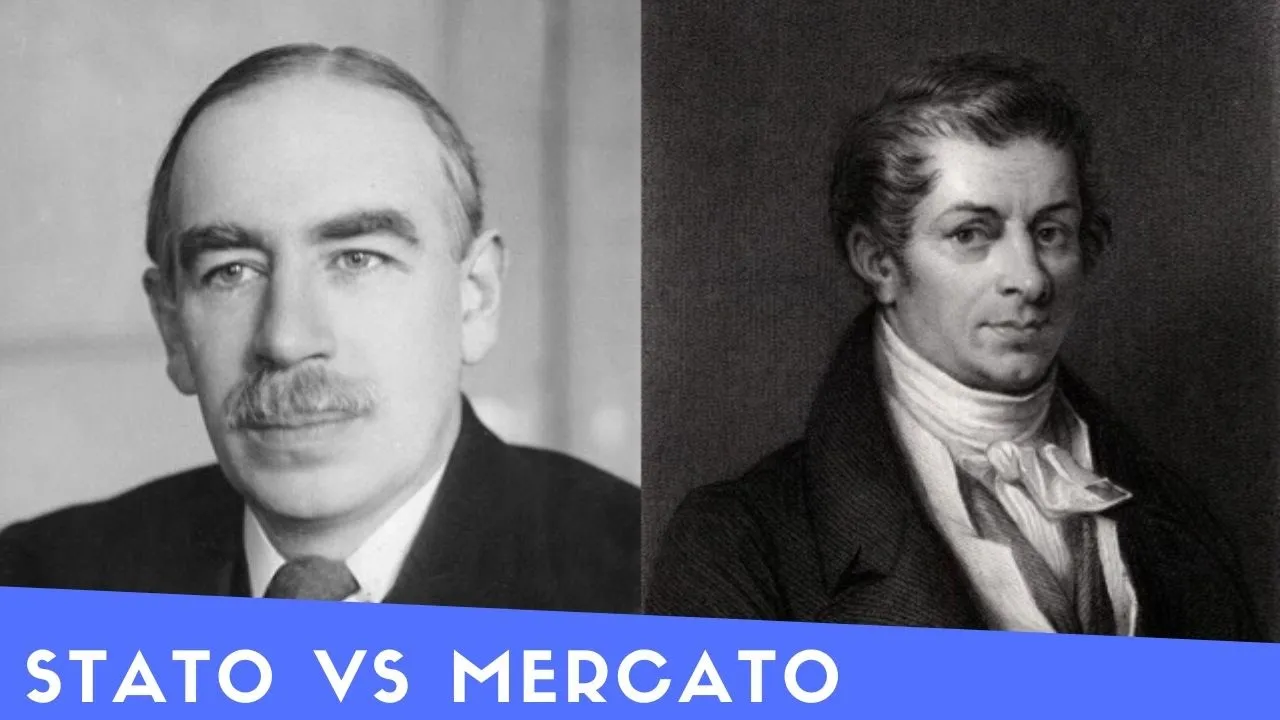
Then entered British economist John Maynard Keynes One of the most influential and controversial economist of the 20th century.
Keynes basically invented modern economics, and developed theories and models about spending in production.
He's the one that suggested using expansionary fiscal policy to speed up the economy, Keynes argued that government spending can make-up for a decrease in consumer spending.
So even if the economy does self-correct in the long run, there's no reason to wait it out His justification: "In the long run we are all dead."
Well, Keynes died in 1946, but his theories live on, and so does the debate. Thanks Thought Bubble.
So at first glance, Keynesian policy seem like the perfect solution to fix a sluggish economy.
If consumer spending falls, the government can spend instead. What's the harm in that?
Well, the government needs to pay for all that spending.
They can't just raise tax to cover because that would cause the decrease in consumer spending and defeat the purpose.
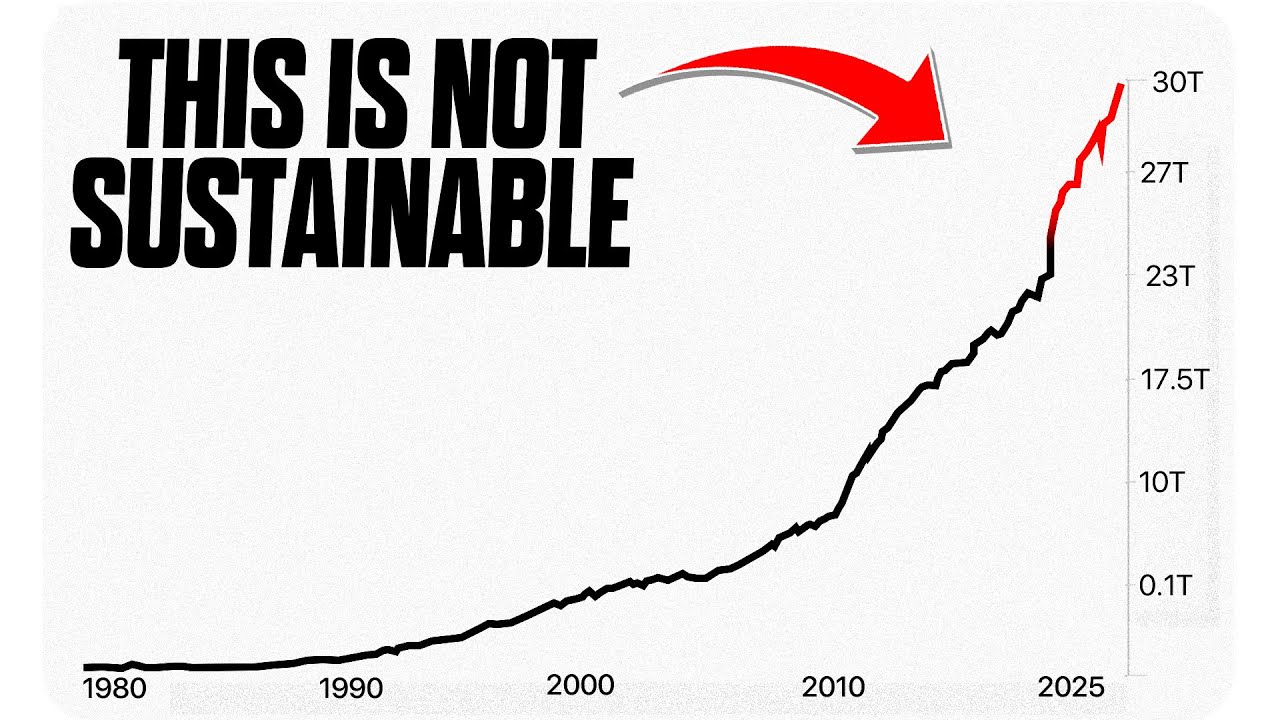
So to stimulate the economy, the government needs the deficit spend; they need to spend more money than they collect in tax revenue.
Now to achieve this, the government needs to borrow money, which will result in debt, and we are going to make a video about the national debt and different schools of economic thought. But for now, it's fair enough to say that the people who don't like Keynesian policy, don't like it because it causes debt.
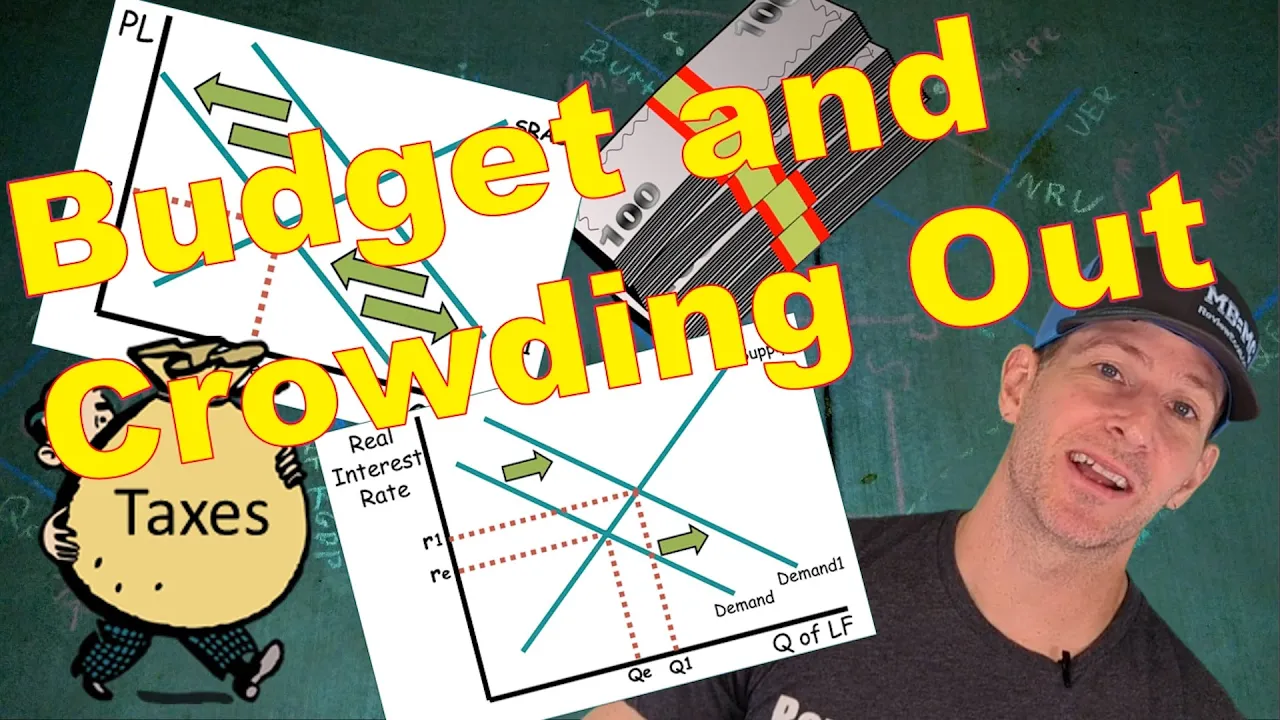
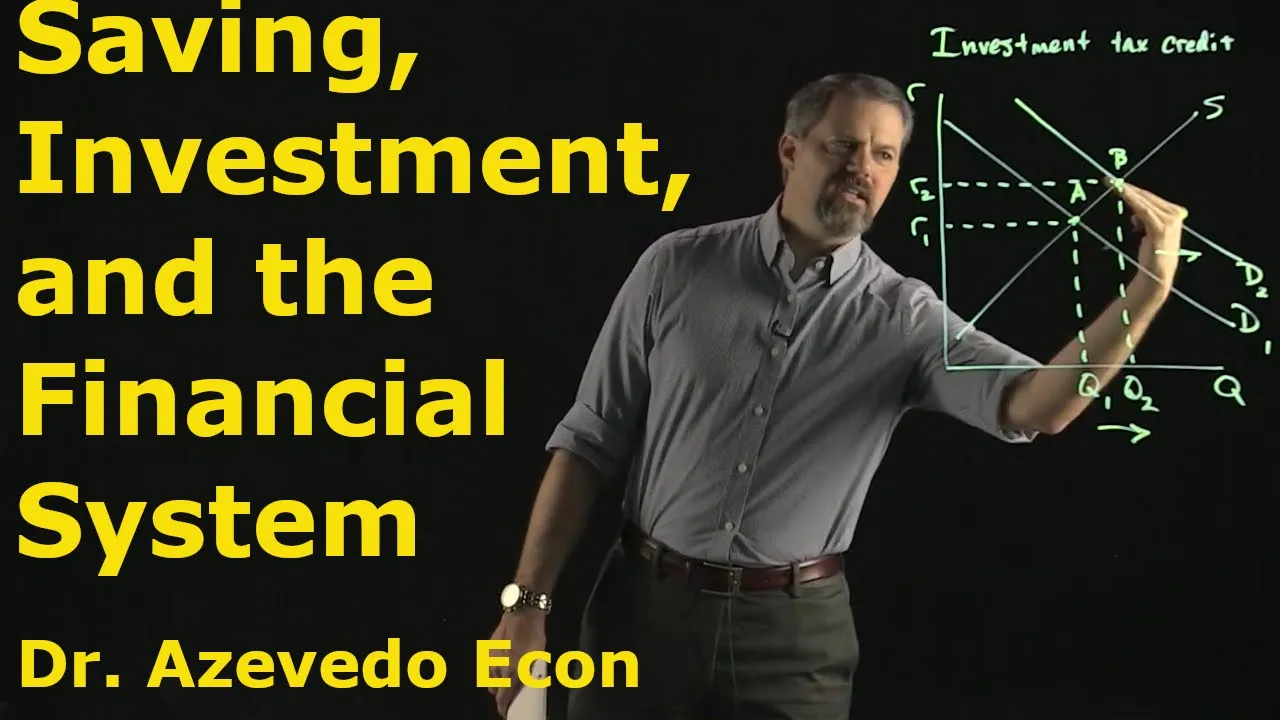
More technical argument against deficit spending is that it leads to something called CROWDING OUT.
If the government borrows a lot of money that increases interest rates, making it harder for business to borrow money and buy things like factories and tools.
This weakens the economy while increases government debt.
But Keynesian economists maintain that crowding out is only a problem if the economy is operating at full capacity, where all workers are employed and we're producing as much as we can. In that case, since total output can't really rise, more government spending will result in less private spending.
However, they argue that the situation is different when the economy is below capacity with lots of unemployed workers and vacant factories.
Now in that case, more government spending can raise overall output by putting idle resources back to work.
In fact, Keynesians will argue that government stimulus when the economy is below capacity can actually raise private spending.
All those newly hired workers will start spending more money.
So how can we figure out who's right?
We can start by comparing the actual performance of economies that receive stimulus to those that didn't.
As we mentioned, in 2009, the U.S. government launched a huge stimulus program in response to the financial crisis. Despite that, employment and GDP both fell. That sounds like a failure, but the majority of the economists think that the situation would have been far far worse without that stimulus. And while the U.S. was implementing stimulus, most European countries were doing the opposite -- they were pursuing a policy called AUSTERITY, raising taxes and cutting government spending to reduce debt.
Since 2011, when the U.S. and European policies really started to diverge, the U.S. economy has grown at an average rate of 2.5 percent, while the Euro-zone GDP actually shrank by one percent.
U.S. unemployment fell to 5.5 percent, while Euro-zone unemployment rose to 12 percent.
Another thing to keep in mind is that stimulus is complicated and it's hard to do well.
One reason is because of this thing called the MULTIPLIER EFFECT.
The idea here is that the government spends 100 dollars and the highway construction worker who got the money will save 50 and then spend 50 in a concert or something. And the musician who got that money will save 25 dollars and spend the other 25 and so on.
So because of this ripple effect, the initial increase in government spending of $100 might turn out to be $175 worth of actual spending in the economy.
Economists would call this a multiplier of 1.75.
But the question is, what's the real multiplier of the United States' economy?
Economists have come up with a wide range of estimates for that multiplier, and it turns out that it depends on different situations. When the economy's already booming, the multiplier seems to be close to 1.
If everyone is already working and the government wants to build a road, then they're gonna have to hire workers away from the private sector.
Sure public sector output increases, but private sector output falls and GDP is unchanged, it's a wash.
But when the economy's in recession with lots of unemployed workers and lot of unused capital, the multiplier is around 2.
Due to that ripple effect, an increase of 100 dollars of government spending, would lead to about 200 dollars of total spending, which put some people back to work.
Moreover, different policies have different multipliers.
Spending on welfare and unemployment seem to give us the biggest bang for our buck, since people who have low incomes would likely to spend virtually all of their additional income.
Spending on infrastructure, and aid to state & local governments, also seems to have a fairly high multiplier, about 1.5. But general cuts to payroll and income taxes seem to have a multipler of about 1: if the government cuts $100 in taxes, the economy's going to grow by about $100.
More targeted tax cuts and tax credits have lower multipliers, since they tend to benefit those who have higher incomes who often save rather than spend additional income.
But what we want is something that will affect the economy rapidly, but also have a high multiplier.
So tax cuts put money in people's hands quickly, but that money might get saved rather than spent.
On the other hand, infrastructure projects like making roads and bridges have strong multipliers, but it may take months or even years to complete.
So fiscal stimulus maybe an important tool, at least when it comes to a recession, but it doesn't mean that it's easy to do or that all stimulus is created equal.
So fiscal policy has its advantages and drawbacks but in the end, maybe it's all about that thing you didn't have when you were in 6th grade -- Confidence.
When people are miserable and unemployed, they want to feel like help is on the way.
Doing nothing doesn't create the kind of confidence that will get consumers and businesses spending again, and it doesn't get politicians reelected.
So it looks like Keyne's policies are here to stay unless... Crash Course Economics is made with the help of all of these nice people.
You can help make Crash Course free for everyone, forever. Through your support on Patreon.
Patreon is a voluntary subscribtion service that allows you to support the content you love.
And earn great rewards. Check it out at: patreon.com/crashcourse.
Thanks for Watching! And DFTBA.
Up Next

20:06
Fiscal Policy: Government Spending Multiplier Explained (Economics) | AP/IB Macro
@JasonWelker
73.7K views•2011-11-28
5:07
Impact of Yuan in Indo-Russian Trade Amid Sanctions
@WION
261.9K views•2022-07-01

7:31
Deficits & Debts Explained: Economics of Government Spending
@crashcourse
1.5M views•2015-09-23

113:18
The Age of Easy Money: Fed & Inflation | Full Documentary
@frontline
21.2M views•2023-03-15
Related Study Plans & Knowledge Roadmaps
Structured learning paths in Economics
economics
Sovereign Debt: Defaults, IMF & Restructuring
01Introduction to Sovereign Debt & Government Bonds
02Debt Sustainability & Credit Ratings
03Anatomy and History of Debt Crises
+ 2 more learning modules
12h5 modules
Explore Roadmap
economics
Market Design: Matching Theory & Gale-Shapley
01Introduction to Market Design and Price-Free Markets
02Two-Sided Matching & The Gale-Shapley Algorithm
03School Choice Systems and Mechanism Design
+ 2 more learning modules
10h5 modules
Explore Roadmap
economics
Impossible Trinity: Forex, Capital & Policy
01Introduction to Monetary Policy and Central Banking
02Exchange Rates and International Capital Flows
03The Mundell-Fleming Model
+ 2 more learning modules
8h5 modules
Explore Roadmap
economics
Healthcare Economics: Market Failures & Systems
01Introduction to Healthcare Markets and Market Failure
02Asymmetric Information and Adverse Selection
03Moral Hazard and Insurance Design
+ 2 more learning modules
12h5 modules
Explore Roadmap