







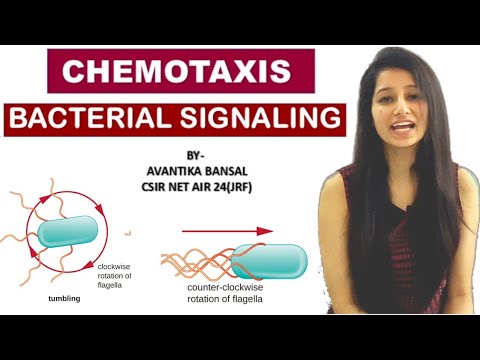



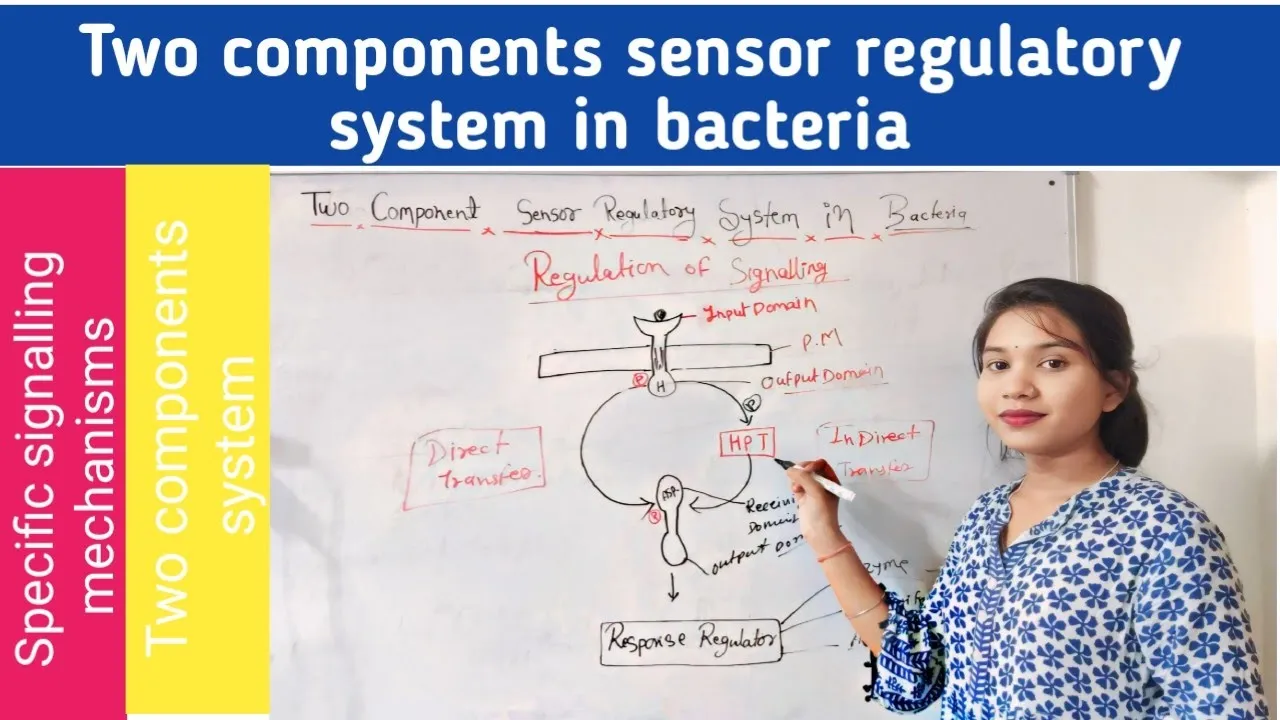



The two-component signaling system is the most common bacterial signaling pathway, consisting of a sensor kinase that autophosphorylates upon detecting extracellular signals and a response regulator that receives the phosphate to control cellular responses; in bacterial chemotaxis, this system regulates flagellar rotation through phosphorylation of CheY, where clockwise rotation causes tumbling and counterclockwise rotation enables forward swimming, allowing bacteria to navigate chemical gradients by adjusting run duration and tumble frequency based on attractant or repellent detection.
Two-Component Signaling in Bacterial Chemotaxis Explained
Added:Basic bacterial anatomy and locomotion, specifically the structure of the flagellum and the mechanics of flagellar rotation (runs and tumbles).
Fundamental concepts of cellular signaling, particularly protein phosphorylation and the role of histidine kinases and response regulators.
The definition of chemotaxis, including how microbes perceive and respond to chemical concentration gradients in their environment.
The organization of the bacterial cell envelope, focusing on the localization of transmembrane receptors (methyl-accepting chemotaxis proteins).
The molecular mechanism of sensory adaptation, specifically how receptor methylation by CheR and CheB allows bacteria to 'remember' chemical gradients.
Exploration of other diverse bacterial two-component systems, such as those regulating virulence factors, antibiotic resistance, and environmental stress responses.
Quantitative and biophysical modeling of signaling networks, examining how feedback loops maintain sensitivity and prevent saturation.
Applications in synthetic biology, such as engineering flagellated bacteria with novel receptor complexes to seek out and degrade environmental toxins.
10.3K views89likes7:06Original Release: 2022-07-02
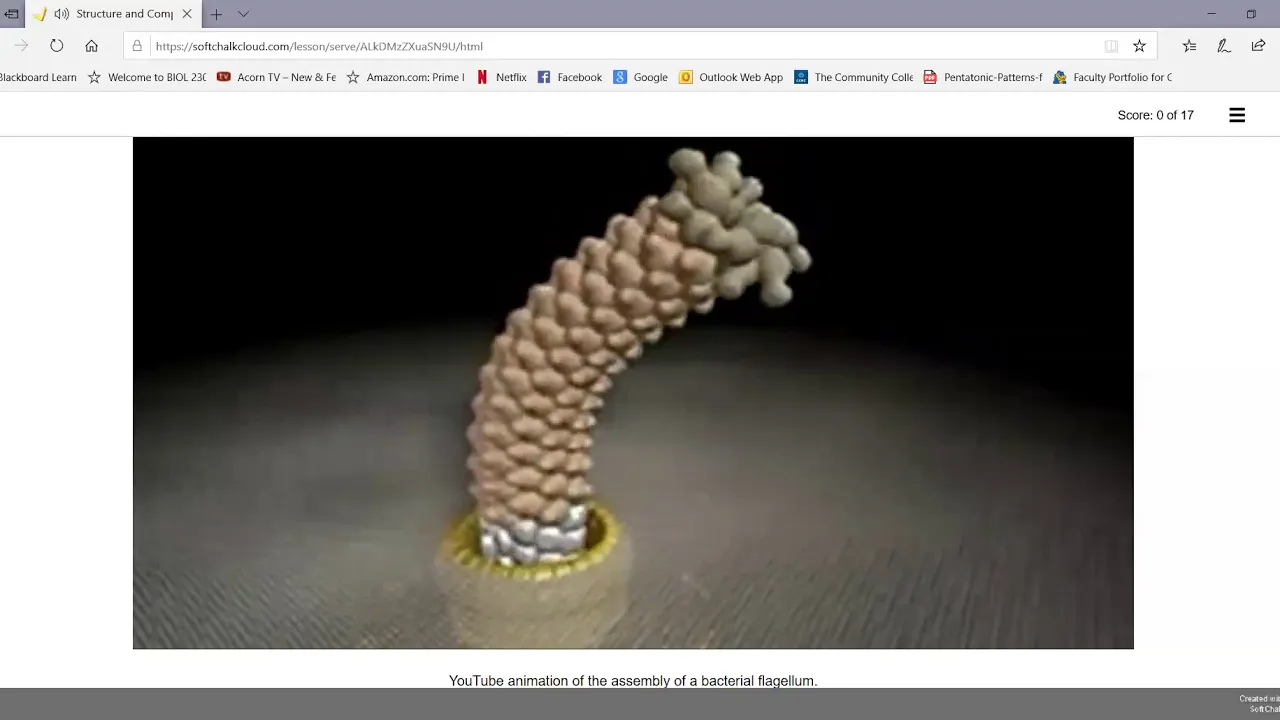
hi friends welcome back to my channel in this video we are going to discuss about two component signal system and the chemotaxis in bacteria if you are new to this channel please press the subscribe button and click on the bell icon to get notified so what is two component signaling system the two component signaling system is the most common form of signaling pathway that responds to extracellular events in bacteria and in plants canonical two component system in bacteria consists of a sensor that is an autophosphorylating histidine kinase and a response regulator which transfers the phosphate from sensor kinase to a conserved aspartate within the same domain the sensor histidine kinase is located in the membrane and it can be activated by binding a ligand that is in the extracellular medium the activation causes the kinase to autophosphorylate and the reaction transfers phosphate from atp on the histidine residue in the kinase domain the sensor interacts with effector proteins that is the response regulator and the response regulator has two domains conserved receiver domain and the affected domain the receiver domain catalyzes the transfer of phosphate group from histidine on the sensor to aspartic acid residue in its own domain this activates the effector domain and the usual end target of the two component pathway is the regulation of gene transcription so this is the the basics of two component signaling system now let's see what is chemotaxis in bacteria the movement of organism in specific direction in response to the chemical stimulus is called the chemotaxis so that is the definition of chemotaxis that means the movement of bacteria in specific direction in response to the chemical stimulus the chemotaxis in bacteria depends on signaling pathway that terminates at the flagellar motor the bacterial flagellar motion is rotatory in nature and the membrane proteins mod a and mod b along with the plate g create a proton channel that drives the rotation of the flagellum so the membrane proteins that are involved are mode a and mod b along with the flea g that is flig the rotation of flagella can be clockwise or counterclockwise when the flagella rotates clockwise forward motion ceases and the cells will tumble but counter clockwise rotation of the flagella results in the forward motion or the run so there are two types of rotation of flagella that is clockwise and counterclockwise so clockwise results in the tumble and the counterclockwise result in the forward motion or the run in the absence of a chemical gradient the bacteria such as e coli move in random fashion that includes runs where the swell is swimming forward and tumbles when the cell stops that is the uh general phenomena when there is no then there is absence of chemical gradient this moves in a random fashion following a tumble the direction of the next run in the cell is random however if a gradient of chemical attractant is present these random movements become biased the absence of chemical gradient results in the random movement but where is a presence of attractant this can be biased as the bacterium senses that it is moving towards a higher concentrations of the attractant the runs becomes longer and tumble less frequent so presence of attractant results in more of a forward motion and less of a tumble and if the bacterium is sensing a repellent the same general mechanism applies although in this case it is a decrease in the concentration of repellent that promotes the the bacterial chemotaxis is mediated by transmembrane receptors and phosphorylation relay systems and it depends on a two component signaling pathway activated by histidine kinase associated receptors so this we have already discussed in the beginning the chemotaxis receptors are methylated during the adaptation and so are called as the methyl accepting chemotaxis protein that is the mcps the phosphorylation relay system enables the chemotaxis receptors to control the flagellar motor in e coli the binding of repellent increases the activity of the receptor which binds achieve w or the adapter protein and ga or the sensor protein that act as a histidine kinase thereby stimulating ga to phosphorylate itself on the histidine so there are two proteins involved that is the adapter protein and the sensor protein the adapter protein is also known as the gw and the sensor protein is called as the ga so the cheat gw results in the phosphorylation of ga on the histidine domain and the ga quickly transfers the covalently bound high energy phosphate directly to aspartate of gy that is the response regulator to generate a chi phosphate so what happens is gw the adapter protein and ga binds to that and autophosphorylates and this transfers the phosphate to the gy that is the response regulator the phosphorylated chi ah dissociates from the receptor and diffuses through the site or cytosol and binds to the fragile or morton and causes it to rotate clockwise the resulting is tumbling so phosphorylated state of uh chi remains only for few seconds the protein she said accelerates the phosphorylation of chi phosphate thereby inactivating it so there is another protein called the g cell that d phosphorylates the chi to stop the movement the binding of an attractant has opposite effect it inactivates the receptor and therefore decreases the phosphorylation of chi and gy which result in the counterclockwise flexor rotation and resulting in the forward motion or the run each of the phosphorylated intermediate decays in about 10 seconds enabling the bacterium to respond very quickly to changes in the environmental factors the response to an increase in the concentration of attractant or repellent is only transient even if the higher level of ligand is maintained as the bacteria desensitize or adapt to the increased stimulus the adaptation is mediated by covalent methylation a methyl transferase or the gr catalyzes the methylation of mcp these are the chemotaxis protein that are involved in the signaling or that is the ga gw gy gz and gr so ga4 cytoplasmic uh sensor kinase uh gw is an adapter protein linking the sensor protein with the ga gui is the response regulator controlling the flagellar motor and the chi z is an um aspect specific protein phosphate is for the signal termination and gr is the methyl transfer is catalyzing the methylation of mcp so hope you are clear with this topic if you like the video please press the like button and share it with your friends thank you
Up Next

6:19
Biofilm Formation Stages: The City of Microbes Explained
@biologygoal
29.2K views•2019-07-28

50:12
Bacterial Communication: Quorum Sensing and Biofilm Formation Explained
@JHUAAP
12.6K views•2011-06-28

5:35
Enteric Nervous System Explained: The Gut's Brain | Neurobiology Lecture
@alumniu6029
438 views•2018-09-12

7:08
Bacteriophages: Earth's Deadliest Killers and Future Antibiotics
@kurzgesagt
34.6M views•2018-05-13
Related Study Plans & Knowledge Roadmaps
Structured learning paths in Biology
biology
RNAi: Biogenesis, RISC & Gene Silencing
01Molecular Biology Foundations: DNA to Protein
02Introduction to RNA Interference (RNAi)
03Molecular Biogenesis of miRNA and siRNA
+ 2 more learning modules
10h5 modules
Explore Roadmap
biology
Mycorrhizae: Signaling, Biophysics & Ecology
01Foundations of Mycorrhizal Symbiosis
02Molecular Signaling and Root Colonization
03Biophysics and Bioenergetics of Nutrient Exchange
+ 1 more learning modules
11h4 modules
Explore Roadmap
biology
Circadian Clocks: TTFL, SCN & Periphery
01Foundations of Molecular Biology & Gene Expression
02Introduction to Chronobiology and Actograms
03The Core TTFL: Molecular Architecture of the Clock
+ 3 more learning modules
14h6 modules
Explore Roadmap
biology
Population Genetics: Math, Drift & Selection
01Genetic & Probability Foundations
02The Hardy-Weinberg Principle and Baseline Models
03Mathematical Modeling of Natural Selection
+ 3 more learning modules
18h6 modules
Explore Roadmap