


























Wind turbines convert wind energy to electricity through aerodynamic blade design that generates lift from relative wind velocity, with efficiency limited by Betz's Law to a maximum of 59.3% due to the physical requirement that some wind must exit downstream; the system includes a gearbox to increase low blade rotation speed for generators, a yaw mechanism to align with wind direction, and blade tilting for optimal angle of attack.
How Do Wind Turbines Work? | Wind Energy Technology Explained
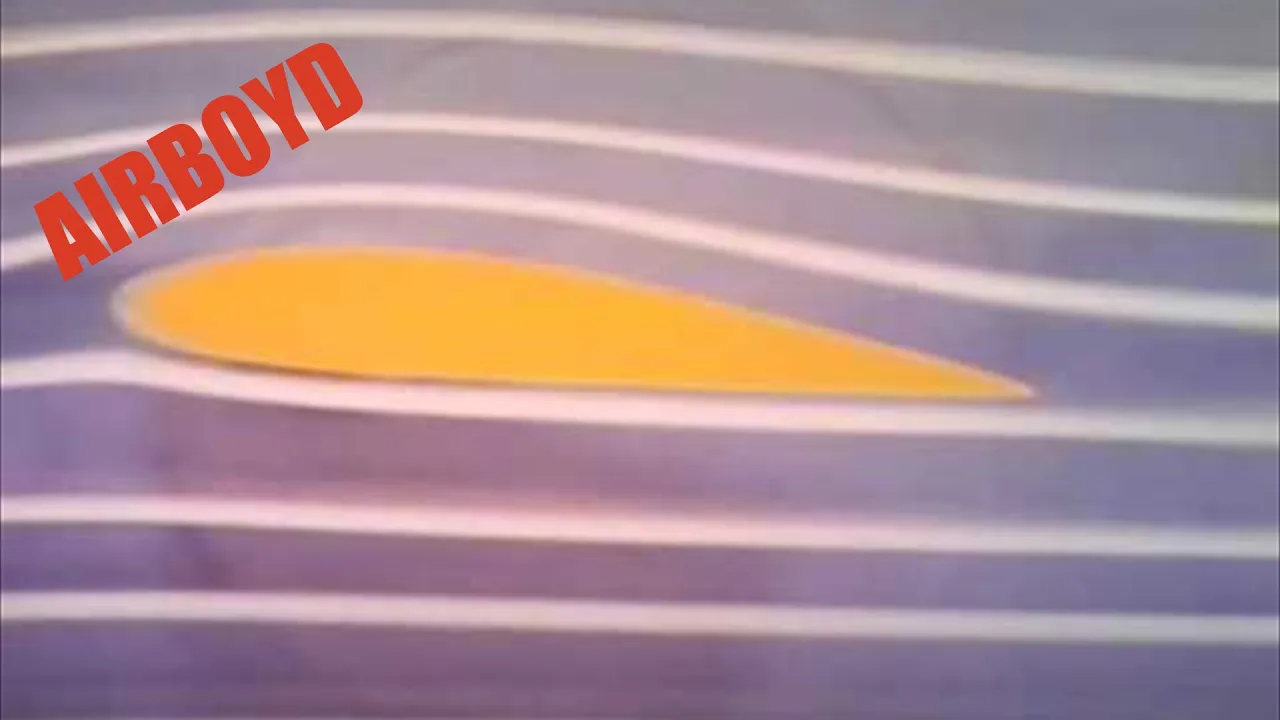
Added:Basic Aerodynamics: Understanding Bernoulli's principle, lift, and drag forces acting on an airfoil.
Conservation of Energy: Familiarity with the conversion of kinetic energy (wind) into mechanical energy and then electrical energy.
Rotational Mechanics: Key concepts of torque, angular velocity, and gear ratios used in mechanical transmission.
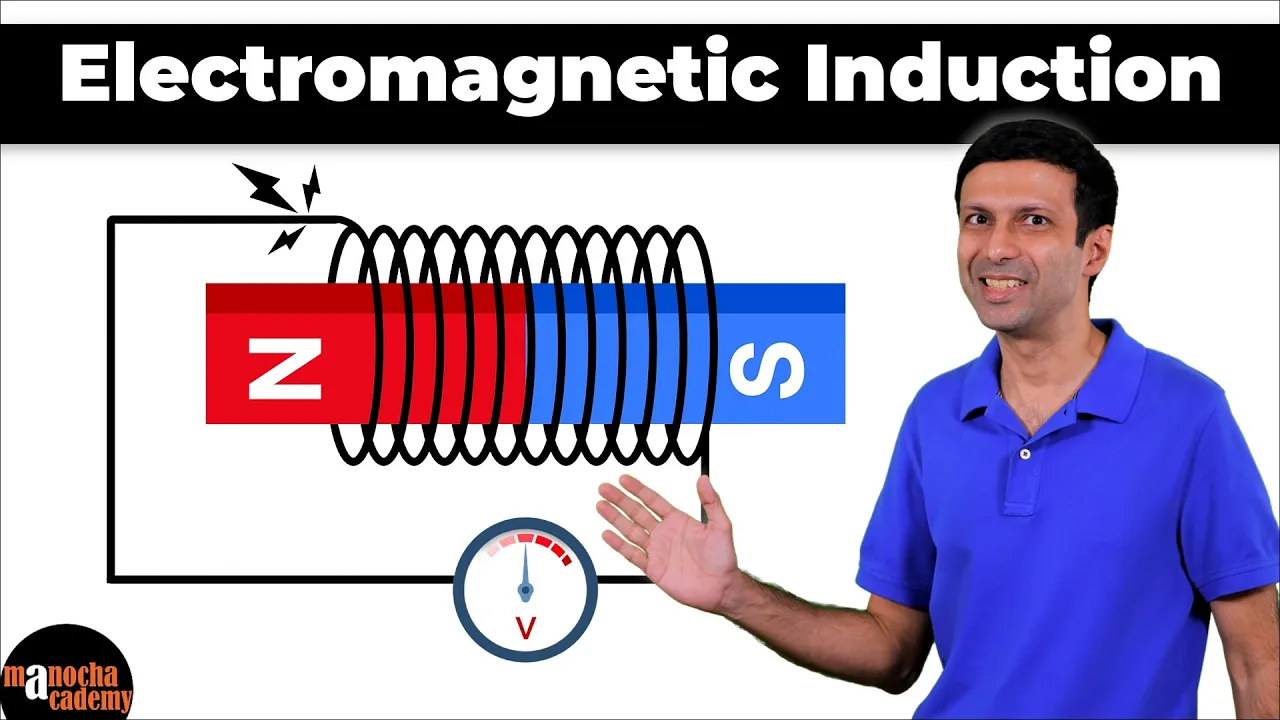
Electromagnetic Induction: The fundamental principles of how generators convert rotational movement into electrical current (Faraday's Law).
Grid Integration and Power Electronics: Studying how variable AC power from wind turbines is converted (AC-DC-AC) and synchronized with the electrical grid.
Offshore Wind Technology: Exploring the engineering challenges of floating foundations, deep-water anchoring, and marine environment survivability.
Wind Farm Aerodynamics and Wake Effects: Analyzing how upstream turbines affect the wind flow and energy yield of downstream turbines.
Economic and Environmental Life-Cycle Assessment: Evaluating the Levelized Cost of Energy (LCOE), capacity factors, and the carbon footprint of turbine manufacturing and decommissioning.
9.7M views78.6Klikes5:29Original Release: 2015-07-29
Windmills have been assisting mankind to convert the energy contained in wind to many other useful forms for the last two thousand years.
Today's wind turbines are capable of converting a great amount of energy in the wind into electricity.
This is due to the blades which are developed using state-of-the-art aerodynamic analysis and the other performance-enhancing equipment.
In this video we will explore these different set of technology in a simple yet scientific way.
First, let's get into its basic working If the blowing wind can turn the wing, we will receive electricity from the generator that is attached to it.
However, how does the blowing wind turn the wing?
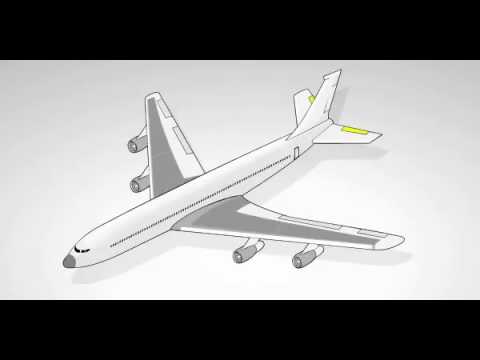
Let's have a close look at the blade.
The Blade has a lot of airfoil cross-sections consisting of different sizes and shapes from the root to tip.
The simple airfoil technology makes the wind turbine blade turn.
That means that a lift force is produced when a fluid moves over an airfoil.
This way the wind turbine achieves the basic rotation we are accustomed to seeing.
Just as in a moving train you experience things relatively, the moving wind turbine blade also experiences the wind relatively.
For the moving blade the relative wind velocity is as shown.
Therefore the wind turbine blade is positioned in a tilted manner in order to align with the relative wind speed.
As the blade velocity increases to the tip the relative wind speed becomes more inclined towards the tip.
This means that a continuous twist is given to the blade from the root to tip.
However this rotation cannot be directly coupled to a generator.
Because the wind turbine blades typically turn at a very low rate of rpm due to the issues of the noise and mechanical strength.
Considering this low-speed rotation we cannot produce any meaningful electricity frequency from a generator.
So before connecting to the generator the speed is increased in a gearbox.
The gearbox uses a planetary gear set arrangement to achieve the high speed ratio.
A break also sits in the nacelle.
The function of the brake is to arrest wind blade rotation during excessively windy conditions Consequently the electricity that is passed through the cables towards the base where a step-up transformer is situated.
The wind turbine should face the wind normally for maximum power extraction.
But the wind direction can change at any time.
A velocity sensor on the top of the nacelle measures the wind speed and direction.
The deviation in the wind's direction is sent to an electronic controller which in turn sends an appropriate signal to the yawing mechanism to correct the error.
You can see how the yaw motors turn the nacelle.
Thus the wind turbine will always be aligned with the wind direction: According to the wind speed the relative velocity anggle of the wind also changes.
A blade tilting mechanism tilts the blades and guarantees a proper alignment of the blade with the relative velocity.
Thus the blades are always at the optimum angle of attack with the relative wind flow.
Efficiency of the wind turbine is the really interesting topic.
To gain a good insight into wind turbine efficiency assume that you are measuring wind speed at upstream and downstream over wind turbine.
You can note that the wind speed at the downstream is much smaller than the upstream.
This is because the blades absorb some kinetic energy from the wind.
The same amount of energy is converted as mechanical power of the wind turbine.
It is interesting to note that a wind turbine absorbs 100 percent of the available kinetic energy only if the downstream wind speech becomes zero.
However zero wind speed at downstream is a physically impossible condition.
This cartoon animation clearly depicts this fact.
Zero downstream speed simply means the whole flow is stock.
This physical reality of the flow demands a certain amount of exit wind speed.
That means that there is a theoretically maximum efficiency a wind turbine can achieve.
This limit is known as Betz's limit.
Essentially it means that no wind turbine in the world can ever cross the efficiency limit of 59.3 percent.
We hope you have now developed a good inside of the operation a wind turbines.
Thank You!
Up Next

3:02
Windmill Energy Efficiency: The Physics of Wind Turbines
@MinutePhysics
543.3K views•2021-04-01

12:53
21cm Hyperfine Transition in Neutral Hydrogen: Radio Astronomy Basics
@AaronRobertParsons
12.4K views•2011-10-13
8:02
How Antennas Work: Electromagnetic Wave Propagation Explained
@SabinCivil
8.1M views•2019-07-07

27:14
Entropy and the Second Law of Thermodynamics Explained
@veritasium
27.5M views•2023-07-01
Related Study Plans & Knowledge Roadmaps
Structured learning paths in Physics
physics
Nuclear Physics (Decay, Fission & Reactors)
01Atomic Structure and the Binding Force
02Radioactive Decay and Half-Life
03Nuclear Fission Mechanics and Chain Reactions
+ 2 more learning modules
12h5 modules
Explore Roadmap
physics
Soft Matter (Polymers, Colloids & Rheology)
01Foundations of Soft Matter & Thermal Forces
02Polymer Physics and Macromolecules
03Colloids, Surfactants, and Self-Assembly
+ 2 more learning modules
38h5 modules
Explore Roadmap
physics
Analytical Mechanics: Lagrangian & Hamiltonian
01Mathematical Foundations: Calculus of Variations
02From Newtonian Mechanics to Constraint Dynamics
03The Principle of Least Action & Lagrangian Mechanics
+ 3 more learning modules
28h6 modules
Explore Roadmap
physics
General Relativity (Spacetime & Cosmology)
01Foundations of Relativity: Special Relativity
02The Geometry of Spacetime: Equivalence Principle & Curvature
03Einstein's Field Equations: The Mathematics of Gravity
+ 2 more learning modules
55h5 modules
Explore Roadmap