








![Supreme Court Rules In NYSRPA v. Bruen Concealed Carry Case [5 Takeaways]](https://i.ytimg.com/vi/G7EI6TFObAQ/maxresdefault.jpg)






In self-defense law, the concept of 'imminence' determines when a threat becomes actionable, with weapons having no innocent use (like Molotov cocktails) being considered imminent threats as soon as they are in someone's possession, while weapons with innocent uses (like baseball bats or unloaded firearms) require additional threatening behavior before being considered imminent. Similarly, in criminal law, negligent discharge differs from reckless conduct: negligence involves a failure to exercise reasonable care, while recklessness requires consciously disregarding a substantial and unjustifiable risk, which is the mental state required for charges like deadly conduct.
Legal Analysis: Gun Laws, Specialized Cases, and Reforms
Added:Understanding of the Second Amendment to the U.S. Constitution and its historical legal interpretations.
Basic knowledge of federalism and how state-level laws interact with federal statutes in the United States.
Familiarity with foundational federal gun legislation, specifically the National Firearms Act (NFA) of 1934 and the Gun Control Act (GCA) of 1968.
An understanding of what constitutes a felony conviction and the general concept of civil rights restrictions resulting from criminal records.
In-depth analysis of landmark Supreme Court rulings on gun rights, such as District of Columbia v. Heller and NYSRPA v. Bruen.
Study of the legal processes and civil rights restoration mechanisms for individuals with past felony convictions.
Comparative analysis of international firearm regulations and their correlation with public safety outcomes.
Exploration of modern legislative advocacy, lobbying, and the constitutional debates surrounding potential gun control reforms.
55.5K views5.2Klikes18:00Original Release: 2025-06-16
Most states, not you, New Jersey. Non not no New Jerseys, but yeah, in most states they are not fire. I mean, they're not firearms under the federal definition. They're not firearms under most states law. Some states are going to say felons also can't carry yada yada yada yada, but for the most part. Yeah.
And definitely here in Texas.
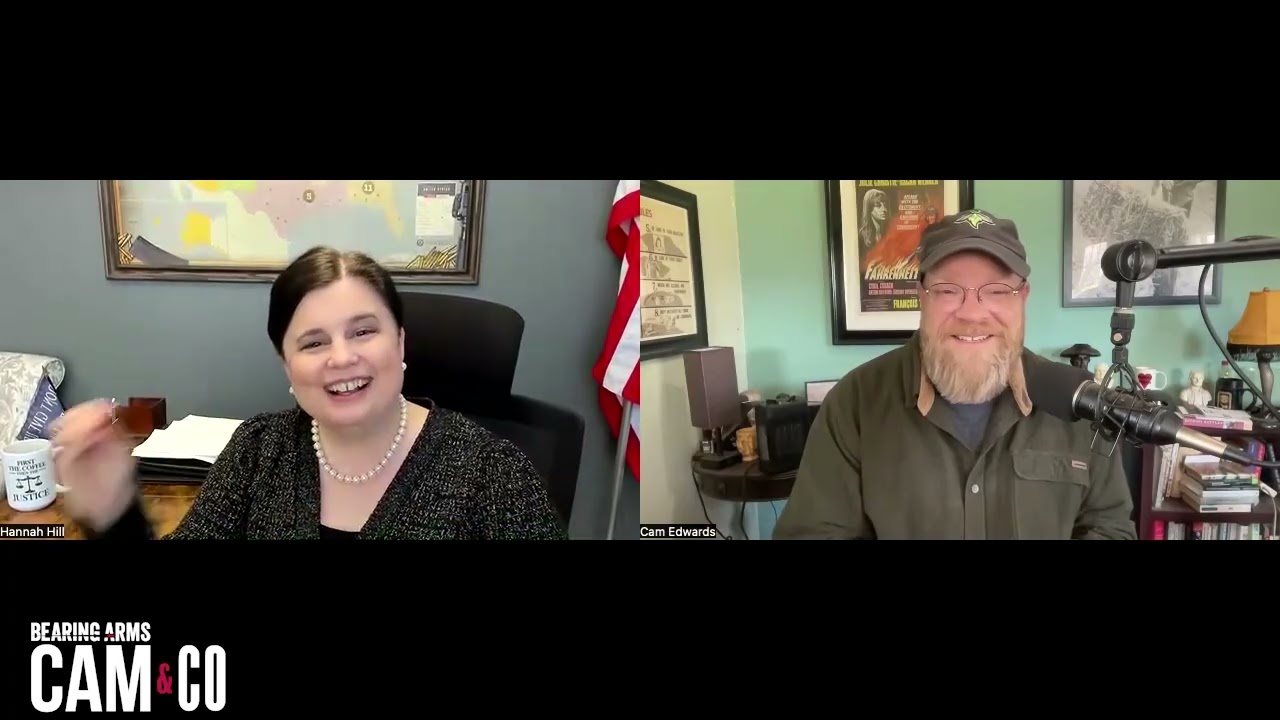
We armed attorneys. Today, we are back with another mailbag episode. Stick around. We're going to talk about a Hearing Protection Act update. We're going to talk burners and we're going to talk about when your personal life can be brought into the courtroom. But before we get started, show your support for the Second Amendment by hitting the like button. And we got a full docket today. We got a full sheet. So, let's just start it off with uh Apache Paul.
Off topic, but relevant today. Is a Moff cocktail an imminent deadly threat before it is lit? That's the C. That's the part I was waiting to see your re I was looking for your initial reaction, then I want to see the rest of your reaction. before it's lit, before it's thrown. So, I love this. I actually pulled this question. I love this question because there are instances in which a known weapon is not a threat before someone threatens you with it, right? I mean, think somebody carrying a baseball bat could look very I mean, there are instance where you're like, "All right, that's a threat right off the bat." carrying a skate skateboard or I think think of like a a sword in a sheath. Sure. Yeah. Sure. For all the sword carriers out there.
So, yeah. I mean, there there are for sure there are times when you're like, well, they're carrying something and you know that it could hurt you, but you really got to wait till they're like kind of starting to look like they're going to hurt you. see the lighter going. Well, I was going to say this is I mean, yes, you still have to wait for eminence, but you don't have to wait as long cuz there is not there's not an innocent use to a Molotov cocktail. Not that I've seen.
I could be. Is it just dark outside?
Sure. Light the wig. I mean, no. No.
There's Right. So, this is one of those scenarios in which like, you know, I'm trying to think of something else that's really really never going to be innocent. And this is about the best example because like you can be open carrying a handgun in a pollster, right? Well, it's because fine. I mean, that's different. You know, that's this this is just a weapon.
Well, it's kind of like the you see the premeditation associated with causing serious bodily injury or death, property damage. um in a way that you know person's carrying a handgun. Guess what?
Lots of people carry handguns. Police carry handguns. Innocent use uh self-defense reasons. You don't really see a whole lot of defensive molotov cocktail use. Yeah. Someone's just got a machete in their hands in the middle of downtown. Like that's, you know, that's close to me in my mind, right? You're not you're not in the field, right? So like they're just scraping it on the ground.
This is a zombie movie. Um yes. So, I mean, I think absolutely I mean you see someone I mean I that's at least worth it's not lit, it's not thrown, someone's just got one in their hands. I mean other circumstances depending that is at least an opportunity for a use of force.
Go tackle the person. Um I mean there are you know potentially even draw your handgun and say stop right there. I mean, I wouldn't shoot him yet before Sure. before it progresses, but like you can start on your force continuum. 100%.
Well, and it's all about imminence, right? Because we see that pop up in self-defense. Virtually every single state has some kind of element of immediately necessary or if the person's about to use or attempt to use unlawful force or deadly force. So, your state's law is going to impact this a little bit, but you know, this is one of those I I haven't seen a case that addresses this, a self-defense use against a cocktail like this. Um, it's a really interesting hypothetical. It is a very interesting hypothetical. That's I was I was excited when I saw it. Apache Paul.
Okay, we have at Gary and Trisha one.
Will you be at goals again this year?
Richard, will you be at I really hope so. So goals is going to be August the 9th and 10th in Knoxville, Tennessee.
This is Gun Owners of America National Convention. This is the second time they've done it. The first one I was actually so blown away at how great a job go did. Great. Usually it takes a few years to like figure stuff out, you know, figure out the kinks, get people there. This was I will say a grand slam for there being their first one. So I would be very happy to be there. I think there's a very high likelihood that I'll be there. I don't think you'll be there though. I will not be there. It will probably be Richard and Edwin. Yeah, maybe. Maybe Richard and Leslie. Um I will either be in labor or have a newborn. So, um I will not be there. And although I almost went into labor at uh the NRA convention that one year, remember? Um I missed that by just a couple hours. Um I uh that was at least in Houston. Yeah. So, I'm not going to risk it. I will not be at goals this year. All right. Next one from Timothy Gro 5609. So, if the Hearing Protection Act passes and it's legal in my state to own a suppressor, does that mean that I could build my own? Does it have to be serialized? So, there's a couple hypotheticals built into this. There are a couple hypotheticals. So, we do not know. And someone was like really hard on this the other day. I don't know if you saw. They're like, "Well, you could just read the budget bill and figure these things out." And it's like, "Okay, first of all, no, because I have to feed my family by taking actual clients. So, I will read the reports of what's in the budget bill at this point. I mean, I read the I mean, I've read the the substaring protection act. Also, it is it's still being negotiated. Exactly. Speculation at this point is fine. We can all speculate wildly. Whatever is currently written in what the House has passed is absolutely meaningless. Absolutely meaningless. So to that whatever grouchy old man wrote that a couple weeks ago, it's apparently it's been living rentree in my head cuz it just I just remembered it. Um but no, so the answer is I don't know. I mean, as as it currently stands, it would be far more likely that um your suppressor is still a 4473 item. At that point, could you manufacture your own in the same way that you can manufacture your own other 4473 items? perhaps.
Yeah, I would say that's probably the most likely scenario. They're treated just like a Gun Control Act firearm. Um, getting a, you know, maybe assembling this thing whole cloth. If it's unregulated, if you could build a firearm under your state's law, then you should be just fine. But is that a consideration they put in? They're like, "Hey, we're cool with someone walking into the gun store filling out a 4473.
We're not cool with, you know, your homemates." Homemade. I mean, I could certainly see that being something that is an issue here. So, the Senate can do I mean, they literally can do anything at this point. Yes. So, we do not know.
We do not know the answer, but it is a fascinating consideration and something we should all definitely be thinking about like what kind of world would we live in if this happens, but we don't know yet. And I'll say that just the latest on short act. I mean, their pressure is mounting to get the short act back in there. So again, it looks like Hearing Protection Act has a very high likelihood of making it through the reconciliation process. Short act, I'll say lesser of a chance. That's the world we live in today. This information is changing. I'm going to say absolutely no on the short act because I said that about the Hearing Protection Act and I was wrong. So I think maybe I'm like reverse jinxing it. If I say if I guess I guess in the negative there prediction locked in. Okay. All right. So, now we've got um at KN Discful um when can your personal life be admissible in court? From what I've heard, the prosecution can't bring up your personal life as it's considered hearsay and irrelevant to the facts of the case at hand. I think the prosecution for Kyle Writtenhouse got a spank.
Okay. Because they tried to say Kyle chose to remain silent until trial. I just don't like to think of the lawyers at trial getting spankings because it's either me or it's someone that I really hate in the moment and it just seems like a like I want them to get punched in the face. So, generally with their hearsay, you know, why is personal life admissible, not admissible? It's really going to depend. It's it's a judge's call ultimately, but typically, you know, when you are in trial for guilt or innocence, all that should be before the court, the jury, is did this thing happen? Did this not happen? And then we're looking at pieces of evidence.
Does this tend to show more likely than not or or not? Did this happen or did this not happen? And the general rule is relevant evidence is admissible.
Irrelevant evidence not admissible. But sometimes, you know, there's exceptions to the exception to the right. And there's all sorts of things that fall into that, right? It's like relevance, yes, your general standard. But then is it more you got your 103 balance, right?
Is it more prejuditial than probative?
Then you've got like does it when in my law school we called it because this is what Tracy George called it in in our class the propensity box. Okay, that was my professor. Um so does it fall into the propensity box because if it is only relevant because it makes your action it makes your propensity like your trait for this thing more or less likely not allowed. So, like generally speaking, if um I don't know, let's say let's say that I am a habitual dog kicker and then I'm being prosecuted for animal cruelty and the state wants to say she has kicked three dogs on three different occasions in her past. That's probably not admissible because it has nothing to do with the allegation of that day. It's propensity box evidence. You seal it up and you put it away. So I, you know, I don't know. There's a lot, like Richard said, there's layers upon layers upon layers. So let's say you're charged with like a drug crime and you go on the stand say, I've never, you know, I'm not into that culture. I've never done this.
And okay, maybe a picture of your apartment with your boss. You just opened your propensity, then you opened your box. Basically, it would be misleading to the jury to, you know, if you left them with that impression, guess what? The opposing party gets to try to correct that misimpression. So maybe they at that point can show a picture. Yeah. Your college dorm with your Bob Marley poster and um your bong sitting all over your coffee table, right? So I mean it's it's a very complicated thing, but general rule, personal stuff, not relevant um outside of the incident, but you know, there's always exceptions to the exception. Yes.
And take into consideration the fact that judges do stupid things and make dumb decisions. And then you have to deal with whether or not it was an abuse of discretion and whether or not it caused harmful error, caused, right? So, you know, yes, the rules as they apply hypothetically are not always the rules as they apply in the courtroom. So, it's all very complicated. All right, next one we have uh James Hamilton 8907. Uh this is specific to Texas, but I think it's something that we can folks can extrapolate outside. Uh can phones carry a burner in Texas? The short answer is yeah, absolutely they can. And in fact, most states, not you, New Jersey, non not no New Jerseys, but yeah, in most states, they are not fire. I mean, they're not firearms under federal definition. They're not firearms under most states law. Some states are going to say felons also can't carry yada yada yada yada, but for the most part, yeah, and definitely here in Texas. Yeah. I'd say to find out in your state, look at the definition of what constitutes a firearm. If it looks anything like the federal definition where it's expelling a projectile based on the burning or explo explosion of a substance, well, guess what? Those burner devices, they use pressurized air. Yep. But some states will here's if you want to double check your work. Um are these pressurized air guns are do they just write those into the definition and say we consider these firearms? If they do, you might need to pump the brakes a little bit. Um especially if you fall into these one of the prohibited person categories. Yep. Absolutely. Okay. This is at Klaus Jagger 1493.
Do you think he's German? Maybe. There's the evidence is mounting. This is in response to us complaining about Brett Kavanaaugh. I didn't read this one beforehand, so I'm going in blind. Um, is the Supreme Court compromised now?
Okay, so he did wasn't mad at us for Kavanagh. All right, but we did. I mean, we had a video talking about, hey, look, we they denied Cersiiori on Snope. Uh this was the assault weapons air quotes I roll. There were a lot of Kavanaaugh defenders in our comments. I will say that which I was surprised by. Well, I our friend Gary in Montana had a really good theory and I wanted to share it and that's why I picked this question. Um he his thinking is, you know, and and I agree with this. There are no coincidences in politics, but maybe Kavanaaugh was saving us from ourselves because they didn't have the votes and that's why he did the denyer. But hey, look, I still think this is the way it should go.
That's a I I like assuming good intent sometimes. Yeah. I mean, so well, yeah, you know what? I suppose cuz you we only have four and then you get down to Roberts and Coney Barrett and Lord only knows what weird political goat sacrifices have to be made to get them on board. So, I don't know. Okay.
Yeah, fair enough. I'll take it. What what ceremonies have to take place in front of the giant owl? Yeah. Yeah, sure. Exactly. All right. This is for you. Number one actual honest question.
Why is statutory law allowed to include words that are factually incorrect, false or etc? Assault weapons is a factually false term. Why is that allowed in the law and allowed to be included in the law or discussions about the law?
You know, I don't have a good answer. I You're right. Assault weapons totally fake madeup term. Um, we use it on this channel when discussing specific statutory provisions because we are quoting the law and words are important.
Um, you know, I guess cuz lawmakers can write any damn thing they want. Yeah, they can write a definition. You got to just deal with it. I mean, it's it's an interesting thought question as to like why why do they just get to make up terms like that? And the internet just they write the law. They get to make the definitions. I don't know. Do you have anything else? No, that's I mean that's the simp truth of it. The the legislature writes the meaning of words.
That's it. Yep. So Oh, it's our friend.
We actually know him. IRL Anthony. Oh, yeah. Yeah. All right. An Oh, do this. Is this yours? No. No. No.
This is mine. Okay. Anthony Guardian Survival Tools. Thank you for being consistent watcher. Um, Emily Richard, in Texas and most other states, can't virtually any negligent discharge be charged as deadly conduct if it occurs around a habitation, vehicle, or building? Have you seen charges filed for a negligent discharge? Have you ever seen someone charged for? Yes. All the time. It happens all the time. And you know what? It drives me bananas. Guess what? Accidents aren't crimes. Correct.
So that brings us to I one of one of my favorite things to talk about which is mental states men's reyes right because um you have negligence not a crime and you have recklessness which is the men's ray by which you can charge deadly conduct even a deadly weapon things of this nature and so the fight in court these get charged all the time and the fight in court is Was it negligence? Was it simply a deviation from the general standard of care, your sort of ordinary duty to other people?
Or was it recklessness? Did you Were you aware of a substantial and unjustifiable risk and you just consciously disregard it? Because when most people, and we hear about negligent discharges, obviously safe firearms practices, we want all that stuff. We don't want folks to have negligent discharges. Um because I know that people say there's no such thing as accidents, but is that you know, you're aware that your gun is loaded and you don't care and so you're going to No, that's the standard of recklessness. And so as far as crimes go, most of these negligent discharges are not reckless, right? Although Leslie had one the other day. So yes, like I've got I've gotten a whole bunch where people have like dropped guns, just instinctively caught them finger and trigger while discharged. Like very clearly negligence. Um Leslie got one the other day and I was like, "Oh, like heck yeah, dog. You know, you can get that's a necklace discharge. Let's get it dismissed real fast." And she was like, "Well, he was dryfiring at the wall in his apartment where he knew there was an apartment right behind him." And he didn't check to make sure it was unloaded. He just feels like he always leaves it unloaded. And so he just picked it up with a magazine in it, pointed to the wall, and fired and was like, "Oh crap, I didn't realize it was loaded." Like first one clearly a mistake, but the seventh and e the seventh and eighth one.
No, I'm just kidding. It went that many.
No, but like that sounds a lot more like recklessness to me. Like before you start dryfiring in an apartment building, you don't even take the magazine out and like clear it and make sure like and I'm a you know that's coming from a gun from a gun rights lady who doesn't want to see people charged. Yeah. But do folks get charged for negative discharge all the stink of time. Yeah, but we hope you enjoyed this discussion. If you did, consider subscribing, hitting that like button, and help us fight the anti-2A algorithm by sharing this video. And please, as always, question and comment for us below. That's where we get your questions for next week's episode. Until next time, we're the Armstrongs.
Up Next

15:49
A Day in the Life of a Cambridge Law Student | Vlog
@CambridgeLawFaculty
192.3K views•2013-06-28

12:54
Triumph of Orthodoxy Icon: Byzantine Art & History Explained
@BenCallan
2.1K views•2024-08-06

9:49
FastAPI vs Flask vs Django: Choosing the Right Python Web Framework
@TechWithTim
302.5K views•2024-05-26

1:42
Game of Thrones Opening Credits: A Cinematic Analysis
@gameofthrones
46.3M views•2011-04-18
Related Study Plans & Knowledge Roadmaps
Structured learning paths in General & Interdisciplinary Studies
general-studies
Elevator Engineering: History, Physics & Cities
01From Hoists to Safety Brakes: The Dawn of Vertical Lift
02Hydraulic vs. Traction: The Engineering Physics of Elevators
03Modern Speed, Safety, and Algorithms
+ 2 more learning modules
12h5 modules
Explore Roadmap
general-studies
Rubber: Material Science, History & Geopolitics
01Origins of Natural Rubber & Mesoamerican History
02The Chemistry of Natural Rubber & Vulcanization
03The Geopolitics of the Rubber Boom & Colonization
+ 2 more learning modules
12h5 modules
Explore Roadmap
general-studies
Containerization: Evolution, Logistics & Trade
01Ancient Trade & Bulk Cargo: Amphorae to Barrels
02The Industrial Revolution & Cardboard Packaging
03The Containerization Revolution: Malcom McLean
+ 2 more learning modules
12h5 modules
Explore Roadmap
general-studies
Textile Tech: Evolution, Labor & Global Impact
01Pre-Industrial Textiles: Handloom & Cottage Industry
02Mechanization: The Spinning Jenny to the Power Loom
03The Factory System & Global Labor Transformation
+ 2 more learning modules
10h5 modules
Explore Roadmap