









![Gradient descent in machine learning [Lecture 21]](https://i.ytimg.com/vi/jl5LjHyrgBg/maxresdefault.jpg)















Deep learning training follows a universal five-step process: (1) Forward pass - make a prediction using model parameters, (2) Calculate loss - quantify error with a loss function, (3) Backward pass - compute gradients using autograd, (4) Update parameters - apply gradient descent with optimizer, (5) Zero gradients - reset for next iteration. This same process powers both simple models like linear regression and massive LLMs like GPT, with PyTorch's tools (torch.tensor, autograd, nn.Module, optim) providing efficient abstractions for implementing these steps.
PyTorch Fundamentals: Tensors, Autograd, and Training from Scratch
Added:Proficiency in Python programming, particularly object-oriented programming (OOP) concepts such as classes, inheritance, and methods.
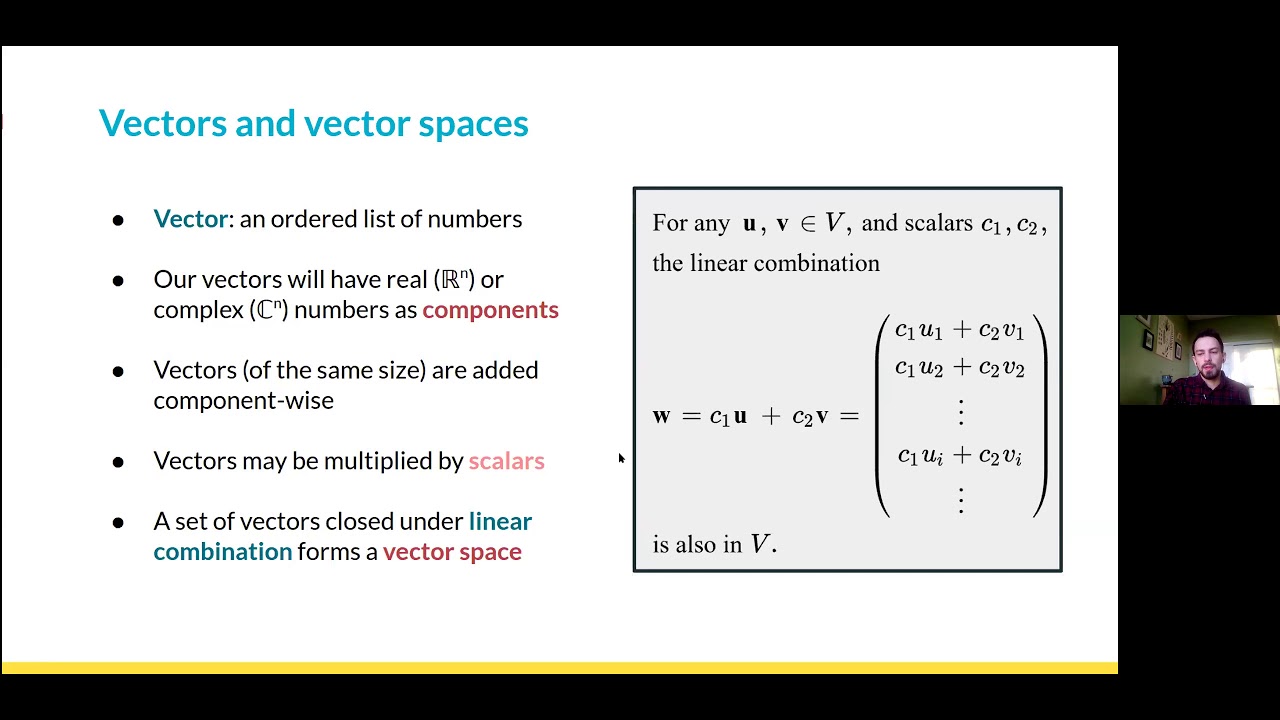
Fundamental linear algebra, specifically understanding vectors, matrices, and matrix multiplication operations.
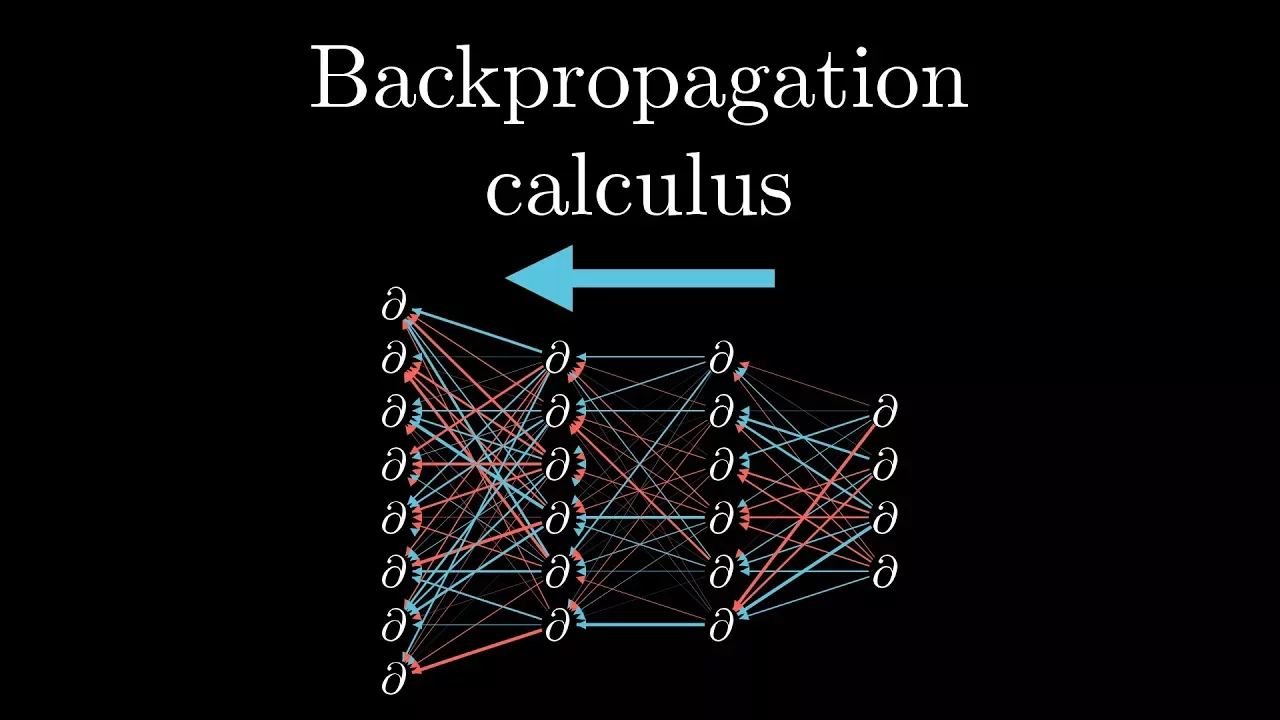
Basic calculus concepts, particularly partial derivatives and the chain rule, which are essential for understanding backpropagation.
Core introductory machine learning concepts, such as supervised learning, loss functions, and the intuition behind gradient descent.
Building and training specialized architectures, such as Convolutional Neural Networks (CNNs) for image processing and Recurrent Neural Networks (RNNs) for sequential data.
Working with custom datasets using PyTorch's native 'Dataset' and 'DataLoader' classes to handle real-world data pipelines.
Implementing advanced optimization techniques, such as learning rate schedulers, regularization (dropout, weight decay), and batch normalization.
Deploying PyTorch models to production environments using TorchScript, ONNX, or model serving frameworks.
Exploring advanced Transformer-based architectures and fine-tuning pre-trained models using libraries like Hugging Face Transformers.
72.2K views2.8Klikes1:02:49Original Release: 2025-09-08
Let's look at three lines of code.
Floss.backward optimizer.step and optimizer.zero.
These three lines train every neural network on Earth from GPT4 all the way down to your weekend side project. Sure, you can copy paste them from Stack Overflow. They work. Your model trains.
But what's really happening under the hood? I used to think PyTorch was this massive incomprehensible beast.
Turns out I was wrong. Dead wrong. The entire system follows the same five-step recipe. Not 50 steps, not 500, just five.
Today we are going to implement these five steps using nothing but raw math and basic arrays. No magic, no abstractions, just pure transparent code.
Then and only then we'll see why PyTorch's tools exist. Because once you've built the engine with your bare hands, the professional tools suddenly make perfect sense.
And it all boils down to these five steps. Okay, look at this table. This is your cheat sheet. We are going to walk through this entire process together step by step.
Give me 1 hour.
Just one hour. We'll build your understanding from the ground up.
Welcome to chapter 2. Today we're talking about the only data structure you really need. Everything we do in PyTorch, every single thing will be built on one single object. And that object is torch.tensor.
Think of a tensor as the fundamental building block. It's the basic noun of the PyTorch language. Now, you might be thinking, "Hey, that sounds like a multi-dimensional array from NumPy." And you'd be right. But this one comes with superpowers. Our goal today is simple.
We are going to master this one crucial object. So let's dive into the three common patterns for creating tensors.
Get these down and you're well on your way. Pattern number one, direct creation from data. This is the most straightforward. You have a Python list and you want a tensor. Simple. You just use torch.tensor.
First, we'll import torch. Then, we create a standard Python list called data. Let's say it's a list of lists with 1 2 3 in the first row and 456 in the second. Then, we just call my_tensor equals torch.tensor and pass in our data. When we print my_tensor, look at this output. We get a beautiful tensor object that perfectly mirrors our list tensor. And inside we see two rows. 1 2 3 and 45 6. Easy, right? Okay. On to pattern two. Creation from a desired shape. This one is huge. You'll use it all the time when you're initializing model weights. The idea is you know the shape you need, but you don't know the values yet. So let's say our input is a shape tpple. Maybe two rows and three columns. Let's look at the code.
We define shape equals the tpple 2, 3.
Then we can create a tensor of ones, a tensor of zeros, or a random tensor using torch.randen with that shape. Now let's print the random tensor.
And here's what we see. A random tensor with two rows and three columns filled with random values. This is your model's starting point before it has learned anything.
All right, pattern number three.
Creation by mimicking another tensor.
This is a clever one. Sometimes you need a new tensor with the exact same shape and type as another one. Instead of doing it manually, we can just mimic it.
Let's say we have an input, a template tensor we created earlier. It has two rows, 1 2 and 3 4. Now we can create a new tensor with the same properties using a function like torch.randen like. We pass in our template and we can even specify a new data type like torch.flat. So when we print both the template and the new randen like tensor, check it out. The template tensor is our original 1 2 3 4. And the new randen like tensor has the exact same shape, but it's filled with new random floatingoint numbers.
Super useful. Okay, so we know how to make tensors, but what's actually inside a tensor? This brings us to shape, type, and device. Every tensor has three critical attributes. You will use these constantly for debugging. Let's create a tensor called well tensor using torch.randen with a shape of two rows and three columns. Now let's print its shape its data type and its device.
Here's what we get. The shape is torch size with a list of 2, 3. The data type is torch.flat 32 and the device is CPU.
Let's break these down. first.shape.
It's a tpple describing the dimensions.
Listen to me. This is your number one debugging tool. I'm serious. 90% of your errors in PyTorch will be shape mismatches. Master this. Next is dot device. This tells you where the tensor lives. It's either the CPU or for massive speedups on CUDA, which means the GPU. And finally, dotdetail the data type of the numbers. Did you notice the default was float 32? This is not an accident. Why float 32? Why not just integers? The answer is gradients. The entire engine of deep learning works by making tiny continuous adjustments to a model's weights. We're talking about nudges. You can't nudge a parameter from the number three to 3.001 if your data type only allows whole numbers. It's impossible. And that tiny nudge, that's the entire game. So the rule is simple. Model parameters, your weights, your biases, they must be a float type. And float 32 is the standard. Data that represents categories or counts like class labels.
Sure, those can be integers, but the stuff that learns has to be a float.
This is where PyTorch's core magic comes into play.
It's a system called Autograd.
That stands for automatic differentiation.
It's PyTorch's built-in gradient calculator. And you activate this entire powerful system with one simple switch.
The magic switch requires grad equals true. By default, a tensor is just data.
To tell PyTorch it's a learnable parameter, you must set requires grad equals true. This is it. This is the most important setting in all of PyTorch.
It sends a message to the autograd engine. It says this is a parameter.
From now on, track every single operation that happens to it. Let's see this in action with data versus a parameter.
Okay, look at this code. First, a standard data tensor. X data equals torch.tensor with the values 1 2 and 3 4. Simple enough. Now for a parameter tensor where we need gradients, we create w= torch.tensor with values 1.0 and 2.0. And here's the key. We add comma requires grad equals true. So when we print the requires grad property for each of these, the output is exactly what you'd expect. The data tensor requires grad is false. The parameter tensor requires grad is true. Once you flip that switch to true, something incredible starts happening behind the scenes. PyTorch begins to build a computation graph. Think of it as a live recording of your operations. Let's walk through building the graph together step by step. Our goal is to compute z= x * y where y= a + b. First we need three parameter tensors. We create A equals torch.tensor of 2.0 with requires grad equals true. Then B equals torch.tensor of 3.0 with requires grad equals true.
And finally X a tensor of 4.0 also with requires grad equals true. So far we just have three separate tensors. Now for the first operation, we define y= a + b. Watch what happens. Pytorch instantly creates a new node in its graph. It connects a and b to an add operation which then creates our new tensor y which has a value of 5.0.
Next, we perform the second operation z= x * y. And just like before, pietorch adds to the graph. It connects our tensor X and our newly created tensor Y to a multiply operation. This produces our final result tensor Z with a value of 20.0.
So if we print the result Z, we get 20.0. That's simple math. But the graph PyTorch built that is the real story. So how can you prove this graph actually exists?
Every tensor that's created by an operation has a special attribute. It's calledgrad_fn.
Think of it as a breadcrumb pointing to the function that created it. Let's peek under the hood. We'll check the tensors we just made. First, let's print z.grad_fn.
The proof is right there. It says it was created by a mole backward zero object.
That's the multiplication. Next, let's print y.grad fn. It points to an add backward0ero object. That was our addition. But what about a? Remember a was created by the user not by an operation. So when we print a.grad_fn dot dot dot, the result is none. This is the tangible evidence of the computation graph. When we call loss.backward backward. Later on, PyTorch will walk this exact trail of breadcrumbs to calculate the gradients. Here's what that final graph looks like with the grad fn breadcrumbs included. You can see Z points back to the multiply operation and Y points back to the add operation. It's a perfect map of our calculations.
So far, we have the tensor, that's our noun. We have autograd, that's the nervous system.
Now we need operations.
We need the verbs of PyTorch. These are the actions, the calculations, the things our models will actually do. And here's the good news. The vast majority of deep learning is just a few simple operations repeated over and over and over again. Our goal here is to master these core verbs, especially the ones that trip up beginners the most.
Let's tackle the single most common beginner mistake. The classic confusion between the star operator and the at symbol operator.
First up, elementwise multiplication, which uses the star.
This one is pretty straightforward. It multiplies matching positions. Think of it like laying two tensors on top of each other and just multiplying the numbers that line up. The key rule here is that the tensors must have the exact same shape.
Let's look at an example. We have tensor A which is a 2x2 tensor with values 1 2 3 and 4. And tensor B another 2x2 tensor with values 10 20 30 and 40.
When we type elementwise product equals a star b what pietorch calculates is this in the top left it's 1 * 10 top right 2 * 20 bottom left 3 * 30 and bottom right 4 * 40. So the result is a tensor containing 10 40 90 and 160.
Simple.
Second matrix multiplication which uses the at symbol. Now this is the one. This operation powers neural networks. The rule here comes straight from linear algebra. The number of columns in the first matrix must equal the number of rows in the second matrix. Let's see it in action.
We have M1 which is a tensor with a shape of 2x3. And we have M2, a tensor with a shape of 3x2.
See how the inner dimensions match.
Three columns in the first, three rows in the second. Perfect. So when we calculate matrix product= M1 at symbol M2, the resulting shape will be the outer dimensions, a 2x2 tensor. And the result is a tensor with values 58, 64, 139, and 154.
So to be crystal clear, when you build a linear layer, that classic formula y = xw +b, you will always use the at operator.
Always.
Next up, reduction operations and the dim argument.
A reduction is any operation that reduces a tensor to a smaller number of elements. Think of things like sum, mean, or maximum.
Let's look at the default behavior.
Imagine we have a tensor called scores with two rows and three columns. When we call scores.mme with no arguments, it calculates the mean of the entire tensor. It adds up all six numbers and divides by six. The overall mean in this case is 15.0.
Simple enough.
But this is where it gets powerful. The dim argument lets you control which direction to collapse. For a lot of people, this is a huge aha moment.
Here's the setup. Our scores tensor represents two students and their scores on three assignments.
A simple rule for 2D tensors like this is dim equals 0 collapses the rows. It operates vertically.
dim equals 1 collapses the columns. It operates horizontally.
Let's see the code. We have our same scores tensor. To get the average for each assignment, we need to collapse the students. So, we collapse dimension zero. We write scores do mean with dim equals 0. To get the average for each student, we collapse the assignments.
So, we collapse dimension one. That's scores dot mean dim equals 1. And look at the results. The average per assignment gives us three values, one for each assignment. The average per student gives us two values, one for each student.
Let's visualize this collapse with this table.
Look at the scores table. We have student one and student two and their scores on three assignments.
When we calculate mean with dim equals 1, we are collapsing horizontally.
For student 1, we take 10 + 20 + 30 and the average is 20.
For student 2, we take 5 + 10 + 15 and the average is 10.
See, we got the average for each student. Now, let's try the other way.
When we calculate mean with dim equals zero, we are collapsing vertically.
For assignment one, we take 10 + 5 and the average is 7.5.
For assignment two, 20 + 10 average is 15.
For assignment 3, 30 + 15 averages 22.5.
It's so powerful once you see it.
Mastering the dim argument is non-negotiable.
You will use it absolutely everywhere.
Selecting your data from basic to expert. Basic indexing works just like you'd expect from NumPy. It's for selecting uniform blocks of data.
For example, we create a tensor X with values 0 through 11 reshaped into a 3x4 grid. If we want to get the third column which is at index 2, we just write x open brackets colon comma 2. That means give me all rows but only the column at index 2. And the result is a tensor with 2 6 and 10. Easy. But let's get more dynamic.
What about argmax?
This function finds the index of the highest value. This is how you find a model's final prediction.
Let's say we have a scores tensor with two rows representing two predictions.
For the first row, the best score is 20 which is at index 3. For the second row, the best score is 30 at index one. When we call torch.armax on our scores with dim equals 1, it finds the index of the best score for each row. The result is a tensor with values three and one. Perfect. Now for the expert level tool, torch.gather.
Standard indexing is great. Get column 2 for all rows. But what if you need something more specific? What if you need from row 0 the element at column 2 and from row one the element at column 0 and from row two the element at column 3. A totally custom selection for each row. You could write a for loop, but that would be slow. Torch. Does this in one highly optimized operation?
Let's walk through it. First, we have our data tensor, a 3x4 grid. Now, we create our shopping list.
It's a tensor called indices to select.
It has the values 2, 0, and three, each in its own row. This list tells gather which column index to grab from each corresponding row in our data. So when we call torch.gatherather, we pass in our data. We tell it to gather along dim equals 1 because we're picking columns.
And we pass in our index, which is our shopping list. And look at the selected values. Let's check its work. From row 0, it was told to get index 2. It went to row 0 and got the value 12. Correct.
From row one, it was told to get index zero. It went to row one and got the value 20. Correct. And from row two, it needed index 3. It went to row two and got the value 33. Perfect.
Mastering gather unlocks advanced dynamic model capabilities.
It is a cornerstone of complex architectures.
We are building a model from scratch.
And this is part one, the forward pass.
This is step one of our five-step loop.
The whole point of this step is just making a guess. So what is a forward pass? Think of the forward pass as the model's first guess.
When you first create a model, it knows absolutely nothing.
So initially, its guess is completely random.
And that's exactly what we want. It's a blank slate ready to learn. Our goal for this section is simple. We're going to implement a model's first guess using only the raw tensor operations we've just learned. No fancy libraries helping us out just yet. So what's our model?
We're starting with the most fundamental one. Simple linear regression. You'll see this formula everywhere. yhat = xw + b. Let's break that down. X is our input data. W is the weight and B is the bias.
And that little symbol Yhat is our model's prediction or its gas. Now W and B are the two knobs our model can turn.
Our entire goal, the whole point of this whole process is to find the perfect values for them so our prediction yhat gets as close to the real y as possible.
Time for the setup. Let's create our data. We'll make some fake data that follows a clear line. y = 2x + 1, but with a little bit of noise. Let's walk through the code first. n equals 10.
That means our batch of data will have 10 data points. D_in equals 1 and D underscoreout equals 1. This just means each data point has one input feature and one output value. Next, we create our input data X using torch.randen with N and D_in.
Now for the important part. We create our true target labels. Y true by using the secret answers the true W and true B. The true W is a tensor with 2.0 and the true B is 1.0.
So we calculate Y true N tensors by taking X at true W plus true B. And then we add a little random noise at the end.
Now this is crucial. The model will never see true W or true B. Its entire job is to discover them just by looking at the input X and the correct answers Y true.
Next, we create the model's brain. These are the parameters W and B that it will actually learn. We initialize them with random values and then we turn on the magic switch.
Let's look at the code.
We initialize our weight w using torch.rand with the right shape. And here it is, comma requires grad equals true. We do the exact same thing for our bias B. A random number with requires complete equals true. Let's print them out and see what we get.
The initial weight W is a tensor with some random value like 0.4137.
and the initial bias B is something like 0.2882.
This is the model's initial hypothesis.
It's completely wrong, but that's okay.
It's a start. And now for the implementation.
The moment we translate our math into code, the math is y= xw +b.
The code is y= x at sin w + b.
That's it. That's the forward pass. So let's see our first guess. We run the forward pass through our model. Then we print the prediction yhat and the true labels y true to see what we got. The result is a disaster just as we expected.
Look at this. The prediction for yhat gives us values like 0.07, 07, 0.18, and 0.14.
But the true labels are negative 0.1, 0.44, and 0.33.
Our guess is terrible. They aren't even close.
But notice something else. Look closer at the output for the prediction yhat.
See that at the end? It says grad n equals add backward zero. Autograd was watching. The nervous system is active.
It's already started building the graph that connects our parameters to our prediction.
So let's recap.
We've successfully completed the first step. We made a guess. It's terrible.
Our y hat is nowhere near the true y, but that's okay. How do we quantify exactly how wrong we are?
This is the backward pass. Step two of our loop. If the forward pass was the guess, the backward pass is the postmortem analysis.
We compare our guess to the truth and then we figure out exactly who to blame.
Think of it like tuning a radio. Look at this slide. You've got two knobs. Knob one is our weight W. Knob two is our bias B. The static you're hearing, that's our prediction, Yhat. And the clear signal we're trying to find, that's the truth, Y. The backward pass is all about figuring out which direction to turn each of those knobs to make the static go away.
To do that, we need a single number. a scorecard that tells us on the whole how badly our model is doing. This number is called the loss. Now, for what we're doing, which is regression, the most common loss function is the mean squared error or MSE for short.
The name sounds a little complicated, but I promise the idea is really simple.
Let's look at the formula on the screen.
We see L = 1 /n * the sum of Y - Y^ 2.
Let's break that down into plain English. For every prediction we make, first you find the difference. That's Y minus Y. Then you square that difference to make it positive. That's the Y minus Y^2 part. And finally, you just take the average of all those squared differences. That's it.
Let's translate that directly into code.
As you can see, we have our yhat, our guess, and y true, the truth.
First, we calculate the error, which is just yhat minus y true. Next, we get the squared error by taking that error to the power of two.
Finally, our loss is just the squared error dot mean. Now, let's print it out.
Print loss. Our single scorecard number is loss. And here's our scorecard. The loss is 1.6322 and so on. Now, here's the thing. The number 1.63 doesn't mean much on its own. All that matters is that our goal is now crystal clear. Make this number as small as possible. And notice this loss tensor also has a grad stance. It knows it's the result of all the previous calculations. It sits at the very end of our computation graph. It is the source from which all knowledge will flow backward. Now for the magic.
How do we know which way to turn the W and B knobs to lower that score?
This is where Autograd does all the heavy lifting for us. With one single command, in fact, this might be the single most powerful line of code in all of PyTorch.
We are telling PyTorch travel backward from the loss and calculate gradients for all parameters that have requires grad equals true. In our case, it will compute the two most important values we need. First, the partial derivative of L with respect to W. In other words, the gradient of the loss with respect to our weight W. And second, the partial derivative of L with respect to B, the gradient of the loss with respect to our bias B. Ready? Here is the command.
loss dot backward.
That's it. No output. It looks like nothing happened. So, what just happened? PieTorch just performed the most critical step of the learning process. It populated a hidden attribute for our W andB tensors, the grad attribute.
Let's inspect the result. The gradient is the answer. Thegrad attribute now holds the signal that tells us exactly how to adjust our knobs.
As you can see in the code, first we compute the gradients by calling loss.backward.
Then we can just print them. Let's print the gradient for W and the gradient for B. And here they are the directions. The gradient for W is a tensor with 1.0185.
And the gradient for B is a tensor with -2.0673.
This is the aha moment. What do these numbers actually mean?
Look at W.Grad. It's -1.0185.
The sign is everything. A negative gradient means that if we were to increase W, the loss would decrease. The gradient always points toward the steepest increase. So to minimize the loss, we need to go in the opposite direction. Now look at B.RAD.
It's -2.0673.
It's the same story. A negative sign means increasing B will decrease the loss. And the larger magnitude just means the slope is a little steeper for B right now. So there we have it. We have what we need to improve. We can measure our error using the loss and we know the exact direction to go thanks to the dotgrad attribute.
The postmortem analysis is complete. The blame has been assigned. The final step is to actually act on this information.
Let's use an analogy. Imagine we are standing on a foggy mountain. We can't see the bottom, but we want to get there.
the loss. The loss tells us our current altitude. The higher the loss, the higher up we are. The gradients, which we just calculated in the last chapter, they tell us the direction of the steepest slope.
So, what do we do?
We take a small step downhill and we do it again and again and again.
This is it. the heart of the entire deep learning process, the training loop.
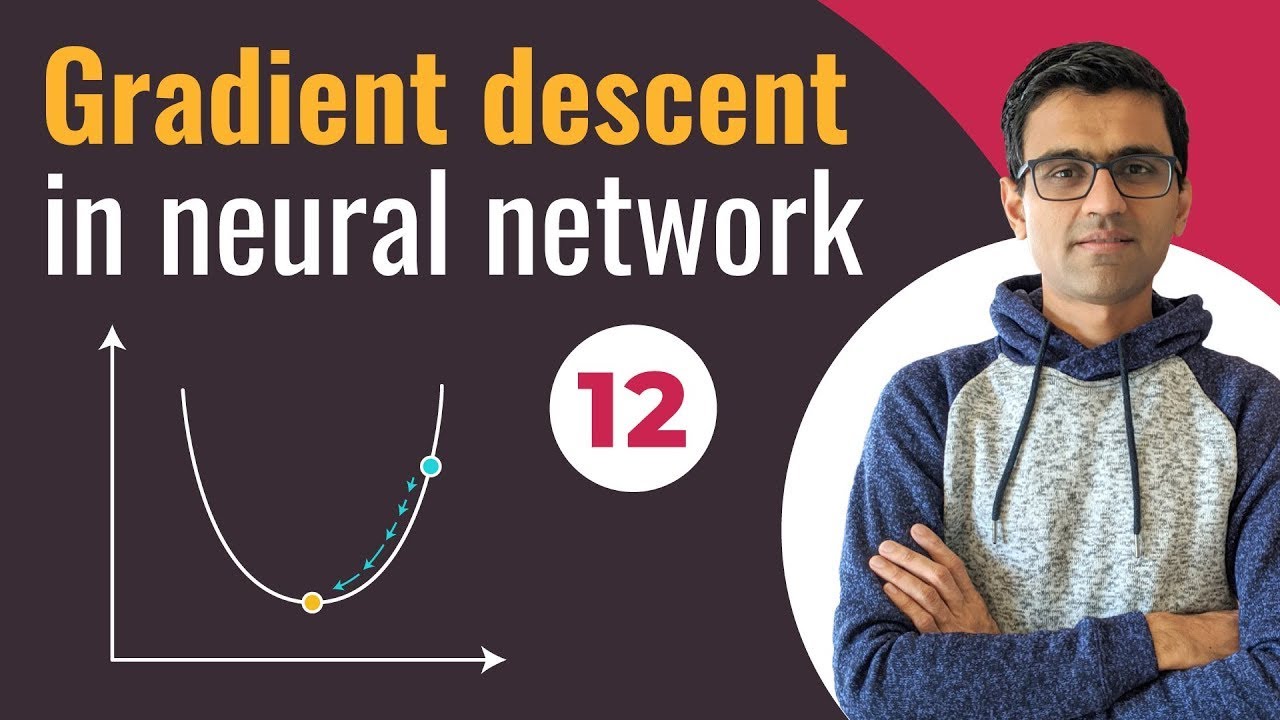
This is where learning actually happens through a simple and beautiful algorithm called gradient descent.
This brings us to the single most important formula in all of deep learning. Let's look at it. theta at time t + 1 equals theta at time t minus theta * the gradient of l with respa that represents all our parameters for us that's just w and b next that's the learning rate it's just a small number maybe 0.01 that controls our step size.
It's how big of a step we take downhill.
And finally, the gradient of the loss.
We just calculated this. It's the information waiting for us in W.grad and B.grad.
So, the update rules in our code become a direct translation.
W new equals W old minus the learning rate * W.Grad. grad and B new equals B old minus the learning rate time B.Grad.
That's it. We are literally just nudging our parameters in the opposite direction of the gradient.
Let's put it all together into the training loop. We just repeat our five steps for multiple epochs. An epoch is just one full cycle through our learning process. Now, there are two new and critical details here. First, you'll see a block that says torch.nowgrad.
This tells PyTorch, hey, don't track these parameter updates in your computation graph. I'm doing this manually. And second, you'll seegrad.0.
This is so important. It resets the gradients after each iteration.
If we didn't do this, the new gradients would just add on to the old ones and we'd get completely lost on our foggy mountain. Here is the entire training process in one beautiful block of code.
We'll walk through this step by step.
First, we set our hyperparameters, a learning rate, and the number of epox.
Then we reinitialize our parameters W and B with random values, making sure to set requires grad equals true. Now for the training loop itself, for each epoch, we perform steps one and two. We do our forward pass to make a guess, which is yhat, and then we calculate our error, which is the loss. Next is step three, the backward pass. We call loss.backward backward to calculate the blame for the error. In other words, the gradients. And here's the new part. Step four, we nudge the parameters in the correct direction. This is the gradient descent step where we subtract a tiny fraction of the gradient from our parameters.
And finally, step five, we reset for the next round of learning. We callgrad.0 to zero out the gradients and get ready for the next epoch.
Now for the payoff, let's add a print statement inside that loop and watch what happens.
We'll print the epic number, the loss, W, and B every 10 epics so we can see the progress.
At the end, we'll print our final learn parameters and compare them to the true parameters we were trying to find, which were a W of two and a B of 1.
Let's run it.
Look at this table. At epic zero, our loss is a pretty high 4.1451.
Our initial random guess for W is way off at0.347 and B is at 0.505.
Now watch, after just 10 epics, the loss has plummeted to 1.04.
W has already become positive.
At Epic 20, the loss is down to 0.29.
Look at W and B. One is almost at 1 and the other is just over one. They're getting so much closer.
And it just keeps going. Epic 30, 40, 50. Look at those numbers converge.
I'm not going to read all of them, but you can see the trend. The loss keeps dropping and W and B get closer and closer to the truth.
It's incredible.
Watch the learning happen. The loss is plummeting. W is marching steadily toward its true value of 2.0 and B is honing in on its true value of 1.0.
It works.
It actually works.
We have successfully implemented the entire gradient descent algorithm from scratch.
We have built a machine that learns.
We just built a learning machine from scratch.
It was amazing.
But let's be honest, we had these loose tensors named W and B. We had to manually update them. We had to manually zero their gradients.
It was messy.
Now imagine your model has 50 layers, a million parameters.
Are you going to write a million lines of code? Absolutely not. There has to be a better way. This is where we graduate.
We go from working with raw clay to building with highquality standardized Lego bricks.
Welcome to the torch.n module. PyTorch's library of pre-built layers that forms the backbone of every single professional model. Let's talk about the workhorse torch.n.linear.
The first Lego brick we'll grab is one that looks very familiar. The torch.n.linear layer does exactly what our manual X at W +B operation did, but instead of leaving W and B as loose tensors floating around, it neatly packages them inside a professional object.
Let's look at how to use nn.linear.
We are going to walk through this together step by step.
First we define our dimensions.
D underscorein equals 1 because our input has one feature.
D underscore out equals 1 because the output has one value.
Next we create the linear layer Lego brick itself.
We'll call it linear Lego bricks equals torch.n.linear linear with in features equals D_in and out features equals D_out.
Now, here's the cool part. You can look inside and see the parameters it created for you.
If we print linear layerweight and linear layer.bias, check this out. Look at this output on the slide. The layer's weight W is a parameter containing a tensor. And notice it says requires grad equals true. It did that for us.
Same for the layers bias B. And to use it, you just use it like a function.
This is the forward pass. We just call y NN equals linear layer and pass in our x. And you can see the output of nn.linear right there on the slide. So much cleaner. So what is a parameter?
It's a special kind of tensor that one has requires grad equals true by default. Two, it autoregisters with the model and three it handles all the bookkeeping for you. Huh? No more manual work. Linear models are powerful, but they have a hard limit.
If you stack a bunch of linear layers, it's the same as just having one bigger linear layer. They can only ever learn straight lines. To learn the complex messy patterns of the real world, you need to introduce kinks or nonlinearities between your linear layers. This is the job of an activation function.
First up is nnu.
That's reel for rectified linear unit.
The rule is dead simple. If an input is negative, make it zero. That's it. Reu of X equals max of0X.
Look at this example. We create the layer relu= torch.n.relu.
We have some sample data. A tensor with -2 0.5 0.5 and 2. And we pass it through the layer and the output. Look the original data is on top. The data after relu all the negative values are just gone. They've been set to zero. Simple and effective.
NN. Gelu.
This is the modern standard for transformers like GPT and llama. Think of it as a smoother gently curving version of relu. Let's run the same code. We create the layer jello equals torch.n.jello.
We use the exact same sample data, but now look at the output. The negative values aren't snapped to zero. They're just gently squashed towards it. This little bit of smoothness can make a huge difference in training massive models.
NNS softmax.
This one is special. You almost always use it on the final output layer for classification problems.
Its job is to convert the raw model scores which we call logits into a probability distribution.
What does that mean? The output values will all be between 0 and 1 and they will all add up to exactly one. Let's see nn.softmax in action.
We create the layer softmax equals torch.n.softmax softmax and we set dim equals -1.
Now imagine our model gave us some raw logit scores for two different items across four possible classes. You can see them there in the logits tensor.
When we pass that through softmax look at the output probabilities for the first item. The highest logit was 3.0.
Softmax turned that into the highest probability 0.6. 6558.
And if you sum up the probabilities for that first item, they equal 1.0.
Perfect.
Pay attention. What we're about to cover isn't just a toy. These are the literal non-negotiable building blocks of models like GPT, Llama, and Gemini.
First up, NN.
This layer's job is to turn words into numbers. It's a giant learnable lookup table. Each word gets its own unique vector. Let's see it in code. We'll say our vocabulary size is 10. So we have 10 unique words. And our embedding dimension is three. So we'll represent each word with a 3D vector. We create the layer embedding layer equals torch.n. nn.betting with the vocab size and embedding dimension.
Now for our input, this is a sentence where each word is an ID. For example, the ids 1 5 0 and 8.
When we pass those input ids to the layer, look at the output word vectors. Our input had a shape of 1x4 and our output has a shape of 1x 4x3.
For each of our four input ids, it looked up and returned the corresponding three-dimensional vector.
This is the first step in every large language model. Next, nlayer norm. As data flows through a deep network, the numbers can explode or vanish, making training impossible.
Layerm is the traffic cop. It rescales everything to a stable range. This is essential for deep networks. Here's the code.
Our word vectors have a feature dimension of three. So, we create a norm layer equals torch.n.layerm with a normalized shape of three. We create some sample input features and when we pass them through the layer, look at the results. The mean of each output vector is basically zero. The standard deviation is basically one.
It keeps the network stable. It's beautiful.
And finally, nn.ropout.
This is a brilliant trick to prevent overfitting during training. It randomly zeros out some of the neurons.
This forces the network to become more robust and not rely on any single neuron. But here's the most important thing. It only happens during training.
Let's look at the code for dropout comparing train versus eval mode.
We create a dropout layer that will zero out 50% of inputs.
Then we create an input tensor of all ones. First, we activate dropout for training by calling dropout layer.train.
Look at the output during training.
It's randomly zeroed and scaled. Some values are zero, others are two. Now we deactivate dropout for evaluation by calling dropout layer.val. And the output, it's the identity function. It just passes the original tensor of all ones straight through. This simple onoff switch is a cornerstone of modern deep learning.
Remember this code from our last training loop, the from scratch way where we use torch.nrad, then manually updated our weights. W minus equals learning rate* W.grad.
Then we did the same for our bias B. And finally, we had to manually zero out the gradients for both W and B.
Now, imagine your model has 50 layers, a million parameters.
Are you really going to write a million lines of code to update each parameter and then zero its gradient?
Absolutely not. We need to go pro.
PyTorch provides two core EBS Brian to clean all of this up. First nodule which we use to organize our model and second torch.optimum which we use to automate the learning.
Think of it this way. Nin domodule is the instruction booklet and the base plate for our Legos. It provides a standard structure for how all your little bricks connect. Then you have torch.optimum.
This is the skilled builder who knows exactly how to adjust all the bricks according to the instructions from the gradients. So let's do it. Let's refactor to professional PyTorch. Clean, standard, and scalable. First up is the model blueprint nodule.
The pattern is always the same. You inherit from torch.n.module.
You define your layers in the double_init method and you connect the layers in the forward method. That's it.
Let's rebuild our model. First, we import torch.n nn as nn. Then we define our class linear regression model and notice we inherit from nnn.module.
Inside the constructor, the init method, we first call super.init. This is super important. Then we define the layers we'll use. We'll create one self.linear layer equals inn.linear with infetcher and out features. Now in the forward pass, this is where we connect the layers. We just return self.linear layer applied to our input X. Finally, we instantiate the model. Model equals linear regression model with infiguration equals 1 and out features equals 1. And here's the professional result.
When we print the model, look at this beautiful output. It prints the model architecture linear regression model containing a linear list which is a linear layer with in features equals 1 out features equals 1 equals 1 and bias equals true. All our parameters are now neatly organized. No more loose tensors.
Next up the optimizer torch.optim.
We're going to replace our manual weight update. And the most common optimizer, the one you should almost always start with is Atom. We import torch.optim as optimum. We set our hyperparameter learning rate equals 0.01.
Then we create the optimizer. Optimizer equals optimum.atom.
And here's the key part. We pass model.parameters to tell it which tensors to manage. We also pass our learning rate. And while we're at it, let's grab a pre-built loss function from torch.n.
We'll use loss fx equals nn.mse loss. The stage is set. We have our organized model and our automated builder.
We are about to rewrite our training loop.
What was once five messy manual steps will become an elegant high-level process. This is the universal pattern you will see in 99% of all PyTorch code.
It all boils down to what I call the threeline mantra.
Number one, optimizer.0 twiddled line.
Number two, loss.backward.
Number three, optimizer.
That's it. That's the entire engine.
Let's compare the from scratch loop versus the professional loop. On the left, our old way. On the right, the new way. Step one, the forward pass.
Before it was y= x w + b. Now it's just y= model x.
So much cleaner.
Step two, loss calculation.
Before we wrote out the whole mean squared error formula. Now we just call loss equals loss fn of yhat and y true.
And now for the big one. Steps three, four, and five. Before we had three separate manual steps. loss dotbackward, then updating W and B by hand, then zeroing out their gradients.
Now it's all replaced by the threeline mantra.
Optimizer.0 grad loss.backward optimizer.step.
So much better.
Let's look at the final clean training loop. We set our epochs to 100.
We start our for loop. First the forward pass. Yhat equals model X.
Next we calculate the loss. Loss equals loss GTK with our predictions and true values. And now the threeline mantra.
One zero the gradients. Optimizer.0 zero grad two compute the gradients lossbackward and three update the parameters optimizer step and that's it we can add an optional print statement to watch our progress and look at that the same beautiful result epoch zero the loss is 2.6515 6515.
By epoch 10, it's 1.7.
By epoch 50, it's down to 0.0886.
And by epoch 90, the loss is down to 0.0210.
Perfect.
We achieved the exact same outcome, but our code is now organized, scalable, and uses the Strread optimized tools that power realworld AI.
You might be sitting there thinking, "This is great for a toy model that learns a straight line, but how does any of this relate to a massive LLM like GPT?
And this is the final most important lesson of this entire hour.
It is not an analogy.
You have learned the exact fundamental components and the universal process used to train them.
You see, the difference between our tiny model and an LLM is not one of a kind.
It is one of scale and architecture.
So let's make the direct link. Let's look inside the transformers feed forward network.
Inside every single transformer block, and that's the architecture behind all modern LLMs, there's a little subcomponent called a feed forward network or FFN.
And if we look at the code for it, here it is. This is the literal PyTorch code for an FFN. And here's the amazing part.
Look at that code. You can read this perfectly. It's a class called feed forward network that inherits from nnn.module just like ours did. And what's inside the Lego bricks? We already know. There's self.layer 1 equals nn.linear.
There's an activation function in this case n. Gelu.
And then there's self.layer layer 2, which is another NN.linear.
The forward method is exactly what you'd expect. The data goes through layer 1, then the activation, then layer 2.
That's it. The feed forward network inside a multi-billion parameter model is literally this simple.
The model's incredible power comes from stacking dozens of these blocks. And each of those blocks contains one of these FFNs and a self attention mechanism which itself is also built from NN.linear layers.
So let's get a real sense of scale.
Check out this table. We're going to compare our toy model to a typical LLM like Llama 38B.
First row, the model. For us, it was our linear regression model. For the LLM, it's a transformer. Makes sense.
Second row, the layer. For us, we used nn.linear.
For the LLM inside one of those FFNs, it's also NN.linear.
Now, here's where it gets wild. Look at the weight matrix W shape. For our toy model, the shape was 1 by one, a single number. For just one of the linear layers in the LLM's FFN, the shape might be 4,96x 14,336.
That's over 58 million values in a single matrix. But the operation matrix multiplication, it's the same. Exit W for us, exit W for the LLM. And finally, total parameters.
Our toy model had two. The LLM around 8 billion.
And this this is the most important part. The process we used to train our two parameter model is the exact same process used to train that 8 billion parameter LLM.
The five-step logic is universal.
Let's break it down. Step one, yhat equals model of X. For us, that model was a single linear layer. For the LLM, it's dozens of transformers, but the call is the same.
Step two, loss equals loss FN. For us, we used mean squared error. The LLM uses something called cross entropy loss to predict the next word.
The goal is different but the concept is identical.
Get one number that represents the error. Now for the last three optimizer zero med for the LLM identical loss.backward for the LLM identical. Autograd doesn't care how deep the model is.
optimizer.step for the LLM. You guessed it, identical.
The optimizer just does its job. Whether it's managing two parameters or 8 billion, you've done it. In this hour, we have journeyed from a single number in a tensor to understanding the engine that powers the largest AI models in the world. The magic of deep learning is gone. It has been replaced by engineering.
You now know that a model is just an nn.m module containing layers. A layer is just a container for parameters that performs a mathematical operation. And learning is just updating those parameters with zero grad backward and step. You now understand the engine. You are ready to move on from how a model learns to what a model learns with a rockolid foundation in the principles that bring it all to life.
Up Next

33:12
ML System Design Mock Interview: YouTube Feed Recommendations
@MLEpath
46.3K views•2024-12-07

87:26
Introduction to Secure Multiparty Computation with Yehuda Lindell
@fhe_org
7.7K views•2021-02-04

4:55
HTTP Requests Explained: GET, POST, PUT, DELETE
@codecademy
103.1K views•2021-10-07
19:25
Enigma Machine Mechanics: WWII Encryption Explained
@JaredOwen
13.2M views•2021-12-11
Related Study Plans & Knowledge Roadmaps
Structured learning paths in Computer Science
computer-science
Container Runtimes: Namespaces, Cgroups & Go
01Linux Systems & Go Programming Foundations
02The Core of Isolation: Chroot and Filesystems
03Linux Namespaces: Process Isolation
+ 3 more learning modules
32h6 modules
Explore Roadmap
computer-science
Building a CHIP-8 Emulator: Rust & CPU Basics
01Computer Architecture Foundations (Bits & Bytes)
02Rust Programming for Systems Development
03CHIP-8 Virtual Hardware Specifications
+ 2 more learning modules
32h5 modules
Explore Roadmap
computer-science
Building BitTorrent: Go, P2P & Concurrency
01Go Fundamentals & Concurrency
02Networking Foundations & P2P Architecture
03Bencode Parsing & Torrent Metadata
+ 3 more learning modules
26h6 modules
Explore Roadmap
computer-science
Actor Models (C++ Concurrency & Lock-Free)
01C++ Multi-Threading Foundations
02Thread Pools and Task Scheduling
03Atomics and Lock-Free Queue Design
+ 3 more learning modules
45h6 modules
Explore Roadmap