![Serwomechanizmy | #74 [Podstawy]](https://i.ytimg.com/vi/MLhWv51sAk8/maxresdefault.jpg)













![LAZO ABIERTO y LAZO CERRADO ✅ [Sistemas de CONTROL] #009](https://i.ytimg.com/vi_webp/CxGFoeJ7SD8/maxresdefault.webp)







This video demonstrates the implementation of a crawl gait in a quadruped robot (Casper V1), where the robot uses inverse kinematics with the law of cosines to achieve elliptical step patterns. The robot has two degrees of freedom per leg and uses interrupts to prevent conflicts between walking and control signals. The creator notes that while the robot can walk and turn, the steering is 'sketchy' and not natural, and the feet made from insulation foam lack sufficient friction. The video also discusses motor selection trade-offs, where a 35 kg motor offers more torque and quieter operation compared to a louder alternative with less torque.
Building a Quadruped Robot: Servo-Driven Crawl Gait Prototype
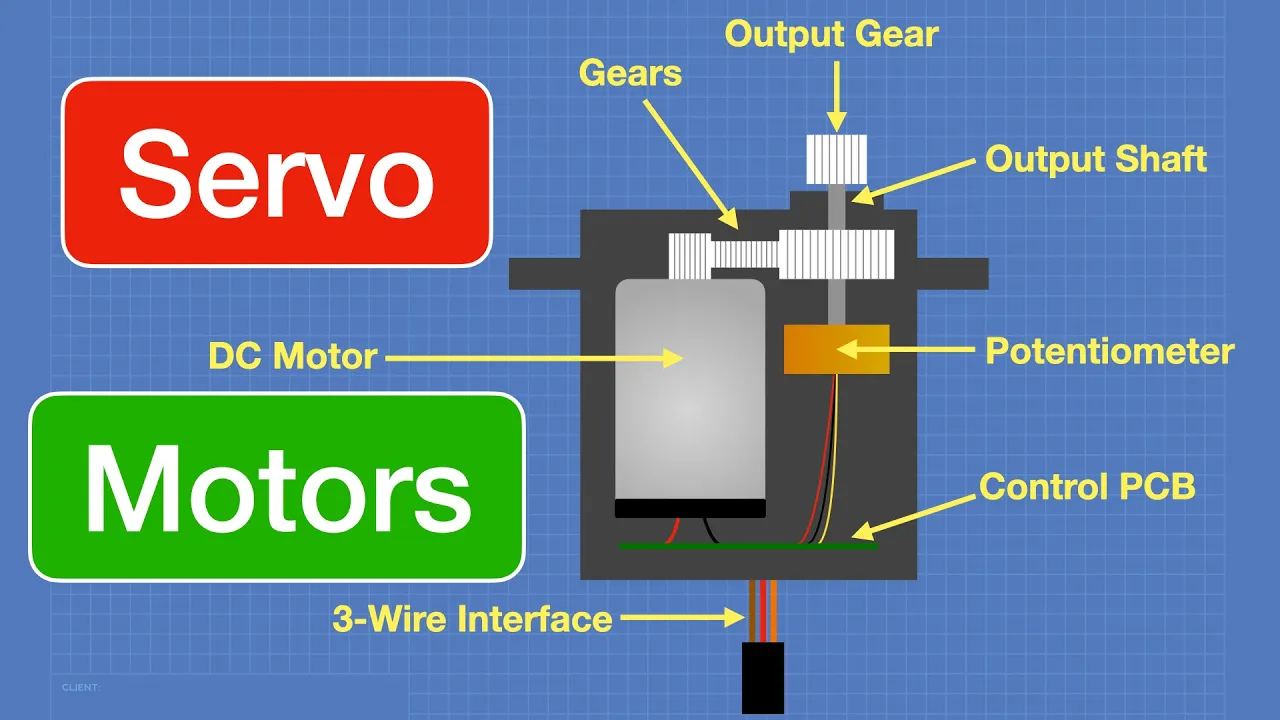
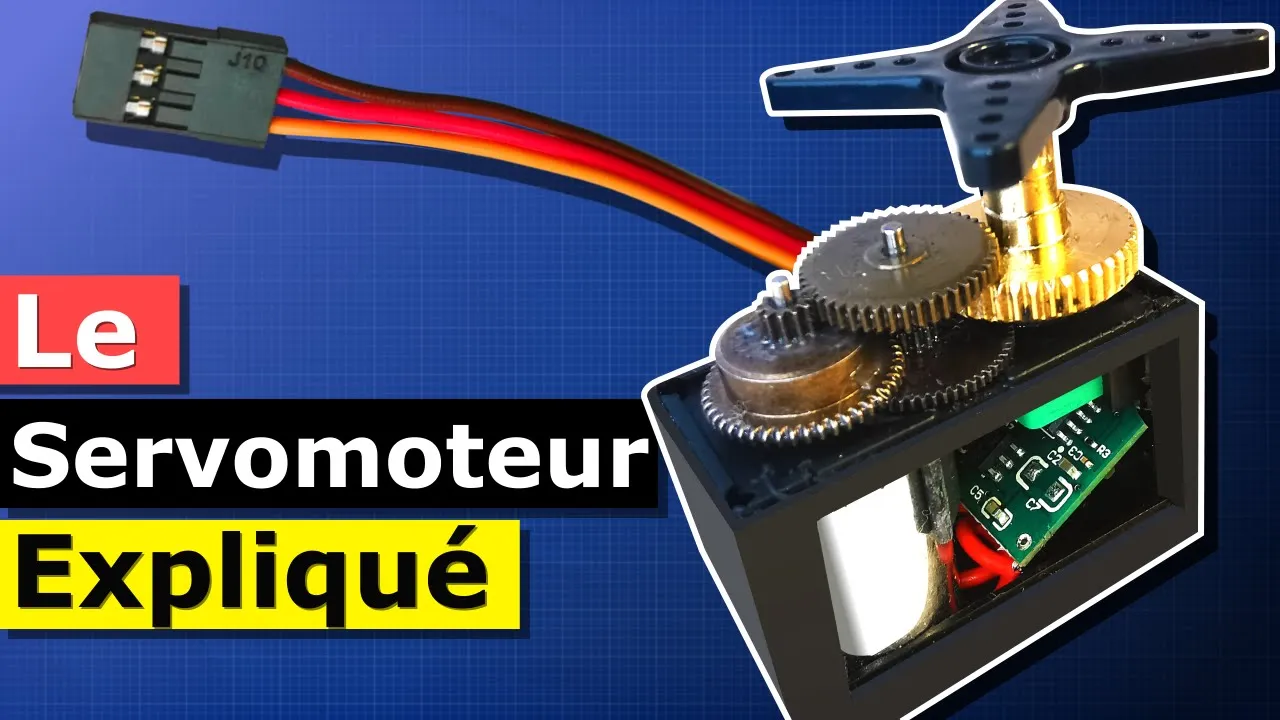
Added:Fundamentals of Servo Motors: Understanding PWM (Pulse Width Modulation) signals, angular positioning, and torque requirements for robotic joints.
Basic Kinematics: Distinguishing between Forward Kinematics (calculating end-effector position from joint angles) and Inverse Kinematics (calculating joint angles from target positions).
Trigonometry and Vector Mathematics: High-school level geometry and algebra required to solve the geometric equations used in 2D and 3D inverse kinematics.
Microcontroller Basics: Familiarity with programming platforms (like Arduino, ESP32, or Raspberry Pi) to write code that coordinates multiple outputs simultaneously.
Dynamic Gait Analysis: Transitioning from a static crawl gait to dynamic gaits such as trotting, bounding, and galloping, which require momentum management.
Closed-Loop Feedback and IMU Integration: Implementing Inertial Measurement Units (IMUs) and PID control loops to allow the robot to self-balance on uneven terrain.
Terrain Mapping and Path Planning: Integrating sensors like LiDAR or depth cameras (RGB-D) alongside ROS (Robot Operating System) for autonomous navigation.
Actuator Upgrades & Force Control: Exploring BLDC (Brushless DC) motors, field-oriented control (FOC), and compliance control to build highly agile, impact-resistant quadrupeds.
437 views12likes5:11Original Release: 2026-05-07
This one is louder. It has less torque, though.
Um, so there's 35 K the 35 kg one has more torque and is quieter, which is a double win. So, I'll first show you guys the louder one.
It's like that loud.
>> [snorts] >> And then if we do the quieter one.
Okay, let me just plug this in.
Okay.
Well, All right, so this leg can sort of walk, I guess, now. So, it can continuously take steps and [snorts] it's using in basic inverse kinematics, like the law of cosines and stuff, like trig from precalc, that um, to take an elliptical step. So, if I plug it in, let's see.
Okay.
So, it sort of takes steps. If you do it even faster, Okay, so it's All right, so I don't even know if this will work because well, it's just two degrees of freedom per leg, but I'm just going to use this piece of wood I have um, from middle school science olympiad.
Uh, and I drilled some holes here and applied super glue to hopefully strengthen these areas.
So, I'm just going to be these four AA battery holders for now because it's just easier to prototype with. And another neat thing I did was I wired like all the I added some redundancy to the grounds, so in case one wire slipped or something, it'll still have ground connection for the servos. All right, so I'm now able to control it with the RC transmitter to step forward or step backwards. And I'm using interrupts so it doesn't conflict with the walking.
So.
And back.
Yeah.
Okay, so the rest of the servos have arrived and I literally waited like a whole week for them.
But anyways, um I'm making the other legs now.
Okay, I just finished like two but I'm starting to realize how tedious this actually is. It's very like it's very like my hands are like sore from screwing all this.
Okay, so I know it's having a lot of seizures right now, but it's actually walking. Like I just finished it and so now let's it's doing a crawl gait.
Okay, so I kind of got it walking and turning a bit. So, I definitely need to improve it, but um it's just an experiment with like two degrees of freedom per leg. So, turning is like kind of sketchy and not natural.
It I'm basically just doing like differentials like thrust or steering on this both legs. So, I can go forward.
And then backwards.
And then here is how cursed steering is.
Yeah, I mean it kind of works, but So, there's forward again.
Another issue is probably because my feet don't have much friction.
I mean they are They're made out of insulation foam from Home Depot, so Um I mean it feels like it has a lot of friction, but maybe I'll need some more friction material. And it's also probably pretty bad that I have most of my weight on these hind legs.
Um Maybe I could add a camera here in the future or something to just balance out the weight a bit more.
All right, so this is how you use Casper.
So, step one, take him off of his mounting thingy.
Step two, very gently place him on the floor, then switch him on.
Step three, grab your remote. Okay.
And now you can drive him.
Okay, so as you can see, yeah, these legs are kind of off.
Up Next

24:09
OpenDog V2: Kinematic Model and Walking Control Implementation
@jamesbruton
117.5K views•2020-07-28

58:25
MathWorks Virtual RoboSub Simulation Environment | Webinar 2026
@RoboNationInc
209 views•2026-03-10

11:04
How to Build a Self-Balancing Robot: Arduino Nano & MPU6050
@easytechzones
16.8K views•2022-03-09
25:22
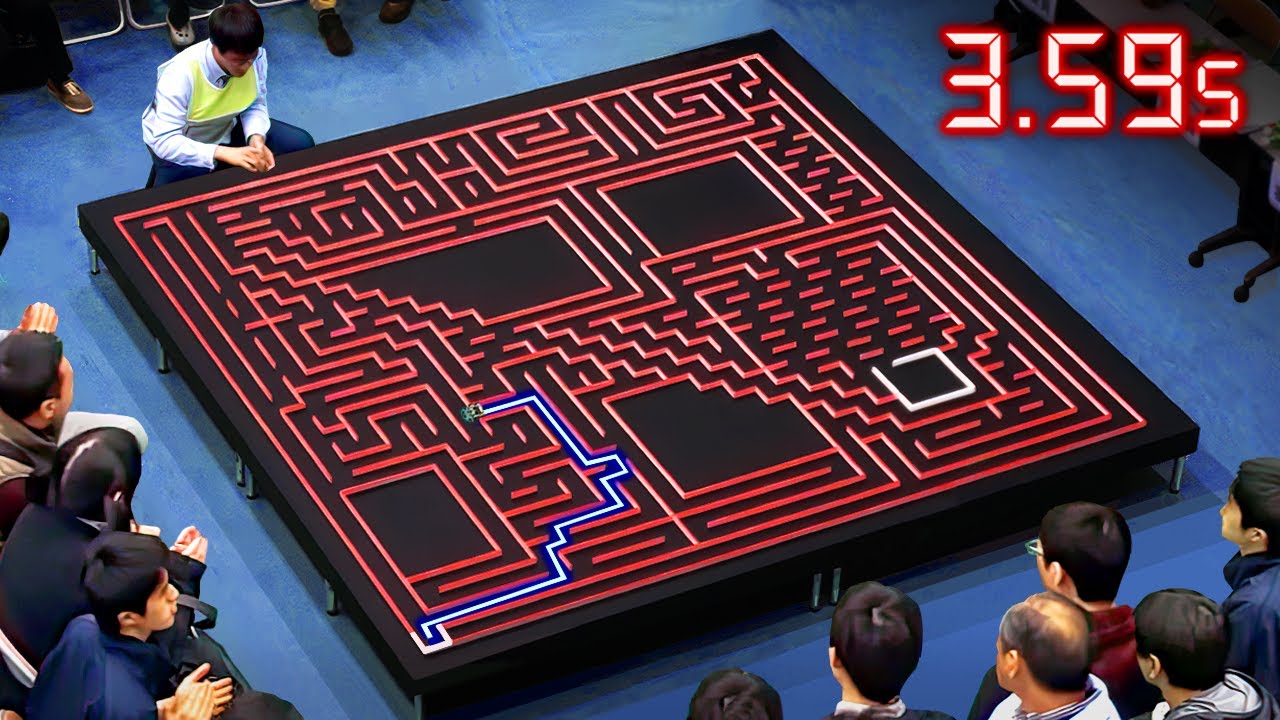
Micromouse: The Fastest Maze-Solving Robots on Earth
@veritasium
23.5M views•2023-05-24
Related Study Plans & Knowledge Roadmaps
Structured learning paths in Robotics
robotics
Building Delta Robots: Kinematics & Pico
01Foundations of Delta Robots & Mechanical Design
02Electronics and Microcontroller Setup with Pi Pico
03Delta Robot Kinematics and Coordinate Math
+ 3 more learning modules
65h6 modules
Explore Roadmap
robotics
Building Ballbots: Dynamics, Kalman & LQR
01Embedded Electronics & Omniwheel Actuation
02Ballbot Kinematics & Rigid Body Dynamics
03IMU Sensors & Kalman Filter State Estimation
+ 2 more learning modules
42h5 modules
Explore Roadmap
robotics
Micromouse: Hardware, PID Control & Flood-Fill
01Electronics & Teensy Microcontroller Basics
02Sensors and Actuators: Motors, Encoders & IR
03Precision Movement: Implementing PID Control
+ 2 more learning modules
35h5 modules
Explore Roadmap
robotics
CDPR: Kinematics, Arduino & Winch Control
01Foundations of Arduino & Basic Electronics
02Stepper Motors and Winch Mechanics
03Kinematics of 2D Cable-Driven Robots
+ 2 more learning modules
28h5 modules
Explore Roadmap