








![[Neurociencias] Procesamiento del Lenguaje (Area de Broca y Wernicke)](https://i.ytimg.com/vi/PdhFGq96eg8/maxresdefault.jpg)





Language is built from three fundamental components: phonemes (distinctive sound units), morphemes (meaning-carrying units), and grammar (rules for combining them); human language acquisition follows a predictable developmental sequence from babbling through one-word and two-word stages, with competing theories explaining whether language develops primarily through environmental learning (Skinner's operant conditioning) or innate biological mechanisms (Chomsky's universal grammar), and language processing involves specialized brain regions including Broca's area for speech production and Wernicke's area for comprehension.
Language: Phonemes, Grammar & Development | Psychology
Added:Basic cognitive psychology principles, specifically how the brain processes, stores, and retrieves sensory information.
The developmental debate of Nature vs. Nurture, which underpins key theories of language acquisition (such as Skinner's behaviorism vs. Chomsky's nativism).
The fundamental distinction between general animal communication systems (signals, gestures) and structured human language (syntax, productivity).
An introductory understanding of evolutionary biology and primate cognitive capabilities, useful for contextualizing comparative research involving bonobos.
Neurolinguistics, focusing on how specific brain regions like Broca's and Wernicke's areas process language, and the clinical study of aphasias.
The Critical Period Hypothesis and its implications for bilingualism, late-stage language acquisition, and pedagogical strategies.
Sociolinguistics and the Sapir-Whorf hypothesis (linguistic relativity), exploring how language influences cultural thought and perception.
Computational linguistics and Natural Language Processing (NLP), examining how computer systems are programmed to parse syntax, semantics, and speech.
2.4M views34.9Klikes10:01Original Release: 2014-05-26
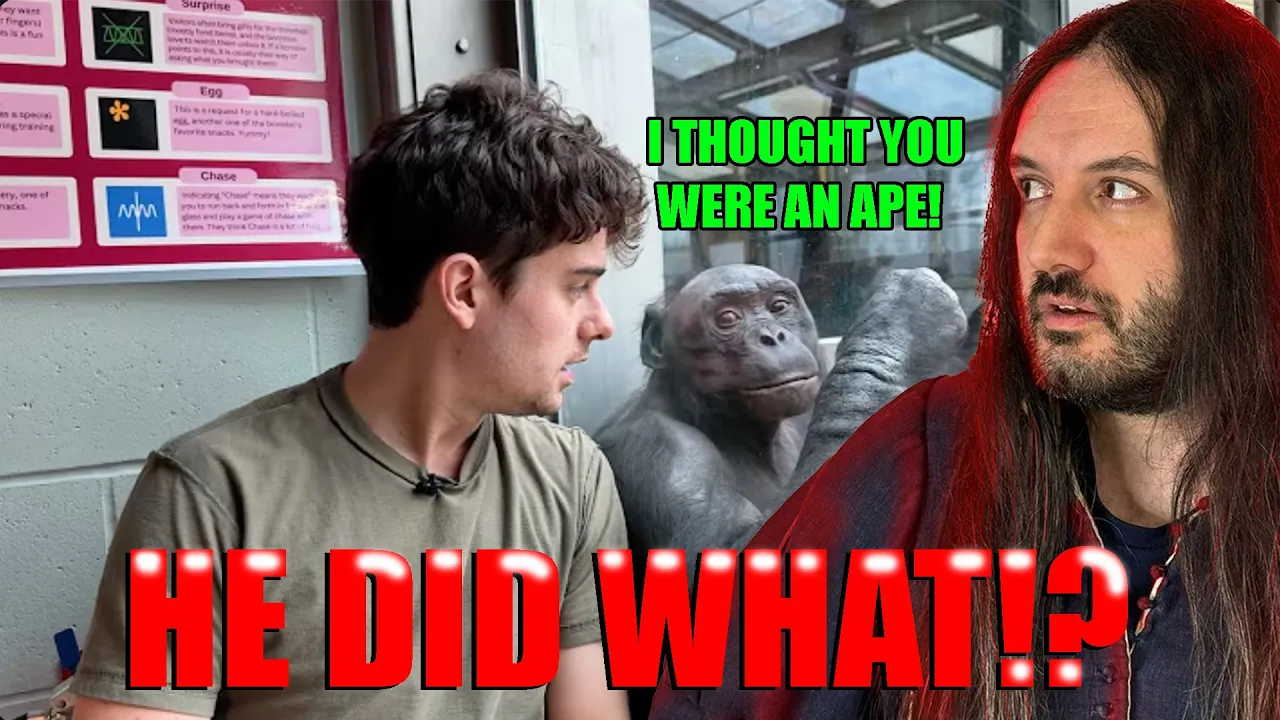
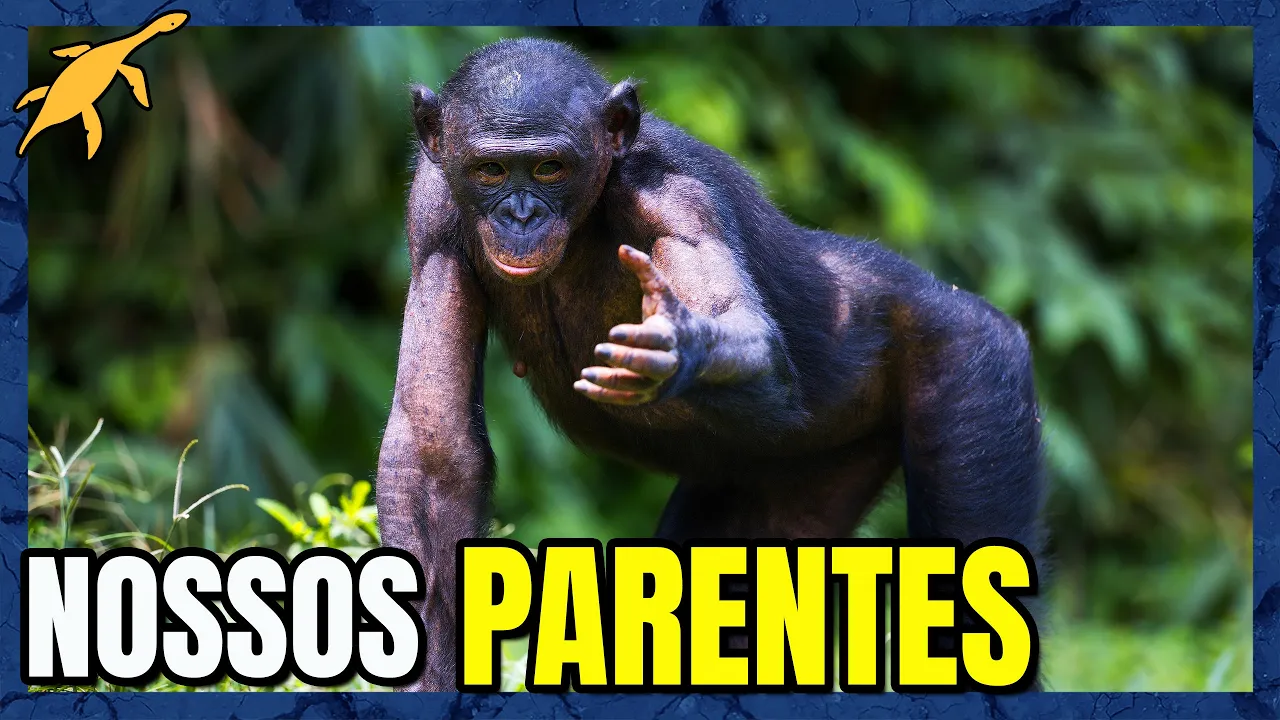
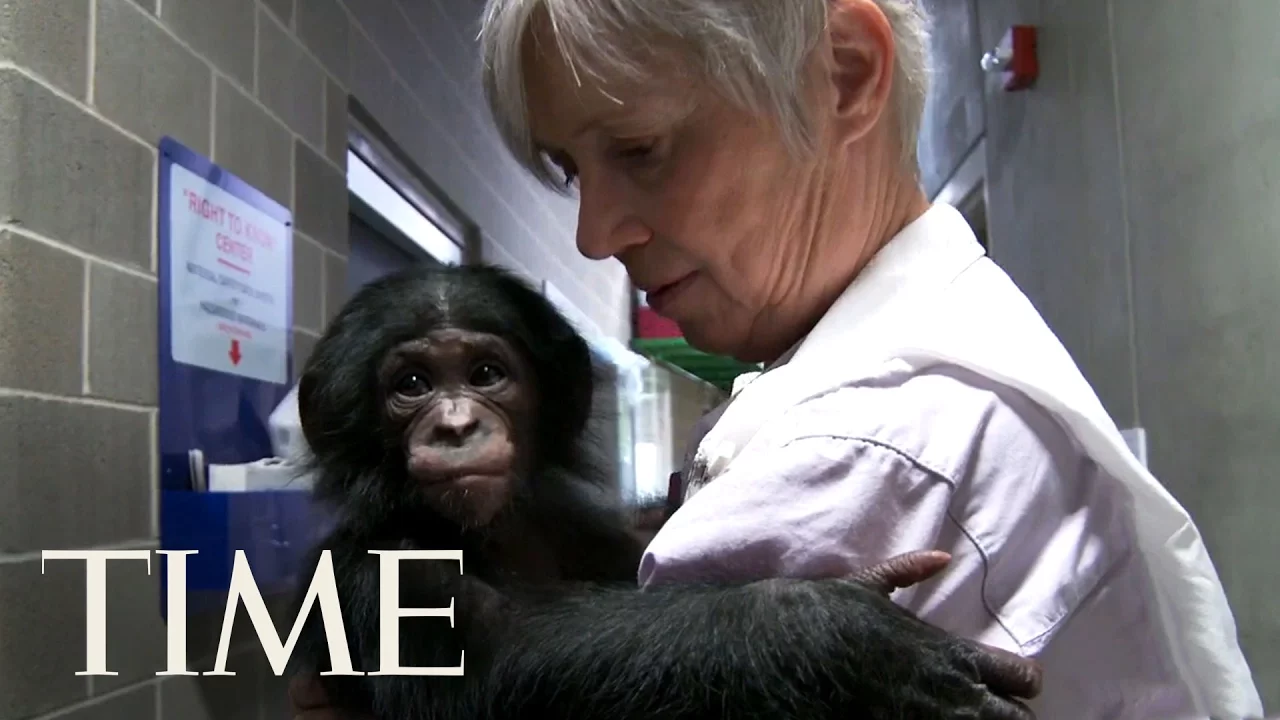
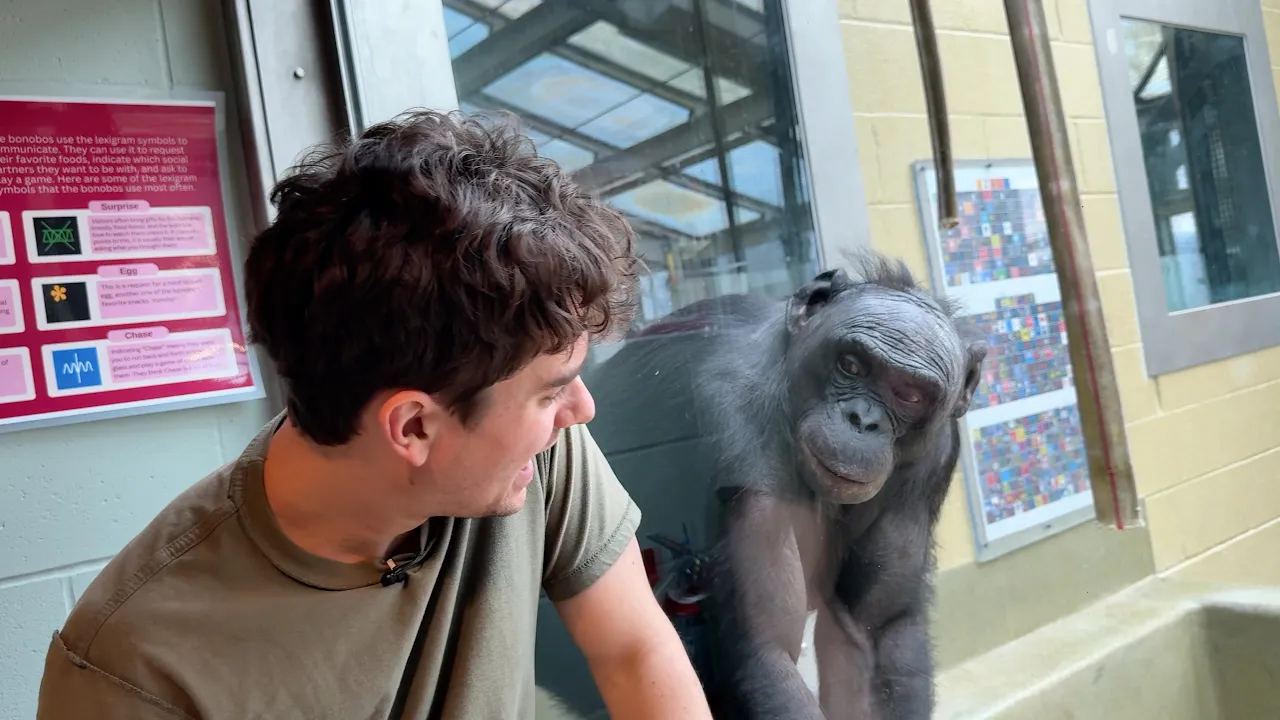
Baby Kanzi was recently adopted and adjusting to life in his new home. His mother was working with a language coach to learn some English, and Kanzi usually came along, though he didn't appear to pay much attention. But the language coach noticed that he seemed to be picking up on how to communicate just by watching his mother's lessons. Oddly enough, it appeared that he was picking things up faster than his mom. For example, the phrases, "You tickle" and "tickle you" meant two different things. And Kanzi's mom, she was having a hard time understanding that syntax. One day, Kanzi was hanging out, playing with stuffed animals, and the coach asked him to make the dog bite the snake. Kanzi put the snake into the dog's mouth like it was no big deal. It was a really big deal, because Kanzi is a bonobo. He's actually a language superstar. Even among the elite research primates, like Koko the gorilla, Kanzi was the first ape to demonstrate that language can be acquired spontaneously through observation, without planned training, and the first to show a rudimentary understanding of grammar, syntax, and semantics. Again, really big deal! Especially because for years, humans have been proclaiming that it's language that sets us apart from other animals. But are we really alone? Turns out, that question keeps getting more and more complicated.
Technically, we define language as a set of spoken, written, or signed words, and the way we combine them to communicate meaning. If we change that definition to include the use of complex grammar, then maybe we are alone.
But if language is simply the ability to communicate through a meaningful sequence of symbols, as I might do while looking for a bathroom in Sweden, or Kanzi does when she's asking for roast marshmallows, well then welcome to the club, apes!
[INTRO MUSIC] We communicate in part by engaging our brains and bodies to make sounds that let us transfer thoughts from our brain to other people's brains. But of course, language is more than just making air vibrate with sound. I can communicate by moving my hands, which you might have noticed I do pretty frequently, or by using visual symbols.
All of these forms of language allow us to comprehend things we've never actually witnessed, and exchange information with each other quickly and effectively to, y'know, get a job, or be a friend, or use a metaphor. It's hard to imagine a fulfilling life without some kind of language. Humans have nearly 7,000 different languages and no matter how different they sound, we can break down their basic structure in the same way, using the same three building blocks. The smallest of them are phonemes.
These are very short, distinctive sound units like "a," "t," "ch," "sh," like, stuff like that.
English uses about 40 of them. Phonemes go together to make morphemes, which are the smallest units that carry meaning. This can be words or parts of words, like a prefix or a suffix for example. The word "speech" is a morpheme that contains four phoneme sound units: "s," "p," "ee," "ch." From there, you arrange morphemes into your language's grammar or system of rules, allowing you to say the things that you want to say.
So those 40 English phonemes give us over 100,000 morphemes that produce the more than 616,000 words in the Oxford English Dictionary, which can be arranged into an infinite number of sentences, paragraphs, Wu-Tang lyrics, or Shakespearean plays.
And just as the structure of language starts small, so does how we learn language.
And we start very young. The word "infant" comes from the Latin "in fans," meaning "not speaking." But as early as four months, they can recognize differences in speech and start to read lips, matching mouth movements with their corresponding sounds like, "ah," "e," "i," "o."
And even at this age, you got to watch what you say about kids in their presence, because this also marks the beginning of receptive language, or the ability to understand what's being said, both to and about us. Soon, that receptive language blooms to accommodate productive language, when instead of just understanding other people, babies start developing the ability to produce words. Of course, that takes a while, but in the meantime, they get a lot of practice babbling.
Beginning at about four months, they start to make all sorts of sounds. Although you may get a "dada" or a "mama," babbling is not an imitation of adult speech. In fact, it typically includes sounds from many different languages, and a stranger couldn't tell if a kid was Italian or Kenyan or Korean just by the sound of her babbling. Similarly, deaf babies will watch their parents signing and start babbling with their hands by about 10 months. That babbling morphs into something that starts to make sense, and "mama" probably really means "mama" now. Without exposure to other languages, a child will actually lose the ability to both hear and create particular tones and sounds that aren't part of his or her household language. So someone who speaks English around the house soon won't be able to differentiate between certain phonemes in Mandarin if they heard them, for instance, or between aspirated and non-aspirated consonants in Hindi. By the time they're mowing down the first birthday cake, most kids will be entering the one-word stage of language development. They now know that sounds carry specific meanings, and connect the sound "dog" to that furry thing across the room. By around 18 months, their capacity for learning new words jumps from about one a week to one a day, and by the time they're two they're probably speaking in two-word statements.
These choppy sentences are kind of like a telegraphic speech -- they sound like clumsy texts or old-school telegrams, using mostly nouns and verbs. "Want juice," "No pants," that kind of stuff. These little sentences make sense and they follow the rules of their language's syntax. For example, an English-speaking child would put an adjective before a noun: "Black cat" while a Spanish speaker would reverse that: "gato negro."
From there, the average kid is soon uttering longer phrases in complete sentences -- refusing to put pants on and demanding more crackers. Most humans hit these same milestones during their language development, but there are competing theories about how our infant babbles turn into complex sentences and how we acquire language. You'll remember B.F. Skinner, the pioneering behaviorist who brought us learning through reinforcement. He believed language was a product of associative principles and operant conditioning. Skinner argued that a kid learned to associate words with meanings largely through reinforcement. So in the Skinner model, for example, if baby Bruno says "mmmm" and his mother gives him some milk, he'll find that outcome (both the milk and the attention) rewarding, and eventually, work his way up to saying, "milk," through these learned associations and shaping processes. It's good to be understood, right?
But as usual, not everyone was on board with Skinner. In particular, legendary American linguist Noam Chomsky argued that a kid like Bruno would never reach his full, complex, sonnet-writing potential if his learning was dependent on conditioning alone. Chonsky instead proposed the idea of innate learning and ubiquitous grammatical categories, pointing out that while the world's thousands of languages may sound wildly diverse, they're actually very similar, sharing some basic elements. He called this "universal grammar."
Chomsky's universal grammar posited that all human languages contain nouns, verbs, and adjectives, and humans are born with an innate ability to acquire language, and even a genetic predisposition to learn grammatical rules, rather than being linguistic blank slates. Chomsky suggested that we're hardwired for it from day one.
In the end though, we're still not sure how we acquire language; however, developmental research and studies of other species have given us a sense that at least some of it is innate, while the role of learning and exposure is also important. So if it's true that all humans have some innate capacity for language, where in the brain is it sitting? We've talked a lot about how function is localized in the brain, and that is definitely true for some aspects of language, but while speaking, reading, writing, and even singing all fall under the language umbrella, their locations in the brain are a little more complicated. Consider aphasia, a neurological impairment of language.
People can experience lots of different kinds of aphasia, depending on whether they've suffered an injury, or stroke, or a tumor, or dementia. So maybe they can speak but not read, maybe they can sing but barely speak, or write but not read. The region of the brain known as Broca's Area and the left frontal lobe is involved with the production of speech.
If i suffered a trauma to this area, I might still comprehend speech but struggled to speak, although I might still be able to sing, because that's conducted elsewhere in the brain.
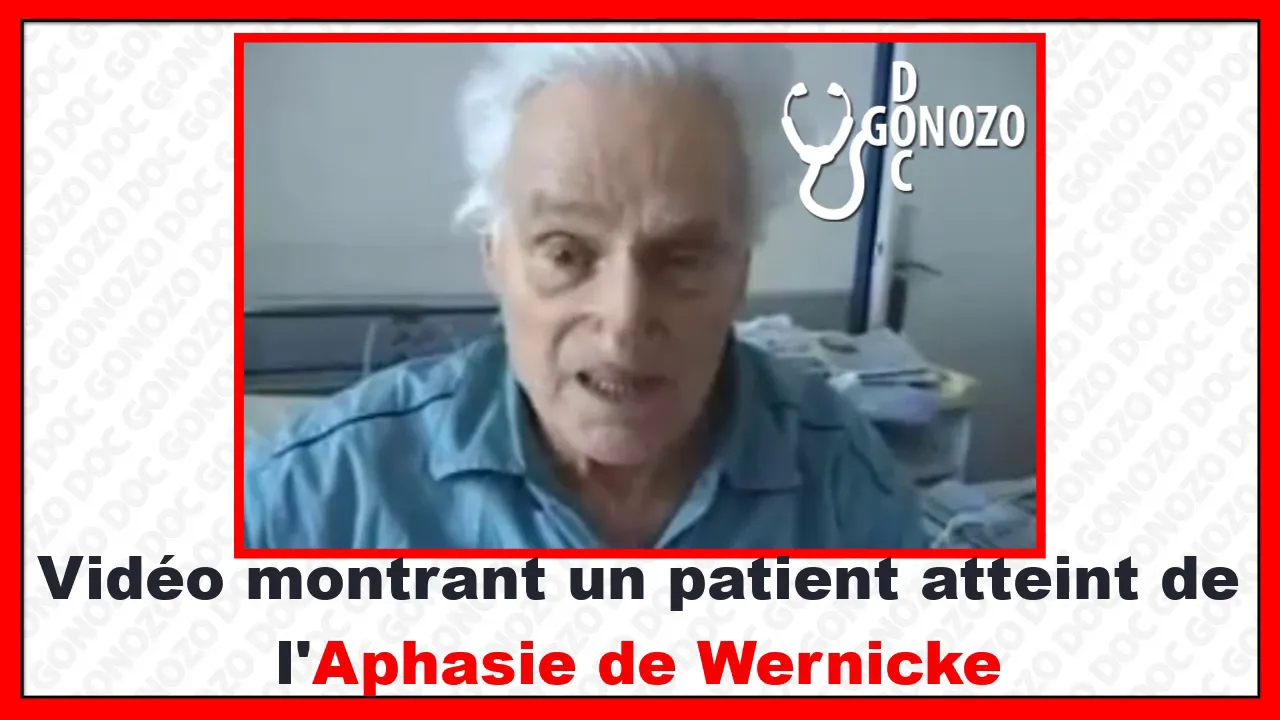
On the other hand, that falling coconut struck another region called the Vernicas Area, a region in the left temporal lobe involved in the expression and comprehension of language, I'd still be able to speak, but my language wouldn't make any sense, so you might find me saying something like, "it was two pizza i called purple brother on the television."
Aphasia and other brain injuries remind us how thinking and language are both separate and intricately entwined. For instance, it's hard to say if non-verbal ideas come to us first and we think of the words to name them, or if instead, our thoughts are born in language. Or if we'd be able to even think without it. And because language often helps to frame your ideas, your thinking might actually be influenced by which language you're using. So what are the implications of this? If we expand the definition of language to include other species, how might Kanzi's ability to communicate that he wants a marshmallow affect his thinking, and how might that thinking influence his language progression and his identity?
If only i had the words to describe how fascinating this all is. If you understood the language I was using today, you learned how languages are built from phonemes, morphemes, and grammar; and when children acquire receptive and productive language and pass through the babbling one-word and two-word phases of development. You also learned some theories on how we acquire language, what brain areas are involved, and how thinking and language are connected. Thanks for watching, especially to all of our Subbable subscribers. If you'd like to sponsor an episode of Crash Course, or even be animated into an upcoming episode, just go to subbable.com/crashcourse.
This episode was written by Kathleen Yale, edited by Blake de Pastino, and our consultant is Dr. Ranjit Bhagwat. Our director and editor is Nicholas Jenkins, the script supervisor is Michael Aranda who is also our sound designer, and the graphics team is Thought Café.
Up Next

46:21
Genie Wiley: The Feral Child and Language Acquisition Study
@ZaraV
75.5K views•2023-04-11
36:52
Constraint Interaction in Optimality Theory: Epenthesis & Deletion
@Vidyamitra
180 views•2018-08-20

9:57
Pragmatics and Grice's Maxims | Crash Course Linguistics
@crashcourse
338.9K views•2020-10-16

21:32
Accent Expert Explains U.S. Regional Dialects | Part 1
@WIRED
9.3M views•2021-01-21
Related Study Plans & Knowledge Roadmaps
Structured learning paths in Linguistics
linguistics
Optimality Theory: Tableaux & Constraints
01Phonological Basics: Sounds, Syllables & Rules
02Foundations of Optimality Theory: GEN, CON, and EVAL
03The Constraint Inventory: Markedness vs. Faithfulness
+ 2 more learning modules
15h5 modules
Explore Roadmap
linguistics
Morphosyntactic Alignment: S, A & P Systems
01Foundations of Syntax: Transitivity and Arguments
02The Linguistic Variables: Mapping S, A, and P
03Nominative-Accusative Alignment
+ 3 more learning modules
12h6 modules
Explore Roadmap
linguistics
Analyzing Sign Language: Phonology & Syntax
01Foundations of Sign Language Linguistics
02Phonology: The Five Parameters of a Sign
03Morphology: Word Formation and Classifiers
+ 2 more learning modules
14h5 modules
Explore Roadmap
linguistics
Pragmatics: Speech Acts, Grice & Politeness
01Introduction to Pragmatics: Meaning in Context
02Grice’s Cooperative Principle & Implicature
03Speech Act Theory
+ 2 more learning modules
14h5 modules
Explore Roadmap