


















This documentary explores how Aboriginal communities in Australia's Northern Territory maintain traditional justice systems (Ainal law) that have contributed to lower crime rates, while highlighting tensions with the imposed Western legal system; community members advocate for legal recognition of Aboriginal law and culture, arguing that bypassing customary justice leads to increased violence and that effective solutions require partnership between Indigenous and non-Indigenous legal frameworks.
Aboriginal Bush Law: Australia's Indigenous Justice System | BBC Documentary
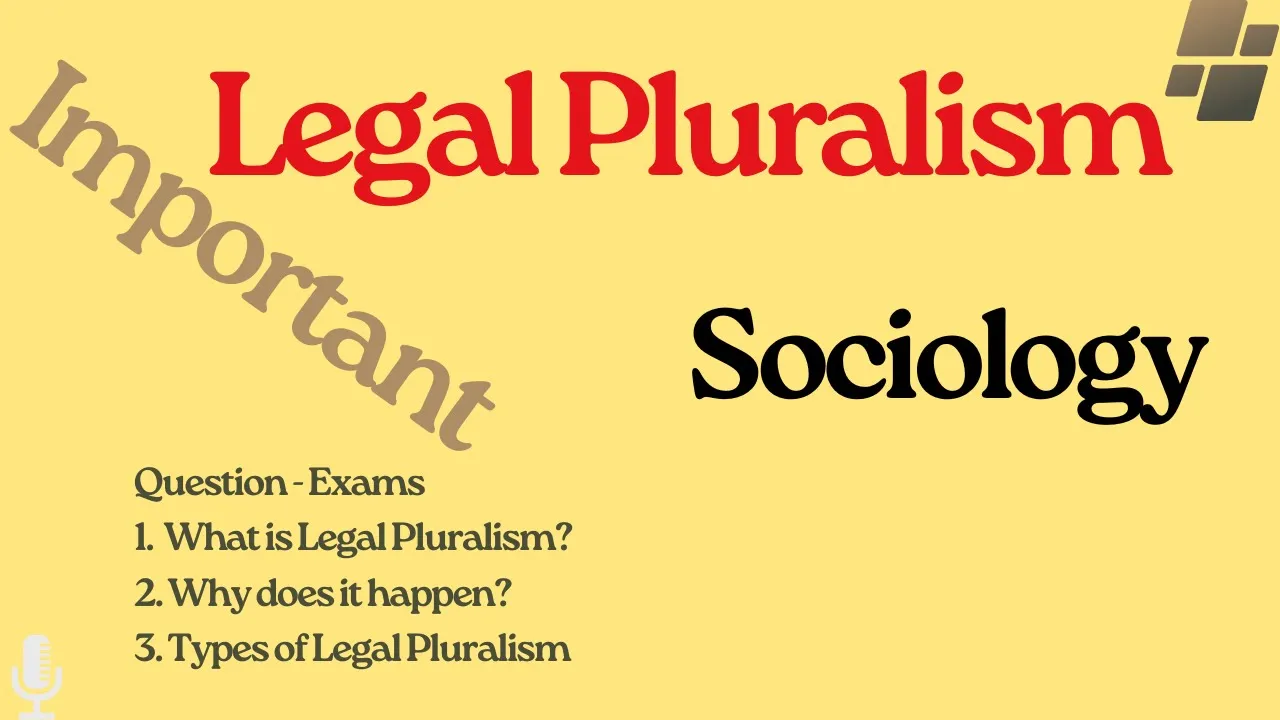
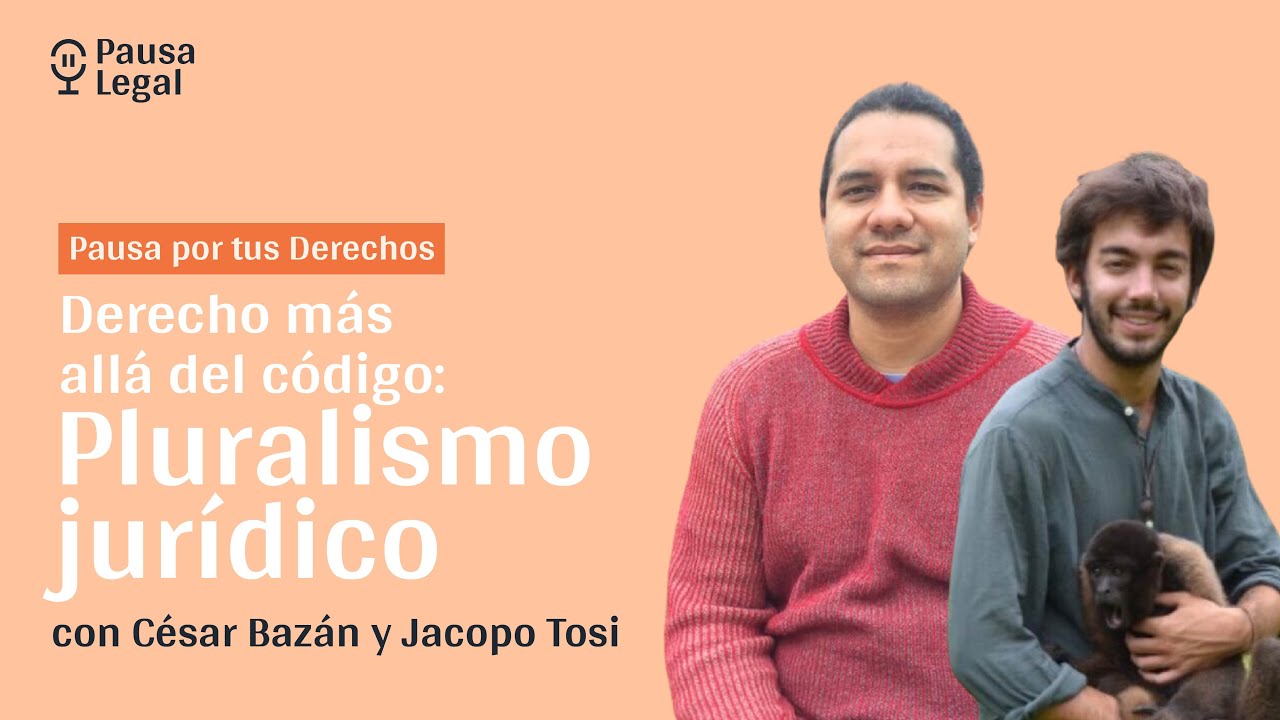
Added:The concept of legal pluralism, which refers to the coexistence of multiple legal systems or traditions within a single geographic or political territory.
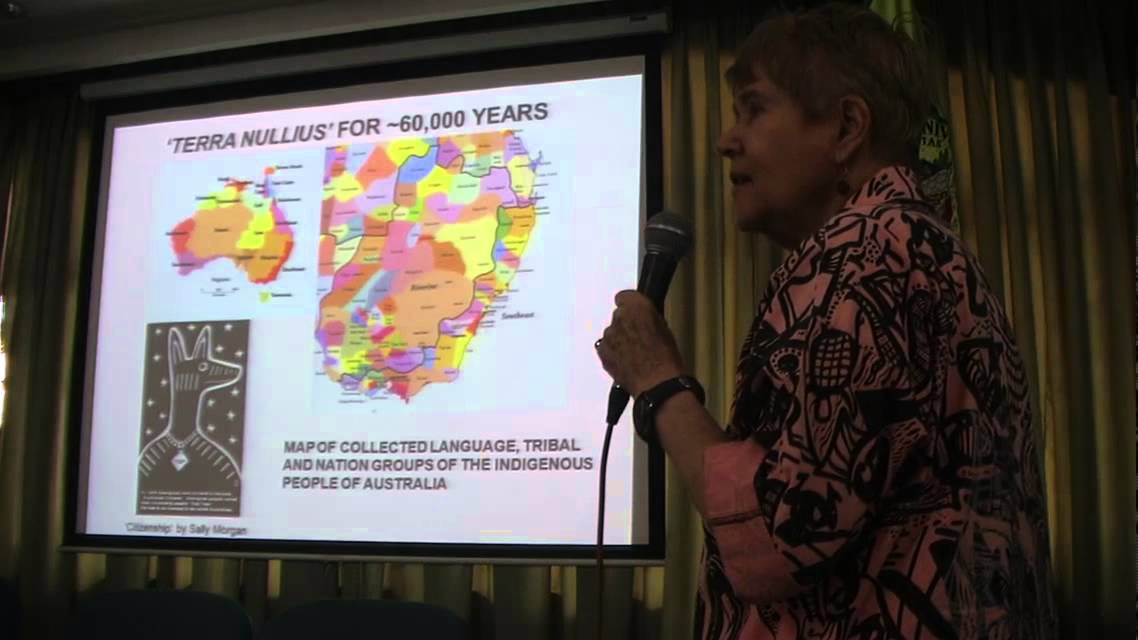
The historical context of British colonization in Australia, specifically the legal doctrine of 'terra nullius' (land belonging to no one) and its denial of Indigenous land rights and sovereignty.
The foundational principles of Aboriginal Australian spirituality, particularly 'The Dreaming' (or 'Dreamtime'), which serves as the source of Indigenous customary law, moral codes, and connection to the land.
The fundamental differences between codified, state-sanctioned Western law and oral, kinship-based customary law.
The modern application of restorative justice and 'Circle Sentencing' in Australia, which attempts to formally integrate Indigenous elders and community perspectives into the mainstream judicial process.
Comparative analysis of Indigenous jurisprudence globally, such as Māori Tikanga law in New Zealand, Navajo Nation peacemaking courts in the United States, or Gladue principles in Canada.
The legal and ethical conflicts that arise when customary punishments or tribal laws clash with modern international human rights frameworks and domestic criminal codes.
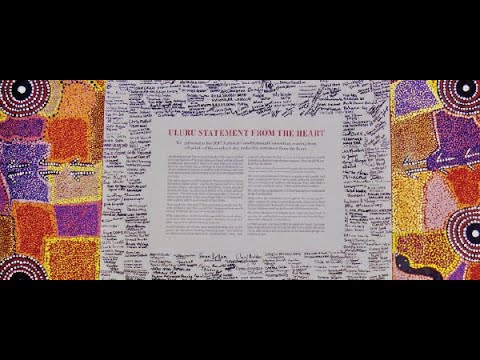
The constitutional reform debates in Australia, including the significance of the Uluru Statement from the Heart, treaty processes, and the formal recognition of Indigenous law-making authority.
79.9K views257likes15:00Original Release: 2011-03-10
Hello, I'm Mark Corkran and welcome to My Country, Australia, where we explore what Australian filmmakers have to say about their own country. Well, when European settlers first arrived here in Australia through the spectacular Sydney heads, one of the first things they did was to sweep away Aboriginal law, the ancient system of justice and retribution administered by tribal elders.
Now, in a bid to reduce violent crime, the Australian criminal justice system is examining whether in fact anything can be learned from the past. In this documentary, we meet an Aboriginal community from the Northern Territory that has returned to the traditional methods of justice. Here's my country, Bush Law.
[Music] It's a good one.
[Music] We the people of Lajanu are from the W tribe, one of many ainal tribe living in Australia. The L community has one of the lowest crime rate of all Northern Territory Aboriginal community.
We believe the reason why we have very little violence and crime in our community is in the strength of Ainal law and our people's respect for it. We believe the solution to the problem of growing crimes and violence in Aboriginal communities will only be found if the Australian government legally recognize the practice of Aboriginal law, language and culture.
[Music] World Bridge system is very strong and world bridge is really important to us.
We got to teach our children like we still teaching our children.
But how can we teach our children when we tired of one things and on one hand to be be afraid to allow to teach our children and what we taugh with the other hand the government won't let us do those things anymore which is really bad for our people because I think when when we start breaking their law they also are breaking our law too but we we get punished by their law they don't get they don't get punished by our law. Then what is your different walk where we're [Music] free? Aboriginal elders at a remote northern territory community are calling on the Australian legal system to punish a police officer for breaking the law when she went onto a secret site during an initiation ceremony.
They came into the community checking up on beagles, checking up on people who got no license or smashed up cars running around. But that's okay. People saw that, you know, but the problem went a little bit out of hand. I think we had female or police officer accompanied by two male officers. They went into the areas where young initiatives stay there away from the community just outside of the community.
And it's only a place where men can go, you know, now women or even visitors, career visitors, you know, or even YA visitors. But anyway, because they were the police and they were doing their duty and they just went ahead and done their investigation or their duty beyond some areas that they weren't allowed. It was really terrible and horrible for really upset people. mothers, mothers, aunties, grandmothers, sisters, fathers, uncles, grandfathers, everybody. The whole community was very upset because the police just went ahead and did what they wanted without even asking for directions or if they were allowed to go in there or if it was okay or anything like that. They didn't even bother to do that. They just went ahead and did it anyway because she got that patch and that gives her the right to go anywhere regardless of our culture or the significance of our sacred sites.
Why can't the police department and police women and men respect our sacred sites and our law? We don't have problem with domestic violence in the community.
Most of the young men they you know when we talk to them tell them not to do this and that they listen is still strong and we got elders in the community they're strong we got Lora [Music] When white people say that we are losing control of our power, we still got our law. I don't see that we do our laws night by night, day by day. We're still doing our duty. We still still showing our children the way to go. But when our when our people passed [Music] away today, we honor the indigenous peoples of this land, the oldest continuing cultures in human history. We apologize for the laws and policies of successive parliaments and governments that have inflicted profound grief, suffering and loss on these our fellow Australians.
[Music] When I was a little boy, I remember the red truck that were picking people up at you and uh even though they were taking some young people away from father and mother, taking away from parents even end up in different country with different people, tripping language, tripping, tripping dream time. When we talk about not only some of us people the stolen generation, we as the black people the stolen generation too also. And today when you when we looking back what happened in those years when did the native were controlling everything? They had to do what they like with the original people.
More like they were taking people like a shifting cattle from one bar.
Yeah. We had no choice. No, we we had no choice because in those days if I if I said no, I got to get a big hiding from policeman or from Ka people think evolution. They don't see us as human beings and that's where the mistake is.
That's what's taught in a lot of career schools. That's how you make the other people low and feel weak because we not human. We never evolved properly. We are still primitive through the eyes of the ka and that is very wrong.
All men are equal. For too long, it's been we know what's best for African people. We know what you want. We know what you need.
This is what you need. That is what you need. This is how you do it. It's been always them telling us how to do things and how to work this and how to make things for the benefit of the communities. But no, no, no. You come halfway, we'll come halfway and let's work together. Your idea and my idea, make them as one.
[Music] The truth is a business as usual approach towards indigenous Australians is not working. Most old approaches are not working. We need a new beginning. A new beginning which contains real measures of policy success or policy failure. A new beginning, a new partnership on closing the gap with sufficient flexibility not to insist on a one-sizefits-all approach for each of the hundreds of remote and regional indigenous communities across the country, but instead allows flexible, tailored local approaches to achieve commonly agreed national objectives that lie at the core of our proposed new partnership.
We'd like to see our customary law and our culture to be recognized through the white fellow law and and their system. And but what we'd like to see is getting punished by through our law, through our custom and our rights. And then after they've been through our punishment, our tribal punishment, they can be taken away and dealt by the wild fellish law. As long as they they've um been through our through our through our law punishment, tribal law, we don't care how long they can go to jail for. is looking cleared the family name and cleared the problem according to our eyes throughout the way we look at it as a as a um as tribal people you know you see a lot of violence when when things like tribal punishment doesn't take place not only in our tribe in walby tribe but in other tribes and in all of us try to do when tribal punishment doesn't take place before people the white pill comes in and locks our people away. The violence get worse.
My life been really um like a nightmare to me. Um because my young sister done a manslaughter and then she's locked up in jail even though she's she got punished through white men but in Aboriginal law she didn't. So she have to go back and face the sees blog family.
A lot of people got hurt because my sister went in jail. She didn't do a pack payback. If she could have that payback, everybody wouldn't get hurt. If they can't get to um the right main person, they go for the family, the closest family. I'm big sister for my young sister. We from one mother, one father. Even if they can't get to her, they have to get to me. It took probably one month for them to catch up to me. So I had no choice. So I went to the oval and they hurted me. Probably 13 12s. They all had nal null and they hit me.
They broke this one. This one here. So I had some stitches in my head. Swollen arm. They will keep on chasing people till they get to the right person. They'll never forget nothing.
[Music]
Up Next
8:44
Deconstructing Culture in Human Rights with Sally Engle Merry
@DialoguesForChange
826 views•2012-05-17

38:41
Astrobiology Through an Anthropological Lens: Field Insights
@georgiatechastrobiology
128 views•2021-04-14

4:45
Proxemics Explained: The Study of Personal Space
@Vox
536K views•2016-07-05

10:38
Psychology of Internet Trolling and Pranks Explained
@AzzyLand
10.7M views•2017-12-20
Related Study Plans & Knowledge Roadmaps
Structured learning paths in Anthropology
anthropology
Space Anthropology: Analogs, Culture & Habitats
01Foundations of Space Anthropology & Cosmic Imaginaries
02Extreme Isolation & Micro-Societies in Orbit
03Space Analog Habitats & Earth-Based Simulations
+ 2 more learning modules
15h5 modules
Explore Roadmap
anthropology
Legal Anthropology: Customary Law & Pluralism
01Foundations of Legal Anthropology and Social Justice
02Legal Pluralism: Coexisting Legal Systems
03Customary Law and Indigenous Dispute Resolution
+ 2 more learning modules
15h5 modules
Explore Roadmap
anthropology
Global Tourism: Gaze, Authenticity & Heritage
01Introduction to the Sociology of Tourism
02The 'Tourist Gaze' (John Urry)
03Staged Authenticity in Tourism
+ 3 more learning modules
14h6 modules
Explore Roadmap
anthropology
Modern Kinship (ART, Adoption & Chosen Family)
01Foundations of Kinship and Family
02Assisted Reproductive Technologies (ART) & Relatedness
03Transnational Adoption and Global Kinship
+ 2 more learning modules
12h5 modules
Explore Roadmap