
















Thinkitation is a meditation practice that involves entering an alpha wave state (calm and creative) and then allowing ideas to flow from the subconscious, which can generate approximately 80% of business ideas; this practice works by accessing theta brain waves, the state just before sleep where ideas naturally flow, as demonstrated by Thomas Edison's technique of holding a metal ball to wake himself with ideas.
Meditation for Peak Creativity: Thinkitation & Brain States
Added:Basic neuroscience of brainwaves (Alpha, Theta, Beta, and Delta states) and how they relate to consciousness and relaxation.
Fundamental concepts of mindfulness and traditional meditation techniques, particularly focused attention versus open monitoring.
The cognitive science of creativity, specifically the distinction between divergent thinking (generating ideas) and convergent thinking (evaluating ideas).
An introductory understanding of how the prefrontal cortex functions in decision-making and cognitive control.
Practical application of neurofeedback technology and EEG biofeedback devices to monitor and self-regulate brainwave states.
The study of flow states (transient hypofrontality) and how to systematically induce peak performance in professional and creative endeavors.
Integration of 'thinkitation' into established creative frameworks such as Design Thinking, lateral thinking, and structured ideation processes.
Advanced cognitive psychology topics, such as incubation theory and the role of the default mode network (DMN) in subconscious problem-solving.
1.5M views46.3Klikes10:46Original Release: 2018-11-07
It has this incredible impact on almost every dimension of your life.
You'll see thousands upon thousands of results, everything from improving skin, to improving eyesight, to improving your performance on intelligence tests, to improving your heart health, and nobody truly understands why it works but we know it does work.
80% of the good ideas that I have in the business come from thinkitating.
80% of your business ideas are coming from this state.
That, that is what I want more people to understand.
The big thing to understand is that in Western civilisation, we are trained to exist in what you could call a monophasic state of awareness, right? Which means we think of consciousness as primarily existing in the beta or the waking state.
So, you and I are conscious right now and, we are existing in one particular level of consciousness, but... if you look at indigenous cultures, people in indigenous cultures, they operate in multiple levels of consciousness.
For example, I spent some time with a tribe called the Atchua, in the Amazon rainforest and the Atchua, they have this weird ritual.
At 4AM, the families get up and they come together around a campfire and they drink tea at 4AM and they discuss their dreams.
See, the Atchua believe that they communicate with tribes across the rainforest through their dreams.
They believe that the dream world, is as real as our physical world right now.
Now, that is tapping into a different state of consciousness.
Now whether that's true or not, it doesn't matter.
The point is, they believe that there are multiple or polyphasic states of consciousness.
So, meditation... actually gets you to go away from a single state and tap into altered states.
And, there's a powerful thing that's happening.
As people are studying meditation, as people are studying mindfulness, what scientists are discovering is that it has this incredible impact on almost every dimension of your life.
I remember seeing you speak on stage at A-Fest and, correct me if I'm wrong, but you mentioned something called "Thinkification", right?
Thinkitation, yeah.
Thinkitation, right?
And tell us what you're doing when you thinkitate.
So, for me, I use a very basic meditation practice which is something I want to get back to you.
Yours is what you tell people to do but I do box breathing.
I found that doing 4 equal sides does not work for me, it makes me feel out of breath.
So, I've just adjusted it to suit what's pleasurable for me.
It takes me into an alpha wave state.
If I'm stressed, maybe it takes me 20 minutes to get there.
If I'm already relaxed, maybe it takes me 3 or 4 minutes.
Once, I'm in an alpha wave state, which is typically classified as being calm and creative, which is exactly how I feel, I feel wide awake, I feel really sharp.
I'm breathing.
I do breathe in through my nose, out through my mouth.
I get into that alpha wave state where I feel like ideas, either from my subconscious, or just normally disconnected regions in my brain begin crosstalking.
[Right] So I get very creative solutions to a problem that maybe the night before, completely eluded me.
The reason I call it Thinkitation is in meditation, you're not supposed to grab onto your thoughts, [Right] which I actually found frustrating, and so it was causing me a problem in meditation.
So I thought, well, what if I just promise myself that once I get into that state then I can grab my computer, put it on my lap, continue my breathing cycle, to stay in that alpha wave state.
But if an idea comes as interesting, I will grab I don't think of it as grabbing it, to be honest, I think of it as riding a wave and so I'll ride it, really follow it, see where it goes take notes, write it down, try to get back on the wave or catch a different one and probably 80% of the good ideas that I have in the business come from thinkitating.
That's incredible, right?
80% of your ideas are coming when you are accessing these states.
Now, that's what I'm talking about You're accessing an altered state of consciousness.
Now, scientists can measure that.
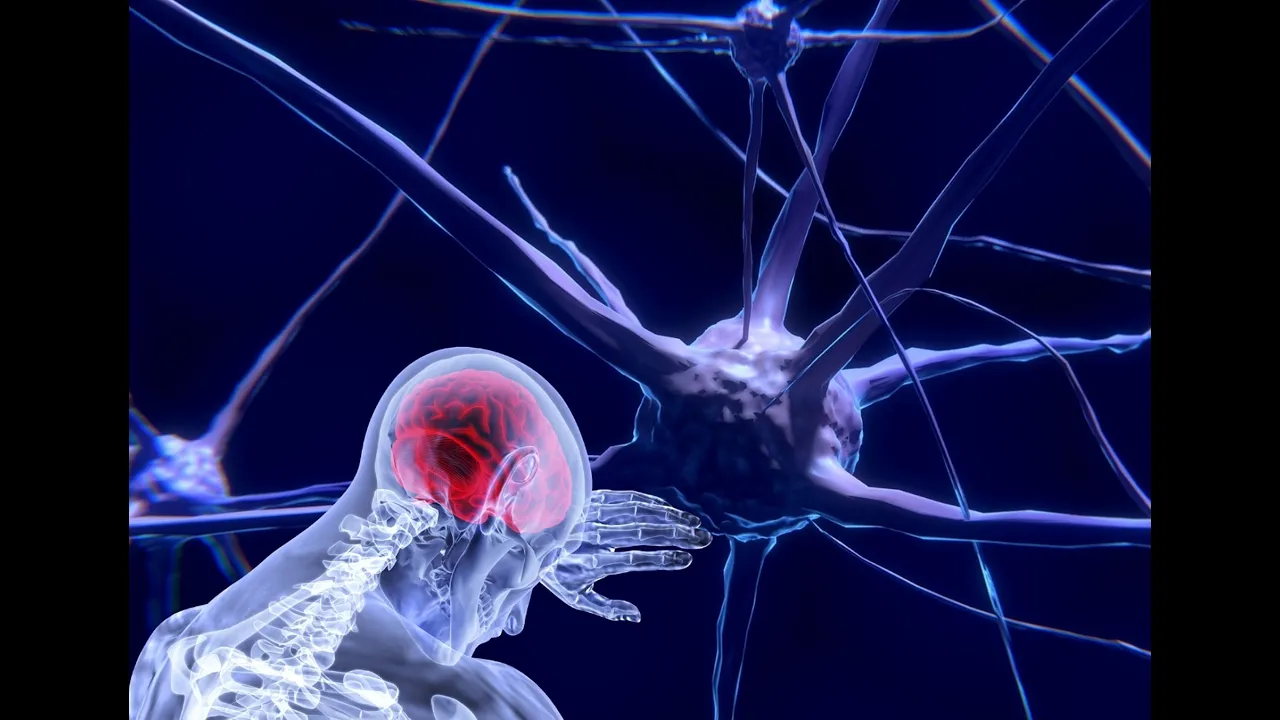
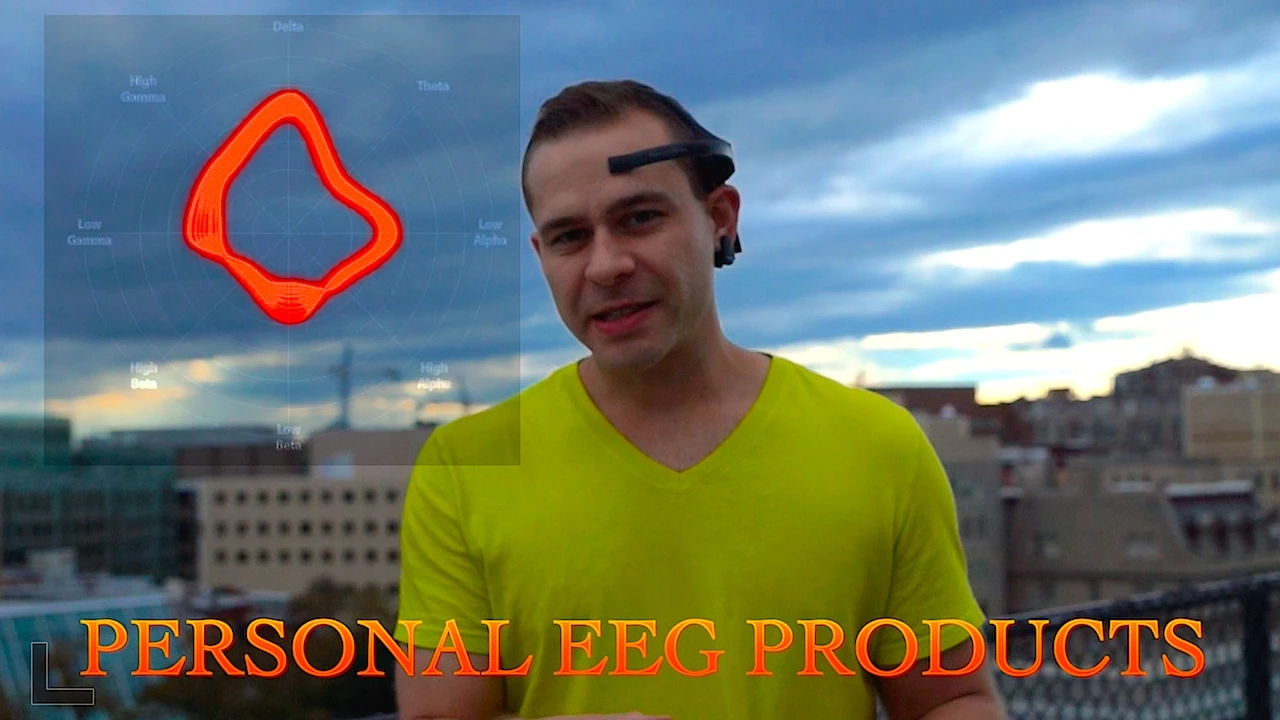
If we hooked up Tom's brain to an EEG machine, what they would see, is that you're probably going into- you're probably going to see an increase in alpha waves and an increase in theta waves.
What science is finding, is that alpha waves, which is what emerges from your brain when you are relaxed, right?
[Yup] Is very soothing, it's very relaxing and if you continue relaxing more, you get into what is sometimes called "waking theta".
Theta, is the state your brain is in every night, just before you fall asleep.
When you fall asleep, you go into a deeper state called delta.
But here's the unique thing, when you're at theta, ideas flow.
In fact, there's this legendary story of Thomas Edison, where, and maybe you've heard this, he would practise this napping technique, where he would hold a metal ball in his hand and there would be a metal tray below his desk and he'd sit in his chair, like this, and drift off to sleep and just as he goes into sleep, his hand would drop, the ball would clang on the tray, waking him up, and he'd have his ideas.
Now, what was he doing?
He was dipping into theta, to pull out ideas.
In fact, there's this quote by Edison, which says this "Ideas come from space; it's hard to believe, but it's true." - Thomas Edison "Ideas come from out of space."
Now, isn't that similar to what you're doing?
You're using your own language, but you're dipping into theta to pull out ideas and you've just said it, 80% of your business ideas are coming from this state.
That. That, is what I want more people to understand.
We can tap into these altered states to fundamentally make better decisions, to draw upon ideas, and to even increase our rates of getting towards our ideas.
So, this is one of the most powerful aspects of meditation, but you also said something else, which I want to pick up on, which is the reason more people don't meditate.
You said, you said something along the lines of I know in meditation you're not supposed to latch onto any thought, right?
Yeah.
That's rubbish, that's completely not true.
See, there are different types of meditation.
In fact, there are so many different types of meditation, I hate using the word "meditation".
Rather, I'd call it a transcendent practice.
A transcendent practice is any practice, where you go out of the physical world, and you go within.
So, meditation, breathing in and out, box breathing is a transcendent practice but closing your eyes and just being grateful for your life is a transcendent practice.
Closing your eyes and thinking compassionately about someone you love is a transcendent practice and thinkitaton is a transcendent practice, you're going within.
And then there's modern meditation, which is about becoming better at the world.
Meditation is not about becoming better at meditation, it's about becoming better at functioning in the modern world.
And so, when you understand that transcendent practices are these beautiful things we can tap into to get better at life, you'll see meditation in a completely different way.
Meditation helps you bend reality.
There is a myth out there in the world that I call the "hustle myth."
It says that it's about hard work, that it's about working harder than the competition, it's about busting your back for a hundred hours a week.
I call bullsh*t on that 'cause I also see people, who take- who focus on themselves first, who have a steady meditation practice, who learnt how to tap into intuition and then how to visualise their goals and they work significantly less, but get far better results.
You can hustle... or you can surrender into your inner space, and I'm a big fan of surrendering into your inner space.
Hustling, to me, is an outdated, broken approach that leads to overwork, it leads to broken marriages, it leads to poor relationships with your kids, it leads to aging faster.
Don't hustle, it's a myth!
Alright, so I'm the king of hustle.
So right now, you're going to convince me to be and I'm actually super open [Right] and I always want a better answer than where I'm at.
So, explain to me and obviously I've heard you talk about this but I have questions.
Explain to me what it exactly means to surrender into something.
So- So, let me give you an example.
Now, you've said you're the king of hustle, right?
But I would actually debate that.
When I talk about hustle, I talk about the people who believe that you have to work an ungodly number of hours to be successful.
There is a much healthier way.
So, there are two different types of people who are talking about entrepreneurship today.
There's the type of people who talk about entrepreneurship purely in the physical sense.
It's about the number of hours you work, it's about the number of phone calls, and of course, hard work has its place.
But then you see the rise of books by people like Michael Singer, who wrote the book "The Surrender Experiment", and if you read the book, it's kind of cool.
This guy, built a billion dollar software company and he talks about how he did that, by surrendering, by going within, by having a daily meditation practice.
Now, in your case, I believe you're doing it.
You're also moving to that approach but you're doing it unconsciously.
When I listen to you speak at A-Fest and you spoke about how you sit down, you relax and you thinkitate and these ideas come into you, you're tapping into something.
Tom, you're tapping into your intuition.
That is a far more effecient way than trying to hustle to get these ideas.
You're going within.
So you're already doing one of the first steps.
Now the second part is how can you optimise your rate of going from idea to reality. That's the second part of bending reality and there are significant number of tools that you can put into play to help you do that, by working on your inner states.
For example, one, is create a visualisation.
There are so many studies that show that what you visualise in your mind, you can help accelerate in the world.
For example, one study called the "Finger Abduction Experiment", basically had people exercise their fingers, okay, like physically exercising your fingers and then a controlled group of people visualised themselves exercising their fingers and what they found is that one group grew finger strength by let's say about 10%, the other group, by 9%.
Really close, just by visualising their fingers.
Now, the same thing happens in sales.
You can actually accelerate your sales' closing rate by visualising the outcome.
We don't really understand how it works, but we know it works.
And the same thing happens in your entrepreneurial life.
When you get a clear vision of the business you want to create, of the lifestyle you want to create, you move towards that faster.
And so, meditation to me, is not just about going zen, it's not just about, like, focusing on your breathing.
It's about knowing how to tap in, which you do so well, and then knowing how to get clear on what you want and to focus on that vision for a few minutes every day.
Up Next

5:44
Deep Work by Cal Newport: Animated Book Summary for Focused Productivity
@betterthanyesterday2338
684 views•2021-02-23

26:22
Walking in the City: Urban Rituals and the Flâneur in Contemporary India
@PSBTIndia
1.9K views•2016-08-02

9:49
FastAPI vs Flask vs Django: Choosing the Right Python Web Framework
@TechWithTim
302.5K views•2024-05-26

1:42
Game of Thrones Opening Credits: A Cinematic Analysis
@gameofthrones
46.3M views•2011-04-18
Related Study Plans & Knowledge Roadmaps
Structured learning paths in General & Interdisciplinary Studies
general-studies
Artificial Light: History, Tech & Human Impact
01The Pre-Electric Era: Fire, Oil, and Gas Lighting
02The Incandescent Revolution and Grid Electrification
03Gas Discharge and Fluorescent Illumination
+ 3 more learning modules
14h6 modules
Explore Roadmap
general-studies
Elevator Engineering: History, Physics & Cities
01From Hoists to Safety Brakes: The Dawn of Vertical Lift
02Hydraulic vs. Traction: The Engineering Physics of Elevators
03Modern Speed, Safety, and Algorithms
+ 2 more learning modules
12h5 modules
Explore Roadmap
general-studies
Rubber: Material Science, History & Geopolitics
01Origins of Natural Rubber & Mesoamerican History
02The Chemistry of Natural Rubber & Vulcanization
03The Geopolitics of the Rubber Boom & Colonization
+ 2 more learning modules
12h5 modules
Explore Roadmap
general-studies
Containerization: Evolution, Logistics & Trade
01Ancient Trade & Bulk Cargo: Amphorae to Barrels
02The Industrial Revolution & Cardboard Packaging
03The Containerization Revolution: Malcom McLean
+ 2 more learning modules
12h5 modules
Explore Roadmap