







![[경제읽기] 환율 1,500원 눈앞...원화 가치, 금융위기 이후 최저 / 연합뉴스TV (YonhapnewsTV)](https://i.ytimg.com/vi/pAekrEOPRC4/maxresdefault.jpg)

















Foreign aid is the transfer of money, goods, or services from one country or international organization to help another country and its people, with the United States allocating approximately 1% of its federal budget to foreign aid (around $33 billion annually), while remittances—money sent by immigrants and migrants to their home countries—represent a much larger flow of international financial assistance, reaching $542 billion globally in 2013, with significant positive impacts on recipient countries' economies and public health outcomes.
Foreign Aid & Remittances: Crash Course Economics #34
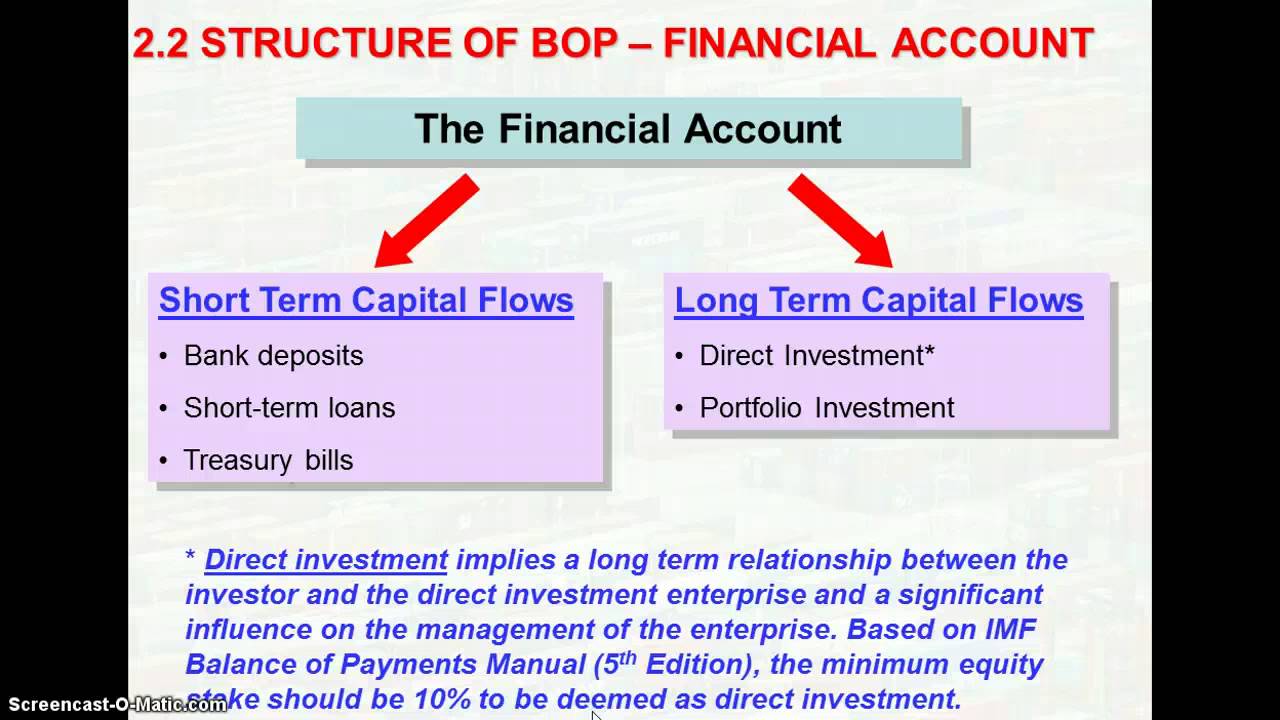
Added:Understanding the Balance of Payments, specifically how capital and financial flows move across international borders.
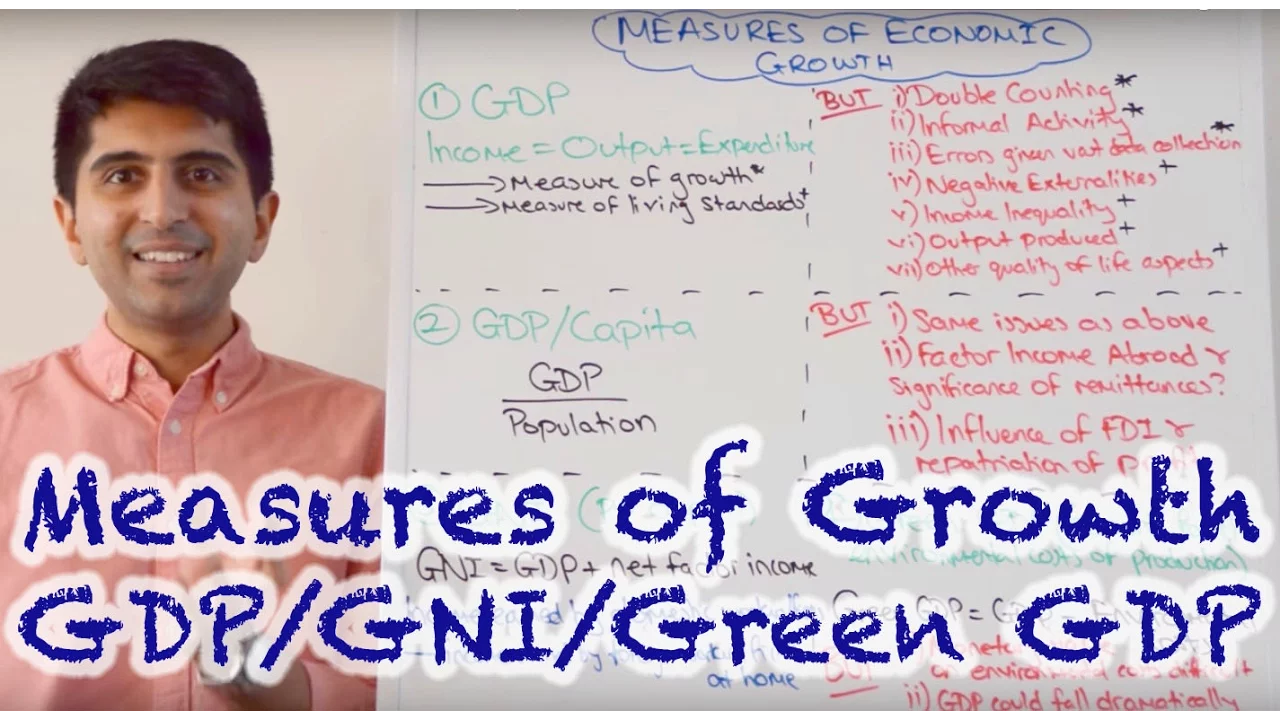
The distinction between Gross Domestic Product (GDP) and Gross National Income (GNI), as remittances directly impact national income.
Basic exchange rate mechanics and how foreign currency inflows affect the value of a domestic currency.
Fundamental concepts of economic development, including the basic challenges faced by developing or emerging economies.
The 'Aid Effectiveness' debate, analyzing the arguments of economists like Jeffrey Sachs and William Easterly on institutional dependency versus development stimulus.
The phenomenon of 'Dutch Disease' and how massive foreign currency inflows (like aid) can paradoxically harm a domestic economy's export sectors.
The economics of migration, specifically the trade-offs of 'Brain Drain' versus the financial benefits of remittances.
The role of global financial institutions (such as the World Bank and IMF) and how official development assistance (ODA) differs from private capital flows.
Microfinance and mobile money systems (like M-Pesa) as modern vehicles for maximizing the economic impact of remittances at the household level.
402.3K views6.9Klikes11:57Original Release: 2016-05-27
Hi, I’m Adriene Hill. This is Crash Course Economics, and today we’re talking about foreign aid.
Want to guess what percent of the America’s budget goes to foreign aid? It’s right around 1% But most Americans have no idea that it’s that small.
A survey by the Kaiser Family Foundation found the average guess was that 26% of the budget went to helping other countries.
[Theme Music] The fact that Americans overestimate their government’s foreign aid so drastically might help explain why so many think we’re overspending on aid.
The Kaiser study found that more than half of people surveyed said the US was too generous.
But when they found out the total expenditure was closer to 1% of the budget, that number fell to 28%.
Foreign aid is basically the transfer of money, stuff or services from a country or international organization, that's intended to help out another country and its people.
The Organization for Economic Cooperation and Development estimates that aid spending by the richest countries was more than $135 billion in 2014.
Of that, nearly $33 billion came from the U.S. The U.K. chipped in more than $19 billion.
Germany added $16 billion. France, $10 billion.
When you look at which countries give the most as a percentage of gross national income, the most generous nation is Sweden.
U.S. Foreign Aid goes to a hundred-plus countries around the world -- and is set aside for goals like peace and security, democracy and human rights, economic growth, improvements to health and education systems, humanitarian assistance after disasters, and protecting the environment.
But why do countries spend so much to help out non-residents?
Out of the kindness of their collective hearts? Or for some other more...complicated... reasons?
Historians say the modern age of international aid really began after World War II, when a number of still-to-this-day significant international institutions were established.
The World Bank was set up in 1944 as the International Bank for Reconstruction and Development, with the job of helping Europe rebuild.
The United Nations was created in 1945, as “a general international organization to maintain peace and security".
And the IMF came into existence, also in 1945, with the job of helping to oversee the international monetary system.
In 1947, Secretary of State George Marshall addressed the graduating class at Harvard, with an offer of financial support for European countries in their efforts to rebuild.
He said: “It is logical that the United States should do whatever it is able to do to assist in the return of normal economic health to the world, without which there can be no political stability and no assured peace.
Our policy is not directed against any country, but against hunger, poverty, desperation and chaos” The speech marked the birth of what’s known as the Marshall Plan.
The U.S. gave out $13 billion dollars in aid, which, if you adjust for inflation, is morethan $130 billion dollars today.
The goal was to help restore production in Europe, to expand trade, and to a small degree, to try to keep communism from spreading.
The United Kingdom got about a quarter of the total aid.
France got about 18%, West Germany got about a tenth of the money.
The rest was spread to the the smaller western European countries. And it worked.
The countries that took assistance saw their GNPs jump, in some places their economies were doing better than they were BEFORE the war.
In 1949, President Truman effectively extended the Marshall Plan to other developing countries around the world.
George Marshall received the Nobel Prize for Peace.
The plan worked on both strategic and humanitarian fronts.
The Marshall Plan helped legitimize and lay the groundwork for U.S. foreign aid programs that have come since.
During the Cold War, the U.S. and its allies, along with the Soviets and its allies, used international aid as a political tool.
Basically trying to win allegiances, and punish countries who didn’t seem quite loyal enough.
Once the Cold War ended, foreign aid transitioned from geopolitical carrot and stick toward more actual humanitarian and economic aims.
Adjusting for inflation, in 1960 total international aid to countries in sub-Saharan Africa was about $6 billion.
That rose to $46 billion in 2011. Why?
Governments got more interested in trying to help lift people out of poverty and improve economic conditions for the poorest countries.
Sub-saharan African nations also receive significant aid to help fight HIV and AIDS.
In 2015, the U.S. planned to send Kenya $486 million in assistance to combat HIV.
But international aid doesn’t always go to the poorest countries or the countries fighting epidemics.
Some research has found donor countries are more likely to send aid to former colonies or strategic partners.
For example, the U.S. sends hundreds of millions of dollars to Israel and more than a billion dollars a year to Egypt, mostly earmarked to promote Peace and Security.
France has focused its aid on its former colonies.
And Japan directs aid to countries with similar political interests.
Donor countries also tend to want to write big checks to countries that are moving toward democracy.
And, donor countries sometimes use international aid to encourage trade with the recipient country.
Like say if the U.S. sends aid to a country that turns around and uses that aid to buy U.S. exports.
It can help the U.S.
The greater amount of trade a donor country does with a recipient country, the more aid the recipient country is likely to get.
Now, it probably goes without saying that big donations don’t guarantee results in the outcomes a donor country is looking for.
There are quite a few ways that foreign aid programs go wrong, including when countries don’t coordinate their aid, when they don’t involve the recipient country in figuring out how to allocate the money, and when the recipient country is run by corrupt leaders, who don’t use the aid for its intended goals.
Some economists say foreign aid actually encourages corruption, by helping keep bad governments in power.
As for whether or not international aid can actually encourage long-term-economic-growth in poor countries, economists are divided on that. Some say it doesn’t.
Others think aid can help foster growth in countries with good macroeconomic policies are already in place.
And others are even more optimistic saying aid encourages growth period.
I think we can call that debate “unsettled”.
And even what seems like a non-controversial idea, like sending food into a country suffering from famine, has detractors.
Economists argue that food aid increases the local supply of food, which reduces the cost of food, and hurts local farmers.
So, in theory, lower prices could lower food production.
Which is exactly what you don’t want in a famine.
Luckily, for those who like to feel good about helping out in the world, there’s research showing foreign aid can be a positive force.
Especially in the field of public health: Public health aid has nearly eradicated the parasitic Guinea Worm in sub-Saharan Africa.
In 1986, there were 3.5 million cases of Guinea Worm reported.
In 2015, there were 126 cases.
All thanks to a program of education about simple water treatment and medical practices that stop the spread of the parasite.
According to the World Health Organization, between 2000 and 2015, the number of new cases of malaria fell by more than a third.
Malaria death rates fell 60% during the same years.
Between 2000 and 2015, new HIV infections are down 35%.
AIDS related deaths have fallen by nearly a quarter.
The WHO estimates 7.8 million lives have been saved.
We’ve been talking a lot about government aid to foreign countries so far, but there are lots of other ways money goes from one country to help people in others.
Like remittances. Let’s go to the Thought Bubble.
Remittances are basically the money that migrants and immigrants send to their home country.
Turns out this happens a lot. And a lot of money gets sent home.
In 2013, by the UN’s count, there were 230 million people living outside the country they were born in.
And all that movement bumps up world incomes, by letting workers move to places they might make more money.
Once they start making more money, many immigrants start sending some of that money back to their families.
The World Bank says total global remittance flows were $542 Billion in 2013.
$404 Billion of that went to developing countries.
That’s more than three times the size of government foreign aid assistance.
And who’s getting all that money? $70 billion in remittances went to India.
$60 billion went to China, $25 billion went to the Philippines and $22 billion were sent to Mexico.
In Tajikistan, remittances are equal to more than 40% of the country’s GDP.
Remittances were equal to about quarter of GDP in Nepal and Moldova.
And, according to the World Bank, remittances can have a significantly positive effect on the home country, where the money is going, leading to a reduction in poverty, larger health and education expenditures, better access to technology, less child labor.
But, not everyone is convinced.
There are economists who warn that remittances can foster a dependency on outside money.
That they dis-incentivize growth in the home economy.
And make it overly susceptible to the global economy.
There’s also widespread concern about the rates that immigrants pay to send remittances.
On average, migrants around the world pay 8.4% to send money home.
Some countries are trying to push that down to 5%, which could save migrants around $14 billion a year.
Thanks Thought Bubble.
There’s another significant source of help for developing countries, money from non-profit organizations and intergovernmental organizations.
You’ve likely heard of some of these: UNICEF, Red Cross, Red Crescent, the World Food Programme, Doctors Without Borders, Oxfam.
The list is much, much longer.
These organizations gather money from individuals, corporations and from governments, and provide humanitarian aid and disaster relief around the world.
There are also thousands of smaller charities that promise to give foreign aid.
According to a study by the Urban Institute, in the U.S. alone, there are 5600 nonprofits that work internationally.
That sounds like a lot, until you consider they make up only about 2% of all nonprofit organizations in the US, and gather 2% of the revenue of the charitable nonprofit sector.
It’s probably worth noting here that there’s a difference between public charities and private foundations.
Both are both tax-exempt charitable organizations under the U.S. tax code.
Public charities get a bigger portion of their support from the general public and the government.
Private foundations are typically controlled by a small group of people, and get most of their support from a small number of donors and investment money.
Because private foundations are less beholden to the public, they are more likely to support agendas THEY want.
Even if they don’t have widespread social support.
With any charity that asks for your money, you should do your homework, and make sure it actually does what it says it will do with donations.
There are plenty of fraudulent or just poorly managed charitable organizations out there.
So, next time there is a disaster overseas and you want to send money, read up before you text $100 to an organization.
And make sure that organization is going to use the money to actually do some good.
There are websites like charity navigator and guidestar that make this easy.
Which brings us to a last point before we finish up.
There are plenty examples out there of wasted foreign aid. Of bad-actor charities.
But try not to let that make you too cynical about helping out, both as a taxpayer and as a philanthropist.
There are programs and organizations that do good and save lives.
There are ways to actually help people who need help around the world.
All right. Thanks for watching. See you next week.
Thanks for watching Crash Course Economics, which is made by all these nice people, who are also completely shocked by the size of remittance flows.
You can help keep Crash Course free for everyone forever by supporting the show at Patreon.
Patreon is a voluntary subscription service where you help make the show with your monthly contribution, and you get rewards! Thanks for watching. Don't forget to research your charitable contributions.
Up Next

62:55
Economist Dambisa Moyo on Foreign Aid and Growth
@aspeninstitute
6.3K views•2013-08-19

5:07
Impact of Yuan in Indo-Russian Trade Amid Sanctions
@WION
261.9K views•2022-07-01

7:31
Deficits & Debts Explained: Economics of Government Spending
@crashcourse
1.5M views•2015-09-23

113:18
The Age of Easy Money: Fed & Inflation | Full Documentary
@frontline
21.2M views•2023-03-15
Related Study Plans & Knowledge Roadmaps
Structured learning paths in Economics
economics
Sovereign Debt: Defaults, IMF & Restructuring
01Introduction to Sovereign Debt & Government Bonds
02Debt Sustainability & Credit Ratings
03Anatomy and History of Debt Crises
+ 2 more learning modules
12h5 modules
Explore Roadmap
economics
Market Design: Matching Theory & Gale-Shapley
01Introduction to Market Design and Price-Free Markets
02Two-Sided Matching & The Gale-Shapley Algorithm
03School Choice Systems and Mechanism Design
+ 2 more learning modules
10h5 modules
Explore Roadmap
economics
Impossible Trinity: Forex, Capital & Policy
01Introduction to Monetary Policy and Central Banking
02Exchange Rates and International Capital Flows
03The Mundell-Fleming Model
+ 2 more learning modules
8h5 modules
Explore Roadmap
economics
Healthcare Economics: Market Failures & Systems
01Introduction to Healthcare Markets and Market Failure
02Asymmetric Information and Adverse Selection
03Moral Hazard and Insurance Design
+ 2 more learning modules
12h5 modules
Explore Roadmap