



















![Das gekaufte Herz von Arlie Russell Hochschild (The Managed Heart) [Buchvorstellung]](https://i.ytimg.com/vi_webp/1a1pRBoGDXs/maxresdefault.webp)



Work occupies a central position in sociology because it consumes significant portions of our lives and serves multiple functions beyond earning money, including providing social connections, status, and meaning. Karl Marx's theory of alienation explains how capitalist work arrangements create separation between workers and their labor, resulting in self-mortification where workers undermine their own potential. While Fordism and scientific management created efficient but dehumanizing assembly-line work, the new economy offers alternative forms of non-alienated labor in creative fields. However, the decline of unions and the rise of precarious service jobs have created new challenges. Research shows that when work disappears, human beings experience psychological deterioration, highlighting work's fundamental importance for identity and well-being.
Sociology of Work: Marx, Alienation & Labor Trends
Added:Um what I'm going to do is talk about work today uh but then and a little bit next time as well but then also segue into the next uh part of the course race. So that means that um uh you would uh do well to try to get ahead of in your readings a little bit and get on to some of the readings on race uh be uh between now and next time for those of you who like to do the reading before the lecture that it's relevant to and of course that is a good idea because presumably you know more uh about what I'm talking about uh if you have done the reading by the way some people uh recommend and uh I I think it's perfectly u sounds reasonable to me to skim the readings before class um and do a quick read uh and then have the lecture and then go over it and then uh read it again and that next time you read it you can read it uh uh uh uh carefully and densely if that's what you feel you need to do or you can skim again if you feel that um leaves you satisfied and that you uh get the ideas and the thing gets across to to you. So don't be um don't be reluctant to read something twice uh because you can read it with uh different degrees of effort each time and um if that ha if that tip hasn't been passed on to you then take it from me that it sometimes sometimes um is the best thing and in fact I think one of the problems we have especially when we come out of high school is that we tend to read everything um from start to finish but once uh as oosed goes to the idea of riffing a reading. Uh just kind of checking it out once and then reading it again in the same way or more carefully uh a second or even third time. So anyway, I just passed that on as a work tip. Maybe it's useful and maybe it's not. Okay, so today we're going to talk about work and oh my god, what a what a drudgery topic. uh the very word itself uh is a uh turnoff and I'm going to uh examine that word and the idea of work and uh in its drudgery uh ways but also in its not so drudgery ways. Well, there is a field of the sociology of work. Uh you're probably now getting the hang the hang of this thing. uh anything that you can name the the body, the sex, uh gender, uh whatever, there's a soci the self, there's a sociology of it. And so, in a way, we're just marching onward in the long march of the of its. And so, we're doing the sociology of work today. Um, sociologists have taken work very seriously and uh there are obvious good reasons for that. One is is that it takes up so much of our time. uh we are engaged in work uh about the same amount of time we're engaged in sleep for many people it's actually much more and uh just because it's a lot of time spent then maybe indeed we should take it uh we should take it seriously but there are other reasons as well um and that is that it can be uh drudgery and nothing but a terrible experience or it can be a source of uh fulfillment uh of creativity ity of fun, of charm, uh of all the nice things that there are to do in life, um and of meeting people.
Indeed, many people meet their mates at work or through work. It's an important place of social life for sociologists.
It is also um obviously besides being a way to get money and let's not forget about that and satisfy our materiality it is also a way in which people gain standing gain status uh uh uh gain access to a gender role and a way to enact their gender gender role as much as that may be something that we otherwise uh are distressed about because it leads to job segregation. Um, nevertheless, uh, all of these things are going on when people go to work and, uh, once again, that's why it seems plausible to take work, uh, very seriously as a sociological topic. In all of its realms, uh, work is an important aspect of life. And for some, indeed, work is life. And not just in the sense that they all they do is work and they're workaholics, but in the sense that work is the way in which life gains its meaning. And of all our uh sociological theorists and people who have um tried to get the big picture of how everything operates, uh our man on work is Carl Marx. And I'm sure by now um it's uh uh obvious to people in the room that for scholars for social scientists uh Marx is not just uh someone who urged the world to revolution workers of the world unite.
you have nothing to lose but your chains but is one of our greatest intellectuals um in terms of our background um including the development of numbers of social science science science is but uh one of the things that Markx paid a great deal of attention to and I think it's fair to say more so than any of the other dead Germans or uh live Germans or uh dead Americans that we've touched on as the semester has gone on. Markx was was work uh a work guy. He was oriented toward work. And uh the other thing that obviously you all know is that Marx was oriented toward the economic system of capitalism. And uh the the punchlines of capitalism and Marx's orientation to capitalism is that um capitalism is a is a system in which those who own the means of production exploit those who do not. the elites, the ruling class, the capitalist class uh exploits the workers, the proletariat and uh in effect get all their resources, get all their money and cause them to uh live u in very very difficult circumstances in material terms. Now that's the famous Marxism and it's something that one way or another uh I'm sure everyone in this room has had some contact with. But there's another aspect of marks and that is this aspect of the work itself. So it isn't just that people are uh making a lot of money and other people are making very little money and it's a capitalist plot to keep everybody under their thumb but it's also the experience of being exploited. not the psychological experience so much uh or in any direct way um not in the George Herbert me way but um it it's a very bad experience in terms of what you actually do at work and the nature of that work and Markx had a word for uh this new condition that has been created by the shift of of capitalis capitalism and the the matur maturity of capitalism. And that word is uh a word that we all know because we uh speak of it um in our vocabularies, never mind it being uh Marxist lingo or sociological lingo. Uh the word is alienation and uh Marx is the guy who's made this word uh as popular as useful uh and as commonplace uh as as it is in our English language. The word alien uh means separate. Uh we have uh people in the United States who are aliens. Uh and that means they are distinct from Americans in some that's the way they're classified. It's a sort of technical classification, alien, separate. Well, that idea of separateness is the key to understanding how Markx used the word alienation uh and how workers are alienated. and he didn't mean it um in the sense that they are technically alienated like we say an alien is not a citizen of the United States or psychologically alienated like when we talk about teenagers uh uh being alienated uh and we sometimes use the word that way in a kind of psychologist clinical way. Instead, what Markx is saying is that workers are separated um in various ways. And let's spell out those uh th those ways. So, first of all, uh workers are separated from the conditions under which they work uh what they actually are doing uh and how they're doing it. Now the personification, the essence of alienation, the example that's always pointed to is the assembly line. Someone who is working on the assembly line has no control over the conditions of their work. The contrast is with a crafts person. So think of the medieval um silver smith. The medieval silver smith, at least in the uh uh the the the the marxian scenario that I'm laying out, the medieval silver smith decides presumably when they get up in the morning, well uh I'll make uh I I'll make a candlestick. It will look like this. It will be fabricated in a particular way. It will have a certain style. uh and I'll do it when I wake up and I'll stop doing it at 3:00, 8:00, what whatever uh the the clock. And of course, these weren't societies with clocks anyway. Uh whatever that works out to be and um use then set the terms of how that will be done. Compared to the artisan, the person who is on the assembly line uh has no such uh control over their existence.
Um, so there is then a separation between the human being, the worker and their conditions of their work. The pacing, the timing, you saw Lucille Ball and uh her her friend trying to wrap the chocolates um on a particular schedule.
That was not a schedule of their own making. Uh that was somebody else's schedule. And so they were um alienated in that sense. They're also alienated uh at the workplace in terms of their social relationships. So again, in the guild, let's just keep using that medieval guild as our uh as our contrasting uh uh idea with the assembly line. In the medieval guild, what people are doing is they're not only making a particular product, but they are gaining their social meaning, their relationships with particular other people through that mechanism. And so the guild, if you are uh if you're a silver smmith, then your people are other silvermiths and you have win a certain acceptance from them. um and in respect and and a degree of respect in part due to how well you do your job, how well you perform your craft. So there is a kind of set of social relationships on the assembly line. Uh again to pursue the stereotype there's a lot of noise. People are separated by physical space. It is the relationship is between a human being and a machine, not a human being with another human being. And you're also separated from the outcome of the work. And I kind of covered this in my introductory uh comments. That is whether you're going to make um a Chevrolet uh that's blue or a Chevrolet that's yellow. whether you're going to have X kind of hubcaps or not X kind of hubcaps u or indeed whether you'll make Chevrolets at all or whether we should make one model or a convertible uh whatever uh none of these things are under your control and then the distribution of the product. Uh if you're doing your own hobby, you may be knitting a a shaw or uh doing some handiccraft with wood and thinking, well, this is for my uncle Harry or my aunt Sally. And as you're doing your work, that vision of who's going to get it is structuring what your hands do and also providing meaning to it. So even if it's somewhat tedious like say knitting, the very idea that this is for my grandson or this is for my uh my aunt is um is focusing your uh mind and attention off the tedium of what you're actually doing. And in fact it's not experienced as tedium at all. So the the um the destination of the thing and having control over the destination influences whether it's boring or not whether it's alienating or not and indeed if it's a labor of love as we say then it isn't work at all in the sense of drudgery it's not work at all. Finally, Mark says that if you are um um working in this way under capitalism and being exploited in this way, you are alienated from yourself.
And uh how what does he mean by that? He means by that that work uh is a way of being made whole. that that we not just we don't just relate to each other in the George Herbert me sense of the uh my gathering up evaluations from you and you from me and all of that stuff. Uh Markx didn't speak of George Herbert me.
He came uh before me uh and would be completely unaware of what me had to say. But the idea is is that there's a relationship between me and the materiality of my efforts and that that is a kind of intrinsic reward that we're all manipulators of the world of the physical world um as well as the mental world. And a lot of that goes on at work in workplaces whether it's um an artisan or whether you're a lawyer. the the relationship you have to your workplace and to the work itself helps make you be a human being. Uh and Markx had a vision that everyone would be engaging in creative labor. He thought that capitalism as a financial, as an economic system, as a material system was going to be so successful. He was actually an optimist about capitalism's capacity to produce goods and goods and goods at a cheaper and cheaper level that the problem will be not how we can get more stuff, but rather how we can get more meaning into people's lives.
And work is a way to gain meaning. And there's h some famous phrasiology in Markx that everyone would be doing many tasks that would be intrinsically rewarding a an architect uh of their own lives through being an architect of their own labor and their own work and that that is um intrinsically rewarding and makes you into a whole person. So, uh, many of us have known, I think, people who are so rich that they don't have to work at all. And aren't they lucky? Uh, well, they're not so lucky in many cases because they, uh, have nothing to do with their minds, with their bodies, no way to act on the world. uh and um in in the folks I've known who have this profile uh numbers of them um experience uh very unhappy lives uh and as they say money can't buy happiness um uh it sometimes helps a little bit uh but it's uh not the beall and endall and work is a way to have something that is rewarding in itself so it matters a lot then what that work is going to be under wage labor human beings are alienated from the workplace. And so for Markx the uh when we talked about Vber I talked about the idea that for Vber the coming of bureaucracy and organization represents the great transformation in history uh towards something we might call for mo call modernism for Marx it's the development of capitalism which means the exploitation of other people's labor of wage labor and that this is the great phenomenon of of history um Aristotle um no no lecture is complete without a quote from Aristotle um and Aristotle um living in a system of slavery. By the way, um slavery among the ancients didn't have the same meaning as it has to us or that slavery had um when um in in the American South um and the American North when um when African-Americans were made into slaves because in fact the slaves of uh earlier times uh were was the result of losses in battle. And so that's just that's what happened. that is you you lose um and your people become enslaved uh to another person um to another people. Uh and that's the way it went. So it it's sort of like too bad you're a loser. It it isn't that uh you are um um intrinsically inferior and you don't have a soul and all of that sort of thing. Um it's just uh you you lost, we won, and now you'll work for us uh u and be our underling for the rest of your existence. That is a different kind of notion than slavery in other kinds of forms. But it's also different than wage labor. And so the Greeks um didn't have wage labor. They had slaves and they had citizens. But this inbetweeness uh they did not have. And for Marx uh turning the entire labor force into an inbetweeness um is what capitalism did. Um in effect we rent people. That's what employers do is they rent human beings. And that was regarded by Marx as an alienated condition for any human being. And the quote from Aristotle is the condition of the free man is that he does not live for the benefit of another. And that idea is very prevalent in Markx that uh a a wage laborer is a kind of slave a kind of slave in that they are alienated. They don't have these kinds of controls that I've been listing one after another um and that you're reading about as well.
So what's happened then um under um bring the whole thing forward to contemporary life or at least fairly recent contemporary life the development of a large workforce under capitalism.
Uh the assembly line being the uh uh poster boy of how this thing of how this thing works and and what it looks like.
And what we then see is a constant effort to more and more convert the human being into a rented thing uh into another the economists call it a factor of production just like the coal or iron ore um or land and factory buildings.
Human beings are f factors of production.
uh there is an effort to break down human beings into the smallest scale work element. And so the miracle of the assembly line miracle from this standpoint of efficiency and operations is to take the human being carve up their being into smaller and smaller elements so that they need less and less skill to do their job. A car, an automobile can come off an assembly line, a very complicated product without anybody who actually participated in its production having any particular skill, not having to know very much. And indeed, knowing much would be probably a problem from the standpoint of those people who organize the production apparatus. At least this is the this is the line. This is the stereotype. uh and doing more than one thing would also uh be a problem. The idea is to simplify it. Every time the wheel comes by, you reach out and put your hubcap on. And that's what you do all day long. Uh you can be replaced by a robot. And indeed, in the most recent moment of the production system of a car, the human beings have been replaced by a robot.
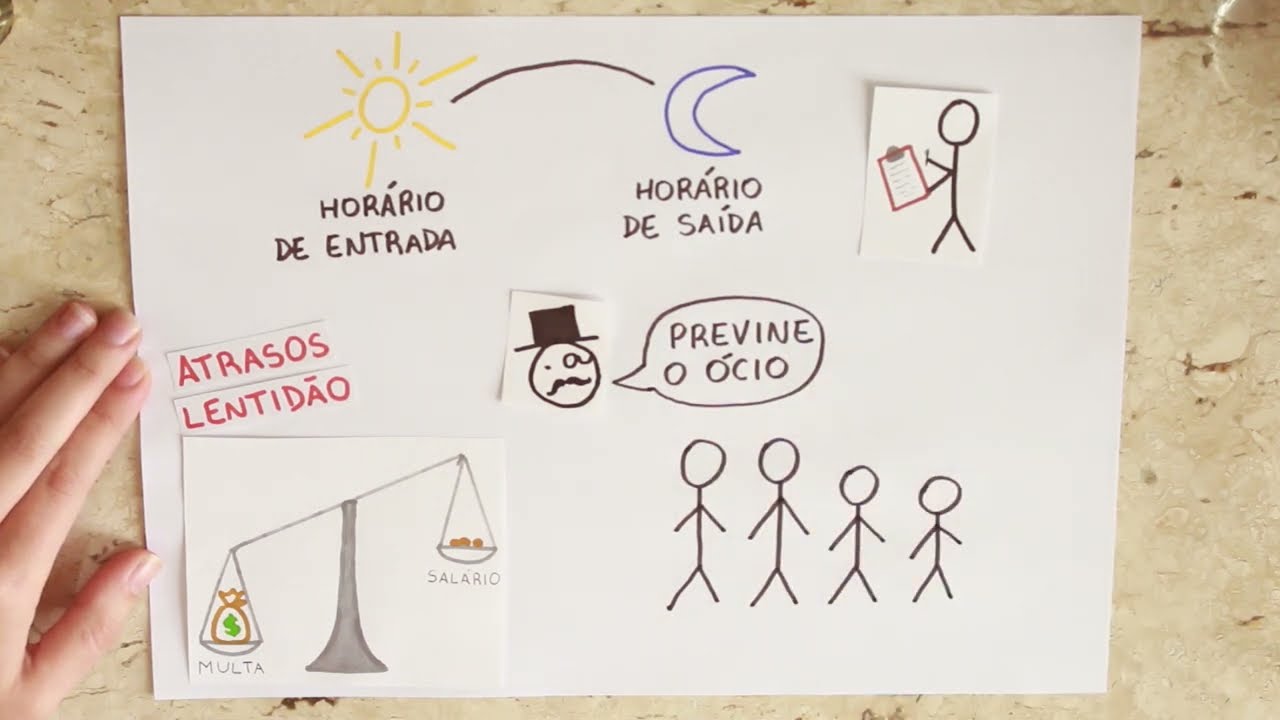
But in the interim of mass manufacturer in the United States, uh what later to become robots is what you are indeed creating human beings to be uh and uh as they are operating in this alienated way. Well, there are a number of terms that are um given to this um way of thinking and um one of them is and I think you might even enjoy the term is we we call it we being across the various uh social scientists uh Fordism Fordism and um Henry Ford uh you know there's a number of slogans associated with the name of Henry Ford. Uh, one is any color as long as it's black. Uh, meaning that it was his genius to create uh, standardized production. Every car exactly like every other car. Uh, the other thing that Henry Ford is famous for is a higher wage than people had been used to, the $5 day, uh, which was considered, um, a a terrific breakthrough. uh and the regulation of human beings on the assembly line um and the by the way the assembly line evolved actually out of the disassembly line the first assembly line uh with all these as aspects that I've been speaking about uh actually began with the meat uh companies who took apart a cow and um Henry Ford saw in Chicago the carcasses um a a dead cow uh in effect moving along the line as each person then uh had a job uh cutting off a limb or um uh u doing whatever else uh that ends up in our hot dogs. uh and this was his inspiration to just reverse the process and instead of taking something apart putting something together and that's um in fact what the car uh came from. So anyway, the miracle of Fordism, which is that you uh pay wages, you break down the tasks. Uh it means by the way that you can employ people who don't speak English which means that you are uh you need you're open to a vast m set of migrations from around the world the meatacking companies as well because what I've described is you don't need uh the English language because in fact there is very little communication of people with each other at all. So there's a kind of deskkilling and that's the word that um is also used quite a lot. What you're doing is creating a workforce which is deskkilled and you don't take advantage of the fact that some of these immigrants from Poland uh for example um have terrific skills in one thing or another. uh you create jobs that take away the skill that might otherwise have been needed and indeed in the first forms of automobile production in the United States and in Europe uh did involve skills very high levels of skills. So you get rid of those skills.
Now um this means again according to Markx and this is an important idea is that as people do this work they're actually lessening themselves. So um every time it's again back to our uh structuration idea uh but in Marx's language uh and every time somebody goes through the men's room versus the women's room and reinforces gender. So it is for marks that every time a worker works with every gesture on the assembly line, they are in fact um the reinforcing their lack of skill, reinforcing their alienation and making less of themselves. And so for Markx the term was work under these conditions is one of self mortification. And some of you who know the romance language will recognize uh mort of death. So you are in a way killing yourself. Um killing yourself softly uh maybe uh in the words of another song. Uh um not very Marxist at all, but that's what you're doing.
You're undermining yourself by participating in this system. you are um engaged in selfmortification. So um not a um not a very pretty picture. Well, um what goes on then um is this um system of by the way they also called it um a little later than Henry Ford scientific management um or um named for a person who was so active in developing uh scientific management uh a man named Taylor an American named Taylor uh what later became a part of what's called operations research where you figure out how people really uh can be made to be more efficient on the workforce in in the workplace. You do operations research and you figure out just how to make it uh more uh efficient as possible by continuing this deskkilling um type of activity and figuring out how to make it uh be this has moved into many realms. I use the assembly line. What the the big poster child besides Ford and Fordism uh is McDonald's and people now write about and talk about the McDonaldization of society that the Ford assembly line is now everywhere. It's here at NYU. U if we were uh am if I was Plato uh if we could just dream for that for a moment uh and you were my students uh we would be in a very small room. I would know each of you very very well.
We would have an ongoing life relationship and it wouldn't be like this at all. NYU and all the miracle of bureaucracy that we talked about. We talked about Mox Vber's attitude toward NYU uh and what he would say about NYU.
Uh NYU is fordism in education. Uh you uh mass enroll, you are mass processed.
uh you will be mass graduated uh and uh we have uh course requirements of course we also have electives um but you can't just explore uh as you go willy-nilly any which way. So there's a critique there and it was made in the 60s um in great force uh that uh the university was a uh just another assembly line and each of you uh is another brick in the wall. There was a song that had that lyric. All in all, all in all, I'm just another brick in the wall. So um okay, that's u not a very pretty picture.
McDonald's um is the contemporary version of uh the of the factory and um every cheeseburger is exactly like every other cheeseburger. Uh every worker uh makes the motions that every other worker makes and uh that's true almost globally uh around the world. In a way, it's a vision that Henry Ford never dreamt of that uh Big Macs that as we speak at this very moment um in probably I don't know 75 countries of the world.
Boom. Some person reached in exactly the same way for a cheeseburger who who works at a McDonald's somewhere on the globe. Wow. Uh that's a um a fabulous a fabulous accomplishment.
Not only are the physical movements controlled, not only is this alienation uh occur as it's been described, but there's still another arena that uh people whoops that people who um complain about these things or uh are are critical and mountritical analyses talk about. And that is is that they've gotten control of your emotional life as well. And Marx's idea of alienation kind of, I think, took that into account, but now it's been worked out um by some sociologists in greater detail. And uh that's the uh the the have a nice day uh problem that when you go to buy something in the store, you may have noticed that very often someone says have a nice day. Now, they don't really mean it. uh they're not your sincere friend, but it's part of their being to say, "Have a nice day." Uh and if the training program has been effective to smile and say, "Have a nice day." The uh the assembly line worker who everybody points to in this regard is the flight attendant. The flight attendant who wears a plastic smile. Um and um in the training at the airlines, uh they are trained to do emotional work. So it isn't just their physical work that that they are engaged in doing, but they're also engaged in emotional work, their um emotional repertoire, the capacity of a human being to smile, to be pleasant, um to to to be unpleasant. What whatever that repertoire is, and we all have all of it, is put into the service of the corporation. that also now is no longer under your control. Uh and um it's it's been called uh by the author of a book uh the name of the book is the managed heart. The managed heart. And uh those words I think give away this uh idea that I've been trying to get across that it isn't just the assembly line that's managed in its physical activities and the nature of the product but the very heart of the person who's doing the work is also subject uh to the management um operation and and that's the way um and that's the way it is um and that's the way it the way it works.
Well, I've given you the um um certainly dystopian view of how everything operates. So, let's just take a little while and look on the bright side uh and find some um ideas that maybe go in the other direction. So, first of all, uh there is this other aspect of Fordism which is the higher wage and for some people that's not nothing. So the the deal um really in a way the new deal in American his history under Franklin Roosevelt uh but and it's taken place in other countries it's sometimes called the social the social compact and that is that it's going to be capitalist u you're not going you're going to be alienated in many of the ways that I've described but you're going to be paid well uh and in return what you'll get is the is access to stuff. So, you'll get to buy goodies, you'll be able to consume, and so this production apparatus will be very efficiently run uh and you won't get to make very many decisions in it. You might be unhappy at work, but what you can do while you're doing your boring work on the assembly line or or at McDonald's is you can dream of your SUV, which with every move you make, you're not self-mortifying. You're rather getting closer to carpet uh or new clothes uh or a vacation uh for you and your family.
And that takes care of it, doesn't it?
Um, it may not be perfect, but it's something. The other part of the social compact, um, are certain rights and privileges, uh, like the right to go to the bathroom, uh, and get some relief from the assembly line and to be able to do that. Uh, the right to a, um, a workday that isn't overly long, the eight-hour day. Uh, for example, the um right uh to um um what are some of the other rights? Um uh a way to get unemployment compensation if you lose your job for one reason or another. And these rights I brought up Ford who decided to pay people $5 a day. But in the main these rights were won by unions. And uh there is it's always often to me a misunderstanding where people say that we're losing all our good jobs uh and they're going abroad.
Those were not good jobs. The jobs I described of working on the assembly line are by many ways of thinking not good jobs. We've exported those jobs in large numbers now to other parts of the world, but they were not good jobs. They were just well-paying jobs with certain restrictions on what labor what um what the capitalist could do to the worker, but they weren't uh from my standpoint and indeed given what you all want to do in your lives, these were not good jobs.
It's what made them good or what made the good part of them be was the fact that the unions and the history of strikes uh the history of uh repression against those strikes uh the um history of depressions in the United States and the uh reforms of the of the New Deal.
All of those things helped strengthen the workers in this conflict with uh with their with the bosses as they're called and that then made these highwage jobs which now are being lost. Uh but um they were um good jobs in this sense uh that I've been describing.
What's happened is is that um um the by the way in the United States they were never that great. Even today the the standard vacation time in uh in Italy and in France is six weeks. Uh Americans work harder than um those people of people in any other industrial country uh under the most difficult circumstances. And of course, Americans are no longer the highest paid and highest standard of living and all that in the world. All of that is much more debatable uh than it used to be.
Although, of course, we have a very high standard of living and we rank near the top on most of these um on most of these measures. Well, um so the unions won um won these things um and um those things are being eroded, but those were also good things about the jobs. Well, what other good things are there about the jobs? Well, first of all, this uh image of McDonald's being the worst place to work in the world and a life of horror um is maybe a bit overstated. And you're reading this semester uh a piece by Robin Lidener, Li, she's on your syllabus. And Robin Lidener did participant observation as we called it call it ethnography like Mitchell Dener did on the sidewalks of New York. She studied McDonald's uh that way. Um and many of you I don't know how many of you have ever worked at McDonald's.
One. How many of you worked at any of those fast food franchises?
Popeye. Uh I got a two. That's it. Boy, if you went three.
Okay. Uh if you went into um um one of the uh community colleges uh or uh public universities, uh we would see a larger number of hands. So that's another indication of the class background of NYU students. Um and the way they've done their part-time work. So um um what Robin Lner says, and we could interview the few of you who have worked at McDonald's. Uh I don't know. Why don't we interview you right now? Uh, how was it?
Sucked.
Really boring. And it sucked. I had another McDonald's worker here. What?
What did you think?
My brother was manager for the three of us.
Okay. Um, this young woman said that uh she she's not sucked, right? Um she um because her brother was the manager, she worked through the night, there were only three of them and quote, "We had a lot of fun." Um okay, so we've got the two poles of the thing right here, which works out very well. uh and Lidener is trying to give you a kind of nuance perspective and indeed she brings to the attention of people who can't imagine that it could be fun the idea that it is fun including one of the most striking things I don't know if it's in the piece that you reading but in her book is that some of the people who work at McDonald's when they're off they come to McDonald's to hang around the people who work at McDonald's uh and that at least signals that they're not dealing with a hellhole um of the people who uh who work in the salt mine, I assume don't go hang around the salt mine uh when they're not working. So, okay. So, it sucked um and it didn't suck. Um and there's this other side to it. This idea of not sucking because of the fact that um you had a lot of fun with the other people who work there. And there are other little stories that Lidner tells is that you also sometimes have a little fun with people who come in to shop and buy food. Not not so much, but it's more interesting than than you would think, a little more meaningful than the assembly line idea um would would indeed would indeed imply uh that it can be uh worthwhile. That human beings at work are still human beings. Human beings at work are still social human beings and they're pressing against the boundaries of these rigid mechanisms uh not always with success but that's what they are doing and this making social ties and living a social life where it's not in the script it's not in the procedures at McDonald's for the workers to quote have a lot of fun with each other um and we all see that I think when we go shopping for example sometimes it's a a little annoying because I'm waiting for my coffee and they're fooling around with each other exchanging some tip and I'm, you know, every second counts for me.
When that happens to you, what you're seeing is so social soity, social life in a bureaucratic setting where it's quote not supposed to be, but people are doing stuff and having fun. Now, there's other ways in which this social life at work uh has consequences which are not so much fun. um for the people who are participating or even for other people.
And so you're reading um a a piece of a book written by a guy named Tom Beeish who studied uh a a huge oil um pollution event that went on for uh 40 years in central California um in an area called nearby St. Louis Abyspo. Uh do we have anybody from St. Louis Abyspo in the classroom? No. Um, well, it's a small city, so maybe that's why we don't. But it is an oil spill that uh went on and on for 40 years. And Beeish wanted to find out why it is that this oil spill was never reported. How come that the company, which was Union Oil Company, then one of our largest oil companies, that Union Oil uh never reported the leak? Um, and uh that it just goes on and on. These were leaks at various points in the pipelines as they ran on and uh and slightly under the surface of the earth.
How could that be? Well, when Beeish began the work, he thought, well, of course they wouldn't because they're capitalist pigs. They're uh out to destroy our environment. Um they'll do anything and not pay any attention. But in fact, he started to think, well, wait a minute. they are losing oil. So that's not a good idea from the standpoint of the capitalist pigs to just keep losing oil. That doesn't make sense. Um what does make sense? And what did he learn?
He learned that the workers didn't want to turn in other workers and that the longer it goes on, the longer that becomes a bigger and bigger problem.
that if you're the uh fourth worker along the the path who does this job and the other three workers never reported it um and it's more and more a massive oil leak doing more and more damage then whoever calls it out whoever is the whistleblower then gets the a larger number of people in trouble. So the longer the thing goes on, the sort of longer the chain of people who will be in trouble. And if these are the people you know that you have a lot of fun with at McDonald's at night, you know their children, you know their families, uh, and you will get them in trouble, then the less and less likely it is that you will report this. Now, we know this goes on in in a more uh commonplace environment like the police. We know that when the police when a cop engages in brutality in front of other cops, the other cops are not going to report it.
And they're not going to report it because of their social bonds with those other cops and they will be indeed ostracized um in very significant ways.
It may indeed have something to do with financial crisis and why it is that when one person or group of people see that what the bond traders are doing or what the sellers and buyers of derivatives are doing uh that that is in fact unsustainable which is the kind word of talking about it is actually a swindle which would be the unkind word way of putting putting it. the more I if if I speak about it, the longer it's been going on and the bigger it has become, the greater the social implication of me saying something. Uh the people who ratted on President Nixon that caused the Nixon White House to deteriorate faced that very issue. And that has led some people to say that people who are the whistleblowers, who are the ones who say, "Wait a minute. I've got to go to the police. I've I've got to go to the media. Um I've got to go to uh I've got to go to the bishop. Um and and tell what's going on that those people tend to be misfits, that they are social misfits." And I make that statement uh worried that I have overstated it and that those people who talk about this have overstated it. But it may well be that it helps if you are a social misfit uh who really is not performing great in terms of the Gooffman George Herbert me uh creating social solidarity and being the center of the social network. If you are the misfit, um it's going to be easier to indeed uh blow the whistle and call them on what has been happening and say this thing um this thing can't go on um anymore. We have to do something about it. So um it can uh the point is is that the social nature of work and the social nature of the workplace has all sorts of consequences. It has consequences in giving people um satisfaction and fun even though the the work sucks to uh uh quote Karl Marx uh but yet it's rewarding but in the same way there are organizational outcomes like wrongdoing malfeasants um pollution of the earth um making wars uh doing things that facilitate financial crisis theft um and robbery. All embezzlement.
All of these things stem in part in part from the social nature of the workplace and the need to continue on on a smooth path uh that we've already been on. So, um okay, more um I've tried to give you a little good news. I've been sneaking some good news in to that bad news story. And just to sneak in some more good news, which also is you'll see not such great news, the new economy that's being talked about. I've been talking a lot about the assembly line, but the assembly line is a production system of the past. Fordism is an arrangement of the past. It used to be at its high point 40% of American workers were part were members of unions. That is now 10%. So the union movement has been tremendously eroded.
Unions don't have the political power that they once had. Uh and they don't have the capacity to protect wages or working conditions that they that they once had either. But instead, what has happened is the development of the service economy. At the low end, it's McDonald's, which I've spoken about, which has this mixed quality, extremely low wages, uh, extremely poor benefits, uh, but you can have a little fun um, as you work. One of the positive things about McDonald's is that it tends to be agegraded. And so, a lot of the people who work in jobs like that are young.
And one of the um possibilities for how to dis to deal with the drudgery of a lot of work is to make it ageoriented. So that think about it this way. Instead of spending your life at McDonald's, that's what you're going to do from now until you drop dead um at 81 or whatever the life expectancy is right now. Instead, you're going to like do public service except you'll be paid for it. You'll do drudgery between the ages of say 17 and 19. And everybody will do that. Um, and that then will result in a different kind of society and a different way of being. If everyone has to go through that, it doesn't mean the same thing because eventually uh like the people in this room that your day will come uh when you will be uh running McDonald's and you won't be um on the assembly line of doing McDonald's and that will be um a a new a new dawn. Uh that's one way to do it and it's in part the way it's been. So that McDonald's is a young person's job.
Disproportionately, we know it's only disproportionately that many of the people who working in the McDonald's and McDonald's like jobs are middle-aged or old people who are trying to make some extra money um in their senior years. So it it only explains a bit of it, but it puts a little bit of a nicer twist to think that it is just a job of the young um as opposed to the state of our society. The other good news is this uh thing that the new economy that there are some jobs that are not in manufacturing anymore uh that are indeed good jobs in a different sense. So the the poster boy of that are is the designer. Every lots of people want to be a designer uh either of clothing or or they want to design cars. Um and uh although the production of clothing and the production of cars is to a significant significant degree offshore toys, you want to design toys. The design of those things are in the rich countries. So the United States and Tokyo and uh uh and in Germany uh the major cities, Milan, these are the places where design is done even though manufacturing has so heavily moved into other places. And so then that is um nonalienated labor. You are the architect of something. uh you have something to show for your for your job and you're not controlled in every move you make and indeed I studied uh design companies uh industrial design companies and they pride themselves on the freedom that they give to the workers and when you go into these environments you see they're non- hierarchical that all the designers are kind of even the head person of a 300 person design company these are uh that's about as big as a design company gets by the you walk in, the head of the whole thing um is just walking around um and doesn't have a big office and a secretary and all of that stuff. They pride themselves on being non- hierarchical, on everybody pitching in and on anything goes. And so they have their bicycles hanging from the rafters. They always take great pride in having bicycles hanging from the rafters and other kinds of marks of creativity and fun at work. um very informal, no ties uh and um u t-shirts um and there they are in places like PaloAlto here in New York um in store in in the places that uh that do this kind of thing. So then this is the new image the positive image of the new economy in which everyone is having a great deal of time. Uh and this work the argument is cannot be regimented. You can say to people uh either you put that hubcap on uh and in this precise way and you can mechanize them so that they virtually have no choice. Their musculature must go and do that. Uh or like you saw with Lucille Ball, the car goes by without a hubcap and they get fired. It's obvious why this car is missing its hubcap. But with creating something, how are you going to do that? Here at the university, the faculty, the senior faculty uh which is the great majority of the faculty have tenure. We cannot be fired and um it is left to us to just be creative. uh rather than I mean how could they lock me into uh giving a lecture that you would find in any way satisfactory if I didn't want to if your other uh professors weren't into it as we would say if they weren't dreaming and scheming how they could make the thing more interesting uh or attending to it in some purposive way then obviously it wouldn't be and it would be just terrible uh and so this uh freedom is just a necessity of any of this kind of work. Uh and so you've got to build it in this capacity for people to be supported in their explorations um and in their own uh motivations to do nonalienated uh labor. Well, that's the uh that's the beauty of it and that's the very good vision. But there is the other vision.
Boom. the dark side of the new economy and these new kinds of jobs and the dark side is that you don't have the protections that uh Ford's employees had. So there is a kind of now nostalgia for the assembly line which years ago I can tell you when the assembly line was the ugly thing um and we didn't have all of this new economy talk the assembly line was just seen as a very desperate miserable situation. Uh now there's almost a nostalgia for it because workers had life employment uh and you went to work in a place and you had a system of progression u toward your own retirement which was absolutely protected um and locked up. So, uh, something has happened that's new. And what's new is, yes, freedom, but also instability because if the design company doesn't need you anymore, then you're out. You're not a member of a union, you don't have any protection whatsoever. And if you've been designing um, electric toothbrushes and there's no longer a need for your services, then you are out. Well, this is then um the great debate about what goes on when people um have u jobs in the new economy and those who don't. Some of you who uh will go on to take other sociology um courses u at NYU and in uh related fields here at NYU uh may want to know that a person who uh uh has written about this new economy from a very negative standpoint. Um uh is Richard Senate and his uh very very famous person. his uh one of his books that's relevant is called the corrosion of character. That name should uh ring a bell and tell you a little bit. And then in the department of uh social and cultural analysis is another colleague uh quite celebrated as well uh named Andrew Ross who's written another book that uh worries about the same kind of phenomenon. nice work if you can get it.
Um, what all this boils down to, what I've tried to do today is to make a case that work matters. There's a lot of debate about the nature of contemporary work. Uh, what are the best ways to make work matter in a good way? Uh but I think one of the things that um it a lot of it rests on is that people need to work not just because of their um um need to put bread on the table but indeed but to provide uh meaning for their lives um and to make that uh possible. One of the negative cases we have um in a way a test of all of this is what happens when work disappears. That's the title of another one of your readings, When Work Disappears. This one by um someone who was on your syllabus, William uh Julius Wilson, who is a sociologist for many years at the University of Chicago and and at Harvard um at Harvard in more recent times when work disappears. And what uh we what William Wilson uh argues is that when there isn't work, the human being kind of disintegrates. And we have many studies now of what happens in unemployment situations like the present one where men and it is men who have been affected more than women when men lose their jobs um and thus they lose their status in the family um and in the meaning of their lives and they're subject to um mental illnesses of different kinds of personality disorders of different sorts um and um miseries of of other types as well. William Wilson is writing about African-American men.
That's essentially his topic in this piece at least when work disappears. And indeed, it's been a focus of his work um in many regards. And I'm using this as a bridge to our discussions of race which will happen over the next um couple of meetings because what Wilson says is that in particular when there is no longer work um then other statuses crumble as well and and the one he's talking about is marriageability. So when a man um does not have a job, especially in more traditional realms of of our culture, the middle class, the working class, when men don't have a job, they have no status in their communities, and they in particular are not marriageable. Women um do not want to connect to a man who doesn't have work um and has weak prospects of ever having work. This then becomes his segue u William Wilson's into explaining the problems of the ghetto because he argues that that is what has happened that middle class um African-Americans have left the ghetto. They are potential employers and connections to employment.
Uh leaving behind a group of men who are at the bottom of the jobs hierarchy and whose prospects were not very great in the first place. But now because of the exodus of the middleclass African-American community into other geographical places, they are now disconnected as well as the movement of work itself.
geographically for out of the central city but and into the suburban belts which are distant geographically from where African-American workingclass men live stranded and isolated. They are not marriageable. And then with that being the case, then we have the African-American family which has been much discussed in our literatures for 30 or 40 years. The African-American family is made different than other families from white American families and other ethnic groups. Uh and that is we have a higher rate of babies born without fathers um present and we have a higher rate of families that are not intact and we therefore in a two in a in a time when it is standard to have two earners in a family. We don't we have single mothers raising their children more or less on their own. And thus we get to what some people regard as the pathology of a ghetto life and how it is that these things have evolved, the lack of marriageable men. I'm not going to leave it right there because I want to make sure you know that this idea that this is the source of racial trouble in the United States and of poverty among African-Americans, it it has been around for 40 or 50 years. Um, it is very controversial. Uh, and some people would deny these things that I've been talking about. Um, including someone who we talked about last time, Judith Stacy, uh, another colleague here at NYU, who would very much not be on the on on the target of saying, "Wait a minute, uh, that that families have to be structured in a particular way with a mother, a father, and children in order for the situation uh to be healthy and appropriate. There are many varieties uh Judith Stacy would say of how to create a family that is viable and sustainable um and where people are well off. Um I just bring up her um to signal that there are other ways of looking at it and indeed there have been other ways of looking at it um and and including the big one which is the effort to identify u uh black men, poor black men as the source of the problem in so far as it does it. And I think that although some people say William Wilson is saying something like that, his defender saying he's saying nothing like that at all. He is saying that outside conditions have created this movement of jobs away um and uh leaving people stranded. But in so far as you are saying it is the fault of African-American men from the working class that we have developed these problems and these situations, you're engaged in blaming the victim uh as opposed to figuring out how it is that society uh is organized in a way that this is like a symptom of of the larger pathologies including racism. uh that and the erosion of union power, the erosion of decent work. Um all of those things are actually responsible. So with that note, um next time we'll um continue on with William Wilson and continue on talking about uh race uh which will occupy us for a couple of sessions. See you.
Up Next
Emotional Labor Explained: Arlie Hochschild's Sociology Concept
@sociologylearners1835
640 views•2025-09-26
Contemporary Sociological Theory: Micro, Macro, Integrative
@NaSESYNC
45.7K views•2016-02-17

How to Analyze Conversations Scientifically | Elizabeth Stokoe | TEDx
@TEDx
1M views•2014-12-04
What is Sociology? The Sociological Perspective Explained
@crashcourse
4.6M views•2017-03-13
Related Study Plans & Knowledge Roadmaps
Structured learning paths in Sociology