Local businesses can increase their Google reviews by using multiple outreach methods: sending emails with direct review links after sales, sending text messages requesting reviews, asking customers in person after completing projects or sales and providing QR code cards for easy review submission, displaying QR code signs in the business location, and including QR codes and review links on receipts and packaging to create constant reminders for customers.
Strategies for Increasing Google Reviews for Local Business
Added:Deep Dive
Understanding the fundamentals of Local SEO, including how search engines rank local businesses based on proximity, relevance, and prominence.

Local SEO Geography Explained | Location Based SEO Strategy | Local SEO Class 7
161
Local SEO ranking depends on three core factors: Relevance, Distance (Proximity), and Prominence. Relevance determines whether a business matches the user's search query (e.g., showing dentists when someone searches for dentists). Distance measures how close the business is to the user's location, with Google prioritizing nearby businesses. Prominence refers to a business's online reputation, including reviews, ratings, website authority, and citations. These three factors work together to determine local search rankings. Distance is particularly critical because Google prioritizes businesses near the user's location, not businesses from distant cities. When users search for local services, Google shows businesses within a specific radius of the user's location.
Click to watch →
Local SEO Ranking Factors || Google My Business Ranking Factors in Hindi/Urdu
333
Google ranks local businesses using three core factors: Relevance (how well a business matches search queries), Distance (proximity to the searcher), and Prominence (business fame and reputation). Relevance is the most critical factor that business owners can control. Google's algorithm prioritizes relevance over distance, meaning a slightly farther but more relevant business can rank higher than a closer but less relevant one. Understanding these three pillars helps business owners focus their optimization efforts effectively.
Click to watch →
![Intro to Local SEO with Bill Wolf [Free Training Course]](https://i.ytimg.com/vi/1w0BgNzJKE4/maxresdefault.jpg)
Intro to Local SEO with Bill Wolf [Free Training Course]
100
Google uses three main ranking factors for local search results: Distance (physical proximity between business and searcher), Prominence (business's online reputation through mentions, links, and reviews), and Relevance (how closely the business matches the search query). Relevance can sometimes outweigh distance, meaning businesses with strong online presences can outrank closer competitors. Local citations (mentions of business name, address, and phone number on directories and review sites) help establish credibility and improve visibility. Google Business Profiles is the most widely used local business directory and requires protection from unauthorized changes.
Click to watch →

Local SEO Warriors Demo Class
2.4K
Local SEO is built on three main pillars: Prominence, Relevance, and Proximity. Prominence refers to brand building and online presence, including maintaining active social media profiles, having a well-optimized website, and getting business listings on various directories. Unlike traditional SEO which focuses on backlinks, Local SEO Prominence focuses on brand visibility and online reputation. Relevance measures how well a business matches the search query, involving optimizing the Google Business Profile and website with relevant keywords. Proximity refers to the geographic distance between the searcher and the business, with Google's algorithm typically limiting local search results to a 10-15 mile radius. Understanding and optimizing all three pillars is essential for Local SEO success.
Click to watch →

Masterclass SEO local 2026 : la formation complète (2h13)
142
Local SEO success depends on three interconnected pillars: proximity (how close the business is to the searcher), relevance (how well the business matches the search query through content and services), and authority/notoriety (external signals like citations, backlinks, and reviews that establish credibility). Google's algorithm evaluates businesses by connecting these signals across the web, making NAP (Name, Address, Phone) consistency crucial for building trust. Businesses can compete with larger national competitors in local searches because Google prioritizes local relevance, allowing smaller players to rank highly by optimizing their Google Business Profile, creating location-specific landing pages, maintaining consistent NAP citations across directories, and generating quality reviews.
Click to watch →
Deep Dive
Familiarity with Google Business Profile (GBP) setup, optimization, and its role as the primary directory for local search presence.

How Local Businesses Actually Become Visible
1.2K
Google Business Profile (GBP) is the first and most important step for local business visibility. It is the primary listing that appears in search results. A professional-looking GBP builds credibility with potential customers. Business owners should ensure their GBP is complete and professional to establish trust with searchers.
Click to watch →

Local SEO Full Course 2026 in Bangla | Part 1: Introduction to Local SEO
424
Google Business Profile (GBP) is the primary tool for Local SEO optimization. To rank in local search results, businesses must optimize their Google Business Profile. This profile appears in Google Maps and local search results, displaying business information, reviews, photos, and contact details. Proper GBP optimization is essential for businesses that want to appear in local search results and attract customers from their geographic area.
Click to watch →
OUTRANK 99% of Local Businesses with THESE 5 AI Hacks
43.9K
The Google Business Profile is the heart of local SEO. When local searches display maps, the GBP is shown instead of the business's website. Approximately 60-70% of users click or call one of the three featured results. Unlike organic SEO where position matters, local search rankings are primarily determined by the quantity and quality of reviews those businesses have.
Click to watch →
Google Business Profile Will Change Your Local Business
104
Google Business Profile (GBP) serves as the foundational platform for local search visibility. It powers Google Assistant, voice search, and AI systems like Gemini by providing essential business data. Proper optimization of GBP is critical for businesses to be found in local searches, as it forms the root structure of local SEO that connects to other elements like website, social media, and directory listings.
Click to watch →

Google Business Profiles + Setup and Optimization
199
A Google Business Profile (GBP) is a free tool that helps people find real estate businesses through Google searches, functioning as a modern Yellow Pages. Google controls 91% of the global search engine market, making GBP essential. Three ranking factors determine search visibility: Relevance (how well the profile matches search queries through accurate business information), Distance (proximity to the searcher, optimized by adding service zip codes), and Prominence (business reputation based on online presence, reviews, and citations). Accurate and consistent information across all platforms is critical for optimal ranking.
Click to watch →
Deep Dive
The concept of social proof in digital marketing and its psychological impact on consumer trust and conversion rates.

Social Proof: The Secret Weapon of Digital Marketing
482
Social proof is a psychological phenomenon where people copy the actions of others to guide their own decisions, and it significantly influences consumer behavior in digital marketing; businesses should strategically incorporate various forms of social proof including customer reviews, trust signals like brand logos and certifications, and awards across their website and marketing channels to build credibility and drive conversions.
Click to watch →

The psychology of digital marketing. Rory Sutherland, Ogilvy
835.7K
A call center client had abandoned basket rates because customers had to choose between three options. Adding a single human queue option (choose B, or if you like choose A and C) increased conversion rates by two to three times. Social proof is enormously important in human behavior—we use humans as measures. If you don't know much about cars, you substitute the question 'do I trust the person selling me this car?' for 'what's the best car?' This explains why trust-based decisions often outperform purely rational ones.
Click to watch →

Ad Trends That Convert - Use Social Proof To Drive Clicks And Sales
279
In 2025, 'proof' is the most powerful word in sales. Prospects ask 'Who else has done this, and did it work?' before converting. 92% of consumers trust peer recommendations over traditional advertising, yet only 19% trust brands, and 78% are skeptical of claims without evidence. Trusted brands are 3.5 times more likely to be considered for purchase. Social proof works because humans naturally mirror others' behaviors when uncertain, leveraging collective wisdom. 82% of Americans consult friends and family before decisions. This makes social proof essential for building trust in a cynical, information-overloaded market.
Click to watch →
Adrian Lefler: Social Proof and the Psychology of Marketing
144
Digital social proof significantly impacts consumer behavior across demographics. Research shows 92% of 18-34 year olds seek social proof from friends and family when purchasing (10% higher than general public, attributed to social media upbringing). 86% of Americans with $100K+ households seek social proof when buying. A European Journal of Marketing study tested identical ads with and without like counts; versions showing likes received significantly higher positive attribution. When consumers see two orthodontists—one with 4,500 likes versus 87 likes—they automatically assume the practice with more likes is superior. This demonstrates social proof operates subconsciously based on group beliefs about which options to follow.
Click to watch →

O efeito da Prova Social no Marketing Digital e comportamento do Consumidor
458
Social proof is a psychological phenomenon where people tend to follow the majority and make decisions based on others' experiences, which is particularly powerful in digital marketing as consumers often read reviews and comments before making purchasing decisions to reduce perceived risk.
Click to watch →
Deep Dive
Awareness of Google's official Review Guidelines, specifically the policies regarding prohibited content, conflict of interest, and the illegality of buying or incentivizing reviews.

Reviews not showing up on Google? Here’s what you can do.
1.8K
Google strictly prohibits buying reviews or incentivizing customers to leave reviews. If you have been paying for or incentivizing reviews, Google will delete them and may penalize your business in search rankings. This policy is critical for maintaining business integrity and avoiding negative consequences. Never purchase Google reviews, as the risks outweigh any perceived benefits.
Click to watch →

🚫 Google Bewertungen kaufen? Bitte nicht.
994
Purchasing Google reviews violates Google's Terms of Service (AGBs). This practice is explicitly prohibited by Google's platform policies and constitutes a violation of their terms of use.
Click to watch →

改訂されたポリシー「虚偽の、または誤解を招くコンテンツやクチコミ」を深掘りしよう | Googleビジネスプロフィール ヘルプコミュニティ ダイジェスト 2026年3月25日
204
This segment covers Google's policies on review manipulation patterns and conflicts of interest. Google prohibits content suggesting attempts to manipulate ratings, including abnormal volumes of reviews (such as sudden increases from 1 to 200 reviews per month) and reviews generated from survey tools with limited response options. Google also prohibits reviews based on conflicts of interest, including current or past employment relationships, consulting relationships, business connections, family relationships, or industry competitor relationships. This applies to both positive and negative reviews. Previously, reviews from former employees or business contacts might have been acceptable, but this policy now prohibits such reviews entirely.
Click to watch →

Ce QR code peut cacher votre avis Google
101
Google's rules explicitly prohibit: (1) Incentivized or paid reviews; (2) Gifts or discounts in exchange for reviews; (3) Manipulation of star ratings; (4) Conflicts of interest; (5) Reviews from employees or family members; (6) Systems that filter reviews before publication. Businesses should accept imperfect reviews as they make their profile credible, rather than creating a facade of perfection that appears artificial.
Click to watch →
FAQ: Google Bewertung - Welche Bewertungen sind verboten❓
469
Google reviews are prohibited when they violate laws (such as defamation or insults) or when they breach Google's specific review guidelines, which may include restrictions on vulgar language that might not constitute a legal violation.
Click to watch →
Prerequisite Knowledge
- Concept 01Understanding the fundamentals of Local SEO, including how search engines rank local businesses based on proximity, relevance, and prominence.
- Concept 02Familiarity with Google Business Profile (GBP) setup, optimization, and its role as the primary directory for local search presence.
- Concept 03The concept of social proof in digital marketing and its psychological impact on consumer trust and conversion rates.
- Concept 04Awareness of Google's official Review Guidelines, specifically the policies regarding prohibited content, conflict of interest, and the illegality of buying or incentivizing reviews.
Subsequent Learning
- Step 01Developing a professional response strategy for both positive and negative reviews to demonstrate active customer engagement and manage brand reputation.
- Step 02Implementing Review Schema Markup (structured data) on the business's website to display star ratings and rich snippets directly in organic search results.
- Step 03Utilizing sentiment analysis tools and natural language processing (NLP) to extract actionable business insights and customer pain points from review text.
- Step 04Expanding reputation management to multi-channel review acquisition strategies across niche-specific directories (e.g., Yelp, TripAdvisor, Trustpilot, or industry-specific portals).
Email request
Text message
In-person ask
On-site sign
Receipt link
Email request
0:00Playing Section
- 1
Advise emailing every customer post-sale.
- 2
Include direct link to the review screen.
The Risks of Platform Dependency and Algorithmic Vulnerability in Review Solicitation
While actively soliciting Google reviews is a standard local SEO tactic, critics and risk-management experts warn against the perils of platform dependency and ethical compromises like 'review gating' (only asking satisfied customers). Over-relying on Google centralizes a business's reputation on a single, volatile system. If Google updates its spam detection algorithms or suspects manipulative patterns—such as unnatural review velocity or incentivization—it can instantly delete reviews or suspend the business listing without recourse. Furthermore, focusing heavily on public reviews can lead to Goodhart's Law, where the metric becomes the sole target. This shifts the focus from genuine operational improvement to superficial rating inflation, sometimes leading to customer review fatigue. A diversified reputation strategy—focusing on first-party feedback channels and industry-specific directories—is often argued to be more sustainable and resilient against competitor 'review bombing' and arbitrary platform policy changes.
Deep Dive
Developing a professional response strategy for both positive and negative reviews to demonstrate active customer engagement and manage brand reputation.

Wie beantworten Sie positive und negative Bewertungen?
489
Effective online review management involves responding to positive reviews with personalized gratitude and promotional offers to build loyalty, while addressing negative reviews with calm professionalism by acknowledging feedback, apologizing for issues, explaining your perspective, and offering solutions; since 90% of reviews are positive and customers read up to ten reviews before deciding, timely and sincere responses help businesses maintain trust and convert negative experiences into opportunities for improvement.
Click to watch →

The Art and Science of Review Management: How to Increase and Respond to Customer Reviews
207
Effective review response transforms passive reputation management into active customer relationship building. Positive reviews require quick, personalized responses thanking customers and acknowledging specific services, which also benefits search engine optimization. Negative reviews hold unique strategic value—they demonstrate authenticity and build trust with potential customers. Research shows people are more skeptical of businesses with perfect 5.0 star ratings than those with slightly lower ratings. Professional response frameworks emphasize calm, composed replies that apologize appropriately, ask clarifying questions, and offer private resolution channels. When mistakes occurred, owning up to errors builds trust. The ultimate goal extends beyond winning back individual customers—it's about showcasing customer service excellence to all potential customers viewing the reviews.
Click to watch →

How to take control of your online reputation & drive more sales
521
Developing a professional response strategy for all reviews is critical for online reputation management. This requires: (1) Tracking all reviews across platforms (Google, Yelp, Angie's List, Thumbtack) in one dashboard; (2) Assigning responsibility to monitor and respond to reviews; (3) Creating a protocol for addressing negative reviews professionally while offline resolving issues. Negative reviews can actually benefit businesses by demonstrating authenticity - showing that not all reviews are purchased or fake. Thoughtful, personalized responses tied to specific review content create better impressions than generic AI-generated replies.
Click to watch →

Reputation Management Techniques You Can Use In 2022 | Go Sokal Podcast | Episode 21
129
Businesses should respond to both positive and negative reviews within a day or so. For negative reviews, be open and honest, apologize, and provide contact information to resolve issues directly. Avoid arguing with customers in comments. For positive reviews, express genuine gratitude with personalized responses. When managing negative reputation, focus on improving service and cultivating new positive reviews from satisfied customers, particularly during emotional moments like first-time purchases. Address customer issues immediately during their visit to prevent negative reviews.
Click to watch →

How To Rank On Google Snack Pack Without Paying | by DYB Coach Ron Ramsden
521
Businesses should respond to all reviews, both positive and negative, professionally. For negative reviews, respond by thanking the reviewer for their feedback, explaining what happened in a courteous manner, and outlining steps taken to prevent recurrence. This approach demonstrates accountability and builds trust with potential customers who read the responses. Even old negative reviews can be addressed if the business has since improved its processes.
Click to watch →
Deep Dive
Implementing Review Schema Markup (structured data) on the business's website to display star ratings and rich snippets directly in organic search results.

On Page SEO Audit - 8 Key Factors Affecting Your Rank
176
Business schema markup helps Google understand important business information including name, address, phone, hours, and services. Review schema allows star ratings and review counts to appear in search results, improving click-through rates. Schema markup is structured data that Google can read to understand brand identity and site content. Proper schema implementation helps Google understand who you are, what you do, and where you're located, improving search visibility and relevance.
Click to watch →

Structured Data and Rich snippets - A complete (but simplified) guide
47.8K
Structured data is a small piece of code added to websites that helps search engines like Google understand the content better, enabling rich snippets and rich results to appear in search engine results pages; it uses schema.org standards and can be implemented through JSON-LD markup or WordPress plugins to display enhanced information such as star ratings, FAQs, recipes, and other content types.
Click to watch →
Google Search Console Full Course: बढ़ाओ Organic Traffic आपने Blog में
18.5K
Structured data (schema markup) enables Google to display enhanced search results with additional information. When you implement schema correctly, Google can show rich snippets like star ratings, video thumbnails, FAQ snippets, or product prices. This increases visibility and click-through rates. Common schema types include Article, VideoObject, Review, Product, and FAQPage. Review schema markup allows Google to display star ratings and review counts in search results, significantly increasing click-through rates for products and services. Ensure you use valid review data and follow Google's guidelines for review schema implementation.
Click to watch →
How to Show Star Rating On Google Search Results?
24K
To feature a star rating on Google search results, website owners must implement specific schema markup types (Product, Software, Course, Event, Movie, or AggregateRating) following Google's guidelines, which include using the correct schema type for the content being reviewed, ensuring all marked-up data is present on the page, avoiding aggregated reviews from other websites, and displaying actual user-generated ratings rather than fabricated ones; the process involves selecting the appropriate schema in Rank Math's Schema Generator, filling in required fields like product name, URL, description, and rating, then testing the implementation through Google's Rich Results Testing Tool.
Click to watch →
Como Aprovar no Google AdSense
57.9K
Structured data (schema markup) helps Google understand and display content more effectively in search results. When implemented correctly, structured data enables rich snippets that show: (1) Star ratings and reviews; (2) Images with thumbnails; (3) Titles and descriptions; (4) Additional information like price, availability, or event details; and (5) Breadcrumb navigation. Google can read structured data to understand what type of content a page contains (e.g., recipes, products, events). This helps the site appear more prominently in search results and can increase click-through rates. Implementing structured data requires proper HTML markup following schema.org standards.
Click to watch →
Deep Dive
Utilizing sentiment analysis tools and natural language processing (NLP) to extract actionable business insights and customer pain points from review text.
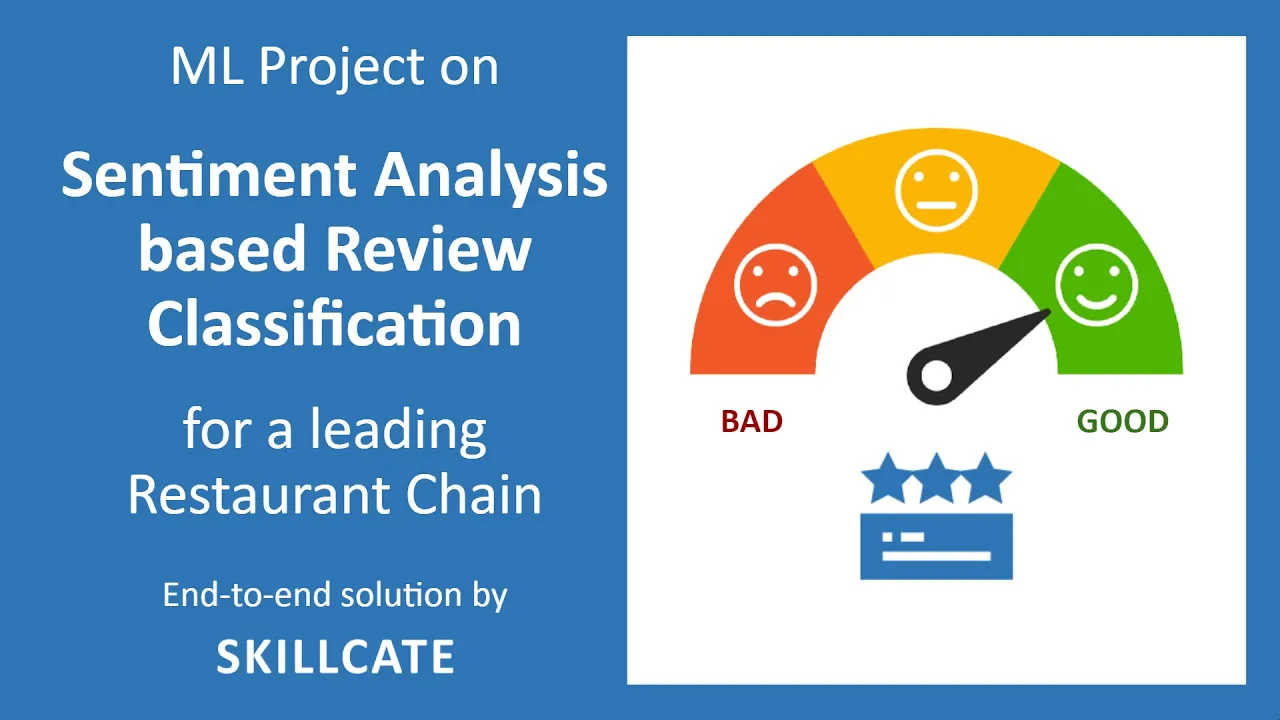
Sentiment Analysis Project using Machine Learning NLP | Review Classification | ML Project#2
106.5K
Sentiment analysis provides actionable business intelligence by identifying customer pain points and areas for improvement. When analysis reveals common complaints about specific issues (like service delays or food quality), businesses can take targeted corrective actions to address customer concerns and improve satisfaction.
Click to watch →

Fundamentals of Reviews in Yext
169
Sentiment analysis transforms raw customer feedback into strategic business insights through natural language processing. The system identifies keywords (nouns representing main topics like service, food, hotel) and modifiers (adjectives/adverbs describing experiences like friendly, cold, helpful). Scores range from -100 (very negative) to +100 (very positive), enabling businesses to pinpoint specific areas requiring improvement. For instance, a review stating 'staff was friendly but food was cold' reveals positive sentiment toward service while highlighting negative feedback on food quality. The dashboard enables filtering by entities, timeframes, keywords, and sites, with tooltips explaining data interpretation. Actionable applications include identifying unhappy customers requesting full refunds or customers desiring more diverse menu options. This systematic approach converts qualitative feedback into quantifiable insights guiding targeted business improvements.
Click to watch →

Sentiment Analysis Using Jupyter Notebook | NLP Sentiment Analysis Python | Machine Mantra
14.3K
This section covers the final stages of sentiment analysis: (1) Using VADER (Valence Aware Dictionary and sEntiment Reasoner) library to calculate sentiment scores ranging from -1 to +1, (2) Creating a new dataframe with negative, neutral, positive, and compound scores for each review, (3) Applying threshold functions to convert continuous scores into categorical labels (positive ≥ 0, negative < 0), (4) Visualizing the distribution of positive and negative reviews using bar charts. The analysis reveals that positive reviews significantly outnumber negative reviews, providing actionable insights for businesses to understand customer feedback patterns and make data-driven decisions about product improvements.
Click to watch →

Turning Customer Reviews into Customer Insights
491
Sentiment analysis transforms unstructured review content into actionable insights through natural language processing algorithms. The process involves breaking down reviews into three layers: topic keywords (identifying what subjects are discussed), descriptive words (extracting adjectives used to describe experiences), and sentiment analysis (determining whether opinions are positive or negative on a scale from -1 to +1). This enables businesses to identify trending keywords, prioritize customer service issues, track sentiment changes over time, and understand seasonal patterns affecting operations. For example, a four-star review might contain negative statements about drive-through speed that warrant immediate attention. By tracking sentiment before and after implementing changes, businesses can measure the effectiveness of their improvements and make data-driven decisions to enhance customer experience.
Click to watch →

Natural Language Processing (NLP) to analyze Customer Reviews | Sentiment Analysis using VADER
1.4K
This section establishes the fundamental concepts of sentiment analysis. Humans classify text by identifying positive words (nice, easy, stylish, awesome, love) indicating satisfaction, negative words (uncomfortable, cannot wear, pain, needs to improve, throw away) indicating dissatisfaction, and neutral words. Customer ratings (1-5 scale) correlate with sentiment: 4-5 indicate positive, 1-2 indicate negative. Sentiment analysis is defined as determining emotional value through multi-class text classification into positive, neutral, or negative categories. It detects polarity at various text granularities. VADER (Valence Aware Dictionary for Sentiment Reasoning) is introduced as a rule-based tool in NLTK designed for social media texts, analyzing lexical features mapped to emotion intensities. Popular NLP tools include VADER, TextBlob, Flair, and custom machine learning models. The field has evolved significantly with many open-source packages available.
Click to watch →
Deep Dive
Expanding reputation management to multi-channel review acquisition strategies across niche-specific directories (e.g., Yelp, TripAdvisor, Trustpilot, or industry-specific portals).

SEO Tool Review - Rep Co, Reviews Tool
127
Successful reputation management requires niche branding strategies targeting specific industries with cross-targeted interests (e.g., roofers interested in fishing). RepCo supports over 80 review platforms including Google My Business, Avvo, and Airbnb, with custom profile creation for unsupported platforms. The system allows user scoping for multi-location businesses, enabling managers to access specific locations. Campaigns are highly customizable with editable feedback pages, star ratings, custom fields, and configurable thresholds for positive/negative feedback routing.
Click to watch →

Tourisme: E-réputation et Fidélisation
478
Effective reputation management requires a multi-channel approach. Businesses should monitor reviews across all platforms (TripAdvisor, Google+, local directories, social media); actively solicit positive reviews from satisfied customers; and strategically use positive reviews in marketing communications. The goal is to ensure that positive reviews outnumber negative ones, diluting the impact of any criticism. This proactive approach transforms reputation management from reactive damage control to strategic brand building.
Click to watch →

Revenue Management 2024 con Gian Marco Montanari
1.5K
Different platforms have different importance for reputation management: TripAdvisor is declining in Europe but remains strong in America; Booking.com serves as a certification mark because it requires a booking to leave a review; Google Maps grows fastest due to push notifications. The key is not to let reputation be entirely driven by guests but to actively encourage reviews from satisfied guests. Systematic review requests make a significant difference in reputation management outcomes.
Click to watch →

HomeWell Discovery Webinar: Marketing Hub and Soci
128
The reputation management platform integrates reviews from multiple directories including Facebook, Yelp, and Yahoo into a single interface. This allows franchise owners to monitor all customer feedback in one place, respond to reviews directly through the platform, and manage their online reputation without checking multiple sources separately.
Click to watch →
Stop Selling Just Websites & Unlock Multiple Streams Of Agency Revenue WordPress
11.9K
Online reputation management is critical for businesses relying on reviews. Tools like BrightLocal monitor reviews across platforms (Google, Yelp, TripAdvisor) and catalog them in one place. Agencies can show clients their review numbers, identify gaps in customer feedback, and help manage negative reviews. Positive reviews build trust and improve search rankings, while negative reviews can be addressed strategically to bury poor experiences among positive ones.
Click to watch →
Email request
Text message
In-person ask
On-site sign
Receipt link
Email request
0:00- 1
Advise emailing every customer post-sale.
- 2
Include direct link to the review screen.
The Risks of Platform Dependency and Algorithmic Vulnerability in Review Solicitation
While actively soliciting Google reviews is a standard local SEO tactic, critics and risk-management experts warn against the perils of platform dependency and ethical compromises like 'review gating' (only asking satisfied customers). Over-relying on Google centralizes a business's reputation on a single, volatile system. If Google updates its spam detection algorithms or suspects manipulative patterns—such as unnatural review velocity or incentivization—it can instantly delete reviews or suspend the business listing without recourse. Furthermore, focusing heavily on public reviews can lead to Goodhart's Law, where the metric becomes the sole target. This shifts the focus from genuine operational improvement to superficial rating inflation, sometimes leading to customer review fatigue. A diversified reputation strategy—focusing on first-party feedback channels and industry-specific directories—is often argued to be more sustainable and resilient against competitor 'review bombing' and arbitrary platform policy changes.
Understanding the fundamentals of Local SEO, including how search engines rank local businesses based on proximity, relevance, and prominence.
Familiarity with Google Business Profile (GBP) setup, optimization, and its role as the primary directory for local search presence.
The concept of social proof in digital marketing and its psychological impact on consumer trust and conversion rates.
Awareness of Google's official Review Guidelines, specifically the policies regarding prohibited content, conflict of interest, and the illegality of buying or incentivizing reviews.
Developing a professional response strategy for both positive and negative reviews to demonstrate active customer engagement and manage brand reputation.
Implementing Review Schema Markup (structured data) on the business's website to display star ratings and rich snippets directly in organic search results.
Utilizing sentiment analysis tools and natural language processing (NLP) to extract actionable business insights and customer pain points from review text.
Expanding reputation management to multi-channel review acquisition strategies across niche-specific directories (e.g., Yelp, TripAdvisor, Trustpilot, or industry-specific portals).
1.1K views28likes0:58@WhitesparkCaOriginal Release: 2024-03-28
I run an SEO company and here are six things we advise our clients to do to get more Google reviews number one send an email this is basic advice but of course you should always email every customer after the sale and say we would love a review on Google and you should include a Google review link that'll take them right to the review screen this is Steve Steve uh number two send text messages emails great text messages even better so send a text message and say hey we'd love a Google review from you number three ask in person after you complete a project or a sale ask the customer would you be willing to leave us a review of course when they say yes you're going to hand them a nice little card that has a QR code on it that they can just point their camera at that'll take them straight to the review link number four put up a sign in your business that just has a please leave us a review with a QR code number five receipts and packaging leaving a QR code and a link on your receipts and your packaging makes it super easy and leaves people with a constant reminder to leave you a Google review
Up Next
34:25
The Academic Guide to Local SEO and Google Maps Ranking
@WesMcDowellInc
156.4K views•2018-12-06

105:00
The Internet's Own Boy: Aaron Swartz Documentary (2014) | Digital Rights & Activism
@moviemaniacs
2.4M views•2014-07-01

9:49
FastAPI vs Flask vs Django: Choosing the Right Python Web Framework
@TechWithTim
302.5K views•2024-05-26

1:42
Game of Thrones Opening Credits: A Cinematic Analysis
@gameofthrones
46.3M views•2011-04-18
Related Study Plans & Knowledge Roadmaps
Structured learning paths in General & Interdisciplinary Studies
general-studies
Elevator Engineering: History, Physics & Cities
01From Hoists to Safety Brakes: The Dawn of Vertical Lift
02Hydraulic vs. Traction: The Engineering Physics of Elevators
03Modern Speed, Safety, and Algorithms
+ 2 more learning modules
12h5 modules
Explore Roadmap
general-studies
Rubber: Material Science, History & Geopolitics
01Origins of Natural Rubber & Mesoamerican History
02The Chemistry of Natural Rubber & Vulcanization
03The Geopolitics of the Rubber Boom & Colonization
+ 2 more learning modules
12h5 modules
Explore Roadmap
general-studies
Containerization: Evolution, Logistics & Trade
01Ancient Trade & Bulk Cargo: Amphorae to Barrels
02The Industrial Revolution & Cardboard Packaging
03The Containerization Revolution: Malcom McLean
+ 2 more learning modules
12h5 modules
Explore Roadmap
general-studies
Textile Tech: Evolution, Labor & Global Impact
01Pre-Industrial Textiles: Handloom & Cottage Industry
02Mechanization: The Spinning Jenny to the Power Loom
03The Factory System & Global Labor Transformation
+ 2 more learning modules
10h5 modules
Explore Roadmap