

















This video explores how racial segregation policies, including restrictive covenants and redlining, created concentrated poverty in Chicago's South Side, leading to higher crime rates and social challenges; however, the community also demonstrates resilience through cultural institutions, youth programs, and grassroots efforts aimed at breaking cycles of violence and promoting opportunity.
Chicago South Side: History, Community, & Urban Challenges
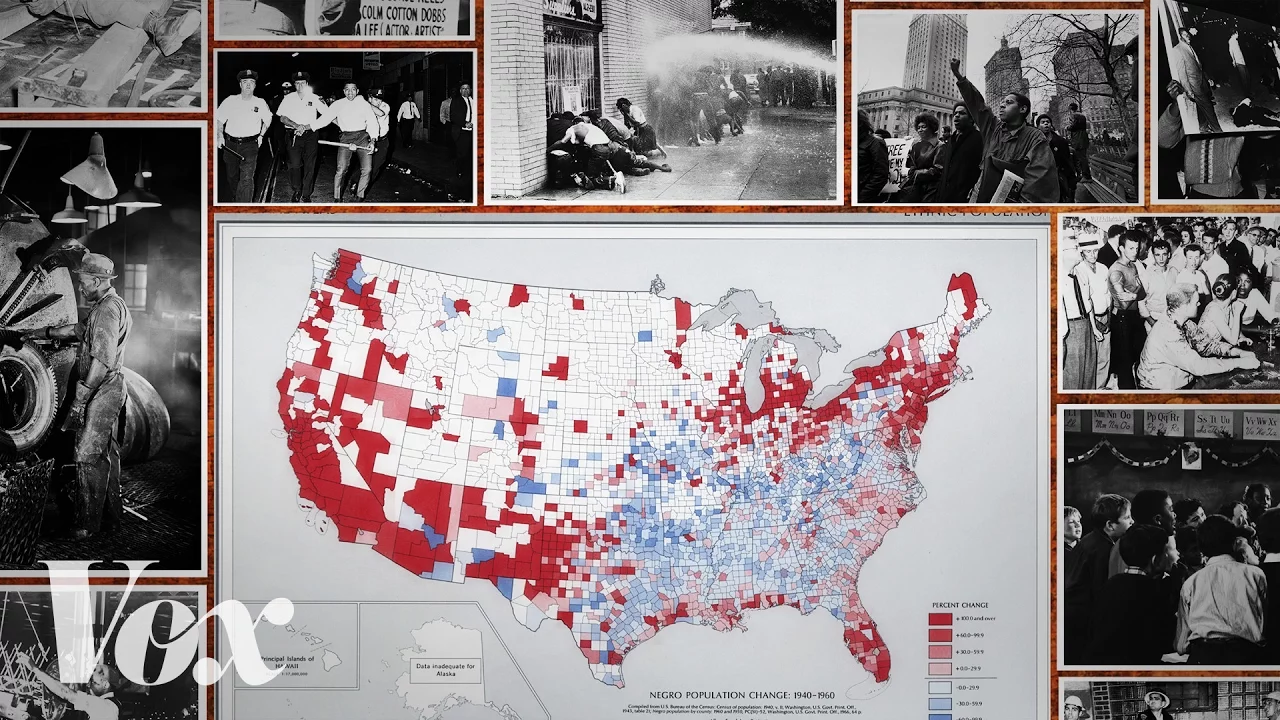
Added:The Great Migration: The mass movement of millions of African Americans from the rural South to the urban North and Midwest during the 20th century.
Systemic Housing Discrimination: Foundational concepts of redlining, restrictive covenants, and blockbusting that historically shaped segregated neighborhoods in American cities.
The Mechanics of Gentrification: A basic understanding of how capital investment, urban renewal, and shifting demographics lead to the displacement of lower-income residents.
Deindustrialization: The economic transition from manufacturing to service-based economies and its disproportionate impact on working-class urban communities.
Comparative Urbanism: Analyzing how the socio-economic challenges of Chicago's South Side compare to other historically marginalized urban areas, such as Harlem in New York or East Oakland.
Equitable Urban Development Policy: Investigating policy-based solutions to gentrification, such as Community Land Trusts (CLTs), inclusionary zoning, and rent stabilization.
The Role of Public History: Studying how local historians and digital creators (like Dilla) leverage public-facing media to reshape historical narratives and counter systemic biases in mainstream media.
Grassroots Activism and Asset-Based Community Development (ABCD): Exploring how community organizations on the South Side mobilize local assets and culture to drive social change from within.
1.3M views30.8Klikes1:04:31Original Release: 2023-10-28
♪ hip hop ♪ [Peter] Dilla, what's going on?
[Dilla] Welcome to Chicago, we're at the 97th annual Bud Billiken Parade.
It happens to be the largest African American parade in this country.
-Today we're gonna get into it, we're in South Side.
We're gonna see all different corners of it, right?
-Absolutely, not only on the South Side but we're really in the place which was the only place that black people could live in on the South Side.
We call this place Bronzeville.
So from 1874 to 1940 this was it because of the racial covenants.
And so this is the Black culture of the city, the Black metropolis we're in right now.
-These are sweet old houses, they're really nice.
-Yeah, absolutely.
So some of the ones are new but the older ones were former mansions constructed for grain merchants.
-Oh, cool, cool.
-This used to be a German Jewish neighborhood.
And the cool thing about the Jewish homies is they didn't mind renting to the brothers.
And so as they moved out they shared their space with African Americans.
So what was a Jewish neighborhood became an African American neighborhood.
-Jewish homies and Blacks got along okay you're saying?
-Oh my God, not only did they get along okay but in the many instances because the Jewish homies could change their names they could climb the structure higher and bring the brothers with them.
-Dilla, for those that don't know… your profession?
-I'm most known as Chicago's urban historian.
I'm also a high voltage electrician for the light company, and my most important job is I'm a father of seven and a husband.
♪ hip hop ♪ [Dilla] I wish more of the world saw it.
Because the first thing you think about the South Side of Chicago.
is gangs and violence.
-Yep.
-And this has been going on for 97 years.
Like to see people… Black, Brown, White, Jewish, Italian people hanging out on the South Side of Chicago celebrating our city it's amazing, it makes me feel very proud.
[Peter] Oh, they're fired up.
We got the dancers, we got the smoke from the grills over here, we got a Lakers hat in the house, that's a bit surprising.
-Does it say Lakers anywhere? Oh.
-I thought I was in Chicago.
-It's only purple and gold but that's it.
-You're trying to match, okay… Gotcha, gotcha.
I gotta say this is some hugely impressive architecture here.
[Dilla] Louie Armstrong house, family friend still owns it.
So that's why it's the horns in the window.
One of those horns is his.
The family friend got it from Louis Armstrong.
[man] Wow.
-You didn't know that? -I didn't know that.
I pass by here all the time.
[Dilla] That's one thing I wanted to make sure, the duplexity of our communities.
I'm sure the kids that attend Mollison Elementary right here have no idea that their school is on the block that Louie Armstrong grew up on.
-A lot of locals have no clue? -No clue.
-We was just walking with somebody. -Right.
No clue.
So some of that affects us moving forward because when you aware that you're on sacred grounds you act differently.
Even the gang problem, it didn't just pop out of nowhere, right?
There's no such thing in America as Black gangs in integrated neighborhoods.
How do I know? What's their gang names?
The Bloods, that's what Black people call each other, "Whats up, Blood?"
If it's integrated, the Irish dude gonna say, "We gotta have a new name."
We don't refer to ourselves as blood.
The Black Disciples, the Latin Kings, all these American street gangs form in segregated neighborhoods.
And so that's why we have crime on the South Side of Chicago.
We segregated Black people in this space and then we provided no resources and to protect themselves they formed gangs and in those gangs the scariest dude is gonna become the leader.
-Right? -Yeah.
-Sometime the scariest dude ain't the best leader.
But none of that happens if you don't segregate and remove resources from these people.
-I wanna get in that today in some neighborhoods we go to I wanna dive deep around that topic.
-Absolutely.
-'Cause that's what everyone has on their mind.
The majority of murders are in South Side, right?
-Yeah.
-And so we have this in South Side but we also have many different stories.
-Evan that, like-- -We gotta understand it better.
-We are 300, 400 murders a year under what the '90s were.
-Right? -Yeah.
-Why isn't that looked at as progress?
We're doing better than the previous decades.
So ain't that progress? Zero would be the number of murders I want.
[Dilla with the music] Hey, hey, hey, hey, hey, hey.
This is the greatest city on earth.
Do these kids not look like they care about community?
Nobody's getting paid to be out here.
You pay to get in the parade.
-So first impressions, that's what I feel, community.
-Yeah.
-That's the number one thing, I feel charged down here.
Like everywhere has its problems obviously but there is something here that I didn't feel on the North Side.
[hip hop from speakers] It's an honor to meet y'all, man.
Like I said, I seen y'all's shirt, I was telling him when I see stuff I believe in I want to pour into that, man.
I'd love to take you on a neighborhood tour.
-Dylan, right? -That's me.
-We deal with very high risk children.
We took them to Springfield so they got to experience the state capital and a whole 'nother city that they never had been to.
So what you do is very important.
It was beautiful to take them to Springfield because what they got to do is not have to be in the streets of Chicago and look over they shoulders every day.
And so guess what I got to see, I got to see kids again.
As we were driving back to Chicago I saw little soldiers.
I saw them putting on their armor getting ready for these streets.
It broke my whole heart.
And so we gotta work together to get this.
To expose them to different things, let them know the city is just not as they know it all the life.
-Man, and not just that.
It's a small amount of time that you gotta survive.
If you can get through high school and not mess your life up this world can be your oyster.
-It's crazy you say that because my kids, when they talk to me, they are hopeless.
And so they don't believe they gonna make it 21 years.
-They're hopeless?
-They don't believe they gonna make it to 21 years of age.
And so when you talk about that, that's absolutely, sir.
We gotta get them to have faith and believe they can make it.
My kids want to go to college, oh my God, I'mma do everything I can.
-And it's a travesty to have all these resources and they don't go nowhere.
It's all like, "I got friends."
There's programs but I don't think they know that.
Let me give you my number.
-Ma'am what's your program here?
We are Ex-Cons for Community and Social Change.
We do street intervention work with high risk youth.
We intervene to stop violence.
We also do workforce and we do re-entry.
-How's it going right now?
How are things in Chicago, 2023?
Unfortunately 2023, there could be a lot more done for children.
We're focused on a population that just got here and we're not focused on the population that's been here.
-What do you mean?
-I'm talking about migrants.
You give them millions of dollars and I have little Black homeless children that have been here.
I'm not saying they don't deserve help but I'm saying how 'bout helping people that were here first?
Just a little bit.
Just to even get them some belief that things could be different in their life.
While you're showing them on TV that everything's different for people who just got here in their life.
Tell me how is it that people that just got here have cars?
How they have cars?
And not just one car, multiple cars.
And I don't see them working.
Go down on Roosevelt, any Home Depot, anywhere, and you see them hanging out, congregating.
Train up the people who are here 'cause I promise they want to work too.
They need the resources to know they exist in their communities to take them to the next step to help them get a job.
Help them sustain that job.
That's what that looks like.
We're not getting that in our communities but the migrants are getting it first.
They'll say, "There have been programs forever."
but if the people don't know about them then are they really there to be helpful?
-In the immigrant situation they're doing their standard tactic which is divide and conquer.
Because as opposed to worrying about the services immigrants are getting we need to make the people pay for sending the services here.
They're committing kidnapping by taking immigrants in Texas and putting them on a bus, and not getting their permission to be put on a bus.
Not getting their… Just shipping them, any city, right?
-Yeah but guys, let me step in here.
What about Yuma, Arizona, or Eagle Pass?
They shouldn't have to take the brunt of this situation.
-I don't think so either.
-Their communities get overrun, hospitals, schools, every service, medical services.
-They have set up services.
They set up welcoming centers to register for the upcoming school year.
But every child had to either be… Have taken the vaccine or something.
-So now-- -Even our residential sh*t.
-As they talk about COVID is back on the rise you haven't ensured they had the vaccine while you made sure parents had to go through that.
-So it's an unfair system. -Very much so.
-I'm not saying they don't have a need, we shouldn't do something, I'm saying first, where is the responsibility to the people who elected you to fix the problems that existed before they got here?
Everything that happened, happened to us first.
-When do we ever get some repair first? -Yeah.
We've never had that opportunity to get any repair first and yet now we have migrants you put before us.
So as their numbers will grow and build above Black people that will be working, getting services, be in school, these things.
Black people will still be at the bottom of the totem pole.
Is that fair?
-The migrant issue in Chicago is really tough because African Americans are kinda very pissed off because Rahm Emanuel, our previous mayor before Lightfoot closed 52 schools and we couldn't afford to keep them open.
Maintenance, that kind of stuff.
20 of them now are housing migrants that are being bussed to Chicago and the Black communities are like, "Where are you finding that money to keep the building open?"
''Who's doing the maintenance?''
"Where is that funding coming from to house them that wasn't there to educate us that were born here?"
That's been a common thing -What doesn’t get told so well and is very confusing 'cause there's a lot to this situation.
-The majority are economic migrants. -Yeah.
-You gonna make six grand in Santiago, Chile.
Maybe you're from Haitian, Cuban, whatever background, you can go make 35, 40 in the US.
Why wouldn't you go? I would do it.
-Right.
-I don't give them sh*t, I would do the same thing.
-Yeah, but I think it's how do we create a pathway that's equitable to those of us that are here already, right?
-Yeah, I agree… I agree.
It's like if we had our house totally in order… Like the test scores were amazing in the schools here, all the resources were there, everyone was tracked into great employment yeah, take in everyone then maybe.
-Even taking it as a descendent of slavery.
If you mention that my parents couldn't buy a house because of redlining or something like that, right?
It's like, "Oh, get over it."
Then I can understand the sentiment of for generations I've been struggling and now somebody can arrive here, and not born here, not a citizen they can kind of jump ahead of me.
I do think if we focus more on getting our house in order then that will become a byproduct of getting our house in order.
I don't think that should be the singular focal point of what Black Chicagoans should be focused on.
We should be focusing on pending gentrification in certain neighborhoods and how we implement rent controls.
To where you can only charge so much.
So that you're not pricing out the people that have made the community what it is.
-Can we show some of those areas today? -Yep, absolutely.
♪ jazz ♪ [Dilla] It was originally an Irish and Italian neighborhood.
White flight changed the demographics.
-When was White flight here?
-In Chicago White flight started in 1951 and lasted until about King's assassination.
After King was assassinated you gotta call it White jet.
It wasn't even White flight no more.
That next day it was not very many White people on the South Side.
-'Cause of crime or what?
-After King was assassinated there was a riot.
So after the riots people packed up and left.
There's some of the most amazing architecture.
We live in a bungalow.
It's a particular Chicago style of housing known worldwide.
The block I'm fittin' to drive down now, Chaka Khan went to that high school.
Baseball fans, Kirby Puckett went to Calument High School.
-Wow, old school.
-Kanye West has a song, he says his friend lived on 81st and May down the street from Calument the school for the stoned.
So this school was primarily inhabited by the Black Songs Chicago street gang.
-We've been in South Side the whole time? -Yeah, we have not left South Side.
Okay, from the parade, so when we went by the stadium that was South Side?
So you were saying off-camera it goes like blocks of really nice neighborhoods and then blight, and then nice, and then… -Yeah, every couple blocks… After two blocks you can go from $500,000 homes to blocks with two houses on it and a bunch of vacant lots.
-It's a nice neighborhood though -We live in a decent pocket.
-What do these houses cost? -My house, 200 grand.
-Now they’re 200 grand? -Yeah.
My house was built in 1920 and it was $6,000 brand new.
-[woman] How are you? -[Dilla] I'm great, how are you.
-Everyone know everyone? -Yeah, mostly.
-How long y'all been on the block?
So I'm the newbie.
I've been on the block six years.
[Peter] You guys accept him yet?
[Dilla] Likewise.
[Dilla] Sometimes that misconception of a space helps us because people think the South Side is sh*t.
I get a house for $200,000 that's five bedrooms, two bathrooms, finished basement, two car garage, walk-out basement.
-So people can have a normal blue collar job here, buy a home, American dream-type life?
-Yeah, that's it.
Third largest city in the world that has off-Broadway, arts, museums.
The Northwestern Hospital is top 10 in the country.
We got high schools that are top 10 in the country, in the city, not the suburbs.
Our railroad, CT, public transit, top two in the country, but we're not even in the top five cost of living or in top three population.
How does that equate? It's impossible.
-Yeah, you're top three population in the country and then cost of living, you're way down there.
-Way down there.
-But I will say when I had to pay tax at the grocery store that didn't feel good.
-Oh, man. -That was weird.
-Yeah, in Cook County it's 10% sales tax too.
Even how I look at that… It sucks that I pay taxes, there's 2.5 million people here.
And so we all gotta help each other and that extra 50 cent gets on my nerves when I'm buying something for $5.00.
But also right now we're dealing with a migrant situation that we didn't create.
That I know those taxes are helping to support, right?
My 50 cent may be the difference between people beefing over a space because taxes are helping to mitigate those type of situations.
So I look at it more of we need to be changing the wages of what people make and then that tax thing ain't gonna matter so much, right?
Like if we change the dollar amount what we paying people per hour then they don't feel that much of a tax.
-Dilla, we're giving your dog a little break but what's going on with the food?
-So there's this Black-owned place called Ain’t She Sweet and they make these salmon egg rolls.
First of all, who knew you could put salmon in a egg roll?
-But you gotta have one brother. -All right.
[crunching] Oh, yeah.
[Dilla] That's great, right?
-You immediately want to bite it again. -That's awesome.
-They try to get locally sourced stuff.
So they go to rural areas and the spinach comes from a rural farm.
It's really a cool place and it's in the hood which is amazing.
-So Dilla, you call this the hood?
-Yeah, I think most people would.
It's my neighborhood and I love it but most people would say I live in the hood.
So when you're on YouTube and you see these drive-by shootings and whatnot is that taking place here?
-Yeah, there are.
-It happens?
-Yeah, I think the worst thing we can do is not be honest about what we're facing.
This neighborhood is Auburn Gresham and it's certainly has a higher than normal violence due to gunshots statistics over here for sure.
-So you feel fine though walking around here any time day or night?
-Yeah… I… uh… That's a very fair question.
I feel fine, I don't know if I feel fine with my kids walking day or night.
-But right now yeah? -Right now, yeah.
[Peter] Most of it's hard working blue collar neighborhood?
-Absolutely, older Chicagoans knocking on retirement.
A lot of teachers, a lot of firemen.
-So it's hard for an outsider to totally get it because the aesthetics.
Everything looks good, it's pretty well taken care of.
Everyone's got a nice green lawn but it's just things could happen?
-Yeah, it's the internet, right?
In my generation if two gangs were warring with each other some dude would go spray paint f*ck you, that gang's name on the wall.
But in the name of social media you can get on Instagram and you can disrespect the other gang right on your reels but the difference now is they see your face, right?
So you become an easier target to acquire.
-Oh interesting, so Instagram in a way is the new graffiti?
-For sure, Instagram and YouTube is the new graffiti.
-I don't see graffiti anywhere.
-The don't waste their time going to spray paint the name of their gang, or hood, any of that.
They project it online so that more people can see.
-Does Instagram's algorithm suppress these types of videos?
-I think it sadly promotes them.
Because what's the saying? No one looks away from a train wreck.
People outside of Chicago will look at these two people beefing and almost cheer 'em on.
That's the entomology of drill music.
So drill music is a hip hop genre.
It finds it's origins here in Chicago.
So drill music is created in Chicago, it's found now in South Africa, London, New York, everywhere, right?
And it sadly is rooted in you being able to articulate your disrespect for the other side in a rhythmic pattern.
So like you can rap.
And so if I'm saying f*ck a gang but you can rap, you can say f*ck my gang a little cleverer.
Right?
Then how you're saying it so clever is making more people watch.
So now I'm mad that you got the world teasing me.
So now I really want to come shoot you.
-Okay.
So if I'm listening to some drill music and I'm not from Chi town, I have no clue what's going on… -You're missing it all.
-But imagine if one of those guys from the rival gang hears me listening to that rival gang music, they're just like, "What the F?"
-So that does occur. -Okay.
-And that's the sad part about it because if you from Baltimore, Italy, Germany, Ireland, from whatever, you come to Chicago, you love this catchy song from Chicago but you don't know the names in these songs are real people that got killed, right?
So you're playing music even on your social pages it sometimes can give the vantage point that you're siding with one side or another, right?
And what that does is it hurts the economy of Chicago rap.
Because since I understand the rules of it and most kids in the city do then that tampers the amount of streams you get.
I will play your music more but I don't want people to think I'm on your side of the gang, right?
So if we pulled even that part out of our music both sides would rise up 'cause you don't gotta pick you just enjoy the music.
Practically I would tell my 16-year-old he can't be in a neighborhood that we call O Block.
He can't play FBG Duck's music on O Block.
He can't play O Block music on the blocks that FBG Duck guys hang out.
Both sides make very creative, artistic music, right?
-O Block is the projects here?
-O Block is the cultural name we've given the space called Parkway Gardens.
-Okay.
-We're gonna go by there in just a few.
[Peter] Today's video is sponsored by Magic Travel.
Magic Travel is your personal AI travel assistant who can help with finding the best places to stay and plan out the perfect itinerary on your next trip.
Say you're going to Chicago and have two days.
Go to Magic Travel, type the destination and date, click on "Find Hotel".
Type what you're looking for.
In this case for me I'm looking for Downtown, under $250 a night fast WiFi and pets.
Click different filters to get more of a refined search.
The AI is heavily review-based.
so you can see what properties are rating well.
It's organized with review summaries like location, service, amenities, rooms, and cleanliness.
So you can get a very clear understanding of what the hotel is like, Once you've found the perfect place ask Magic Travel to help plan your itinerary.
It will help you align with your travel style, budget, dietary preferences, and whatever else you value.
Then you can craft your personalized itinerary with restaurants, attractions, transportation routes, and much more.
For example, on this trip I'm looking for Greek food, history museum, Lake Michigan beach, and live music.
It literally takes minutes to craft a personalized itinerary around what you want.
If you don't like something you can just ask Magic to change things or recommend new activities and it will help right away.
The platform is organized so you can plan multiple trips at a time and have everything in your account.
I'm now using Magic Travel when planning trips and suggest you do too.
It saves a ton of time, logistical work, and money.
The best part about Magic Travel is that it's completely free and there are no paid plans or extra fees for booking hotels.
Try Magic Travel today by clicking the link below in the description.
Now back to the video.
[Peter] Your old job, we just went by a power transfer center.
-Yeah, that was a substation, 138,000 volt substation, Power Chicago.
-So do you miss that though, doing that stuff?
-Oh man, an immediate sense of gratification.
What we did was restore emergency power or if a rat chewed through a power line and then that building would lose power and somebody'd be stuck in the elevator.
Our job would be to come find out which line got chewed through, isolate it and then put the building on its emergency power, man.
Ain't nothing like doing that and there's kids stuck in that elevator.
So once you do your job, and you hear the power kick up, [makes electrical noises] Then boom.
The elevator comes down, f*cking people in the lobby clapping, man.
It was a great feeling and it was a feeling I got every other day because it's 2.5 million people in Chicago.
A lot of buildings, a lot of property.
So every building that loses power doesn't make the news but something's losing power every day just because stuff is old, right?
Equipment fails.
If the Chicago Marathon's running we used to go through with counter-terrorism folks and kind of show them where we thought was good hiding places for bombs.
'Cause who knows the city better than utility guys?
It contributed to the fabric of society and yet nobody really knows, right?
-It's behind the scenes totally, huh?
-Yeah, it was really cool.
-So why don't you do that anymore?
'Cause my social media channel took off and Downtown there are no power lines in the air.
Most of it's underground so sometimes I be crawling out of a manhole and a dude would be standing there with his camera, "Ain't you Dilla? You the guy doing that TikTok?"
So it started to get a little dangerous for our crews.
But then also it's an inherently dangerous job.
The minimum voltage of electricity I was around was 12,000 volts.
So that's gonna kill you if you make a mistake.
There's no talking about that.
Also the light company here was like, "Chicago seems to like you, we don't want to be the dudes that take you out."
They gave me a job, now I do digital content creation.
-Cool.
-Which I also like because one thing I'm doing is changing the channel.
The channel used to only be kinda dimple in the chin white dudes, right?
Now I'm exposing minorities to the utility trades and the fact that you don't gotta be an NBA player or NFL player to drive a Charger and have a nice house.
You don't gotta gang bang, commit scams.
You can go keep the lights on Downtown and have a good a** life, man.
-And so we'll leave it at the end of this video.
Your links, your TikTok, your Instagram are awesome.
Full of historical nuggets here.
You also got the business in the bus we were in earlier.
-Touring people around South Side. -Yeah.
-So you're a busy man… and seven kids, right?
[Dilla chuckles] That's job number one.
[Dilla] Now we're leaving Grand Crossing into Woodlawn.
Another very historic South Side neighborhood, working class.
Probably 90% Black.
The Brown homies though are spreading out.
Which I think is cool as sh*t, man.
Brown homies from other Chicago neighborhoods are pushing their boundaries, right?
So what would be this box of Mexican-Americans that box is widening into black spaces.
Because as Blacks leave the city or Blacks lose they property or Black whatever the f*ck… The Mexican-American homies buy that sh*t and fix that sh*t, and boom.
-So is the Black population going down?
-Yes.
Every year twenty-some thousand, it's a very substantial amount of people.
-Why?
-Two reasons, right?
If your neighbor's son get killed and you got kids, you like, "F*ck that, I don't want nothing to happen to my kids."
We all live around where we eat, who we know, where we go to church, and all that other kind of stuff, and anytime there needs to be a land grab in Chicago they take it from Black people.
So what I mean, it was Michael Reese Hospital on the lake front on the South Side and when they thought they would bid for the 2016 Olympics they knocked down a Black hospital with a trauma center.
The world now knows that Brazil bribed their way into those Olympics.
So that's why it was in Brazil in 2016.
The president had to retire, it was a whole f*ckin' ordeal but Chicago knocked down a hospital in a Black neighborhood that had a trauma center for an attempt at an Olympics they didn't even have in the bag, right?
And so that displaced the hospital staff displaced people being treated by the hospital, right?
They also knocked down residential property that people lived in that worked at the hospital to create an Olympic village they didn't even have.
It was not guaranteed, you didn't get the bid.
That's another thing that drives African Americans out of Chicago.
Like I said, Rahm Emanuel didn't close 52 schools in White neighborhoods or Mexican-American neighborhoods.
They were mostly in predominantly African-American neighborhoods.
Now you're left with, "Do I make my kid take seven busses to get to school in another neighborhood where we don't know anybody?"
or "Do I go live with my Auntie in Houston now?"
Do you know what I mean?
You gotta make that decision based off what's best for you and your family and I understand that.
I do blame some people though.
Like the me's in the world, right?
You come up in Chicago, play little league baseball.
Because of the city's program you get f*ckin' little league and summer jobs and all this other sh*t.
Then you go to college and get a good job and then as soon as you come back you run to the suburbs and you don't pour into that pipeline that fed you.
Don't coach little league, don't f*cking help with programs.
You don't live in the city that raised you.
So there's some of that too.
The me's of the world that have made it out owe it to those spaces to f*ckin' go back and live.
'Cause it's the same problem with suburbs too.
-So you'll never leave here?
-I don't think so. I don't think so.
To my wife's chagrin I think it's important that people who don't have dads in their houses in Chicago see a dad in a house yelling at his kids for not cutting the grass.
Just normal Americana stuff.
And I think I'm so successful because I had it.
My dad was a cop.
My dad was probably one of three live-in fathers on the block.
Not saying dudes didn't have dads.
Maybe they dads lived somewhere else, would visit on weekends.
But three live-in dads on my block, my dad was one of them.
-Out of how many?
-Sh*t, it's 18 houses on each side of the street and two sides of the street.
So out of 36.
-36 and there was only three you said? -Yeah.
-Three live-in dads. -Wow.
-So of those three live in dads though, he was a cop.
Right now there are four dudes I grew up with that became cops and if I asked them why you became a cop it's 'cause I saw your dad pulling up in the squad car, bro.
Taking y'all to this, taking y'all to that, so I wanted to be that.
-So people need that good example, that role model?
-Don't steal my quote man, but kids don't take after strangers.
This is Cory Brook's church.
Let's see if he's here, you wanna spin here?
-Yeah, sure.
-This the king of O Block, talk about perspective.
Anytime the words O-M Block come out there's a particular way.
The first way to do it is to come to the person who cares about the space as opposed to being exploitive like everybody else does in the world.
Before I take somebody outside the gates of O Block to point and say crime, and rap, and this.
I say, "See what's being done to make that space like every space in America."
"Come meet the man, Cory Brooks."
[Peter] What's going on here right now?
[Cory] We're having the world's largest baby shower.
We got about 1,100 women with newborns six months and under that we're gonna bless with car seats, strollers, play pens, diapers, wipes, bath supplies.
Everything that a woman or family with need… to get a good start.
So they're not financially crippled we want them to be in a position where they can celebrate that.
That's what this is all about.
-This is your organization?
-Yes, New Beginning Church of Chicago but we also have a not for profit called Project Hood, and we're building a $35 million center right across the street.
The center is all about bringing all of Woodlawn together.
Those who know about our area, we're on the block that's famously called O Block, and named after Odee Perry, a young man who was shot and killed.
But I decided we gonna keep the O but we gonna change it to Opportunity Block.
So we creating opportunities for everybody in the neighborhood and part of the building a community center is gonna help that endeavor.
-How are things going right now in 2023?
-It's going good for us.
I mean other parts of the neighborhoods, other parts of the City of Chicago and the West Side, South Side are experiencing spikes in violence.
We've been able to bring the violence down in Woodlawn.
Which is amazing being that Woodlawn is one of the key areas where a lot of the gang activity started in the '60s and '70s.
-So O Block here in Woodlawn the crime is actually going down right now?
-For sure, without a doubt.
A lot of the guys working here now, they're from O Block and some of their people that they used to call ops are here working as well.
So we're teaching everybody to get along.
-What do you mean by ops?
-People who used to fight one another. -Okay.
-People who used to be at odds.
People who just didn't like each other because they lived on certain blocks.
So we're trying to get rid of that whole mindset.
-This is awesome, so everyone just comes together, helps out.
-All volunteering? -Yep.
-How does it make you feel to see it like this?
-Good, because that's what it's all about.
If a church is in a neighborhood and they're not changing it for the better what's the point?
So I feel good that I know we're changing this neighborhood and I know that people's lives are being transformed and I believe that's what it's really all about.
-[Dilla] So that's what he's building. -[Peter] Oh, wow.
[Peter] Cory slept on the roof for 100 days?
-Yeah, for a hundred days in the winter too, tents and that kind of stuff.
-Just to bring awareness? -Yeah, absolutely.
-His hearts fully in it? -Yeah, 100% [Peter] So what's the story with O Block?
I mean you can see it on YouTube easily or hear about it.
-That's only the half story, it doesn't tell you that this same land, literally the same footprint was White City Amusement Park.
It was an amusement park that forbid Black people from going to it the entirety of its existence.
And instead of staying open and letting Black people go they decided to close and knock down all the rides.
So then in that same space we built what we call Parkway Gardens is the official name but culturally we call it O Block because of the death of Odee Perry.
But before it was public housing it was a co-op.
Meaning the people who lived there had ownership.
-Right? -Mm-hmm.
-So when you have ownership some people who live there gonna be employed reasonably, right?
Some people who live there will get equity in owning their condo, or unit, or whatever.
When the '70s happened the place fell on hard times like everything else in the '70s.
Instead of giving them a loan like we do millions of companies all over the world the city bought it, turned it into public housing and didn't give a sh*t about it.
Then they sold that public housing to a company that's in New York.
So a Chicago building has public housing, it's owned by a company in New York that gets the Chicago public housing dollars.
So they've made 300 million off O Block and only spent 2 million security.
No millions on job security.
No millions on educating the people that live there No millions on upgrading the status, or the apartments, or non of that.
-That's a Chicago story.
Selling off your resources.
-You know the parking meters? Abu Dabi. -Yeah boy.
-And then also there's a road that goes to a Canadian pension fund.
I forget thee name of it.
-Yeah, it's the South Chicago Tollway.
-Yeah.
-And the Canadian pension fund raises the price every year.
So they make more money every single year.
Like I said, we sold it for pennies on the dollar too.
Didn't make a big difference in what we were trying to accomplish at all.
Yet we sold it anyway.
-Okay, so for those that don't know like myself, O Block South Side, where we're at now, one of the harder-hitting areas of Chicago?
-Thousand percent, yeah. -Thousand percent?
'Cause I was in Englewood the other day and it looked a bit rougher I gotta say.
But give me the skinny on that.
-I mean I would say… What did Tupac say? "All around the world's the same song."
All right, so just like in other South Side neighborhoods it's people that are active, right?
But it's so complex.
-Right. -When you grow up… -And it's complex but it's simple, You're six years old, you grow up with your best friends in your apartment building.
Both of you guy's moms work two jobs so y'all take care of each other.
And then that guy gets influenced by a gang.
But that's your friend.
And so you guys grow up and somebody kills him.
On every corner of the earth a 17-year-old wants revenge, right?
If you go to Indonesia, Iraq, Iran, you kill one of them dude's friends, you might get killed.
Their family might come back and kill you, right?
And so then that happens.
And so then we have this terrible cycle of back and forth.
No one intervenes and then it kind of becomes this, "He lived over here, he was one of us." right?
And so if we don't go avenge him then… If something happened to me I want somebody to avenge me.
So in order to make sure that I go avenge and it's on and on.
-So okay… -Let me put this into-- -And it's a number of neighborhoods.
-Let me put this into a foreign example.
How long does the beef hold?
For example, in the Balkans with Serbians and Albanians, it's like, "You're great-grandfather killed my great-grandfather, I hate you."
Where in Vietnam the Americans destroyed the country not that long ago.
You go there, it's like pro-American, they let it go immediately.
So how long does the beef stay between the 17-year-old's friend that gets killed-- -A decade minimum.
-A decade?
-Right now we are… So the violence that Pastor Brookes says he's mitigating now, he's mitigating violence that started a decade ago.
[Peter] So what's the way out of this?
[Dilla] I think it's the youth.
I think it's you get at the second graders, third graders, and you explain conflict resolution to them.
You explain… It's all these arguments without, again, people's personal business or sexuality, or that kind of stuff.
If a kid can understand his fluidity in fifth grade he can damn sure understand conflict mitigation.
He can damn sure understand that if a guy disses you on YouTube that doesn't mean you should shoot him the next time you see him.
'Cause you may regret that emotion.
We can explain to people that logic forms later and you're gonna be emotional about some sh*t.
So don't let the emotions of it get the better of you.
It's the King Von mural.
-Who's that?
-A Chicago rapper that was killed.
Move out the way for freakin' police.
-I mean walking around here-- -They are there to tour right now.
In there trying to find a member of O Block that they can pay to walk them through so they can Instagram and all that.
-Oh, really?
-This is a tourism destination because the hottest rappers on earth are from here.
-Interesting, so the ladies dress all up to go to O Block.
-So now they f*cking treat it like jail over there.
You see you gotta show ID, can't get in, yadda, yadda, yadda.
-You got someone lurks around there. -All that security?
It's a thousand percent security and not securing the residents securing people from getting in.
If you get shot inside them dudes ain't fittin to get up and do sh*t.
They're there to tell people they can't come to O Block to take pictures.
They don't want the tourists to get shot dealing with what's on the inside but they don't give a sh*t about what's on the inside.
As an institution, not the individual dude that's at work or whatever company he works for ain’t there to protect the residents of O Block.
They're there so if me and you walk across the street that dude's gonna stop us from walking on the inside.
So we don't get into no sh*t on the inside.
So the inside doesn't look bad, right?
-What do you think the residents of O Block think about all this?
People outside taking selfies, and me going by with a camera, and that stuff?.
Some of it, they feel very exploitative 'cause it's like, "Why don't you come check out the schools that suck?"
or "Where does your interest start and stop?"
Is it only to get views and paid or you want to change this space at all?
So there's some of that, but like I said, it's opportunity, right?
And if we all look at it that way… But if you open a store on the corner that sells Lil' Durk, Chief Keef memorabilia and the proceeds go to non-violent programs over there, right?
The other thing is history.
The modern civil rights era starts in this neighborhood.
It's not like a gross statement, I'm not overreaching.
The modern civil rights era of America starts in Woodlawn.
'Cause most people think it's with Rosa Parks wouldn't give up her seat.
-Yeah.
-Actually if you asked Rosa Parks what she was thinking about she said, "I had Emmett Till on my mind."
I'm taking you to Emmett Till's house.
In August of 1955 Mamie Till sent her son to Money, Mississippi to visit relatives and what's alleged is that he whistled at a white lady in a store, and what's not alleged is that white lady's husband came to his house in the middle of the night kidnapped him, took him to a garage, beat, tortured, and killed Emmett Till.
Tied an engine block to his feet and threw him in the Tallahassee River.
The rope broke, his body floated to the top and somebody found him.
His body was sent back to Chicago and his mother met the body at the train station and instead of fainting which is what I woulda did she demanded that they open the pine box and once she saw his mutilated body she demanded an open casket funeral.
Because she wanted the world to see what happened to her baby.
Then at Robert's Temple they had that open casket funeral.
Two Chicago publications, The Defender and Jet Magazine published the photos and those photos are what activates the modern civil rights era in this country.
And because of the modern civil rights era it's the gay rights era.
There's women's rights eras.
There are so many things that xenophobia has fought using the tools of civil rights but it starts outta this house in a neighborhood that we should show more respect to than just some gang banger, right?
-How does this feel for you coming here?
-Like sacred ground. -As a South Sider, sacred grounds.
-This is the last set of steps Emmett Till walked down alive in Chicago.
He was 14, right?
At 14 I had a favorite pair of shoes, a basketball I loved, I had things I woulda wanted to return to.
So when I come here, when I bring people here on tours… Um… I acknowledge and understand that I get to walk up and those stairs and he never got to walk back up 'em.
For no other reason than being a Black dude, right?
[Dilla] Two slick people were able to turn a statement… Which is a statement of fact, Black lives do matter.
And turn it into something that is now being argued about why Black Lives Matter spent money.
I am a thousand percent in agreeance that there is organizations dedicated to Black Lives Matter right now that can't receive the money that folks sent to the organization of Black Lives Matter.
It's totally okay to have that kind of argument.
What I hope doesn't happen is that because now there's an organization named that that the statement no longer matters.
That Black lives do matter.
It wasn't created to raise funding for anybody.
It was created because if you're a Black dude and you get pulled over by the police and you reach for the wallet that they told you to reach for they can shoot you and nobody's gonna give a God damn about it unless some store gets burned.
That should be the start and stop of it for me.
-Okay, so when I see the BLM sign right now or flag… -Mm-hmm.
-To me, I have a negative response.
'Cause I think organization, I think 90 million or whatever million grift.
-Mm-hmm.
-Didn't go to any Black communities.
I see a lot of virtue signaling in upper White neighborhoods where people have the signs.
They think they're doing the right thing a lot of times but I don't see the benefit for these neighborhoods.
But the statement I 100% agree with.
-That same concept can go with, right… I see a Confederate flag, I have a negative reaction to it.
-Because of what that represents to me. -Okay.
-But someone else would say, "Nah bro, this is just my culture." right?
So I think it's condusive to us all to maybe meet in the middle.
This is the greatest example, my friend Spencer Gould shared it with me, man.
He said at the Morehouse graduation they let the dude from Chick-fil-A speak.
And he's known as this racist dude and Morehouse is this historic Black college that ain't fittin' to let anybody talk.
Anyway he got up there and said, "I did this thing."
''I listened to my dad.''
He said, "My dad told me to work hard and I'll be rich, and now I own Chick-fil-A."
"My dad told me, 'Marry a good woman and life will be good."'
I've been married so many years.
"My dad told me Black people are inferior."
"That's why it took me a long time to unlearn this thing because most of the stuff my dad told me is true."
And so what that taught me was to leave space for people, man.
Because sometimes we're repeating stuff that we learned from a trusted source and not everything that source says is right or correct, or true.
And not everybody that's flying a Black Lives Matter sign sent that lady, or dude, or whomever 50 bucks.
Some people are legitimately flying it because they don't want to see White dudes shot down on, Black dudes shot down.
I think we need to talk about that too.
Like there were immigrants from Italy who were Catholic who were lynched in the South solely because they were Catholic and Italian or Catholic and Irish.
I think Irish dude's lives matter.
I think Italian dude's lives matter.
I think Catholic dude's lives matter.
I also think the Catholic Church has been responsible for some really f*cked up sh*t, right?
So it be f*cked up to conflate the two sometimes.
I think politicians and people who are good at making money understand that that will pull coin from us.
And us semi-smart people gotta not play into it, man.
Because at the end of the day red lining created these vacant lots and something like red lining created the vacant lots in Appalachia too.
-That's true, I was just there.
They were paid in script.
Like the coal mining company's currency and that's all they could spend.
-So World War II happens, we got GI bills, we come up with the FHA, right?
FHA loans say that you, with a certain credit score put 3% down and the government will fully back that loan.
It didn't apply to people in the Appalachians.
It didn't apply to people in Black and Brown neighborhoods.
So because of that you get these pockets.
When you see a vacant lot in Chicago please don’t think, "Why was nothing ever there?"
Something was there, it got knocked down, and they never reinvested.
Because we built the uniformity here see those two different buildings but kind of like it's the same building.
-Sure.
-So that's how Chicago lots work.
So that thing was probably here, right?
Let's say you're a good-to-do, I love everybody White dude from Sweden that owns that building.
But you own that building in a Black neighborhood so it's red lined meaning you don't qualify for governmentally-backed loans.
And that tree falls on your building.
How do you fix it?
You can't, you don't qualify for a governmentally-backed loan.
-So okay… Correct me where I'm wrong here, the red lining was four different tiers, right?
There was A, B, C, D.
A, would be the top tier like the banks wanted to lend to those neighborhoods 'cause they were good financial socioeconomic status?
-D, being the worst. -Right.
-So it wasn't necessarily like the Swedish guy coulda had the tree go down on his house in this area.
-He's screwed? -He's screwed.
-So it's not necessarily a race thing, it's a socioeconomic?
-It's the area got red lined but who was the predominant demographic in that area, right?
-Right, right.
-This area's 80% Black so that means forget this area.
What about the people that ain't Black that live here?
That affected them too, so if you're this Swedish dude, you own that, that tree falls on your house in a red line area you can't get a loan to pull the equity back out rebuild, what you gonna do?
Knock it down, take the insurance, move into the sunset.
-So red lining went away in what, '68?
-Naw, sh*t… redlining in Chicago didn't go away until 1987.
-What? -Because guess what we don't talk about.
When we talk about red lining, also insurance.
You could not make Allstate or State Farm make their policy writers write policy in Black and Brown neighborhoods.
-Okay.
-So then the second problem if I'm in a neighborhood that's red line in the '80s and I can only get rinky-dink insurance on that building and a fire happens that rinky-dink insurance company bankrupts itself when I file my claim and guess what, another vacant lot.
Every student hates a zero on their average, right?
If you trying to get an A you need a bunch of fours to get a 4.0.
If a teacher throws a zero on there that f*cks you, you're all the way to a C.
So what happens when you own this building today and you want to get a loan on it.
but all these vacant lots are throwing zeros on the values of this neighborhood?
So you could pay a whole 30 year mortgage off on it for 300,000 and it's only worth 330,000 because you've been paying interest for 30 years, not getting equity 'cause it's based off the value of across the street that has sh*t because of red lining.
-Okay, now in 2023 is the reason your property price is such a value is because of red lining?
-I think in 2023 red lining is why my house was as cheap as it was, absolutely.
-Okay.
Now red lining is gone completely, right?
-Yes, I wouldn't say completely but the new thing now, is the assessment game.
So right now if I want to get a loan, equity loan, I would take down the pictures of my Black family and put up pictures of you and your family -C'mon. -Swear to God.
-C'mon, really?! -Swear to God.
I would put up pictures of you and your family and get 50 more G's out of my house than if I left pictures of mine.
-But when the appraisers do comps… -When they do an appraiser… -Mm-hmm.
-They're looking at the home, bedrooms, baths, not the people there.
-Yes, but there's a physical person in there that says something is of structure, not of structure, something is in this pristine shape-- -Okay, but it's gotta be some of the appraisers, not all of them.
-Yeah, so I… there's no… That's another issue, right?
I'm not saying every appraiser is poo pooing on the South Side I'm saying that also there's a trend.
And so if a quarter of appraisers are undervaluing Black property and you come in and overvalue, they may say you're a sucky appraiser.
What you doing different than these other guys?
It… It permeates.
[Peter] So this school here, Fisk Elementary, in a neighborhood like this are there crime issues?
Elementary probably not but a junior high let's say around here.
What goes on do you think?
[Dilla] I wouldn't say it happens in school because sadly it's so active.
If you decide to jump off the porch you ain't gonna be in school long.
So if you jump off the porch… We say jump off the porch meaning get active in the streets at 13, 14, you can't go to school.
Like I said, it's different than….
Uh… They still call this sh*t gang banging and it ain't gang banging, right?
It's something totally different because it's way more personal.
In the '80s and '90s you watch f*ckin' Colors, the dude gotta spray paint some sh*t, right?
You don't know who did it till somebody claims they did it and they, "Yeah, I dissed you motherf*cker."
That's why there's so much gang violence in schools in the '90s, right?
You know, in Compton and other places.
But now, again, you just get on the internet and talk your sh*t and once you do that somebody can go to your Instagram page.
Like right now, "I see this dude, is that the motherf*cker?"
"Yeah, that's him." start shooting knowing exactly who I was trying to shoot.
So knowing that, if they decide to get active they don't stay in school long.
-So literally three, four blocks from O Block is this?
-University of Chicago where frickin' sociology is a concept.
I'll tell you something else that sucks and they don't mind me saying it because they're working hard to change it but from about 1900 to the mid '90s the University of Chicago would actively tell it's students not to cross Cottage Grove.
Which is the street we're on now that takes you into the Black neighborhoods and that sort of thing.
Now they understand that maybe college students living amongst people in urban settings, those college students can teach them different things and that'll lift the space up.
That's certainly what's happening.
If you're a sociology student, why ain't you living in the hood?
-Yeah, you gotta get out there. -To study socioeconomics of the day.
-I think that's just a big problem of society in general.
People are in their bubbles and it's understandable.
you work, you have families, schools, and you're just not understanding what it's like bubble over, you know?
-Yeah.
-That's beautiful, oh my god. -That's the armory, we can take a lap.
[Dilla] It's the Richard Jones Armory today, it was 124th Artillery Armory back in the day for the National Guard.
It was built right before World War I, you can tell because of the uniform that the guards are wearing.
So the youngest soldier is this guy, he's wearing World War I garb.
-Okay, you can tell?
-Yeah, so that's a World War I uniform.
There's the youngest soldier, that lets me know this is an armory constructed pre-World War I.
-Wow.
South Side has so much history.
-Man… There's a Civil War Confederate monument on the South Side of Chicago.
-Still standing? -Yeah, right now.
-Do people know it's there?
-Most people do not know it's there.
It's inside of a cemetery, right?
So Douglass Confederate… Camp Douglas Prisoner of War Camp is where General Grant sent Confederate Prisoners.
He sent them all the way to Chicago because how they gonna affect the war effort in Chicago if they're fighting in the battle lines in the South?
They had 60,000 prisoners there, about 6,000 of them died because of the bad conditions.
So they were put in a mass grave in Oak Wood Cemetery and then in 1895, an act of congress because the Daughters of the Confederacy were enacting statues and monuments everywhere.
There's a Confederate monument in Oakwood Cemetery but because it's in the cemetery no one really gives a sh*t because the cemetery is where we honor dead dudes, right?
-Right.
-It ain't in front nobody's f*ckin' elementary school making us all kiss Confederate balls.
You know?
As we go by every day, gotta salute the dues that woulda shot us in the streets.
That sucks but it's in a cemetery, right?
They have the right to rest in peace as everybody else.
We still on the South Side, how far have we been from O Block?
-How many minutes? -Five, eight minutes.
-At the most, right?
Now we're getting ready to be on the street where a United States President's house is.
This is probably by number, the largest Jewish congregation in the city.
If you turn around you'll see a sign that the Secret Service doesn't want us over here 'cause that's President and Michelle, Barack Obama's house.
-They still own it?
-Yeah, and live in it when they're in the city.
-No way. -Yeah.
-They live here with this little security?
I mean no security's here but they just have a little fence.
-When they're here Secret Service is leaning on that fence though.
I wouldn't doubt that Secret Service is watching those cameras now.
Like it's a thousand percent that the cameras on their houses are being monitored by Secret Service 100%.
-Okay, so like everything, whenever you put an easy label on it it's usually not true.
-So South Side is this also. -Oh my goodness… -Which is luxury, beautiful old homes. -Million dollar houses.
[Peter] Wow, look at these places.
So he lived pretty well here?
-His wife was a very well-off corporate lawyer, and professor at University of Chicago.
He was an adjunct professor.
He had a couple clients, right?
The thing I just said about Chicago, just take it to scale.
If I'm a middle class dude and I got a decent house, you're a corporate lawyer dude you have a decenter house, right?
-Because… -Yeah.
-I mean this and some other places, tens of millions of dollars.
These things in the '80s were not in the millions.
-Yeah.
-What's up man? -What's going on?
My kids go to school over here, my wife teaches over here.
-Are the schools pretty good over here? -Yeah.
-Your wife, what does she teach? -Chemistry.
High school chemistry, sophomores and juniors.
Look at that house built for horses, right?
There wasn't no damn cars when they built these mansions.
They got the coach house converted to garages.
That's where your horse and horsemen would have lived.
Horse in the bottom, coachman up top.
-Oh, up there? -Yeah, in the back.
-Oh, all the way in the back? -Yeah.
If you walked around the corner, you'd see those coach houses are huge.
They're like the size of two bedroom, one bathroom ranch houses.
-And so in regards to red lining here… -Was not red lined.
-There was no red lining. -Right, so… So we are in the same city eight minutes away and they qualified for every kind of loan in the world and eight minutes away they didn't.
-I guess it totally depends on the year but if you're Black in 1974 and you had the money you could move in here, live here no problem?
-Oh yeah, yeah.
-Okay, but before '68 maybe it didn't matter?
-Even before that Hyde Park had restricted racial covenants.
Two things, first, in this country we have restrictive covenants, very legal.
From the late 1800s to 1940 80% of property owners could sign on and say "We don't want people who are not of European descent."
-Okay. -Then that neighborhood has a covenant.
That gets struck down in the Supreme Court in 1949 and then that starts White flight slowly and that's when Black dudes, Brown dudes can live anywhere.
But before that if you were Black and you bought that house your neighbor could sue and take ownership.
-Pre '49? -Pre '49.
-So after '49 if you had the money you could live anywhere?
-Yeah, pretty much. -Okay.
[Peter] It's like old Bavarian architecture.
Guys, this is one of the nicer neighborhoods I've seen.
It's definitely better than the neighborhood I'm staying on the North Side.
-…always talking about Chicago don't care about the South Side.
People don’t care… But people that live here are gonna be picking up that trash all night and when you come tomorrow you won't see any of it even though hours ago there was a parade with thousands of people.
-Yeah, that's where we were.
[Dilla] My dad was a cop and my mawmaw always used to say, "Why did they give that guy a gun?"
So I made Homer a cop and then my mom's Marge, right?
This is Exodus 20:12 in honor to them.
Honor your mother and your father.
Of course, the man himself, Tupac.
Then as a historian I like capturing history.
So this was a day in Atlanta, Nipsey Hussle's album release party.
This is that one night in Miami.
Muhammad Ali and Malcom X.
This is the first time Michael Jordan and Kobe Bryant played.
That's my fist.
Then that's Jay-Z's Black Album cover, he's my favorite rapper.
That's Ida B. Wells and Angela Davis is back there too.
Of course, Martin Luther King.
-"Dream."
-Yeah, you gotta dream like Martin Luther King.
This is the Sankofa bird.
In African proverbs you see his feet are going forward.
We all should move forward but he's turned around to plant a seed for the past so that the people behind him can also fly forward.
So as a historian that's what I think I do.
I'm trying to move forward but every now and then I turn around and drop nuggets of the past that remind where we are.
-So you're always between two worlds then?
You're in the past and the future?
-Yeah, absolutely. -You're a pretty optimistic guy.
-Looking forward? -All the time -You gotta know your history? -Otherwise you won't get there.
That's the South Side story right there, a lot of amazing novels.
But it's a particular one called <I>A Tale of Two Cities.</I> -That really defines us. -Yeah.
That's a great way of saying it.
-It's like extreme one or the other. -Yeah.
-Feels like. -Yeah.
But overall it's the same I would say.
I've been in these impoverished places on the Palestinian side.
I've been in impoverished places in Old Jerusalem.
I've been in impoverished places in Amsterdam.
Man, everybody wants their kids to do better than they did.
Everybody wants to wake up with an opportunity and it's the same on the South Side.
So what I most appreciate is that you didn't come here to be exploitive and you watch YouTube and a dude will drive around Chicago for a whole hour and find nothing that looks nice.
That's an impossibility, right?
You drove the same three f*cked up blocks 10 times.
That's whack man, don't do that.
So thank you for at least showing the entirety of the city.
-Right, right.
Guys, I really want you to go to Dilla's pages, TikTok, Instagram.
-Absolutely. -Those are the top two?
-Instagram, TikTok, I'm on Twitter as long as there's still Twitter.
You can catch me at the 6FIGGA_DILLA.
-6FIGGA_DILLA on all platforms. -Okay.
He's got really cool reels about Chicago, awesome historical knowledge.
Stuff like we saw today and you also have tours here if someone's visiting?
-Yeah, if you're coming to Chicago and you want to see more than Downtown check us out www.chicagomahogany.com -Book neighborhood tours, take you all around the city.
-Okay, thank you, bro. Appreciate it. -Thank you, man.
-Thank you for coming along guys, until the next one.
♪ jazz ♪
Up Next

34:03
Gentrification and Urban Renewal: An NYC Walking Tour with Sharon Zukin
@tomdnyc1
18.5K views•2024-10-09
54:57
Contemporary Sociological Theory: Micro, Macro, Integrative
@NaSESYNC
45.7K views•2016-02-17
19:23
How to Analyze Conversations Scientifically | Elizabeth Stokoe | TEDx
@TEDx
1M views•2014-12-04
9:41
What is Sociology? The Sociological Perspective Explained
@crashcourse
4.6M views•2017-03-13
Related Study Plans & Knowledge Roadmaps
Structured learning paths in Sociology
sociology
Celebrity Culture: From Hollywood to TikTok
01Foundations of Celebrity Sociology
02The Rise of Micro-Celebrity & Digital Platforms
03Parasocial Relationships & Algorithmic Intimacy
+ 2 more learning modules
12h5 modules
Explore Roadmap
sociology
Hostile Architecture: Space, Power & Control
01Introduction to the Sociology of Space
02Social Control and Surveillance in the City
03Hostile Architecture and Defensive Design
+ 2 more learning modules
12h5 modules
Explore Roadmap
sociology
Loneliness Epidemic: Third Places & Isolation
01Foundations of Social Capital and Community Cohesion
02The Death of Third Places and Urban Space Erosion
03The Privatization of Leisure and Atomization
+ 2 more learning modules
12h5 modules
Explore Roadmap
sociology
Sociology of Tourism: Gaze, Power & Heritage
01Foundations of the Sociology of Travel and Leisure
02John Urry and the 'Tourist Gaze'
03Staged Authenticity and Cultural Commodification
+ 2 more learning modules
14h5 modules
Explore Roadmap