

















Scientific skepticism involves critically evaluating claims by examining evidence, questioning extraordinary assertions, and recognizing that scientific conclusions require rigorous verification rather than accepting claims at face value. This approach helps distinguish genuine scientific findings from pseudoscience, misinformation, and pseudoscientific claims that may sound plausible but lack proper evidence or logical foundation.
Skeptic's Guide: AMOC Risk, IR Contact Lenses & Eclipse Trees
Added:The mechanics of the global thermohaline circulation (ocean conveyor belt), including how temperature and salinity gradients drive ocean currents.
Basic physics of the electromagnetic spectrum, specifically the properties of infrared light compared to visible light and how basic optical lenses refract light.
Plant physiology fundamentals, including the process of photosynthesis and how flora respond to sudden light and temperature fluctuations (photoperiodism).
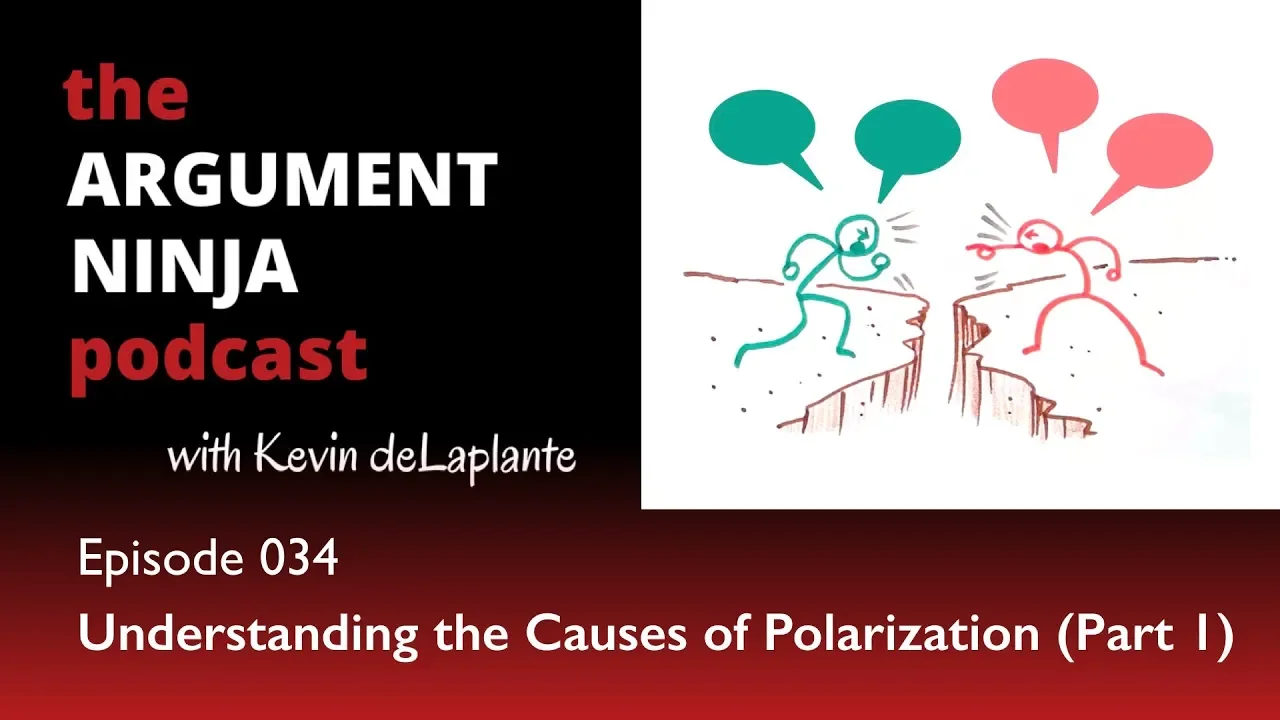
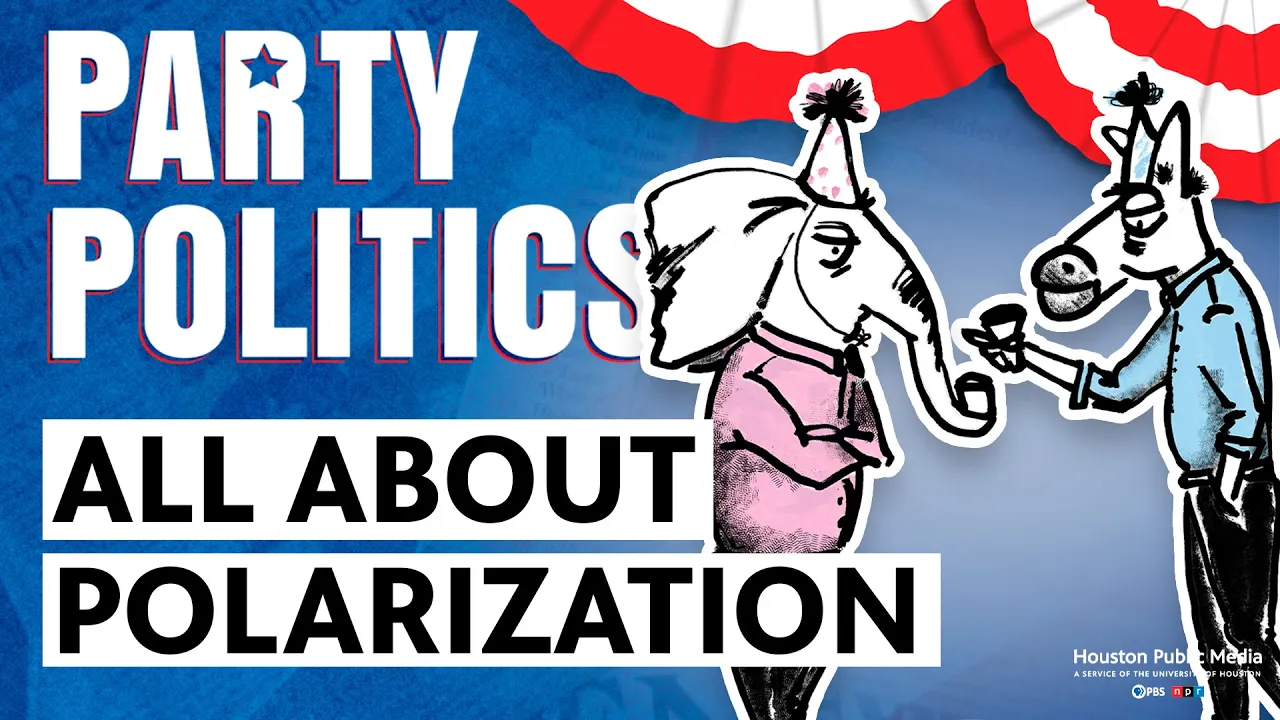
Introductory concepts in sociology and political psychology, particularly ingroup/outgroup dynamics and the definition of affective polarization.
Advanced climate modeling and the study of global 'tipping points' associated with the collapse or severe weakening of the Atlantic Meridional Overturning Circulation (AMOC).
The engineering and bio-compatibility challenges of integrating optoelectronic devices, such as infrared sensors, into wearable biomaterials like contact lenses.
Eco-meteorological studies examining how short-term astronomical anomalies (e.g., solar eclipses) affect regional microclimates and plant-animal biomes.
Evidence-based interventions and structural reforms designed to depolarize public discourse and mitigate affective polarization in democratic societies.
1.2K views62likes2:04:37Original Release: 2025-05-31
You're listening to the Skeptics's Guide to the Universe, your escape to reality.
Hello and welcome to The Skeptics's Guide to the Universe. Today is Thursday, May 29th, 2025. And this is your host, Steven Nolla. Joining me this week are Bob Nolla. Hey, everybody. Evan Bernstein. Good evening, everyone. And we have two guest rogues this week.
George Rob. Hi. and Andrea Jones Roy.
Hey everyone. Andrea guys, our double fun tonight. What a crew. What a crew.
Jay and Cara are both traveling. They're both away this week, so they're unable to record. Oh, I hope they're having a nice time wherever. They're they're recovering from Nauticon. They're traveling. Yeah, big quotes around that.
They're just recovering from the massive time we had at Nautakon. They couldn't handle it. Naut was awesome this year, I have to say. Oh, so like like essentially perfect, right? Essentially perfect. Essentially, I don't even know that we have to say essentially. I mean, it was just a perfect everything we planned came off pretty much without a hitch. Now, I just qualified it were pretty much, but there you go. We're just being just being knee-jerk skeptical. Don't want to say absolutely. No, it was great. Like, nothing failed. Everything came off as we planned, which is always wonderful.
You plan something and it works exactly as you plan. Mhm. Right. Uh, everyone had a great time. And the vibe was awesome. Very fun. The skeletons were skeletoning. Yep. The skeletons were Yeah. were on I was I was so obsessed getting those ready. No, it was a lot of fun. And I I hope everyone who attended had a good time. It seemed everyone I talked to seemed like they were. But um Yeah. Yeah. It was just super fun. If they didn't, they're damn good liars cuz everyone seemed to be having a wonderful time. And it's like it's like if you attended now, you are able to you're ready for the apocalypse. You can design your own skeletons. You can speak Mandarin. You can do a shepherd tone and you can know what birds are on your porch. That's right. Oh, and play a dig and host a poker night. And host a poker night. What else do you want from And play jazz. And oh my gosh. And play jazz. Know about Yeah. Well, learn all those things. All those things. Done.
Finished. Ready to go out into the world and do those seven nine things.
Whatever. Very good. Did I Did I say something? That's just I remember that word and you almost said hello. Okay.
You said you said kind of hello.
How do you say it for real? Nihow. Oh, nihow. Nihow. You just shamed your ancestors there, Steve. All right. I mainly just remembered ma ma ma ma or ma or ma. That's right. Yeah, we we did work on tones. People really came a long way in their tones progress. So, I congratulate the group. Well done. We all Do you remember the phrase that you learned? The very helpful phrase. Oh, god. No. Okay.
Kiango, which means after the implementation of the open door policy, it was one of the first phrases we learned in my Chinese textbook. Not exaggerating, it preceded, "Take me to the hospital and where is the restroom?"
We learned, "Wow, take me to the hospital." Yeah. Tell me about the open door policy and what it did for the Chinese economy. I would love to. Oh boy. Wow. It was fun. Nuts. It was fun.
It was It was fun. That was the first time I was nervous getting on stage that I could remember. Like definitely in the last 20 years. What were you nervous for? The drumming. You think? Oh, the drumming. Solo. Oh, you were nervous.
That's the only thing that I could have totally flamed out on. Right. I mean, nothing else. The thing is most of the bits that we do, you can't really fail cuz whatever happens, we could make fun.
You know what I mean? Right. Right.
Build in safety net. Challenge accepted.
But yes. Yes. But during a drum solo, there's nowhere to hide. Right. If you flame out, it just looks terrible.
There's no way to recover from it.
Right. So, for those that don't know, Steve learned the Ringo drum solo from the song The End, which is the last song on Abbey Road, and he nailed it. He nailed it. It's a beautiful song. It's an awesome solo. And Steve, I was skeptical. I got I got to say, Steve, cuz like I didn't hear like I I gave you the tune like five months ago, and I heard nothing from you. Like nothing. No response. And I saw like I saw you maybe like six weeks ago and you're like, "Yeah, I'm going to get to it." And I thought, "There's no way this guy's going to do it." Like there's no way.
We'll have to cover somehow some. And we rehearsed it and you effing did your homework. And like I said to you that that night, like you were more prepared than most musicians I work with. So you say, "You should feel really good. You should feel really good." George, it's true. It's true. But it was also so fun because so George did an amazing job leading the sing along for two hours of playing a thousand instruments like guitar and you were doing the tambourine with your feet and you were singing and then different uh members of of the organizing committee all went up and did different things and then Steve was at the very end and the drums had been on stage covered up and I don't know if the audience knew that it was a a a drum set or or what but it was super fun because it was like all right this is the end this is the last song and And whoosh, the cloth comes off and like Steve is on stage behind the draw. Like it was awesome. Just like the suspense and the way it was done and the surprise and the reveal. Super good. Ita came off as planned. Yeah, absolutely. And then George is like, "Oh, what the hell?"
Then we went to the bar and he sang for another how many hours? Three hours. 5 hours. Five hours till two till 2 till 2:25. I was like, "All right, one more." I'm amazed you can speak right now. Oh, no. That I had good I had a good phone voice for like 3 days after that. It was great.
Good podcasting phone voice. Yeah, that's that's when you like when you anybody you owe money to, you just call them after that and be like, I'll get you the money when I get it to you. That kind of cuz it's just like that nice baso profundo. Yeah. But it was super fun. I loved it though. People were singing along. They were they were throwing out requests and like I I had them in my in my folder so I could sing stuff and that to me there's nothing better. There's nothing better. Put me in a corner and I'll play I'll play first hours. I'm so happy to do it. It was hurting. You even sang, I believe, in French and also in Ukrainian. Is that right? I did. I did. Yes. Yeah. Cuz we had our Canadian friends there and it was like, "What what French songs do you have, George?" I'm like, "Uh, I got this one." They were highly offended and rightly so when I said, "Well, why don't we just do the French national anthem?"
And they're like, "No, wrong country." Big word syrup all over you. Yeah. I was like, "Nope." You know any songs in Mandarin? I do. I know. I have one sort karaoke song that's a pretty standard one and it's uh deuhai kanguai which means girl over there look over here.
Okay, we'll learn it for next time. It's extremely fun. Oh, Mandarin karaoke.
Come on. That's 20 minutes right there.
Yeah, karaoke.
Yeah, we should do joint SG universities actually. That's a that's a fun idea.
That's an interesting maybe think about that for next year. That's an interesting thought. Yeah, like adjunct faculty combination pair up and we we deliver a a a talk about something and hand it off to each other at certain points that really that has merit. Right. Right. And I don't know if it would be something that we already have in common or if for example it would be Evan you teaching me a board game and then I'm also teaching something at the same time. Do you know what I mean? Or is it something that you and I both know? Yeah. Yeah. Yeah. Yeah.
can take on several different appearances or guys is what I like about that bit is that it's always fun to learn something surprising, right?
Something that you never would have gone out of your way specifically to learn and it is Yeah. But it's kind of like just a celebration of knowledge itself, right? It's like here's just something interesting. You don't you may not even care about it. It doesn't matter. Here you go. And it's it's it's a lot of fun.
Learning for learning sake is really good and valuable. And it's like it's never a bad idea to learn something.
Fits the Nauticon theme perfectly actually. Yeah. You never regret. It's like you never regret doing the dishes.
You never regret exercising. And you never regret learning something even if you don't use it. George, I have one correction for you, which is that a friend of mine who lost their house in the fires in LA. She's fine. Her family's fine. Did post a video about how she regretted doing the dishes right before her house burned down. Oh jeez.
Because she did. She was like, "What a waste of energy that was." So that's one dishes related regret. Okay. But other so if there if there's a once in a century fire. Yes. That's the No, but that's the thing is I think like the one of the promises of the internet was and is you know any information you want at your fingertips. But I just keep reading about the things I'm already interested in. Whereas you know if someone posted a video about birding I would probably scroll by just because it doesn't it's not something that has occurred to me as as something to think about. But watching Steve talk about it because I like watching Steve and we're all there at Nauticon. I really got a great appreciation for why people get so excited about birding and to the point where I've seen some other birds and been like I wonder what kind of bird that is and someone else had like a bird at like I'm noticing new things and yeah it's just there's so much information I could learn that on my own I tend to just stick with what I already am interested in that this like totally different you know how am I going to make a my skeleton cooler like that just is not something I would ever search for on YouTube but I'm so thrilled to know it now you know yeah but So you bring up a good point about the internet um that the internet has caused a unforeseen consequence. Prior to that a lot of the information we got was pushed to us and now we are pulling all of our information right so we are only getting the information we are going to get for ourselves rather than just being exposed to stuff because it's on the air because it's on the TV because it's on the radio whatever. So it's all curated and and so isolating, you know what I mean? That's I think what's destroying the world today that we're we are all in these little bubbles of information of confirmation bias. Like the internet is a confirmation bias machine. It literally the algorithms are tuned to be like, did you watch 10 videos on birding? I'm going to give you 10 billion more. Did you watch 10 videos on why the earth is flat? Here are 10 trillion more. I recently found I was using my boyfriend's laptop and so I ended up on his YouTube and his recommendations were way more interesting than my video recommendations just because they were different and so now I'm watching all this cool stuff that I didn't know about. So take borrow a friend's algorithm for a bit at least. Even Netflix like I'm over at Bob's place or whatever I go on their Netflix like you have all different shows on here than I do. Yeah. Why are Have you ever seen moms? My my mom was addicted to essentially South Korean soap operas. I don't know why, but she's she's been watching them for years. Her Netflix is all South Korean dramas. And oh my god, it's it's kind of funny to look at it and think of what I see on my home Netflix. I do wish there was a way to like and maybe there is and it probably depends on the platform but to like reset your algorithm or be like tell me what the generic is or stop tailoring anom anonymize it. Yeah. Yeah. Or or like turn up a knob that's like randomize the stuff that I'm going to get. So I'm not just getting things that are trained for me. Yeah. They should have categories that just just random stuff unrelated. Yeah. That's very easy to do with YouTube. just log off as yourself and just go into YouTube raw and you'll get whatever if you want a real randomization. There you go. There you go. That's why I always love that show. Uh I think it was called How Things Work.
Oh gosh, I could watch that. Yeah. It's like thim f thimbles and then shovels and then air conditioners and then cars and then the space shuttle and then guitars. It's like this is varieties.
They're like and each one is fascin like how do they get the little thing in the whistle? How do they do that? Like and here they go. They show you how they get the little thing in the whistle and then they'll show you. Yeah. Like rocket fuel. And I always love the randomness of that. If it's a show the show I'm thinking of there was one that was like how to dig a really good hole. The physics of making sure like if you want to go deep you have to have the angles right and it depends on the surface. And it was just like yeah great. Like you know if I ever have to bury a body now I know. Mhm.
You know, that's one of those things everyone does at some point, but nobody really knows how to do it. Yeah. But we all think we do. I'll tell you I'll tell you this. Don't Don't dig a Don't dig a grave unless you really really have to because that is hard. Hard. I was digging a grave for for the my haunted mansion in the graveyard. And first off, the haunted mansion. Yeah. Yeah. 6 feet.
Well, okay. That's my story. I told the judge, you know. I mean, first off, 6 feet deep. Forget it. You're You're not going. I went a just a few feet. There's so much dirt. It takes so much time.
Like I I I appreciate gravediggers so much more now. Well, especially here in Connecticut, you don't know what you're digging into. You go down a foot and bam, there's a ledge. You're done. Oh, yeah. Rocks are always in your, you know, always in the way. All right.
Well, we got some interesting news items that we're going to push to you tonight on Instagram. Yes. Here's your push. Um, I'm going to start with a quickie I which I am calling a muck time. H. Ah, very clever. Very clever. This is the AM O.
You guys remember what that stands for?
AM O.
Yeah. Oh, out of context. Um, hint. Anti multilingual art or out of no idea. Not even close. The Atlantic uh meridian overturning circulation. Yes, I used to know that.
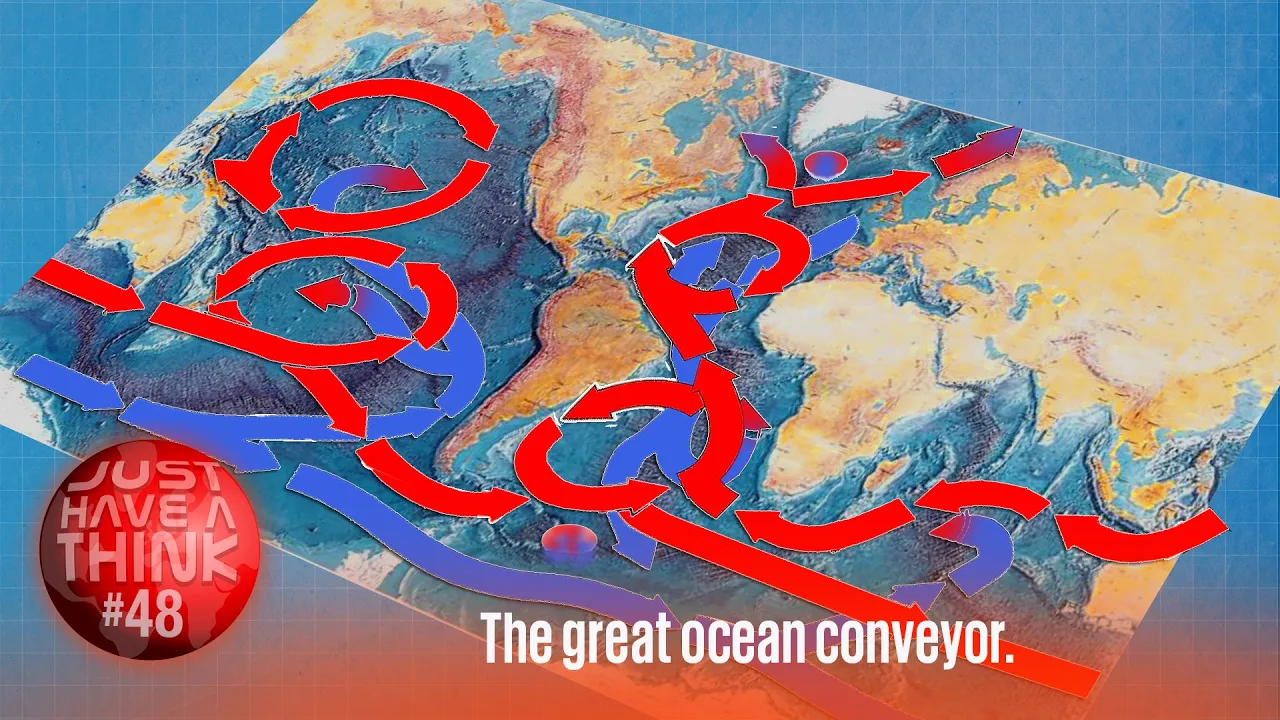
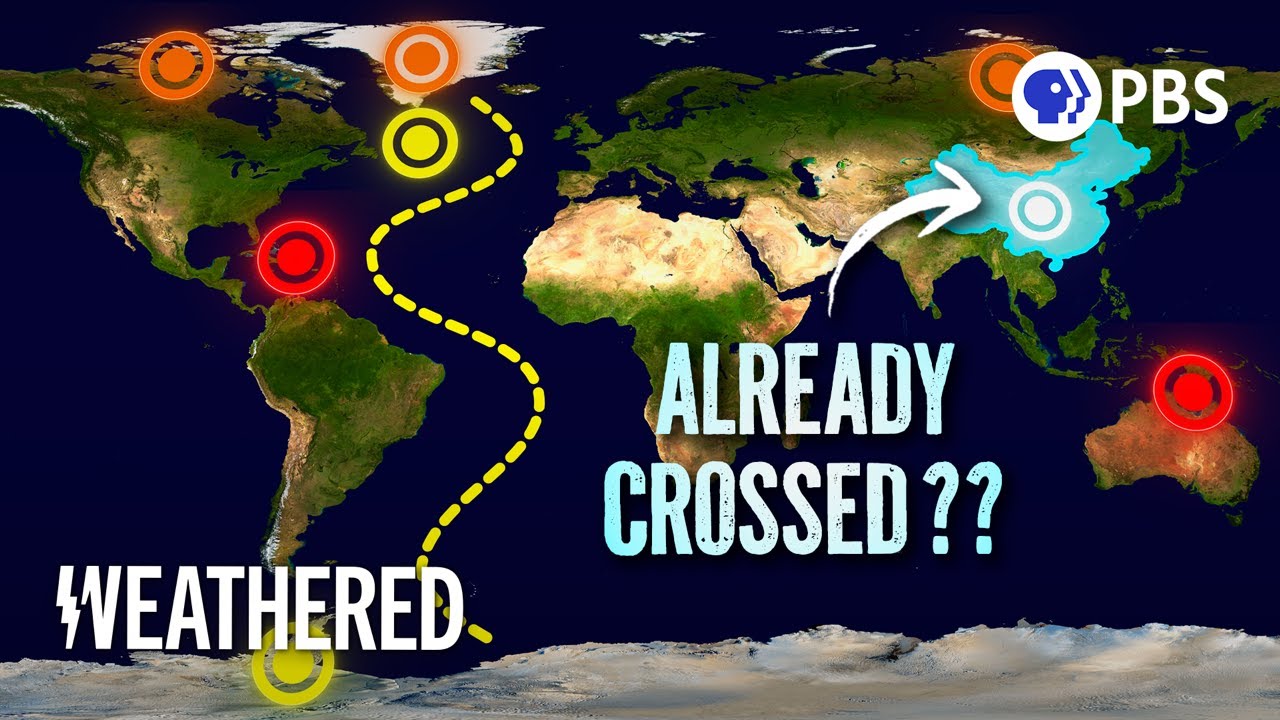
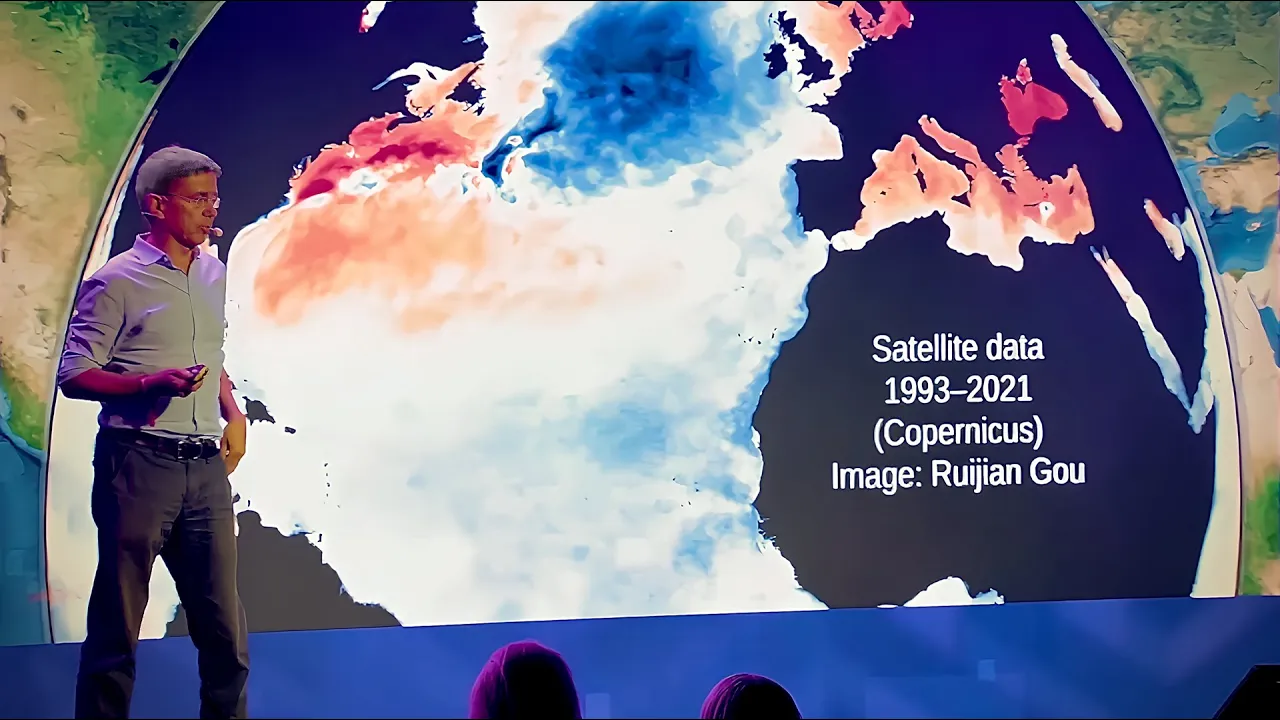
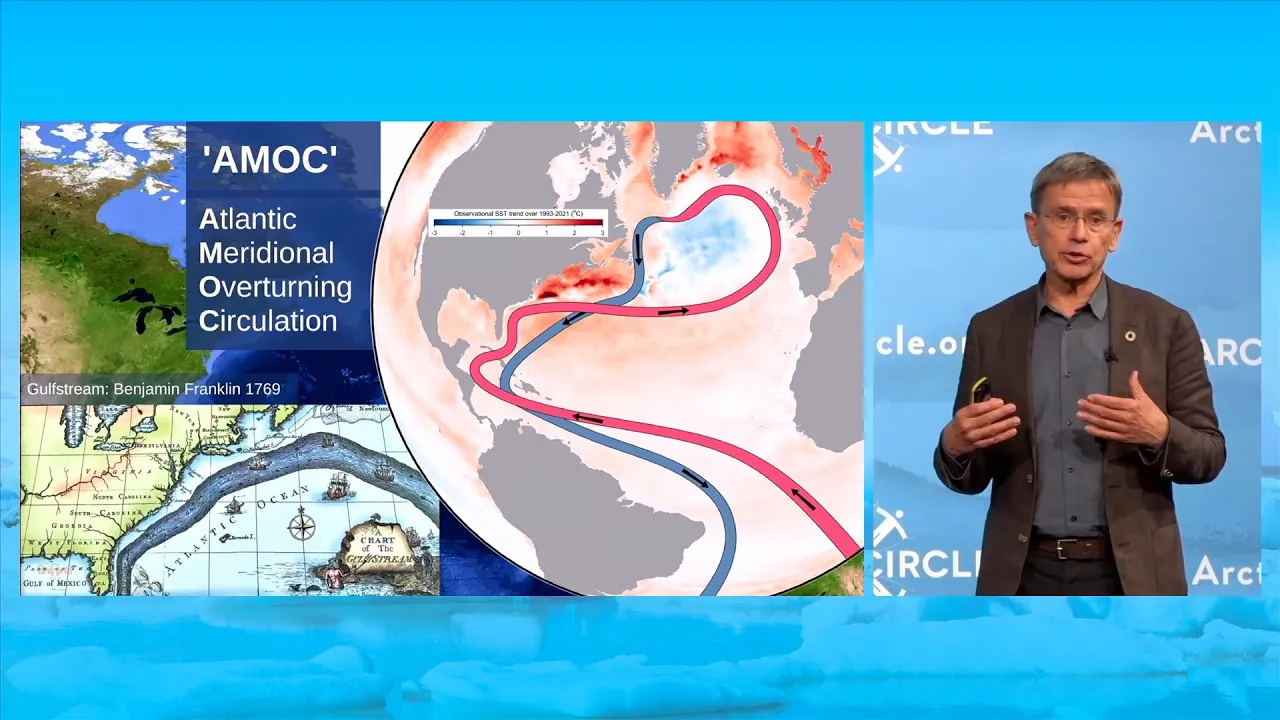
So that is the basically this the water circulation in the Atlantic, right? You have warm salty water traveling northward along the surface. Then it sinks down and becomes cold water that travels deep back south down to Europe.
So it's responsible for a lot of the current climate that we have for example. And the one of the tipping points or fears of global warming is that the AOC will collapse, right? It'll stop or will weaken significantly and that this will disrupt climates around the world, right? It'll it'll exacerbate climate change. There's actually quite a bit of variability in how the models predict, you know, across different climate models, how they predict how much weakening will happen. And so we talked about this several times on the show. There's a quick update. I just wanted to give the quick update. So there was a recent study which basically found that the differences among these various models all have to do with the starting point with with how they model where the AMOC is today. And the variability there is essentially a couple of things. One is how deep does it go, right? You know, how much overturning is there? the term that they use but how deep does the cold water go and the other thing that is that differs is the temperature gradients basically the the meridian temp which is you know the north to south temperature gradients so what they found was they just used a new equation to try to narrow the uncertainty in modeling where the occ is today and if you apply that to the climate models it significantly narrows the var variability. So it turns out that with this new new way of looking at it, the weakening of the AMOC by 2100 is only going to be moderate, right? So the the most severe scenarios are ruled out by this new model basically. Uh which is good. So, it's not going to be as as bad as the worst models showed, but it's still going to be severe enough to cause some temperature changes, and it still might eventually get severe, just not by 2100. So, this is, you know, there's a lot of, this is where the uncertainty comes in in climate modeling, right?
Even though we know global warming is happening, we know broad brushstroke what's going to happen. We don't know exactly when and exactly how severe because a lot of these models are depend are are very dependent on minute changes in our you know current information about things like what's the temperature gradient in the Atlantic Ocean, things like that. Is there a fear that this is going to be seen as like so we're fine so don't worry about it? I was just thinking that. Yeah, I don't think so.
So I mean, you know, certainly the deniers will jump on this and go, "See, they were overalling it all along." It's actually not that. And I remember this happened before, too. This exact thing happened before in like 20 years ago when a study came out that said that reduced the variability in how much warming there's going to be, right? So the most extreme came down, but the most mild came up. It narrowed. Didn't change the med the mean, you know, like whatever, like the middle of And it was reported in the climate denying media if you will they talked only about oh the warming is not going to be as bad as it said it was going to be right like it's not going to be six degrees it's only going to be up to four degrees. Yeah but it's also not going to be only one degree it's also it went from like 1 to six to three to four you know but now they're so I could see somebody doing the same thing. It's like a see it's not going to be as bad as they said it was going to be. It's like yeah but it's still going to be that it's still going to happen. It's still going to be moderate. The variability was decreased, which does, you know, chop off the most extreme end. Doesn't mean we don't have to worry about it, but yeah, I'm sure someone will say that. All right, Bob, you're going to start us off with the news items with these infrared contact lenses. How does that work? Oh, cool, man. Yeah, this obviously caught my attention, especially after my talk at Nauticon about that color OLO. Uh, this is definitely not as cool, so oh well.
Um, but you know, it's still interesting. Good story. By the way, somebody said somebody sent us an email.
I don't know how he missed us. We were talking about fake Olo. Yeah. And we didn't think of FO.
Yeah. Okay. Not bad. Not bad. We missed one. All right. Not a major dismiss, but okay. Not bad. Um.
All right. So for this one, scientists have created special contact lenses that allow people to see infrared light even if your eyes are closed. Uh so yeah, interesting. Uh but what are the details? What are the details? Devil's in the details. Scientists from the University of Science and Technology of China. Uh I won't read the name of the study because it's just a lot of gobbledygook words that uh well no I'll read it because that's Bob. The name of it is near infrared spatiotemporal color vision in humans enabled by upcon conversion contact lenses. So what does that mean? Let's talk about infrared light though because it's just interesting and kind of integral to this whole thing. Uh infrared light was discovered by Sir William Hershel in 1800. I did not really know this but it was the first time we discovered a type of light beyond visible light. First time um that that that had happened. Now he his technique was really interesting.
He used the thermometers to see how hot each of the colors of a rainbow were.
That's when you separate the color from in a prism, right? Shine white light through a prism and it spreads the light into all the colors of the rainbow. So he put a thermometer by each one and the the colors generally got hotter as you went along. So from violet to red, each color had a higher temperature. But after the red part of the rainbow though, there was obviously no color there, right? Cuz there's you don't see anything after red. But the thermometer that he put there, I don't know why he put it there, but it was a good move.
That thermometer was the hottest that that actually was hotter than the hottest color. And so he correctly hypothesized that there must be another type of invisible light there. We can't see it, but the light's got to be there.
Something's got to be there cuz it's making it was making the thermometer reach temperatures higher than any any other any other color temperature uh before that in the spectrum. So interesting. All right. All right. So, infrared light, it's one of the parts of the glorious electromagnetic spectrum that I love so much. From long to short wavelengths, radio, microwave, infrared, visible, UV, X-ray, gamma ray. Now, we we don't see infrared light because it's wavelengths are essentially too long for our retinous photo receptors. So, we don't see it. We can sort of sense infrared though, sort of, I say, because we can feel heat and heat is related to infrared radiation. Uh, but they aren't the same thing. And since this is a common misconception, I'm going to spend two sentences on this. So I'll clarify briefly. Any object with a temperature emits infrared radiation. Infrared radiation can transfer heat, but heat itself is energy transferred due to temperature differences, which can also happen in many other ways through conduction, convection, and not just infrared radiation. All right, look it up if you want more details. Okay, so let's get to the real hero of this research that I'm discussing today, and that's the nano particles. Uh the nanop particles in this study were made from rare earth ions like yitrium. Uh that's how you pronounce it right Steve? Y tt r i m that came up at nauticon. Actually I learned that there. So that that has the ability to absorb the shortest infrared light called near infrared light and emit it as visible light. Right? So it absorbs near infrared and emits it into something we can see in visible light.
They call these particles upcon conversion nanop particles because it's essentially converting infrared to visible. For the mice research that they did before the people research, the human research, these nanoparticles were not only embedded into the special contacts, as you may have already surmised, they were also injected uh directly into their little retinas for some of the tests. So now speaking of the testing, how did they determine that the mice can see infrared light or not?
I mean, you can't just ask it, hey, are you seeing this? What do what do you think some of the techniques hook their brains up to to an image or or they just flash some infrared light somewhere and see if the mice look in that direction kind of. Yeah, you guys are Yeah, you guys are kind of right around it. That was good. Uh, one of the ways was to have they have dark crevices. Now, you know, mice love dark crevices, but one of the dark crevices were illuminated by infrared and the other one was just a dark crevice. So when they had the um the ions, the nano particles, they avoided the dark crevices that had infrared light on them. And when they didn't have the uh augmentation, if you will, it was just a random selection of a dark crevice, whether it was truly dark or also infrared dark. So that was one way. The other way they looked at pupil restriction was another way that you could tell that the eye is actually detecting light and and restricting in itself in in reaction to it. And they also even looked at the neural activity in the brain. So the the visual processing center. So they definitely confirmed that these critters were seeing uh this upconverted infrared light. For human testing, they wisely decided to just use the contacts and not do any of the injections into the people's retinas cuz I think they would probably get no volunteers at all for that. Um that sounds so nasty. The results of the human testing were interesting. But I have to say though before I go into the details, do not expect these contacts to give infrared vision like the alien had in the Predator movies or even Right. Come on.
I'm shooting that down right now. Um or like we've probably all seen those special infrared cameras and the images from them. It's nothing like these people were not seeing anything like that. Just throwing that out there. body heat is associated with longer infrared wavelengths, not the not the shorter near infrared wavelengths that these nano particles were optimized for. So, you're not going to see Arnold Schwarzenegger's infrared light with these contacts. But now that I've lowered your expectations, uh, the human subjects were able to see flashes of infrared light created from LEDs. That's what they saw. Uh, Chan, oh, wait, Andrea, I need your help. T I an A and then X U is the last name. XU. and okay so what she said a neuroscientist good I'm not even going to try a neuroscientist at the University of Science and Technology CH and the senior author of the study said it's totally clear-cut without the contact lenses the subject cannot see anything but when they put them on they can clearly see the flickering of the infrared light also found that when the subject uh closes their eyes they they're even better able to receive the flickering information because the near infrared light penetrates the eyelid more effectively than visible light. So there's less interference from the visible light. So that's how they could see the light even better with their eyes closed. Um I'm just trying to imagine that sensation that seeing a flash of of light that is, you know, essentially infrared light that's been upconverted, but you're seeing a flash of light and then you close your eye and it gets even better and brighter. It's like, wow, what the hell? This will be good for relationships. It's like, no, honey, I'm not sleeping. I'm totally listening to you, but for me, I got the lenses in. I just want to see your infrared feelings.
Imagine you can you can close your eyes and you could like read things potentially. Uh but not with the not with these contact lenses though. The researchers even created the tri chromatic lenses with three different layers to distinguish between different wavelengths of infrared. So one wavelength of infrared was converted to red. Another one was converted, you know, a longer one was converted to green and a longer one than that was created to blue or or vice versa. And that and they were basically able to create these different colors of in of infrared, not really infrared specifically, it's upconverted, right?
Uh so all right. So what's the future for this tech? Say it again. Andra Xua Shuer Shuer said in a statement in the future by working together with material scientists and optical experts we hope to make a contact lens with more precise spatial resolution and higher sensitivity. So some predictions were floating around about what could what this could be used for. Some some predict that doctors could use this tech for something specific like near infrared fluoresence surgery where they where they use um infrared fluoresence to detect and remove cancerous lesions without having to use bulky equipment.
Uh that's the key there. I mean we have equipment to look at it but you don't need it if you're using these contacts.
So that's something I guess. Of course there are some critics who don't think that the lenses will will prove very useful. Glenn Jeff is a neuroscientist at University College London. uh he specializes in eye health. He said, "I cannot think of any application that would not be fundamentally simpler with infrared goggles. Evolution has avoided this for a good reason." I I don't disagree at all with that. Maybe maybe you're surprised. Uh I I think powered like infrared goggle type technology will always I think be far better than what an unpowered contact could could ever do in in you know in on your eye.
uh even the bulkiest most expensive infrared goggles I think will eventually get down to something uh that much more you know and much cheaper and much more manageable like say sunglasses right that's that's always the goal with this type of technology something that you can just slip on and you don't need you know the bulky goggles or like VR goggles is that's the holy grail for VR right is not these bulky goggles that you that have to strap onto your head but just simple sunglasses that could provide that I mean we're heading there who knows when when we'll ever get there but so it's similar similar with this, you know, bulkier, even slightly bulkier technology will always be much better than what these contacts can do. Still though, this contact technology could eventually reach a point where it's it's at least helpful in various situations cuz I, you know, since I when I described earlier this that light when you close your eyes, infrared does go through your eyelids, it it can go through haze and fog. So maybe just slipping on these contacts um at some point like maybe when you're driving, I don't know, it can actually help you, you know, cut through the haze or the or the fog in some scenarios. I don't know.
I think uh there might, you know, it might not come to much because like I said, it's it's it's there will always be very pale technological examples of what these more these heavier goggles will be able to do. But it's still interesting and who knows uh farther in the future what we could do with this.
potentially extend our our natural vision into deeper into the infrared and even into the ultraviolet. Who knows?
But it's still interesting to learn about. Anyway, selfishly, the first thing I thought of was like an infrared teleprompter. So, like you're on stage and you have the lenses in and like the back wall of the of the venue has your lyrics on it, you know, like projected just massive. So, you can just look up and doesn't look like you're reading lyric. Like that's what the first thing I thought of. Like, how cool would that be? No, I I love it. I love it. No, I agree, George. I thought of that not that specific application but the idea of so from what I understand Bob the main limiting factor here is that it's only seeing one specific frequency right of it's not like seeing the infrared spectrum it's just responding well it's near I didn't maybe I didn't stress it enough it was near it's near infrared it's near infrared light so that's very narrow frequency range it's it's narrow I mean the infrared the infrared band is is quite broad some examples that I saw online it seemed wider than uh than even visible. So there's there's near infrared, there's mid infrared, there's far infrared. This is only for near infrared for now. Basically, you can see a laser in the correct frequency. It's Yeah, it it's a LED. They're super bright. That's why, you know, the sensitivity isn't great. You super bright. As George said, you can see it and somebody without the contact lenses can't see it. And so that could have implications like for spies or I was just thinking that and it's not so intense that it does damage because you're not shining the laser in your eyes. You're seeing the laser shown on the wall or something, right? You're just Okay. I mean, the most exciting is the pitchers in baseball and the catcher no longer have to do those hand signs.
You just have lasers to indicate to each other. That's obviously why they developed this technology. Yeah. Until the other teams look also wears the contacts and steals the signs. Well, yeah. Well, you could you could like tag you could tag people like in a crowd like let's say you're security, right?
And you have a you have an infrared pointer and you have the lenses in. You could like, oh, that guy is being trouble. So you you tag him from a distance and every security person sees that guy being illuminated or whatever.
Or for teachers or for like you know for safety things or Yeah. And the tech may have applications that have nothing to do with vision. Oh yeah, that's always a classic. Yeah. Just the idea that you can upcon convert the you know the frequency of the light maybe for video technology or sensing technology or whatever but not you know for wearing over your eyes. Yeah, there's there's plenty of tech technology now that we had no idea that you know how Steve we talked about it many times. We you can't predict how people are going to use the technology, right? The question is now when do we see the first fake contact lens product claiming to use this tech, you know, to protect you against 5G. Yeah, it'll be like a week or two, right? Like, yeah, based on this article now they have that you could see into the infrared. The classic example of course of a technology that because often times you know technologies developed for a purpose but then it doesn't really serve that purpose well it serves another purpose was the microwave which was developed as a cooking tool which nobody uses it for but it turned out to be an awesome heating tool. We just don't cook with it. Well we do heat with it. That's true. That's true. It's a great heater.
All right let's move on. All right George, you're going to tell us about trees communicating to each other during a solar eclipse. What is this about?
Okay, so this is one of these stories that kind of hits everything for me that I want a story to hit. First off, it it it feels kind of wooy. It feels like this could be not true. And I love things that are feel like they're not true or feel like they're wooy and then the more you examine them, they actually might be true and then there's like a paradigm shift for that. As cliched as that phrase is, that's the one thing.
The second thing is uh as a Rush fan, one of my favorite songs is the trees.
Evan will understand of course and that song is basically that trees talking to each other and that's kind of where we're going with the story and fighting with each other and fighting with each other, right? And the third thing is this involves an eclipse and and we had such a lovely time in Texas with our eclipse adventures. So it like this just hits all the this just hits everything I want a story to hit.
So we all you you know about the sort of micelium that is under mushrooms that kind of communicates with uh over vast distances. Well, this is sort of a similar thing that some scientists in Italy were trying to see if trees could sort of communicate with each other uh especially during an eclipse. So they wanted to measure the bioelectrical impulses of trees. it took these spruce trees, spruces, uh during this eclipse. Now, from the information that they've gathered, they're saying, and this is the crazy, they're saying that like not only are the trees responding to the uh to the eclipse, but some of the trees actually anticipated and were synchronized together to anticipate the eclipse, which is crazy. Which is crazy. So there's there's two professors here.
Professor Alessandro Cholerio of the Italian Institute of Technology or the IITi and the Professor Monica Gaglaniano from the Australia's Southern Cross University. So like legit places of study. Charged molecules travel through cells and through the cells of organisms and they transmit electrical signals as they go. And they're calling sort of that transmission an electrome. And again, it feels kind of wooy because we're starting to get into like terms that sort of sound sciency but might not be. So yeah, my skeptical meters were kind of pinned throughout this. They wanted to monitor what these spruces potentially were communicating to each other. So they grabbed three trees. They grabbed two trees that were 70 years old and one tree that was 20 years old. They attached five pairs of electrodes all over on the branches on the trunks on the uh on the roots that were exposed all over the place and they mostly measured bio bio electrical potentials or the difference in voltage across cell membranes. Okay, so they were measuring these things with these with these sensors and they said that the electrical activity of all three became significantly more synchronized during the eclipse. before the eclipse as well as after the eclipse but around 60 minutes of the entire thing. This was at a microscopic level. These sort of synchronizations were occurring. They said uh inside the water and lymph molecules of the tree. Okay. One factor that sort of came out was they said the two older trees, the ones that were 70, had a had an earlier response to the upcoming uh eclipse than the younger tree, which implied there might be like a sort of quote unquote learning that's happening with these trees. It it may mean they learn to anticipate um or develop mechanisms unlike the younger trees or the younger tree that hadn't quite developed it. and and the wooiness kind of just keeps going. So they detected biological waves traveling between the trees. Uh and not just the trees, they also had the they also had monitors on stumps and the stumps had similar responses too. Uh there was at a lower level but they had a similar thing where they were kind of kind of uh lining up together and um after analyzing the data uh their computer models reinforced their their supposed test results i.e. the eclipse not only influenced the biological response but the activity was uh correlated between the trees. This may mean that a cohesive organismike reaction exists at a forest level. All right. So it it's there's other studies that have been done sort of to try to reveal the interconnectivity of ecosystems like I said the micelium of mushrooms and things like that and this might be along that same sort of level.
They think that if this is real that this activity this this kind of activity could help the trees resilience and biodiversity and overall function um in that it can anticipate and warn quote unquote each other of stuff that's happening in the environment. It reinforces this idea that uh we need to preserve old growth forests because those old older trees are smarter quote unquote. Now, it seems wacky and it seems pretty wooy and I'm sure you're gonna tear me apart. So, I'm gonna I'm gonna stretch and have at it. So, no, it's it's an interesting study because it is one of those studies where like I want to be fair to it. I don't want to have a knee-jerk reaction. I want to try to dig in and say, "All right, do I believe this or not?" My ultimate conclusion for several reasons is that I think this is probably [ __ ] and at the very least I would be surprised if this replicates, right? And until it does replicate, you know, pretty reliably, I would not hang my hat on this. So, a few things at one point, you know, they have a whole section of the paper where they try to explain what the phenomenon that's happening like how are these trees communicating with each other and they invoke quantum field theory. That's yeah, which is a huge red flag.
Don't they? QFT right there. Yeah. And at a macroscopic level, I mean, they just I just think they have no idea what they're talking about. Yeah. The other thing is like red flag for me is when you know a paper is trying to describe a phenomenon and they're like mathematical statistical analysis is incredibly complicated and they're they're pulling this little bit of signal out of something by doing this all this fancy footwork. It's like how hard did you have to work to make to find a signal in this noise? You know what I mean? Like could you really predict like this is the thing that was going to show an effect? But also just the premise is silly in my opinion that the trees are communicating to each other and they know several hours ahead of time that an eclipse is coming. On average an eclipse will hit the same spot on the earth every 400 years. Yeah, it's crazy.
There's no way trees can adapt to that.
It makes no sense. at the very least at at the very most rather you could say well maybe they're responding to the gravitational align you know the tidal forces of the of the new moon you know it has nothing to do with the eclipse per se it's just that whenever the moon gets close to the sun or you know whatever that there's they can sense you don't need eclipse measure that but I think trees are too small to really detect significantly detect those kind of tidal forces they would be really small tiny at that scale and who care why would they care the other going on.
How I don't know that they really again it's three trees that that's that thing.
It's like such a small sample. It's such a small sample. How do they really know that they're synchronizing versus just all responding to the same environment? Synchronous.
Yeah. Right. Right. And the older trees, I mean, there's so many things that could be different about them other than their knowledge and experience. like they're probably bigger, they're probably taller, you know? Right. So, there's so many questions that this raises. Their story that they're telling is almost certainly not true. I don't know if they detected something real or not. If they did, it probably has nothing to do with what they're claiming it does, right? And you would need to do lots of controls and gather lots of datas to see if there's anything even real in there. I think they're just they're just diving into the noise and just making up a lot of [ __ ] is my guess. It's such a good rush song though. I agree.
It's such a great song and I was like so yeah. So, but you got to you got to dive in pretty deep though to really start to pick it apart and the reporting on it is pretty much entirely gullible. Steve, how did they invoke quantum field theory? Right. I mean that they're trying to say like they again they they get more complicated than they have to be. This is the thing like I love jargon, right? I love science jargon.
Yeah. And I always have this question when there's science jargon I am a hard having a hard time parsing. Is that because I'm just way too out of my depth or because it's total [ __ ] Right?
And sometimes you can tell and sometimes it's hard to tell or you can't tell. In this case, I think it could be both.
Like they're talking about stuff that could definitely go over my head, but it seems like they're also just slinging a lot of [ __ ] that just they say at one point they say the bio bioelect electrical signals include entropy, diversity, expressiveness, complexity, and fractal measures. Yeah. Which feels a little bit throwing out a lot of wordy. Yeah. A lot of [ __ ] action potentials channel activities and electrical potentials across membranes where it's like okay yeah yeah it is very tricky Steve you make such a good point and I run into this a lot with sort of data related things where the temptation is to conclude well they did so much math and so many fancy statistics that it's much more precise and accurate and powerful when very often I appreciate what you said it's like kind of the rule of thumb is like of course sometimes you have to do things that are complicated but a lot of times if it seems seems unnecessarily complicated. Yeah, there's a really forced result in here somewhere. Right. Right. And part of of this for me is informed by me reading Neurobabel, right? So like there are like neurological chiropractors or whatever, people who like are pretending to be neurologists who aren't and are slinging the neurological jargon and I can tell completely that it's utter nonsense and this is complete nonsense.
But you get the vibe, you know, of how they're using the jargon, how they're using the terminology. They're being way more complicated. There's no elegance at all. They can't of pseudocience. Yeah.
You can't sort of boil it down to some kind of coherent concept and then you build out the sort of complexity from there. It's just all like it's like a big distraction. You know what I mean?
So, I get the same kind of vibe off of this that these are biologists who are dabbling in physics. they don't understand but they think that they do or they think that they throw out enough math and physics quantum terms that it will make it seem sciency but I'm not buying it for a second what is the incentive to produce this sort of paper is it academic clout and it's another publication and so on or is it because you know normally this is like seems like it's politically motivated or they're selling something but I I can't place my finger on why they would write this I don't know who knows I mean speculation There's always the generic motivation of getting another paper published.
Plowing new ground, right? You're exploring new areas. I It sounds like they have a bit of an ideology that this is aligning with to be honest with you, right? Yeah. They were they were pushing this kind of the value of old growth forests and and and that kind of ecological angle, which is a good angle, but you can't you can't reinforce that with quantum BS. With quantum maybe you can't, George. Yeah, that's true. Sorry.
I will say as someone who only eats plants, I mean I don't eat a lot of trees, but anytime I hear about plants communicating with each other, I sort of freak out. So I'm very relieved that we think this is but having said that plants do trees do communicate with each other. That's established. So I think they're building on that and it is don't listen Andrew.
It is through the mcelium network. But what they're they're communicating chemically, right? and they're exchanging nutrients and it's kind of like a fail like if one tree is doing better it'll help its friends out and then it's a recip a reciprocity kind of thing. This is a different completely different phenomenon of synchronization of their electron you know with with quantum field theory. this is completely different phenomenon, but they're sort of building on the basic idea that trees communicate with each other, which is true, right? So, I guess that makes it sound more plausible because of that.
But anyway, it it's it is interesting.
And again, who knows? Maybe they're on to something, but we would need to see some massive replication before I think anyone's going to take this seriously.
What if we look at the trees through Bob's contact infrared thing? Yeah. Oh, as a follow. They're all talking to each other in infrared. We're just not looking. That's right. Um, all right, Andrea, you're up next. You're going to tell us about Now, tell me, is this real or is this not real? Affective polarization.
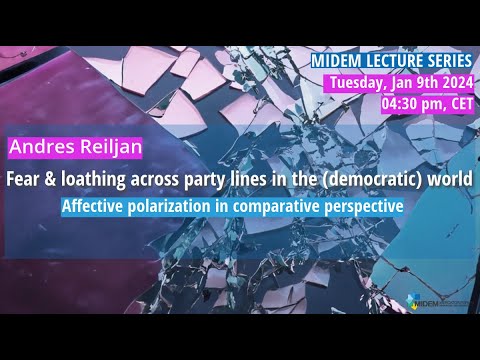
Oh my gosh. Jargony to me. Tell you what, you tell me at the end if you think it's real. So, a effective polarization. Uh, so the the paper that I want to talk about today, so I'm always excited to come on this show and I always have a lot of fun finding the news items for for when I join the show.
And this paper wins the prize for I literally the minute I saw it I said we're doing this like and normally I consider a bunch of different ones and what do you think and what should we do and the minute I saw this I gasped and jumped for joy and so now we're talking about it. So, so the title, so get ready. Uh, the title of the paper is a new measure of a effective polarization.
Drum solo here, right? It's affective polarization is is bigger and better than you ever thought it was before. So, a new measure of affective polarization.
Affective polarization is one of my favorite concepts in political science and new measures of anything are pretty much my favorite thing in data science.
So, first my question for you all. Do any of you know what affective polarization is? Besides, as Steve says, jargony and it is jargony, but it is it is a term that's been around for 10 years. Define each of the words, but in its context, I don't know. I read the paper that mean, right? Well, yeah. So, Steve knows. So, Evan, what do you Let's Let's break it down. Let's do a effective. What does that mean? Well, if affective is uh you know, having an effect on things or a you know, what what what changes? What makes things go?
See, it's a neuroscience term. That's why I would know it anyway. Yeah. Steve, what? That's a clue. That's a clue. It's emotions. It's your affect is the emotions that you're displaying. Yeah.
So, so a way of understanding and measuring emotions in like psychology and in political science, which stole it uh is to say what is someone's affect?
You could have a positive affect or a negative a effect and then you can divide if it's a negative act a effect.
There might be anger or fear or anxiety or whatever. Right. So, affect is an emotion and polarization. Evan. uh yeah how things you know basically gather as a result you know and become uh compartmentalized or you know lean go in one direction versus another right and you can have the north and south pole and you can also have polarization in terms of political polarization which is what political scientists think about a lot which is to say that there's this idea out there that Americans and frankly a lot of countries there are people who have ideologies way on one side of a political spectrum and the rest of the population largely has ideas way on the other side of the political spectrum. So with apologies to listeners not in the United States, this is a US- ccentric piece of research, but I do believe it applies outside of the United States. But so the idea of a effective polarization is something that came into the mainstream in political science, like I said, about 10 years ago. And it was a big step forward in understanding partisan polarization in the United States. And when we talk about polarization in the United States politically, what we tend to think about, myself included, is we tend to jump to ideological polarization. So if you see in the news or you see on social media, Americans are more polarized than ever. Uh political polarization is at an all-time high. Political polarization is bad for democracy. Whatever claim you see, normally when you hear political polarization, we tend to think of it as ideological polarization. So my views are super super on the left and other people's views are super super on the right. Of course politics is not just this particular you know there's many dimensions to politics but we could simplify it to just this left right for now. The challenge is that political scientists for literally decades could not find empirical evidence of ideological polarization with the exception now of two issues. Americans mostly on average there are people on the extremes but if you take any particular issue that comes up in the news so guns, taxes, government spending, you know, whatever it is that we talk about when we talk about politics and what what you know candidates are asked about in debates and blah blah blah. The vast majority of Americans are kind of in the middle. You know, we see this conversation every time that that gun control comes up is that most Americans, yes, there's people on the far left of gun control and people on the far right, but most Americans want some set of common sense gun control. And we can kind of quibble about about how far, but most Americans are fairly moderate. That's the case for all issues except for two. There's two issues in American politics where ideologically we are seeing a real split between the left and the right. Do you guys want to guess what those two issues are? Abortion and guns. Abortion. Yes.
Not guns. Uh, you get one more guess.
Uh, economics. No. I was going to say close, but not really. Climate. No.
Climate. So, climate change. Oh, yes.
Yeah. So, so abortion is is is one where we see the left and right really split.
Climate, we see the left and right really split. Um, but things like guns, things like government spending, things like even immigration and other issues, we LGBTQ rights, you know, most Americans, the left is a little to the left and the right is a little to the right, but we really aren't that split.
So, political scientists were in this conundrum where they said, "Look, we feel polarized. things seem awful, but wherever we look in the data, and that's true if you say like how strongly do you believe that you're a Democrat versus how strongly do you think you're a Republican, that wasn't really widening either. And it wasn't until some researchers 10 years ago said maybe the polarization issue is not our ideological differences, but it's our emotional differences. And from there that really opened up a brand new area of research on what is now called a effective polarization where the big finding is it's not that Americans disagree on the policy issues so much.
It's that we hate each other which is kind of good news from a policy perspective. There's a lot of middle ground where we might like each might we might come to a compromise but it's bad news from an implementation and democratic processes and day-to-day life quality perspective where it's like we just hate the other side. And the big measure for that is something that is one of my favorite measures out there in the world. It's called a feeling thermometer. And the feeling thermometer says, "Hey Democrats, what do you think about other Democrats? Hey Democrats, what do you think about other Republicans?" And then you say, "Hey Republicans, what do you think about your fellow Republicans? Hey Republicans, what do you think about Democrats?" And the feeling thermometer was very, very warm. It's part of a warmth bias is another way it's talked about where Democrats and Republicans both thought of their own party as like a 75 degrees, like a warm day, you know, on a scale from zero to 100. I guess this is pretty Fahrenheit. But the out party feelings was like a 17 and plummeting. Democrats hate Republicans and Republicans hate Democrats. And sounds tribal. Very tribal. And that's what brings us to today's paper which said, hold on a second. And this is why I just love this because I've been thinking about affective polarization forever. I was pretty satisfied with this 0ero to 100 warmth bias scale. And then these two researchers, Nicholas Compost and Christopher Federico from the University of Minnesota recently published a paper in the American Political Science Review literally came out within the last few weeks. So that's breaking news in in peer-reviewed timing that said we can be more specific than just how warm or cold we feel towards the other party. And exactly as you said, Evan, they divided into into three categories. They said, "We think that based on a bunch of research on psychology and in-group outgroup research and in-group favoritism and the sense of belonging and all this stuff about tribalism, all this research, we think there's actually three elements to this affective polarization. It's deeper than just ah we don't like them." The three elements are othering. So othering means I think that there are fundamental differences between people in the other group from my own. Another one is aversion. I dislike and avoid people in the other group. And the third one is moralization, which is a perception that my own partisan identity reflects fundamental values and and this idea that I am basing my views on morals and therefore the other group must not be.
So those those there's a lot of overlap, right? If I'm othering, I think there's a fundamental difference between me and people in the party that I'm not in, then I may avoid them and I may have some moral idea that I'm superior or they're not, but not necessarily. And so the paper details uh a long process over two years and many many surveys where they distilled these three measures into nine total questions. This went from 45 questions of like, you know, if I'm at a party and there's someone from the outer uh the other political group there, I'll leave the party. I would be uncomfortable if I found out that my best friend was a member of another political party. All these possible types of survey questions. They distilled it down to nine core questions. They did a ton of work to validate the measures, meaning if if I think I'm measuring, you know, moralization, am I actually? If so, this is what it would look like. So, you do a ton of work to make sure that you're actually picking up the things that you think you're picking up. And then they were able to actually evaluate this three, you know, kind of three-part model of affective polarization against some of the research out there about, well, why do we care about polarization in the first place? Well, one reason we care about polarization in the first place is that we think that it might permit people to justify anti-democratic behavior or democratic backsliding. So a lot of the talk in the United States right now is about gosh we might be losing our uh you know democratic institutions and we might be seeing a greater tolerance for behaviors that undermine our democratic institutions. A working hypothesis was increased a effective polarization. This hatred of the other side is causing us to be tolerant of or justify doing things that are anti-democratic like attacking the capital or tearing apart, you know, various um um you know, bureaucracies or whatever it is or or changing voting rules or whatever it is, we might be becoming more tolerant of that because of affective polarization. But it turns out that if you divide affective polarization into these three questions uh uh these three these three um kind of subcategories yeah these three constructs you end up with a much more nuanced picture where it's actually just the aversion piece. So if I have aversion to the other side, if I dislike the other side as opposed to particularly think that my side happens to be morally right or simply think of them as different but I don't necessarily dislike them. I just don't want to hang out with them. It's that dislike that makes us most tolerant of these non-democratic attitudes. So when we think of people, you know, turning away and kind of ignoring things that we think, gosh, you're not even trusting our own political institutions, it's largely to do with this aversion, this hatred of the other side as opposed to being grounded in some moralistic view um or or even the othering the the moralistic view. If I think that my side is absolutely right and my beliefs are based in some kind of morality, then we see people actually much more likely to endorse democratic norms even if it's being enforced by parties they disagree with. And the last thing I'll say is that all of this also maps to how strongly we feel associated with a political party as well as our knowledge of national politics. So the people who are this high in aversion like I just dislike and don't trust the other side were more tolerant of anti-democratic policies and they showed stronger ideological identity. So I strongly identify as a this member of a member of this party or that party but they had very low knowledge of actual national politics whereas different groups so if you're high in moralization I have a strong party ID but I'm also very knowledgeable. So there's all these different pieces we've been trying to figure out why Americans on opposite sides of the aisle hate each other and if you start breaking down well hate them how why do they hate each other you actually get a clearer picture where it's this mix of knowledge versus tolerance for democratic backsliding and and you know tolerance of things like violence that's really helping us I think break through and get to some kind of solution so we maybe stop hating each other so much so maybe the aversion people are not a great place to part, but those of us who are more on the moralization or othering side, there's some real interventions where we could start to understand each other and make policy compromises that seemed unreachable till now. So, I think this is just uh amazing. I'm curious if you guys think this is just political scientists coming up with new terms to delight each other or if you think there's actually value there. The the saddest thing is that this is always like when you ask someone what they think of another group, it's in the aggregate. It's this idea. It's like a like when you break it down to individuals Mhm. like individuals will never label other individuals in that same way that you label a group.
Yes.
Yeah. It's well it's like cuz you know everyone has everyone has a gay friend.
Everyone has a you know like Oh yeah.
And so, but you you might not like a particular group of people, but even someone that identifies within that group when you know them personally, you're totally different about them because you know them personally and oh, you know, that's Fred. Fred's different.
That doesn't that doesn't count. George, you're absolutely right. I've actually for a different project been doing some research on what works to reduce anti-semitism. And a lot of the research is about, you know, this intergroup contact theory that says, hey, if you get people from different groups to talk to each other, blah, blah, blah, they like see that they're all humans and we all have shared, you know, fates and we're all, you know, in it together and blah blah blah. And everyone was really excited that that was going to solve all our problems. Well, it turns out that it it's very possible that what's happening is exactly what you described where I go to some some event and I say, "Hey, you know, I I uh I'm not changing my views about Jewish people. I'm changing my views about that guy." Um right and and unfortunately it does seem that some of these interventions that we thought were group level interventions are actually not. Another example that I think is well you tell me if it's depressing is if you ask Americans what do you think what is your approval of Congress it's very low on both sides of the aisle right everyone thinks Congress is terrible if you ask Americans what do you think of your Congress person and you name that person they're pretty favorable relative to the overall aggregate. So, it's like, what's the problem here? It's like, we're all mad at Congress, but most people are kind of okay with their person in office. Not everyone. It's the same thing with with teachers. Like, you know, people hate the American education system. It's like, oh, you don't like your your kids teachers. Oh, no. My kids teachers are great. Yeah, they're they're phenomenal.
But no, but the whole system is just crazy. It's true about everything. It's true about doctors. It's doctors are this my doctor's awesome, but doctors in general, right? lawyers. Lawyers are like any group and drummers are definitely drummers are [ __ ] The worst. But this drummer is decent. Yeah.
Except for you, George. You're you're the exception. I even had that like I I was in a debate on homeopathy to an audience of homeopaths, right? So, it's me and 300 homeopaths. 300. And a lot of people came up to me and said, "Oh, you know, most skeptics are [ __ ] but you're nice." Yeah. It was like, "You're the And I'm like, no, I'm typical. They I they refused to believe that I wasn't the exception. They refused to believe it because they had their stereotype.
They can't believe you their cardboard villain that they had erected that was part of their identity and their worldview. And I'm a piece of data that conflicts with that worldview. And so that's an exception to the rule, right?
It's not the rule. You're an outlier.
You're an outlier. It does not does not challenge the rule. So you're absolutely right. This is where critical that's why the missing element is critical thinking. Yes. Is is is you know having the the awareness the metacognition to know that this is what we do and you have to break out of that of that pattern because you're right when people and I've read this in many contexts as well and people of different political stripes get together and talk to each other they realize oh you're not a three-headed monster you're an actual human being who believes things that most normal human beings believe. But but when you're thinking of like Democrats or Republicans or whatever in the aggregate, you know, just read the comments to any political article online, right? No, it's horrible. They talk about the other side as like this cartoon villain. Like nobody fits that.
Nobody believes what you think the other side believes. Nobody is that way. Well, the other challenge is that if you hypothetically go out and say, "Hey, I've sp which I've done is say, "Hey, I've spoken to people from the other side, and I've read about a lot of the the work happening on the other side."
And most people are actually pretty moderate and for example, supportive of some level of gun control. We just don't hear about those people because they're not the ones, you know, shouting into the algorithms and being amplified. When you say that, the people in my own party get upset and accuse me of being sympathizers of the other side. You know, like it's a lose-lose where you're accommodationist.
Yeah. Apologist. Apologist. Yeah.
Whatever. Exactly. Exactly. And so it's it's just so I mean I think this sort of work is is really interesting and we're not there yet but it's just I find it so frustrating because we could from a policy perspective actually make headway on a lot of things that a lot of people care about but we just can't because we cannot be seen interacting with someone from the other side and we tend to there's other research out there that shows that you know most Democrats well let me do the other way most Republicans think mo think something like 30% of Democrats in the US are LGBT BTQ when the real number is like 6%. It sounds tiny, right? 6 10. Yeah. And and the Wow. Uh and and Democrats tend to think of Republicans as either these ultra wealthy, out of touch or like totally uneducated, you know, these just all these stereotypes and voting hillbillies. The the modal person for both parties is a white Christian. And it's like that we just mostly have a lot in common. We just don't hear from from those other sides. And so I wonder what countries have the have the greatest sort of widest middle in terms of agreement and why that is. I thought you said the whitest middle. I was like if you like that like the extremes on either side are are are minimal, you know, below 5% or whatever it may be.
And like what is it about those particular environments or the country or the culture or or media or the way a media is consumed or the way people maybe there's a homogenization like what is it? Is our diversity causing this on some level. It doesn't seem like that way because it's not because yeah basically two things in my opinion although this is obviously a good question to to research. One is what we were talking about before about the the uh insulation of the internet.
We're we're in little information ecosystems. And the other one is the media. I mean you know especially they want conflict. They want conflict.
Absolutely. You watch the watch the media from the other side, whatever side you are on, and you're shocked. You're shocked about what they're saying about you. It's ridiculous. It's like the, you know, the degree to which they demonize the other side. They they the straw man is just absolutely unbelievable. So, of course, people think this. This is what they're being told over and over and over again that the other side believes all these ridiculously stupid things.
are trying to I mean I've heard people on both sides right say the other side wants to destroy America right they are an active threat to America I've heard that too I mean and that's the tricky thing and that's what's so hard for me is because I'll watch the other side and hear them say things that I just are cartoonish characterizations of things that no one actually but no one wants all your kids to be trans or whatever whatever's completely open borders or people who just freely flow over the borders like whatever pick your issue abortions in a 7-Eleven or whatever it is that's but what I need to do a better job of is remind myself that a lot of what I am probably hearing about the other side is also yes that level of caricature or maybe not quite that level but near that level and it's the hardest thing man it's the it's the it's like you got to whenever you agree with something that's when you got to be most diligent it's the hardest thing like oh that makes me feel good oh is that okay trees are talking to each other right that's why I had to be really diligent about your piece George because I was like I really want this to be wrong. Uh, so I make sure that I'm not just finding the other direction too. Yeah. Yeah. No, I mean the media piece is is such a mess. And part of the problem with studying media is more jargon is the indogenity of it, which is to say that, you know, am I am I more partisan people tend to watch partisan media, but am I seeking out partisan media because I'm partisan or am I partisan because I've watched partisan media? And like disentangling that is extremely difficult whether you're consuming it on TV or online. A lot of the most partisan people in terms of ideological extremes seem to spend the least amount of time online, which is where we think that a lot of this stuff happens. That said, they spend time on Facebook as opposed to other algorithms. So maybe there's something there. Um, but I did see a very interesting study a couple of weeks ago where I don't know how they got people to agree with this, but they got a whole bunch of Americans who routinely watch Fox News to watch CNN for a month.
I don't know how they enforced this. I don't know how they verified that this was happening, but they did seem to report some ideological moderation in those 30 people who were forced. Nice.
That would be that would be an expected result as far as I'm orange. They pried their eyes open and strapped their heads in. Yeah. Put in context that just did a brother. Yeah. Yeah. Don't I mean I don't know if it would happen the other side like would I become not to overly talk about my own views but like what if I were forced to watch news that exclusively news that I disagreed with for a month like what would that do to me? I like to think it wouldn't change me but I don't know. You'll get back to us. Yeah. Yeah. Come back in a month and uh talk about how the earth is flat.
Yeah. Yeah. Well everyone, let's take a quick break from the show to talk about our sponsor this week, Quint. Hey guys, don't you love it when you buy some clothes, say a shirt, and you just start wearing it as much as you can without making people say you're wearing it too much? You just ride that line, right?
That that's what I think Quinn's clothes are like. They have everything you'd want. They've got organic cotton silk polos. They've got European linen beach shorts, comfortable pants. And one of the best things about it is they're they cut out the the middlemen here to make prices very very reasonable. And they also use safe, ethical, and responsible manufacturing PRA practices. What else could you want here? Yeah, I'm getting more and more items from Quinc. They really It's the best combination of, you know, they're very stylish. The quality of the fabrics and everything is great at a tremendous price. Like you just can't get anything else in my experience this quality at this price. So elevate your closet with Quint. Go to quint.comsgu for free shipping on your order and 365day returns. That's qui nce.comsgu to get free shipping and 365day returns. quint.comsgu.
All right, guys. Let's get back to the show. All right, I'm I'm going to ask you guys to indulge me in a little bit of neurological jargon now. You got it.
Yeah, this is a cool item. I'm going to try to explain this to you, you know, as as simply as I can. Do you guys familiar with the basil ganglia? Slow down. Slow down. Yes. It's a back. It's a It's a What the hell? It's a You put it I like it with a little turmeric. It occur. I do as well. Or some That's what you That's what you use to think about pasta. So, what what do you think? What if I just say throw the term out there?
Basil ganglia. It's the base of your It's a brain but not a brain. It's like inside the brain stem or something. It's like very small part. Not quite. It's above the brain stem. It's part of the brain. It's above the brain stem. It's like an old like fear. No. Okay. No movement. It has to move. So, very quickly, there's three systems in the brain that influence voluntary movement, right? You have the what we call the parameal system, the the primary motor cortex. Um this is just you know you have the motor cortex which then sends signals down the um the cortical spinal tract to your muscles right that's the direct motor control of your muscles it's literally two neurons right these are the longest neurons in your body how long one goes from the brain to your spinal cord the other goes from the spinal cord to your muscle that's it a two neuron system so that's sort of the direct muscle control but that's modified by two other systems It's modified by the cerebellar system, right? Which allows you to coordinate different muscles together, right?
That's where your muscle memory is. And if you do any kind of coordinated movement, rhythm over time, right, George, when you're playing the drums, it's all happening in your cerebellum, right? But then there's also the basil ganglia. Well, what does that do? How does that modify movement? And that's a very interesting question.
and we've been modifying our models of what the basil ganglia actually does.
One way to think about it, and this is partly how I explain it to to students, is that part of what it does is modulate the gain of the connection between the preoter and the motor cortex. So basically your desire to move and the amount that you actually move, right?
And does that make sense? You know what gain is? Gain is just like the connection between input and output, right? Um that's why like on on old stereos some engineer decided to call the volume uh knob the gain, right?
Because that's literally what it is.
Yes. Yeah. It's the you know the in the input versus the speaker output. Kind of annoying. That's right. So So like you don't you don't overshoot the pen when you're trying to grab it. Exactly.
Although overshooting is more to do with the cerebellum. It get it gets complicated but okay it had think so you so Parkinson's Parkinson's disease right that's a disease of the basil ganglia and they have their gain is turned way down so at the end stage they move very little and they even get frozen they can't move at all but there's something called Huntington's ka for example which is a the opposite disease right it's a lesion in a different part of the basil ganglia where the gain is turned way way up and they're constantly moving and wriggling and right and uh they can't stay still.
So that's that's a simple way to think about it. It's way more complicated than that. But the question is um how does the basil ganglia do that? Now the traditional model is that it primarily works through inhibition which is how most of the nervous system is controls itself right the nervous system especially you know the brain is constantly inhibiting the pathways and conduction that it doesn't want and there's tonic inhibition meaning baseline you know always on inhibition basically throughout the nervous system that's just how it functions and so The basil ganglia works primarily through inhibiting unwanted movements, right? And that inhibition could be turned up or turned down. So now we get to the new study which is looking at because we have all kinds of new fancy tools that we could use to to study how the brain is working. And this was looking at the circuitry in the basil ganglia, a specific part of the basil ganglia, the substantia [ __ ] pars reticulata um which is not the part of the that's affected in Parkinson disease by the way that's the substantial [ __ ] pars compacta which is right next door. But in any case so they they were looking at this and to to see like how is it functioning during voluntary movement and what they found was it isn't just inhibition. It's not just inhibiting unwanted movements, it's also potentiating wanted movements. So, it's actually acting like a very complicated switchboard that is selecting specifically which motor neurons are going to be firing. Like which ones to enhance and which ones to suppress and the it had a very dynamic firing rate. So it actually has a much greater level of control than we previously thought over controlling voluntary movement. When you make a precise movement, right, you have to activate a bunch of motor units in a precise timing and coordination and sequence and a lot of that is happening in the basil ganglia, right? So, it's essentially modifying your like when you think about I want to like reach over here and grab a can of Coke and drink it. You know, you don't have to really think too hard about specifically what you're doing, right? You're conscious control is at a very high level and Right. You not thinking I'm going to activate this muscle a little, you know?
I mean, you're not you're not voluntarily controlling Yeah. every little muscle fiber and muscle group in all of the different muscles that are required to do that action. You're just thinking I'm just want to reach over there. So where is that that level of control must be subconscious, right? And so it's partly in the cerebellum and it's partly in the basil ganglia. And it turns out that there's way more control happening in the basil ganglia than we previously thought. It's not just a general inhibition, not just a gain up and down. It's actually coordinating a lot of the movement itself. You mean decade? It's way way way more dynamic than we thought it was.
So So like an athlete that's learned a skill over time or like if you learn how to type or something like that, does that mean that the that the the gain from the basil ganglia increases over time and like kind of takes over the involuntary because like when you're really good at something, you don't think about it, right? You know, whether it's an instrument or pitching muscle memory, whatever. Yeah. Classically that kind of you know making a learned movement subconscious is thought to be in the cerebellum. Okay. Right. So like when you shoot a basketball a 100 times a thousand times to the point where you don't think about it that's because those muscle coordination all happening at the subconscious and specifically cerebellar level. But now more of it may be happening in the basil ganglia than we thought. Maybe a combination of the two things. And but we will the next step would be would be a very interesting question George is how much does the basil ganglia learn right like is it just is it just re is it just necessary to execute these finessed movements or is it actually learning how to do them as a learned movement we know as it practices taking over responsibility sort of yeah so is we don't know that yet so we know the cerebellum does that but maybe since the the basil ganglia is far more complicated than we thought maybe it's doing some of that too. Who knows?
Parallel redundancy. All these things come into it's not redundant. It's because if you miss any piece of it, you know it, right? There's a deficit associated with a with a fault in any of these subsystems.
Steve, is this potentially good news for any types of treatment? Well, the more we understand things at this level, then yes. Especially since at you know we are at the dawn really of the age of not Aquarius but of of neurom modulation right we're using electrical and magnetic stimulation in order to affect how the brain functions I got high hopes for that and that has two basic limiting factors right one is just the hardware right just the technology of interfacing with the brain and the other is our knowledge at a very fine level of exactly how the brain is wired and so every bit that we learn about that. So you could imagine like building a computer chip that does the same thing you know that the basil ganglia is doing and or whatever. I'm just saying theoretically we can't obviously don't have the technology to do that now. So and we all like one of one of the early man uh uh technologies of neurom modulation is deep brain stimulation for Parkinson's disease. We actually put wires in the basil ganglia to for example suppress the tremor of a of Parkinson's disease. So the basil ganglia is one of the first parts of the brain that was targeted by you sticking a wire in it and using electrical stimulation to affect its function. Um so yeah so this potentially has a lot of implications for neurological treatment uh especially because of neurom modulation but again it's just cool to understand you know how complicated the brain is and how it functions. Aren't you going to miss being able to talk about this when you retire because they take your brain card away and you can't talk about this right? Is that how that works?
Well, it I know you're joking, but the serious answer is this is the one thing I'm think I'm going to miss the most is teaching students, residents, fellows, sort of highlevel neuroscience.
Um, but you'll probably be hearing more of it on the show. You'll just have to teach. We just have to become your new student. Yeah. It's the Steven Nolla unlicensed neurological course. Your doctor is in. No refunds. Yeah. Yeah.
Five cents. Yeah.
Five.
All right, Evan, tell us about this. So, you said this is a new dwarf planet, but the pedantic headline said the pedant in me says you mean a new dwarf planet candidate. Yeah. And I think they talk about that in the actually the body of the article, but the headline kind of missed the term candidate. Uh, which is kind of important here. Yes. An absolute new candidate, new dwarf planet candidate in our solar system. Do you guys know when the first dwarf planet was discovered?
Yeah, like a 1900s, right? I mean, Erys I mean a series series was discovered a long time ago. It 1801. Yeah. Way way back when. And then what? Pluto was the next one 130 years later. That's visually like that through a through a telescope.
Yeah. Cuz there was no radiometry or anything or radio. Yeah. Wow. Nope. That that's that was it. And then it was in 2005 they they have the third one um Iris um and then what in 2006 happened?
They they category it did change everything. The category called dwarf planet came into existence by the international astronomical union. Uh and uh many people were you know upset with that. It's still debated to this day. I think I was upset until until I learned that it was entirely an issue of measurement. My favorite thing in the world. And I said, "Oh, well, I get it.
All right. I'm I'm sold." Yeah. There are there are what, four criteria for dwarf planets. You guys know. And you must know most of these, if not all. I know all of them. Sleepy, uh, sneezy. You have to So, the criteria to be a dwarf planet, you have to orbit the sun and not not another body. So, you can't be a moon. Correct. You have to be large enough so that your gravity pulls you into a sphere. Yes. Or a near sphere. Yes. Uh but you do not clear out your own orbit. If you did, you'd be a planet. Oh, correct. And there's a fourth one. Well, you you combine two into one. It was orbiting the sun and and not being and not being a moon.
Okay. What do you mean clear your own orbit? What So if there's a bunch of other stuff in your orbit, then that you haven't clear gravitationally cleared out your zone.
then you're that makes you a dwarf planet. That was the thing that made Oh, it's flying with you. I got you. That's what knocked Pluto out of the category.
That knocked Pluto out of the category.
The reason why they did that was because they were concerned for whatever reason that they were going to be discovering dozens if not score of planets in the Kyper belt, right? And they said, "Well, we can't have dozens or hundreds of planets. That doesn't feel right.
Annoying. then let's make them dwarf planets and we'll just throw in this criteria to to make it so that they don't meet the criteria for a planet a full planet right it's a man-made definition anyway it's all arbitrary anyway yeah it sort of is but you know with this particular new discovery not well you know was in 2017 is when the uh images were captured but they were reanalyzed um and now was come forward as part of a paper that appear appeared on the preprint server arxiv. I don't even know if if that's pronouncable or not.
Archive. Archive. Okay. Well, yeah, I guess I suppose that that's what it would be. And yeah, they have uh so it's designated 2010 2011. So 2017 for the year that the images were captured 2011. Don't know why. It will, you know, if it ever is officially declared to be a dwarf planet, it will receive a uh a name, a proper name uh like the like the others.
This one was discovered uh far beyond Neptune. I mean far beyond. It orbits the sun every 25,000 years.
That is out there. Yep. Yep. Uh and this was all confirmed by again uh the IAU.
Oh, they have a specific department for this. The minor planet center, which I I did not know about before. And this was published on May 21st. So, just recently, a team of scientists spotted it while pouring through our archival data from the Blanco telescope in Chile and the Canada, France, Hawaii telescope based in Hawaii. The researchers track the object's motion across 19 sets of images spanning 7 years. And uh you know, you think about it, something that is going around the sun every 25,000 years that and and you've got what 7 years worth of of photo of photography for this thing. It's not really moving all that much. That is very very minor.
So to be able to kind of sus that out in itself is kind of incredible. All right.
So yeah, again, it's a candidate. They still have to do more to determine exactly if it fits all the criteria. Um but here's some interesting data. they do have on the planet. Uh the diameter of the planet they approximate that it's 700 km and that would be roughly the size of series a little bit smaller or humea a little bit smaller. Uh yeah it's uh that is an elongated orbit with 25,000 at at the and it's elliptical like all planets are when it's closest to the sun. It's 44.9 astronomical units away. Wow. But at its farthest distance 1 630. Wow.
Jeez. Astronomical units. So if you can envision that inside your head, that's uh that that is quite that is quite a shape it makes. Um yeah, so it has not been direct. It says here the its exact shape has hasn't been directly observed. Okay. So they still need more on that, but its size suggests it's likely in hydrostatic equilibrium, nearly spherical, which would give it one of the criteria it needs to become a dwarf planet. Interestingly, since you bring up that criterion, Jamea is ovalish, right? It's actually like a flattened egg. So it's not a sphere. No, it's not a sphere, but it still counts gravity cuz it would be a sphere if it weren't spinning so fast. Oh, there you go. It's actually its theoretical shape, not you know eliminating the factor of its of a rapid rotation if that's a factor. Yeah. What we talked about was it another planet an exoplanet or something that had a kind of a scientific it was it was it was yeah we talked about it I think in one of the private shows which hasn't aired yet. So yeah, we did talk about it. So they're going to go back and they're going to look at some other potential candidates as well. And they said based on I guess this technique that they're using or the the research data, Steve, there still could be maybe hundreds or thousands of these that are out there. So I'm not So what what you know, and I get the point was to to make this classification so that we wouldn't have to have hundreds or thousands of these, but what if it turns out there really are hundreds or thousands of I guess they're okay with hundreds of dwarf planets as long as they're not full planets planets. The kids can only memorize, you know, up to nine full planets. Remember that? That was that was so deeply ingrained in uh in our in our early like fourth grade would be entirely dedicated to memorizing planets if we included all the dwarf planets, right? And when they do achieve their names, you know, they're named after mythological, you know, entities or, you know, beings all having to do with uh fertility for the most part. And so we will have to see exactly where this one will uh will will get its name and which name they'll use. Pluto and all of its moons are named after the underworld.
Yeah, it sort of I know because it received its name prior to being uh a dwarf planet. So at least we let it keep its name. I mean there's some dignity in that. It did. It was grandfathered in. I suppose at that point. Yeah. But this, you know, the 2017 blah blah blah may not get an actual name. may not be confirmed for decades. Yeah, it could be a while. It takes a long time. They still have there's we have a bunch of other candidates we haven't confirmed fully yet because it just takes time to really, you know, confirm their orbit, their shape, their, you know, whether they're they've gravitationally cleared out their zone or not. So, it takes time. Y do we know what the candidate confirmation or candidate clearance rate is? Like what percentage of candidates end up being dwarf planets? Well, it was they had five at the beginning and there's only been those five. So, they haven't cleared a single one yet after the time.
It's taking way longer than I thought it was. I see. All right. I'm shocked that ARXIV is pronounced archive and not Yeah. And I not AR14. Pick up that.
Exactly. I thought it was AR14. I was like, okay, that's weird. Yeah. AR4. I think it's just it's a website where you put in working papers basically. And I've just heard it called archive. I guess that makes sense. But the X is capitalized. The letter A is not. So you have a capitalization in this dead center of the word. So today kind of like a brand. Yeah, it's just I suppose.
Yeah, scientist being wacky. All right, guys. We have no who's that noisy this week cuz Jay's away. Bye Jay. So George proposed a discussion topic which I like. I want to talk about this. How has science fiction affected or distorted our expectations of technology and the future? George, since you brought this up, do you have a a specific example in mind? I've got a bunch of just the the ones that bother me the most and that I wonder what kind of a disservice is being done. Now, obviously, look, we all love Star Trek. We all love Star Wars.
We all love science fiction. That's not a question. I think the question that I'm proposing or the discussion I want to talk about is how much expectation is is gained or permitted or or or or brought about because of these amazing stories and the ubiquity of certain kinds of science fiction tropes. And the ones I wanted to talk about or at least wanted to propose are the ones that like break rules of physics. So like a transporter. We will never have a transporter. Like it doesn't matter how great your knowledge of quantum will become. Like you will never have a transporter. We will never have a tractor beam like that. Like you we will never have shields like you know shields of some kind around uh a spaceship. Like we will never have that. We will never have subspace communication like light travel, right? Faster that like I'm not even getting into like warp drive and stuff like even that you know the the the relativistic effect of of just space travel of like you know high velocity travel affecting your age versus the age of loved ones that are on the planets and all that kind of stuff. Uh artificial gravity that's like not induced by some kind of circular motion.
um replicators. Like we're never going to have a replicator. I'm sorry. Like we're you're not going to be able to make a steak appear on a plate. Like for as much as that would be amazing. And I wonder just how much Anyway, not quickly, right? Yeah. You'd have to have the 3D. Yeah. But I mean be very rare.
And it's just these they're so ubiquitous these these tropes and I wonder how much damage it does in terms of our expectations.
Lightsaber. We'll never have a lightsaber. There's not enough energy to have a handheld lightsaber, let alone like a laser. Just to have a handheld laser, which you think would be like, "Oh, yeah, we'll totally have a phaser or a laser." It's like, uh, it's not going to happen. It's not going to happen. So, Oh, I agree. We actually talk about this in our book, The Skeptic Guide to the Future. We go over all of those uh and talk about their plausibility and and you you hit a lot of the big ones. And I think just under the category of space travel, our image of space travel is completely distorted by science fiction. Utterly distorted in the near medium or even long-term future. It's not going to be anything like depicted in almost any science fiction except for the hardest of science fiction. And even then, they always they throw in a gimme or two just to make it work narratively, right? But yeah, so space travel, it's all about our tolerance for acceleration, right?
There isn't any way to get around that.
Artificial gravity, it hasn't been 100% ruled out by the physics that we currently have established, but we're getting damn close. Yeah, it's the pro the the door is only cracked open the smallest amount. So, it's probably not possible within the laws of physics to have that kind of artificial gravity.
And as you say shields like how do you can't just have like just a an energy field you know like that right you know.
Yeah that would deflect weaponry and things like that right it's just not like directed energy and kinetic energy uh you know it's like it's it would be extremely limited if if anything and not have magnetic fields but protects you from something. Yeah. It's not going to be like block but not as they're depicted in science fiction where it's like barrier made out of energy. And other things too like the design of spaceships are always wrong. Oh gosh, that is terrible. You know, you're always standing as if you're on a sailing ship, right? You know, you would be standing up in the direction of acceleration, you know, and you wouldn't be you wouldn't be at the top of the ship. you would be at the middle of the ship, of course, because the thing that I haven't seen I've never seen even the hardest of science fiction programs address is the radiation in space. Yeah, space is a very unforgiving environment for biological organisms. Does the expanse not deal with that? They really don't.
That's like the one I've never even seen them. And they're constantly being exposed to space constantly. So, they just ignore the problem. They just ignore it. they just completely ignore the problem. Occasionally I'll read in a book or something where they talk about shielding for the radiation or whatever, but especially when you're in a movie, they always just make things look cool, but they never like really design them like you would have to. If you're going to be in space for a while, you got to be in the center of the ship. You need massive shielding. Actually, you know the one the one science fiction TV show that talked about shielding Avenue 5 was the was Avenue 5, which was a comedy.
Really? I don't even know what and it was actually really good. And they did it because the ship had a poop shield.
They all of the excrement of all the passengers was stored in the outer layer of the ship as a radiation shield. So, it was they got a joke out of it. That's hilarious. But but it was right. It was it was correct. You actually that show as silly as it was made a lot of interesting you know correct choices in ter then they also made some egregious horrible gaffs as well scientifically.
But but the but the question here is like does the inspiration of science fiction outweigh the practical disappointment or misinformation? Like I I don't expectations too high, right?
You know, what's the what's the right equation or what's the right percentage to be like where should where should that live? I wouldn't want to limit authors narratively just because of the potential bad influence it could have.
That'd be too far too restrictive. Sure.
Um right. I mean like would you restrict other other types of narratives um because of the you know the you know the bad effect it could have on on future development of whatever? I don't I don't know. It just seems like Oh, yeah. I'm not proposing that one up and be like, "Yeah, I just wonder what damage has been done like has has the people that have gone into most probably to a person, if you ask those that work at NASA or those that build rockets or those that become physicists or whatever, many, many, many of them will cite science fiction as being inspirational to them." Sure. Yeah.
Yeah, I think you have to tie it though because any proper nerd is going to like revel in discussing the tropes and why they're not scientifically accurate, etc. Take that away from us. But there are areas where and I think we've mentioned this on the show that not dealing with space travel where the science tropes in media are an actual prag pragmatic problem. The big one is all of the CSI shows. Yeah. Because now juries expect there's going to be whisbang science attached to every case and if it if it's not there, well they don't really have a good case. They didn't show me DNA or the blah blah bl you know the fingerprint database that's instantaneous. Yeah, exactly. Or we can't have DNA back in hours. I mean, I don't get it. So George, your question reminds me of uh an area of research that this is going to be very underwhelming because I don't remember what the findings were, but there are people who study like the historical impact of or the the impact of science fiction from the past on like okay science fiction from 1900 depicting 1950. Like could we possibly trace some kind of influence to what actually happened in 1950 as a result of the way it was imagined 50 or 100 years prior to that? And I don't know what any of the findings are, but I remember being very excited to learn that there were people studying kind of the history of science fiction. I mean, it can be cir I mean, the flip phone was totally a Star Trek inspired thing. So, you have you have the fiction then inspiring the actual fact which then curves in upon itself like an oberus or whatever. It is a kind of like imagining of what's possible and kind of scoping out like and and like Evan said, it's like we kind of get anchored to some like flying cars and for me like the Jetson's the kid that could walk on the ceiling like you just have these like ideas that like that's what the future looks like. A biodome I think is up there. Yeah. where meanwhile like we're being we're being you know p pummeled now with AI and all the ramifications of what potentially could be happening with AI and there's relatively speaking very little science fiction tropes about that you know the the the availability of AI AI then replacing people and like the you know art and music being replaced by AI I don't know I don't know I'm sure there are stories exist I'm sure that exist but there's no way there's more stories that exist than have lasers or phasers or shielding or you know or lightsabers or whatever. So it's this weird like what are what are we writing about and learning and worried about and being influenced by and talking about h I think AI is going to destroy us in a completely different day than way than was imagined science fiction. It's not going to become sentient. It doesn't have to become sentient in order to destroy us. That's so I think this problem goes way beyond science fiction and technology. It I think we have the same problem with all fiction. For example, I think, and this is my main beef with all medical dramas, is that they uh instill in people a pretty bad misunderstanding of how medicine works and clinical decision-m works. And people come in with expectations about like, well, I need a diagnosis, like I need a doctor house to make this bizarre diagnosis, and that will lead directly to me being cured.
and until I get that diagnosis, nothing good can happen. It's not just a false hope. It's also shutting down other pathways of legitimate treatment and evaluation, etc. They're thinking in a very narrow narrative way that they see on TV. It's the same thing with lawyers and with courtrooms. Courtroom dramas are mostly [ __ ] right? They're they're not that's not how courtrooms actually functioning. There's no surprise witnesses or whatever in courtrooms. It can't happen. I'm going to be my own jud or my own lawyer now.
And you're like, it somehow wins. Perry Perry Mason moment. Can't handle Can't handle the truth. No, Steve. When I I So I watched Dr. House and when I was actually in real life diagnosed with lupus, I thought it's never lupus.
Because that's what Dr. House always said. He's like, "Never lupus, it's always something else." Like I denied my own diagnosis because of that show. When in reality, it's always lupus. I mean, it's like it's always lus. Yeah. It's like there are certain like there there's like running jokes like in neurology I could tell you the ones like if there's somebody's presenting a weird case at grand rounds like a you'll never guess what this is. It's like one of three things you always like the same few things that are like the mystery diagnosis and lupus is one of those in medicine because it can do so many things you know right? All right we're going to do one quick email. This comes from Joshua from Tyler, Texas and he writes, "Hi all. Here's there's so much stupid or malevolence going on right now it's hard to keep up. Here's the latest stupid. And then he links to an article.
I'm sure you guys have heard about this about health and human services cancelling a contract with Madna to develop a bird flu vaccine. Yeah, I heard I saw an article. Can you get more shortsighted? Didn't read it. What's the facts? So, here's the quickie on what's going on. So Madna, as you may or may not know, was one of the companies that developed the COVID vaccine, one of the mRNA vaccines. A lot of my shots were Madna. Yeah, same. Yeah, me too. Yeah, I got a lot of the Madna shots. Um, and Madna, you know, were was able to develop the vaccine as quickly as it did partly because they got government there was government funding available, Operation Warp Speed, etc. So other companies also developed like Fizer you know mRNA vaccines and we talked about the fact mRNA technology has been in development for like 30 years and Madna actually has been existence for 10 years developing the technology before they came out with the vaccine. So now they're working on an mRNA based vaccine against the bird flu which is a strong candidate for the next pandemic. That's the next one. Not necessarily going but it's a strong candidate. like there's if there's one to worry about that's the top of the list righty's on that stock up on toilet paper get your sourdough starter ready um so it's it's actually a good thing that we're developing a vaccine now and the the government had given Madna a grant for like $700 million something like that uh to develop the vaccine and the Trump administration HHS under you know jackass gas what's his named RFK Jr. just decided they were going to up and cancel the the whole thing. They just cancelled the contract and they did it for the dumbest reasons possible.
They basically it's all because of RFK Junior's conspiracy fear-mongering about mRNA technology and vaccines. They're saying this isn't this is too risky.
It's something that's too risky. There are other better ways to to to go. We're going to use this money to develop safer options. It's complete and utter nonsense. And what they're touting is basically 30-year-old technology instead of using mRNA technology. The big advantage of course with the mRNA technology is that it could be developed much faster way. And hasn't I'm sure you guys have covered this a lot on the podcast, but hasn't mRNA like we haven't used it for vaccines until recently, but it hasn't it been around forever and ever? It's not like it's like that new.
Yeah. Like 30 years. Yeah. Um Yeah.
Yeah. Totally. And again like Madna spent 10 years developing it as a therapeutic before they came out with the vaccine which was their first product. It's not like they just thought of it yesterday. We'd rather spend that 700 million on unpasteurized milk crazy on vitamin A tablet whatever right it mouths. It is malfeasants and it's you know it's because we have a conspiracy theorist pseudocientist running healthcare at the federal level.
They also or since we're talking about this RFK Jr. bypassed the CDC and changed the recommendations for who gets the COVID vaccine, saying we're no longer going to recommend it for women for pregnant women and healthy kids.
Yeah. Consulted no one. Consulted no one. Bypassed the CDC. He just decided himself because he's a jackass that that's going to be that that's what we're going to do. There you go. So, yep. This is this is exactly what we were expecting to happen and it's happening. It's as bad as anyone feared, probably even worse. Yeah. And you know, we're just going to have to every now and then we're going to have to report on the latest crazy thing that RFK Jun did. Wow. What do we do about this, right? Like obviously raise awareness and help people. Yeah. Not vote for [ __ ] How about that? Let's try that.
Now, legit legit guy. That sounds like some affective politic absolutely objective. Not vote for people who are basing their policy on misinformation and conspiracy theories. That too, that too. That's just a I just give the shorthand of that sentence and just legitimizing that way of thinking like the long-term damage of just saying like, well, if we're going to have this kind of I don't know, skepticism, not in this the skeptics guide kind of skepticism, but the cynical pseudocience skepticism at the national denialism. There we go. At the national level, it's like think of how many young people are going to be trained to think that this is the way to think about the world, you know? But like they want they want to throw Fouchy in day. I know I'm using the correct but like but but there are there are people that wanted to throw Fouchy into prison because of his supposed connection with the COVID vaccine and its its evils supposed evils. Here's a guy who's like legitimately passing not not talking to people in the CDC and passing general kinds of stuff that's going to kill people. It's going to kill people. This could potentially kill millions of people if this delays a vaccine and the and the and the pandemic hits fast and we lose 6 months or a year. Uh that could be millions of people. Absolutely.
It's it's and there's no way the country would respond with the kind of care and there's arguments to be made that it wasn't enough care in in 2020 but there's no way the United States the people in the United States are going to tolerate a kind of shutdown like we had in CO and so we're going to see even more deaths like we won't have the vaccine we won't have the social distancing or whatever the like I just don't see the public health measures of other kinds non-vaccine interventions being at all tolerated unfortunately the company is going to continue though with their with they said they're going to they're going to they're going to keep going forward. Why wouldn't they? But but losing you know 600700 million of funding obviously is going to have a massive impact. Oh it's going to have a massive effect and and on the development and when it comes time that we need this thing there's going to be people it'll be expensive and there'll be people who can't afford it because they have to build this they have to build this into their cost. Yeah. Uh terrible terrible terrible decision. Any other emails there, Steve? What else you got? Uh, any good news? Cancelled the Department of Transportation yet? I have good news. It is time for science or fiction.
Everything you just said was fiction.
Yay. Yay. Unfortunately, not. It's like that episode of that season of Dallas where the whole thing was a dream. Yeah.
Or the last season of Lost. All right.
Spoiler alert. I just I still haven't even finished Lost and now I really I mean I was I had 20 years to do it, but It's still a I've seen all but the last two episodes and people were so upset that I just can't bring myself to watch them. But I feel like I get it. All right, let's go on with science or fiction.
It's time for science or [Music] fiction. Each week I come up with three science news items or facts, two genuine and one fictitious. And I challenged my panel of skeptics to tell me which one is the fake. There's a theme this week.
I kind of teased the theme a little bit earlier in the show. I've done this theme before. It's a favorite of mine.
The theme is jargon.
Yay. So, I'm going to give you three bits of scientific jargon and their definition, but of course, one of them isn't real.
So good.
Okay. Oh, this is where Steve like gets to play pseudocientist. Here we go. Item number one. Solatonic super fluorescent localized self- sustaining waves in nonlinear systems allowing for high temperature coherent bursts of light from excited molecules.
Oh god. Item number two, pseudo revertent hyphomorphogenesis. Don't you love it?
The ability of fungal strains to undergo branching growth due to a novel mutation that replicates the wild type behavior.
And our number three, inderrated lucocratic amphibilite, a class of hydrated calcific minerals formed mainly from underwater volcanic eruptions.
Don't worry, whichever one is the fiction. The fact that you thought of it is incredible because all three of these words are wild. So there we go. I gota give it to you in writing. Yeah. Thank you. I I mean we've been playing this I've been playing this for what 12 years, 10 years, whatever. And like I always take little notes and I can always sort of basically encapsulate what what each one is and I my my page is blank. So thank you for just Thank you for providing the link there. Thank you. Holy Christmas. Really? Okay. Two of these are real. Keep that in mind.
Yeah. Uh, all right, Andrea, why don't you go first? I was afraid you'd say that. All right. So, the only one that I felt like I had a fighting chance at familiarity with was the one about the fungal strains undergoing branching growth. And the main reason that meant anything to me is because I've been watching The Last of Us and I've seen a lot of CGI of fungal strains growing.
And that made me think, well, that one must be real. And then I thought, well, that is a fiction show that I'm watching based on a video game, so maybe it's false. But I'm going to stick with my initial instinct and say that the the fungal strains, which is the pseudo reverend hyphorphogenesis, I'm going to say that's true. That's the science. And I'm also going to say that the hydrated calcific minerals is the science because minerals feels sciency to me. And so I'm going to go with the the solatonic super fluoresence as the fiction largely because super fluoresence sounds like a word I would have made up in like sixth grade if I was trying to like BS my way through a test I didn't study for. So uh the localized self- sustaining waves and nonlinear systems I think is the fiction. Okay, George, I I'm going to agree with with Andrea's reasoning here.
I was the solatonic felt a little a little hat on a hat. It felt a little hat on a hat. So So item one solatonic super fluoresence localizing self- sustaining waves and nonlinear this bursts of light thing.
Yeah, I I I I agree with you. I think that is that is indeed the fiction.
Okay, Evan, does no one have a problem with pseudo reverse pseudo reverent? Pseudo revert.
Pseudo revert. I mean, where I'm trying to think of where else I'm seeing the prefix pseudo in a in this part of terminology. Pseudo. What else would there be? Pseudo, right? So, it I I don't know about this one. It seems like that one sounds the most made up to me. I I doesn't mean it is, but I just don't know where pseudo prefix has come up before when talking about these weird kinds of terms. Uh whereas everything else, you know, super fluorescent, you know, that's not so crazy. Uh what's the last one here? In inderrated, indurated lucratic lucratic amphibolite amphibilite. M gee whiz. Uh, I'm going to let Bob go and then he'll come back to me, Steve. Oh, wait. No, that's not how this game works. Uh, well, I'll tell you what. We have two very special guests this week and you guys are awesome. I've been so happy to be working with you all these years on these various projects and uh out of out of total respect for the both of you, I will join you. Wow. In saying the solatonic one is the fiction. Can I change my answer?
Hey Bob.
Okay. Um, no pressure, Bob. No pressure.
No pressure, Bob. Yeah, you're either in the in group or the out group, Bob. Oh, I'm totally out group. Oh, no. So, I'mically opposed to you. I don't know what these are. I do know some of these words. No one knows what they are, Bob.
Right. So, I'm just just throwing that out there. So, this first one, solonic super floresence, the I'm familiar with those words, and they seem stressed underlined and in bold.
They seem to be related to the definition. So, so to me this this one the solatonic superresence seems most genuine to me. So I'm going to say that one is science. H uh pseudo revertent hyphorogenesis to a lesser degree seems to coincide with the definition at least some of the words especially I don't know what hifl is in in this context but pseudore revertent and morphogenesis kind of flows with the definition as it's stated here it seems to seems to go together in my mind now this is know these are like you know we cor these are like correlations I just can't give anything definite but it seems to make sense the third one is the one that that that makes If you say what injurated, lucocratic and fibrillate I just don't know any of those words. So it's hard. I can't connect those wacky words that I can't connect that jargon with what follows in terms of the description. I can't make a connection. It may be very nicely connected, but I can't connect it because I can't get anything from those words. So uh so this is probably maybe it's the wrong approach. Well, so I'll say for that reason, since the first two seem to flow for me, I'm going to say the third one is fiction. Okay. So, you all agree on the second one. So, we'll start there. Pseudo revertent hyphorogenesis, the ability of fungal strains to undergo branching growth due to a novel mutation that replicates the wild type behavior. You guys all think that is sciency jargon. And that one is science. So, you're all safe. So far so pseudo revertent if there is a mutation. So the wild type is what that it sounds that's the strain of a whatever bacteria plant whatever that exists in the wild. If there's a mutation that could change the you know the form of that thing but you could but you could also then have a back mutation right you undergo another mutation which reverts it to the wild type a revert mutation but you can have a pseudo revert mutation which is different than the original mutation but it replicates the original phenotype. So it looks like the wild type even though the second mutation was in a different place and sometimes even in a different gene. So that that's what's pseudo revert. It's a genetics term right hyphel just means branching hy that's the branching growth right and morphogenesis just changing form. So this is I got this from a paper which was just published you know here it's camp independent signal pathways simulate hyphorogenesis in Canada albocans albocans Canada is a fungus. So yeah, so it's they they found um a m a pseudo revertent mutation in the candidate albocans that simulates that stimulates hyphorphogenesis in similar to the wild type. Um so yeah so that one is science pseudore revertent hyphorphogenesis. All right, let's go on to number three. Um, Bob, you think this one is the fiction? Everyone else thinks this one is science. Indurated lusoccratic amphibilite, a class of hydrated calcific minerals formed mainly from underwater volcanic eruptions. Now, Bob, you think this one is a fiction? Probably. Mainly, it sounds because this is a is geology and you're not familiar with geological terms. I'm sure. I'm sure George is.
Georgia the geologist right no doubt now these are all legitimate geological terms indrated what does indrated mean as a generic just as a term it it's not spec indated is not specific to geology in fact that's a medical term that we use as well embedded with well cemented hardened just means hardened okay like any that yeah that gets hardened or like cemented isated Lucocratic. Now luco means what? Loose light colored, right? So it's a hardened light colored colored amphibiolite.
Amphibilite is a class of minerals. A no way. Wouldn't what does amphi mean?
Amphi like amphibious both. Yeah. Right.
Yeah. Like double or or two-sided or specifically like what's an amphibian?
Water. Water and and air. Right, right, right. Um, so this one is the fiction.
Congratulations.
Sniff it out, Bob. I knew it sounded off. I just took three geological terms, crashed them together, and made up a fake definition for it. Oh, so you're telling super fluorescent is real. Sure.
That's a Yeah, that's a real word. I've seen that one. Yeah. Yeah. I figured that's why Bob and Solatons, too. Yes.
Probably. All right. Wow. All right. So, wow. Amphib So, the big thing is that a amphibolytes or amphibol, they are silicut minerals, not calcific. They have nothing to do with underwater volcanic eruptions or whatever. And I just combined that with indrated and lucocratic. It's looked up more geological terms to make it sound sciency jargony. I'm sure coming up with the definition was a lot harder. Yeah, it had to sound realistic, but be definitely wrong. Yeah. Right. Now solatonic supllorescent as Bob said these are this is real this comes from a paper unconventional solatonic high temperature superfluoresence from perovskites perovkites is a type of crystal it's what it's currently the the best candidate to replace or to be combined with silicon for solar panels y uh and for electronics as well uh but in any case yeah the solatonic is these localized self-sustaining waves in a nonlinear systems. Now, fluoresence, you know, that's when you fluoresence is when you have molecules that that when excited emit light, right? They glow.
They flues. Usually doesn't happen at high temperatures because high temperature causes it basically breaks the coherence. But if it's in a solatonic system, you can have high temperature coherence which creates these these large groups of excited molecules that all burst together causing super fluoresence. Super fluoresence. Yeah. Cool. So that one is real. Wow. That was tricky. Don't once go in my gut. It was actually go Bob.
Yeah. Yeah. You sniff it out. Yeah. You sniffed it out, Bob. Evan, we appreciate your loyalty, but misguided. I mean, had I gone with what I wanted to, I would have been also been wrong. You would have gone with two. We might as well be wrong together. Yes. Yes.
But I I real science jargon is like poetry because I you know, it is. I really love people hate poetry. It's precise. It's unambiguous. No money in efficient. It's just lovely. And just if you understand the words, you understand the concepts. You know what I mean? It's really nice to hear you say that, Steve, because so much of the science communication advice is to avoid jargon. And I think as long as you're defining the terms and you're using it on purpose, not I like to lean into it.
Lean into the exact for high level communication for high level communication between colleagues. That's the way it's got to be. You know, even to the general public just define define why do we have this term? Because it it refers specifically to a concept. The concept is what you're teaching and the words go with the concept. So you don't if and I I feel like if you avoid jargon rather than explaining it, you actually the idea becomes simplistic, not just and and imprecise, you know. From our point of view though, for science communication and I I encounter this for almost every news item I cover. It's like, you know, how much jargon do I throw in there and how and where is a point? Where's the threshold? People are going to just get glazed over and it's going to be counterproductive to to my to my goal. You don't want gratuitous jargon. I agree. Don't want gratuitous jargon. That's all I'm saying. But selectively, but including it and explaining it when it when it's conceptually helpful when done properly, I think is is good science communication. No, I I don't disagree with that at all. I also wouldn't avoid it just to avoid it. You know what I mean? But it's a like everything else, it's a balance. I'm not going to throw I'm not going to I'm not going to throw five of these into one 10-minute news item. I'll throw a couple and and try to focus on one or two, but not go too crazy with it. otherwise you're going to lose people and then it's like well and it's sort of the ones that carry the most weight like you know if we're talking about the basil ganglia and something that that it does like using the word basil ganglia is much more important it's much more useful than the other part of the brain or whatever because it's such a key part of what the finding was and yeah I mean jargon just to use it if you can use a synonym and not lose any of the meaning sure you know um or or talk about like oh I did an analysis instead of talking about the specifics of the you know factor and factor analysis the blah blah blah because that's not really the point that we're making. But if it's like a piece of like a effective polarization is a concept that means a lot and understanding that word means you can understand a ton more research that's also about that thing. I think I need to write like a schoolhouse rock for terms.
Oh my god.
Got it. Right. Just like all different branches and stuff. Yeah. You did miss an opportunity to have a little uh skeptic's guide spelling bee where you made us spell these terms or pronounce them. Next, next we'll do that. I would love a spelling I've wanted, right? It's a good idea. That's interesting. But the flip side is I'm there. Unnecessary jargon drives me crazy. You know, when it's not precise, it's just dense. You're just making you're inhibiting understanding. That drives me crazy. You know, it's very salmonalupus.
And not even just syllabac. It Yeah.
Like not even just jargon though, but it's just sort of like it's the thing that we all did in 12th grade to make our three-page paper a fivepage paper, which is you just find words with more syllables. Very very very important. And now we have chat GPT for that. Exactly.
Yeah. Which is wonderful. Oh man, when I learned I could I could we had Macs. We had the very first Macs. We had a Mac lab in my high school. The very first Macintoshes in New Jersey in in a school. And when I learned you could change the font size. Oh my god.
An eight page paper turns to a 10. It's like you go from like, you know, the 10 to 10.2 or 10.5. Whole extra page.
Phenomenal waste. Awesome. Awful. Awful.
Awful. Awful. All right, Evan, give us a quote. The people who are constantly striving to apply skepticism to everything in their lives. The ones who actually care enough about truth and avoid being wrong and biased and prejudiced and clueless. Those are the people we need and need to be. Matt Dilla Hunty. Very nice. Matt, you know Matt? He was on the show before. Yes.
Yep. Matt's been on the show. That's a great quote. Yeah. It's a good encapsulation of skeptical philosophy.
Basically, it's a way of life. It's a way of trying to go through life. It's thinking about your own thinking. Yeah.
And we all fall short at times. We have to constantly practice this and remind ourselves all the time and prefer seeking truth over being right. Yeah.
Don't become too invested in in your belief or your truth wherever the evidence lies. Luckily, all the evidence lies with what I think. So, it hasn't been a problem for me. Yes. You're in perfect harmony. That's right. Nice when that happens. Well, George and Andrea, it's been wonderful having you on the show.
You guys are awesome. Always. Always fun to hang out with you guys. I can't wait for our next Naton or whatever the next thing is that we do together. Hopefully something before then. Yes. Yes. Agreed.
And thank everyone for being on the show this week. Thanks, Steve. Cheer, man.
And until next week, this is your skeptics guide to the universe.
Skeptics Guide to the Universe is produced by SGU Productions, dedicated to promoting science and critical thinking. For more information, visit us at the skepticsguide.org. Send your questions to [email protected]. And if you would like to support the show and all the work that we do, go to patreon.com/skeepicsguide and consider becoming a patron and becoming part of the SGU community. Our listeners and supporters are what make SGU possible.
[Music]
Up Next

57:25
Saudi Arabia's Social Transformation: Women, Economy, and Vision 2030
@ChathamHouse10
88.2K views•2018-03-12
54:57
Contemporary Sociological Theory: Micro, Macro, Integrative
@NaSESYNC
45.7K views•2016-02-17
19:23
How to Analyze Conversations Scientifically | Elizabeth Stokoe | TEDx
@TEDx
1M views•2014-12-04
9:41
What is Sociology? The Sociological Perspective Explained
@crashcourse
4.6M views•2017-03-13
Related Study Plans & Knowledge Roadmaps
Structured learning paths in Sociology
sociology
Celebrity Culture: From Hollywood to TikTok
01Foundations of Celebrity Sociology
02The Rise of Micro-Celebrity & Digital Platforms
03Parasocial Relationships & Algorithmic Intimacy
+ 2 more learning modules
12h5 modules
Explore Roadmap
sociology
Hostile Architecture: Space, Power & Control
01Introduction to the Sociology of Space
02Social Control and Surveillance in the City
03Hostile Architecture and Defensive Design
+ 2 more learning modules
12h5 modules
Explore Roadmap
sociology
Loneliness Epidemic: Third Places & Isolation
01Foundations of Social Capital and Community Cohesion
02The Death of Third Places and Urban Space Erosion
03The Privatization of Leisure and Atomization
+ 2 more learning modules
12h5 modules
Explore Roadmap
sociology
Sociology of Tourism: Gaze, Power & Heritage
01Foundations of the Sociology of Travel and Leisure
02John Urry and the 'Tourist Gaze'
03Staged Authenticity and Cultural Commodification
+ 2 more learning modules
14h5 modules
Explore Roadmap