







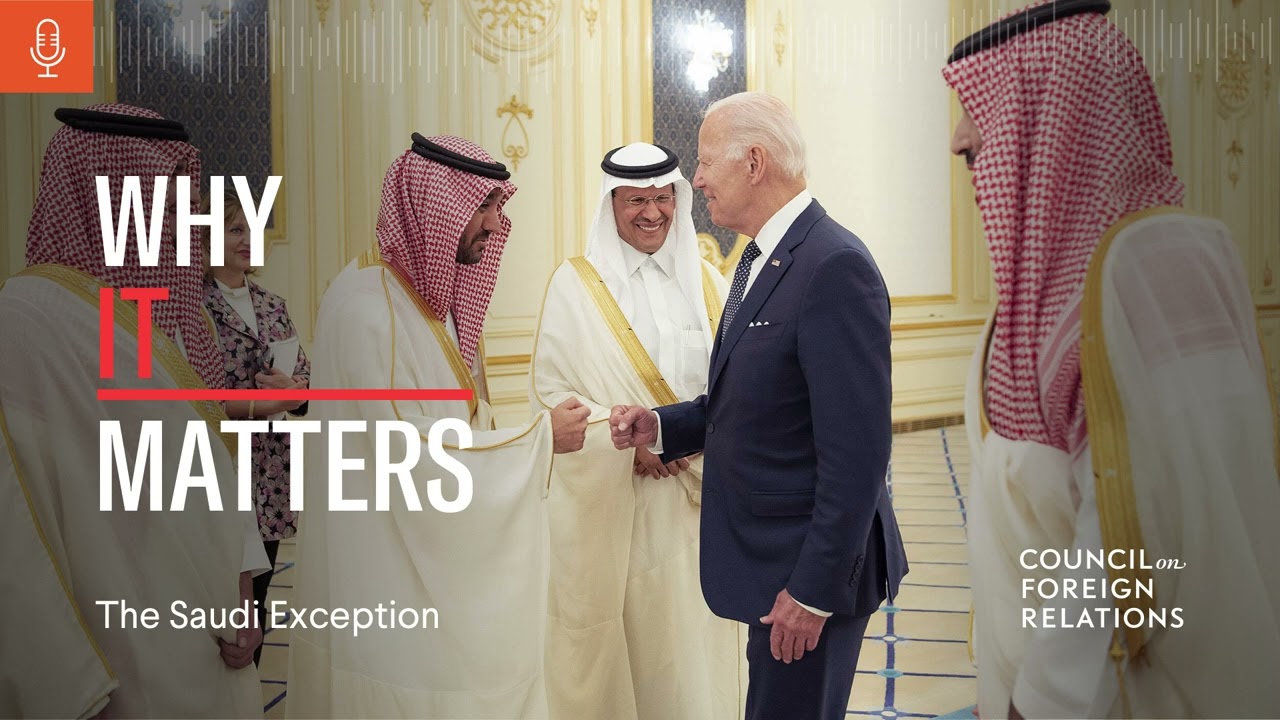


![[Why Times 정세분석 3802] 좌초되는 석유 부국 사우디, '미래 도시' 계획 줄줄이 멈췄다! (2026.2.16)](https://i.ytimg.com/vi/SsPLRYt8eVI/maxresdefault.jpg)












Saudi Arabia's landmark social reforms, including women's driving rights and expanded workforce participation, are primarily driven by economic necessity rather than cultural liberalization, as the Vision 2030 initiative seeks to diversify the oil-dependent economy by increasing private sector contribution from 40% to 65% of GDP and creating new job opportunities across sectors like sports and social enterprises.
Saudi Arabia's Social Transformation: Women, Economy, and Vision 2030
Added:Understanding the 'Rentier State' model and Saudi Arabia's historical economic reliance on oil revenues.
The historical role of the conservative religious establishment (Wahhabism) and the traditional male guardianship system in Saudi society.
The political structure of the Saudi absolute monarchy and the centralized decision-making power of the Crown Prince.
Basic economic principles of diversification and the challenges resource-dependent nations face during global energy transitions.
Analyzing the concept of 'Authoritarian Modernization'—how social and economic liberalization can coexist with tight political control and crackdowns on dissent.
Evaluating the geopolitical and soft power implications of Saudi Arabia's massive investments in global sports, entertainment, and tourism.
Assessing the progress, financial viability, and environmental debates surrounding Vision 2030 mega-projects like NEOM and 'The Line'.
Investigating the shifting dynamics of Middle Eastern geopolitics, particularly Saudi Arabia's changing diplomatic relations with regional rivals and global superpowers.
88.2K views274likes57:25Original Release: 2018-03-12
good morning ladies and gentlemen and thank you all for getting up so very early this spring morning to join us for what I promise will be a very worthwhile use of your time hearing about some of the changes and developments that are underway inside Saudi Arabia of course this week we've had the Crown Prince Mohammed bin Salman in town and that has focused a lot of attention on Saudi Arabia primarily on its economy and of course on some of the foreign policy issues the war in Yemen above all but it has also cast some spotlights on some of the changes that are going on in society and maybe in culture especially when it comes to the rule of women the visit itself has struck a inaudible contrast with the last really major Saudi visit which I remember when King Abdullah came here back in 2007 and he brought a large delegation of Saudis with him in which I believe there was one woman Ali and the renowned businesswoman and this week has been a big contrast but beyond the PR of the visit itself there are so much deeper changes underway which arguably are primarily driven by economic necessity and longer-term social changes such as the big expansion of women's education anyway today is an opportunity to really hear about this from people who are experiencing it and in some ways leaving some of these changes so we're delighted to have princess swimmer but Bandera ourselves who is the president of the Saudi Federation for community sports and also Lou Jain ala bade the chief executive offer of kisame which is a social enterprise incubator and then thirdly we will hear from Adel her mazey of said Antony's College Oxford who will speak a bit about vision 2030 as a context for some of these social and gender changes today's meeting is on-the-record and it's being live-streamed you welcome to tweet and without further ado I will hand over to princess women thank you so much well thank you for having us and thank you for coming so early I just want to put a little bit of context in 2016 I was asked to join the general Sports Authority at that time it was the presidency for youth welfare that changed in around March of 2016 because the youth mandate was viewed to be too good and too large to sit with an authority and it was dispersed amongst them at several ministries my role was essentially to have the plan to incorporate women into sports from February until August what we realized through our research is that the opportunities to expand and grow into the sports market so whether it was professionally as an athlete or within the ecosystem was equally as poor for boys as non-existent for girls so the role transitioned from women's affairs to the deputy for planning and development at the Sports Authority my role there is behavioral shift the sports economy and also women's affairs but under the diversity and inclusion mandate as we were working along through our mapping again within the sports economy what we realized is in order to grow the professional aspects and the competitive aspects of sports we must actually grow a grassroots activation and that's where the Federation for mass participation which focuses on community sports was created my role there is to engage young people all the way through to much older people so we like to say 0 to 99 on how can we be more physically active more focused on our health and more engaged as a community and the community engagement is critical because that's where volunteering comes in and that's where community and social reintegration happens separately from that we are the collaborator with the Ministry of Education on the physical education initiatives both from the point of view of training PE teachers Plus also the curriculum and it's really important that I stress the lead activator on that is the Ministry of Education we come on board as a subject matter expert we work with the Ministry of Commerce trade in order to create the space for small and medium-sized enterprises to thrive in the sports economy we also work with the Ministry of Labour to create more job opportunities and namings of jobs we work why is that critical because while they existed four men didn't exist for women so we're adding those job opportunities for women which supports them the economic diversity that we would like we also work with Social Welfare in order to get more young people volunteering and positively impacted by sports a prime example of that is the neighbourhood Football League which today in all of these smaller neighbourhoods we operate in every single city over 300,000 young people north south east and west and that is community organised young people from all ages coaching refereeing and playing in sports we have a prime example of the police chief and Jason actually called my deputy chairman and said what is it you've done because today and the last two days over the weekend petty crime dropped because of the engagement that we had on the map neighbourhood football leagues and that's a huge sign for us that means young people are now occupying themselves with other things we also when we talk about women and women's inclusion we're talking about today about six women on the board level of Federation's we are talking about 17 women who are employed in the administration of Federation's we're talking about a value chain of female athletes that have gone to represent the nation not just in 2012 - at the Olympics or 2016 where we had four as wildcards we had 30 young ladies represent us at the arab women's tournament in Sharjah of which we won a silver medal and we won four bronze medals we also have one young lady who I'm very proud of because she's really pushed the limits in her sport Danelle Hamdi won a gold medal for boxing in Jordan representing Saudi 12 months ago that wouldn't have been a true statement today it is and that to me is symbolic of this vision and it's choice the choices that women have today are greater than the choices they had today and everyday they will be greater the cynicism that I truly understand is why today how come now and is this just for show is this just for the trip to the US and London well it can't be and it can't be because I am Telling You what I'm responsible for and if it is just for show then I should be fired tomorrow because I'm building sustainability plans I'm building five-year plans and I'm building growth plans and if I can't achieve that my name is on the line and so is my job so from my point of view what I can tell you and from what I can vouch for is this is the new normal but this is the new normal for today because five years from now once I've achieved my goal the new normal will be different because the challenges will be different follow up with one question which is that we've seen in the past quite a lot of resistance to sports for women to things like opening gyms for women how there's the government trying to address that what sort of arguments are you mainly using for this change so I don't have to use an argument what we did is we created the formal structuring for the licensing of women's gyms in June and what that was is there is no such thing today as a license for a woman's gym there is a license for a gym your commercial registration is where you will specify is this a man's gym or a woman's gym but the regulation for dumbbells for walking machines frankly is no different for a man or a woman unless you know otherwise but our research says it's the same so we have a singular license for a gym however is it gender combined no it is not it is a our commercial licenses are segregated licensing of gyms was authorized because we had gyms for women it's not that they didn't exist but they operated in a gray market because they weren't licensed as gyms which means no regulation which means employment was difficult it means oversight was difficult and putting it back into the light means we now can track the businesses within three weeks of opening licensing for women's gyms we had over 500 registrants that was in June as of we have 47 live gyms the rest are pending approval from the municipality this is not to say it's a perfect system we are only in phase 1 phase 2 is the full automation of the process where we will be committing to the licenses being completed within less than an hour because it links us to about six different ministries that you know must go through that change if we talk about five hundred gyms registering the majority of them are medium-sized in our research a medium-sized gym employs a minimum of eight people between the front office back office and the actual trainers so that's eight times five hundred immediate jobs from June in that sector but the indirect jobs are the training facilities that must be created in order to train and certify PE teachers or sorry trainers engines in everything across the board if you could name for me a fitness program we probably have it in Saudi from Zumba to Pilates to yoga to Tai Chi it's there and it's happening every single day what we are also doing and if you look at the downstream of training is the secondary and third impact is not only the training center for these individuals you also have the people who have to clean the floors you have the people who have to clean the machines you have today we're trying to import even the spray that you spray on the yoga mat so you don't destroy that the sports economy goes from the micro to the macro from the macro to double macro to the triple macro and I'm not an economist so bear with me with my phrasing but what I'm trying to convey to you is every single step on the value chain is needed today in Saudi in every single industry and I can just talk to you about the sports because I see it every single day every single day we have a need we women enter the stadiums we now have female assure x' we have female security guards it means we have bathrooms that have been specially made or rehabilitated from men's bathrooms to women's bathrooms now that's women that have to come in and clean these bathrooms it just keeps going they're not the sexy jobs they're not the highly attractive jobs but they're clear and critical jobs that are a part of an ecosystem engineers in sports engineering I absolutely need the male and female medical professionals in the sports industry we absolutely need them educators innovators somebody needs to create an innovation I am begging you for the bicycle seat why not a Saudi woman so everything you could imagine that is necessary in ecosystem of sports is now open as an industry to women and that's profound job creation why because we're now being included in the narrative and we must be included in the future planning and mapping and my job is to make sure that that's a reality thank you very much and we'll turn now to Lou Jean to hear more about social enterprise thank you for waking up this early an attendings talk I I'll go back to 2011 I was a little bit disappointed with so many promises for empowering youth and I decided that I want to empower them myself and I'll start now when I made that decision I didn't understand how I can do that and then through exploring so many things and through my experience before making that decision I I mean I discovered the social entrepreneurship world and I found an ax tool that can be utilized to empower youth and also to mobilize civil change and impact positive impact making and the sector's once we started taking an interview on the sector's first of all the third sector was dominated by an old school of thought very traditional they focused on urgent instant care and support and they would never focus on development and sustainability of impact and programs presented throughout throughout the NGO sector and that was a little bit challenging for me to navigate and we focused on empowering social entrepreneurship as a sector we focus on empowering social entrepreneurs we collaborate with the governmental and private sector and for the past six year it has been quite an interesting journey but I think the major boost happened when our biggest support came from the small medium enterprises Authority last year and this happened because we had the direction as a country through a vision 2030 we the uncertainty we were navigating for the past few years suddenly became much clearer for us because there is a direction for the whole country for most governmental agencies the individuals in any agency would understand the KPI for every agency that they work for or even other agencies that they are dealing with so for me as an entrepreneur that became so clear and obvious who to head to and who to actually pitch for and it became it became very quick and we started our social incubator for the past year and it has been quite an interesting journey the interesting part was that we had over 2,300 applications over three months over a period of three months most of these applications are from different cities youth seeking mentorship and support they're not seeking financial support they only need guidance and how they can establish their social enterprises and also understand how can they create the positive impact that they want to deliver in the country so the change making movement is not only on a top level it's actually a press movement that is going around all over the country and most of the youth wants to participate in it and I think for the past few months have been navigating the public advocacy field and understanding how we can create clear bylaws for social enterprises to be registered that has been quite a challenge for us as a non-profit it took us two years to register ourselves as an organization now it's much easier for nonprofits or to register and it takes only three weeks but for social enterprises to have peer dialogues that would support that sector is very much needed and I'm working closely with the Ministry of Commerce and also the small medium enterprises authority to have clear bylaws for social enterprises all around sorry I just just to follow up with one question what are the main areas where the young Saudis want to have a social impact with these initiatives oh where can we site I think they would like to focus on environment financial literacy you know empowering small micro small businesses in different villages not only main cities around Saudi I don't think that we can limit it to one sector but there are so many different sectors that Saudi youth just want to create different solutions for societal problems that we're facing that's amazing thank you Adil well thank you very much Jane and very nice to be with old friends and new friends what I plan to do is really take us through the macro so if we step back for a second and then we'll dive into the micro and I'll share some challenges of vision 2030 and the roadmap ahead so back to basics so as you can see from the graphs just above if you like Saudi 101 societies a rentier state par excellence that is to say that it derives the majority of its oil majority of its revenues rather from oil which means the state is fiscally independent from taxation and the state what does this mean it means many things and we'll come on to them in just a second it also means that the state is hostage to international oil prices something it no longer influences due to various developments in the last few years it is these oil rents as you can see from the fiscal revenue that bind and metaphorically ratify the social contracts that is the implicit or unwritten contract between the state and its citizens where political acquiescence is exchange traded level of Tahara with rents rents that common kind free healthcare free education sacrosanct subsidies here the - and of course jobs for life which are no longer and I'll come I'll come back to that and so the question would be how does the rentier State adapt when it has its redistributed capacity responsibilities and ability curtailed so to move on to the next slide so that's the last few years twenty fourteen fifteen sixteen seventeen we've ran consecutive fiscal deficits so high-rent years in early 2010 it was excellent we had the one four seven dollar barrel in 2008 so what changed is there anything different about this fiscal definitely physical deficits I mean the fiscal breakeven prices are on 80 dollars that's the minimum barrel that's required to balance your books it's not a perfect calculation but we use it anyway no it's not so this goes back to the 80s and 90s so as you can see king fahad came into power capable ascend to the throne in 82 throughout the 80s and 90s we around fiscal deficits for 16 years anything different about today just a few things first of all we use the the reserves that we had in the 1880s and 90s to fund the shortfall what's different today is of course and the height of the gulf for a second of august 1990 the population of saturated was sixteen million today it's 32 million this has implications for jobs implications for energy consumption if you add sort of to the last few years the disrupter which was shale gas which was altered global energy dynamics the us-saudi relationship under Obama I'd say it's probably the lowest point since the Obama FDR sorry the FDR it been sorrowed meeting and the end of the second world just before the end of the Second World War under employment the challenge of jobs has never been greater and and more importantly underemployment is the challenge that we need to think about the labor market mismatch something that Her Royal Highness mentioned about behavioral change is managing expectations and managing expectations on wages and what type of job you deserve so that's something to keep in mind energy consumption one of the highest energy per capita countries on the planet only matched or competed with by the likes of Trinidad Norway and Qatar keeping in mind these challenges there is also of course a and you think leadership there's a new leadership I think we've all noticed in recent years to help and support my point as you can see here Saudi Arabia's an expenditure or public sector wage bill is incredible truly incredible thirteen almost thirteen fourteen percent of its GDP goes on government wages and it's bloated public sector which is no longer sustainable so you know it's now the private sector which must take the lead you can also see here millions of barrels per day oil equivalent 2017 figures are about to come out in terms of energy consumption cheap blanket subsidies which I said was sacrosanct up until recently engendered huge waste and an overconsumption disproportionately benefited the wealthiest - of course Drive the larger cars and run the energy intensive industries exacerbated pollution concerns something which is a real problem particularly in Riyadh and Jeddah naturally because of the populations and some previous estimates had energy subsidies at 10% of GDP while Saudi Arabia consumes more primary energy in the UK and France it's incredible so where does that lead us and where does that take us it takes us to this this is a what I call a social contract reconfiguration model now which aims to decrease the country's reliance on oil and of course push power to the private sector it was launched a couple of years ago most of us have heard about it we know all about it very ambitious targets for me the most ambitious the three are on the far right my phone right yes the private sector contribution to GDP so moving from forty to sixty five percent which is quite incredible were six 2030 of course introducing non all government revenues this is very interesting v80 is one of the things I'm going to cop on to and this would mean a renegotiation of the social contract we hear about this correlation of representation and Taxation and will be a lot of renegotiation going on albeit perhaps unspoken or perhaps on line there is also unemployment rate I think this unemployment rate is contentious if we think about youth unemployment it's a lot higher so managing citizen expectation to be very important now to pick up online oil revenue generation and to come to the micro in a second and the to the two areas which are going to help Saudi Arabia non-oil revenue generation and fiscal consolidation two very important and integral parts of this contract being a shab Conwell citizen and we will leave that and we'll leave the glass Knost para troika link for later now let's look at a few examples so example one these an expat fees and to help reach this balloon goal up doubled in some instances which was applied on to around ten million eleven million expats what does this do business competitiveness can be compromised companies exploiting employing expats which almost all companies apart from the public sector of course business travel so it's what I'd call fiscal balancing competing with vision 2030 which is a paradox in terms example to the implementation of draconian traffic fines and measures and easiest sellers it is beneficial to to the public and something that I'm very keen on for Saudi Arabia and other countries in the region car accidents in 2016 in Saudi Arabia killed nine thousand and 31 people unbelievable twelve percent of the total number of the seventy thousand fatalities and that's practically one death an hour so the IDF that's not the Israeli defense was by the International Diabetes Federation suggest that fifty percent will have diabetes by 2030 24% of Saudis have diabetes today and tobacco related health costs estimated to strain the budget with over five billion Saudi riyal and LS elasticity researchers have been conducted by whu-oh and colleagues across the pond pond suggest that a ten percent price increase in tobacco for example would reduce consumption by four to five percent and there are challenges smuggling business lobbies and so on example and you've got my two-minute one so example five v80 introduction so I'm trying to give you box ticking on the v.a.t.s on the micro Soviet introduction came in just the beginning of January expected to raise around ten billion here challenges are of course inflation and as many companies are passing on their admin and compliance costs to the citizen which is a problem the threshold is very low in my opinion SM is a hundred thousand dollars it should be higher which would allow for for more SMEs to push forward it's a psyche changing tax most of all among g20 nations it's it's the you know know it's taxing country around so it's not too bad I'd now like to move to the final and most important which is energy price reforms so I mentioned subsidies energy subsidies being sacrosanct the most significant of all manager of these measures are by far energy price in reform so if you can just look up to the graph there in 2015 were at 16 cents for premium gasoline we moved up to 24 cents in 26 the beginning of 2016 and just a couple of months ago 54 cents this is the equivalent of when I get in the car and go to my a petrol station in North London a one pound 30 liter at around 2 pound line see can you imagine the pandemonium that would engender so gauging the price elasticity of what one could call social discontent will be very important for government for the government moving forward from a rabbit to muscat actually and so it's not just relevant to society and for me round three of the energy price hikes we must think about and look at carefully pace and sequence are paramount to success for all reforms and other constituency relevant here are energy intensive industries a constituency that's often forgotten how do we cope there are only a few options absorption the lower priced margins passing on to consumers if you're an exporter you might be a price taker so that may play a role see does these are thing of course into fuel substitution these are things to think about now if we I'm almost there dream so this is something which has helped which is very important and I commend the government for doing this this is a cash transfer mechanism it's conditional on your income so as you can see just up there if you earn less than an eight thousand seven hundred Saudi riyal and it's commensurate with the energy prices you would have a net allowance of two hundred thirteen I'll because you get twelve hundred by the estimated burden is - a thousand Saudi Riyals and it moves upwards until you reach diminishing returns on the third quintile and on the fifth you receive zilch zero so yeah I mean data's questionable kind of country which doesn't text its people of course the data scan but we're starting from somewhere and we're moving forward there's a lot of trial and error going on it's easy to point fingers but stuff is happening so I think we need to we need to sit up and listen I'm almost there and now I'd like to end with some a couple of positives if I may I'm sure nobody's going to and so first of all new legislation I'm very very very very very happy to hear about the insolvency law which is just about to be passed very important how can you promote entrepreneurship when you might go to prison if you default on your loans so that's great competition or franchise law it's married if streamlining and they can company registration easier the development of nomu something which should have gotten a lot more press this is fantastic a secondary market to raise capital equity ten million capital requirement compared to say that's a level which is a hundred million transparency is getting better in the kingdom of course we had a November episode but if you look at things more generally on the budget side amazing we're moving forward there's a recognition of past wrongs there's looking forward on where we're going on the rights now finally and I'm going to end on the female point on a female point on the female point the economic implications of increased female labor force participation you have the short term wins like car sales Toyota and GM would be very very happy and of course insurers but there's also the GDP growth which might go up by Noor point four to nought point nine percent by 2030 which is incredible phenomenal we wish the kingdom's success on its part and realizing as much of the vision 2030 as possible thank you very much and I think that really does illustrate that there are substantial and deep economic drivers to a lot of what was going on on the social side now we have half an hour for questions from the audience you're welcome to pause a question to any member of the panel or to all of them we've got roving mics as usual I'll just ask anyone who wants to ask a question to just briefly identify themselves by name and affiliation and we'll start with the lady here there's a microphone coming to you thank you question for Curtis reamer I'm Olivia from Arab news I'd like to know what is the biggest challenge you're facing with getting Saudis active the question is what was the greatest challenge in getting Saudis active the greatest challenge is actually not getting them active it is upgrading enough upskilling and what I mean by that is the facilities that we need to use some of them have not been well maintained and we have to upgrade them and the upscaling is I've if I want them active the programs that must be created I don't have the manpower yet to actually mobilize them to the quality or the level that we would like but it is starting so we've had to actually turn to the private sector to step up where traditionally on a grassroots activation you would have the community stepping up I can tell you from a year and a half ago when we first started mapping who exists in this ecosystem it was about 120 community sports groups sorry we're now to over 200 and that means that our work is actually resonating and people are buying in the difficulty which goes back to some of the things that my colleague basically mentioned was are you comfortable if I tell you please go out and activate your community sports group in the community in a public space six months ago the answer was no we had people saying could you please give me a letter of authorization could you give me permission and what we're saying is you don't need permission to use public space that's why it's called public space but that is an evolution when we talk about mindset shift and behavioral shift of how do we go back to letting the citizen know this is their nation and we are able to measure social progress simply because today I can tell you more and more people are going out in activating on a sports activations without coming back doses the Sports Authority one week ago over 6000 women participated in a walk in al-hassa NASA where normally in that region people would sit and wait and wait and wait and wait and wait and by the I'm bigoted the letter of authorization we're talking about six to eight months later self-organized self-motivated and off they went and it was a raging success we have nothing to do with it as the Sports Authority we organized a marathon which was a half marathon as a pilot to see what would it look like if we ran a full marathon assuming we would get five to six thousand people we had over 30,000 people who flew in from all around the country people flew in internationally to come and attend this this is telling me that people have a confidence in what we're able to deliver but when I look at a lot of these numbers that are in this phenomenal chart Sports impacts every single one of these across the board absolutely across the board all the way down to the annual number of visitors why because if I'm getting that many people coming into the kingdom we're collaborating and we just have had a series of letters that go between us and the Ministry of Tourism to say have you considered a sports tourism visa if people are coming in for this annual number from all around the world have you thought that they may want to climb the mountains see the sea walk around the country and engage in the beauty of what this nation is we cannot tell people come and see us if we don't let let people come and see us we can't tell them believe me it's great if they don't see it for themselves so we're working on that and we're talking about the SMEs and we're talking about GDP we're measuring ourselves against Canada as a role model where we know that in Canada for every one Direct sports job there's two indirect we know for example that the the Canadian example is 40 percent of their employees are women in the sports sector we know freelance and part-time we know all of these things about what they're doing we also know that Canada is very similar to us as an oil dependent state previously we also know that they have extreme weather the same way we do we also know that they were focused on a single sport which was hockey ours was football and we know today they are one of the most vibrant sports economies we know the income they get we know what they generate the plan is there so what we're saying is let's emulate that let's not reinvent the wheel but apply it to our context so our challenges are today if I want to promote bicycling who's repairing the bike and enlightening young people that that's actually a career you can have but also I was in Washington last week and a lot of the young people were saying you're encouraging me to go and take these jobs and you're couraging me to step out of the traditional pathway and go and invest myself in my time in this sports economy but my parents are saying no because why would I leave KPMG or leave Johnson & Johnson or any of these larger companies very secure jobs secure income and go into something that today has no evidence as a success so I counter and say there's no evidence of success in Saudi but there's evidence of success globally the sports economy is one of the most vibrant in the United States of America and North America it is profoundly vibrant here in the full value chain from grass roots all the way to competitive sports and there are job opportunities so the mindset shift that we're doing and we are going to start seeing within the next few months we're about two months away from mapping out the job value chain that we're gonna begin announcing why not just to encourage young people to participate in this economy but to appease the parental units who have to in our context endorse and support this because no parent wants to think that for the next 20 years they will be financing their children's lives once they're adults you want them to have a thriving job but a job that has a long-term benefit not a short-term flash-in-the-pan so working again with the SME authorities how do we create the correct jobs how do we message correctly the growth of this sector and that's on us and with that is exactly what we're doing so that supports private sector contribution that's female labor that's unemployment that is non oil exports that's public investments that is non oil revenues that's all over there Sports is not an athlete exclusively the athlete is what you see at the tail end of a whole iceberg that must operate under it and that's what's to us so profoundly exciting because we're coming at this with zero expectation no baggage we're new and we get to go across the world and say who did this best who's doing what and how do we now apply this here we even have a study that we're in April on how do we remove people from the most vulnerable points on the poverty scale out of vulnerability through the sports economy because we've been able to measure and map that to get them out of that point is around 800 reads I can do that I can do that for you so allow us to have the time as you said to fall flat on our face a little bit pick it back up figure it out because we're trying to figure this out actively thank you more questions from the audience there's a few at the front here someone can bring microphones starting here thank you where did you learn any PhD research and sport and health innovation thank you so much very great great panel my question is to Princess Rima I would like to ask about how could we overcome the environmental factors that impact the fact that we are almost 58 percent physically inactive nations especially that you mentioned we comparing the other model as Canada which were the environment is really different and change specially of climate climate to Saudi Arabia how do you think this could be and overcome when we talk about if I could convey four letters to this audience the day that my whole country starts talking about this is the day I'm going to retire s ROI it is the social return on investment it is a concept that I hope the whole world operates in under I learnt it from a sensational young lady called the rim hoodie from Jordan and she's an advisor to us at the Sports Authority when we talk about diabetes and health crises you have to look at the Sports Authority and any Sports Authority and also learn from the UK experience where doctors prescribe physical activity diabetes hypertension and obesity three diseases that can be tackled through sports if we have interventions with young people it means today we can tell you there is actually a real value I shall not share it with you because we will be announcing it in a couple of months and I think the Crown Prince has to hear it first there is actually a number that we know today on an investment in sports the same in health care so again we go back to that chart and we say expenditures let's bring it down let's spend here to save here and that's a long-term strategic map number one number two when you talk about the differences between Saudi and Canada the reason that we're using it as an example is extreme heat means there's a very particular chunk of time that we cannot be playing outside just from a health point of view for young children Canada extreme cold snow ice and adversity but what did they do they turn that into sports activations how sensational is that why are we not creating indoor facilities on mass instead of malls to explore physical activity for young people how can we invest in better environments in schools and infrastructure in schools and universities in community centers to allow for difficult weather play and the answer is we are and here's where I'd like to clue you in on the magic of vision 2030 Ministry of Education had programs municipalities had programs housing had programs Sports Authority had programs none of us knew what the other was doing none of us was sharing costs none of us was sharing plans and we're talking to the same people but the problem when you have four different entities talking but not talking to each other it also means they're not talking to the right audience and they're not strategically mapping to a singular result we are now doing that and what happened in February of 2016 is we were all every government entity lumped together at the Hazama hotel and said you have key strategic points you must hit women's employment walk away from the reliance on oil creating more jobs motivating the private sector figure it out boys and girls talk to each other and get it done and we were there for eight weeks coming up with grand plans that ended up being the nationally transformative projects plus quick wins to get things moving and what we realized is we can cut our costs we can cut our consultancy costs we can cut our overheads and focus singularly on the goal but previously it wasn't a shared goal each entity had its own and today there's a singular goal that's the point of difference it's just a point of difference and it's a different methodology if people ask me why today well at a certain point as a nation we were a young nation we have to invest in infrastructure that's finished we're done now we're focusing on the next capital which is human capital it's the next step in the evolution of this nation it's not for anyone but ourselves but I assure you as a global environment you are the beneficiary of this focus thank you we'll take a question over here please yes please good morning Stephanie were from the gender in growth initiative at Chatham House first of all I'm Canadian also so illuminating that you're trying to compare the weather I have a question if you look at g20 countries if you look later force participation obviously Saudi Arabia is not doing very well but in terms of gender pay gap there's not much difference between once they get to the workforce not much difference between men and women will you be able to maintain this as you get more women in the workforce I do you have any measures of policy in place that would be able to do that so specifically within the Sports Authority I think we can speak well on that in general I know that it is a goal from what I've seen across the board it's it's the goal to keep going we didn't start that way to go back and I really think that what we're trying to do in this country is be role models we were role models and certain things at a certain point but that I think was exclusive to the Islamic world and what we're trying to be in the world of social development also and social progress and I know many people who are watching this on social media would say social progress and Saudi seriously what we're trying to say is yes seriously because we're serious about it and today's the point of difference what more and how much louder would you like us to be about the fact that we are pivoting what more would you like as a point of difference so I would say if you'd like to measure why don't we wait another year to measure to say is what we said in 2017 action is what we said in 2018 action but two-point cynicism in the first three weeks to one year of an initiative is actually an irrational ask it does not mean things are perfect or will be perfect because perfection is impossible but somebody gave me a phrase the other day in fact to that I'd like to share with you number one do not destroy the good for the perfect number two because I always get asked why are you so positive and why is life so good and rosy and cheery it's not good rosy and cheery but in the concept of the half the glass half-full or half-empty somebody identified to me something critical it's a glass its refillable its refillable with whatever you want would you like it to be water here's some water would you like to be juice or coca-cola my only advice would be don't put hot tea in a glass get another glass so in that concept hot versus cold what would you like us to do for our point of view is we are going to keep trying filling that glass with whatever works to get our nation to hit the point of the vision which means we will iterate and reiterate it means we will operate in agile but it also means there is no way to appease every single naysayer there is no way to hit every single statistic but there will be key measurable points of change and when those key measurable points have changed have happened it allows for more time to focus on the other things there's a lot of nitty-gritty details you're talking to us about women's driving and you're talking to us about the habala and the hijab we're saying as women job opportunities we're saying domestic abuse we are saying safety on the streets we're talking about the issues that affect us on our day to day life we are talking about mobility and transportation yes but we're talking also about guardianship guardianship to you is a taboo subject that every time I have an interview there like guardianship as if I'm going to wilt away and wither I'm not it's a conversation that every single one of us has and has been a conversation for the past 15 years what's the point of difference thirty women are on the Shura Council sorry % of the Shura Council which means a woman's dialogue and needs are now elevated to a public sphere it means the statement is stated and has to be stated and restated and constantly restated until it's resolved that's progress it's not the end it is not the resolution but it's progress because we're asking for what we want ourselves for ourselves and what we can tell you is we see measurable change but does that mean it's ended no because as soon as you finish this pack of things that must end you add another 10 on the other end it's that's the nature of progress because needs change guardianship has gone from an iceberg that was attached to a landmass and is moving and the only thing that satisfies a woman's soul is Saudi is to see that it's moving and it's melting but when it melts and I made this comparison yesterday it melts into the water and water becomes usable what does that mean it means these women that were held like this are now moving out and they become engaged in a part of the community in a much more viable and visible way that sustainability it is not sustainable to operate as we've been operating but what we're singing is we're trying to figure it out and it's not perfect it can not be perfect because frankly speaking we all watch the news we see what's happening in the States there is women's progress where is it is it in the me2 movement did we have to go down that path do we have to go down that path I don't think so but what can we do we can look across the world and say I don't want to emulate that I'd like this I don't want to do that I'd like this and when we write law let's write it singularly today to make it correct we're studying title 9 in the Sports Authority in the US and we're saying what words or what thoughts could have been included then that would have changed the landscape for women today number one number two how did it action how was it enabled what was the effect how was it implemented so we can understand should we use that terminology or not does it work for our population what wording could we be putting in there to allow that to be a dynamic humint that can evolve versus a finite document that once it becomes a royal decree must be removed or released by another royal decree these are not conversations that were happening before they're happening today but in the span of a year and a half the movement of women's rights is moving but it is not an ending shift that's what we all have to accept it shall not end because women's issues won't end because the issue today is not the issue of tomorrow but that doesn't mean it's perfect and it can't be nor will we ever tell you it is it also doesn't mean people weren't struggling before and we have to honor and respect every woman's struggle for the past 50 years in our country we have to honor and respect that doesn't mean you agree or disagree just respect that's all just perhaps supplement compliment naturally and don't to be a spoiler but the feminization of the workforce in Saudi Arabia will of course lead to an increased supply of Labor expats and female Saudi nationals are not substitutes it will like for like and they won't have the same expectations and we don't have a national working a Saudi national working class so the reality is there may be more stress in the short term and hopefully we'll get some of their returns on investment in the mid to long term another question from the frontier family here hi Jordan Hartley studying masters of la Souris University first of all thank you to all the speakers you raised bearing a lot of great points and because you were speaking about the current development I'm just quite curious from your perspective and whichever wishes to answer please go ahead so where do you think there's an area that requires attention that you would love that development with after we reach perfection of certain areas we would love to see development move on to there maybe as an entrepreneur I've been navigating so many sectors and it's quite difficult to articulate a certain area that we need to focus on but you know taking a step back and taking a look at the vision we focus on three main elements society diversification of economy and government and bylaws and these are three elements that are really crucial for any progress in any you know field or sector but you know going narrowing it narrowing it down to what I'm working on I think for me as a you know an entrepreneur a person who's empowering other entrepreneurs and you know my goal was always to empower those who want to change this has been much easier you know I think since the since 2017 until now it has been quite a challenging experience since 2011 up until 2016 came with all its pros and cons and suddenly I'm trying to take and all the empowerment I've been getting at the same time there are I think there's the challenge of making the vision much more translated translatable to the you know bottom movement so the government agencies wants to empower and push things forward but at the end of the day the agents in these and these governmental agencies are still trying to understand how they can do that so they're still navigating an old system and moving into a new system and it has been very interesting to you know push from the top and go to the bottom and having these conversations and you know I understand leadership as taking people from where they are to where they need to be not where they want to be because what they need and what they want is completely different things and you know having these conversations in the system whether it's public or private in a you know in a room with the decision maker are very crucial to make things happen and move and you know go forward with things I get so many emails from so many young people every day and I go heavier every day to my bed wondering how I can do with my limited resources enough to actually empower them off and you know I'm really optimistic about how things are going to happen in the next two years but also building on what you said I think we need we need some time to make things happen it's change will never happen in 24 hours it's gonna take some time you need to focus on you know the awareness of the people and the agents who are supposed to do the work you need to focus on having different conversations with decision-makers to make them understand what's really going on outside the room the rooms of you know the meetings and also publicly speak about how things are happening what are the opportunities out there most of the young people are desperate to know how things are happening or how to do things but at the same time making them aware of the services and the opportunities out there is very crucial and I think that has been something that is very different you know through the last year a lot of governmental agencies have been investing a lot and making you know the mass be aware of the services that they are providing how they can get it done how they can get it done very quickly which is much more important and it has been shifting a lot thank you time for one more question what you'll take from over here please hi good morning I'm Steven ball from KPMG first of all thank you for name checking our firm same you're all amazing same question for all of you you've all talked about vision 2030 there's 12 years left what are you all most excited about over the next 12 years and can I just add so that says this is gonna be our last question and it's nice to have a question that goes to everybody but what's the number one challenge I've got quite a few C's the first one is competitiveness so the three or four CS that come to mind when I think about vision 2030 are coordination which you mentioned complementarity cooperation and comparative advantage the factors of production have made Saudi Arabia competitive over the last few decades cheap energy cheap labor if cheap energy and cheap labor is not so cheap anymore married with a bit of political risk Saudi Arabia needs to see communicate what its value proposition is so communicating internationally and locally will be very important and how you reconcile some of these not you know a generation of non oil revenues with FDI attractiveness will be very challenging moving forward but again I think this is all about expectation management and that's where I think I'll leave it I think I'll go back to US ROI social return of investment I think now we're much more aware of where everybody is going and how is that going to impact us as a country and impact you know the society on a general level and also taking it down to small societies in different cities around the kingdom you know we've been talking about so many you know societal challenges we spend a lot on medication the medicating programs and medicating centers for different diseases but we never spend on prevention programs which is very crucial in the health sector we spend a lot in the educational sector but at the end of the day the outcomes are not really matching how much are we spending now we're much more aware of how our how are we supposed to develop the sector I think for me to tackle it down I'm really much interested in seeing how the shift is going to happen and you know the decision-making process in different agencies because our government I think the language of the leadership and our government has changed it it shifted from something that is diplomatic into something very direct it gave us a sense of direction there are there is a huge lack of uncertainty at the moment rather than the uncertainty we used to navigate a long time ago now we understand where are we going how are we going to achieve that there will be a lot of mistakes but I'm pretty sure that there will be a lot of right things that are we doing okay so I would say I would like to see and this is purely now because of my exposure into sports and the terminologies I've learned I'd like Saudi to be based on meritocracy not gender focuses I don't want to be hired because I'm a woman I want to be hired because I'm excellent for what I do and I have the skill in the background as do many other women so meritocracy number one is what I would look for and number two I would look I would like for the dialogue of what we look like and how we appear to no longer be the narrative we look and sound different but the mental capacity is equal and I need us to get over the word conservative linked to a woman that's fully covered because I have found profoundly liberal women who are covered top to bottom and I have found very conservative women that look and dress and behave like myself so if we can get over that fixation of appearance to capacity and capability I think that would be a huge win and that's not on you that's on us but a meritocracy is what I'd like the nation to be thank you very much we will draw this to a close here it's been a stimulating and fascinating start to the day I'm going to ask everybody to remain seated while the speaker's leave the stage because two of us have to go off two flights immediately and but we look forward to welcoming you back soon we'll be doing much much or on Saudi Arabia and the Gulf in coming months and it just remains for us to please fight the speakers in the traditional manner [Applause] you
Up Next

66:27
Sociology of Work: Marx, Alienation & Labor Trends
@newyorkuniversity
24.8K views•2011-03-01
54:57
Contemporary Sociological Theory: Micro, Macro, Integrative
@NaSESYNC
45.7K views•2016-02-17
19:23
How to Analyze Conversations Scientifically | Elizabeth Stokoe | TEDx
@TEDx
1M views•2014-12-04
9:41
What is Sociology? The Sociological Perspective Explained
@crashcourse
4.6M views•2017-03-13
Related Study Plans & Knowledge Roadmaps
Structured learning paths in Sociology
sociology
Celebrity Culture: From Hollywood to TikTok
01Foundations of Celebrity Sociology
02The Rise of Micro-Celebrity & Digital Platforms
03Parasocial Relationships & Algorithmic Intimacy
+ 2 more learning modules
12h5 modules
Explore Roadmap
sociology
Hostile Architecture: Space, Power & Control
01Introduction to the Sociology of Space
02Social Control and Surveillance in the City
03Hostile Architecture and Defensive Design
+ 2 more learning modules
12h5 modules
Explore Roadmap
sociology
Loneliness Epidemic: Third Places & Isolation
01Foundations of Social Capital and Community Cohesion
02The Death of Third Places and Urban Space Erosion
03The Privatization of Leisure and Atomization
+ 2 more learning modules
12h5 modules
Explore Roadmap
sociology
Sociology of Tourism: Gaze, Power & Heritage
01Foundations of the Sociology of Travel and Leisure
02John Urry and the 'Tourist Gaze'
03Staged Authenticity and Cultural Commodification
+ 2 more learning modules
14h5 modules
Explore Roadmap