






























Legal anthropology is the interdisciplinary study of law in culture and society, examining how people think about disputes, why they perceive certain issues as legal rather than social, and how law reflects and reinforces power relations. Unlike purely doctrinal legal approaches that focus solely on formal state laws, legal anthropology recognizes that dispute resolution and conflict management occur through various mechanisms beyond state-created legal systems. This field bridges anthropology and law by combining ethnographic fieldwork with doctrinal and policy analysis to provide deeper insights into legal rules and institutions. The discipline has evolved from asking whether law exists everywhere to focusing on how people actually use legal concepts in their daily lives, revealing tensions between constitutional ideals and lived realities that cannot be fully understood through written court opinions alone.
What Is Legal Anthropology? A Scholarly Dialogue
Added:Hello and welcome. My name is Nitika Vishnuad. I am the director of criminalization and punishment at the square circle clinic at the Nalar University of Law, Hyderabad in India.
The clinic is NSAR's criminal justice program that provides proono legal representation to persons sentenced to death across India and other trial prisoners in Pune and Nagpur central prisons. The clinic also undertakes research on various facets of Indian criminal justice system with a special focus on empirical, qualitative and quantitative methods. Earlier all of us at the square circle clinic carried out work as project 39A. Today it is my pleasure to be in conversation with professor Deepipa Das Aivido who is an associate professor at the school of law at Emory University in Atlanta.
Professor Avido is a legal anthropologist. Her research blends ethnographic fieldwork and anthropological theory with doctrinal and policy analysis to provide new insights about legal rules and institutions. She studies employment regulation, the law and politics of India and methodological and theoretical developments in the anthropology of law.
Of particular note to Indian listeners should be her first monograph the battle for Shabri Mala religion law and gender in contemporary India which was published by the Oxford University Press in 2024. Hi Deepa welcome and thank you so much for agreeing to have this conversation with me on legal anthropology.
>> Thank you so much for the invitation Nita. It's a pleasure to be here. So I want to start off my conversation with you with a fundamental question uh for our viewers uh especially those who do not know anything about legal anthropology. So if you could very briefly capture for us what legal anthropology is.
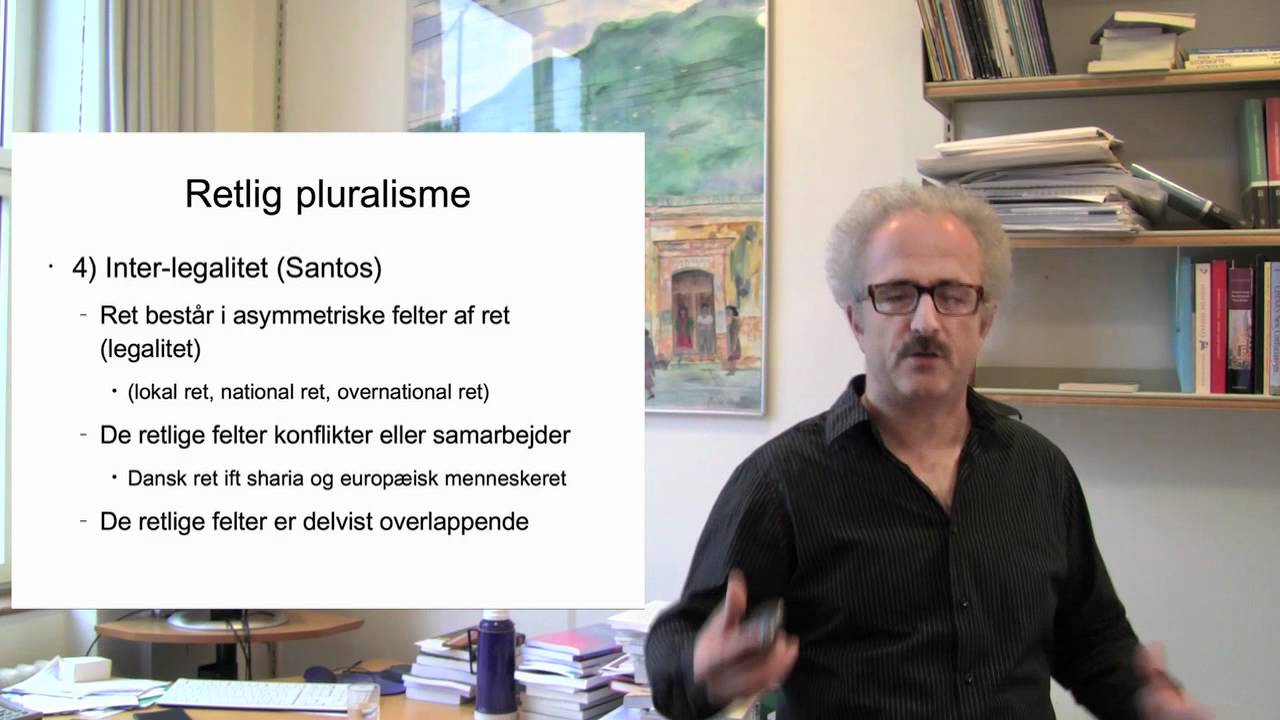
>> Believe me, this is a question that my mother asked me over and over again when I was in graduate school. I'm not sure I ever convinced her that I had a good answer, but I'll give it another try now. I think of legal anthropology as being the study of law in culture and society. Which means focusing on how people think of disputes, why they think of particular disputes as being legal instead of simply social. How does law reflect and reinscribe power relations?
And all of that taken together means that a legal anthropologist is not uninterested in the substance of law in the rules and regulations that we think of as being formal state law. But a legal anthropologist is also not obsessed with that kind of law.
understands that dispute resolution, relationship management, conflict resolution, all of these things happen in a lot of different ways using different tools, not only laws that are created by the state. It also means I think that a legal anthropologist is not obsessed with whether or not there is a crosscultural notion of law in the first place. is law in one part of the world.
What is considered law in another part of the world? Now, this is not how legal anthropology always was. In fact, I would say that the sub field began by doing exactly what I said is no longer at the core of its inquiry, which is studying law comparatively to ask what does this thing we call law look like in different parts of the world? How do we distinguish something that can be called law from other things that might be considered customs or norms and that also shape social behavior? Do all societies around the world have law? And if they don't, if they don't have something that we recognize as law, how do they keep functioning without it?
That is what used to drive legal anthropology as a sub field. But I think that we've kind of moved beyond those foundational and comparative questions to focus more on how people think about law and use things that might be considered law in their daily lives.
>> Thanks Deepa for that uh great introduction to the field. Uh before we get on to more substantive question, I had a personal question uh because you are someone who was first trained as an anthropologist and then move to a degree in law. So I wanted to know what sort of led you to move from anthropology to law and how challenging was it to switch to another discipline.
>> So actually I meant to go to law school first right out of college. I imagined that I would be a political science major in undergraduate and then I would go to law school. I would practice law and that would be that. But I became interested in research during the final years of my college degree. And I come from a family of academics. I joke that it's the family business, but I am a third generation professor. I have besides my parents and uncle and a handful of cousins, all of whom are professors. So it actually is kind of the family business. I ended up deciding to apply to PhD programs with a project that had nothing to do with law. It was about religion and second generation South Asians in the United States. But by the end of my first year in the PhD, I realized that I really was interested in law as a kind of area of inquiry. And by the time I returned from my fieldwork, I was reading interdisciplinary legal scholarship as much as I was reading traditional anthropological scholarship. And I just kind of finally came to the conclusion that yes, I did want to be a professor, but I wanted to be a professor in law.
And so I went to law school. It has been challenging and fun to live in between and across disciplines. And I think it will always stay that way because I don't think and I hope I have not completely switched from one discipline to another. I think being resolutely interdisciplinary is kind of like being a second generation immigrant which I also am. At first you desperately want to feel like you belong somewhere. Then you embrace that you belong nowhere. And then you find the prospect of only inhabiting one world to the extent that any of us only inhabit one world perplexing and not really something that you want to do. So I have come to really enjoy living between disciplines even if at times it makes me need to eat a lot of chocolate.
>> Thanks for that data. Uh that's yeah that's very interesting. I guess moving on to a question that would be of particular interest to law students. Uh and given the square circle clinics identity and as a part of a law school I think a lot of our listeners are young law students in India and so I was very interested in understanding from you as someone who's trained in both disciplines what according to you can legal anthropology tell us about the law that a purely legal doctrinal approach may not or cannot. And here I'm particularly interested in hearing about your constitutional ethnography of Shabri Mala temple entry dispute. What insights would you say an anthropological approach brought to studying the temple entry dispute that a purely legal doctrinal approach could not have?
>> You know, funnily enough, the best job interview question I ever got was like this. And it came from a law firm partner who interviewed me for a summer associate position after my first year of law school. His question was after he had taken a look at my CV and seen that I had completed a PhD and what the title of my dissertation was. He said, "Tell me how your project would have been different if a sociologist had done it or if a historian had done it." I thought that was a fantastic question. I don't know if I gave him a fantastic answer, but I'll try and give you a better one. Now the first thing I should note is that the fieldwork that I did for my dissertation which later on became the core of the book on shabriala the fieldwork itself was not about the women's entry dispute it was about temple administration writ large and about religion state relations writ large I used shabri mala as a bit of a focal point or a case study but I was primarily interested in understanding understanding what secular governance meant to participants in a system where simultaneously the constitution espouses secular governance and the state is so deeply involved in so many ways in the management of religious life and not only in spectacular ways through religious freedom cases but through the everyday quotidian management of religious institutions you know because the fieldwork wasn't about shabria Mela per se or about the women's entry dispute. I wasn't specifically trying to use fieldwork to understand that particular dispute. It was actually only one chapter of my dissertation. It just kind of took over my life afterwards because the dispute itself kept getting more and more prominent. All of that said, I think the take-home of the dissertation fieldwork does help us understand the women's entry dispute too. The dissertation fieldwork showed me that the tension that I was seeing in the constitution and feeling to various levels across case law and statutory law one was real. It was a real tension. two was intentional in as much as it reflected two consistently appearing and consistently conflicting impulses in the broader constitutional framework within which all of this was happening. I came to argue in the dissertation that one of these impulses is one where citizens retain autonomy in certain spheres of life like religion because they are the locust of democratic sovereignty. But that another one of these impulses reflects a vision of democracy where citizens share sovereignty with a state that is charged with transforming society. So in a sense it's a conventional understanding of democratic sovereignty. Citizens are sovereigns, state actors are simply agents of those sovereign citizens and another in which citizens are sharing sovereignty with the state in terms of directing the content and direction of the nation. We see that pushpull the sort of dynamic interplay between those two visions of constitutional democracy and those two visions of religion state relations in the shabi mala litigation too. So it emerged in the arguments that litigants made both at the careless high court level and at the Supreme Court level uh in the opinions that came out of the Supreme Court the first judgment in 2018. You know, if we contrast the plurality opinions versus uh Indu Mahotra's descent in the opposing protest movements that emerged both before and after the 2018 opinion, you know, the fieldwork, I think, helps us explain why the battle over Shabriala is both dynamic. It's kind of constantly changing and evolving and and resurfacing, but it's also intractable.
It's constantly resurfacing and different iterations of the same problem are coming up over and over again. I don't think you can get all of that. You can't explain why this puzzle continues to be a compelling puzzle after just reading written court produced opinions.
You know, often you can't even get your hands on the submissions of the parties and stuff, right? So I don't think just reading the finished distilled product of court, which is what a doctrinal legal approach would have entailed, would help us understand why something like the Shabria women's entry dispute is both constantly interesting and dynamic and puzzling and yet intractable and seemingly unending. That's what the fieldwork helps us get.
>> Thanks, Deepa. Uh another question I had moving on from the substantive aspect of what anthropology can tell us about a particular subject quite distinct from doctrinal approaches is about just being a scholar itself who's trained in both anthropology and law. Do you think that the fact that you came to law with a training in anthropology makes you a better lawyer? And in what ways do you think these two disciplines converge and diverge in their approaches?
>> I think my anthropological training certainly makes me a different lawyer uh or legal scholar. I've never practiced law, so I'm very careful to not call myself a lawyer. And I think that there are at least two ways in which my anthropological training and my legal training complement one another in terms of the kind of scholarship that I do. So the first is that anthropology trains you to cultivate attentiveness. The best way to explain that is I think using a definition of ethnography uh not anthropology of ethnography that comes from Koshik Sundarajin who says something like I'm paraphrasing here the ethnographer isn't more skilled at understanding social phenomenon or events than their interlocutors. The ethnographer understands those phenomenon differently. They listen differently. They watch differently.
They bring different priors and knowledges to understanding it. So they see differently, right? And that difference of perspective is what allows the ethnographer to interpret and analyze the phenomenon that they encounter in fieldwork in a way that sheds light on the phenomenon itself in a way that helps other people studying other social contexts understand those contexts more aptly or insightfully.
Right? What does cultivating attentiveness have to do with a lawyer?
I think you can kind of guess, but as with all deeply interactional service professions, you know, medicine is another good example. It's valuable to be able to understand how your client or your judge or your opposing party thinks, where they might be coming from conceptually, and so on. essentially trying to translate another world view and put yourself in another party's shoes. I mean, there's a much more strategic and at times, you know, mercenary motivation for that when you're a practicing lawyer, but it's nonetheless useful to be able to think in someone else's head, so to speak. And that's what anthropology offers. I think a second way in which the kind of anthropological and legal aspects of my training and and scholarship complement each other is that law and anthropology both exist at the extremes.
What I mean by that is that both law and anthropology are incredibly abstract.
You know, they're idea and ideologyoriented, right? But they are also incredibly granular, kneedeep in lived experience.
I mean on the one hand law is the stuff of constitutions and sovereignty and personhood and liberty, but it is also what can you be taxed on in your retirement account starting next fiscal year. Right? In the same way, anthropology is about kinship and individuality and sovereignty and agency, but it is also about the daily habits of a person who cares for their family member as part of a collective organization. You know, I mean, there's there's this attunement to the most abstract sky view elements of human existence and to the most down in the trenches, how do we get through the next 24 hours aspect of human existence. And I think that although all disciplines have some element of this existence at the extremes, it is intrinsically and inescapably true of both anthropology and law. And it's true moreover I think regardless of the sub field within either anthropology or law that you're talking about. So, I saw both of these complimentary dynamics in a totally unrelated situation earlier this summer.
I was in a week-long training that was designed to get academics, faculty of all disciplines more comfortable with learning how to be better public scholars, how to, as it were, translate their scholarship for a generalist audience. a media consultant who was leading one of the sections during this training did a session on interviewing, how to give good interviews essentially.
For instance, one of the things that she said was that some journalists will intentionally leave long silences or dead air that makes the person they're interviewing anxious to fill that space with something, right? We fill that dead air with material most often that is actually really useful or interesting to the journalist but may not necessarily be showing ourselves the interviewees at our best. Right? Trial lawyers do this all the time. You wait for an uncomfortably long period and the person who is giving testimony will just keep talking. And often it is in that talking that you get what is most useful for you in defending your own client, in advancing their interests. Ethnographers will also unintentionally, I'm not saying it's malicious, but they will unintentionally do the same thing. Why?
Because they want to listen. They want to observe and not intrude on their interlocutors. But in the course of doing that, they're essentially eliciting the most unvarnished insights from those interlocutors. So you can see how a similar attunement or orientation towards people and social phenomenon can be used to very different ends but largely similar effects by both anthropologists and lawyers. which is why I always feel like trial techniques which is a a course that we offer here at Emory really ought to be taught or co-taught by a linguistic anthropologist.
>> Thanks Deepa. And if I can sort of ask you to also reflect a little bit on the divergences of these two disciplines uh as you have seen it in your career.
>> There are certainly divergences. I don't mean to say that anthropology and law are very similar. I think I would find absolutely no buyers for that statement.
But I think a few of them are superficial, a few are more substantive or real, and some of them are misconceptions. So I'll give you an example of each one. a superficial divergence which is a divergence but is less I think important in the larger scheme of things has to do with scholarly style the way that we communicate our insights through primarily written scholarship right uh the length the sentence structure the attitude towards citation between legal scholarship and anthropological scholarship these are all profoundly different you could say similar things about scholarly style when it comes to oral presentations. At least in the North American Academy, it is very common across most sub fields of law for scholars presenting their work to use PowerPoint to not read off of a script and to speak for roughly 15 to 25 minutes tops because that is the time that is usually given to a potential faculty candidate giving their lecture.
In anthropology, in many social sciences, it's less common to use PowerPoint. Although it, I think, is becoming more widespread than it was when I was in graduate school. It is still quite acceptable to read off of a script as long as you read with sufficient intonation and dynamism. Uh, and talks tend to take between 30 and 60 minutes on average. So there are these kinds of stylistic differences in how we communicate our scholarly insights. They matter, but they also only matter so much. I think there are deeper differences as well in how anthropologists and legal scholars essentially approach knowledge and approach social phenomenon, which is what they're both studying, right? A good example of this is the degree to which subjective perception is given validity and importance in anthropological versus legal scholarship. In essence, anthropology, at least contemporary anthropology, is all about subjective experience. Trying to understand the interlocutor's perspective and conveying that to the best of your ability to somebody who does not have either that perspective or your experience engaging with that perspective. Right?
The validity and importance of subjective perspective and law is limited. It's not zero, but it is limited. Sometimes we simply don't care what a person intended to do or say, right? The law sometimes simply says it doesn't matter what you thought you were doing. This is what you ended up doing or this is what someone else felt you did and we are going to use that as the basis of analysis. That's a real difference. It's a different orientation towards what matters in identifying and evaluating social interaction. One thing that I think is a real misconception as far as divergences between anthropology and law is this idea that lawyers definitely have about anthropologists and I think some anthropologists may still have about themselves as compared to lawyers which is that anthropology is a largely descriptive discipline and law is a largely normative or prescriptive discipline. This is just not true. For one thing, lawyers, legal scholars describe in great, often excruciating detail the things that they are studying. That's part of the reason why the articles get so long. Secondly, anthropologists are not anti-normative at all. I do not understand how anyone who has read anthropological scholarship over the last 20 or 30 years could suggest that anthropologists are not interested in saying how the world should work which is at the core of normative prescriptive analysis. Right?
In fact, I would say it is now more common for anthropologists to use their insights to say this is something that is wrong with the world. it should not be this way. Simply because that's couched in the negative doesn't mean that it's not normative. And I think that this is both a self-perception and a perception of the other to the extent that anthropologists and lawyers think about one another at all that is misguided and inaccurate.
>> And finally, for our uninitiated listeners, what are three texts that you will recommend as an introduction to the field of legal anthropology? So, I'm going to give you four texts, two of which are kind of more on the classics edge now and two of which are more recent. Um, one is actually an edited volume, Laura Nater's Law in Culture and Society. It brings together number of essays that are by kind of big name landmark anthropologists of law. Some of them essentially encapsulate or reproduce pre-existing arguments or interactions in the field, debates in the field. Some of them put forward new arguments or positions, but it's a fantastic edited volume and I've always used it when I teach a course on legal anthropology. Another cla another classic uh that I would recommend is Simon Roberts and John Comrath's rules versus processes because I think that this exists at a turning point in the anthropology of law where we kind of moved from that original comparative does law exist everywhere? What does law look like everywhere? Can we collect and categorize and and codify the rules that exist everywhere? kind of approach to studying law anthropologically to being more focused on processes, dispute resolution, a kind of legal consciousness, although the term wasn't really that popular at this time. So, it's a nice inflection point for more modern monograph style works. I would recommend on the one hand uh Riyaz Tjani's law Walmart which is a really timely, thoughtful, topically relevant um study of the forprofit law school market that Riaz did. I I am not going to remember the exact date of publication, but I want to say around 10 years ago when the crisis over what it means to give a good legal education was reaching a kind of fever pitch in the United States. and Riaz does a fantastic job of blending anthropological studies of law with an anthropological study of legal study of law schools itself. So there's there's a nice double layer to the work. Uh the last book that I want to recommend is the most recent Mayor Surves's terror trials uh which really gives us a fantastically modern but also classic approach to the study of law. So on the one hand, mayor is dealing with UAPA trials, issues that are deeply current going into those within the context of modern India, but at the same time he's doing a courtroom ethnography which is deeply old school. And so I like the confluence of those those two approaches to the anthropological study of law besides which I think both of these recent monographs that I'm suggesting are fantastically written works by really creative and thoughtful scholars.
>> Thank you for your time. Uh I hope this conversation will draw many to the field of legal anthropology.
>> Thank you so much for having me Nita. It was a lovely conversation.
Up Next

Aboriginal Bush Law: Australia's Indigenous Justice System | BBC Documentary
@RuniTravel
79.9K views•2011-03-10

Astrobiology Through an Anthropological Lens: Field Insights
@georgiatechastrobiology
128 views•2021-04-14

Proxemics Explained: The Study of Personal Space
@Vox
536K views•2016-07-05

Psychology of Internet Trolling and Pranks Explained
@AzzyLand
10.7M views•2017-12-20
Related Study Plans & Knowledge Roadmaps
Structured learning paths in Anthropology