Satire is a literary device and genre that employs humor and ridicule to expose faults in society or humanity, using literary techniques like irony, hyperbole, and understatement to create awareness and motivate change; it is classified into three types: Horatian satire (mild and comedic), Juvenalian satire (dark and critical), and Menippean satire (moralistic and judgmental).
Satire in Literature: Definition, Types, and Examples
Added:Deep Dive
Understanding of basic literary devices, particularly irony, sarcasm, hyperbole, and parody.

АРТЕМ ГРАФ: РАЗОБЛАЧЕНИЕ (спойлер, он тупой...) // 2 часть
1.1M
The speaker criticizes the speaker for not understanding sarcasm, irony, and satire. The speaker notes that they use these devices frequently, and the speaker's inability to recognize them demonstrates a lack of understanding of sophisticated communication. When discussing literature, one should understand the context and purpose of the works being discussed. The speaker criticizes the speaker for recommending books they haven't read and for misrepresenting literary genres (classicism vs. anti-utopia). The speaker emphasizes that proper literary knowledge is essential for meaningful discussion.
Click to watch →
ENGLISH - PSTET 3 March Mock Test Discussion 🔥 Live 2:15PM | Ashmi Mam #pstet2026
3.3K
Four key literary devices require careful distinction: (1) Paradox creates self-contradiction, like claiming freedom while restricting others; (2) Hyperbole exaggerates for emphasis, such as 'I'm so hungry I could eat a horse'; (3) Irony occurs when stated meaning contradicts actual meaning, like someone who claims to be free yet violates rules; (4) Context determines meaning, so the same words can change significance based on surrounding circumstances. Understanding these devices improves reading comprehension and analytical skills.
Click to watch →

Ironie, Hyperbel, Litotes, Sarkasmus (Rhetorische Stilmittel - Teil 2)
4.7K
This video explains four key rhetorical devices: Irony involves saying the opposite of what is meant, requiring shared knowledge between speaker and listener; Hyperbole is deliberate exaggeration that may be absurd; Litotes is understatement using double negation to convey meaning more subtly; and Sarcasm uses biting mockery to criticize or mock someone, often combining other rhetorical devices. These devices require careful use as the line between effective communication and misunderstanding is thin.
Click to watch →

8-1) 인유와 패러디의 정의, 시 쓰기, 시 창작, 시 해석, 시 해설
2.5K
This section explores literary devices for criticism and humor. Parody involves imitating another work's style while adding satire or humor, requiring an original work to imitate. Satire uses humor, irony, or exaggeration to criticize social conventions or human vices. Sarcasm is biting verbal irony expressing contempt through mocking remarks. Irony involves expressing the opposite of what is meant, either verbally or situationally. These devices range from playful imitation to harsh criticism, with parody being less aggressive than satire or sarcasm. The section explains how these devices create layers of meaning and engage readers through humor and critical commentary.
Click to watch →

😅 Сочетание трагического и комического в ЕГЭ по литературе: ЮМОР, ИРОНИЯ, САТИРА и САРКАЗМ
2.5K
This video explains key literary devices used in Russian literature for the ЕГЭ exam: Sarcasm and irony are built on the discrepancy between stated meaning and reality, with sarcasm being harsher and more satirical while irony is more subtle and humorous; Grotesque is a method of depicting reality through exaggerated, fantastical, or monstrous elements that paradoxically reveal truth (e.g., Gogol's 'Nose' where a nose walks through St. Petersburg); Aesopian language is an indirect, allegorical form of expression that allows authors to bypass censorship by encoding hidden meanings, requiring readers to decode the true message (e.g., Saltykov-Shchedrin's 'The History of a City' where the fictional city represents Russia).
Click to watch →
Deep Dive
A foundational grasp of figurative language and the difference between literal and implied meaning.

Diferencias entre Literal y Figurado || Parodiadera
116K
Literal language refers to the exact, original meaning of words as they are written or spoken, while figurative language uses metaphors, symbols, and contextual meanings to convey ideas beyond the literal definition; for example, saying 'Pamela puso una muralla entre nosotros' figuratively means she created emotional distance, not a physical wall, and 'esa casa es un nido de culebra' figuratively means the house is inhabited by envious people, not actual snakes.
Click to watch →
SYNONYMS FOR SSC MTS 2025 | FULL ENGLISH REVISION TOPIC WISE | BY PSP SIR | PARMAR SSC
49K
The instructor explains that words have two types of meanings: literal meaning (the direct, dictionary definition) and implied meaning (the suggested or figurative meaning). For example, 'implied' means to suggest something without saying it directly. The instructor notes that 'implied' is often used in questions asking about figurative meaning, as opposed to literal meaning.
Click to watch →

Lenguaje figurado
294.3K
Figurative language expresses ideas by disguising or expressing them in different forms rather than directly. Examples include 'mountains of books' instead of 'many books' or 'dead from cold' instead of 'very cold.' The literal meaning is what words actually mean according to dictionary definitions, while figurative meaning embellishes or changes the original meaning. Figurative language gives words a special artistic form to express ideas in terms of something else, going beyond common meaning. Key literary devices include hyperbole (exaggerating reality, like 'the king's nose measured a meter' or 'raining buckets'), word play (grouping syllables to form new words), riddles (rhyming puzzles), and proverbs (popular sayings that teach or advise).
Click to watch →
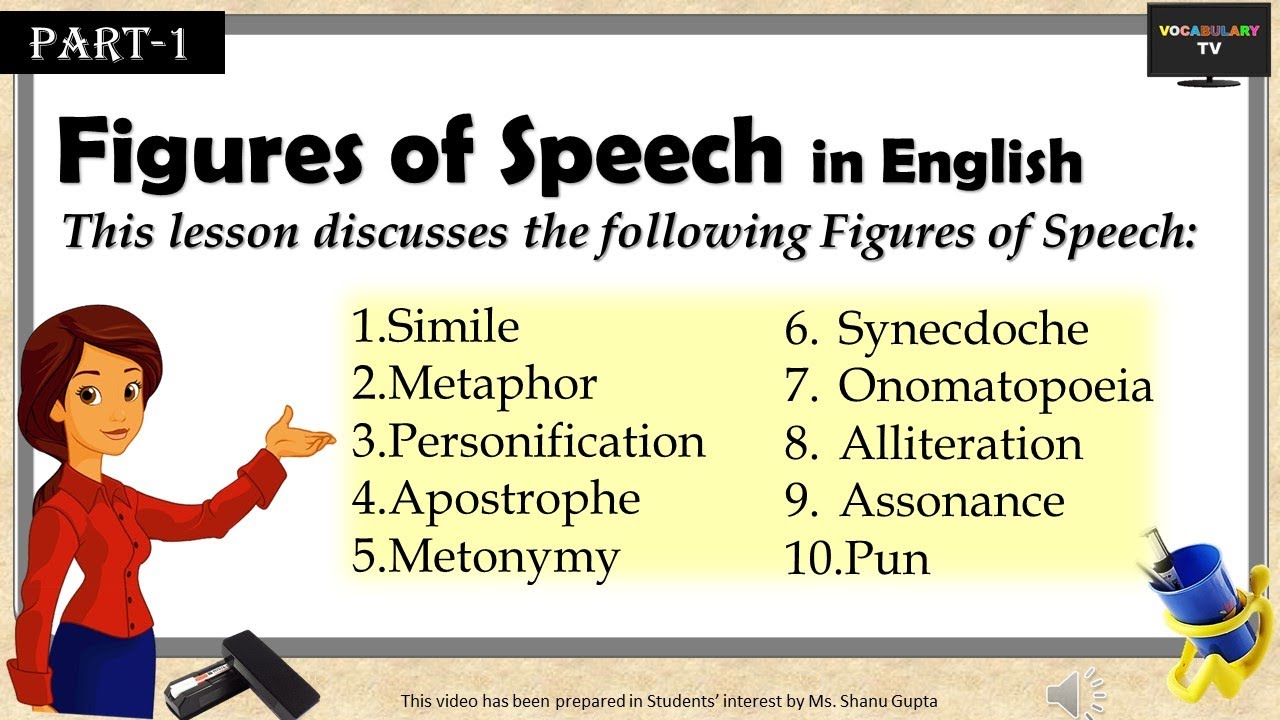
Top-22 Figures of Speech in English (Part-1)
3M
Every phrase has two kinds of meanings: literal meaning (the meaning when you consider the words in their usual and most basic sense) and figurative meaning (the meaning implied by the phrase). For example, the word 'rack' historically referred to a torture device where victims were tied and stretched until their limbs were torn apart. In literal sense, 'to rack one's brain' would look like someone actually tearing their brain apart, which is almost impossible in real life. In contrast, the figurative meaning of 'rack one's brain' is to strain one's mind and make great effort to think and remember something.
Click to watch →
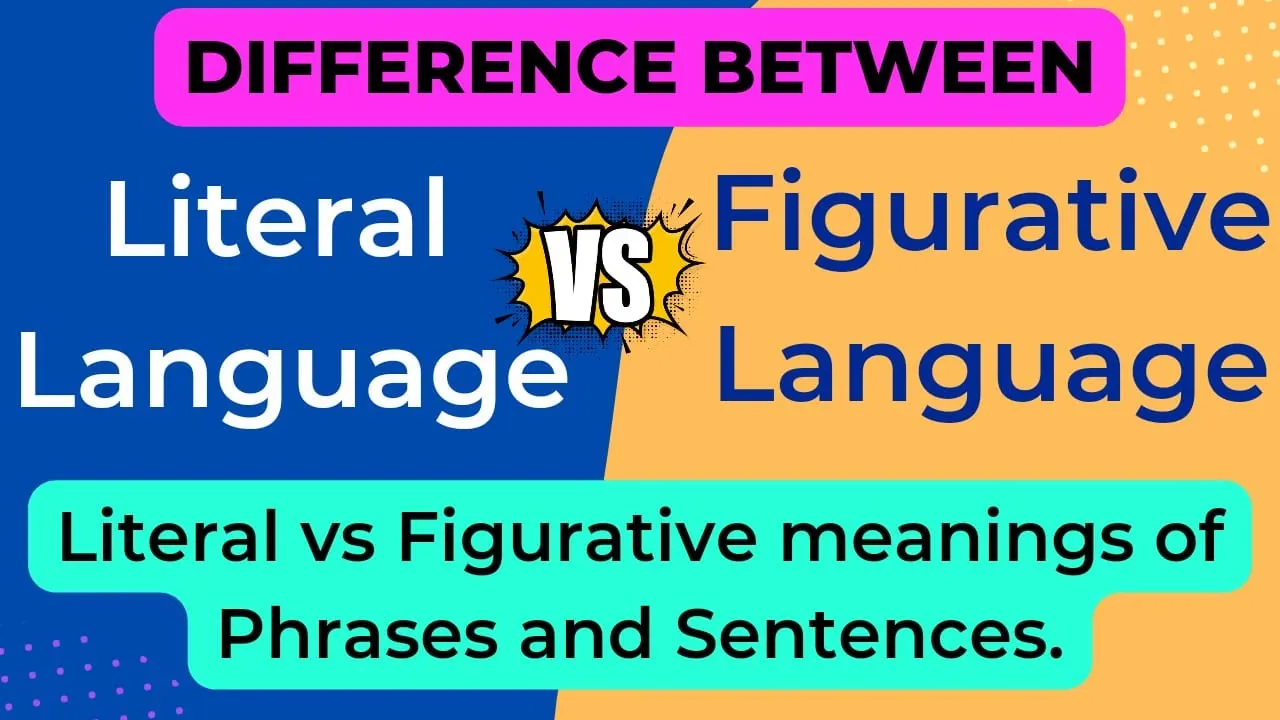
Literal & Figurative Language Difference | Literal meaning vs Figurative meaning | Figurative Tools
68.6K
Literal language conveys exact, dictionary meanings and is used in technical and scientific writing for accuracy, while figurative language uses non-literal, imaginative expressions like metaphors and similes to create vivid, creative effects in literature and poetry; examples include 'raining cats and dogs' (figurative for heavy rain) versus 'my bag weighs a ton' (figurative for something very heavy).
Click to watch →
Deep Dive
The concept of social and political critique in literature, as satire is inherently designed to expose societal flaws.

2nd grade english literature classes | Literary Devices By Manish Mangal sir
22.5K
Satire is a tool for political and social criticism. It exposes hypocrisy and stupidity in society. The device allows writers to challenge authority indirectly while maintaining a layer of humor. This indirect approach provides protection while still delivering critical messages.
Click to watch →

हाम्रा कुराकानी एम ए जलद / इन्द्रेणी शर्माले साहित्यिकसर्जकसंग लिएका कुराकानीका भिडियो क्लिपहरु @जलद
234
Satirical literature represents an important form of social criticism that uses humor and irony to address social and political issues. Writers who employ satire often create works that expose social problems, political corruption, and societal flaws while engaging readers through entertainment. This form of literary expression represents an important mechanism for social critique that combines entertainment with critical analysis. The connection between satire and social criticism represents an important dimension of literary responsibility that connects creative expression with societal advancement.
Click to watch →

Literary terms in English Literature | UP TGT PGT ENGLISH 2026 |10 |
3K
Satire is a literary technique that uses humor, sarcasm, and extreme exaggeration to criticize social and political evils. Its purpose is positive social reform—using ridicule to expose problems and encourage improvement. A novel that uses dark humor, sarcasm, and extreme exaggeration to criticize political corruption is employing satire. Examples include stories that mock political systems or unethical practices through humorous exaggeration.
Click to watch →
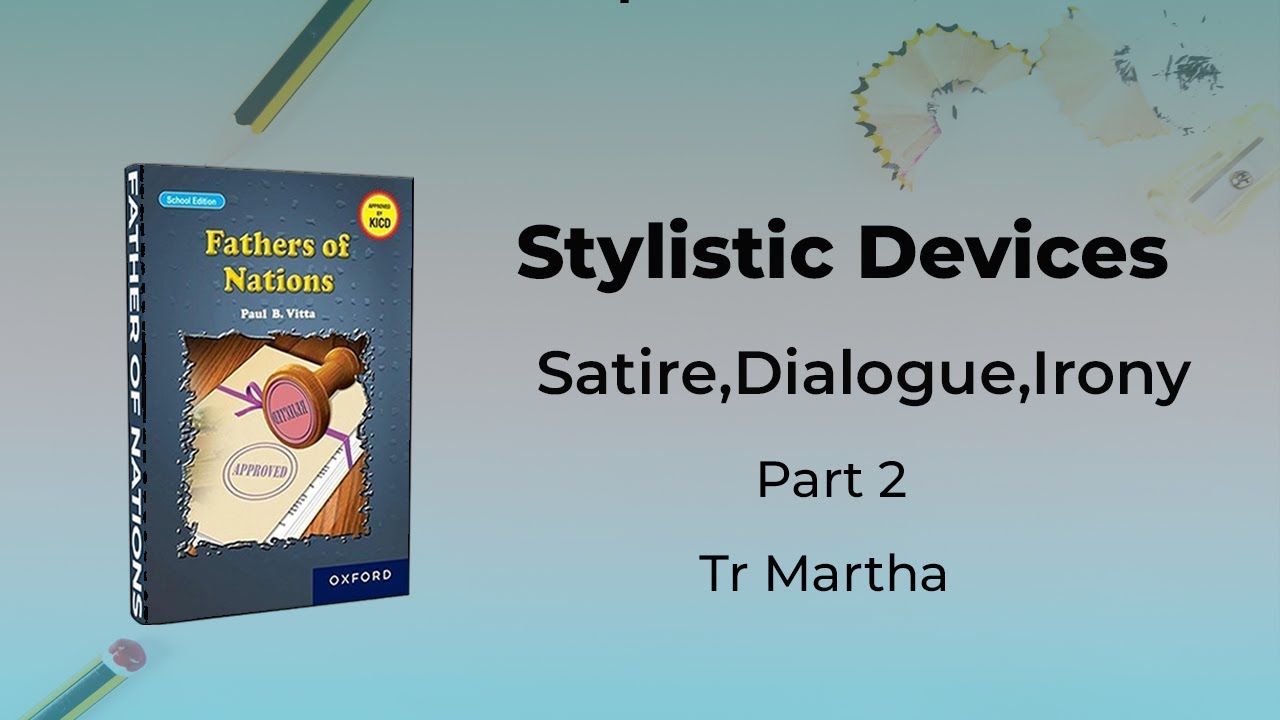
Fathers of Nations #kcse Stylstic Devices Part 2
6.3K
Satire is a literary style used to criticize or ridicule human weaknesses, faults, and vices. The author employs satire to highlight societal problems, leadership failures, and unacceptable behaviors with the intention of prompting correction and encouraging the audience to think differently. The text uses satire to criticize heads of state for irresponsible decision-making (such as tossing coins for important decisions), members of parliament for unethical salary practices, and characters like newborn Wu and AIA for moral failures. This style exposes the gap between expectations and reality, revealing deeper social contradictions and encouraging readers to recognize unacceptable behaviors in society.
Click to watch →

Lecturer Cadre Syllabus Punjabi । Punjabi Lecturer Cadre Preparation Previous Year Question Paper
375
Satire is a literary device used to criticize human weaknesses and societal flaws through irony, wit, and exaggeration. When a writer criticizes something in society through humor and irony, it becomes satire. This form of criticism helps expose social problems.
Click to watch →
Deep Dive
An awareness of basic rhetoric and how authors use tone to influence or persuade an audience.
Audiences, Discourse Communities, and Rhetoric
4.2K
Rhetoric is the study of how communication is directed toward specific audiences (discourse communities) to achieve intended purposes. The two fundamental considerations in rhetoric are purpose (the reason for communication—informing, persuading, solving problems, changing opinions) and audience (who will receive the message). These elements are intimately connected; the same purpose requires different approaches for different audiences. For instance, convincing parents, teens, and police officers about banning texting while driving demands distinct rhetorical strategies. Rhetorical awareness involves intentional choices about organization, word choice, figurative language, emotion, and tone. Communicators must study rhetorical strategies (description, narration, exemplification, cause-effect, comparison, process analysis, classification, division, definition), rhetorical devices (alliteration, allusion, hyperbole, metaphor, repetition, parallelism, understatement), and rhetorical appeals (credibility, emotion, logic, timeliness) to craft effective messages.
Click to watch →

BEGLA 137 Language through literature Most Important Questions One shot / IGNOU English
19.7K
Rhetoric is the skill of speaking and writing in a way that influences others. It is used in speeches, debates, and writings to make messages strong and clear. A person using good rhetoric can easily convince people. Rhetoric employs powerful words, emotions, questions, repetition, and examples to persuade the audience. Aristotle explained three ways to use rhetoric effectively: Ethos (trust), Pathos (feelings), and Logos (logic). Ethos involves building trust with the audience by establishing credibility. Pathos involves appealing to the audience's emotions and feelings. Logos involves using logical reasoning and evidence. By combining these three elements, a speaker can effectively influence and persuade their audience.
Click to watch →

3 Rhetorical Devices to Persuade an Audience
1.2K
Effective persuasive writing employs three key rhetorical devices: tone (the writer's attitude conveyed through word choice, requiring appropriateness for the audience and selection of words with specific connotations), language (careful word selection where synonyms carry different emotional impacts, such as 'pollution' versus 'poison'), and repetition (repeating impactful phrases to escalate power, using short, punchy sentences strategically 3-4 times to avoid monotony).
Click to watch →

Intro to Rhetorical Devices
103
Persuasive writing aims to sway audiences to agree with arguments and take action. Key principles include avoiding uncertainty language like 'I think' or 'I believe' to maintain authority, and understanding that audience analysis determines persuasion tactics. Tone—the author's voice—must balance authority with approachability, while mood represents the overall atmosphere. Effective tone influences reader response, as demonstrated by how the same request can be delivered aggressively or friendly. These foundational elements work together to create compelling persuasive communication.
Click to watch →
Introduktion retorik
3.8K
Rhetoric is the art of persuasion, applicable to both oral and written communication, and is essential for effectively achieving one's communication goals by considering the audience, subject, and situation; learning rhetoric involves four key elements: natura (innate knowledge), ars (theoretical understanding), usus (practical application), and imitatio (learning from others), which together help individuals become more aware of how persuasion works in daily life and increase their ability to influence others.
Click to watch →
Prerequisite Knowledge
- Concept 01Understanding of basic literary devices, particularly irony, sarcasm, hyperbole, and parody.
- Concept 02A foundational grasp of figurative language and the difference between literal and implied meaning.
- Concept 03The concept of social and political critique in literature, as satire is inherently designed to expose societal flaws.
- Concept 04An awareness of basic rhetoric and how authors use tone to influence or persuade an audience.
Subsequent Learning
- Step 01In-depth analysis of classic satirical texts, such as Jonathan Swift's 'A Modest Proposal' or Voltaire's 'Candide'.
- Step 02Examination of modern and contemporary satire across different media, including political cartoons, mockumentaries, and late-night comedy.
- Step 03An exploration of the ethical boundaries and legal aspects of satire, including censorship, free speech, and libel.
- Step 04Practical application through writing original satirical essays, commentaries, or creative pieces using Horatian or Juvenalian techniques.
Satire Basics
Satire Types
Satire Basics
0:03Playing Section
- 1
Satire uses humor to expose societal flaws.
- 2
Irony, hyperbole, understatement develop the critique.
- 3
Its function is awareness and motivating change.
The Satire Paradox and the Critique of Efficacy
While traditional literary theory frames satire as an effective tool for social critique and moral reform, an alternative perspective argues that satire often fails to achieve these goals, a phenomenon known as the "satire paradox." Critics suggest that rather than changing minds, satire frequently reinforces existing biases, as audiences tend to interpret satirical works in ways that align with their preexisting beliefs. Furthermore, some political and literary theorists argue that satire can breed cynicism and apathy rather than active mobilization, sublimating genuine outrage into passive entertainment. From this viewpoint, satire acts as a safety valve that releases social tension, ultimately preserving the status quo rather than challenging it. Additionally, critics point out that classical typologies struggle to account for modern digital satire, where the line between irony and sincere extremism is increasingly blurred, sometimes leading to the accidental propagation of the very ideas being mocked.
Deep Dive
In-depth analysis of classic satirical texts, such as Jonathan Swift's 'A Modest Proposal' or Voltaire's 'Candide'.
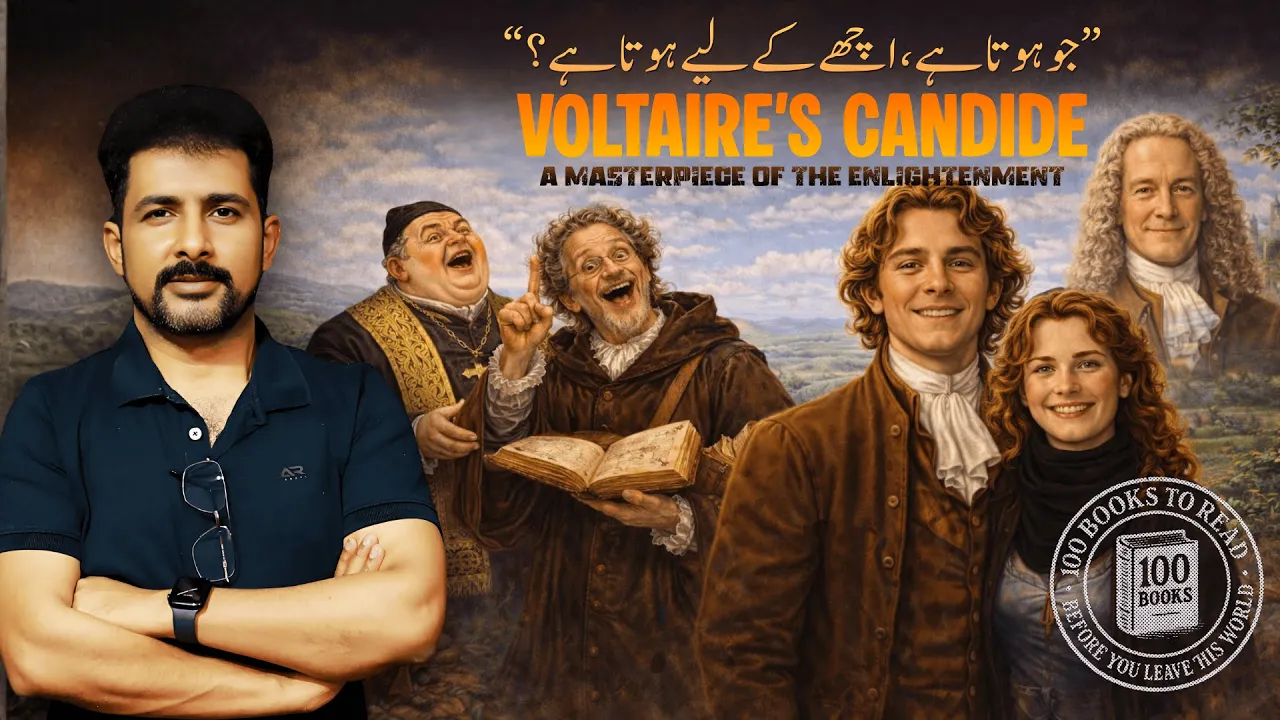
100 Books | Candide by Voltaire in 1759 CE | Faisal Warraich
148.8K
Voltaire's 1759 novel 'Candide' uses satire to critique the Enlightenment-era philosophical optimism that everything happens for the good, following the protagonist's journey from a sheltered existence to witnessing widespread suffering—including war, rape, torture, and natural disasters—which ultimately leads him to reject both blind optimism and pessimism in favor of practical action: 'Let us cultivate our garden.'
Click to watch →
![Cosas muy extrañas que encontré en Internet [Vol. 1]](https://i.ytimg.com/vi/tCLH3TUD6CE/maxresdefault.jpg)
Cosas muy extrañas que encontré en Internet [Vol. 1]
511.8K
This segment explores Jonathan Swift's famous 1729 satirical essay 'A Modest Proposal,' which absurdly suggested eating Irish children to solve poverty. The video presents a 1970s New York document that appears to be a modern parody of Swift's work, proposing to treat people with intellectual disabilities as pets. The document's absurdly logical arguments mirror Swift's technique of using seemingly reasonable proposals to expose societal problems. The case illustrates how satire can be misinterpreted as genuine proposals, and how historical literary works continue to influence modern discourse.
Click to watch →
VOLTAIRE 📜 Candide (Résumé-analyse du conte philosophique commenté chapitre par chapitre)
627.4K
Voltaire's Candide (1759) uses the philosophical tale genre to satirically critique Leibniz's optimistic philosophy through Candide's naive journey across Europe, demonstrating that despite suffering, war, slavery, and persecution, the only meaningful response is practical action—'cultivating our garden'—rather than abstract philosophical speculation.
Click to watch →
ЛЮДОЕДЫ ОТ ДЖОНОТАНА СВИФТА ( вкусные жирненькие дети )
9.3K
Jonathan Swift's 'A Modest Proposal' (1729) is a satirical essay that uses the shocking premise of eating Irish children to criticize British colonial policies and the indifference of the English toward Irish poverty. Swift, an Anglo-Irish writer and Anglican clergyman, employed this extreme irony to expose how economic policies and social neglect had reduced Irish children to a 'burden' on their parents and society. The essay demonstrates how satire can serve as a powerful tool for social critique, using absurdity to reveal uncomfortable truths about human suffering and governmental responsibility.
Click to watch →

Juan Soto Ivars| Juicios contra la ironía
92K
Jonathan Swift's 'A Modest Proposal' is presented as the father of modern irony and ironic satire. In this work, Swift proposes that impoverished Irish families should eat their children to solve hunger, written in a serious, academic tone. This type of irony works by playing with readers' expectations and highlighting the absurdity of proposed solutions to social problems. Swift's irony serves as a 'staff' or 'cane' that allows people to elevate themselves above sentimental responses to devastating situations, enabling them to view reality from a different perspective. In a world dominated by absurdity, irony becomes the primary lens through which people can understand and process reality.
Click to watch →
Deep Dive
Examination of modern and contemporary satire across different media, including political cartoons, mockumentaries, and late-night comedy.
‘Gutfeld!’: This isn't chaos, it's a choice
241.3K
This video argues that late-night political satire, particularly from comedians like Jimmy Kimmel, contributes to modern extremism by creating a narrative ecosystem where chaos is dismissed as a myth while armed security protects comedians, thereby desensitizing audiences to real-world suffering and making abstract enemies of political opponents. The discussion suggests that when beliefs flourish without real-world consequences, extremists become more extreme, and that the very things comedians criticize about political figures like Trump are precisely what made them effective in achieving peace deals that previous administrations could not accomplish.
Click to watch →

Stephen Reveals A Sketch Of The Serial Bomber
2.2M
This video demonstrates how late-night comedy shows use satire to comment on political events, using humor to highlight absurdities in media coverage and political responses to security incidents. The sketch satirically depicts a fictional serial bomber targeting political figures, while also poking fun at how news organizations and political figures respond to such incidents, including the President retweeting a Vice President's statement and the chaotic media response to a bomb discovery at CNN.
Click to watch →

More lefties insist they are ‘not jealous’ of Sydney Sweeney
156.9K
This segment demonstrates how political satire and social commentary function in contemporary media. The video presents multiple examples of satirical content: London Mayor Sadiq Khan's proposed tour of diverse communities for Donald Trump, an influencer's boycott of American Eagle's Sydney Sweeney campaign, and proposals to restrict police vehicle use at home. These satirical elements serve to critique political figures, corporate practices, and social policies through humor and exaggeration. The content illustrates how modern media uses satire to engage audiences in political discourse while simultaneously entertaining viewers.
Click to watch →

Lefties Losing It: Theo Von and Vince Vaughn call out unfunny late-night hosts
367.4K
This video presents a satirical analysis by Sky News host Rita Panahi featuring comedian Theo Von and Vince Vaughn, who critique late-night hosts for becoming too politically agenda-driven rather than genuinely funny, arguing that when comedy shows focus primarily on political correctness and taking sides, they lose authenticity and audience appeal.
Click to watch →

Trump Attacks "Horrible" Jimmy Kimmel, Gets Embarrassing Fake Award & Jimmy Announces Show Renewal
7M
Late-night comedy shows like Jimmy Kimmel Live use political satire to critique public figures and events, as demonstrated when Kimmel mocked Donald Trump's hosting of the Kennedy Center Honors and his acceptance of a fake FIFA Peace Prize, while also announcing his show's contract extension to May 2027.
Click to watch →
Deep Dive
An exploration of the ethical boundaries and legal aspects of satire, including censorship, free speech, and libel.
Mel Brooks, The Producers and the Ethics of Satire about N@zis
2.5M
Mel Brooks established clear ethical boundaries for satire, recognizing not all targets are equal. While producing 'Blazing Saddles' with frequent racial slurs, Brooks refused to depict lynching, acknowledging as a white Jewish comedian he had no right to appropriate black suffering. He similarly opposed gentiles appropriating Jewish genocide. Brooks maintained that comedy is a weapon requiring careful consideration of consequences. The key questions for responsible satire include: Is the representation romantic or derisive? Is it comedic? And crucially, at whose expense is the joke? These framing considerations determine whether transgressive humor challenges harmful constructs or inadvertently reinforces them.
Click to watch →

KLH-Kanal: Drachenlord und das legendäre Berndian Radiointerview (Teil 2).
19.7K
This segment examines the complex legal boundaries of satire under copyright law. The discussion reveals a fundamental paradox: satire is generally permitted, but if the satirized person complains, the content must be removed. This creates a self-censoring mechanism that effectively closes the door on satirists. The analysis explores how this framework could potentially fit into authoritarian systems, as it allows for the suppression of dissent through legal means. The segment also addresses the challenge of distinguishing between legitimate artistic critique and harmful false accusations, noting that determining the boundary between defamation and artistic expression is so nuanced it may only be understood by the artist themselves.
Click to watch →
Satire | Darf Satire alles?
7K
Satire is a form of social critique that uses exaggeration and mockery to highlight societal problems, but it is not unlimited; while protected by constitutional freedom of art (Article 5 of the German Basic Law), satire must balance its critical function against other fundamental rights such as human dignity and religious freedom, meaning it can be restricted when it conflicts with these rights, and not all provocative content qualifies as legitimate satire.
Click to watch →

WESER-Strand 2018, Folge 10 - Zu Gast: Jan Böhmermann
236.6K
Satire operates within legal boundaries that distinguish it from defamation and other forms of harmful speech. The speaker explains that while satire is generally protected, there are limits - particularly when it crosses into personal attacks or defamation. The speaker describes how they have had to navigate these boundaries carefully, particularly when their work has attracted legal attention. This illustrates the complex relationship between creative expression and legal protection in democratic societies.
Click to watch →

Shlomo ist FREI.. die Wabe GESPERRT (Kein Scherz!)
4.2K
This segment explores the complex relationship between satire, free speech, and legal prosecution. Schlomo was convicted for using satirical songs and historical images to support his viewpoints, with charges including desecration of religious beliefs under an 18th-century law. The speaker argues that legal systems should distinguish between genuine hate speech and satirical commentary. The case raises fundamental questions about where the line should be drawn between protected speech and criminal content, particularly when satire is used to critique political figures or institutions. The speaker contends that such prosecutions represent a misuse of legal frameworks to suppress political dissent.
Click to watch →
Deep Dive
Practical application through writing original satirical essays, commentaries, or creative pieces using Horatian or Juvenalian techniques.

Great Authors - Literature of the Renaissance - Erasmus, In Praise of Folly
83.7K
Morally didactic literature has two traditions: Horatian satire (gentle, forgiving, fun-loving) and Juvenalian satire (angry, self-righteous). Horace pointed out Roman society's defects gently and inclusively, making criticism palatable through attractive qualities mixed with critique. Juvenal was angry and self-righteous, requiring a high opinion of oneself to condemn others. Those who condemn all humanity tend to lose proportion and covertly justify themselves. Erasmus represents the Horatian tradition, while Edwards and Swift represent Juvenalian tendencies. Effective moral improvement requires keeping condemnation subordinate to the desire to improve the world, avoiding harsh rhetoric that makes people resistant to the message.
Click to watch →
3 Types of Satire Every Storyteller Should Know — Horatian vs. Juvenalian vs. Menippean Satire
961.5K
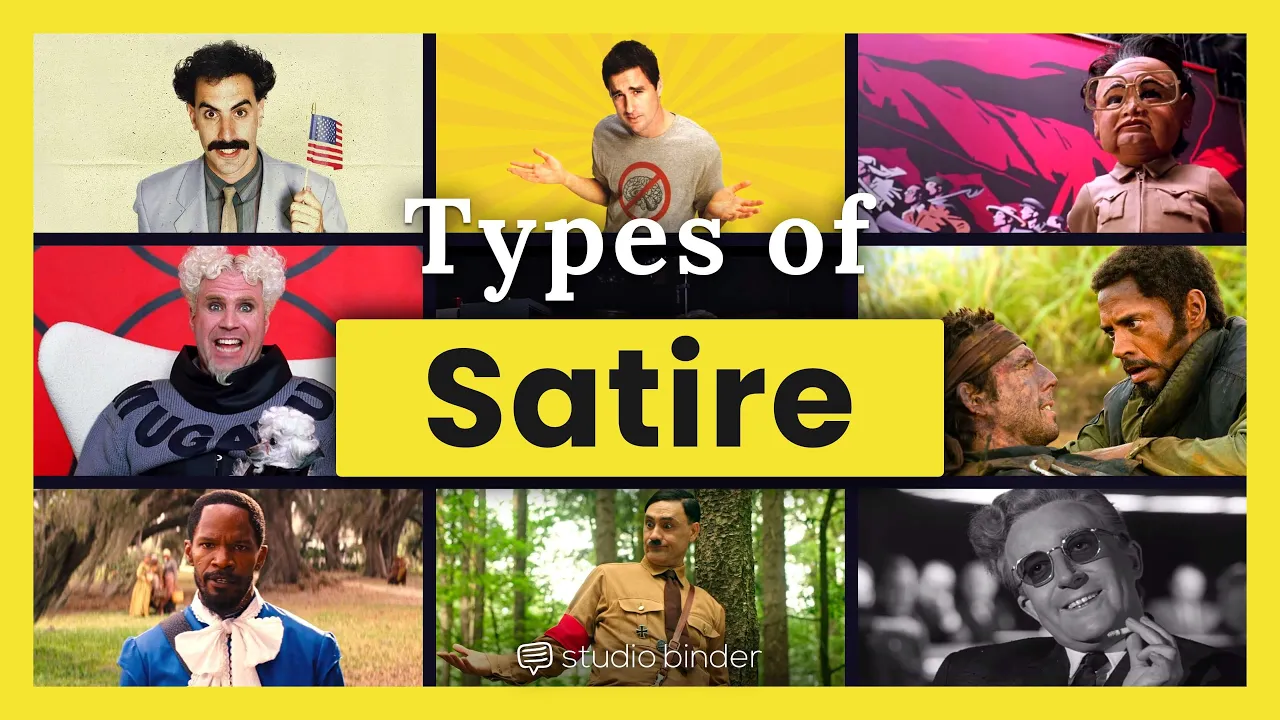
Satire is a storytelling genre that transforms moral outrage into comic art to mock, ridicule, and criticize perceived wrongs in society and belief systems, with three main types: Horatian satire (named after Roman writer Horace) uses light, comedic tones and playful mockery to critique social institutions; Juvenalian satire (named after Roman writer Juvenal) employs darker, more cynical tones and pointed criticism to provoke anger at social institutions like government and class structures; and Menippean satire (named after Greek writer Menippus) targets specific moral attitudes and belief systems such as racism, religion, and ideology, often using absurdity and irony to expose their flaws.
Click to watch →

NET Practice with Heena | Team TES | Model Test
1.9K
Neoclassical satire (17th-18th century) was influenced by Roman satyrists Horace and Juvenal. Satire is a social commentary using irony, sarcasm, and humor to mock people or things. Horatian satire is a loving, playful type that gently criticizes vices through humor and exaggeration, treating vices as follies rather than evils. Juvenalian satire is darker, more serious, and pessimistic, using anger, irony, and personal invective, typically for political purposes. Examples of Horatian satire include Alexander Pope's 'The Rape of the Lock' and 'Moral Essays.' Examples of Juvenalian satire include Samuel Johnson's 'London' and 'The Vanity of Human Wishes.'
Click to watch →
Grade 12 ELA: Distinguishing Between Horatian and Juvenalian Satire RL.11-12.6, SL.11-12.4
3.5K
Horatian satire is gentle, humorous, and uses irony to gently criticize human foibles without being offensive, while Juvenalian satire is bitter, harsh, and uses biting language to attack societal flaws directly; the usefulness of each type depends on the intended audience and purpose, with Horatian satire being more palatable for general audiences and Juvenalian satire more effective for provoking strong reactions and social change.
Click to watch →
Cat's Cradle - Kurt Vonnegut | Book Talk
523
There are three main forms of satire: (1) Horatian satire, named for Horace, is lighthearted and often sympathetic, asking the audience to laugh at themselves (e.g., Spaceballs); (2) Juvenalian satire, named for Juvenal, is serious and functions as a dire warning, hoping to stir indignation (e.g., 1984); (3) Menippean satire, named for Menippus, addresses broader universal issues like the nature of man and is inherently dialogistic, with competing voices that create a continued negotiation that can never be finally closed. Catch-22 employs all three forms, while Gulliver's Travels uses Horatian and Juvenalian satire simultaneously.
Click to watch →
Satire Basics
Satire Types
Satire Basics
0:03- 1
Satire uses humor to expose societal flaws.
- 2
Irony, hyperbole, understatement develop the critique.
- 3
Its function is awareness and motivating change.
The Satire Paradox and the Critique of Efficacy
While traditional literary theory frames satire as an effective tool for social critique and moral reform, an alternative perspective argues that satire often fails to achieve these goals, a phenomenon known as the "satire paradox." Critics suggest that rather than changing minds, satire frequently reinforces existing biases, as audiences tend to interpret satirical works in ways that align with their preexisting beliefs. Furthermore, some political and literary theorists argue that satire can breed cynicism and apathy rather than active mobilization, sublimating genuine outrage into passive entertainment. From this viewpoint, satire acts as a safety valve that releases social tension, ultimately preserving the status quo rather than challenging it. Additionally, critics point out that classical typologies struggle to account for modern digital satire, where the line between irony and sincere extremism is increasingly blurred, sometimes leading to the accidental propagation of the very ideas being mocked.
Understanding of basic literary devices, particularly irony, sarcasm, hyperbole, and parody.
A foundational grasp of figurative language and the difference between literal and implied meaning.
The concept of social and political critique in literature, as satire is inherently designed to expose societal flaws.
An awareness of basic rhetoric and how authors use tone to influence or persuade an audience.
In-depth analysis of classic satirical texts, such as Jonathan Swift's 'A Modest Proposal' or Voltaire's 'Candide'.
Examination of modern and contemporary satire across different media, including political cartoons, mockumentaries, and late-night comedy.
An exploration of the ethical boundaries and legal aspects of satire, including censorship, free speech, and libel.
Practical application through writing original satirical essays, commentaries, or creative pieces using Horatian or Juvenalian techniques.
23.9K views114likes2:39@Tutors-comOriginal Release: 2024-02-15
What is Satire?
Satire is a device and literary genre that employs humor and ridicule to expose a fault in society or humanity.
While often political, satire generally critiques the human condition, focusing on the negative aspects of behavior.
Literary devices such as irony, hyperbole, and understatement help in the development of satire: Irony highlights the difference between belief and reality.
Hyperbole exaggerates a single characteristic or element of the subject of the satire to steer the audience's attention.
Understating an aspect of what is being satirized can help develop a humorous response.
The function of satire is to create awareness, motivation, or both.
Satire can expose flaws in society and human behavior by providing social commentary or criticism.
In exposing these faults, satirists hope to promote awareness of an issue and motivate others to change.
By providing a satirical reflection of society, authors allow their audience to experience empathy for those included in the satirical work.
Creating an emotional connection could allow the audience to reflect on their behavior and beliefs, motivating them to change.
The three types of satire are Horatian, Juvenalian, and Menippean.
Horatian satires are comical and humorously present various social issues.
They evoke a comedic response by pinpointing peculiar aspects of human behavior.
This type of satire is considered the mildest form and entertains rather than tries to induce societal change.
Juvenalian satires avoid humor and provide a dark, foreboding tone meant to motivate others to confront those in a position of power.
Their goal is to expose hypocrisy and the indiscretion of governments, organizations, and leaders.
Menippean satires cast moral judgment on certain beliefs, such as racism or classism.
These can either be presented as comedic or ominous.
They typically focus on critiquing a specific human fault.
Up Next
3:18
Simplicius Simplicissimus by Grimmelshausen Review
@LiamsLyceum
1.4K views•2024-01-12

13:43
Formalism in Literary Criticism: An Academic Lecture Overview
@mattalberhasky9952
39.1K views•2015-08-05

6:08
Point of View in Fiction: First Person vs. Third Person
@magicalthriftyteacher
153.8K views•2014-03-31

15:25
1984: Orwell's Dystopian World and the Mechanisms of Totalitarianism
@AlternateHistoryHub
7M views•2017-03-04
Related Study Plans & Knowledge Roadmaps
Structured learning paths in Literature
literature
Graphic Memoirs: Visual Art, Trauma & History
01Foundations of Sequential Art and Visual Language
02Autographics and Processing Historical Trauma
03Visualizing Personal Trauma, Grief, and Graphic Medicine
+ 2 more learning modules
14h5 modules
Explore Roadmap
literature
Campus Novels: Evolution, Themes & Critique
01Introduction to the Campus Novel Genre
02Mid-Century Satire and the Post-War Academy
03Dark Academia and the Critique of Privilege
+ 2 more learning modules
14h5 modules
Explore Roadmap
literature
Theater of the Absurd: Philosophy & Plays
01Postwar Existentialism & Historical Roots
02Dismantling Narrative: Esslin & Absurdist Conventions
03Samuel Beckett and Tragicomic Existentialism
+ 2 more learning modules
12h5 modules
Explore Roadmap
literature
Revenge Tragedy: Justice, Madness & State
01Foundations of Early Modern English Theatre
02Anatomy of Revenge: Structural Conventions
03Psychological Complexity: Madness and Melancholy
+ 2 more learning modules
15h5 modules
Explore Roadmap