



















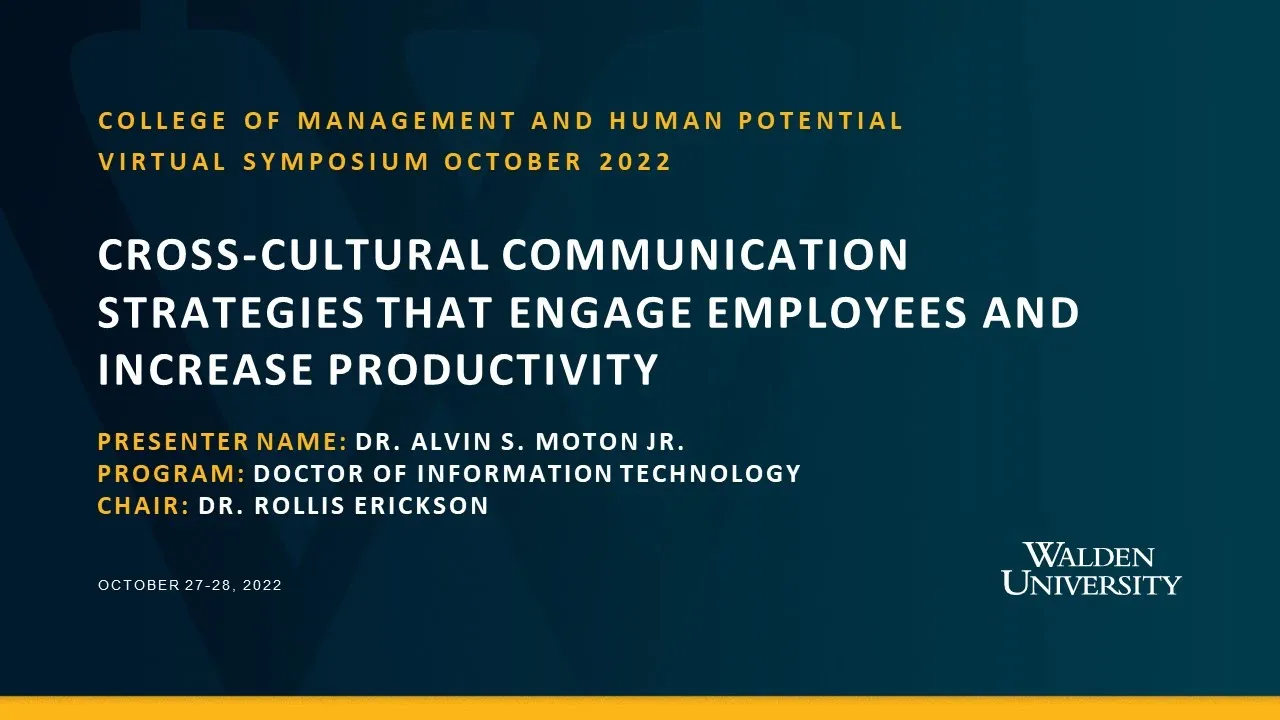




Effective workplace communication requires cultural intelligence—the ability to understand and adapt to cultural differences in communication styles, including verbal delivery (volume, speed, vocabulary), nonverbal cues (body language, eye contact, gestures), and contextual factors (high-context vs. low-context cultures, individualist vs. collectivist values)—to build trust, foster collaboration, and create inclusive environments where diverse team members can communicate effectively despite cultural differences.
Workplace Trust Building Communication Training Webinar
Added:Basic concepts of professional communication, including active listening, clarity, and non-verbal cues.
Fundamentals of Emotional Intelligence (EQ), particularly the roles of empathy and self-awareness in social interactions.
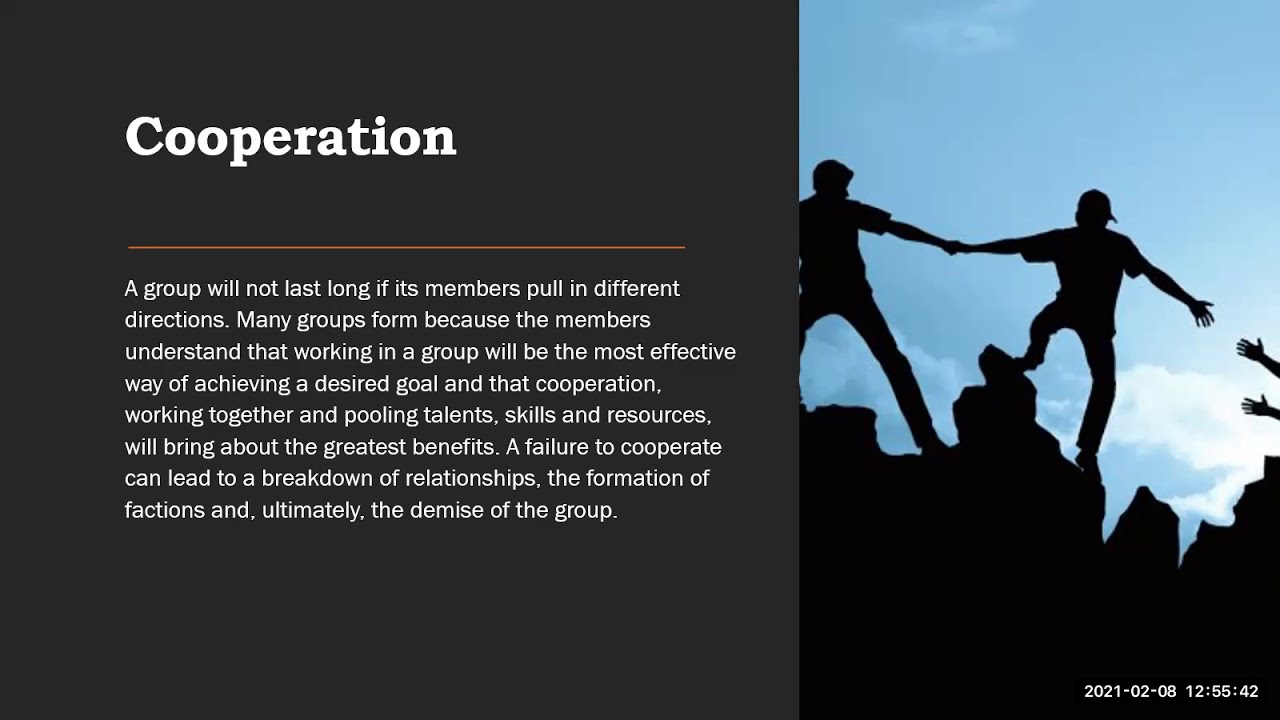
Basic understanding of team dynamics and how individual behaviors influence group cohesion.
The concept of organizational culture and how interpersonal relations affect overall workplace productivity.
Advanced conflict resolution and negotiation techniques to repair damaged workplace relationships.
The framework of Psychological Safety (pioneered by Amy Edmondson) and its implementation in high-performing teams.
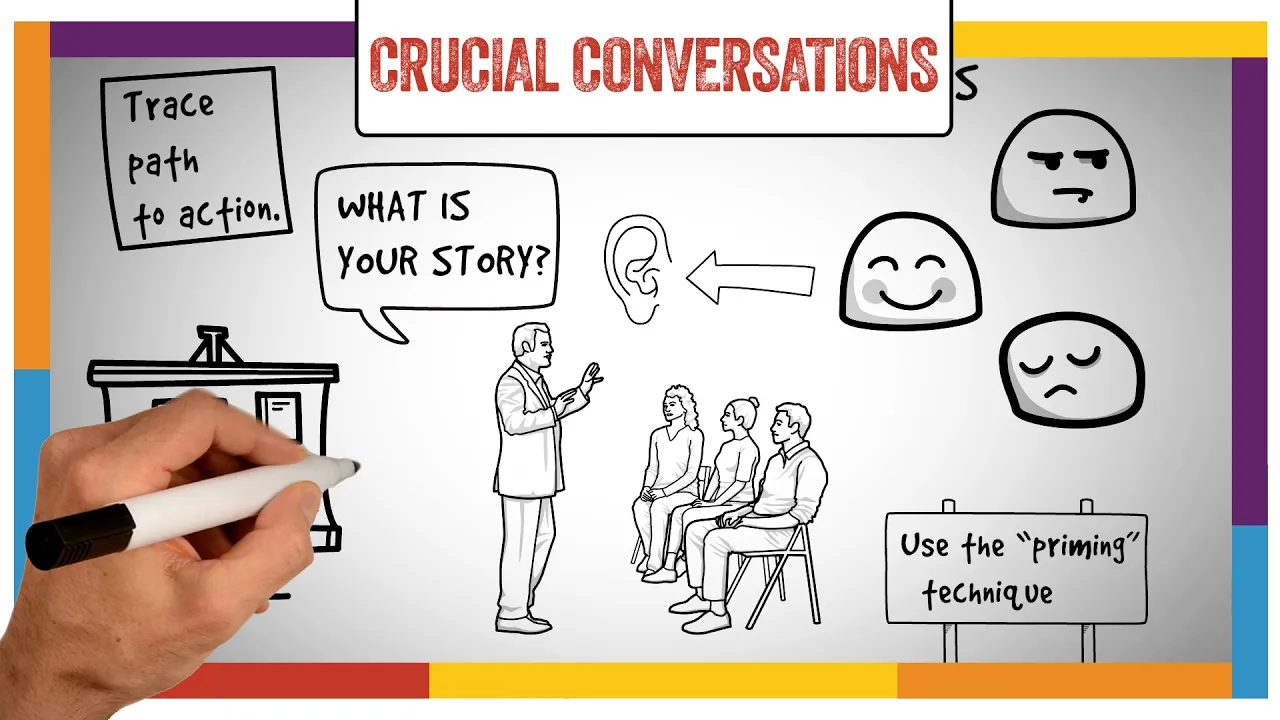
Crucial Conversations training: strategies for discussing high-stakes, emotional, or sensitive topics constructively.
Cross-cultural and virtual communication strategies to foster trust within diverse, remote, or hybrid teams.
Collaborative leadership models that focus on servant leadership and empowering team autonomy.
160 views0likes1:39:09Original Release: 2013-10-07
Oh, okay. I like that. So, uh, by a show of hands, if people could please raise your hand and let me know if you can see the screen, I will proceed.
That would be great.
Looks good. Also want to let you know that we have at least to answer questions. And I recommend [Music] You can't raise your hand and say that you're here.
Okay.
So who was that?
[Music] Are you hearing this conversation? Okay.
And he's so as we are speaking in the background and I hope that will be helpful for us. Um, but I do need you to be able to raise your hand so that we can you got it now.
Okay, one problem solved. All right, we're going to try to do this one for us. Uh, I have Hello.
Um, how does one raise their hand?
Uh, they go to their um, you go to the upper right hand corner of the screen and click and you can click. You see that? Did everyone get that?
Okay, that works. So, we do have the raise your hand uh, feature all figured out. And there's also a chat feature where you can type in any questions that you may have and you should have a welcome to the working well together.
So I hope that you have that as well. Um we also as I can't emphasize enough [Music] that's the screen that I'm speaking from right now. when you log on it should have been a welcome and one thing is that's going to be important for us and last but not so specific I want to raise their hand.
But one thing we didn't know is that hello is spoken in many different languages and it's not just for actually different dialect called black and there are ways to sing that may not be formal but that are informal and I want to experience that but since a little bit about difficulties you will have a chance to come back uh in a little to be patient.
In terms of our webinar today, it is my desire to help to develop communication skills for you that help you to establish a supportive network of care, to build trust, to develop communication skills to foster collaboration, and to build a workplace relationship. And if you don't have one already and you want to build more or you don't have enough uh this will encourage you to be able to expand network. Now I want to talk a little bit briefly about peer pier is going to be many things in this particular just for a moment for the peer positions according to the private position. uh but it is central to all peer condition and what is central to position is self-disclosure peer support is safe and people who share similar methods there are jobs that are established specifically for others that are non genetically which Then the attention to place job might find that. Now some of the common terms of care include peer counselor advocate specialist case manager [Music] recovery specialist coordinator or even director. Today there are many many more trends and combinations of terms that are too numerous for us. In some cases, the term peer specialist, the most common, is being avoided in favor of the word recovery specialist. And that due partly to the fact that the term peer identify the person as a consumer of mental health services or some other service and they will not want to in the future if or when they apply for a job outside of the law health that information. There are also examples of professionals adding the word peer to their title or self-disclosing in order to be more honest and open with person.
Many peer providers have professional degree.
Unfortunately, the term peer specialist has begun to be synonymous with someone with mental skills or education beyond mental health experiences and who comes into a position at the bottom of the of the ladder. And many of these peer professionals are concerned that there is not a permanent stereotype of the peer specialist position that's going to be developing. Nonetheless, together and I say together, we that's us everyone on this phone and beyond are practitioners and we thrive in our creative and challenging environment. One that demands sophisticated work we deliver with both a sense of purpose and urgency.
staff, peers, family partners, volunteers, and community have the opportunity to drive this challenging and stimulating consumer world.
Now, this webinar is basically an internal personal experience, though it can be identified ultimately in behavior.
Therefore, the exercises included in this webinar directed inward.
They're designed to help the individual assess themselves.
Now, it enhances the learning if responses are shared at the appropriate time. And the main purpose of this webinar is to begin a thought process within ourselves that leads to favorable outcomes.
And we are going to be looking at establishing a supportive network of care to help sustain an environmental growth.
We're also going to be looking at building trust within the workplace or the service environment within a multicultural context. We will also be developing communication skills to foster communication and become partners in creating culturally responsive care and treatment.
And the fourth thing on my most effective favorable outcome today is to build workplace relationships to identify and align individuals with workplace mentors to build teams and to identify resources.
These resources can be helpful building effective communication to increase successful interactions and to reduce stress. So there we go. And I just want to know how am I doing? So, please raise your hands if I'm doing okay.
Now, there is one question that was raised and I I want to answer it in terms of can you clarify regarding a family member, the peers and parent partners and that type of involvement.
And yes, we will be talking about the roles of all of those positions. And I would say that the communication uh webinar that we are uh discussing today will be derained to all of those calls. Not describing the differences in terms of how they function in the field but know that everyone should have this communication and it is not specific.
I think what I want to do now is uh go to a poll.
And I want to ask your team and that being [Music] how accurately you think you can restate someone else's now a poll should be coming up before you that you can answer and respond to those questions.
[Music] And if that question is not coming up for you, please send your answer via chat if you are able.
[Music] Now your response will be a no way B electrical. There you go. It's up on the screen.
Coll and I'll give you the responses.
5 seconds.
The call is closing.
[Music] And it looks like a lot of you, you just got the original poll.
Okay? Cuz it looks like 90% of you said you're doing okay.
Oh, I see. The wrong poll was put up there. That was a poll that was asked at the very beginning of your registration.
Yes. So, we didn't get the right poll up there. Give me another chance. We're working in partnership here today. So, I hope that we are being provided some forgiveness. Until then, let's move on to this slide.
not how are we doing today but this slide in terms of what and we're going to talk about communication a little bit but before I get into talking about communication I want more purpose of the webinar which is exploring the influence of cultural communication is actually to encourage understanding of how cultures affect the messages we're delivered so how they communicate this webinar is also going explore how cultures affect communication behaviors and how culture influences other communication behaviors as well as novel communication behaviors.
We lost the PowerPoint.
Oh, you lost the PowerPoint. How about everyone else? Will you have the PowerPoint?
Yeah. Raise your hand if you have the PowerPoint.
You had it.
Okay. Now, here we go. Now, we have a problem.
Okay. It looks like we have to do some resetting. That is definitely technology. For some reason, it dropped.
So, I know what to do next time. I'm looking at what happened and I'm getting uh anticipate that happening the next time. What you should see on your screen is communication agenda.
and we're talking. Is that on screen?
[Music] Okay. So, who are you?
Okay. Samino.
And everyone else, can you see my uh slide communication agenda?
[Music] Okay, you collect the controls now.
Okay, so I hope that's helpful to everyone as we are all learning about this technology that doesn't seem to want to behave with the humans that created it. Nevertheless, language and communication.
Um, in the end, we will be talking about lessons learned as well. Um, [Music] we're going to talk about communication styles and we will be sharing our thoughts uh at the end of the webinar.
[Music] The communication process. Are you all able to see that slide?
Raise your hand.
[Music] Great.
The most important single change.
[Music] It looks like half of you have raised your hands and the other half have not.
What I'm going to suggest is that you do as one suggested go to your control panel and get on to the slide or log back in. Raise your hands now if you are able to see the slide.
Good. A good percentage of them.
Okay. the others you might want to suggest.
Uh follow my suggestion and log in again.
Um I'm going to move forward but communicate with us if you're having technical difficulties.
the most important. Uhhuh.
Uhhuh.
Your hand should be ready with the arrow up and your hand should be down. The arrow is down.
Oh, at the top.
Oh, I'm looking at it down on the bottom. Got it. Got it.
All right, we okay.
I know this is very interesting. I appreciate the laughter in the background.
Yes.
So, you're a toggle. You're going to you're going to raise your hand and put it down, but we should also be controlling your hand raising here as well.
[Music] Okay, I I think that we also have that control here. So, thank you for saying that. So, if you are able to raise your hand and unra it, that would be helpful for the moment.
And I hear a phone in the background.
So, if that person could put their phone on mute beside someone that's speaking, that would be great. I'm going to try to look through this channel. This is an exciting webinar and these technical difficulties I will let you know are not going to get into my way today. So let's do it. The most important single changes in consciousness in the last century is the need on computers, these webinars and these on phones. Never mind. But nevertheless, it has been multiplying the means in the form of what we call communication.
Effective communication in the workplace requires a combination of different skills such as the ability to actively listen, write clear and concise reports, use verbal and nonverbal forms of communication and be aware of how others also use these approaches to their advantage. According to Lawson and that's L A W in 2009, in order to uh for verbal communication to be as productive and understood as possible, he says that special attention must be given to three main areas including volume, speed of delivery, and vocabulary.
Our different cultures often cause us to not discuss certain issues.
For instance, take a conservative Christian, especially of old school values. They would have a great deal of trouble discussing sexuality and would find it virtually impossible to discuss homosexuality.
With regard to newborn members of the culture, gradually they begin to learn functions, values, and belief as they grow and apply the language skill.
Parents, older siblings, relatives and others pass on cultural rules to conversation neighborhood critical learning. This process of learning culture can be applied to the workplace as well which has its own culture and its own cultural groups.
[Music] And we know that communication and the workplace creates whole different language itself and infra and the language can create problems that do affect communication regardless of the workplace environment and the individual's role. It is essential to use language which is going to be most easily understood by the listener. A huge issue with any work setting is the use of jargon in phrases.
While such phrases or words are perfectly fine communicating with familiar comments in the office, it's critical that one remembers to cut out jargon. specifically when speaking to customers to the job to avoid confusion and coming across errors.
These problems in the workplace are a significant issue and they are a significant issue regarding barriers to workplace and that there is a perception which affects the way a conservative or conversation or instruction is actually interpreted.
perception problems in work environment where there is a real sense of hierarchy in up and down greater than authority um and where there is a a feeling of belonging to certain clicks within departments as well of such a system. It is far more likely that information provided by those on the quote unquote outside will be accepted and I speak to employees that speak about their roles because it's the family [Music] and awful lot of time also voices going back and forth between the office department the home meetings and field visits. I know particularly in South and other rural areas or not other rural areas but in rural areas um to work in places that can be very stressful and cause a lot of difficulty particularly for those junior members of staff to be able to communicate with other staff and particularly with higher levels of uh employers in the organization.
[Music] Communication is a behavior affected by culture.
Communication is far more than speech and writing.
Most of us are unaware that we are in music in many different ways. Even when we're not speaking, we are rarely taught about this mostly nonverbal form of human communication in school. Even though it is very important for effective interaction with others growing up in [Music] life [Music] by observing others have imitated them.
You know, one of those that come to my mind is we think of the African-American woman who was very angry and what might she envision her doing. I know what I envision her doing. Putting her hand on her, not letting her backbone her, her head go side to side. You see that vision, I'm sure. But that's cultural, but that's what I see. Now, how many of you actually relate to this? Raise your hand.
Yeah, I love seeing those hands up there. That means you're following really good. So within any particular culture, a person's values are usually very logical and they make sense for that particular culture. So for these reasons, people should be very cautious about making judgment about other people's values. If one really wants to understand something else, one has to listen extremely well and try to get inside of another person and one of those places we can do that is in peer groups because peer groups have influence and that is also a form of engagement.
It provides a sense of belonging and also a committed social responsibility.
We are all influenced by our peers. The people of our own age, work discipline, hobbies or interests who are around us every day. Peer bridge provide us with the safety of an identity and is an indication of who our friends are. These are the people we look to for our support for understanding or helping us to make decisions.
Identification with the group gives us a sense of belonging. Sometimes these groups can influence how we think or act. This points can be good reinforce what we know to be right or provide us with information on how to act in a confusing situation.
However, sometimes this employment and like to make a decision based on what we feel or know particularly in the workplace. I want to re-emphasize that our new staff, our new workers, our peers and our family partners have a difficulty knowing their place and the influences they have are their peer influences and there are new peers that they need to relate to and we need to develop a context for developing that relationship.
Peers are a natural extension of the work being done and they're an extension of who's been there and done that. They can connect where their peers and other staff can better with you also if we share how we do that.
Peers foster an environment of committed and socially responsive staff who trust and respect one another both intellectually and personally so that creativity ideation and peer-to-peer mentorship can deliver.
This should be expanded in the workplace to include other staff to promote partnerships and teams. Our peers and family uh partners are talented. They're motivated. They're paraprofessionals.
They come from diverse backgrounds and boast a multitude of excuse me of experiences that all contribute to workplace culture. The reduction of stigma and building of rapport with the service population.
However, in relation to not just the peers, the partner, but speaking to everyone, the managers, the supervisors, the directors, we all have to develop the capability to grow personally to deal effectively with people. And I call this cultural intelligence. It's actually a a definition for cultural intelligence. your capability to grow personally through continuous learning and good understanding of diverse cultural heritage, wisdom and values and to deal effectively with people from different cultural backgrounds and understanding. We all have to learn how to do that in everyday life. We come across various forms of communication between parties. Communication content includes acts that declare knowledge and experience, give advice and feedback and ask questions. These acts may take many forms including gestures, nonverbal communication, sign language, body language, writing, speech. The form depends on the symbol systems used.
Together, communication content and forms make messages that are sent towards a destination. The target can be oneself, another person, or another entity such as a group or corporation.
Have you ever wondered how people from some cultural backgrounds talk so loud? Why they may seem aggressive?
Why do they stand so close to you when you're talking? Or maybe you wonder why some patients or consumers seem reluctant to speak or maintain eye contact. Could that be helping? You may ask, why do some people from some cultures make it difficult to get a straight answer to a simple question?
Why do some people from some cultures seem not to follow our advice? You can even ask why is it that some nations never show up on time? Don't they on the clock?
Is the last attitude towards time of cultural or individual behavior?
Neither are both. We'll talk about that.
But first, let's look at this cross cultural communication.
information.
You don't need to know this. Oh, that says, "Don't you tell me what you think I need." Now, communication, dealing with other people, knowledge, and misinterpretations.
It's about dealing with people from other cultures in a way that minimizes miser understanding and maximizes your potential to create strong crosscultural relationships to share knowledge.
The key to effective cross communication crosscultural communication is knowledge. Let me say that again. The key to effective crosscultural communication is knowledge. For example, one should always assume that there is a significant possibility that cultural differences are causing communication problems and be willing to be patient and forgiving rather than hostile and aggressive to problems with.
One should respond and care for it in crosscultural experience, not jumping to the conclusion that you know what is being thought. Now this happens in the workplace often because sometimes we are taught like this. We are taught based on an outcome or a need of services. If he's an alcoholic then he's going to end up like that. If he uses drugs, he's going to be like that. issues and prophecy and we just automatically attach words or ideas that we have to outcome and it affects our communication and the different people I've spoken about all experience their own culture their own way of life and have their own means of communication and by responding slowly and temporally this will help influence cultural communication as well when things seem to be going bad we just Stop. Slow down and think what could be going on here.
Is it possible I misinterpreted what they said or they misinterpreted me?
Often misinterpretation is the source of the problem.
Active listening can sometimes be used to check this out. By repeating what one thinks he or she heard, one confirm that one understands the communication accurately.
If one uses words that may seem different, they could be because they might be used differently between languages or cultures. So active listening can help you find these misunderstandings.
You know, we talk about communication, but most of us are unaware that we are communicating in many, many different ways, even when we're not speaking. For this reason, if for no other, people should be very cautious about making moral judgment about other people's values. Values come out of one's cultural background. They are different to track and they are most difficult to track down because the particular source are often a part of one's personal unconscious behavior. They really don't know where it came from.
Let's talk a little bit about a culturation.
Here's a question. Can I define what culture is? You know, I am so glad that you asked that question because this whole thing is about culture. And what I would ask each of you to do is to listen carefully for what culture is. I've said it once in the beginning. I've said it several times before and I will say it a whole lot more times before the end of this webinar. And at the end of the webinar, please ask me that question again if you still love the culture.
Let's talk about acculturation and communication.
We'll talk about also nurturing and the individual versus the collectibility.
In terms of culturation, it's the process of acquiring other cultural approaches, values, etc. When you go into a new work environment, you're picking up a new culture. If you left a doctor's office or a lab, you always go by coat and then you come into a mental health hospital or not hospital but an office where you don't wear white coat.
It's a different cultural law. It's a different cultural law when you're dressing in a suit versus wearing jeans and tennis every day or when you're in a very formal or nonformal environment. There are a lot of things that make your work environment different, including the language and the groups that you serve and the providers of that service.
Language reflects culture and vice versa.
It reveals a cultural attachment, the forms of the language that we use, the formality of it, the lack of formality, the conversational rules, the in the outcome identification that being the knowledge of terminology and use, communicating with others who share a common sense uh set of experiences.
Uh let me give you an example for that.
An inroup and an out group. Hey world, what's up? What's happening? Hey, you know what's up? You know, uh uh come on now. Are we on the low, the down low?
No, no, no. You know what I'm saying? I don't know how to use all of those phrases, but it's a different language for a different girl. He said, "I was doing pretty good." Oh. Oh, yeah. Okay.
Well, my nephews just left. All right.
But anyway, you know, there there's also another kind of language. Let me tell you, if you friendly not totally different and for those of you all who are younger on the phone, don't get offended. But, you know, sometimes women refer to themselves as a girl. Hey girl, what's happening? Or they can refer to themselves as a Hey, that's my Come on, you But you can also say You know, you could really say and tick me off. Or you say and I know that I'm loved. Okay. So, I'm just letting you know that the tone and the language is all different depending on the environment that you're in. And then I could be looking at my pastor and I could be talking and if I say things, I don't think that I shouldn't. I think that I should just say, "I'm sorry, pastor. Forgive me." So there are places that you say it and then places that you don't. Now let's talk about nurturing, the nurturing culture. These are cultures that regard the support of relationships as an important role. In some ways, the terms fall more descriptive of these types of cultures.
Um, if someone could put their phone on you, I think your door is opening and someone talking in the background.
Um, hard cultures, if you can imagine Japan, Switzerland, Germany feeling hard cultures. Softer cultures would be Scandinavian countries like Norway, Sweden and Denmark, maybe even Spain and France. In terms of the individualist versus the collectivist, individualist cultures, they view their primary responsibility as helping themselves and value individual accomplishments. That sounds like some of the workplaces I've been where I've been in the background and everyone else got recognized, but I didn't get recognized for all the hard work that I was doing. But other people really felt it important that they be recognized and that their accomplishments be recognized. and they are really characterized by self-reliance and competition because they're always competing all the time and we really find that prevalent in the United States and Canada, Australia as well as Great Britain. Uh again, I'd like to ask the person who is speaking uh and has your phone not on mute, please put it on mute. Thank you. There's also the collectivist culture.
They fuel loyalties and obligations to an end group.
uh for example extended family and uh they are more attentive to and concerned with the opinions of significant others and you find that primarily in Latin American and Asian groups and what I hope that you remember out of all of this is that we all have layers of culture that define who we are, what we do, and how we behave.
Inculturation we learn that culture is learned through communication and inculturation is a process of communicating communicating one's culture to or via socialization via or through a family through the school through the media through religion and even through the workplace. So, I have a question for you and I'm wondering if someone still could put their phone on mute because I could hear you.
Tell me, think about it. How is the pure actually being inculturated into the workplace?
You have a few seconds to answer the pollen and I hope that you see the poll.
Good. It looks like most of you are getting it. That's great.
The poll's going to be closing in a few seconds. 5 seconds.
The poll is closed.
And it looks like before we get to this next slide that none of you chose not at all in terms of the pure role being inculturated into the workplace. That 30% of you said it was being inculturated a little. 52% of you said it's being inculturated a lot. I mean, excuse me, somewhat. And 19% of you said that it is being inculturated a lot. and none of you said that you didn't know. I really appreciate that. So, what that tells me is that we are aware of the peer role and that it is being integrated into our provision of service at many different places.
Let's talk about stories and communication science.
You know, a good deal of our cultural learning comes from the stories that have been told to us.
Stories from our lives. Humans have stories. We have stories. We make sense of our story as an unfolding story in a way that gives meaning to our past and direction to our future. All people experience it.
Yes, I can still hear someone in the background. Please put your phone up here. Thank you. A good deal of our cultural learning comes in the form of stories from earliest childhood. We have stories told us watch stories stories from act out stories. Taking together these stories help us to find out what our culture is all about. What is right?
What is wrong? What is good and what is bad and how to behave in different situations.
As we grow up, we develop a sense of who we are through the story. we tell about ourselves as well as those that are told to us. These stories help define that, explain where we've been, and capture our future aspirations.
Culture and communication affects the styles that we have. And we'll talk about prejudice, cultural stereotyping, assumed similarity as well as misinterpretation of code. In terms of prejudice, that being an attitude that is caused by ethnosentrism, it is an unfairly biased and intolerant attitude toward others who belong to a quote unquote outside group. And note that the root term in prejudice is prejudge.
Cultural stereotyping is an exaggerated generalization about a group. Sometimes we could say something like all women are emotional.
All older people are out of touch with reality and all immigrants are on welfare paradise. That's cultural stereotyping.
And then there's assumed similarities where it's based on similar physical characteristics or cultural fac that group or because you live close to that group, you are that group. And then there is this misinterpretation where we have an attachment of our cultural norms, our cultural values to others behaviors and actions. So for instance, someone belches and you were raised that belching is rude. Well, in some cultures belching mean that was a dog on good deal and I woke them up. But you could take offense to it when they were actually giving you the compliment.
That's just one example.
Intercultural communication. Now, we'll talk about intercultural communication in terms of cultural context and cultural barriers. And note that the ability to live with uncertainty is an essential ingredient of intercultural communication.
You know, there's someone's phone that's still on in the background and if they could identify themselves, it would be wonderful.
Um there is a suggestion that everyone who has their phone on mute and then raise their hand if you have a question.
That would help. Thank you.
Now in terms of intercultural communication styles, intercultural communication itself is communication of group members that is influenced by different cultural perceptions, symbols, uh systems, both verbal and nonverbal verbal such as the death community. You know, gang have that type of communication and symbols. And guess what else? Baseball has signs and symbols. So they're all over the place.
Let's talk about cultural context as well. Now, Edward Hall in 1959, he identified two distinct ways that members of various cultures deliver messages. And one is the high context culture. Now, the high context culture relies heavily on subtle often nonverbal cues to maintain social learning.
Communicators in these types learn to discover from the context in which a message is delivered such as the nonverbal behaviors of the speaker the history of liberations and the general social rules that govern interaction between people. Now there is the low context culture and the low context culture is the opposite. They use language primarily to express their thoughts. They use language to express their feelings and they use language to express their ideas as directly and logically as possible. Now to the low context communicator, the meaning of a statement lies in the word spoken.
But if you look at the meaning of the high context person, the meaning of the message behavior of the person.
Now in terms of cultural barriers as potential if you didn't know what that was now is an attitude that one's own culture is superior to others. An ethnosentric person thinks either privately or openly that anyone who does not belong to his or her in group is somehow strange, wrong or even inferior. This happens in the workplace too. I'm sharing this with you because we all have culture. It surrounds us. It oozes from us, within us. It's everywhere.
And we have to think of things that will help us to work with culture and to communicate better. And one of those foods is mindfulness because without mindfulness, you're in jeopardy of violating cultural rules and customs and your chance to build rapport.
The definition for mindfulness is actually the awareness of one's own behavior and that of others. It is one important element for a communicator to acquire the culture specific information that leads to.
Now there is a Charles Burger he in 1979 he suggested three strategies for moving toward a more mindful confident style of intercultural communication.
One is a passive observation.
He says that involves noticing what behaviors members of a different culture use and applying these insights to communicate in ways that are most effective. Another strategy he suggested is an active strategy by reading, watching films, asking experts and members of the other culture how to behave as well as taking academic courses to better understand uh and deal with the intercultural communication.
And the third strategy G was self-disclosure. All peers know about self-disclosure which involves volunteering personal information to people from the other culture with whom you want to communicate. One type of self-disclosure is to confess your cultural ignorance. For example, this is very new new to me. So, uh, can you tell me what the right thing to do is in this situation? This is a question that you may want to ask.
And in terms of those involved with the county, uh just heads up that county folks, I know that you have uh no mute button, but you can do star one to get on the mute button uh above the green headset button on your screen. I mean, I you can do star one or you can press the green uh headset button on your screen. Just push it and your phone will go on mute.
[Music] Okay, did everybody get that?
That's great. Thank you very much. Okay, we're ready for another poll. I hope that you are because I caught you something and I want to know if you remember it.
And that being mindfulness.
Nicole is going to come up asking you what is mindfulness.
You know what I just did?
What did I just do?
Anybody in tune with me right now? There you go. You are communicating with me.
So mindfulness. Guess what it is? It's awareness of one's own behavior and that of others. Okay, I did the poll for you.
I'm so glad you guys did that. Well, now for communication size, we'll be talking about manners of interacting, body movement, and posture.
Now, general appearance and dress communicate.
All cultures are concerned for how they look and make judgments based on looks and dress. Americans, for instance, appear almost obsessed with dress, especially in the LA area, but nevertheless, and personal attractiveness. Consider differing cultural standards on what is attractive in dress on what constitutes modesty. Note ways that dress is used as a final status. And then there's body movements. We send information or attitude toward a person facing or less where another person is attitude. We also share our emotional statue by tapping fingers on the table, dipping clothes in the pocket and also our desire to control the environment. We do that by looking towards or away from a person showing our control. You know, there are more than 700,000 possible motions we can make. So impossible to categorize them all, but we just need to be aware that body movement and position is a key ingredient to sending messages. Now, posture, consider the following.
If you bow, it's not really done in the United States or is criticized, but when you're in Japan, it shows right.
slouching. We do a lot of that. It's rude in most northern European areas.
Putting your hands in your pocket is disrespectful in Turkey.
And and sitting with your legs crossed is offensive in Ghana churches and in some Baptist churches. You can't cross your legs. And showing the souls of your feet is offensive in Thailand and Saudi Arabia. Even in the US there is a gender difference on acceptable posture. Isn't that amazing?
But know that this all communicates something. So I want you to know that communication is much more than words.
We also communicate with adornment embodying. Now we've seen a lot of these things around us and we do stereotype.
We look at some people and we turn up our nose against them. They have cultures too. People in all cultures use clothing and other forms of follow to communicate. In North America, we dress differently for business and various recreational activities. Likewise, there are styles of clothing that are worn to sexually attract others. There can be great subtly especially in women's clothing. It can communicate that a woman wants to be considered sexually neutral. On the other hand, it may be meant to be seductive, innocent but alone, etc. Women in the western world usually are much more knowledgeable of and are concerned with subtle nuances and messages communicating of clothes than men are. At times this leads to operative errors of interpretation of female on clothing style also are tended to communicate messages to members of the same gender. There are many forms of body decoration other than clothes that are used around the world to send messages. Even breast implants is a form of body reformation.
These include these other messages that we send through body decoration or altering our bodies include hair paint, tattoos, decorative sculling and branding, perfumes, and even body deformation as we see very well with a guy that looks like Star Trek. Um, but I wouldn't say that to any person. That's not a very nice thing to say. I would say I'm sorry but nevertheless we know that these things include all these and all these body practices whether temporary even tweezing your eyebrows or more permanent life tattoos or cosmetic surgery are forms of self creation and it establishes a connection with the reference group. The cultural and social context includes individual body choices and using social media. The body can be a site for expression of power in a culture and for communicating group membership, social status, social identity and associated beliefs and values. Ready for another poll? Let's get at it.
So in terms of our lesbian, gay, bisexual, transgender and question individuals, tell me they have experienced medical illness and do they hope for dual or double stigma? Yes, no, or I don't know.
Still only three responses. Got a couple seconds for a couple seconds.
The pose now.
[Music] And to my amazement, 90% of you said yes. But actually 2% of you said that you did not. Well, I'll give you a little bit of information.
According to the National Alliance on Mental Stillness, which is known, the effects of this double or dual stigma can be particularly harmful for members of racial and ethnic diverse communities. The stigma of mental illness is layered upon racism and other forms of discrimination leaving individuals and their families in a complex, highly vulnerable and often healthy situation. Stigma has many effects including feelings of low self-esteem, isolation, and hopelessness. Individuals who have a mental illness often face the same feelings because of the stigma and prejudice associated with poor mental health. Stigma and any form of serious and has been a serious impediment to the well-being of those who experienced it.
So with that being said, Nami has done their research and yes, you are absolutely correct. They do experience double.
Please talk a moment for about action.
Although we may not think it really important, in my research I found that it was because much of the youth of America have had continuous battles with their own identity. When young men and women venture through the stages of adolescence, it's very common that they tend to adopt their peers social practices. Young men and women may attempt to dress and act like others or popular individuals to try to gain acceptance from the same crowd. This can often lead to being guilty by association with other people to incentive to stereotype them. Fashion indirectly creates clips.
Teenagers claim to be clips according to their taste and in turn the clicks influence their fashion. These clips fashion changes over time. Teenagers adhere to fashion to develop their sense of identity and to express themselves.
Now, I know these people I have here.
How many of you remember elephant bell bottoms? Raise your hand. It's got to be a few of you out there. Elephant bell bottom pants. I know it's some of you out there. Oh, look at that number going. Yeah, I know. See, now you try to put our kids in those elephant bell bottom pants today. You know good and dog well they will laugh at us.
Now for teenagers fashion is first and foremost a social statement. Yes, there you go. I appreciate you answering me.
Thank you. It is an outward means of expression to your peers and the rest of the world.
Fashion also provides identity to teenagers. It's a sense of identity by signaling which grouping they belong to.
Are they prep, punk, go, etc. It may also signal a more independent or inclusive personality.
Clothing also provides attraction. Te can be extremely conscious about when it comes to sexual fashion. They will often exploit fashion as a means to attract a certain type of crus and they use style clothing as a form of rebellion.
It's a way of acting out since rebellion is often a huge aspect of a teenage mind and it's not shocking that teens often use shocking caution to rebel against their parents, their classmates and other uh societal people. It's also a form of peer pressure. Men and teens pick up on fashion trends in an effort to stave off humiliation and model for peers. So you know the clothes that parents watch of the pure pressure influence that they experience poor fashion choices in the eyes of others can often [Music] realize that celebrities have so much influence on our on our teenagers.
Fashion for teenagers is the result of the desire to be life for celebrities.
Celebrities are perhaps the greatest influences on teenagers in the modern world and they can have a huge impact on the team's ideas about fashion and its importance.
So we are fighting against media and the stars of the shows in terms of what they're wearing. So, I would suggest that we find ways to be able to better communicate to our team the fashion differences between those wearing clothes on television and people wearing clothes in real life.
There's also a way of communicating gender to use a picture, not the one shown before you, but to use a picture drawing as an analogy. When two men have a conversation, one loves a simple picture of what he is saying and shows that picture to the other man. Now once the other man understands the picture, he tears it up, leaving space for the other man to create his picture. Then the other man draws his own picture, displays it, and then he crumbles up his picture. They are both involved in their own construction and destruction of concepts and ideas, but they share them with each other. Women, on the other hand, communication very difficult.
Women often converse from the heart, sharing memories that touch them, explaining the details of story. They're not afraid to express emotion and know how to listen, soothe, and cool each other.
This represents the feminine, the yin, the nurturing, the creative energy.
They also know how to multitask.
So can have a conversation with several loaders without missing a beat. It becomes like a dance where both women take turns reading and following. Now let's compare this picture drawing analogy when two women have a conversation. So, one creates a picture complete with color, shapes, and texture and places it down in front of the other woman. The other woman either adds to this picture or creates her own picture to place beside the other picture.
Neither destroys their picture, but instead keeps adding to both pictures, leaving weaving an increasingly complex design. Sometimes they create mad pictures and things so quickly that it might look like a blur. There's some male stand, but the women are so immersed in the flow of their dance that they understand every each other and all the other women know them completely.
Now, it's obvious that men and women communicate differently. But it doesn't mean that they can't understand each other. If each accepts how the other communicates and takes time to learn a new way of communicating, the differences can be a bridge. Now there's a question. Can a man communicate more like a woman and be sensitive? Of course, a man can talk more like a woman. And yes, a man can be sensitive.
And that is really dealing with a man who is in touch with his sensitive side.
And that is not in any shape, form or fashion saying that a man is feminine.
in his own saying that a man is touched more with the emotional side than most and I hope that [Music] we can talk about communication also here too. You didn't know that, did you?
Well, looks lust. Lustrious, beautiful, you know, it's so nice. And it's quite simply, beautiful.
A woman loves to go to a hairdresser and just have a scalp massage. Not necessarily a dryer, the blow dryer, but everything else comes with it. and come out looking so beautiful and sexy and healthy and looking like a soul full of vitality.
Hairstyles are both a display and a communication revealing social establishment membership of a group of tribes. Today it is difficult to trace the back of certain hairstyles because various ethnic groups have mixed together and adapted to modern culture.
Many hairstyles have died out taking their secrets to the grave with them.
The quality and appearance of hair is influenced by overall health and diet. I don't know if you know, but anorexics who starve themselves often have very fine little hair deficient in various minerals.
Hair and hairstyles have a complex move and a long history. In Africa, the fine graded rows of the hairstyle are a symbolic representation of the cultivation of the land, thus indicates civilization.
These hairstyles are termed cornrows.
Communication is far more than speech. Communication is a mean for creating healthy relationships in the workplace and beyond.
We communicate with gestures, facial expressions, eye contact, and games, and fingerpoint.
While some say that facial expressions are identical, meaning attached to them differs greatly.
Majority opinion is that themes do have similar meaning worldwide with respect to smiling, crying or showing anger, sorrow or disgust. However, the intensity varies from culture to culture. Let's note uh some of the followup. Many Asian cultures suppress facial expression as much as possible.
Many Mediterranean, Latino, Arabics, their cultures exaggerate Greek or while most American men ga some animated expressions of a sign of lack of control.
Too much smiling is viewed as a sign of shelter.
Women smile more than men. And in terms of the eye contact in the days in the US, eye contact integ indicates the degree of attention or interest that you have in the subject. It also influences the attitude change or persuasion. It regulates interaction. Communicates emotion and defines power and status and has a central role in managing impression of others. The western culture, our culture, all culture. What about our culture see direct eye to eye contact at this confidence?
But within the United States, African-Americans use more eye contact when talking and less when listening with the reverse being true for the AngloAmerican or the white person. This is a possible cause for some sense of unease between races in the United States. A prolonged gaze is often seen as a sign of sexual interest. Unless I'm staring at you, that means I might be not too happy. My kids know my game. The Arabic cultures make prolonged eye contact. Believe it shows interest and helps them understand truthfulness of the other person. And a person who doesn't reciprocate is seen as untrustworthy.
In Japan, Africa, Latin American countries, and in the Caribbean, they avoid eye contact to show respect.
Asian cultures such as the Filipinos, the Malaysian, the Indonesian, Thai stress frequent bathing and often criticize the United States of not bathing often enough. This is so funny.
[Music] Now, how might these differing expressions play out in the workplace in terms of status and professional relationships? And I will get to that.
I need you to try something. Know that all these gestures I speak of are impossible to come along at all because there are just so many. But we need to recognize one the incredible possibility and variety and two that gestures that are acceptable in one culture may be offensive and in addition the amount of gesturing varies in cult culture. Some cultures are animated others restrained.
Restrained cultures often feel animated cultures lack manner and overall restraint. Animated cultures often feel restrained cultures lack emotion or interest. So although I can't see you, I need you to participate just for a moment. I need you to hold your hand with a free hand. Whichever hand is free.
Uh and we're going to do just an experiment right here. Okay. So we have one free hand that's up in the air and we're going to talk about simple gestures like hand pointing and how we move. So let's take the index finger.
That's the first thing that the thumb and point it. In the US, we point the index finger. We use the index finger and point. So point around.
Now use your baby finger, your little finger, and use that because in Germany they use the little finger to point.
Now Japanese hold up your whole hand.
They use the entire hand. In fact, most Asians consider finger pointing to be rude. Now let's do some counting. Hold up your thumb. When you hold up your thumb in Germany that means one. It means also five in your hand. Now I need you all to hold up your middle finger. I didn't say to put the two sides inside make the best. I said you put your middle finger up all by itself. And that moves number one in Indonesia.
Isn't that wild? But what I don't want you to do is to practice using your middle finger as number one because in the United States culture we don't usually start with that touch and communication.
Now why we do touch? Why do we touch?
What meaning do we assign when someone else touch? Well, let me give you an illustration for a moment. An African male American male goes into a convenience store recently taken over by new Korean immigrants. He gives a $20 bill for his purpose to Mrs. Ch who is a cashier. She waits for or he waits for his change. He gets very upset when his change is put on the counter in front of him. Now chat with me for a minute. Why do you think the man got upset?
I need you to send me a couple of responses. And this can be a subject.
[Music] Well, what the problem is?
One person said because he wanted the money to be handed to him. And you are correct.
She wanted the money to be handed to him for a couple of reasons and this is what the problem was. Traditional it was a problem on both sides. Traditional Koreans and many other Asian countries don't touch especially when or between members of the opposite sex. So that was a black man.
Now on the African-American side, he saw this as another example of discrimination, not touching him because he was black.
Basic answer to touch is cultural. It's culturally determined. But each culture has a clear concept of what part of the body one may not touch. And the basic message of touch is to affect or control, protect, support, disapprove, kisses, kids or kids. Now in the US a handshake is common even for strangers.
Hugs and kisses for those of opposite gender or family are usual. Uh and there are differences between African-Americ because most African-Americans touch on but are not touch like a good boy or a good girl.
Islamic and Hindus typically don't touch with the left hand to do so is a social influence because the left hand is used for toilet function and manually in India to break your bread with your right hand is sometimes difficult for non sometimes the two I feel that I have the worst in the world and the toilet paper looked said, "Yeah, right." Now, sense of humor depends on your culture and what you've been exposed to. If you've been exposed to toilet paper, you know what it's used for. And if you've been exposed to a toothbrush, you might know what that's used for. But if you use toothbrushes to brush a horse's tail and you use toilet paper to do, I mean, this may not make sense to you. Do you understand what culture does? Yes.
Communicating with culture and humor can be I mean and uh humor can be very difficult. Every culture enjoys some form of humor but humor has difficulty crossing cultural boundaries because what is humorous in one's country is positive not humorous in another. As an old Chinese proverb says you get sick by what you put in your mouth but you can be hurt by what comes out of your mouth.
Then there are multiculturalities in terms of challenges cultural communication and dealing with cultural groups. Culture in general is concerned with beliefs and values on the basis of which people interpret experiences and things individually and groups. Broadly and simply put, culture refers to a group or community with which you share common experiences that shape the way you understand the world around.
The same person thus can belong to several different cultural groups depending on his or her birthplace, national, nationality, ethnicity, family status, gender, age, language, education, physical condition, sexual orientation, religion, profession, place of work and it culture etc etc etc and etc. Now culture is the lens with which we all view the world. It is central to what we see, how we make sense of what we see, and how we express ourselves.
Culture is often at the root of the challenge. Exploring historical experiences and ways in which various cultural groups have related to each other is key to opening channel crossultural communication. The peer has not always communicated with the professional as a peer, staff or employee. It's always been one up on the professional one down as consumer as the peers have been felt and I'm speaking as a peer myself. Now we are peers where I have different roles and that has to be in order for better becoming more aware of cultural differences as well as exploring cultural similarities can help you communicate with others more effectively.
Cultural differences in multicultural teams can create misunderstandings between team members before they can have a chance to establish any credibility with each other. Thus, building trust is a critical step in creation and development of such teams.
As a manager of a multicultural team, you need to recognize that building trust between different people is a complex process. Since each culture has its own way of building trust and its own interpretation of what trust is communication and building trust, many experts believe that trust is perhaps the most important element of a harmonious and efficient work. Consider all employees as equal partner. Trust is established when even the newest book, a partner or the lowest paid employee feels important and part of the team.
This begins with management, not being aloof, as well as being out and meeting the truth. This should be followed by leaders seeking opinions and ideas from the very people working for you, knowing the names of employees and their families, and treating one and all with genuine respect. When employees feel everyone is pulling together to accomplish a shared vision rather than a series of personal agendas, trust results. This is the essence of teamwork. When a team really works, the players trust one another.
[Music] I want to talk to you about communication in a wellness environment for just a moment.
Um you will find uh in the California strategic plan on reducing mental health stigma and discrimination. Uh you'll find that document um at the California Department of Mental Health uh uh website and you can also get a copy of this uh email. I want to let you know that uh as an individual you are at the center of communication and around you are families and friends and then you have your professionals who also communicate with you but as a peer professional as a family partner or as any intermediary type of individual. You have a culture, but recognize that the people outside of your circle also have a culture and they're operating within those cultures and that the further outside of the circle from you that you get, the more layers of culture are added on and more that you get. So all that I suggesting is that culture is everywhere and in order to create a wellness environment we all have to be adept at culture and know that culture and communication deals with nonverbal form of communication and know that it's very important for effective interaction because we all communicate all the time every day. Sometimes we're not even aware of it. communicate through gesture, body language, facial expressions and tone of voice as well through the words we speak. These variables can be joined in a variety of ways in our communication. Add to business language, culture and social differences, educational background, physical proximity, individual fears, insecurity, strengths and weaknesses, no one communication is caused by. So we deal with communication in a way that we refer to as one word and we can call it language. It's what we say, it's how we move it and it's how we say it. The verbal and the nonverbal form of communication.
It carries much importance in terms of how we use our vocal characterizers like laughing, crying, yelling, moaning, our volume, our pitch, our rhythm and our tone. Our non-verbal communication is very important. However, there is a cultural attitude where we only listen to what is being said and not to how it is being delivered. meaning hear what I say and don't notice what I say and how I say it. That's not how it works. Paral language looks at what you say and also listens to what you say and watches what you do.
I have a quick test here just to determine who you are and you can send me a quick note and I'm going to let you know how old you are. It's the chip test. Where did you build come from? And I'm gonna say some words. You told me we're going to go.
We don't want to mash potato. We don't We don't want to do the switch or the twist. We just want to do since we want to do the holy golly.
Come on. Come on. Come on everybody.
Let's do the hygiene part of that because mom I don't want to bore the rest of you who don't know this song. So let me know and I'll end this little piece with for each of our little proverbs that we proverb using then I'll talk to you about you got eyes to see and wisdom not to see muddy roads called the my post a liar.
Every bell ain't a dinner bell.
A mule can tote so much goodness in his face that he don't have none left on his violation.
And the graveyard is the cheapest boarding house. Those proverbs and for each of those proverbs there are languages and dialects and meanings to those proverbs and we use those culturally. And I want you also to be aware of that.
We have communication style kinesis which is the most obvious form of par language is the body language. This is the language of gestures, expressions and postures. And while the meaning of gestures and smiles may be the same throughout the world, the meaning of others may be completely different. For example, spitting on another person is a sign of utmost contempt in Europe and North America. It can be seen as an affectionate blessing that's done in a certain way among the Messiah if you will and we talk about non-verbal communications in terms of tone and and character voice in terms of the manner of expression the meaning of speech can be altered significantly by tone and character in English we can simply say a sentence hi I'm here now try it for yourself say hi I'm here very nicely. Say, "Hi, I'm here out loud." People might be looking at you. Say like you want someone to come check you out for the first time. Hi, I'm here. Now, say, "Hi, I'm here."
Because somebody did something wrong and they know you're home and you want them to know you here. Hi, I'm here. You know what I'm saying? The tone does affect the communication even though the words are the same. Kisics and Asians they view silence as a show of respect and they listen with significant nonverbal engagement.
It's all about the manner of expression.
Communication is a behavior affected by culture.
Then there is also what we call it's a fascinating area in the nonverbal world of body language and that is the more of spatial relationship to proximity ignores appreciation and use of space.
As a species, man is highly territorial, but we are rarely aware of it unless our space is somehow violated. I want you to know this because when we hire new people is important to give them a space, not having somebody else's space or place and not have any space of their own. We are not accepting them culturally if we do not give them their own place and we're not having them be a part of the team or part of the group.
Special relationships and territorial boundaries directly influence our building encounters. Maintaining control over such space is a key factor in person satisfaction. Observing spatial interactions in everyday lives personal awareness and communication with others.
If an individual is to be mutually satisfied in communication center, his or her personal space must be respected.
Changing the distance between two people can convey desire of intimacy, declare a lack of interest or increase or decrease the domination that facial relationships create. Spatial changes give a tone to a communication. they offended and sometimes even counteract the words that are spoken.
We're coming to a close now and I want you to remember that communication is about being relax, ask questions, wait and listen. It's a balancing act. culture as a predominant force in shaping behaviors, values, and institutions. We have to remember that.
We also need to remember that cross culture relationships between agencies and families may include major differences in world views and that these differences must be acknowledged and addressed. We should remember that when advisory boards and programs include staff, volunteers, family members and peers who share cultural background of their service population and the program tend to be more effective when we do. We need to remember that cultural knowledge and sensitivity must be incorporated into program policym administration and services. And we also need to remember that healthy networks such as organizations, community leaders, spiritual counselors can be vital in providing resources for recruitment both for staff and volunteers and that the concepts such as peer family or different various cultural groups and for subgroups within those cultures thereby thereby impactful uh communication. So still recognize that that communication will be a balancing act. And final thoughts are Edward T.
Hall defines culture as man's medium.
There is not one aspect of human life that is not touched and altered by culture. This means personality. How people express themselves, including shows of emotion, the way they think, how they move, how problems are solved, how the cities are planned and laid out, how transportation systems function and are organized, as well as how economic and government systems are put together and function. It is the least studied aspects of culture that informs behavior in the deepest and most subtle ways.
Cultures are not the product of low individuals. They are the continuously evolving product of people interacting with each other. Cultural patterns such as language and politics make no sense except in the terms of interactions of people. If you were the only human on earth, there would be a need for language of or government. So changing your organizational culture is going to be the longest and the toughest task you will ever take on. And it's my desire that you have learned a few things. And in closing, I would like to say awareness of one's own culture and awareness that culture affects how communication is interpreted are obvious starting points when wanting to effectively change ideas and partner with those from other cultures to create an environment of wellness. When we listen, we are keeping ourselves open to the ideas of others and we can be more able to ignore our own cultural biases that might block exchange of messages.
While this strategy helps us, it does not address the perspective, understanding, and thinking of the other person. Remember, communication is a behavior affected by culture. What one is taught affects the values one maintains and how one behaves.
Understanding how culture affects the messages one delivers and how one communicates is your opportunity to build on. So, was this webinar okay?
Uh-huh. Uh uh. See you later. Thank you so much. question and answers above.
Okay, so the first Okay, the first question.
Was the answer given to the question about public dollar? No, it wasn't. The answer is yes.
Fabulous. Yes.
We'll give you a couple of minutes to allow you to submit your questions.
and know that I enjoy providing you with information.
Thank you.
[Music] You can hear the silence that we are waiting for uh the responses that I want to thank working well together for sponsoring this dynamic uh webinar today and Von Shaw for being such a great technician because of this webinar and also Kathleen S who's incredible and and Marot and everybody else and working well together [Music] So, how do you [Music] record for e-learning? How do we record for e-learning?
Um, Ron has been recording the webinar.
He will save it and uh then we will uh I guess distribute accordingly.
Not certain. Can you invite some people to share it if you have anything a story anecdote to share about communication in their workplace?
Oh sh I've got a lot of those even when I started working uh being one of the first family partners as it were called in the state of California. Um, I started out speaking another kind of language. And some of you may have heard this before, but I was definitely the proficient use. I had the proficient use of fourletter words, not LCSW or MFCC, but those other four-letter words. And I put them in a row and they made a sentence and it seemed to make sense to me. But nevertheless, uh, people saw through me and not me necessarily being directly in the workplace, but they used me in the workplace because I was reacting and responding to some of the insensitivities that I felt as a family member that they didn't recognize. like they would refer to me as a case or they would refer to me as a client and I would be right there or they would be talking about me and I would be right there or they would say things to me and expect them to understand what they were talking about and they had six months of training and I didn't go to any of the trainings and I just felt that the expectations were unclear but because of the the woman of who I was that had a vocabulary their task was to teach me words so that I didn't use with one letter vocabulary and when I used a whole number of four letter vocabulary and they figured out that I didn't understand very well and they needed to teach you something. So over time my vocabulary expanded from four other words to actually true long sentences that I could share in any. I hope that answers your question. Have two people raise their hand to share their stories and perhaps someone could raise their hand to share their stories. Uh is there Is there is there anybody out there that has another story they'd like to share in terms of sharing uh workplace uh communication stories why it's impossible because someone has a supervisor who is impossible to communicate. Let me let me let me share something with you in terms of communication for one. Okay. One being you don't know what's going inside the other person's head. That's the primary thing. The other two, the other thing is you should not take personally what the other person is reflecting.
That's the second thing. Those are the two biggest things I think because people have their own deficiencies. They may not be able to see that. They may be help but they may feel that they're not show weaknesses and so instead of showing your weakness, they show you anger. They show you other things that are from the actual process. And that's what I talk about.
[Music] And they begin now that they can actually talk about it. So I would say that one supervisor is probably dealing with some issues. Change is a big issue for a lot of people. They want things to stay the way that they work. They may have been told that they have to take on a certain staff person. They don't want that staff person. So basically trying to get that fat person to quit because they don't want that person. This is just a hypothetical stuff I'm throwing out there. It could be anything. They could have a family member at home who is dying and they're not going to make it to work. We all have issues. We all have culture that we're dealing with.
Remember that diagram I showed you. So I hope that you have empathy more for people to communicate with them. And there more than one way to communicate.
You do not have to be the communicator.
Sometimes you can have a friend or someone who knows that person better be able to communicate because that person is filtering your communication through their filters and they can't hear you.
Say you're a big black polar bear. Okay, I can't even listen to the word you saying because you're a big black big black bear. All right. So, if you put a nice hand big black polar bear in front of me, I might be able to listen to it upward.
But anyway, uh I think sometimes communicating in writing is hard too.
like an email sometimes the people I work with write very clearly. So then it makes me realize that uh they bring something to the communication process too and I would say yes uh uh writing does not have to come with some kind of reflection. Writing is actually words.
So we also help people trouble words and I would highly recommend that if you are writing something and you still may uh feel offensive to someone else that you actually want to read what you're writing. You do not have to anything confidential but you can ask them to read and uh someone else said they have to keep in mind uh the style of communication from both writing and speaking to them. absolutely like because writing and speaking and using the body language I am such an invisible invisible person when I'm not doing well something's really bad in my life I just do not show up that work because everybody's going to be asking me as well and then I'm okay with that and I know that you are concerned for me because I'm a transparent person that's not going to happen so I generally call sit in the back and try to stay visible and I'm sure that some of you are also aware aware of that as well. I don't know if we have uh very many more questions. How many more people uh want to continue this conversation on communication particularly as it deals with your workplace environment because I don't know uh your situation but know that Ron is here and that Ron can forward any information to me. if there is a specific question that you have definitely you can also forward to uh uh Kathleen as well if she makes yourself available someone thank you this has been an enjoyable webinar I need to go and have a blessed day you be blessed too and I appreciate you so much I appreciate everyone you have any last minute words I just want to thank everybody for the patience on dealing with the uh technology uh challenges that we had earlier today. But I really want to thank Connie and Smooth for uh coming today and uh presenting this awesome awesome webinar. Two things I'd like to share. I will be sending out to everyone's email. There will be a support empower and employee networking call coming up and the next one will be um July 11th and then uh be aware that there'll be monthly certification planning calls and I'll send that flyer out too and the next one will be uh July 25th. So, I want to thank everybody and um please um one thing I have Yes.
Yes. Yes. I I'll take care of that too.
Um one thing I I couldn't do in a timely basis was get the eval up and going, so I need everyone to get to their uh computer and their email within hopefully the next hour and hopefully you're at it just to answer four key questions. uh just give a rating of um Conniey's instruction and uh knowledge uh from one to five and of course five being the high and the registration was it easy and straightforward and I already know the answer to that but I still need to have your numbers on that.
Um the training did it meet your expectations and the last one can you use some of the practical skills and knowledge that Connie provided today within your workplace. So if you have any questions on those evals please send them to my uh email Yes, I'll send those to you, too.
Okay. So, is there any other quick questions before um we close for the day?
Okay. For um I I just want to thank everyone and look forward to um some future webinars and uh the phone calling and the networking. All right, everyone.
Thank you and have a great day. Bye now.
Okay, that was the technology.
Up Next

90:28
How a College Dropout Built Two Companies Through Freedom and Health
@liampingree
155 views•2025-06-16

61:45
US Stock Market Sell-Off Analysis: AI Bubble & Economic Indicators
@Firstpost
147.8K views•2025-11-18

15:23
Decoy Effect: How Pricing Psychology Influences Consumer Spending
@bobinvestsUS
90K views•2026-01-05

17:30
The Planned Obsolescence of Light Bulbs and Tech
@veritasium
25.3M views•2021-03-26
Related Study Plans & Knowledge Roadmaps
Structured learning paths in Business
business
CPG Retail Strategy: Pitching & Trade Spend
01Foundations of the CPG and Grocery Ecosystem
02Retail Math and Designing the Pitch
03Securing Shelf Space & Category Reviews
+ 2 more learning modules
12h5 modules
Explore Roadmap
business
Pop-Up Retail: Strategy, Design & Execution
01Introduction to Pop-Up Retail & Strategic Goal Setting
02Budgeting, Site Selection, and Legal Essentials
03Experiential Retail Design & Visual Merchandising
+ 2 more learning modules
15h5 modules
Explore Roadmap
business
Reg CF: Startup Funding, Marketing & Launch
01Introduction to Equity Crowdfunding & Reg CF
02Platform Selection & Legal Preparation
03Crafting High-Converting Campaign Assets
+ 2 more learning modules
14h5 modules
Explore Roadmap
business
Productized Services: Scaling Solo Freelance
01Foundations of Productized Services
02Packaging and Scope Definition
03Pricing and Subscription Models
+ 2 more learning modules
15h5 modules
Explore Roadmap