














![[Les Rencontres SACRe] Céline Sciamma et Laura Mulvey (partie 1)](https://i.ytimg.com/vi/ht_Fwhis-vk/maxresdefault.jpg)


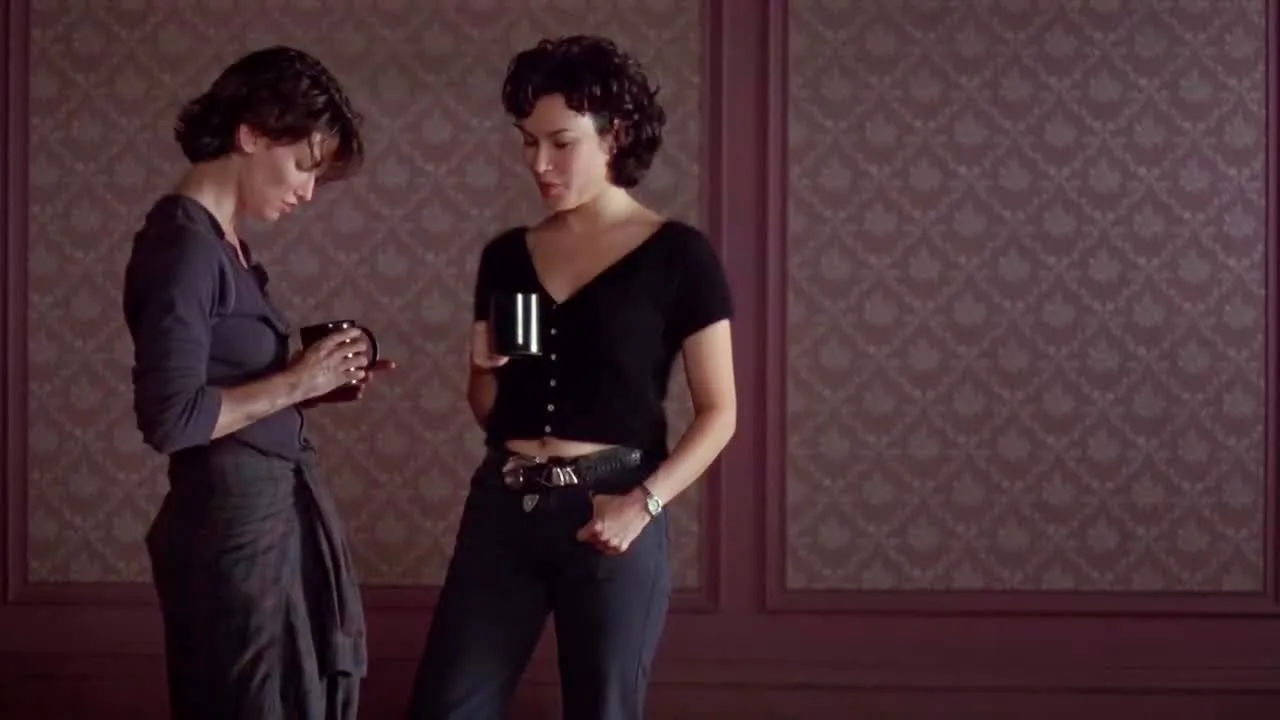




Laura Mulvey explains how her perspective on film spectatorship fundamentally shifted through the influence of the Women's Movement, transforming her from an absorbed, voyeuristic viewer into a critical woman spectator who analyzes films from a distance; she discusses how this transformation led her and other feminist theorists to apply psychoanalytic frameworks to Hollywood cinema, revealing how films construct gender dynamics through voyeurism, male star protagonists, and women as spectacle, ultimately arguing that contemporary film viewing requires active, imaginative engagement from spectators rather than passive absorption.
Laura Mulvey on Visual Pleasure, Feminism & Film Theory
Added:Introduction to Freudian Psychoanalysis: Familiarity with concepts like scopophilia (pleasure in looking), voyeurism, and castration anxiety which Mulvey adapts for film theory.
Classical Hollywood Cinema Conventions: Understanding the narrative structures and gender representation in Golden Age Hollywood films of the 1940s and 1950s.
Foundational Feminist Theory: A basic grasp of patriarchal power structures, gender roles, and the historical objectification of women in culture.
Introduction to Film Semiotics: Knowing how cinematic language (such as camera angles, editing, and framing) actively constructs meaning rather than just reflecting reality.
The Oppositional Gaze: Studying bell hooks' critical response to Mulvey, introducing race, intersectionality, and Black female spectatorship into film theory.
Exploration of Avant-Garde Counter-Cinema: Analyzing experimental films, including Mulvey and Peter Wollen's 'Riddles of the Sphinx' (1977), to see how theory translates to cinematic practice.
The Female Gaze and Queer Spectatorship: Examining subsequent theories that challenge the binary passive/active model to account for female desire and LGBTQ+ perspectives.
Contemporary Media Analysis: Applying gaze theory to modern digital mediums, such as video games, advertising, social media, and music videos.
84.2K views1.4Klikes8:09Original Release: 2017-03-07
My shift in spectatorship came very suddenly and specifically out of the influence of the Women's Movement so that films that I'd loved, films that had moved me I was suddenly watching with different eyes.
Instead of being absorbed into the screen, into the story, into the mise-en-scène and the beauty of the cinema, I was irritated.
And instead of being an absorbed spectator; a voyeuristic spectator; a male spectator, as it were; I suddenly found I'd become a woman spectator who watched the film from a distance and critically, rather than with those absorbed eyes.
I was part of a group which has been very much discussed and a certain amount written about, called either The History Group or The Feminist Studies Group and that was where, among a number of other theoretical writers, we started to read Freud and that had an immediate influence.
I mean it was almost as though Freud could offer a vocabulary and a way of thinking about gender and sexuality that we had... that we needed.
Without necessarily agreeing with everything that he'd said we could find ways of articulating the questions and issues that we were interested in By the time I wrote 'Visual Pleasure and Narrative Cinema' Hollywood Cinema was very much the backdrop with which I could work.
It was as though Hollywood laid itself out like a beautiful backdrop, kind of almost inviting psychoanalytic theory and feminist critical analysis.
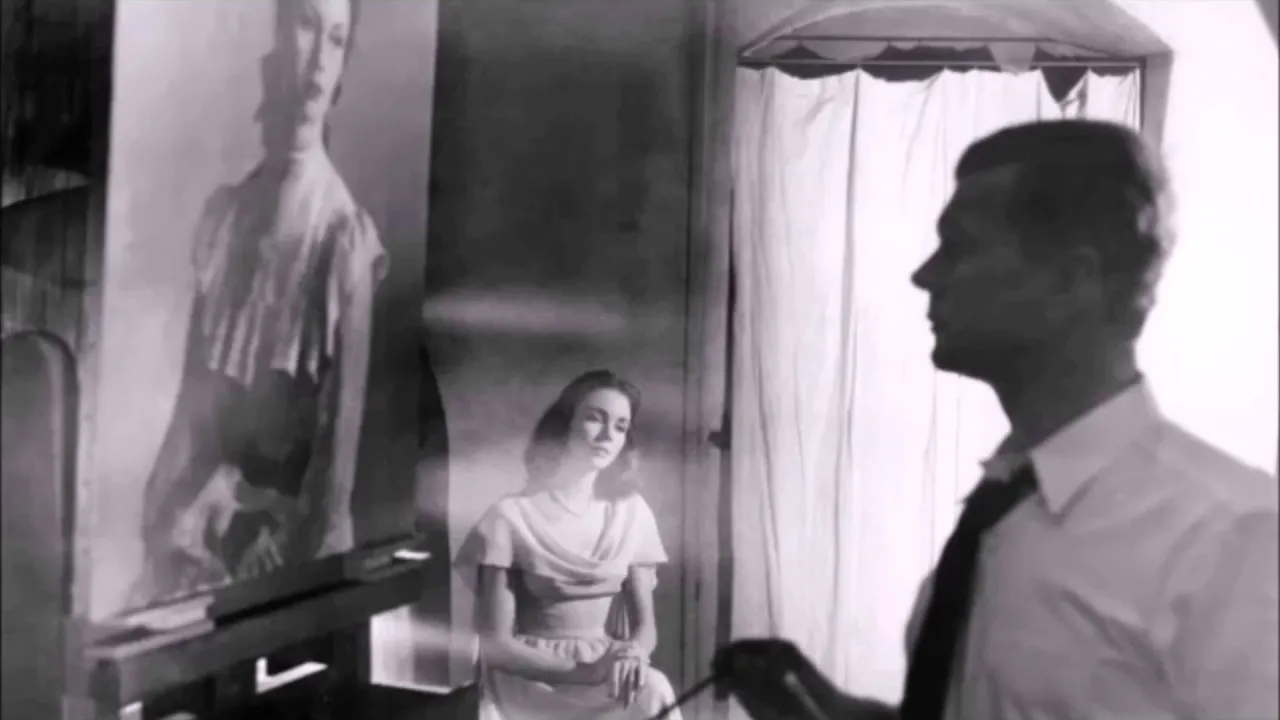
The voyeurism, the place of the male star protagonist in fighting off being the object of the gaze and creating the energy of the story... The woman as spectacle... It was somehow all there in a way that in other cinemas it wasn't.
We felt very strongly that Hollywood was finished.
If you'd asked me at the time of the women's (film) event in Edinburgh in 1972, I would have probably said that Hollywood would probably continue to make films but it would no longer have the power or either cinematic or industrial that it had had before and at that time we were seeing such an amazing diversity of new cinemas emerging.
[FILM] 'The TUC is in favour of free state nursery care for any parent who wants it but we're a long way from that' 'I was wondering whether...' 'There are some nurseries in the textiles industry, and the unions negociate about childcare there, in the textiles industry, and the unions negociate about childcare there, but that's an industry that really depends on women's labour.
Unless there's organised action around it, the Union wouldn't have any reason to take it up... It's like most things.' 'We have to do something first if we want the Union to take it up.'
'How can you make people see the connection between better wages and providing daycare?'
[LAURA] When we decided we'd make a film we didn't want to take a sudden leap away from the preoccupations of the everyday and the ideas that interested us and that we talked about.
Rather, on the other hand, we wanted as it were to use the film to deepen, widen, explore those ideas and think about the way in which they could possibly be transferred onto the screen.
We thought of our films as theory films and nowadays it might be called an essay film but then we thought of them in terms of theory because that's the kind of work we thought we were doing in writing, and it was a way of kind of extending our writing into a different medium.
We were using what we thought of at the time as a negative aesthetic, return to zero, scorched earth... Standing back from so many of the conventions of cinema. The circular camera movement finished itself and once again excluded any questions of editing and put up point of view for question.
And also had a kind of elegant resonance with femininity, the circular, the cyclical... claustrophobia, domestic space... Language and women's relation to language was probably the central idea running through the film.
We were interested in discovering an avant-garde of the 1920s that wasn't the Soviet one and that was very different, had a very different relationship to its national culture.
It was more like a record of the argument of the exhibition that we'd put on at the Whitechapel Gallery and so the sense of having two women artists who were very different but who'd both been working in Mexico around the same time with similar kinds of influences and political positions.
So I think it was more to try and grasp the idea of the curation, of what the curation strategies were, not to make, as it were, a whole other kind of film... It was almost like a document.
Things have changed so much.
In the old avant-garde days, we would have felt that it was the responsibility of the director to both engage the spectators' interest, and find a way of allowing the spectator to be an active spectator.
So I think we would have felt that the onus was on the aesthetic, experimental strategy of the film to make a certain kind of spectatorship in the cinema.
But now of course, when people watch films in so many different ways, I feel it's turned upside down and now the onus is on the spectator to be an active spectator and to engage imaginatively and poetically with any kind of film.
Up Next

16:36
Types of Santa Claus: A Cultural Comparison
@MyChannel-v7c7i
2.8M views•2018-12-19

12:54
Triumph of Orthodoxy Icon: Byzantine Art & History Explained
@BenCallan
2.1K views•2024-08-06

9:49
FastAPI vs Flask vs Django: Choosing the Right Python Web Framework
@TechWithTim
302.5K views•2024-05-26

1:42
Game of Thrones Opening Credits: A Cinematic Analysis
@gameofthrones
46.3M views•2011-04-18
Related Study Plans & Knowledge Roadmaps
Structured learning paths in General & Interdisciplinary Studies
general-studies
Elevator Engineering: History, Physics & Cities
01From Hoists to Safety Brakes: The Dawn of Vertical Lift
02Hydraulic vs. Traction: The Engineering Physics of Elevators
03Modern Speed, Safety, and Algorithms
+ 2 more learning modules
12h5 modules
Explore Roadmap
general-studies
Rubber: Material Science, History & Geopolitics
01Origins of Natural Rubber & Mesoamerican History
02The Chemistry of Natural Rubber & Vulcanization
03The Geopolitics of the Rubber Boom & Colonization
+ 2 more learning modules
12h5 modules
Explore Roadmap
general-studies
Containerization: Evolution, Logistics & Trade
01Ancient Trade & Bulk Cargo: Amphorae to Barrels
02The Industrial Revolution & Cardboard Packaging
03The Containerization Revolution: Malcom McLean
+ 2 more learning modules
12h5 modules
Explore Roadmap
general-studies
Textile Tech: Evolution, Labor & Global Impact
01Pre-Industrial Textiles: Handloom & Cottage Industry
02Mechanization: The Spinning Jenny to the Power Loom
03The Factory System & Global Labor Transformation
+ 2 more learning modules
10h5 modules
Explore Roadmap