![Lichtabhängige Reaktion /Lichtreaktion /Primärreaktion der Fotosynthese [1/2] -[Biologie, Oberstufe]](https://i.ytimg.com/vi/fQd2Lo4-EhE/hqdefault.jpg)



![The Electron Transport Chain and Chemiosmosis [IB Biology HL]](https://i.ytimg.com/vi/-baEfpKoPqA/sddefault.jpg)








![Chapter 11 [Part 2/3] - Characterizing and Classifying Prokaryotes](https://i.ytimg.com/vi/n0Dv3SY5vME/hqdefault.jpg?sqp=-oaymwEmCOADEOgC8quKqQMa8AEB-AHSBYAC9gKKAgwIABABGEggRyhZMA8=&rs=AOn4CLA75M-F1caOFbOuBFFTAgurSuqk4g)




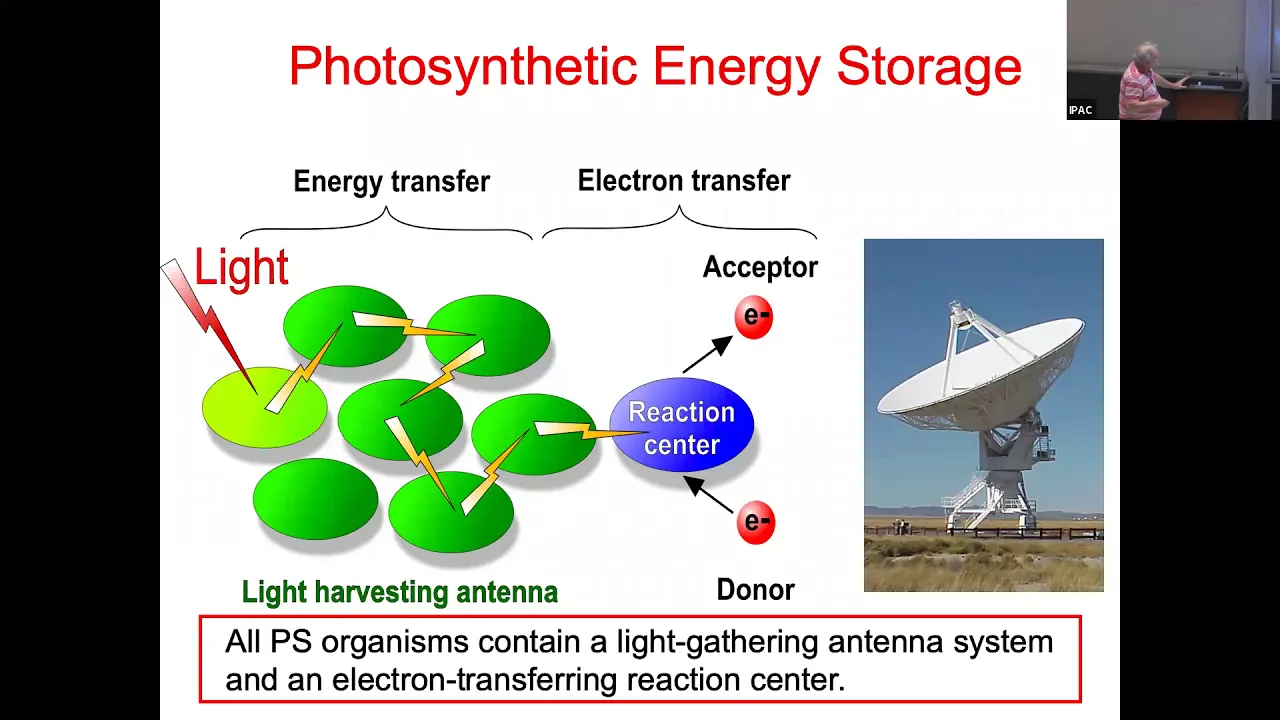



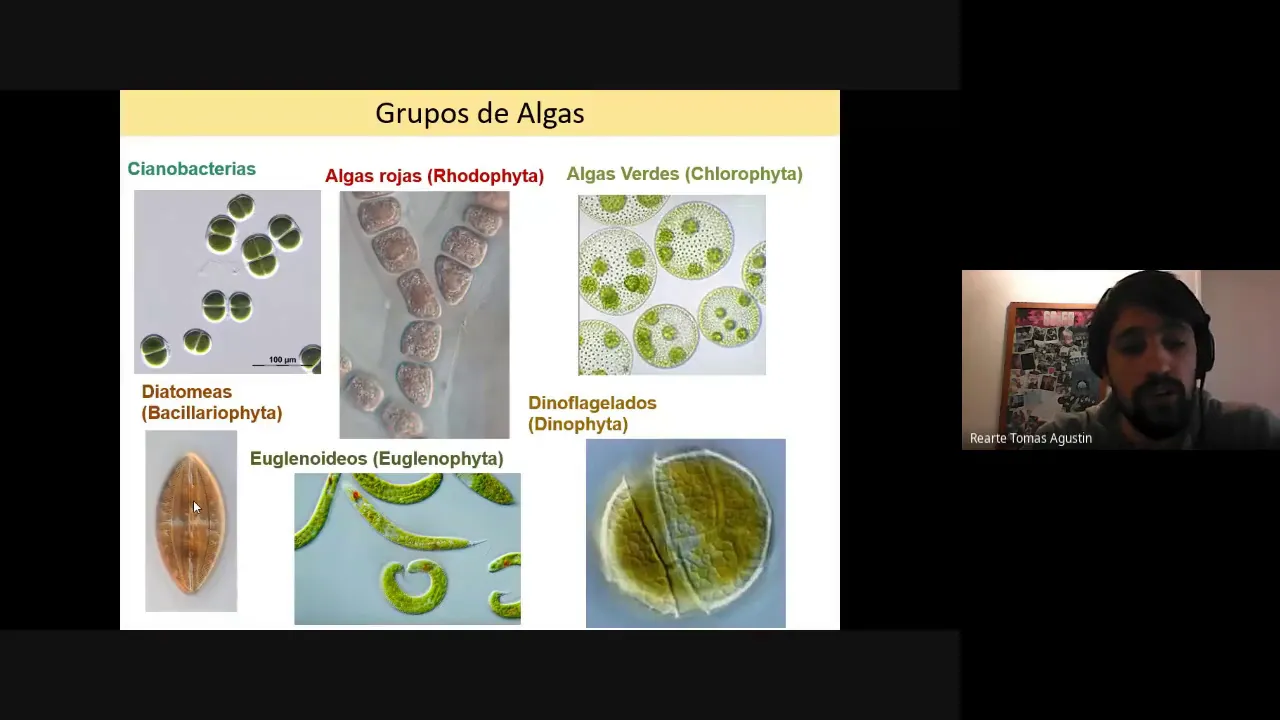
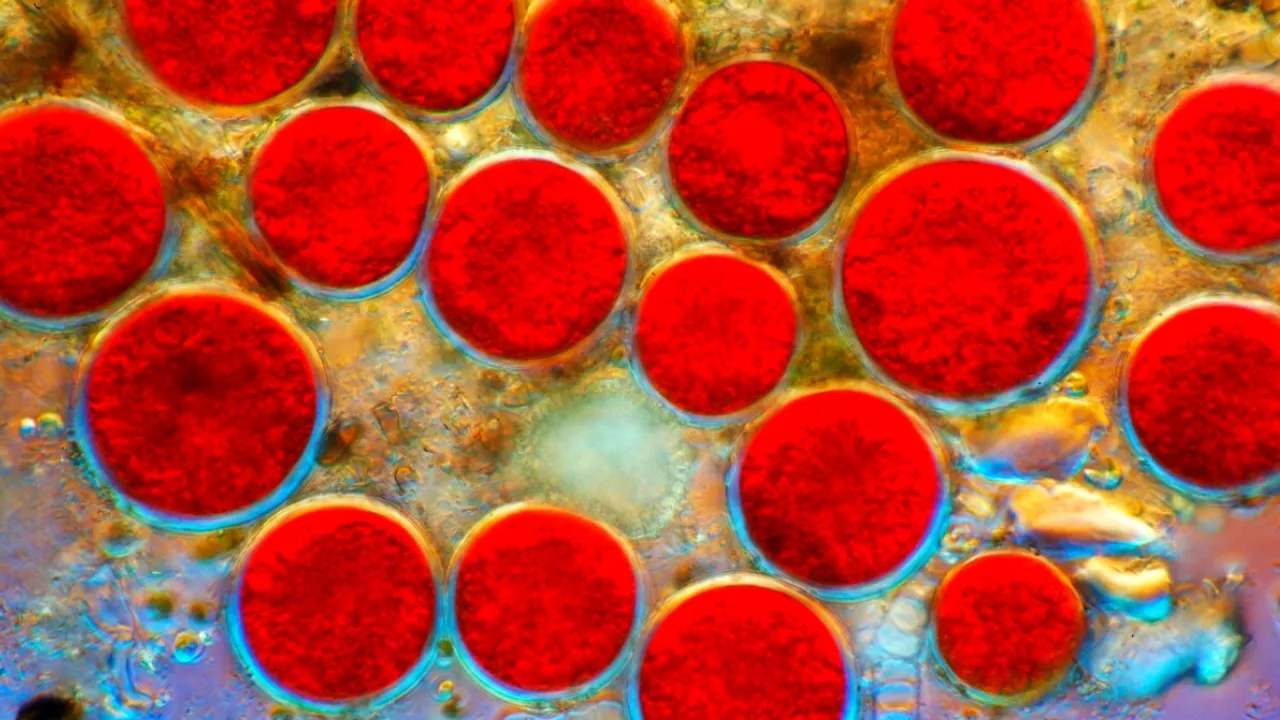
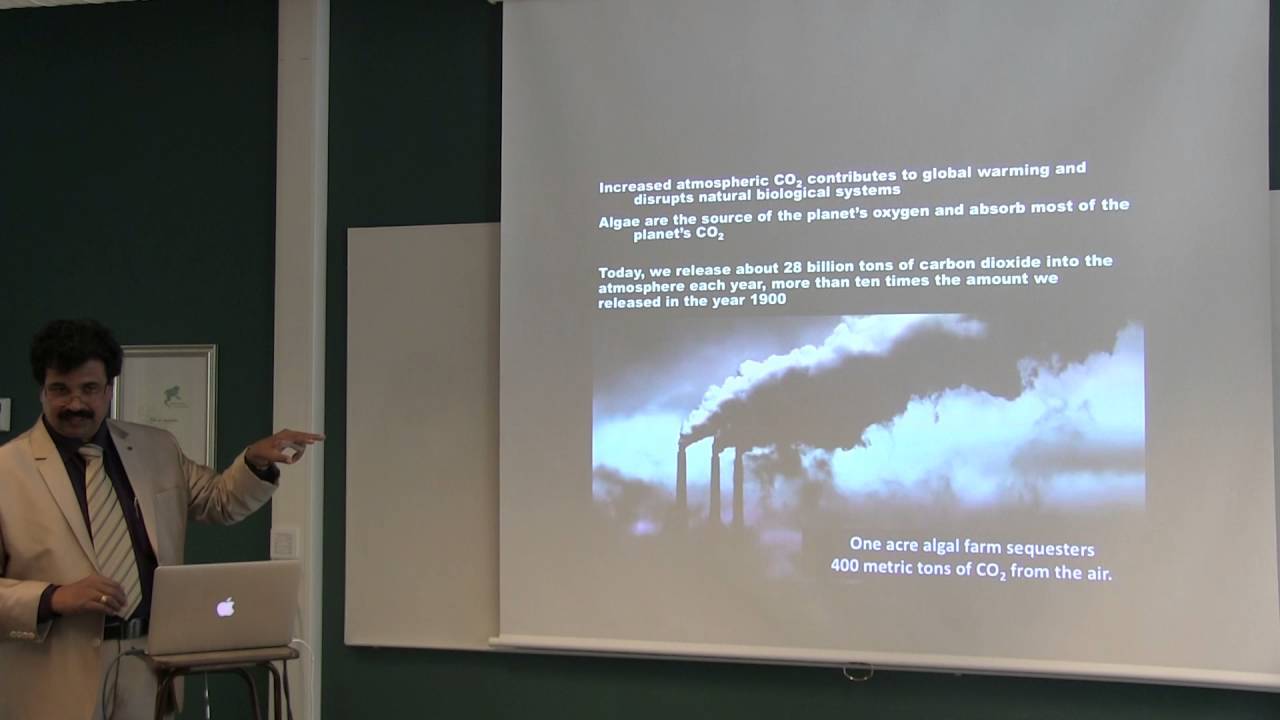
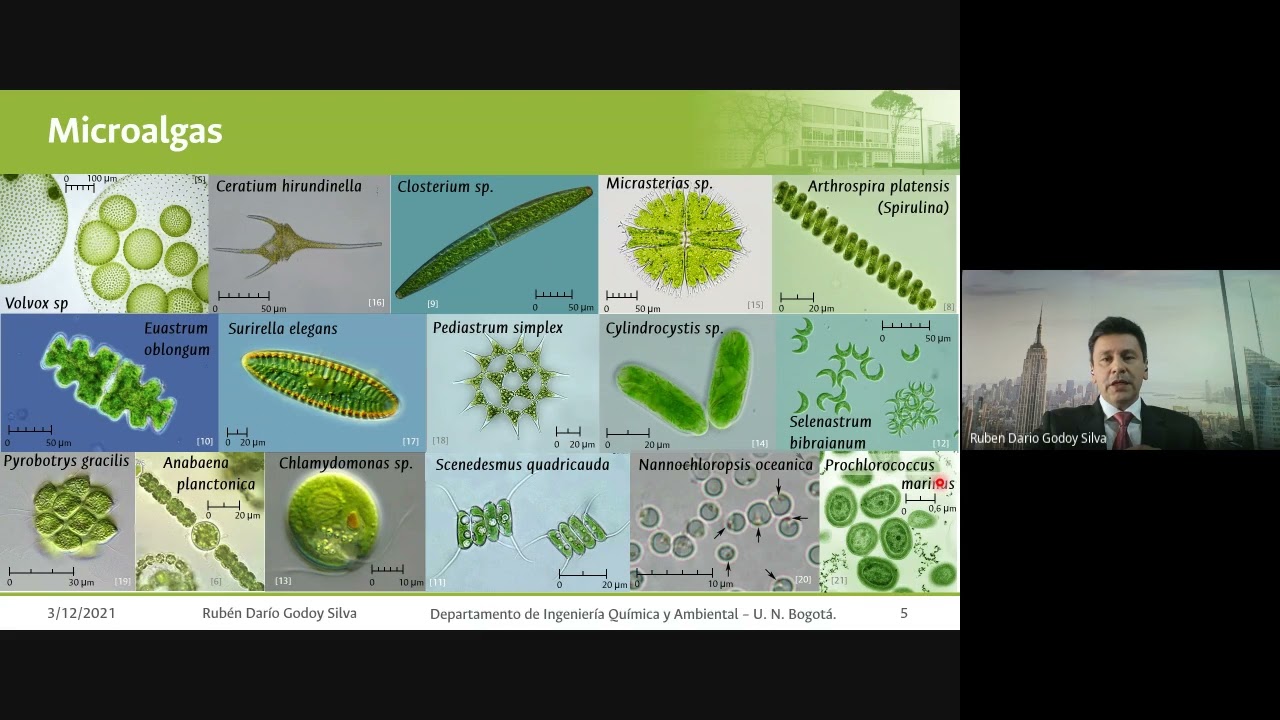
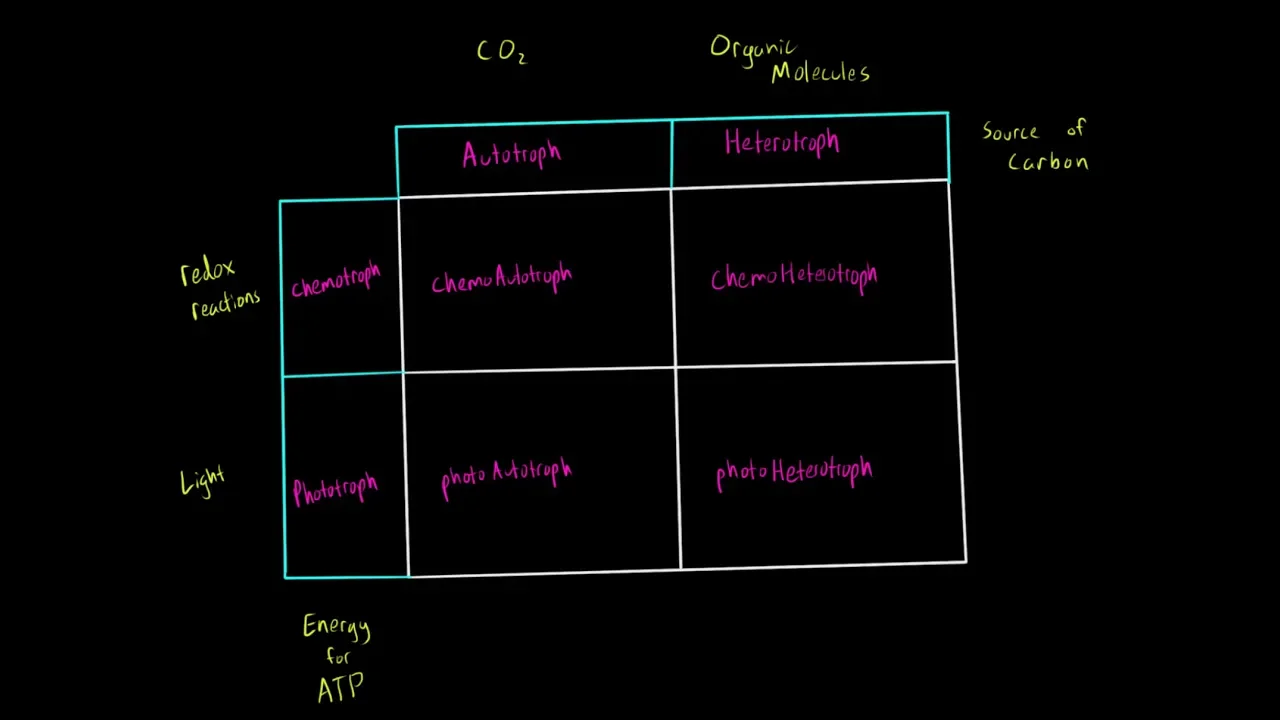
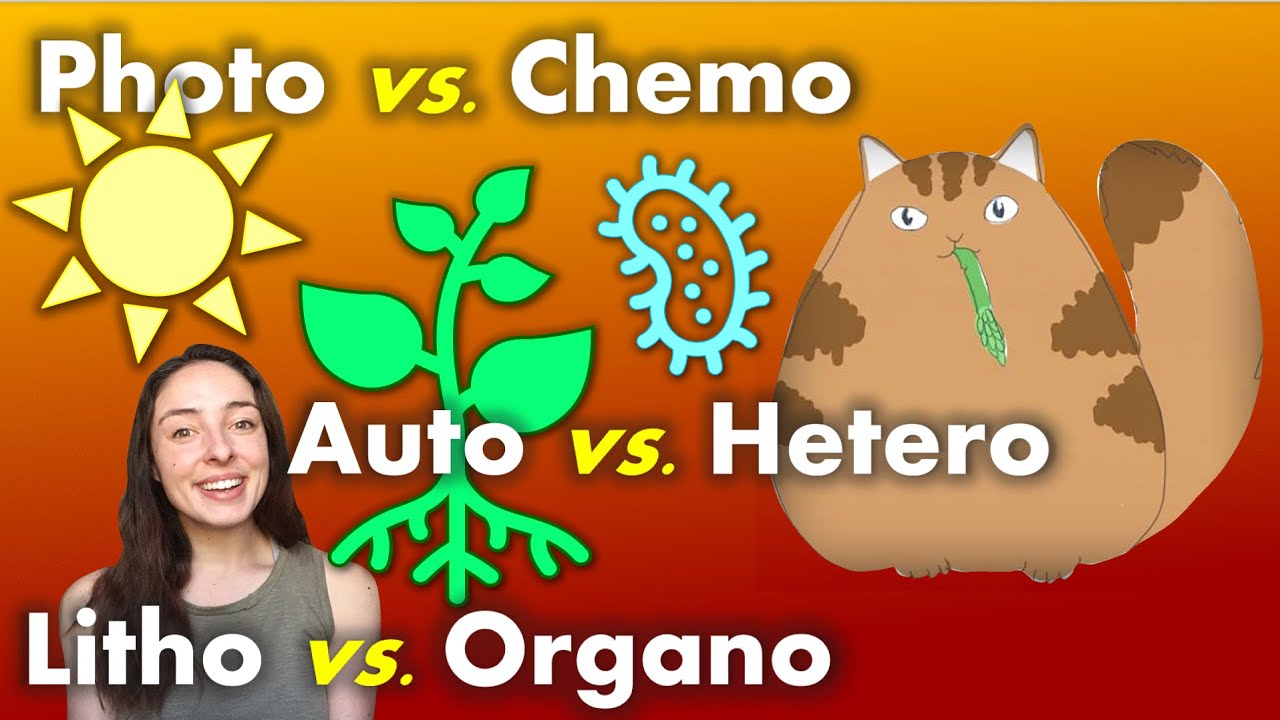
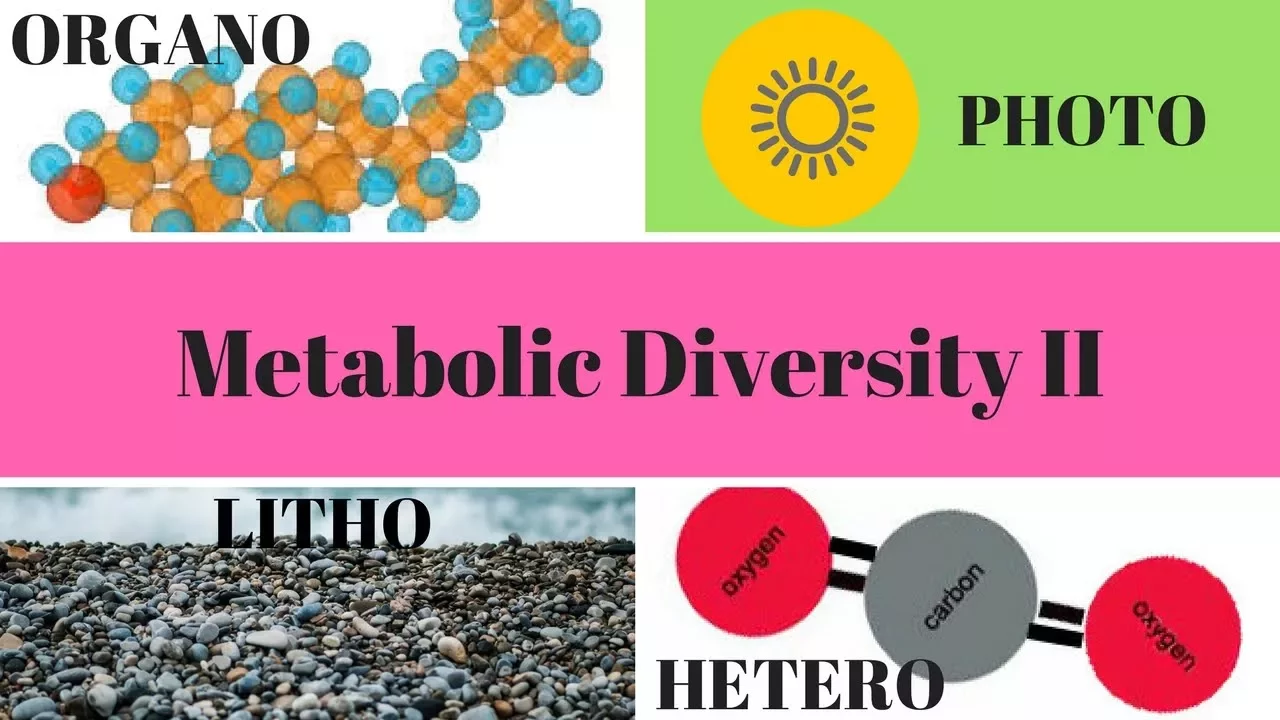
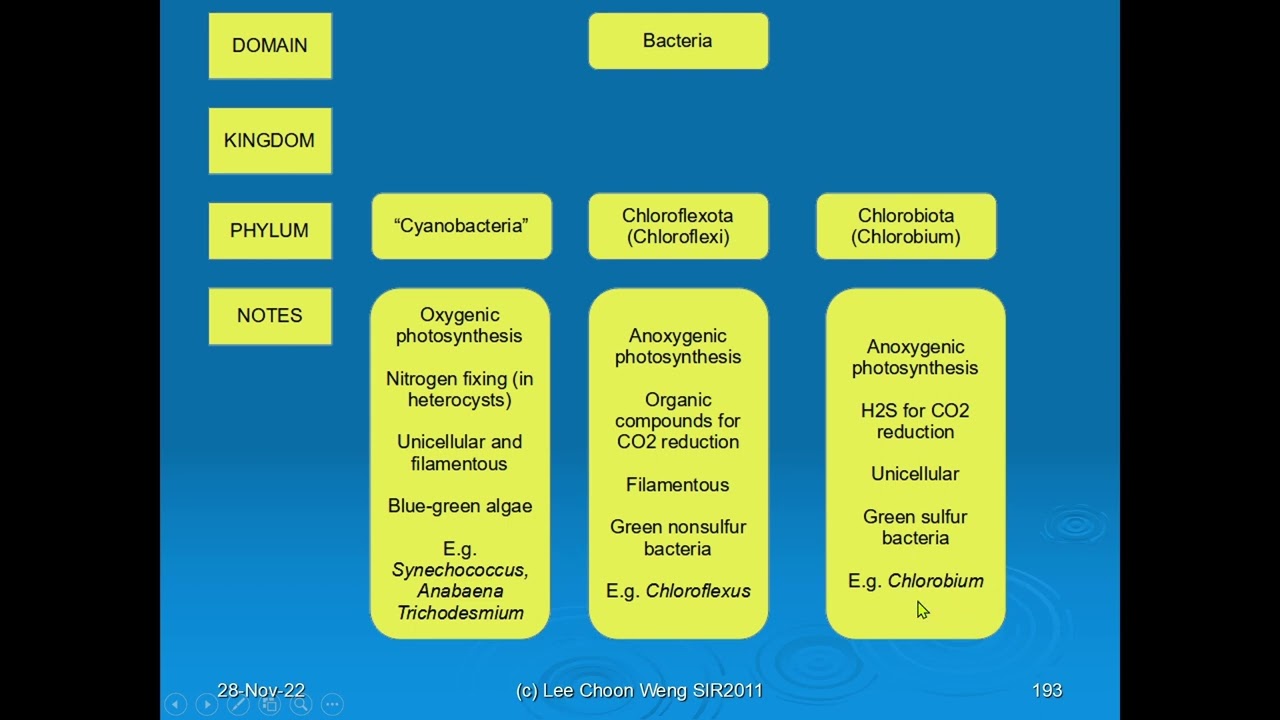
Phototrophs are microorganisms that obtain energy from light to convert ADP to ATP, which then drives the conversion of carbon dioxide into organic compounds. They are classified into oxygenic phototrophs (using water as electron donor, releasing oxygen) and anoxygenic phototrophs (using alternative electron donors like H2S or hydrogen). The Calvin cycle is the primary autotrophic pathway for carbon fixation, involving carbon fixation, reduction, and regeneration of the starting molecule. Chemoautotrophs obtain energy from inorganic compounds, but with lower energy yields compared to glucose oxidation, making them typically slower-growing organisms. Microbial communities exhibit immense metabolic diversity, with different species utilizing various energy sources and electron donors, and their behavior in isolation differs from their behavior in environmental communities.
Microbial Phototrophy: Oxygenic & Anoxygenic Photosynthesis Overview
Added:[Music] [Music] dear students in previous lectures I have mentioned how microbes once they have the chemical reaction going how they tap into that energy and convert it into ATP and then use that ATP for sustenance and growth the question that arises is how do microbes tap into the chemicals that are available around them and the energy sources that are available either in form of light or in form of chemicals to convert and to convert into biomolecules that they can use so today we are going to talk about phototrophs autotroph scam or little trough and get a general overview of what their importance is there in life and in different kinds of ecosystems and understand better what are the mechanisms that allow them to use these resources that are present in their environment so first of all we will start today by phototrophs photo trophy so as you can notice in this slide we have two kinds of photo trophy oxygenic photosynthesis and anoxygenic photosynthesis now in oxygenic photosynthesis carbon dioxide is utilized with water and light energy converted into glucose oxygen in water perhaps this is what you have studied in your primary science also in anoxic photosynthesis we have carbon dioxide and then there is some sort of electron donor usually not oxygen because this is an old cynic then there is light source and carbohydrate and water is formed now this electron donor can be h2s hydrogen or some other electron donor and even water now let's look another let's take another look at oxygen egg and anoxygenic photosynthesis so if we classify all prokaryotic phototrophs into two broad groups one being the oxygenic photosynthesis genic phototrophs and oxygenic photosynthesis photosynthesis something that is getting oxidized and thus is giving them electrons and then they need a carbon source for making biomass their biomolecules and they need energy source for driving the synthesis of biomolecules and also the energy for daily sustenance so as we know the name suggests phototrophs so the source of energy for converting ADP to ATP in case of both oxygenic and anoxygenic phototrophs would be light source so this light excites the adp allows it to phosphorylate and then it forms ATP now ATP's energy rich molecule so it can drive many biochemical reactions one of them is converting carbon dioxide into glucose or other forms of organic compounds necessary for life now ATP is not only used for this it is used for other processes as well but this is the major most relevant aspect of ATP utilization when it comes to trophy or the way microbes eat food now it's okay now carbon dioxide to become food or biomolecule it requires energy source Maryland good but it also requires some electron source and thus we have this reducing ability we're behind water turns into oxygen in case of oxygenic photosynthesis now this is a very complex process but this is a highly simplified picture of what happens in oxygenic photosynthesis is water plus carbon dioxide plus light converting it to food yes that is correct and this is their interrelationship now let's take a look at the anoxygenic phototrophs now anoxygenic phototrophs have similar requirements of something that will supply them electrons they require something that will give them carbon source to make their biomolecules and they require a source of energy and as the name suggests these are phototrophs thus the source of energy would be light similar thing adp turns into ATP now you would be this very important question that you should ask now is okay we know that a deep it turns into ATP throughput or motive force that is generated by tapping to the energy of chemical reaction in the previous lecture for camu Organo trough and Camry troz what's happening here the light is falling directly on the cellular membrane how can I tap the light for this my dear students these phototrophs have specialized either cell or the cell organelles in case of plants and they where they store particular pigments such as chlorophyll or cardioids which tap into this energy and will very briefly go through them in subsequent slides so this ADP stabbed into ATP carbon dioxide is turned into food very similarly to oxygen in phototrophs however in case of the compound at the supply electron here we might have something like h2s or even hydrogen the hydrogen is a very good supplier of electrons it loves to become water and thus h2s becomes sulphur becomes sulfate now it has applied lot of electrons here if you notice sulphur was in it had minus 2 electrons additional on it here it has zero and here it has a scarcity of six electrons the sulphur has given away eight electrons thus it is a very good source of electrons already so this is an oxygen ik photo trophy for you and this is oxygen in photo trophy now let's look at anoxygenic photosynthetic or photo trophy in slight more detail now when it's an oxygen link we don't have oxygen so we don't have a very good electron acceptor or in its reduced form a very good electron donor available for us and thus we have an additional challenge which is that we need to ensure that the oxidized form of ATP and NADH have the potential that they have is less than or it matches the potential of the proteins that we have so there are protein can reduce them that's what we would be one of the proteins to reduce them and how does ATP nadh should have just the perfect potential compared to our protein in this case come on in case of we are talking about three different bacteria here purple bacteria green sulfur bacteria and hindu bacteria in case of purple bacteria unfortunately the potential of its primary protein pH 7 zero lower than that of NAD+ and thus this can't reduce NAD+ to NADH and thus give it energy and therefore it requires activation by light and once light has hit p8 7-0 it gets excited and makes p8 7-0 star now excited p8 7-0 is a very strong donor of electron and thus it undergoes a series of biochemical reaction and it finally reduces NAD+ to NADH and this part where it gives away the electron it's called as reverse electron flow it requires this so here notice it is at zero potential NADH is at minus 0.25 and thus we notice that the electron should flow in this direction but purple bacteria has to catalyze this reverse electron flow and no other kind of bacteria which is photo trophy needs to do this except for purple bacteria and therefore so purple bacteria does this and then it undergoing a series of other biochemical reaction pH 7 zero comes back to its ground state now this is not the case with green sulfur bacteria and Helio bacteria for each of them the electron flows in the right direction it does not need to go in a reverse direction now for either of the bacteria the overall picture is that their primary protein gets excited and then as it gets comes back to its ground state it releases energy and somewhere during the process of releasing energy it produces compounds that will reduce ADP or nadh and nad+ and produce the energy rich compounds in the cell so in case of green sulfur bacteria we have p8 4-0 that get excited by the light and we experience our and notice that these compounds that pee at four zero makes are very different from the compounds or the intermediates that p8 seven zero undergoes and are also different from the intermediates at P seven nine eight undergoes implying that for each bacteria even though they are doing an ultrasonic photosynthesis so the source of energy for each of them is light but their biochemistry or the proteins that are involved in tapping that energy of getting excited and then coming back to the ground state and in the process releasing energy for reduction of ADP and nad+ and other and the compounds that can be energy carriers and energy currency they are distinct they are very different and you can only imagine for a biochemist how challenging this task is to profile all these proteins in bacteria that behaves so similarly and this brings me back to the first lecture which was basically an introductory lecture for this course where I mentioned how initially we treated micro organisms like a black box we didn't know much about them we were only interested in in their overall broad functions for example in this case we might be interested in well all of these are phototrophs they use light a source of energy and thus they are similar and we can say that they have the same growth of growth rate they have same characteristics similar demands and they behave in similar ways now obviously as the population level the population might have predictable behavior but on a community level they were very diverse and as we started understanding them better and microbiology grew we found out that oh no no no there are different kinds one is oxygen ik one is an oxygen air and then even let's say in within an oxygen and we found out that an oxygen phototrophs can be of very diverse types and each of them not only morphologically different for example here you will notice in the slide we have purple bacteria green sulfur bacteria Hilo bacteria these names suggest a certain kind of morphology a certain kind of certain kind of behavior that can be observed visually by human beings such as purple bacteria purple color green sulfur bacteria green color utilizes sulfur for its electron source or something else most readily electron source well in I know it's electron source so this diversity we as we tap into this diversity we understood that on metabolic level there are microbes are diverse very diverse now to give you an example a single single sample of an environment for example let's take soil sediment a soil sediment may have millions of microbes and billions of microbes on it and each of these billions of microbes well they're growing a dying but they belong to certain categories of microbe some could be bacterias and would be protozoa some could be something else you know archaea now within a particular domain that's a bacterial Kingdom we might have very different kinds of bacteria now some could be aerobic bacteria some could be an aerobic bacteria and now each of these aerobic and anaerobic Beckley they would have again very different metabolism some reduce sulfate some oxidize sulfur some reducer for some create methane some oxidize methane some uh nitrogen fixing some denitrifying some oxidize ammonia so we noticed that within this small sediment sample we might have my groups with very different metabolic pathways and meta metabolism and in this in these lectures I'm presenting to you one at a time okay we're talking about photography okay men showing you the examples of three different kinds of bacteria undergoing an oxygen Erick photography but in experience we know that they are linked with their neighbors so a photogenic of a phototrophic bacteria interacts with some other kind of microbe heterotroph or an autotroph and thus when they combine they talk with each other their chemistry and their behavior on an individual level and even on a community level varies and it becomes very different and thus this all this to drive home two points one is that microbial communities are immensely diverse when it comes to metabolism when it comes to their behavior what they consume as food what is the energy sources and what are the proteins that are involved in it so the first point is diversity immense diversity and many microbiologist believe that we have barely scratched the surface less than 1% of microbes we really know so the second point that I want to drive is that when a microbe is studied in isolation its behavior can be very different from how it behaves in community level so for examples and degrading microorganisms some of them can degrade cellulose as single pure culture so I have a pure culture of Clostridium IRA part type of cross radio from asylum for example and it will degrade cylinders and anaerobically and imperfect and I know the exact proteins that it required I know the cellulose ohm structure for this first area but I put the same microbe in an environment and things change now there are other settlers recruiters that are competing for their daughter products that after breaking down cellulose into sander BIOS or even further into glucose monomers so now we notice what we studied in isolated culture is different from what we will expect in an environmental sample and thus but at the same time it's very important to understand what is happening for an isolated culture because that's our foundation what microbe can do alone is the foundation on which we build our understanding of what the same microbe will do in an environment alrighty so let's move ahead now we have an example of oxygenic photosynthesis here notice that here we had a deceived cycle so protein gets excited returns back to ground state in the series it undergoes series of biochemical reactions releases energy he reduces energy carrier molecules and then stops in energy now in oxygen in for synthesis this is not d shaped it looks like inverted W or as edge shape most scientists believe that this is edge shape so they call it Z scheme on y axis we have the redox potential from plus 1 point 2 electron volt to minus 1 point 2 electron volt and on x-axis we have their time series or what's happening so first we have this beautiful protein chlorophyll p680 it gets hit by photons gets excited now as it gets excited it again wants to come back to ground state but here is a beauty it never really comes down to ground state it stops here at chlorophyll p70 where it's open to being hit again by photons produces excited version of chlorophyll p70 and undergoes the second phase of photosynthesis and that reduces nadp+ to nadph energy rich molecule here now let's look one by one so here we have a water molecule and it gets oxidized into oxygen and releases proton undergoes a series of chemical reactions catalyzed by many different proteins and what it does is it reduces clove p680 to chlorophyll P 6680 in its activated form now it's very important to note that chlorophyll p680 is a very very good electron acceptor but once it gets to higher energy state and has an extra electron now this is a very good electron donor and it wants to get rid of its electron and the very good electron acceptor gets excited now it's ready to get rid of its electron and as it's trying to get rid of its electron it undergoes this series of biochemical reaction and here we have a cyclic electron flow which actually generates the proton motive force which is our which is our food for making ATP as we started earlier in the previous lecture and then it comes back to this chlorophyll p70 state 700 state and then in photosystem 1 we have another series of biochemical reaction which reduce nad plus this overall is referred to as its scheme now let's look at autotrophic pathway now the beauty of autotrophic pathway is that they will occasionally use carbon dioxide and convert it into glucose now this is calvin cycle which is very popular in popular resin which is a fundamental understanding that we have our otto trophy in my groups and this was one of the first biochemical cycle that we completed and we understood really well when it came to otto trophy so the wave starts it first step is carbon fixation so carbon fixation means sequestering carbon from wherever atmosphere or wherever we are water three molecules of in this this particular diagram that I have here is actually half of what most of the standard carbon cycle diagrams will show you so in most standard you'll have six molecules of carbon dioxide coming it's completely accurate but just the numbers are halved so don't worry don't be surprised if somewhere else you see six molecules of carbon dioxide entering Colin cycle it's exactly the same except that everything choice so we have three molecules of carbon dioxide they come in and they undergo the first stage which is carbon fixation they make sex molecules more six carbon molecules six molecules of this particular compound and then they consume six ATP this is important this is the step of energy input so Collins cycle we are trying to tap carbon dioxide and make glucose out of it we need energy so this is where ATP is consumed in a good quantity and once it has been consumed in a good quantity the next step is reduction so it gets reduced and in this process it consumes NADPH so NADPH gets oxidized and our bio chemicals here get reduced remember redox reaction one thing gets oxidized other gets reduced they are twins they can't be separated okay now we have this six molecules of g3p now one of them is converted directly into glucose note here it says half molecule but if you multiply everything by 2 this will be one molecule of glucose there is no sense when we say half molecule of glucose this is just talking with your coefficients anyway so the rest of them 5 molecules of g3p proceed forward and they undergo the third stage which is regeneration of starting molecule so we want to regenerate the starting Rubisco molecule so here we have generation of 3 molecules of ribulose 1 5 by phosphate which have phosphate attached in first carbon and in the fifth carbon and then after this step Rubisco is regenerated and the whole point of carbon cycle is continual regeneration of Rubisco which is then in position to accept 3 molecules of carbon dioxide note Rubisco is a very big enzyme of which ribulose 1/5 by phosphate is only a portion of it and once it is regenerated and it has accepted 3 molecules or 6 molecules of carbon dioxide for a full carbon cycle then it it undergoes carbon cycle again and glucose is continually regenerated and as we note that the cycle is complete now note here we had 3 molecules of carbon dioxide coming in and we have half of Lucas molecule going on so in a complete carbon calvin cycle will have 6 molecules of carnac's are coming and leaving and then Rubisco is regenerated and at the first glance it might see that even Rubisco can be broken down into two carbon molecules to koukos molecules but no it's a catalyst it's very important for it to continue the Calvin cycle this is autotrophic pathway of how carbon dioxide is converted into glucose molecule now remember each of these steps are most likely catalyzed by very specialized enzymes which are proteins and which are encoded by DNA fYI and very simple version of it is being presented here now this carbon cycle is prevent is present throughout the environment and here I have pictures of purple bacteria and green cyanobacteria it's definitely present in these two and many more alrighty now let's look at the other camo detour trophy now camo Leto trophy as the name suggests we have inorganic compound serving as electron donors so for example in our anoxygenic photo trophy here we have h2s serving as electron donor so this in one sense is an example of camo Leto trophy in one sense now it's very important to understand that when we undergo came a little trophy the in camel it's a trophy the energy that we can tap from in organic molecules is less than the energy that we can tap from glucose so remember as how in previous lectures I mentioned that aerobic microorganisms will have a better bacterial yield and will have faster growth rate then anaerobic microorganisms because reduction because oxygens potential to accept electrons is much more than any other electron acceptors it's the highest ranked electron acceptor and thus the energy gap that it produces so let's say this is energy donor this is oxygen electron acceptor so when it accepts electron this Delta G is higher than any other redox reaction can give in life and thus Arabic micro doesn't grow faster similarly in case of chemo literals we notice that when we are oxidizing glucose we generate more energy than we can by oxidizing any of these molecules so what this should suggest to you is that for different kinds of electron electron donors I have whether it is as in this case we have HS miners or we have sulphur or we have methane or even hydrogen more often than not in fact always we notice that glucose is the better electron donor than them so we note that if we make our redox Tower here we have in our redox Tower we have positive electron voltage here and negative electron voltage here so we can rank our molecules on this redox dollar now the more positive or electron hungry molecule is the lower it will be somewhere here we have zero electron volt so the lower it will be on our redox power so as I mentioned just while ago that oxygen is the best electron acceptor for life you can assume that oxygen will be at the bottom of this redox travel waiting to consume electrons now as we write down these different compounds here and here we can write different electron donors let's say here we have sulfur and here somewhere we have glucose all righty now let's say here we have nitrate here we have sulfate okay so these are these are our electron acceptors and these are our electron donors and we call them electron acceptor an electron donor in always in pairs so oxygen in itself is not an electron acceptor it always requires someone to donate its electron for example let's say there is sulphur here and it donates it electron then sulfur is electron donor and this is electron acceptor on the other hand the same sulfur can also act like an electron acceptor if something really reducing gives it electron and it makes H's - then sulfur would be electron acceptor and the more reduced stuff would be electron donor and thus we know that electron donor an electron acceptor or relative terms and they are they always in pain now when it comes to energy how much energy output will be available to microbes when and when any of these redox reaction happens we mentioned before we talked about Gibbs free energy and standard procedure is to look at prime not so under STP ph7 and everything is at one molarity both products and reactants so if Delta now the bigger the difference there is in Delta G the more energy will be available and obviously we mentioned that less than zero is minimum for our life to go on so it has to be negative now the more negative it is now for example if oxygen is oxidizing glucose now we have a bigger drop in energy hence Delta G would be minus very big number compared to oxygen was oxidizing sulphur right similarly in this camera little trophy that we are mentioning we note that when inorganic compounds act as electron donors when they are the ones that donating electrons they cannot match the energy that microbes can get when glucose is acting as a returned donor now this redox double must be able to explain this to you why that is so so here we have we get this much energy whereas in case of glucose we got more energy and thus oxidizing glucose is more energetically favorable for microbes then oxidizing inorganic electron donors and this brings us back here to the first point bullet here in this light energy yield is always lower than that of a glucose molecule in case of chemo little trophy and you can imagine Kim only two troughs are more often than not slow growing microorganisms compared to heterotrophs much less energy is available from oxidation of inorganic molecules than from the complete oxidation of glucose to carbon dioxide which is of enormous Gibson free energy change of 686 kilocalories per mole this is because the NADH that donates electron to the chain has more negated reduction potential and most inorganic substrates so here is different inorganic substrates and they are getting oxidized and here is their Delta G so when hydrogen gets oxidized to oxy with oxygen makes water its Delta G is minus fifty six point six for nitrate and I try to nitrate is minus seventeen point four for ammonia to nitrite it is 64 minus 65 so if we have ammonia to nitrate formation we can add them up and it would be around minus eighty two point four if sulfur is getting oxidized to sulfuric acid we have minus one one eight point five and then s2o three to sulfate we are minus two to three point seven so this is a pretty good electron donor and ferrous to ferric minus seven point two not big difference and we can broadly classify them as hydrogen oxidizer sulfur oxidizers iron oxidizers and nitrifying bacteria so hydrogen oxidizers are most efficient okay they are and they use utilize this come enzyme called hydrogenase which may or may not different electron to nad plus now in sulfur oxidizers we have different kinds of sulfur oxidation that can happen it can be sulfur it can be HS - it can be s - - in case of h2s hydrogen sulfide and here we notice it can be also S 2 O 3 now this undergo substrate level phosphorylation which is fermentation on also oxidative phosphorylation so this is the uniqueness of sulphur oxidizers they can undergo fermentation and as well as respiration now substrate level phosphorylation which is when they are doing fermentation is through a PS now in case of iron oxidizes which is the last reaction here in this table we have named more phone microbe here by the way kiyo bacillus Ferro oxidants and it's an acid or philic microbe so you what does this inform you the word I said I feel like philia means love acid means pH is less than 7 so this microbe loves when pH is low lower than 7 and then it oxidizes iron to ferric and this must give you information that because Delta G is not very high the conditions in environment must be really suitable to drive this reaction because microbes have very little to gain so the environment was pushing the micro well and you can always oxidize iron and that's it well now acidophilus tell bacillus where oxidants is very interesting it among other acidophiles are very important because these acid of philic iron oxidizers create beautiful sceneries across the globe and here are some pictures for you now this is a hot volcanic lake and it's very acidic so high in protons and here we have iron that has been oxidized to ferric not chemically but biologically through a soda filling bacteria like thai-style bacillus similarly here we have another picture and here we have water from similar similar lake now dear students if you have I encourage you to go ahead and look up on internet something called as blood falls in Antarctica so in Antarctica we have blood Falls where it looks like a waterfall but red in color and it looks really beautiful and I'll show you pictures in the next lecture and that is iron oxidizing bacteria at work and it's really beautiful not only are they a sort of filling but they also thermophilic and the microbiology and the chemistry of these blood falls and poles are still being investigated so this is the real challenge and beauty of microbiology especially in environment is that we are still investigating them we are still exploring the frontiers of applied in diameter microbiology and as we will go towards the end of the lectures and I'll be talking to you about different microbiological tools we have every does I'll also share about different radiators research that is happening at this time and I hope that will inspire you more to understand this topic already acid mine drainage if pirate is exposed to oxygen and water now what is acid mine drainage this is a real environmental problem so as a name suggests we have mine so wherever this excessive mining happening now in mining what happens is that elements such as metals in general which are not exposed to oxygen usually and are in the reduced form underneath when they are mined out oxygen seeps into their pores they are exposed to oxygen and then their oxidized to ferric and this is what when pyrite is exposed to or to end water so pyrite is what if it was highly reduced form of iron and now it is being oxidized to ferric very key soluble in water and thus we get water that is contaminated with the high amounts of iron this is not only a problem with iron but it's also a big big problem with other things for example sulfide gets oxidized to sulfate and produces sulfuric acid so if you as I said which are not good for our health and which acidify our water and that's why it's called acid mine drainage drain it because any water that flows through these mines or any river or underground stream that that has anything to do with this mines will dissolve these oxidized metals so some metals and their oxidized states are more soluble than in their reduced state such as iron and uranium and thus in these mines that have that are upstream to any water body surface water body or groundwater body the pH usually Falls they are very colorful and they're very dangerous for human health this is a major problem across the globe wherever we have mining BTUs ab8 India and us they're doing really good job about trying to mitigate it but in India we are still working on it then we have circa neutral gallinula Virginia which oxidizes I don't do ferric then we have nitrifying bacteria and we'll go a little bit more in detail about what nitrification processes are what are their names briefly when ammonia gets oxidized to nitrate it's nitrite it's called ammonia oxidation when nitrite can turns into nitrate the nitrate oxidizers and when ammonia goes united it's called nitrification so let's look at nitrification and animal cycle this is a picture actually a diagram from a very famous paper in applied environmental microbiology and let us look at the nitrogen cycle as described here so animals you start with them one in middle animals is a recently discovered feature of nitrogen cycle earlier people didn't know it existed they didn't know it was possible to bypass the circle and jump directly from ammonia to nitrogen yeah so this is anaerobic ammonium sedation now why nitrogen why not nitrite and nitrate and other highly oxidized forms of nitrogen because it's an arable naturally animals transfer anaerobic ammonia oxidation so ammonia directly is oxidized to nitrogen anaerobically the other way the longer part that people understood better before was well ammonia can convert into organic ammonia by assimilation and when organic matter decays by a modification it can give back ammonia this ammonia can be aerobically undergo nitrification and thus convert into nitrate which can again go to DNA under de nitrification and undergo ammonia now nitrate can undergo denitrification make nitrite it never it can again reduced to nitrogen depending on the environmental condition under extreme situation nitrogen gets fixed into organic nitrogen ammonia directly and this is called nitrogen fixation nitrogen fixation they're primarily two routes one is through thunder and lightning so there is a lot of nitrogen present around us in our atmosphere and in fact as you sit here and listen to this lecture and as I'm delivering this lecture there's nitrogen all around us now when thunder or lightning strikes there's tremendous amount of energy which directly converts nitrogen into ammonia that is one route the other route is nitrogen fixing bacteria which play immense role in our agriculture they form these little no dues in our route of nitrogen fixing microbial community that exists in certain roots of plants such as legumes and in this this nitrogen fixation is catalyzed so basically we have nitrate turning into nitrite so this is denitrification nitrite can either turn into ammonia or it can turn into nitrogen nitrogen can be fixed into organic material as avoiding ammonia which can be ammonia which on decay can release ammonia which happens a lot in wastewater treatment plant and this is one of the important things that we regulate and this ammonia can also be assimilated into organic matter so we have one cycle here and we have another cycle here and this is a recent discovery as I mentioned ammonia directly turning into nitrogen nitrogen turning into nitrogen it's called animals so this is a cartoon of a nitrogen cycle and rule the prokaryotes play in carbon cycle and this is where this is even though it shows carbon cycle this is where nitrogen fixing bacteria are important so in environment again carbon cycle nitrogen cycle water cycle all of them are interlinked they're not independently happening parallel to each other so here somewhere in the pulses in the legumes in the route they have no dues which fix nitrogen now as I mentioned that I'm Anna marks is a recent discovery similarly ammonia oxidizing archaea are also a recent discovery for so many years people did not know about these ammonia oxidizing bacteria so I thought it would be a good idea to spend some time and listen to what ammonia oxidizing bacteria archaea are archaea were initially considered as the extra so most of the microbial processes according to erstwhile scientific community were driven by bacteria but now we have recognizing that moon in certain cases archaea are more important and in fact the take-home message of this particular poster by George Ford came among and Dan Wilson is that archaea are now recognized as a dominant organism in oxidation of ammonia so oxidation of ammonia especially anaerobically and amongst archaea and just I care that oxidized ammonia archaea might be the major drivers compared to bacteria so there are bacteria also who do I know most they are close who do in the most and we're noticing archaea drive most of it and look here this is a tree of life for an hour here for archaea and we will go through this what this table suggests layton in subsequent lectures for now it's important for you to just understand that there's immense diversity in our care now in this dendrogram table each line represents a particular branch in this tree of life form archaea the closer the tumor archaea are according to their genes in the genetic makeup the clothes earlier on this dendogram so notice here we have four four different kinds of archaea we have hallmark of orange light blue crenarchaeota yellow coral kyoto and purple you are carota and with this I will conclude this lecture and leave you with this that in the next lecture we'll be talking a lot about the immense diversity and the latest invent discoveries that have happened in microbiology so now we were talking about metabolic diversity you know phototrophs autotrophs came only the troughs had two troughs came organ of drawers and so on and so forth but now we'll be talking about taxonomic diversity and noticing how microbes that even are perfectly similar in the metabolism are very different genetically and thus are very different in their behavior characteristics how they interact with the environment how the influence Environment and Public Health us very importantly so that's all for today thank you very much [Music] [Applause] [Music]
Up Next
Coral Is an Animal: Biology of Reef-Building Polyps Explained
@FishyScience
151.4K views•2026-01-31
Bacterial Communication: Quorum Sensing and Biofilm Formation Explained
@JHUAAP
12.6K views•2011-06-28

Enteric Nervous System Explained: The Gut's Brain | Neurobiology Lecture
@alumniu6029
438 views•2018-09-12

Bacteriophages: Earth's Deadliest Killers and Future Antibiotics
@kurzgesagt
34.6M views•2018-05-13
Related Study Plans & Knowledge Roadmaps
Structured learning paths in Biology