Climate Fiction (Cli-Fi) is a literary genre that imagines the aftereffects of climate change on humanity, emerging as a distinct genre in the 21st century by drawing from science fiction; it explores recurring themes including the interconnectedness of nature's living and non-living elements, human awareness of their position in the world and social responsibility, and the consequences of environmental decisions as nature favors survival of the fittest.
Climate Fiction Genre Explained | Cli-Fi Introduction
Added:Deep Dive
Understanding of basic literary genre theory, including how narrative conventions, themes, and tropes define a specific genre.

Ep #110 - Les grands tropes des romans de fantasy
3.2K
Literary genre theory was developed through the observation of recurring motifs across stories. Scholars noticed that certain patterns appeared consistently within specific genres, leading to the creation of genre theories. Tropes are the building blocks that allow authors to understand and work within the conventions of their chosen genre, enabling them to innovate while respecting genre expectations.
Click to watch →

Literary Theories: Questions We Ask When Interpreting and Analyzing Literature
464
Genre theory examines the rules that organize a particular genre and how a story conforms to or deviates from those genre conventions. Understanding genre rules helps inform understanding of the text by establishing expectations and highlighting deviations.
Click to watch →

ლიტერატურის თეორია 1 (ჯიპრაიდის ვიდეოსესია)
16.2K
Genre conventions are the typical characteristics, structures, and expectations associated with specific literary categories such as poetry, drama, science fiction, or mystery. Understanding genre conventions helps readers recognize patterns and makes it easier to appreciate how authors both follow and subvert these expectations. Literary traditions refer to the accumulated practices, styles, and techniques that develop within literary communities over time, shaping how works are created and received.
Click to watch →

WA English ATAR: Generic Conventions – Everything You Need to Know (M2.7)
495
Generic conventions are the typical features, techniques, and elements that belong to a specific genre, which include both conventions of genre form and structure (language features and structural features) and conventions of genre of subject matter (narrative elements such as character, setting, plot, and themes). These conventions are synonymous with expectations of genre, meaning they are things that are typically done in a kind of text and create audience expectations. For example, dystopian texts typically feature post-apocalyptic settings, characters fed up with the status quo, extreme power imbalances, and themes of government control, while bildungsroman texts typically feature rebellious protagonists, circular settings, inciting incidents, and themes of conformity and self-discovery.
Click to watch →
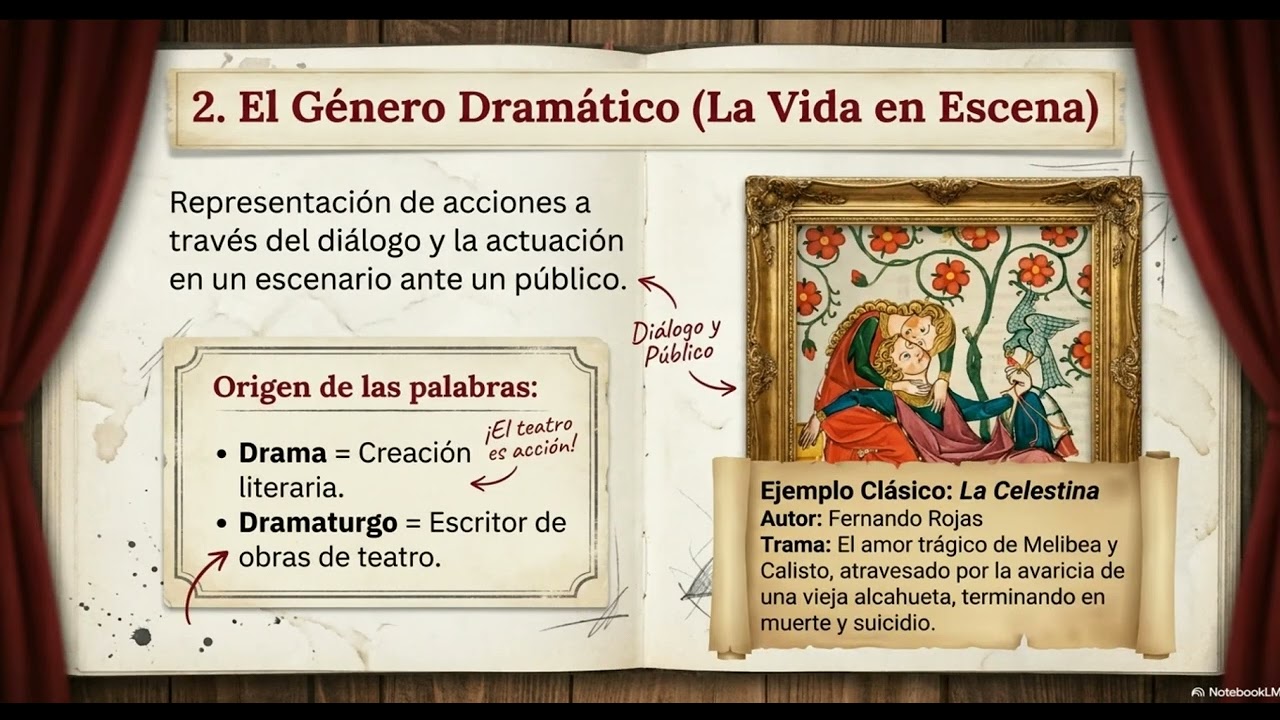
Generos literarios
190
Literary genres are categories that group works sharing similar characteristics, classified by form (structure) and content (themes). The narrative genre recounts events through a narrator, presenting fictional or real events. Its structure includes introduction, development, and conclusion, with elements like narrator, characters, argument, theme, time, space, and narrative order. Narrative types include closed narration (definitive ending) and open narration (uncertain protagonist fate). Examples include oral tales, myths, legends, novels, and fables like the ant and dove story demonstrating reciprocity.
Click to watch →
Deep Dive
Familiarity with the distinctions between science fiction, speculative fiction, and utopian/dystopian literature.

¿Qué es la ciencia ficción? - Literatura - Educatina
176.3K
Science fiction is a literary genre that uses imaginative, non-realistic scenarios involving advanced technology, alien worlds, or futuristic societies to explore philosophical questions about human existence, ethics, and societal structures; this genre encompasses two main subgenres—utopia, which presents idealized societies as models for positive change, and dystopia, which depicts undesirable futures as warnings against current social trends—to serve as implicit critiques of contemporary life and politics.
Click to watch →

QUAL A DIFERENÇA: FICCÃO CIENTÍFICA x ESPECULATIVA #BrunaExplica | Bruna Miranda
2.9K
Science fiction is a genre of fiction that must have some basis in science, whether existing, theoretical, or future-oriented, while speculative fiction is a broader category that encompasses any fiction set in worlds different from our own, including fantasy, horror, and science fiction, without requiring a scientific foundation.
Click to watch →

Dietmar Dath: Besser Kunst als Hoffnung, besser Kunst als Angst
8.7K
Utopian literature explores what society could be rather than what it currently is, originating from Thomas More's 1516 work. The genre emerged as a response to scientific and social transformations, imagining society could be deliberately designed. However, categorizing speculative fiction as merely 'utopias' or 'dystopias' reduces their complexity. Science fiction employs three primary methods: (1) Enchantment—suspension of disbelief creating wonder through imaginative worlds; (2) Visceral engagement—physical sensations combining horror and sexuality; (3) Cognitive engagement—intellectual exploration of complex ideas. Speculative fiction humanizes reality by treating the world as a game of variables and invariants, differing from political goals that aim for specific outcomes. The artistic ideal is not creating the best possible world but the largest possible space for human exploration, including not just utopian possibilities but also dystopian ones and everything in between.
Click to watch →

Philosophy Of Science Fiction - Ken Dreyfuss (1975)
151
Science fiction involves technological extrapolation predicting future developments based on current scientific understanding, while speculative fiction focuses on human behavior in extreme or alien circumstances. The key distinction lies in what each genre asks: science fiction asks 'what will happen?' while speculative fiction asks 'what will humans do?' This fundamental difference affects how each genre explores human nature and technological possibilities. Asimov's robot laws exemplify science fiction's structured approach to ethical questions, while works like Stranger in a Strange Land represent speculative fiction's focus on human psychology in unfamiliar situations.
Click to watch →

Prof. Dr. Ayhan Yalçınkaya ile “Ütopya Kavramı” 1. Bölüm
319
Travel literature often contains utopian elements, such as Moris's description of a small country where multiple languages were spoken. Fantasy literature, including 'The Lord of the Rings' and 'One Thousand and One Nights,' contains utopian and dystopian elements that serve as critical mirrors to existing social conditions. Science fiction is considered a subgenre of utopian literature. The distinction between science fiction and utopia lies in their relationship to scientific possibility—science fiction uses developments that are theoretically possible but practically impossible to explore what society might become, while utopia often uses developments that are theoretically possible but practically impossible due to legal or social constraints.
Click to watch →
Deep Dive
Basic scientific literacy regarding global climate change, environmental degradation, and the geological concept of the Anthropocene.

Bernd M. Scherer with Dipesh Chakrabarty | Interview | The Anthropocene Project. An Opening
2.7K
The Anthropocene is a geological concept where geologists are researching the hypothesis that human beings have changed the Earth's surface to such an extent that these changes can be identified in geological sediments over a timescale of 100,000 years. This represents a natural science story about how human activity has left permanent marks on the planet's geological record.
Click to watch →
C2S #4: How to be an Agent of Change in the Anthropocene? | Mark Lawrence
180
The Anthropocene is the geological epoch where humans have an impact on the entire Earth that is global in scale and will be evident over geological time scales. This includes changes visible in sediments and ice cores over centuries, millennia, and further. Examples include carbon dioxide emissions causing climate change, plastics in the environment, nuclear weapons testing leaving radioactive fallout, and even changes to chicken bones due to billions of chickens worldwide.
Click to watch →
Mudanças Climáticas & Leonardo DiCaprio & Antropoceno | mimimidias
16.3K
The Anthropocene is a proposed geological era in which human activity has become the dominant influence on climate and the environment. Scientists argue that we are no longer living in the Holocene era but have entered the Anthropocene, marking a significant transition in Earth's geological history driven by human impact.
Click to watch →
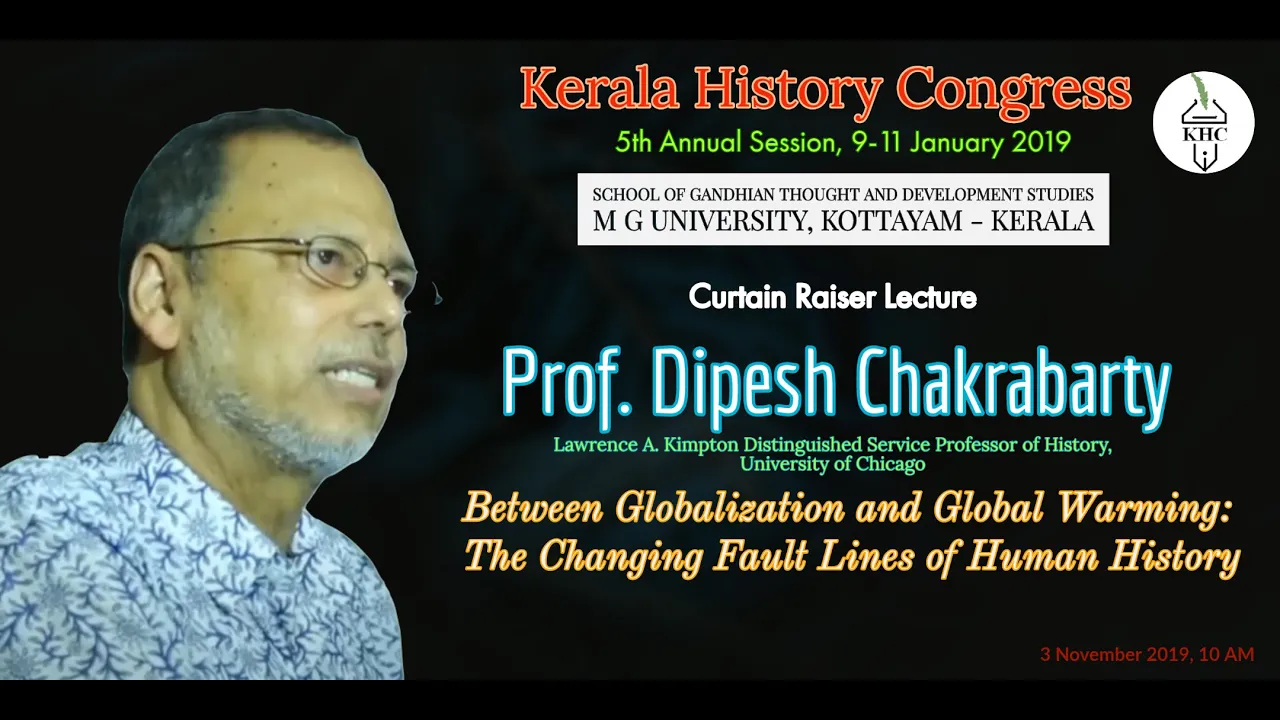
Prof. Dipesh Chakrabarty | BETWEEN GLOBALIZATION AND GLOBAL WARMING | Kerala History Congress
1.1K
Human beings have become a geological agent capable of altering the planet's climate system on a scale comparable to natural geological forces like meteorite strikes, fundamentally changing our relationship with the Earth from one of passive inhabitants to active planetary engineers. This shift requires us to develop a new geological consciousness that understands human actions in terms of geological time scales rather than just human lifetimes, recognizing that landscapes we take for granted are often results of catastrophic geological events, and that our current environmental crisis stems from our success in using fossil fuels to create forms of life that have fundamentally transformed Earth's systems.
Click to watch →
Claire Pentecost, Artist Talk 02.19.20
1.1K
The Anthropocene is a proposed new geological period marked by human-caused global ecological change pushing Earth's systems beyond the stable Holocene state. It encompasses increased erosion and sediment transport (humans have moved more earth than all rivers combined), perturbations of elemental cycles like carbon and nitrogen, global warming, sea level rise, ocean acidification, dead zones, mass extinction, and new minerals including plastics. All living things now contain microplastics. The term is controversial, with alternatives including Capitalocene (blaming capitalism), Plantationocene (linking to colonialism starting 1492), Extractocene, Chthulucene, and Eremocene (age of loneliness referring to the sixth extinction).
Click to watch →
Deep Dive
An introductory awareness of Ecocriticism, a literary theory lens that studies the relationship between literature and the physical environment.
What is ECOCRITICISM: Literary Theory| Pradeep Hariharan Malayalam
20K
Ecocriticism is a literary theory that examines the relationship between literature and the physical environment, coined by William Rueckert in 1978, which takes an earth-centred approach to literary studies where PLACE becomes a new critical category alongside race, class, and gender; it has two phases: the first wave (1980s) focused on natural writing and search for nature, while the second wave (1990s) became a political movement addressing climate change and global warming; ecocriticism is committed to environmental protection and distinguishes between deep ecology (which emphasizes the inherent value and interdependence of all living beings and treats everything in the environment equally) and shallow ecology (which rejects ecocentrism and biocentrism, viewing nature only as valuable when it serves human interests).
Click to watch →
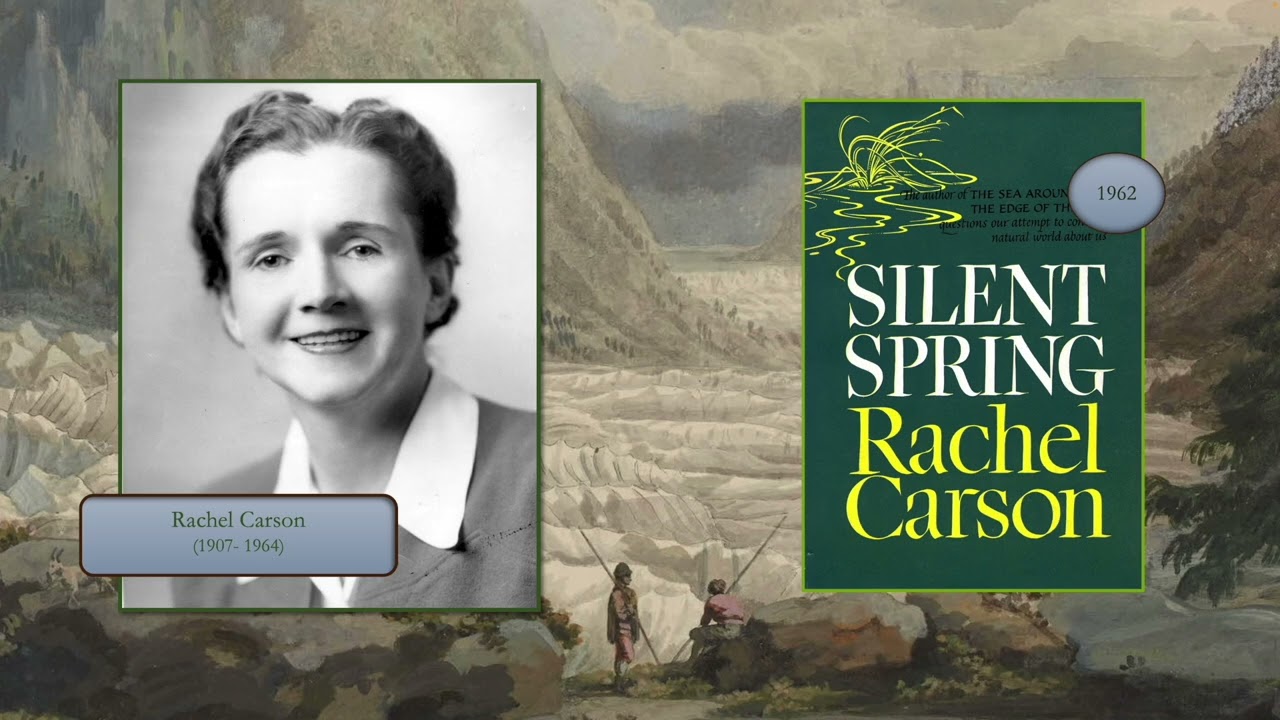
Ecocriticism (Introduction to Literary Theory Part 8)
1.3K
Ecocriticism is a literary theory approach that emerged in the late 1970s, focusing on the relationship between human beings and their natural environment rather than traditional aesthetic, linguistic, or cultural questions; it examines how literature represents nature, analyzes non-fiction environmental texts, and addresses philosophical questions about humanity's impact on the environment, with key figures including Rachel Carson, Joseph Meeker, Cheryl Glotfelty, Lawrence Buell, and Jonathan Bate.
Click to watch →
Literary Theory ECOCRITICISM, English Literature UGC NET/JRF
25K
Ecocriticism is an emerging interdisciplinary literary theory that examines the relationship between literature and the physical environment, first coined by William Rueckert in 1978; it analyzes how writers from Chaucer to Wordsworth to Frost have used nature as a central element in their works, with critics like Cheryll Glotfelty studying how environmental concerns are expressed through literary texts and how nature influences human perception and expression.
Click to watch →

Ecocriticism a literary theory | Green Studies |What is ecocriticism in literature
2.2K
Ecocriticism is a literary theory that studies the relationship between literature and the physical environment, examining how literary works represent nature and human-environment interactions; it emerged in 1978 with William Rueckert's essay 'Literature and Ecology' and positions nature as the central focus rather than humans, advocating for environmental protection and equality between all living beings.
Click to watch →
Ecocriticism or green studies explained /Peter Barry's Beginning Theory
871
Ecocriticism is a literary critical approach that studies the relationship between literature and the physical environment, including natural elements such as trees, rivers, sky, birds, mountains, and animals. The term 'ecocriticism' was first coined by William Rueckert in 1978, and the field emerged as an academic movement in the USA in the late 1980s and in the UK in the early 1990s. In the USA, ecocriticism draws its theoretical foundations from 19th-century American writers like Ralph Waldo Emerson (author of 'Nature' in 1836), Henry David Thoreau, and Margaret Fuller, who were members of the New England writers group. In the UK, the field is often called 'green studies' and takes its bearings from British Romanticism of the 1790s and American Romanticism of the 1840s, with Jonathan Bate as a founding figure. While American ecocriticism tends to be celebratory in tone, British green studies often focuses on environmental threats emanating from government, industrial, commercial, and neo-colonial forces.
Click to watch →
Prerequisite Knowledge
- Concept 01Understanding of basic literary genre theory, including how narrative conventions, themes, and tropes define a specific genre.
- Concept 02Familiarity with the distinctions between science fiction, speculative fiction, and utopian/dystopian literature.
- Concept 03Basic scientific literacy regarding global climate change, environmental degradation, and the geological concept of the Anthropocene.
- Concept 04An introductory awareness of Ecocriticism, a literary theory lens that studies the relationship between literature and the physical environment.
Subsequent Learning
- Step 01In-depth textual analysis of seminal climate fiction works, such as Kim Stanley Robinson's 'The Ministry for the Future' or Margaret Atwood's 'MaddAddam' trilogy.
- Step 02Exploration of Solarpunk, an emerging literary and artistic movement that envisions optimistic, sustainable futures as a counterpoint to dystopian cli-fi.
- Step 03Study of climate justice in literature, examining how cli-fi narratives depict the unequal global impacts of environmental crises along racial, class, and geographic lines.
- Step 04Research into the psychological and sociological impacts of cli-fi, specifically how environmental storytelling influences public climate consciousness and activism.
Defining Cli-Fi
Key Themes
Defining Cli-Fi
0:00Playing Section
- 1
Introduces climate fiction as a genre emerging from science fiction.
- 2
Explains climate change as a vicious cycle affecting humanity.
- 3
Tracks the genre's historical roots and modern mainstream adoption.
The Ghettoization Critique and Climate Fatigue
While climate fiction (cli-fi) is celebrated for raising environmental awareness, prominent literary critics, most notably Amitav Ghosh in 'The Great Derangement', argue that treating climate change as a distinct subgenre is counterproductive. Ghosh contends that 'ghettoizing' the climate crisis into sci-fi or cli-fi allows mainstream literary fiction to ignore ecological realities, treating the planet's degradation as a niche genre element rather than an urgent, contemporary reality. Furthermore, psychologists and media theorists argue that cli-fi's heavy reliance on apocalyptic and dystopian tropes can backfire. Instead of inspiring political activism, these overwhelming narratives often induce 'climate fatigue,' eco-anxiety, and fatalism, leading readers to disengage from environmental action altogether. Thus, critics suggest that instead of isolating climate themes into a specific genre, literature must integrate ecological crises globally across all mainstream narratives to foster genuine engagement.
Deep Dive
In-depth textual analysis of seminal climate fiction works, such as Kim Stanley Robinson's 'The Ministry for the Future' or Margaret Atwood's 'MaddAddam' trilogy.
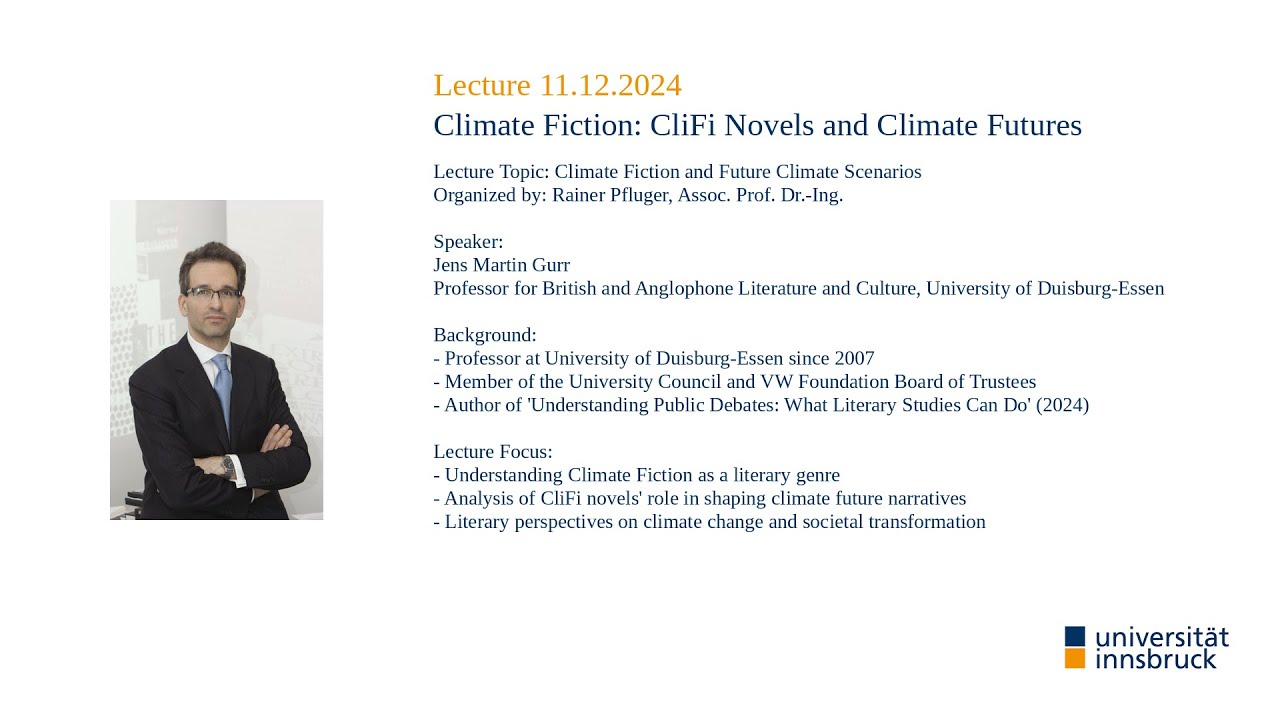
Climate Fiction and Future Climate Scenarios
163
Kim Stanley Robinson's 'Ministry for the Future' (2020) begins with a 2023 heatwave killing millions, leading to a UN Ministry for the Future. The novel moves into the 2040s showing humanity's transition using diverse narrative perspectives including chapters where a carbon atom tells the story of its journey through world history. Critics complained it lacks psychological interiority, but this refusal to make us identify with climate heroes is what makes it effective. The novel is extremely conscious of model theory—talking about climate modeling importance, effects of different model types, and technical details. A passage describes California's 3D water system model, showing models as simulated simplified versions of reality, blueprints others can learn from, and forward-looking ideas. The novel suggests returning from model to reality to fact-check results. In the 2030s, eco-terrorists crash 60 planes killing thousands but saving millions by stopping flying. A simplistic reading might suggest we should shoot down planes to solve climate change, but a more subtle reading is that the novel explores what might happen if climate change continues and nothing happens—not proposing violence as solution.
Click to watch →

Book Brunch - Mena Mark Hanna with Edward Hart
111
Kim Stanley Robinson's Ministry for the Future is climate fiction (cli-fi) that deals with the United Nations creating an agency to advocate and litigate on behalf of future human lives and nature. The book is set in Zurich, Switzerland, and addresses how humanity can come up with the right systems to protect the Earth and continue as a species. It addresses how climate change will affect economic systems, what economic systems can exist around climate change, geoengineering, climate eco-terrorism, and how political and governmental systems would adjust. The book is steeped in close reading of these systems, making it a work of fiction that is also a serious analysis of global challenges. Moby Dick, written in the 19th century, is ostensibly about whaling but is effectively about a man's need to conquer nature and is one of the first books about global capital.
Click to watch →

DAY 1 (14/03/2022): International Webinar on "Climate Change, Human Rights and Literature"
173
Kim Stanley Robinson's 'The Ministry of the Future' represents an optimistic approach to climate fiction, covering roughly the next 40-50 years through many different stories from across the globe taking decisive action against climate change. After a catastrophic heatwave killing hundreds of thousands in India, the Indian government acts to seed the upper atmosphere to slow global warming, triggering international responses coordinated by a United Nations creation called the Ministry for the Future. The novel's fragmentary form consists of chapters from different points of view interspersed with shorter pieces including voices of an Indian pilot involved in atmosphere-seeding operations, personification of history, photon voice, and permaculture project representatives. The cost is that readers cannot become deeply engaged with any one character—the emotional depth transfers to the whole global biosphere or ecosystem. Gene Sprackman's non-fiction work 'Strands' examines plastic pollution through scale derangement: items with touching innocence (petrol cans, sanitary towel wrappers, chocolate bar wrappers) fill up the world, moving from tiny ordinary spots to the Great Pacific Garbage Patch twice the size of Texas. Amitav Gosh argues that climate change and the anthropocene cannot be separated from colonialism's beginnings, choosing the spice nutmeg and Dutch colonial massacre of Bandar Islands to illustrate how humanity views Earth as inert entity to be exploited. Restoring non-human voices to our stories is essential as planetary catastrophe becomes closer.
Click to watch →
Climate Fiction Will Not Save The Planet
6.2K
Climate fiction (clifi) is a sub-genre of science fiction focusing on climate change and environmental disasters. While the term 'clifi' is only about 20 years old, the genre dates back to Jules Verne's 1889 novel 'The Purchase of the North Pole.' Early 20th-century science fiction featured stories about global warming, deforestation, and ecological disasters ahead of public perception. JG Ballard's 1962 'The Drowned World' is considered foundational, with 'The Burning World' (1964) shifting blame from nature to humanity. Through the 70s-90s, public awareness grew about issues like the ozone layer hole. Major works include Octavia Butler's 'Parable of the Sower' (climate change and inequality), Margaret Atwood's 'Mad Adam Trilogy' (corporate greed), and John Brunner's prescient works on overpopulation. The 2020s marks the era of serious climate change debate with urgency, exemplified by Kim Stanley Robinson's 'The Ministry for the Future,' which describes likely civilizational changes over 30 years if action isn't taken.
Click to watch →

Carte Blanche Biblio #43 - Actu et Chroniques #09
253
This segment analyzes Le Ministère du Futur by Kim Stanley Robinson. Set in 2025, the novel features a new United Nations agency called the Ministry of the Future, inspired by real-world climate discussions. The story begins with a catastrophic heatwave in India that kills 20 million people, causing massive trauma to survivors. The novel employs a mosaic narrative structure, interweaving multiple perspectives including refugees, scientists, and political figures to explore humanity's response to climate change. The book incorporates real scientific theories, including discussions of the sixth mass extinction, carbon cycle mechanics, and potential solutions like carbon capture and financial regulation. The narrative is described as optimistic and visionary, offering hope for human cooperation in addressing global challenges.
Click to watch →
Deep Dive
Exploration of Solarpunk, an emerging literary and artistic movement that envisions optimistic, sustainable futures as a counterpoint to dystopian cli-fi.

Solarpunk | An Optimistic Look On The Future
10.2K
Solarpunk is an optimistic science fiction movement that presents attainable, sustainable futures through realistic technology, emphasizing community, social justice, decentralization, and convivial conservation (integrating nature into cities with democratic participation), serving as a hopeful counter to dystopian narratives by showing that a positive future is possible and worth fighting for.
Click to watch →

Solarpunk: Humanity’s Last Hope
40.7K
Solar Punk emerged as an optimistic utopian reaction to cyberpunk's pessimistic dystopian vision. In 2008, blogger John Robert created the genre after being inspired by the Beluga Sky Sales hybrid energy ship, defining Solar Punk as similar to steampunk but with renewable energy. Norman Spinrad's 'Songs from the Stars' was chosen as the first Solar Punk work. In 2009, Matt Stags created 'Green Punk' emphasizing DIY renewable resources. In 2012, Adam Flynn founded the Solar Punk Tumblr community, publishing an essay on humanity's need for visions of the future. The 2019 Solar Punk Manifesto defined the genre as a movement in speculative fiction, art, fashion, and activism seeking to answer 'What does a sustainable civilization look like and how can we get there?' The aesthetics merge practical with beautiful, well-designed with green and lush, bright and colorful with earthy and solid. Solar Punk can be utopian, optimistic, or concerned with struggles but never dystopian. The Manifesto declares Solar Punk is not just a literary genre but also a social movement representing rebellion, counterculture, post-capitalism, and decolonialism. Studio Ghibli movies were major Solar Punk inspirations, particularly 'Castle in the Sky,' 'Princess Mononoke,' and 'Nausicaä of the Valley of the Wind.' 'Nausicaä' depicts an environmentally destroyed world where the main character treats every animal, insect, and toxic plant with respect, wanting to work with nature rather than destroy it. Solar Punk games include 'Solar Punk' and 'Lithia' (survival crafting farming games), 'Terra Nil' (rebuilding ecosystems), and 'No Place Like Home' (cleaning up trash). While no explicitly Solar Punk novels exist, eco-utopias like 'Ecotopia,' 'The Dispossessed,' 'The Fifth Sacred Thing,' and 'Pacific Edge' embody Solar Punk philosophy. The Monk and Robot series by Becky Chambers (2021-2022) represents the most popular Solar Punk literature, with 'Sam, for the Wild Built' winning a Hugo Award in 2022. The world is set on a faraway moon called Panga with half the continent designated for human use and half left to nature. The main city features skyscrapers with trees, elevated rail lines, and renewable energy trains. Woodland Villages avoid building on the ground to protect forest ecosystems, instead building between trees and suspended in the air. Riverland Villages were built by recycling polluted waste, creating houses from plastic, tires, and shipping crates patched with modern materials. Coastland Villages reject technology entirely, living in simple shelters on stilts in rewilded territory. All architecture has decay built into it—materials decompose and are either repaired or reabsorbed into the landscape. The economy uses 'pebs' (digital Pebbles) that can be spent without having them, with public balances like a blockchain. Bosco Verticale (2014) was one of the earliest Solar Punk skyscrapers with 730 trees, 5,000 shrubs, and 11,000 smaller plants across 94 species, creating microclimates that generate humidity, reduce noise, and purify air. Earthships are self-sustainable off-the-grid housing using natural and recycled materials, producing water, electricity, and food through six design principles: natural materials, thermal/solar heating, minimized electrical requirements, water harvesting, self-contained sewage treatment, and self-sustained food production. Ardoin in the Netherlands is a village of 23 homes inspired by Earthships, built from rammed Earth and straw with solar panels and a community microgrid for power distribution. The village runs on sociocracy, a governance style based on group consensus with open discussions. Solar Punk lends itself to horizontal scaling—many smaller communities with their own renewable energy rather than one big central city. While no popular defining work exists like Neuromancer for cyberpunk, Monk and Robot represents a good start. The genre was created by idealists and is still hatching, but if enough people keep making it, a popular mainstream work will emerge.
Click to watch →

What is Solarpunk?
269.1K
Solarpunk is a literary genre and social movement that envisions a positive, sustainable future grounded in environmental sustainability, self-governance, and social justice, emphasizing collective living, human-nature harmony, and real-world applications like DIY projects and eco-friendly technology, while rejecting both cyberpunk's dystopian outlook and superficial 'greenwashing' that prioritizes appearance over genuine environmental protection.
Click to watch →
La distopia más aterradora de la ficción
26.2K
Solarpunk, despite its optimistic appearance of sustainable technology and harmony with nature, represents a dangerous dystopian ideology because it advocates for centralized communist planning (abolishing private property and money), which historically leads to mass atrocities (as demonstrated by Pol Pot's Cambodia), and its technological solutions like renewable energy are actually more polluting than conventional alternatives due to manufacturing waste and intermittency issues, making the entire system fundamentally flawed and potentially catastrophic when implemented.
Click to watch →
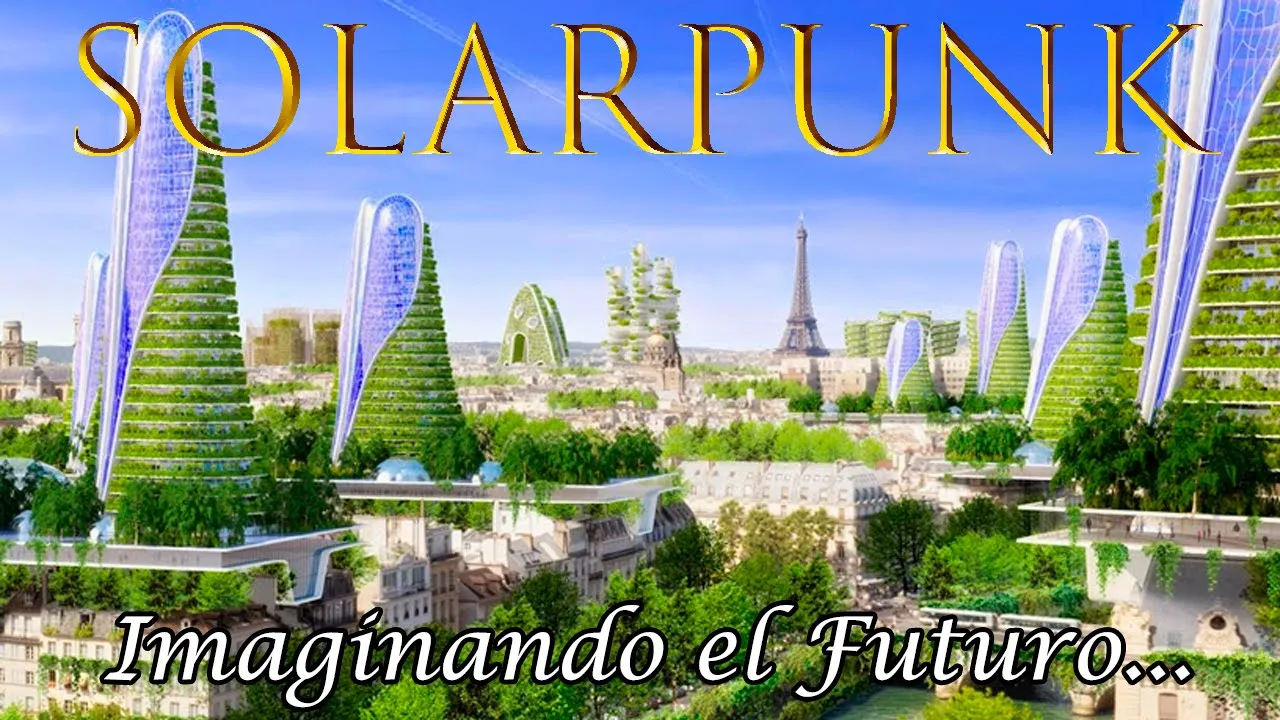
☀️ SOLARPUNK en Español: El Género Literario que nos augura un Futuro Ecológico y Prospero
17.7K
Solarpunk is a speculative fiction subgenre that imagines a positive future where humanity has successfully resolved social and environmental problems through sustainable technology, decentralized communities, and harmonious coexistence with nature, contrasting with dystopian cyberpunk narratives by focusing on solutions rather than problems.
Click to watch →
Deep Dive
Study of climate justice in literature, examining how cli-fi narratives depict the unequal global impacts of environmental crises along racial, class, and geographic lines.

Raconter ou alerter? La durabilité entre récits et sciences sociales
153
This section introduces the cli-fi (climate fiction) movement that emerged in the Anglophone world since the 2000s. Authors consciously integrate ecological, climate, and environmental problems into their literary production, with the crucial distinction being the conscious integration of contemporary science. The example of John Lanchester's 'Wall' (2010) demonstrates this: set in 2100 with the planet warmed 4-5 degrees, it depicts England as colder than today because contemporary climate science teaches that the Gulf Stream could disappear, potentially freezing Europe even as the planet warms. The movement began in the 1960s with the first major scientific and literary texts attempting to alert us to potential dangers, continuing through the 1970s and 1980s with the 'Limits to Growth' report, and exploding in the 1990s as the golden age of environmental literature.
Click to watch →
![Coimbra Group: 3-Minute-Thesis Competition. UNIBO Edition 2021 [long version]](https://i.ytimg.com/vi/Tb8dq7VLxZY/maxresdefault.jpg)
Coimbra Group: 3-Minute-Thesis Competition. UNIBO Edition 2021 [long version]
2K
Climate justice perspectives understand environmental crises not merely as techno-scientific problems but as questions of socio-economic inequality and cultural difference. The Anthropocene epoch, characterized by pervasive human impact on the planet, affects different groups unevenly. Women and children are 14 times more likely to die in ecological disasters than men, with this vulnerability resulting from gender roles, discrimination, and poverty rather than innate factors. Literature, particularly climate fiction by feminist, postcolonial, and indigenous authors, can help create empathetic awareness of climate injustice, suggesting that solving climate change requires deep societal transformation addressing structural power imbalances.
Click to watch →

Raça, Racismo Ambiental e Emergência Climática no Sistema Interamericano
188
Justice Environmental emerged in the 1980s, asserting that all people deserve fair environmental treatment regardless of race, color, or income. It rejects 'ecological universalism' that hides who bears environmental risks. Environmental injustice results from cheaper land in marginalized areas, limited political mobilization capacity, and underrepresentation in decision-making. Climate Justice adds the question of who produced the crisis and who pays, introducing 'climate debt' - the idea that historically subordinate populations cannot be equally obligated to face a crisis they did not create.
Click to watch →
"Os mais pobres pagam o preço da crise ambiental”
2.6K
Climate justice addresses the unequal impact of environmental crises, where developed countries that historically caused climate change through their emissions now burden developing nations with disproportionate vulnerability, requiring equitable solutions that support vulnerable populations' resilience, development, and adaptation.
Click to watch →
The future is now! Climate Fiction
257
Climate fiction intersects with social justice by revealing how climate change disproportionately affects poorer communities and communities of color, exposing deep racialization in society. Art and fiction help create and challenge 'consensual reality'—the shared understanding of what is normal. Fiction can challenge extreme wealth concentration, the healthcare system, and other structures that don't work for most people. The genre's value lies in representing the full range of experiences and impacts of climate change. Climate fiction serves as a platform for diverse voices beyond Western perspectives, as climate change affects all communities differently.
Click to watch →
Deep Dive
Research into the psychological and sociological impacts of cli-fi, specifically how environmental storytelling influences public climate consciousness and activism.
Does Climate Fiction Change Minds? A Critical Analysis
25.8K
Climate fiction (cli-fi) is a literary genre addressing climate change in fiction, emerging as writers increasingly incorporate environmental themes into narratives. The term gained prominence as climate change became more urgent and a publishing market developed. Authors create cli-fi for diverse reasons: scientific backgrounds, personal anxiety about climate issues, and desire to process these concerns through storytelling. A key challenge is avoiding propagandistic perceptions since climate change is highly politicized; works where climate serves as central message rather than narrative backdrop often fail. Research by Anthony Leiserowitz (2004) found cli-fi doesn't cause measurable shifts in public perception but may reinforce existing beliefs. However, research indicates that among readers of climate fiction, almost half are much more likely to discuss climate change with friends and family, overcoming 'climate silence'—the phenomenon where most people never discuss climate issues. Contemporary cli-fi has expanded beyond sci-fi into fantasy, romance, and realist fiction, featuring collective action narratives that provide positive models for real-world adaptation.
Click to watch →

Climate Writing, Climate Action - with Kate Woodworth, Mike Tidwell and Jim Lardner
495
Climate fiction (cli-fi) uses storytelling to make climate change relatable and immediate. Kate Woodworth's 'Little Great Island' illustrates how warming Gulf of Maine waters are driving lobster populations northward, threatening Maine island communities. The novel employs multiple perspectives (12 human viewpoints plus an omniscient narrator representing the island itself) to show how different community members respond to climate disruption. Research indicates empathetic responses to climate fiction last only about two days, creating a brief window for action-oriented messaging. This demonstrates how fiction can bridge emotional engagement with practical climate action.
Click to watch →

The Age & Rage of Cli-Fi
106
Climate fiction (cli-fi) is a growing genre combining science fiction with environmental themes. The panel explores why this genre has gained momentum worldwide. Key theoretical frameworks include Nick Edmundson's six proposals (eliminating lone heroes, writing about systems) and Gregor Sanderson's 'imaginaries' (social breakdown, loss of wilderness). The 'uncanny'—nature behaving animatedly—is a key characteristic reflecting what humans have done to nature coming back to affect us. Research shows climate fiction has emotional impact, primarily on liberals, with repetitive storytelling proving effective for mindset change. Authors share their journeys: Chen Qiufan wrote Waste Tide ten years ago when climate change awareness was limited, using science fiction to address how electronic waste is shipped from developed countries to developing nations. Atul Mishra's journey began during Delhi University years when environmental activism was emerging; despite becoming an IAS officer, he felt constrained by bureaucratic work and wrote fiction to express environmental concerns.
Click to watch →
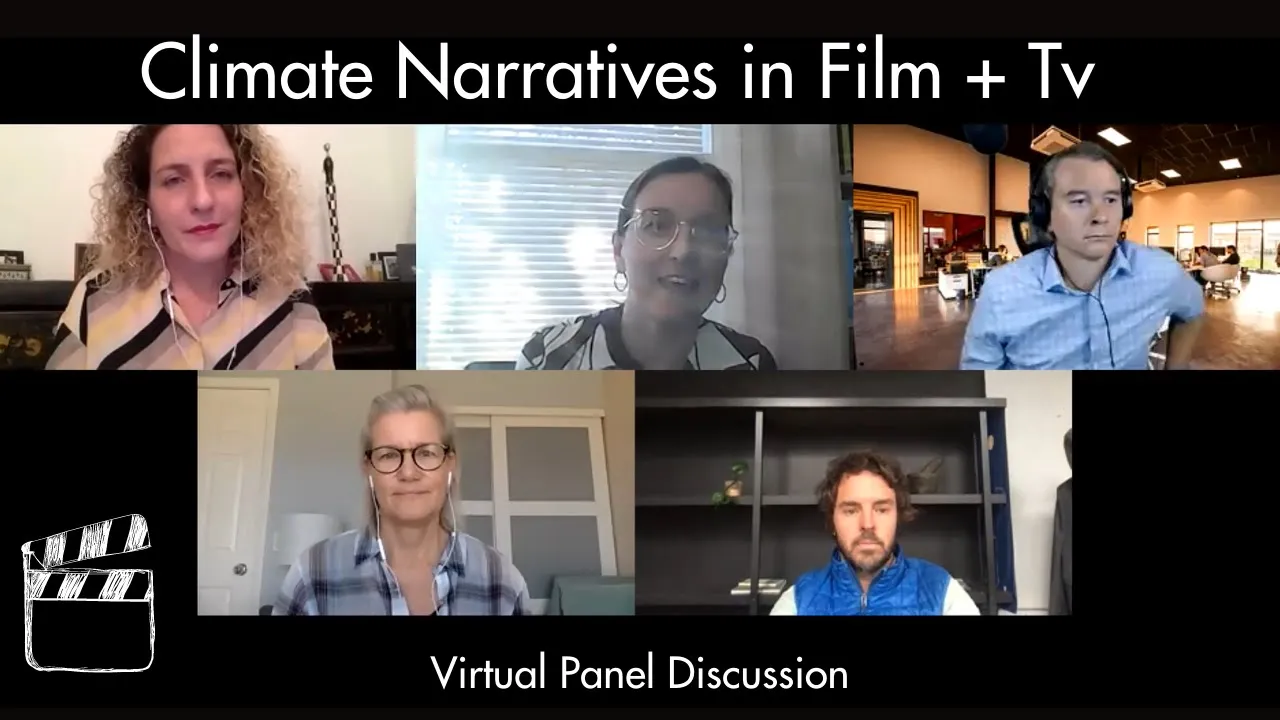
Climate Narratives - Sustainable Production Forum 2020 Panel
296
Climate fiction (cli-fi) emerged around 2010 when novelists across genres began creating complex stories about climate change. Unlike earlier science fiction, contemporary cli-fi explores collective action, systemic change, and shifts in consumerism and colonialism. Psychological studies show readers become more progressively minded about climate issues and discuss it more openly with others. However, screen adaptations lag behind literary cli-fi, with research suggesting some TV and film portrayals may actually increase viewer resistance to climate action. This highlights opportunities for adapting successful literary cli-fi for broader audiences.
Click to watch →
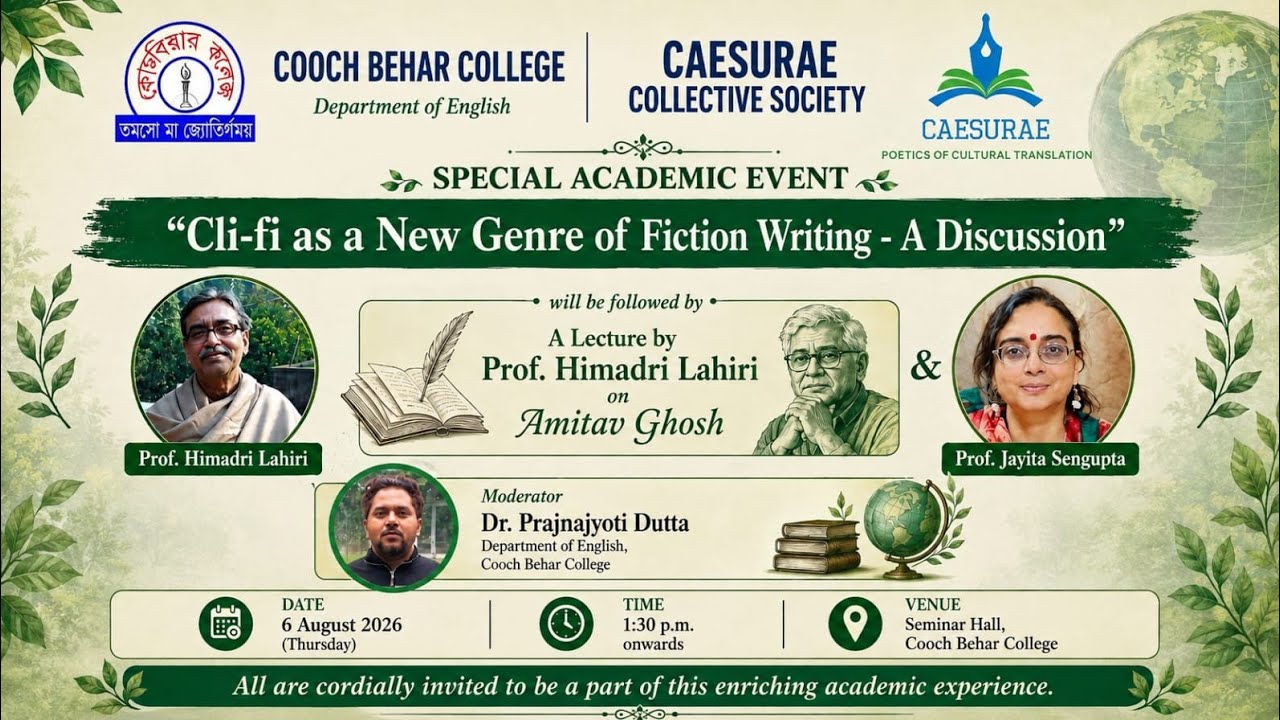
Cli-fi as a New Genre of Fiction Writing - A Discussion
113
Climate fiction (cli-fi) is a literary genre that engages with climate change and its social, political, and emotional consequences. The term was popularized by Dan Bloom in the early 2010s. The 21st century has become the century of climate anxiety, driven by challenges like rising sea levels, biodiversity degradation, and environmental destruction. Cli-fi encourages readers to think about sustainability, environmental justice, capitalism, technology, migration, ethics, and humanity's place in the sociological web. It asks difficult questions about responsibility and survival while imagining both dystopian futures and possibilities for ecological renewal.
Click to watch →
Defining Cli-Fi
Key Themes
Defining Cli-Fi
0:00- 1
Introduces climate fiction as a genre emerging from science fiction.
- 2
Explains climate change as a vicious cycle affecting humanity.
- 3
Tracks the genre's historical roots and modern mainstream adoption.
The Ghettoization Critique and Climate Fatigue
While climate fiction (cli-fi) is celebrated for raising environmental awareness, prominent literary critics, most notably Amitav Ghosh in 'The Great Derangement', argue that treating climate change as a distinct subgenre is counterproductive. Ghosh contends that 'ghettoizing' the climate crisis into sci-fi or cli-fi allows mainstream literary fiction to ignore ecological realities, treating the planet's degradation as a niche genre element rather than an urgent, contemporary reality. Furthermore, psychologists and media theorists argue that cli-fi's heavy reliance on apocalyptic and dystopian tropes can backfire. Instead of inspiring political activism, these overwhelming narratives often induce 'climate fatigue,' eco-anxiety, and fatalism, leading readers to disengage from environmental action altogether. Thus, critics suggest that instead of isolating climate themes into a specific genre, literature must integrate ecological crises globally across all mainstream narratives to foster genuine engagement.
Understanding of basic literary genre theory, including how narrative conventions, themes, and tropes define a specific genre.
Familiarity with the distinctions between science fiction, speculative fiction, and utopian/dystopian literature.
Basic scientific literacy regarding global climate change, environmental degradation, and the geological concept of the Anthropocene.
An introductory awareness of Ecocriticism, a literary theory lens that studies the relationship between literature and the physical environment.
In-depth textual analysis of seminal climate fiction works, such as Kim Stanley Robinson's 'The Ministry for the Future' or Margaret Atwood's 'MaddAddam' trilogy.
Exploration of Solarpunk, an emerging literary and artistic movement that envisions optimistic, sustainable futures as a counterpoint to dystopian cli-fi.
Study of climate justice in literature, examining how cli-fi narratives depict the unequal global impacts of environmental crises along racial, class, and geographic lines.
Research into the psychological and sociological impacts of cli-fi, specifically how environmental storytelling influences public climate consciousness and activism.
119 views6likes2:57@LitavenuesOriginal Release: 2025-01-10
hello today I'll be giving an introduction to the genre climate fiction a genre refers to the style of an art and please note that the same artwork can belong to different genres before we move on to climate fiction let us look at the definition of climate as per National Geographic it is the long-term pattern of weather in a particular area and as per the UN climate change that we are hearing quite frequently these days is altering nature the world in which we live referring to Chief Seattle's words of wisdom humans being a part of nature will find themselves in the loop of repercussions for their interactions with nature thus climate change and ecological balance roll out as a vicious cycle affecting each other with anthropos scine on the go climate fiction that imagines the after effects of climate change in humanity has emerged as a new genre breaking off and drawing factors from another genre called as science fiction we will discuss science fiction in another video the short form CFI has been given to climate fiction by the reporter and climate activist Dan Bloom though this genre has gained recognition and importance only in 21st century writers had unintentionally dwelt upon this concept in the last couple of centuries and here I have given some examples from 19th and 20th Century fiction in modern days since climate change has become a Hot Topic written as well as visual media has explored the possibilities of this genre here you you can see some examples in literature as well as visual media as you can easily guess these are the recurring themes in climate fiction first the intricacies of the thread that connects all living and non-living elements of nature which when Disturbed affects the climate second the knowledge about one's position in the world and the social responsibility that comes with it lastly referring to Darwin's words nature favors the survival of the fittest facing the consequences holding hands with nature is a theme that you cannot ignore in a climate Fiction with that we come to a conclusion of this topic if you like my video don't forget to subscribe and your suggestions on topics are welcome and that's all for today thank you
Up Next

40:02
Neuromancer: Cyberpunk Origins and Dystopian Themes
@QuinnsIdeas
1.5M views•2023-07-14

13:43
Formalism in Literary Criticism: An Academic Lecture Overview
@mattalberhasky9952
39.1K views•2015-08-05

6:08
Point of View in Fiction: First Person vs. Third Person
@magicalthriftyteacher
153.8K views•2014-03-31

15:25
1984: Orwell's Dystopian World and the Mechanisms of Totalitarianism
@AlternateHistoryHub
7M views•2017-03-04
Related Study Plans & Knowledge Roadmaps
Structured learning paths in Literature
literature
Graphic Memoirs: Visual Art, Trauma & History
01Foundations of Sequential Art and Visual Language
02Autographics and Processing Historical Trauma
03Visualizing Personal Trauma, Grief, and Graphic Medicine
+ 2 more learning modules
14h5 modules
Explore Roadmap
literature
Campus Novels: Evolution, Themes & Critique
01Introduction to the Campus Novel Genre
02Mid-Century Satire and the Post-War Academy
03Dark Academia and the Critique of Privilege
+ 2 more learning modules
14h5 modules
Explore Roadmap
literature
Theater of the Absurd: Philosophy & Plays
01Postwar Existentialism & Historical Roots
02Dismantling Narrative: Esslin & Absurdist Conventions
03Samuel Beckett and Tragicomic Existentialism
+ 2 more learning modules
12h5 modules
Explore Roadmap
literature
Revenge Tragedy: Justice, Madness & State
01Foundations of Early Modern English Theatre
02Anatomy of Revenge: Structural Conventions
03Psychological Complexity: Madness and Melancholy
+ 2 more learning modules
15h5 modules
Explore Roadmap