


















To advance justice in America, we must embrace four essential principles: first, getting proximate to problems by engaging directly with affected communities rather than solving issues from a distance; second, changing harmful narratives that sustain inequality, particularly the politics of fear and anger that perpetuate mass incarceration; third, protecting hope because hopelessness enables injustice to persist; and fourth, doing uncomfortable things because meaningful change requires confronting uncomfortable truths about our nation's history of racial injustice, including slavery, lynching, and ongoing discrimination. This approach demands that we confront uncomfortable realities about our complicity in systemic racism while committing to truth-telling, reconciliation, and actionable reform.
Just Mercy: Race & Criminal Justice with Bryan Stevenson
Added:>> [APPLAUSE] >> Hi, everyone and welcome to all of us in the theater, all of you, and to those joining by live stream tonight.
Tonight's program is a production of Stanford's Open Exchange Initiative and partnership with the Center for Comparative Studies in Race and Ethnicity.
Our program Just Mercy, Race and the Criminal Justice System is supported tonight by many campus sponsors.
So we thank them.
And I think you're in for a real treat.
One of my favorite people I've ever had an opportunity to interview, Brian Stevenson, Is here tonight.
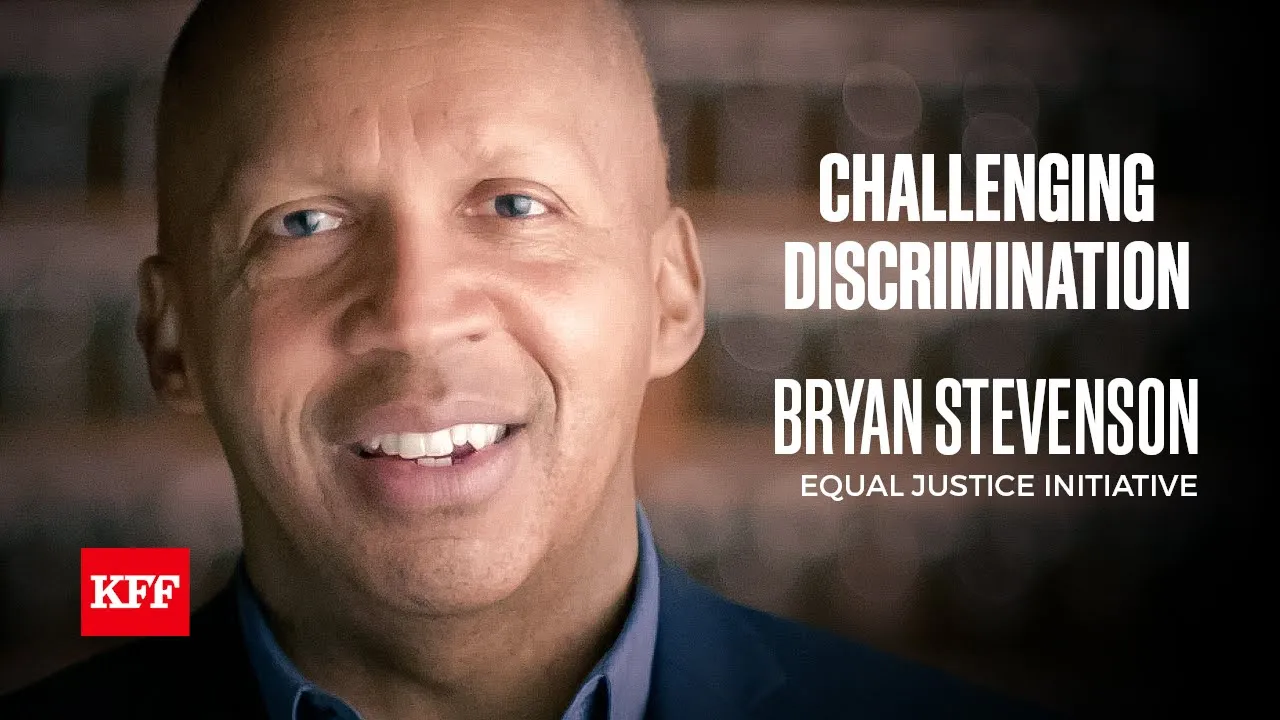
Brian is founder and executive director of the Equal Justice Initiative in Montgomery, Alabama, the author of Just Mercy, a story of justice and redemption which has been named one of the best books of the year by many different publications.
His legal practice is dedicated to defending the poor, the wrongly accused and those trapped in the criminal justice system.
Brian has been called America's Mandela.
Not too shabby?
So we're very lucky to welcome him here today.
Now, after Brian has a chance to tell you about the work that he's been doing, we'll introduce our distinguished panel and we'll sit down for a round table conversation.
During Brian's talk by the way we're going to be collecting questions on the cards that were handed to all of you at the door.
Ushers in the isles will be collecting them and we'll get to some of them, as many as we can following the panel discussions.
So please come up with some good questions and if there are just comments you want to make about your experiences feel free to share those with us as well.
Now we'd like to introduce you to C Matthew Snip.
He's faculty director of CCSRE and Professor of Sociology, Matt?
>> [APPLAUSE] Thank you, Katie.
Good evening, I am delighted and excited to welcome you to this year's Ann and Laura Kiva distinguished lecture.
In collaboration with Stanford's Open Exchange Initiative.
Our CCSRE Kiva Lectures are a marquee event in our field, the comparative study of race and ethnicity in America and in the world.
The Kiva Lectures have impact.
They cause discussion and provoke debates.
For the past 11 years the Kevitt lecture has brought to Stanford notable scholars, writers, and public intellectuals to deliver an address pertaining to vital issues about race and ethnicity in our complex world.
The Anna Laura Kevitt Distinguished Speakers fund support this lecture and today The Anna Laura Kevitt Distinguished Lecture is one of the most prestegious lectures at Stanford University.
I am delighted that Anne and Lauren Kiva are joining us this evening.
Lauren in particular is an attorney with a long standing concern and interest about civil rights.
Anne and Laura, could you please stand?
>> [APPLAUSE] >> Tonight I think it's fair to say that we're brought together by a common interest, by a common concern.
And that is the place of race in the American legal system.
We are deeply honored to have Brian Stevenson in here to speak about this issue tonight.
Brian Stevenson is a professor of law at New York University.
The founder and executive director of the Equal Justice Initiative in Montgomery, Alabama.
Mr. Stevenson is an acclaimed public interest lawyer who has dedicated his career to helping the poor, the incarcerated, the condemned.
Under his leadership the equal justice initiative has one major legal challenges, eliminating excessive and unfair sentencing, exonerating innocent death row prisoners, confronting abuse of the incarcerated and the mentally ill, and aiding children prosecuted as adults.
Mr. Stevenson has successfully argued numerous cases in the United States Supreme Court.
And recently won a historic ruling that made unconstitutional mandatory life without parole sentences for all children seventeen and younger.
The equal justice initiative has also initiated major new anti-poverty, and antidiscrimination efforts that are intended to challenge the legacy of racial inequality in America.
Mr. Stevenson's work fighting poverty and challenging racial discrimination in the criminal justice system has won him numerous awards including a MacArthur Foundation Fellowship, a Genius Award.
He is the recipient of 21 honorary doctorate degrees.
Tonight he is going to talk about his work and about his critically acclaimed and award winning New York Times best seller, Just Mercy.
Which TIME Magazine named as one of the ten best non-fiction books of 2014.
Please join me in welcoming Mr. Brian Stephenson to Stanford.
>> [APPLAUSE] >> Thank you.
>> [APPLAUSE] >> Thank you.
Thank you very, very much.
I am so excited to be here at Stanford.
It's really wonderful.
To have this opportunity to talk with you.
I'm gonna jump right in.
I think this country's a very different place than it was 40 years ago.
In ways that are very problematic.
In 1972, we had 300,000 people in jails and prisons.
Today we have 2.3 million people in jails and prisons.
There are six million people on probation and parole in this nation.
There are 70 million Americans with criminal arrests.
Which means that when they apply for a job or try to get a loan, they are going to be disfavored.
We've done some really dreadful things to women.
The percentage of women going to prison has increased 640% in the last 20 years.
70% of these women are single parents with minor children and when they go to jails or prisons their children get displaced.
You're dramatically more likely to end up in jails and prisons if you're the child of an incarcerated parent.
There are collateral consequences to mass incarceration.
This past March the president came to Alabama.
He came to Selma to commemorate the 50th anniversary of the Selma to Montgomery March.
The members of congress came.
80,000 people came.
And very few of them knew that today in the state of Alabama 31% of the black male population has permanently lost the right to vote as the result of a criminal conviction.
In ten states, you permanently lose your rights to vote.
Our jails and prisons are filled with people who are suffering from mental illness.
About 50% of the people in prison have mental illness.
20% are acutely mentally ill.
We have the highest rate of incarceration in the world, and we don't seem particularly ashamed about it.
These problems are bad.
But the statistic that, I tell you, really keeps me up late at night is the one from the Bureau of Justice that now predicts that one in three black male babies born in this country is expected to go to jail or prison.
One in three.
That was not true in the 20th century.
That was not true in the 19th century.
It's become true in the 21st century, and there is this appalling silence.
There is this indifference.
To this phenomenon and it bothers me because I see in poor and minority communities, hope being crushed.
I go in to communities where I sit down with 12 and 13 year old children who tell me that they don't expect to be free by the time they're 21.
And they're not saying that because of something they've seen on TV, they're not saying that because of something they've heard.
They're saying that because they see that happening in their community.
Their friends, and their brothers, and their neighbors, are dying from drug war, are dying from gang warfare, or effectively dying by being sent to jails or prisons.
And there is this indifference to this problem.
We have children born into violent households, they live in violent neighborhoods, they go to violent schools, they are traumatized by the time they are four and five, and we're not talking about it.
So, I wanna talk tonight about solutions.
These problems are everywhere.
And we could identify other data, other demographics, other statistics that would outline problems, but I really want to talk to you tonight about some solutions.
I believe we can change this nation, I really do.
I believe we have to change this nation.
I think we can create more justice in this country.
But there are some things that all of us have to do if we really want to be about advancing justice, and I've got four.
The first is, I don't think we can create more justice in America, in California, at Stanford.
Until we choose to get proximate to the problems, that most motivate us, that most worry us.
There is a need to get closer to the problems that we see.
I believe that without getting proximate you don't come up with the right solutions.
We have too many policymakers trying to make solutions to problems from a distance.
And when you problem solve from a distance you get it wrong.
You don't come up with the right solutions because you don't understand the details of the problems.
When you get proximate, you hear things that you don't hear from a distance.
You see things you don't see from a distance.
I'm persuaded that we've got to get closer to the parts of our community where there's poverty and inequality.
We've gotta get closer to people in jails and prisons.
We've gotta get closer to people coming out of jails and prisons.
If we wanna do something about racial inequality, we have to go to the places where that racial inequality is most manifest.
I believe in the power of proximity.
I'm a witness of the power of proximity.
I grew up in a community in the American South where black children couldn't go to the public schools.
I started my education in a colored school.
When I was a little boy I had to go to a school that didn't go past the eighth grade.
My county, my dad didn't have a high school, there were no high schools for black kids when my dad was a teenager.
But when I was a little boy lawyers came into our community they got proximate.
And they made them open up to public schools and because of that I got to go to high school and then I got to go to college.
It was because of this lawyer choice to get proximate.
I love coming to college campuses cuz I look out at you and I think about where I was.
Many of you who are students, when I was in your space, when I got to college.
I went to a small college in Pennsylvania, it was a beautiful college and a lovely campus.
And nobody in my family had ever graduated college so I didn't really know that much about college.
But when I got to college I couldn't believe how wonderful it was.
I was playing sports I was doing music I was studying philosophy.
I was a philosophy major.
You would go into the dining hall and they would just feed you.
>> [LAUGH] >> And I just thought college was this magical place.
I thought when I got to college, after my second year I said to myself one day, I said, you know what, I think I'm gonna stay in college the rest of my life.
>> [LAUGH] >> And when I became a senior, one day I would tell my friends every now and then you know I'm a philosophy major so as a philosophy major I'm gonna go out here on the hillside and I'm gonna think some deep thoughts.
>> [LAUGH] >> I would say that to my friends.
I think they thought I was getting high or doing something illegal, I wasn't.
But one day I was out there on this hillside thinking what I thought were these deep thoughts and somebody came up to me and said you're a senior.
And you're a philosophy major, what are you gonna do after you graduate?
And I heard this as a very hostile question, because- >> [LAUGH] >> I realized for the first time that nobody was gonna pay me to philosophize when I graduated from college.
And so I started frantically trying to figure out how do you stay in school?
And because nobody in my family had actually gone to college, I didn't know what I'm sure all of you already know.
I didn't know that in this country if you wanna do graduate work in history or English or political science, you actually have to know something about history, English, or political science, to get into graduate school.
I didn't realize that.
And when I realized that, I was pretty intimidated by that, so I kept looking, kept looking.
And to be honest, that's how I found law school.
>> [LAUGH] >> It was really clear.
It was very clear to me that you didn't need to know anything to go to Law school, so I signed up for that and a few months later I found myself at Harvard Law school sitting in a classroom, and I was quickly disappointed.
I went to law school because I wanted to do something about poverty, and race, and social justice, and they didn't seem like anybody was talking about poverty, or race, or justice.
And it's only when I took a course that required me to go to Georgia and work with death row prisoners that I got proximate.
I saw things I didn't expect to see.
I met people literally dying for legal assistance.
And proximity changed me.
I've been working on children.
Working for children prosecuted as adults.
We have this phenomenon in America where we're actually sending children to adult jails and prisons.
There are 250,000 kids serving long prison sentences.
In adult jails and prisons, there is no minimum age for trying children as adults in 15 states.
That means we put 9, and 10, and 11 year old children at risk of adult prosecution.
I've represent kids who've been sentenced to die in prison, life imprisonment without parole.
Some as young as 13 and 14, and the only way we can make sense of this is being so far away that we don't see the details.
Well, I've gotten proximate, I've seen the details.
I worked on a case some years ago involving a 14-year old boy who was living in a household where his mother was repeatedly the target of a lot of domestic violence.
This boy's mother had a boyfriend, and when this man would start drinking he'd become violent.
And one day he came home after he had been drinking and he called the boy's mother into the kitchen.
He didn't say anything to her.
He just walked up to her, and he punched her in the face.
And she fell down, and she hit her head as she fell, and she was on the floor unconscious, bleeding.
Her son came running into the kitchen to try to help his mom recover, and he couldn't get her to wake up, he couldn't get her to move.
And after 10 minutes, this child thought his mom was dead.
She wasn't dead, but he thought she was dead.
The man had gone into a bedroom and fallen asleep.
This little boy got up and he walked into the bedroom to call the police, or to call an ambulance, but then he remembered that this man kept a handgun.
In his dresser drawer.
And so instead of picking up the phone, he opened up that dresser drawer and he pulled out that gun.
And he walked over to where the man was sleeping and this little boy pointed the gun at the man's head.
The man was snoring and when the man stopped snoring, this little boy tragically pulled the trigger.
He shot the man in the head.
The man died almost instantly.
This boy was very small for his age.
He was about 5' tall and weighed less than 100 pounds.
He'd never been in trouble before, he had no prior juvenile adjudications.
He was the kind of kid that might have been tried as a juvenile but for the fact the man that he shot and killed was his mother's boyfriend.
Well that man was a deputy sheriff, and because he was a deputy sheriff the prosecutor insisted that this child be tried as an adult.
And they immediately certified him to stay on trial as an adult, and they put him in the adult jail.
His grandmother called me after he'd been there for three days and asked me to get involved.
I went to the jail and I I sat in there and this little boy came in and he sat down, and I started asking him questions, but no matter what I asked him he wouldn't say a word he just sat there.
I finally put my pen down, and I said, look I can't help if you don't talk to me, you gotta talk to me.
Little boy wouldn't say anything.
I got up, I walked around the table, I pulled my chair close to him I said, come on you gotta talk to me, I can't help you if you don't talk, you gotta talk to me.
And he just kept staring at the wall he would not say anything.
Couldn't figure out what to do, and at some point I decided to just lean on him, I don't even know why.
But I leaned on this little boy and when I leaned on him he leaned back.
And when he leaned back I put my arm around him and I said, come on, you gotta talk to me, I can't help you if you don't talk to me.
And that's when this child started to cry and through his tears he began talking to me not about what happened with his mom.
Not about what happened with the man, but he started talking to me about what had happened at the jail.
He told me on the first night, several men had hurt him.
He told me on the next night, several people had raped him.
He told me on the night before I'd gotten there, so many people had hurt him he could not remember how many there had been.
I held this little boy while he cried, hysterically, for almost an hour.
I finally got him calm and I said, look, I'm gonna get you out of here, you stay right here, I'm gonna get you out of here.
I never will forget that child grabbing my arm saying please, please, please don't go.
I said no it's okay I'm gonna be right back you stay right here.
And I left that jail, and the question I had in my mind was who is responsible for this?
And the answer is we are, we are.
We've created this distance from the poorest and most vulnerable children in our society.
We've allowed them to kind of fester and fend and cope with unimaginable problems.
We've gotten so far away, we don't see the trauma and the injury and the cruelty that we are subjecting them to by our distance.
Many of you have heard your whole life that if there's a bad neighborhood, you stay away from it.
If there are bad schools, you don't go to them.
If there are places where there's poverty and abuse and neglect, stay as far away as you possibly can.
I'm here tonight to tell you that the opposite is what we need to do if we're about justice.
We've got to get closer to those places where there's poverty and abuse and neglect.
We've got to go inside those bad schools.
We've got to get inside jails and prisons.
We've got to get closer to he people who are coming out of these institutions.
We've got to hold those children who are vulnerable and neglected and marginalized closer.
And I'm here to tell you that there's power in proximity.
That sometimes you don't think you have the tools and skills necessary to change these things.
But I'm here to tell you, that just sometimes, getting proximate can make the difference.
The second thing I believe we have to do, if we really want to create more justice, is that we have to change the narratives that sustain inequality and injustice.
You see, mass incarceration was not created just by policies, yes they were policies.
We decided to deal with drug addiction and drug dependency as a crime problem, rather than a health problem.
We could have said drug addiction and drug dependency is like alcoholism, it's a health issue.
And nobody would suggest that it's appropriate to put someone who is an alcoholic in prison if we see them drinking, we see that as a health issue.
But with drug dependency and drug addiction, we say that's a crime problem, and we made that choice.
We decided to kind of beat up on people who were poor.
But those policies were sustained by a narrative.
And the narrative is what I call the politics of fear and anger.
For 40 years our politicians have been preaching to us that we should be afraid and we should be angry.
And we should tolerate abuse and cruelty because it feels tough.
And the truth is, is that when you're afraid and when you are angry, you will tolerate inequality and injustice.
And our politicians have exploited that, both parties.
It doesn't matter who.
And we've got change the narrative.
We've got to resist the narrative of fear and anger.
You're hearing some of it now.
People preaching that this bad thing, and that group of people, and these people over here.
And that narrative will lead to injustice and good people have to do things in response to that if we're going to create more justice.
I think we actually have to change the narrative about race, I do.
We've never really confronted the history of racial inequality in this country and as a result of that, all of us are infected by this disease.
We are all carrying this illness, this disruption that has been created by a narrative of racial difference.
Our parents and our grandparents didn't talk about things that we needed to talk about and because of that, we continue to suffer.
And so I believe we actually have to have conversations that we haven't had.
I think we need to talk about slavery in America.
You see, I think the legacy of slavery continues to haunt us.
We are shadowed by this era that did destructive things.
The great evil of American slavery, for me, was not involuntary servitude of forced labor, I don't believe that.
I think the great evil of American slavery was the narrative of racial difference that we created to legitimate it.
It's the ideology of white supremacy that we made up to make ourselves feel like enslaving these black people was okay.
You see, slavery in America wasn't like slavery in other parts of the world.
In Africa there were slaves, in Asia there were slaves, there were part slavery everywhere.
But in America, in those countries they were societues with slaves.
In America we became a slave society.
We created an ideology to make ourselves comfortable with slavery.
And that ideology was an ideology of white supremacy.
It was an ideology that was racialized.
We said these black people are different, they've got deficits, they're not even fully human.
And because of that, we can enslave them and feel moral and just and Christian.
And that narrative was the great evil of American slavery.
And the 13th Amendment doesn't deal with that narrative.
The Emancipation Proclamation doesn't talk about the ideology of white supremacy.
And because of that, I don't believe slavery ended in 1865.
I think it just evolved.
It turned into decades of terrorism, and lynching, and racial hierarchy.
Between the end of Reconstruction and World War II, we did horrific things to people of color in this country.
We lynched them.
We terrorized them.
It was terrorism.
Whole groups of people would come, thousands of people would come and watch someone be burned to death.
Watch someone be castrated.
Watch someone be mutilated.
And no one did anything.
And this era of terrorism was horrific.
You've got black people in the Bay Area.
Some of you might be from this region.
And many people don't even appreciate how it's lynching and terror that shaped the demographic geography of this nation.
The African-Americans in Oakland, in San Francisco, in Los Angeles, in Cleveland, in Chicago, in Detroit, in New York, in Boston, did not go to those communities as immigrants looking for new economic opportunities.
They came to these communities as refugees and exiles from terrorism in the American South.
At the beginning of the 20th century, 90 some percent of the black population lived in the deep South.
And they fled by the millions because they were being threatened and menaced and traumatized.
And we didn't talk about it.
We didn't deal with it.
We've created this exodus, and we haven't understood how that exodus shapes the way these communities continue to struggle.
Even in the civil rights context I think we have to change the narrative, I'll be honest.
I hear people talking about the Civil Rights Movement and I'm gonna get in trouble here, but I'm gonna be honest, I get worried.
I hear people talking about the Civil Rights Movement and it's so celebratory, and everybody gets to celebrate the civil rights movement.
We don't ask any qualifying questions.
We don't ask any hard anything you just get to celebrate.
I hear people talking about the Civil Rights Movement and it sounds like a three day carnival.
On day one Rosa Parks didn't give up her seat on the bus.
On day two Dr. King led a march on Washington.
And on day three we just changed all the laws.
And I mean, if that was our history we'd be a great country, but that's not our history.
Our history is that for decades in this country, we humiliated black people on a daily basis.
For decades in this country, we told black people, you're not good enough to vote.
We told black people, you're not good enough to go to school with the rest of us.
We humiliated people regularly.
My parents were humiliated every day of their lives.
Every time they saw those signed white in colored, it wasn't just a sign and it was an assault.
And we haven't talk about what that's done, we haven't talk those injuries.
We should have committed ourselves to truth and reconciliation at the end of the Civil Rights Movement, but we didn't do that.
And now we're in this era of mass incarceration and that narrative of racial difference is behind this police violence that we see.
It is behind our indifference to these statistics about racial bias in the criminal justice system.
It has created a presumption of dangerousness and guilt that follows black and brown people.
And I can tell you, even at Stanford, with your Stanford degree, you cannot educate yourself to the point you are free from this presumption.
It will follow you, you can't make enough money, you can't educate yourself enough.
I was in a court room not too long ago, it was just a couple of years ago.
I feel like I have done something, maybe, and I was in the court room.
First time I have seen this court in the mid ways, and I was sitting at defence council's table and the judge walked in, I had my suit on, I had my shirt on, I had my tie on.
The judge walked in he said hey!
Hey! Hey!
You get back out there in the hallway, and you wait until your lawyer gets here.
I don't want any defendant sitting in my court room without their lawyer.
And I stood up and I said, well I'm sorry your Honor, I didn't introduce myself, I am the lawyer.
And the judge started laughing, and the prosecutor started laughing, and I made myself laugh because I didn't wanna disadvantage my client.
Client came in, a young white kid I was representing.
>> [LAUGH] >> We did the hearing.
And afterward, I was thinking to myself, what is it that this judge saw a middle aged black man in a suit and tie at defense council's table, it didn't even occur to him that that's the lawyer.
What that is is this narrative of racial difference and we've got to change it.
We've got to have these conversations.
We've got to confront it.
In South Africa, there was a recognition that they could not recover from Apartheid without truth and reconciliation.
In Rwanda, there is a recognition that there will not be peace after genocide without truth and reconciliation, go to Germany.
In the nation state of Germany today, there is this committment to talking about the Holocaust.
You can't go 100 meters in Berlin without seeing a mark or a stone that's been placed at the home of a Jewish family that was abducted during the Holocaust.
The Germans want you to go to Auschwitz and reflect soberly on the history of the Holocaust.
In this country we do the opposite.
We don't talk about slavery, we don't talk about lynching, we don't talk about segregation, we don't talk about racial bias.
In fact, when you start talking about race, people start looking for exits.
You start talking about racial justice people are so nervous they don't know which way to turn, we haven't even developed the habit of having this conversation and we've got to change that, and we've got a project at EJI.
We wanna put markers at every lynching site in this country.
We wanna resurrect this narrative in ways that we begin to understand what it means to be burdened by our history.
It's not just for people of color, it's for everybody.
A generation of white people have been taught that they're better than other people because of their skin tone.
That's a kind of child abuse, and we're gonna help people get free from that.
There is something better than what we have experienced in this nation when it comes to racial justice.
I really do believe it there is a better place.
There is a better way for us to intersect with one another than what we have experienced, but we will not get there unless we change the narrative.
Third thing, it's not enough to get proximate and change narratives.
We cannot create the justice that we want unless we protect our hope, and I'm really, really, convinced of this one.
I am persuaded that hopelessness is the enemy of justice.
Injustice prevails where hopelessness persist, and when you find yourself beginning to think that you cannot make a difference.
When you begin to accept that these are problems too big for us to confront, to change, to challenge, you are going to contribute to the problem than justice.
Your hope is essential, you got to protect your hopefulness, you do.
Because without that you will not be able to do that necessary things that requires, the justice requires.
Hope is what get you to standup when other people say sit down.
Hope is what get you to speak when other people say be quiet.
You've got to protect your hope.
You know I have a great privilege when I was young lawyer meeting Rosa Parks.
I got to spend a lot of time with her, and when I moved to Montgomery, there was a woman named Johnnie Carr who was the architect of the Montgomery bus boycott, she would say Dr. King got all the attention, but she was the real person who made it work.
And Mrs. Carr call me up she said, now Brian I understand you a young lawyer just moved to Montgomery.
I said yes I am.
She said well do you know who I am?
I'm Johnnie Carr.
I'm the architect of the Montgomery Bus Boycott.
I said well I know all about you Miss Carr.
I'm so honored to be speaking with you.
She said well that's nice.
I understand that you're a lawyer, so what I'm going to do, every now and then I'm going to call you up and I'm going to ask you to go someplace and speak.
And then she said sometimes I'm gonna call you up and ask you to go some place and listen, and then she said when I call you up and ask you to do something, you're gonna say yes ma'am.
So I said yes ma'am.
And sure enough, she would call me up and send me some place to talk, or send me some place to listen and one day she called me up, she said Brian, Rosa Parks is coming to town, we're gonna get together and go over to Virginia Dare's house.
Virginia Dare was this white woman who- Who's husband Clifford Derr represented Dr. King.
She says we're just gonna get together and talk.
She said do you wanna come over and listen?
I said yes Ma'am, I do.
Every now and then she'd say now Brian, what does the word listen mean?
>> [LAUGH] >> And I'd explain to her I knew I wasn't supposed to say anything.
And sure enough I went over and I listened to these women and the amazing thing was Ms. Parks and Ms. Carr and Ms. Derr, they weren't talking about what they had done.
They were still talking about what they were going to do in their 70's and 80's.
There was a hopefulness that defined and shaped their relationship to the world, and I just sat there and took it all in, and after a couple hours Miss.
Parks turned to me she said, now Brian tell me about the equal justice initiative.
Tell me what you are trying to do, and I looked at Miss Car to see if I had permission to speak and she nodded.
And so I gave her my rap.
I said, well, we're trying to do something about the death penalty.
We're trying to do something about kids being prosecuted as adults.
We're trying to do something about prison overcrowding.
We're trying to do something about the mentally ill.
We're trying to do something about children.
We're trying to do something about racial bias.
We're trying to do something about poverty.
We're trying to do something about segregation.
We're trying to do something about these conditions of confinement.
I gave her my whole rap and when I finished, she looked at me, she said mm mm mm.
She said that's going make you tired, tired, tired.
And that's when Ms Carr leaned forward and she put her finger in my face.
And she said, that's why you've got to be brave, brave, brave.
It takes courage to be hopeful When we are confronting the kind of inequality we sometimes have to confront.
When you get in those approximate spaces, those places of difficulty, you need to take your courage to stay healthy, but hope is essential.
Fourth thing, final thing, and I wish I could stop at three, but I can't.
The fourth thing I have to tell you is that we cannot create justice.
We cannot change the world by just getting proximate, by just changing narratives, by just staying hopeful.
The fourth thing we've got to do is we've got to be willing to do uncomfortable things.
I've read and I've studied.
I've never found oppression and I've never found justice triumph, I've never found a situation where equality prevailed when people only did what's comfortable and convenient.
If you're going to change the world you're going to have to do some things that are uncomfortable, and that's hard, because human beings are programmed to do what comfortable.
We like comfort.
I like comfort.
I'm not preaching against comfort, that's not what I'm saying, but sometimes you have to choose to do uncomfortable things.
I gave a talk in Mississippi a little while ago.
I flew down to Jackson and actually was in Hatties- Gulfport, Mississippi and the people met me at the airport, and they said Mr. Stevenson we know all about you.
We've read about you.
We know what kind of person you are.
We know what kind of work you do, and we're having our conference at the luxurious Doubletree Hotel.
And we decided that you wouldn't wanna stay at the luxurious double tree hotel, so we've asked one of the farmers to put you up at the barn, I said what is wrong with you.
>> [LAUGH].
>> I said of course I wanna stay at the luxurious double tree hotel that's not what I'm talking about.
What I'm talking about is that sometimes you've gotta position yourself in uncomfortable places, and you've gotta be a witness.
And I'm gonna tell you something just a little bit personal, if you don't mind.
I've been representing people on death row for 30 years, 30 years, and we've had some great moments.
Like just this past April, I walked out of a prison with a man that spent 30 years on death row for a crime he did not commit.
Anthony Ray Hinton, wrongly condemned, wrongly convicted, lost a lot of sleep over that case, but just a few months ago, we walked that man out of jail or prison.
Yesterday I spent a couple hours with him.
Every time I spend time with him, it's just like this shot of adrenaline, it's so affirming.
But I'm also going to tell you that not every case has ended up like that.
Between 2009 and 2011, Alabama had the highest execution rate in the country.
We don't have a public defender system There is no right to counsel for death row prisoners in this country.
We do not meet the needs of the poor, even when they face the death penalty.
One of the great challenges of our criminal justice system is that we have a system that treats you better if you're rich and guilty than if you're poor and innocent.
Wealth, not culpability, shapes outcomes.
While all of these execution dates were being set and we made the commitment to stand with all the people facing execution.
And my young lawyers started working on these cases.
And one of the challenges of our legal system right now is that our courts have a priority on finality over fairness.
We care more about getting to the end than getting it right.
And in each of these cases, the court kept saying, too late, and these people were being executed.
And I watched my staff get beat down.
And I finally said, you know what?
You all take a break, I've been doing this longer, I know what I'm doing.
Let me take the next case, I just was worried about them.
And I got involved in a case where a man had been convicted and sentenced to death who was intellectually disabled.
He suffered from mental retardation.
And the courts had banned execution of people with intellectual disability.
You're not supposed to execute someone like that.
But the lawyers never raised the issue at trial.
They didn't raise it at the right time, and because of that this man was moving to toward execution.
I got involved, I said, look this man is intellectually disabled you can't execute him.
The court said, too late.
The trial court said too late, the appeals court said too late, the state court said too late, the federal court said too late.
And on the day of the execution I was waiting for a ruling from the United States Supreme Court.
And about an hour before the execution, the court called and the clerk told me that the court had denied our stay motion, too late.
I hung up the phone, and I picked up the phone to call my client down on death row.
And I got on the phone with this man, and I told him the dreadful news.
He was obviously overwhelmed.
And in addition to being intellectually disabled, this man had another challenge.
When he got nervous, when he got worried, when he got overwhelmed, he also had a very severe speech impediment.
And he told me that he had something really important that he had to tell me but then he couldn't get his words out.
He started to talk, he started to say something but he couldn't get the words out, he just started stuttering.
He started trying to get words out that he couldn't make form in his mouth and he was trying and trying and trying.
It seemed like the harder he tried the more difficult it became and the closer we got to the execution time the harder it was for him to speak.
And the guards were trying to rush him, which just made it harder.
And this man was trying to say something and he begged me not to hang up, but I was struggling.
Because the more he tried to talk the more he tried to get his words out and he couldn't, the more he was just ripping my heart apart.
And I was standing there holding the phone, and tears started running down my face.
And I listened to this man try so valiantly to say something, but not be able to and I was just overwhelmed.
I remembered how when I was a little boy, my mother took me to church one Sunday and I was there with my brother.
And we we're talking to our friends and there was a little boy, skinny kid I've never seen before, he was standing next to one of my friends.
And I remembered asking this child what his name was or where he was from, and I remembered how when I asked that little boy that question, this little boy couldn't get his words out either.
He also had a very severe speech impediment and I remembered how when I asked him that and he couldn't get his words out I did something really ignorant.
I laughed, and then I remembered how my mother saw me laughing and came over and grabbed me by the arm and gave me this look I've never seen before.
And she pulled me aside, and she said, Bryan don't you ever laugh at somebody because they can't get their words out right, don't you ever do that.
And I tried to defend myself and I said, mom I didn't know.
She said, no, you know better than that.
And then my mother looked at me and she said, now you go back over there and tell that little boy you're sorry.
I said, okay mom, and I took a step and she grabbed me by the arm.
She said, wait, after you hug that little boy I want you to tell that little boy you love him.
I said, mom I can't go over there and tell that little boy I love him.
And she gave me that look again.
So I said, okay, okay.
And on the night of this execution I remembered going over to this little boy.
And walking up to him and saying, look man, you know I'm sorry, and then I sort of lunged at him and gave him my little boy version of a man hug.
And what I remembered was saying to this child as insincerely as I possibly could.
I said, you know, well, I love you and what I'd forgotten until that night was how that little boy hugged me back and he whispered flawlessly in my ear.
He said, I love you too, and then the man was able to get his words out before they executed him.
And he said to me, Mr. Stevenson I want to thank you for representing me.
And then he said, I wanna thank you for fighting for me.
And the last thing this man said to me was, Mr. Stephenson, I love you for trying to save my life.
He hung up the phone, they pulled him away.
They strapped him to a gurney and they executed him.
I hung up the phone and I said, I can't do this anymore.
It's too hard, it's just too hard.
The question I had in my mind, the thought I had in my mind was how broken he was.
And I kept asking myself, why do we want to kill all the broken people in this country?
What is it about us that when we see brokenness, we want to step on it?
We want to throw it away, we wanna crush it.
And then I said I can't deal with this anymore.
It's too hard, too hard, too hard, too hard, I wanna stop.
And then I started thinking about why I'd been doing what I do.
And I realized that all of my clients are broken people, I represent the broken.
People broken by poverty, broken by racism, broken by neglect, broken by abuse.
I work in a broken system, we've got too many people who are too far away, who are not approximate, and have power, and they're making judgments that are unjust.
I said, I don't want to have anything to do with this.
And that's when that kind of conversation you have to have when you're going to be big kicked in.
And in fact you better think about why you've been doing what you're doing and I realized something I had never realized before.
All of a sudden I realized why I do what I do.
And what I realized is that I don't do what I do because I think it's important.
I don't do what I do because it's about human rights.
I don't do what I do because I've been trained to do it.
I don't do what I do because I have a law degree.
I don't do what I do because if I don't do it, no one else will.
I don't do what I do because I get to talk to wonderful people like you.
I realized that night, that I do what I do, because I'm broken too.
And the truth is, is that when you get proximate, when you have to change narratives, when you have to be helpful when faced with inequality.
When you do uncomfortable things, it will break you.
You'll get little cuts and nicks.
But I'm here to tell you there's a power in the broken.
This country will not be saved by the elite, the privileged, those who are whole and happy, this country will be saved when broken people reach out and find and claim their humanity.
It's the broken who understand the power of mercy.
It is the broken who understand the need for compassion.
It is the broken who can lead us to the places where justice must prevail.
I believe really simple things.
I believe that each person is more than the worst thing that they've ever done.
I believe that if somebody tells a lie, they're not just a liar.
I think if somebody takes something that doesn't belong to them, they're not just a thief.
I think even if you kill somebody, you're not just a killer.
And a system of justice that doesn't care about the other things you are, is going to be fundamentally unjust.
I tell you also that I don't believe the opposite of poverty is wealth, I think we talk too much about money in America.
I am persuaded that in this country, the opposite of poverty is not wealth.
I believe the opposite of poverty is justice and we've got to commit to more justice and finally I believe that when I come to the Bay Area.
When I come to California I can't judge how you're doing out here, about how you treat the rich and the powerful and the privileged.
There's a lot of incredible things going on.
There are elites, there's Silicon Valley, there's these wonderful things.
But I can't judge your character.
I can't judge your commitment to justice by how you treat the rich and the powerful.
I have to judge your character, your commitment to justice not by how you treat the privileged.
About how you treat the poor, the incarcerated, and the condemned.
That's the nexus that teaches me, tells me, where we are.
I'm gonna end with this, it's difficult to do some of the things that we have to do to confront these big problems.
We're gonna talk about some of them.
But I want you to know that there is precedent for doing them.
I was giving a talk not too long ago, and an older man came into the church where I was talking.
He was an older black man, he was in a wheelchair, and he had this very stern, almost angry look on his face the whole time I was talking.
He was actually unnerving me because he was staring at me so hard.
I couldn't figure out what the problem was.
I finished my talk, people came up, they were very nice and appropriate, but that man kept staring at me at the back.
When everybody else left, he got a young kid to wheel him up to me at the front of the church, and he came down the center aisle of this church with this stern look on his face.
And when he got in front of me, he put his hand up and he said, do you know what you're doing?
And I was stunned, I just stood there.
And then he asked me again, he said, do you know what you're doing?
And I stepped back and I mumbled something, I don't even remember what I said.
And then he asked me one last time, he said do you know what you're doing?
And then this man looked at me, he said, I'm gonna tell you what you're doing.
And he looked at me and he said, you're beating the drum for justice, you keep beating the drum for justice.
>> [LAUGH] >> And I was so moved, I was also really relieved because I just didn't know.
>> [LAUGH] >> Then he grabbed me by my jacket and he pulled me into his wheelchair and said, come here, come here, come here, I'm gonna show you something.
And then this man looked at me and he turned his head, he said, you see this scar that I have behind my right ear?
He said I got that scar in Green County, Alabama 1963, trying to register people to vote.
He turned his head, he said you see this cut I have down here, the bottom of my neck, he said I got that cut in Philadelphia, Mississippi 1964, trying to register people to vote.
He turned his head, he said, you see this dark spot?
He said, that's my bruise.
I got my bruise in Birmingham, 1965, trying to register people to vote.
He said, I'm gonna tell you something, young man.
He said, people look at me.
They think I'm some old man, sitting in a wheel chair, covered with cuts, and bruises, and scars, he said, but I'm gonna tell you something.
He said, these aren't my cuts, these aren't my bruises, these aren't my scars.
He said, these are my medals of honor.
What we are going to have to do to change this nation, what we're gonna have to do to advance justice, is get proximate.
To change narratives, to be hopeful, to do some uncomfortable things and not worry about the cuts and the nicks.
Sometimes they are the things that liberate us, they are the things that honor us.
You honor me by giving me this opportunity to be here with you tonight, and I wanna thank you for all the work that I hope will continue in this place, in your heart, in your mind, in your lives as we try to advance justice.
Thank you very, very much.
>> [APPLAUSE] >> Thank you.
>> [APPLAUSE] >> Thank you.
>> [APPLAUSE] >> Thank you.
>> [APPLAUSE] >> Thank you!
>> Thank you!
>> Thank you!
>> Well, talk about a hard act to follow, it's like Bryan Stevenson for president, please.
>> [APPLAUSE] >> Thank you.
That was just incredibly moving Brian.
So thank you so much for being here.
And now we're gonna [LAUGH] do a panel discussion.
Which I'm sure is probably a little disappointing to some of you all.
>> [LAUGH] >> At this point, cuz we could probably listen to Brian talk for hours, but we actually have a wonderful panel to discuss some of the issues he raised.
And I'm having trouble with my Madonna microphone.
>> [LAUGH] >> So I'm so sorry about that.
Not used to this kind of mic.
Let me introduce our panelists for you, though, tonight.
Stanford psychology professor Jennifer Everhart is a 2014 MacArthur Fellow and a social psychologist.
>> [APPLAUSE] >> And a social psychologist who studies the consequences of the psychological association between race and crime.
Her groundbreaking work has uncovered the extent to which racial imagery and judgement permeate both our culture and our society.
Stanford American Politics professor, Gary Segura is the director of The Institute on the Politics of Inequality, Race, and Ethnicity.
He focuses on issues of political representation and the politics of America's growing Latino minority.
He has studied minority politics and political behavior in the multiracial era of American politics, and was one of three lead investigators of the 2012 American National Election Studies.
And finally, Stanford Law Professor Robert Weisberg is Faculty Co-Director of the Stanford Criminal Justice Center, which promotes and coordinates research and public policy programs on criminal law in the criminal justice system.
His primary focus is in the field of criminal law, procedure and sentencing, including examination of the police and correctional system.
So please welcome our panelists.
>> [APPLAUSE] >> I think I'm just gonna do this.
Can you all hear me if I just hold it like this?
So Brian I just wanna pick up, gosh how do I pick up where you left off, seriously?
But one of the things that is a positive note that I think does keep us all hopeful is that criminal justice reform is one thing, that Democrats and Republicans seem to agree on when it comes to legislative initiatives.
Can you tell us about sort of the latest legislation?
I know it's expected to arrive on President Obama's desk this summer.
And how it will change the atrocious numbers that you've described in your talk?
>> Well, I do think it's encouraging that we've come to a point which we haven't seen in four decades, where you have people from both political parties acknowledging that we have too many people in jails and prisons.
And that creates an opportunity to do something.
And my hope is that we do something big and bold.
We have an objective.
We think that we should cut the prison population in this country by half over the next eight years, and I think we can do that.
We've got a million people in jails and prisons that are there for low-level drug crimes or non-violent crimes, there are that many people who we could release without in any way compromising public safety.
The problem is kind of the jurisdictions that have control over this.
So what Congress is talking about, what the President was talking about last night, is what the federal government can do to impact mass incarceration.
And there are kind of a bunch of proposals out there.
Some deal specifically with the least kind of politically complicated crimes, very low level drug offenders, very low level non-violent offenders.
Others try to do more, they try to deal with both that problem of over-incarceration and collateral consequences.
The problem is going to be that only 10% of the 2.3 million people in jails and prisons are in the federal system, and so the Congress can't solve this problem.
I think it'll be an important step to move forward, I think people should pay close attention to these bills.
I think you should be informed about them.
The Sentence Reform Act is an act that does more than just reduce sentences.
It actually does things like deal with the collateral consequences.
If you release a million people or 100,000 people from jails and prisons and you don't provide re-entry services for them, you don't allow them to get jobs, you don't allow them to do the things that you need to do, they're gonna end up back in jails and prisons.
So, we want to bills that actually do the most to help people recover from what we've done to them.
And I think those are the bills we hope that the president will sign, but what we really hope is that, that will then start a conversation in the states Which is where most of the people who are in jails and prisons are.
In fact, 85% of inmates are housed in state-controlled prisons.
So Bob, how do you deal with that kind of incarceration at that level?
And what are some of the forces at work that will try to work against any kind of reform, particularly at the state level?
Well we start with the forces that created the problem in the first place.
And as Brian points out, there's some hope now for a bipartisan solution, which is just as well because the fault is bipartisan as well.
Basically what happened in the United States going back about 40-plus years is a strange consensus behind the criminal justice system.
Whereby an old discretionary system where, for example, judges had a fair amount of discretion as to how much of a sentence to hand down was seen as very bad.
Which it was in many ways, because it invited lots of disparity and, no question, lots of discrimination.
But the solution turned out to be rather odd which was to make things much more fixed, much more mandatory and frankly to ratchet up rather than ratchet down.
So what we've had is a combination of very draconian legislation, especially mandatory minimum drug laws.
We've also had legislation which, admittedly, targets people who are not nonviolent, but with bizarre disproportions.
So we get so many de facto life sentences.
And a certain political inertia developed, such that it was seen as almost an act of communist subversion to ever talk about actually reducing sentences.
At the same time, we had these strange trajectories in crime rates in the United States.
Where the crime rates shot up dramatically from the 1970s to about 1990, they're the highest in American history.
The incarceration rate increased with it.
Then we had this incredible drop in the crime rate which has continued to some extent.
But certainly crime dropped precipitously in the 1990s and the early noughts, but the incarceration rate kept going up.
And yes, of course, the argument was made was well, one explains the other, incarceration goes up, crime goes down.
Well, statistics don't validate that at all.
What we have seen in recent years is a kind of bipartisan guilty conscience in some of the states.
And interestingly, it has had to be bipartisan because of the old phenomenon.
Those of you old enough to remember the line, Nixon can go to China, well it's sometimes the Republicans who can afford to risk looking soft on crime.
And there's been a lot of revision for example in the mandatory minimum drug laws.
And I put the recognition this way, the political forces that always complain about big government, big taxation, big programs have always seemed to make a strange exception for criminal justice.
Which is after all a large, invasive, tax-depending government program, and one that's bloated and inefficient.
We've seen some movements in the States, but it's going to have to be very local, very political, very granulate.
And there are a lot of people working against that part of the, sort of prison industrial complex, if you will.
People have a vested interest in high incarceration rates.
Certainly that's true, and the famous or infamous prison guards union in California has certainly played a role in this.
But I think things are changing in part because a lot of people at the state level, including judges and prosecutors, have begun to realize that criminal justice is after all a government program that's supposed to accomplish something.
It's not necessarily a theological imperative to impose maximum retribution.
Jennifer let's talk about policing and the systemic racism that seems so pervasive in police departments across the country.
For example racial disparities, like the fact that African American's are stopped twice as often as whites for exceedingly minor violations.
Like driving too slow, malfunctioning lights, failure to signal, these are so- called investigatory stops.
And they have in some cases, led to the killing of unarmed civilians like Samuel DuBose, who was shot in Cincinnati at a traffic stop.
Because he was missing his front license plate that happened to be in his car.
Tell us about your work with implicit bias and how it may be affecting the judgment of police officers interacting with black and Latino suspects.
Right. So bias can direct suspicion, right?
So there's an association there between blackness and crime and in fact, blackness can direct our vision.
It can direct sort of where our eyes will fall.
So, in some studies that I've conducted with police officers, we expose them to sort of the concept, or sort of make accessible the concept of violent crime.
So we do that by exposing them quickly to words like arrest and capture, shoot, and so forth.
And we show them an image of a black face and a white face and we watch their eyes move away from the white face and land on the black face.
And when you take that black face away from the computer screen and you ask them to recall the black face they saw.
They recall a face that's more stereotypically black than the face they were shown.
So that association is a deep one and it's affecting not only our behavior, the decisions we're making.
But it affects how we see, where we literally decide to place our eyes.
It affects how we are able to pick up on objects in the world.
I've done other studies with students, for example, where we show them black faces or white faces.
And we show them blurry images of objects.
And it turns out if they're exposed to the black faces beforehand.
They're able to pick up what those blurry images are if they're guns, more quickly.
So that association is a powerful one I think.
And affects not just the police, but it affects students, it affects community members, it affects voters.
It effects all of us.
Gary, what about policies like racial profiling and stop and frisk?
I know when the NYPD was using stop and frisk, they were targeting blacks and Latinos 85% of the time.
And according to a study from the NAACP in 2014, 20 states still don't have laws banning the use of racial profiling.
Has it gotten any better, has this changed at all?
On the one hand, stop and frisk as we understood it in New York City has been modified and significantly reduced.
But how bad the problem was really needs to be illustrated.
I don't know if he's in the audience, but one of my doctoral students, Jonathan Mummalo, is doing a study of the stop and frisk policy in New York.
And I believe it was in fiscal year 2010.
Among African American males, 18 to 39, there were more stops in New York than the census said there were people.
That is, that on average each African American male between 18 and 39 was stopped more than once by the NYPD.
Now that's insane, and rather than just simply say that there's these problems of racial profiling, why aren't states working to eliminate it?
In fact, states are actually in some instances passing laws that encourage it.
And I do most of my work on immigration.
As some of you may have heard, Arizona passed a law in 2010 called SB 1070.
And that empowered the police to stop anyone who they reasonably suspected might be undocumented.
Well, the little Canadian kid in the corner's not the one who's going to be reasonably suspected of being undocumented in Arizona.
So we actually facilitate racial profiling in some of the policies that we adopt.
And Bryan, reflect for us the impact that these Policing policies have on the African American community, minority communities, Latino communities.
>> Well it's demoralizing.
I think you are being threatened and menaced everyday of your life.
The people who are supposed to keep you safe are actually as much of a threat to you as the people who you think are dangerous.
And it ultimately undermines trust, and legitimacy.
I mean, let's face it, the people who enforced the Fugitive Slave Act during the time of slavery, we hear about Harriet Tubman taking people through the Underground Railroad, and the courageous people trying to, but the people who were trying to disrupt that were law enforcement people.
They were the people who went into the North and actually made arrests and pulled people back during the time of lynching.
The people who failed to protect the black community, while they were being killed and slaughtered through these acts of racial terror, was law enforcement.
It'd be the Sheriff that picked you up.
And that same Sheriff would open up the jail doors so the mob could pull you out and kill you.
It'd be the Sheriff and the police that left your body hanging from a tree.
The sheriff that would insist that no one did anything wrong during the time of segregation until rise people would march and protest.
Who would be on the other side trying to stop them?
It would be uniformed police officers.
And throughout our history, people wearing the uniform had been forces and tools of resistance to racial equality.
They have been the tools of racial oppression.
And we act as if somehow that history doesn't matter when we join the police department, when we see the police department.
And if we don't do something absolutely corrective, that will continue to be the case.
Which as why when a young man is shot or killed, a young person of color is shot and killed, it's the police who ought to be saying, no, let's get somebody from the outside investigating.
I want to stop policing.
I wanna do everything I can to make it clear that this is not my committment.
One of the programs that we have is that we're putting up these markers at lynching sights all across the country.
And the first thing we do is we wanna go to sheriffs and police chiefs.
And we say to the sheriffs, the police chiefs, we say when we put up our marker, we want you to be there.
And I think you should say to the Black community that you are sorry, that people wearing this uniform did not protect people of color when these acts of terror and violence took place.
And then we think you should say I wanna commit to you, that now the people wearing this uniform are here to protect you, here to serve you.
And you know what happens when we ask them to do that?
They say we can't do that, that's too uncomfortable for us.
And that's why this narrative change has to take place because without that, we've giving away opportunities to build the trust and legitimacy that is necessary if we're actually going to both keep communities safe, keep police officers safe.
And actually build the kind of society where we can do something collectively to help us all be safe.
>> Jennifer, I know that you're using your research to help work with various police departments.
Tell us about that.
How do they react to your research?
And are they taking positive steps to change the way they interact with people of color?
>> Right, so I started working with the law enforcement agencies sometime ago.
And I remember still when I first got a call actually to go up to Sacramento and present to law enforcement officials at a conference on racial profiling.
And I was really nervous actually about going and about talking about my work and I didn't how they will receive it.
And just the idea of talking about racial bias in a way that they could be implicated.
I didn't know if they would reject that or get defensive around it.
But they didn't.
And that surprised me.
They were quite open to hearing this information in a way that they hadn't heard before.
I think normally, all of the conversations at that point for them, they were accusatory.
I mean they were conversations that the only way that you could deal with race was under the threat of litigation or to be monitored in a way.
Even though they could recognize that they had a real issue, there was no way to safely examine the problem.
And so through talking about this work, talking about implicit bias in a way in which we all can be affected by it, I think it allowed them to have this conversation that they just weren't having and so I was really gratified by that.
So, that was surprising and then I've been surprised in other ways too.
Like, more recently I've been working with an agency and I was going to go in and sort of talk to them about doing this experimental study there and kind of control for this and that and the other thing.
And I sat across the table from, well they all have guns.
I was gonna say a guy with a gun.
[LAUGH] >> [LAUGH] >> But anyway, he looked at me and he says you know, you know, I'm not gonna let this happen on my watch.
And I was like, what is he talking about?
He says, I am completely against random assignment!
And random assignment is like [LAUGH].
I was like, who could be against random assignment?
I mean, as a social scientist, I mean, for a randomized control study.
That's the gold standard, that's what you want.
You would think people would embrace that because they really wanna know sorta what's happening.
They really wanna understand cause and effect.
They really wanna get to the root of the problem and be able to figure out what the solution is.
And one way you can do that to really examine a problem carefully is to randomly assign people to conditions in these studies.
But he was like, that's not gonna happen on my watch, you can forget about it.
So anyway, so that was interesting.
But [LAUGH] I feel like, just, what Brian was saying earlier about being proximate, that just walking into these law enforcement agencies and sorta trying to understand their world and understand their culture.
And understand what the policies are that could sometimes lead, sort of not prevent bias but allow bias to fester.
You have to be in there to know that.
You can't do that from a laboratory, you can't do that from an academic institution.
You actually have to go there and drive there and actually talk to them about what they're doing.
And that proximity has, you know, helped me tremendously even though sometimes it's uncomfortable, it's sometimes outside my comfort zone.
It has allowed me actually to have a lot of hope about the possibility for change, change in law enforcement in particular in this country.
>> That's good to hear.
Meanwhile, I know that Bob, a lot of people say the police departments themselves need to be more diverse.
But others argue that the thin blue line or whatever, that Latino and African American police officers are loyal first to the police unless they get into these sort of upper management positions.
What are your feelings on the effectiveness of more diversity?
I guess it must help to a certain extent, correct?
>> It absolutely helps and it's tough to do controlled experiments on this as Professor Everhart would affirm.
But there's plenty of evidence that things change in the culture of police departments when there is diversity.
But, even if the concern right now is that The changes are only at the top level.
Those are pretty significant changes.
There were very, very progressive cops in the United States.
They're some of the most thoughtful leaders in the country.
And in part because of the great visibility of police, many have Accepted the fact, or even embraced the fact that they are studied a lot.
So, Jennifer talks about the importance of getting into the field.
I simply want to emphasize since we're an academic institution here, it's true that it's very hard to study these matters within the academic institution.
But the academic institution is a great platform from which one can study.
These things and a lot of it involves getting very, very close to the ground.
So for example, studying on this top and first context that Gary was talking about, this is all under this vague doctrine and the Terry stop doctrine which permits the police to detain you on this strange illusive phenomenon called reasonable suspicion well before they arrest you.
Studying how police claim to have decided that reasonable suspicion was established and what the police then do to people through this act of detention, including sometimes imposing a great deal of humiliating force on them, these things can be studied.
The labor intensiveness of these studies is great, but students can actually participate in this kind of work.
Shameless advertisement, we encourage undergraduate students to come over to the Stanford Criminal Justice Center where we do these things.
But I wanna take one quick turn in a slightly different direction.
Police, because of their visibility, are being studied a lot.
They are not the only, and some might argue they are not the most, important actors in the system.
The ones that are least studied and maybe most powerful are prosecutors.
And I'm not talking about the famous visible federal prosecutors.
I'm talking about the ground-level county prosecutors, who have vast Power in the United States.
Power which of anything has been hugely enhanced by mandatory and very fixed sentencing laws, which pretty much leave the power of sentencing in the hands of prosecutorial discretion.
Prosecutors are famously, or infamously, immune to being studied.
They don't think that what they do can be studied.
They think it's kind of like a vatic, inspirational power that cannot be explained to mere mortals.
>> [LAUGH] >> But a lot of the research we and others have done, has involved trying to get into prosecutors' offices to study how those decisions are made and what kind of legislative changes might follow.
>> Meanwhile, you have some thoughts Gary, I know on diversity among law enforcement.
>> Well, I, so most famously, the United States Border Patrol is an overwhelmingly latino organization and so there's an example that diversity does not by itself produce and change in policy.
Whether you're a police officer or border patrol officer, sheriff's deputy, you're actually part of a much broader system.
And it's a system that has given you a set of marching orders.
That notwithstanding, I think all of us would agree that a more diverse police force is better than an all-white police force.
In terms of policing communities of color, but I should never see that as a panacea because of what you described as the end of the line the internal culture of the organization and the idea of in group solidarity.
>> Brian, briefly tell us about some of the ways police departments are evaluating how they do their business.
They're talking about having more restrictive rules about pursuits, for example, if a suspect flees for a minor infraction, that they don't have to follow them.
They're getting more guidance on calling for backup.
They're having more a better definition of what is excessive force.
I mean, these things are being talked about in a hopeful note, and police departments all across, well, maybe not all across the country, but in a lot of major metropolitan areas.
>> I think that's right.
I mean, we now know what makes for better policing and one of the challenges, what you just said Katie, is that there are 18,000 police departments in the United States.
There is no centralized oversight, so it's highly decentralized and so getting to best practices is really hard, but we know what they are.
The first thing is just the identity of the officer themselves is that we have too many police officers in this country that think of themselves as warriors.
And what we want to do is change that identity.
We don't need warriors on the streets of America with guns and in police uniforms.
We need guardians.
If you tell somebody, you're not a warrior, you're a guardian, they begin to think differently about their role.
We're talking to people about training.
Most of the police departments, 95% of their training is them going someplace and shooting something, or fighting each other, right?
It's all about shooting and fighting.
And if that's what you've been trained to do, when you're out on the street and you're stressed, what are you thinking you're gonna do, you're gonna shoot or you're gonna be abusive and aggressive with someone?
We have to change that.
And there are some great recommendations.
I was fortunate to be part of the president's task force on policing, and what we recommend is this identity shift involving the community.
We need people form the community talking to the police and police talking to the community.
Independent autonomy.
You need to have independent investigations when there's an accusation of some excessive force.
You need independent prosecutors who can prosecute these cases.
de-escalation is the thing you were mentioning where sometimes you don't have to chase somebody and create this high security problem.
Just because they jaywalked, just because they have some traffic problem.
It's not the ultimate.
Eric Garner, it would be better if they just let him sell those cigarettes on the streets of New York City.
Really, who is gonna be worse off, right?
And so, this idea that it's not a test of your authority each time you encounter someone is really important.
And then there are other things that are really important in how we police better.
And I think we've got a blueprint.
I wanna just urge people here.
So we put out a 40 page report, the task force recommendations that deal with things like training, civilian review.
Every person in here is authorized to go to your local police chief or your sheriff I say I wanna sit down and talk with you about the task force recommendations.
I wanna know which of these recommendations that you're following, which things are part of your policy, which things are going to be part of your policy, and begin a dialogue with your local police leadership around these topics.
Around topics like training.
Topics like we have a wonderful program that's been incredibly effective where police departments are hiring what we call high emotional IQ officers who don't wear uniforms, who don't have guns who go into high crime neighborhoods, projects and low income sections.
And they just are there to help.
They announce themselves.
They say, I'm Brian, I'm a police officer.
I don't have a gun.
I don't wear uniform.
I'm here to help to help you anyway I can.
Can I get your groceries?
Can I walk you to the store?.What can I do to help?
That culture shift does something really remarkable.
And we have to allow those officers to kind of go up the ranks just like we allow the people who kind of carry guns and chase people down.
And that kind of modeling has been unbelievably impactful in poor and minority communities.
If anything that LA did to change, you know 1992 the Rodney King riots, LA was the worst police department in America.
Three years ago, when somebody was on a rampage trying to hunt these police officers down you had poor people, and people of color offering protection and shelter to some officers.
Because they had that kind of respect for them.
That's what we have to see facilitated in departments.
>> My profile Chris Magnus, who's police chief in Richmond, California, he's really trying to bring whole new meaning to the concept of community policing and he told me that when you take care of people's small problems in the community.
They want some trash removed.
They want a car, an abandoned car removed off their street.
There's this element of trust that really develops, and I think crime in Richmond, California has gone down so much since Chris Magnus and since these different police techniques have been utilized by that department.
You know, talking about getting proximate, I don't think we can be here at Stanford without talking about what's being going on in college campuses not only here all across the country and of course, after seeing the protest In Ferguson, following the shooting death of Michael Brown, students at the University of Missouri in a way took a page from the Black Lives Matter movement and started to protest racial incidents at their school.
And before we talk about the dynamics of what's going on And how we can all talk about it, and face our past, and really have a constructed dialog.
Why do you think so many of these racial incidents are surfacing at schools, at colleges, across the country?
Whether you're talking about a noose at Duke, or whether you're talking about putting cotton balls outside the black culture center at the University of Missouri, or Blatant racism like saying a racist chant by the Oklahoma fraternity on that bus.
Is there what's going on in the culture that we're seeing these incidents more or are we just hearing about them more?
I'm just gonna throw that out to everyone.
Can I just start?
I actually think these incidents had been going on for decades and part of the pain and anguish that these are my people wanna say something like black lives matters, that people have been talking about them forever and nobody's paid any attention.
These. Problems of racist behavior, and incredibly insensitive and offensive behavior, have been going on for decades.
And now there's this interesting opportunity to talk about it in ways that people will maybe, for a moment at least, focus.
But I don't think it's an increase as much as it is finally getting some exposure.
And of course, the more racial justice work you do The more you're going to trigger some resistance to that.
And so people start getting activist and advocating for particular things you're going to see some push back and that's going to manifest itself in these ways.
>> We have to mention social media I think Brian in terms of making people aware of what's happening at colleges and universities all across the country >> Used to happen sort of in an insulated way.
>> That's right. >> And now it happens in a way that spurs outrage and conversation on social media.
>> Yeah, I think that's right.
Being able to, you know young people, people on campuses can control the messaging.
They can control the story telling in ways that's unprecedented in American history.
And frankly, If the same executives in a handful of networks, in a handful of communities were controlling the narrative we wouldn't know about Michael Brown.
We would not know about Eric Garner.
We would not know about that police shooting.
But, because that's changed, we're now being forced to have conversations that we wouldn't have otherwise.
And I think that's been the powerful upside to what technology has wrought.
All of you obviously have taught at different schools, in addition to Stanford.
You've had a lot of contact with minority students.
What are the most commonly expressed, universal grievances that you're hearing from these students in these situations?
Gary, why don't you take that one?
Why I think the things that you're most likely to hear are curriculum, faculty, and campus climate.
And the first two are closely linked, and then I'll talk a bit about the third.
In terms of curriculum, students of color, students from disadvantaged backgrounds, >> And students from otherwise marginalized groups don't see themselves reflected in the curriculum.
Part of that is a very inertia driven curriculum in a lot of disciplines in the United States.
And it's true at Stanford, it's true across the country.
That's not unique to any particular environment.
The curriculum is going to have a tough time changing if the faculty don't change.
And you've seen demands for increased diversification of the faculty nation wide, there are a lot of folks here who are very proud of the efforts that Stanford's engaged in in investing in faculty diversity, but I gotta tell you >> Stanford's falling further behind.
In the last year that there's full data available on the Provost's website, 6.1% of Stanford's faculty represent unrepresented minorities, that was in 2014.
In 2004 the number was also 6.1%, and in 1994 it was 4.6%.
So we've improved our under represented minority faculty presence by one and a half percent in 20 years.
At the same time the number of under represented minorities in the society Has gone from about 17% of the population to about 33, so by holding study we are actually falling further behind.
Now that is not an indictment statement per se because those numbers are actually replicated at whatever institutions across the United States.
So we are rapidly on our way to a moment.
Where a mostly white faculty is ging to be teaching a mostly non white student body.
The majority of children seven and under in the United States are children of color.
So in 12 years that's who's entering the university system.
So we really need to think about faculty diversity.
>> We should mention by the way by 2060 >> The minority population will be, minorities will be 56% of the total population.
>> That's right, whites would remain a plurality, but would no longer be a majority.
Ans so the last thing you wanna talk about is campus climate.
And in most instances, when you see some of the protest that have taken on in college campuses, it is the failure of administrative leadership To respond to an incident of hate, or to respond to an incident where the concerns of minority students have really come up.
And I think that Campus Climate involves not just the behavior of administrators and faculty, in terms of responding to concerns, but also a sensitivity that the white upper middle class norm, that has characterized universities Really doesn't necessarily apply to all of the students who are now enrolled.
Let me give you one example and then I'll shut up.
We talk a lot, we talk a lot about internships.
Internships are a big recommendation to how to move into various professions or maybe how to get into graduate school or whatever.
For people who come from low-income backgrounds, do you know what an internship is?
It's an unpaid job.
Not everybody here can afford an unpaid job.
Some people need to get paid jobs in order to be able to pay the next semester's tuition.
So that's just a simple example of how the university environment as it has existed for 50 or 60 years.
Doesn't necessarily suit people from disadvantaged backgrounds or under-represented groups who are changing the student body in meaningful ways.
>> Which reminds me of the term white privilege.
And Brian I wondered if you would talk a little bit about the role that term has when it comes to having a meaningful dialogue It make some people bristle and feel uncomfortable, and defensive.
But why is it important for people to keep in mind when they're having these kinds of conversations?
I think Garry just gave a great example actually.
>> Well I do think that we have to begin thinking honestly about the ways in each if you're not burdened.
With the presumption of dangerous guilt, how that changes your life experience.
If when you go to the store, nobody's following you around.
If when you see a police officer, you're not more anxious because you don't feel at risk.
When you go into a classroom, you always see people.
I never met a lawyer, period, until I got to law school.
>> And I'd certainly never met a lawyer of color, right?
And this idea that you wanted to be a lawyer, you had to believe something you'd never seen.
That's actually hard when you're trying to fight against all these things and there's multiple ways in which this burden of bias and discrimination weighs you down.
It weighs you down, and for people who haven't weighed down like that, they're making judgements about other people without appreciating what it feels like.
My grandmother is the daughter of people who were enslaved.
She was brilliant but she was uneducated.
My parents couldn't go to highschool, right.
We grew up in a space where we couldn't learn to do a lot of things cuz we didn't have access to these things.
The pool wasn't open to black cuz I didn't know how to swim.
It's not a judgement about my laziness, so they're all of these things.
So what white privilege forces you to do is to just think about the ways in which you are not disadvantaged, you are not burdened by these things, and then to kind of presume something that you haven't really experienced.
So when people are expressing, everybody in the room who's black is saying it feels like A, and you're saying, no that's not right.
Then you need to be questioning yourself, why are you saying that?
Why are you so confident, that you are right about that?
When you haven't had any of that experience.
And I think that's the whole question of privilege.
And for me, the reason why we have to this narrative thing is it, if I just accidentally just did something and something flew off my hand and hit Jennifer, I would wanna make sure that she's okay.
And if I thought she wasn't okay, it would bother me a really long time.
Because I just don't wanna be that kind of person that doesn't care if I've done something that's hurt someone.
We've done a lot of things to hurt people of color in this country.
And we ought to care that we do something about that.
And that privilege is the only thing that makes us feel like we don't have to pop.
Indigenous people in this country, the whole, dispute.
AP advanced placement use the word genocide in characterizing what happened to indigenous people in this country on one of their exams.
It was a big outrage.
And then they finally retreated from it.
So you're not allowed to call the genocide of Native Americans genocide.
Ten million people here.
White settlers come, few years later, half a million people are left.
It was genocide.
But we don't wanna be burdened by having to confront the fact that maybe our foreparents were part of a genocide, so we're not gonna allow you to use that word.
That is a privilege perspective, you get to.
So that's the kind of thinking that I think is really key to how we move forward, it's really key.
>> And when it comes to implicit bias, Jennifer, how, it gets imprinted at such an early age.
Other than being aware of the implicit biases you might have, how can you keep them from taking hold in the first place, or is that virtually impossible?
Now I wonder if you shared the story.
I went to Jennifer's class during parents weekend last year.
>> [LAUGH] >> So I love her, and I love all her work.
>> [LAUGH] >> Maybe you could also illustrate this by telling the story of your son.
>> Okay.
Some of the students here, I think you've heard this story before but this story took place a number of years ago when my son was about five years old and we had been in Boston.
My husband was invited to Harvard to teach a class during their winter term.
It's a short three week term and so, my son and I went with him for the first week and we were on our way back here to California on the plane, and he's looking around on the plane, and he looks up and my son sees this black guy and he says, hey, that guy looks like Daddy.
And I look at this guy, and he does not look like daddy, so it's like okay.
[LAUGH] But then, parenting these days you have to be real sensitive.
And so I'm thinking well maybe he's seeing something I'm not seeing.
I'm gonna give it a shot, I'm gonna give it a chance.
My initial reaction was that he just thought all black people looked alike, cuz he was the only black guy on the plane and he had to look like daddy.
But I'm gonna step back.
And so I look at the guy, and I look at his height, and he was about four inches off, and then I looked at his weight and there was nothing there.
I looked at his body type, nothing there.
I looked at his facial features, nothing there.
Skin color, nothing there.
I looked at his hair and he had these really long dreadlocks flowing down his back.
And my husband's bald.
>> [LAUGH] >> [LAUGH] I'm like all right.
So I'm ready to have that talk.
Ray was talking about having the difficult dialogs.
I'm ready to have the talk.
And so, I'm sort of getting set in what I'm gonna say, and then before I can say anything, he looks up again, and he says, I hope he doesn't rob the plane.
And I said, what?
What did you say?
And he said it again.
He said, I hope he doesn't rob the plane.
And I said, well why would you say that?
I said, you know Daddy wouldn't rob a plane.
He said, I know.
And I said, well, why would you say that?
And he looked up at me with this really sad face and he said, I don't know why I said that.
I don't know why I was thinking that.
We're living with such severe racial stratification that even a five year old can tell us what's supposed to happen next.
It saddened him and it saddened me, it saddens me every time I tell that story.
When you live with the disparities, the extreme disparities that we're living with in this country, it's not just affecting people who are in prison, it's not just affecting their families, it's affecting all of us, it is affecting our psyches in a deep way.
>> We have some questions from the audience.
They're not quite as good as mine [LAUGH] >> [LAUGH] >> But I feel like I have to ask them.
>> [LAUGH] >> [LAUGH] Sorry.
>> [LAUGH] >> Can I just ask one more of mine and then I'll get to these?
Okay, cuz there's just one, there are actually two more but I'm gonna do one.
I wanted to talk cuz we were talking in the green room, all of us, about what happened at Princeton with taking Woodrow Wilson off the school of foreign policy.
And, there were other schools that were taking similar action, Georgetown is changing the name of two dorms, they were former presidents of Georgetown but they were also slave owners.
They're talking about at Yale changing the name of Calhoun, one of the houses there.
Are these steps, in your view, schools should take or is this in some ways erasing a painful chapter in our nation's history that may be instructive?
I'm just curious because I've been wrestling with this myself and Bob what are your thoughts?
You're looking at me like I'm crazy.
[LAUGH] >> No not at all, not at all.
I think it's been a very interesting intellectual and social and moral exercise, now let's take some extremes.
The Confederate Flag was taken down from the South Carolina State House.
How that could have been controversial is hard to believe because there you were talking about an endorsement of the Confederacy.
But then you move into this much more murky area of historical memory.
So the first thing is actually, when these things get discussed, students suddenly start studying the history of their institutions.
They learn a lot of things that they had not otherwise learned.
And I think, as many have said, that there maybe have to be a statute of limitations in terms of erasure.
I am not sure if you are erasing painful memories.
Because the memories may not go away.
Rather, you're making a new statement about the identity of the institution.
And if I can just switch to one little side point in a way, the notion that well, something is part of tradition, we can't change that,is ludicrous.
Tradition isn't fixed.
Tradition can change, it's not a categorical imperative.
So here's my maybe odd example.
The football team for the District of Columbia, okay.
The question of changing the name, the resistance to it is but there's such an investment in the tradition.
Is it really that important are lives that built around it are they going to be that hurt if we just allow for the possibility, that symbols change as culture changes.
So I think it's been a very interesting exercise.
I think it's hard to say where to draw the line in terms of erasure and all that, but I think it's useful.
>> I think that it's been incredibly educational for me, someone who thought of Woodrow Wilson as a guy who >> The League of Nations had a stroke, kind of propped them up.
Edith pretty much running the country, and that's pretty much what I knew about Woodrow Wilson.
And then, upon further examination as this controversy arose, I mean he tried to reintegrate the federal government.
He invited members of the Klan to the White House.
And these are things that I think to your point Gary, being taught history a certain way.
I had a sanitized impression of Woodrow Wilson, but the question is, where do you stop?
I mean, can we go all the back.
You made a funny joke.
Say that joke, Gary.
[LAUGH] >> It better be funny now.
>> [LAUGH] >> You realize I have no chance now.
>> [LAUGH] >> Well I just said that as we go back in history, at some point you're gonna have to draw a line.
Julius Caesar was a bad guy, but we probably don't wanna change.
>> Change the name of the month of July.
>> [LAUGH] >> See that was good, right?
>> [LAUGH] >> See, you ruined it.
I can't- >> [LAUGH] >> I'm sorry.
>> I didn't have a chance!
>> I'm sorry.
>> No, but the point I was going to make was just simply that, the statute of limitations on atrocity, at some level, runs out.
Right? So there is world history we could tear down monuments in Europe because of an invasion that took place during the Napoleonic or whatever.
And I just wonder if were benefited by completely erasing it.
Now there are certain things, and I know Brian's got some good thoughts on this, there are certain celebrations of really bad people that need to be done away with and I'm absolute good with that.
>> I think that's my point, I'm not worried about where we're gonna stop because I don't think like we've ever started.
I really don't.
[APPLAUSE] >> And I'm gonna admit I'm coming at this cuz I live in Montgomery, Alabama where there are 59 markers and monuments to the Confederacy downtown, and not a word about slavery.
Where the two largest high schools, Robert E.
Lee HIgh and Jefferson Davis HIgh.
On Monday, I won't get to celebrate Martin Luther King Day because in Alabama, it's Martin Luther King/Robert E.
Lee day.
>> Jefferson Davis's Birthday is a state holiday, Confederate Memorial Day is a state holiday, and the American South is littered with the iconography of the Confederacy.
This false narrative of our great triumphant heroes who were in fact insurgents, terrorists, who tried to destroy this nation.
And in Germany, you would not ever think it's appropriate to say, we should celebrate Adolf Hitler's birthday.
And in fact, the Germans, have banned the Swastika, And you know what people in Germany who are nationalists and racists do?
They wave the Confederate flag.
And it's that kind of symbolism that expresses something.
The Confederate flags in most State Houses in the American south.
Weren't there in the 1920's and 30's, they were erected in 1955 after the Supreme Court issued Brown versus Board of Education.
They were political statements, saying we resist integration.
And so when people drive around with them now, what it says to me now is that I'm resisting all of that racial progress stuff.
And so we actually have to engage in an honest conversation about what that means.
I don't think we'll ever recover, we won't heal from slavery, and from terrorism, and segregation, until we embrace a different set of memorials, monuments, icons.
I don't know why any university would want to have a building named after someone Who did something horrific.
Now people can recover.
Listen, I represent people who commit terrible crimes.
I'm not interested in punishing people for the bad things that happen.
I want to get to something better.
You have to find a way to express some remorse, some acknowledgement of that, and that's the challenge it seems to me.
And sometimes it means changing a name, sometimes it means putting a marker outside of the building saying.
Well, you should know that this person did this, that Woodrow Wilson celebrated birth of a nation as a film, thought it was wonderful.
>> Right.
>> And did that kind of stuff.
You have to do that, and I think that's the way we move forward.
And I really do think not only is it important it's essential, we're not going to, you can't, if you live in the mud like we've been living in this country when it comes to racial justice for 400 years.
You are gonna have to some point start cleaning.
And that cleaning process is a really purposeful one.
We're in the early stages of a post era here.
And I think there's a lot that has to be done to recover from that.
And, you know, the naming process is a really important critical component of that.
>> Two final questions from the audience.
And they're really, actually, quite good.
[LAUGH] You talk about being proximate so the question is do we replace those in power with those who are proximate or push them to be proximate?
I don't mean to I think we do both.
I think that we have to push people who have power to get proximate, and if they don't we have to then replace them.
I really think that that dynamic is essential, and there are just multiple ways to do it.
I live in regions where the political power, we don't have a lot of political, I don't have political power.
There are these numbers that make that hard.
So we have to keep pushing people to get closer.
I want to bring people into jails and prisons, I want to bring them into schools, I want to bring them to these spaces.
>> Think Donald Trump wants to get proximate?
>> You know, it's funny I almost said something about this and I didn't, but now that you've asked.
>> [LAUGH] >> [LAUGH] >> When it comes about narrative, this is what I think we all have to do, this is where I do think we all have a role.
When it comes to narrative we can not tolerate the kind of bigotry and the kind of racism that we've been hearing on some of this campaign.
This comment about I'm gonna block all the Muslims, this is the thing I think when I hear something like that on the day that someone in power tries to do that.
All of us, who are faithful Christians and faithful Jews and faithful Buddhists, need to stand up and say, I am Muslim.
All of us need to embrace the Mexican people.
>> [APPLAUSE] >> [APPLAUSE] >> When you hear somebody say, Mexicans are this and that, and this and that, we have to say, I'm Mexican, don't talk that way.
We have to challenge that rhetoric, cuz I think it is much more destructive than we realize.
You can't spend time in a room with no oxygen, and not suffer some real consequences and that's what that kind of talk represents, it is unhealthy.
So, I do think that, yes, there are ways in which we have to insist on proximity when people engage in the things that are designed to keep us as far away from each other as possible.
>> Finally, Ken, the panel, I guess all of you give >> Some more examples of how we in this country can "talk" more about slavery and racial difference.
What does this conversation specifically and explicitly look like?
I love the symbolic markers about lynching sites, around lynching sites for example.
So I guess in closing, how can we reconcile our past?
How can we have an important dialogue with honesty and also forgiveness for people who do acknowledge their implicit biases, or have baggage that they want to acknowledge, but also have to be forgiven for.
Anybody?
>> [LAUGH] >> Gary.
>> What?
>> [LAUGH] >> I'm nominating you.
>> I'm with Brian, I am Mexican.
>> [LAUGH] >> Wait, I actually am >> [APPLAUSE] >> [LAUGH] Wow, I mean, thank you for that.
So I mean, the folks who have written on this, both as polemics and from a philosophical or academic point of view, talk about developing racial projects to undo forms of white privilege and white supremacy.
You asked the white privilege question earlier.
I think on of the greatest obstacles to achieving some form of racial justice in this society.
It is the fear that, particularly middle-class and working-class, whites have when you tell them they're privileged.
Because no one wants to believe that they're the beneficiary, almost no one, wants to believe that they're the beneficiary of racism, or that racism helped them get ahead.
And they don't want to acknowledge that their parents, or their grandparents, or their great-grandparents participated in something like this.
But when you talk to a white audience, you just ask them some simple questions.
Did your grandparents own a home?
Raise your hand.
And with the people whose hands are raised, remember that that home appreciated and that home had value because there was a form of enforced racial segregation that.
Denied people of color the opportunity to even buy in that neighborhood that reserve the more desirable locations for whites.
How many of you have a parent or a grandparent who's a union member?
You get some hands up.
Well, it turns out that even after the passage of the 64 Civil Rights, union policies that gave hands up to legacies, to children of people who already carried a union card meant that white privilege was preserved even after the formal abolition of discriminatory behaviour because all the people who had legacy, were in fact white.
When we look at the affirmative action cases, we didn't talk about that tonight and it's another whole can of worms.
If you look at the affirmative actions cases in Michigan, which were adjudicated several years ago.
One of the interesting things there was that legacies at the University of Michigan got a hand up in admissions, and so did people from the upper peninsula, which is essentially an all white environment.
So it turns out that when legacies and all white areas are given hands up in admission everyone thinks that's okay, but giving African Americans or Latinos an opportunity to go to University of Michigan that's somehow or another some form of reverse discrimination.
So calling out white privilege, not in an angry way, but just sort of in explaining how an average middle class white person is still the beneficiary.
Of decades of systematic bias and exclusion, that I think is the first step towards getting people to understand that the world that they live in is not just.
And if their life is not glorious because of their own wonderous merit, however merit as they might be, but because of a system of bias that's been in place for 104 years or so.
>> We have, I hope somewhere nearby or outside, these calendars that we brought here for people to take, and they're free.
And if you don't get one, just go to our website, it's eji.org.
And it's a small, simple thing.
But it's actually intended to be a tool to help begin some of these conversations, because I totally agree with what Gary is saying.
It starts with truth telling.
If we just tell the truth about the ways in which racial inequality manifest itself, people of goodwill will want to reconcile themselves to that truth.
They'll want to do some things that are corrected.
But if we don't tell the truth, if we hide from it, if we allow the denial that exists in so many ways to persist we won't actually get there.
And so for me to begins with truth.
I mean we can't force truth and reconciliation, but we can force truth.
And the truth is what will motive people to want to reconcile themselves.
So these calendars are not happy, friendly calendars right?
They've got some really challenging images they've designed to make.
We don't have like President Obama's birthday in there, or anything like that.
We have dates of lynchings and violence.
We talk about when Japanese Americans were forced into concentration camps in this part of the country.
We talk about all of the 10-70 laws in Arizona, we talk about the ways in which we've constructed this narrative of racial difference.
And we think just putting it out there and talking about it creates this momentum.
And then I think you have different conversations.
So when I think about voting rights imma get in trouble now for real, I don't understand How we denied black people in the south voting by to 150 years, and then we passed the Civil Right Act, which all of the sudden the states were against, and then we resisted enforcing it in the 70s, in 80s and 90s, and then as soon as we could.
We actually took a case to the US Supreme Court and asked them to begin to undermine it.
And I think in some ways we weren't actually asking the right policy questions.
I think in the nineteen, after the Civil Rights Act, the Civil Rights Act should have mandated that in states where voting rights were denied to black people, every black person when they turn the age of 18 is automatically registered to vote.
I don't think black people should have to register to vote in this country.
I actually think maybe in those states, the states ought to send somebody to their homes and get their vote.
You shouldn't have to go to the polls.
If we've denied you the vote for 150 years, you might even be able to get to vote twice, I don't know.
>> [LAUGH] >> [APPLAUSE] >> But it wouldn't have been crazy in the 1970s to have an educational recovery conversation after denying black people access to schools.
Instead of just talking about letting a handful of people into a why wouldn't we just say having denied education for a hundred people, we're going to let people of colour, African Americans who can show this history of exclusion, come to our state universities for half the tuition as everybody else?
Why not have a conversation about it?
We might not adopt those policies.
But for me we ought to want to do something reparational if we have the truth pushing us.
I wanna create to a place where I feel better about this.
And gender issues we've done a little bit better we aren't there yet, but we've learned not to say certain things, we've learned to do certain things and I think that's part of what we have to do in the race context.
And the opportunities are everywhere, so few people have done so little.
You can pick any place and start, and you'll make a lot of progress.
But the last thing I'll say about this, I will tell you on the other side of it, there is something that feels much better than what we felt like.
I'm working with people, white people and poor people and communities that have carried a lot of these burdens with them.
and you go into a place you actually start talking about this stuff and people get to lay some of these burdens down.
It's amazing what that does to your whole being and that's what I want for this whole nation.
And I think we can get there, but we've gotta commit ourselves to telling the truth and we haven't really done much of that.
Well on that note, we're out of time.
Bryan, Jennifer, Gary, Bob, thank you all so much.
>> [APPLAUSE]
Up Next
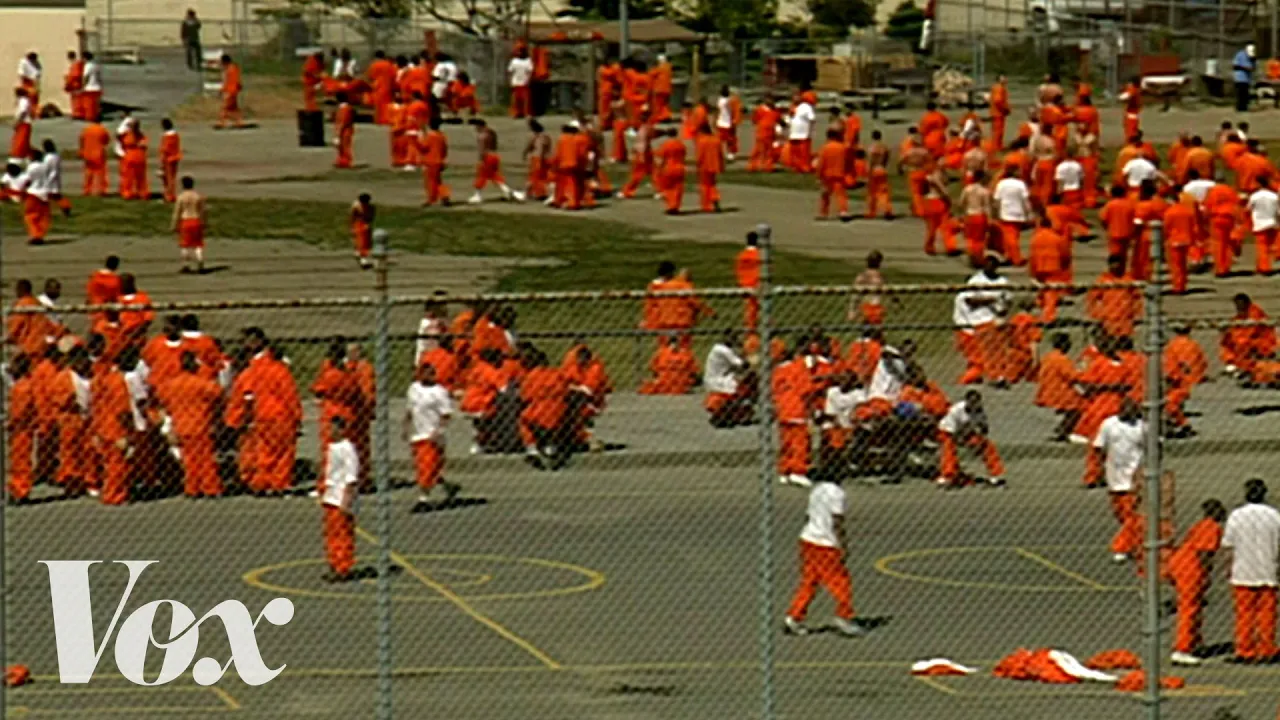
Mandatory Minimums: Unintended Consequences in Mass Incarceration
@Vox
154.5K views•2015-09-03
Young Thug YSL Trial: Legal Arguments on RICO Evidence and Confrontation Clause Issues in Court
@11Alive
13.7K views•2024-05-16
Forensic Phonetics: Speaker Identification in Legal Cases
@nptel-nociitm9240
539 views•2025-03-19

Police Interrogation Tactics: False Confessions & Legal Reform
@LastWeekTonight
7M views•2022-04-18
Related Study Plans & Knowledge Roadmaps
Structured learning paths in Law