




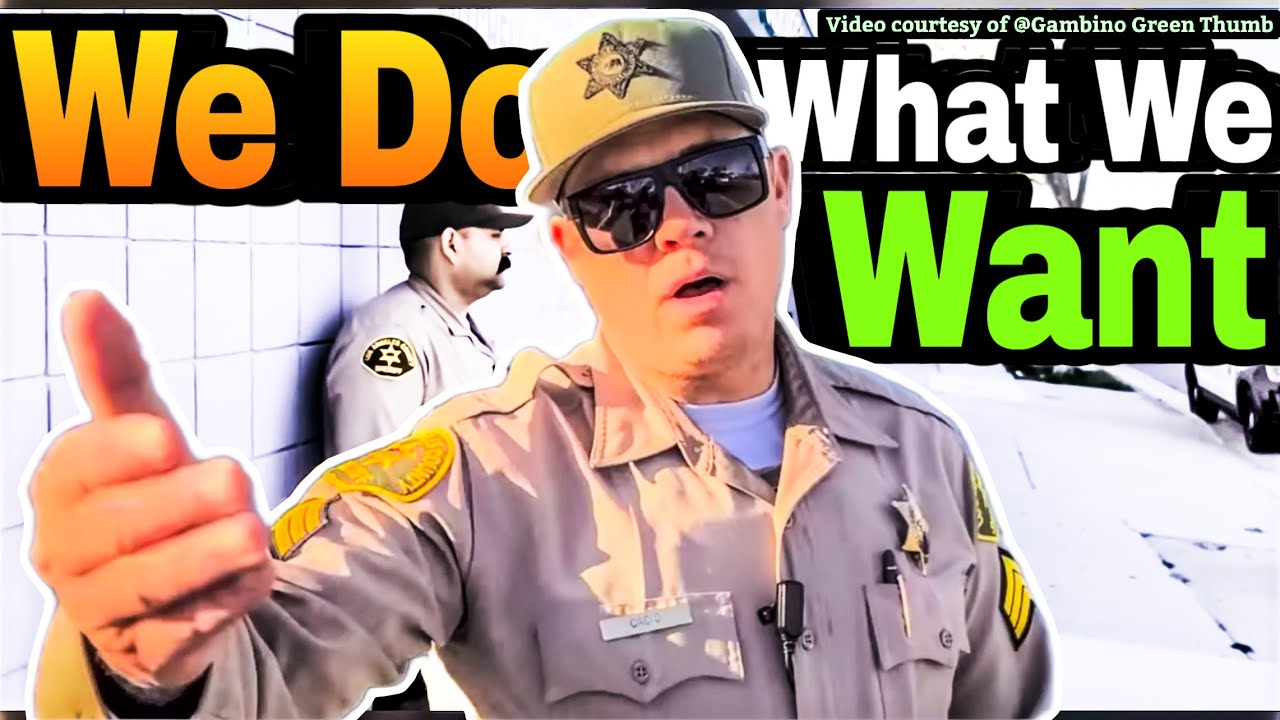















Law enforcement use of force must meet a three-part test: necessity (force must be needed to address a threat), reasonableness (both subjectively from the officer's perspective and objectively from society's standpoint), and proportionality (force must match the threat level). When an officer intentionally fires upon a person who is merely performing their job without engaging in criminal behavior, the use of force fails all three criteria and may constitute assault.
Police Use of Force: Legal Analysis of the LAPD Incident
Added:The 'objective reasonableness' standard established in the landmark Supreme Court case Graham v. Connor (1989).
Fundamental principles of criminal law defenses, specifically the legal definitions and boundaries of self-defense and necessity.
First Amendment protections for the press, particularly regarding journalists' rights to document police activity in public spaces.
The legal distinction between lethal and non-lethal (or less-lethal) force within law enforcement guidelines.
The concept of Qualified Immunity and how it shields law enforcement officers from civil liability in use-of-force lawsuits.
An analysis of Section 1983 civil rights claims and the process of suing government entities for constitutional violations.
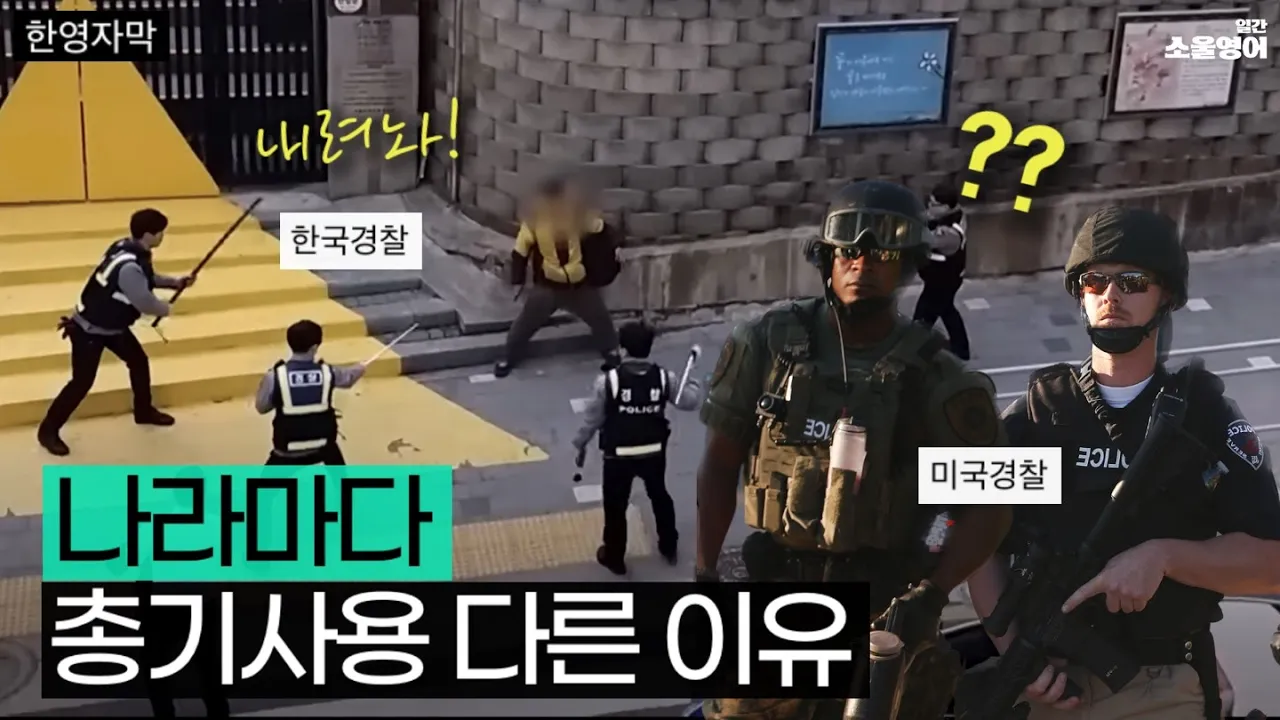
Comparative research on police use-of-force policies across different local, state, and international jurisdictions.
The study of modern police reform proposals, de-escalation training protocols, and the role of civilian oversight boards.
111.7K views5.7Klikes7:13Original Release: 2025-06-09
Hello again everyone. Welcome to Washington Gun Law TV. I'm Washington Gun Law President William Kirk. Thanks for joining us. Hey, in this week's edition of To Live and Die in LA. Uh we have an opportunity to have either called a teachable moment or a learning opportunity. And what I'm talking about is a incident that has absolutely lit the exosphere on fire today. And that of course is the shooting with a non-lethal round of an Australian reporter. It has a lot of people already sending me messages asking me, "Hey, could this officer actually be charged with assault?" Excellent question and one that we're going to try to provide an answer for you today. So today, let's spend a few minutes and let's talk about was this Australian reporter assaulted by LAPD?
Okay, America and especially all of my friends down there in Los Angeles, buckle up. You guys have a few interesting days still left in front of you. Uh, as we know, the city of Los Angeles has been burning the last couple of days. You know, peaceful protests or as some people would want to call them.
But what really lit the social media world of fire was the shooting with non-lethal round of Australian journalist Lauren Tamasi. Now, we would go ahead and show the video here so you guys can see what happened. I know almost all of you have. If you haven't, it is linked up down below. If we show it here actually on YouTube, they're going to crap their pants and they're going to take the video down. But unlike a different incident and I want you to understand that I think these reporters obviously when they're going into well what is essentially a war zone certainly assume certain risks. Okay. Uh just like reporters who go to cover combat zones real combat zones they assume a certain risk and that risk is is that you could be caught in crossfire accidents can happen and you in fact could be injured.
And such was the case of BBC reporter Nick Stern, who was also covering the riots in Los Angeles and was struck in the leg by a rubber bullet penetrated to such a point that he actually had to go in for emergency surgery. Now, there is no allegation whatsoever that Mr. Stern was intentionally fired upon or intentionally shot by any member of law enforcement. But when we get back to Miss Tamasi's case, you see, it may have been originally reported that she had been caught in crossfire, but as it turns out, no, there are some very clear images here that a Los Angeles Police Department officer intentionally fired upon her. And the reason for which that officer chose to fire upon her remains a mystery to everybody cuz it appears that Miss Tamasi was merely standing on the street with her cameraman doing her job. And so, yes, I think that while you are a reporter going into these very volatile areas, you certainly assume the risk that you could be caught in the crossfire or things like that, I'm not certain that you assume the risk that law enforcement is going to intentionally fire upon you because you are doing your job as a reporter. So, of course, that then begs the question, could this officer, if he could be identified, which I'm sure there are methods to do that, could that officer be charged with assault? Well, let's talk about self-defense laws in general, because what the purpose was of all law enforcement being down there was to secure the safety of the community and to protect people and property. And so therefore, if you are intentionally vandalizing property or you are intentionally assaulting people or any of that riotist behavior, yes, law enforcement has the legal authority to use reasonable force to defend others and or that property and or to make arrest. Anytime that an individual, law enforcement or otherwise, is going to use force in defense of themselves, others, or property, it must meet a three-part test. And that three-part test means that the force use must first be necessary. And this is where it falls apart for this particular LA police officer immediately because if Miss Tamasi was engaged in some type of riotist behavior, if Miss Tamasi was actually engaged in some type of criminal behavior, if Tamasi's actions were threatening the safety of others or the sanctity of property, then at least the officer could make the claim that the force he used was necessary. But again, it appears that all she's doing is standing there with her cameraman, microphone in hand, trying to do her job. And even if the officer could justify that the use of force was necessary, he must then also justify that the use of force was reasonable.
And that has to be both in a subjective and objective standard, which means subjectively you put yourself in the officer's position and say, "Huh, would I done the same thing?" That could be a problem right there. But then objectively, even if you subjectively believe the officer acted appropriately, you have to ask yourself from an objective standpoint, do we as a society want this sort of violence to be used in that type of defense? And again, that's where the defense could fall apart. But then finally, even if you've made it through the necessary test and you made it through the reasonable test, guess what? The use of force also has to be proportional. And although this is by definition the use of non-lethal force, I think we all need to recognize that even non-lethal ammunition can and will sometimes cause significant bodily injury. And if you don't believe us, ask BBC reporter Nick Stern. So, it would appear that this intentional use of force by this officer right here was neither necessary nor was it reasonable either subjectively or objectively and in all probability was not proportional as well. And for that reason, if that officer could in fact be identified, we believe he should be charged with assault. All right, listen. And we're going to go ahead and link up a few exposts down there so that if you've been living under a rock and you haven't seen what actually happened, you can watch it for yourself and be the judge for yourself. Let us know what you all think in the comments section below. And a final shout out, since this is a California video, we always want to give a shout out to our first ever California subscriber, of course, that is Philip P.
Phillip, God help you down there. Your city's becoming a complete hell hole.
Listen, if you guys got any other questions about this or anything else related to what's left of our Second Amendment rights, you guys should know how to get a hold of Washington gun law by now. But if you don't, that's okay.
That information down there in the description box. If you got an idea for a video we should be doing around here, cool. Click on that link right there and tell us all about it. If you want to subscribe to the monthly newsletter, the ability to do that is down there in the description box. And then finally, and most importantly, let's everyone remember that part of being the lawful and responsible gun owner, like we talk about all the time here, is to know what the law is in every situation and how it applies to you in any instance that you may find yourself. Until next time, thanks for watching and stay safe.
Up Next
2:34
Duty to Retreat Explained: Self-Defense Law with Prof. Kim Ferzan
@Talksonlaw
2.9K views•2022-02-10

4:27
US Secondary Sanctions Impact on EU Businesses and Blocking Legislation
@Bureauvandijk
1.6K views•2019-03-20
5:27
Forensic Phonetics: Speaker Identification in Legal Cases
@nptel-nociitm9240
539 views•2025-03-19

24:42
Police Interrogation Tactics: False Confessions & Legal Reform
@LastWeekTonight
7M views•2022-04-18
Related Study Plans & Knowledge Roadmaps
Structured learning paths in Law
law
Self-Defense Law: Imminence & Castle Doctrine
01Foundations of Self-Defense Law
02Imminent Threat & Reasonable Belief
03The Principle of Proportionality
+ 3 more learning modules
12h6 modules
Explore Roadmap
law
Defamation Law: First Amendment & Actual Malice
01Introduction to civil torts and the First Amendment
02Elements of Defamation: Libel and Slander
03Public Figures vs. Private Individuals
+ 2 more learning modules
8h5 modules
Explore Roadmap
law
Hearsay Rule: Trial Evidence & Exceptions
01Introduction to Trial Evidence & Courtroom Basics
02Demystifying Hearsay: The Core Definition
03Non-Hearsay: Exclusions Under FRE 801(d)
+ 3 more learning modules
14h6 modules
Explore Roadmap
law
Medical Malpractice: Law, Liability & Care
01Foundations of Tort Law and Civil Liability
02The Four Elements of Medical Malpractice
03Defining and Proving the Standard of Care
+ 2 more learning modules
12h5 modules
Explore Roadmap