
















Artificial light at night disrupts our natural circadian rhythms by suppressing melatonin production, which is critical for sleep and cellular health; however, adequate daylight exposure during the day can buffer against nighttime light effects, making it essential to balance light exposure throughout the day-night cycle for optimal health.
How Artificial Light at Night Disrupts Circadian Rhythms
Added:The fundamental definition of circadian rhythms and their role in regulating the ~24-hour biological cycles of living organisms.
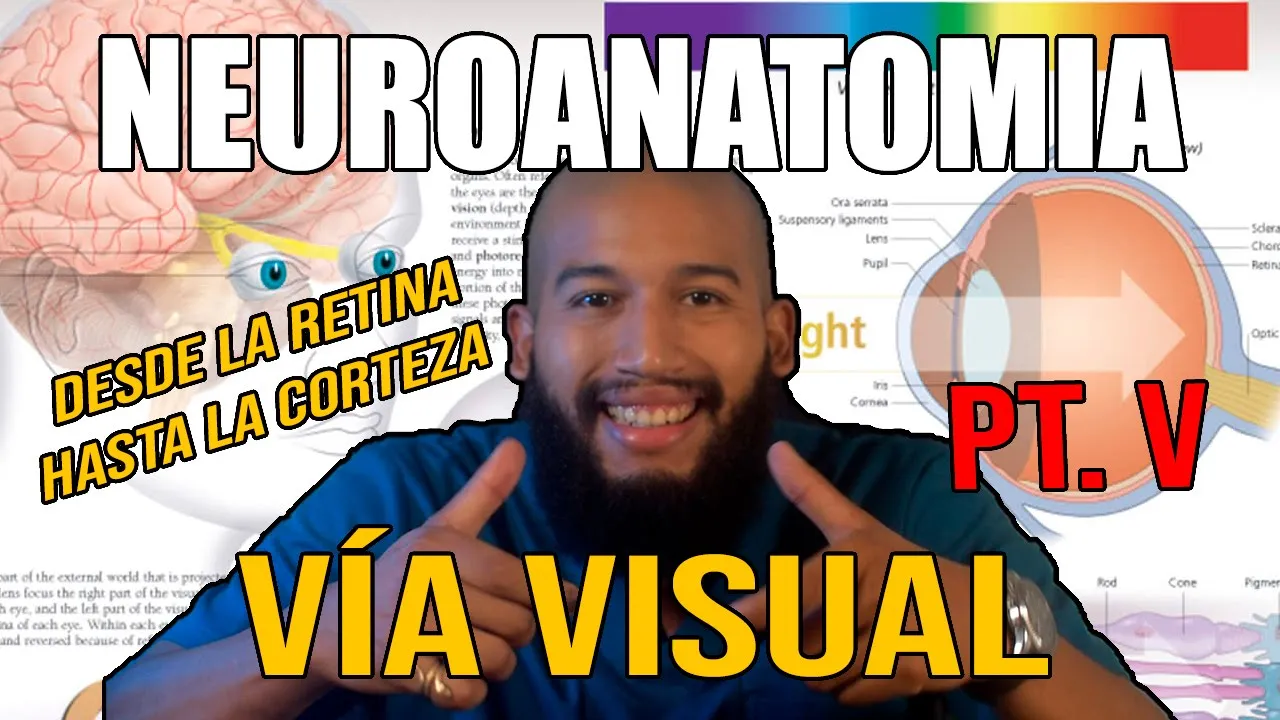
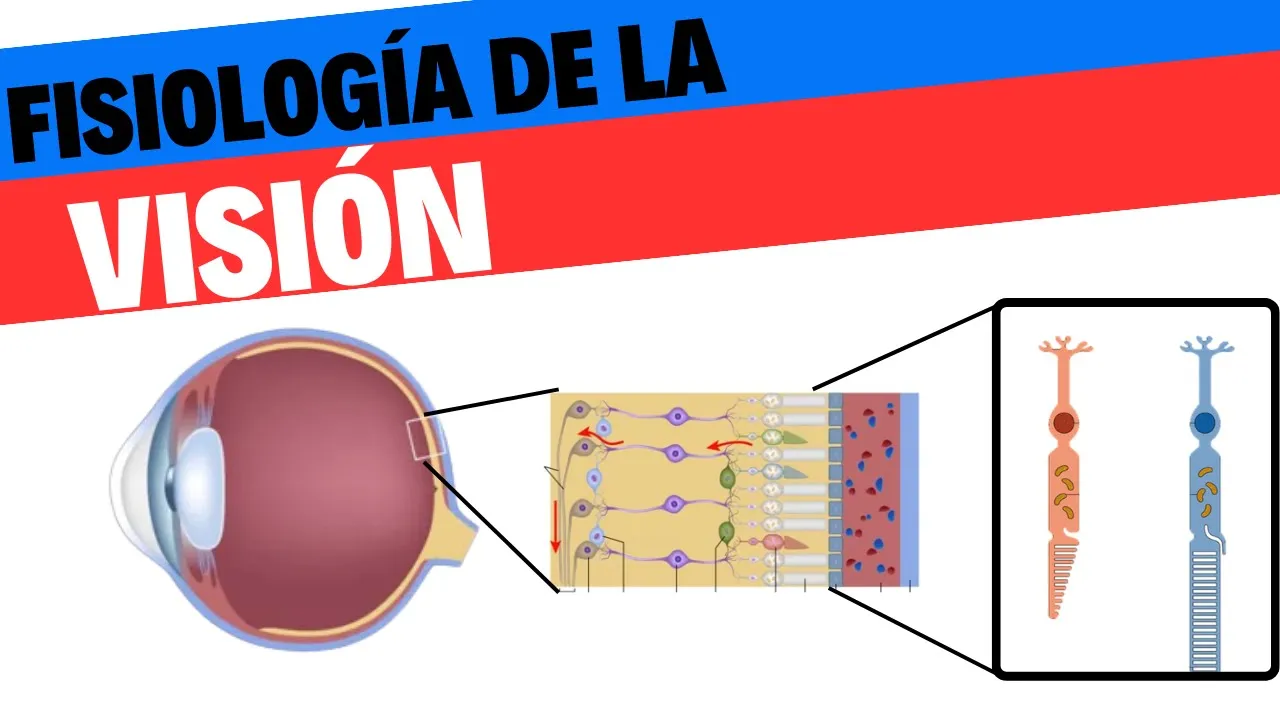
The anatomy of the human eye's visual pathway, specifically how intrinsically photosensitive retinal ganglion cells (ipRGCs) detect light.
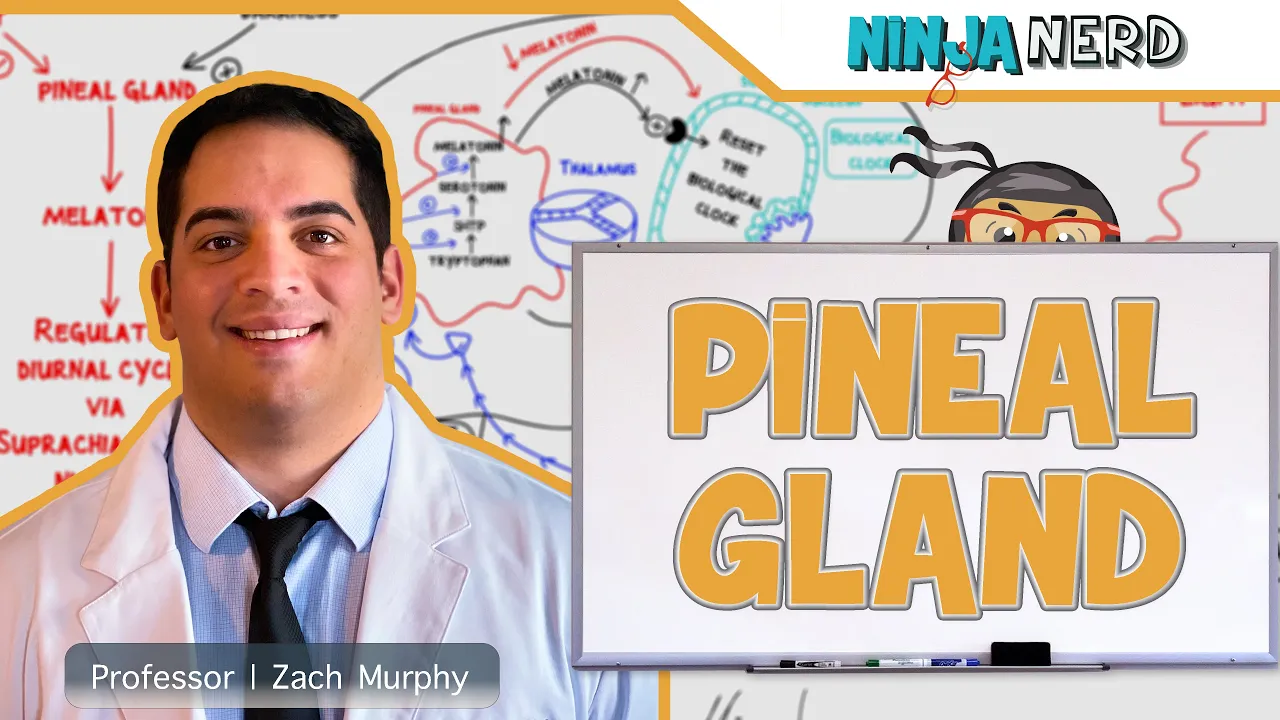
The role of the suprachiasmatic nucleus (SCN) in the hypothalamus as the master circadian pacemaker.
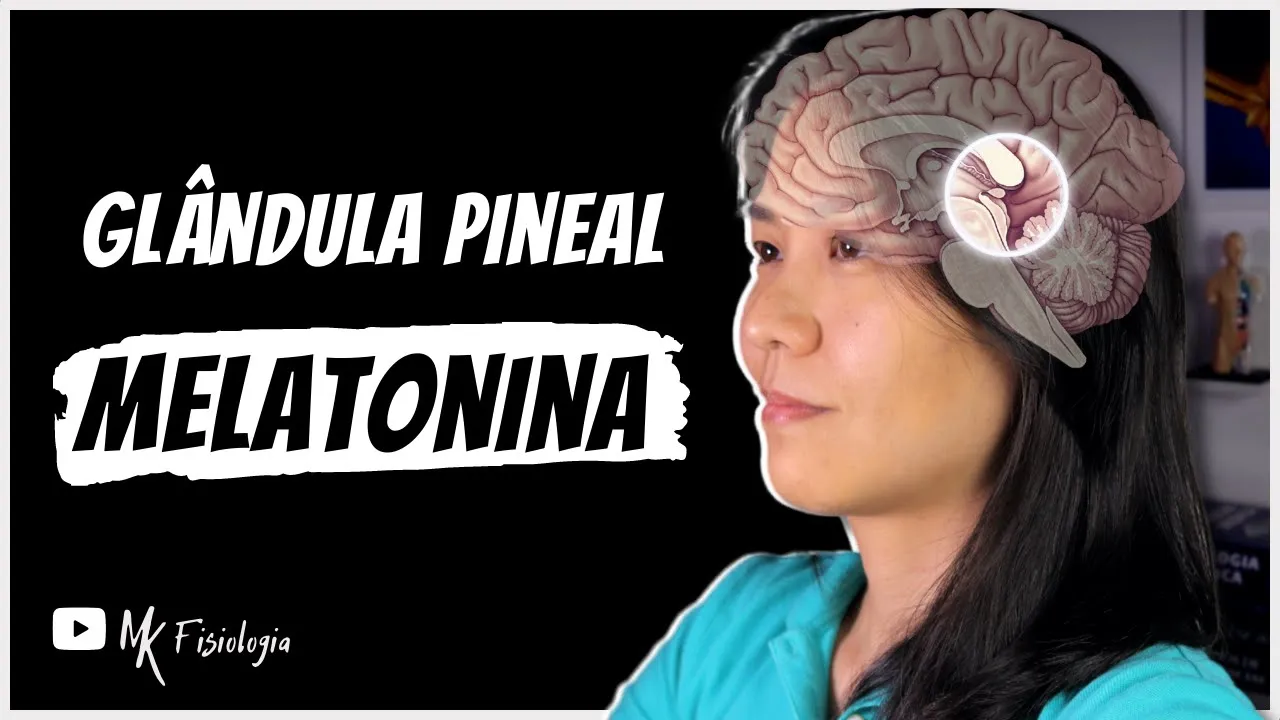
The endocrine regulation of sleep, specifically the synthesis and secretion of melatonin by the pineal gland in response to darkness.
Chronobiology and chronotherapy, exploring how the timing of medical treatments (like chemotherapy or immunotherapy) can optimize efficacy and reduce side effects.
The systemic health consequences of chronic circadian disruption, including increased risks for metabolic syndrome, type 2 diabetes, and mood disorders.
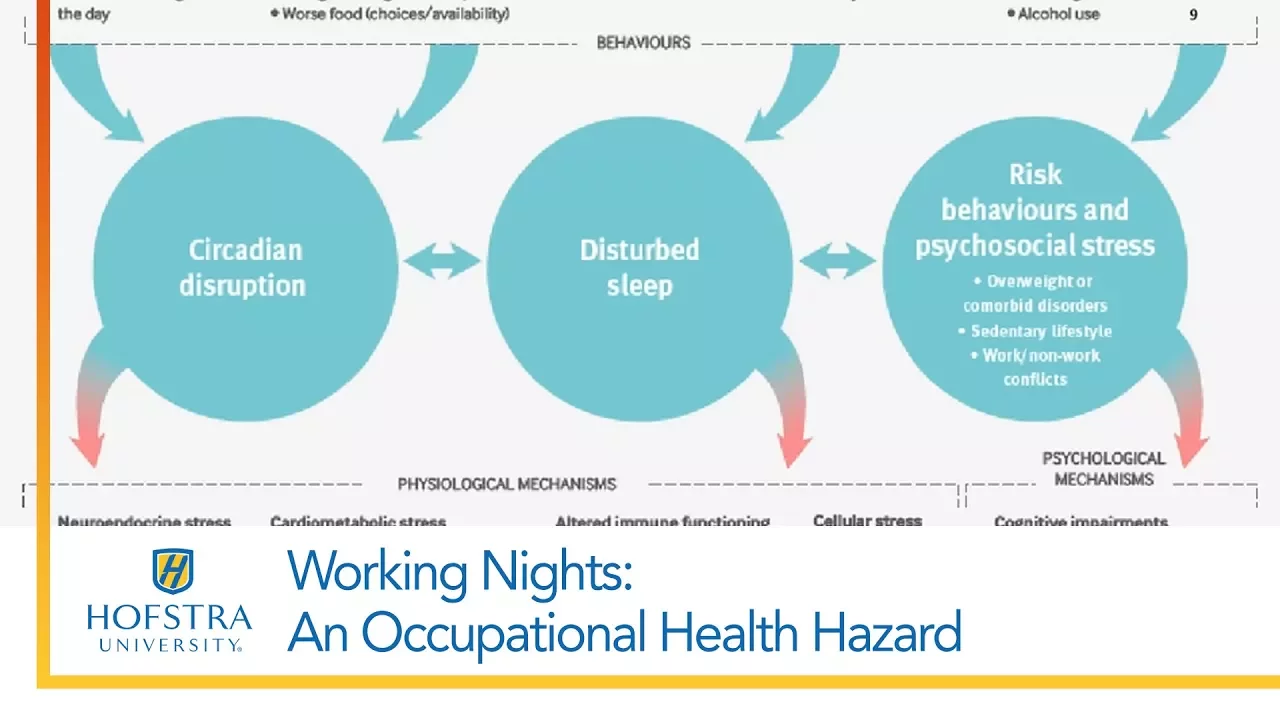
Occupational health strategies and shift work adaptation protocols designed to mitigate the physiological toll of non-traditional work schedules.
Urban planning and ecological consequences of light pollution, focusing on 'dark sky' initiatives and human-centric lighting architectural design.
452 views10likes30:30Original Release: 2025-10-31
So my name is Dr. Cat Kennedy. I'm a postdoctoral researcher at the University of Arizona. Um I'm a physiologist by training and that [clears throat] has been my background.
I did my PhD here at the University of Arizona and I've since transitioned to um working in the social cognitive and effective neuroscience lab, scan lab, where I do research on sleep and circadian rhythms in um all kinds of different populations. But I'm really interested in thinking about people who are most vulnerable to experiencing sleep loss and circadian misalignment.
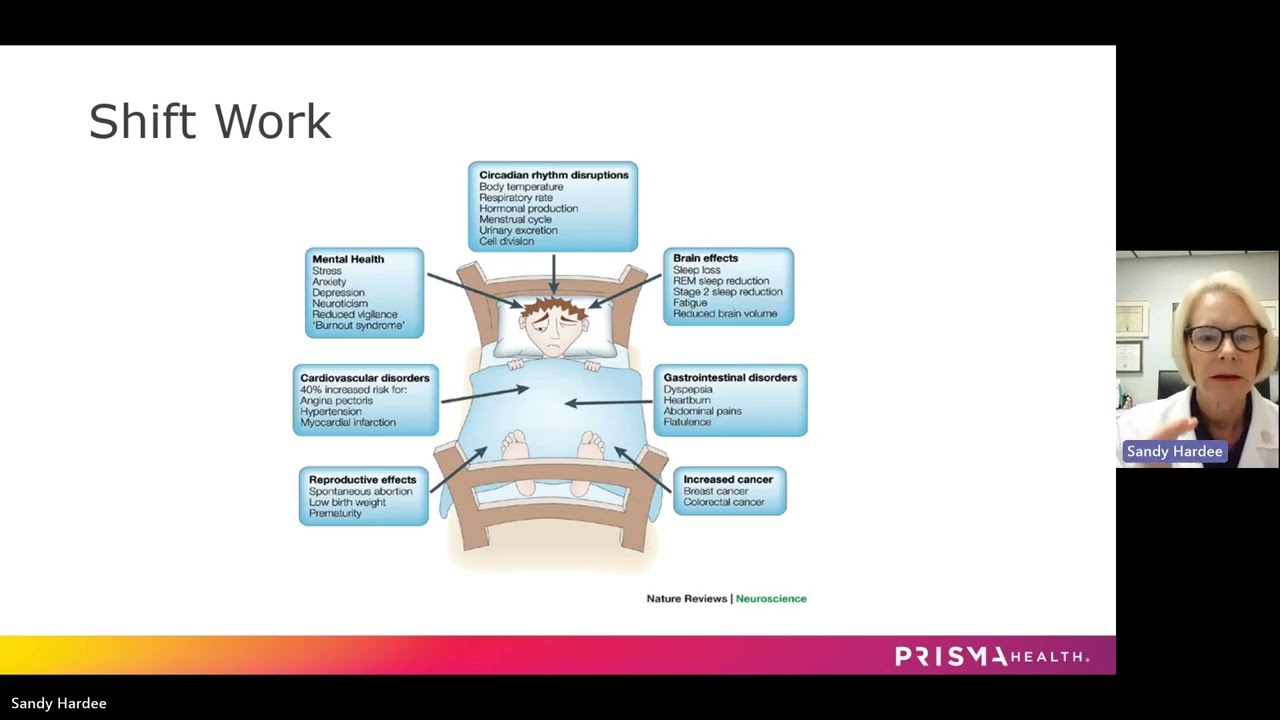
So for me, this is people like shift workers, you know, people who are routinely subjected to schedules that kind of bounce all over the place and often are doing jobs that are critically important for society to function. You know, think about our doctors and nurses and firefighters and all of that. Um, so I kind of do a quite a bit of research in different areas around sleep and circadian rhythms and that's where I'm based right now. Um, as a post-docctoral researcher.
Did you The reason I'm really interested in this type of research is because, you know, back in the day when we were first evolving, when we were spending time prior to the invention of electric lighting out in nature, we were completely in sync with whatever the sun was doing, right? So, we had the solar day, which was synchronized with the time that we were up and out and doing things and being active, eating our meals, hunting, gathering, whatever it may be. Um, and then at nighttime, considering that we're primarily visual creatures, you know, that's how we that's our strongest sense, unlike other animals which do better by smell and hearing, we're primarily driven by visual cues, you know, because that leaves us vulnerable at night in darkness. that's our time for sleeping or historically that was our time for sleeping. But since the invention of electric lighting, we can basically do whatever we want. We can have these kind of 247 schedules now um that can be amazing in some ways but also very detrimental to health in other ways. So, a few years ago, um, it kind of took the headlines by storm when the World Health Organization announced that, um, shift work is a probable carcinogen. Meaning that if you are routinely kind of chopping and changing your schedule, bouncing around the clock, finding yourself awake at night and working and trying to sleep during the day and things like that, that that is a probable carcinogen.
This scared a lot of people. Um, and I think it's important to take it with a grain of salt. Just like, you know, we talk about sleep health now a lot in the public health and wellness space. Of course, sleep is critically important for us, but there's no use kind of terrifying yourself reading some of these terrible headlines. Oh, you're going to miss a night of sleep and then something terrible is going to happen to you. It's not necessarily the case. But we do tend to see that people who are shift workers, they tend to be experiencing higher rates of mood disorders as well as getting sick more often because their immune system becomes compromised. And then there can be some longer term consequences, things, you know, the worst end of the spectrum like higher rates of cancer.
But there's a lot of nuances that goes into what happens to people. And really we like to think about you know your risk factors um as being part of this social ecological model of health. So governed by what's happening in your DNA, what is your family history next layer. What's happening in your environment? How stressful is your job?
What's your house like? Do you have the ability to sleep when the opportunity allows for it? What's your neighborhood like? What's the air quality like? Take another step back and think about the wider layer than that. we've got kind of what's happening at the global level, you know, our insane connectivity with one another and the kind of blurring of boundaries between work and life that especially got amplified during the pandemic and things like that. Um, you know, news stress from reading the news every day and like political unrest and all of these things. We have so many things that affect our health and our kind of day-to-day stress levels that ultimately play into our risk when we're talking about how well we're sleeping and how well our circadian rhythms are kind of operating. But I'm really interested in trying to think about, you know, given that we do live in this 24/7 society and there's no way that we're going to go back to to, you know, what we had way back when before electric lighting, how can we best protect people? And some of that comes with learning more about how light is affecting the body, light and the absence of light at night and then thinking about how we can come up with strategies to make people as healthy as possible with that knowledge.
A few different factors that kind of coalesed that cultivated this interest for me. I think one of them you know was growing up with dark skies. I was fortunate to grow up in some places where I did have access to amazing night skies and you know campfires, storytelling around the campfire, um camping, you know, being able to have that experience of just sitting there in awe at night looking at the stars. I think that really shaped me on a personal experience. Um, and you know, I've always been an outdoor enthusiast and really enjoyed spending time kind of on backpacking trips and in these kind of more remote places where I can be connected with nature. I think, you know, not just um being out in the day and exploring, you know, the natural beautiful world um in the daytime, but at night, I think that can really have a profound way in in in how we kind of grow up thinking about the world around us. And and it's amazing. You know, I've I've had the experience a few times now of having people come and visit me in Tucson, Arizona, where I live, and seeing the night skies around here for the first time, having not really had the opportunity before to see true night skies and to see the stars and see the Milky Way. and um and it sort of moves people to tears and and that's something that I think is so important because how you know in the bigger picture how are we really supposed to care for the planet if we don't um appreciate our place in it. So on like a personal level I think that's something that's really shaped me and then there's just been this whole collection of kind of serendipitous experiences I think that have sort of got me to where I am now. I was actually an marine biology undergraduate years ago back at the University of Plymouth in England and I was studying algae at the time and at the time there was a lot of discussion about the effects of light pollution on marine species. So thinking about coral spawning and how corals typically use um moonlight to be able to tell them when it's time to be reproducing. But that gets complicated when you have artificial light. And I think people are maybe bit more familiar with the effects of artificial light on bird migratory patterns as well as turtles trying to make their way from the beach into the water. I think those those animals are covered a little bit more, but I actually fell into it through coral and thinking about how their rhythms get disrupted um through light pollution.
And um several years after after learning about that as an undergraduate, I came out to Tucson, Arizona for the first time and I was doing a volunteering uh sort of wildlife biology research experience in the Churikawa Mountains which is southeast of Tucson and was just blown away by the the night skies really in the surrounding area.
And it absolutely made sense for me as I was cultivating this interest in circadian rhythms to be able to be doing this type of research in a place like this where we are fortunate to have dark night skies. So everything kind of coalesed and and led me to where I am now.
So, as I mentioned, you know, we kind of evolved to be able to rely on the solar night and day in kind of synchronizing our body in these circadian rhythms that we have inside us. So, our circadian rhythms are these little clocks that tick away in every cell pretty much throughout our body. And they click they tick away on approximately a 24-hour basis, but it's not exactly 24 hours. So for some people it might be 23.7 hours.
For some people it might be 24.2 or three hours. So we all have a slight variation in how long these kind of this full cycle of these of these genes, these little proteins that get transcribed um and and kind of keep each other in check through this little sort of feedback loop that happens on a roughly 24-hour basis. They all kind of do their own thing. And so what we really need is this master clock in the brain to be able [clears throat] to synchronize everything that's happening in the body. And this clock is called the super chaismatic nucleus. It's found in the hypothalamus. And this has a direct connection to our eyeballs which take in visual light information from the environment. So we typically think of, you know, thinking back to high school biology, you have the rods and cones which take in information and help you to that kind of image forming cells in the eye. But we also have these non-image forming cells. They're called intrinsically sensitive retinal gangl cells. And what these do is these take in blue light specifically from the environment. And that kind of tells the brain either it's daytime. So blue light coming in means it's daytime. And so we do daytime things in our bodies or we get the absence of that blue light which tells us it's nighttime. It's actually like a very simple system in some ways.
But you can see how in modern day with all of our exposure to blue light emmitting devices and you know lighting um that comes in through all directions all the time how that might kind of throw things off and that's exactly what happens. So, in an ideal scenario, you're outside during the day getting lots of natural light and then at nighttime, you don't have any blue light anymore. Maybe you're having the experience of sitting around a campfire.
There's no blue light coming from that campfire, right? And so, what happens is a few hours after sunset, the eyes are no longer getting that blue light entering the cells in those retinal ganglen cells and telling the brain it's daylight. So, it kind of takes the brakes off the brain's clock system and it starts to get melatonin, which you've probably heard about, which is kind of what we call the hormone of darkness. It starts to get that synthesized in the pineal gland, which is just below where that central clock in the brain lives. It starts to get melatonin synthesized and then released into our bloodstream. And that melatonin will kind of get released across the course of the night. And it does lots of things, you know. Yes, it can help us sleep. And that's what we typically think of melatonin as doing. Um, but actually does lots and lots of other things. Its first role, first and foremost, way back when, [clears throat] when it first evolved before we kind of got to complex animals on the planet that sleep like we do, its first role is as an antioxidant. And most people don't know this. Most people think of it as being, oh, that sleepy thing, right, that we can buy over the counter, which you can't buy over the counter in all countries. You can in the US, but we think of it as that thing that's going to help us sleep at night. But actually melatonin's first role is as an antioxidant. So while we sleep, yes, it can help us sleep because it sort of binds to areas throughout the brain that make us feel sort of sleepy, which is great, right? We're trying to fall asleep at night. But actually, while we're sleeping, it's super active. It mops up what you might have heard of called free radicals in the body, which are basically these unstable molecules that can cause damage to our cells and lead to all kinds of problems long term.
So that's why getting your vitamins every day, right? Eating your fruits, eating your vegetables is so important for us so that we have enough of these antioxidants to kind of combat free radical damage in the body. Melatonin is an awesome antioxidant. So kind of like eating your fruits and vegetables, by allowing yourself to have exposure to darkness at night, you're actually supporting that healthy release of melatonin so that it can do its job.
Yes, helping you sleep, but also helping to take care of your body and fend off diseases and things. So, melatonin is critically important and that's the biggest issue that we're seeing now with exposure to so much artificial light at night as well as spending too much time in dim light during the day, which I can talk about later. That's one of the biggest issues we're seeing is chronic melatonin suppression, which is thought to be what's causing so many of these chronic diseases among people who are not sleeping very well because of too much light at night. Um, or having kind of schedules that are chopping and changing for things like shift work.
>> Did you?
So, it's gotten a lot of attention over the last few years, right? That we're exposed to too much blue light at night, and that's definitely true, but there's a lot of other things to consider in this bigger picture. I don't think it's helpful for people to be terrified of using their phones or watching TV or being on their computer at night. That's not the biggest problem that we're having. We really need to think about two additional factors in all this.
One is what material are you consuming while you're looking at your phone or while you're watching TV or while you're on your laptop at night? You know, it's not just the blue light that's being emitted from these devices, but is it really stimulating stressful material that you're consuming on your phone through social media? Is it work emails that are stressing you out? Is it something that's violent or scary that you're watching on TV that might be stimulating your mind? All of those types of things you can imagine might be eating away at your sleep. You know, leaving you there head on the pillow, having a racing mind. So, that's one thing to consider. But also, and probably something that far fewer people are aware of, only nerds like me in the circadian rhythms field, is that the amount of daylight you get during the day is critically important to your sleep at night. So there's some evidence showing that actually if you get plenty of daylight exposure during the day that kind of offers this buffer against some blue light exposure at night. The problem that we're having now, the reason that blue light at night can be so stimulating to people is because many of us are spending way too much time indoors during the day. You know, we find ourselves in dim offices, dim classrooms, whatever the space is. Most of the time the indoor lighting and actually this indoor lighting is not appropriate. So it's a bad example that I'm giving you. But most of the time our indoor lighting is not sufficient to really be activating the our brains in a way that tells us it's daytime. It's daytime. So it seems to be the kind of blunting of what we would say the amplitude between how bright our days are and how dim our nights are that seems to be causing problems for us. So, what this means, this is actually really good news. It means that if you get enough time outside during the day, if you're active, ideally tying it in with some movement outside, right? You don't have to worry so much about looking at your phone in the evening, watching TV, using your laptop at night, the caveat with that is, you know, don't spend all day outside in nature enjoying the environment, and then be looking at things that really stress you out before bed. But talking about just a lighting perspective alone, you don't have to worry so much if you're getting plenty of daylight exposure during the day. So that's something that I think can put people's minds at ease. They don't have to be terrified that they have to turn off all their screens an hour or two before bed. No. If you're doing something relaxing on your screen that's conducive to a good, you know, winding down routine before bed, you don't have to worry so much as long as you've had that exposure to daylight during the day. And we kind of hear about it now a lot in the public health and wellness spaces, morning sunlight. That's definitely true. The morning time is a great time. Um, but really the middle of the day is also a really important time.
Having that kind of difference, that 24-hour difference between daylight in the middle of your active period, the middle of the day, and then darkness in the middle of the night when you're sleeping, that's super important for cicadian rhythms.
and >> it doesn't matter at all. So, yeah, any any daylight exposure is going to be far brighter than the lights that you have in your house, unless you're fitted out with um really strong daylight mimicking bulbs. Even on a cloudy, overcast day in a place where, you know, the sun is known not to shine for many days at a time, like in England where I'm from, um still just getting some of that time outside. Just whenever you can, 10 to 15 minutes, go for a quick walk around.
That's going to be hugely helpful in improving your sleep at night.
We've seen a lot of interesting research come out over the last few years um showing just how powerful light at night can be for people. So, I have a colleague actually in the department of psychiatry here at the University of Arizona. Her name is Dr. Lauren Hartstein. She studies melatonin rhythms in children, so young children. And in particular, she's been interested in looking at how exposure to bright light at night when they would normally be winding down ready for bed can blunt their melatonin. So, she's done these really fascinating experiments in the past where she'll go into families houses because you can imagine it's quite challenging to bring children into the sleep lab sometimes. So she goes into children's houses and they will cover any sort of artificial light. So essentially the child will live in kind of dim light conditions with their family for a couple days. And then when on sort of the second or third night, what she'll do is she'll have them be exposed for about an hour of bright light really close to their eyes. Not so much that it's going to cause them any pain, but just to really activate those intrinsically photosensitive retinal ganglen cells. And she'll measure their melatonin. So she'll measure their melatonin before they have this light exposure and then for a period of several um hours after they have this light exposure. And what she's found is that even an hour of bright light after being in dim light conditions for a couple days, it will delay their melatonin secretion by nearly an hour.
And we can think about real world situations where this might be, you know, something that's in effect in society. There's a lot of parents who struggle with trying to get their children to go to bed on time. And probably a lot of this is driven by exposure to too much artificial light at night as well as like I alluded to earlier, spending too much time in dim classrooms. So a lot of children are spending too much time inside now.
They're not kind of out and playing as much as they maybe would have done in generations past. And so if through research like hers, we've seen that children's melatonin rhythms can be incredibly sensitive. And this is thought to be because the lens on children's eyes is much clearer than adults. So children are actually way more sensitive to light at night than adults are. So it's just something to consider. The lighting in the environment in the family home might be such that the parents are enjoying it and it's not causing them any sleep issues, but actually their children might be more sensitive. Um, so that's just one thing to consider. There have also been a couple really fascinating studies out of Stanford out of Jamie Zitzid's lab done in collaboration with Rens Lock and what they've shown is that two millisecond flashes of light while people are sleeping so light that is so quick that you can't even discern and this is while people are actually sleeping. Two millisecond flashes of light can advance their body clock. So having people asleep and exposing them to bright light earlier than when they would normally wake up in the morning.
So think about doing it kind of 3 4 in the morning, something like that before you would typically wake up. That can actually advance their body clock so that the next night they're sleepier earlier than they would have been. So even light that we're we don't think that we're perceiving while we're asleep, that can have a really profound influence on our circadian rhythms because our eyelids are very thin, you know. So daylight or any kind of artificial bright enough light can penetrate through our eyelids and that can shift our body clock without us even knowing. So this is why we really need to protect that kind of sleeping environment from things like bright lights that might be coming in from whatever direction out the window out the door if you have roommates things like that.
>> That's so crazy.
>> Yeah.
So, I think it's twofold when we think about some solutions to this big problem we have. And I really like the term wicked problem for situations like this.
Wicked problems can include things like feeding a growing population, dealing with [clears throat] climate change, dealing with light pollution, um, or the kind of the light crisis that we find ourselves in is another wicked problem.
And what that wicked term means is that there's no one easy solution and it requires multiple stakeholders coming together and figuring out these creative workarounds um while accepting kind of the direction that we're going with society and with technology. So there's really two different approaches that we need to have. One is being able to protect our dark skies and to be able to cocoon ourselves so that we can experience darkness at night. But then the other side of it is making sure that like I alluded to before that we're spending enough time exposed to daylight during the day. So really we need to come at this from both angles. Now there are definitely a lot of people who are working to think about smart daylight solutions. And this goes from improving lighting in offices and classrooms all the way up to thinking about smart urban planning and thinking about if we're walking around an urban environment, how much exposure to the skies do we have?
Do we have towering buildings over us that are blocking us from being able to have enough exposure to the sky and sunlight? So, it can really um span the full end of the spectrum in thinking about smart lighting. Um but the other side of the um coin, like I said, is having dark skies at night. So, speak to any sleep researcher and they will tell you eye mask, earplugs, blackout blinds or blackout curtains. Those are all really essential. is part of what we consider sleep hygiene. You know, things that can really help people sleep. And actually, you know, if people are struggling, um there are a lot of situations where it doesn't cost a lot of money to have some of these really simple solutions for people. Um so, anything you can do to keep your bedroom dark at night, especially, um ideally making your house darker at night in general so that you're not having overhead lights on at night. Doesn't have to be expensive solutions. just have some little table lamps that you turn on at night. There are a whole wealth out of different sort of um smart bulbs out there that you can use with programmable functions and I enjoy those in my own home so that I can kind of go from bright um light in the daytime to more sort of dim red toned light in the evening. There are lots of different solutions depending on your budget, depending on how much you want to be playing around with different apps and technologies, but you can keep it really simple. The best best piece of advice is overhead lights on during the day because that promotes alertness and then table lamps on in the evening and that really helps because you just can't get the kind of brightness of the light from those little table lamps. Ideally have a kind of dimmer bulb in those too. So that will really help. Um, but I think that, you know, I'm inspired by all of my different colleagues around the world who are doing research in this space and trying to show how really circalian rhythms are at the root of everything.
You know, they really dictate what our metabolism is doing, what our brains are doing, what how our co, you know, how our brains are performing, what our cognition is like. And so I don't think I'm biased in saying that I think circadian rhythms are really at the root of our health as a whole and how [clears throat] we perform and how we feel every day. And of course if they are experiencing misalignment as in we're not having that nice intrinsic connection with the solar night and day.
We can see how that might lead to disease later on. So, it doesn't it doesn't take a rocket scientist, you know, to be able to realize that we just feel better usually if we're spending a bit more time getting fresh air out in nature, eating healthy meals, and then sleeping at night. It's all these things that we know are good for us. Um the problem is what are the barriers that are in the way to be able to make that possibility for everyone, right? And this is where it takes all different types of people coming together to look at who is getting better sleep than other people. Who are these people who are more vulnerable to circadian misalignment such as shift workers? We all take for granted, I think, that in order for society to function, we depend on, you know, truck drivers taking our produce to the store overnight so that when we want to go to the grocery store at 7 or 8:00 a.m., the shelves are stocked. we want to go to our coffee shop in the morning. The barista's probably been there for a couple hours before you even woke up getting the place ready for the day. If you want a clean classroom or office, there's probably janitorial staff who've been there for a couple hours. That's really the the population we're seeing growing most rapidly in this 247 society is shift workers who are waking up for those really early morning schedules.
And that can be incredibly challenging for people. So really thinking about who is most vulnerable and how we can have solutions specific for those people. So, um, yeah, that's what inspires me is thinking about the people who care about this now, how the sleep and circadian research field is growing and how we're collaborating with people in different disciplines to show how this this fundamental root um, biology or physiology um, that we have connects to myriad other things um, in our health and in our well-being.
I wear my scientist hat and that's because I care about health, um, human health, the health of everything on the planet. But then I also think that part of what motivates me is is not just the science, which is fascinating and helps us come up with solutions to problems, but I also have the sort of more spiritual hat, I think. And um not all scientists ever want to, you know, have the word spiritual in the same u sentence as themselves. And and I don't mean it in the religious sense. I just mean that it's so important, I think, to remember that we're a part of something bigger and we're connected to everything else.
And if there is um a population of people who are struggling somewhere in our community um it also affects us indirectly.
A very sort of um morbid way of thinking about this is for people who are routinely experiencing sleep loss and circadian misalignment doing these take nurses for example doing these critically important jobs for taking care of us taking care of our loved ones. If they are not getting enough sleep, they are unhappier. They So, you know, their quality of life is suffering, but they're also more fatigued. They're driving home at the end of shifts exhausted after being on their feet, maybe at a higher risk of getting into an accident on the roads.
So, you know, there are these these real situations where we need to think about the ways that we need to be taking care of each other in society and looking after everyone's health because it comes back to us in the end like I say from one end of the spectrum where people are having more accidents which can affect any of us you know it's really luck of the draw um really to just people's well-being in general. We want society to be operating at its best so that people can be happiest and healthiest for the longest. Beyond talking about the economic burden of disease in society, how do you want your neighbors mental health to be? You know, how do you want your child's peers in their classroom to be feeling dayto-day? We want everyone to be thriving. That is ultimately the goal in society is not just the absence of disease, but making sure that everyone can be thriving. And so that's why I think it's important to have as many opportunities as possible to remind ourselves of why this matters. And often that comes from having the experience of awe, which I enjoy from a dark night sky. And I think many people in the dark sky community obviously do. But I'm hoping that [clears throat] by encouraging people to spend more time outside in the day as well, that's yet another opportunity to experience the joy of something simple in your neighborhood um that you might not otherwise. perhaps of another interaction with a real human that you might not have done if you were inside all day. So, I think that there's a lot of ways actually that this this field, the kind of circadian biology field, um really is embedded in in societal health as a whole. So that's what kind of moves me and um what what fuels me when when science is difficult or when you know I'm I'm having to work through tedious data analyses and things like
Up Next

75:25
Holistic Health: Universal Health Principles & Wellness | Module 2
@aicte-sip1598
9.6K views•2020-11-10

12:54
Triumph of Orthodoxy Icon: Byzantine Art & History Explained
@BenCallan
2.1K views•2024-08-06

73:38
DarkSky Policy Engagement: Strategies for Light Pollution Control
@DarkSkyInternational
195 views•2024-11-18

1:42
Game of Thrones Opening Credits: A Cinematic Analysis
@gameofthrones
46.3M views•2011-04-18
Related Study Plans & Knowledge Roadmaps
Structured learning paths in General & Interdisciplinary Studies
general-studies
Elevator Engineering: History, Physics & Cities
01From Hoists to Safety Brakes: The Dawn of Vertical Lift
02Hydraulic vs. Traction: The Engineering Physics of Elevators
03Modern Speed, Safety, and Algorithms
+ 2 more learning modules
12h5 modules
Explore Roadmap
general-studies
Rubber: Material Science, History & Geopolitics
01Origins of Natural Rubber & Mesoamerican History
02The Chemistry of Natural Rubber & Vulcanization
03The Geopolitics of the Rubber Boom & Colonization
+ 2 more learning modules
12h5 modules
Explore Roadmap
general-studies
Containerization: Evolution, Logistics & Trade
01Ancient Trade & Bulk Cargo: Amphorae to Barrels
02The Industrial Revolution & Cardboard Packaging
03The Containerization Revolution: Malcom McLean
+ 2 more learning modules
12h5 modules
Explore Roadmap
general-studies
Textile Tech: Evolution, Labor & Global Impact
01Pre-Industrial Textiles: Handloom & Cottage Industry
02Mechanization: The Spinning Jenny to the Power Loom
03The Factory System & Global Labor Transformation
+ 2 more learning modules
10h5 modules
Explore Roadmap