
![Spółka z o.o. czy JDG? Co się bardziej opłaca? [PODATKI] | Grzegorz Grabowski](https://i.ytimg.com/vi_webp/32L8AA2WcP4/maxresdefault.webp)




















![비즈니스 세금 절감을 위한 LLC와 S Corporation, 올바른 선택을 하려면 ‘이 차이’확인하세요. [203강 S Corporation vs. LLC]](https://i.ytimg.com/vi_webp/HUBeZIvWO48/maxresdefault.webp)


An S-Corp is a tax status (not a business structure) that allows business owners to avoid self-employment taxes by paying themselves a reasonable salary subject to payroll taxes instead of self-employment taxes, potentially saving significant taxes when business income exceeds $40,000, though it requires additional compliance costs, payroll systems, and more complex tax filings compared to an LLC.
LLC vs S Corp: Tax Implications for Business Owners
Added:The fundamental legal and structural differences between a Sole Proprietorship, a Partnership, and a Limited Liability Company (LLC).
The concept of pass-through taxation, where business income is reported on the owner's personal tax return rather than taxed at the corporate level.
The composition of self-employment taxes (Social Security and Medicare) and how they are typically levied on net business earnings.
Basic familiarity with personal income tax brackets and how individual tax filing works in the United States.
The IRS 'reasonable compensation' guidelines for S Corporation shareholder-employees and how to determine a defensible salary.
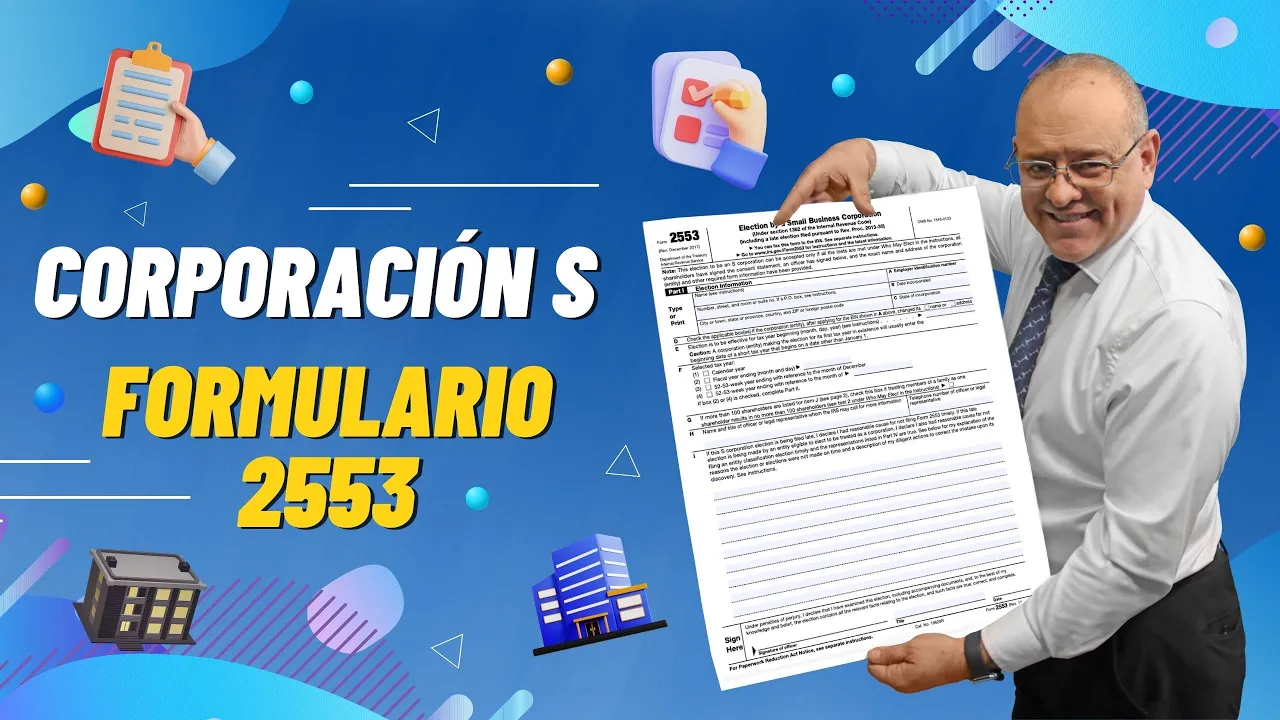
The process and deadlines for electing S Corp status using IRS Form 2553.
How business entity selection impacts eligibility for the Section 199A Qualified Business Income (QBI) deduction.
The administrative overhead, accounting requirements, and payroll costs associated with maintaining an S Corporation compared to a standard LLC.
22.5K views1.3Klikes13:48Original Release: 2023-11-08
should you be taxed as an LLC or an escorp escorp or LLC wait a minute an escorp can be an LLC oh my god wow all right so if you're wondering which tax status to elect to save the most amount of money in taxes you are in the right place my name is Sherman the CPA and I specialize in tax planning for businesses with over $100,000 in income at my CPA coach.com I am fresh off of finishing a tax plan for a client that just saved $220,000 in taxes from converting to an escorp so today I want to walk you through some of the benefits of an escorp versus an LLC when I work with my clients one of the very first things I look at is their entity structure to determine if they are operating in the most tax efficient manner and often times they are either an LLC or sole proprietor thinking about becoming an S corporation or a C corporation and based on their unique set of circumstances I typically help them choose the best entity to operate from so today I want to provide you with some valuable information based on my experience to help you navigate through this if you watch this video Until the End you will learn what is an ESC Corp the benefits of being an escorp versus an LLC some of the major drawbacks of switching to an ESC Corp and when it typically makes sense to elect ESC Corp status versus n LLC so if that sounds good to you please go ahead and help me out over here by clicking the like button below and let's jump right into [Music] it all right so for the people in the back let's quickly Define what an S corporation is first let's talk about what it is not an S corporation is not a formal business structure or entity like an LLC instead it is a special tax status that is granted by the IRS and to be granted this tax status you must first have an LLC or a C corporation and once you have that then you can elect es Corp status with the IRS so when we compare an LLC to an S corporation what we are really looking at is the tax differences between an s LLC taxed as an escorp versus an LLC that is not taxed as an escorp so let's examine one key difference between these two statuses and that refers to how you are paid so as a normal LLC you are considered a disregarded entity all this means is that in the eyes of the IRS you in your business is considered one which means all of the business income flows through to you personally and you will pay tax on on that income and because of that as an LLC you will normally pay yourself with distributions so there's no need to put yourself from payroll and all that stuff and so on whereas with an S corporation owners who provide services to the business are required to take a salary that is subject to payroll taxes what you'll learn can actually reduce the total amount of taxes you would actually pay but more on that in a second so the IRS requires that the owners of s corporations must pay themselves a reasonable salary and only after doing so can they take distributions from the remaining profits in the business Within These key differences lie a significant opportunity to reduce your taxes so let's talk about the tax benefits of becoming an S corporation now there are several but the largest benefit to business owners is avoiding self-employment taxes but what exactly are self-employment taxes self-employment tax is a 15.3% tax on all of your self-employment income so if you earn $150,000 in business income you would pay about $23,000 in self-employment taxes alone plus you will also have to pay federal income tax and state income tax depending on the state you live in so as you can imagine a lot of businesses can save tens of thousands of dollars by switching to to an S corporation because they can avoid self-employment taxes but to do this correctly it is extremely important to understand the purpose of those taxes in the first place because the IRS imposes a number of different rules on ESC Corps to collect those taxes in other ways so let's just back up here for a second and talk about the purpose of self-employment taxes so the whole purpose of self-employment taxes is to fund so Social Security in Medicare taxes you see in a normal employer employee relationship the employee is required to pay 7.65% of their income in Social Security and Medicare taxes and the employer is responsible for the other half but when you own a normal LLC you are considered selfemployed and you have to pay both sides of that tax as a 15.3% self-employment tax but when you are an S corporation technically you are not self-employed so there is no self-employment tax per se instead the IRS requires that you pay yourself a reasonable amount of compensation which is subject to Social Security and Medicare taxes this is just a different method of collecting self-employment taxes as an S corporation but if your reasonable compensation is less than your overall business income then you will still pay less less taxes overall let's walk through a simple example to illustrate this so earlier I told you that if you earned $150,000 in income and you are not a corporation you will pay about $23,000 in self-employment tax but if you convert to an S corporation you will avoid the $23,000 self-employment tax but you do have to pay yourself a salary subject to some payroll taxes so let's say your salary is $60,000 this means that you would pay about $9,000 total in Social Security in Medicare taxes which means instead of paying $23,000 in self-employment tax you are only paying $99,000 in Social Security and Medicare taxes which means you just save $144,000 and in this case you would save $14,000 every year where your income remains about the same so this scenario is the number one scenario that leads many people down the path of becoming an S corporation the second major tax benefit of becoming an S corporation is avoiding double taxation now llc's are not taxed twice but C corporations are once at the business level and again when Dividends are distributed to shareholders so the escort tax status is typically a happy middle ground for many small businesses that earn a significant amount of income however there are some major drawbacks of switching to an S corporation and in many cases an LLC may still make more sense in light of those drawbacks so let's talk about it for a second first let's talk about cost running an escorp will cost you in both money and in your time as an es Corp you will have to pay for an escort tax return which is typically more expensive than other types of tax returns and you would have to purchase a payroll system which may cost you a few hundred bucks per year and then you have to pay those payroll taxes which may include other local taxes and unemployment insurance that your state assesses in addition to those costs depending on the state you live in your state may also assess additional taxes to your escorp or disguise them in some form of a franchise tax also keep in mind that your time is also an expense the time you have to spend setting up your escort running payroll and making sure that you are compliant could be time spent on growing your business so first make sure that the tax savings are worth it and then work with a CPA like myself to simplify or automate most of this for you and I'll provide a general recommendation of when it normally makes sense to switch to an S Corp in a moment here but let's address a couple of other drawbacks the second major drawback of s corporations are the additional rules the S Corp tax status is subject to more rules than llc's for example you have to set up payroll and pay yourself a reasonable salary which the the IRS can come back at any time and Challenge and on that payroll you have to pay and foul payroll tax returns and by the way you have to do that on time or you may face some penalties I've already told you that you have to file an escort tax return which is typically separate from your personal tax return and not typically it is you also have to keep up with your shareholders basis for all of your shareholders oh and by the way you cannot have more than 100 shareholders and when you meet with your shareholders you're supposed to have what is called board meetings on an annual basis and honestly the list goes on and on from there so if doing these types of things to run your business stresses you out at all then think twice about becoming an S corporation and the third major drawback of an S corporation is that it can limit other deductions that you already have so since you are required to take a salary as an S corporation any deduction linked to your salary or income may be limited if your salary is less than your business income which is normally the case for S corporations for example a SEP IRA is a self-employed retirement plan that allows you to contribute 25% of your income to it and receive a tax deduction so if we use the example of when your business earned $150,000 in income then hypothetically you could contribute $37,500 as an LLC but if you are an es Corp and your Sal is $60,000 then you would only be able to contribute $115,000 which means that you just lost a $222,500 deduction by switching to an escorp in this scenario we see similar limitations when it comes to other Tax Strategies with ESC Corps like hiring your kids for example when you are in a normal LLC you can hire your kids as employees without paying any Social Security and Medicare taxes but as an S corporation if you hire your kids as employees you would have to pay these types of taxes on your kids' wages and the list goes on and on from there I have literally recorded a 30 minute rant about the disadvantages of an S corporation so if you're interested in learning more about that then be sure to subscribe and check that out but let's zoom out for a little bit here and bring everything together by answering one question when does it make sense to switch your LLC to an ES Corporation I would say when the benefits of the es Corp outweigh the cons or in other words when the escort will save you more money than it will cost you in money time and other efforts the more money your business earns that is subject to self-employment taxes the more likely you are going to benefit from switching to an escort versus staying in an LLC the general rule of thumb that I see a lot of people say is to elect ESC Corp status once your business income exceeds $40,000 per year in income and the logic behind this is that by this point the escort will be saving off at least $6,000 in self-employment taxes but when you add back the payroll taxes you'll pay which will likely be around $2,000 if you earn $40,000 in income and you account for the additional tax return expenses and other costs it may not still be worth it at that point plus you may find find out that you're missing out on other deductions that can lower your taxable income which will lower your overall tax burden and make an ESC Corp even more unnecessary so I don't know if I agree with the general rule of thumb and I know plenty of CPA who would only recommend an escorp if you are earning over 75 to $100,000 per year in net income and the decision to become an escorp could be even more complex if you already have W2 in come from another job you have multiple business partners or other unique circumstances that are going on and that's why we always recommend getting a tax professional involved with making decisions like this because these decisions can result in either thousands of dollars in tax savings or thousands of headaches and stress so if you want assistance be sure to check out my CPAC coach.com to apply to become an exclusive client of mind and at a minimum I'd recommend that you check out some of our other videos on S corporations to help you make an informed decision as always thank you for watching and I look forward to seeing you in the next episode
Up Next

8:43
LLC vs. S-Corp: Choosing Your Business Structure
@taxleverage
101.4K views•2025-12-22
46:36
Retention Habits of Top DTC Ecommerce Brands Revealed
@SendItPodcast
44K views•2026-03-03
8:50
Cash Flow vs. Profit: A CPA Explains the Difference
@LYFEAccounting
43K views•2021-01-04

17:30
The Planned Obsolescence of Light Bulbs and Tech
@veritasium
25.3M views•2021-03-26
Related Study Plans & Knowledge Roadmaps
Structured learning paths in Business
business
Pop-Up Retail: Strategy, Design & Execution
01Introduction to Pop-Up Retail & Strategic Goal Setting
02Budgeting, Site Selection, and Legal Essentials
03Experiential Retail Design & Visual Merchandising
+ 2 more learning modules
15h5 modules
Explore Roadmap
business
Reg CF: Startup Funding, Marketing & Launch
01Introduction to Equity Crowdfunding & Reg CF
02Platform Selection & Legal Preparation
03Crafting High-Converting Campaign Assets
+ 2 more learning modules
14h5 modules
Explore Roadmap
business
Productized Services: Scaling Solo Freelance
01Foundations of Productized Services
02Packaging and Scope Definition
03Pricing and Subscription Models
+ 2 more learning modules
15h5 modules
Explore Roadmap
business
Gov Procurement: Find, Bid & Win Contracts
01Introduction to Government Procurement & Business Setup
02Small Business Certifications & Set-Asides
03Finding and Analyzing Contract Opportunities
+ 2 more learning modules
14h5 modules
Explore Roadmap