




















The physiology of hearing involves a complex journey where sound waves enter through the outer ear, are amplified by the middle ear ossicles (malleus, incus, stapes), and enter the cochlea; within the cochlea, sound vibrations cause the basilar membrane to vibrate, stimulating hair cells that convert mechanical energy into electrical signals through mechanotransduction via tip links and ion channels, with the traveling wave theory explaining how different frequencies stimulate different regions of the basilar membrane, and outer hair cells providing active amplification to enhance sensitivity and frequency selectivity before signals are transmitted via the auditory nerve to the brain for interpretation.
Physiology of Hearing: Sound Journey Explained
Added:Basic physics of sound waves, including concepts of frequency (pitch), amplitude (loudness), and mechanical propagation through mediums.
General anatomical divisions of the human ear (outer, middle, and inner ear) and their basic structural components.
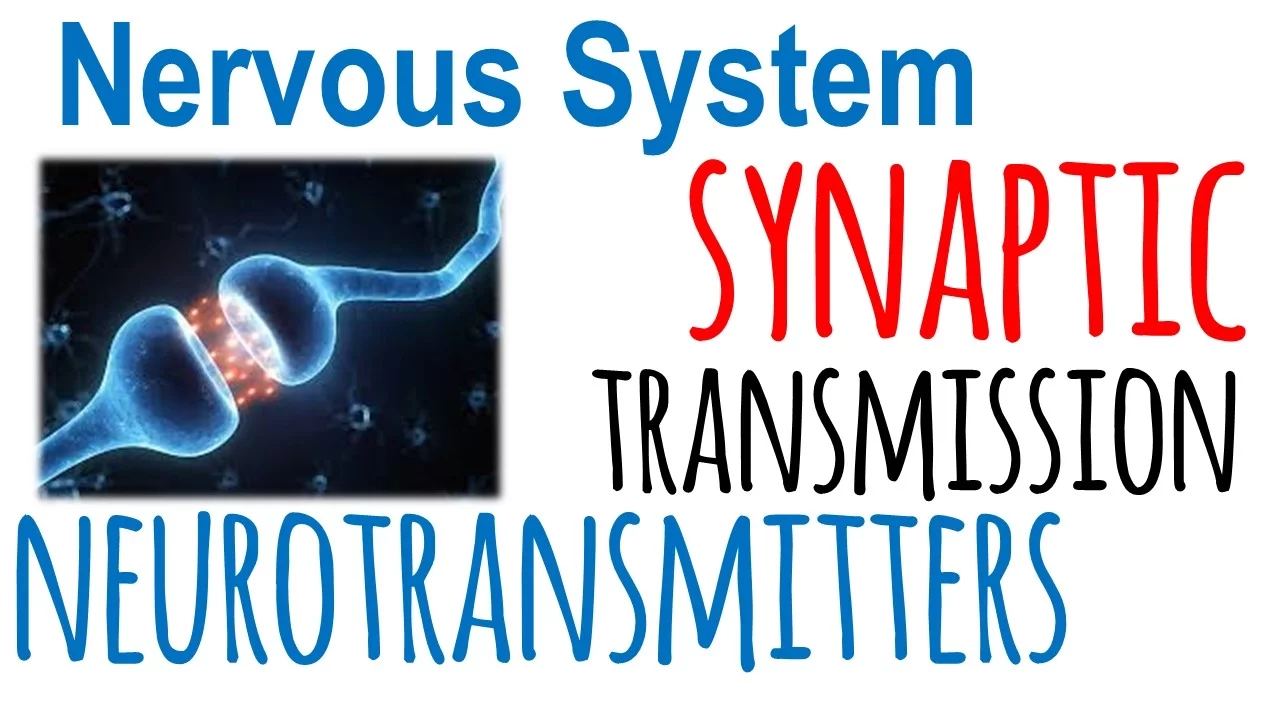
Fundamental concepts of cellular neurophysiology, specifically action potentials, synaptic transmission, and neurotransmitters.
The general principle of sensory transduction—how physical environmental stimuli are converted into electrical neural signals.
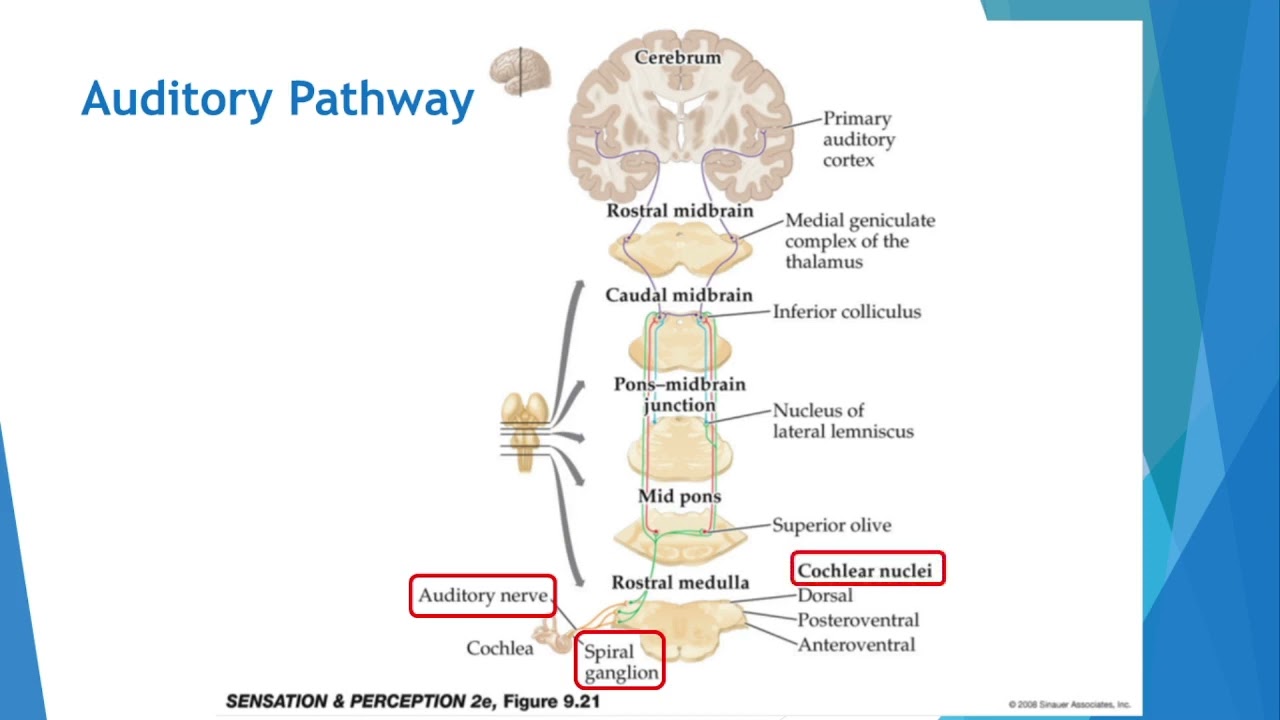
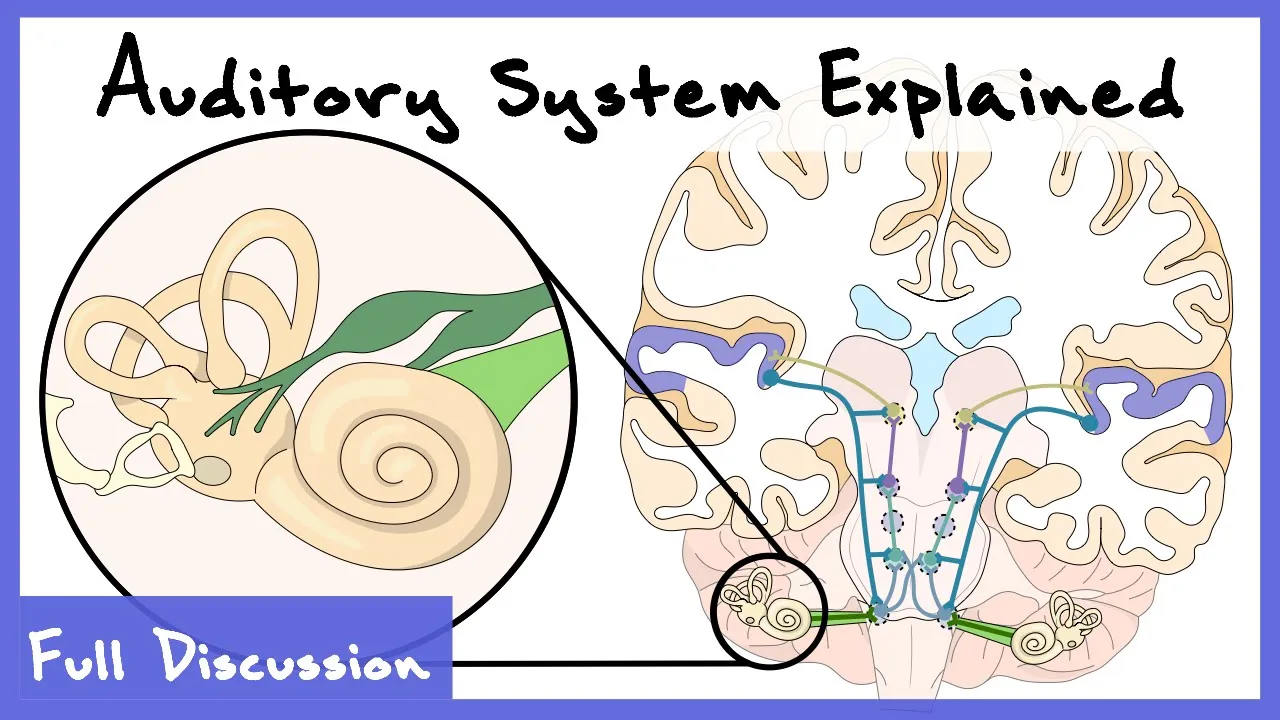
The central auditory pathway, tracing neural signals from the vestibulocochlear nerve (CN VIII) through the brainstem to the primary auditory cortex.
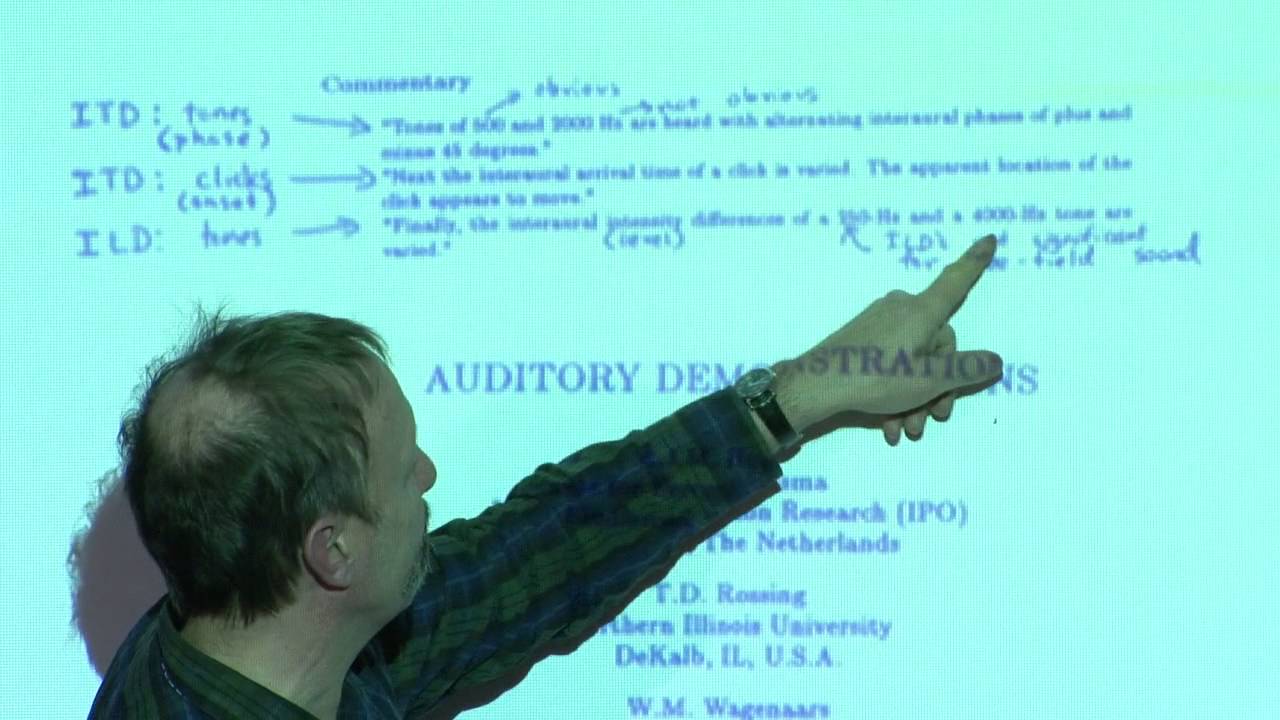
Mechanisms of sound localization, including interaural time differences (ITD) and interaural intensity differences (IID) processed in the brainstem.
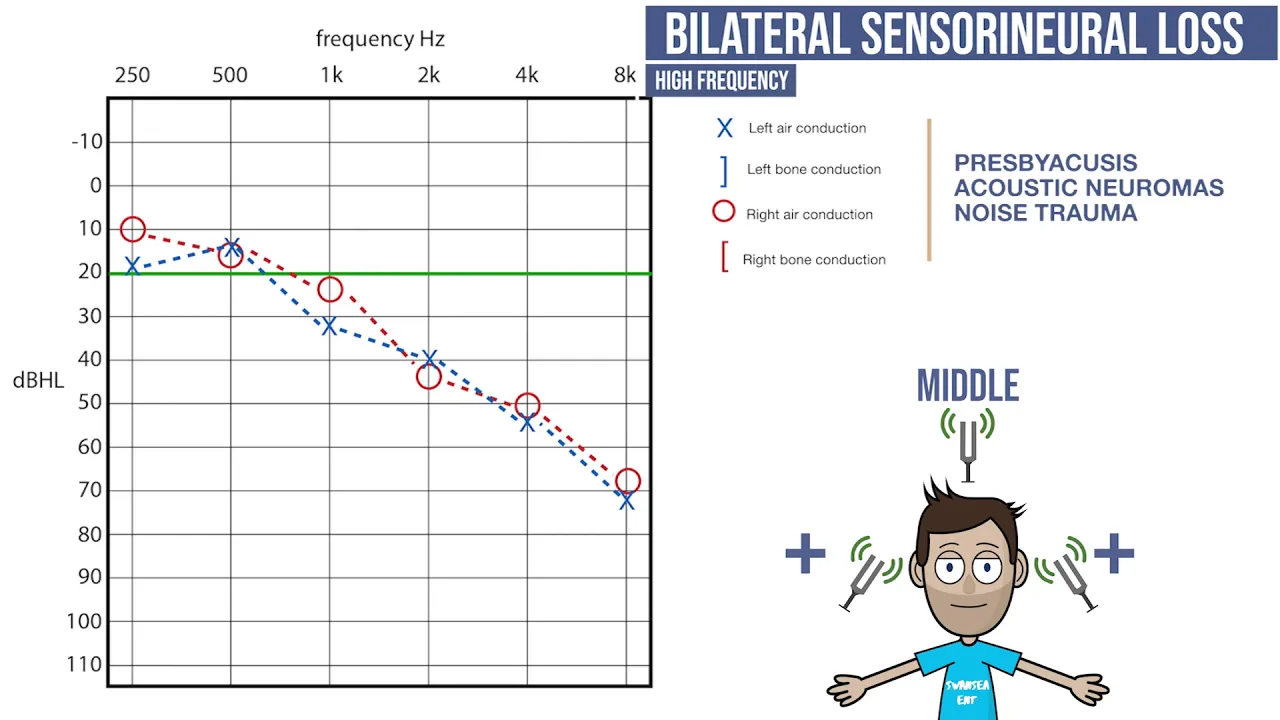
Pathophysiology of auditory disorders, distinguishing between conductive hearing loss, sensorineural hearing loss, and central auditory processing disorders.
The science and technology of auditory prosthetics, such as the biophysics and engineering behind cochlear implants and bone-anchored hearing aids.
257.7K views5.9Klikes10:42Original Release: 2024-02-27
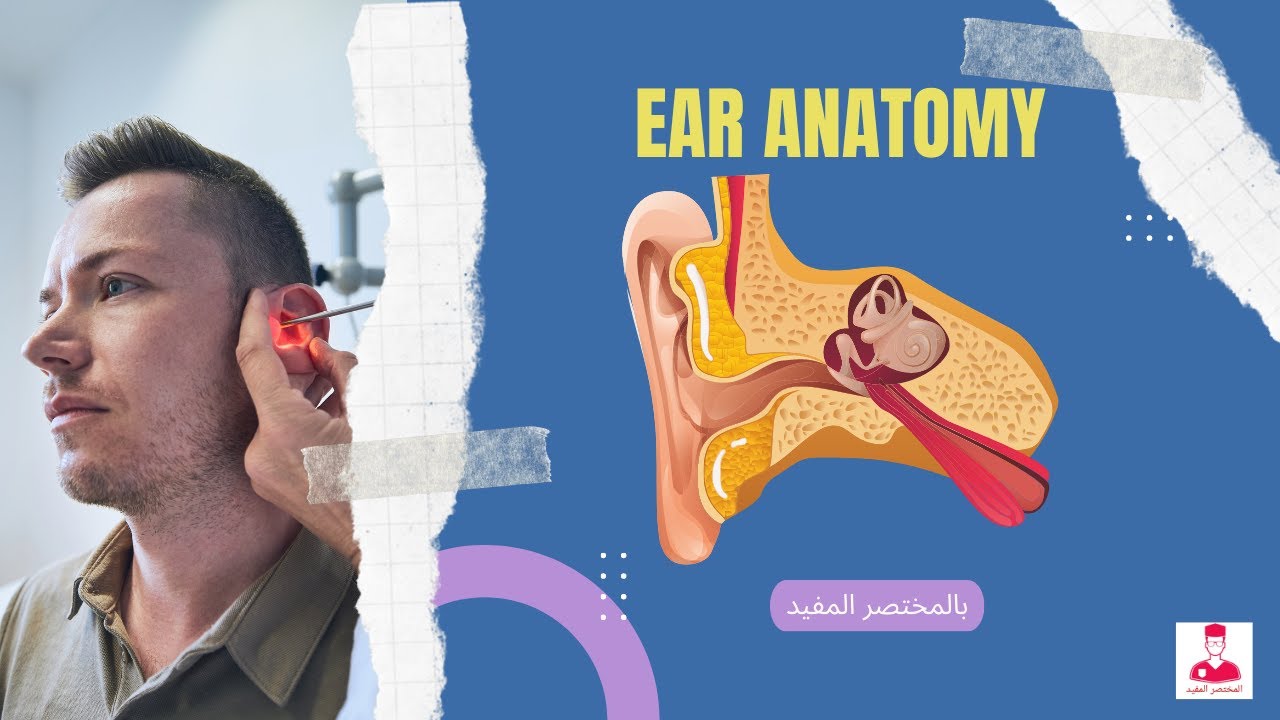
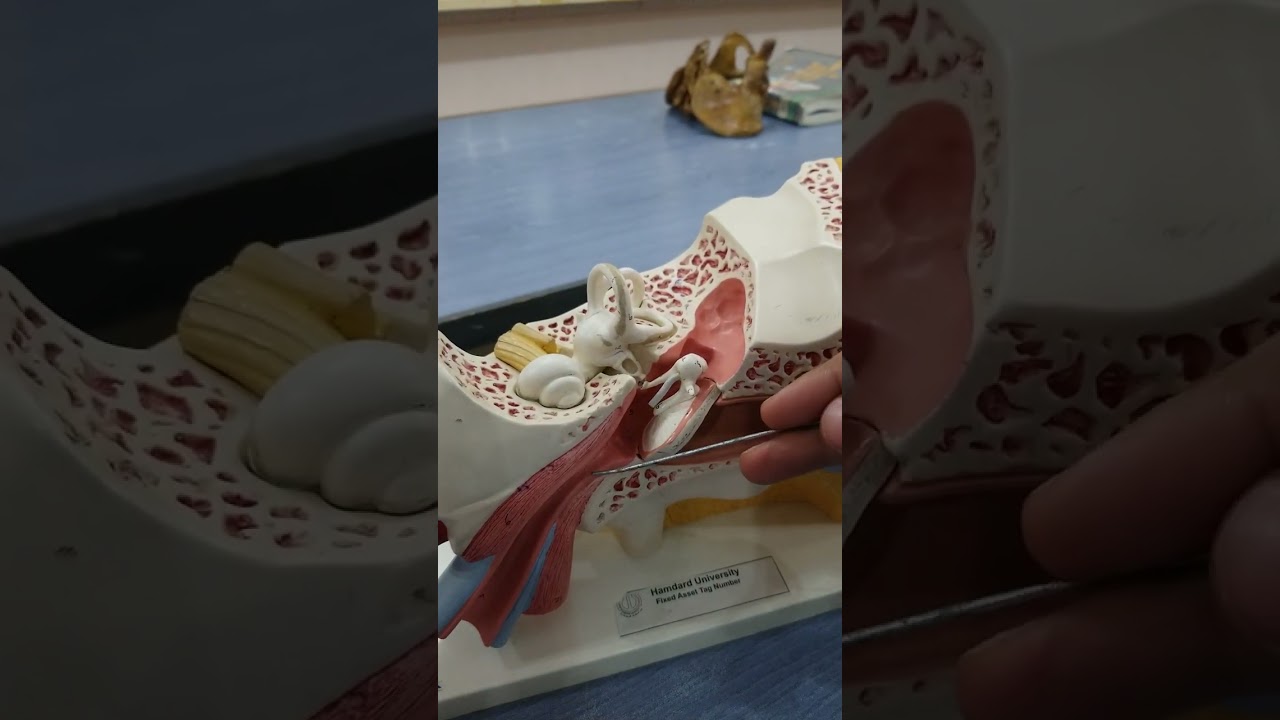
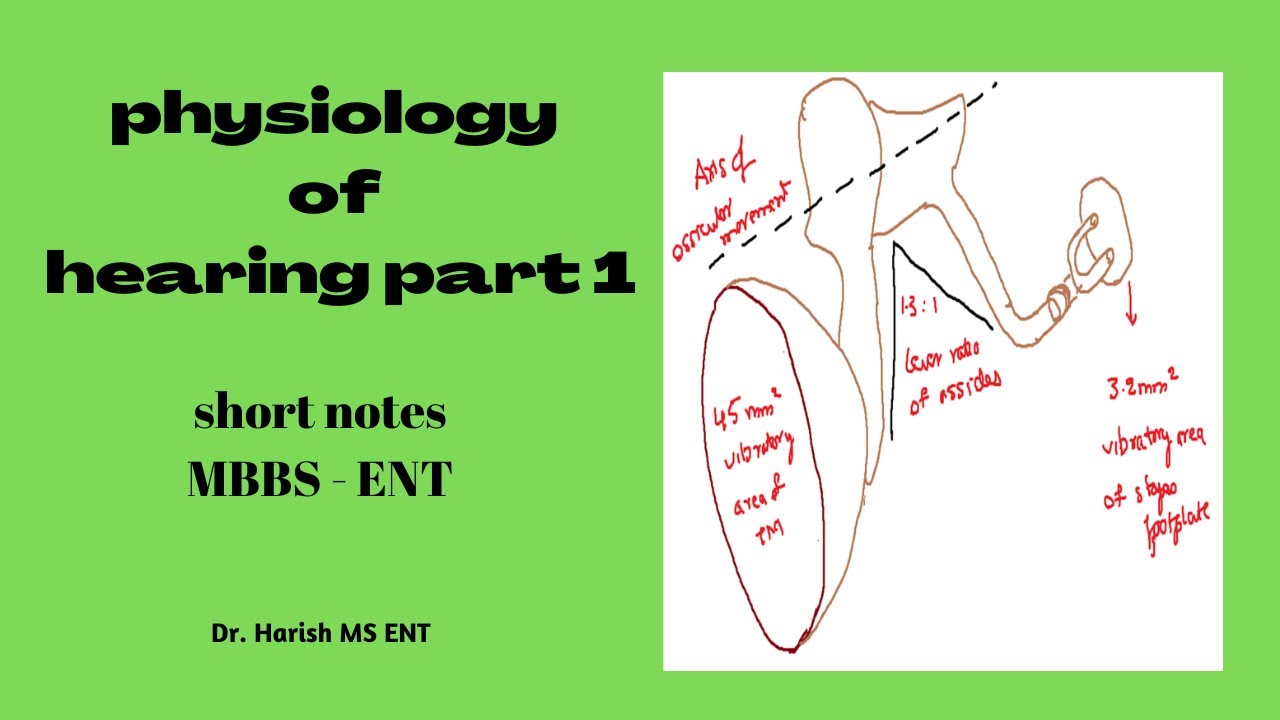
[Music] physiology of hearing introduction the ear is divided into three functionally distinct regions the external outer ear middle ear and internal inner ear the external and middle ear structures are involved in hearing and the structures of the internal ear are involved in both hearing and equilibrium outer ear the outer ear consists of the Penna in the external auditory canal sound waves are collected by the p and directed into the external auditory canal the PA helps in localization of sound while the external auditory canal amplifies the sound waves middle ear the middle ear is an air-filled space located behind the eardrum the middle ear consists of three small bones called OES the malus enus and stapes these bones amplify the sound waves and transmit them from the e drum to the inner ear inner ear the inner ear is located deep within the temporal bone and the skull the inner ear consists of the ccka vestibule and semicircular canals the ccka is the main organ of hearing and is responsible for converting sound waves into neural signals the vestibule and semicircular canals are responsible for balance ccka physiology ccka is 35 mm long and makes 2 and 3/4 turns the upper Scala vestibuli and the lower Scala Tony contain paraly which is rich in sodium ion the Scala media is the the Middle cckar Chamber which has stria vascularis that secretes endolymph which is rich in potassium ion Scala media is electrically positive by 85 molt in no cular potential relative to the Scala vestibuli and Scala tempany the ccka is responsible for converting sound waves into electrical impulses that are transmitted to the brain where they are interpreted as sound sound waves enter the ccka through the oval window a membrane that separates the middle ear from the inner ear as the sound waves travel through the fluid and the ccka they cause the Bassel membrane to vibrate the Bassel membrane is a thin flexible structure that runs the length of the ccka and contains thousands of tiny hair cells that are responsible for converting sound waves into electrical impulses the hair cells are embedded in the tectorial membrane a gel-like structure that overlies the hair cells as the Basel membrane V vibrates the hair cells move back and forth causing their hair-like projections to bend this bending of the hair cells triggers the release of neurotransmitter glutamate which in turn stimulate the auditory nerve fibers that are connected to the hair cells the auditory nerve fibers then transmit electrical signals from the ccka to the brain stem where they are processed in relay to various parts of the brain for further processing and interpretation different frequencies of sound waves cause different parts of the Bassel membrane to vibrate which leads to the stimulation of different populations of hair cells the location of the hair cells on the Basel membrane that are stimulated corresponds to the frequency of the sound waves the ccka also has a specialized system for amplifying sounds called the cockier amplifier this system involves outer hair cells in the ccka that are able to actively contract and expand in response to electrical signals from from the brain stem this contraction and expansion of the outer hair cells amplifies the vibrations of the Basel membrane and enhances the sensitivity and selectivity of the ccka to different frequencies of sound the organ of CTI organ of Cy contains the receptors for hearing hair cells hair cells are the sensory receptors of hearing the resting membrane potential of the hair cells is about 60 molt hair cells have a motor protein namely Preston stereocilia and kinocilia they're named for their hairlike protrusions which are called stereocilia kyos cyia on the other hand are specialized single long cilium found on one end of the bundle of stereocilia and some non- mamalian species in mammals kinocilia are only present during the early stages of development and are later lost as the hair cell matures stereocilia are arranged in a row of progressively decreasing height with the tallest stereocilium located at one end of the bundle and the shortest at the other end they're connected to each other by fine elastic structures called tip links these tip links contain mechanically sensitive cat ion channels which are channels that allow positively charged ions such as potassium and calcium to flow into the cell when they're activated by mechanical forces when sound waves enter the inner ear and cause the stereo cyia to bend the tip links stretch and pull on the mechanically sensitive cat ion channels opening them up and allowing ions to flow into the hair cell def flection of the stereocilia toward the kyum opens the potassium channels depolarizing the inner hair cell and causing the influx of calcium that stimulates the release of the neurot transmitter glutamate which then stimulates the aper neurons to transmit neural impulses to the auditory cortex at rest the potassium channels are partially [Music] open therefore deflection of stereocilia toward the shortest stereocilia closes the potassium channels and inhibits signal transmission by the afrite neurons outer and inner hair cells the hair cells in the organ of CTE are arranged in four rows with the three rows of outer hair cells and one row of inner hair cells the outer hair cells are more numerous with about 20,000 cells while the inner hair cells are fewer in number with only around 3500 cells however despite being fewer in Number the inner hair cells are more important for hearing as they're responsible for transmitting the majority of the sensory input from the hair cells to the auditory nerve fibers the the outer hair cells play a critical role in amplifying The Sound signals before they're transmitted to the auditory nerve fibers note 95% of these Sensory neurons innervate the inner hair cells only 5 to 10% innervate the outer hair cells the spiral gangion the spiral gangion contains the cell bodies of the sensory neurons that inate the hair cells of the organ of Cy these Sensory neurons are known as spiral gangan neurons and they form sinaps es with the hair cells that transmit the electrical signals generated by the hair cells to the brain the spiral ganglia neurons are bolar neurons with one dendrite that synapses with the hair cells and one axon that extends to the brain stem where it synapses with other neurons in the auditory pathway the spiral gangan neurons are essential for transmitting the sensory information from the organ of qute to the brain where it's processed and interpreted as sound roll a Bassler membrane in hearing process the frequency analyzer the Bassler membrane is a critical component of the hearing process playing a vital role in the frequency analysis of sound waves the Bassler membrane is a thin flexible membrane that runs the length of the ccka and separates the fluid-filled chambers of the ccka into two compartments when sound waves enter the ccka they create waves in the fluid-filled chambers that cause the Bassel membrane to vibrate the Bassel membrane is stiffer at the base of the ccka near the oval window and becomes more thin and flexible towards the apex of the cocka as a result different frequencies of sound waves cause maximum displacement at different points along the length of the Bassel membrane with higher frequencies causing maximum displacement near the base of the ccka and lower frequencies causing maximum displacement near the Apex this frequency analysis is important because it allows the auditory system to distinguish between different frequencies of sound waves and identify the pitch of the sound the hair cells of the organ of CTI are located on the Bassel membrane and they respond to the mechanical vibrations of the Basel membrane by generating electrical signals that are transmitted to the brain the spatial arrangement of the hair cells on the Bassel membrane corresponds to the frequency analysis with the Heros cells at the base of the ccka responding to high frequency C sounds and the hair cells at the Apex responding to low frequency sounds this gives the appearance of a traveling wave in Bassler membrane this series called traveling wave theory of Von Becki traveling wave theory of Von Becki according to the traveling wave theory when sound waves enter the ccka they create a traveling wave that moves along the Bassler membrane from the base of the ccka near the oval window to the apex of the ccka the wave Peaks at a specific location along the Bassel membrane that corresponds to the frequency of the sound wave with higher frequencies causing maximum displacement near the base of the ccka in lower frequencies causing maximum displacement near the Apex as a traveling wave moves along the Basel membrane it causes the hair cells to bend and generate electrical signals that are transmitted to the brain the outer hair cells of the organ of quarty play a critical role in amplifying The Traveling wave and enhancing the sensitivity and selectivity of the auditory system that's all for the video we'll see you next time
Up Next
9:48
Human Osteology: Axial & Appendicular Skeleton Explained
@ProfessorDaveExplains
63K views•2024-02-26
50:12
Bacterial Communication: Quorum Sensing and Biofilm Formation Explained
@JHUAAP
12.6K views•2011-06-28

59:20
Homeostasis, Body Fluids & Control Systems | Physiology Lecture 1
@doctorbhanuprakash
110.3K views•2023-08-14

7:08
Bacteriophages: Earth's Deadliest Killers and Future Antibiotics
@kurzgesagt
34.6M views•2018-05-13
Related Study Plans & Knowledge Roadmaps
Structured learning paths in Biology
biology
RNAi: Biogenesis, RISC & Gene Silencing
01Molecular Biology Foundations: DNA to Protein
02Introduction to RNA Interference (RNAi)
03Molecular Biogenesis of miRNA and siRNA
+ 2 more learning modules
10h5 modules
Explore Roadmap
biology
Mycorrhizae: Signaling, Biophysics & Ecology
01Foundations of Mycorrhizal Symbiosis
02Molecular Signaling and Root Colonization
03Biophysics and Bioenergetics of Nutrient Exchange
+ 1 more learning modules
11h4 modules
Explore Roadmap
biology
Circadian Clocks: TTFL, SCN & Periphery
01Foundations of Molecular Biology & Gene Expression
02Introduction to Chronobiology and Actograms
03The Core TTFL: Molecular Architecture of the Clock
+ 3 more learning modules
14h6 modules
Explore Roadmap
biology
Population Genetics: Math, Drift & Selection
01Genetic & Probability Foundations
02The Hardy-Weinberg Principle and Baseline Models
03Mathematical Modeling of Natural Selection
+ 3 more learning modules
18h6 modules
Explore Roadmap