Category Theory: Functors, Monads & FP
Learning Goal: Understand category theory's core elements—including categories, functors, natural transformations, and monads—and master their practical application to functional programming paradigms (e.g., in Haskell and Scala).
Prerequisites
- Basic familiarity with programming logic (e.g., writing simple functions, arrays/lists, and type structures).
- No prior advanced mathematics or set theory required.
Estimated Total Study Time
- 12 Hours (including video lectures, practical code reflection, and self-assessments).
Module 1: Mathematical Foundations: Functions, Composition & Types
To build a solid category-theoretical intuition, we must first look at the mathematical building blocks that programmers use daily: functions, sets, and types. This module bridges the gap between the concrete sets of mathematics and the type systems of modern programming languages.
Recommended Videos

Why this video
This brief animation introduces function composition through the intuitive analogy of an assembly line. This visual model establishes the foundational pipeline model used in category-theoretic morphisms.
Why this video
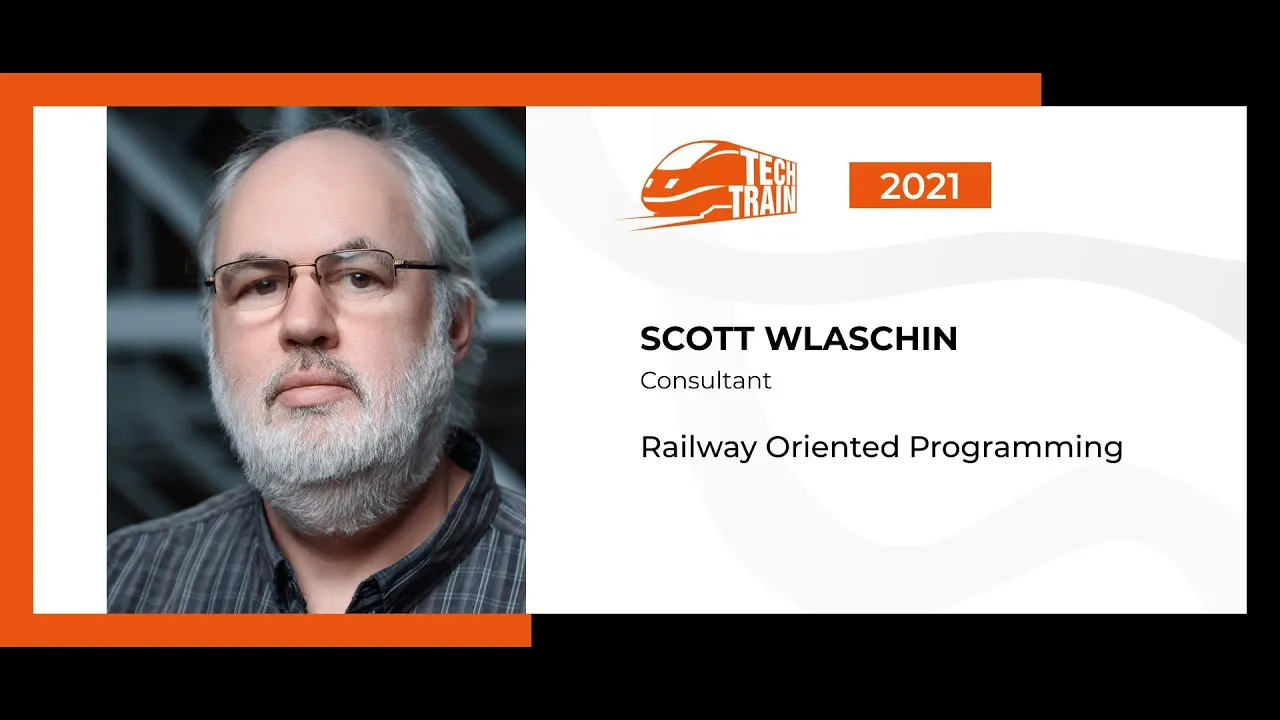
Scott Wlaschin explains how types operate as sets of values (e.g., the set of all integers, strings, or booleans) in statically typed functional programming. Understanding "types as sets" is vital because Category Theory's most common computer science model () represents types as objects and pure functions as morphisms.
Why this video
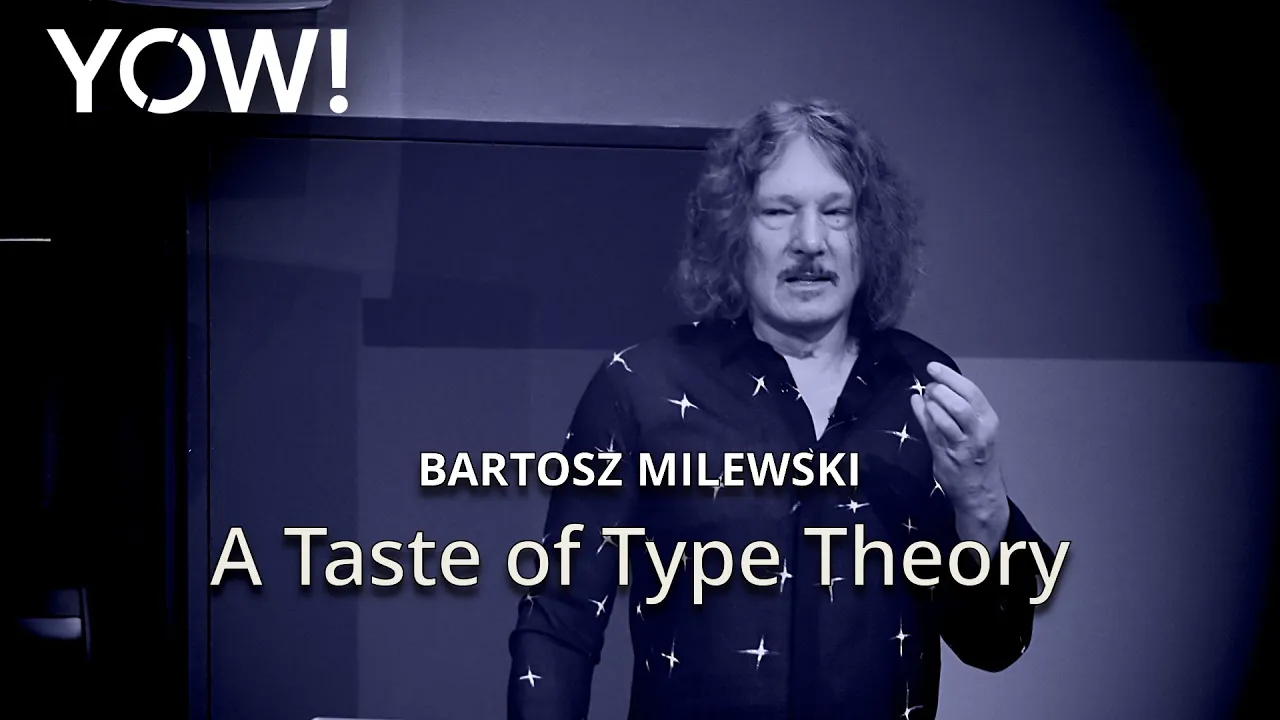
Bartosz Milewski explains how type theory forms the bedrock of both computer science and modern mathematics. This addresses the curriculum feedback gap by demonstrating how types act as propositions, showing that programming types are more than compiler checkers—they are mathematical structures.

Why this video
A quick programming-focused definition that grounds mathematical maps in the syntax of computer functions and lambdas. This ensures you understand that a function in programming is simply a tool that takes an input type and yields an output type.
Knowledge Checkpoint
- What is the set-theoretic definition of a function, and how does a type in programming act as a set of possible values?
- If you compose function with function , what is the signature of the resulting function ?
- How does Russell's paradox highlight the transition from untyped set theory to structured type theory?
Module 2: Introduction to Category Theory: Objects & Morphisms
This module introduces the formal definition of a Category. You will study structural diagrams, nodes (objects), arrows (morphisms), identity, and composition rules—leaving behind implementation details to view computation as a web of relationships.
Recommended Videos

Why this video
This visual introduction translates category-theoretical diagrams into intuitive geometries. It shows how objects are points and morphisms are arrows, demonstrating how the fundamental laws of composition and associativity work visually.

Why this video
Bartosz Milewski's landmark lecture details why Category Theory is crucial for software engineering. He frames the subject not as dry math, but as the ultimate "science of composition" that helps us manage software complexity by abstracting details away.

Why this video
Following his motivational introduction, Milewski defines a category mathematically. He covers the three pillars: abstraction, composition, and identity, providing the foundation needed to understand functors and natural transformations.

Why this video
This lecture from the Topos Institute focuses on Category Theory's role as an interface specification language for programmers. It defines objects as types and morphisms as functions, introducing the structural rules that make software systems modular and testable.
Knowledge Checkpoint
- What are the formal components that define a Category?
- Explain the identity law: if , what is the result of and ?
- Explain the associative property of morphism composition using three arrows (, , and ).
Module 3: Functors: Mapping Between Categories
Now that you understand categories, you can explore how to link them. A Functor is a structure-preserving map from one category to another. In programming, a functor takes a type and wraps it in a context (like List, Option, or Future), while allowing you to map functions over that wrapped value via map or fmap.
Recommended Videos

Why this video
This lecture connects the abstract mathematical definitions of functors to type constructors. Milewski demonstrates how functors translate both objects (types) and morphisms (functions) from a source category to a target category.

Why this video
This video explains how the theoretical definition of a functor is implemented in production-grade Scala. It shows how the Functor type class generalizes structural map patterns across different structures like Lists, Options, and Try blocks.

Why this video
This tutorial focuses on Haskell's type signature for functors, showing how fmap :: (a -> b) -> f a -> f b lifts a standard function to operate within a context .
Knowledge Checkpoint
- What does a functor do to the objects of a category? What does it do to the morphisms?
- What are the two functor laws (Identity and Composition preservation)? Why must a valid programmer-defined
mapobey them? - Write down the type signature of
fmapin Haskell or Scala, and explain the concept of "lifting" a function.
Module 4: Natural Transformations: Mapping Between Functors
If functors are mappings between categories, Natural Transformations are mappings between functors. They allow you to transform one functor structural context to another (e.g., converting a List to an Option or a Validation type) without modifying or inspecting the underlying payload types.
Recommended Videos
Why this video
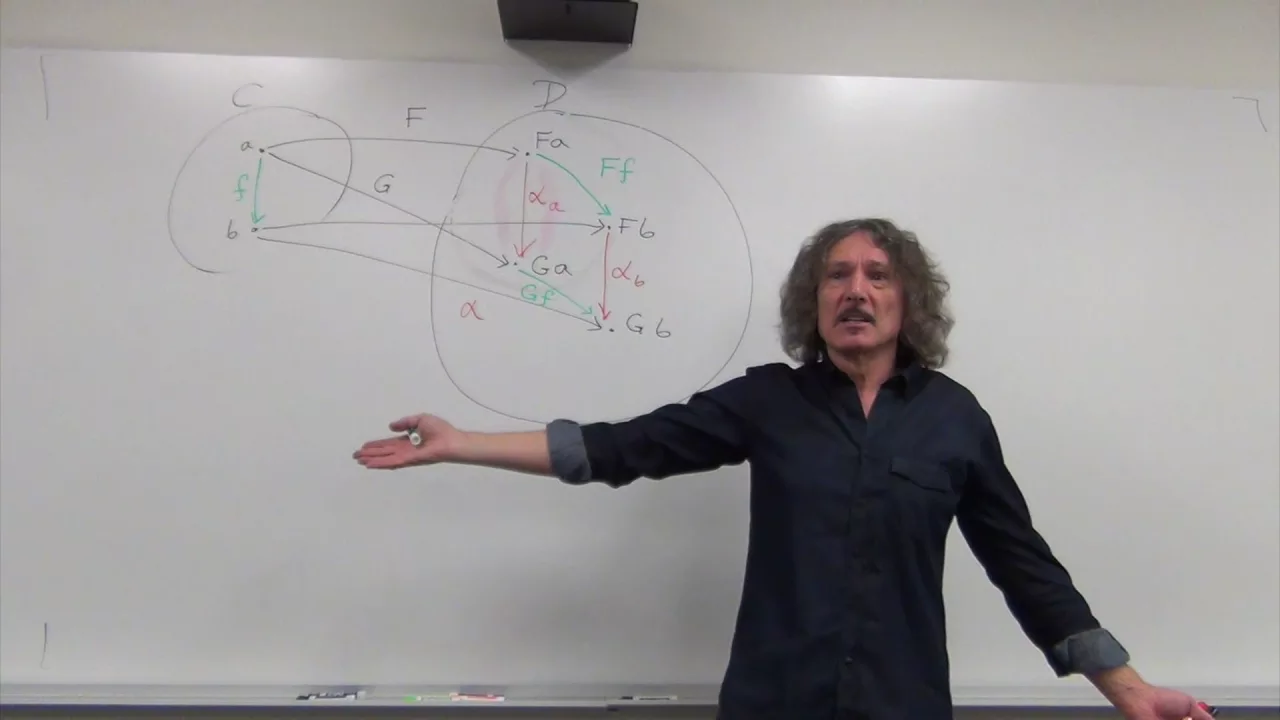
Milewski explains the transition from functors to natural transformations, framing them as the "third pillar" of Category Theory. This lecture uses intuitive structural visualizations to show how natural transformations act as bridges between different functors.

Why this video
This classic, chalkboard-style presentation details the formal commuting square definition of a natural transformation. It is excellent for learners seeking mathematical rigor.
Why this video
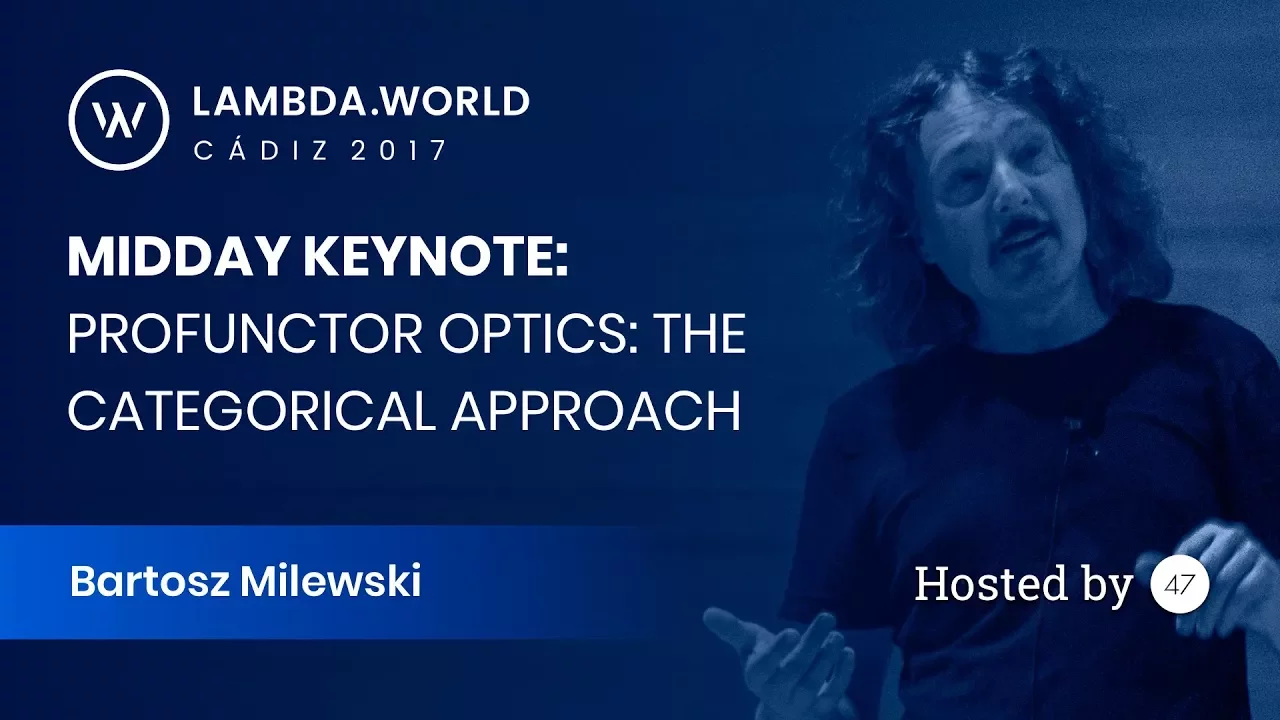
This segment links the abstract commuting diagrams to polymorphic higher-order programming. It details how parametric polymorphism ensures that a natural transformation cannot alter the data values inside a container, preserving the structures of both functors.
Curriculum Gap Note: In practical code, a natural transformation is a polymorphic function with a signature like
alpha :: forall a. F a -> G a(whereFandGare Functors).A common example is a safe
headOptionfunction convertingList a -> Option a:def headOption[A](xs: List[A]): Option[A] = xs.headOptionTo satisfy the naturality condition, mapping a function over the list first and then applying
headOptionmust yield the same result as applyingheadOptionfirst and then mapping over the option:
Knowledge Checkpoint
- Define a natural transformation mathematically. What must commute in its diagram?
- How does a polymorphic function signature (like
forall a. F a -> G a) map to the definition of a natural transformation? - Verify the naturality condition using
ListandOptionwith a simple mapping function, such asx => x * 2.
Module 5: Monads: Structure and Applications in FP
We now arrive at the central abstraction of functional programming: the Monad. You will learn how to demystify Monads as endofunctors with additional structure, unpack the famous "monoids in the category of endofunctors" definition, and explore how they manage computational effects, state, and errors.
Recommended Videos
Why this video
This presentation explains monads using practical functional programming examples. It details how the Monad abstraction solves real-world engineering issues, such as error propagation, side effects, and state modification in pure functional languages.

Why this video
This excerpt details how monads consist of an effect type wrapped with two operations: return (also known as pure or unit) and bind (or flatMap). It explains how these two operations let you safely chain dependent, effectful actions.

Why this video
This programming tutorial explains how to transition from imperative sequencing to monadic composition. It provides step-by-step Haskell examples of the bind operator (>>=) and Haskell's syntactic sugar, do notation.

Why this video
This video explains the famous quote: "A monad is a monoid in the category of endofunctors." It demonstrates how monad operations correspond to the monoid properties of closure, identity, and associativity.
Knowledge Checkpoint
- What are the two primary operations that define a Monad, and what are their typical type signatures (
flatMap/bindandunit/pure)? - Explain how a Monad serves as a "monoid in the category of endofunctors" by identifying its identity element and binary operator.
- How does the
Maybe(orOption) monad prevent deeply nested conditional blocks when handling potentially null values?
Course Map
This flowchart shows the recommended learning path and structural dependencies of the modules:
Key People Index
- Bartosz Milewski: A leading computer scientist and physicist who bridges the gap between category theory and programming. His educational lectures are standard resources for functional programming.
- Scott Wlaschin: Author and functional programming advocate known for "Railway Oriented Programming," which translates algebraic concepts into practical patterns for enterprise developers.
- Saunders Mac Lane & Samuel Eilenberg: The mathematicians who co-founded Category Theory in the 1940s while working in algebraic topology.
- Eugenio Moggi: The computer scientist who first proposed using monads to structure functional programs and handle side effects in 1989.
Final Self-Assessment
Review this checklist to assess your understanding of the course material:
- Morphisms: Can you explain the difference between an object and a morphism, and draw a commuting diagram for ?
- Category Laws: Can you list the formal requirements of a category (identity and associativity)?
- Types as Objects: Can you explain how the category of types () uses types as objects and pure functions as morphisms?
- Functor Lifting: Can you explain how
map(orfmap) lifts a function to a function ? - Functor Laws: Can you explain what happens if a functor violates the identity law?
- Natural Transformations: Can you define a natural transformation as a family of morphisms that maps one functor to another?
- Naturality Property: Can you explain why a natural transformation cannot inspect or alter the generic type parameter of a container?
- Monadic Bind: Can you explain why
flatMap(orbind) is needed to chain monadic functions, instead of just usingmap? - Monad Laws: Can you write out the three monad laws (Left Identity, Right Identity, and Associativity)?
- Monoids & Monads: Can you explain how the monad operations of
pureandjoinfunction as the identity and multiplication operations of a monoid?