












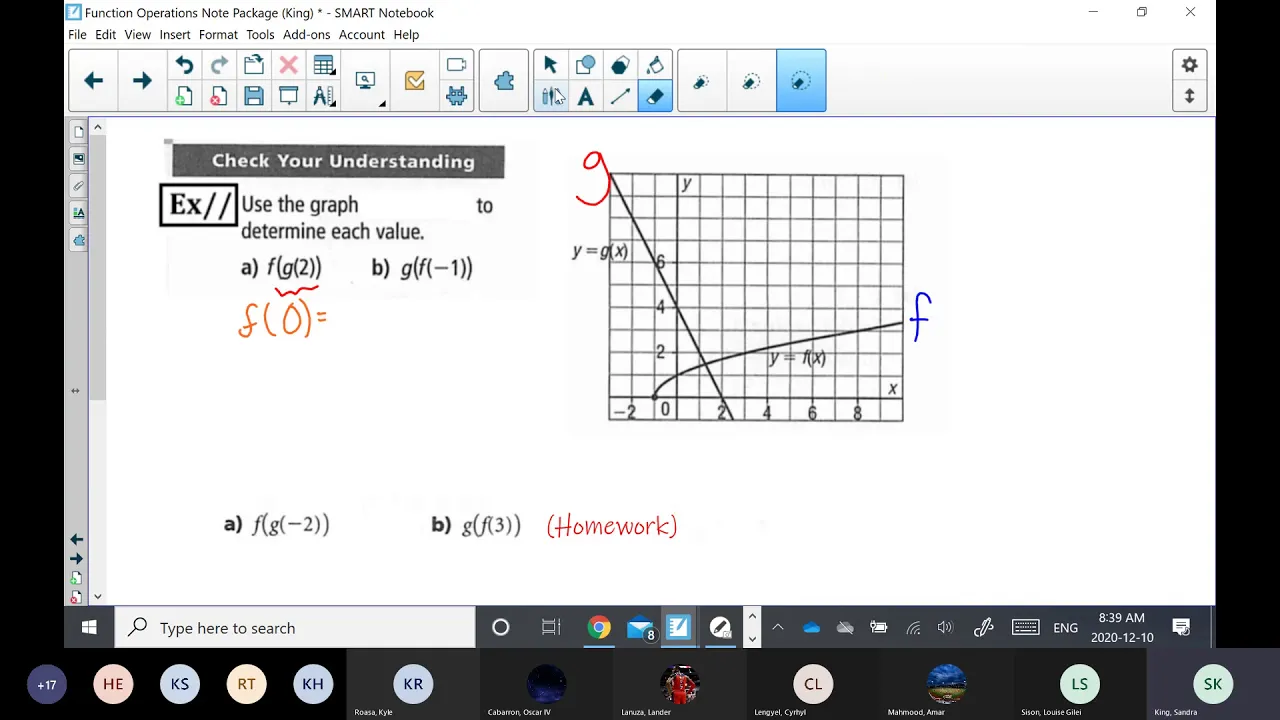








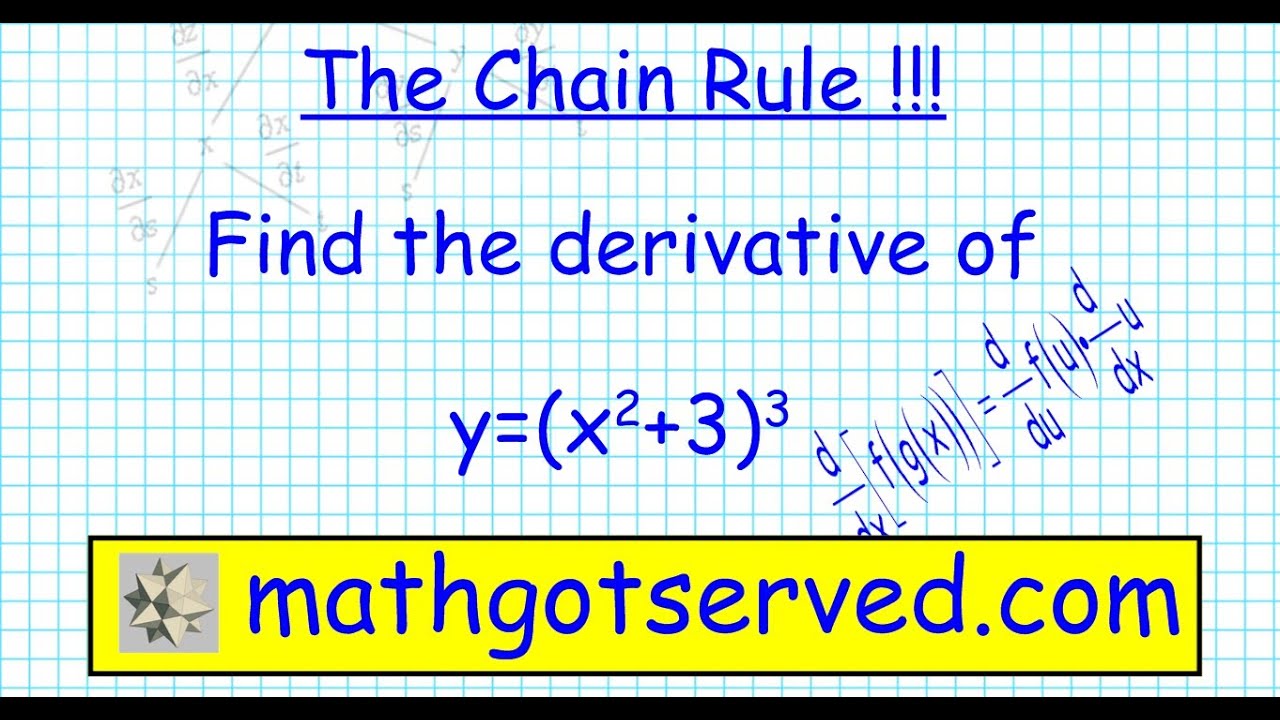





Function composition is the process of applying one function to the output of another, denoted as (F ∘ G)(x) = F(G(x)), where the output of the inner function G becomes the input of the outer function F; to evaluate a composite function, always start with the innermost function and work outward, as demonstrated by examples like G(H(1)) = 11 when G(x) = 5x + 1 and H(x) = ∛(9 - x).
Function Composition Explained: Algebra 2 and Precalculus Guide
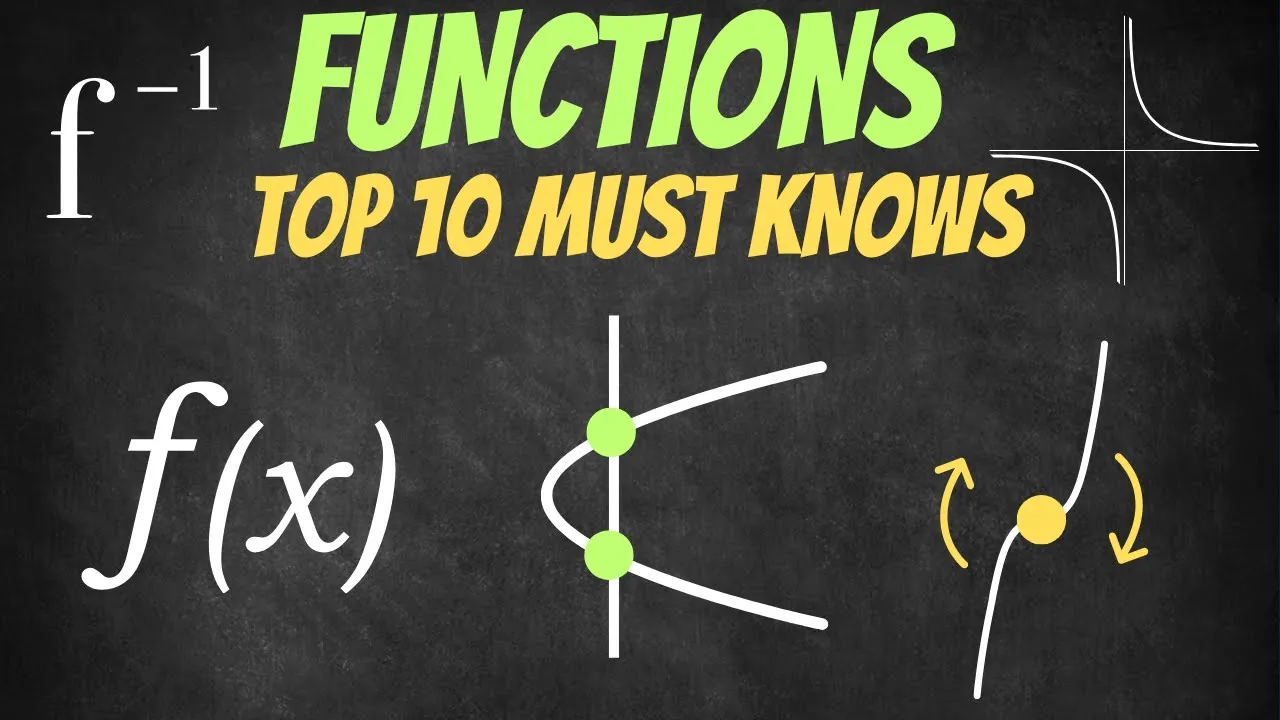
Added:Understanding of function notation, specifically how to read, write, and interpret expressions like f(x).
Ability to evaluate functions by substituting numerical values or simple algebraic expressions into the input variable.
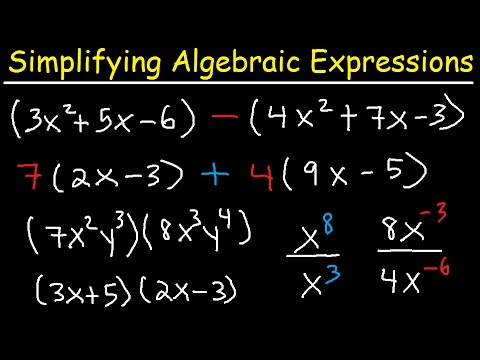
Basic algebraic skills, including simplifying expressions, expanding polynomials, and combining like terms.
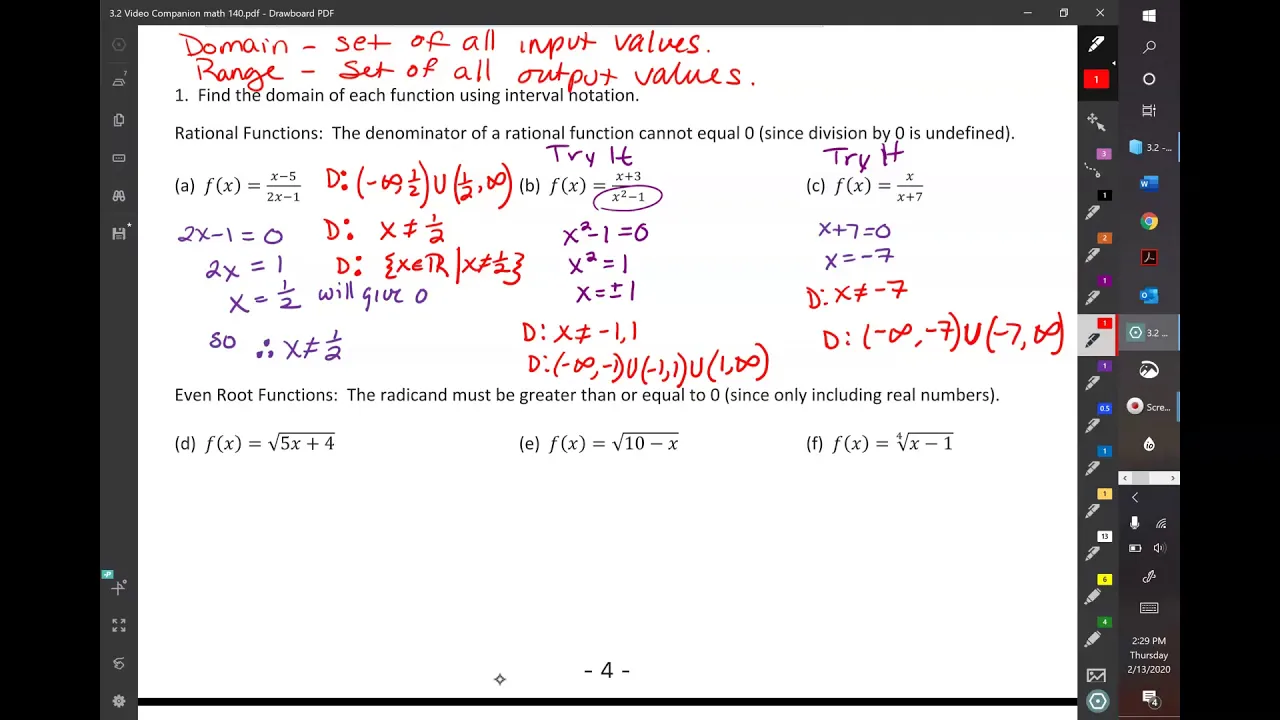
A foundational grasp of the concepts of 'domain' (allowable inputs) and 'range' (possible outputs) of basic functions.
Determining the domain of a composite function, which requires analyzing restrictions from both the inner and outer functions.
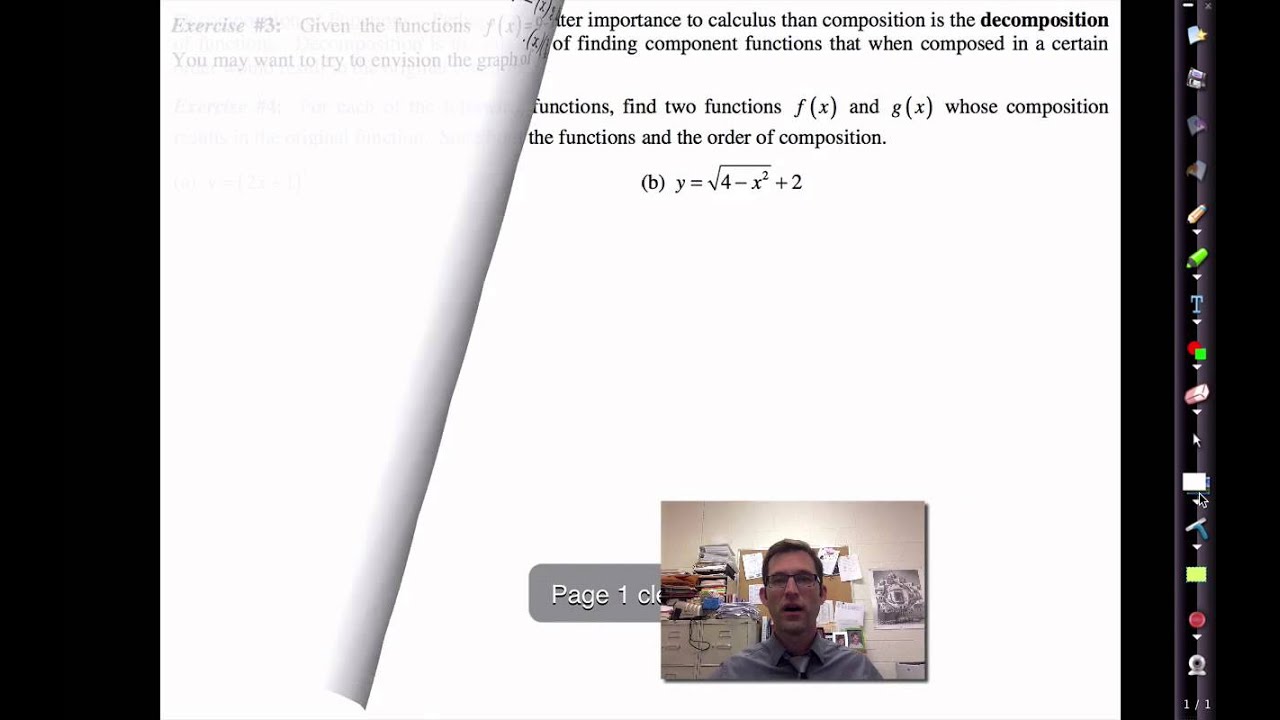
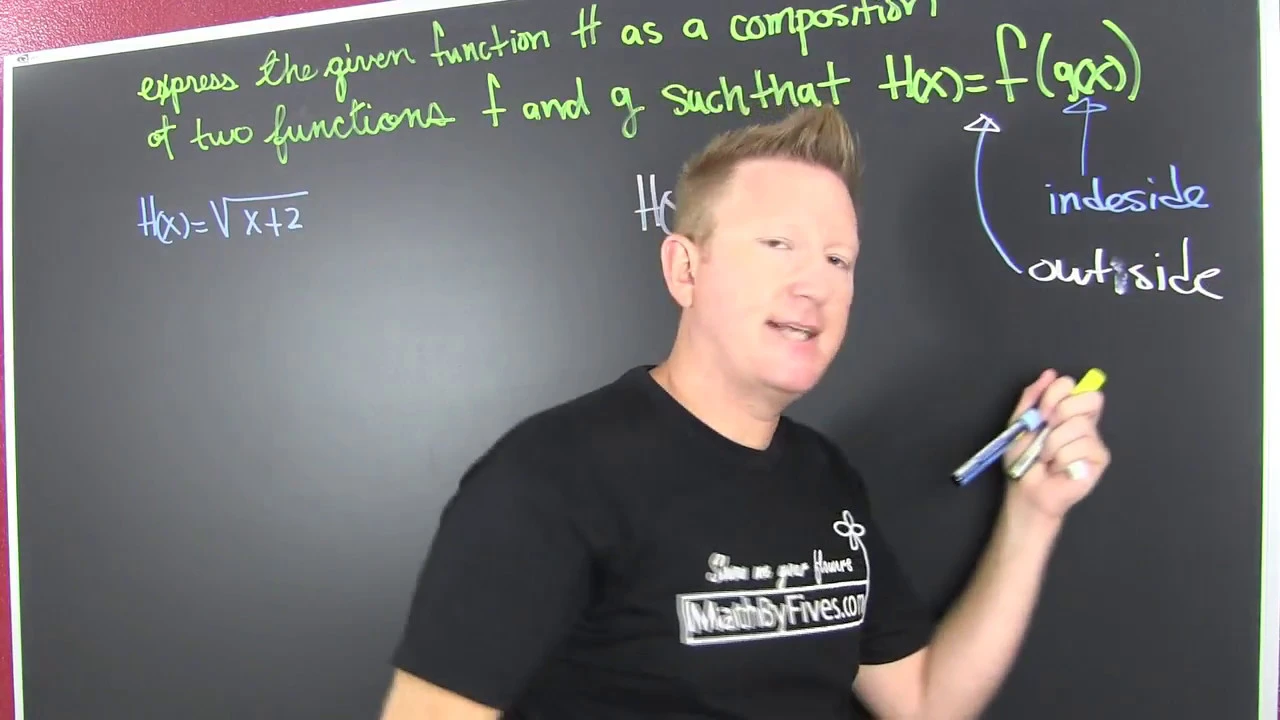
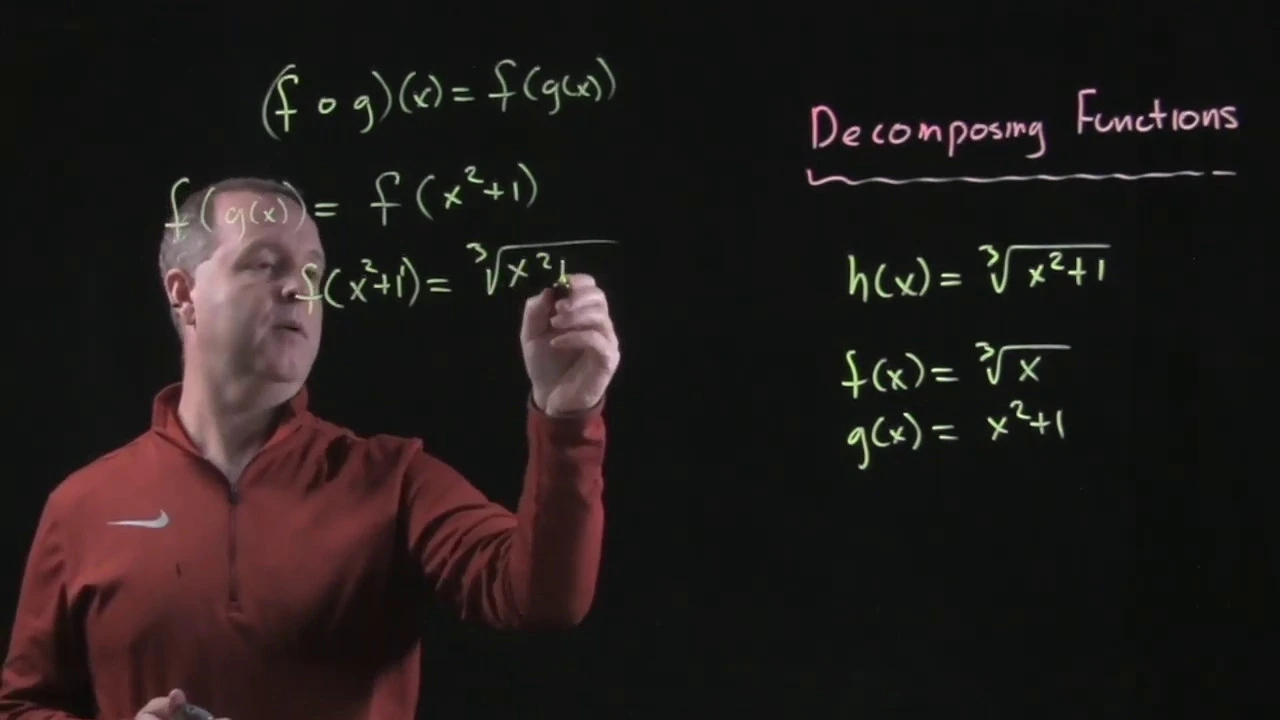
Function decomposition, which involves breaking a complex function down into simpler, constituent functions.
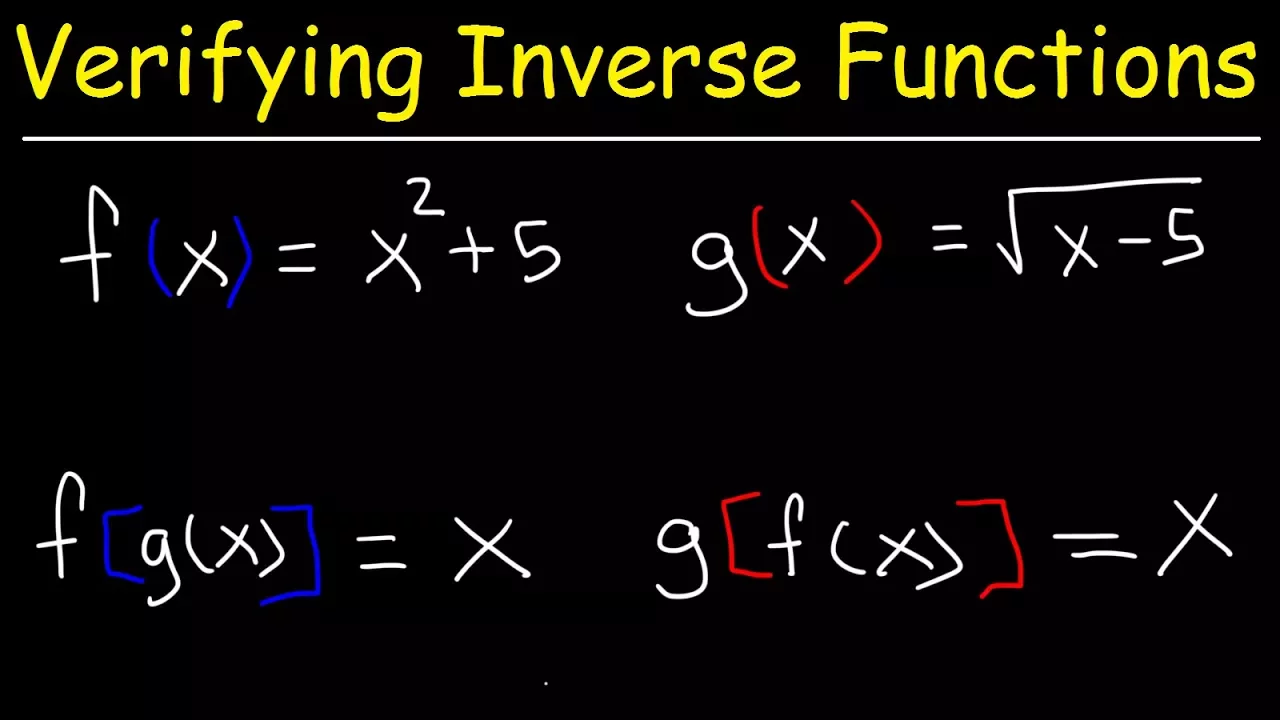
Understanding inverse functions and using function composition to prove if two functions are inverses of each other (i.e., verifying f(g(x)) = x).
Preparing for Calculus concepts, specifically the Chain Rule for differentiation, which relies entirely on understanding composite functions.
Applying composite functions to real-world scenarios, such as modeling multi-step economic processes, currency conversions, or physical systems over time.
1.6K views2likes6:56Original Release: 2019-01-12
this video gives an introduction to function composition function composition is defined as follows given two functions F and G the composite function which is denoted F with an open circle followed by a G and defined by F composed with G of x equals F of G of X that sounds much more complicated than it is let's take a look at this picture over on the right function composition what's happening is that two functions are acting on an original X value I oftentimes think about it as a sum an assembly-line one person gets a piece of metal and they bend it into a certain shape and then they pass it on to the next person and that person's job is to paint the piece of metal and then they pass that on to the next person whose job is to drill a hole in it or something like that so an original piece goes in and then a different product is coming out that different product is handed off to the next person and again a different product comes out so taking a look at this diagram I have two functions the function f which is equal to x squared and then a function G which is equal to X plus 1 we start by inputting the number 3 into our function f well function f squares the x value so if we plug 3 in we'll square it and it's going to output the number 9 that output of nine is then passed off to the function G and function G takes an x-value and then adds one to it so plugging nine in G is gonna add one to it and output 10 therefore G of f of X is equal to ten an input value went into one function something got outputted that output went into the next function and something else came out let's see how we would do that with equations let G of X be equal to 5x plus one and H of X be equal to the cube root of nine minus X we want to find a G composed with H of 1 and H composed with G of negative 4 so G composed with H of 1 I think one of the most important parts is just rewriting it properly after the given notation this is the same as G of H of 1 and I like to color code it cuz I feel like I can see better Oh G composed with H of 1 is the same as G of H of 1 we always start on the inside that's order of operations innermost parentheses so we start on the inside and we want to find H of 1 this is that original input being put into the first function plugging one into our function H that's the cube root of 9 minus 1 which is the cube root of 8 which is equal to 2 so that first function has now outputted the number two now we take that two and we plug it into the second function G so just in my notation I'm taking this but it would be better all right I'm taking this two and I'm just plugging it into the other highlighted blue where H of one is and that gives us G of two G of 2 is going to be equal to 5 times 2 plus 1 which is equal to 11 that's going to be our final answer G composed with H of 1 is equal to 11 let's try the next one H composed with G of negative for the initial rewrite is really important this is the same as H of G of negative 4 we'll start with the inside we need to find G of negative 4 it's going to be 5 times negative 4 plus 1 negative 20 plus 1 is a negative 19 that's our first output now we're ready to plug that output into our second function so we're going to be finding H of negative 19 H of negative 19 is equal to the cube root of 9 minus negative 19 that's equal to the cube root of 9 plus 19 which is equal to the cube root of 28 we try to simplify this cube root but there's not a perfect cube that's a factor of 28 therefore h composed with G and negative 4 is the cube root of 28
Up Next

46:46
Category Theory 1.1: Motivation & Philosophy | Programming
@DrBartosz
375.9K views•2016-08-25

4:43
Elliptic Curve Cryptography Explained: ECC, ECDSA, ECDH
@PracticalNetworking
28.5K views•2024-10-21
10:44
Fourier Series Introduction: The Big Idea Explained
@DrTrefor
387K views•2021-05-03

6:00
The Mathematical Impossibility of Accurate World Maps
@Vox
23.3M views•2016-12-02
Related Study Plans & Knowledge Roadmaps
Structured learning paths in Mathematics
mathematics
Tensor Calculus: Vectors to Riemann Curvature
01Mathematical Foundations: Linear Algebra & Calculus
02Covectors, Dual Spaces, and Tensor Basics
03The Metric Tensor and Index Gymnastics
+ 2 more learning modules
40h5 modules
Explore Roadmap
mathematics
Gödel's Incompleteness: Logic, Proofs & Limits
01Introduction to Formal Systems & Hilbert's Dream
02Set Theory, Cardinality, and Cantor's Diagonal Argument
03Arithmetization and Gödel Numbering
+ 2 more learning modules
14h5 modules
Explore Roadmap
mathematics
Galois Theory: Fields, Groups & Solvability
01Foundations of Abstract Algebra: Groups & Fields
02Polynomials & Field Extensions
03Splitting Fields & Symmetries
+ 2 more learning modules
24h5 modules
Explore Roadmap
mathematics
Non-Euclidean Geometry: Models & Geodesics
01Euclid's Fifth Postulate and the Birth of New Geometries
02Hyperbolic Space and the Poincaré Disk Model
03Geodesics: Defining Straight Lines in Curved Spaces
+ 2 more learning modules
15h5 modules
Explore Roadmap