
















![Obudowy głośnikowe cz.1 - Odc.49 [Reduktor Szumu]](https://i.ytimg.com/vi_webp/wrfUCVTBk00/maxresdefault.webp)




![⚡️📝 집중력과 작업 능률 향상에 최적화된 두뇌 활성 사운드, 울트라디안 생체리듬 기반 주의집중력 사이클 원리 (수면 사이클에 대응하는 각성 사이클) [이어폰 권장]](https://i.ytimg.com/vi_webp/UQCidibMWVE/maxresdefault.webp)
The pitch of a musical note is determined by the frequency of sound waves, which is governed by the resonant frequencies of the instrument; for string instruments, the fundamental frequency is calculated as f = v/(2L), where v is the wave speed (dependent on tension and mass density) and L is the string length, while the characteristic timbre of different instruments arises from their unique combinations of harmonic overtones.
Physics of Musical Instruments: Sound Waves and Pitch Explained
Added:Basic wave properties, including wavelength, amplitude, and the mathematical relationship between wave speed, frequency, and wavelength.
The nature of sound as a longitudinal mechanical wave that propagates through a medium via compressions and rarefactions.
The fundamentals of simple harmonic motion, explaining how physical vibrations generate wave disturbances.
The general concept of mechanical resonance, where a system oscillates at greater amplitude at specific natural frequencies.
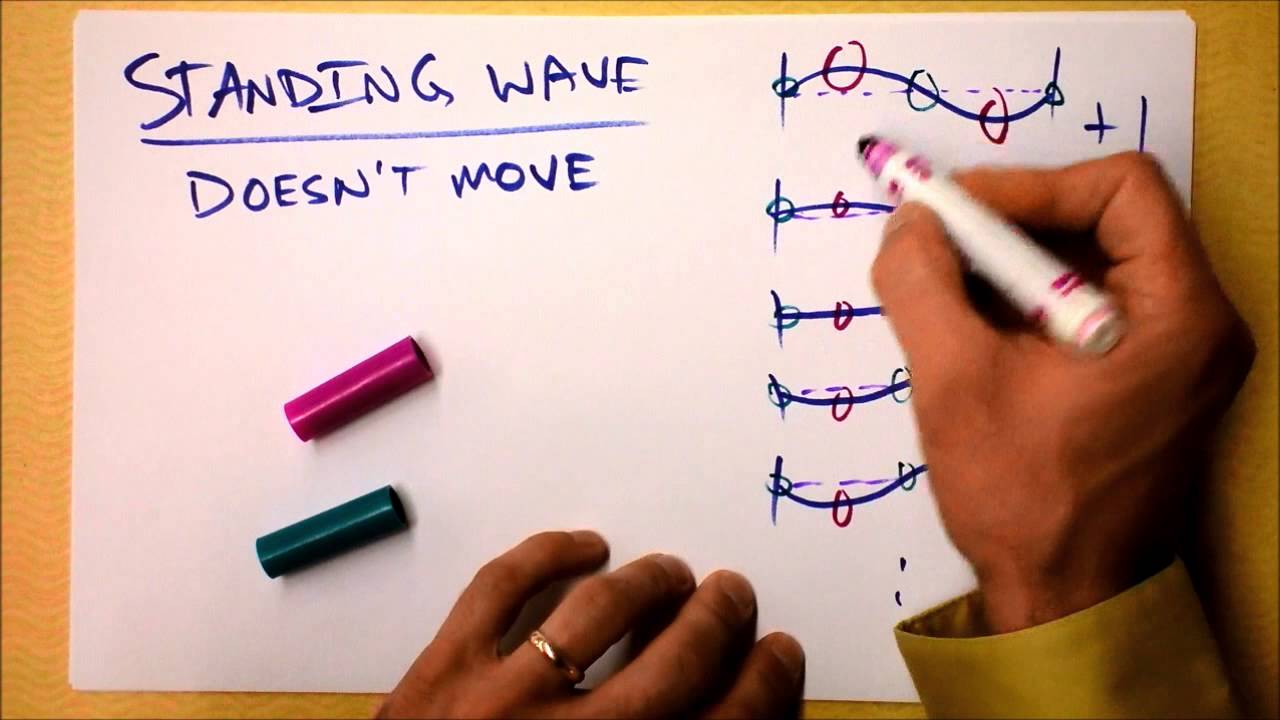
Standing wave mathematics and boundary conditions, analyzing nodes and antinodes in fixed strings and open/closed cylindrical pipes.
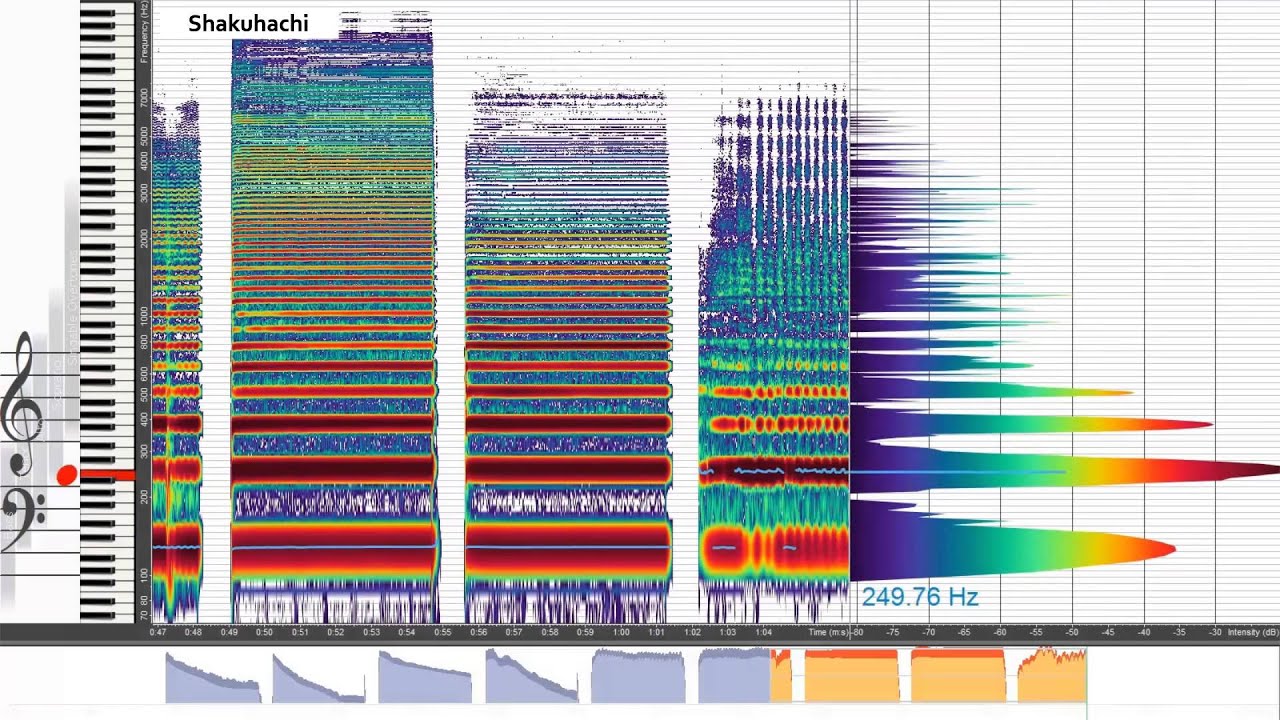
Fourier analysis and harmonic series, investigating how the combination of overtones and fundamental frequencies determines an instrument's unique timbre.
Acoustic impedance and radiation, focusing on how sound energy is efficiently transferred from an instrument (e.g., a violin body) to the surrounding air.
Psychoacoustics and human perception, exploring how the ear and brain interpret physical sound properties as pitch, loudness, and quality.
95.3K views0likes58:36Original Release: 2010-03-01
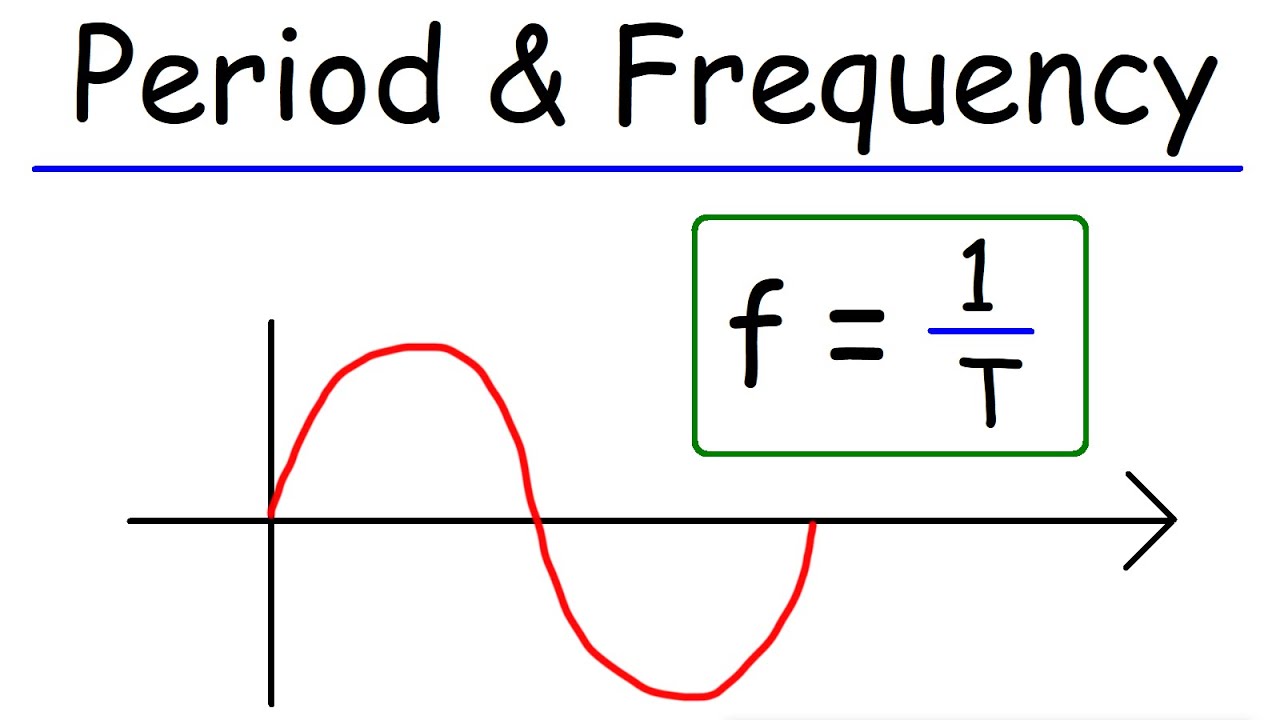
[Music] hi I'm Sarah Bolton I'm professor of physics at Williams and this is the first in the two lecture series the physics of musical sound this material is something that's been interesting to me for pretty much my whole life I've always loved science and I'm a terrible musician but I love to listen to music you'll notice a little bit of a Prejudice towards string instruments in this talk but I'll try to give credit to a few other kinds of instruments as well I've always cared about this material like I said but I had a chance to learn a lot more about it when I developed a course with tikum maimer about a decade ago on the science of musical sound so I'm going to tell you a few things that come from that course and that's a course that's designed for students who have no background in music or physics necessarily so I hope that the ideas will be able to come ac across clearly to people with a huge variety of different experiences so the first question we should find out about is what is a sound so a sound is a wave that moves through air so my voice is coming to you right now by shaking the air to think about that we should start by thinking about what a wave is so a wave is some kind of a disturbance I'm going to create a wave for you right now on this long machine and to create a wave you somehow have to take something that's resting at equilibrium and disturb it so let's disturb this guy so you'll notice that as I disturb this machine there's something that moves from the bottom where I'm shaking it up to the top and then comes back but the thing that moves is not the individual particles this bottom Rod doesn't pick up and fly up to the top right right it's the disturbance itself that's moving up and down and that's the characteristic of a wave it's a disturbance that moves but the individual pieces of stuff just move back and forth in place so this is one kind of a wave um a couple of things that we should note about waves so the disturbance moves the individual particles SLO or oscillate back and forth in place the disturbance is able to move because the individual pieces are somehow connected or coupled together so here I've got this stiff piece of metal that connects each of these rods and that means that if I move one of them that twisting gets transmitted up to the next one and Shakes the next guy and it shakes the next guy and it shakes the next guy as well so the speed with which the disturbance moves has to do with both how strongly the individual pieces are coupled so how stiff this piece of metal is the stiffer it is the faster the wave would move another wave that you might be used to thinking about would be like a wave on a string shake a string up and down a wave moves along it the speed with which that wave is transmitted has to do with how tightly you've pulled the string how high the tension is in the string you can slow the wave down by making the stuff heavier so if I made each of these guys really heavy put a big maass on the end of each one when I shake this the way go much more slowly cuz it's harder to move those heavy objects okay um another thing to think about is how do we translate this idea with the sticks that connect to a sound wave in the room so a soundwave what's disturbing in a sound wave a sound wave is a disturbance of the air so an easy way to think about this is to make the simplest sound I know how okay let's clap what am I doing I'm taking my hands and I'm squashing the air up and if you can imagine all the air molecules in here I've actually squished them together so there's a compression there's a region of the air that's no longer at West no longer an equilibrium like this but actually disturbed because I've taken it to a higher density and that compression moves out to you and eventually it shakes your ears let's see if we can see that happening okay okay so this is sort of a visual of what a sound wve would be it's a little region of compressed air and we can see when we have one by measuring it for example on a microphone so you can see as I'm talking here that there's some sort of Wiggles happening on this screen what is this screen so what this is is the signal coming out of the microphone and what you want to imagine is a little compressed region of air coming up to the microphone and actually pushing physically on a little membrane and that motion of the membrane is translated into what you see on the screen so here's me clapping and you can imagine the compressed air coming up and pushing and then you see the signal on the screen so what allows a sound wave in air to travel from one place to another certainly we don't have metal sticks connecting each of the molecules in the air allowing them to push on one another but the molecules do move freely and so when I get some of them moving faster if I squash them they run into one another and it's that collision between the air molecules that allows the wave to move from one place to the next so that means actually that the speed with which sound propagates from one place to another depends on the properties of the air so you might have seen somebody playing with helium have you guys ever seen someone breathe in helium and then their voice changes and it gets all high and squeaky that's because when you replace regular air with helium the air gets lighter and we know that whenever you make something lighter the wave or the disturbance can propagate more quickly so the speed of sound in helium is faster than the speed of sound in air that's how your voice gets squeaky if you play with helium you might also know particularly if you play a wind instrument that the pitch of the instrument gets messed up if you've been keeping it outside in the cold and then you bring it inside to play again that's because the temperature of the air affects the speed of sound because that affects the density of the air and that affects how easily one molecule can run into the next so for our purposes we'll mostly be thinking about sound waves in room temperature air and those go about 340 m/ second so when I Clap That compression moves out to you and in 1 second it gets about 300 M okay now for musical sounds we're most interested not in waves or disturbances that just happened once like that clap where I just create one compression in the air we're more interested in waves that happen repetitively over and over again repeating the same series of compressions those are the the kinds of waves that we're most interested in when we're thinking of sounds that have a pitch and those kinds of waves are created when some kind of instrument or your voice somehow shakes back and forth repetitively so that will create a series of compressions one after the other so I think one of the easy kind of instruments to think about for repetitive shaking is a drum right so what we want to do is if we're going to create a repetitive series of compressions the face of the drum is going to move out and squish the air and then it'll SOS back and suck back on the air it'll squish out and and um compress the air again and so the net results you get in that case is this sort of periodic repetitive set of compressions so I can show you a little clip of that happening okay so there's a tuning fork one of my favorite instruments and you can see that every time one of the prongs of the fork moves it creates one of these compressions and then the compressions move out again in our case for the room about 343 m/s is how fast they move Okay so [Music] you should keep in mind we've been talking about compressions cuz we're imagining squishing the air but because we have a finite amount of air to work with if we squish this and make it extra dense then there's going to be less left over at the edges so what we actually end up with with these periodic waves is a series of compressions and then what I'm going to call rare factions so areas where the air is extra dense separated by areas where there's not as much air as usual high density it and low density okay so to describe one of these repetitive or periodic waves there's a couple of ways to think about it probably the most straightforward way to think about it and the way that connects most immediately to music is to think about how many of these compressions come to you each second okay so if the tuning fork is shaking back and forth let's say a 100 times every second it's going to create a hundred of those compressions every second and they're going to all fly over to your ears so they'll shake your eard drums 100 times a second so that number of compressions that come to you or are created by the instrument each second is called the frequency it's just a number per second and we measure that in herts because we like to name things after famous people who discover them okay so that we measure them in herts so if I say something is oscillating at 100 Hertz it just means it soses back and forth 100 times a second we also also sometimes like to imagine because we like to draw things um we like to imagine what the wave would look like in space if we could actually see it like I've drawn it here if we could actually see each of those compressions take a photograph of them as they're on their way to you across the room we like to think about how far apart two pieces of this wave might be so if we imagine say the distance in space between those two adjacent compressions we call that the wave length it's the length of the wave if we have a wiggling wave like I did on that machine over there or like I might make on a string we can make that same measurement the distance between two crests or if we like the distance between two of these low points which would be like the distance between two rare factions here the distance between any two matching points on the wave is called the wave length okay so we have two descriptions for these periodic waves the frequency that tells us how many of them we get each second and the wavelength which tells us how far apart they are okay and if you think about it you'll realize that those two things how close they are in space and how quickly they come in time they kind of have to be related to each other right because if I'm making lots and lots of Wiggle let's say I make a wiggle and then right away I make another one of them right and they're moving to towards you I make one it starts coming at you I make another one so they're pretty close together in space right right away I make the next one right away I make the next one so each one doesn't get to go very far before the next one is produced so high frequencies always make short wavelengths if it comes often it'll look squished up like that if I make one and then I wait a while so it's had a long first one goes a long way and then the next one comes they're going to be pretty far apart so low low frequencies make these large wavelengths and we can relate them mathematically if we're in the mood to do such a thing we don't absolutely have to but you know once in a while um so these two things are actually related by the speed of the wave okay so you the speed is actually just found by multiplying the wavelength times the frequency and remember the speed is something that's set by the stuff itself so here the speed is set by the weight of these guys and the stiffness of this coupling so whatever kind of wave I create here it's going to make its way up and down at the very same speed so one question we could ask is what sorts of frequencies of sound waves are we actually able to hear I mean we could shake the air back and forth one times a second or 10 times a second or a million times a second not all of those things actually represent sound sounds that we can hear with our auditory system Although our auditory system is actually pretty flexible so we can hear sounds uh perceive sounds with our ears that shake the air somewhere between 20 Hertz so 20 soses per second that's the lowest note you can hear and 20,000 slashes per second is the highest note you can hear okay so that's a pretty good range as you probably know dogs can go up much higher than this and actually if you SOS the ear slower than this slower than 20 times per second if it's sosing enough you actually will perceive it but you feel it more like a shaking or a vibration or if it's loud you might just hear it as a series of clicks or bangs rather than an actual sound with a musical pitch so if we use our rule that speed tells us the relationship between wav length and frequency we can figure out not just uh how fast the sounds are going that we here but also how big the waves are as they're coming to us okay so those high frequency sounds where the air is slashing back and forth really fast 20,000 times a second those waves are about 17 cm long coming at you so here's a compression and there's the next compression those the much slower waves that we hear down here 20 Hertz those represent much bigger wavelength so there's a compression and then 17 M away you like 50 ft or something away is the next compression so those are coming at you still 343 m/s but the crests are really far apart okay so that gives you a sense of what our ears can do for us all right so I said that for musical sound we're interested in these periodic repetitive waves so it seems fair to ask at this point what does the frequency that is the number of slashes per second have to do with the sound that we hear okay and to understand that it's probably best to just try it I'll play you some sounds and what I want you to do is listen to the sound think about the pitch of the sound and also watch The Wave here okay this is time along the bottom so if the waves are squished up together that means they're high frequency they're coming often and if the waves are stretched out apart that means they're low frequency they're coming less often at to the microphone all right so let's make this s so we'll start again at low frequency so that's a 140 Hertz tone you can see that the waves are nicely spread out and now I'm going to increase the frequency which means increasing the number of waves coming by each [Music] second now we're up to 600 htz you can see the waves are much more closely spaced together on the screen so that's a higher frequency more Waves per time and you'll also notice a higher note I'll keep going a little [Music] bit so there's 1200 Hertz you can see the higher frequency represented by the waves that are more closely spaced together and again we've gotten up to a much higher pitch so what you'll notice is that as I turn down the frequency the waves stretch out here and the note goes down so the way we describe the pitch of the note is high for high frequency low for low frequency Okay so we've definitely figured something out here right we figured out that the frequency of the sound wave the number of times it shakes per second is what determines our perception of the pitch so high pitch is high frequency okay so we can do more than that with pitch um we can also think about how the frequency corresponds to the way that we commonly describe pitches so musically one of the most frequent intervals we talk about is the octave right so here's an octave right and a musical octave corresponds to a doubling of the frequency so if I start with 200 Hertz and then I play 400 htz you'll hear those an octave apart or 800 and 1600 those are an octave apart this shows you here the ranges of frequency for a lot of common instruments so this goes down here from 10 Hertz which is just below what we can hear up to 10,000 Hertz remember we can hear up up to 20,000 you'll notice that that the musical range that we use to play music actually consumes a good fraction of what we're possibly able to perceive so we can hear from 10 uh from 20 Hertz to 20,000 Hertz and we we use even just with the piano most of that range the piano goes from 27 Hertz up to about 4,000 for the top note okay the human voice this includes Sopranos Altos teners Basin you name it the human voice kind of runs from 100 about up to a th000 here's the tuba that my son plays and the piccolo that no one in my household has attempted okay so that gives you kind of a sense of the range that we have okay and this is to show you again how frequency of the sound wave corresponds to the pitch that we hear this is a low C on the piano 262 Hertz here's the octave above at 524 and you can see that that's doubling like it should be okay another common interval that we're used to musically is the musical fifth so say from C to G right and that actually is also a simple interval here's the C 262 here's the G 392 if you stare at that for a moment you'll see that that g is 1 and 1/2 times the frequency of the C okay so if you take a frequency you multiply it by 1 and A2 you get the note that's a musical fifth above and if you multiply by two you get the octave here right here at 440 is the a that the orchestra Tunes to right so you may have heard people say oh we want a 440 right 440 is describing the number of oscillations per second so this is the a the open a string on the violin Okay so we've said that um that that how often the air is shaken by the instrument determines the uh frequency of the sound wave and the frequency of the sound wave determines the pitch the musical pitch that we hear so it seems like the honest questions to ask at this point would be what determines the frequency at which the instrument itself shakes right because we know if the instrument shakes it'll shake the air that's all set but what determines how fast the instrument will shake back and forth okay so to think about that I brought actually my most ancient shaking thing so this is a pendulum um Galileo Loved These and he thought about them by thinking about clocks so pendula heavy objects hanging from a string like this always shake back in fourth the same number of times each second so long as you choose the same string and the same mass so let's see if I can get it going right you are getting very sleepy okay so there's a pendulum shaking back and forth and this has a frequency right it naturally goes back and forth all by itself a certain number of times a second and I could make it start any day of the week and it would always go back and forth the same number of times a second actually everything has natural shaking frequencies like that we call them resonances so resonant frequencies are the natural vibration frequencies of an instrument or any object okay and there's a couple ways to think about these resonant frequencies we can think about them by thinking about if we smack or hit or bow or blow the object what uh rate will it shake back and forth an easy way to actually figure out the answer to that question is not to hit it just once but to actually take an object we're going to do this with this pink string take an object and shake it back and forth um at different rates so we can try shaking it a couple times a second or we can try shaking it a 100 times a second in general if we just shake it randomly it won't move very much it just kind of go not much will happen Okay but if we hit one of its resonant frequencies it's one of the frequencies at which it would most like to shake back and forth suddenly even though we're not shaking any harder we'll get much more motion so I'm going to show you that now so what I've got in the front here is a shaker and the ability to change the number of times per second that that Shaker Wiggles the string back and forth so let's just give this a try Okay so right now I'm shaking this string back and forth 22 times per second and even though I love physics I would claim that this is not exciting right nothing is happening here that a person could conceivably care about so what I'm going to do now is try to pick some other frequencies to shakee this string I'm going to increase very slowly the number of times per second I'm shaking here but I'm not going to shake any harder just faster okay okay so I think you can see there that as I got up to a higher frequency this is about 40 shakes per second 40 Hertz suddenly I get this very much bigger and very distinct sort of Arc shaped motion you guys see here so the String's actually going from curved up to curve down and back about 40 times a second so I hit one of the resonances of this system so this guy would like to shake 40 times a second and you might think that we're done but we're not I do say that to my real students in class all the time too okay so so let's just keep going I'm going to increase the frequency a little more now I'm up around 45 times a second 45 times per second is not special to this string right it's not doing anything exciting but I'm going to keep going that's you can hear it humming that's about 60 times a second and when I get up there ah about 80 interestingly about twice the frequency so 40 was special to the string and now you can see here 80 is also special to the string it's giving me a different motion right this one is stationary in the middle and has two big motions on either side okay it's a different motion but it's another resonance okay so this string actually like all extended objects has multiple resonant frequencies not like the pendulum but just has one number of times per second i' like to slash back and forth this one has a couple choices 40 is good 80 is good might even be able to get more okay there it [Music] goes see can do more okay that's 120 mysteriously 3 * 40 that one's good too right now I've got two stationary spots and three bumps and you could imagine that if we all had a lot of patience we could just keep going here right we get more and more and more there are as many different resonant frequencies of this string as you would like and they all seem to be separated by 40 Hertz 0 40 80 120 okay so that's what we've got for the resonant frequencies of a string and what we want to understand now is what yeah so so we want to understand now what physical properties of an object and we'll start with this string what physical properties of the string determine the resonant frequency so what is it about this string that made it choose 40 and 80 and 120 I'll give you a hint it's not because it's pink although that would also be cool okay so we want to think about that um so to think about that we should start thinking about what happens when we shake a string so when we shakee the string it's just like when I shakee this right so we create some disturbance and it goes up to the end and it bounces off the end and it comes back and in generally you can see that that makes a mess right there's all sorts of things jiggling there's no pretty pattern it's just some kind of crazy mess right and that's what happens here if I just shake randomly there's waves bouncing back and forth and they're crashing into each other and nothing very big happens but if I shake back and forth at just exactly the right number of shakes per second what's going to happen is those bouncing waves will collide with one another and in particular places they'll add up to something big so every bouncing wave adds up with every other one and in other places as you saw they'll add up to nothing to no motion so we can think about the resonant motions of a string by thinking about those those special situations that give us what we call nodes and anti- noes so a node is a place that doesn't move at all we had some of those and an antinode is a place that moves a whole lot back and forth and we can describe the particular resonances of our string by thinking about different ways that we can have a node at each end cuz the string is tied down here it definitely can't be moving back and forth in this spot and then various ways to arrange the antinodes so here I've just got one antinode in the middle and then you guys saw this second motion where I've got anti- noodes here and here nodes at the end and one that evenly divides halfway along the next one has the nodes 1/3 and 2/3 of the way here I've got a quarter 2/4 3/4 here I've got a fifth two fths 3 fths four fths you know it's all about those fractions right so what we have for the resonances of the string are these motions where we've got a node at each end and then the other nodes dividing the string evenly along its length so the question we want to think about now is what physical properties of this string determine its resonant frequencies the particular number of shakes per second that this string likes to undergo and to think about that we'll start by thinking about the simplest motion that I've drawn at the top right here the motion where the middle of the string goes up and down a lot it's an antinode and the ends are the only two places that don't move at all we call this motion sometimes the fundamental mode or the first Resonance of the string so it's this is the one that we had at the lowest frequency which in this case was 40 Herz okay so this is our fundamental so how are we going to figure out what determines the frequency so let's first think about the picture right so if we've got a picture here we know that a picture can tell us about wavelength right the distance between two identical pieces of the wave so let's think about this wave this wave goes up and it comes down but if it really wanted to be a whole wave one of those waves that goes up and then down down and then back up again this isn't a whole wave right this is just a half really it would like to keep going down and then back up again right so we can make a relationship here the length of the string from here to here is 1 half a wavelength right cuz a whole wavelength would be all the way out over there okay so the wavelength would be two times the length of the string and we also know that what we care about from a pitch point of view is the frequency okay frequency the number of slashes per second is going to tell us the pitch and we decided before that that had to do with the speed and the wavelength so to get the frequency that this string likes to vibrate at in its fundamental mode we take the speed with which waves run along the string and divide by the wavelength which is twice the length Okay so that tells us something so the frequency this frequency of oscillation has to do with the speed and the length of the string so we can think about what would change the fundamental frequency of a string or if we want to think a little bit musically when we imagine maybe this is a violin string or a guitar string we think about what is going to actually let's say increase the pitch of the note that this string would play when you pluck it okay so if we want to increase the pitch we want to increase the frequency and if we want to increase the frequency we need to either increase the speed or decrease the length so let's think about those two things separately so you probably know that on a violin or on a guitar if you want to go for a higher note you put your finger down partway along the string right so when you pluck it or you bow it only a piece of it is sosing back and forth and that makes a higher note it makes a higher note because it makes a higher fundamental resonant frequency or lowest resonant frequency but you know if you did only that life would be kind of hard right cuz on a piano for example you have to be able to cover notes from about 27 Hertz all the way up to 4,000 Hertz right so that's a large range of frequencies if you try to do that just by having all the strings for the different notes just be different lengths you would need the longest strings to be about 300 times the length of the smallest string so there' be strings in there that were 1 cm long and strings in the piano that were 3 m long which would be inconvenient right 3 m is you know whatever 18 ft okay so that doesn't fit so what do they actually do in a piano what's the difference between the low notes and the high notes it is true that the strings are shorter for the high notes but they're also skinnier right so if you look in there there are those big thick heavy strings that are playing the low notes and little skinny light strings that are playing the high notes why does the mass make a difference well you know that because the mass tells us something about how fast a disturbance can propagate remember I said if we made these all really heavy the wave would go up more slowly so we're if we make things heavy we decrease the velocity decreasing the velocity decreases the frequency okay so we can change the pitch a string would play by making the string shorter we could make the string lighter that would make the uh pitch go higher and then the final thing we could do the final thing that goes into this velocity remember is the coupling between adjacent pieces how much they talk to each other and in a string you make them talk to each other more strongly by pulling that string tighter so that when you pull this piece it exerts a bigger force on the piece next to it and you know that too so if you're tuning a violin and you wanted to make it higher you tighten that string you pull on it harder pulling on it harder increases the tension that increases the velocity that increases the frequency okay so the mass the tension and the length all matter for the tuning of a string okay so that's all about strings now I said I might be a little biased and mostly talk about strings but it turns out that even to talk about stringed instruments we need to think about resonances of other kinds of objects so as you know a violin isn't just made up of a string right it's a string tied to some complicated expensive piece of wood right and the expensive piece of wood matters and that's because every part of the violin including the front and back pieces of wood has resonances just like a string has resonances so what I've got for you here is a piece of metal just a metal plate with sand sprinkled over it I'm going to do the exact same EX exercise on this metal plate that I did on the pink string so I've got the same machine for shaking it up and down and I'm going to try shaking it up and down a different frequencies and see if I can find the resonances and also see if I can look and see where the nodes the places of no motion and the antinodes are that's why it looks like it's sprinkled with salt that's actually sand I have a sand Shaker okay and the idea is the sand will bounce up and down if the plate is bouncing up and down and it'll sit still where the nodes of no motion on okay so let's try it you can see the sand beginning to move and piling up piling up to make a particular pattern on the plate let's try some other frequencies there's a new pattern another resonance at 4,444 horz with a different arrangement of nodes these solid lines and anti noes places where the sand has been shaken away let's keep going up and yet another pattern appears in fact just like the string this plate has essentially an infinite series of different possible resonant frequencies and you can see that the patterns are much more complicated in two Dimensions right in the onedimensional string basically all you had to do was place the nodes some even integer number of times along the strings you could have one node you could have two nodes you could have three nodes or four right so here they're spread out in these complicated and I think rather beautiful patterns and actually people do exactly this experiment with the back of the violin and you can see all the different ways that the violin likes to shake at its particular resonances okay so we found out then that our string has a series of resonant frequencies particular frequencies at which it would most like to shake and each of those resonances is associated with a particular shape of motion of the string we can describe the shape of the motion of the string if we like in terms of the wavelength length of the wave that's created so our fundamental has the longest wavelength twice the string length our next mode which we sometimes call the second resonance or you'll see here people call this the second harmonic um or the second frequency um of this string you can see it's a shorter wave right in fact it's a wave that's exactly half the wavelength of the one above so this one get half a wavelength from here to here this one gets half a wavelength from there just to the middle of the string right so if the wavelength of this is twice the length of the string the wavelength for this second resonance is exactly the length of the string there's a whole wave for the third resonance we can see a whole wave just to there so the wavelength is not even quite a whole string length in fact it's 2/3 of the length of the string for the next mode I didn't show you guys guys this one but you could guess what it looks like for the next mode the wavelength is exactly half the string length and then 2th of the string length in fact you can guess from here what the wavelengths of all of the resonants are is I've got 2 L over 1 2 L over 2 2 over 3 12 over 4 12 over 5 12 over 6 12 over 7 12 over a million and 6 right okay so I've got this whole series of wavelengths and from that series of wavelengths these spatial patterns I can figure out what all the frequencies are what all the pitches are that the of the notes that this string would play if it were shaking in one of these particular resonances right so how do I do that I remember that to find a frequency I take the speed divide by the wavelength so that's all I've done here so V over 2L here's V over this wavelength 2 L over2 here's V over this wavelength 2 L over 3 and what you'll notice here is that the frequencies of the vibrations for these particular resonances are related to each other in a beautiful and simple way in fact all of these resonant frequencies are just multiples of the lowest one so if I have a string that wants to shake up and down the lowest frequency it like to shake up and down at let's say is 40 Hertz that's this one then we know that the next mode will be at 80 HZ and the next one at 120 and then the next one uh 4 40 160 right and then 200 Hertz right so as soon as you know this frequency you know the frequencies of all of these harmonics and this is a series of multiples of exactly whatever it is that your fundamental frequency is going to be okay so we've made a lot of progress right we figured out what sound waves are we figured out what frequency means we know that frequency tells us about pitch and we know what physical properties of the string determine its frequency and therefore determine its pitch but I claim that I have not told you anything deep because we have two problems that we haven't dealt with at all and I think that they're both kind of important first of all when we talked about figuring out how to raise or lower the pitch you hear when you pluck a string we only talked about this lowest resonant frequency right but there's all these other ones how come they don't tell us what note we get when we PLU the string how come we only got to think about this one when I said that the string was happy to vibrate in any of these kinds of motions that's one question and the other question is what about different instruments right if I have a violin and a piano playing the same note like exactly the same pitch you can tell which one is which right you can tell this is a violin this is a piano and this is a trumpet and you would never get confused even even though they're paying the same frequency the same pitch there's something about the tone quality we sometimes call the tamber of the sound that is different from instrument to instrument so it turns out that these two ways that I have let you down by not telling you about how to deal with these multiple resonances and by not telling you about different instruments they go together the answer to both of those questions is the same and to think about what the answer is to what do we do with multiple resonances and how do we figure out the tamber of an instrument that distinguishes one instrument from another we need to look at the actual sound waves produced by real instruments oh so there's violins there's the back of a violin with its resonances M done with sand and that's a tuba okay so these are sound waves produced by real instruments and they're all playing the same pitch the same note okay so this one is um a soprano this one is a piano and this one is a factory whistle all playing the same note and again what you're looking at here is one of these traces that shows you the way a microphone is moving in time so this is the actual Soundwave pushing on the microphone as it comes up to its surface so this is reflecting the compressions and rare factions of the air created by each of these instruments the soprano the piano and the factory whistle with whom I'm sure the soprano would rather not be compared okay so that's what we've got why do I say these are the same frequency so to figure out whether they're the same frequency you want to actually look at the whole shape of the wave this complicated wave and see how many times the whole wave repeats so here I've got one 2 three of the whole complicated shape here I've got three of that shape and here I've got three of this shape so the overall frequency the overall number of waves um per second is the same okay but the shape is completely different right the shape of each one of these individual Cycles is completely different between these three instruments so how do we actually get complicated waves like this from the resonances of an instrument here's how to think about it let's go back to our string because we understand our string if the string is just shaking back and forth in one of its resonant motions say just in the fundamental it will make a very simple sound wave just this one no extra Wiggles no bumps no elephant shapes just this simple wave okay and similarly if it's oscillating in any of these pure uh resonant motions you'll also get a very simple sound wave they're very simple sound waves with different frequencies so this is three Cycles this one's six cycles that one's nine Cycles in the same amount of time but they're all just simple oscillations none of them have the complexity that The Voice or the piano or the whistle produces however I can make a complex wave like that by adding them together so this Red Wave I have on the bottom which begins to look like the sound produced by a real instrument it's got some overall repetition time and then it's got a bunch of extra funky Wiggles that make it some interesting shape that wave came just by adding up these three and that kind of tells us what's going on inside a real instrument when it's shaking the air it's not just vibrating in one of these particular resonant motions it's vibrating in some combination of them so in this case it's looking like I'm getting some if this is the wave that comes out it means I'm getting some motion like this added to some motion like that and then also some motion in the third harmonic okay so that's what we've got in real instruments and to kind of try to convince you how that works I've got a couple of little sound clips that we can try um so this is a the note from a clarinet followed by the pieces of that note taken apart that correspond to the individual resonant motions of the clarinet so first you'll hear a clarinet and then you'll hear here a series of tones which correspond to the individual resonance motions for for the clarinet [Music] tube okay so all those really high notes in there those are the high harmonics of that fundamental tone which you associate with the pitch that you hear and they're all packed in to the note that the clarinet makes and they help us recognize the tamber of that note as definitely being clarinet one of the things you'll notice about this complicated wave that's created by adding up these three simple waves is that it's overall frequency the total number of bumps I get here in this amount of time is the same as the fundamental I've got three of these complicated wave shapes I've got three of those simple fundamental ones so when you take the fundamental and you add in motions from the higher resonances you still get a note that sounds like it has the frequency of the fundamental it has the pitch that's set by that lowest resonant motion that's why it was okay for me to talk about changing the pitch of the violin by thinking about what frequency we' get just for that simp simple as fundamental motion but then to figure out the shape of the wave which allows us to distinguish between sounds made by different instruments we need to think about how the Motions from the other harmonics are mixed in so again there are our three instruments piano soprano and whistle and one way we try to represent the contributions of the motion um at different frequencies or uh with different harmonics is with one of these spec ra so what this is is just telling us how much motion I have in the fundamental and how much in the second harmonic and the third and the fourth and the fifth so this is showing us that most of this motion is fundamental I've got a little bit of second harmonic and then much less motion at the higher resonant frequencies the soprano does something different the soprano has a lot in the fundamental but also quite a fair fraction in the second and the third and then it dies off and in the next lecture we'll talk more about the details of forming the voice and the whistle is funny right the whistle doesn't have the most at the fundamental it actually has the most in the sixth harmonic there so the majority of the motion for that whistle is at that very high harmonic but because there's still some of the fundamental we still hear it as the same notes as those two other instruments okay so the last thing I wanted to show you having to do with this question of tamber is not taking apart a note like we just did with the clarinet but actually putting a note together starting by playing you just the tone of the fundamental and then adding in the next harmonic and the next harmonic and the next harmonic and what I want you to notice is how many harmonics you have to add in before the note starts to sound like an instrument that you actually recognize when you first just hear one U vibration just from the fundamental it won't sound like a real instrument but eventually it does does start to sound like one and we're going to have two different instruments and you can see what you can hear effective Spectrum on T you will hear the sounds of two instruments built up by adding partials one at a time [Music] that was a bell [Music] okay that one was a guitar which you probably figured out along the way so one last thing about these harmonics you might have noce as you were listening to the Bell or the clarinet tone being constructed from the harmonic vibrations that the individual harmonics seem to have some sort of musical relationship to one another and that's very true that has to do with the fact that the vibrations of our strain here are made up of frequencies that are all simple integer multiples of the lowest fundamental frequency and that simple integers also have to do with musical intervals right so if I play the fundamental this lowest one and then the second harmonic the next one above I double the frequency and as you guys know doubling the frequency is the same as changing the note by an octave right right that's doubling the frequency and that's all Al the interval between those two harmonics and if I go up another one I go from twice the frequency to three times the frequency so the interval between those two is 3 to 2 that's 1 and 1/2 and we said that 1 and 1/2 is a musical fifth so going from here to here okay that's what you're doing and going from the second to the third and from the third to the fourth this one to this one you're going going from three frequencies to four so that's a ratio of 4 to three that's a musical fourth so if I go from the fundamental to the second harmonic to the third harmonic to the fourth harmonic I'm following that sequence and then I run out of little piano so I can't keep playing but in fact um the sequence of harmonics gives us mostly notes that really are on the musical scale and that correspond of chords that we're very used to so these are the harmonics of a string that in its fundamental plays the C two octaves below middle C on the piano that's at really low C if you don't read the base CL here's the next harmonic one octave up here's the third harmonic up a fifth the fourth harmonic up another fourth so I've got two octaves from the fundamental to the fourth harmonic and everything keeps going along just fine until I get up to the seventh harmonic here you see how that note is drawn in color the note is drawn in color because of this number minus 31 on the top that uh note right there sounds flat to us it sounds actually a third of a semitone flat if you were actually just trying to play notes on scale and that proves to be a problem in pianos that we're going to talk about in the next leure but basically the harmonics of the string and the not to the scale go together so the final thing I wanted to mention is that not every object has resonances that simply give us integer multiples of the same frequency so you know that there are instruments in the world that definitely play a tone like a flute right and it can play a whole scale and there are instruments in the world that kind of more just make a percussive sound with less of a pitch associated with it like a drum right I can tune a drum but you still get a lot of thump along with the note why is that so that has to do with the fact that for a two-dimensional object like a drum as we saw with our demonstration you still have resonances but they're much more complicated than the resonances of a string so here I have the lowest motion is just the whole drum head slashing out and then sing in and then slashing out that's the [Music] fundamental the next one the next one is one part slashing forward and the other part slashing backwards with the middle being a node so the middle doesn't move and that's not twice the frequency it's 1.59 times the frequency and then you get one where the quarters are moving and that's a 2.14 * the frequency then 2.3 * the fundamental and 2.9 * the fundamental so so these are perfectly honest um motions there's a nice motion for one of them you can see nice resonances oops here's another one okay nice resonant motions nothing wrong with them but they're not in this harmonic series that gives you the frequency twice the frequency three times the frequency and what happens then is when you add up the waves from all of these motions they don't make something that repeats evenly at exactly the fundamental they make some complicated wave but it doesn't always repeat exactly the same way the fundamental does and so what we get from these kind of anharmonic instruments is more of a thud more of a noise with less pitch associated with it and there's a whole Continuum between instruments that basically have perfectly harmonic uh resonances where it's always a frequency two times the frequency three times the frequency and then two instruments where the resonant frequencies are really kind of randomly related to each other which tends to sound less like a pitch and more like a percussive hit and then there are things in between like the Bell we heard right think about the Bell we heard building up the the tone it definitely had a note but there was also kind of a clanging sound to it right that's how you identify a bell so it's sort of halfway between just having a pitch and having something more percussive and you can see the way that works by comparing sort of the series of of of harmonics created by the guitar and by the Bell so if they both have a fundamental at 250 the guitar just has twice that three times that four times that to make a periodic wave that matches the fundamental that we hear as this pinch the Bell though starting at 250 even the one that's supposed to be twice it isn't quite tuned and when you get up higher it's really completely missing what should be the even multiples of that lowest frequency so probably you heard that Bell seemed clanger and clanger as we put the higher frequencies into it and that's because it has some relationship between the low and the higher resonant frequencies but not a perfect integer relationship so I just want to end the lecture by showing you my fa instrument uh other than the violin which is partly harmonic like this and partly clanky which are the tuned sticks so I'll play you this scale and then I'll stop okay so it was sort of an octave from here to here right but it's mostly clattery okay and we're still tuning the length to get low notes versus high notes just like we do on a violin or a cello but we have nonharmonic resonances that give us lots of other sounds as well so thank you for listening to this first lecture introducing the physics of sound waves in the next lecture we'll talk about particular instruments and how the construction of those instruments influences the particular sounds they [Music] create [Music]
Up Next

8:31
Reverberation Time and Sabine's Formula | Acoustics Tutorial
@arnavnair372
48.5K views•2016-09-22

12:53
21cm Hyperfine Transition in Neutral Hydrogen: Radio Astronomy Basics
@AaronRobertParsons
12.4K views•2011-10-13

32:32
NMR Spin Physics I: Zeeman Effect, Resonance Condition & Larmor Frequency
@nptel-indianinstituteofsci8064
2.3K views•2024-01-17

27:14
Entropy and the Second Law of Thermodynamics Explained
@veritasium
27.5M views•2023-07-01
Related Study Plans & Knowledge Roadmaps
Structured learning paths in Physics
physics
Nuclear Physics (Decay, Fission & Reactors)
01Atomic Structure and the Binding Force
02Radioactive Decay and Half-Life
03Nuclear Fission Mechanics and Chain Reactions
+ 2 more learning modules
12h5 modules
Explore Roadmap
physics
Soft Matter (Polymers, Colloids & Rheology)
01Foundations of Soft Matter & Thermal Forces
02Polymer Physics and Macromolecules
03Colloids, Surfactants, and Self-Assembly
+ 2 more learning modules
38h5 modules
Explore Roadmap
physics
Analytical Mechanics: Lagrangian & Hamiltonian
01Mathematical Foundations: Calculus of Variations
02From Newtonian Mechanics to Constraint Dynamics
03The Principle of Least Action & Lagrangian Mechanics
+ 3 more learning modules
28h6 modules
Explore Roadmap
physics
General Relativity (Spacetime & Cosmology)
01Foundations of Relativity: Special Relativity
02The Geometry of Spacetime: Equivalence Principle & Curvature
03Einstein's Field Equations: The Mathematics of Gravity
+ 2 more learning modules
55h5 modules
Explore Roadmap